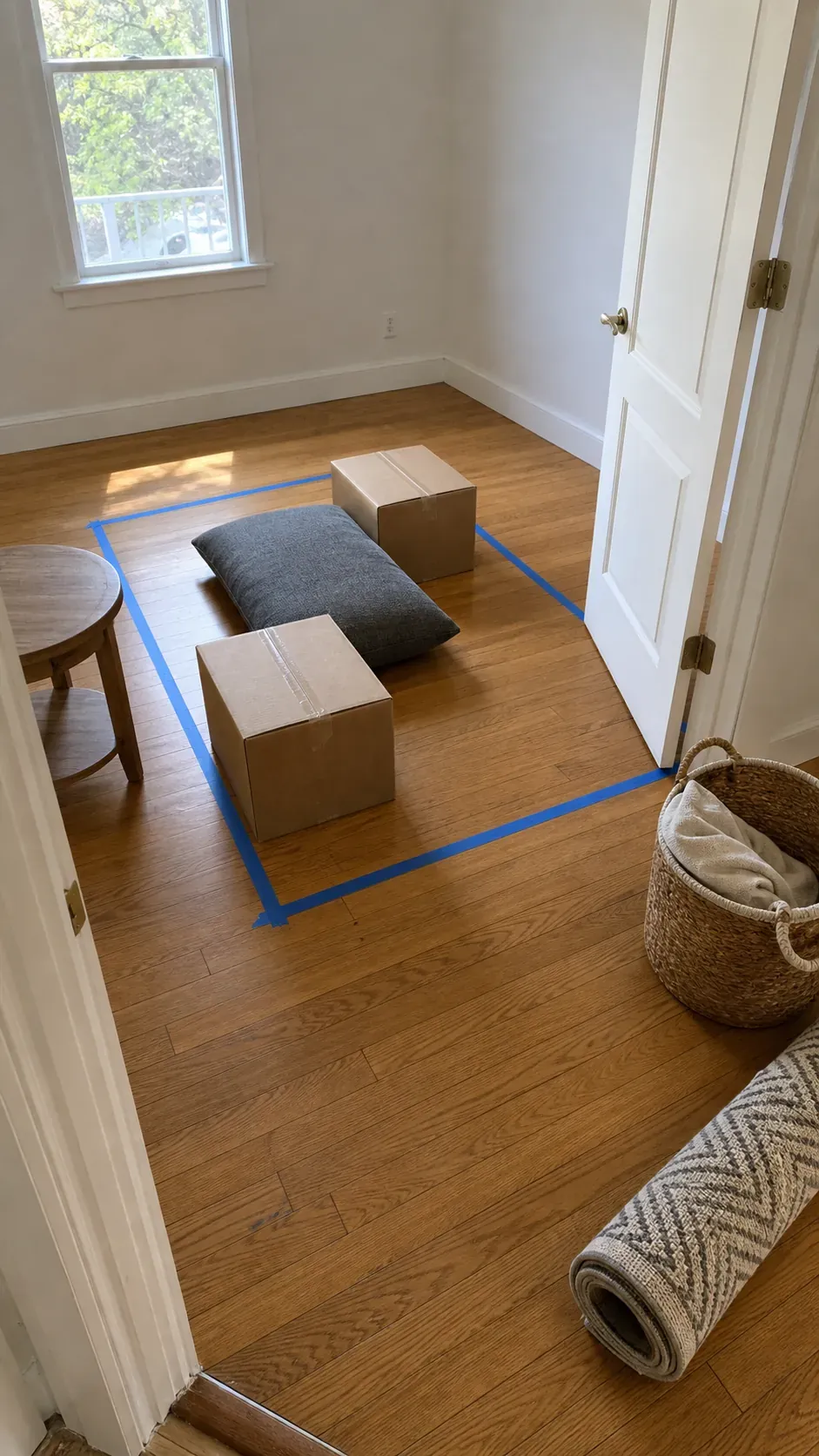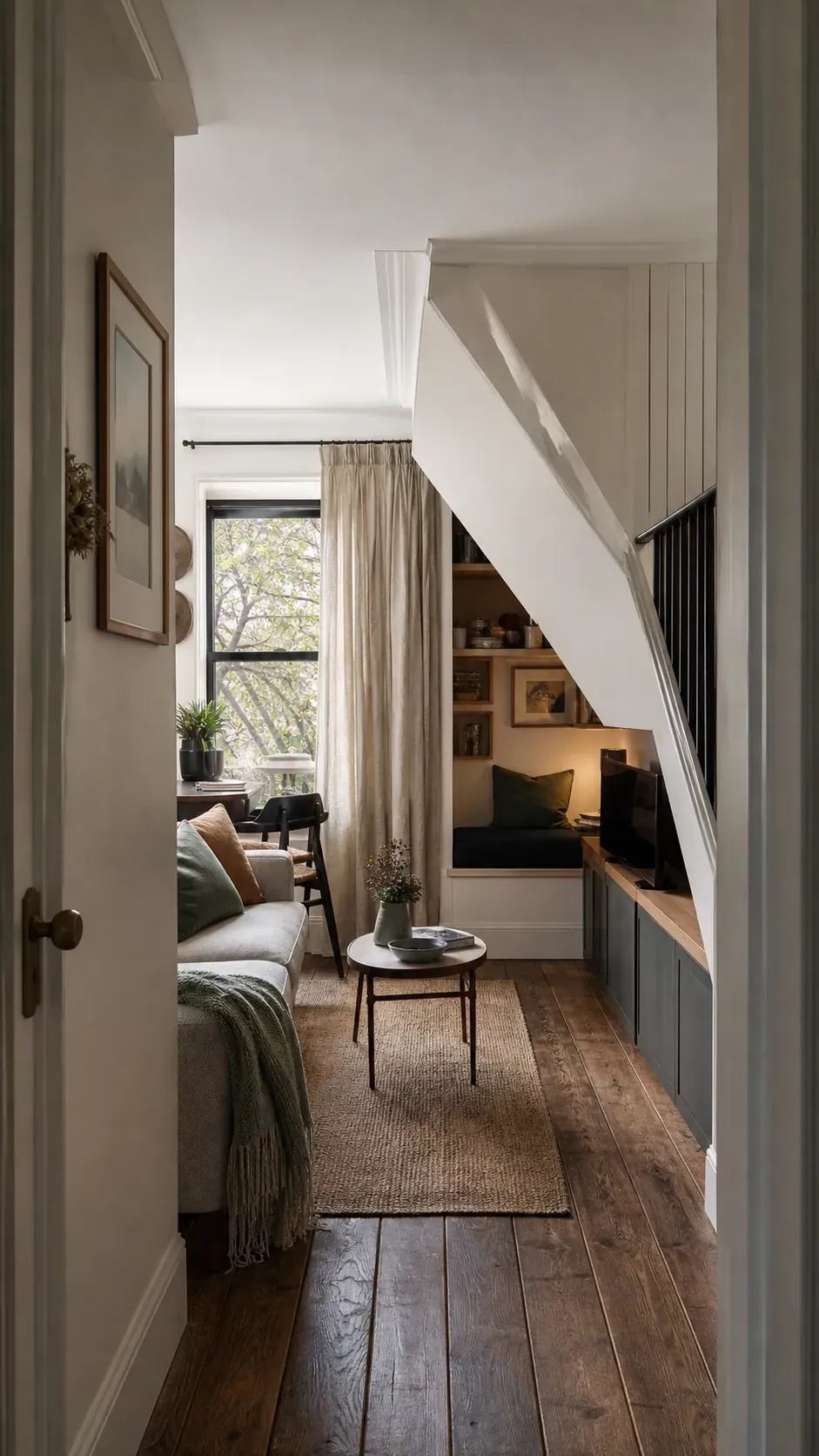
An awkward corner is not a shopping prompt. Before adding furniture, ask whether the space needs to support movement, storage, light, or a real daily activity. These 21 small space decorating ideas begin with the least invasive fixes and move toward more committed solutions. Each one is designed for a specific type of difficult room, from sloped ceilings and narrow living rooms to odd windows and tiny bathrooms.
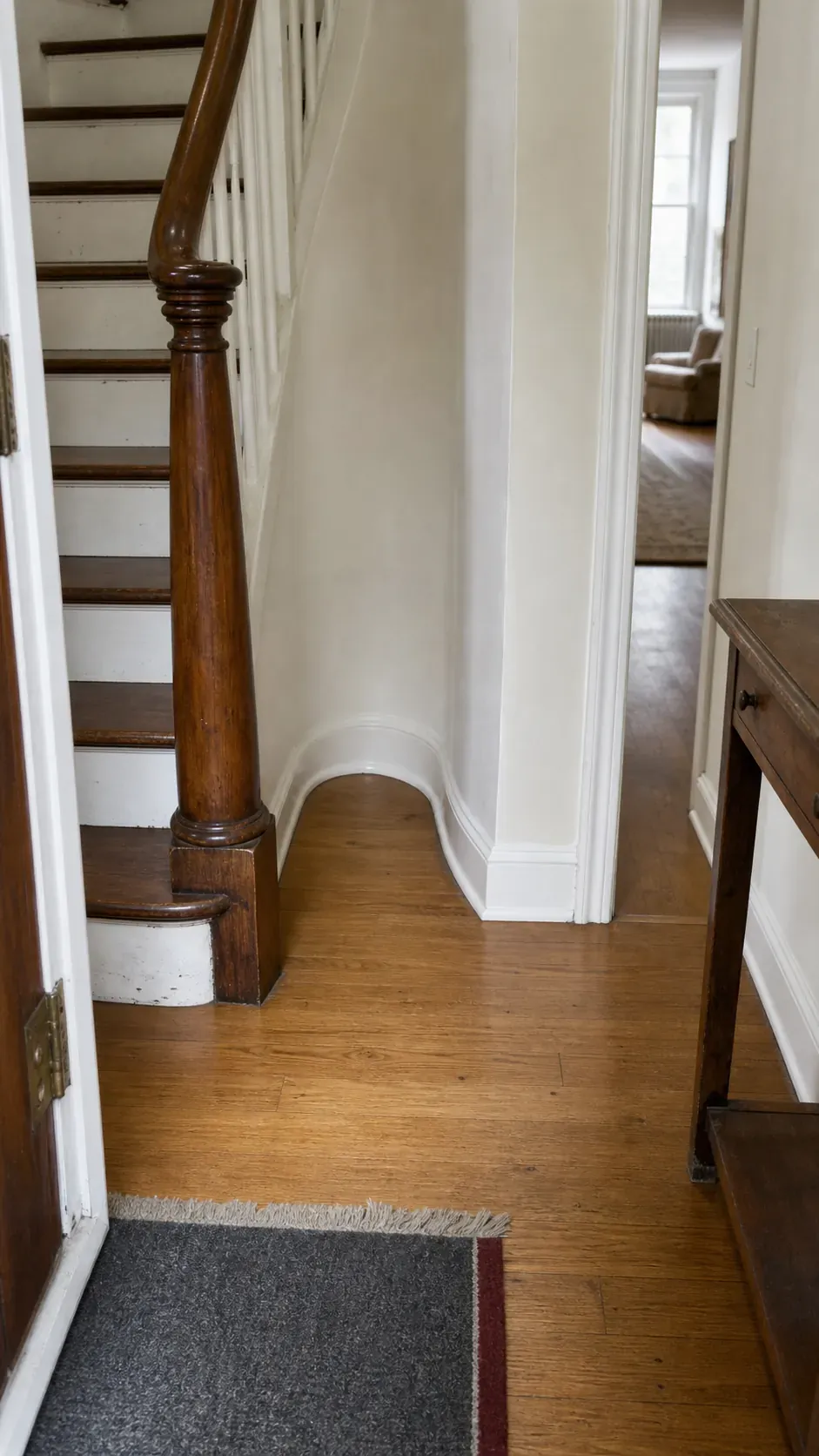
Keep a Tiny Gap Deliberately Empty
A narrow wedge beside a stair, door, or cabinet may be valuable precisely because it is empty. If furniture would interrupt a door swing or walking route, clean the baseboard, repair the paint, and let the negative space make the room breathe. Empty is a design choice when the alternative is a trip hazard.
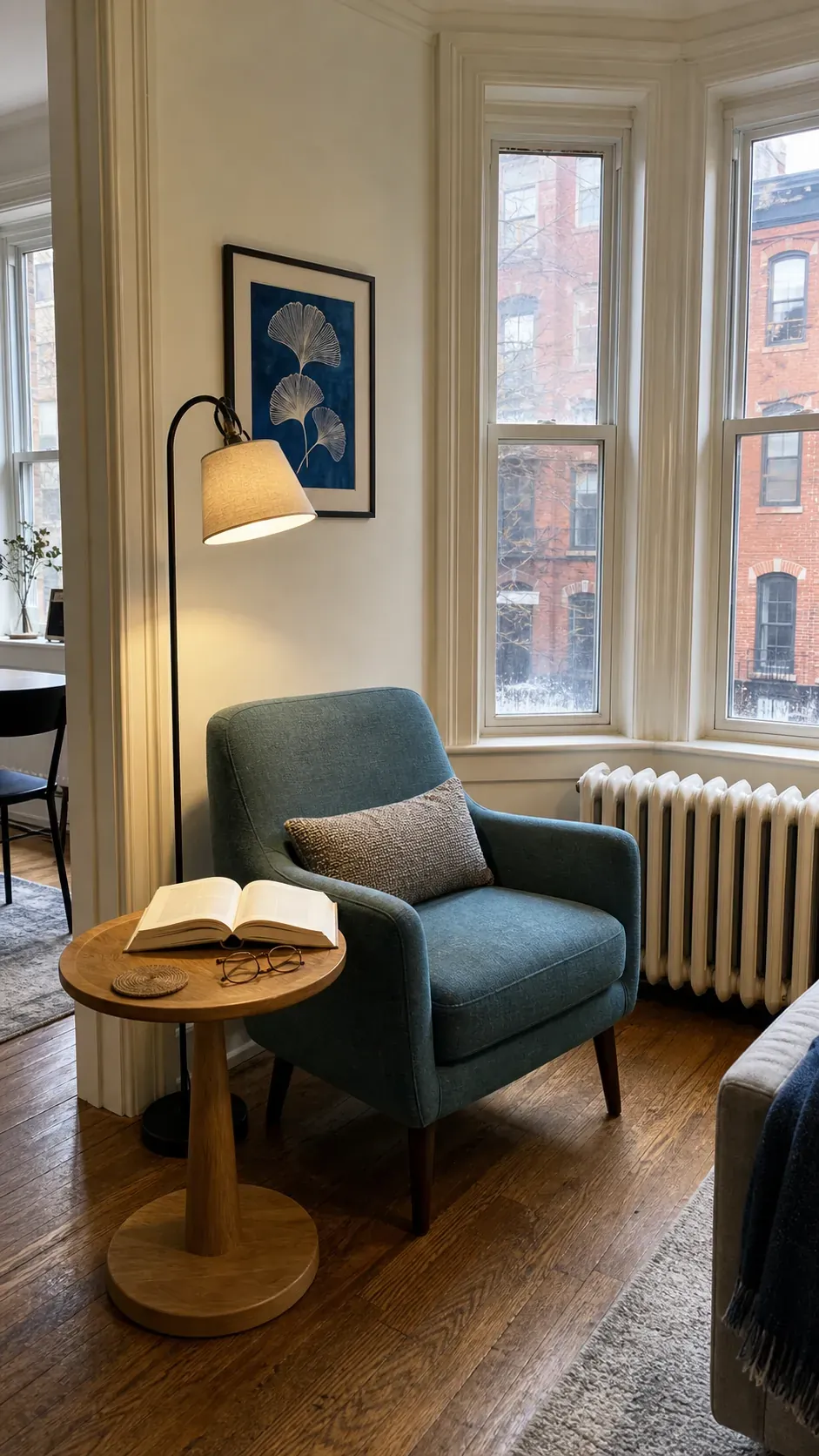
Turn a Bright Corner Into a Reading Seat
A corner near a window already has the most expensive ingredient: good light. Add one compact chair, a reachable table, and a shaded lamp rather than a full “nook” set. Choose a chair that fits the body and the footprint, then angle it toward the room so it feels included instead of punished in the corner.
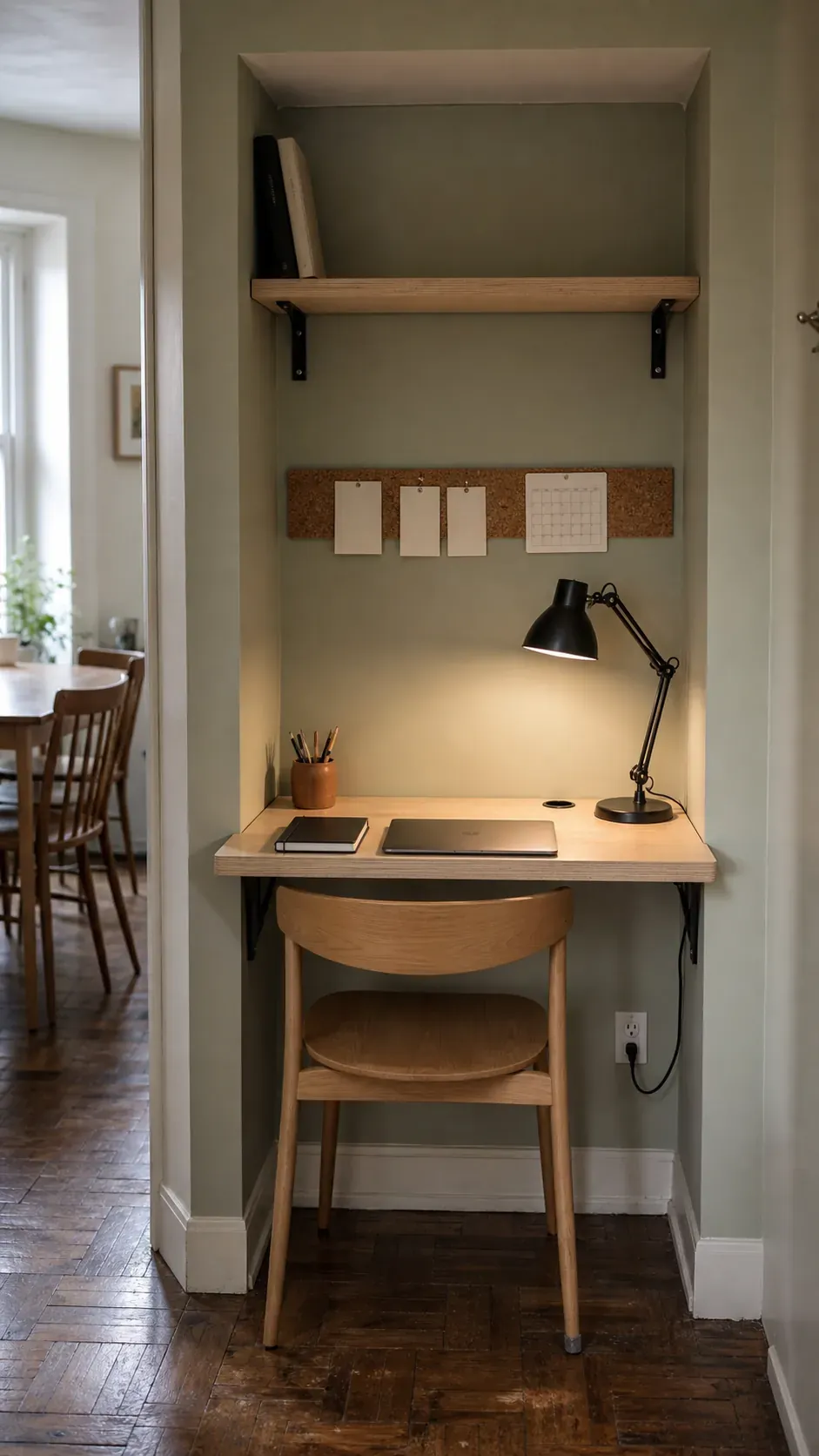
Fit a Wall-Mounted Desk Into a Shallow Niche
A niche too shallow for a wardrobe may be deep enough for a laptop. A wall-mounted desk keeps the floor visible and can be set to the correct working height. Add a slim chair that tucks completely under it and one task light. This works best when the niche has an outlet and does not sit in a busy passage.
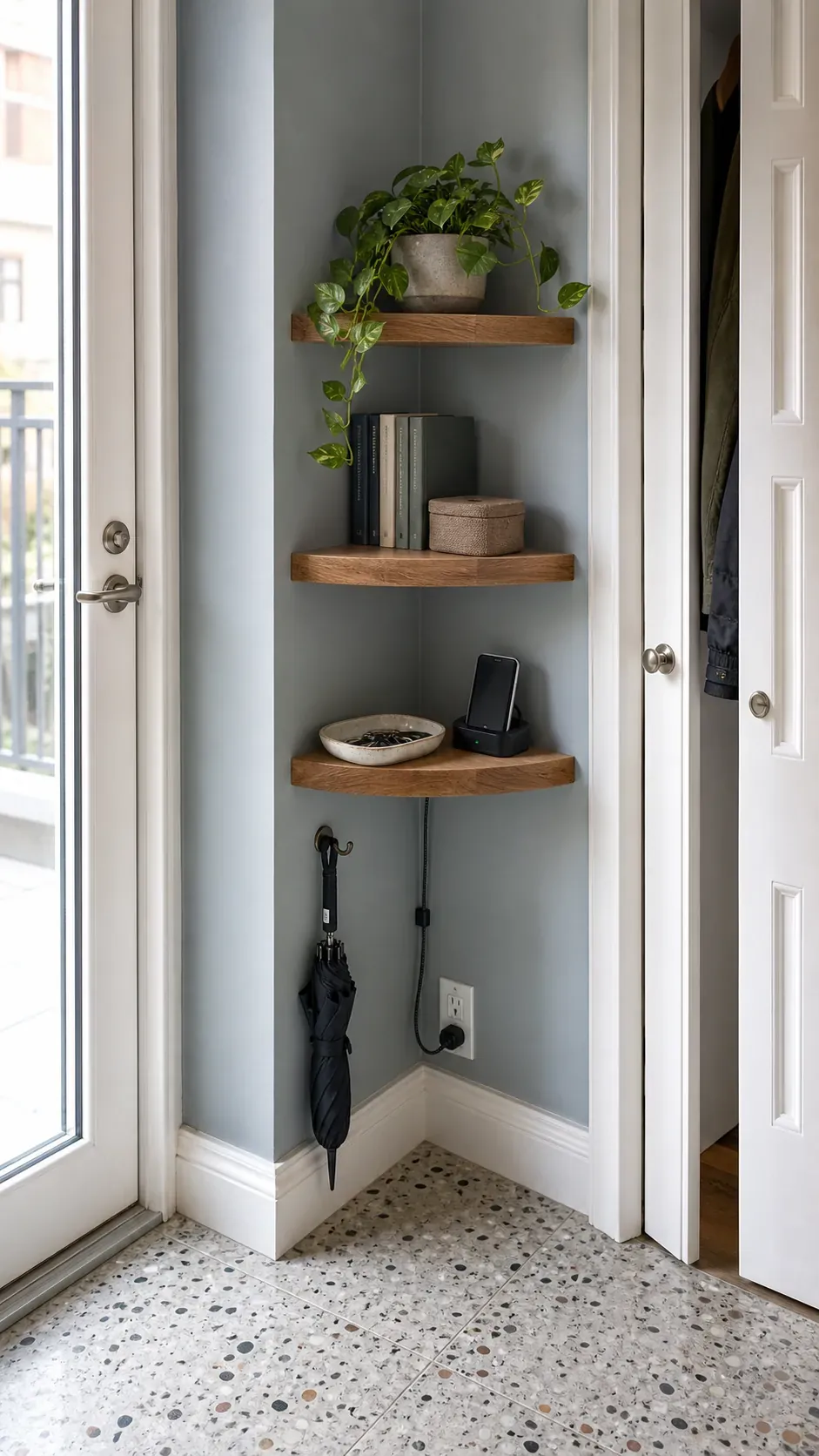
Use Triangular Shelves in a True Corner
When two short walls meet and neither can hold standard furniture, triangular corner shelves can create a useful landing place without projecting far into the room. Keep the lower shelf sturdy enough for keys or a charging tray and leave the upper shelves lightly edited. Check the anchors and do not install them where shoulders will brush past.
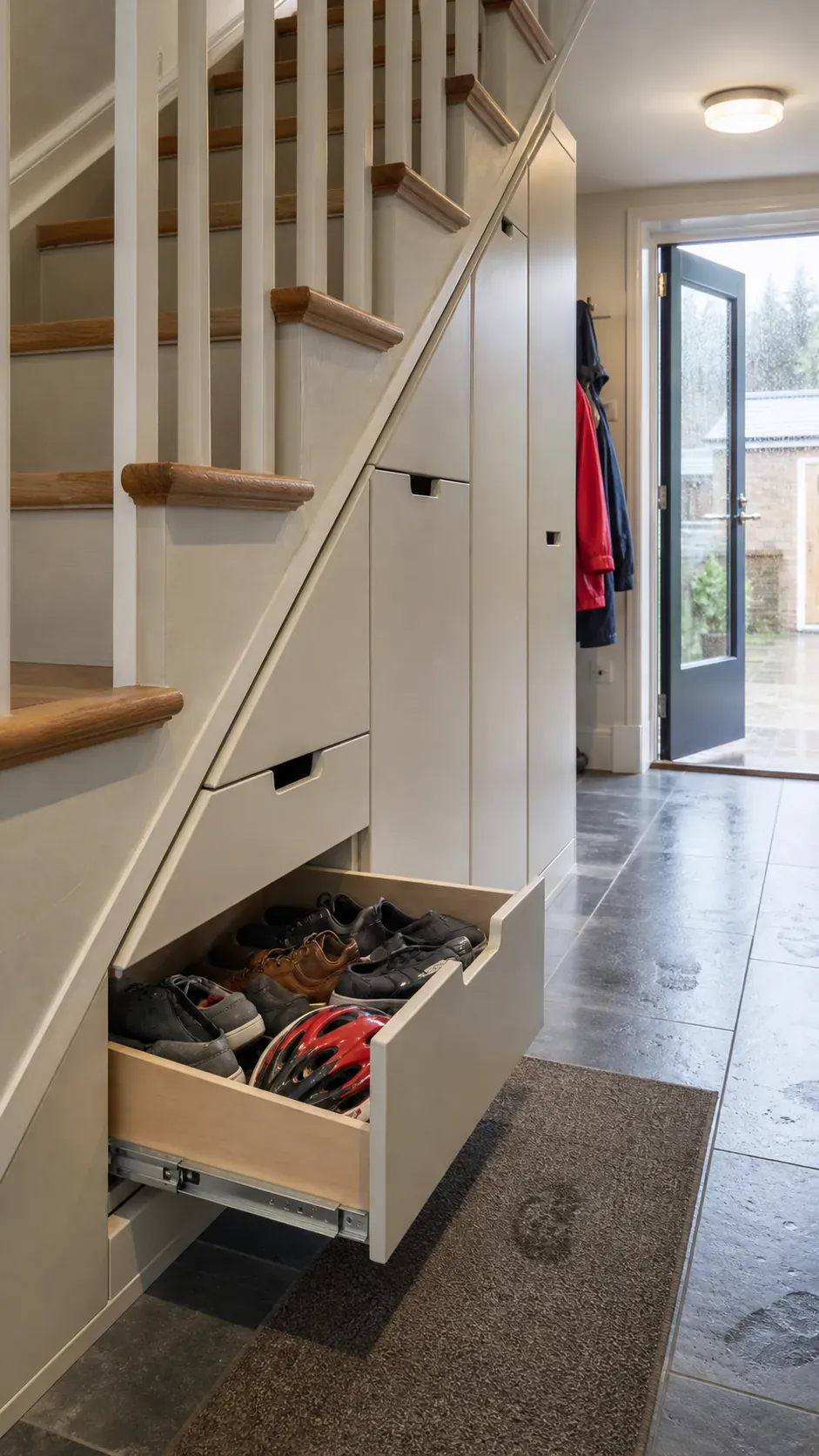
Build Pull-Out Storage Under Straight Stairs
The full depth beneath a staircase is more useful when contents come to you. Pull-out cabinets can hold shoes, cleaning supplies, pantry overflow, or sports gear without creating a dark cave. Match each drawer height to the stair profile and preserve ventilation where needed. For renters, freestanding wheeled bins can copy the idea without construction.
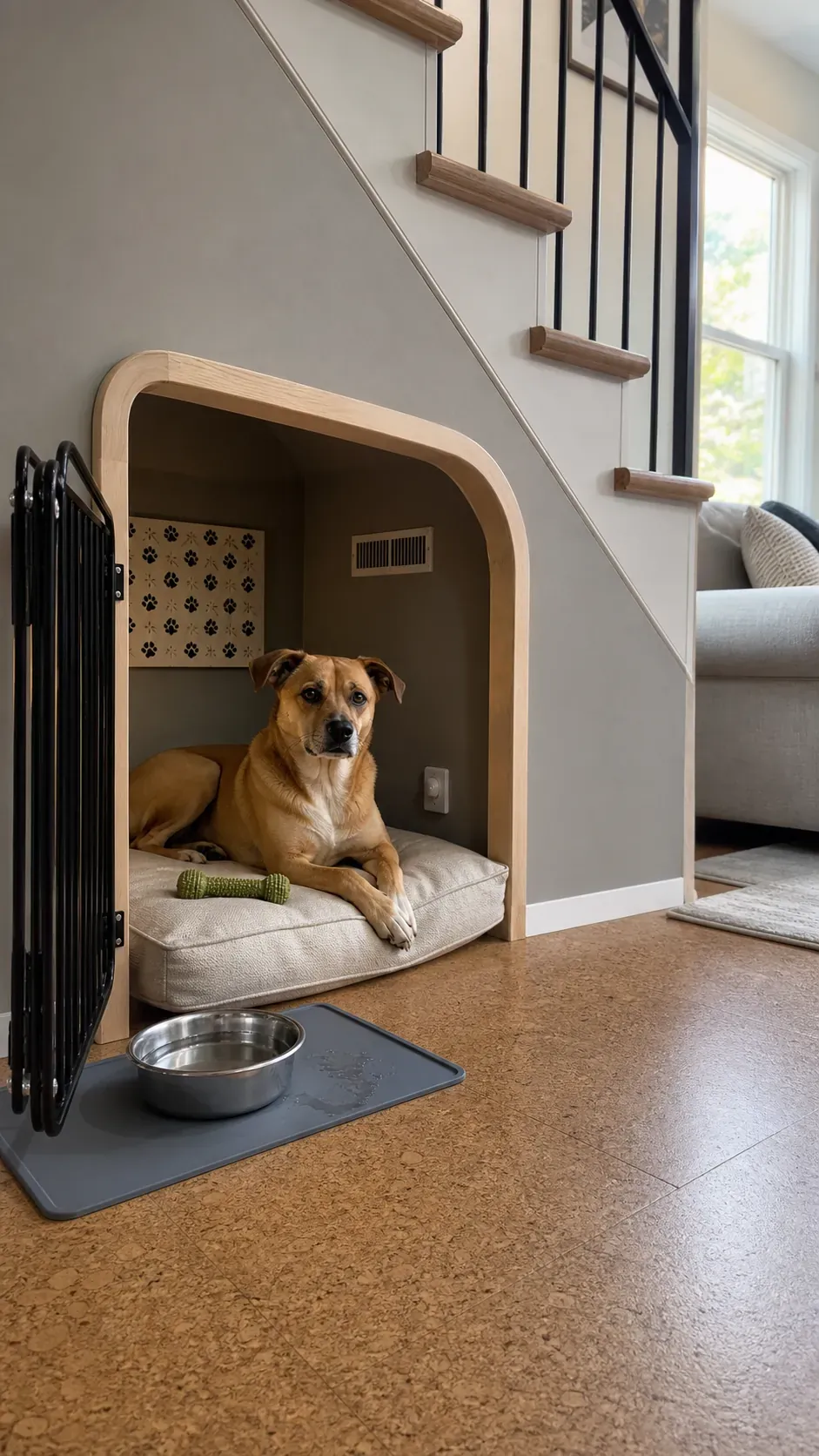
Make an Under-Stairs Pet Retreat
A low area that is uncomfortable for adults can be well scaled for a cat or small dog. Use washable bedding, a stable water-resistant floor surface, rounded edges, and enough ventilation. Keep food away from litter and avoid toxic plants or dangling cords. The result should support the animal’s routine, not exist only as a miniature photo prop.
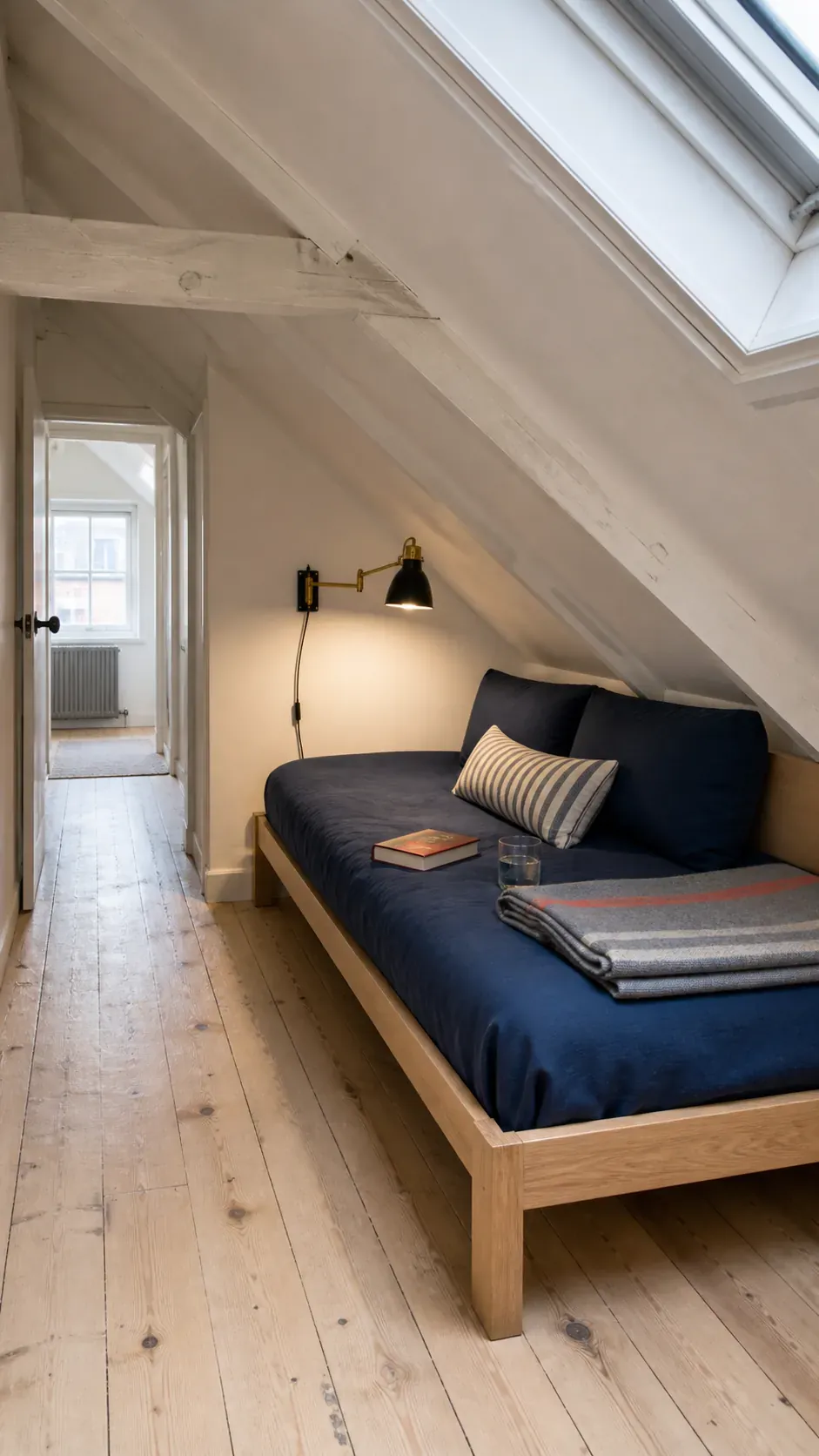
Place a Daybed Beneath the Lowest Ceiling
In a sloped ceiling room, reserve standing-height areas for circulation and put low activities under the eaves. A daybed works because people approach it upright, then recline where headroom matters less. Measure the sitting height at the front edge, keep reading light reachable, and avoid placing the pillow beneath a beam you could hit.
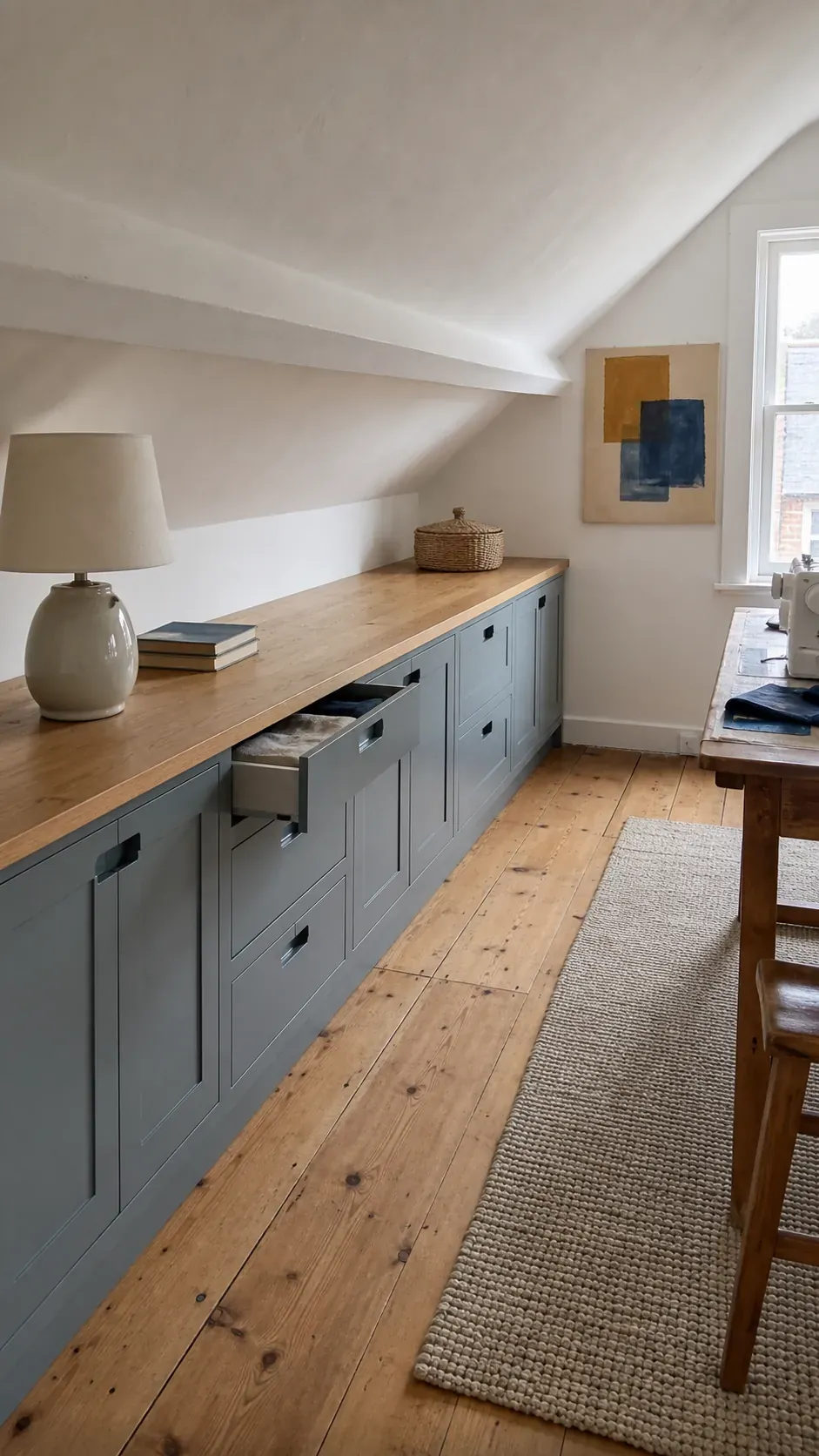
Run Low Cabinets Along the Eaves
Low cabinets convert unusable headroom into closed storage while leaving the tall center of an attic room open. Choose doors or drawers that can operate without hitting the ceiling angle. A continuous top can display a few objects, but resist filling it edge to edge. The long horizontal line should calm the slope, not emphasize clutter.
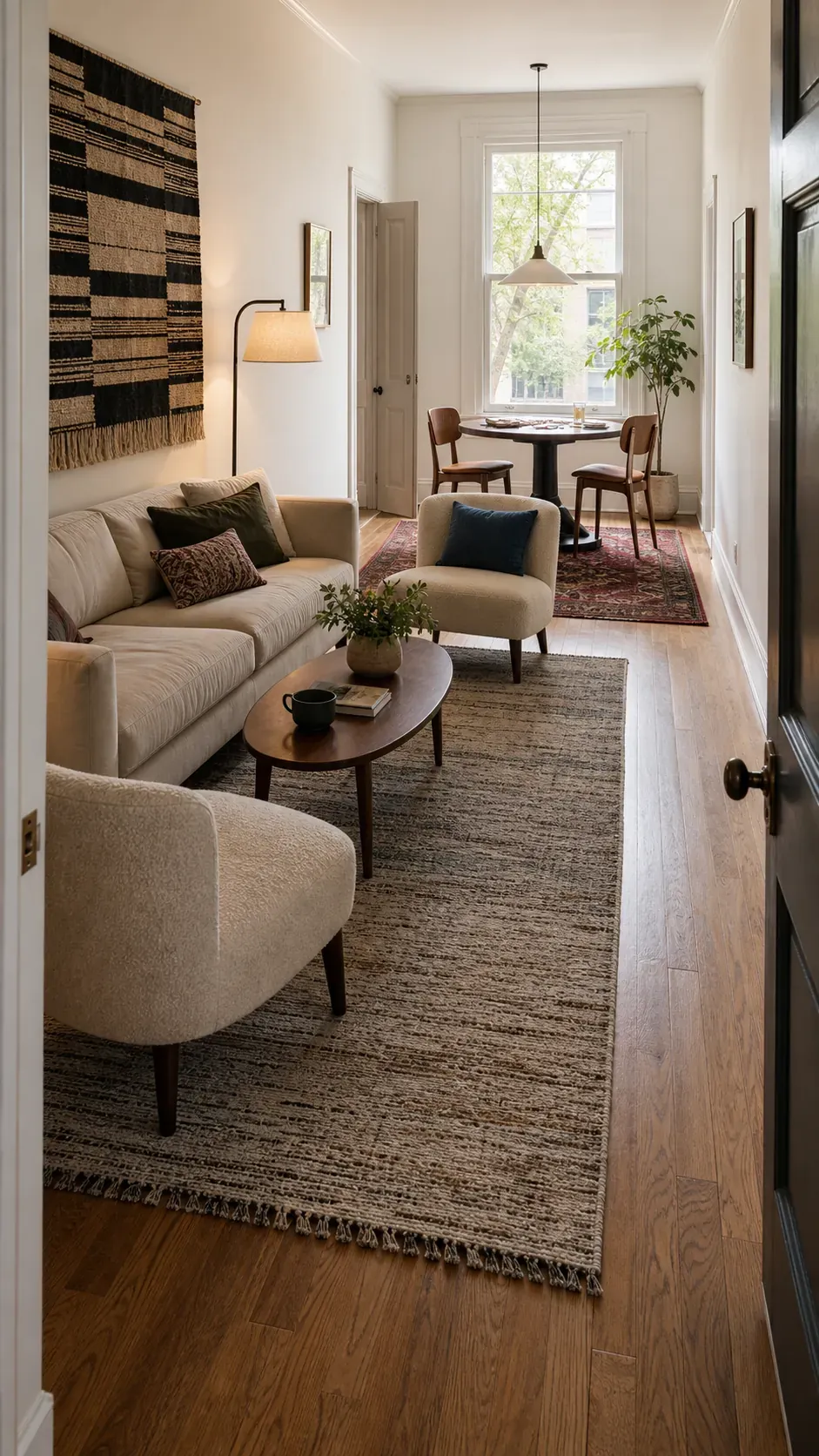
Divide a Long Narrow Living Room Into Two Zones
A long room often feels awkward because furniture crowds one end while the other becomes a runway. Create a primary conversation area and give the remaining section a distinct job, such as reading, games, or music. Separate them with rug edges and lighting rather than a tall divider that steals daylight. Maintain one continuous circulation path.
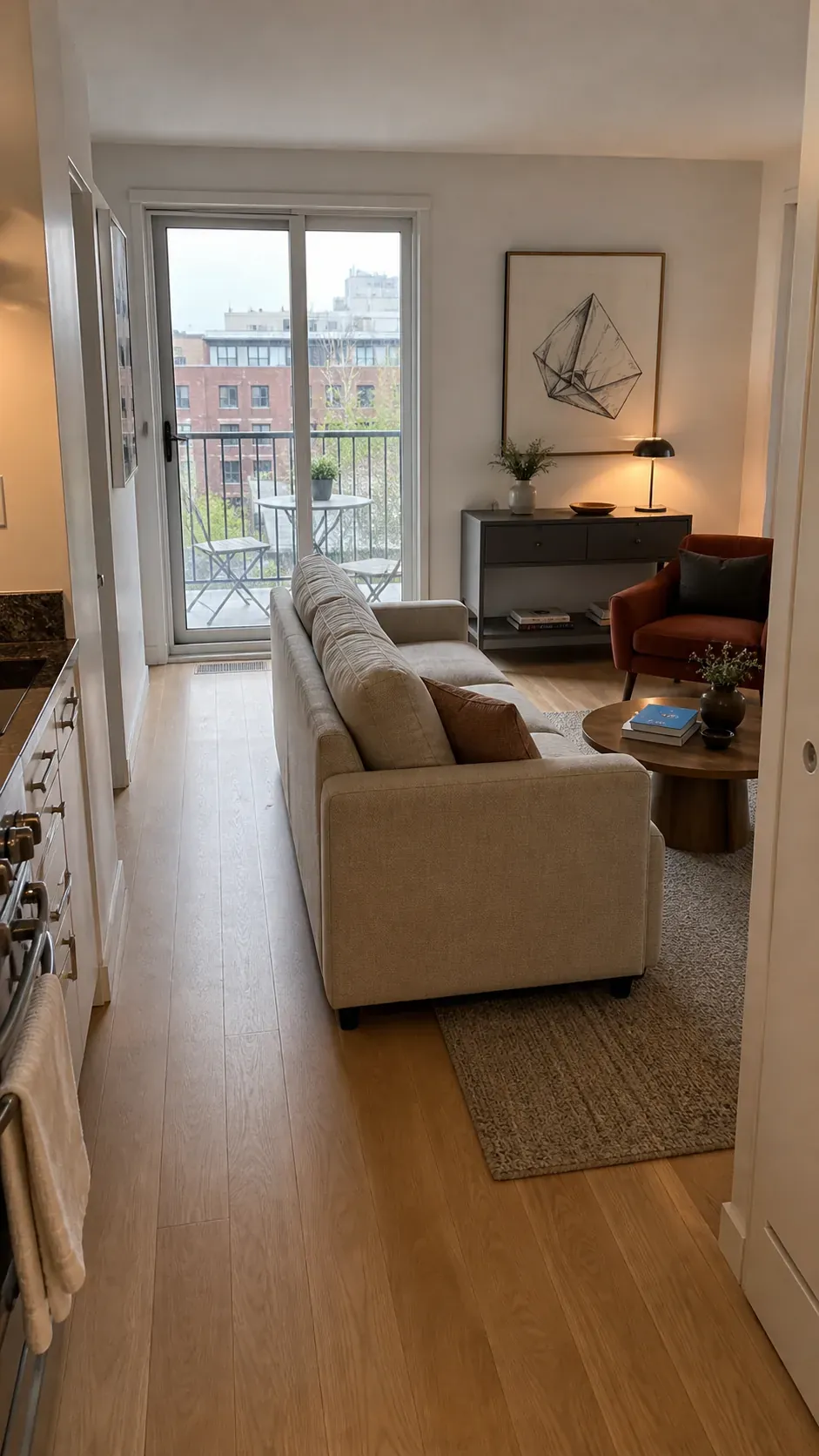
Float the Sofa Away From the Wall
Pushing every seat to the perimeter can make an awkward living room layout feel like a waiting room. Pull the sofa forward enough to create a focused conversation distance and a clear path behind it. Tape the footprint first. If the route becomes cramped, the furniture may simply be too deep for the room.
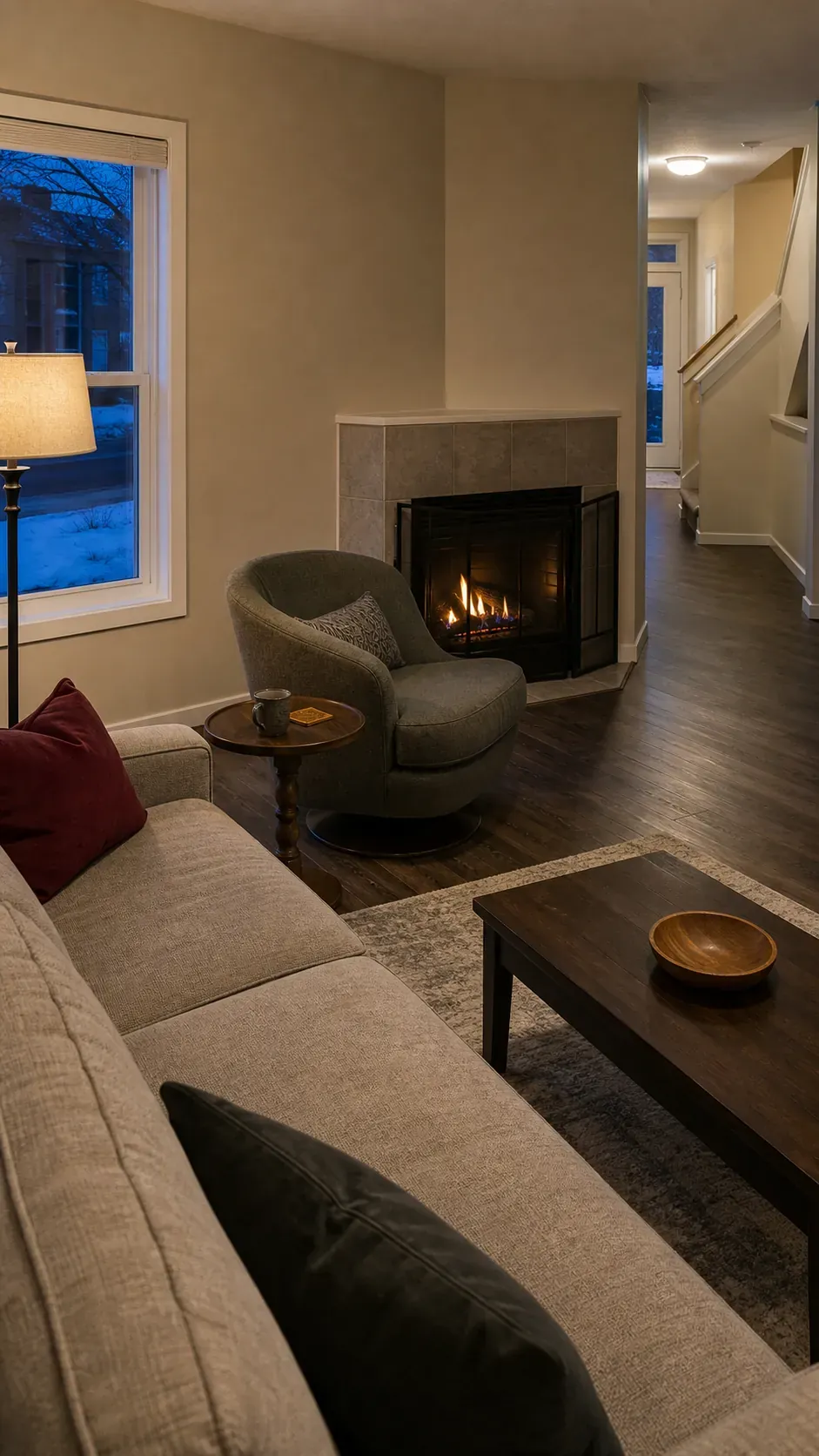
Use a Corner Fireplace as a Conversation Anchor
A diagonal fireplace does not require every piece to face it directly. Angle one chair toward the hearth, keep the sofa oriented to the room’s longer axis, and let a movable side table bridge the two. Preserve the manufacturer’s clearance and the traffic route. This creates a conversation group without forcing the television into an impossible corner.
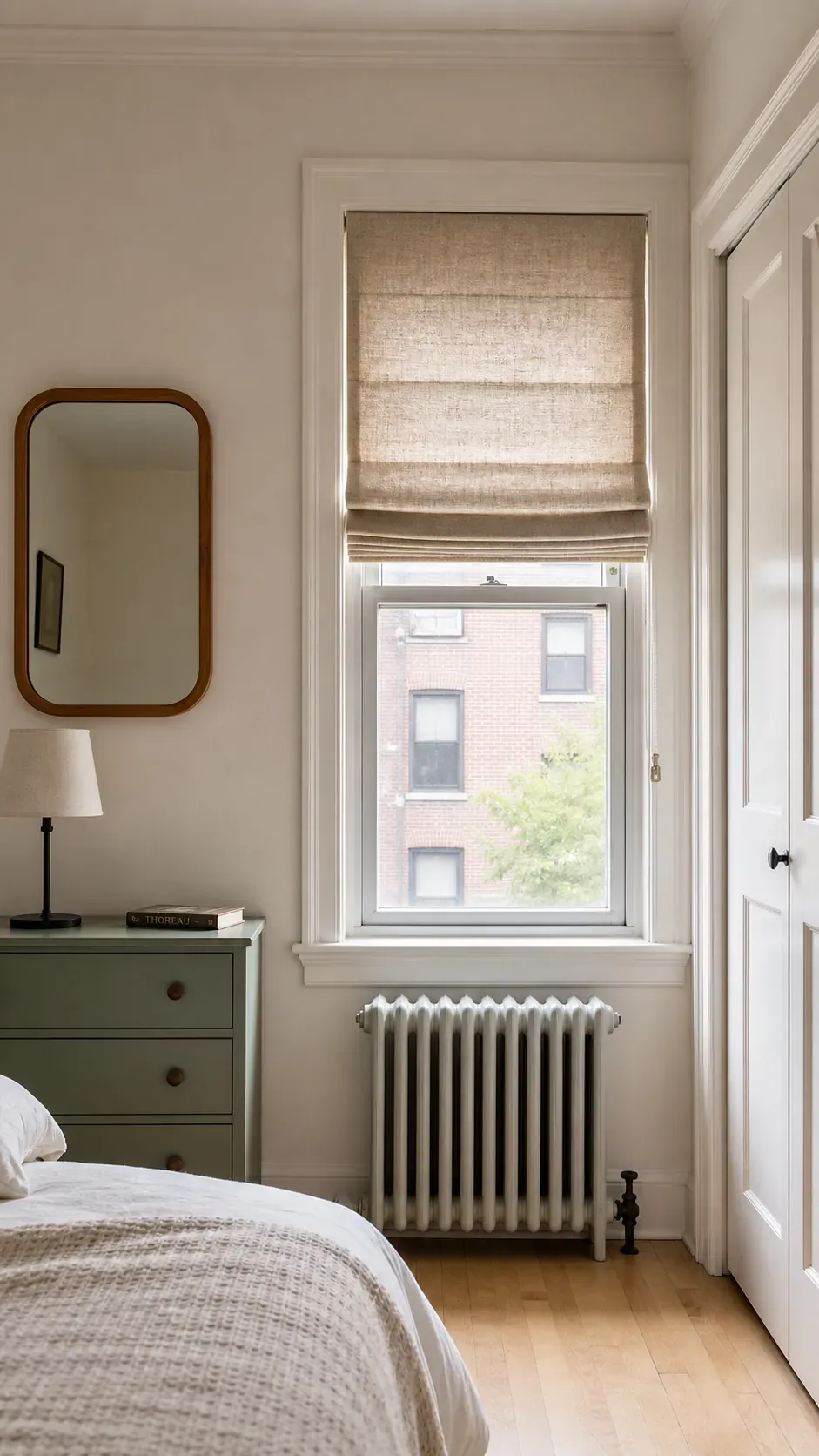
Choose a Roman Shade for an Off-Center Window
Odd window curtain ideas do not always involve curtains. A tailored Roman shade stays within the frame, avoids emphasizing an asymmetrical strip of wall, and works where a swinging door or radiator blocks long panels. Mount it consistently with nearby windows and choose a fabric with enough body to fold cleanly.
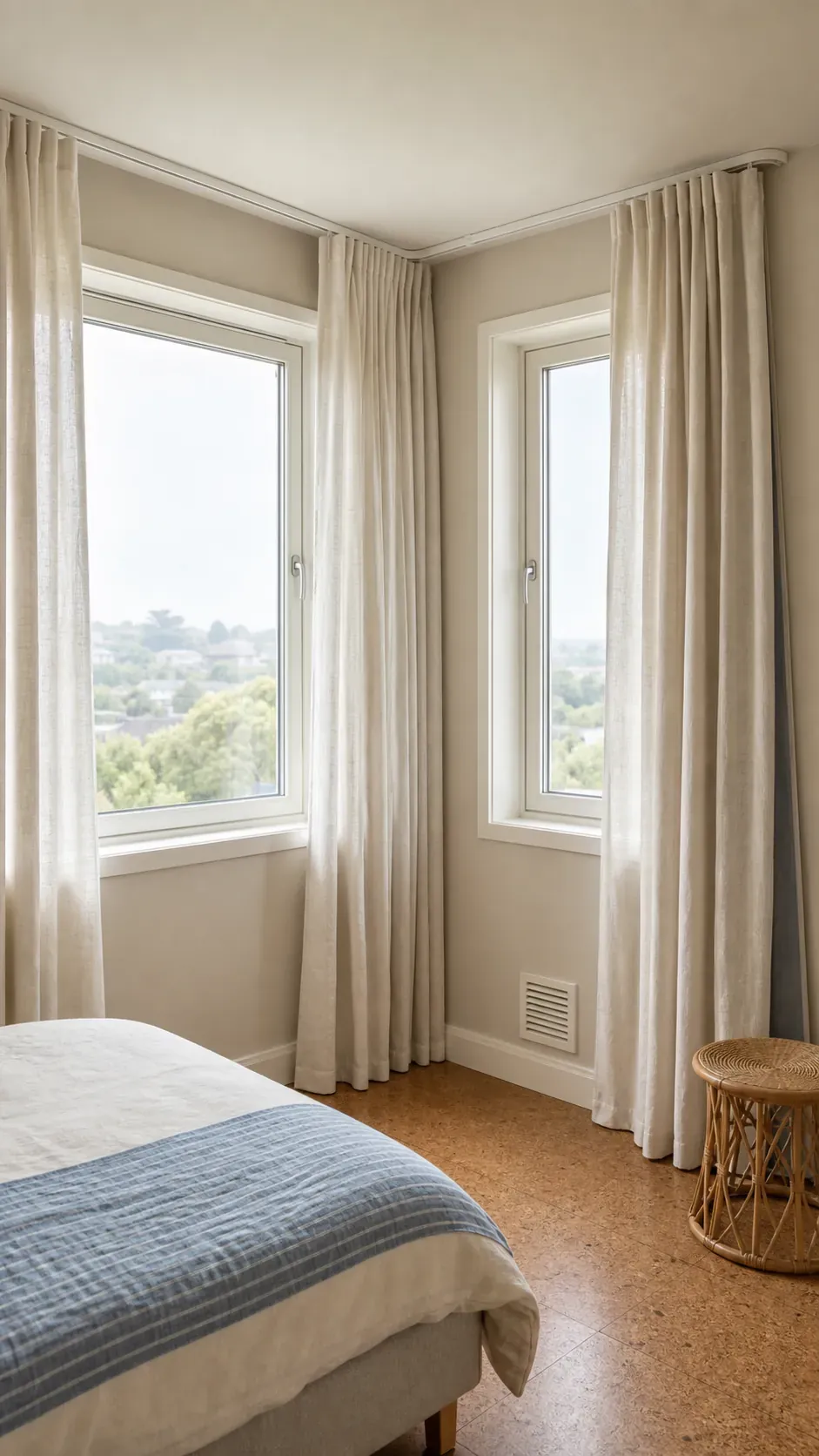
Wrap a Corner Window With a Continuous Track
Two windows meeting near a corner look fragmented when each has a separate short rod. A ceiling-mounted track can turn them into one continuous soft boundary and make an uneven wall feel intentional. Use enough fabric for both spans and confirm that open panels will not cover handles, heaters, or air vents.
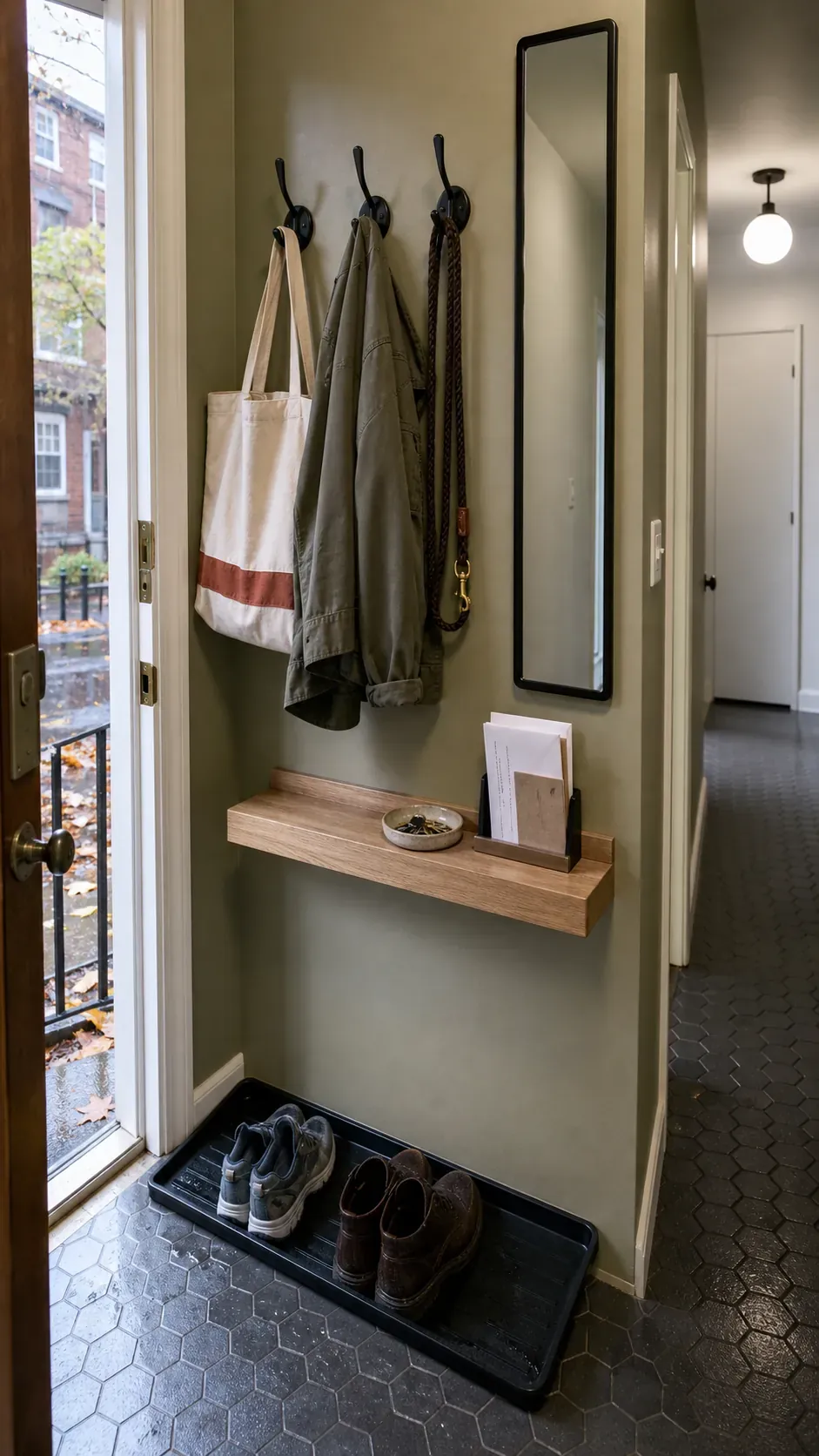
Create a Shallow Entry Landing Strip
A narrow entry does not need a standard console. A slim ledge, wall hooks, and a shoe tray can provide the function at half the depth. Position each item where the routine occurs and keep protruding hardware out of shoulder height. This is especially effective rental friendly decor when installed with approved removable systems.
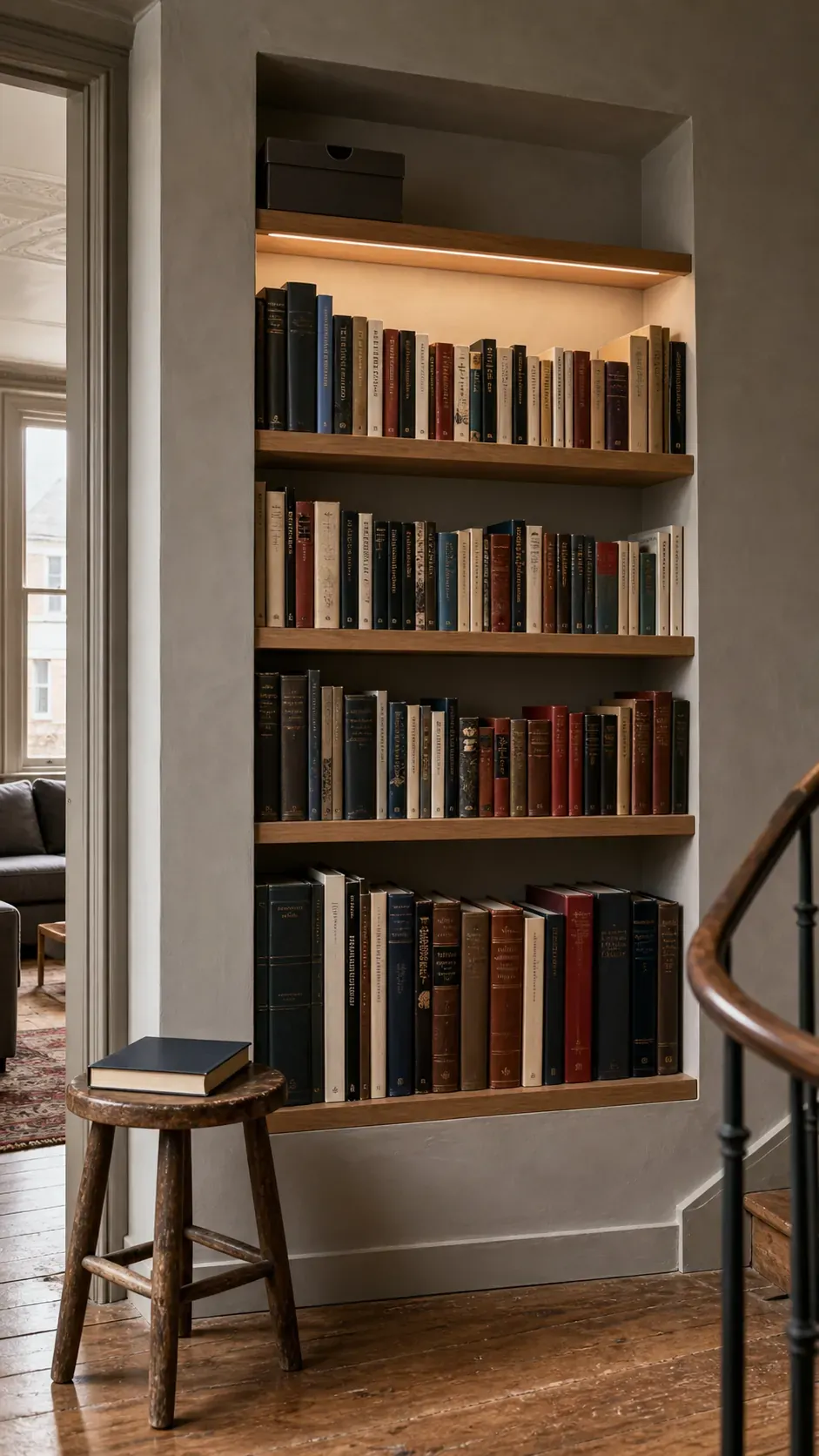
Turn a Deep Niche Into a Mini Library
A deep alcove can hold books more efficiently than freestanding furniture if shelves are sized for the collection rather than decorative baskets. Place frequently used titles between knee and eye height, use the lowest shelf for heavier volumes, and add one shielded light. Leave some open space so the niche reads as architecture.
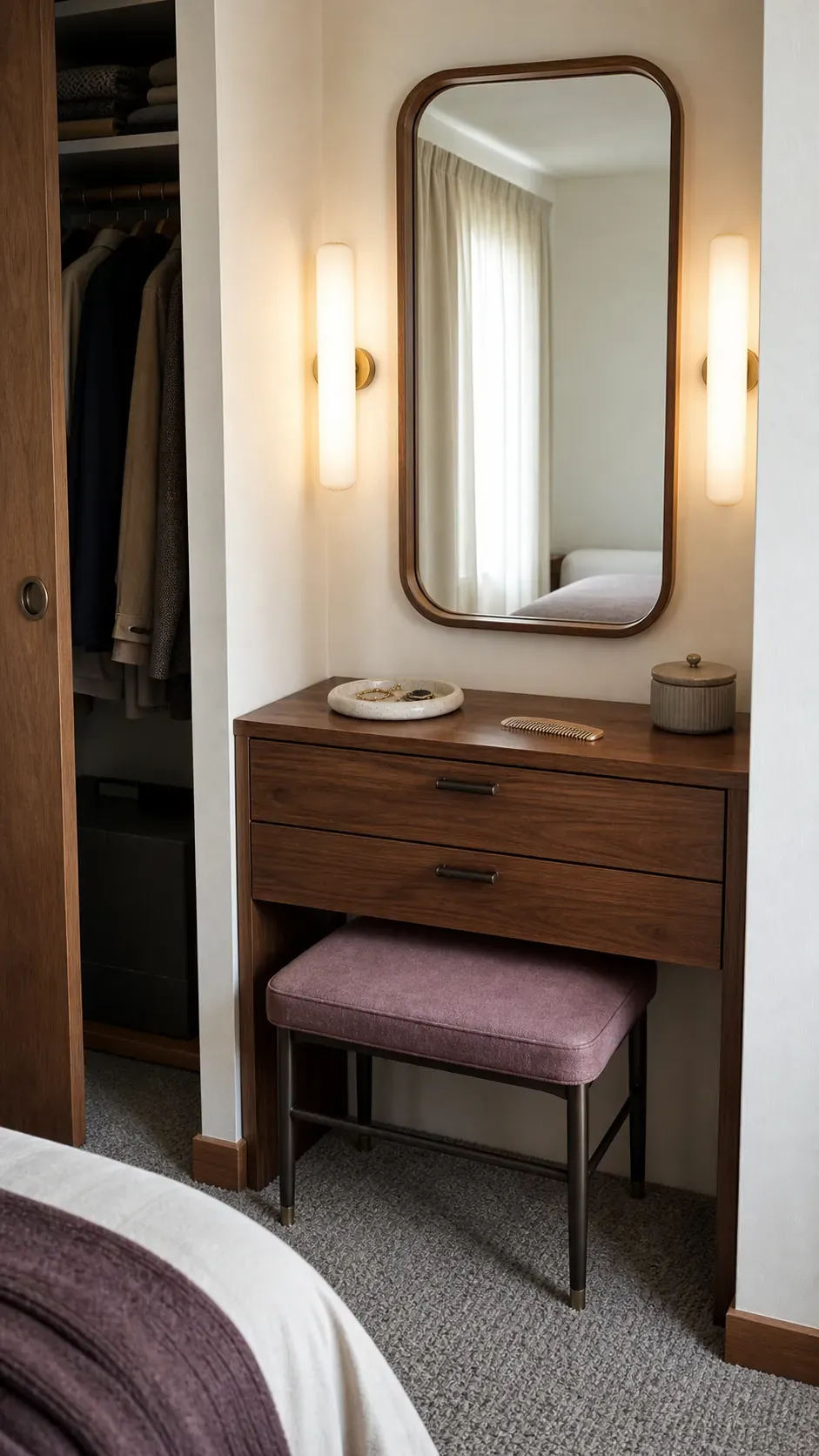
Fit a Dressing Station Into a Bedroom Alcove
A small alcove beside a closet can become a dressing station with a narrow drawer unit, wall-mounted mirror, and flattering side light. Keep the stool fully tuckable and store only daily items on the surface. Check the reflected view before hanging the mirror; it should bounce light or a calm area, not magnify clutter.
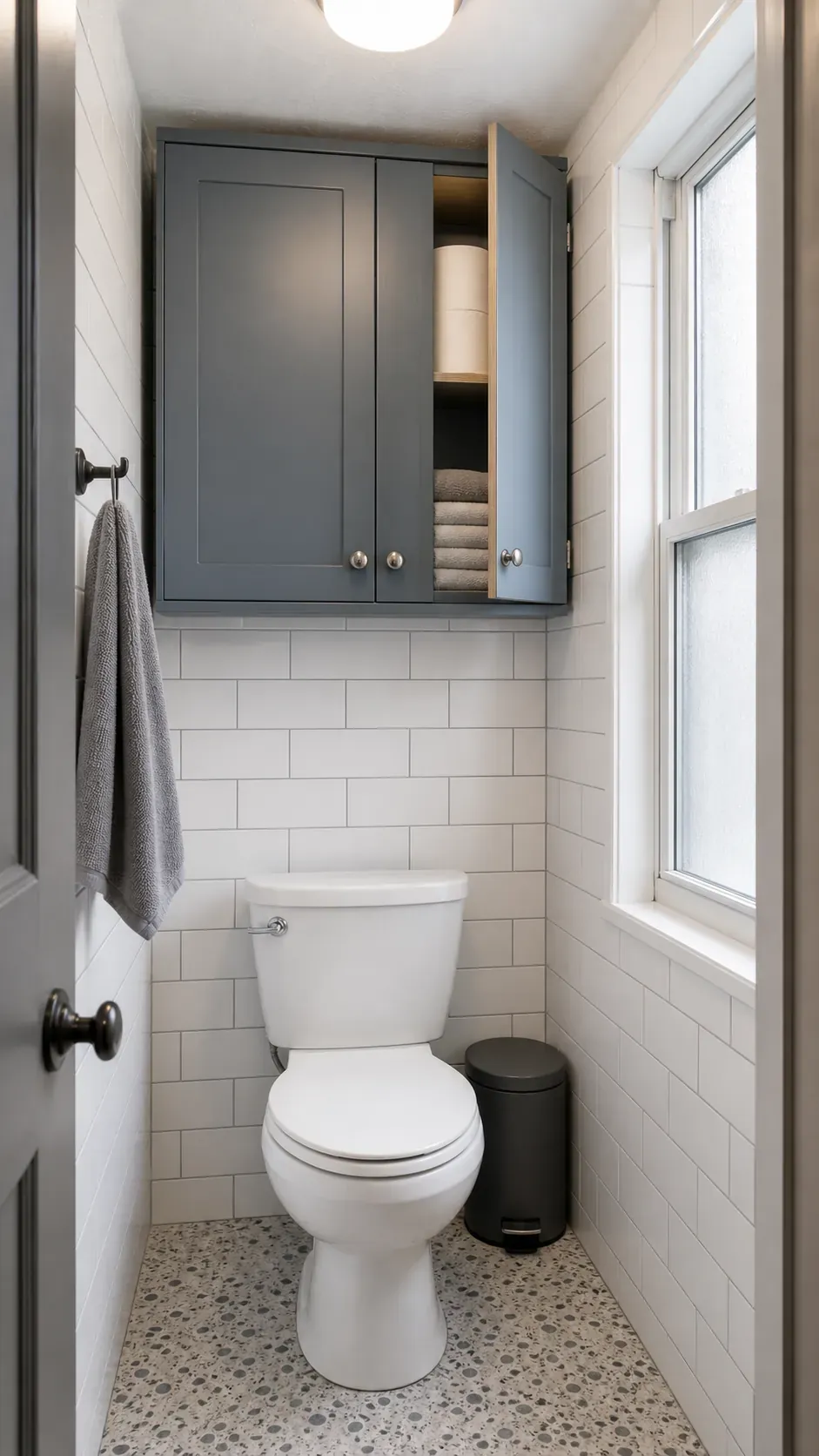
Use the Wall Above a Tiny Toilet
Tiny bathroom decorating ideas should protect elbow room and cleaning access. A shallow closed cabinet above the toilet can hold spare paper and toiletries without occupying the floor. Choose moisture-resistant material, anchor it properly, and set it high enough that nobody hits their head while standing. Avoid deep open shelves full of dusty décor.
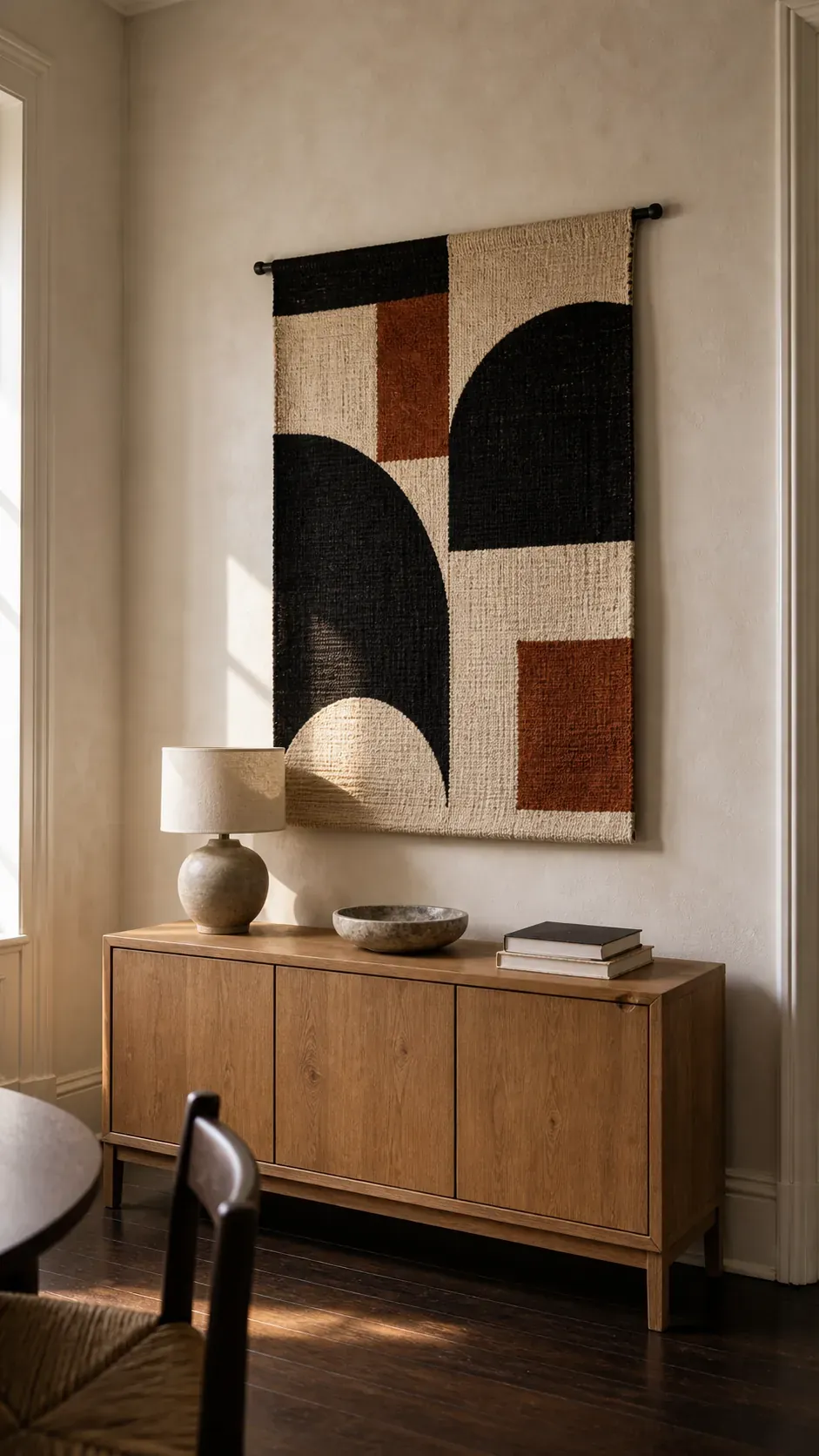
Scale One Strong Piece to a Large Empty Wall
Large empty wall ideas often fail because several tiny pieces are spread too far apart. Relate one textile, print, or relief to the furniture beneath it and leave confident margins. Make paper templates first and view them from the room entrance. A wall does not need to be filled; it needs a composition with enough visual weight.
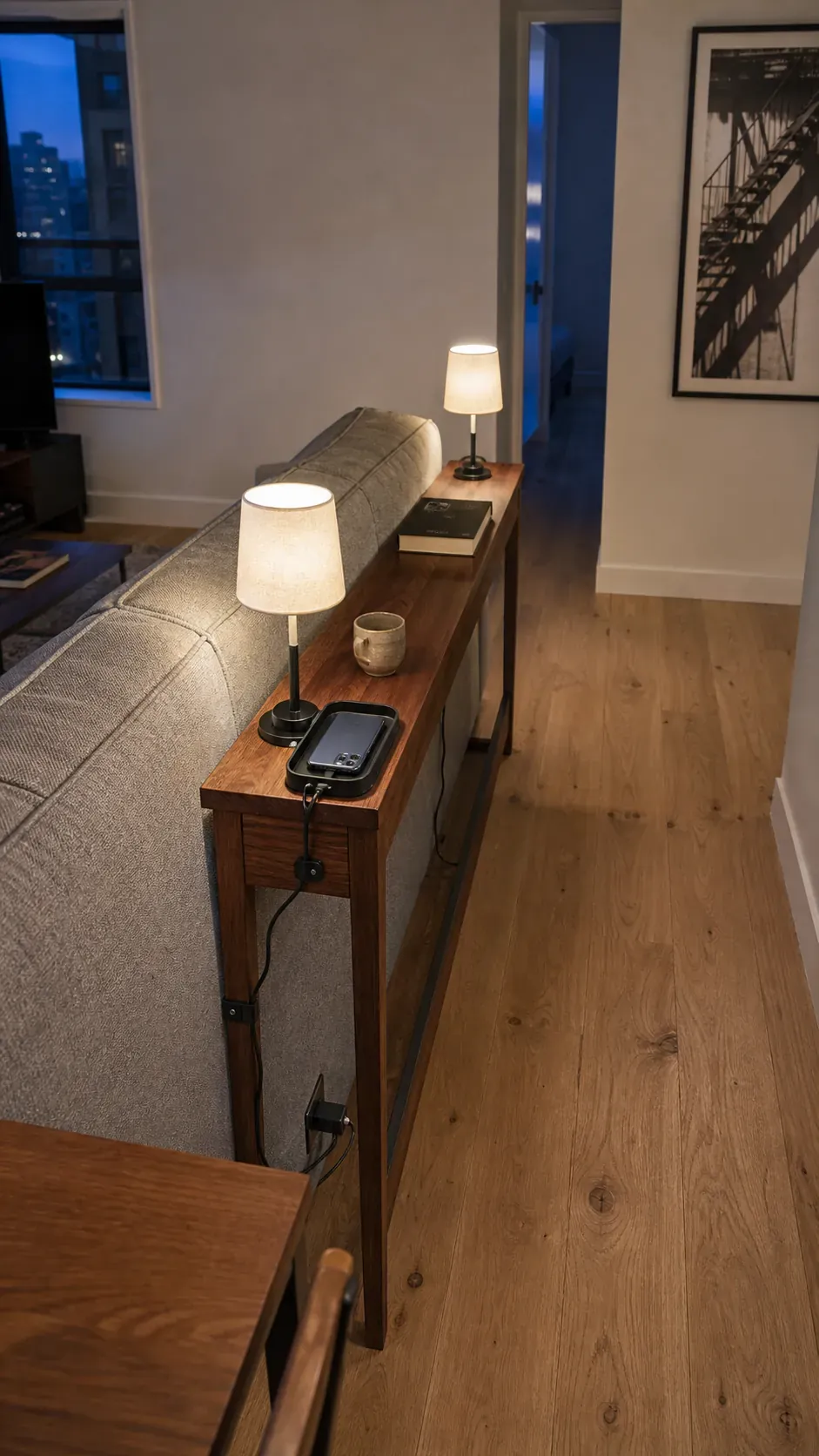
Add a Slim Console Behind the Sofa
The gap behind a floating sofa can earn its footprint with a console no deeper than the available path allows. It can hold reading lamps, route charging cables, and create a visual stop between seating and circulation. Keep the top below the sofa back and anchor cords so they cannot become a hazard.
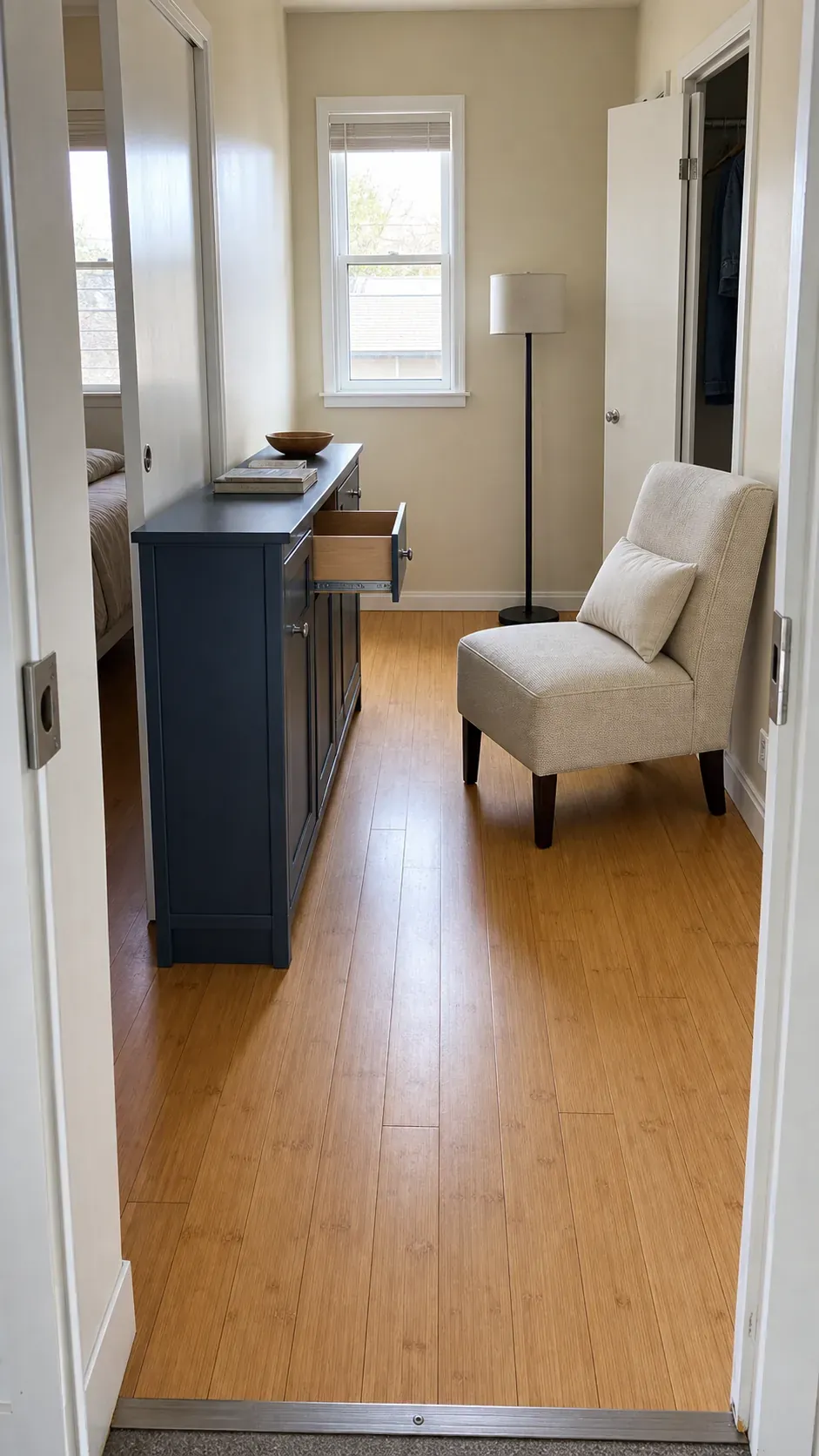
Swap Deep Furniture for a Narrow Profile
A difficult room may not need a clever layout; it may need shallower furniture. Measure the tightest passage, open every door and drawer, and compare actual product depth rather than judging showroom photos. A narrow cabinet, apartment-scale sofa, or armless chair can restore circulation without sacrificing the room’s purpose.
Test the Footprint Before You Buy
Painter’s tape, cardboard boxes, and furniture borrowed from another room can answer most small-space questions before money is spent. Mark the proposed footprint, then live around it for several days. Open the doors, carry laundry through, sit in the chair, and view the arrangement at night. If the mock-up blocks a habit, the real object will too.
The best awkward-space solution is the one that makes the room easier to use. A beautiful niche that catches your hip every morning is a failed design. Let circulation set the boundaries, assign a genuine purpose only when one is needed, and allow the remaining architecture to stay quiet.