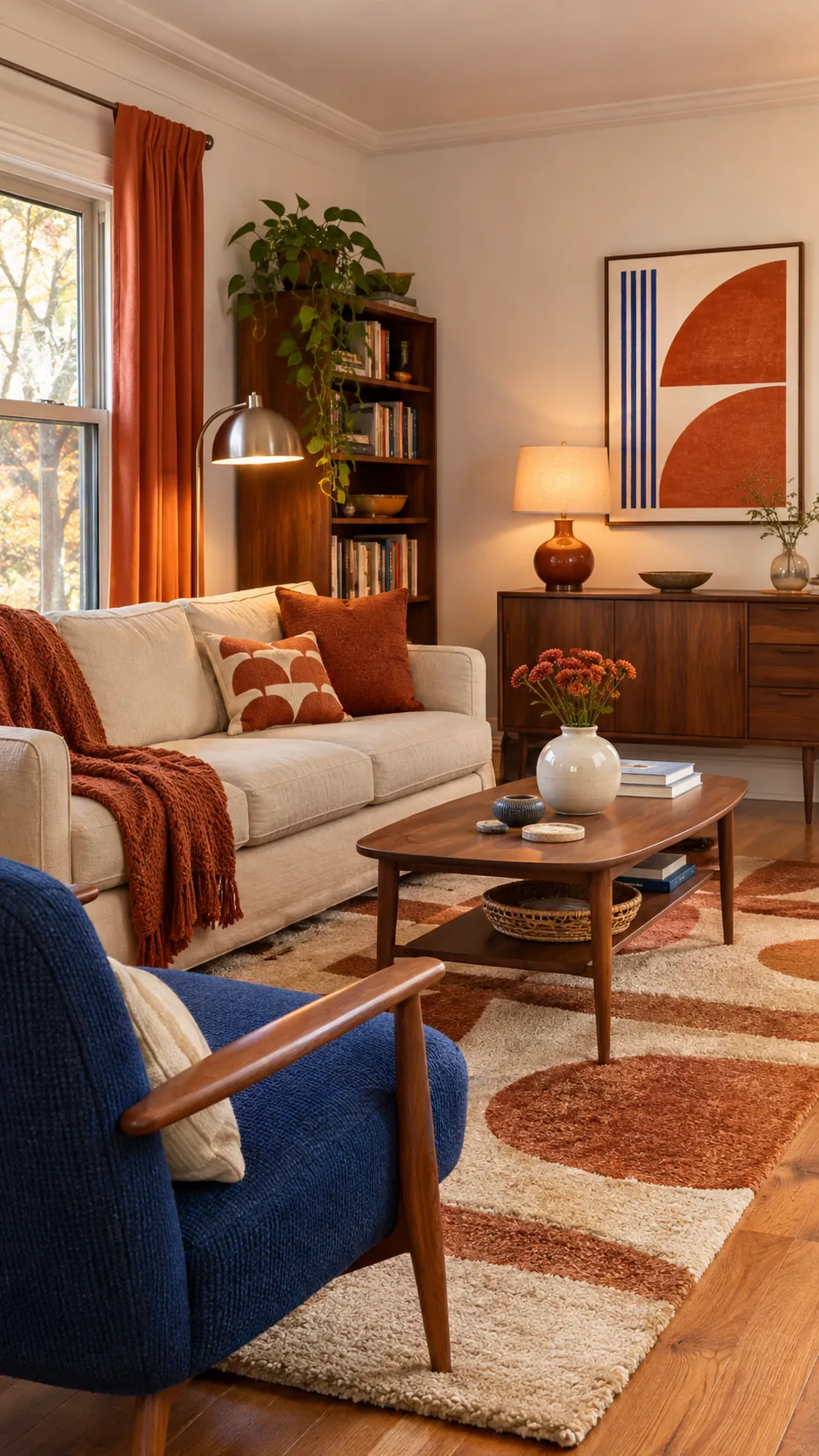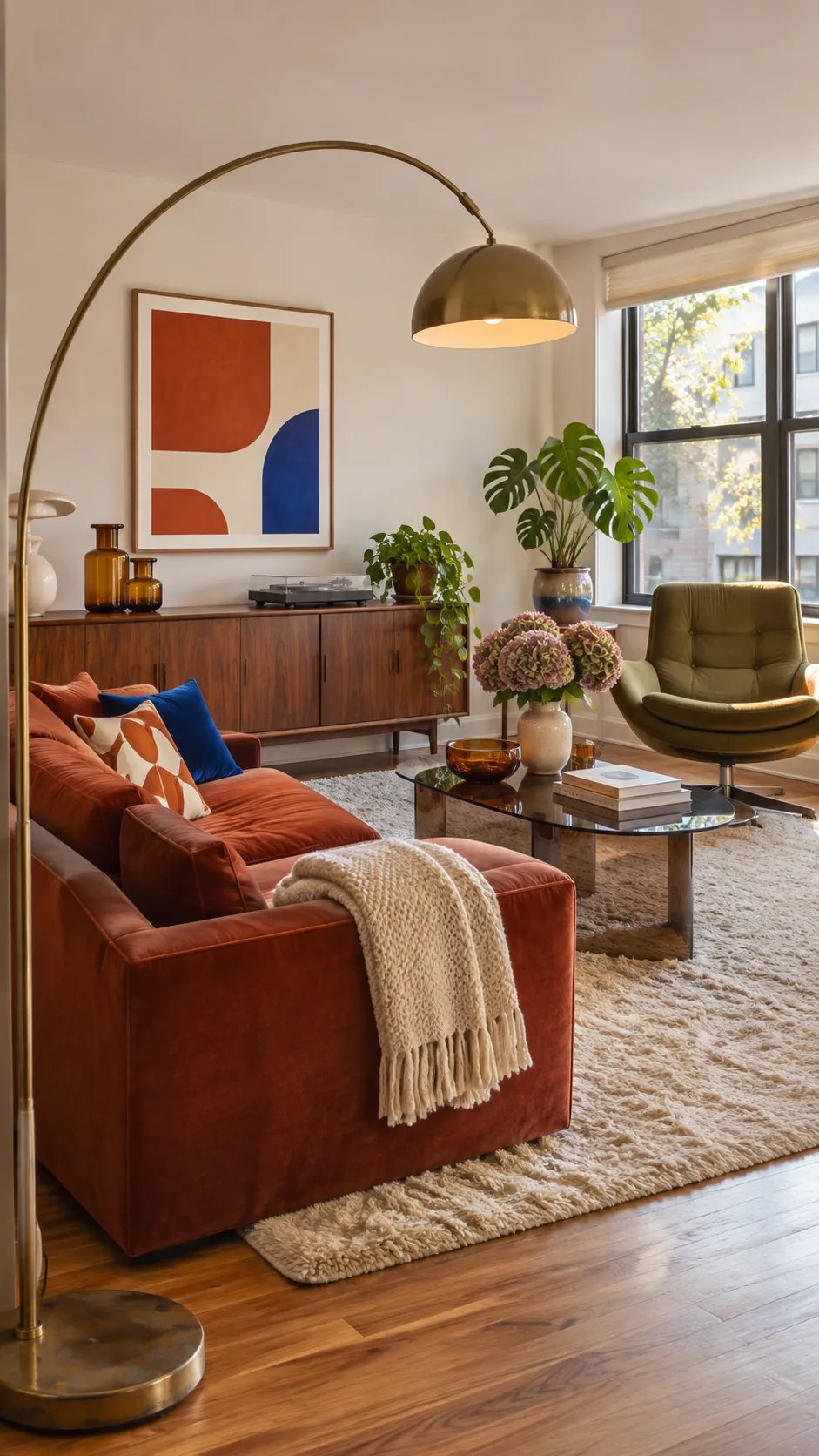
A room can look nostalgic without becoming a museum or forcing every useful piece out the door. The strongest results come from solving layout, lighting, and comfort first, then adding a few period shapes, colors, and materials with conviction. This approach also makes thrifted finds and sentimental furniture easier to combine.
Sunken Conversation Zone
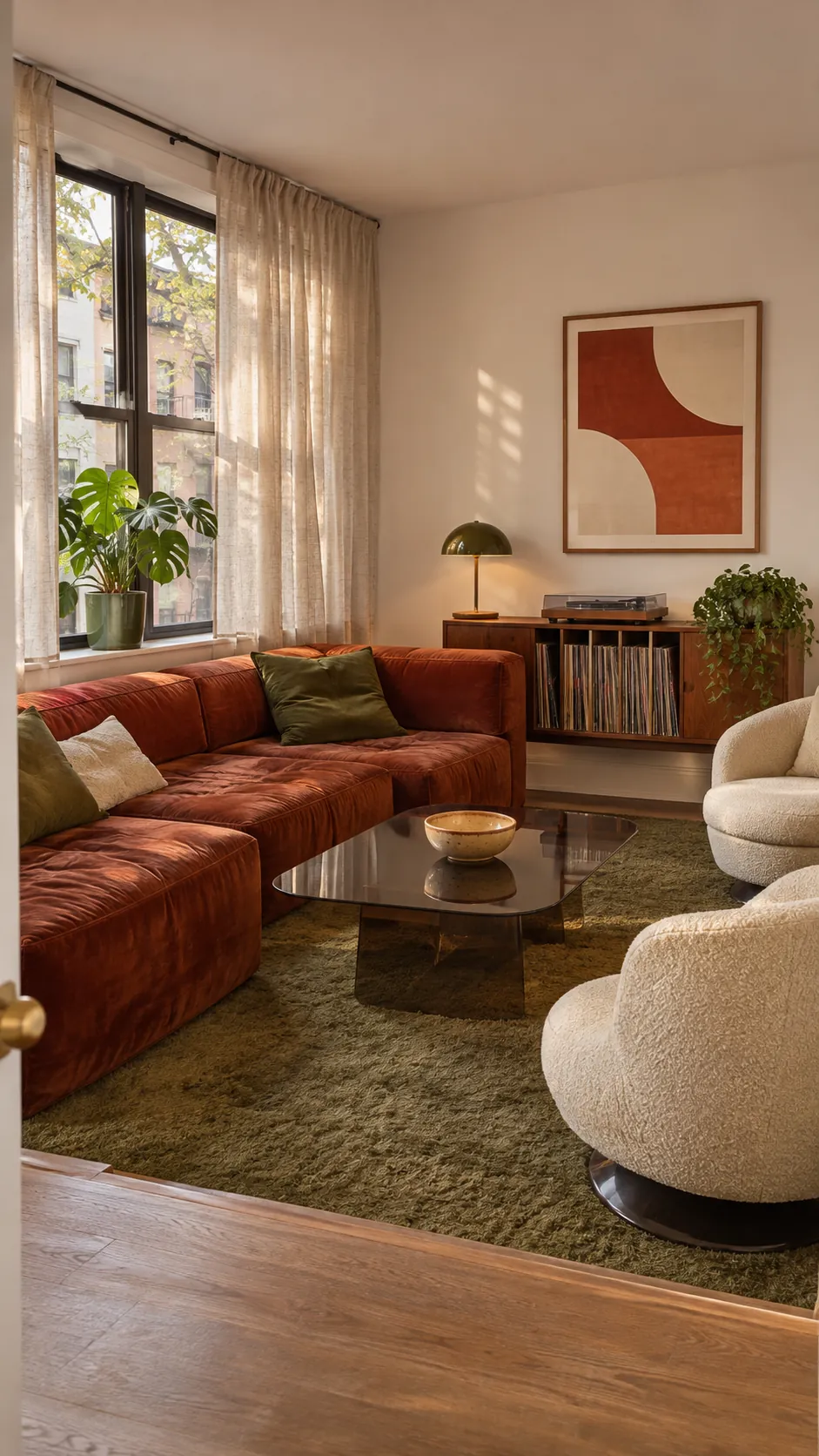
Use a low modular sofa and two rounded lounge chairs to shape a conversation zone without copying a full period room. A thick rug can suggest the cozy depth of a sunken lounge when changing the floor is impossible. Keep the walkway clear so the arrangement feels social rather than crowded.
Walnut Media Wall
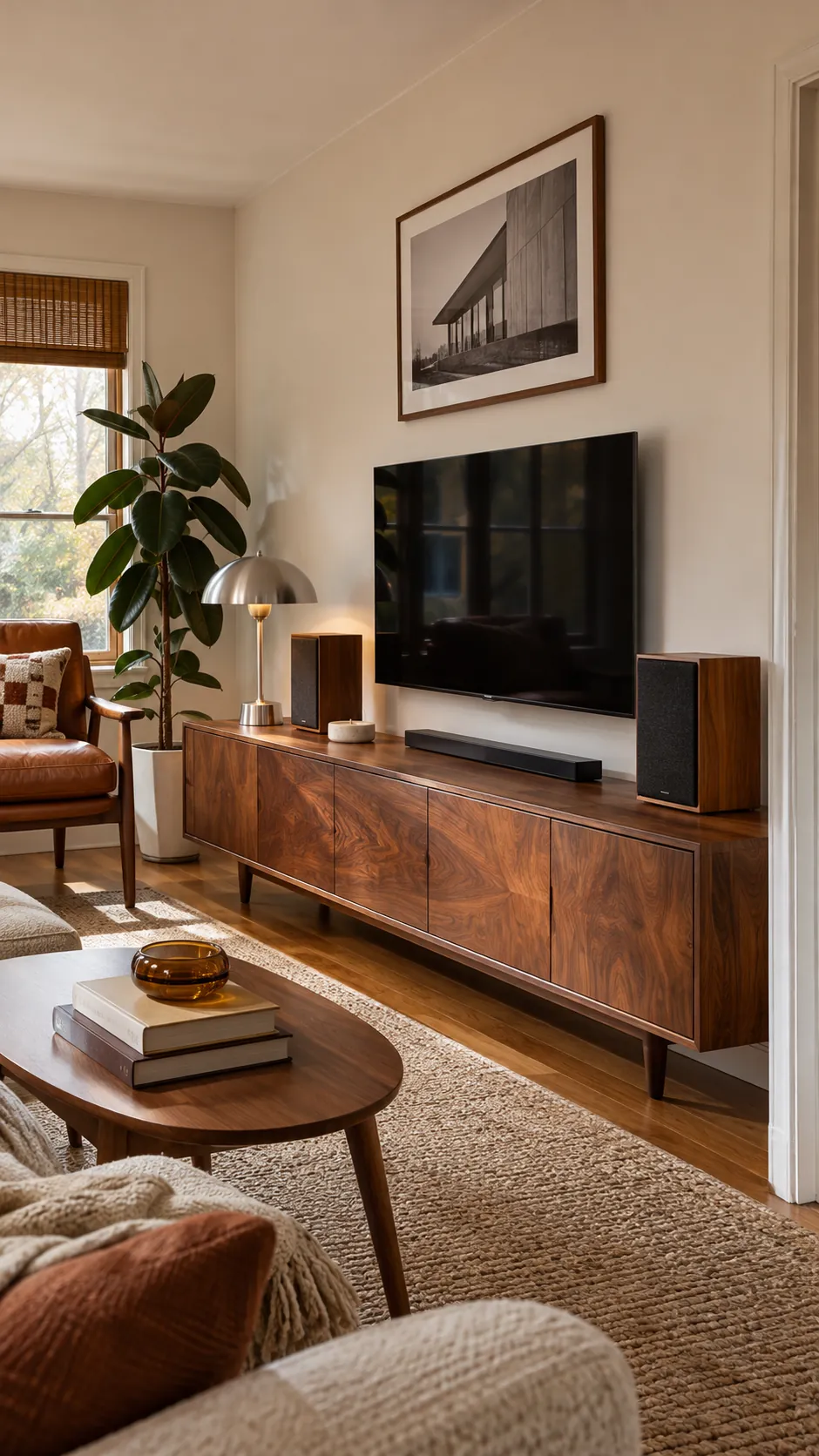
A walnut media unit gives a modern television a stronger period context while hiding cables and small devices. Choose one long low cabinet instead of several tiny stands because the uninterrupted line makes the room calmer. Leave open wall area around it so the wood grain remains the focal material.
Mushroom Floor Lamp
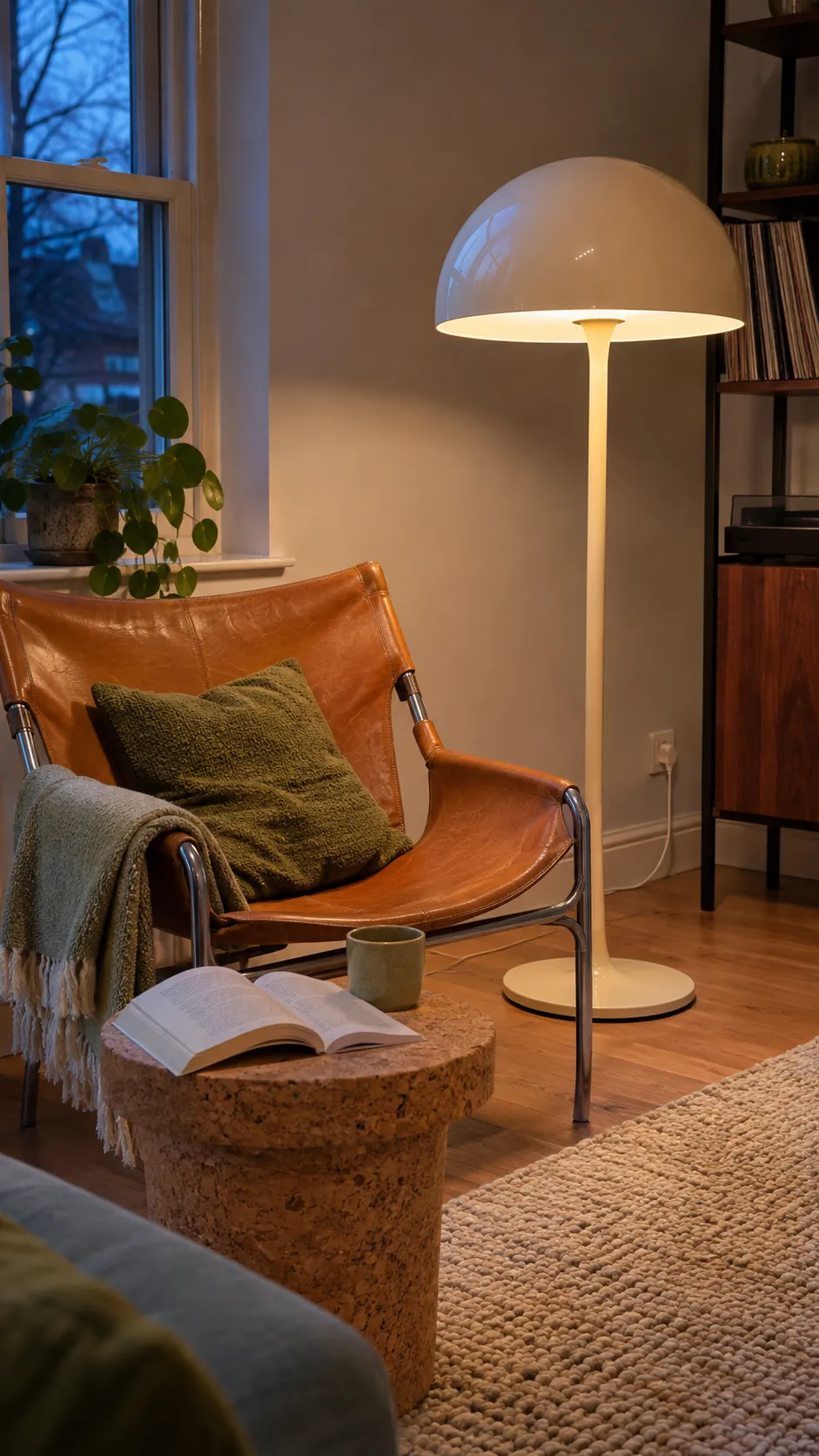
A sculptural mushroom lamp adds a clear retro note without demanding a matching furniture set. Place it beside the seat that needs task light, then let its glow overlap with a second softer source across the room. This layered lighting avoids the flat feeling that often comes from one bright ceiling fixture.
Avocado Green Sofa
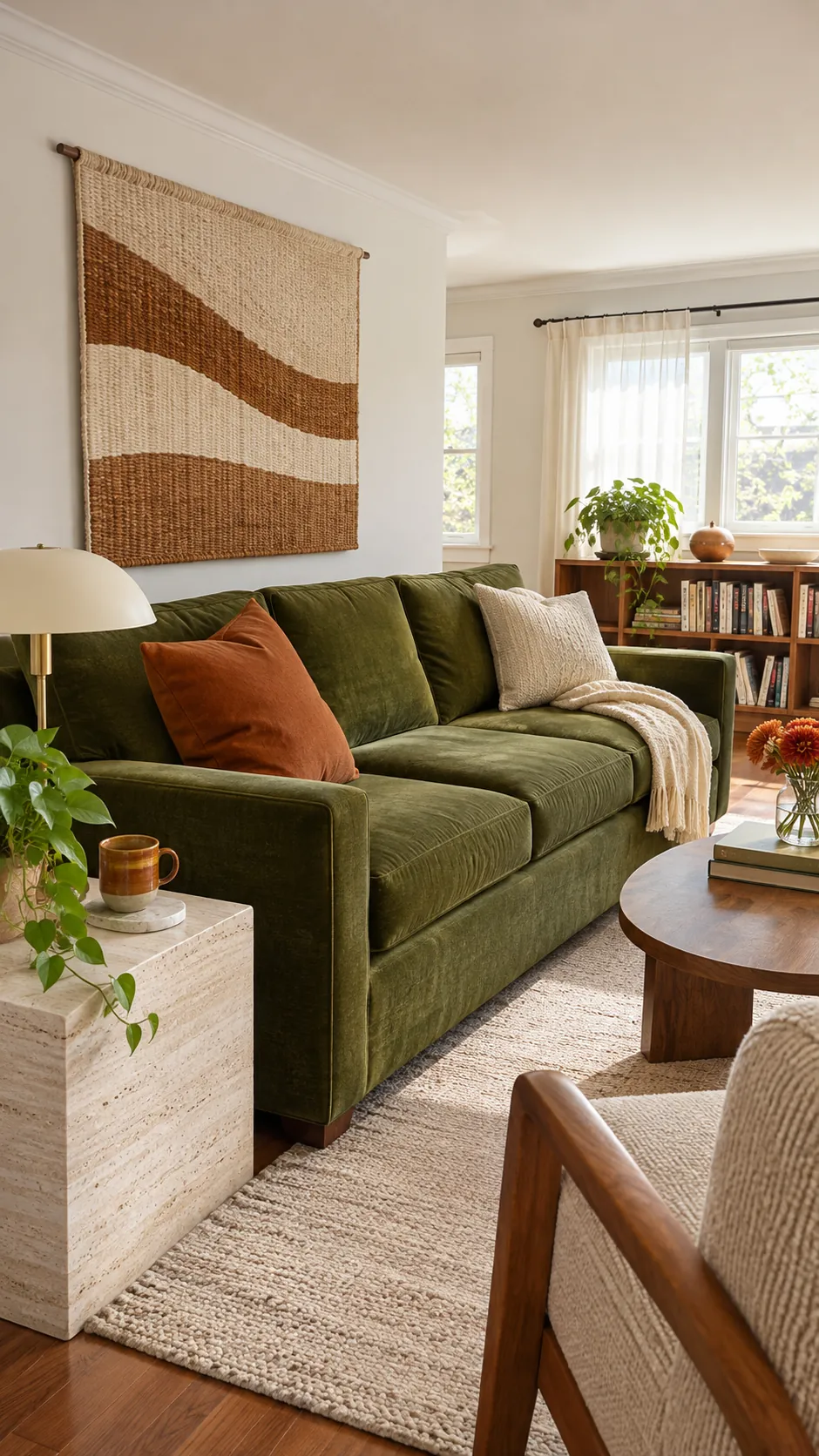
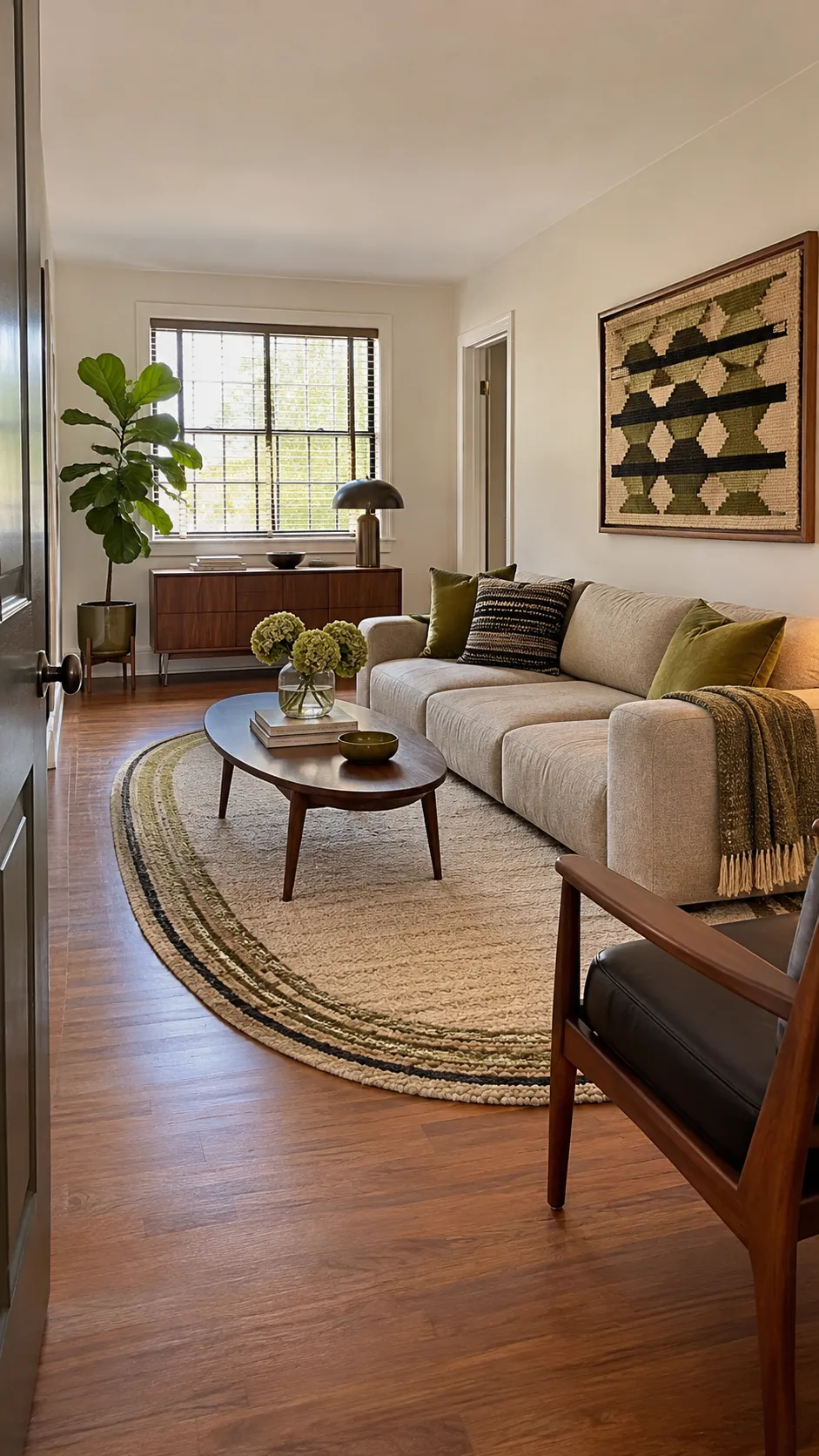
An avocado green sofa can carry the palette when the rest of the room stays quieter. Repeat the green once in a small object or textile instead of spreading it across every surface. Walnut, cream, and a little burnt orange keep the color grounded and easy to live with.
Chrome And Glass Tables
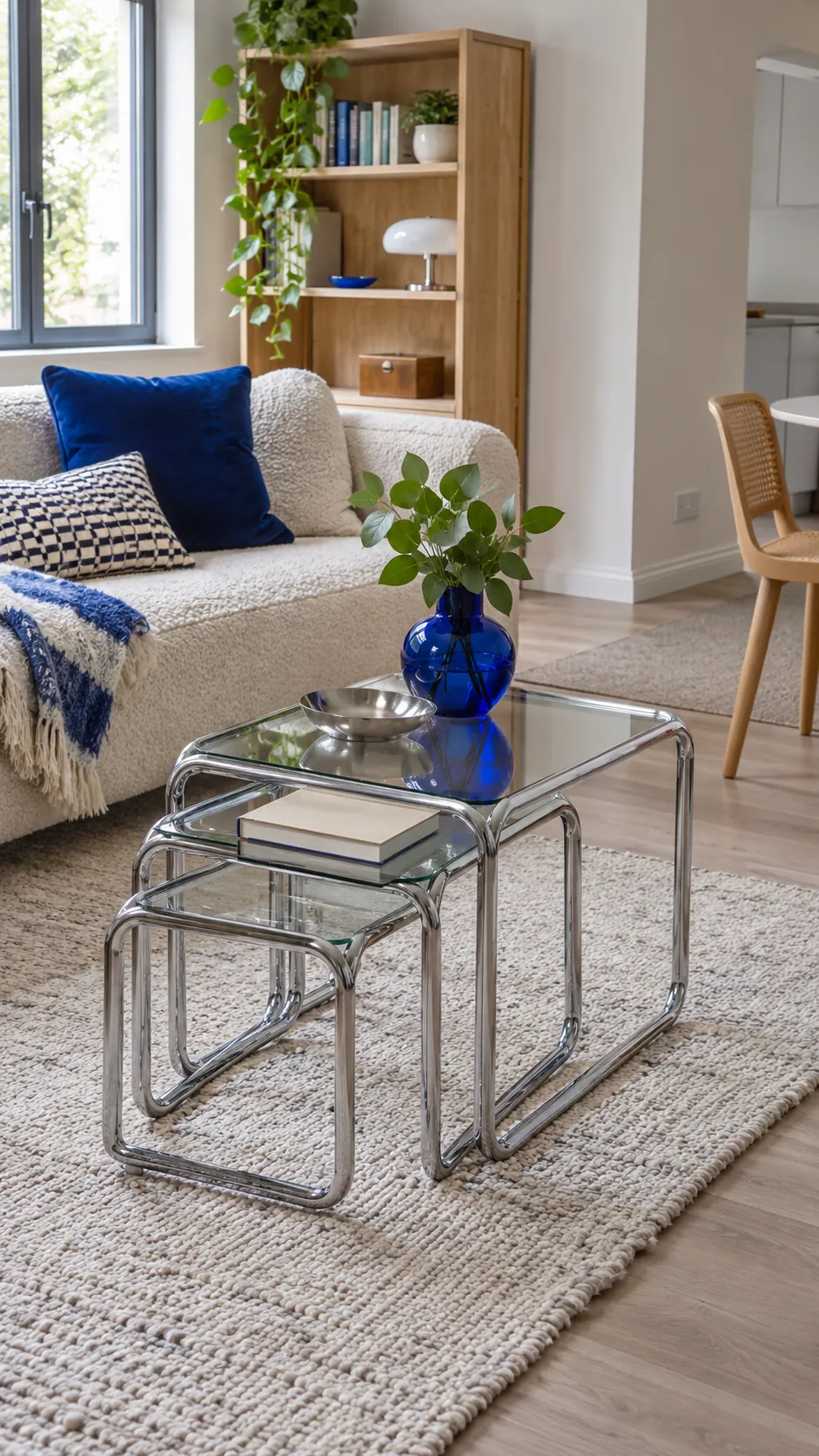
Chrome and glass tables bring in the sleek side of retro style while keeping sight lines open. Rounded edges are useful in a tight seating area because they soften circulation around the sofa. Pair the shine with wool, wood, or upholstery so the room does not feel cold.
Shag Rug Foundation
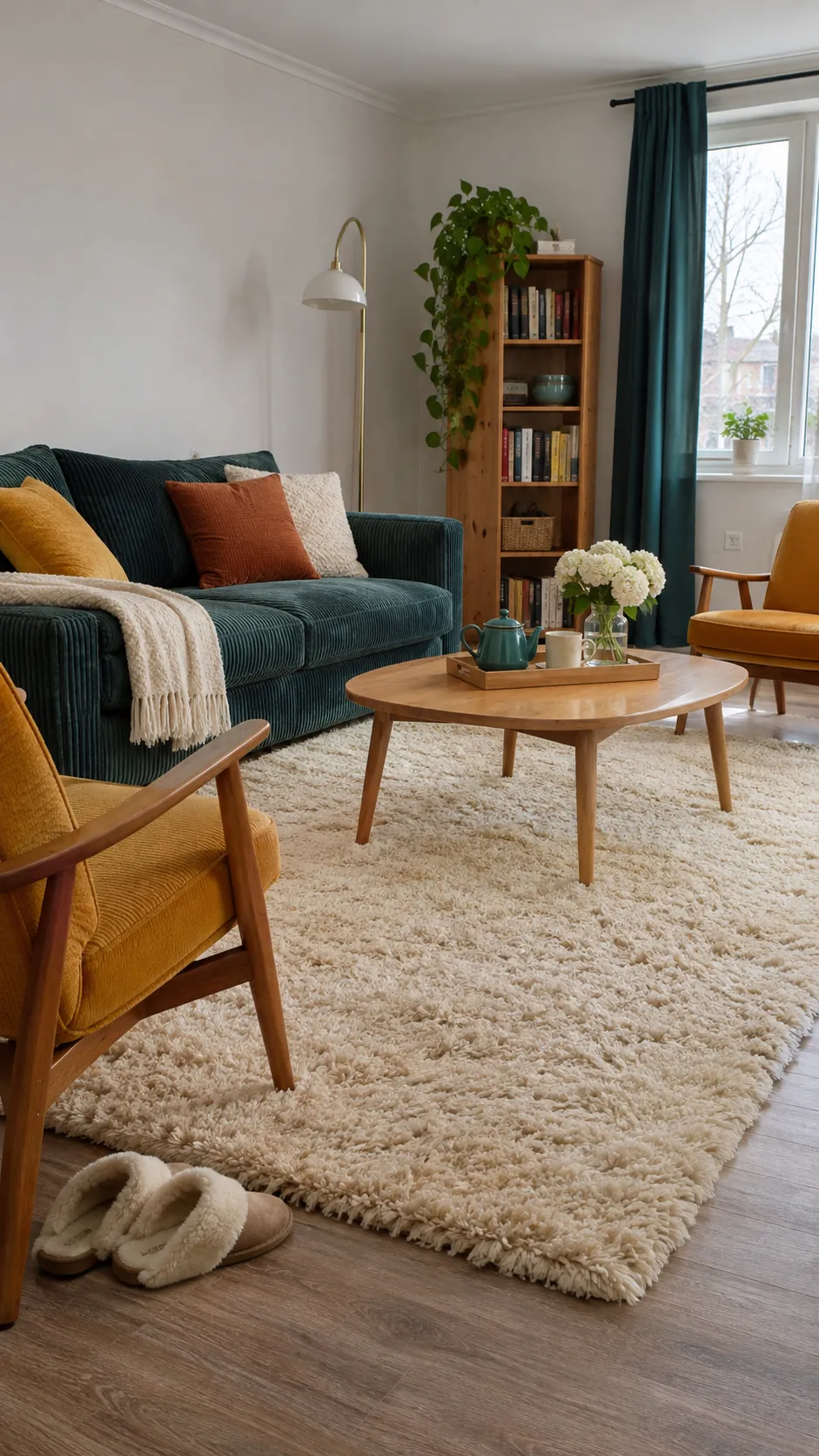
A shag rug creates warmth quickly, but scale matters more than pile length. Let the front legs of the main seats rest on the rug so the furniture reads as one group. A medium pile is easier to clean and still supplies the soft retro texture people expect.
Amber Glass Accents
Amber glass warms a room through color and reflected light without adding bulky furniture. Use a few pieces with different heights, then leave breathing room around them. Grouping every vintage object together can look like a shop display, while a small edited cluster feels personal.
Graphic Curtain Pattern
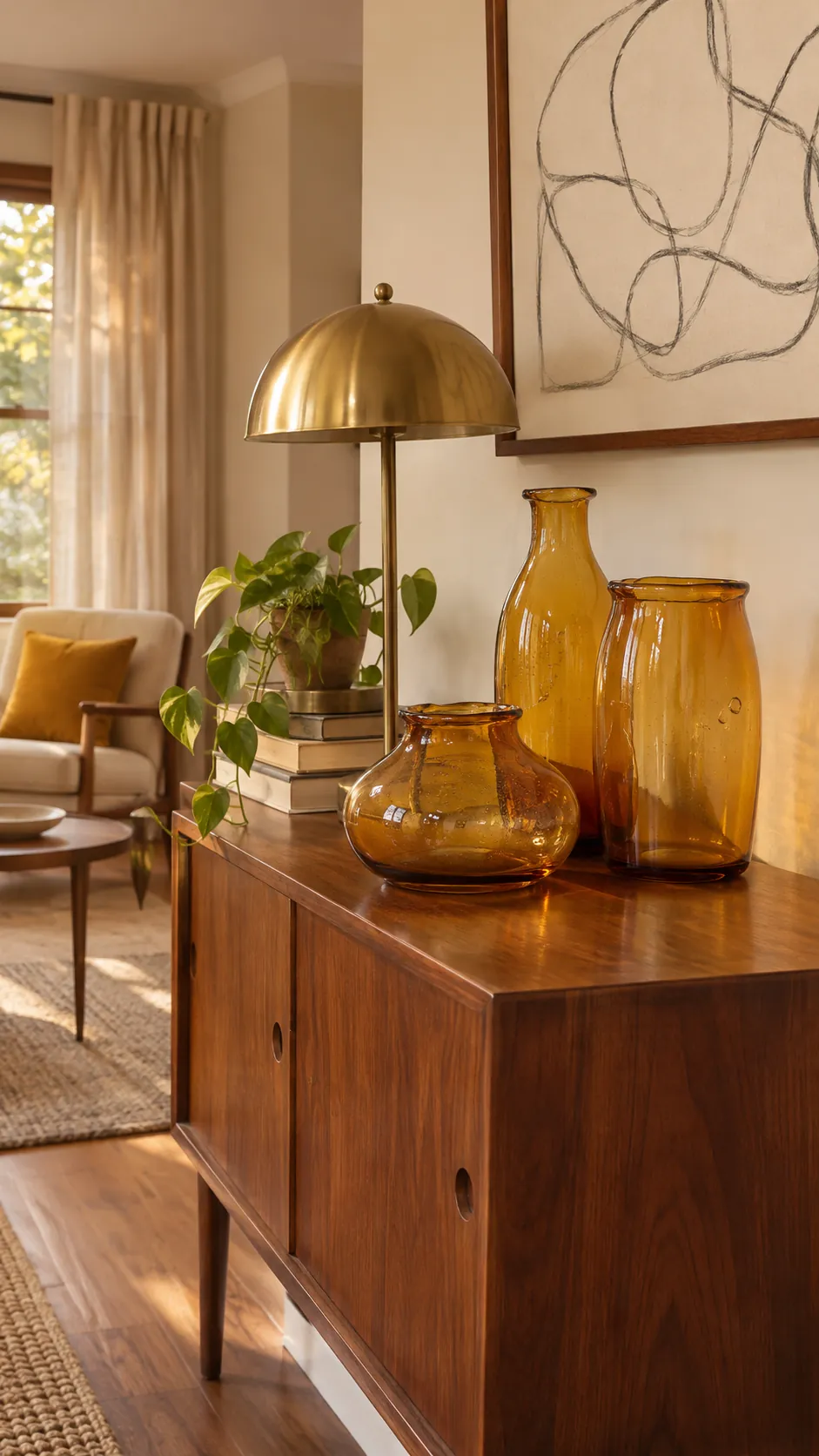
Curtains are a large color field, so a graphic pattern can change the whole room with one move. Choose a repeat that is bold from across the room but simple enough to sit behind furniture. Pull one quiet color from the pattern into a cushion to make the choice feel intentional.
Record Listening Corner
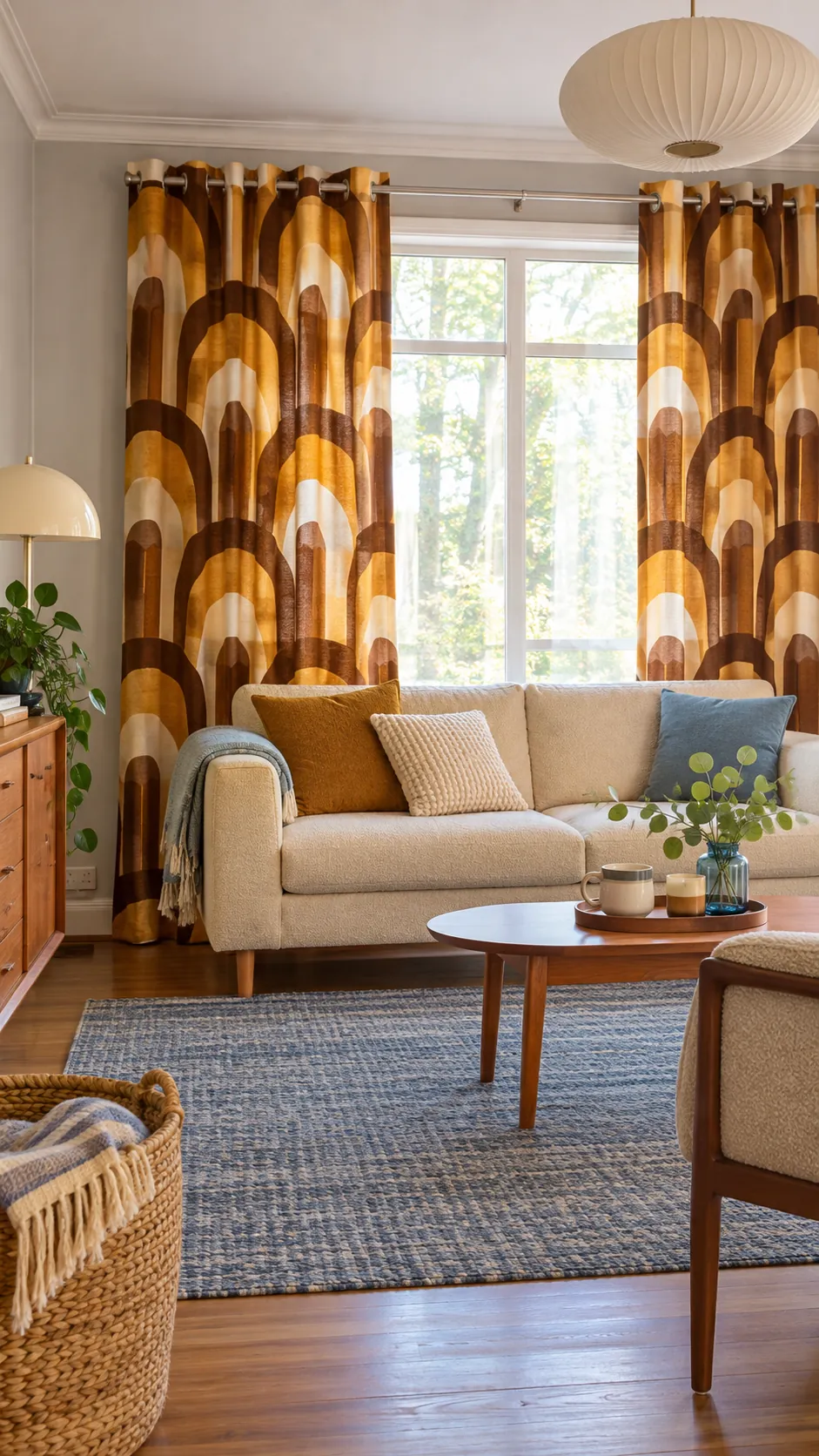
A listening corner works best when records, seating, and controls sit within easy reach. A compact credenza can hold the turntable while closed storage protects the rest of the collection from dust. Angle one comfortable chair toward both the speakers and the main seating area so the corner stays connected to the room.
Rattan Lounge Chair
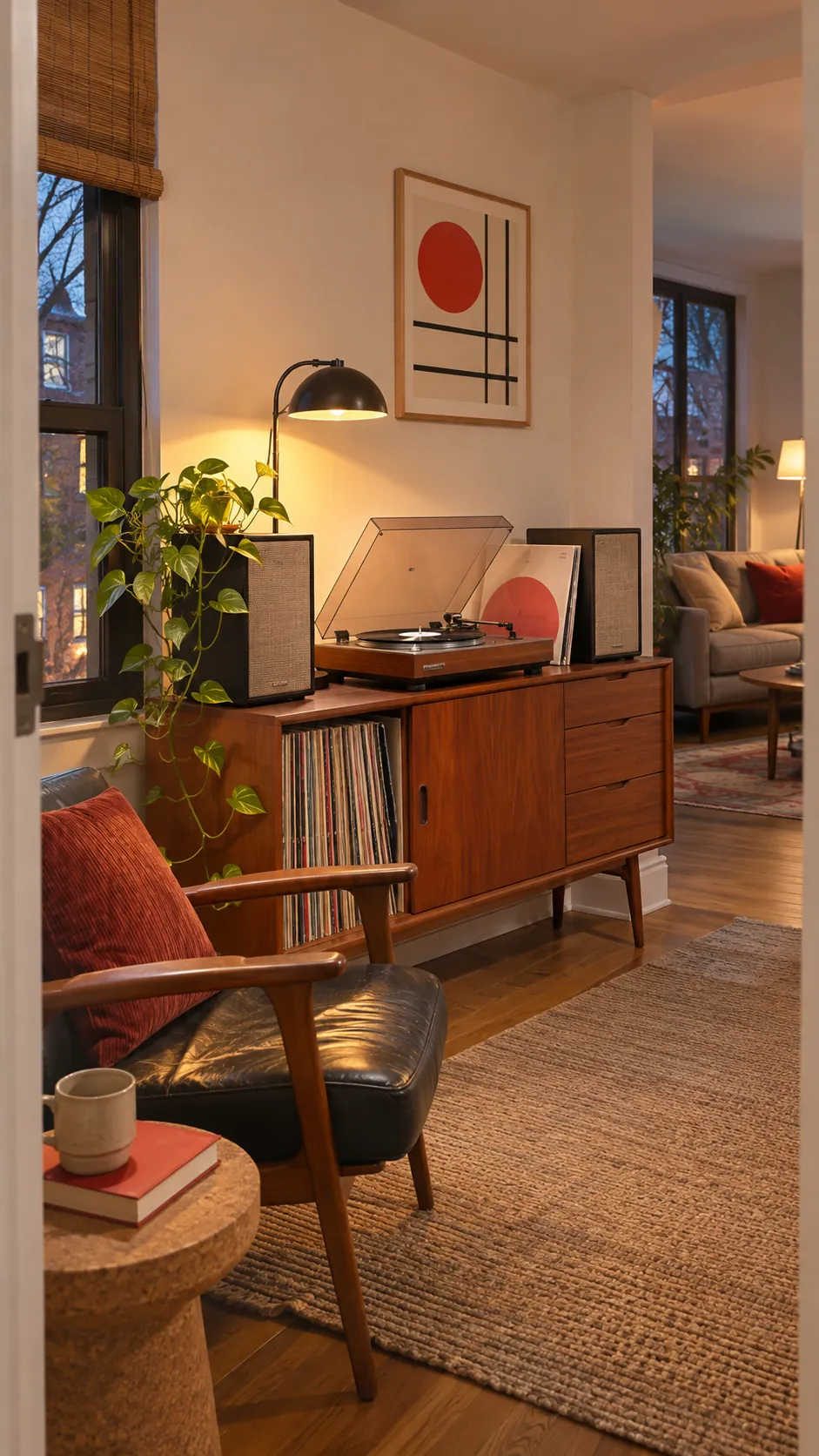
A rattan chair lightens a room filled with solid upholstered pieces. Look for tight cane work and a stable frame, especially when buying secondhand. A tailored seat cushion improves comfort while preserving the open shape that makes the chair useful in small rooms.
Burnt Orange Reading Nook
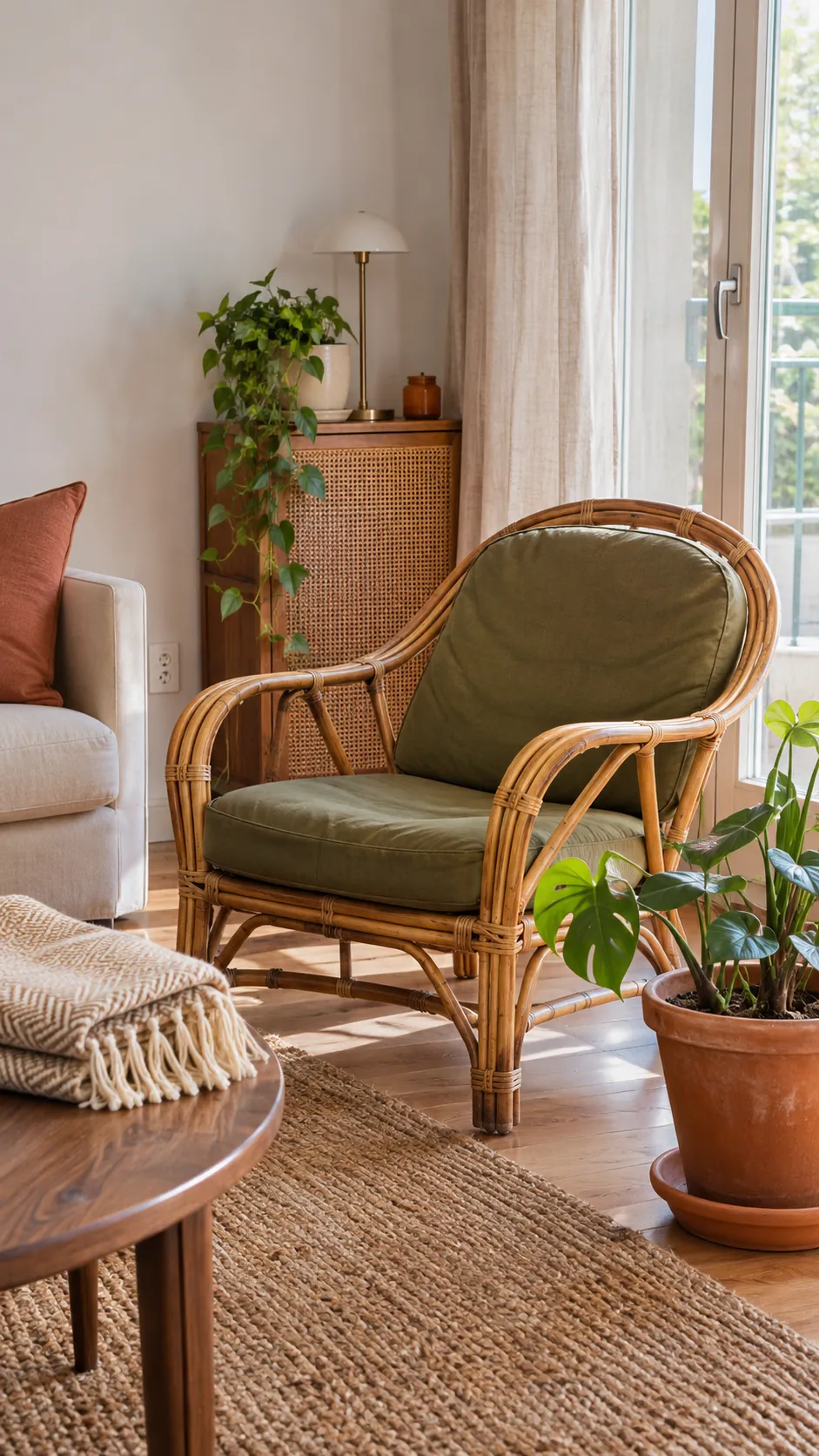
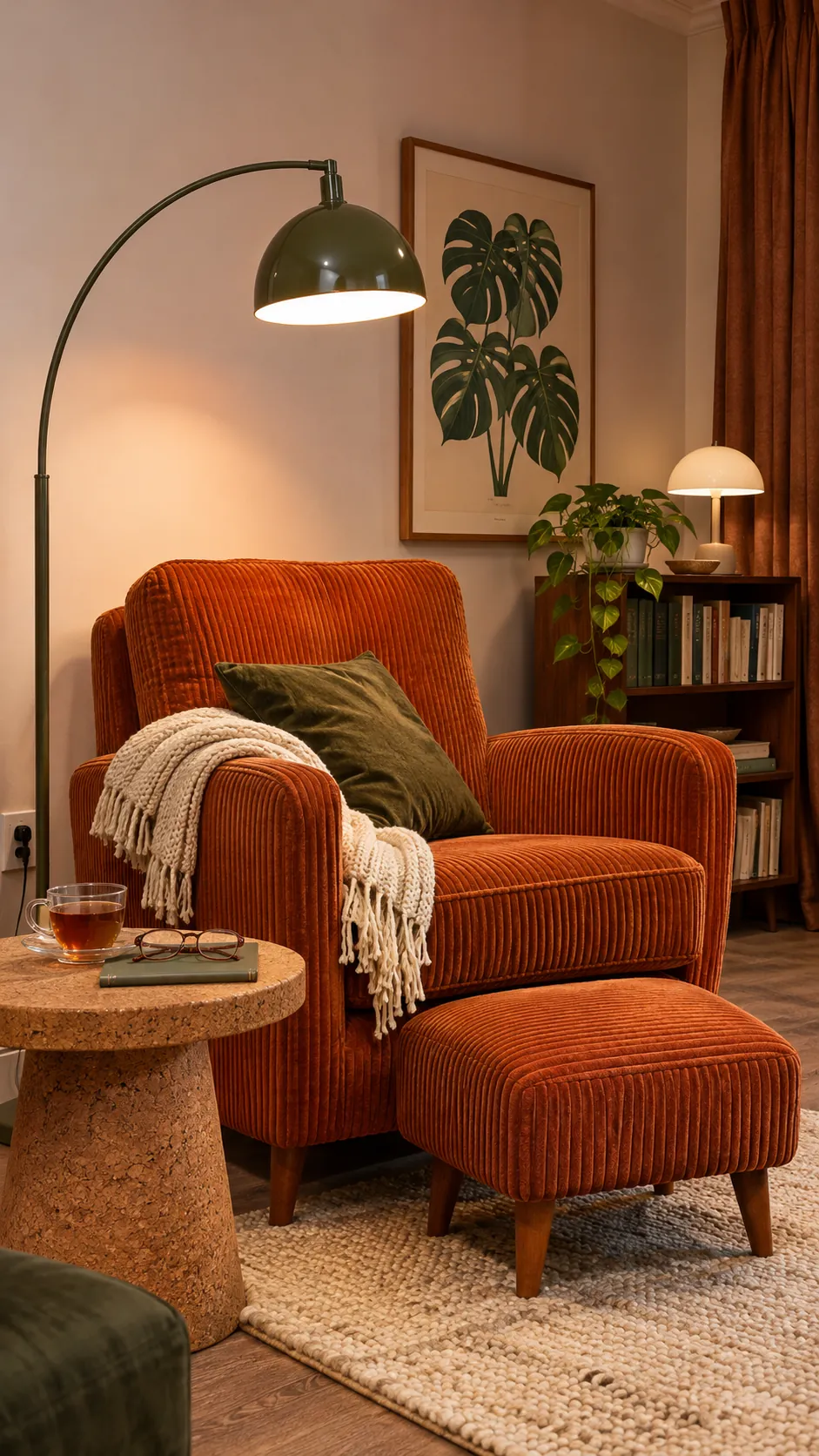
Burnt orange works well in a reading nook because the color feels warm even when daylight is limited. Build the corner around one comfortable chair, a reachable lamp, and a surface for a drink. A small footstool makes the setup more useful without requiring a large recliner.
Modular Storage Cubes
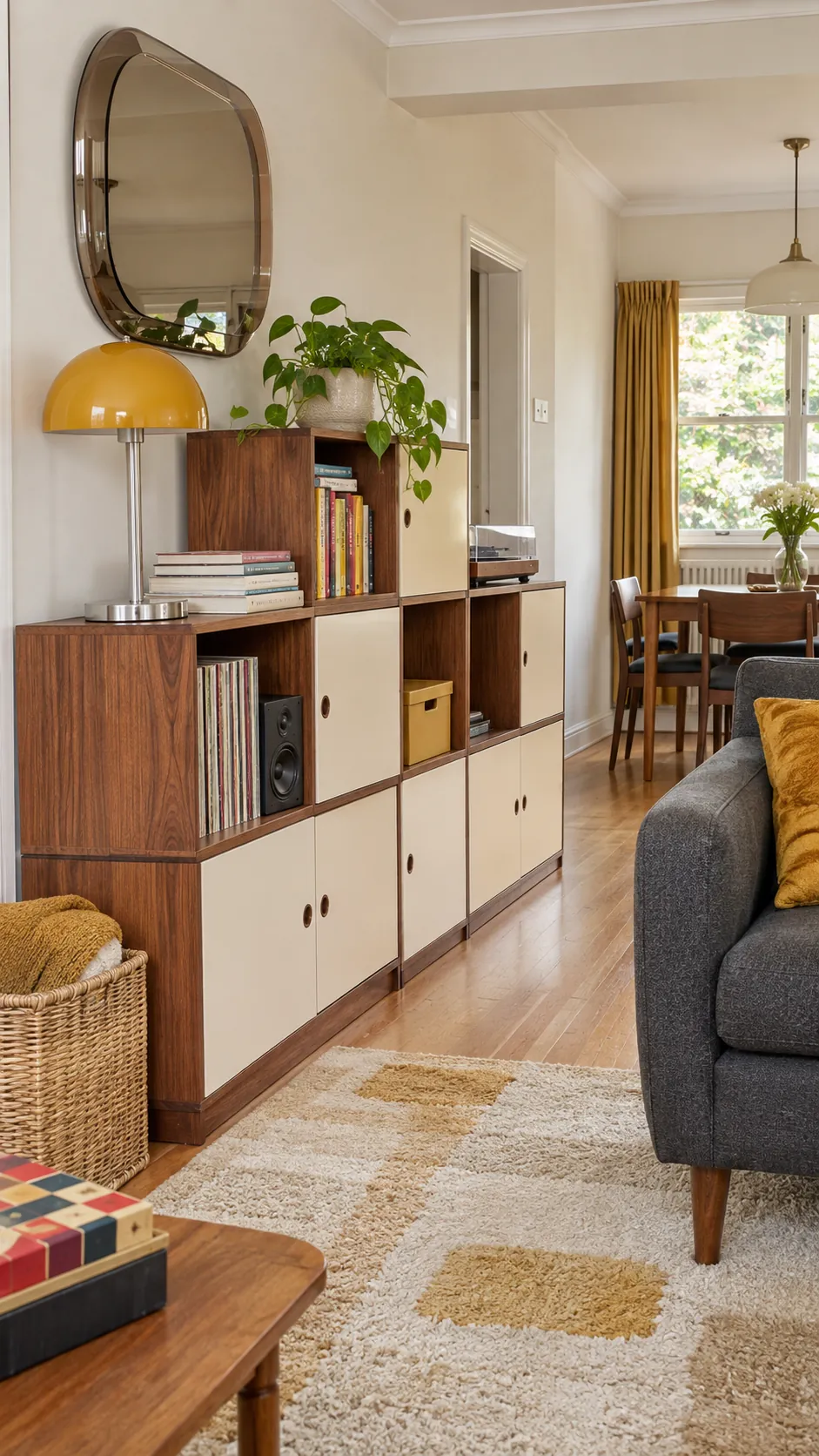
Modular cubes can hold books, games, and objects while adapting to a wall that may change later. Mix open and closed sections so everyday clutter has somewhere to disappear. Keep the top line lower than eye level when the room is narrow, which preserves a sense of width.
Checkerboard Textile Mix
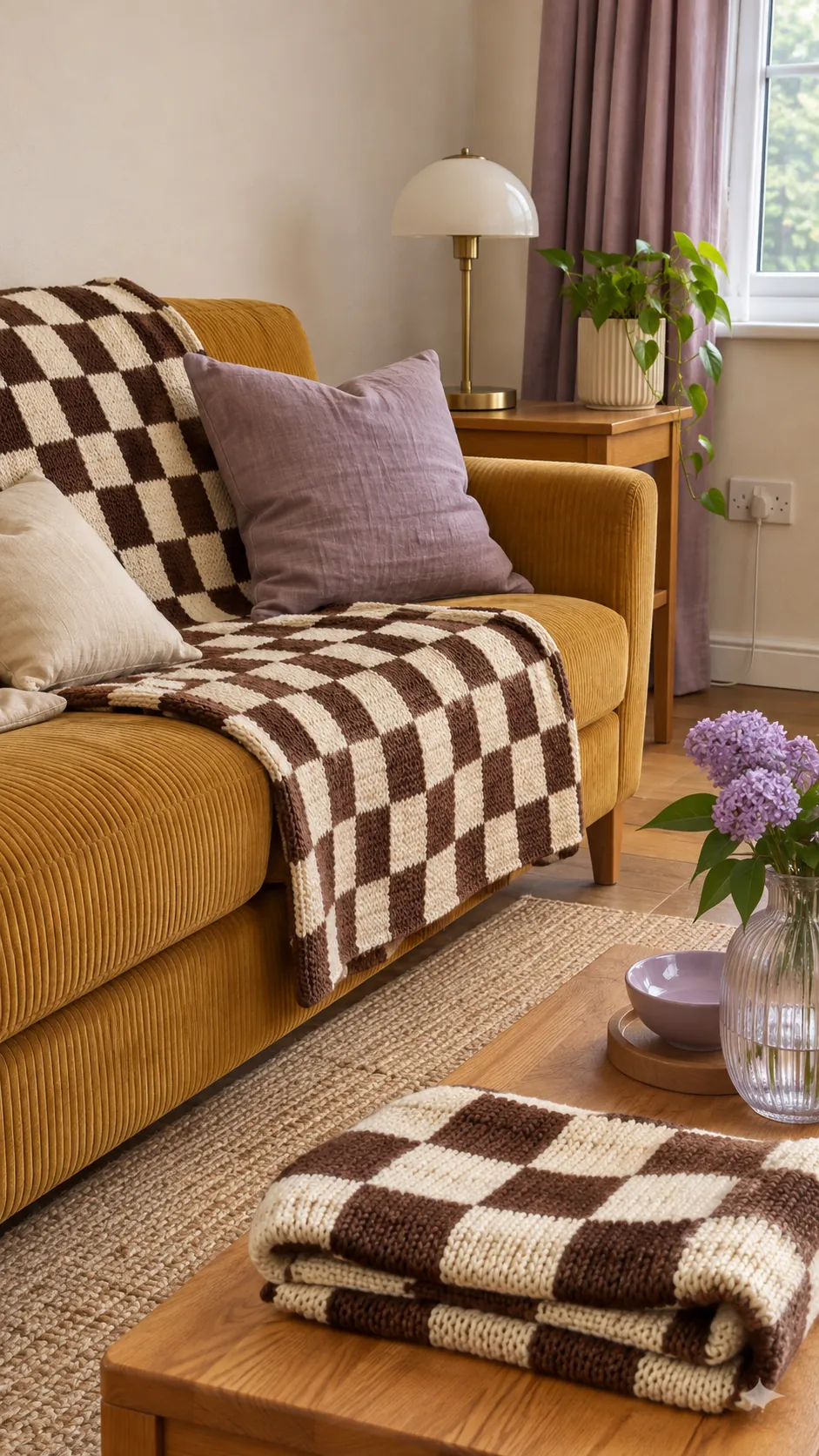
A checkerboard textile adds rhythm, but it needs quieter neighbors to remain readable. Use it on one throw or cushion rather than repeating the pattern on the rug and curtains. Solid corduroy and plain wool give the eye a place to rest.
Brass Arc Lamp
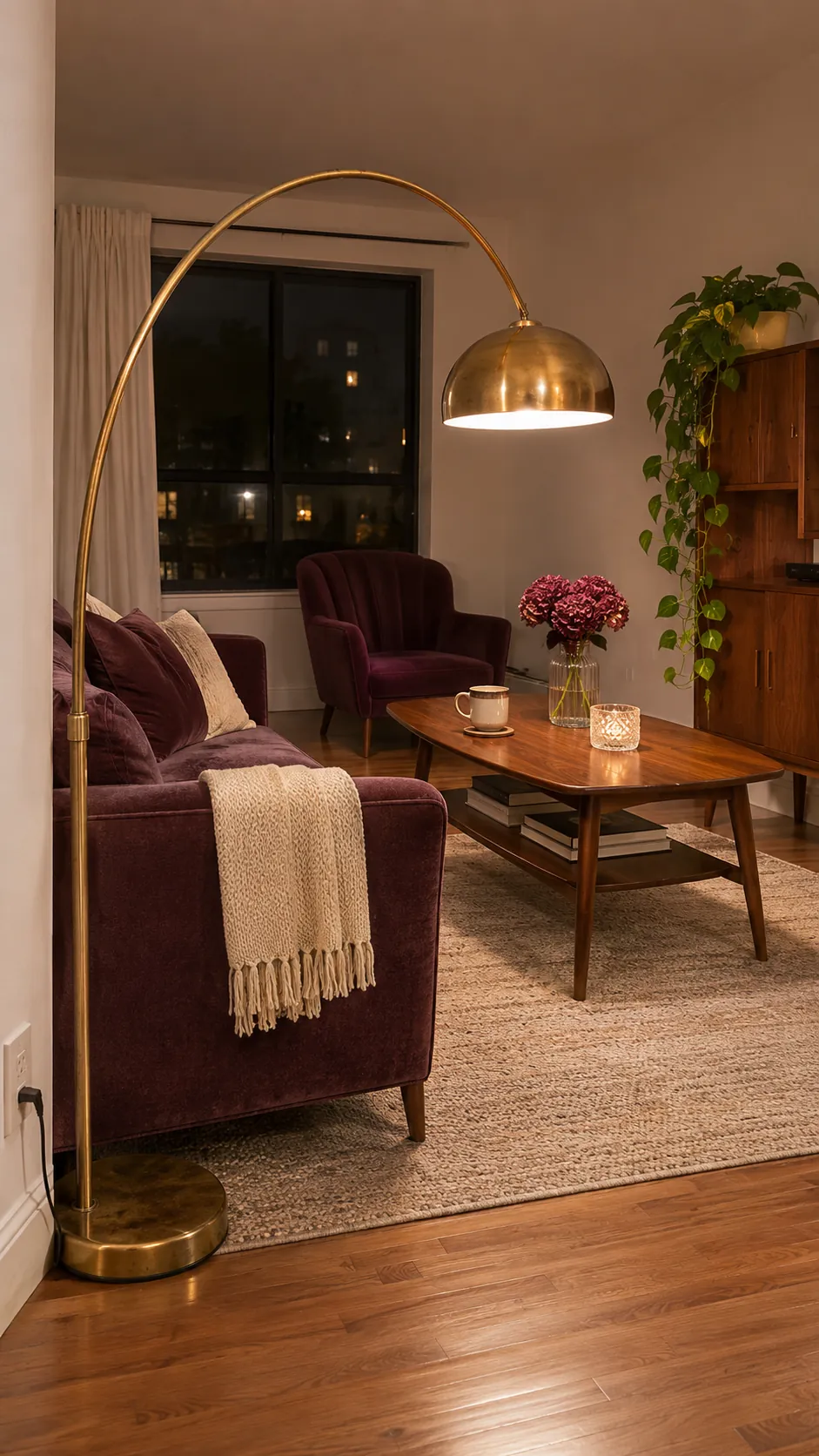
A brass arc lamp can place light over a coffee table without adding a ceiling fitting. Check that the base sits outside the main walking path and that the shade clears seated heads. The curved silhouette supplies drama while the practical position improves evening use.
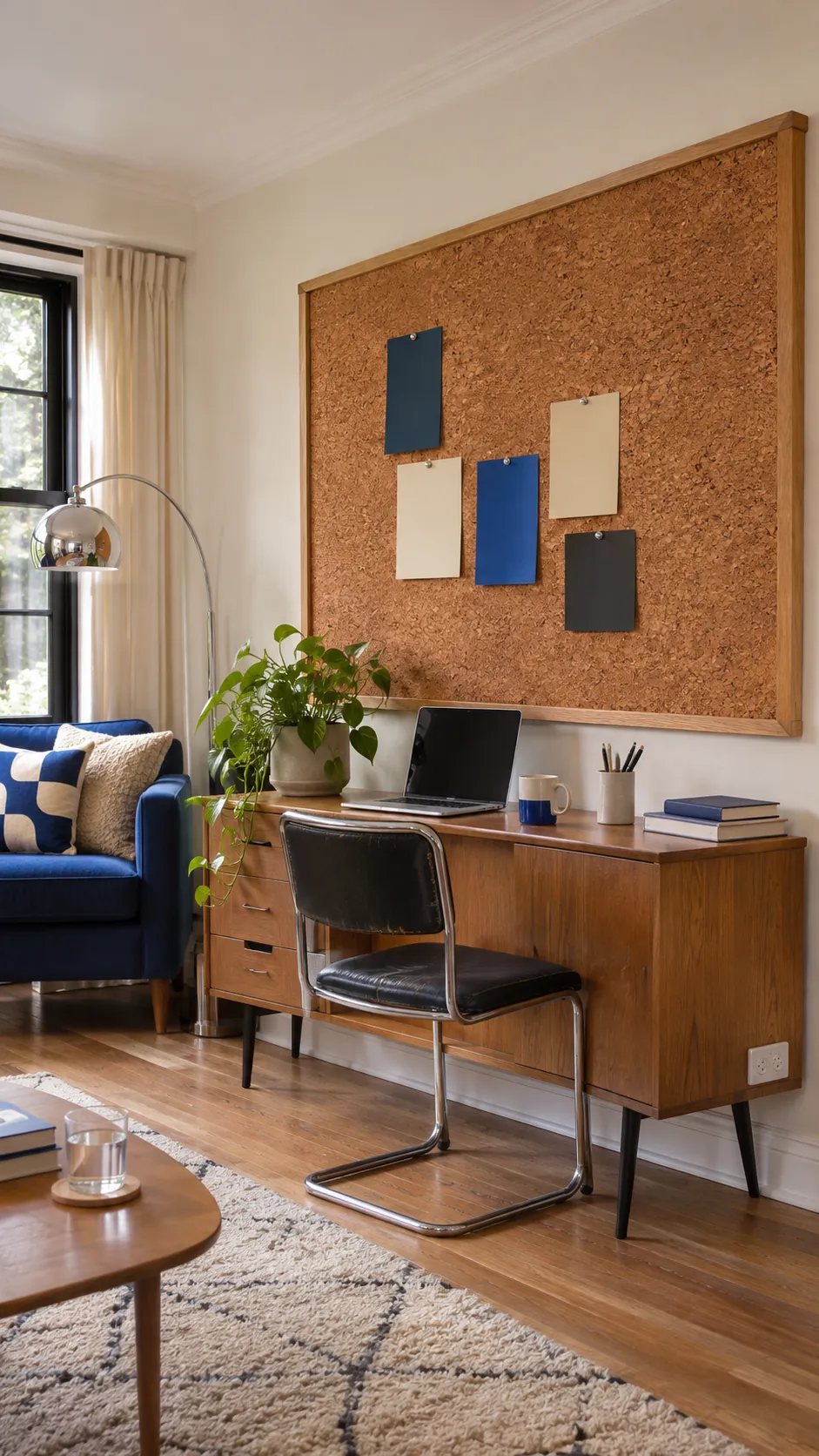
Cork Feature Surface
Cork introduces warmth, sound softness, and a distinctly tactile finish. Apply it to a small panel, cabinet front, or removable board instead of covering every wall. The restrained amount keeps the natural texture interesting and makes the idea more suitable for renters.
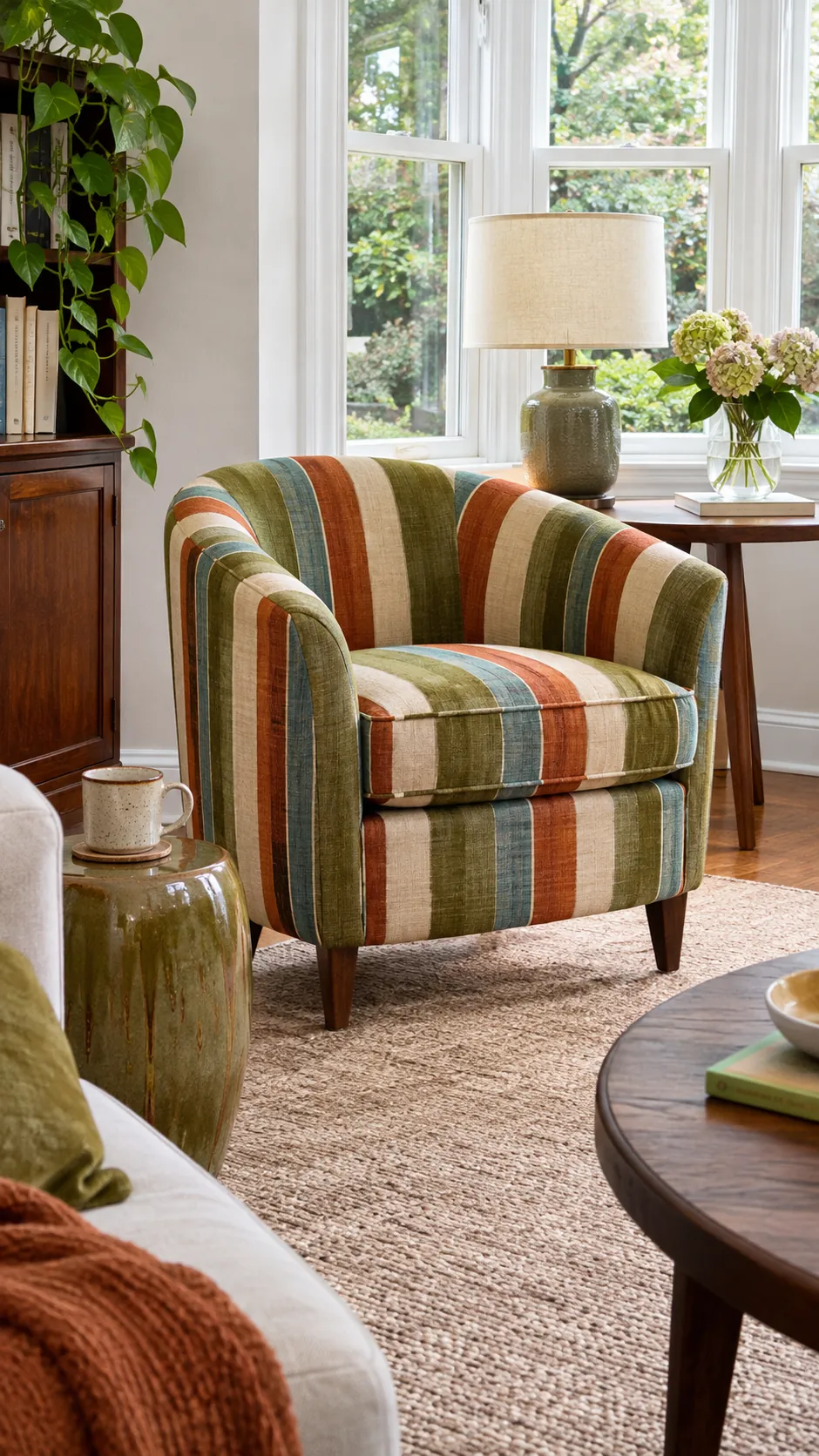
Bold Striped Upholstery
Striped upholstery can revive a small chair and introduce several palette colors at once. Keep the stripe direction aligned carefully across the seat and back because poor pattern matching is easy to notice. Surround the chair with mostly solid finishes so it earns attention without creating visual noise.
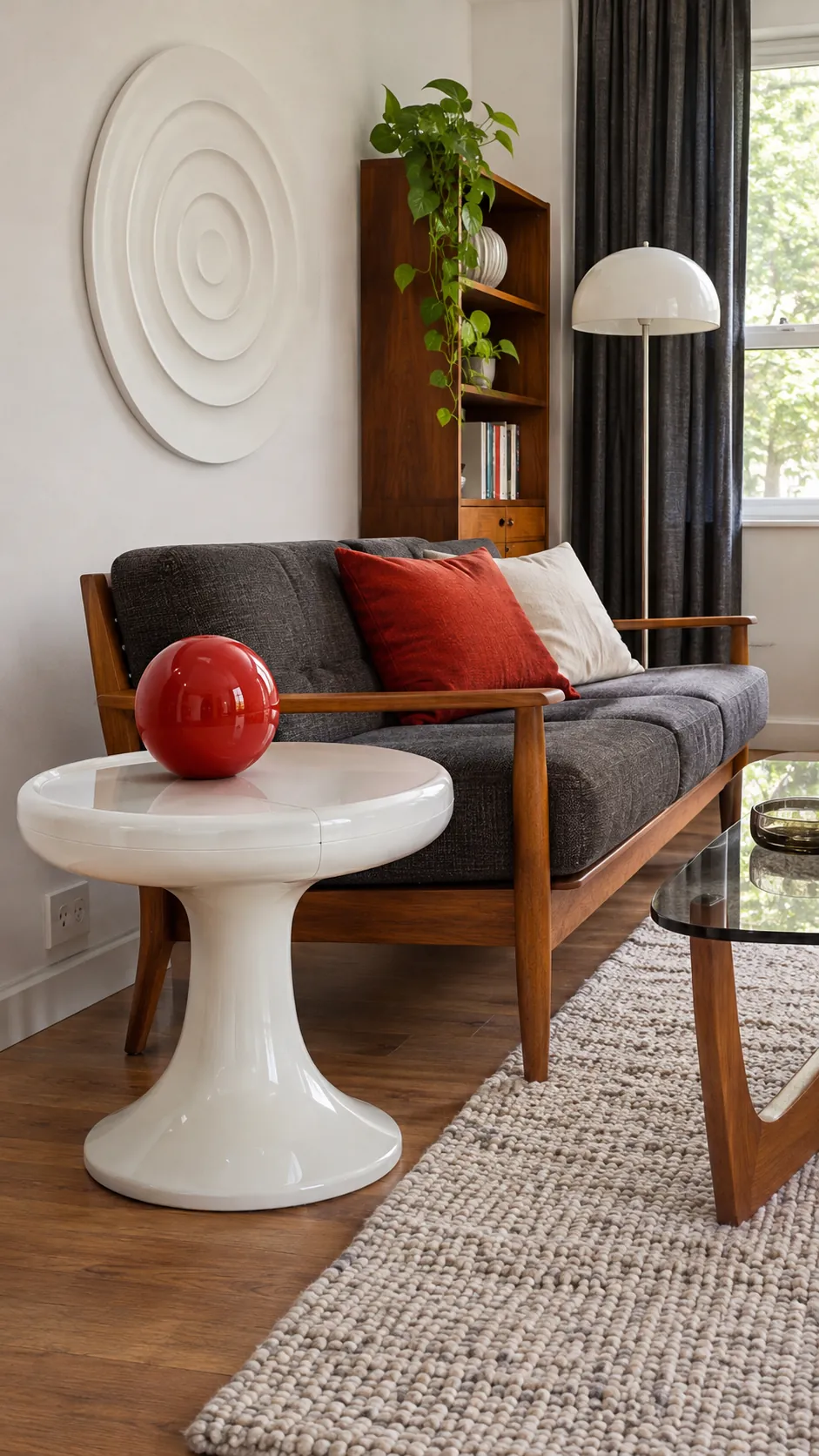
Space Age White Accent
A glossy white accent offers contrast when a retro room leans heavily toward brown wood. One rounded table or lamp is enough to introduce a space age note. Repeat its curve in another shape, not another matching object, to avoid a themed set.
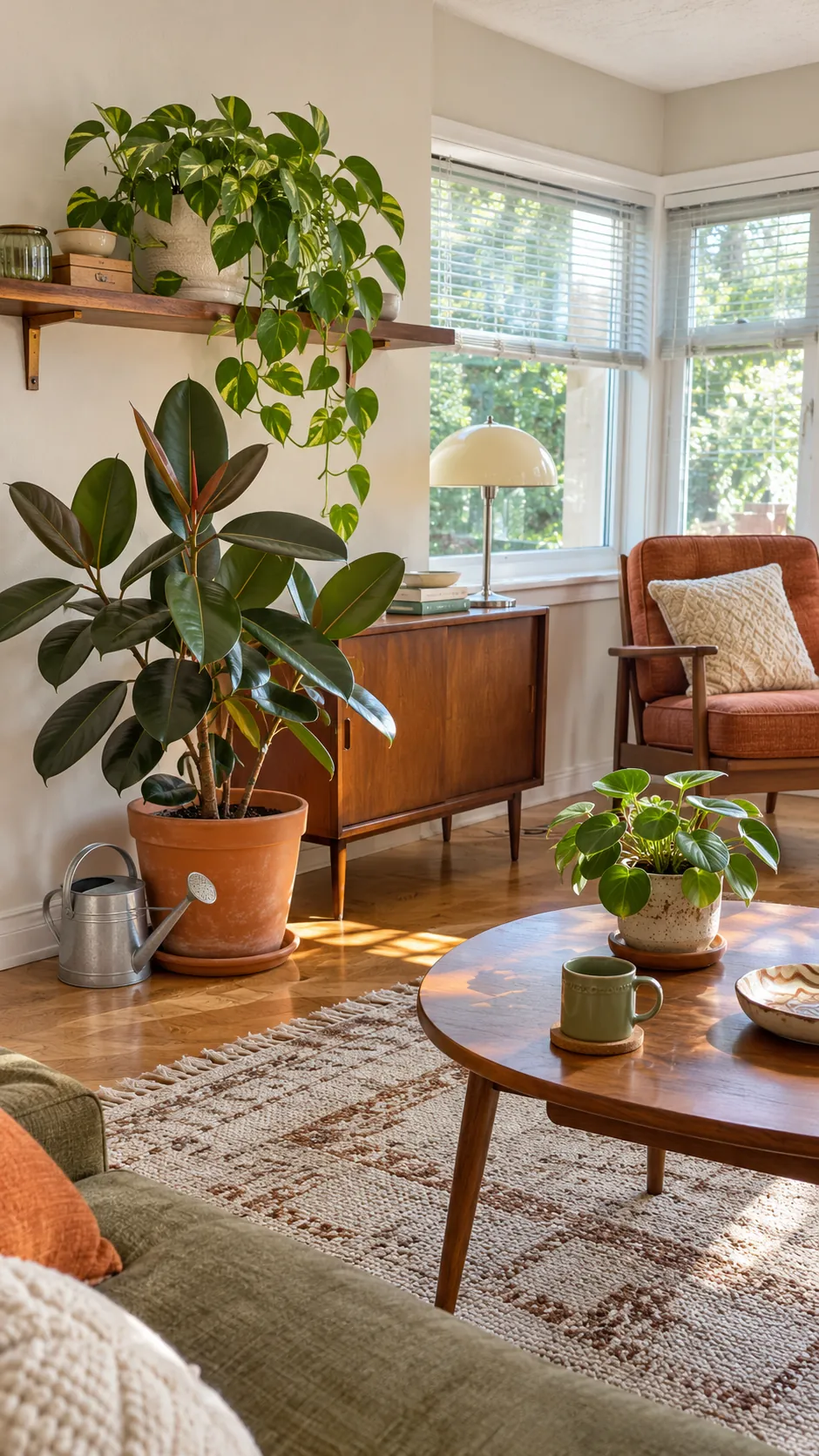
Plants At Varied Heights
Plants make a retro palette feel alive when their placement follows the room rather than filling every empty corner. Combine one floor plant with one trailing plant and one compact tabletop specimen. Give each enough light and keep leaves away from lamps and busy walkways.
Low Profile Sofa Layout
A low sofa can make a modest ceiling feel taller, but the rest of the layout should support that effect. Keep nearby tables and storage at related heights, then add one taller lamp or plant for contrast. Float the sofa slightly away from the wall when space allows so the seating group feels deliberate.
Eclectic Gallery Ledge
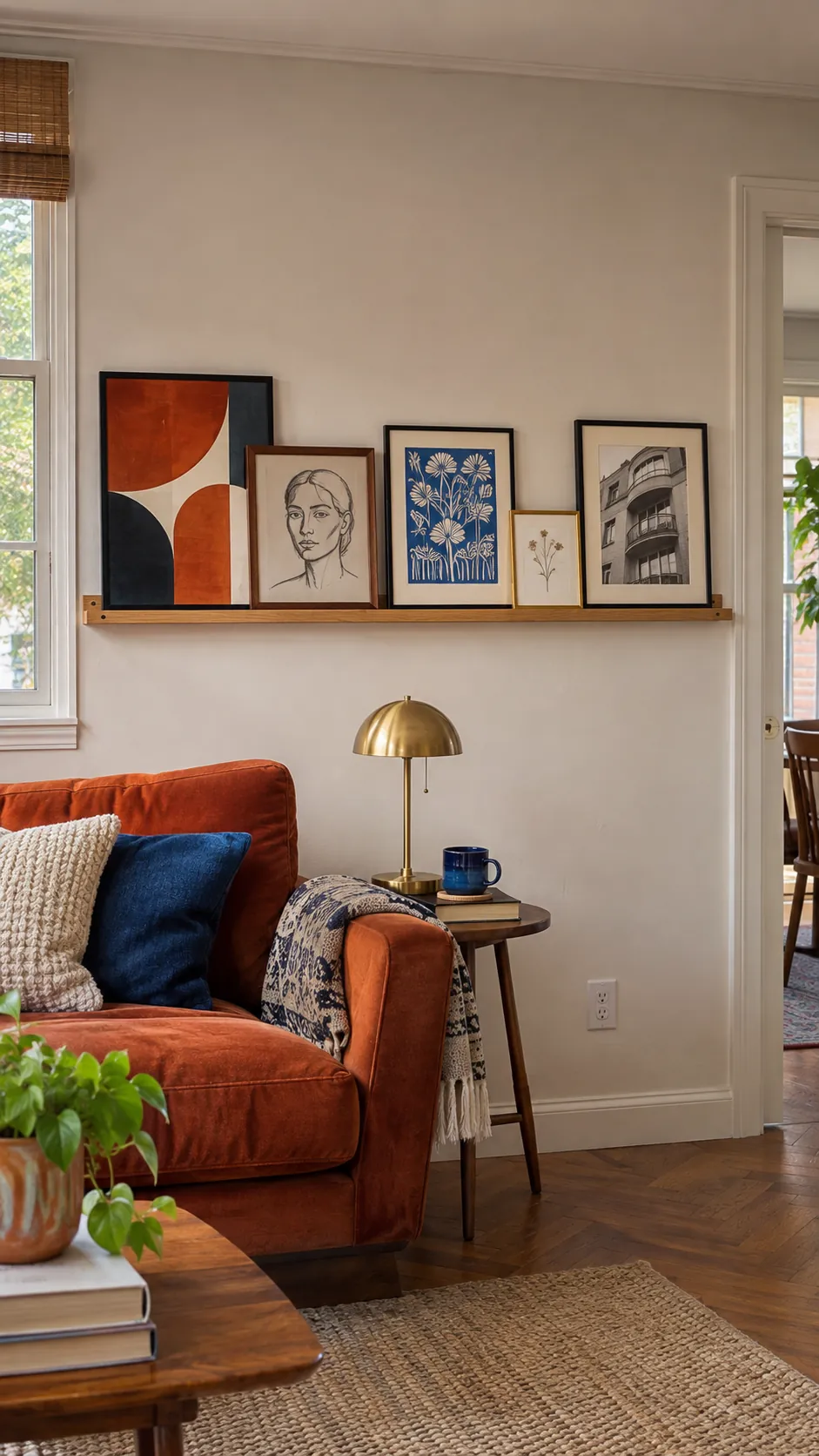
A gallery ledge makes mixed art easier to edit than a fixed grid of many hooks. Layer a few works with different sizes while keeping one common color across the group. Leave gaps between clusters so the display feels collected over time rather than packed for effect.
Balanced Retro Color Plan
A strong retro room usually relies on a controlled palette rather than every period color at once. Choose one dominant neutral, two warm materials, and one clear accent, then test them in daylight and lamplight. This simple limit lets thrifted finds from different decades sit together without losing their character.