A beautiful bowl can hide the very things succulents need most: a way for water to leave, enough space for roots, and light that suits every plant inside. Start with those conditions and the arrangement becomes easier to enjoy beyond its first photograph. The strongest succulent display ideas let the container support the plants instead of asking the plants to tolerate the container.
A terracotta bowl with a clear drainage path
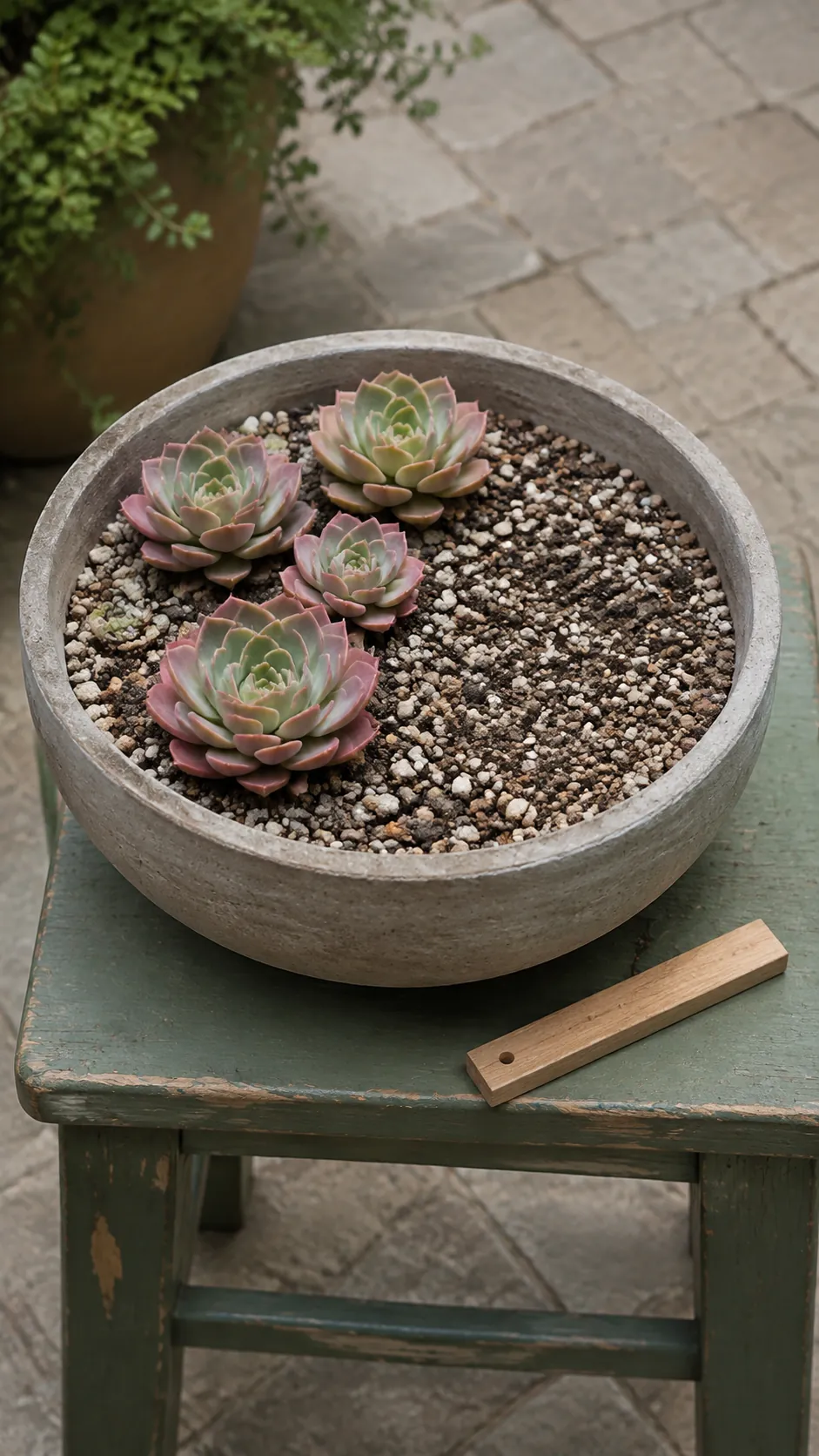
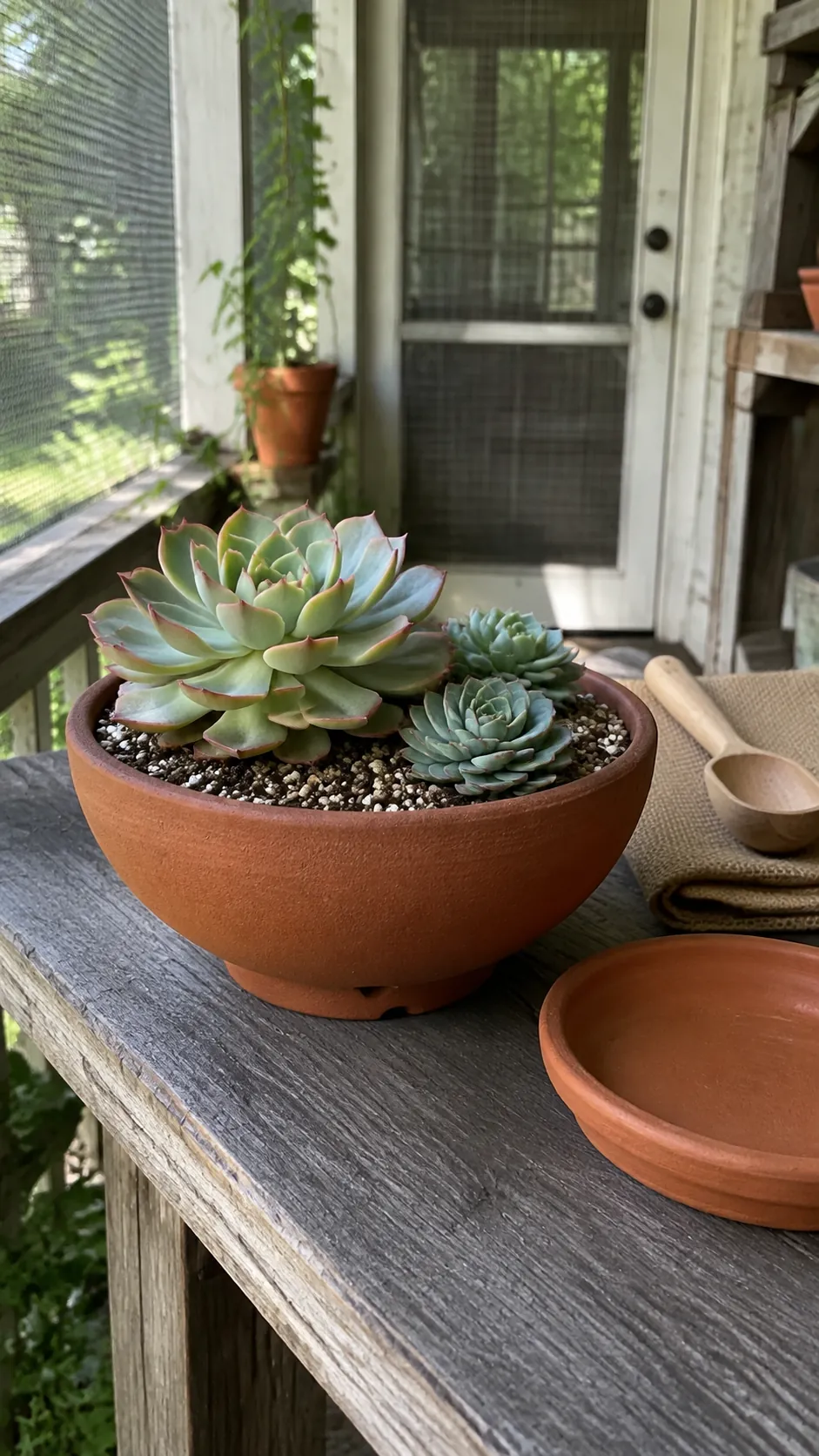
A wide terracotta bowl is an approachable starting point because its unglazed walls allow moisture to escape as well as through the base. Choose a real drainage hole and a separate saucer, then empty the saucer after watering. Stones beneath the soil cannot create an outlet in a sealed container. Size the bowl around the roots you have rather than buying a much larger vessel for a fuller future display.
One sculptural rosette in a quiet stoneware bowl
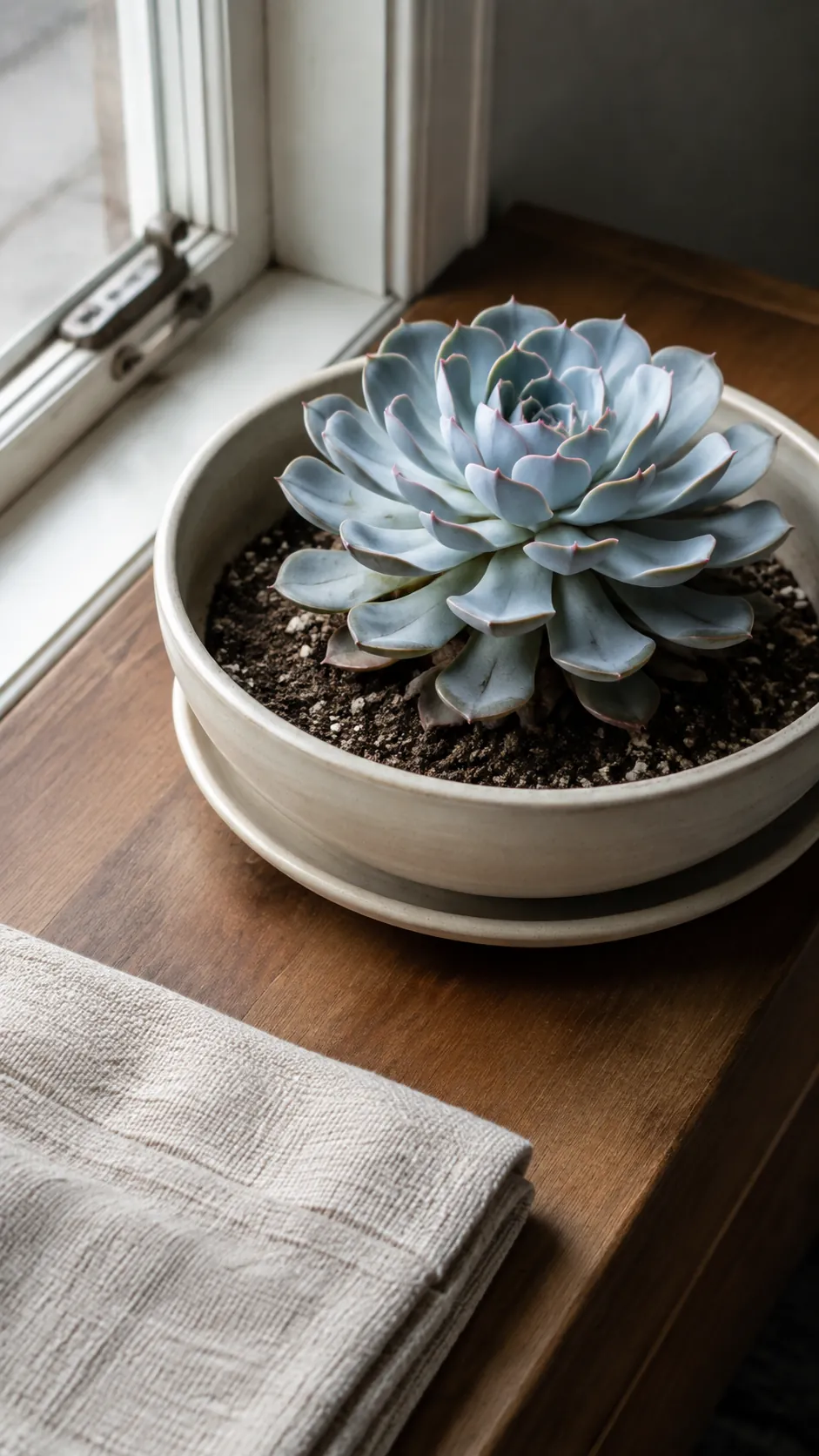
One established echeveria can fill a small bowl visually without crowding its roots with companions. Set the crown above the potting surface so the lowest leaves are not buried or pressed into damp mix. A restrained rim and a little exposed soil make the plant structure easier to appreciate. This is also a useful way to learn one plant’s responses before managing a mixed arrangement.
An offset trio with room between the leaves
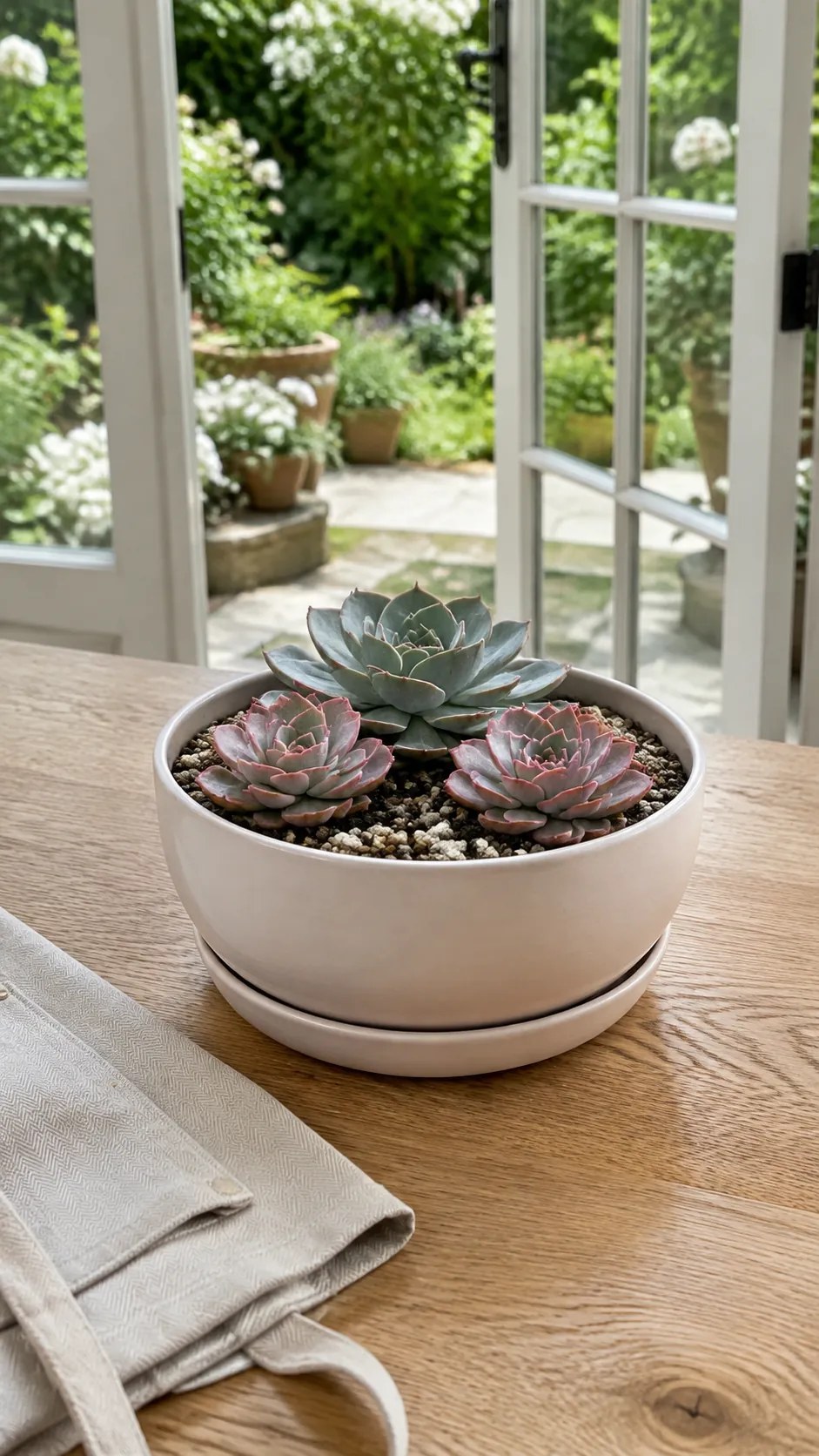
Three rosettes of different sizes give a bowl movement when the largest sits away from the center. Check their light and watering needs before treating appearance as the deciding factor. Leave enough space to direct water onto the soil without filling the leaf centers. Young plants will expand, so an arrangement that looks slightly open at planting can be the more practical choice.
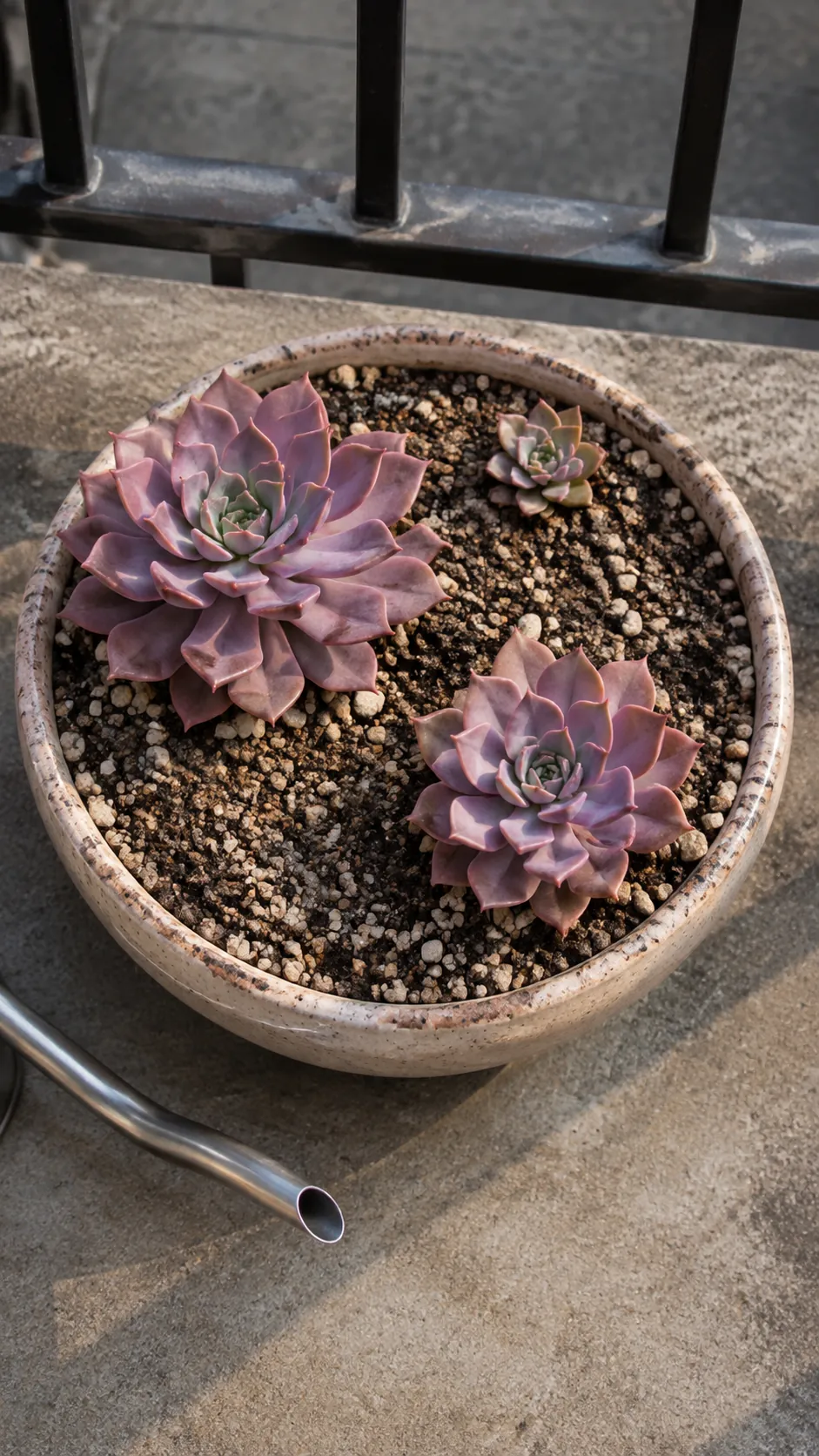
A removable liner inside a favorite decorative bowl
A treasured bowl without holes can serve as an outer container for a separate planted insert. The insert needs drainage, enough root depth, and an accessible rim so you can lift it out without pulling the plants. Water it elsewhere and return it only after excess water has drained away. Avoid packing the gap with material that hides standing water or makes removal difficult.
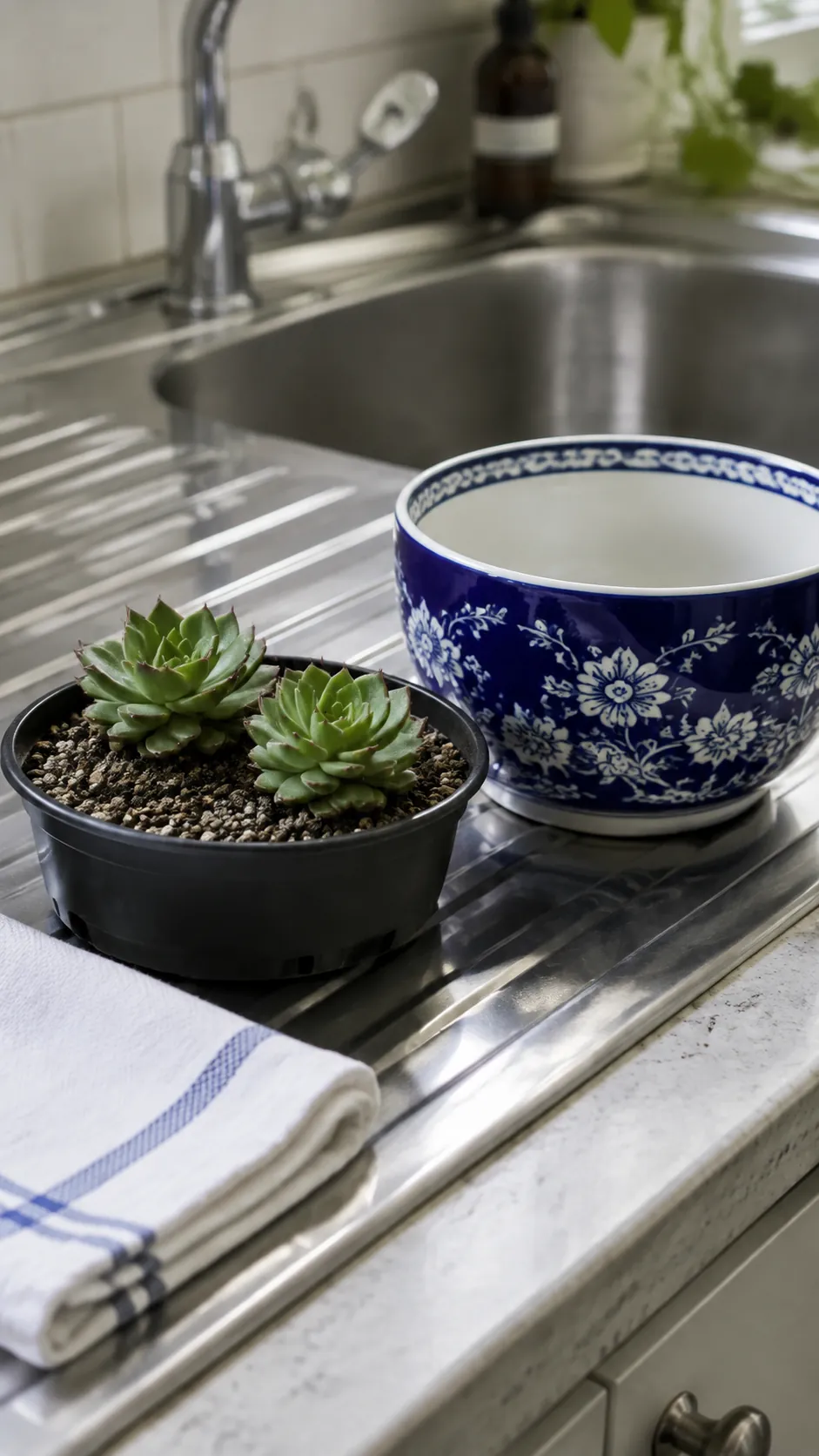
A compact haworthia grouping for gentler light
For a bright spot with less direct sun, a modest group of haworthias may suit the location better than sun demanding echeverias. Bright indirect light still matters, and a dark shelf is not a substitute. Choose plants with similar growth habits so one does not quickly shade the others. Their striped or translucent leaves bring texture to small succulent arrangements without relying on a rainbow of species.
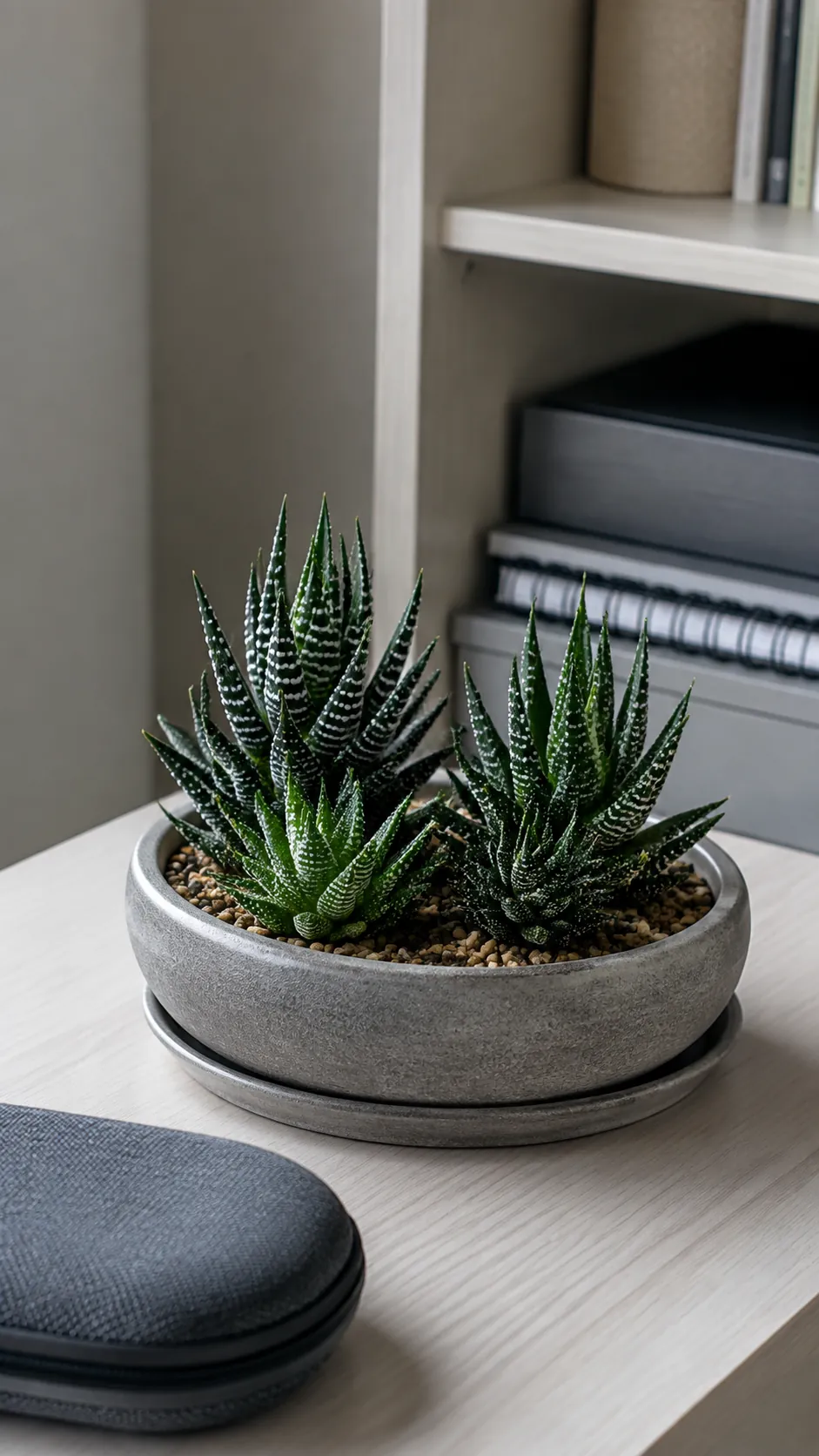
A hardy sempervivum bowl for outdoor seasons
Sempervivums can make a satisfying outdoor bowl where the selected varieties tolerate the local winter. Use a container rated for freezing conditions and keep its drain clear of the surface below. A hardy plant does not protect a waterlogged ceramic vessel from frost damage. Let offsets occupy the open spaces over time instead of packing the bowl tightly on planting day.
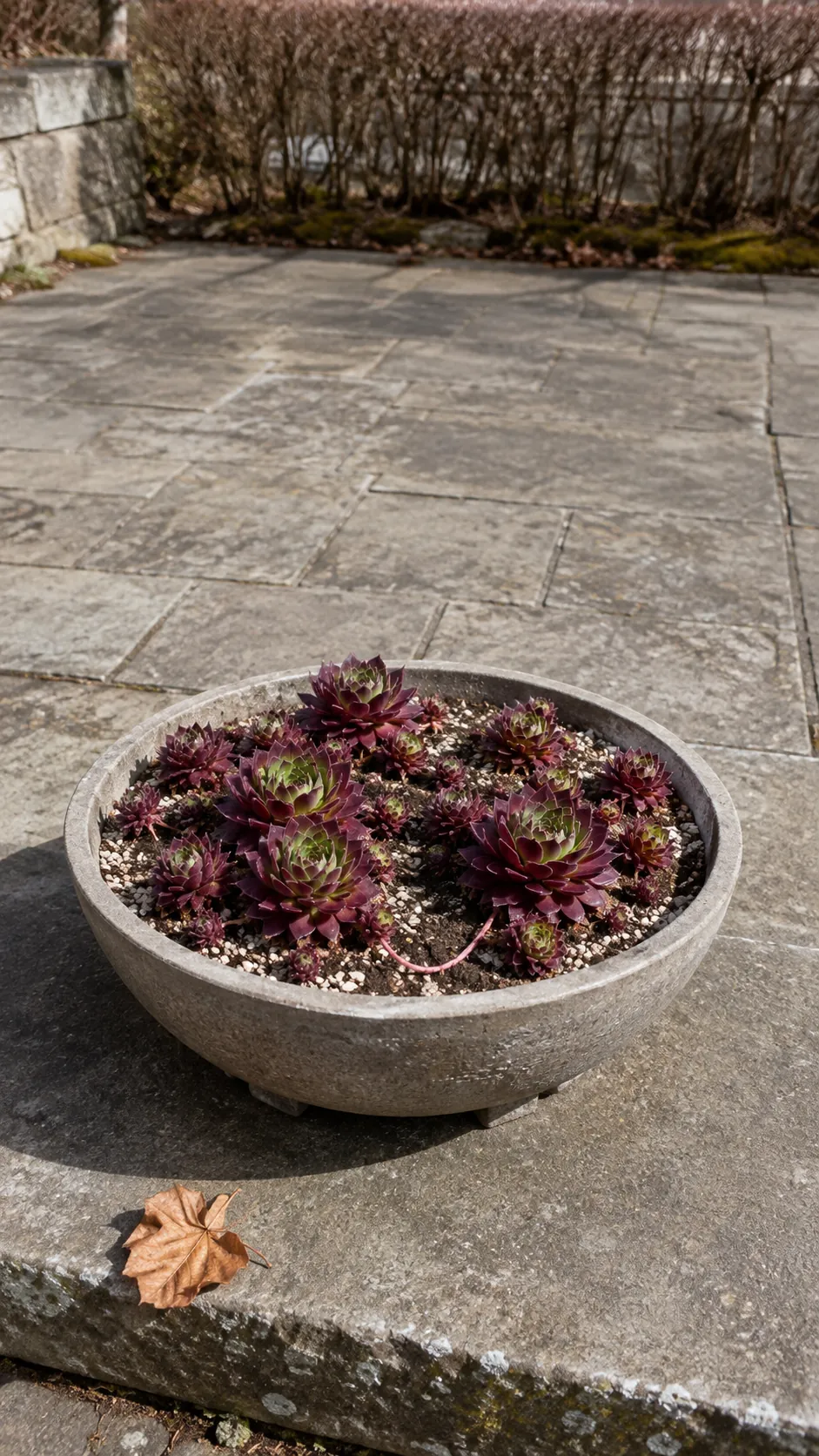
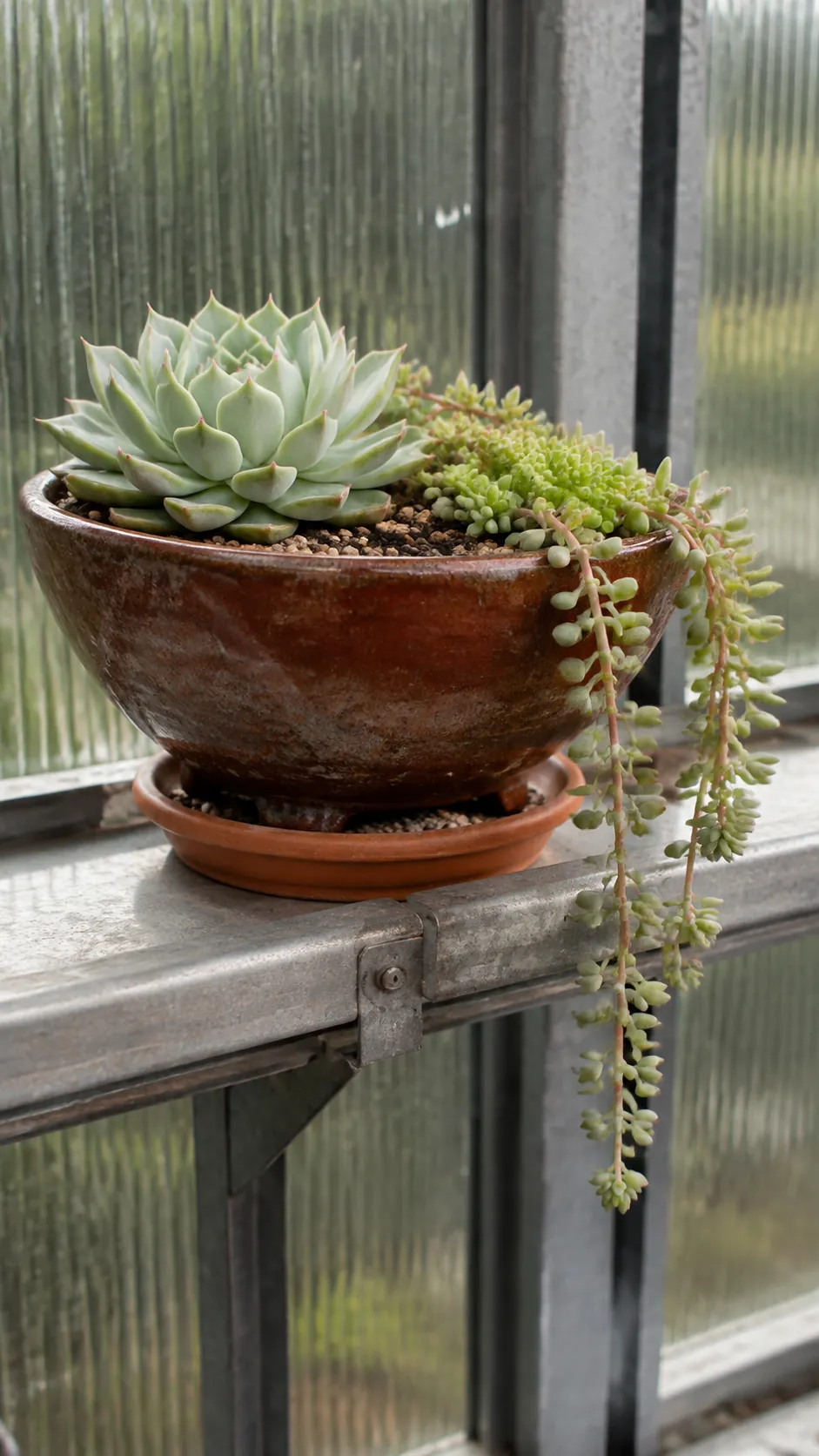
A rosette bowl with a short trailing edge
A trailing succulent can soften the edge of a bowl, but pair it only with plants that share suitable light and moisture conditions. Position the trailer near the rim with its crown above the mix. Keep the first stems free of the saucer and tabletop so they are not crushed when the bowl moves. An occasional trim can preserve the view of the rosettes instead of letting the entire arrangement become a curtain.
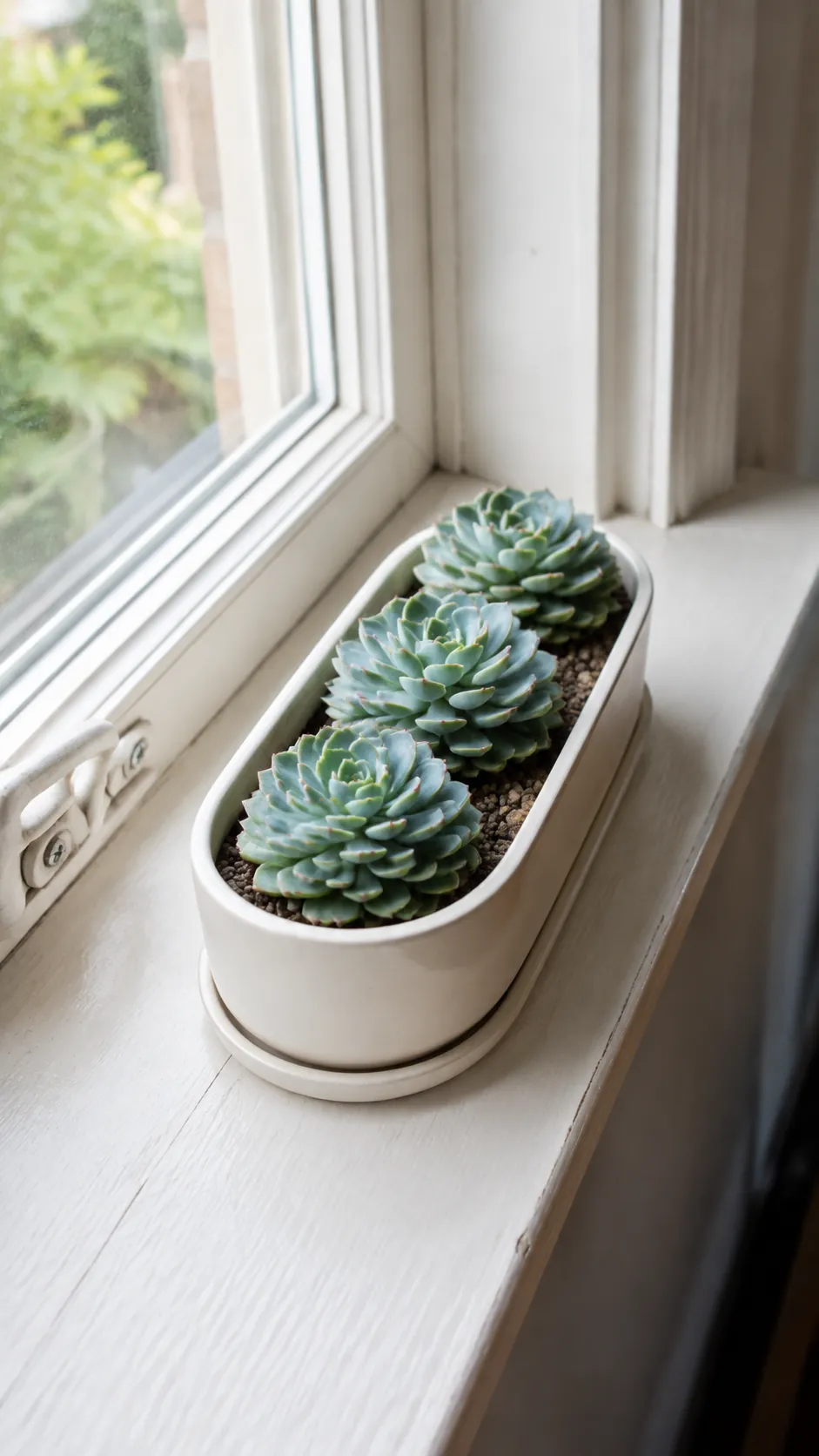
A narrow oval bowl for a sunny sill
An oval vessel can use a narrow sill more efficiently than a deep round bowl. Measure the usable ledge and allow space between leaves and the glass, which can become very hot or cold. A saucer should fit completely on the sill without hanging over the edge. Rotate the container as needed when growth begins leaning toward the window, rather than relying on a fixed calendar alone.
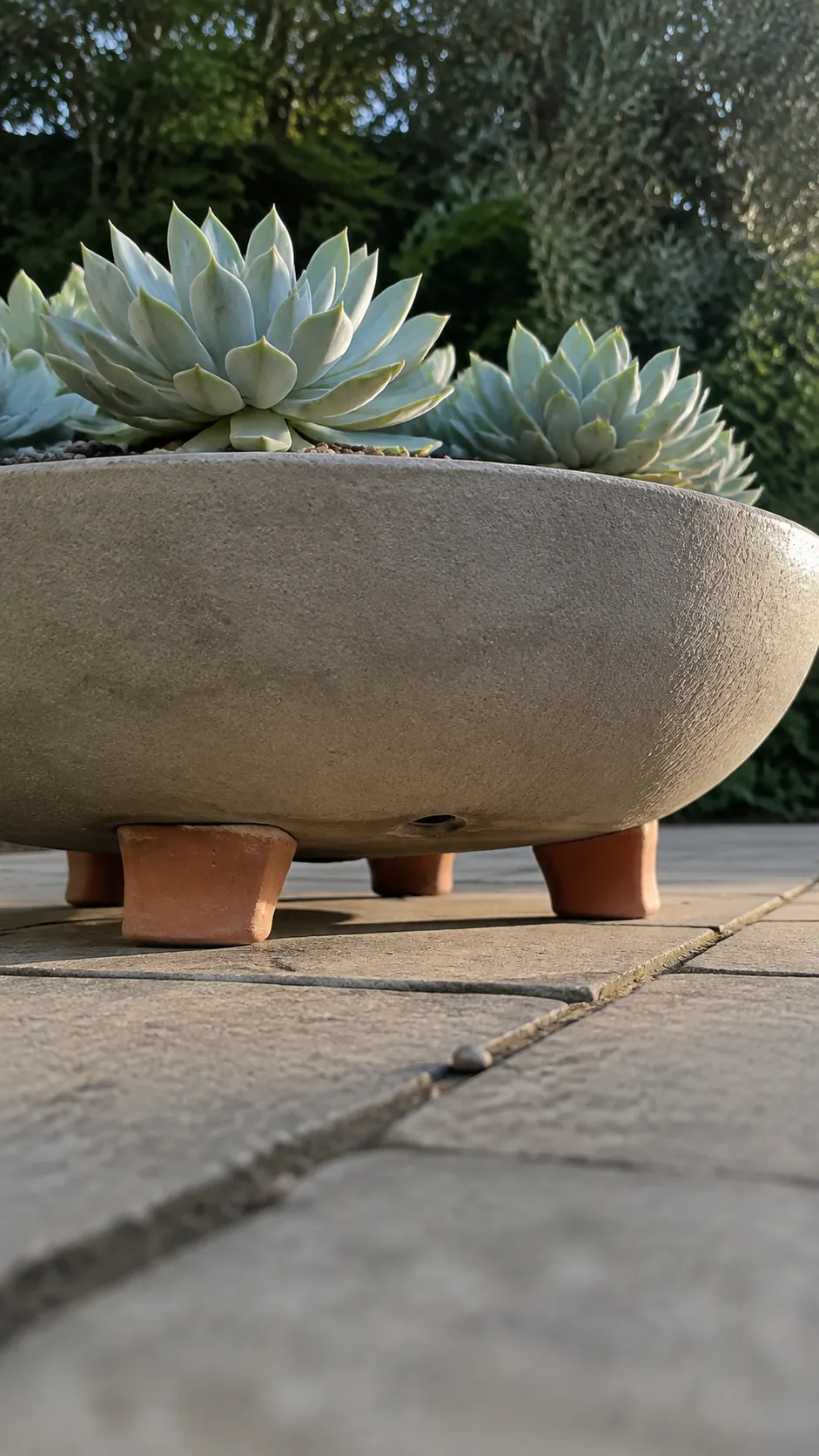
A raised bowl with access beneath the base
Short stable feet can keep an outdoor bowl from sealing its drainage hole against paving. Place each foot under a strong part of the base and test that the vessel cannot rock. Leave the gap accessible for clearing leaves or debris after windy weather. This small detail is particularly useful for succulent arrangements outdoors where rainfall is beyond your control.
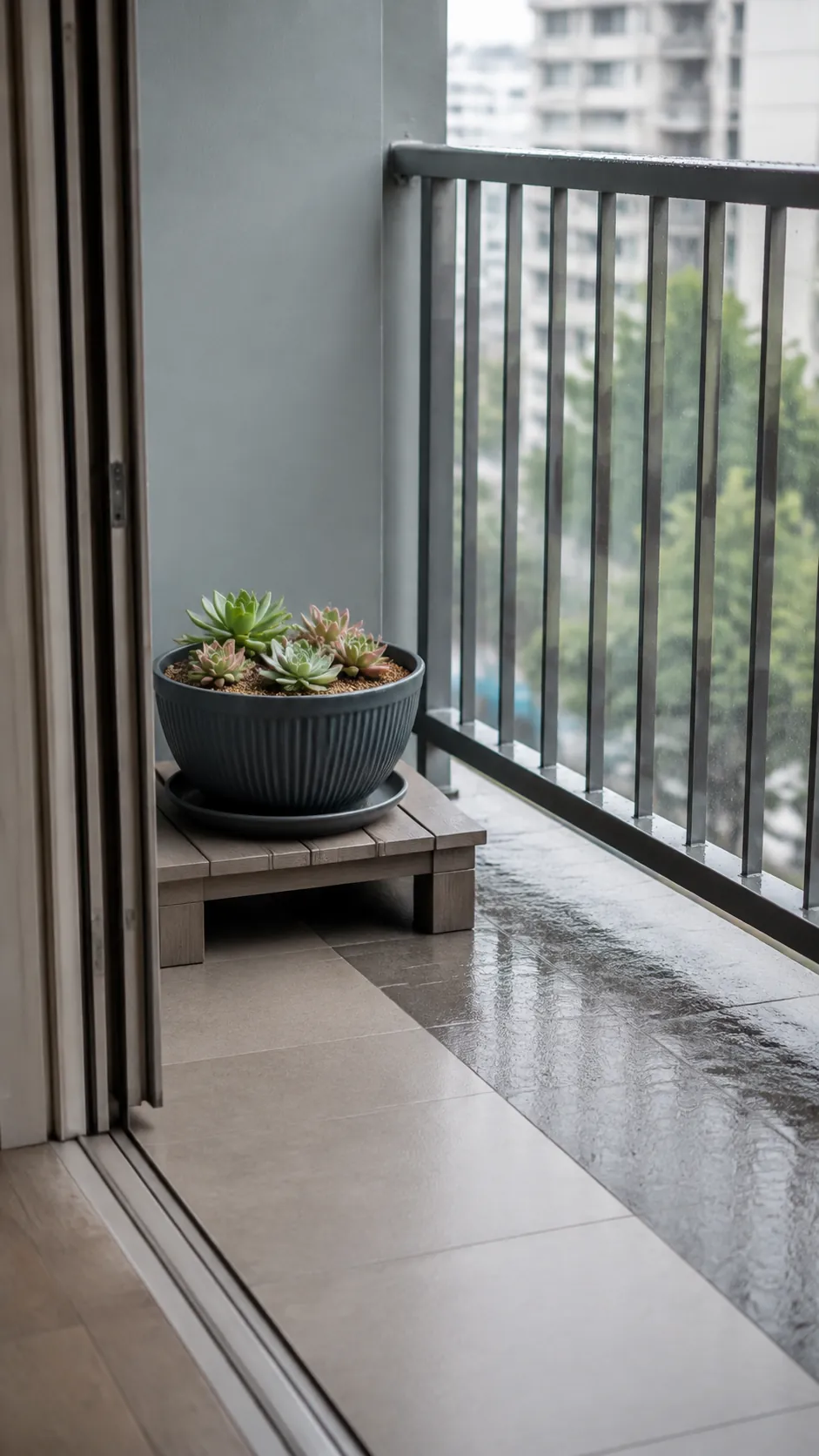
A sheltered bowl for a rainy balcony
A balcony with frequent rain may need a covered position even when the bowl drains freely. Water can arrive faster than a crowded planting uses it, especially during cool cloudy stretches. Keep the arrangement behind the drip line of the shelter while preserving the light the plants require. Check after storms because wind driven rain can reach places that stay dry on an ordinary day.
A shallow basin of matching rooted cuttings
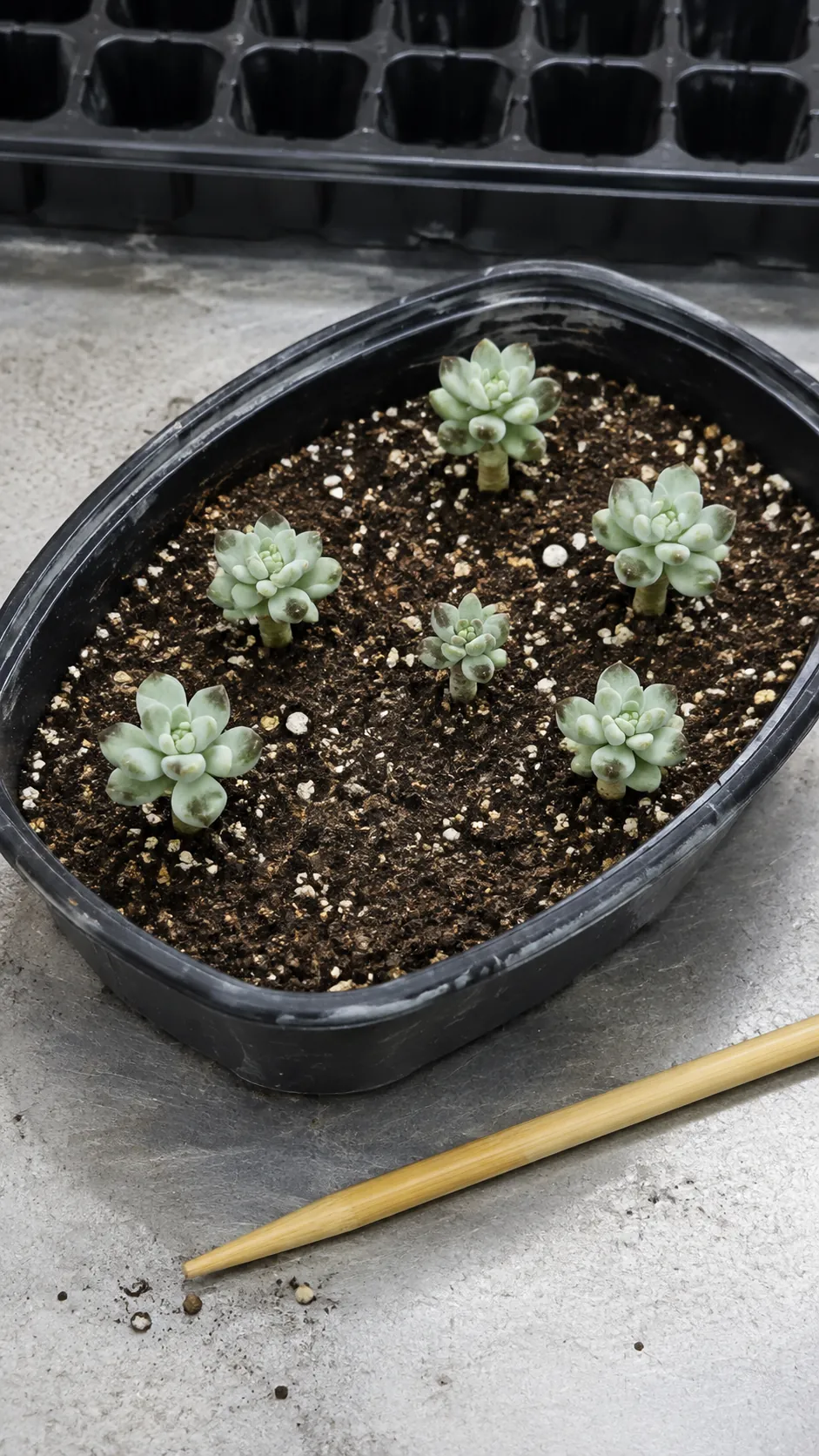
Rooted cuttings from the same suitable succulent offer a simple starting point for succulent arrangements DIY projects. Wait until each cutting is established enough to move rather than mixing fresh wounds into a recently watered bowl. Use enough depth for the developing roots, and leave growing space around the small plants. Their shared identity makes changing growth patterns easier to compare as the planting settles.
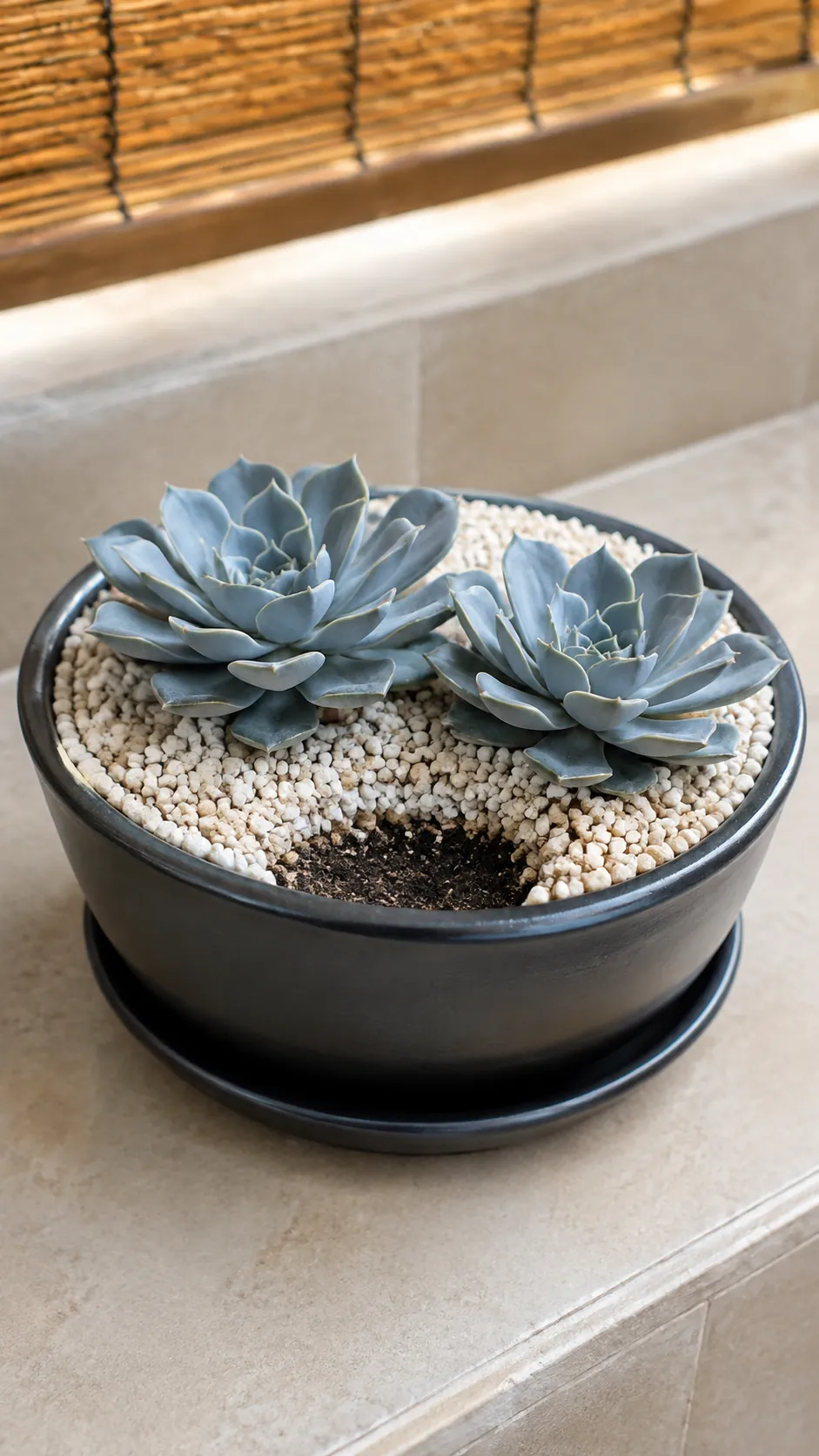
A dark bowl with a light mineral surface
A thin pale mineral dressing can make leaf shapes stand out against a dark vessel. It is decoration, not a replacement for an airy potting mix or a drainage outlet. Leave the plant bases clear and expose a small patch where you can inspect the soil below. A dry looking stone surface can conceal moisture underneath, so judge watering from the root zone and the plants together.
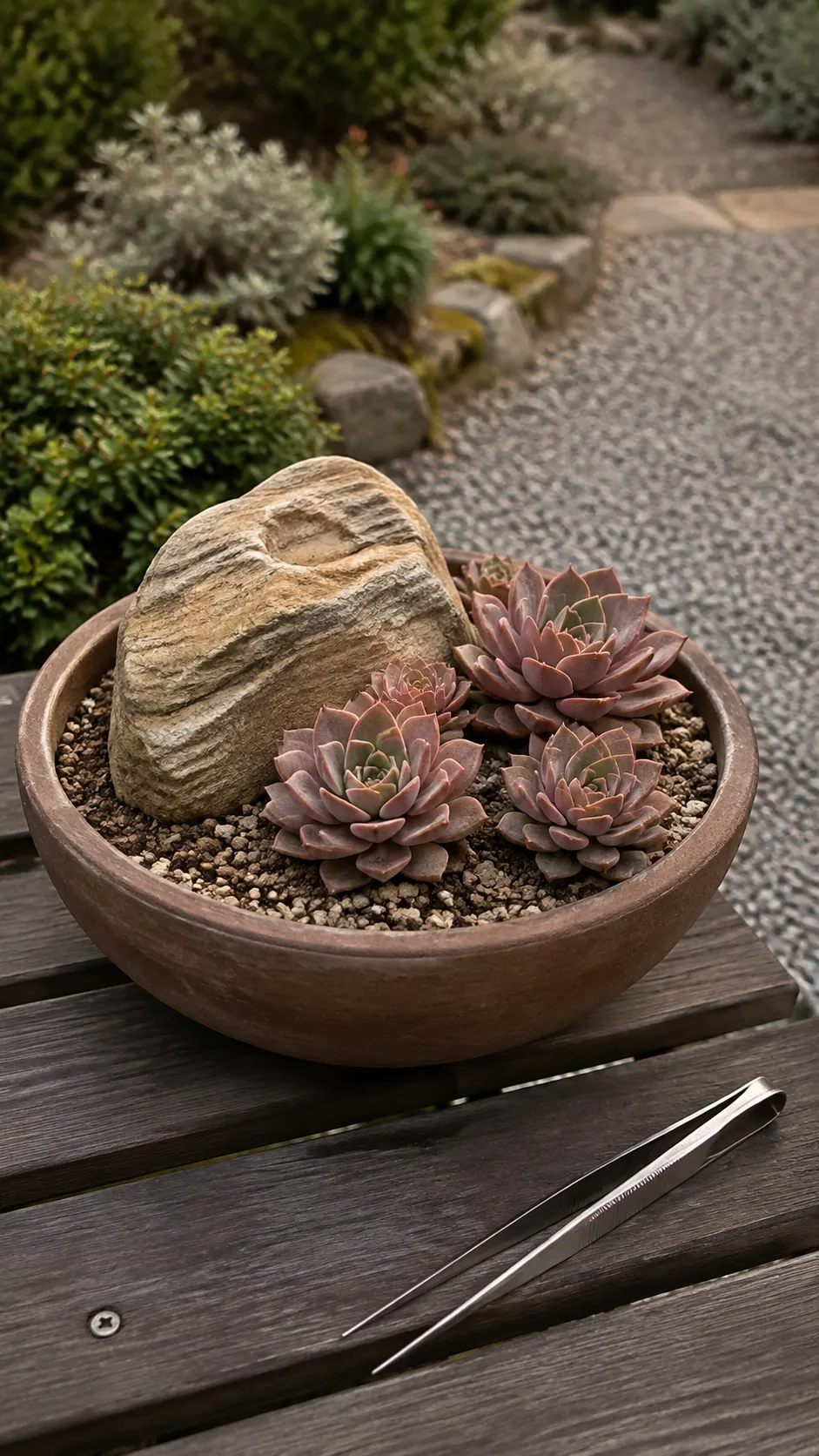
A broad bowl built around one weathered stone
One modest stone can give a bowl the feeling of a miniature succulent garden bed. Set it securely so it does not roll into leaves or occupy most of the space meant for roots. Keep the composition open enough to remove dead foliage with tweezers. A few strong forms usually remain easier to maintain than a miniature landscape packed with tiny ornaments.
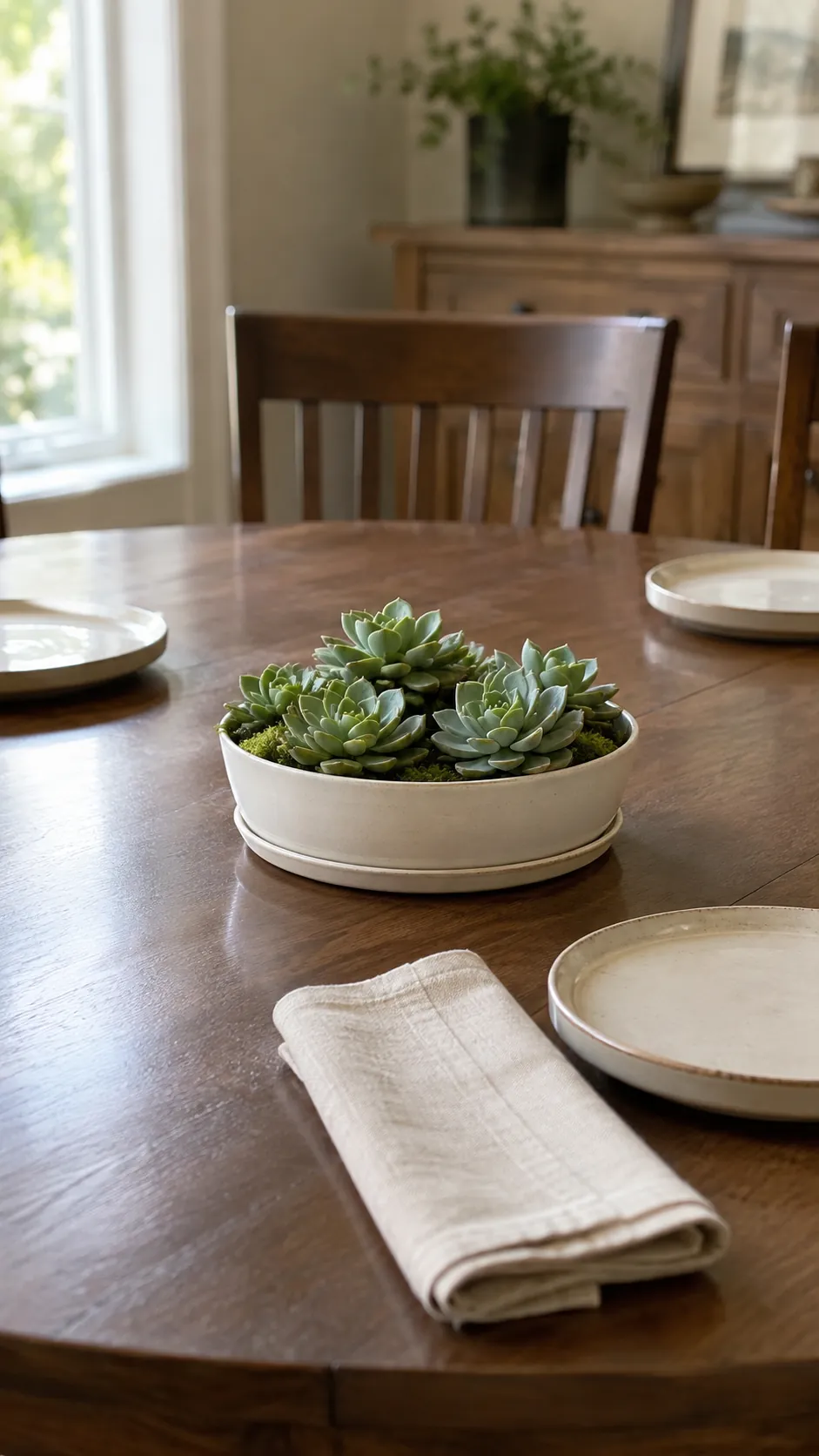
A low bowl for occasional table gatherings
A low succulent bowl can decorate a dining table without blocking conversation across it. Treat a dim table as a temporary display spot and return the plants to suitable growing light afterward. Protect the surface with a sound saucer and check for lingering drips before bringing it indoors. Avoid using candles close enough to warm leaves or scorch their edges.
A deeper bowl for a miniature jade silhouette
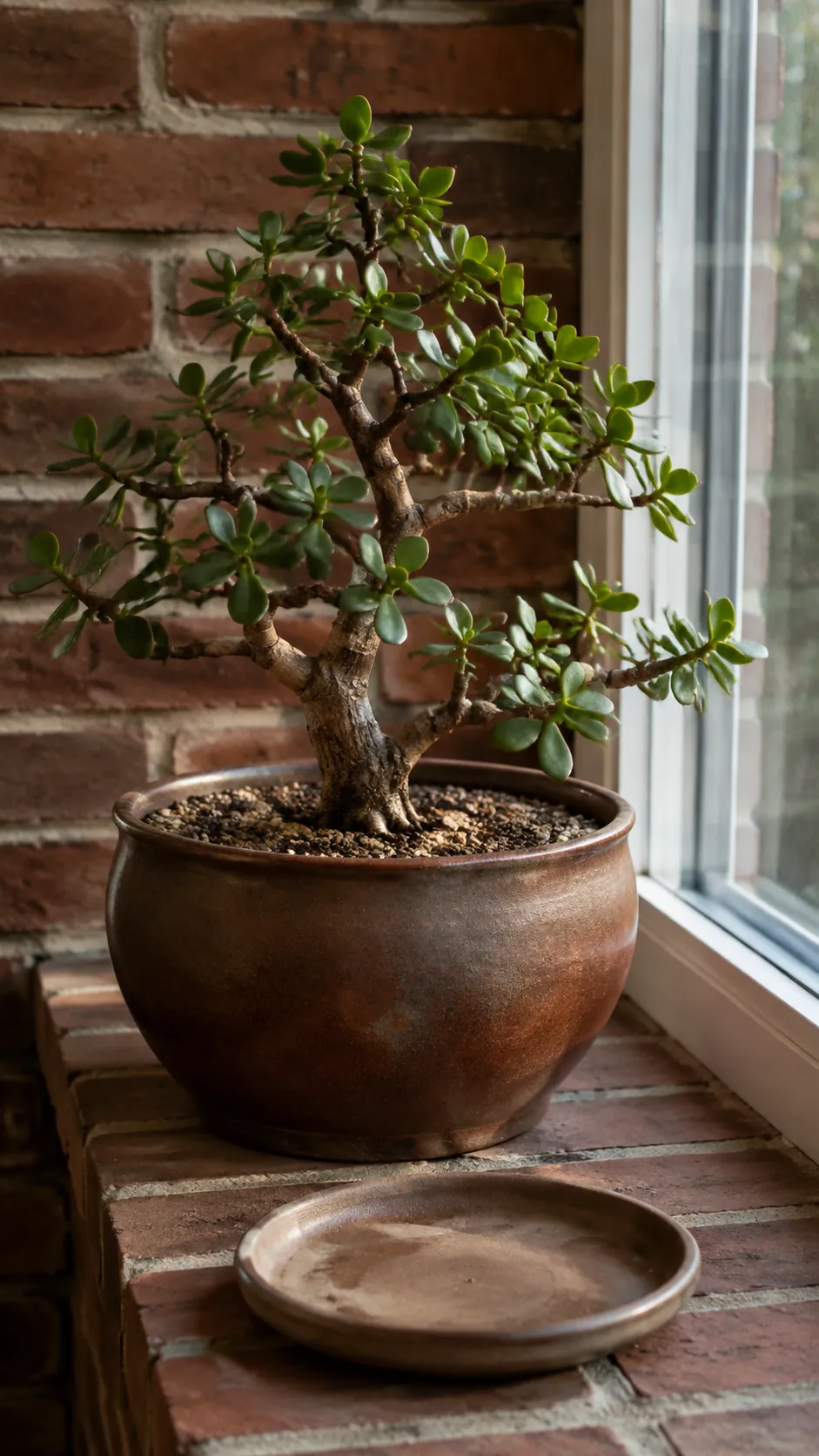
A compact jade plant needs a bowl deep enough for its actual roots and heavy enough to resist tipping as its branches develop. Resist flattening the root system merely to fit a fashionable shallow dish. Position the trunk slightly off center and leave the lower branching visible. Among succulent pot ideas, this approach rewards a patient choice of plant size more than a crowded instant arrangement.
A glazed bowl that keeps its practical features
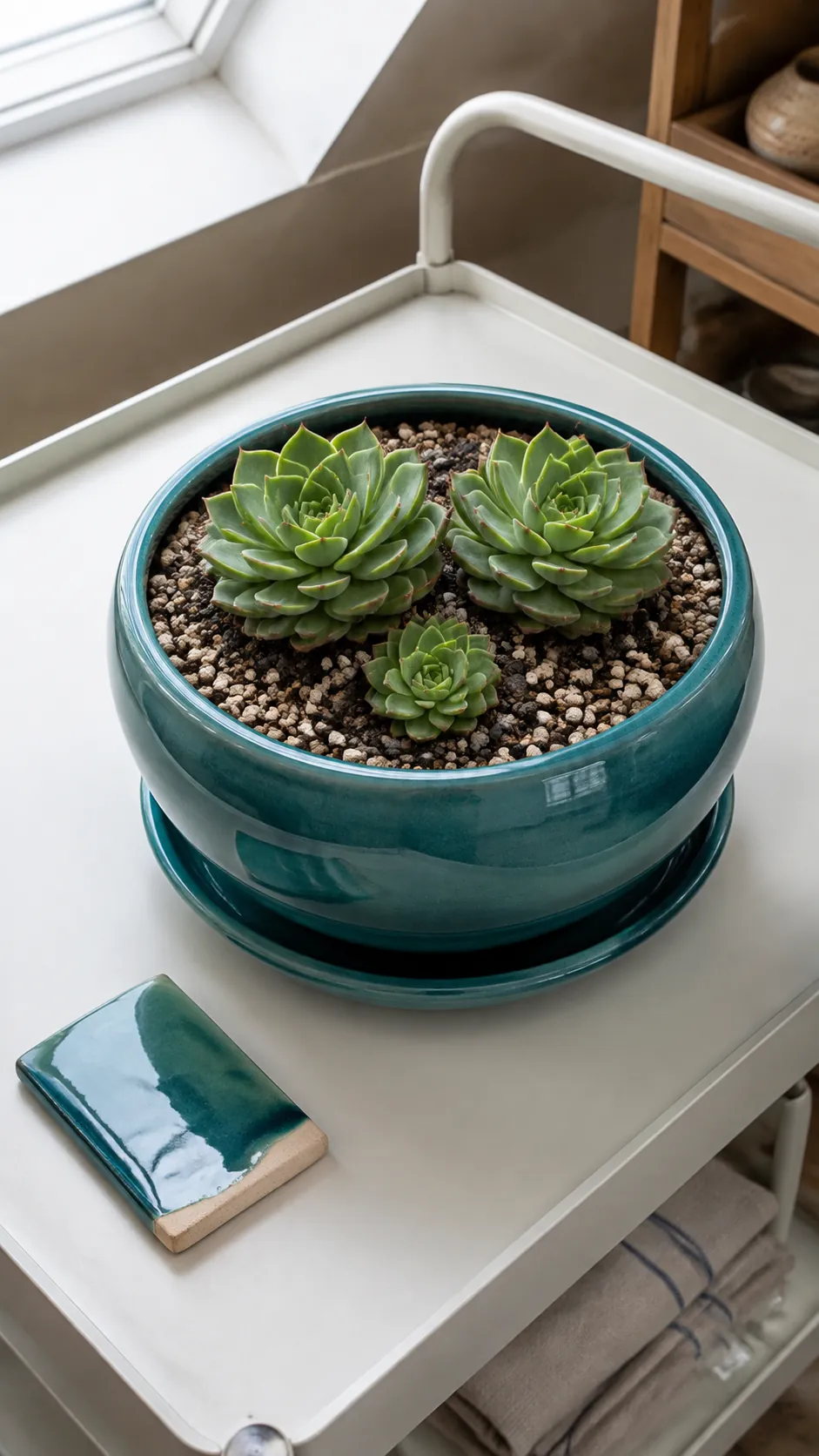
A glazed surface can supply the color while the plants remain mostly green. Confirm the vessel has drainage and inspect its inner depth before buying it for planting. Glaze limits moisture loss through the walls, so drying behavior may differ from an unglazed bowl in the same room. Use the plant’s condition and the mix below the surface to adjust care instead of copying a neighbor’s watering interval.
A lightweight bowl that can move with the season
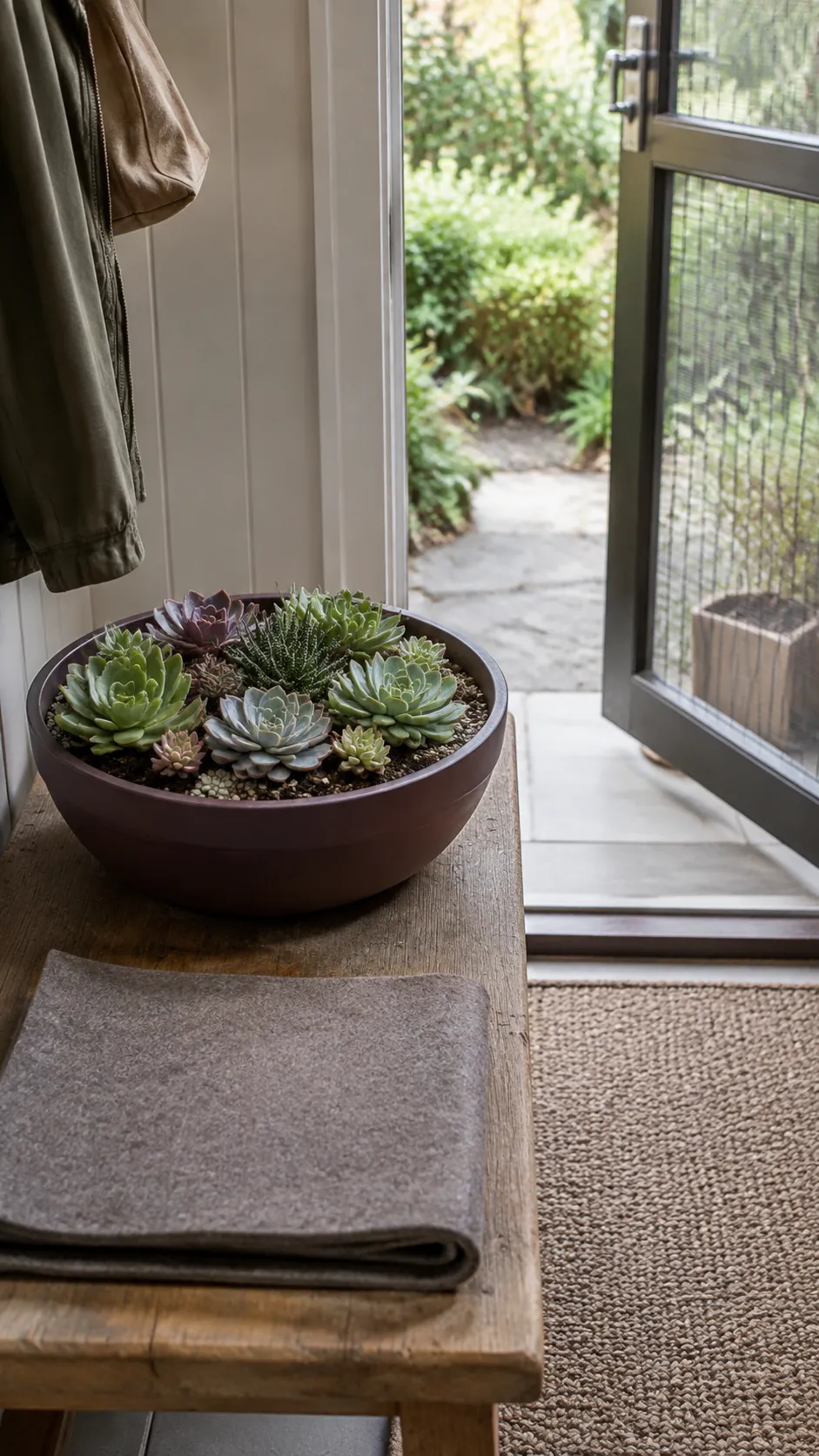
A lightweight resin bowl can be useful when an outdoor arrangement must move inside before cold weather. Check for adequate drainage openings and choose a stable footprint rather than a tall narrow base. Test the filled weight while the plants are still small so seasonal moving stays manageable. Plan a suitably bright indoor destination in advance, since an empty corner may not provide enough winter light.
A small collection kept in separate bowls
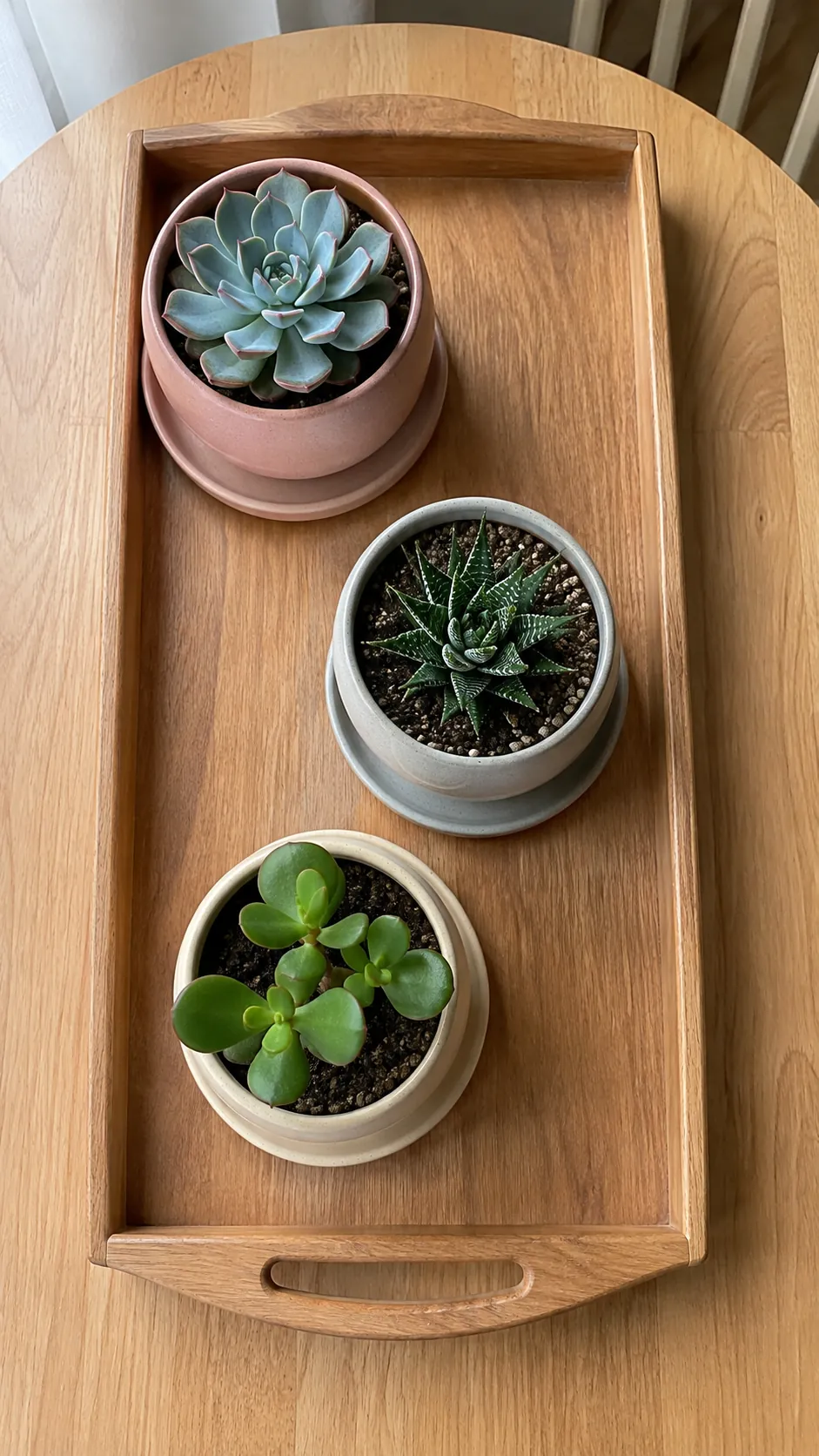
Several small bowls on one tray can read as a collection while keeping different care needs separate. This works especially well when attractive plants would be poor companions in shared soil. Lift each bowl off the tray for watering and prevent runoff from collecting beneath the group. Repeat one visual element, such as a rounded rim, while letting each plant determine its own root space.
An open bowl beneath a dedicated grow light
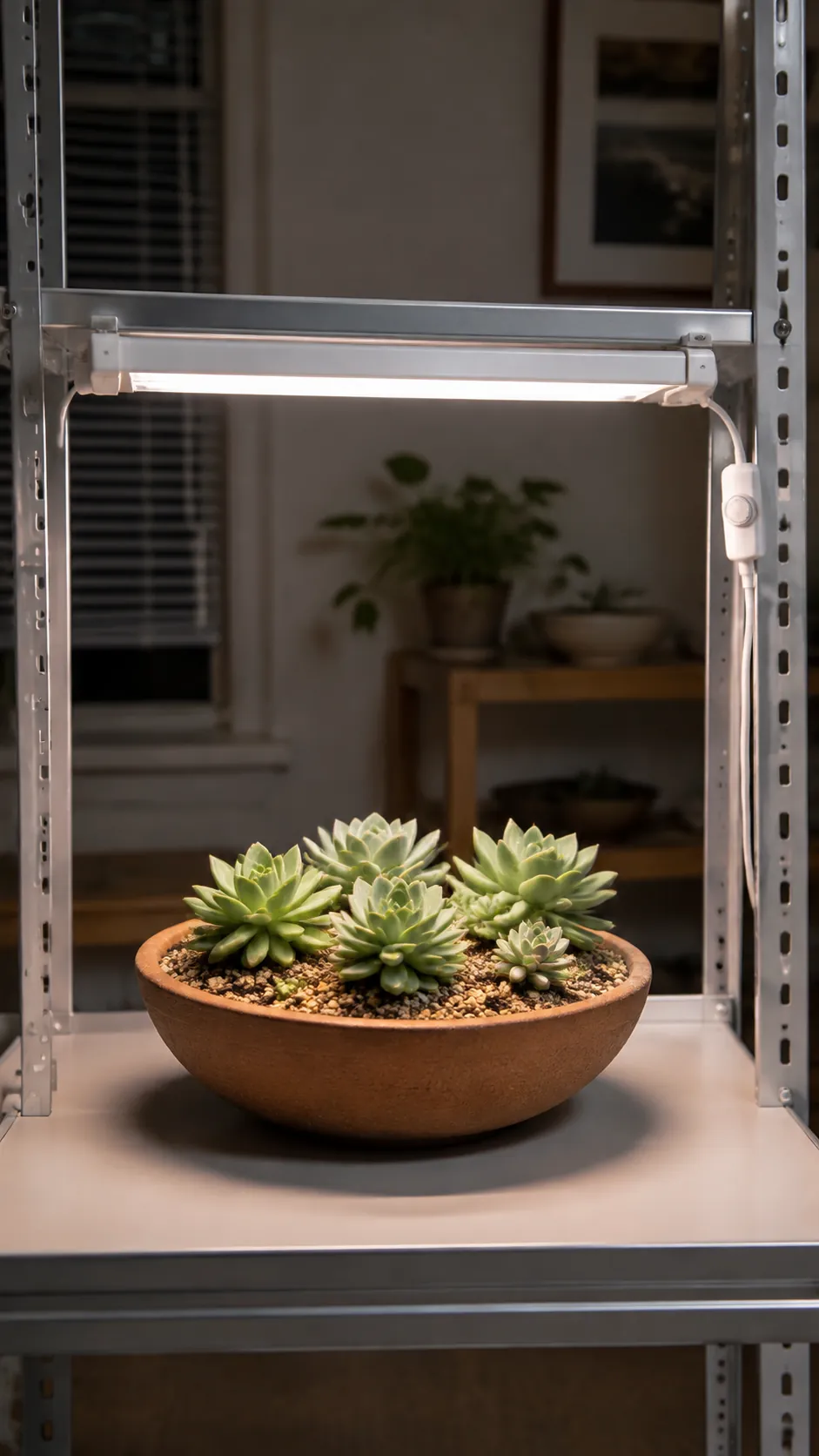
A grow light can support a bowl when the available window does not provide sufficient light for the chosen plants. Follow the fixture guidance for distance and duration, then watch for stretching, bleaching, or other signs that adjustment is needed. Arrange taller plants so they do not shield smaller ones. A timer helps keep the daily routine consistent while leaving a regular dark period.
A gift bowl with visible care access
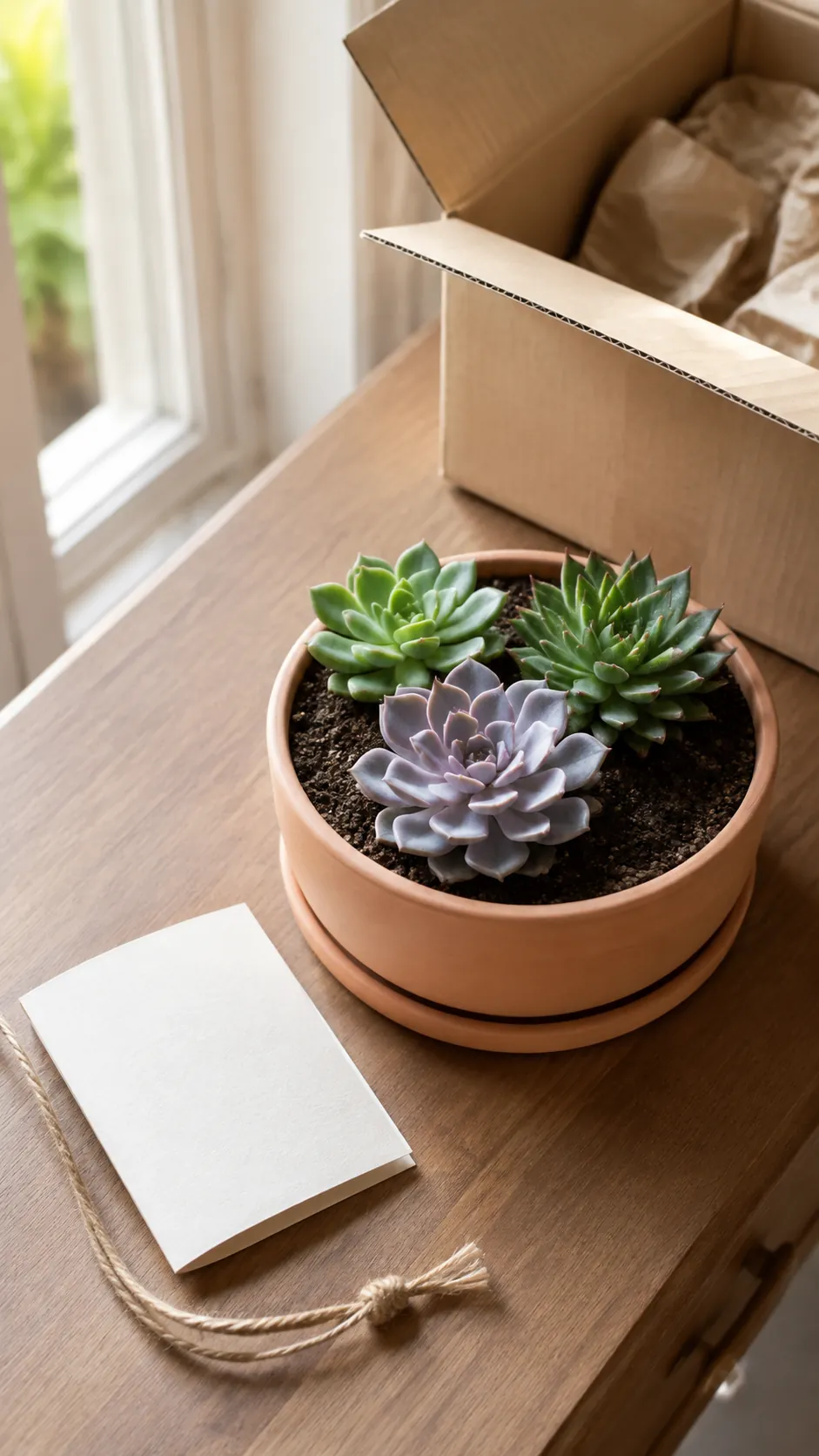
A gift arrangement is more useful when the recipient can reach the soil and remove the planted container if needed. Include the plant names and the actual light conditions it has been growing in. Describe how to check dryness rather than promising a universal weekly watering schedule. For unique succulent planter ideas that travel well, prioritize a stable bowl and secure plants over loose decorative extras.
A sparse bowl designed to grow into its space
Leaving open soil is a deliberate design choice when young succulents still have room to expand. Photograph the arrangement after planting so changes in spacing and shape are easy to recognize. Reassess it when leaves begin pressing together or one plant shades another, rather than waiting for the bowl to look distressed. A successful display can evolve through division and repotting instead of remaining frozen in its first arrangement.