
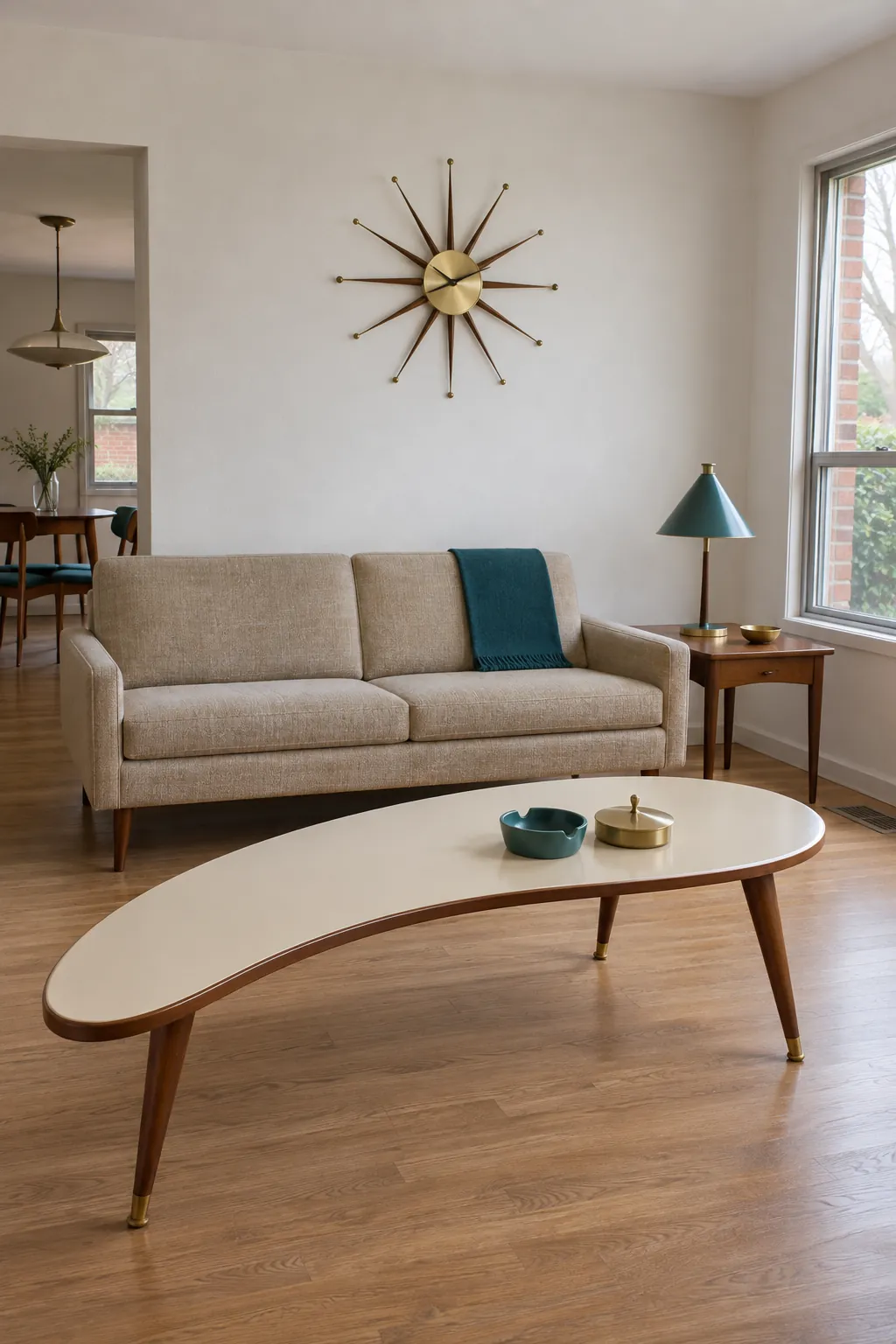
You can add the shape of an old diner or a space age living room without turning your home into a set. Pick an object you would use anyway, then look for a change in its outline, color, or pattern. A table with a sharper turn or a lamp with a branching frame can do more for the room than several small themed pieces.
Give a Starburst Clock a Wall of Its Own
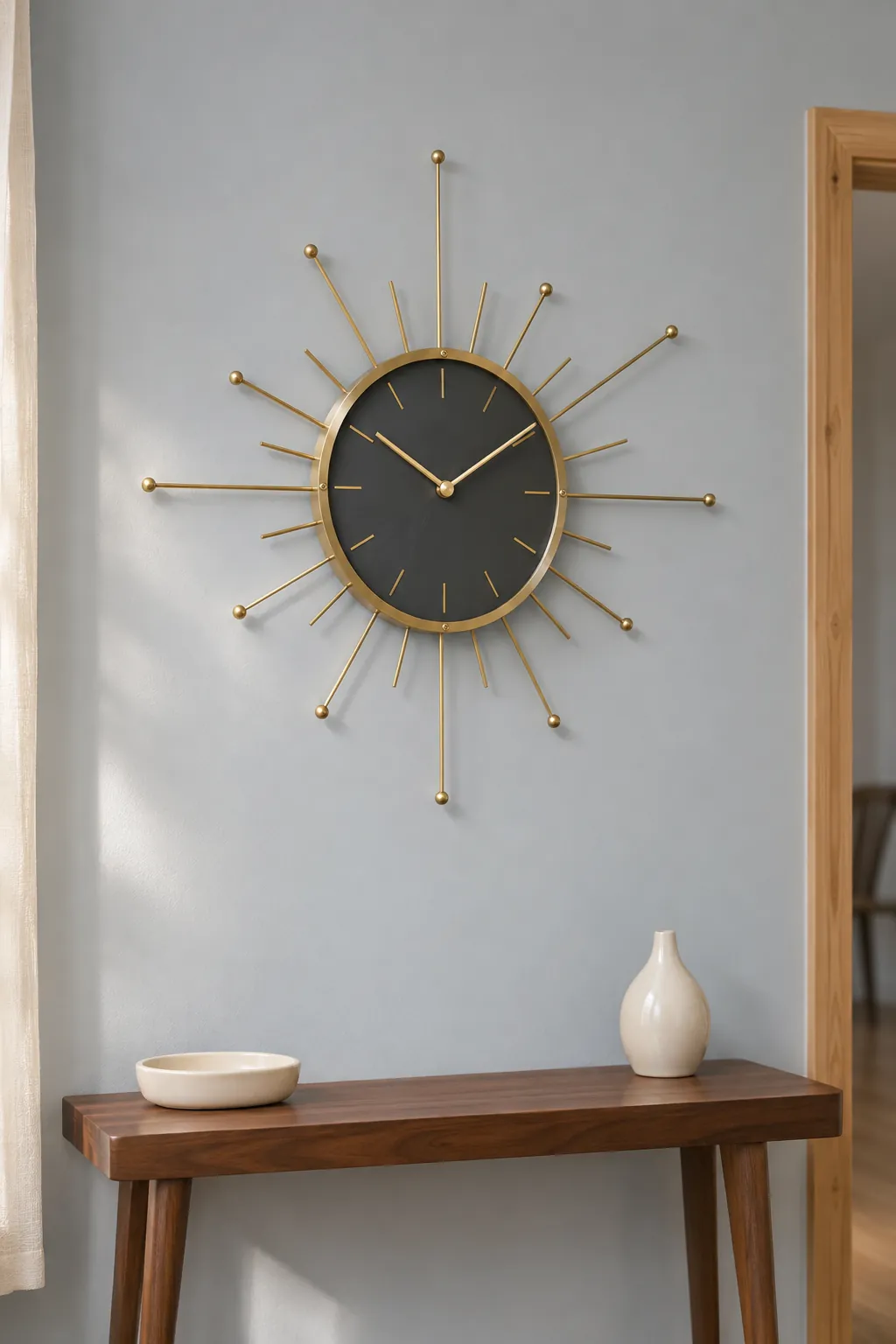
A starburst clock can set the tone for a living room with plain furniture. Mark the outer diameter on the wall so the rays have room beside lamps and shelves. Large hands against a simple face are easier to see across the room. A slim walnut console below gives the clock a place to sit visually without repeating its shape.
Try a Boomerang Table Where the Sofa Needs a Turn
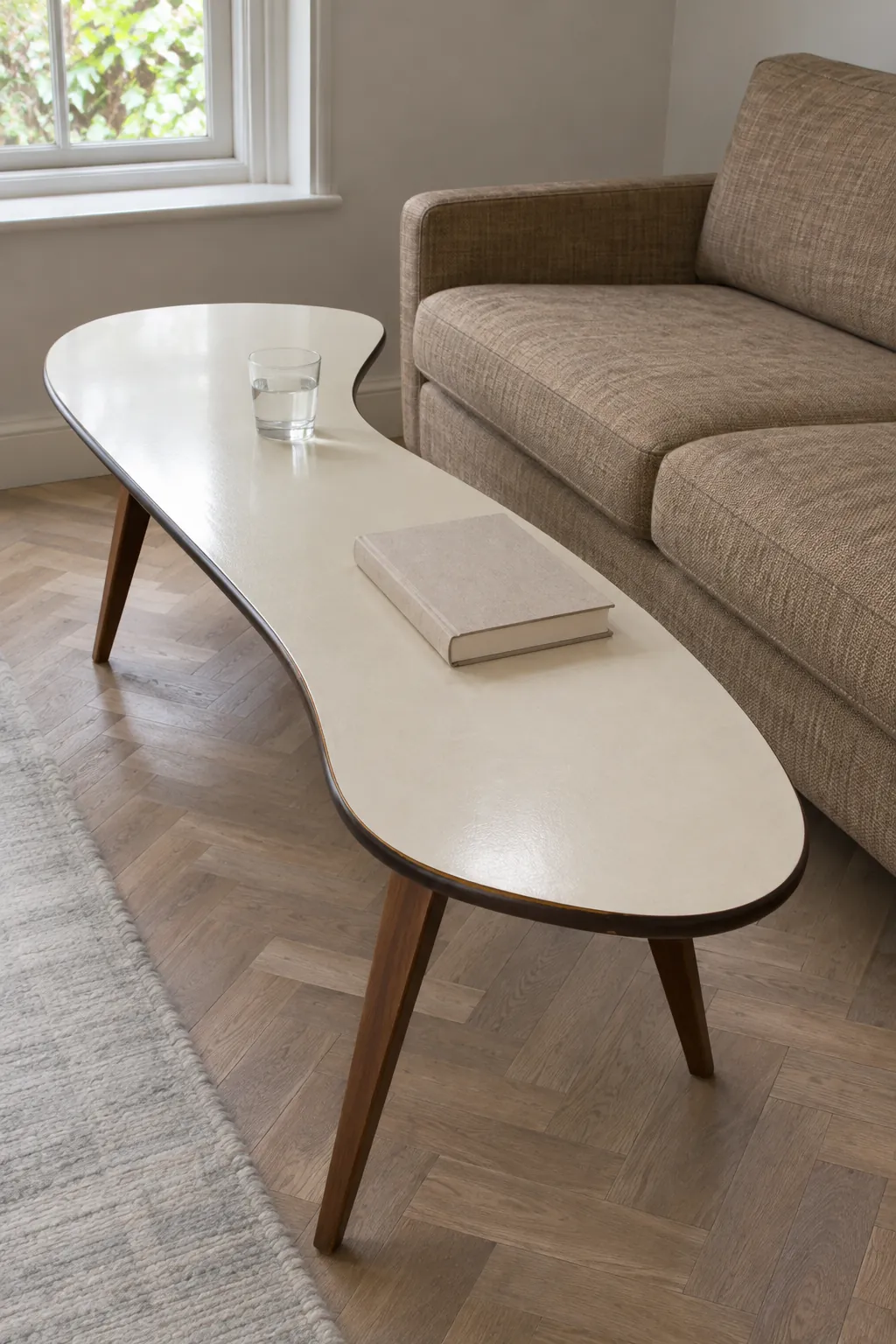
A boomerang coffee table brings a change of direction to a room full of straight furniture. Lay out its full outline on the floor before you buy it, including the pointed ends. Leave a clear route between the sofa and the door and check whether you can set a cup down from each seat. If you buy used, inspect the laminate edges and how the legs attach.
A small table can still need more space than it looks as though it will. Mark the far point with a chair or stack of books for a day and see whether you skirt it on your normal route. Use a side table instead if the center of the room needs to stay open.
Hang a Sputnik Light Above the Dining Table
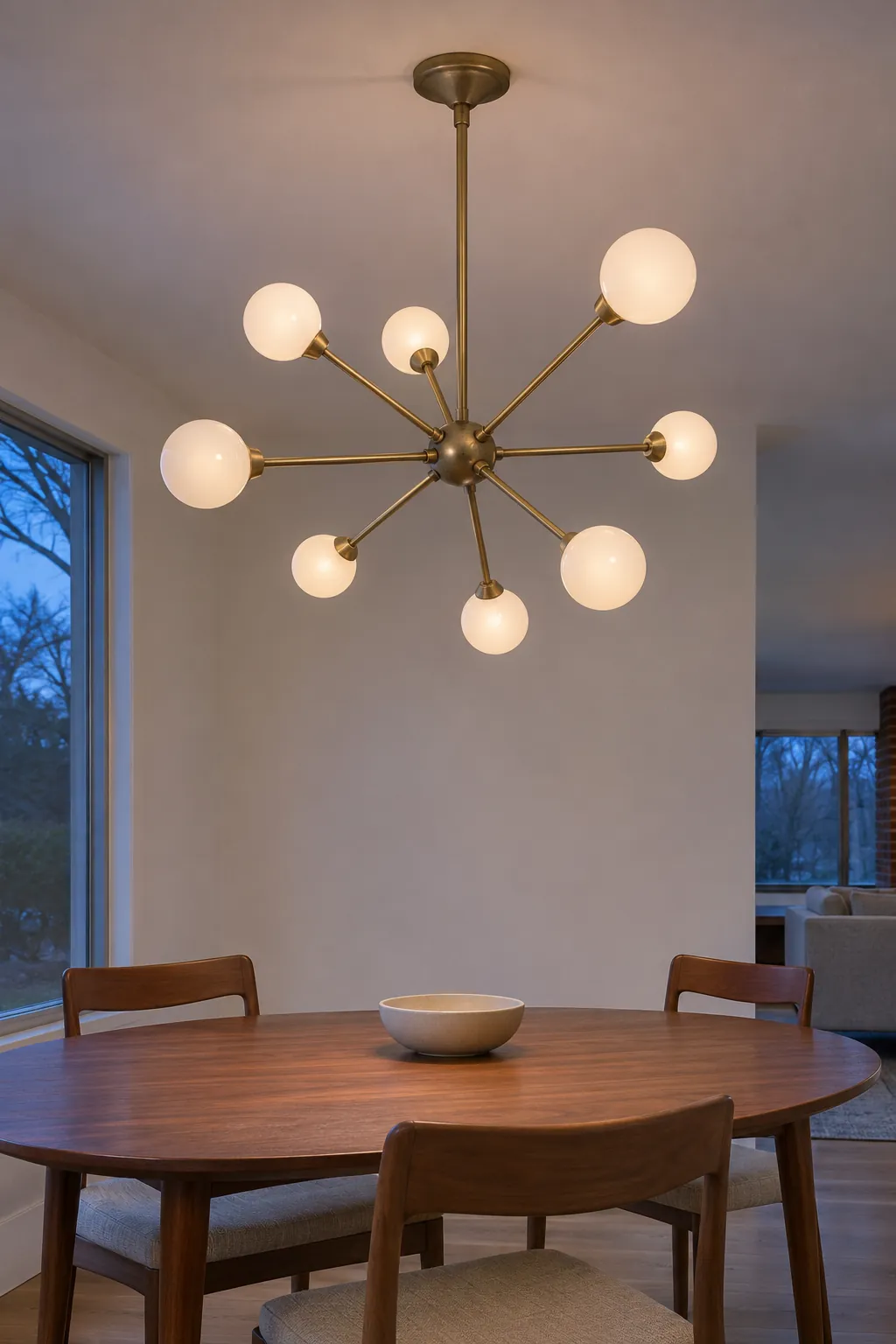
A branching light fixture can give a simple dining table the shape of Atomic Age decor without using a printed motif. Choose a width that leaves visual room around the ends and enough clearance for diners to sit and stand. Opal globes can make glare less distracting in a room where people see the fixture at eye level. An electrician can check the ceiling box and the fixture’s support needs.
Use Boomerang Laminate on a Small Counter
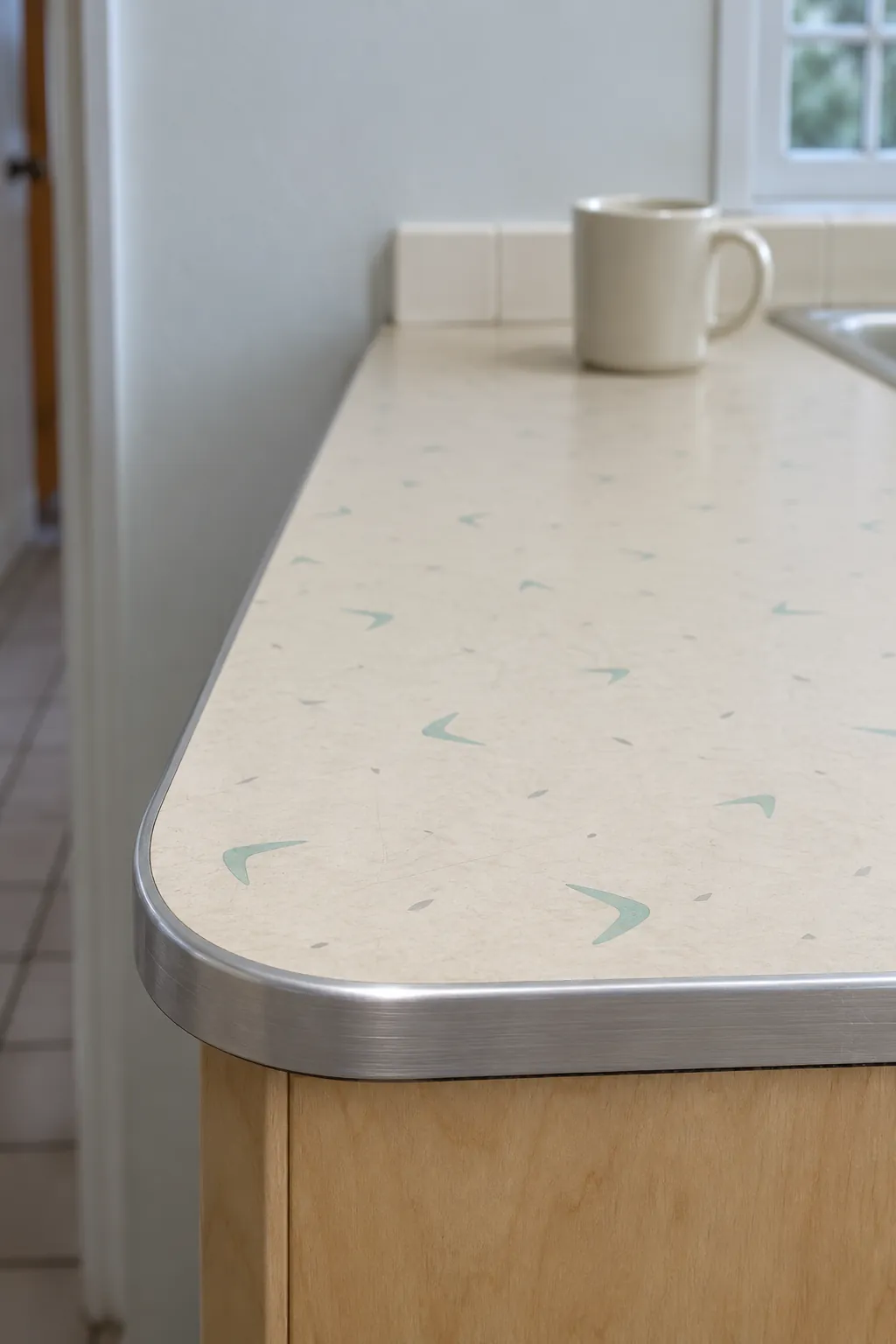
A pale boomerang pattern reads from the hall as a quiet surface and reveals the shape up close. Try it on a short desk or breakfast counter before committing to a whole kitchen. Compare samples against the edge trim and existing floor, because both can shift the apparent color of the print. At a kitchen counter, ask how the seam and edge will handle routine splashes.
Aim a Perforated Cone Sconce at a Reading Chair
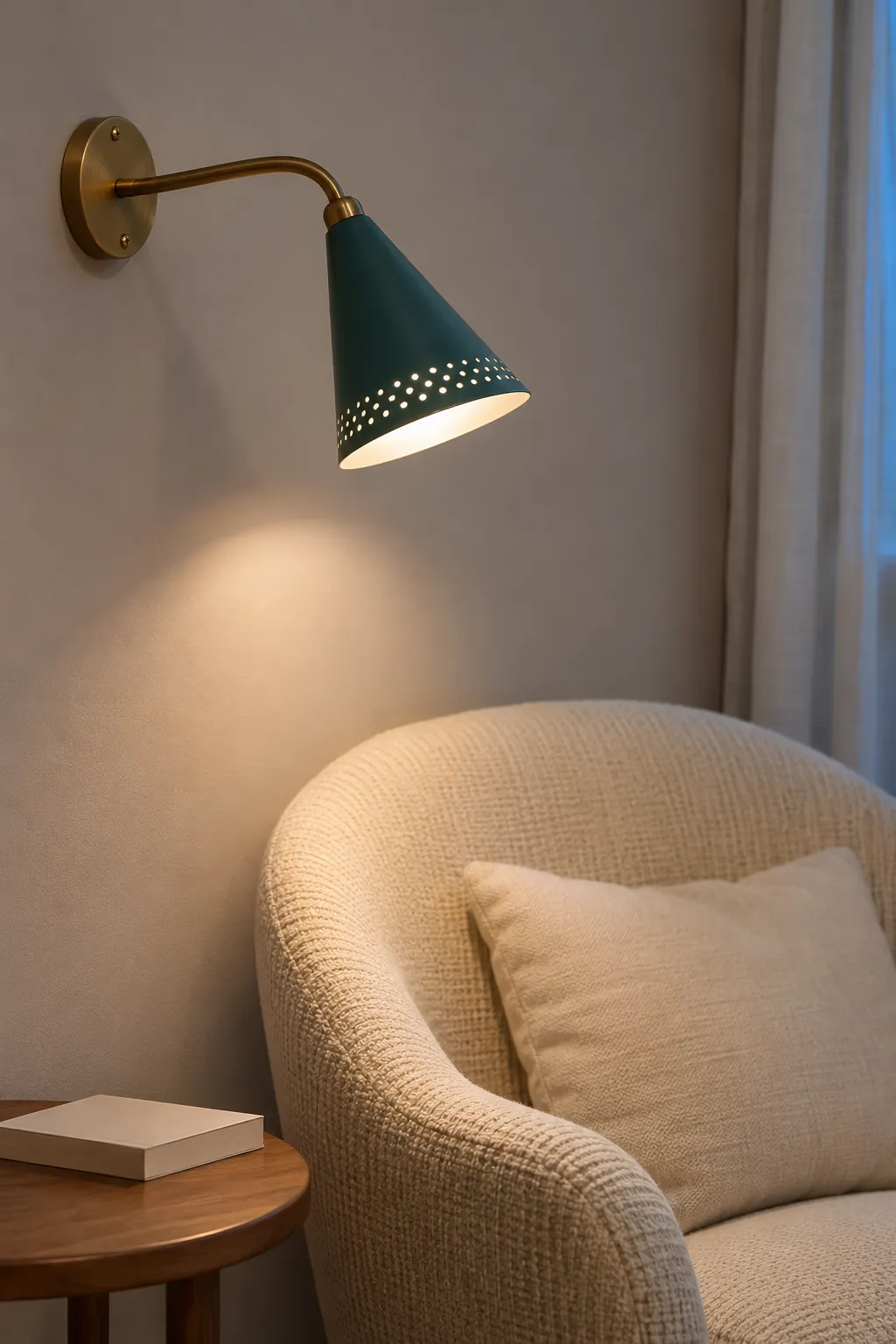
A cone sconce gives a reading corner a recognizable period silhouette at the point where you need light. Sit in the chair and check where the cone points before fixing it to a wall. If a perforated shade throws bright dots near eye level, look for a version with a diffuser or adjust the angle. Choose a fixture and mounting location suited to the room.
Lift a Record Console on Hairpin Legs
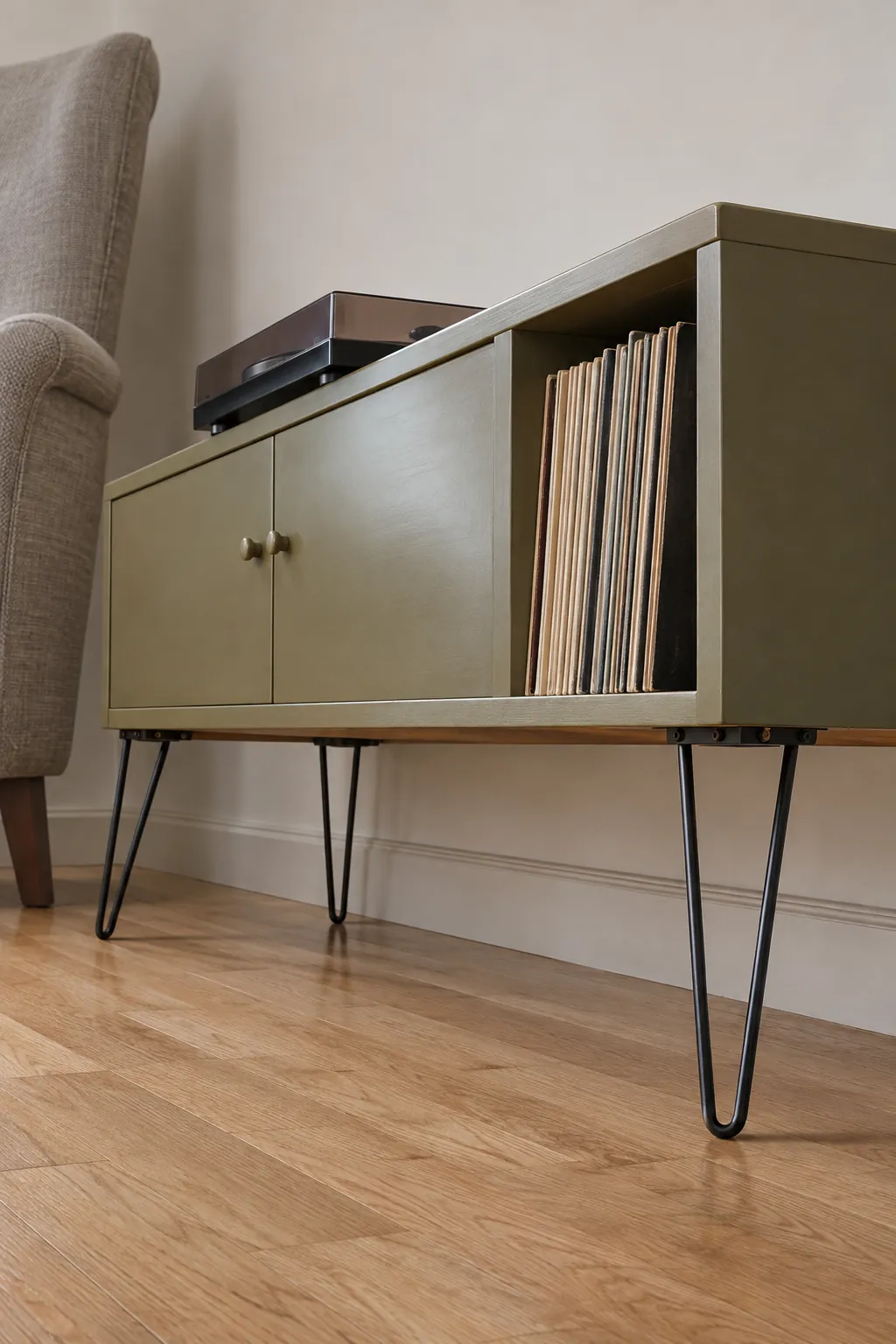
Hairpin legs can keep a low record console looking light beside heavier furniture. Check that the cabinet and leg attachments can handle the weight of records before buying or fitting a secondhand piece. Stock records low and spread their load evenly. Keep enough height beneath the console for the floor cleaning equipment you actually use.
Use Orbital Shapes as a Pair of Bookends
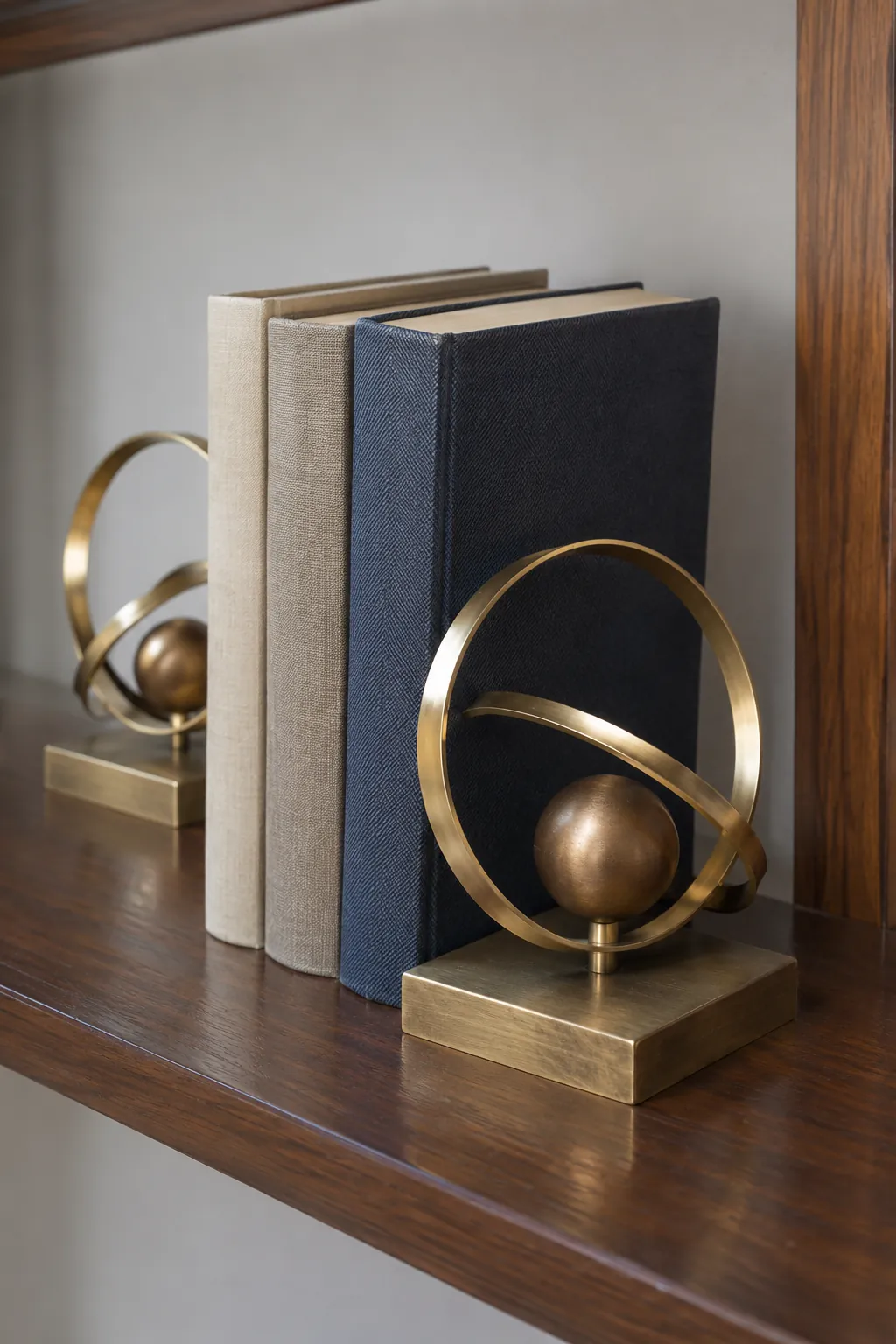
Orbital bookends give an ordinary shelf a little space age geometry without taking over the room. Choose pieces heavy enough to hold the books you plan to stand up. Leave the loops in front of a plain backing so their outline is easy to see. A protective bottom helps keep a metal base from marking a wood shelf.
Set Turquoise Stools Against a Plain Counter
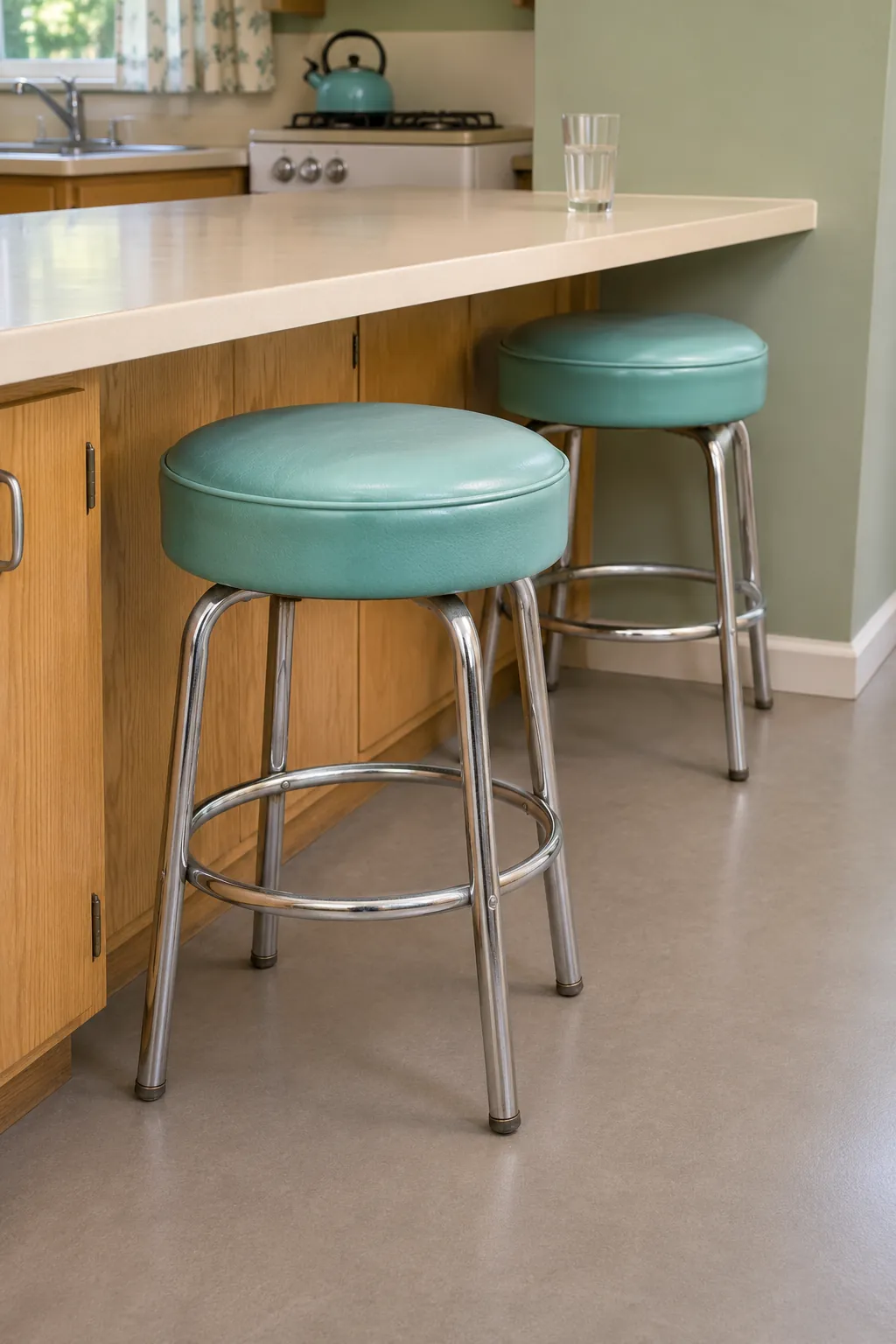
Turquoise vinyl stools can add a cheerful period note to the kitchen while keeping the countertop plain. Measure the difference between seat and counter, and sit on one if you can before ordering a set. Check whether the stools slide far enough under the ledge to clear the route behind them. Leave the older chrome bases visible so their slim shapes contribute to the look.
Add a Wire Magazine Rack Beside the Sofa
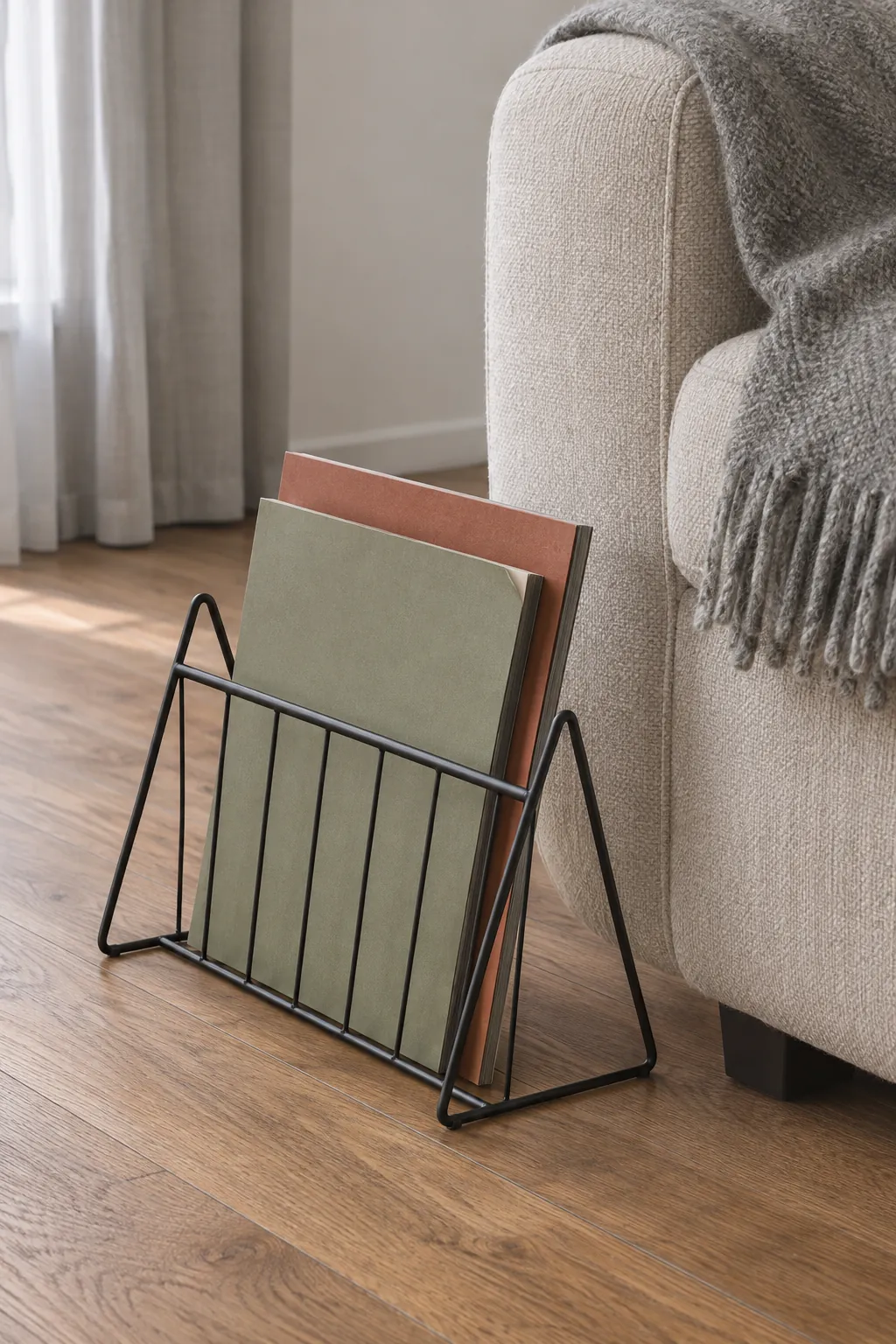
An angled wire rack gives reading material a home and adds a fine metal line near a substantial sofa. Choose one with feet or a base that sits flat and enough depth for the magazines you keep. If it catches a nearby curtain or sits in a walking route, try it on the other side of the seat. A pair of magazines gives the rack enough weight to read as furniture.
Put the Starburst Pattern on One Cushion
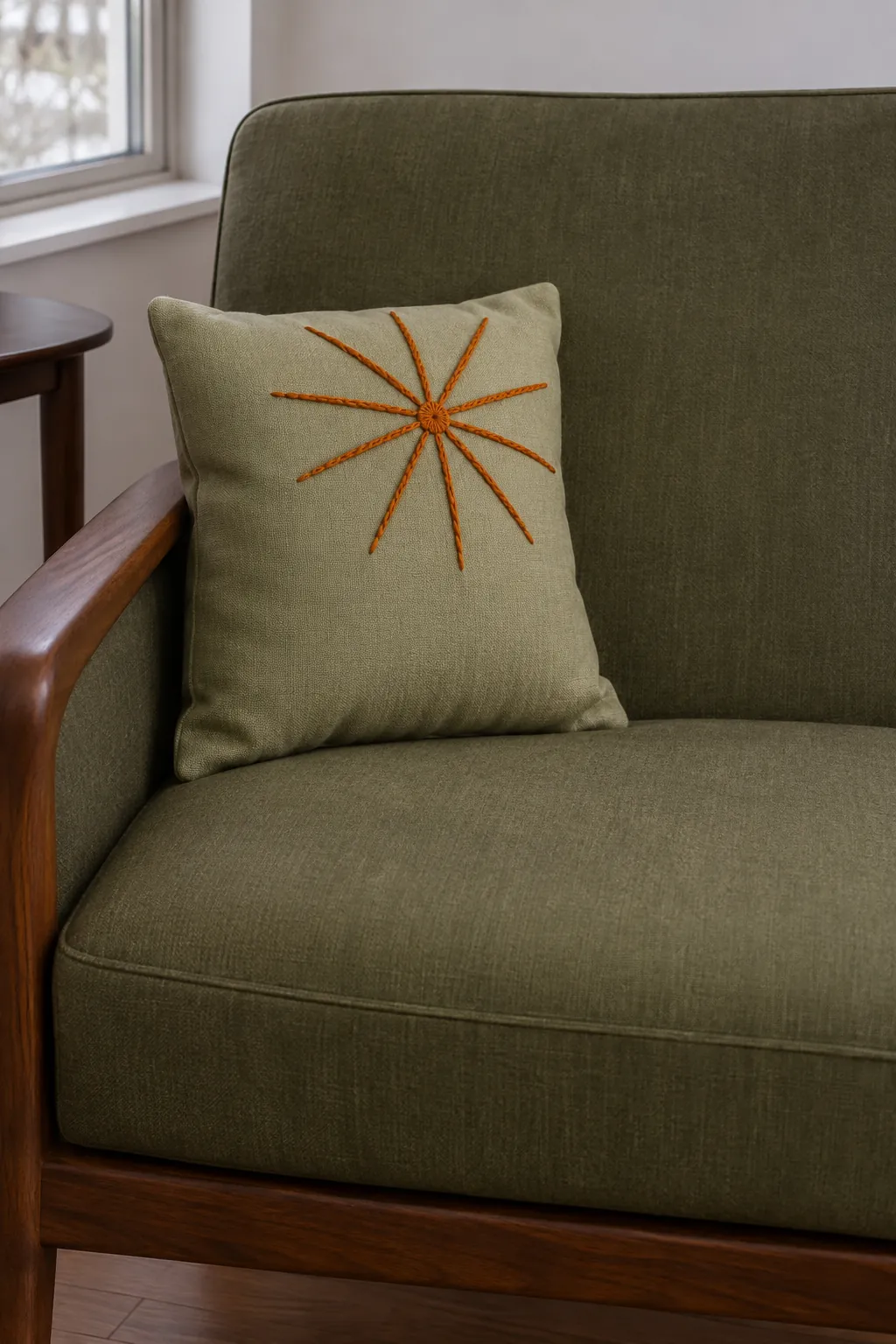
A single embroidered starburst adds a period detail without asking an entire living room to wear the same pattern. Choose a cushion with a background close to the upholstery if you want the stitching to do most of the work. On a chair, pick a size that leaves enough room to sit comfortably. Keep nearby textiles plain if the embroidery catches your eye immediately.
Lift a Simple Planter in a Three Leg Stand
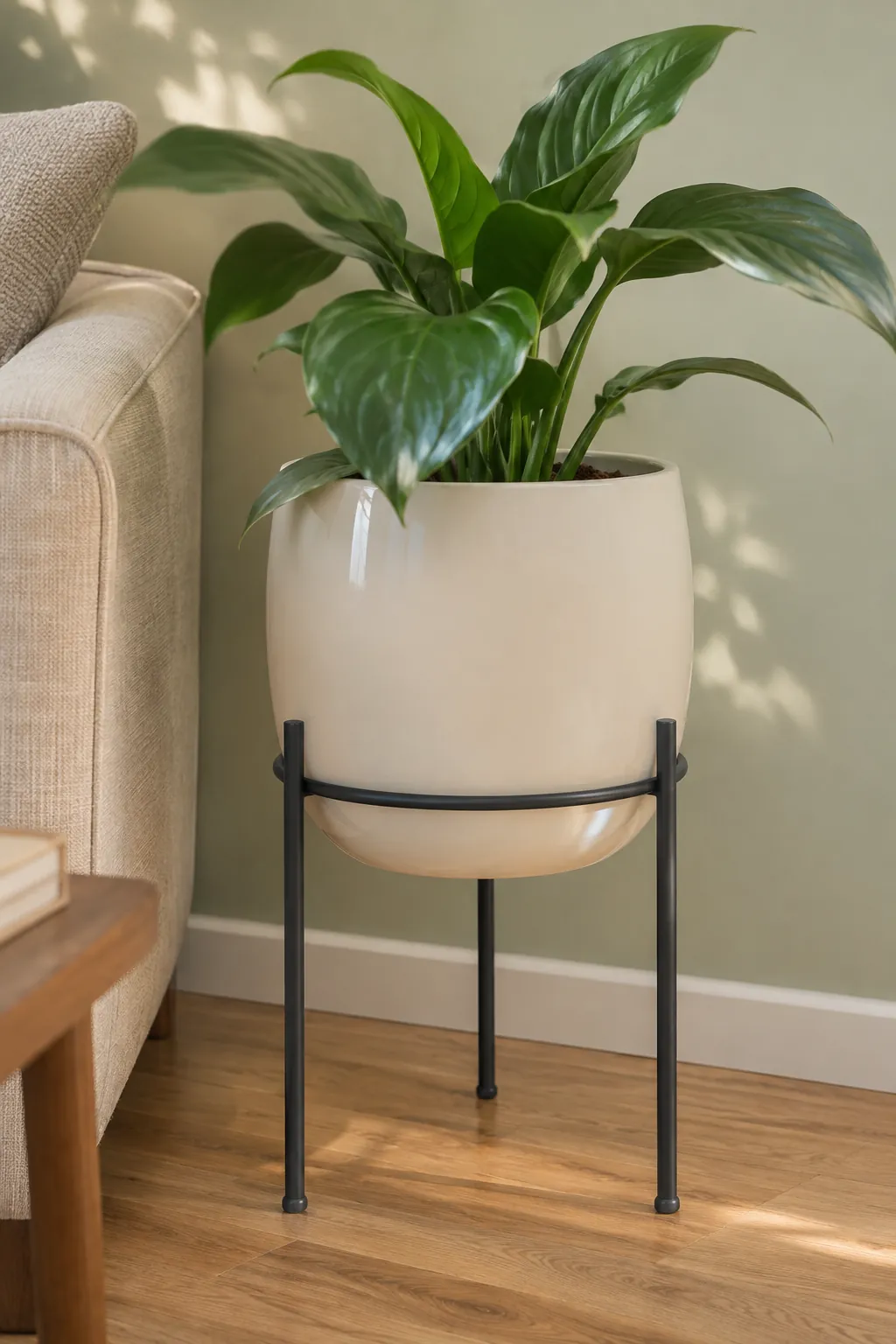
A planter with a rounded body and three fine legs picks up the lightweight shapes of the period. Choose a pot that fits the stand closely enough that it cannot slide, and check the floor under it for wobble. Lift the inner pot out to water if the outer shell has no drainage. Place the stand where its legs are visible without catching the main walking route.
Let One Angled Chair Lead the Seating Area
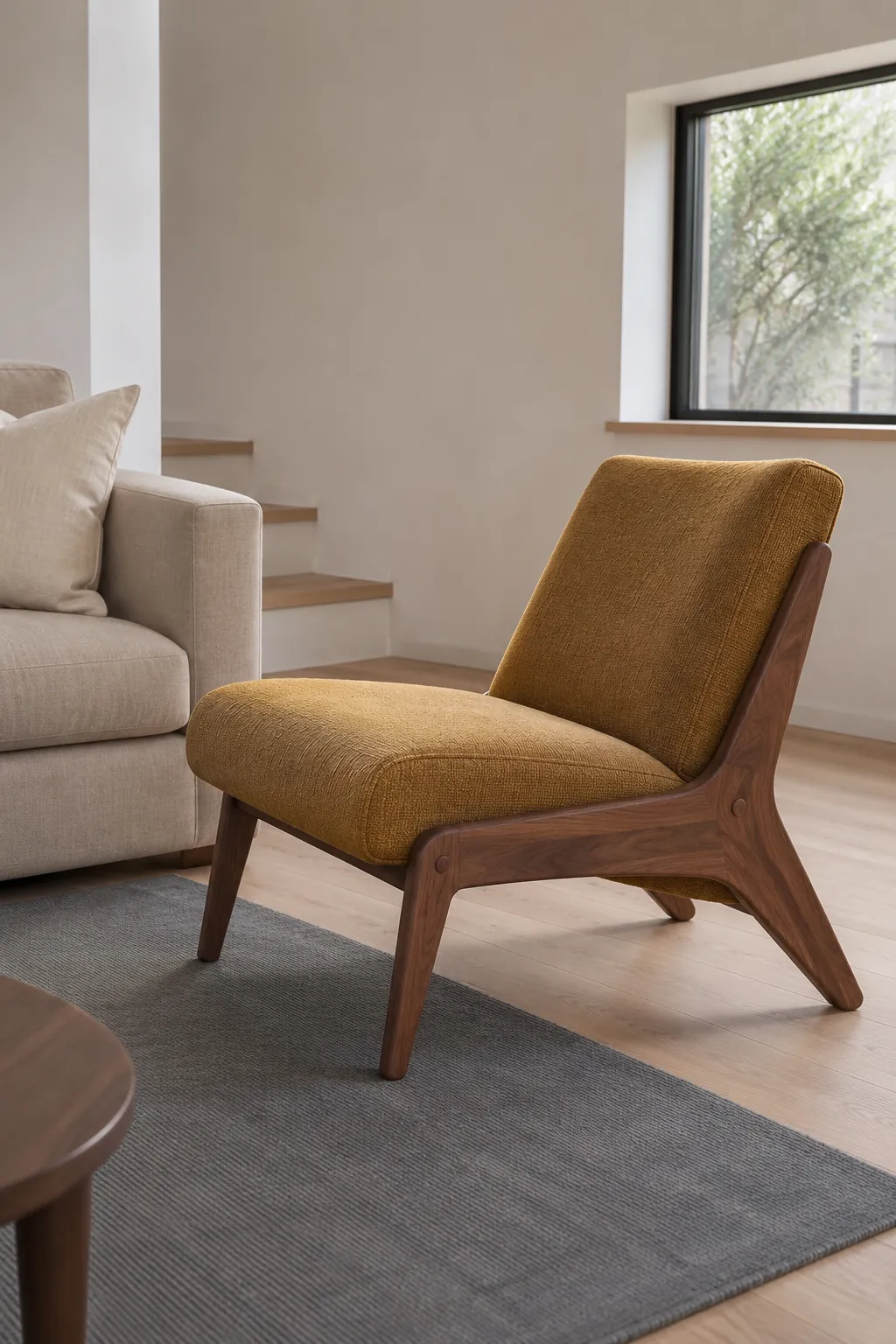
A chair with an exposed angled frame can bring motion to a room where everything else sits in a straight line. Measure the depth of its reclined profile as well as the footprint of the legs. Try the seat height if your room needs a chair that is easy to get out of. Give the exposed frame space beside a plain sofa so its shape can do the work.
Use a Turquoise Cart for Everyday Glassware
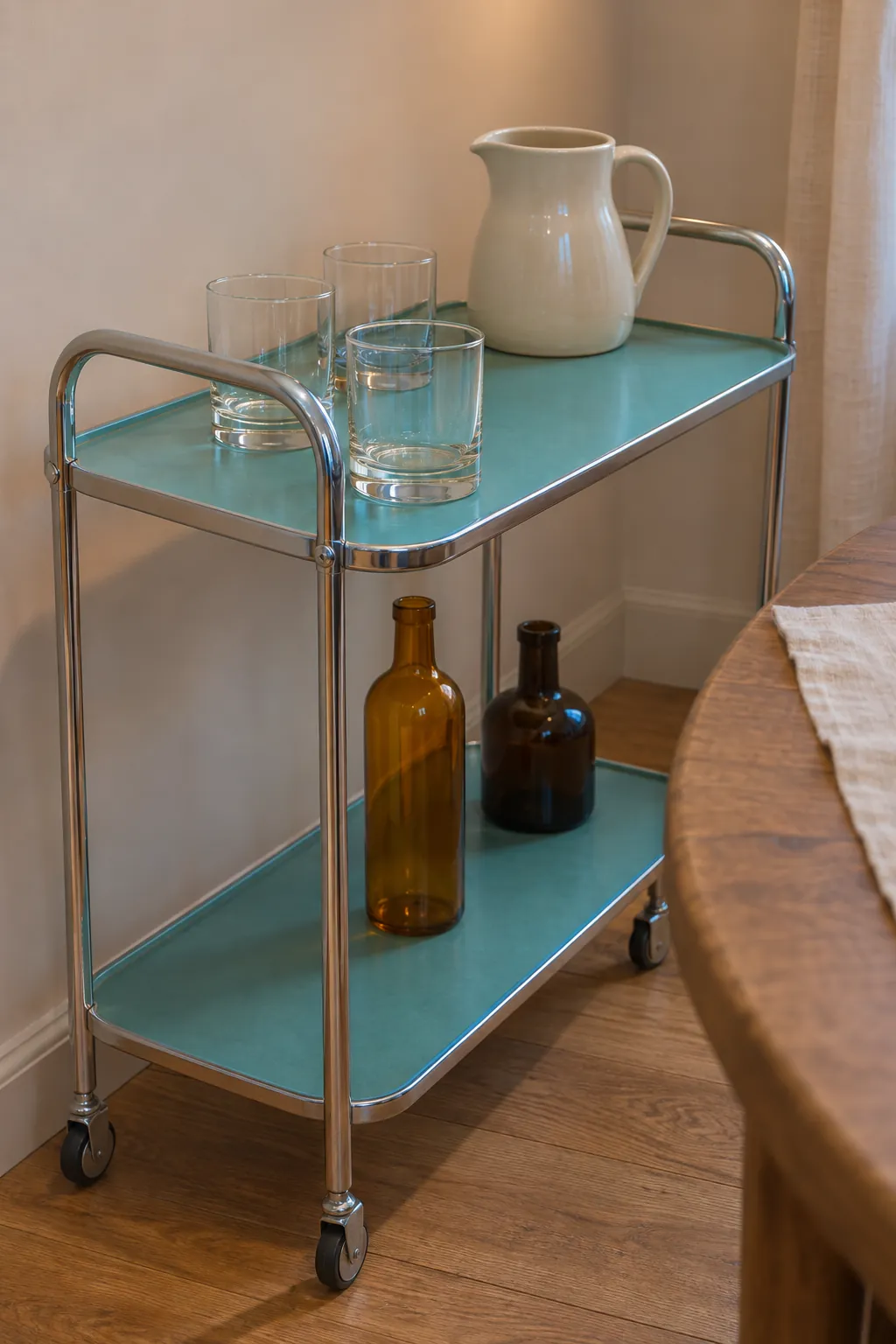
A small turquoise cart can serve everyday drinks as easily as a party corner. Make sure the wheels move well on your floor and stop securely if the cart has brakes. Keep tall bottles on the lower shelf so the top can serve as a working surface. A short cart that fits beside the table is easier to use than a wide piece you need to move each time a door opens.
Frame One Googie Roofline Print
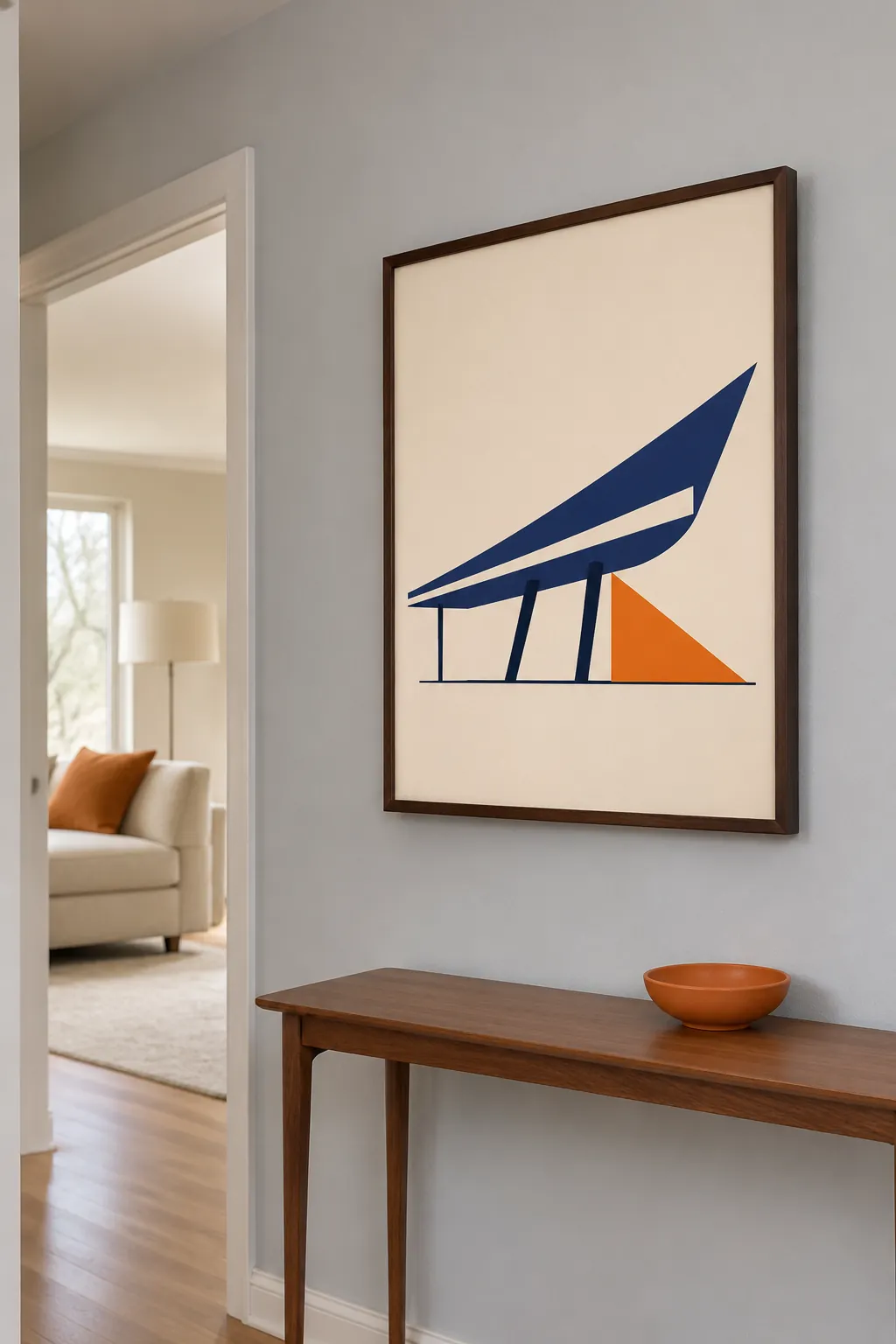
An angled roofline is a clear way to borrow from Googie design without buying a room of period furniture. Look for a graphic print with a few sharp shapes and enough empty paper to see the angles. Hang it where you can step back, such as at the end of a hall. Pick up one of its colors in a small item nearby if you want it to belong to the same room.
If the frame will hang opposite a window, see how much of the paper remains visible from the main route. A glass reflection can hide the clean lines that make the print appealing. A different wall or a lower sheen glazing may make the same print easier to live with.
Set a Small Satellite Model on a Quiet Shelf
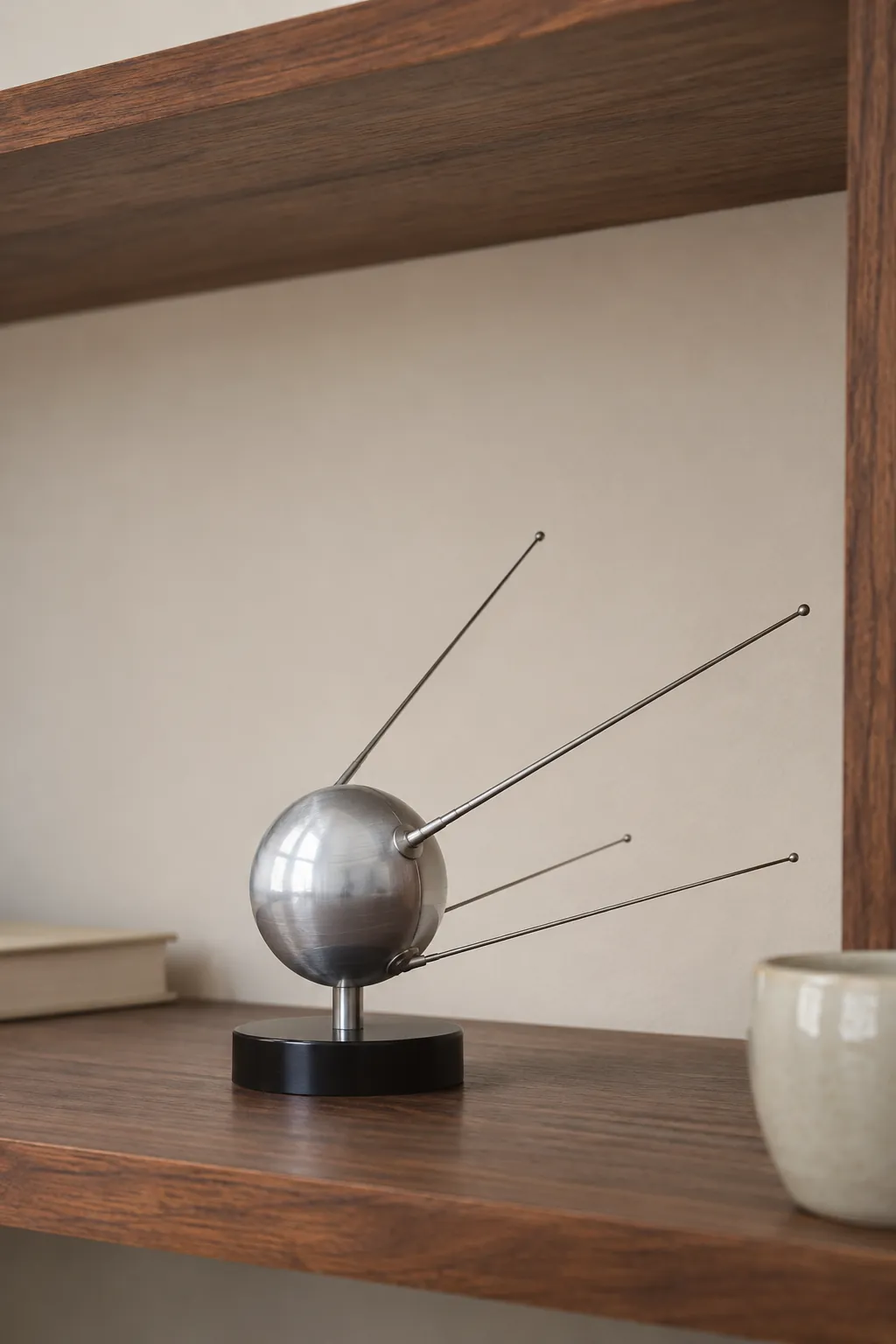
A small satellite model can make the space age reference direct in a room of otherwise ordinary furniture. Give it enough clear space for its fine rods to be seen and choose a base that stays stable. Keep it above small children’s reach if its pieces are pointed or removable. Use a plain backing so the shape reads without a themed display.
Make Room for a Kidney Shaped Dining Table
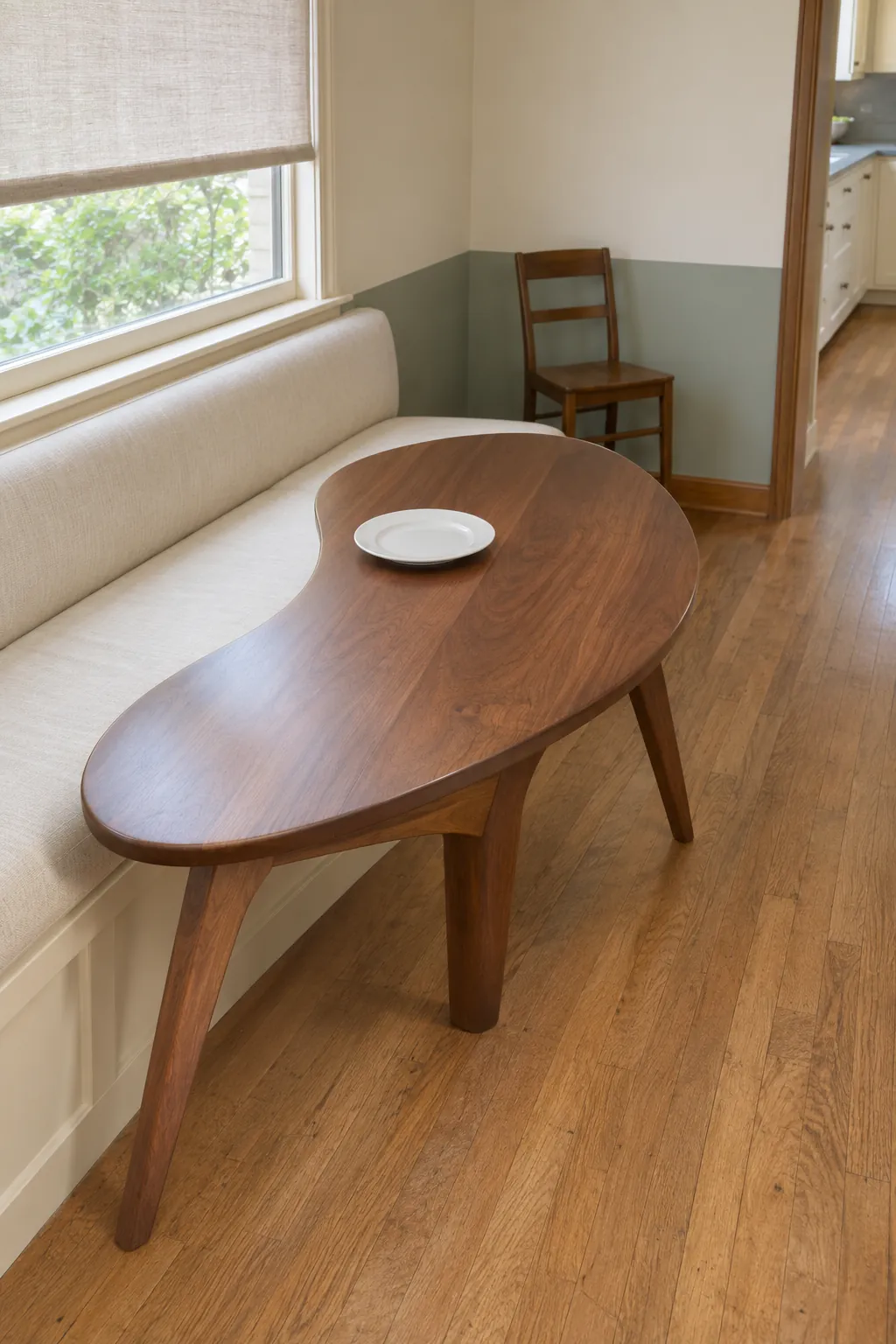
A kidney shaped table can soften an awkward dining corner where a rectangle cuts into the route past the seats. Check that each place setting can fit on the shallower curve and that the base does not block knees. A booth or bench often works best along the broad inside edge of the setup. Try the shape full size with paper before changing the furniture.
Paint Two Credenza Drawers in Period Colors
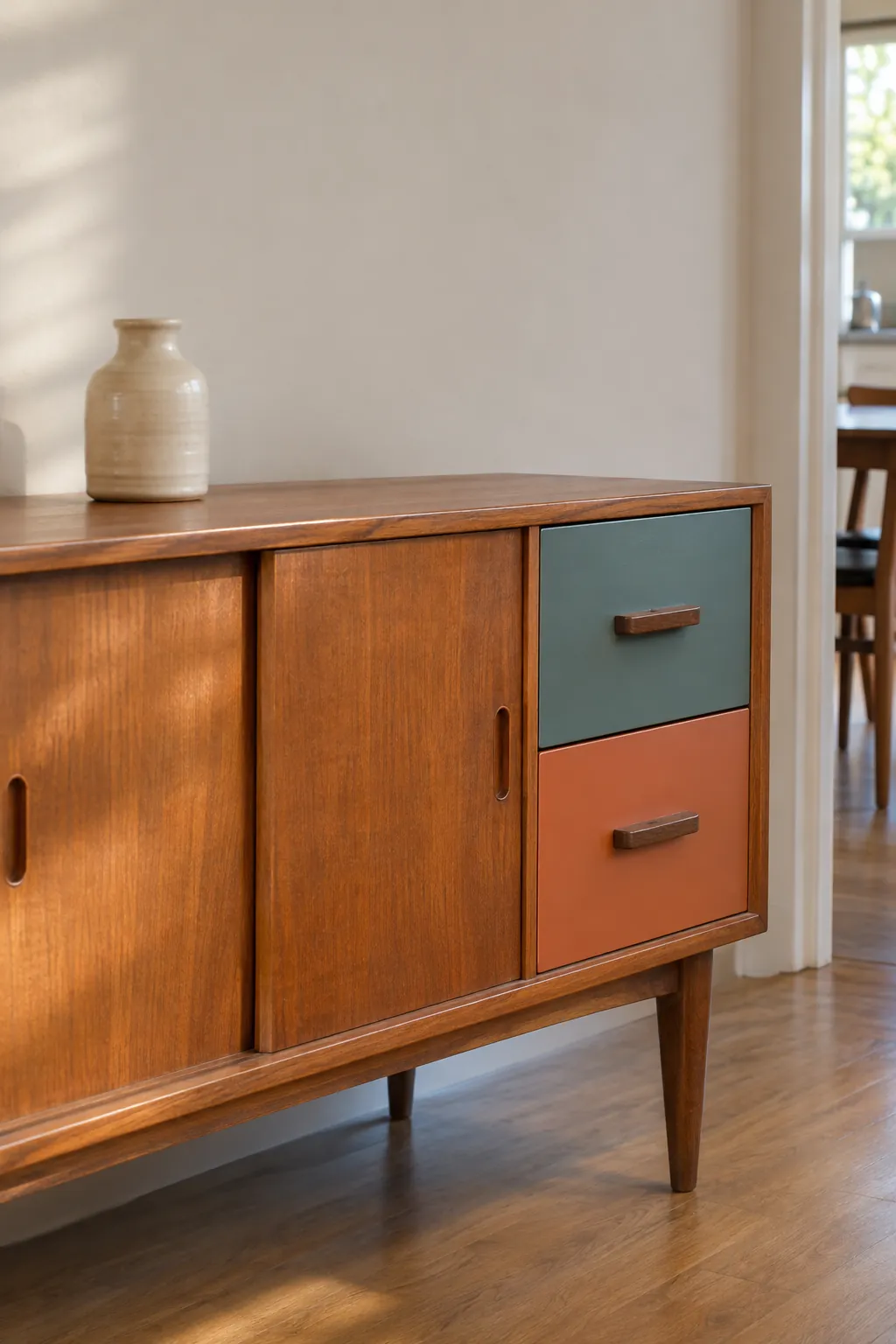
Two colored drawer fronts can bring Atomic Age decor to a storage piece without covering all the wood grain. Test a subdued teal and a warm clay orange next to the actual veneer, because the wood contributes another color. If you care about keeping an original finish, look for a piece that was already painted or use removable colored panels. Make sure any added panel clears the adjacent drawer.
Put a Tripod Lamp on an Open Side Table
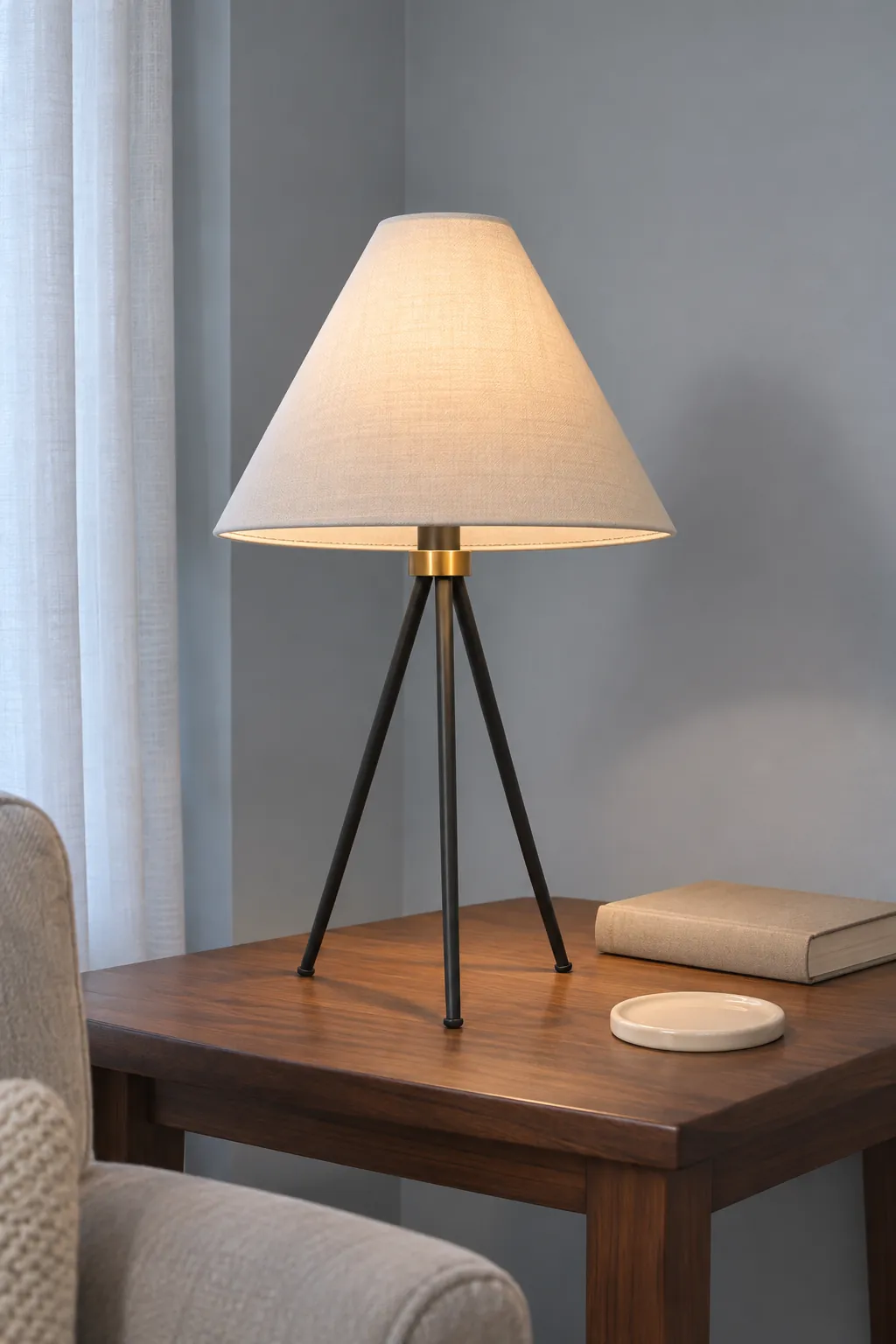
A tripod table lamp makes a strong small shape without starburst imagery. Measure its foot spread and leave room for a book or cup beside it. Look for a heavy enough base if the narrow table sits next to a busy path. A pale shade can bring out the thin legs without adding another saturated color.
Float an Orbital Mobile Above a Low Cabinet
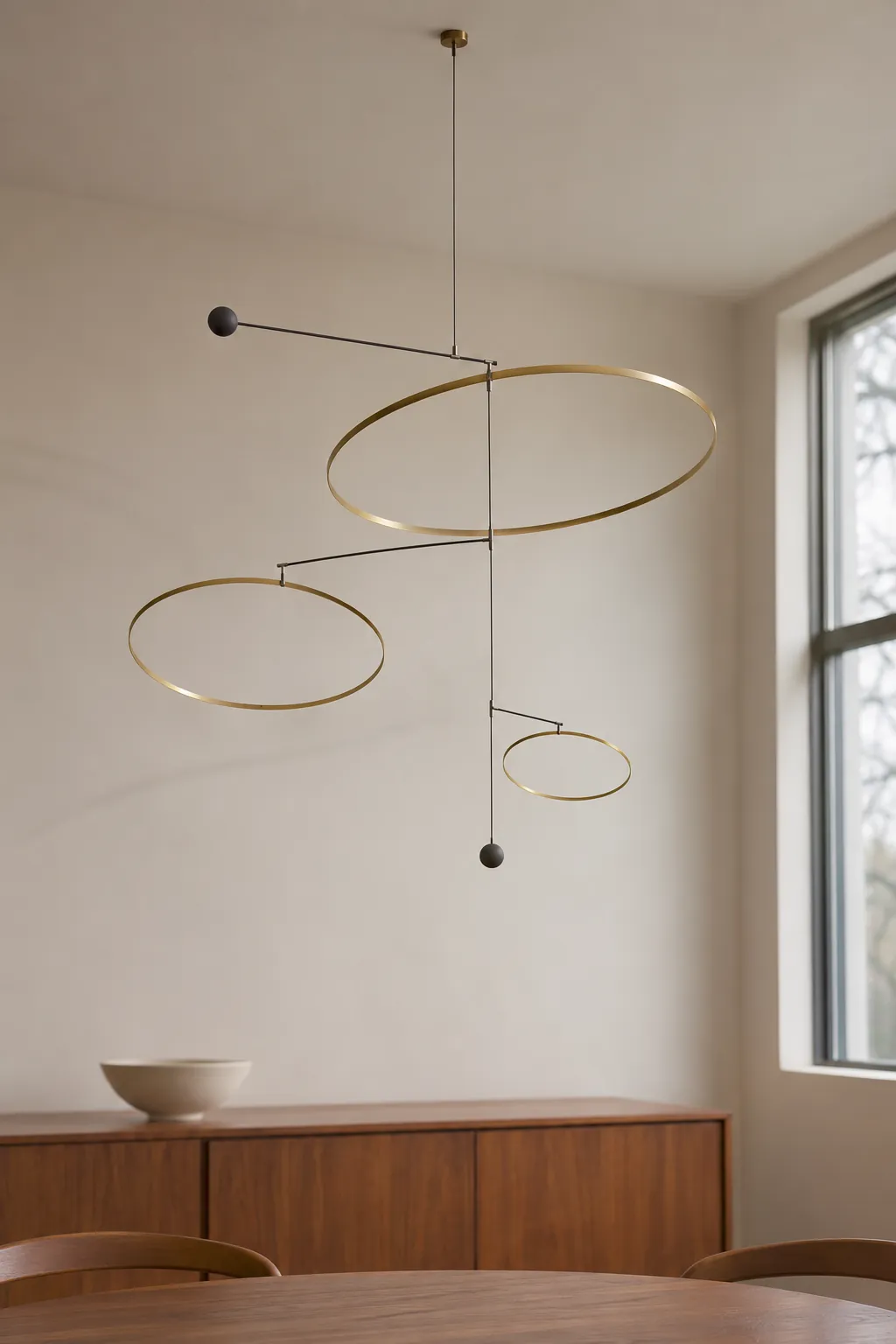
An orbital mobile adds a moving shape in a part of the room nobody needs to walk through. Measure the space in every direction it can turn, including the path of nearby curtains. Use the appropriate ceiling fixing for the mobile and ceiling construction. Keep the cabinet below relatively plain so the movement remains easy to see.
Use One Bullet Planter in the Entry
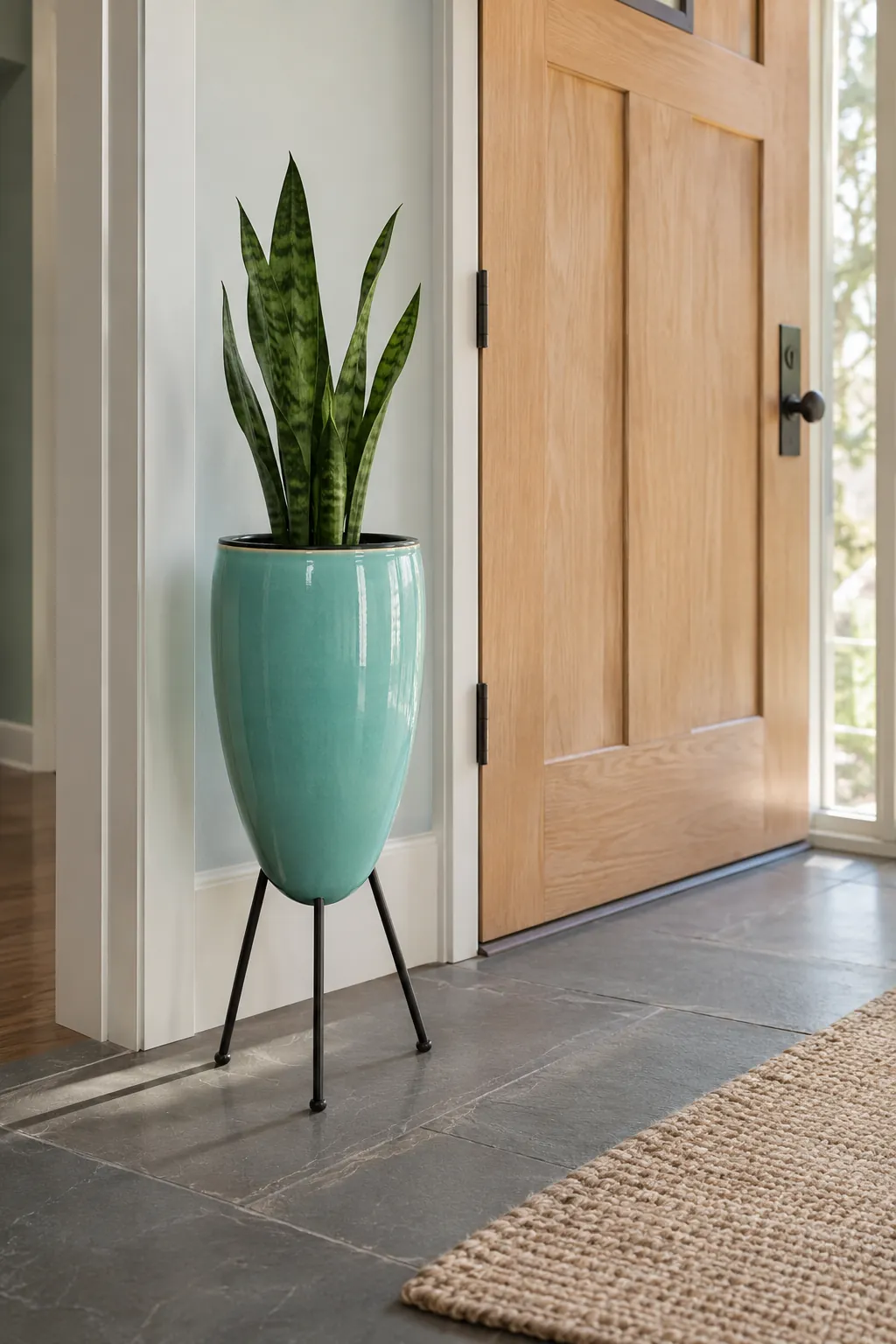
A bullet planter puts the tapered space age shape right where you enter. Check that its height is right for the leaves and that the door will clear both the pot and its stand. An inner liner makes it simpler to remove excess water. Keep one side free so you can move the pot without lifting across furniture.
Put an Atomic Repeat on a Small Lamp Shade
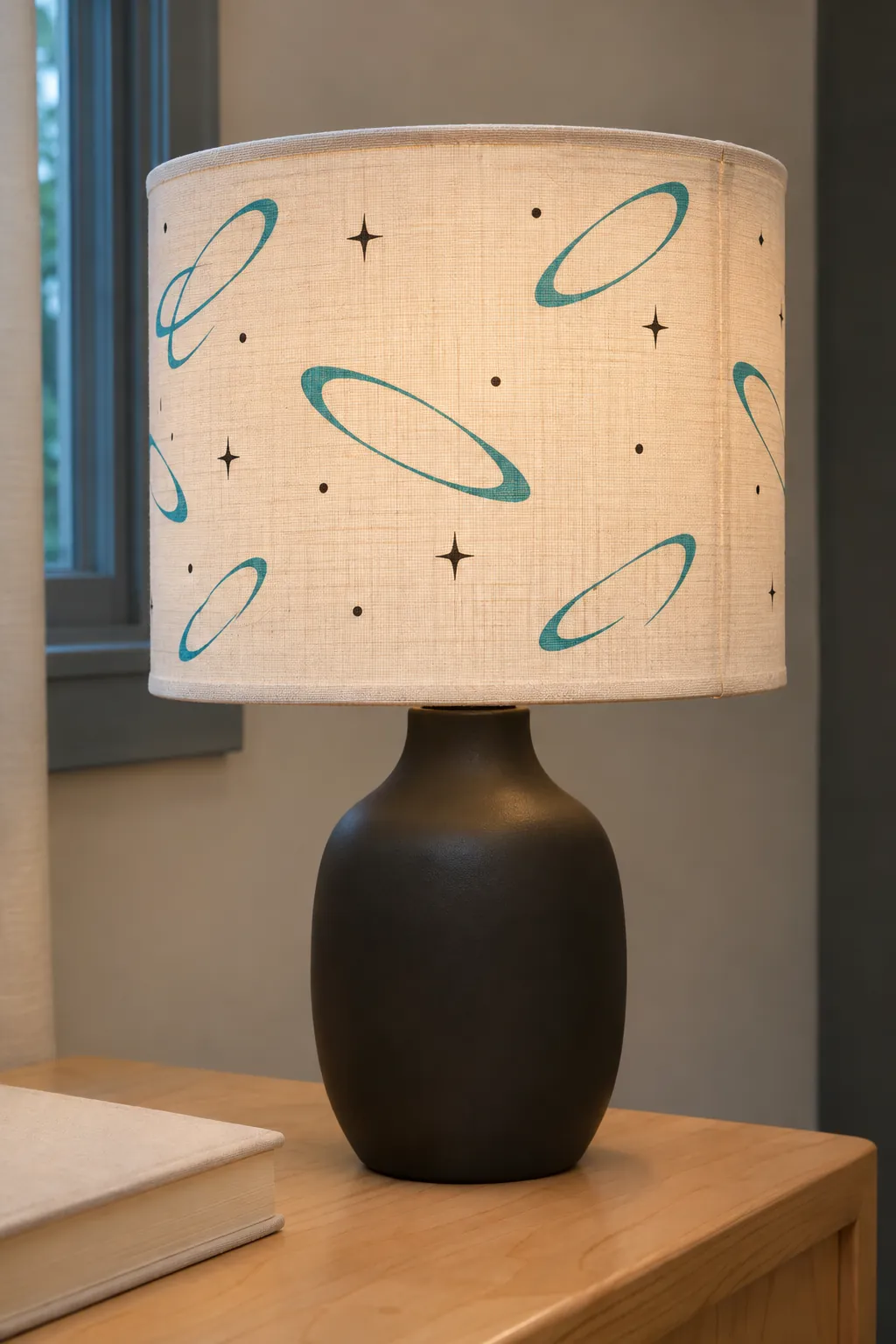
A small drum shade is a manageable place for repeat motifs if you like the look but want quiet walls. Hold it against the lamp base before buying, and check the width against nearby furniture. Use the fitting and bulb specified for the shade and see whether the pattern is still legible once it is lit. A plain base gives the design a clear limit.
Use an Open Divider With Tapered Uprights
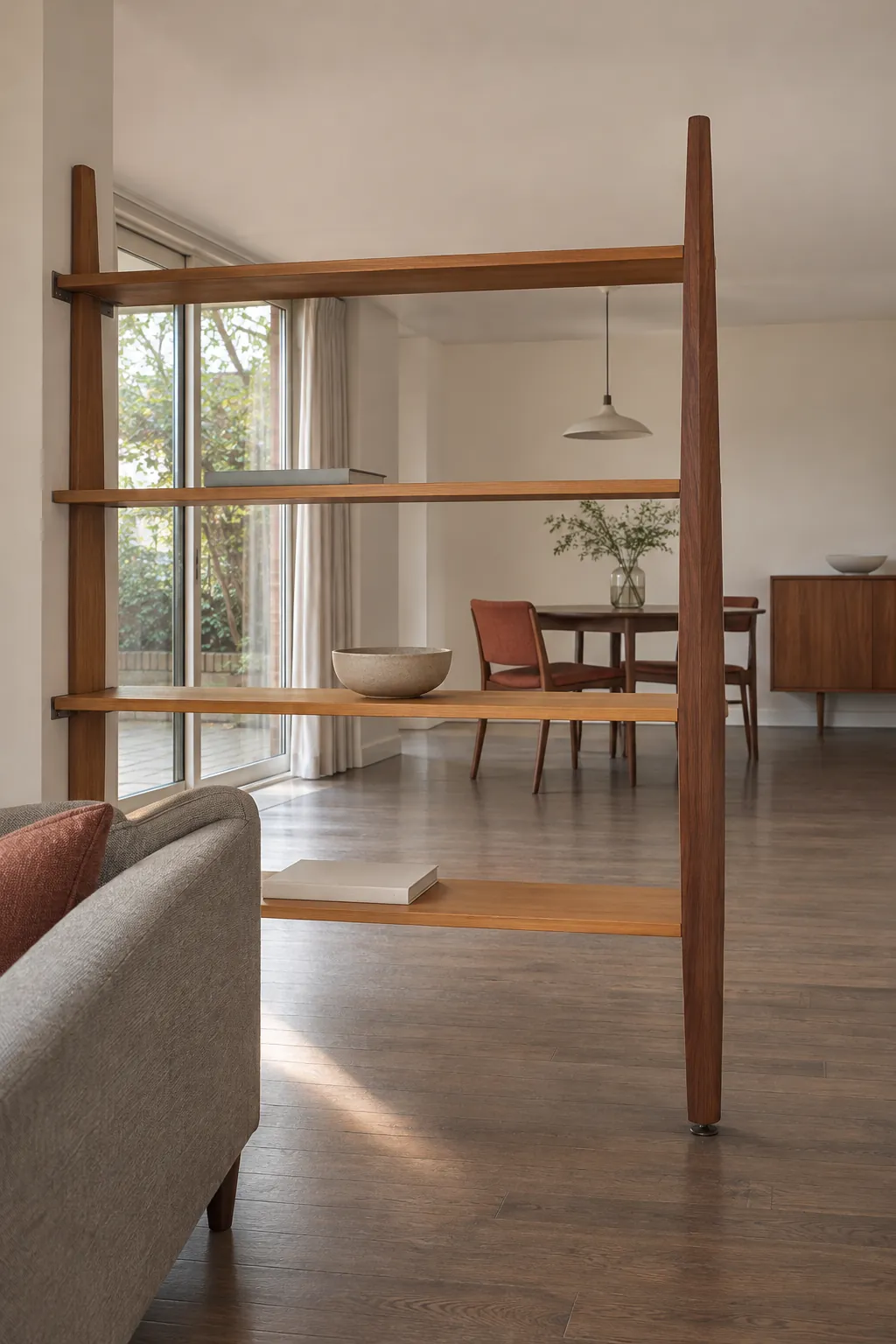
A shallow open divider can mark the edge of a seating area without darkening it. Tapered uprights give it the shape of mid century furniture and leave a little space around what you store. Choose an installation that can be secured appropriately and do not overfill it. Check the walking route on both sides before deciding how wide it should be.
Test a Small Atomic Age Palette in Your Own Light
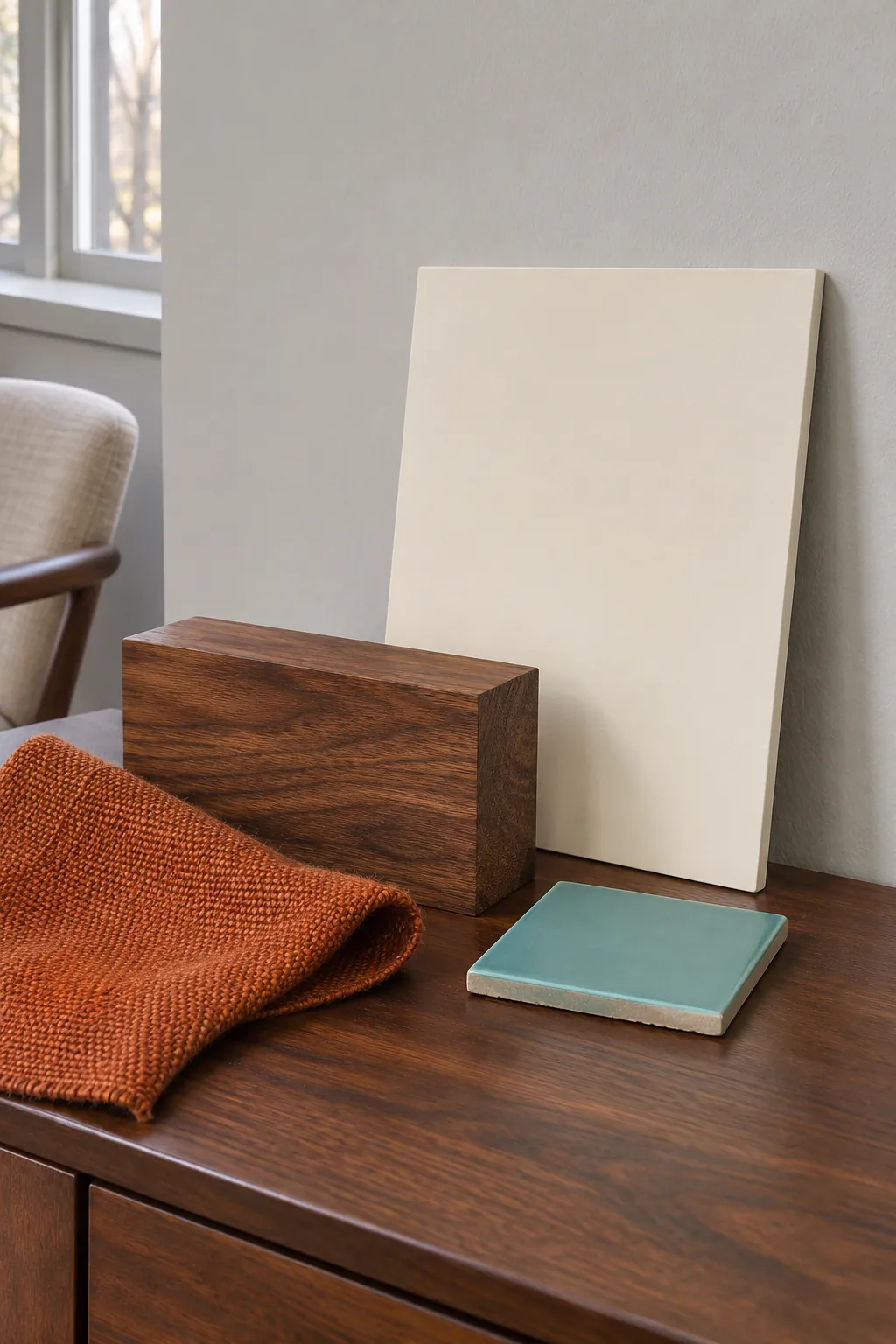
Wood, warm white, and one accent give you somewhere to start if you are trying to mix old and new finds. Put your material samples beside the piece you plan to keep and check them again in evening light. Try a second accent in an object you can put away, such as a vase or small cushion. The best test is the view you see when walking into the room.