
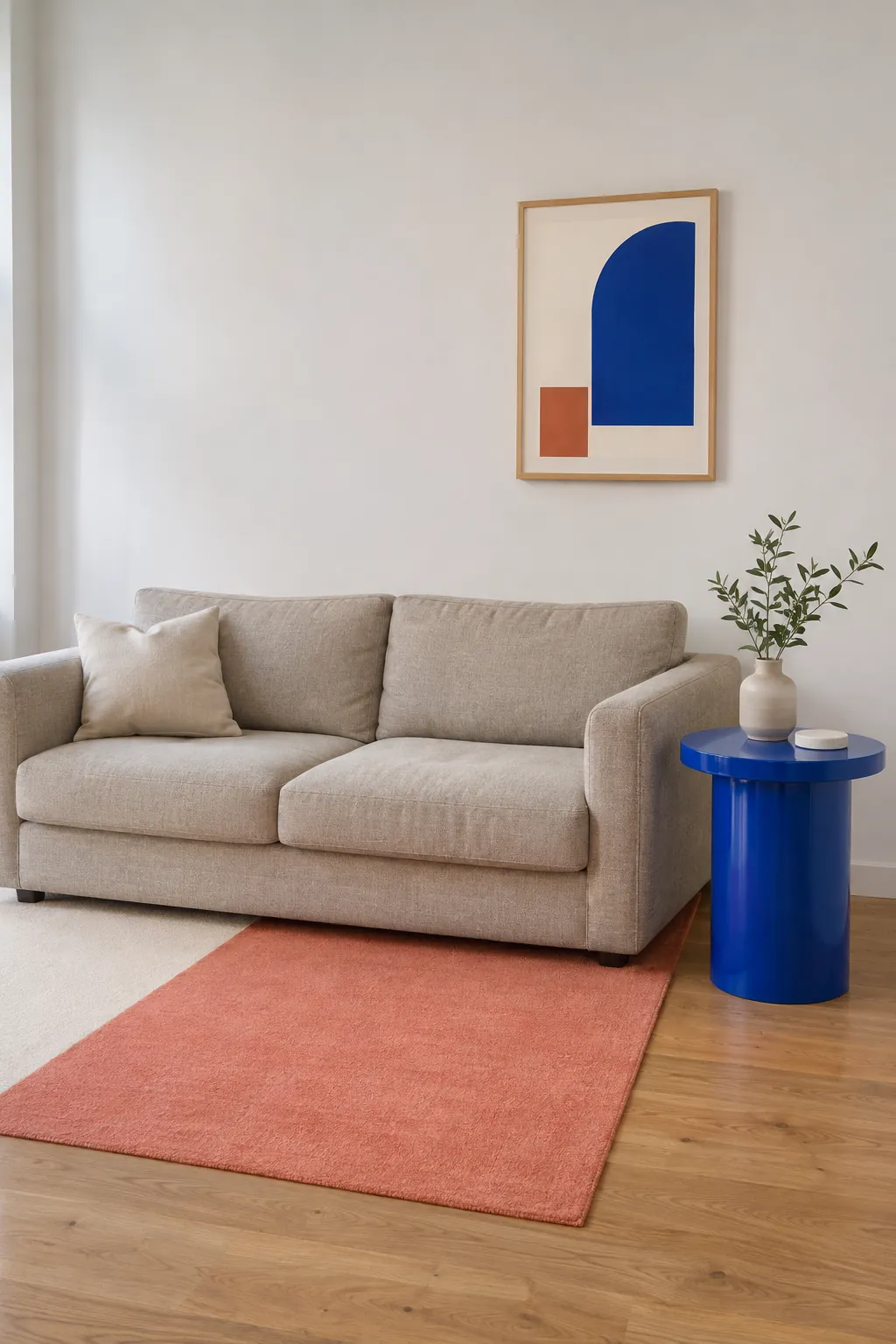
A room can handle a bright color or an odd outline more easily when the furniture around it has a job and some room to breathe. Start with a place that already needs something, like a table by the sofa or a runner in the hall. Then choose a shape or a pair of colors you would enjoy seeing every day.
Start With a Cobalt Pedestal Table
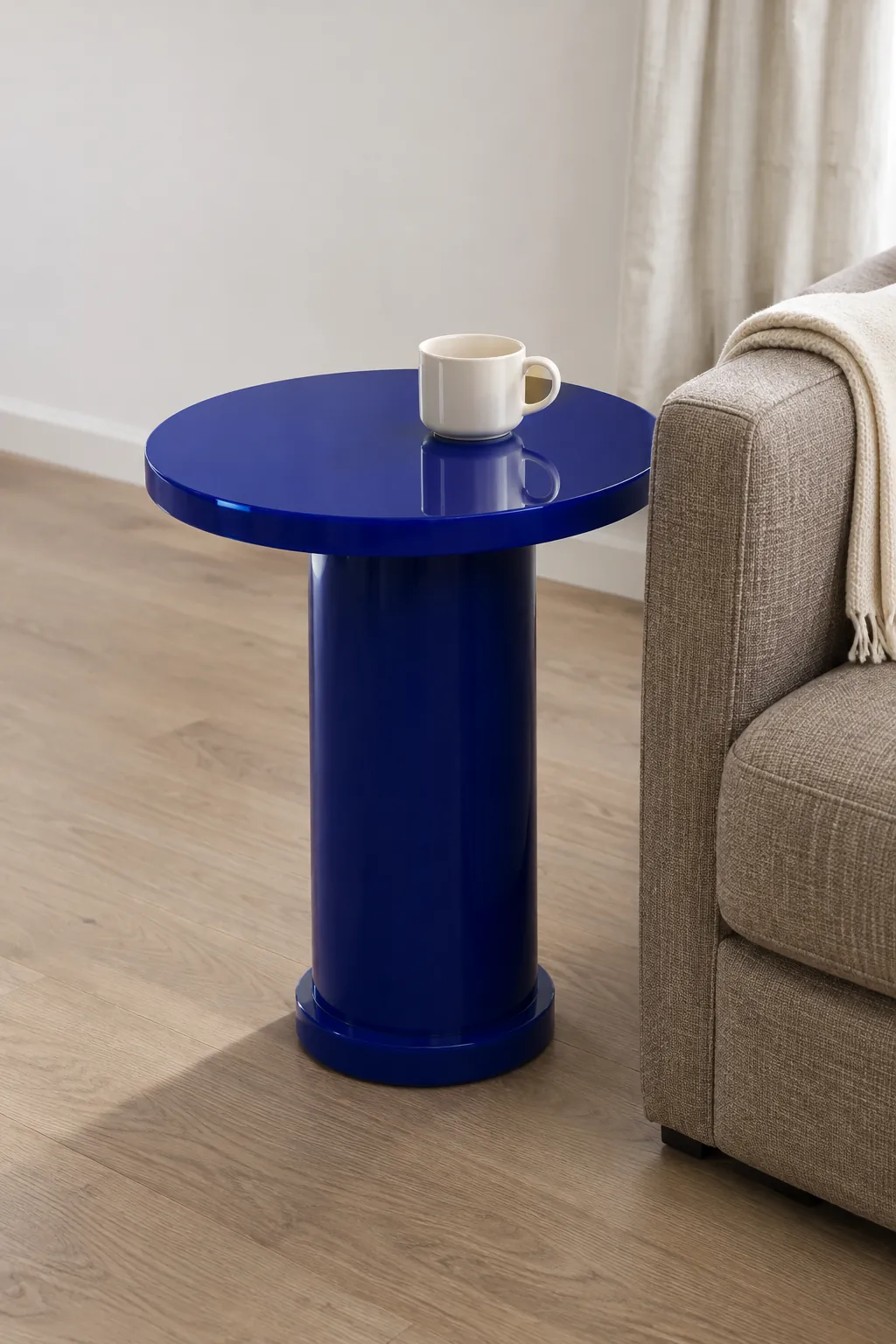
A cobalt side table is enough to change the color balance of a room with plain seating. Measure the sofa arm and choose a top you can reach without leaning down far. A cylindrical base takes up less visual space than four widely spread legs, but it still needs enough weight to stay steady. Leave the table clear enough to use before adding another color nearby.
Try a Scalloped Mirror in the Entry
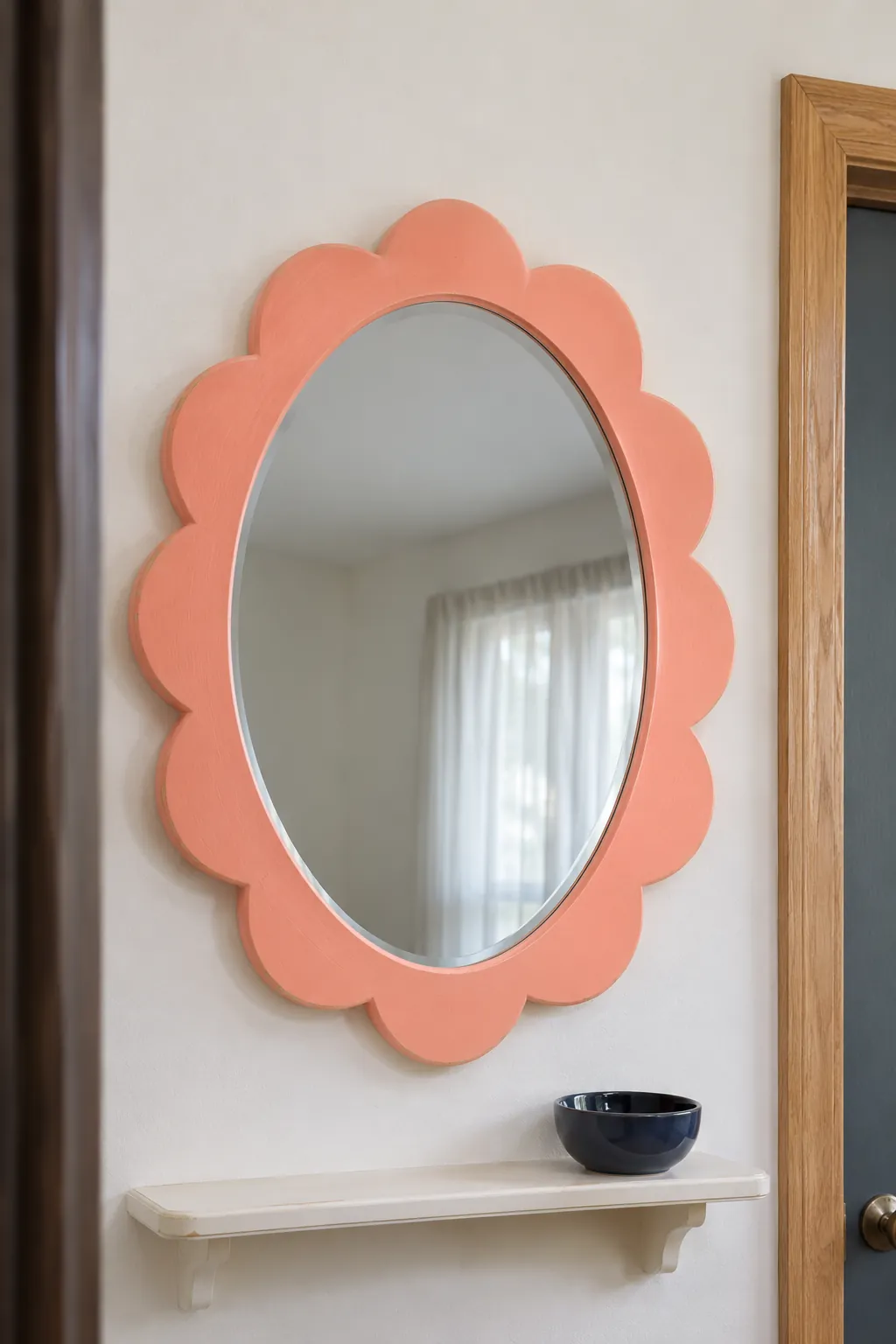
A scalloped frame adds an irregular outline where a plain mirror would normally go. Check the usable glass area before buying, since a wide frilly edge leaves less room for your reflection. A pale coral frame can stand against an off white wall while a plain entry shelf gives it a practical place to sit visually. Measure the gap to the door trim so the scallops have room.
Choose a Lamp Built From Stacked Shapes
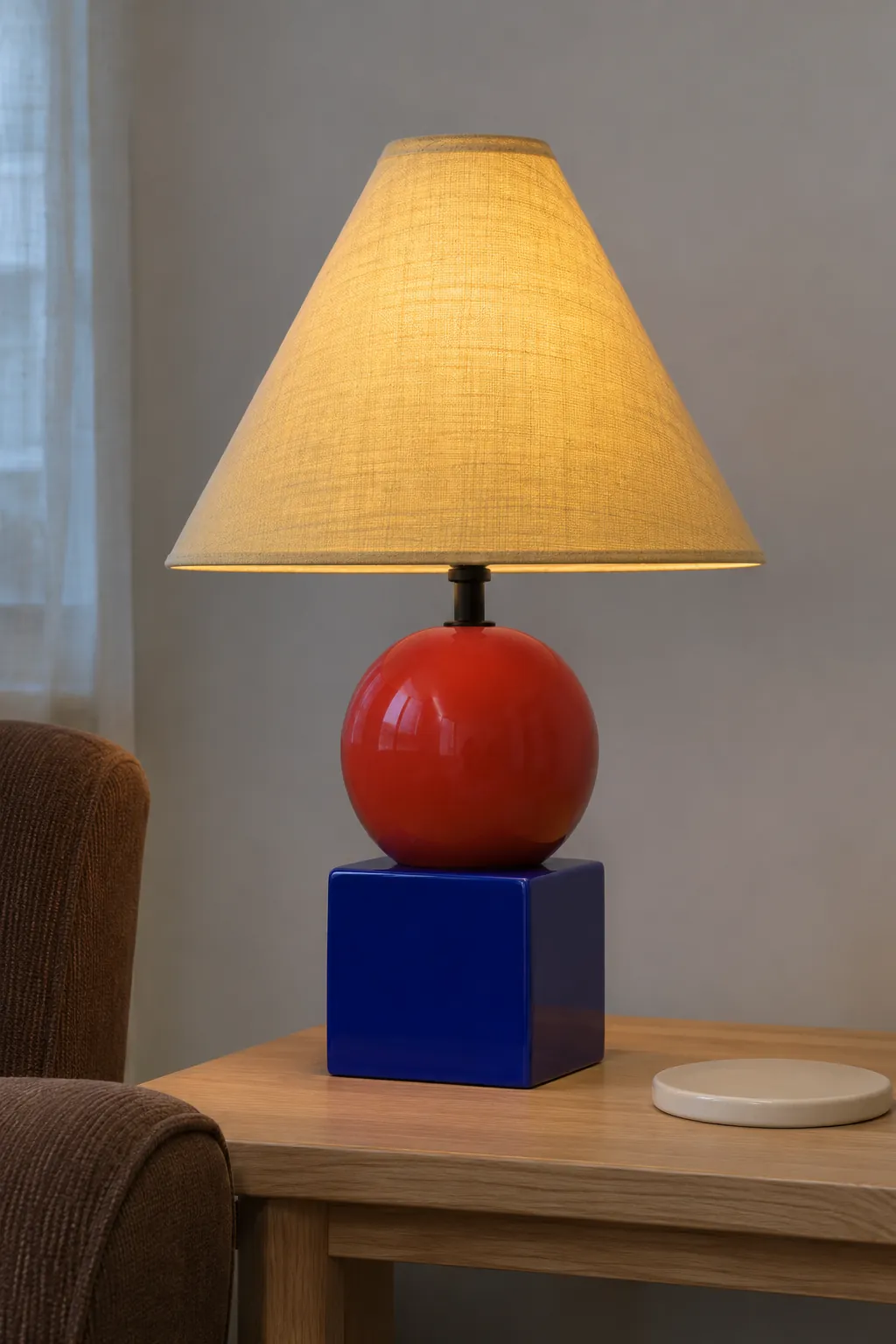
A lamp made from a cylinder, sphere, or block is a small way to bring in the geometric furniture language of Memphis design. Check the footprint against the end table and make sure the assembled lamp feels steady. Let one shape carry the loudest color and give the others quieter finishes if the room is already busy. Turn it on before you judge the combination, since the shade can change the color of nearby surfaces.
The silhouette also changes depending on where you sit. Put it at the distance you usually view the end table and check whether the stacked pieces are visible below the shade. Let the most interesting shape face the room.
Use a Squiggle Laminate on One Console
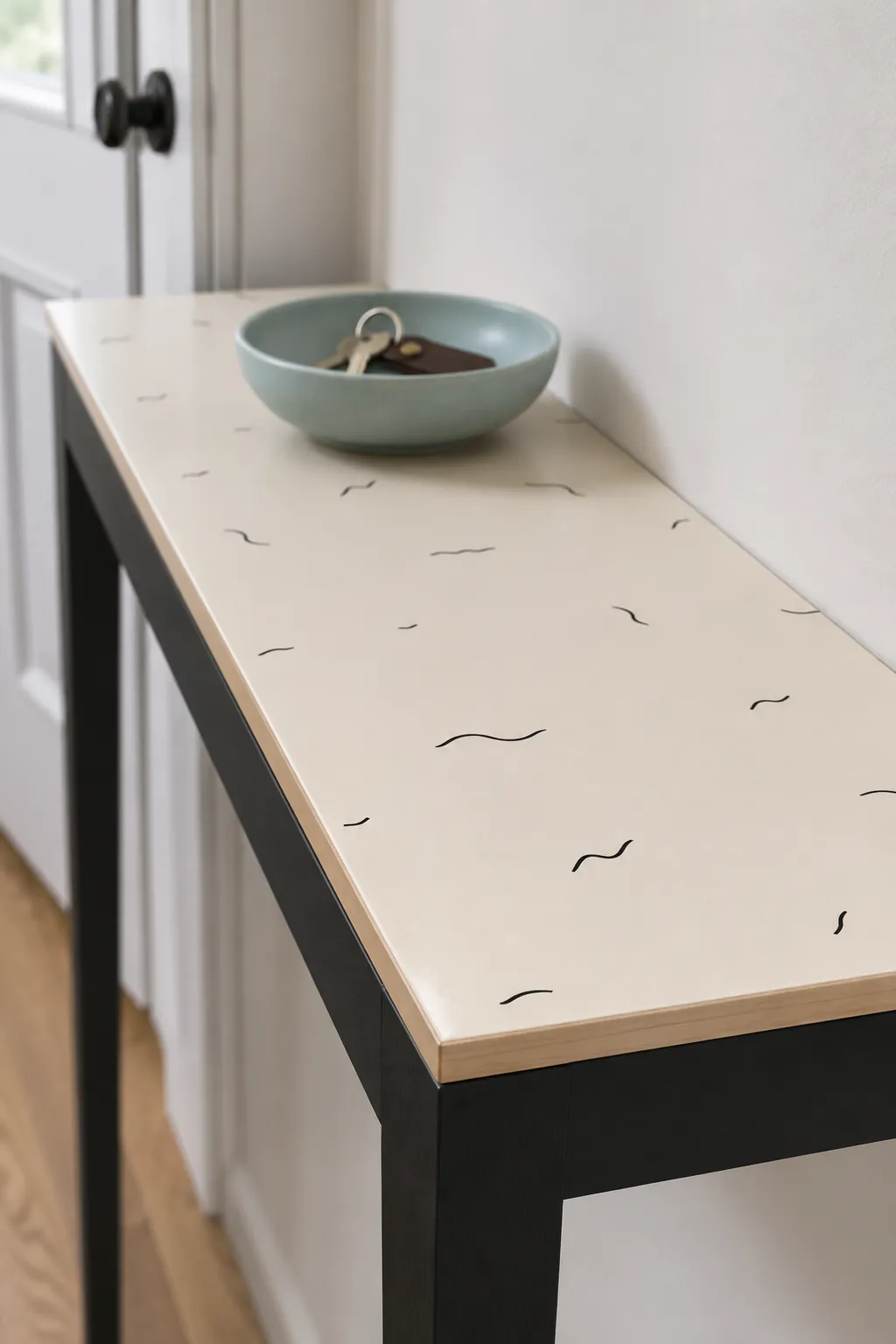
A fine black squiggle repeat brings up the associations of Memphis Milano decor without asking you to repaint the room. Try the print on a console top, where the narrow surface contains the pattern. See how the curves look from the door and up close beside the finish of the base. A simple edge helps the irregular marks stay readable.
Color Block the Compartments of an Open Shelf
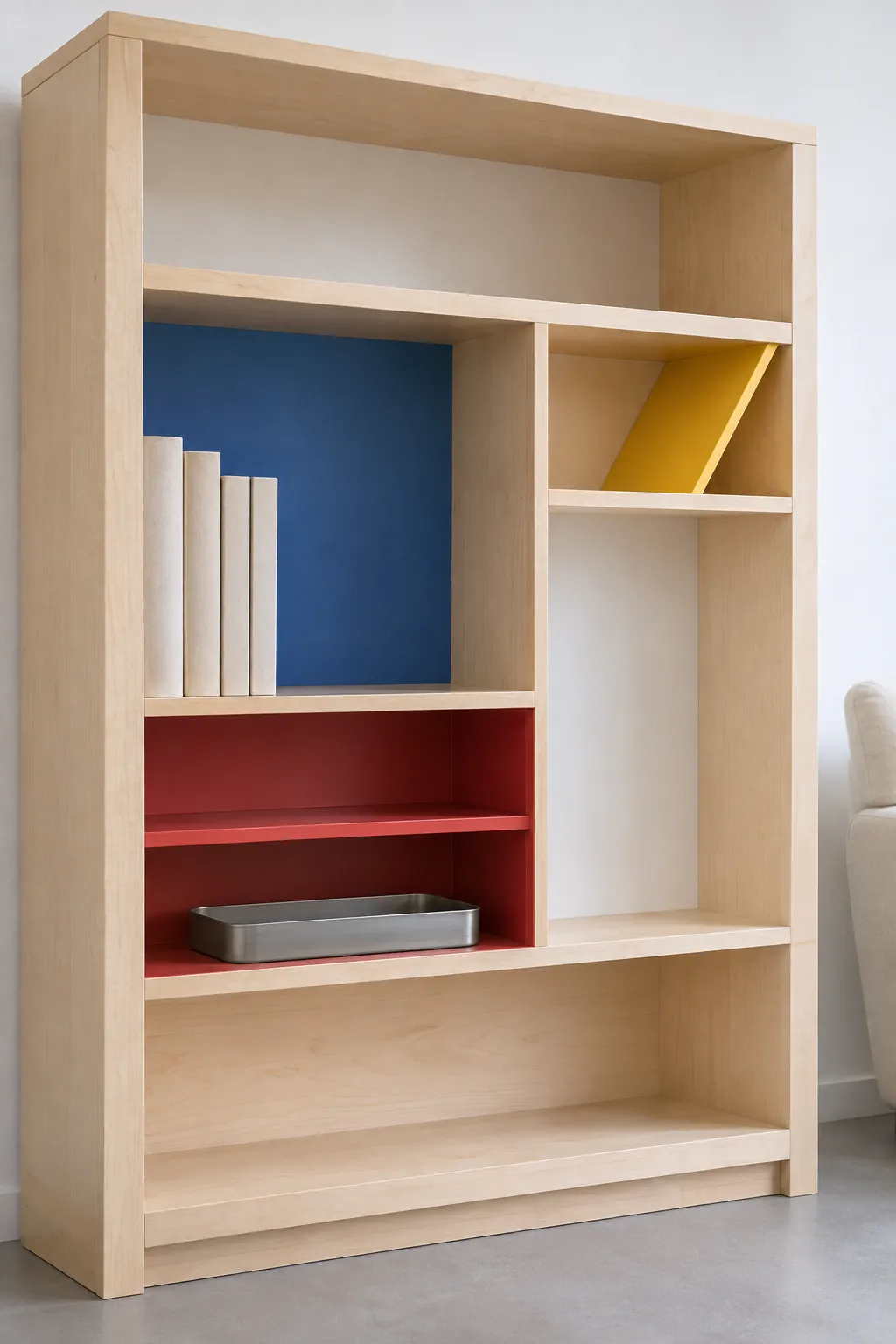
Give one inside panel of a bookcase a strong red and another a quieter blue, then let the remaining shelves show the wall or wood. The colors should help distinguish compartments from across the room. Measure the items you plan to store before adding angled inserts, which can take away usable height. Keep the unit safely mounted and put heavy books where the shelf can support them.
Use a Graphic Runner to Set the Hall Palette
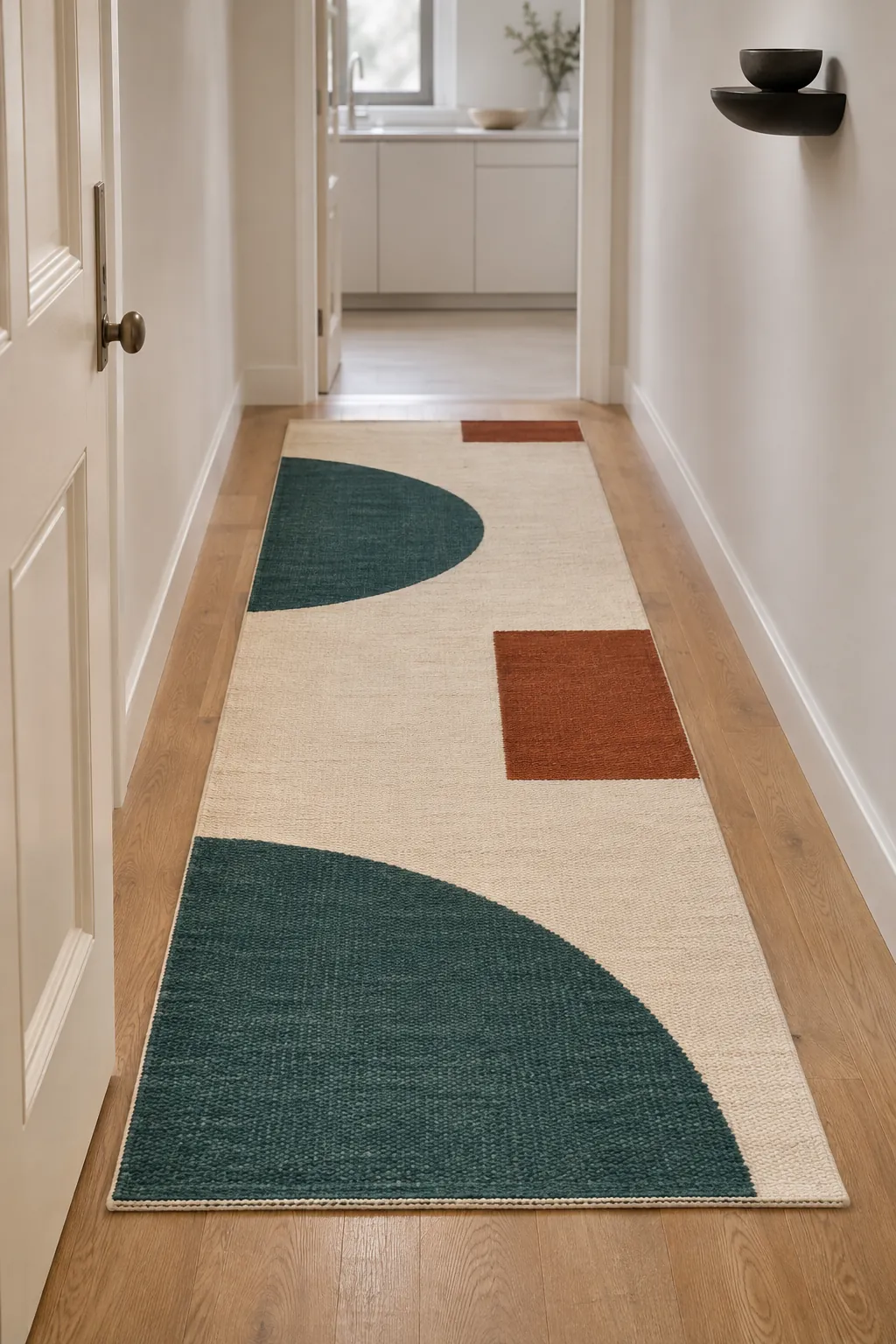
A geometric runner can carry several colors through a hall without putting pattern on the walls. Lay out the intended width and length before you buy so each end has room around it. Check whether the front door clears the pile and whether the backing grips the floor. Repeating one color in a key bowl is enough if the hall already feels bright.
Set Pattern Inside a Desk Drawer
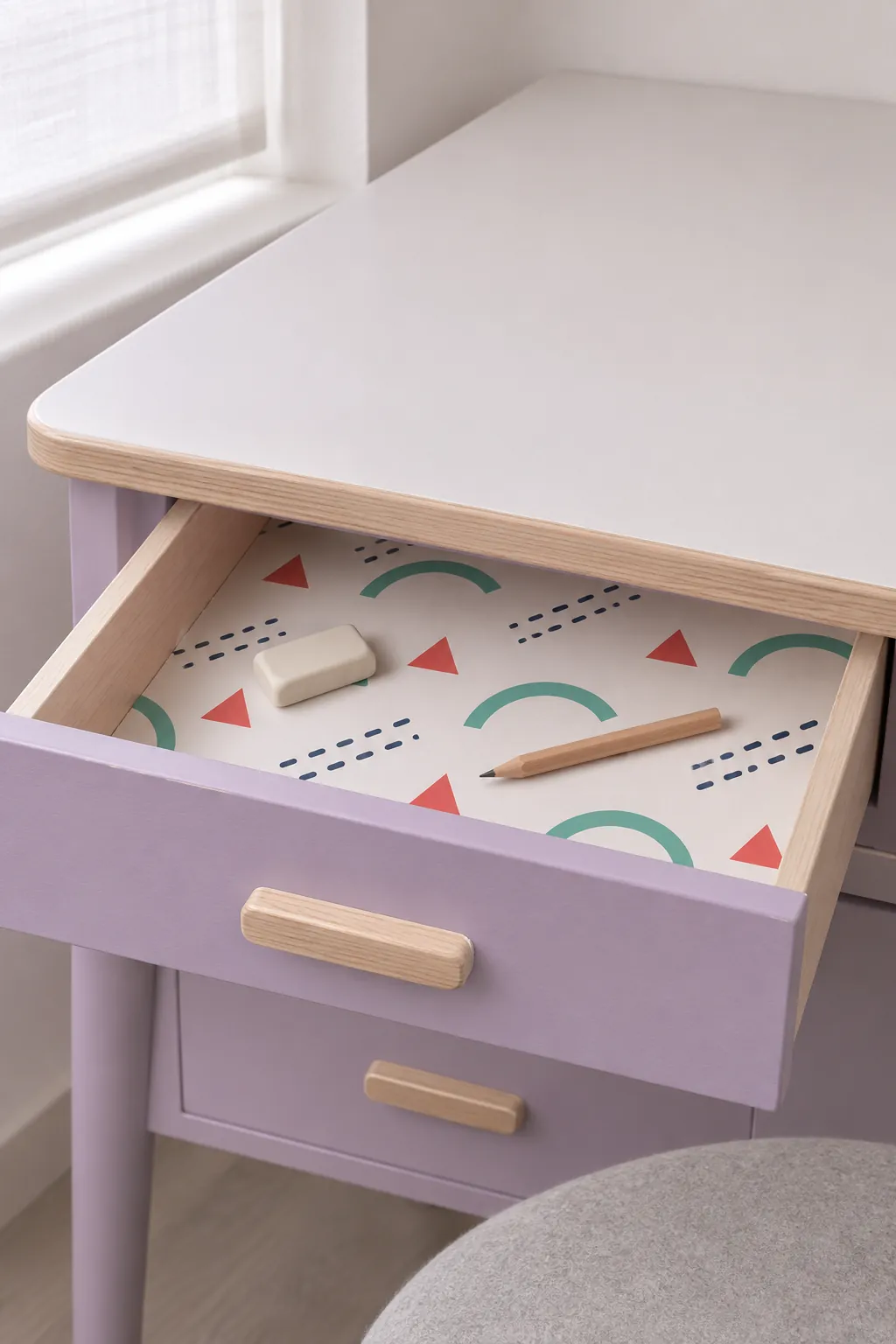
A patterned drawer liner lets you enjoy a busy print on a piece of furniture that stays plain when shut. Measure the usable base and account for the drawer runners before cutting. A removable liner makes it easy to try another print when the combination gets old. Put the patterns in one drawer first so you can see whether the color suits the desk finish.
Give One Chair Two Upholstery Colors
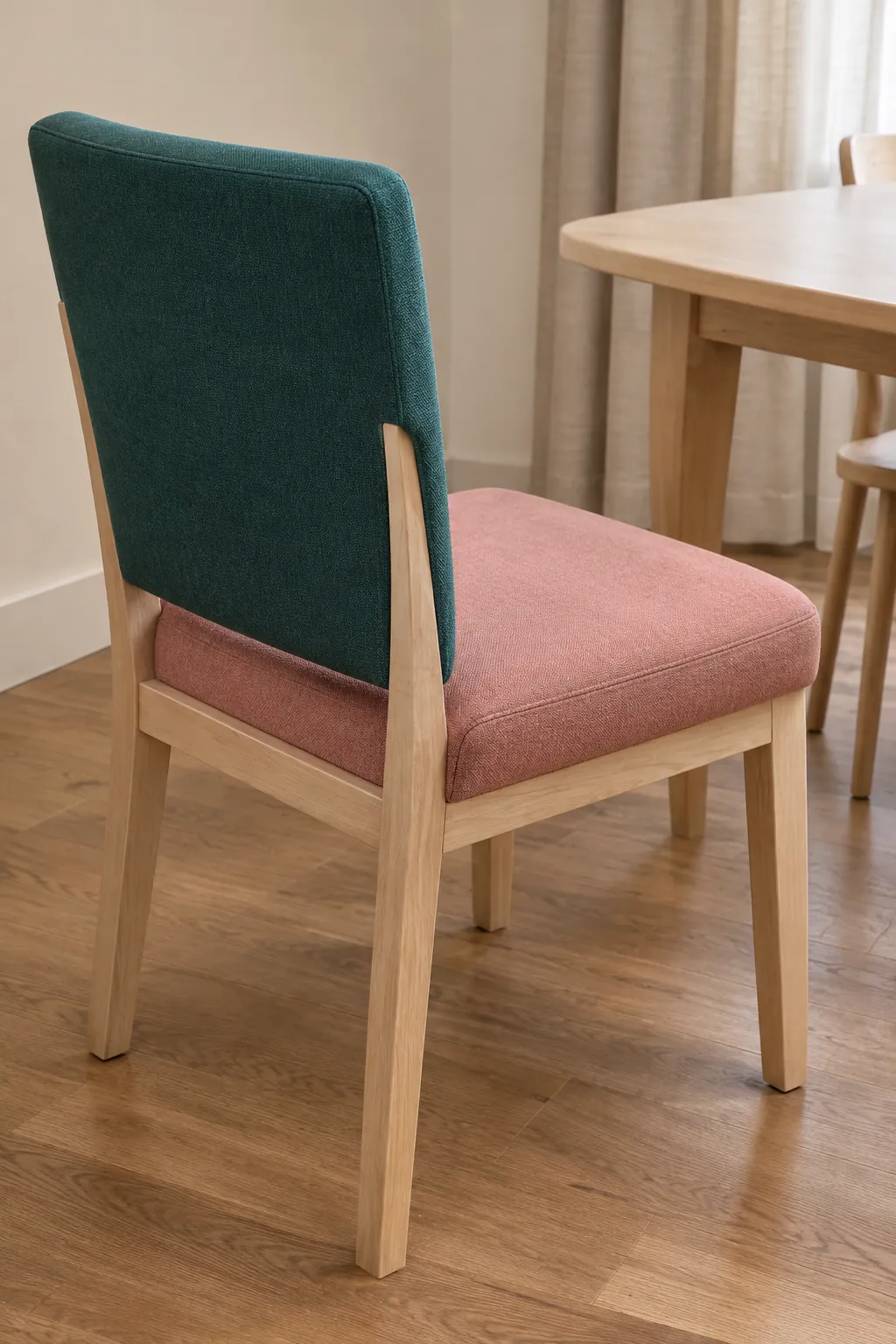
A chair with a pink seat and teal back makes the color break part of the furniture. Keep the frame in one plain finish and use fabrics of similar weight so both panels look related. Check a dark and light swatch against a spilled crumb or lint before you pick where to use each fabric. On a set, one accent chair can give the table a clear end.
Paint the Door and Frame Two Different Colors
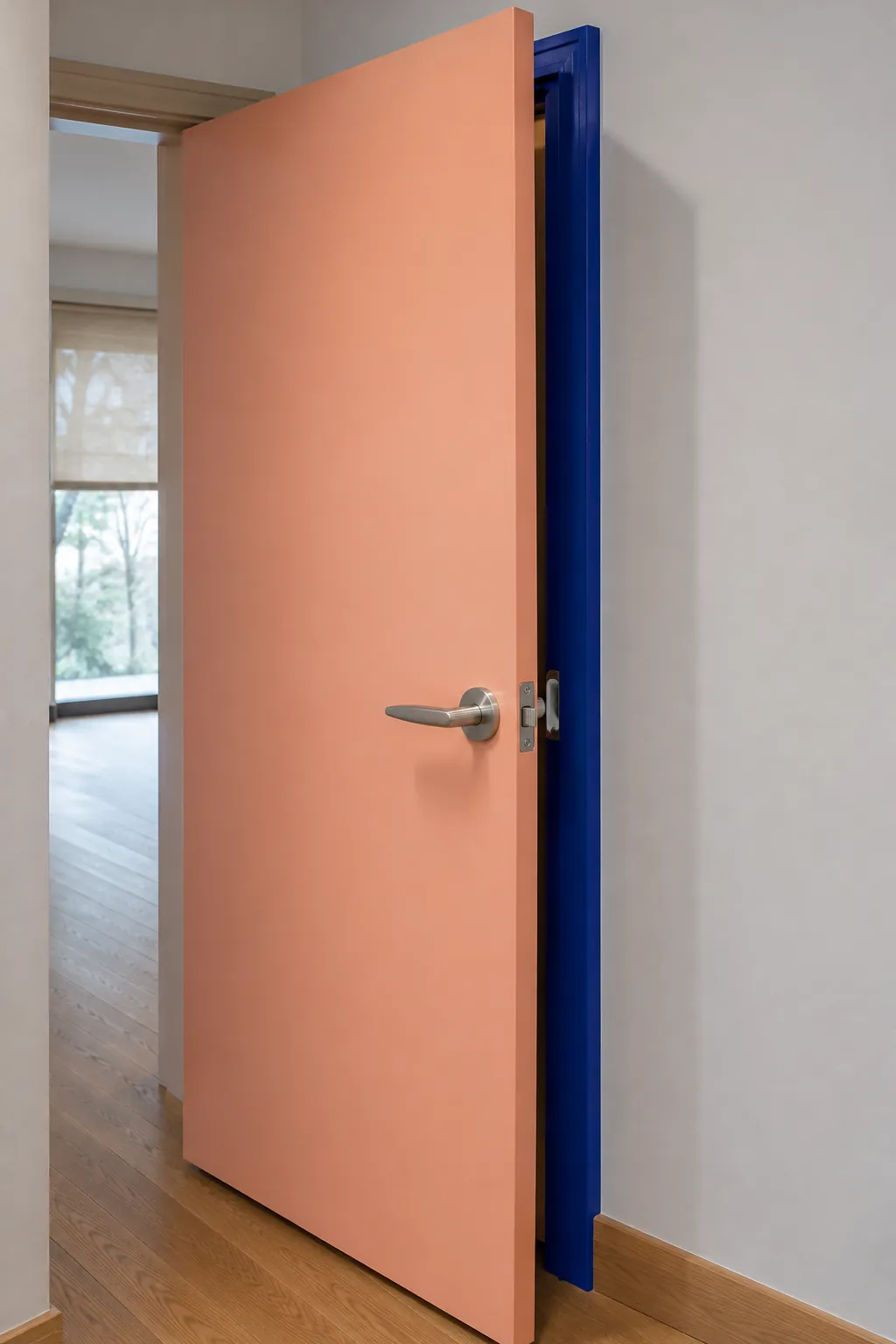
A peach door inside a blue surround adds depth to a white hall without prints or extra furniture. Use a strong strip of blue only on the frame if the hall is narrow. Paint sample boards in both colors and check the boundary with the door open, when you may see a different room behind it. Choose durable trim paint and let it cure as directed before the door spends long periods shut.
Set a Zigzag Floor Lamp Beside Straight Furniture
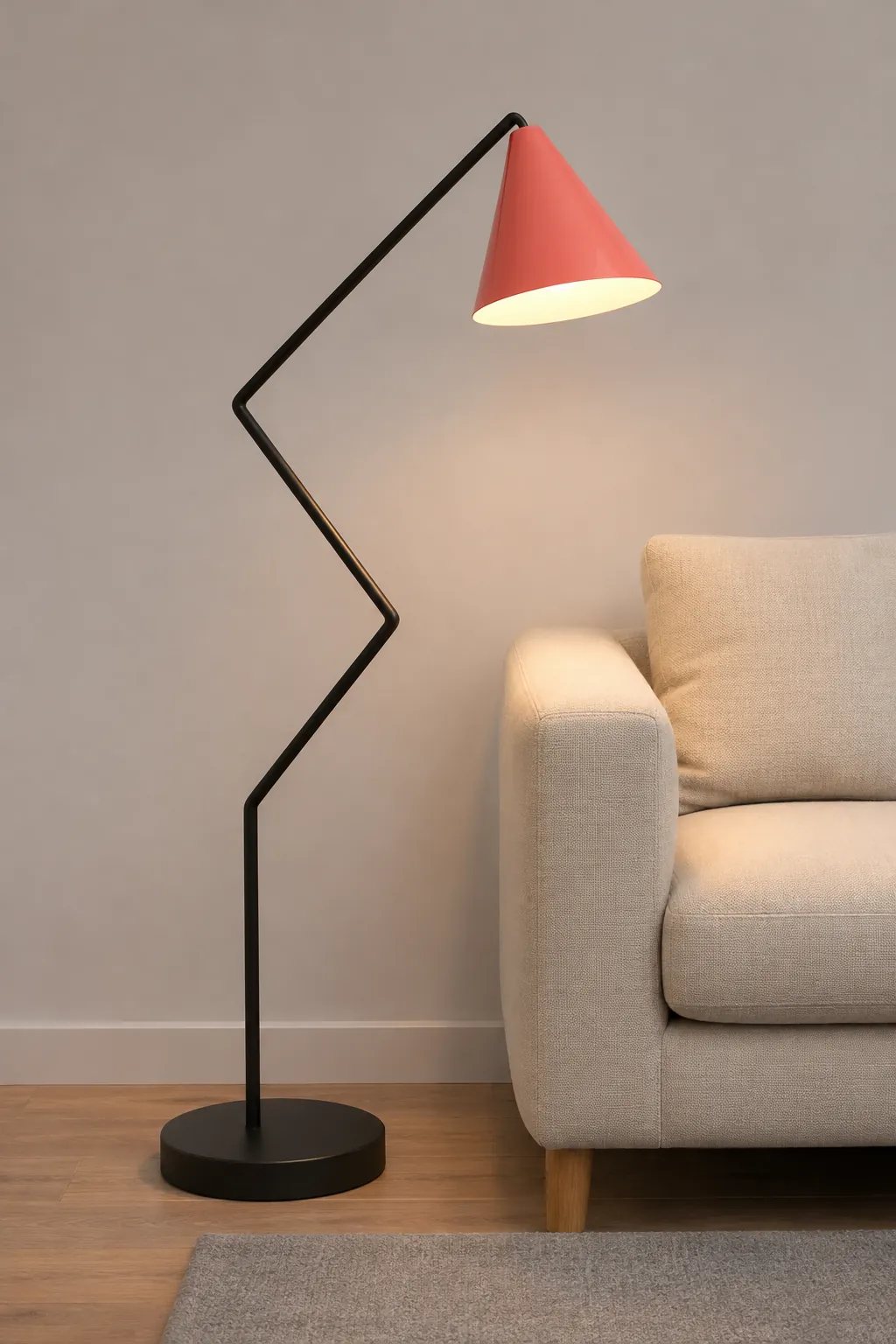
A zigzag stem is easy to see beside the long straight arm of a sofa. Choose a stable base and check the useful reach of the light, especially if you read there. A small colored shade keeps the shape from competing with a busy rug. Place the cord where a person can cross the room without stepping over it.
Keep the Checker Pattern in a Short Kitchen Strip
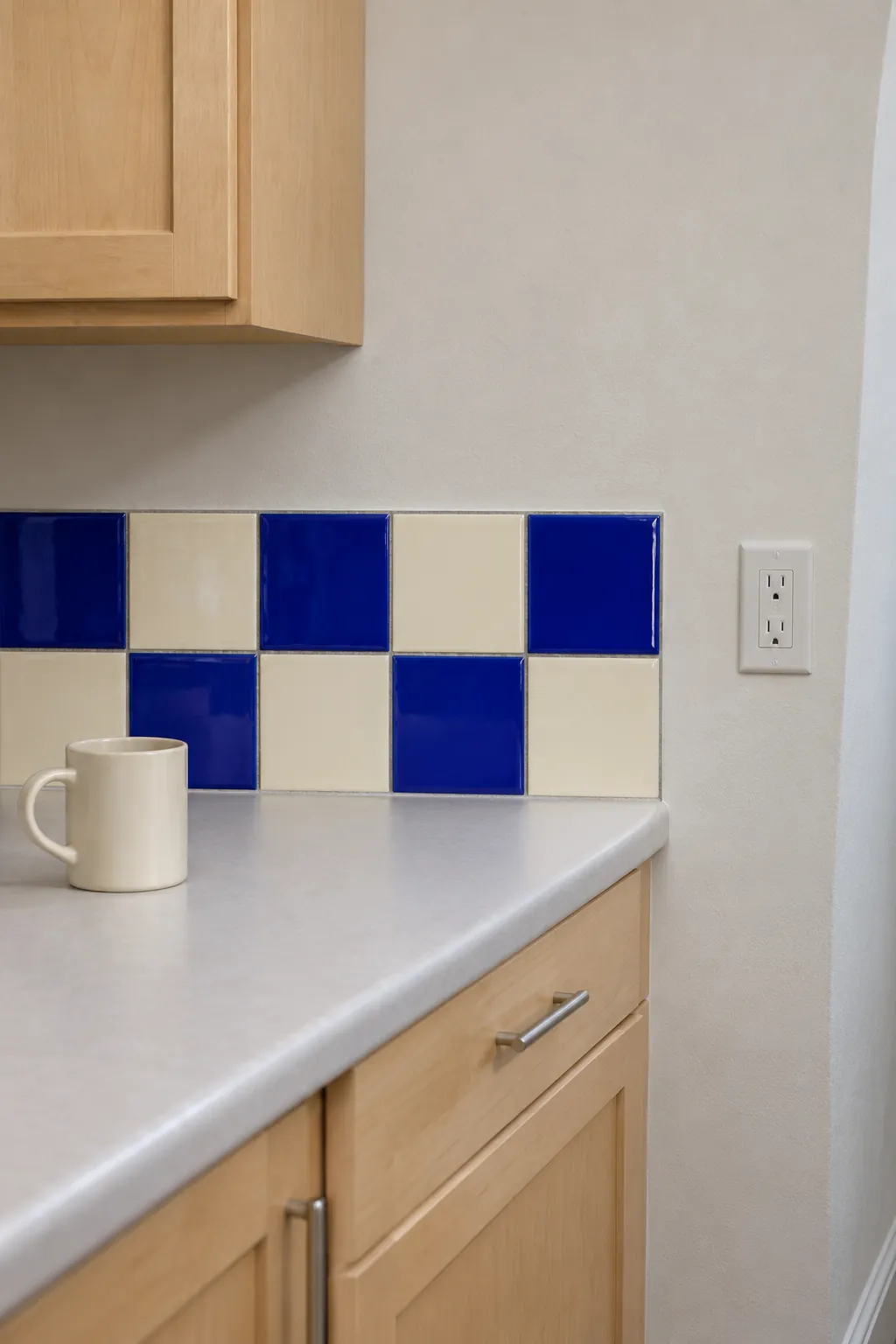
A short checker splashback gives a kitchen a strong line of primary color close to the counter. Test a few repeats next to the cabinet doors before deciding how tall the strip should be. If the counter already has a pattern, try a softer blue or a narrow single row above it. Plan the end cuts and outlets while the layout can still change.
Give Small Objects an Asymmetric Wall Shelf
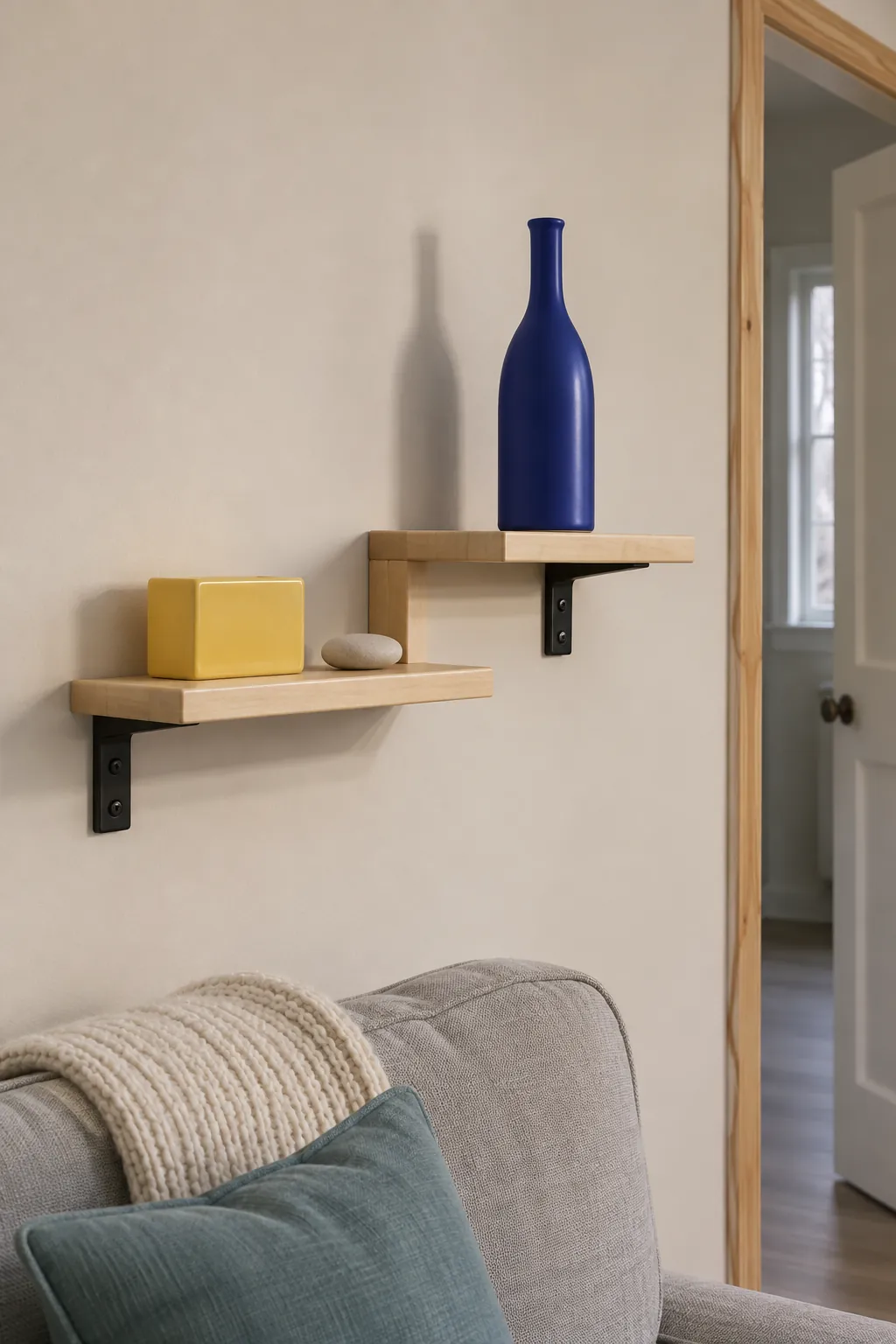
A short shelf with offset levels lets you show geometric shapes without filling a whole wall. Leave room to lift each object out and put heavier items on the part with stronger support. Try a paper outline of the shelf before mounting it so you can see whether the projection would crowd a door. Keep small bright objects far enough apart to see their shapes.
Use Two Low Plinths as a Living Room Table
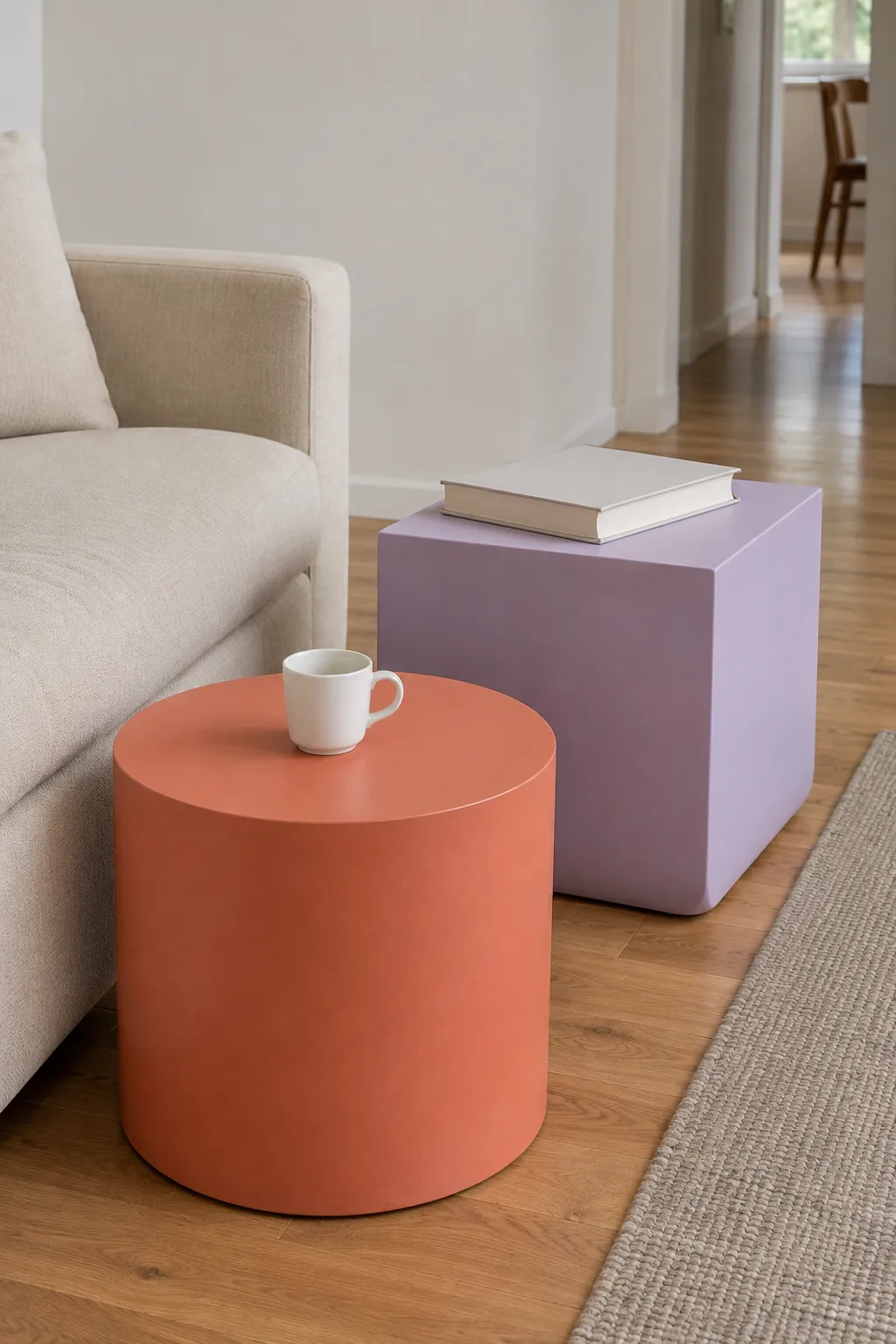
Two low plinths provide separate places for a book and a cup, and you can move them when you need a clear route. Choose compatible heights if they will sit together. A slight gap between the colors makes each block easier to see. Try a round shape next to a square one if the sofa already has a lot of strong straight edges.
Add a Chunky Terrazzo Box Where Clutter Collects
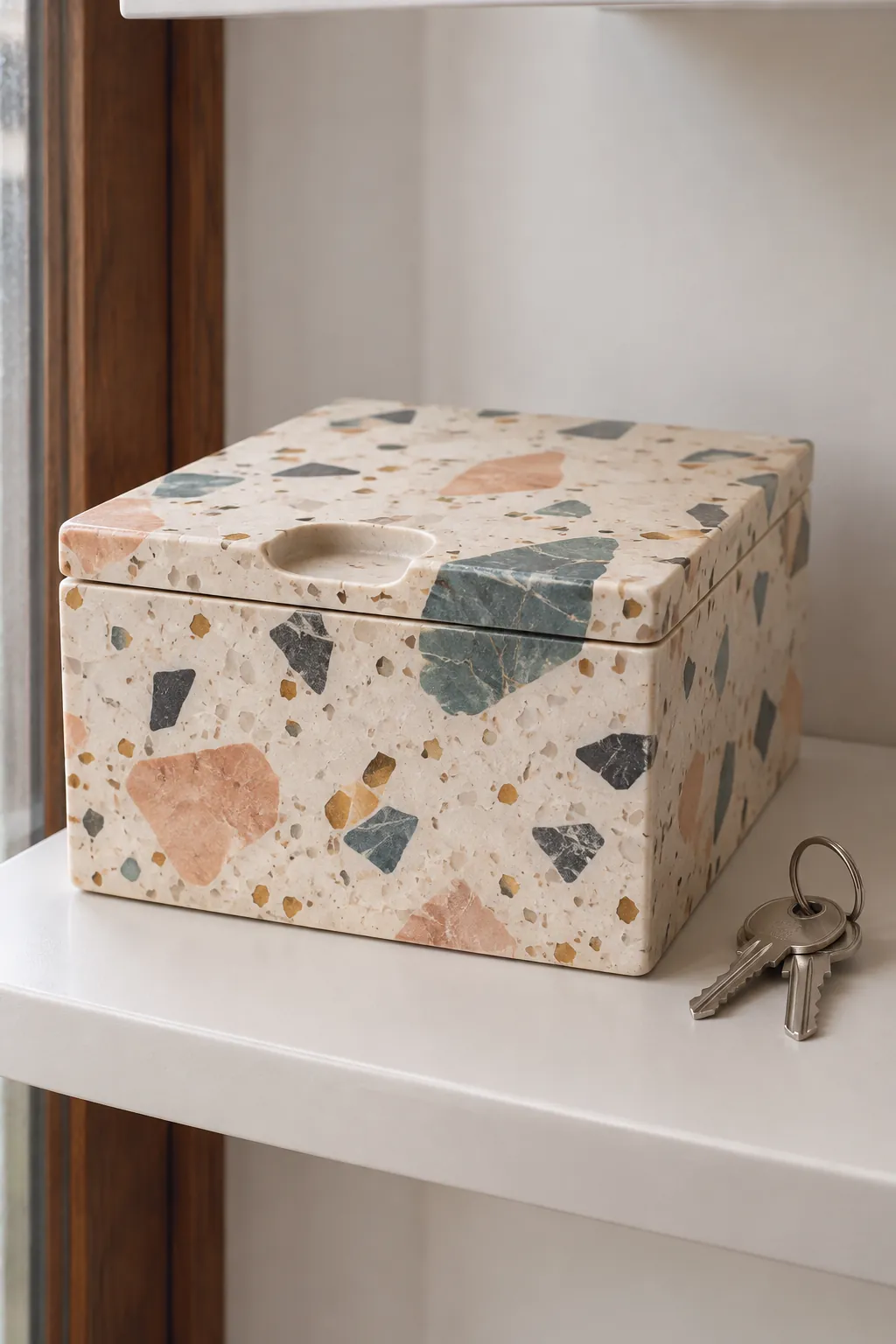
A terrazzo box gives loose keys and clips a place to go while keeping a strong pattern small. Try one with large colored chips if it will sit on a console where you see it from several feet away. Check the weight of the lid and whether it lifts without catching the shelf above it. A protective base helps keep a heavy piece from scratching wood.
Use One Graphic Print With Big Shapes
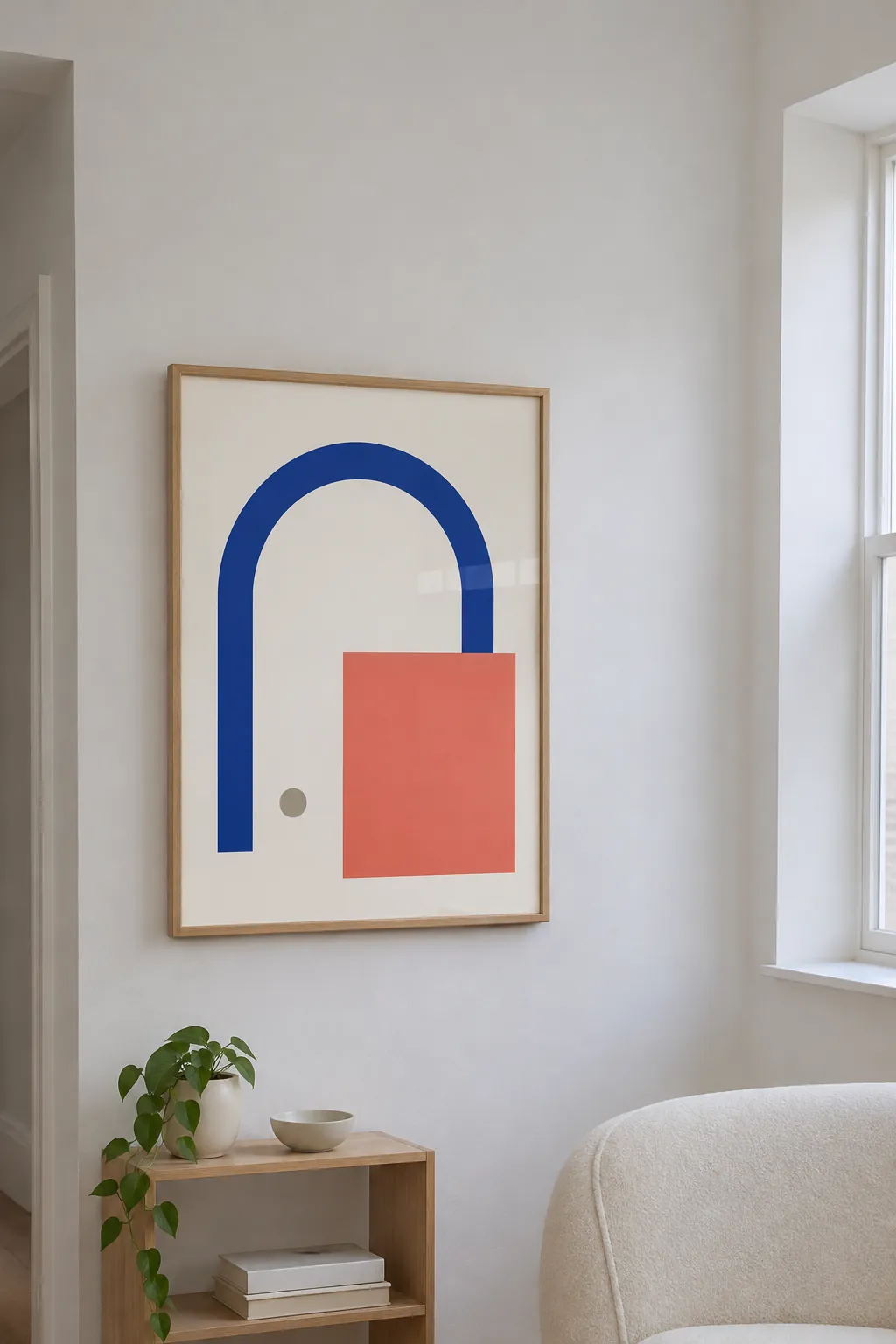
An oversized arch or rectangle in a frame can bring Memphis design into a plain room without moving furniture. Choose a print whose pattern size differs from any textile nearby. Take a step back and see which shape you notice first, then use that color once elsewhere if the wall feels disconnected. Leave enough room beside the frame that furniture and lamps do not hide its edges.
Pair a Big Check With a Small Squiggle
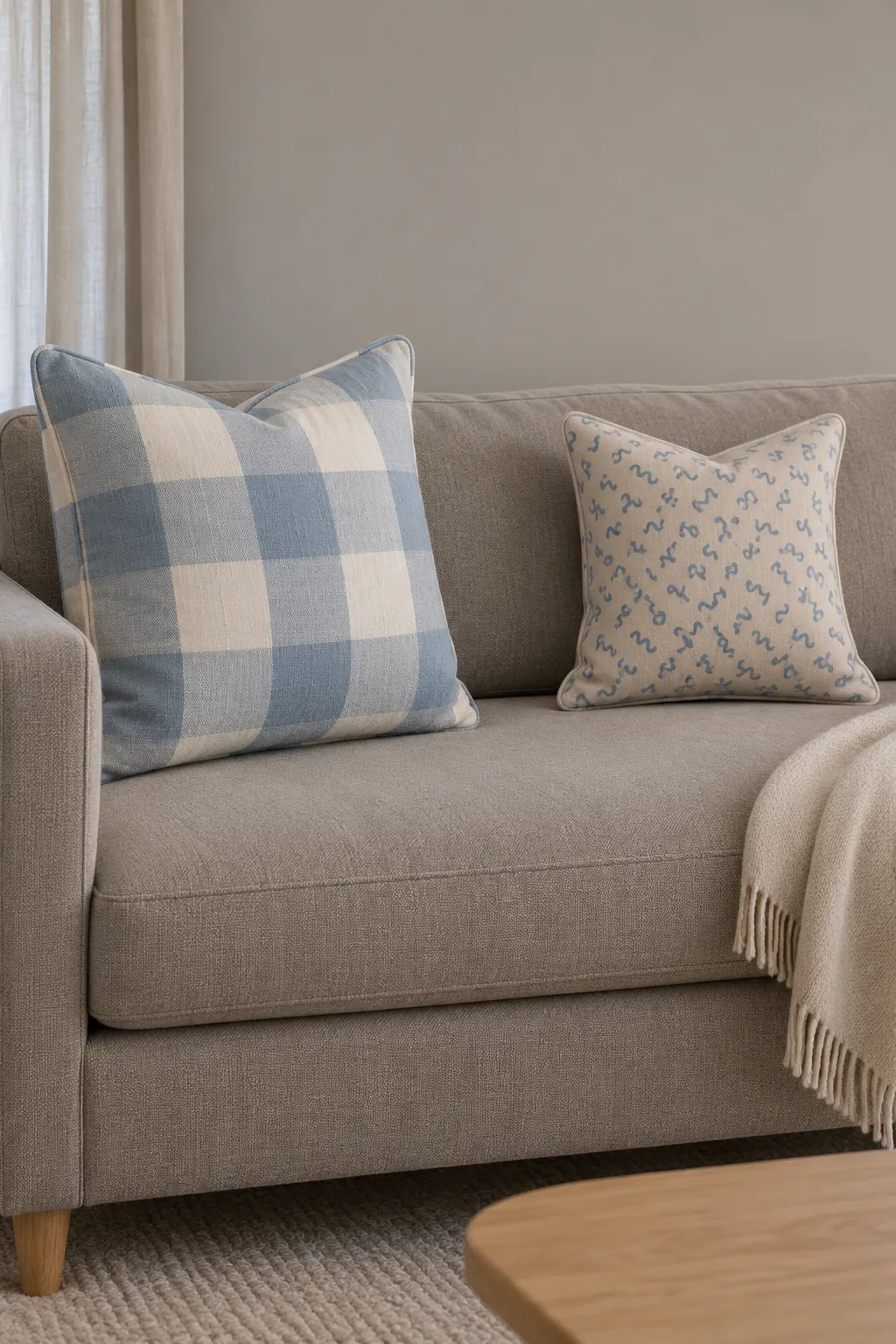
Large checks and tiny squiggles can work together if they differ clearly in scale. Give both cushions one shared color and let the sofa serve as the plain space around them. Put each on a separate side of the seat if the matching colors feel too dense together. Check how the colors look in evening light before buying a third print.
Put Two Solid Colors on a Window Shade
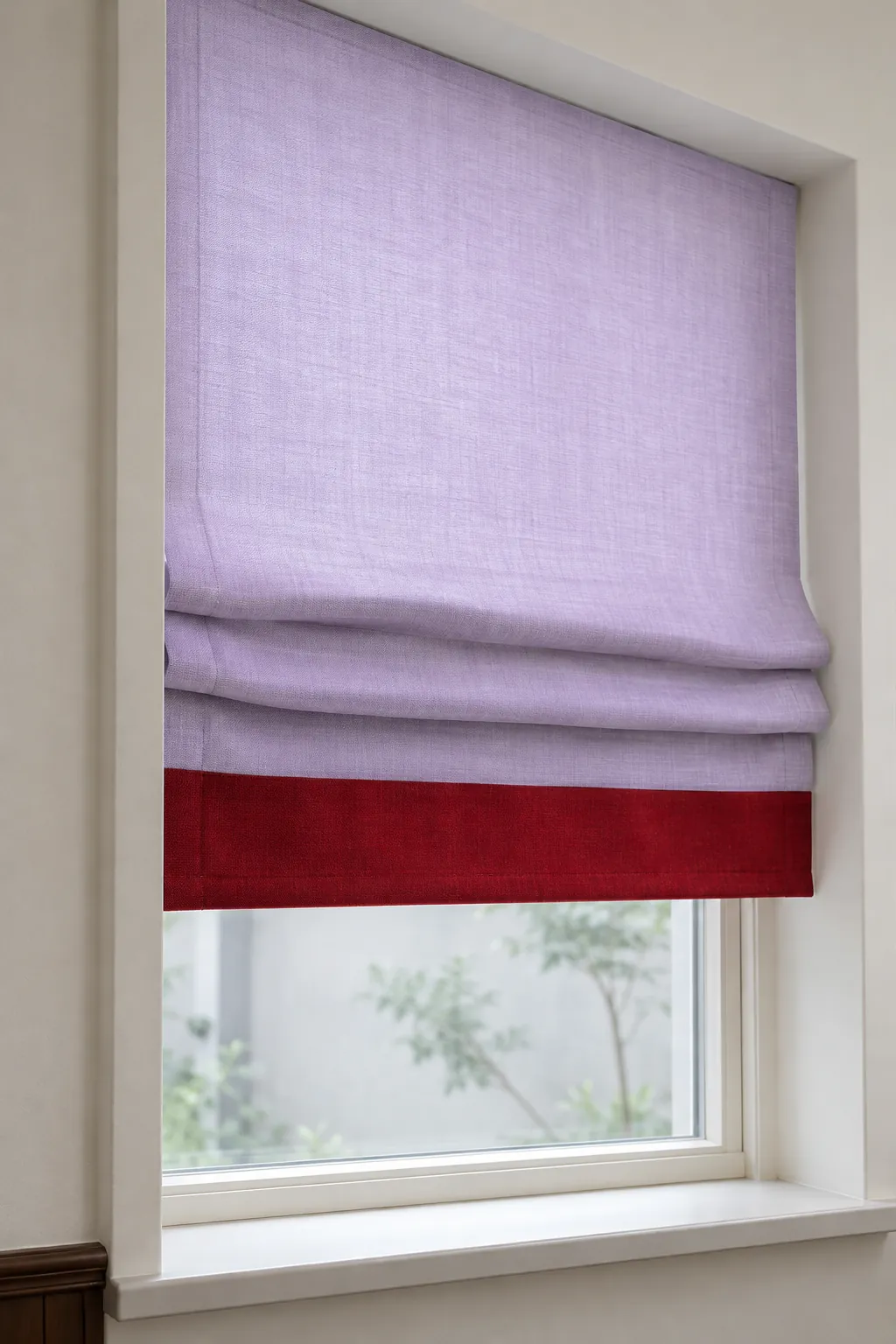
A red bottom band can give a lavender shade a crisp edge without a busy print. Measure the useful glass area and check what the band will cover at its usual height. The proportions can feel different when the shade is gathered. Choose a lining and operating system that suit the room and the people who use it.
Set One Ceramic Squiggle on the Table
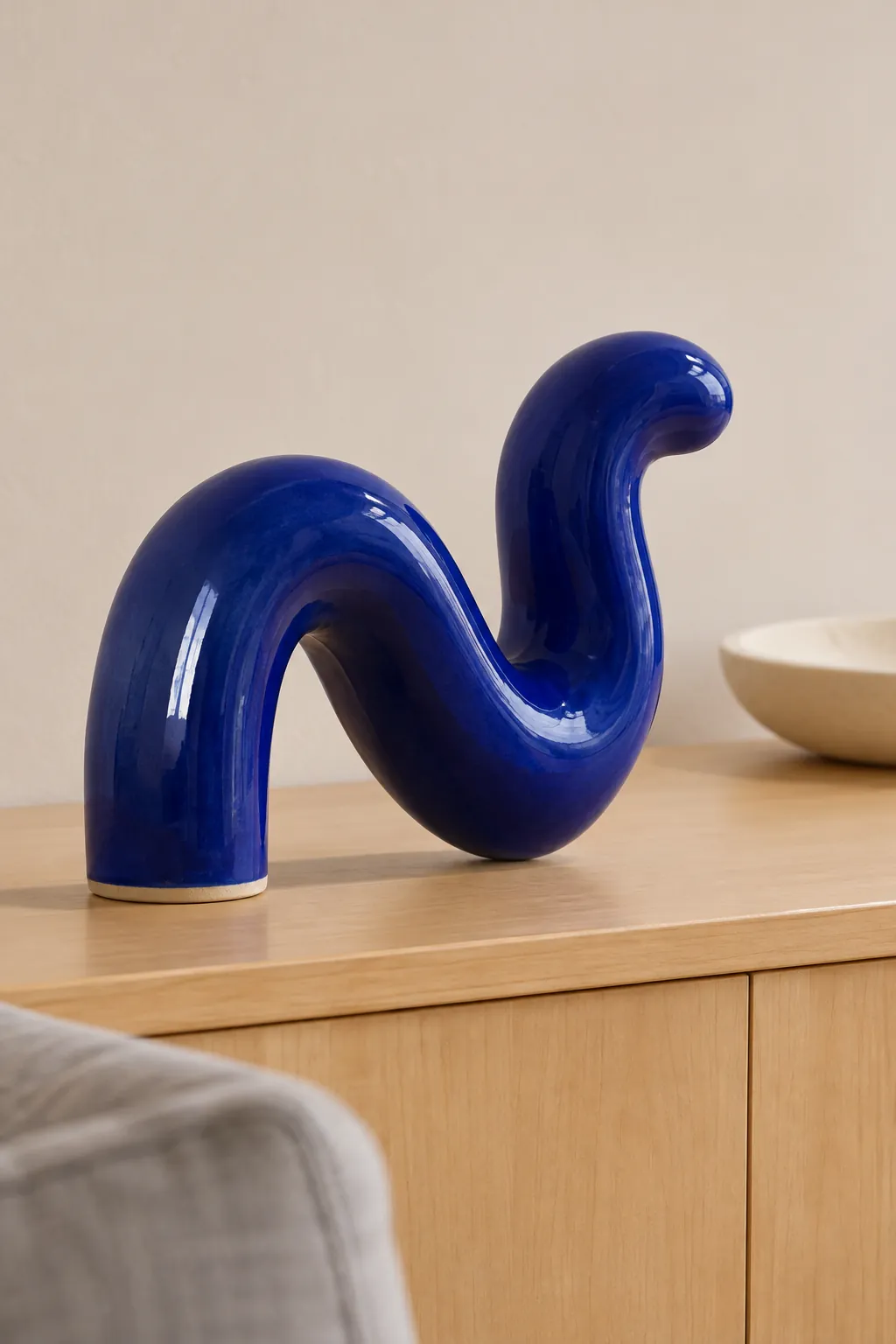
A ceramic squiggle brings the outline of a printed repeat into three dimensions. Look for a piece with a wide stable foot and enough space around its turns that you can see them. Set it against a plain wall or leave the shelf behind it partly empty. One strong shape carries the look well in a room with simpler furniture.
Give a Plain Curtain One Strong Orange Edge
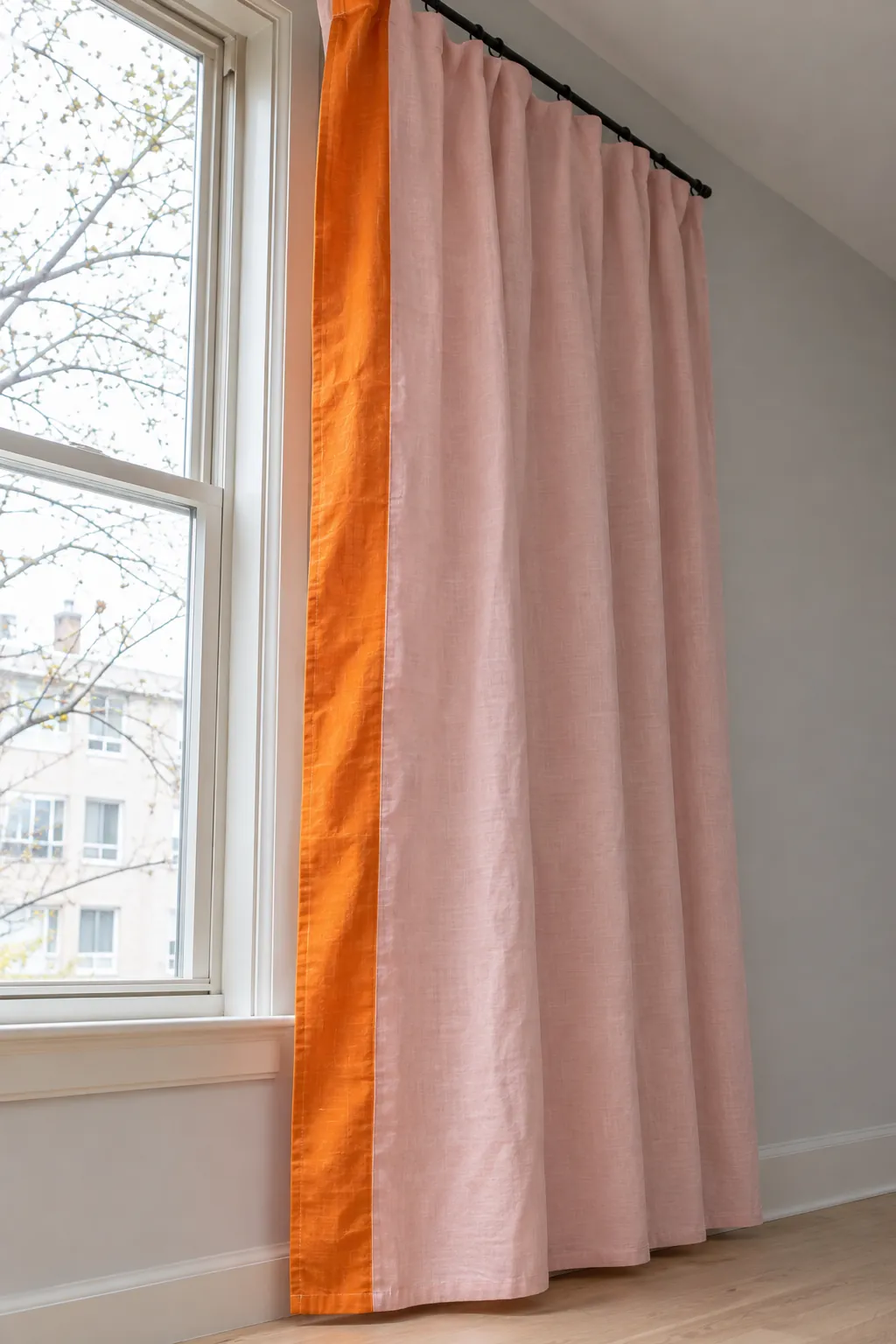
An orange edge lets you see where a pale pink curtain ends, even when the folds close in. Try the fabrics together against the window to see which one changes most in daylight. Keep the remaining room colors quiet if both shades are strong. Hang a fabric sample at full height before ordering if you are unsure how far the accent should extend.
Group Three Vases by Shape
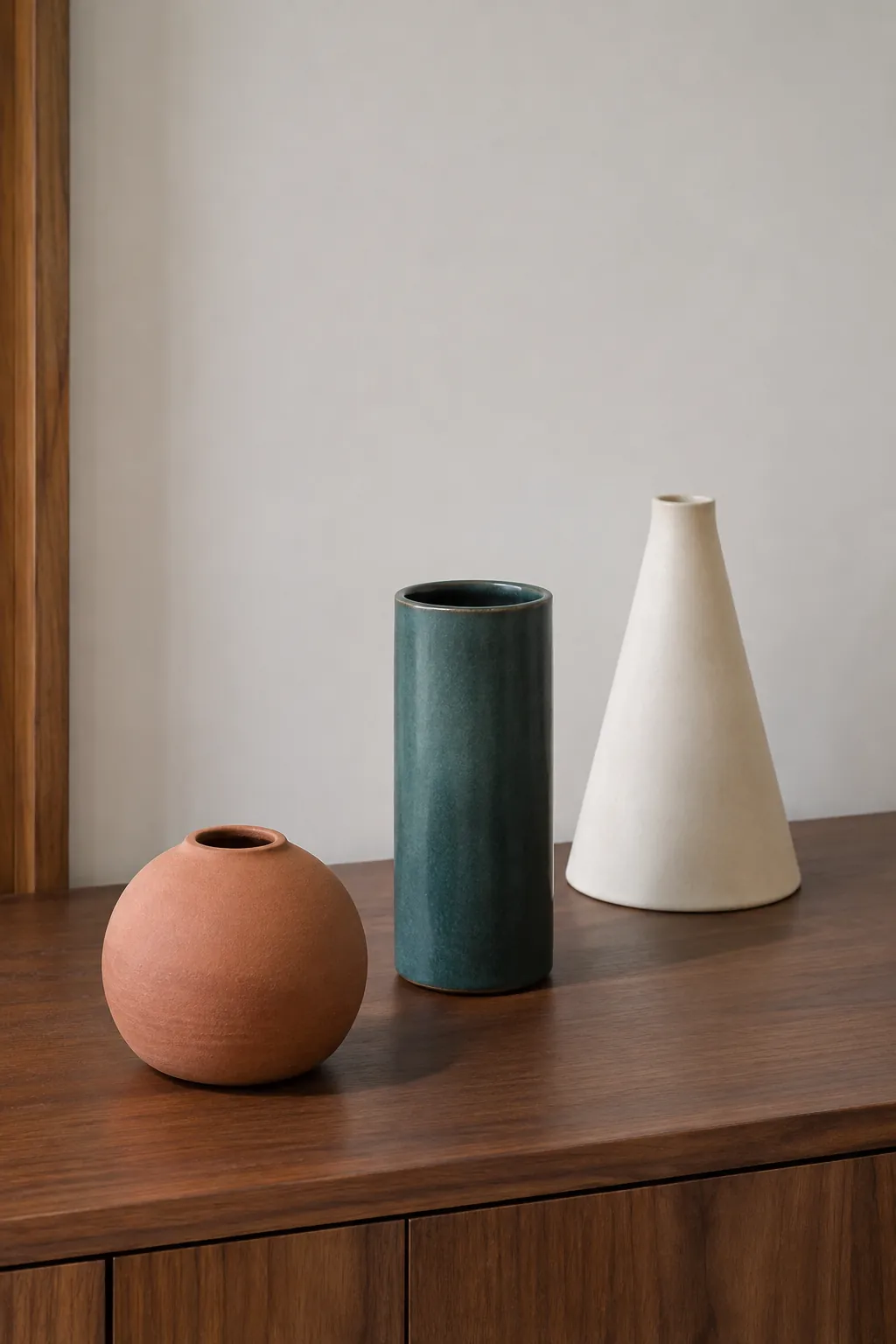
A small cluster with a sphere, cylinder, and cone can make an ordinary sideboard look more playful. Use visibly different heights and make at least one color quiet enough to support the stronger shapes. Keep a hand span free on either end if you use the sideboard for serving. Move the pieces until you can see an outline around each one from the doorway.
Paint One Dining Chair Frame Bright Red
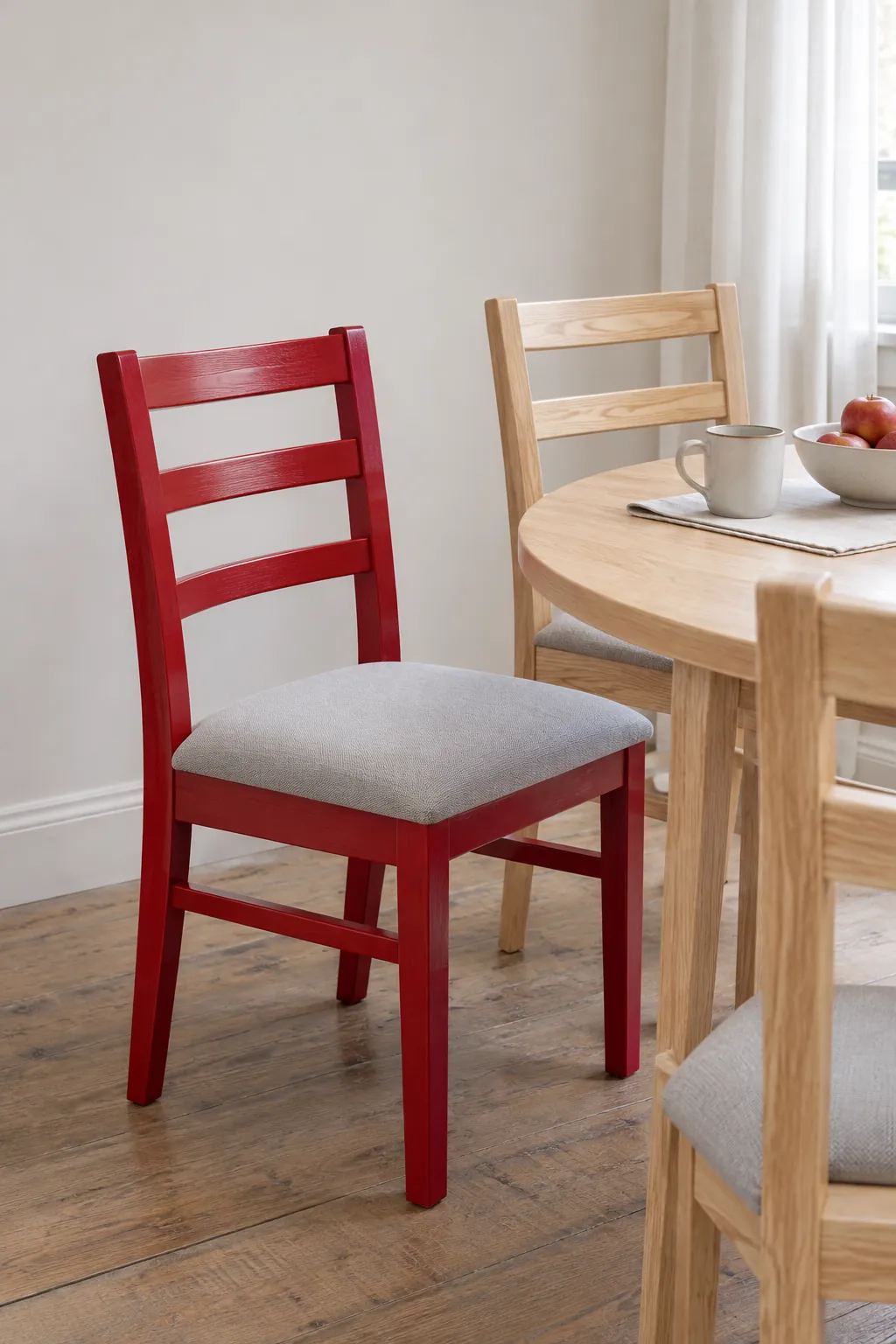
A red chair frame marks one place at the table without making all the seats look the same. Check for loose joints before repainting and choose a finish intended for regularly handled furniture. Keep the seat surface simple if the frame has a lot of lines. Set the colored chair where its outline stays visible from the usual approach.
Use a Large Color Block Rug Under Plain Furniture
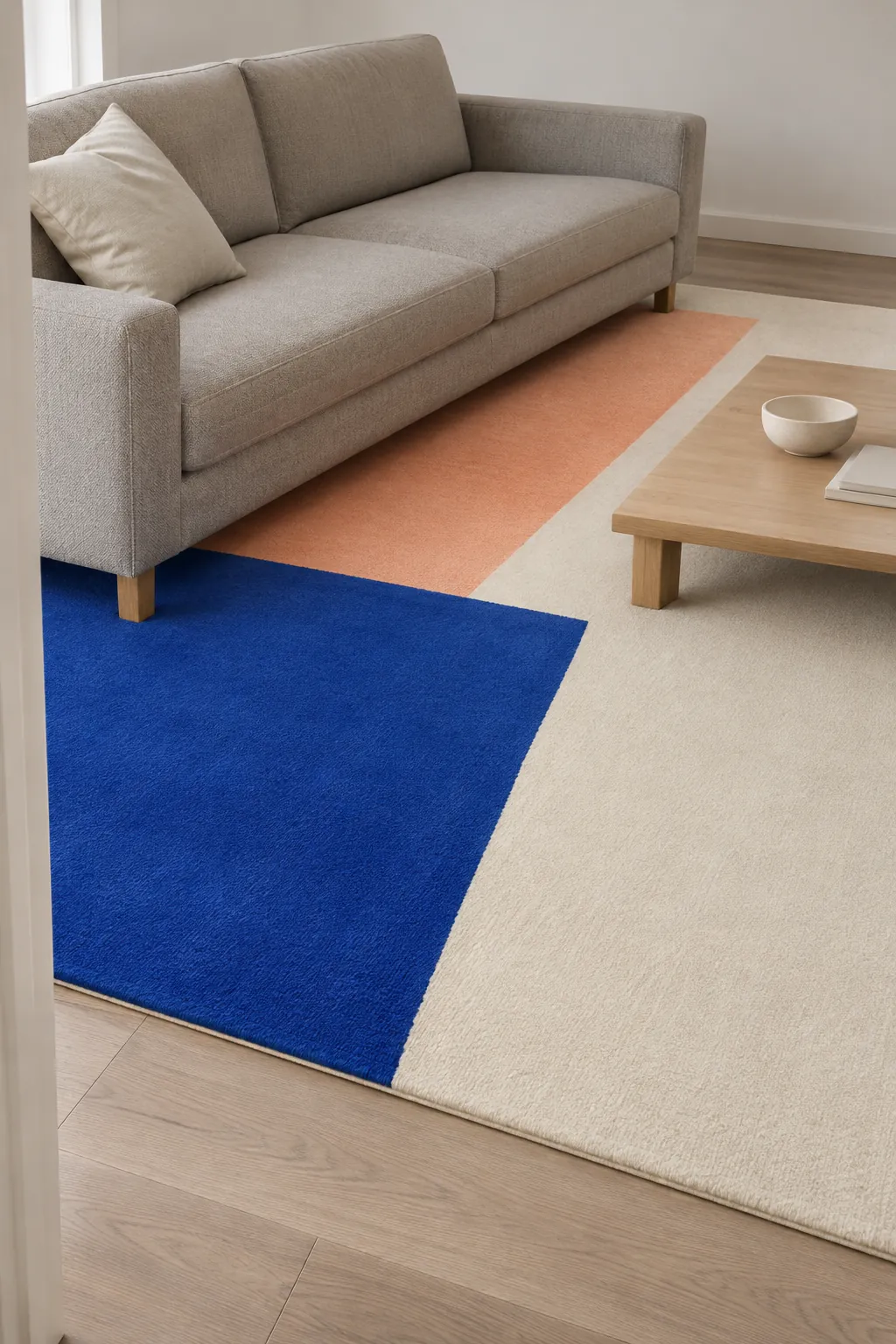
A few large blocks on a rug are easier to see under a sofa than many small shapes. Mark the sofa legs and coffee table on a drawing so you know which colors will be covered. Choose a low pile if you need a door to swing past the rug. A large patch of pale ground helps the patterned section feel at home beside everyday neutral furniture.
Tape the outside dimensions onto the floor before ordering. If a pale section would spend its life under the sofa, turn the layout so the pale and bright areas have space in the open. Check the feel of the edge beside your usual walking route.
Put a Painted Arch Inside a Niche
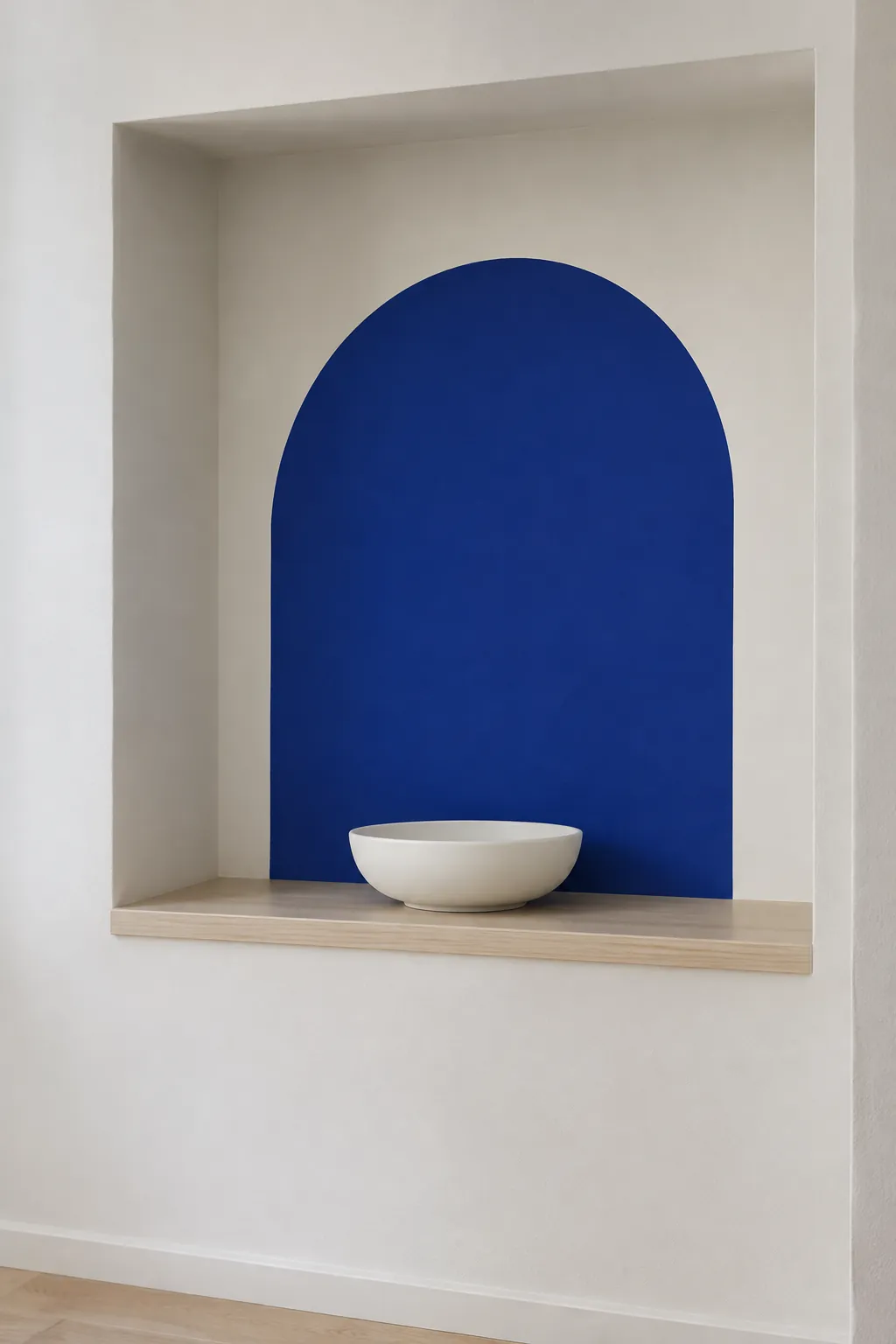
A painted arch offers a softer shape inside a square niche. Use a paper outline or test sample to check the curve at the height where you usually see it. Paint just the back if you want the visible side walls to stay quiet. Keep only one or two useful objects in front of the arch so its outline remains clear.
Test the Palette Beside Furniture You Already Own
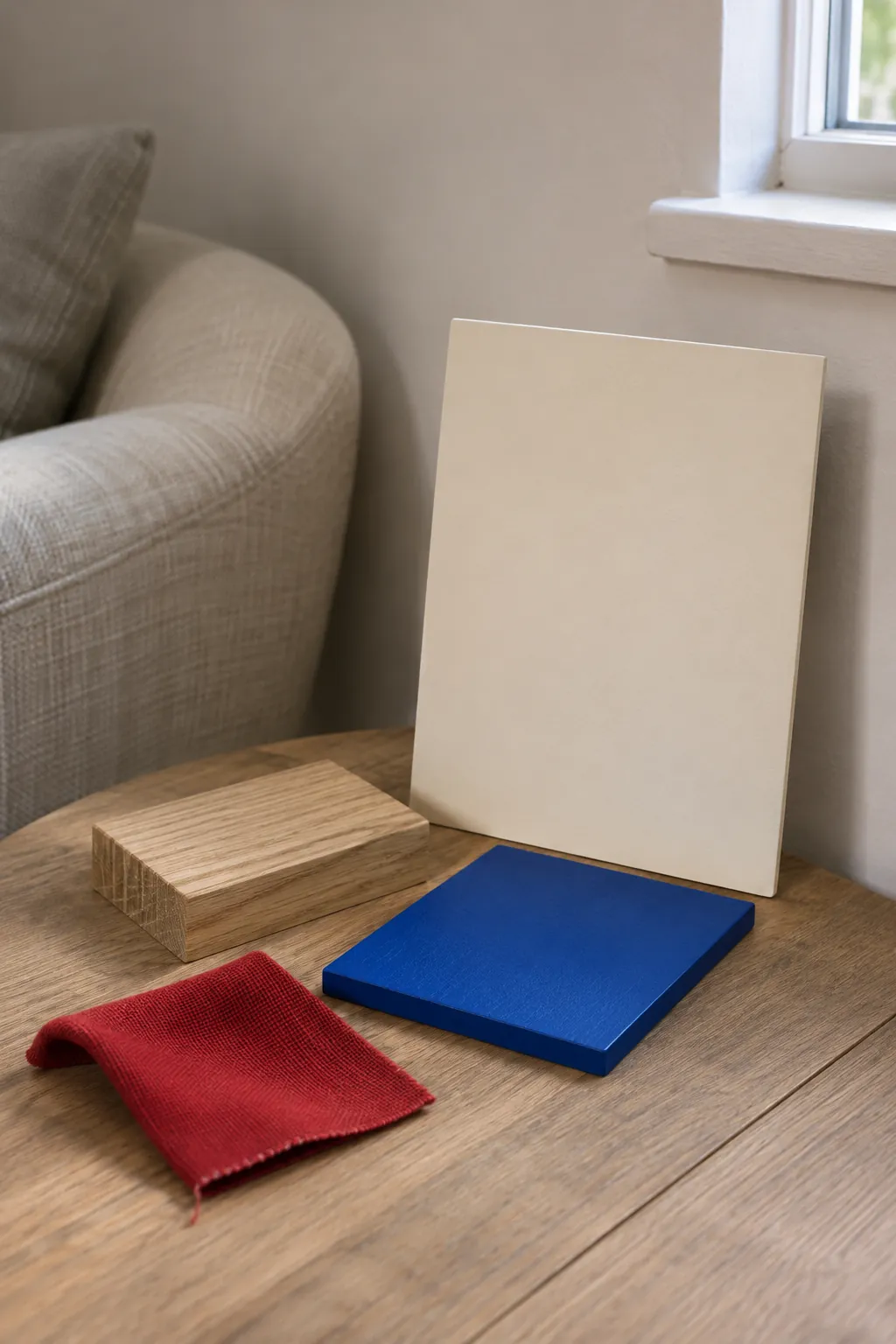
Bring your strongest samples to the piece of furniture you plan to keep. Put blue, red, and white in roughly the amounts you expect to see in the room, so a small accent does not get the same weight as a wall. Try the combination again under the lamps you use at night. Keep the color that does the work you want and reduce anything that crowds it.