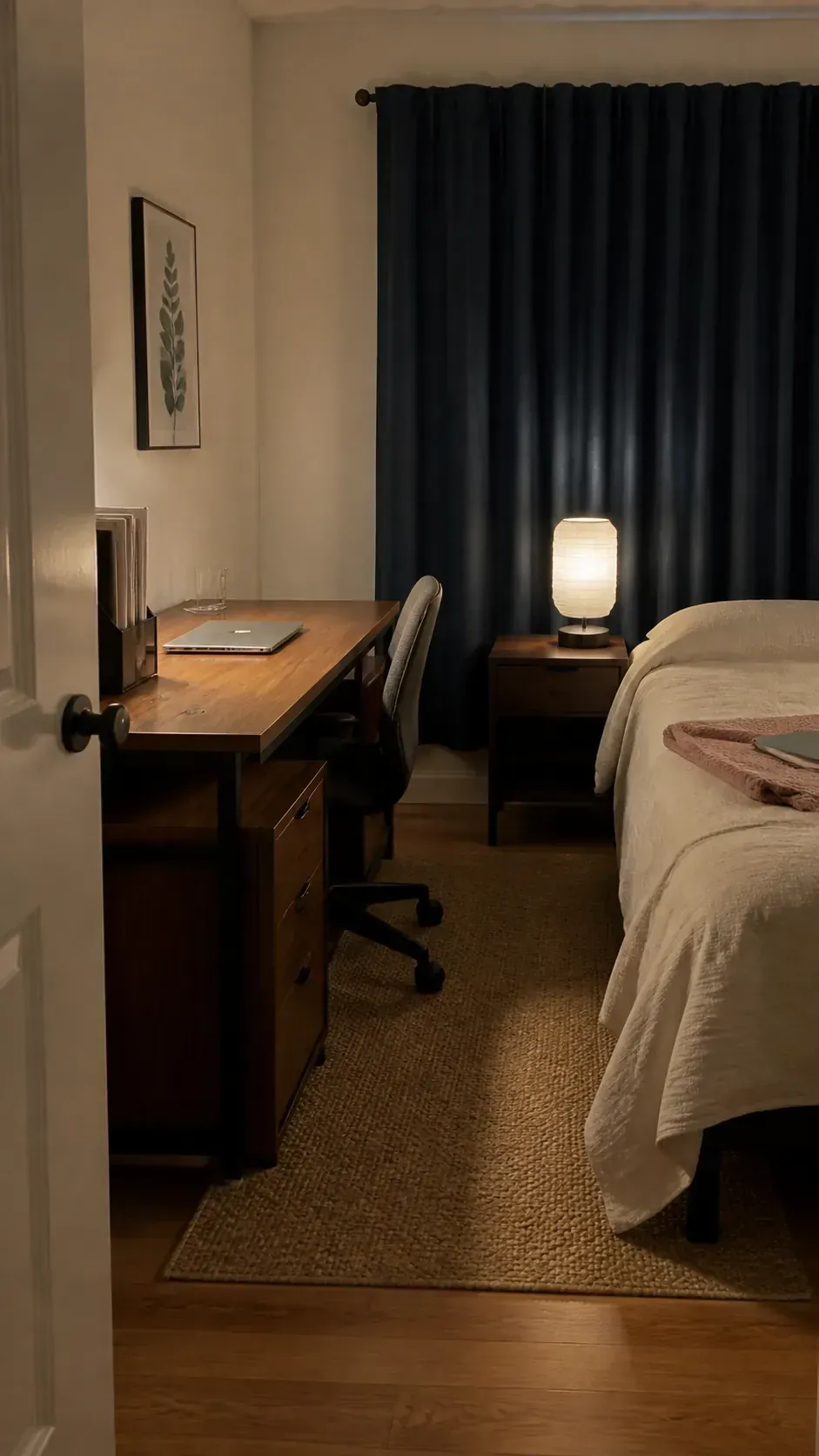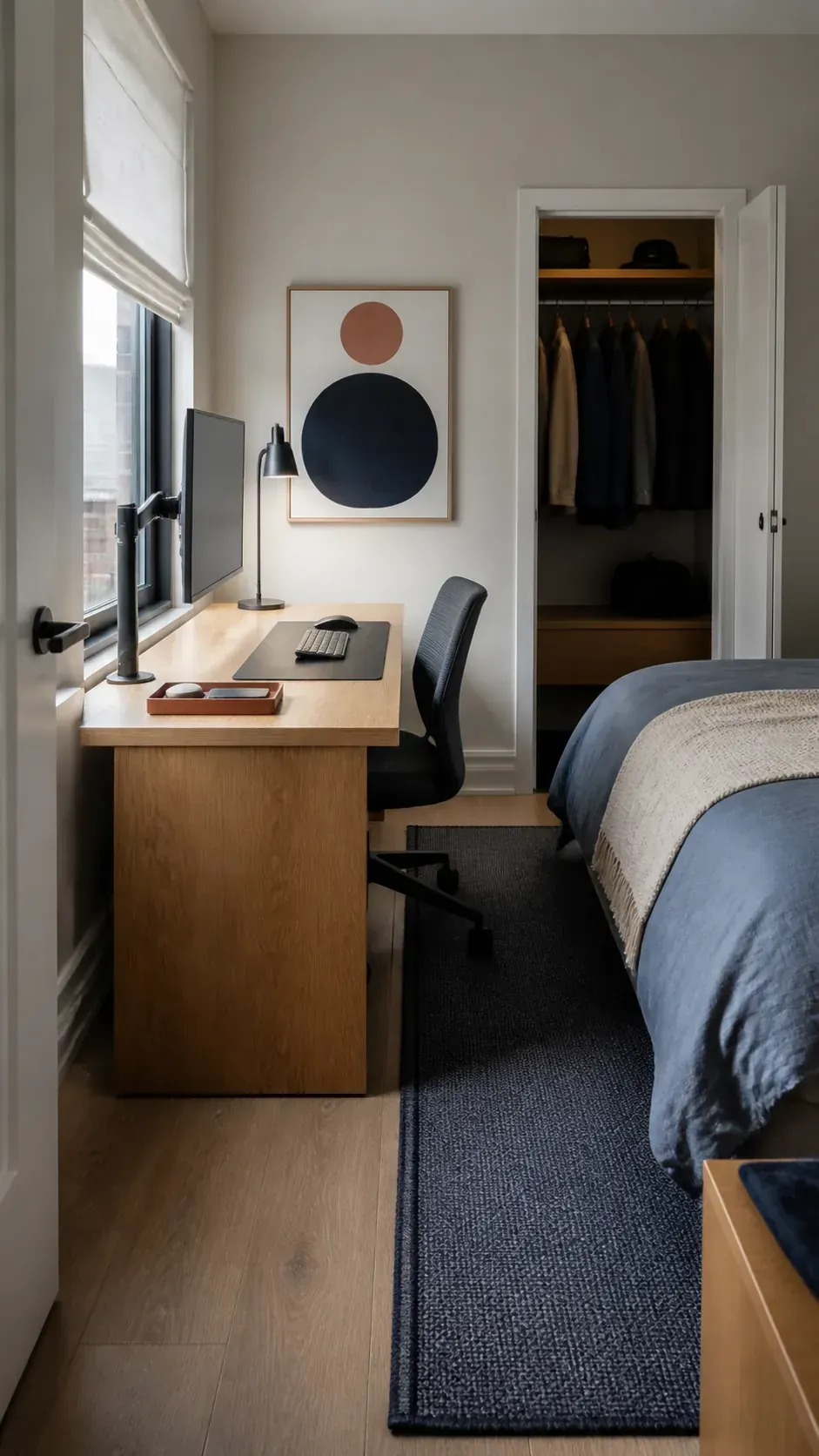
Sharing a room with your work can create practical friction long after the laptop closes. Glare, blocked walkways, exposed cables, and a direct view of unfinished tasks all make the arrangement harder to live with. The best layout protects sleep and movement first, then builds a focused work zone inside the space that remains.
Place the Desk Perpendicular to the Window
Side light is usually easier on a screen than a window directly ahead or behind you. Place the desk perpendicular to the glass, then use an adjustable shade for strong mornings or afternoons. This orientation also gives video calls more even facial light without turning the bed into the brightest part of the background.
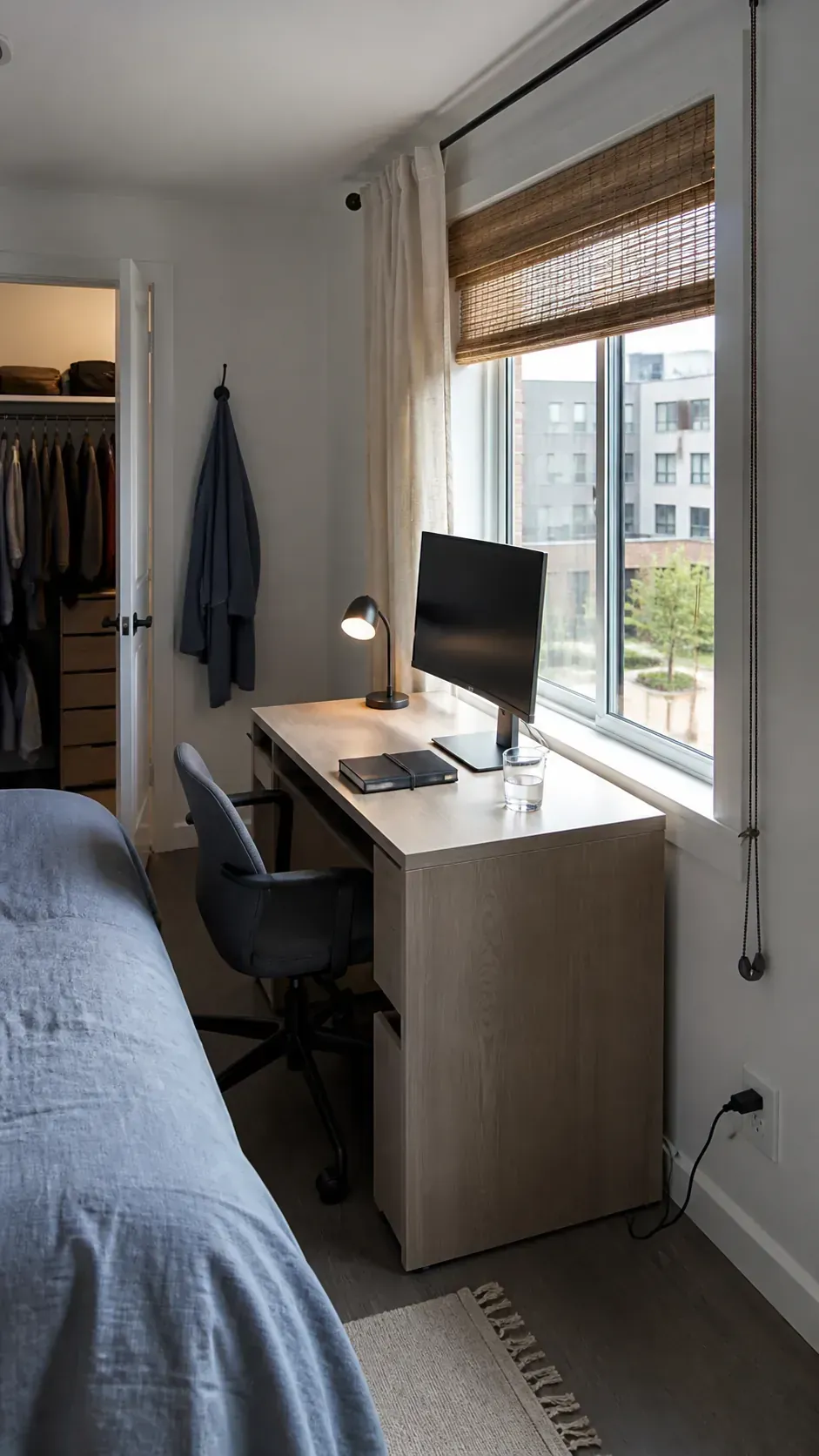
Use the Wall at the Foot of the Bed
The wall beyond the foot of the bed can hold a shallow desk while keeping both bedside paths open. Check that the chair can pull out without narrowing the route to the door. A quiet finish similar to the bed frame helps the work zone belong in the room rather than look added later.
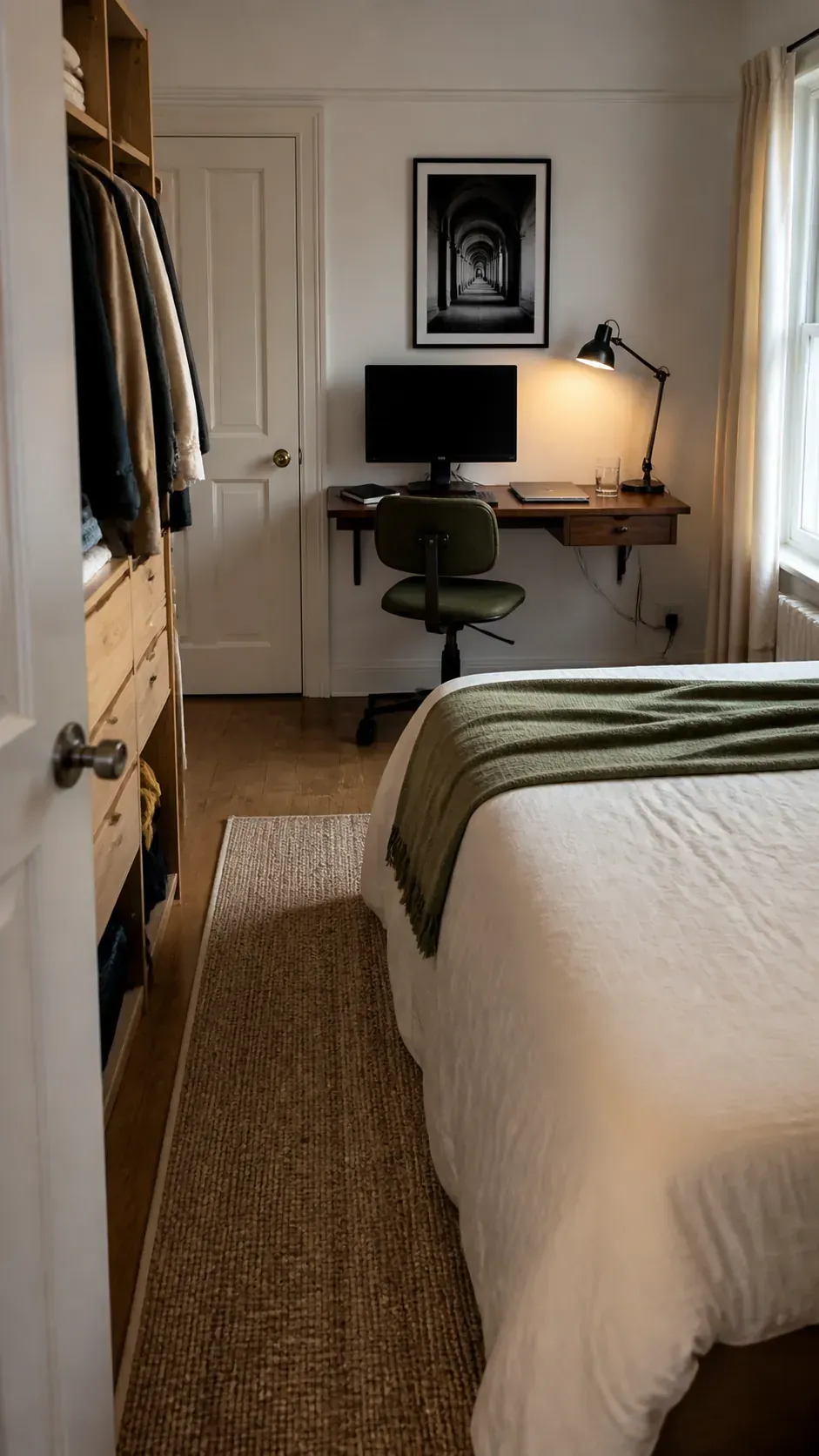
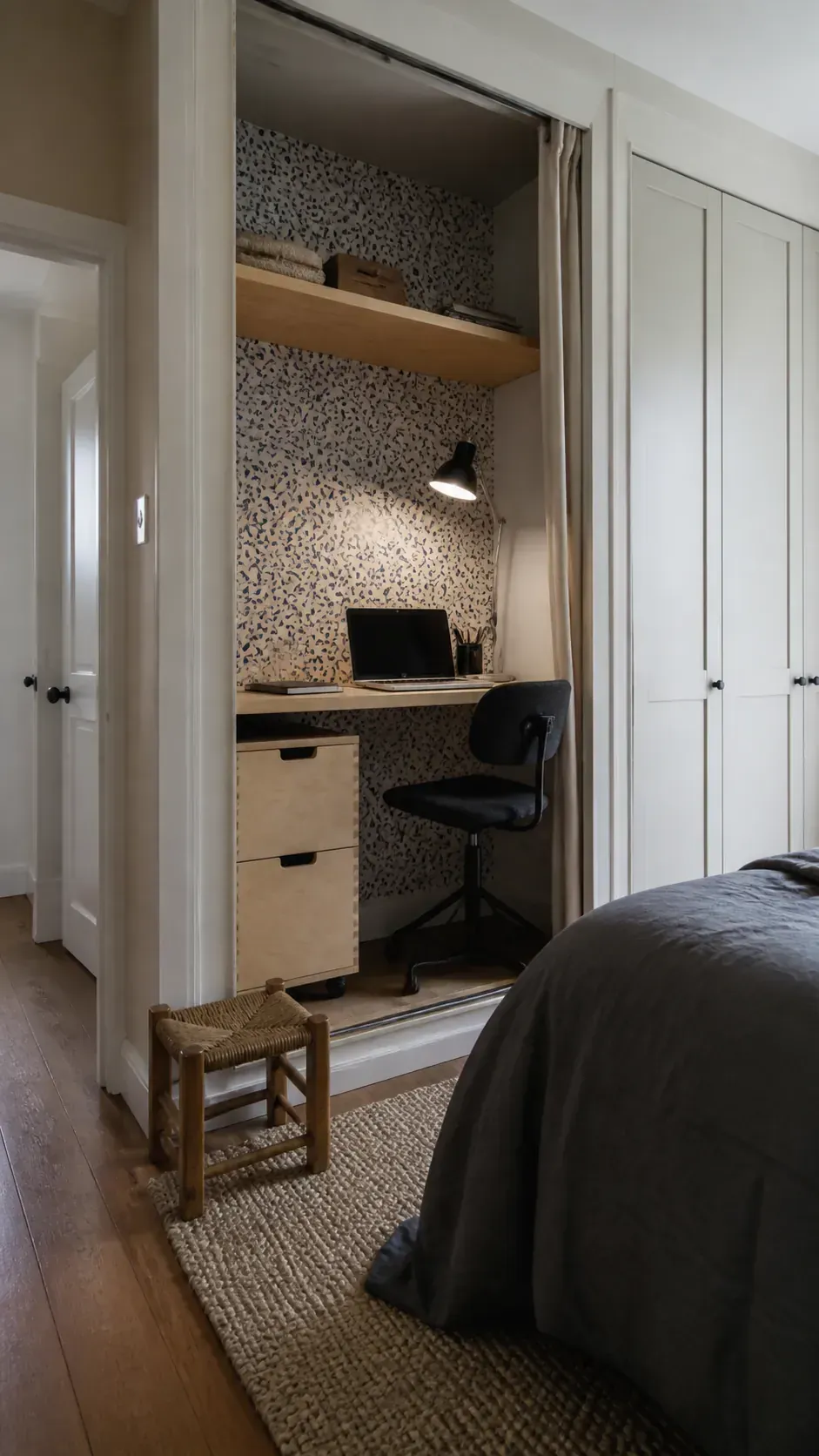
Build a Desk Into a Wardrobe Niche
An unused wardrobe section can become a focused work area without claiming another wall. Keep enough hanging and folded storage for clothing, since replacing one clutter problem with another will not help. Add a directed lamp and shallow shelf because niches often lack good natural light.
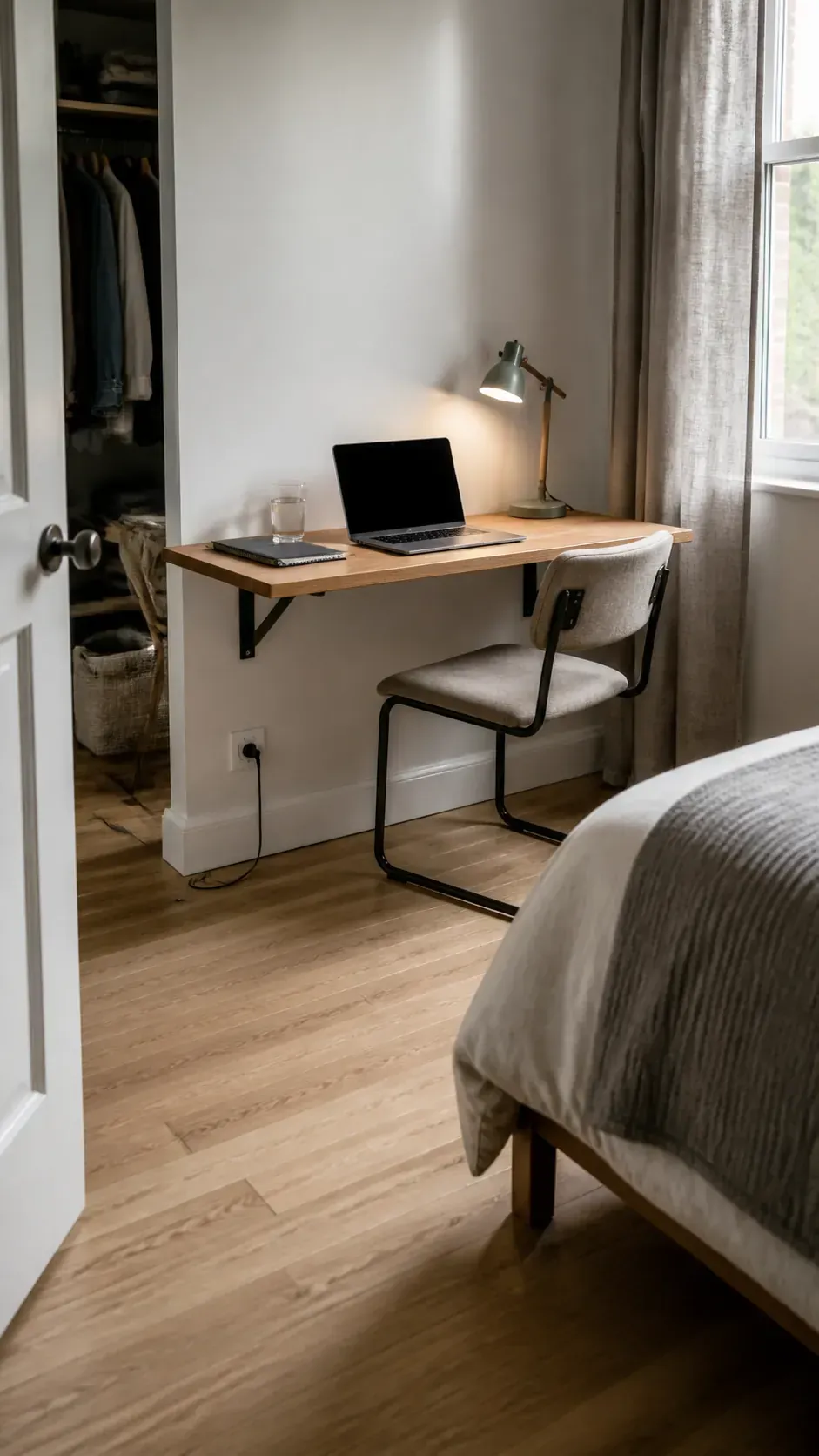
Choose a Floating Desk for Clear Floor Space
A wall mounted surface keeps the floor visible and makes a small bedroom easier to clean. Secure it to suitable structure and choose a depth that supports your equipment without dominating the walkway. Pair it with a light chair that can tuck completely underneath.
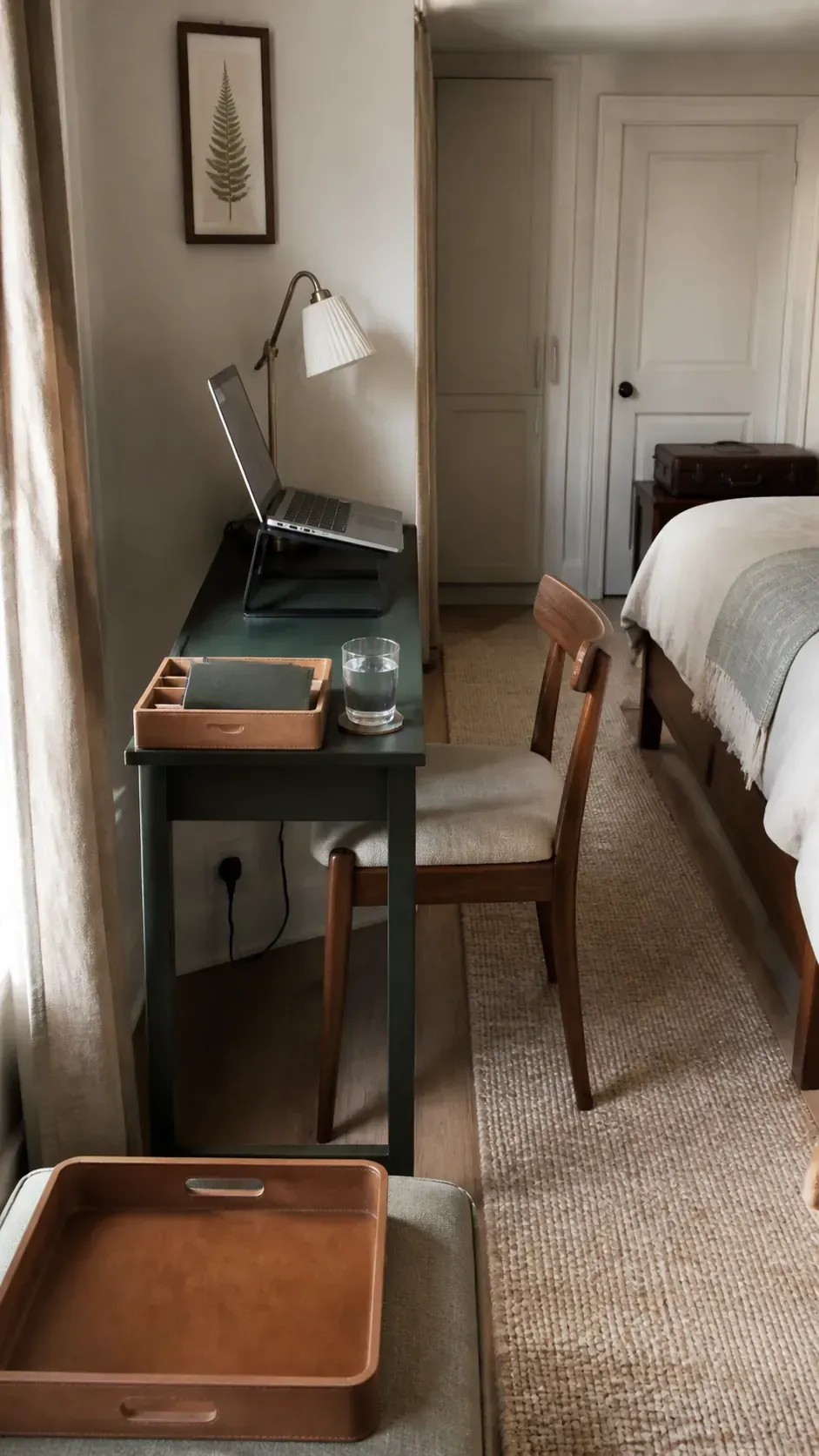
Let a Console Double as the Desk
A console desk suits light laptop work when a full office surface would be too deep. Select one with comfortable seated height and enough knee room rather than choosing by appearance alone. Store work supplies in one portable tray so the surface can return to a bedroom role after use.
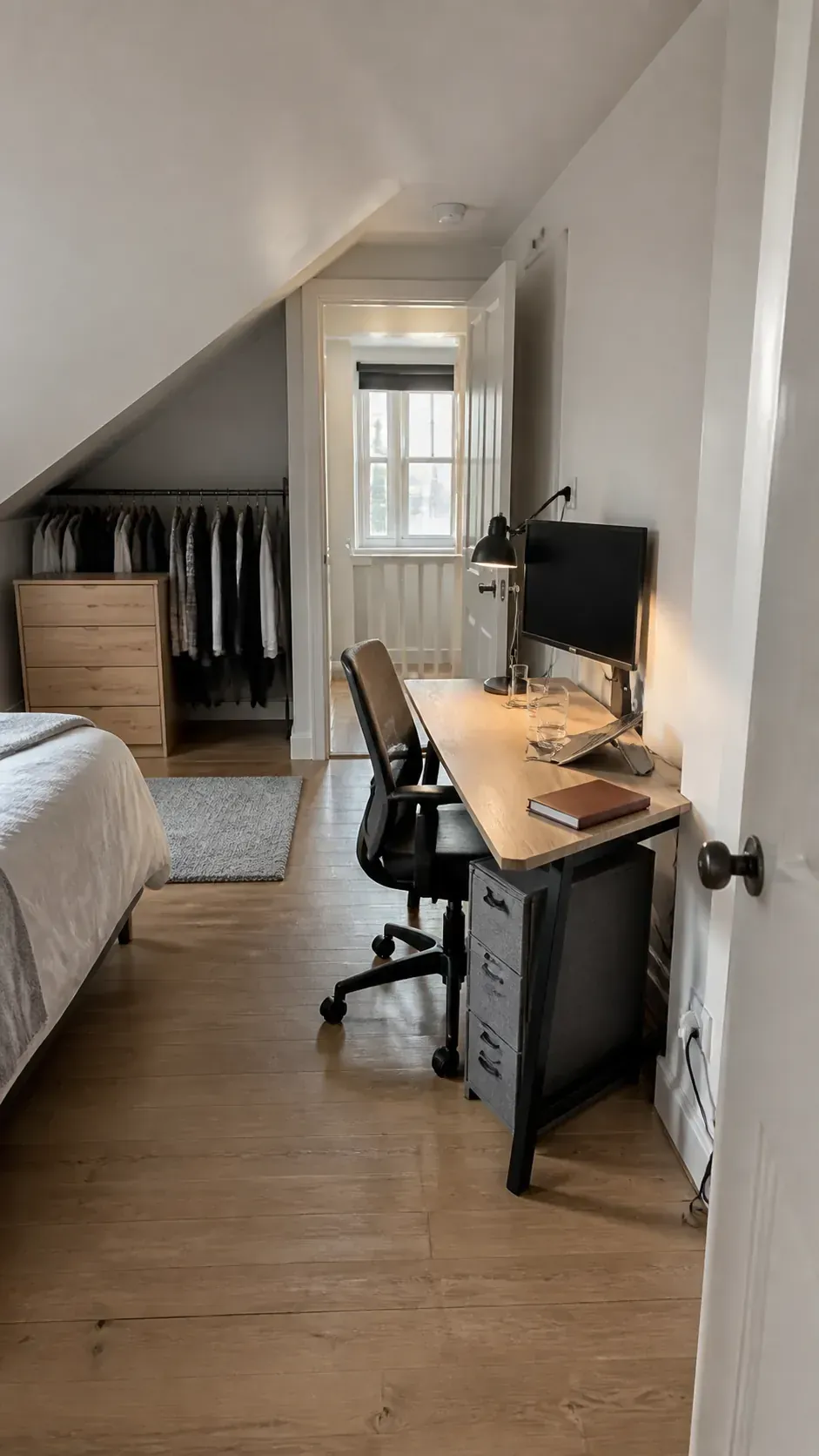
Face the Door Without Blocking It
Seeing the door can make a tucked bedroom desk feel less exposed during long work sessions. Angle the setup so the chair stays outside the door swing and the screen remains private from the hallway. Leave the main walking line clear even when the chair is occupied.
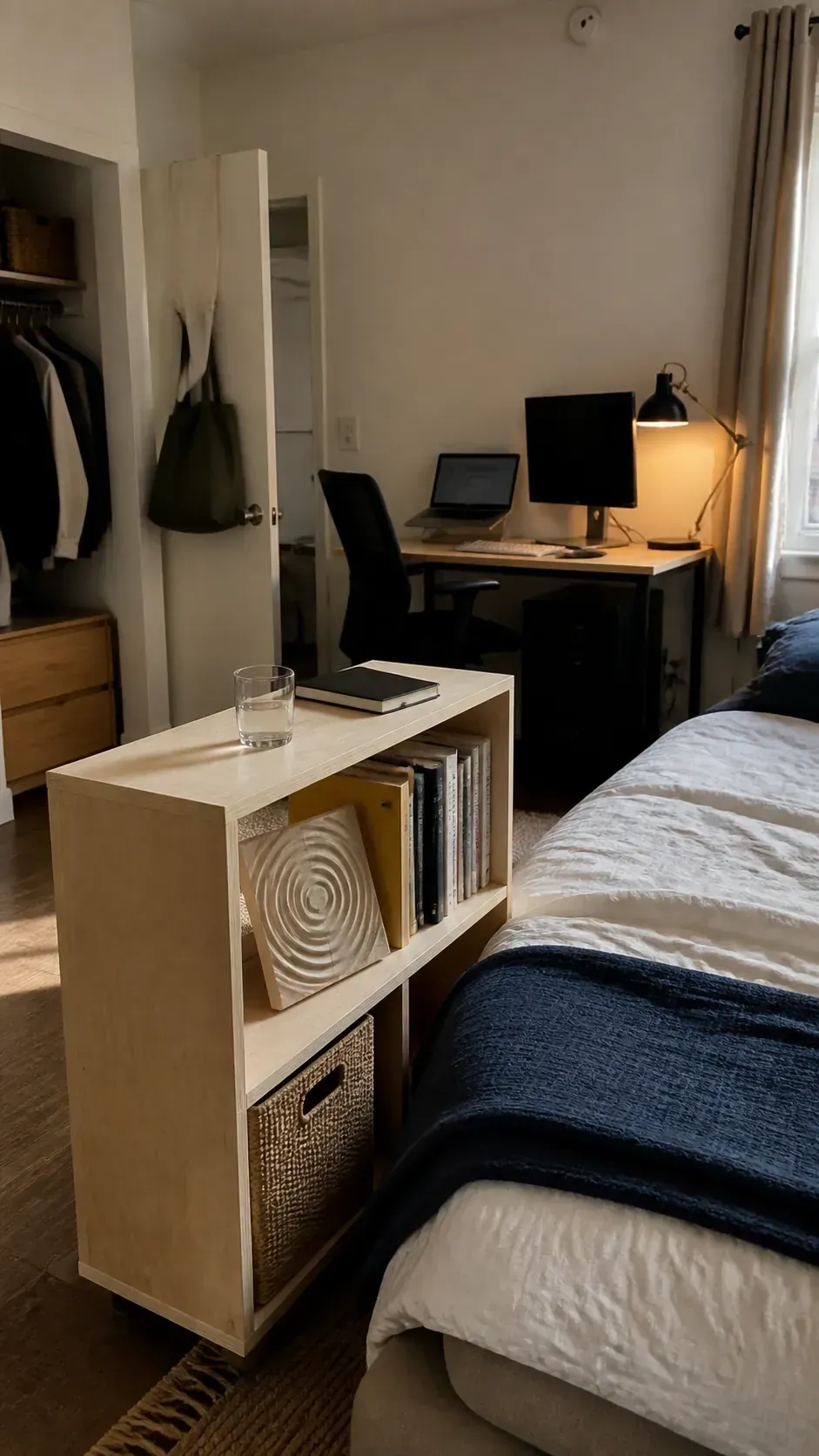
Create Separation With an Open Bookcase
A low open bookcase can define a desk area while borrowing light from the rest of the room. Anchor it safely and keep the shelves restrained so it does not become a heavy visual wall. Use closed boxes on the lower shelves for cables and paperwork, leaving the upper openings lighter.
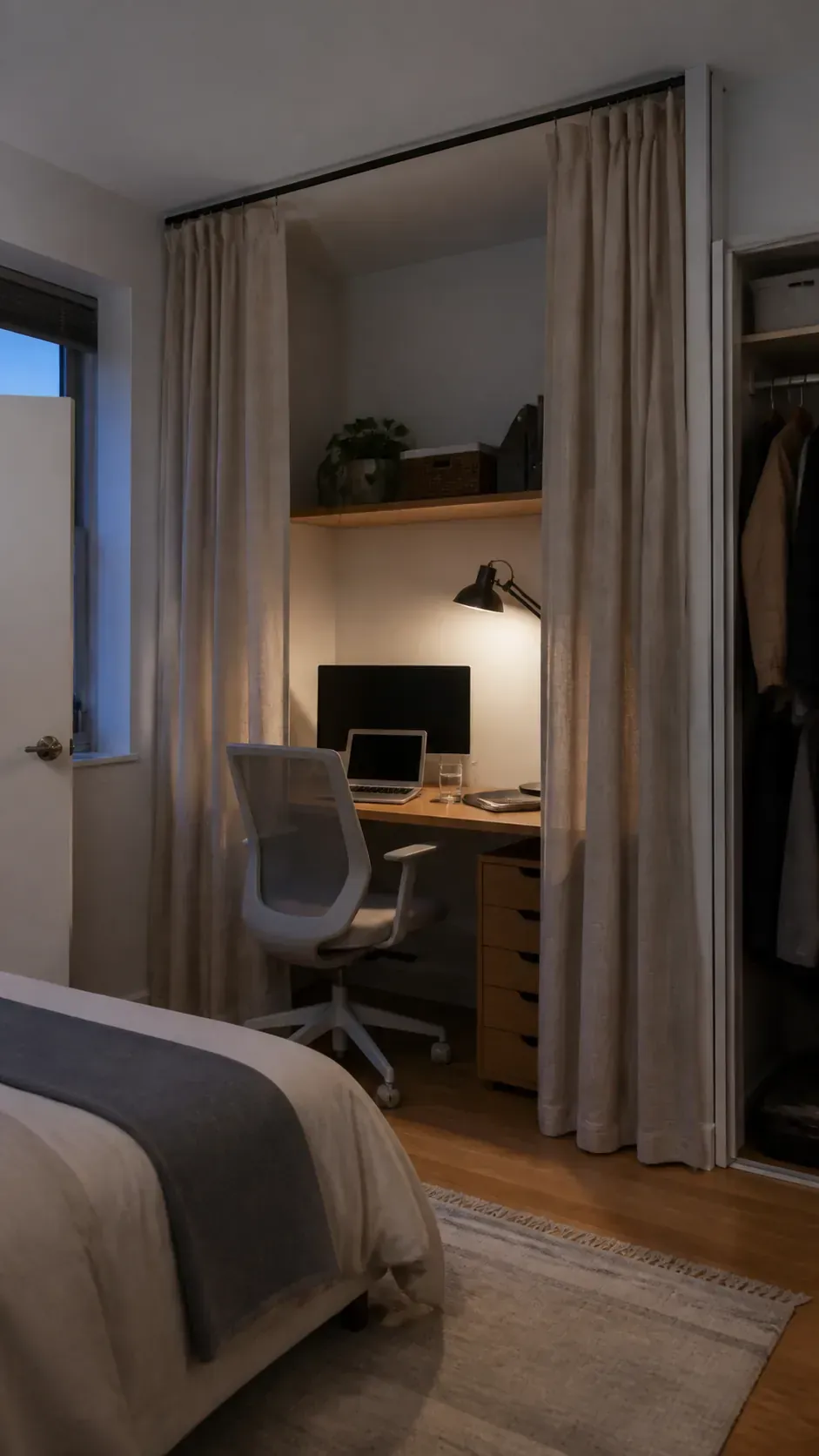
Hide Work Behind a Linen Curtain
A ceiling mounted curtain creates a reversible boundary without consuming the depth of a solid divider. Choose breathable fabric and keep it away from warm equipment or task lamps. Closing it at night can remove the visual reminder of unfinished work from the sleep zone.
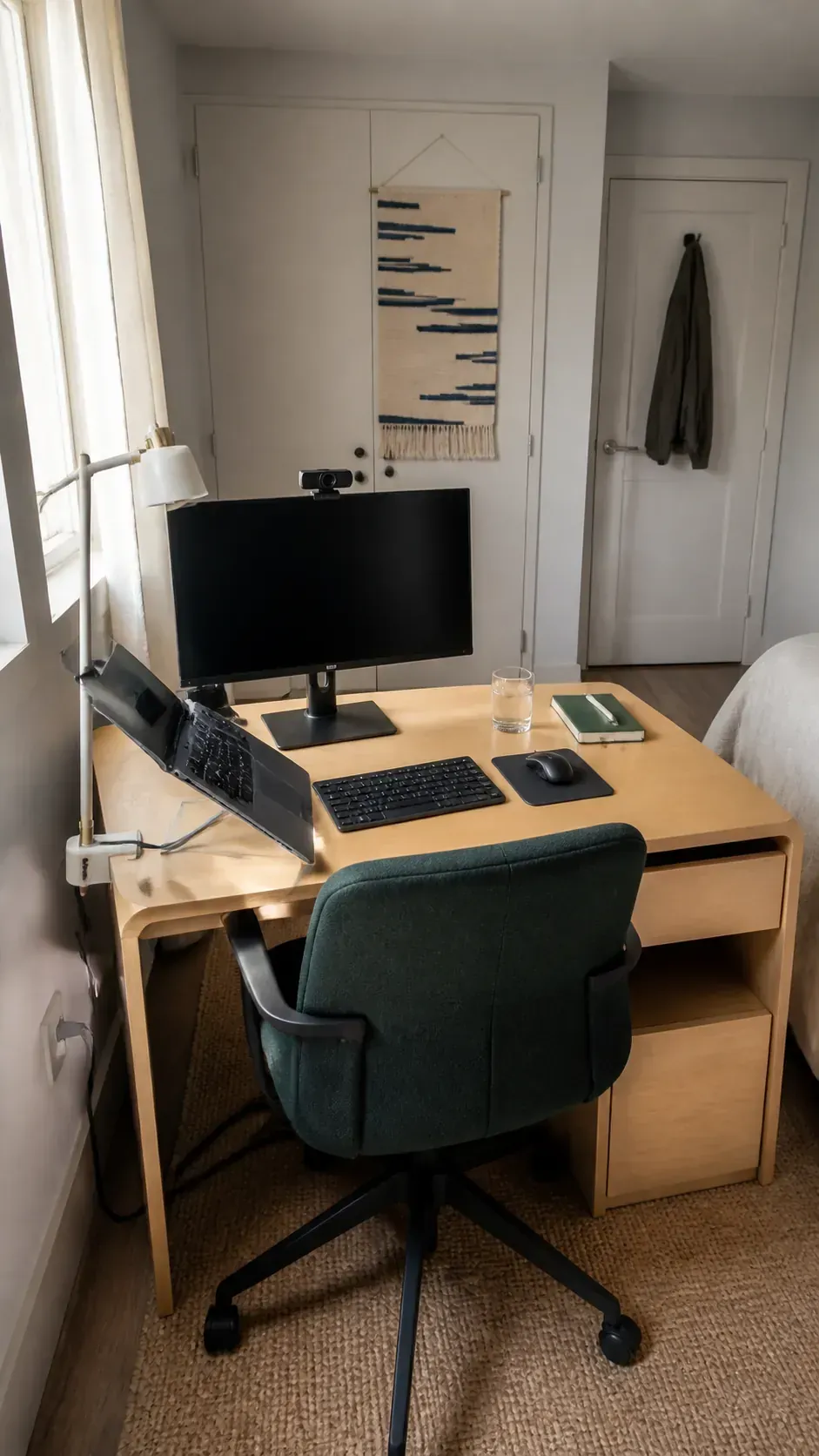
Pair the Desk With a Calm Backdrop
A useful video call background needs less decoration than most people expect. Position the camera toward a tidy wall or closed wardrobe instead of the bed, then add one specific object with personal meaning. Test daylight changes before committing, since a bright window behind you can turn your face into shadow.
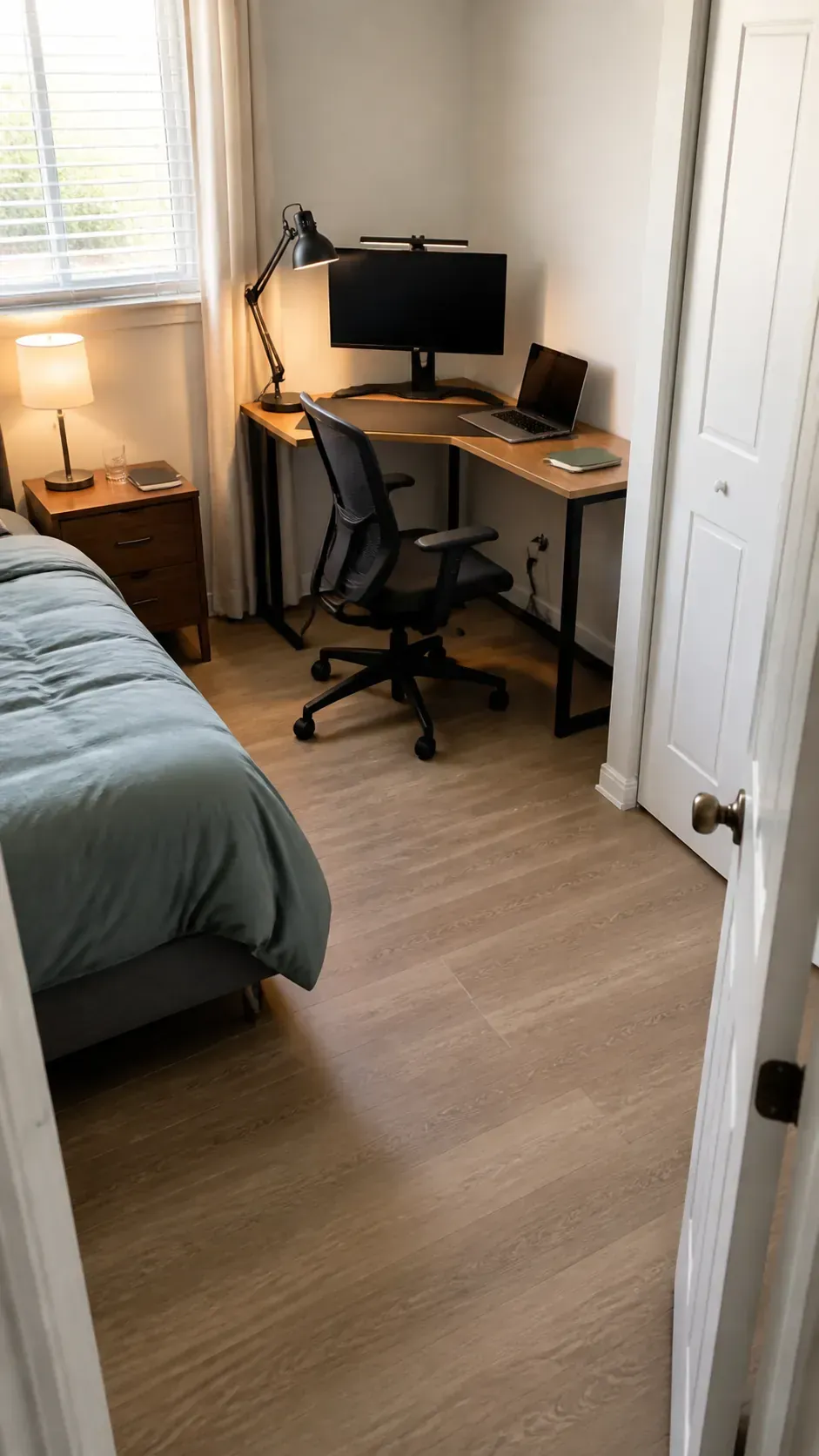
Use a Corner Desk That Preserves the Walkway
A compact corner desk can use an awkward angle while leaving the center of the bedroom open. Avoid an oversized return that traps the chair or blocks drawers. Keep the main monitor in front of the chair, even when the furniture itself wraps around the corner.
Turn the Bedside Surface Into a Workstation
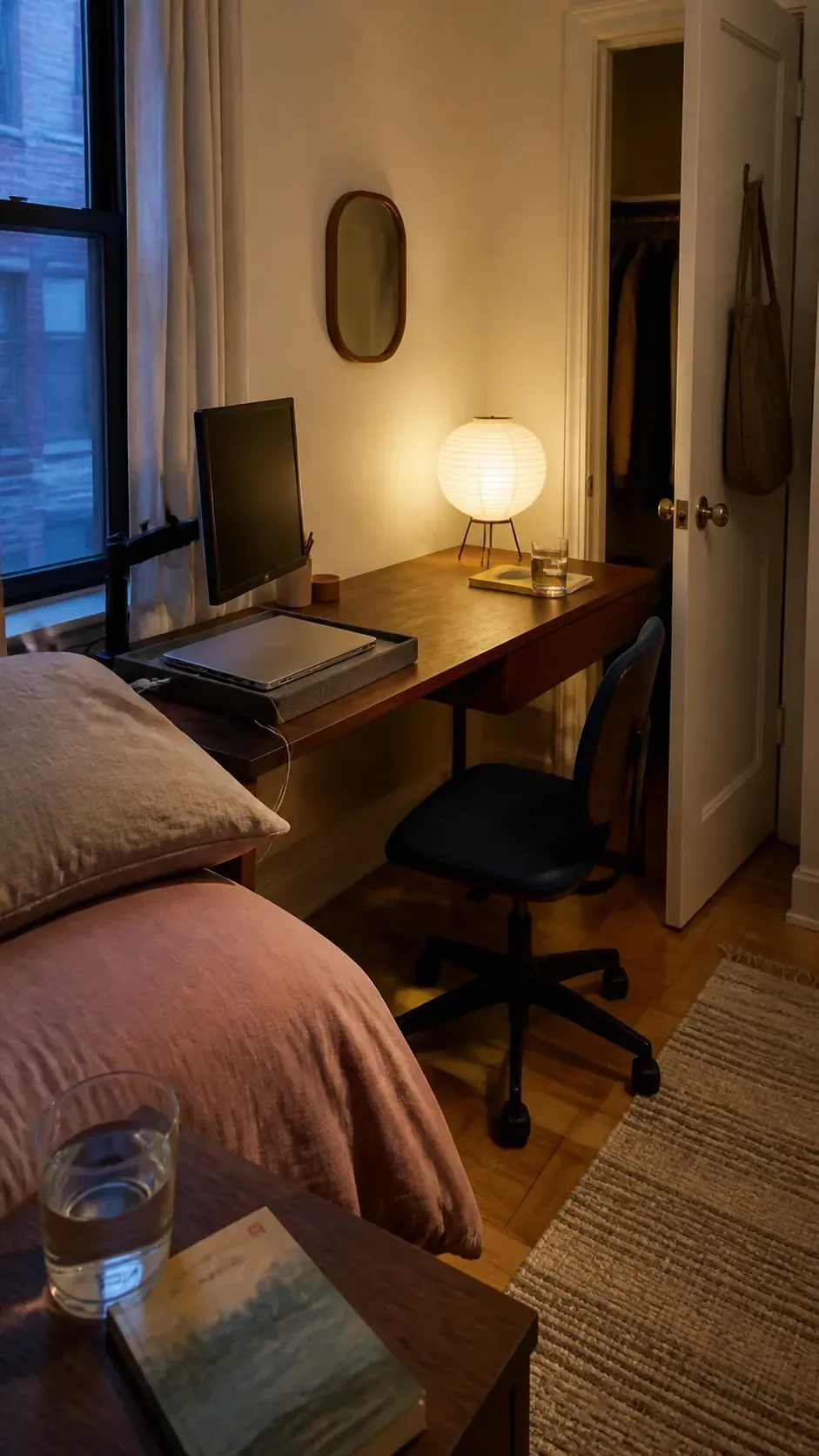
In a very small room, one surface can handle work and bedside routines if each gets a clear zone. Keep the lamp, book, and water on the bed side while computer items stay in a removable tray. Close the laptop and clear cables before sleep so the desk does not keep the room mentally active.
Fit the Desk Under a Loft Bed
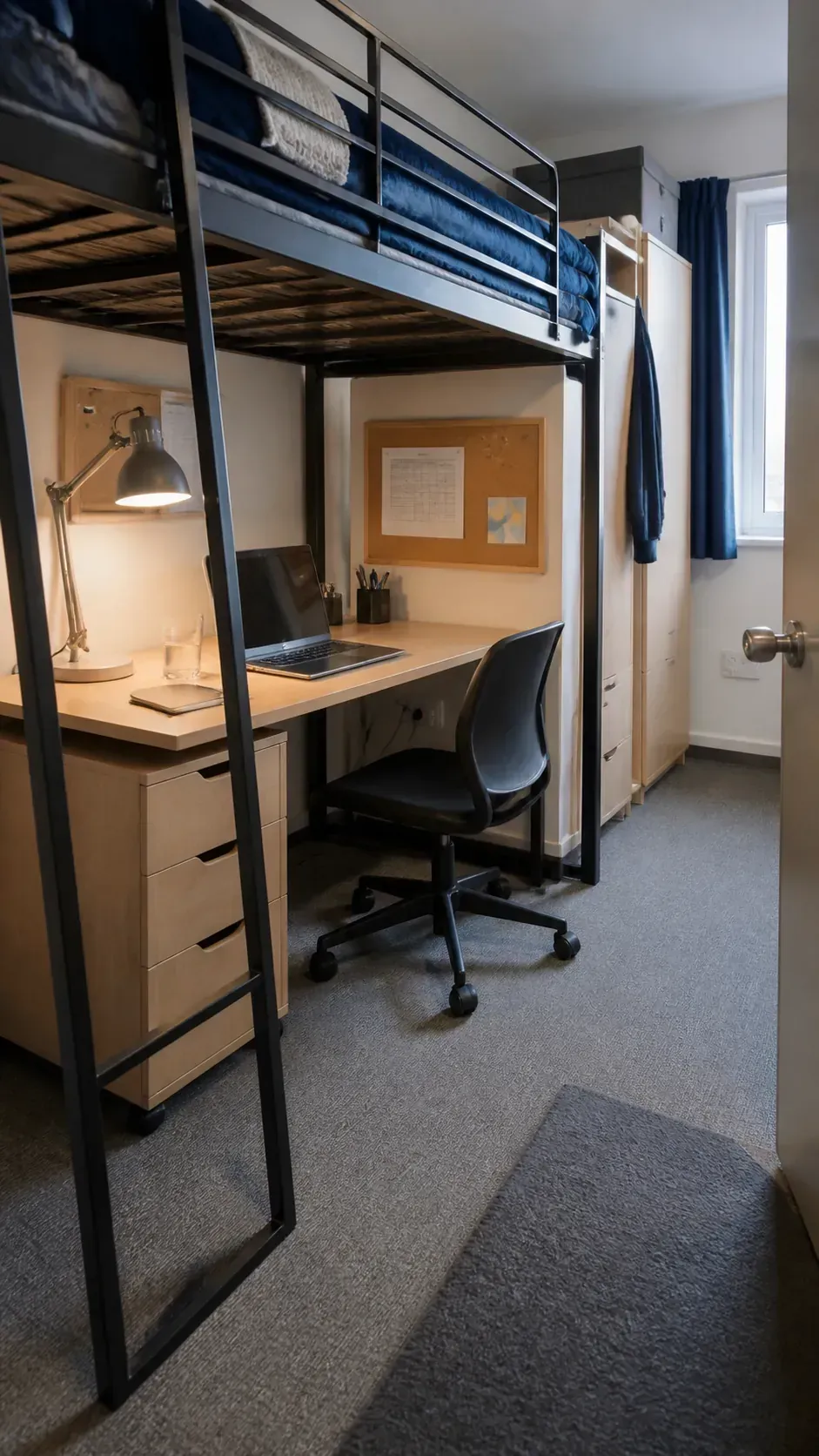
A loft bed can free a full work footprint below when ceiling height and access are safe. Add even task lighting because the upper platform blocks much of the room light. Keep cables secured to the desk rather than the ladder, and protect head clearance across the entire seated zone.
Choose a Clear Acrylic Work Surface
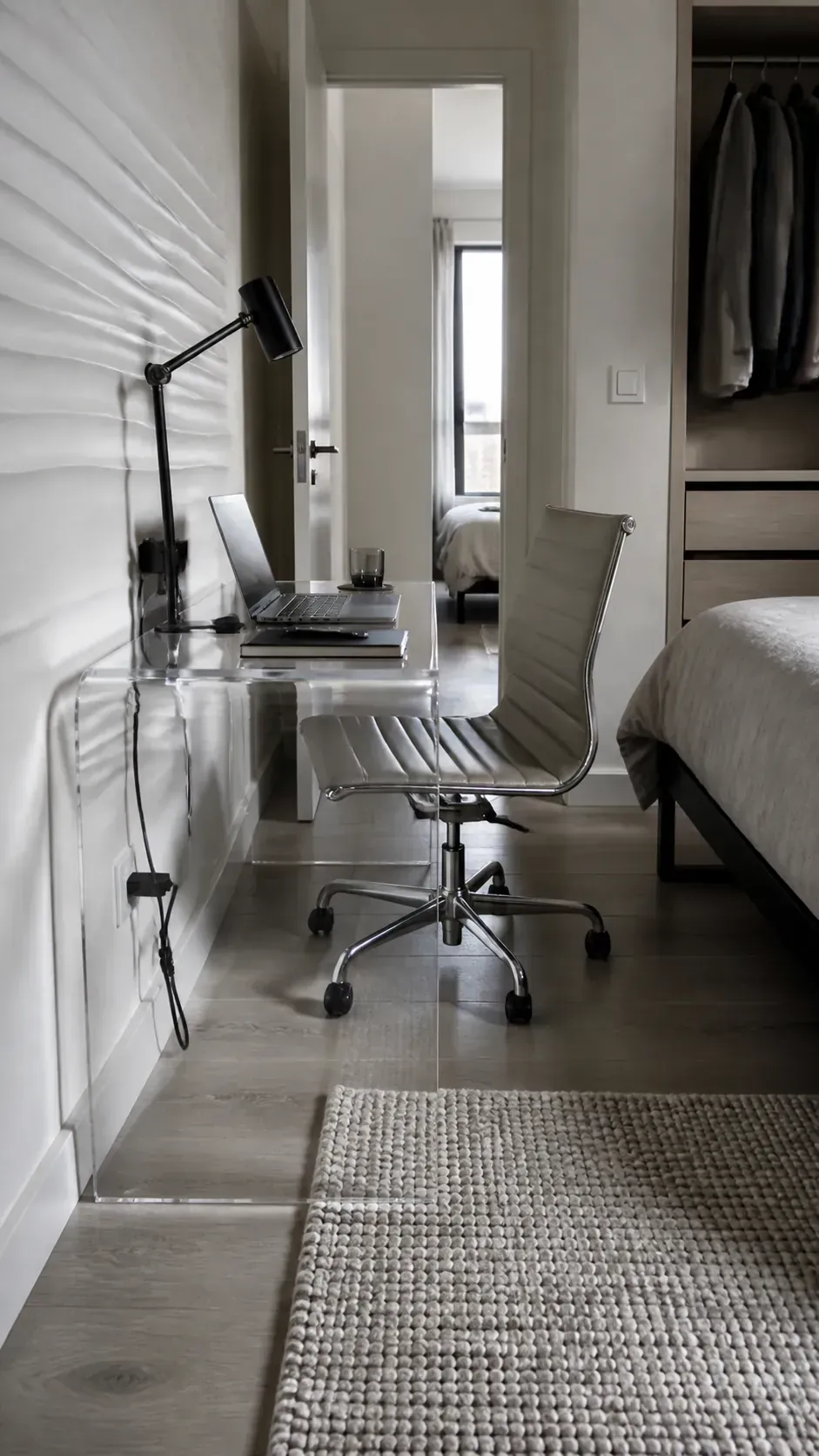
A transparent desk can reduce visual weight where solid furniture already fills the room. The effect works only when cable routes remain controlled because every wire is visible. A textured mat defines the working area, protects the surface, and adds warmth without making the desk look bulky.
Match the Desk to the Wall Color
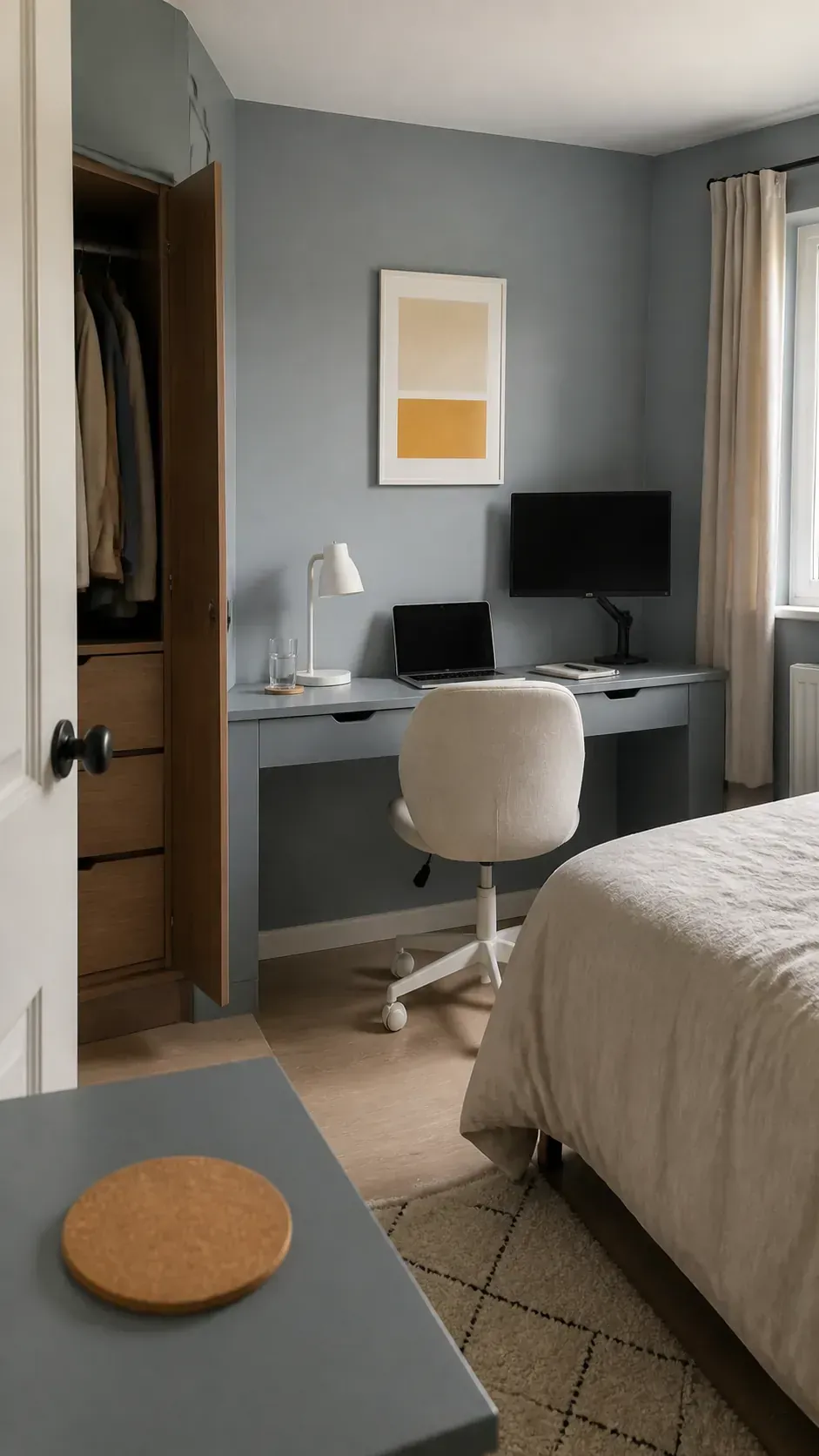
Painting a simple desk or selecting a finish close to the wall color helps the work zone recede. Keep contrast at the keyboard, chair, or lamp so the arrangement still has definition. This approach supports a bedroom desk ideas aesthetic without requiring many decorative objects.
Add One Pegboard for Active Tools
A pegboard moves headphones, notes, and stationery above the surface while keeping them visible. Assign each hook to something used during the week and leave breathing room between groups. Renters can choose a freestanding version or properly rated removable installation if the loaded weight allows it.
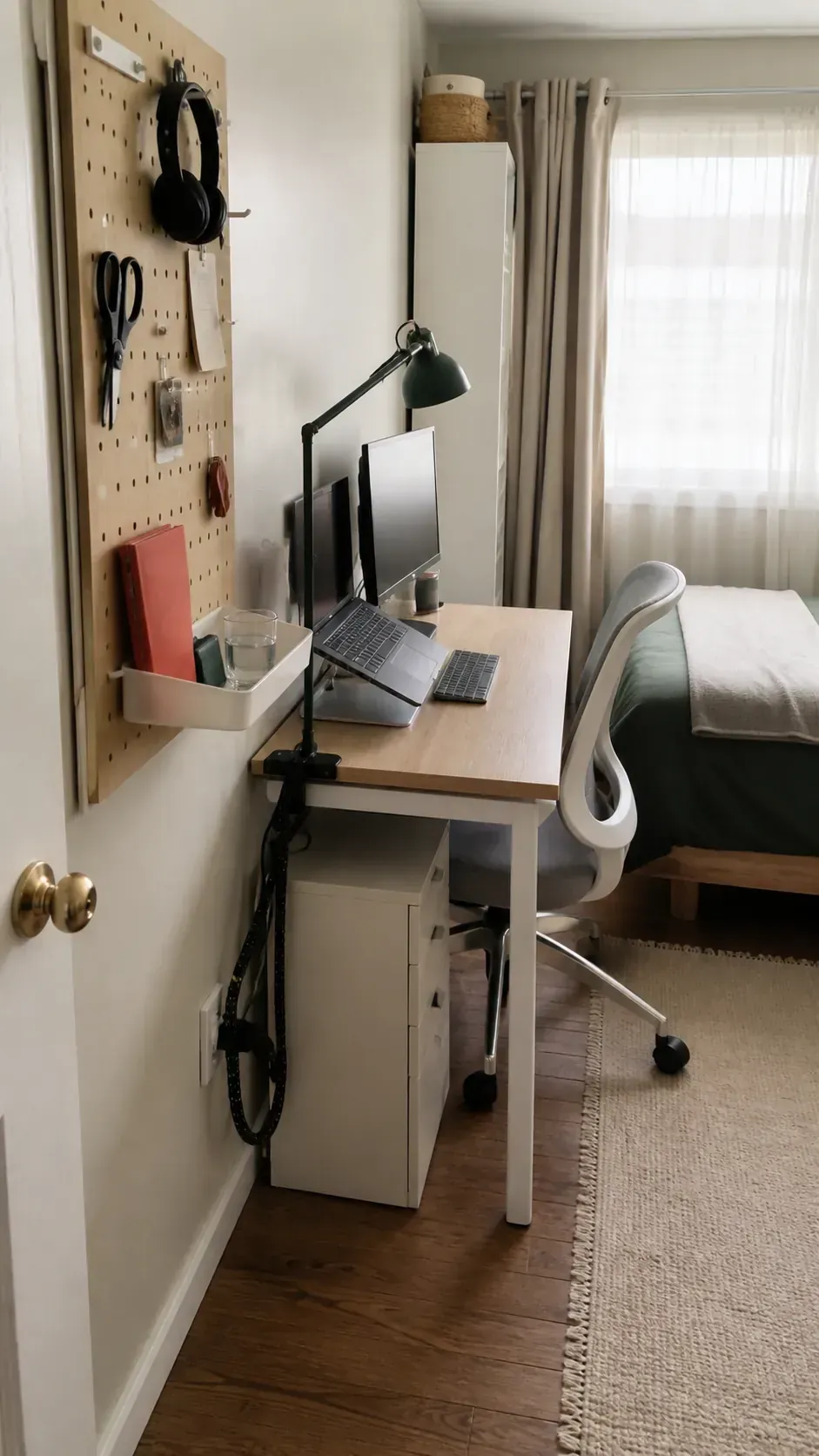
Slide a Narrow Drawer Unit Beside the Desk
A narrow drawer unit can hold paperwork and devices without taking knee space. Place it on the side opposite the main walking route and confirm that every drawer opens fully. Give the top only one job, such as charging, so it does not become a second cluttered desktop.
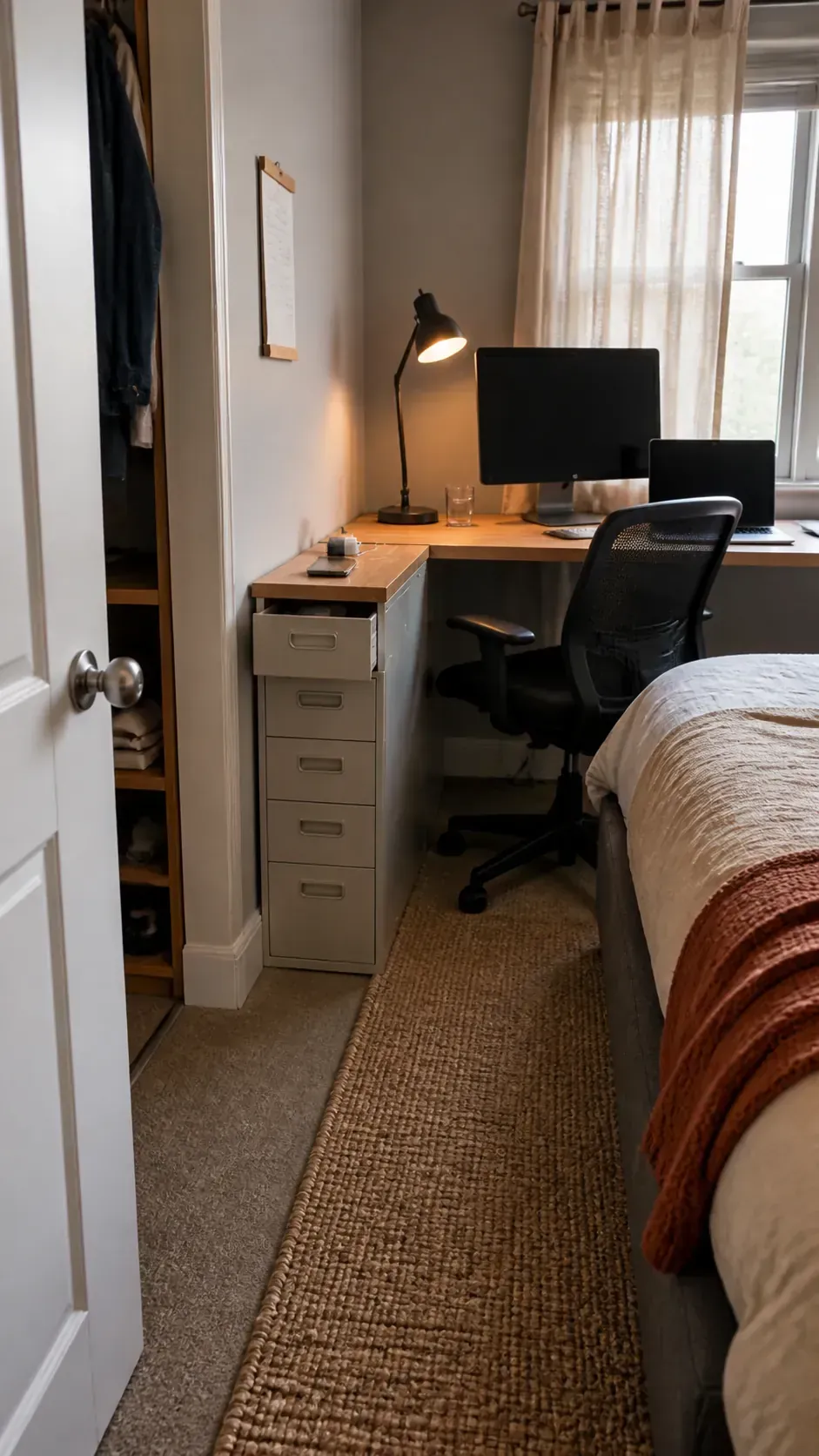
Mount the Monitor to Recover Depth
A suitable monitor arm can move the screen closer to the wall and free the surface beneath it. Check desktop construction, clamp clearance, and load before installation, especially with hollow furniture. Guide cables along the arm with enough slack for movement and keep the display centered on the chair.
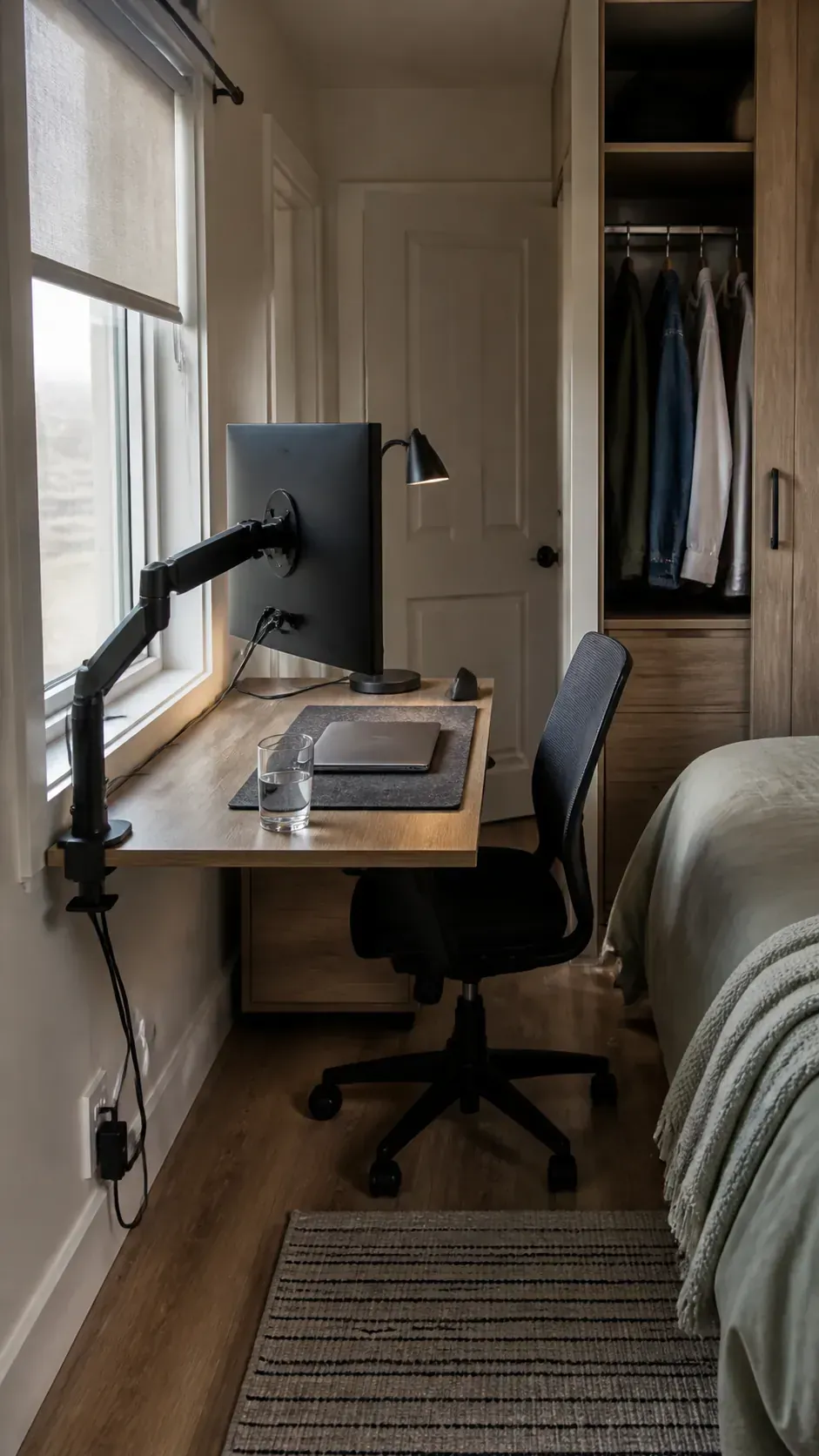
Use Warm Evening Light and Neutral Work Light
A bedroom desk needs focused light for work and a softer atmosphere later. Use a neutral task lamp directed at the surface during active hours, then switch it off when the room transitions toward sleep. A separate warm bedside source prevents the entire space from feeling like an office at night.
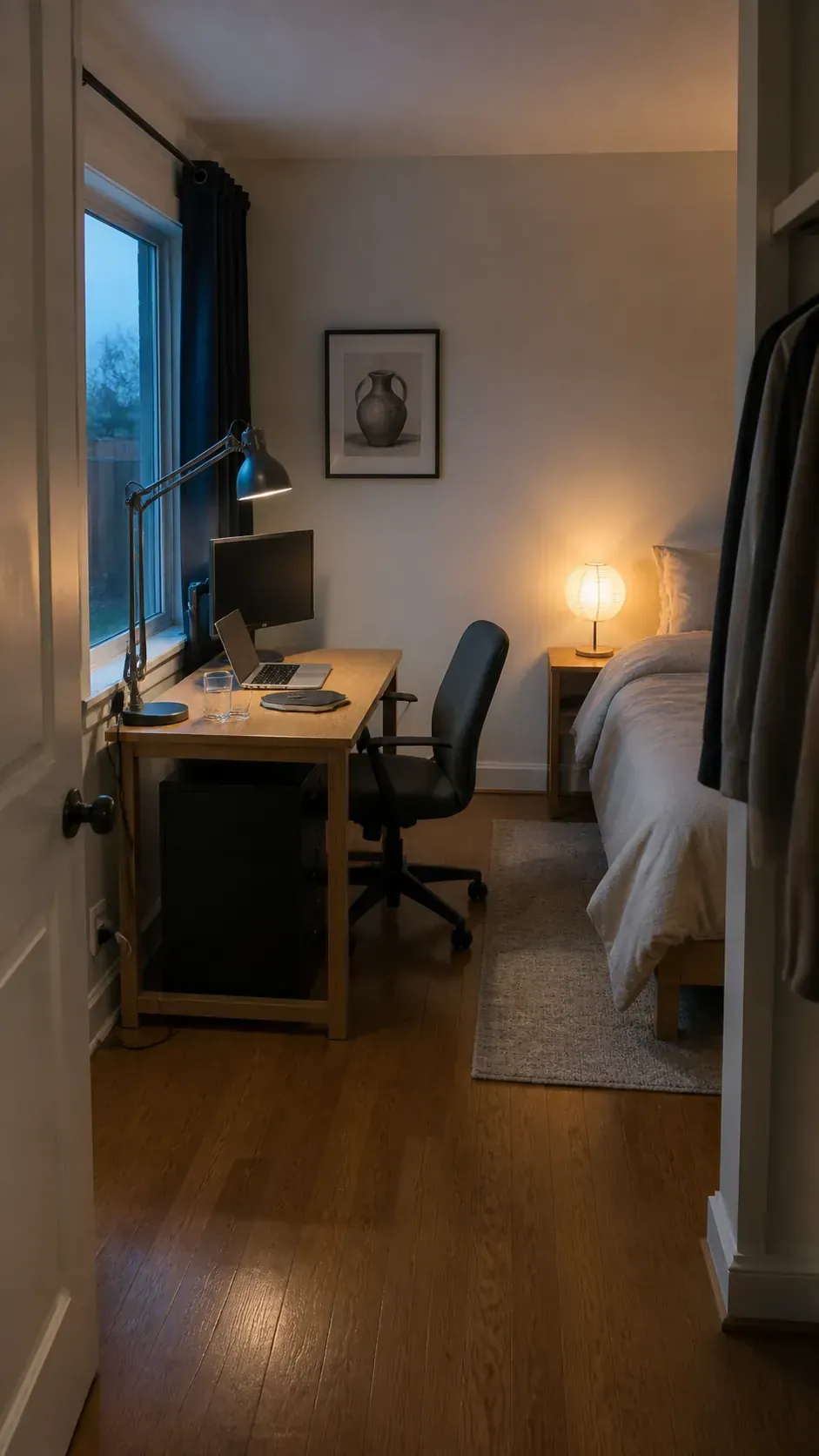
Keep the Palette Restful
Choose two quiet base colors and one restrained accent so the desk does not visually compete with the bed. Texture from wood, linen, cork, or felt can add interest without loud patterns. Repeat one bedroom material at the desk to make the two functions feel related.
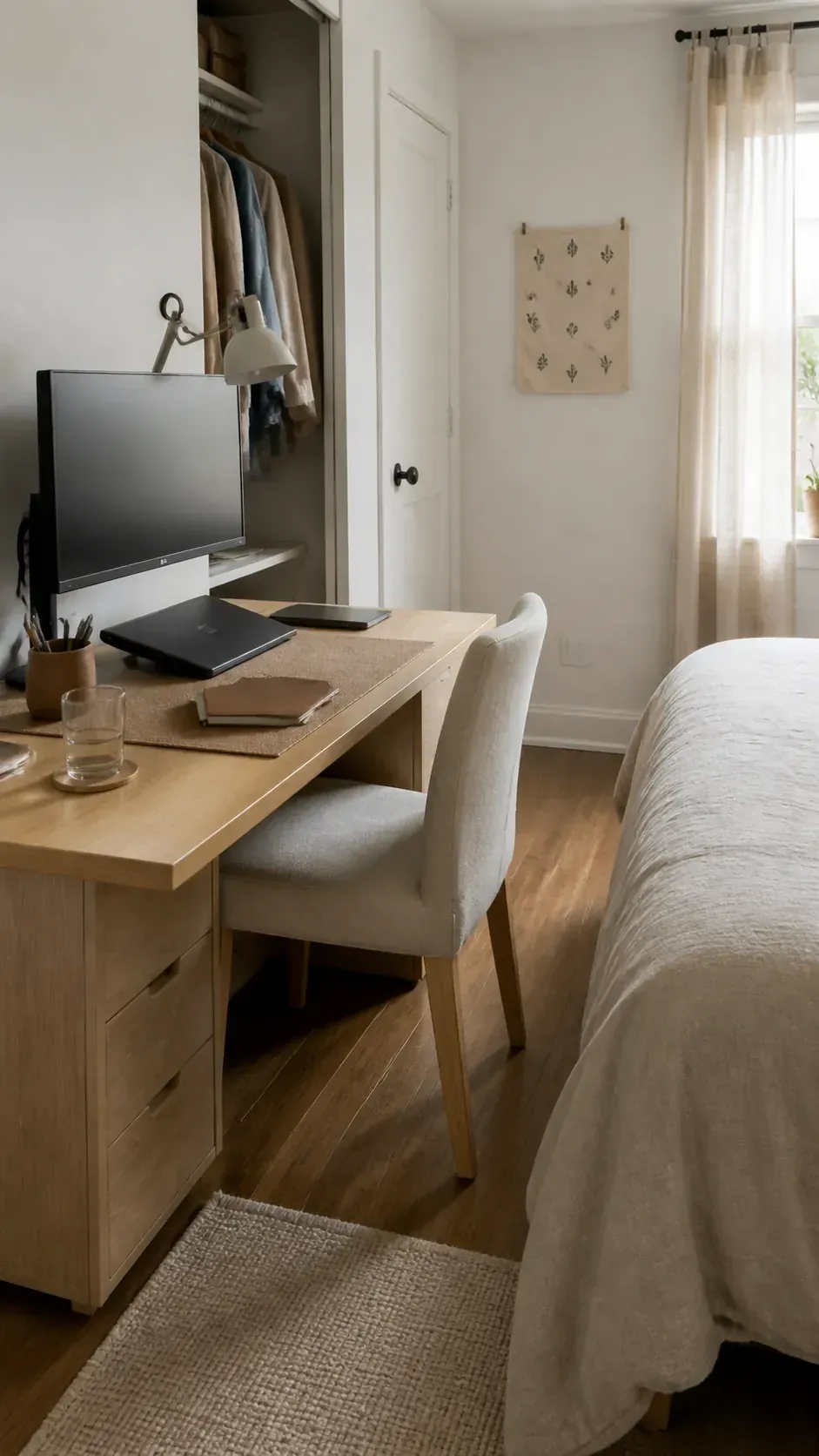
Set Up a Portable Work Kit
A portable kit works well when the bedroom surface serves more than one purpose. Keep the laptop charger, notebook, mouse, and call accessories together in one handled container. At the end of the day, move the kit to a shelf or wardrobe so the desk can become a dressing or reading surface.
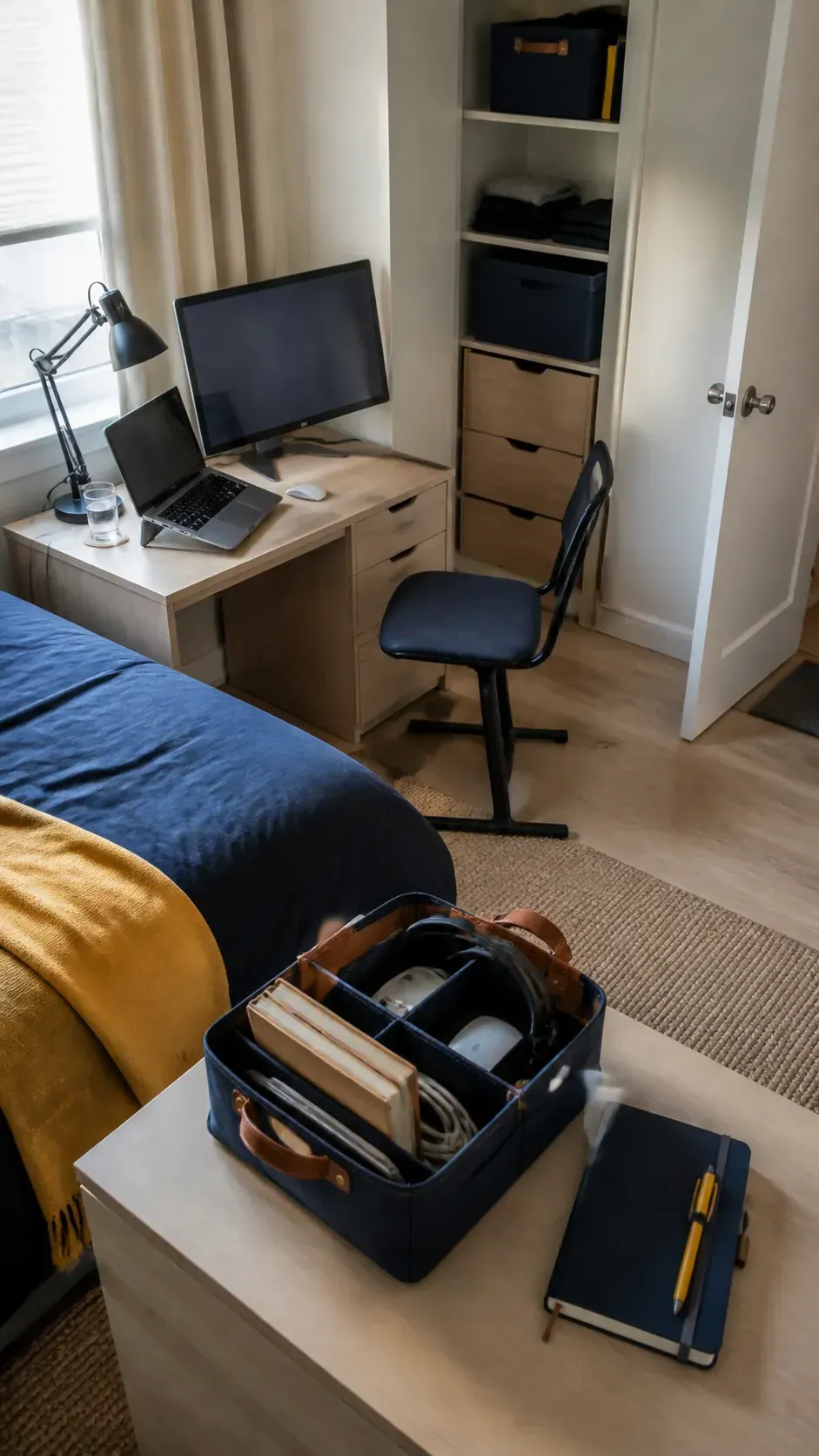
Protect a Blank Writing Area
Reserve one clear area for a notebook, planning, or a cup of tea rather than covering the whole desk with technology. Group fixed devices on the opposite side and keep chargers below the surface. The open patch makes a tiny desk setup more adaptable and easier to reset.
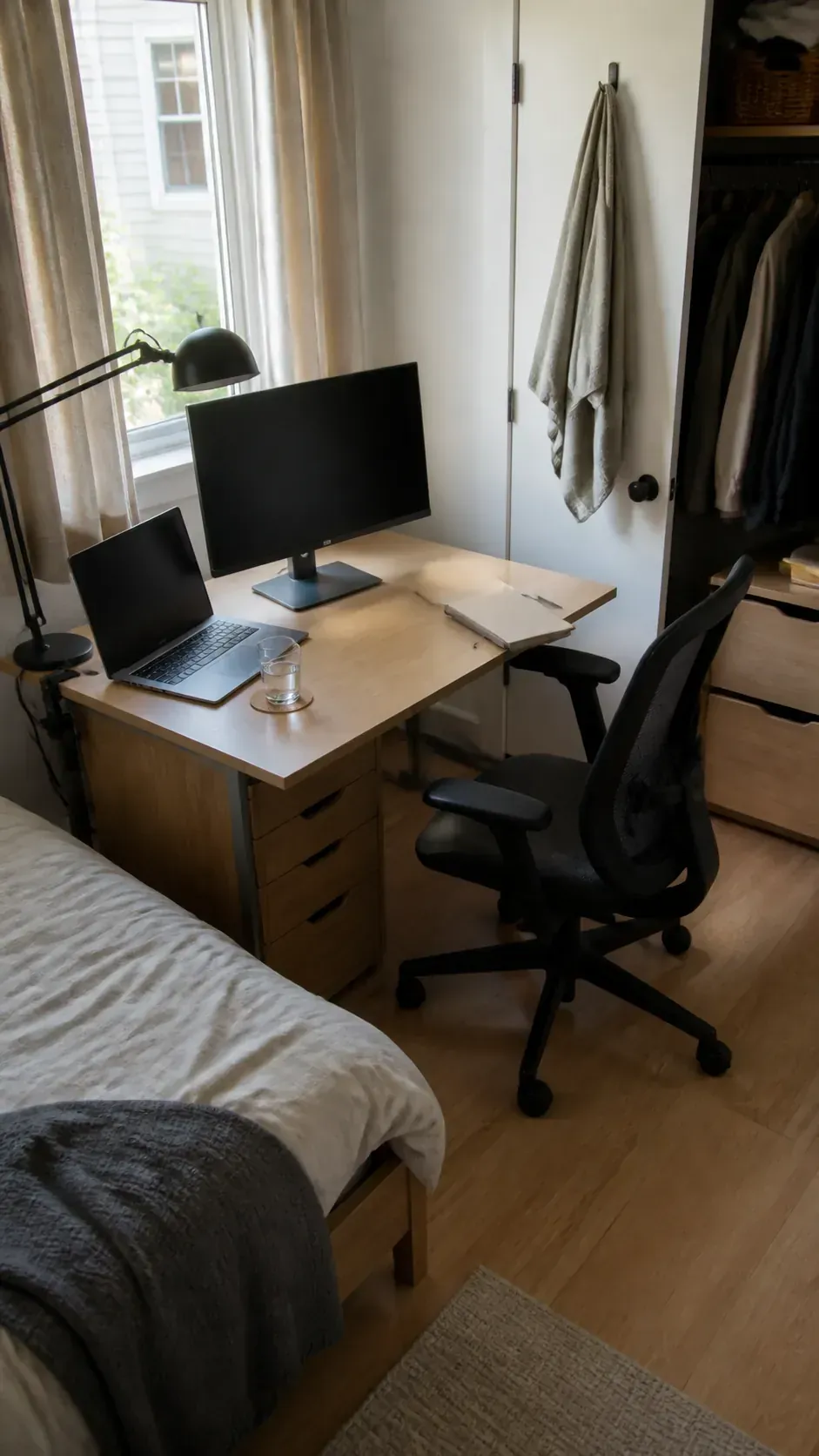
Park the Chair Completely Underneath
A chair that disappears beneath the desktop can return several inches to the bedroom walkway. Measure arm height, seat width, and any drawer before choosing it. Comfort still matters, so test support for the length of your normal work session instead of buying the smallest chair available.
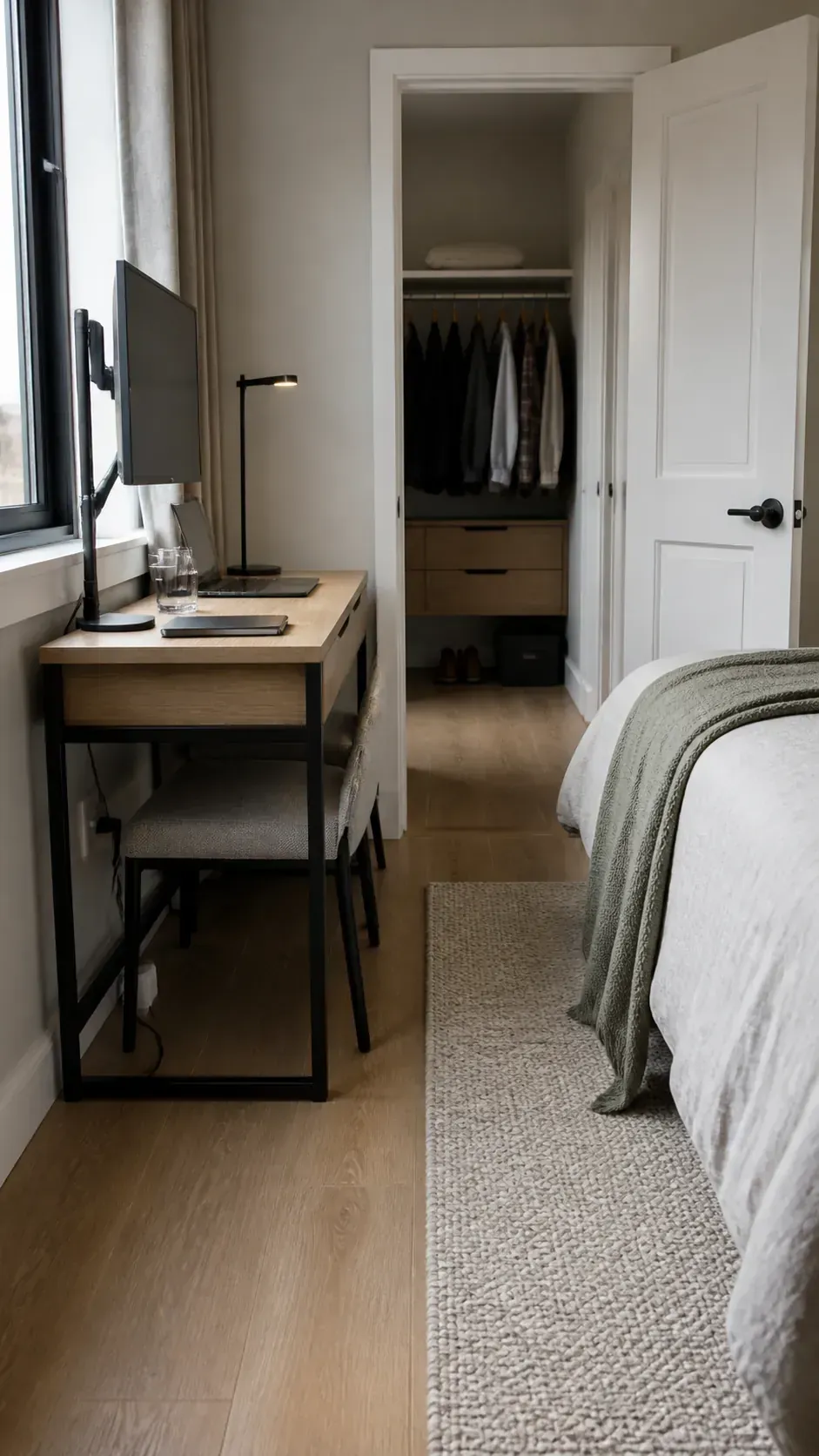
End Each Day With a Visible Reset
Put papers away, close the computer, return the chair, and remove anything that belongs elsewhere in the room. Leave only the items that support sleep or the next morning. A visible reset gives the bedroom back its primary purpose and prevents a practical work space from feeling permanently unfinished.