
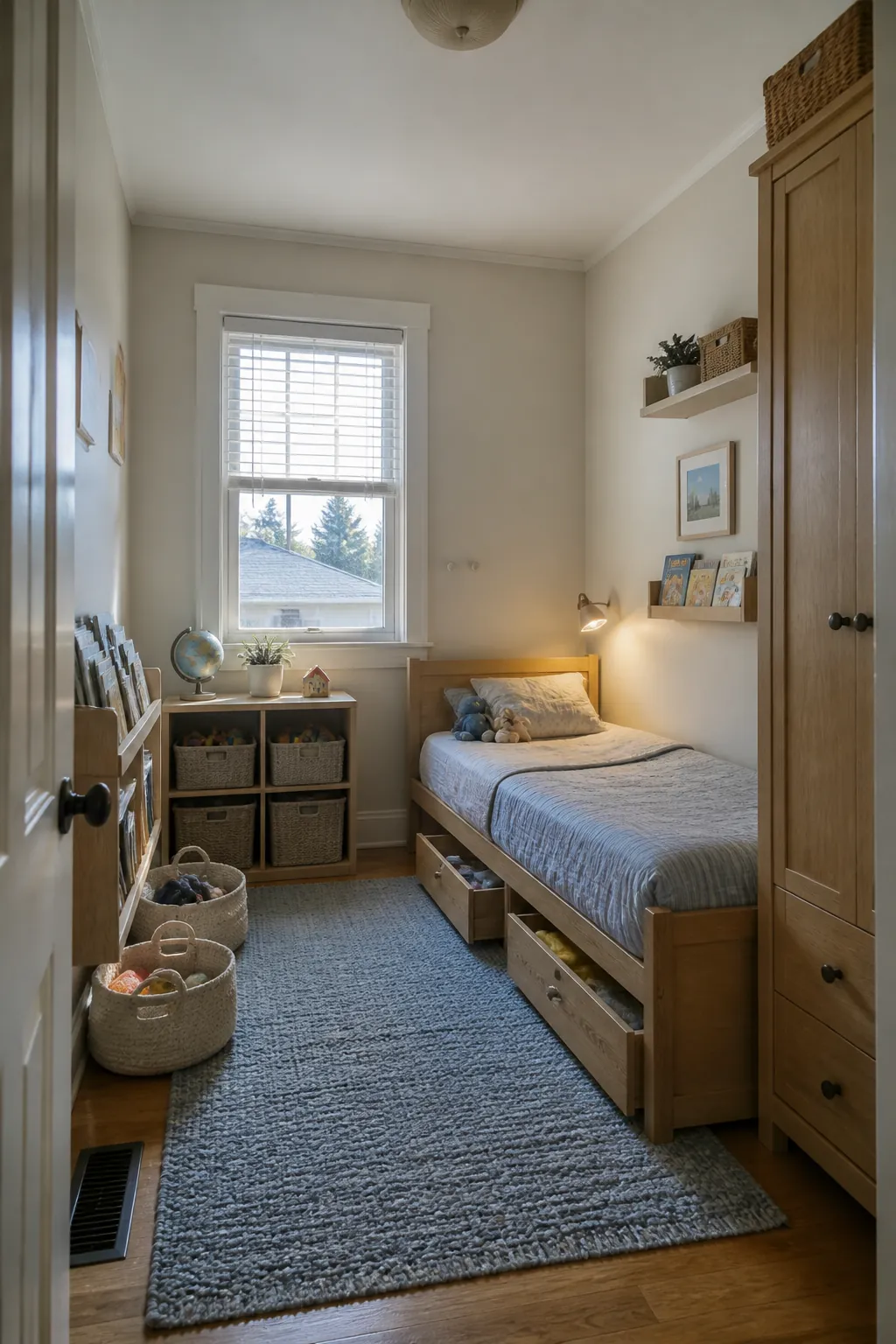
A small child bedroom works best when every inch supports a real routine. These 23 ideas focus on safer circulation, reachable storage, calmer sleep, and furniture that can adapt as a child grows—without turning a tight room into a crowded showroom.
Parents in real room-layout discussions repeatedly return to the same priorities: measure first, keep floor space open, start with essential furniture, and add storage only where it improves daily use. Use the ideas below as a practical menu rather than a shopping list.
Start With a Tape-Measured Floor Plan
Every furnishing decision depends on fixed geometry that a product photograph leaves out: the inward door, window reveal, radiator, closet, and outlets. In a tight room, a few unusable inches can turn a sensible bed-and-storage plan into a daily bottleneck, so circulation deserves priority over symmetry.
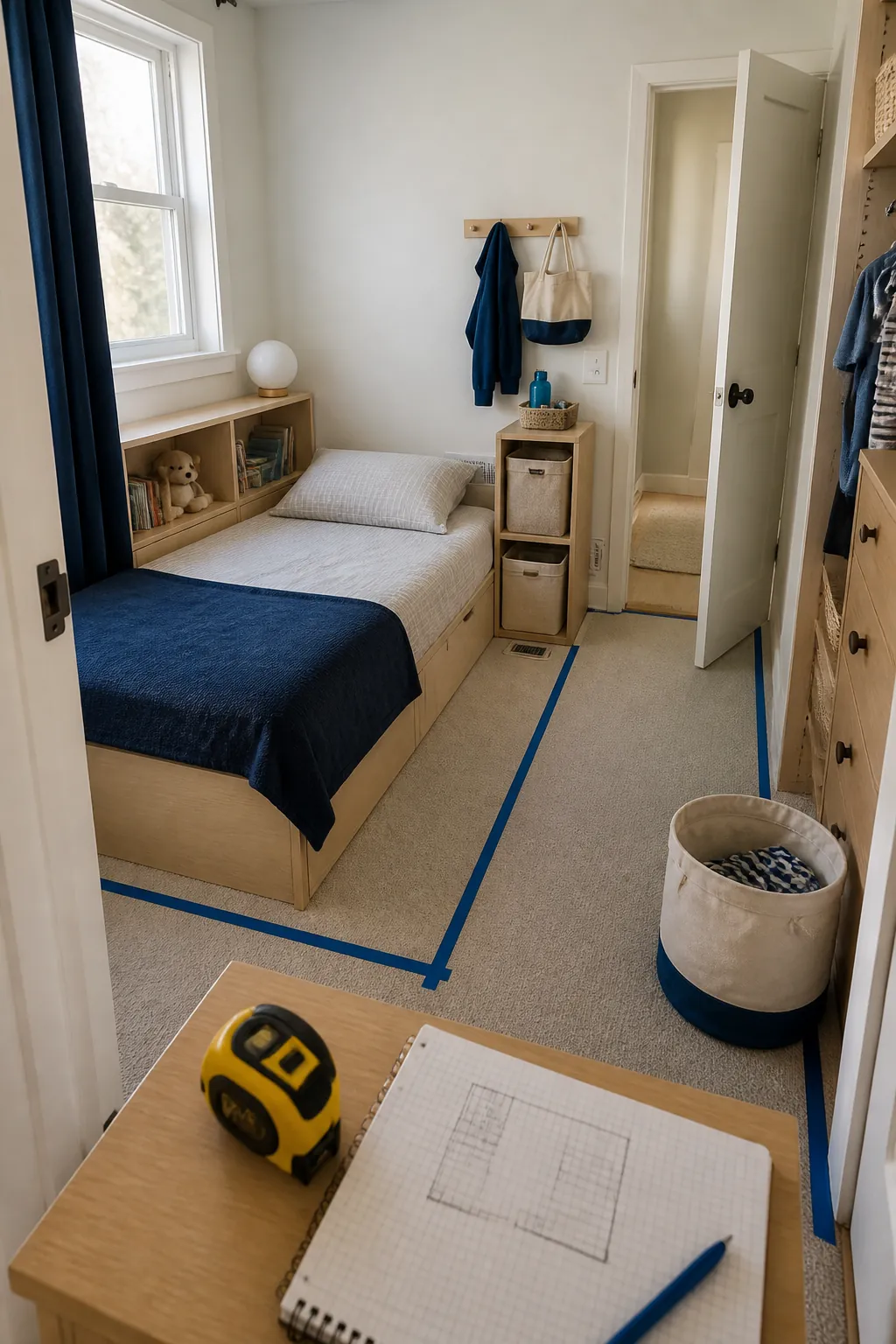
Record the fixed measurements on graph paper, then tape the complete footprints of the low bed and proposed storage onto the floor. Operate the real door, mimic an extended drawer, and kneel beside the pillow to expose conflicts that a top-down sketch misses. Leave the outlines in place through several mornings and bedtimes, using observed pinch points to decide which piece must shrink, move, or disappear.
Push the Bed Into a Useful Corner
Running a low oak bed along two walls consolidates the sleep zone instead of leaving narrow scraps of floor on every side. The released center can serve active play, dressing, and a direct route to the door as those needs change through the day. A corner also gives the pillow a sheltered feeling without adding a canopy or bulky headboard.
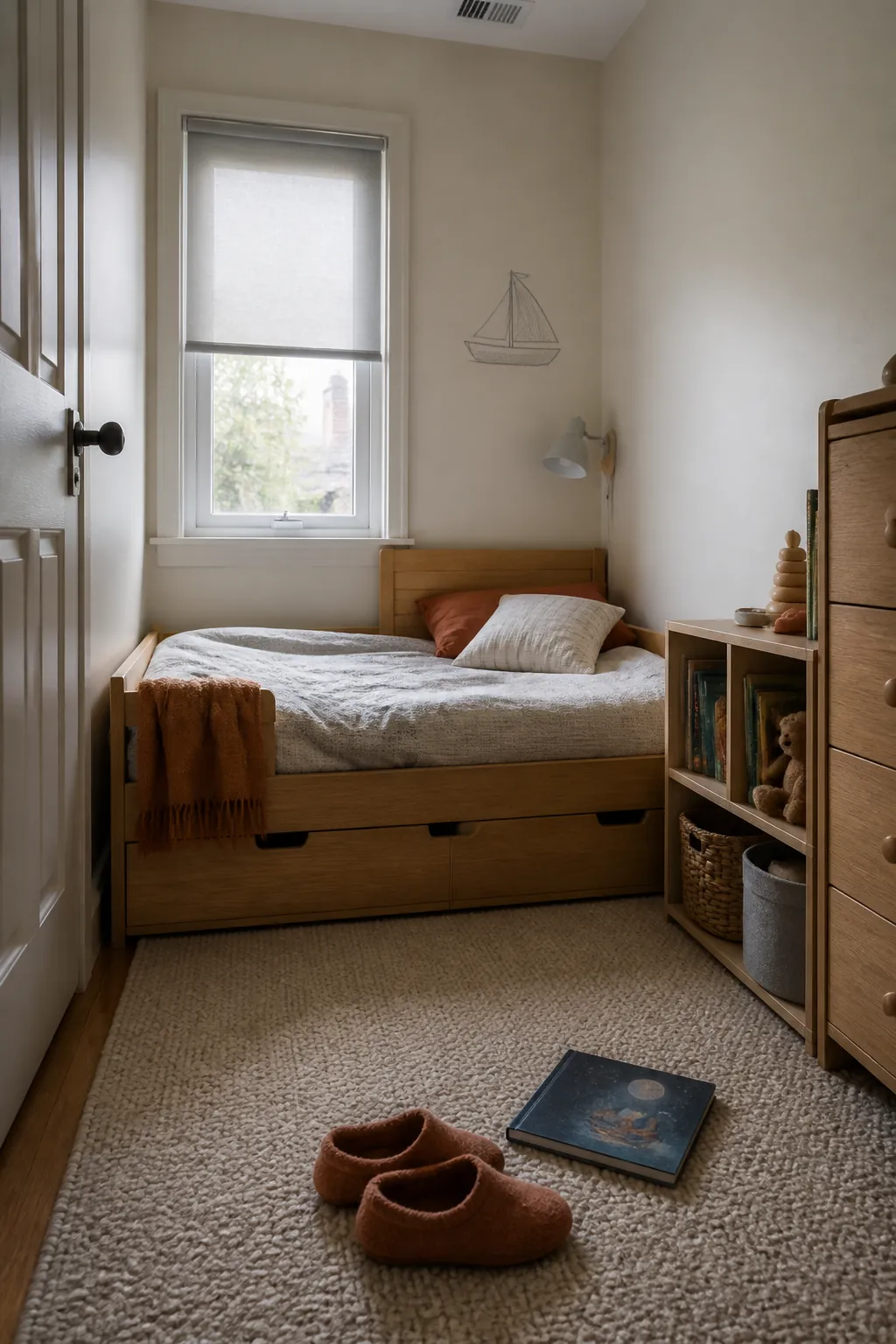
Inspect both walls for heat sources, moisture, window hardware, and outlets before the frame is moved into position. Preserve a comfortable approach along the exposed side for changing bedding and helping at night, accepting that the wall-side corner takes more effort to reach rather than spending the newly open floor on another cabinet.
Choose a Bed With Deep Drawers
Built-in bed drawers can remove a separate dresser and return an entire wall strip to circulation. They are most useful for folded items chosen often, because the storage sits naturally beside the dressing routine. Extra depth is not automatically an advantage: an undivided cavity can hide clothing and become difficult for a child to reset.
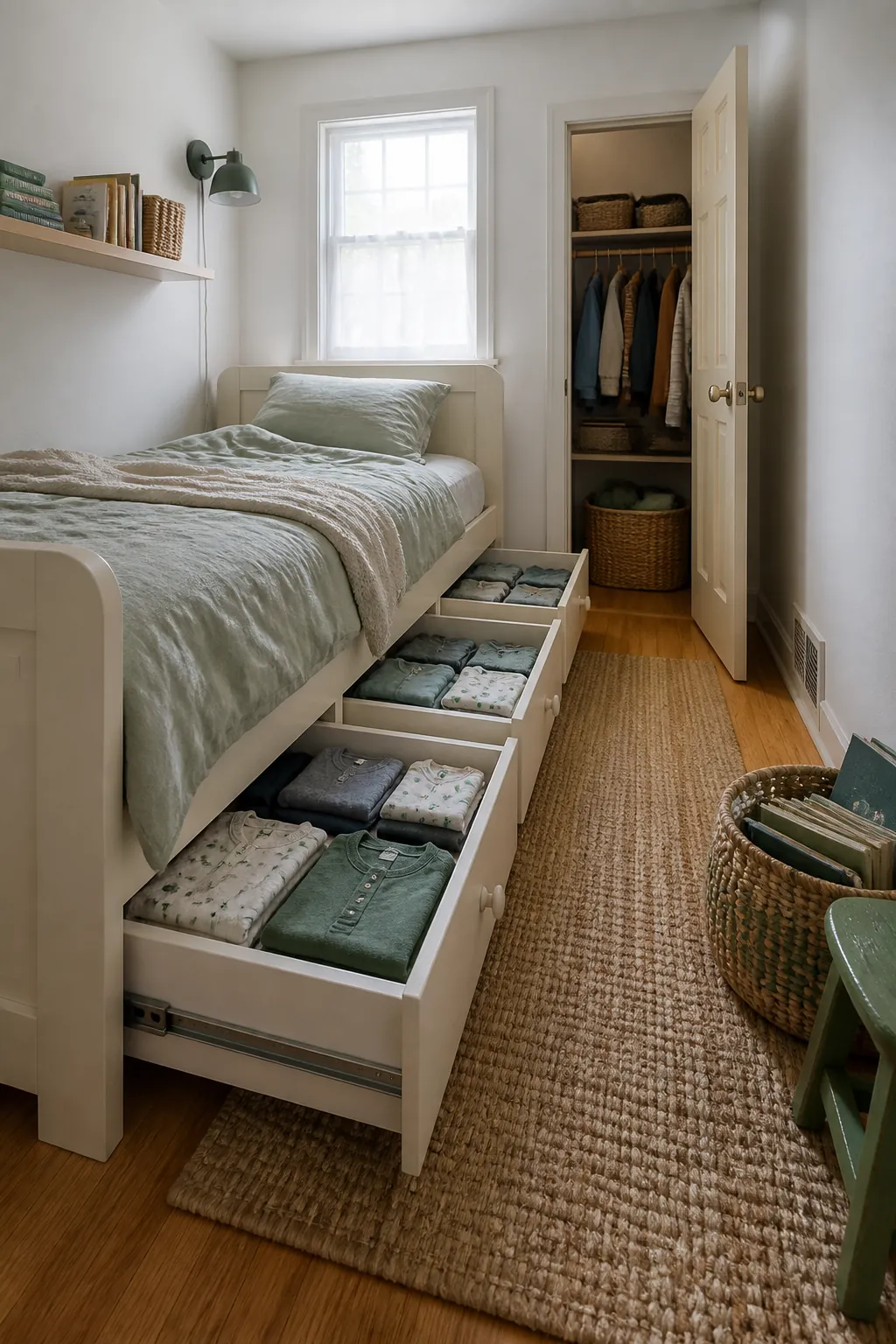
Trace the longest pull at full extension, including its handle, and check that the rug, ledge, and open room door remain clear. Divide the easiest drawers for pajamas and socks, leaving less frequent bedding in the area a caregiver manages. Let the child operate a normally loaded drawer before committing; difficult movement is a reason to reduce the contents or choose another system.
Use a Loft Bed to Free the Floor
A loft earns its footprint only when raising the mattress creates a clearly needed zone below, such as a quiet reading corner in a room with no other place for one. It also moves ordinary care upward—climbing, making the bed, and reaching a child at night—so the apparent floor gain is not sufficient reason by itself.
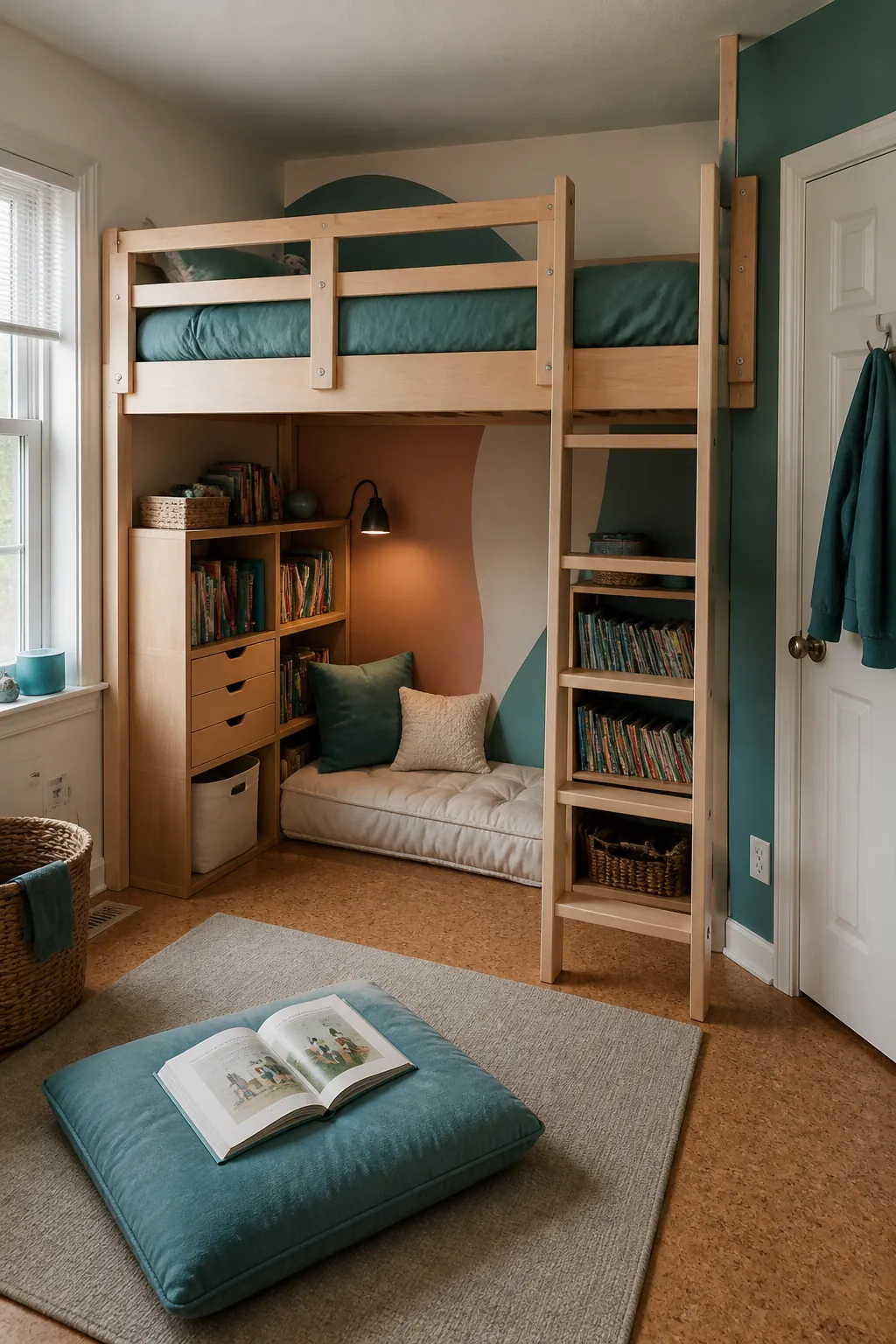
Choose a complete system appropriate to the child and follow its age, mattress-depth, guardrail, assembly, and use instructions without modification. Confirm ceiling clearance and a firm ladder approach, keeping lights, fans, shelves, and the path to the door outside the climbing zone. Rehearse how an adult will change bedding or assist the sleeper, then furnish the lower nook lightly enough that those tasks remain possible.
Fit a Narrow Bedside Ledge
A shallow ledge serves the narrow gap where a freestanding nightstand would interrupt the walking strip. Its deliberately limited surface gives a cup, clock, and current books a home while discouraging a permanent pile. The tradeoff is the loss of hidden storage, which is often worthwhile when clear floor matters more than another drawer.
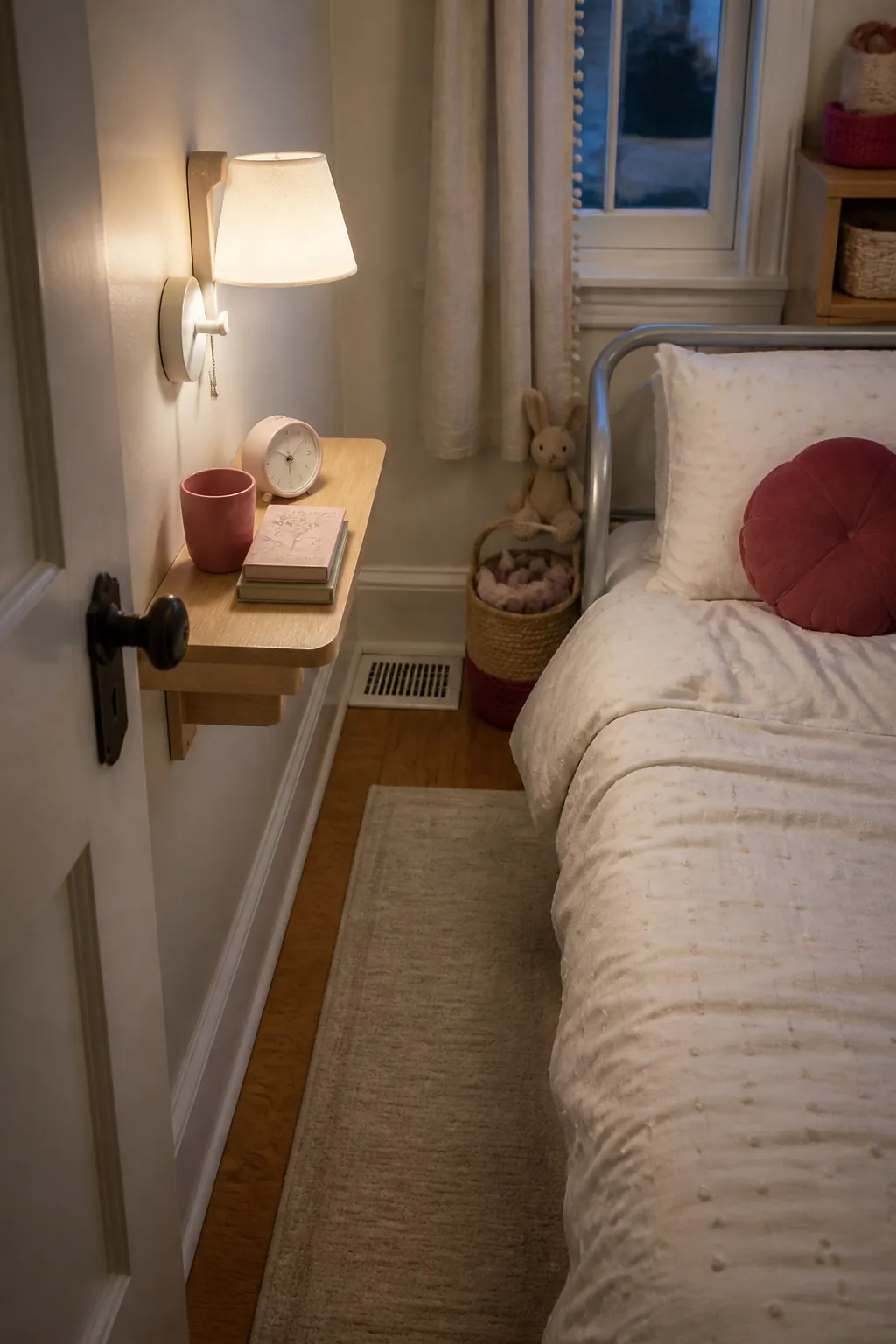
Make a cardboard mockup around the actual bedtime objects, then test its height from the pillow and its projection while walking beside the bed. Use softened edges and wall-appropriate fixings, leaving the ledge far enough from the mattress that shifting bedding cannot sweep its contents down.
Turn the Windowsill Into a Reading Spot
A genuinely deep window recess can become a defined reading destination without adding a chair to the room. Daylight and the framed view distinguish quiet reading from play on the open floor, helping one small area support another routine. The idea should feel integral to the architecture rather than like a cushion balanced on a ledge.
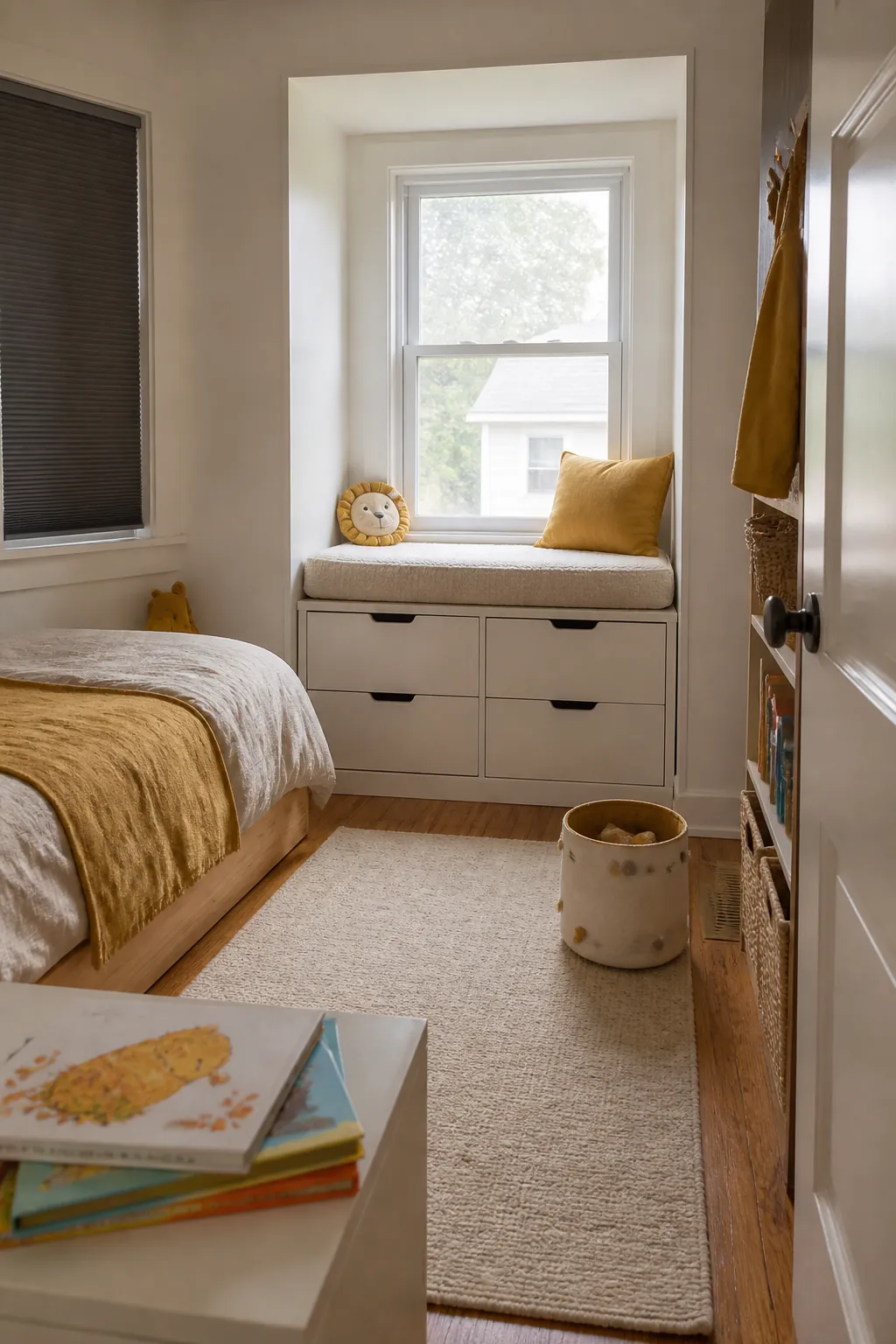
Verify that the sill and any added construction can support the intended use, while preserving window operation, required safety measures, and access to latches. Keep shade cords inaccessible and fit a washable cushion that cannot interfere with the glass or blackout treatment. One basket below can hold the active book rotation; a larger library would turn the perch into congested storage.
Hang Books Face-Out
Young readers recognize covers before they can reliably scan a shelf of spines, so face-out display makes choosing and returning books more independent. A small rotation also contributes color at eye level while leaving the floor open where a conventional bookcase would narrow the exit route.
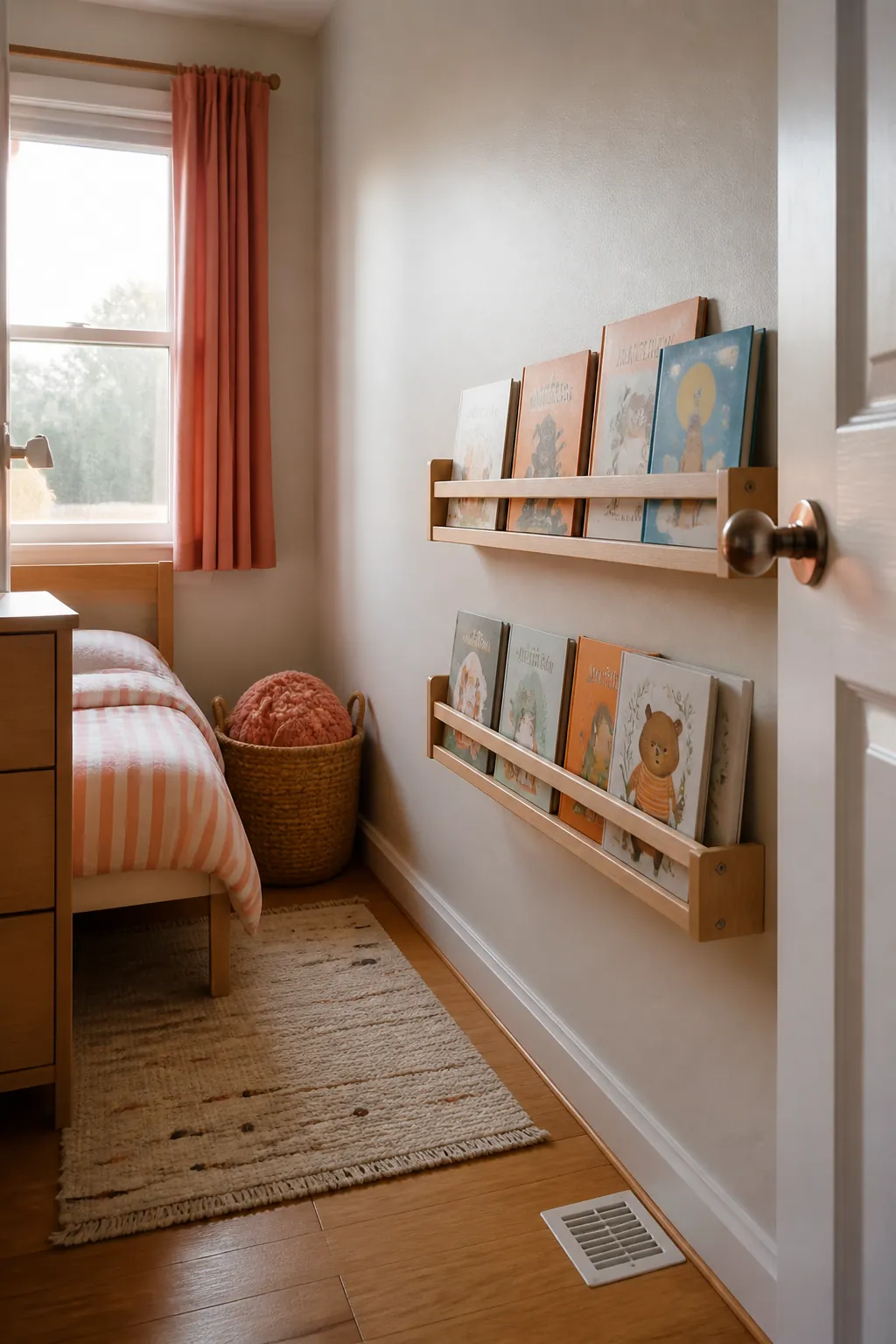
Fix two slim rails securely at a reachable height, keeping their corners and projection outside the bed-to-door path. Load each row loosely enough for one book to slide out without dislodging its neighbors. Store the wider collection elsewhere and exchange a few titles when interest fades, preserving visible empty space as part of the return system.
Build Storage Up to the Ceiling
A full-height wardrobe uses upper wall volume that a low dresser leaves idle, making it possible to gain storage without widening the furniture footprint. Closed fronts calm the view from the bed, an important benefit when clothes, toys, and books already compete for attention. The vertical layout also creates a useful division between child-run routines below and adult-managed reserves above.
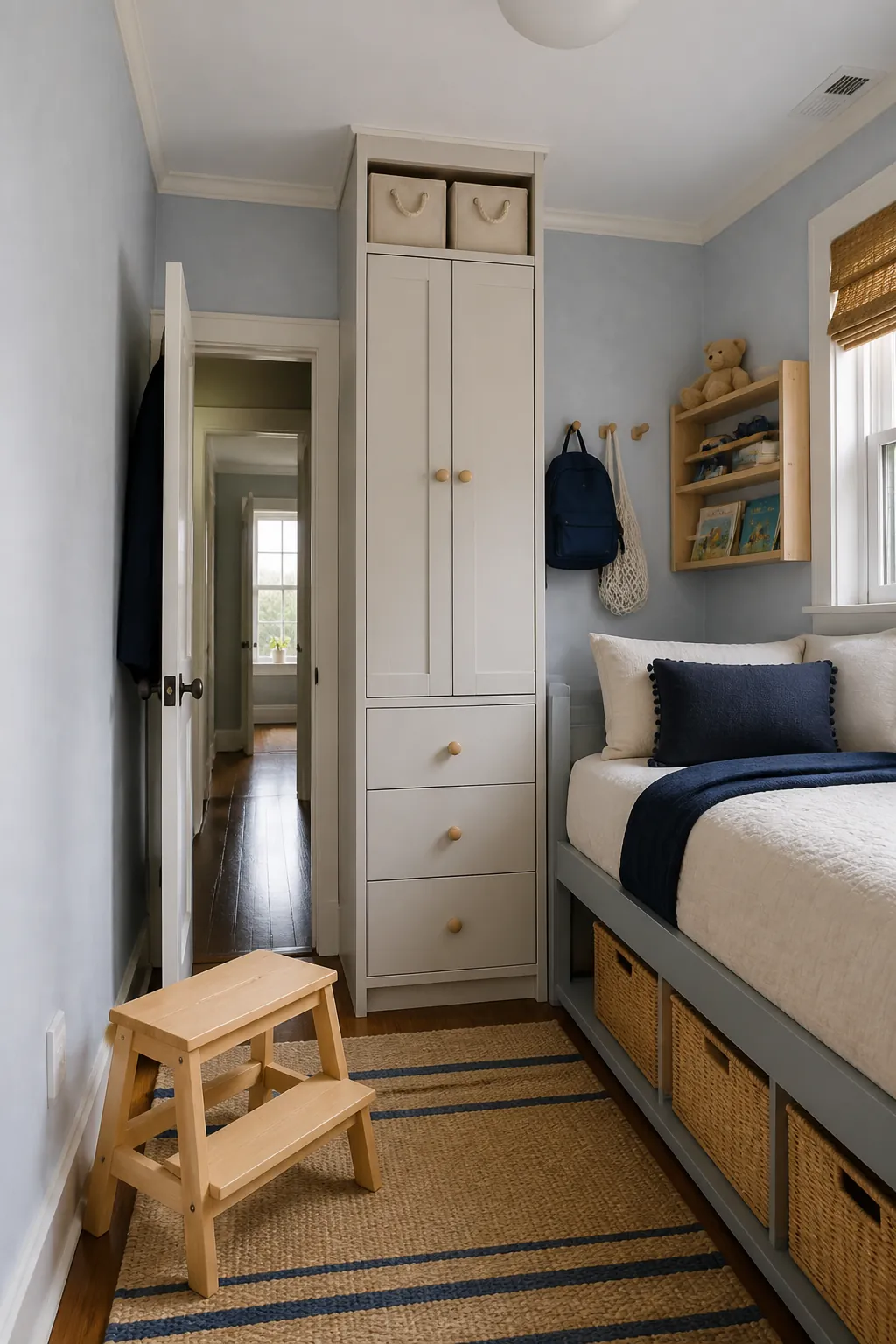
Secure the unit as directed for the furniture and wall, then place daily clothes within easy reach and lightweight seasonal bins near the ceiling. Keep any adult step aid out of the bedroom, and operate every door to confirm that trim, lighting, and the adjacent bed do not restrict access.
Use the Back of the Door
The back of the door is a transition surface: it can hold tomorrow’s outfit or the robe used between bed and bathroom without consuming another wall. Keeping those few items at the threshold can simplify mornings and remove the need for a second clothes chair. This space is valuable only while the door still feels effortless to operate.
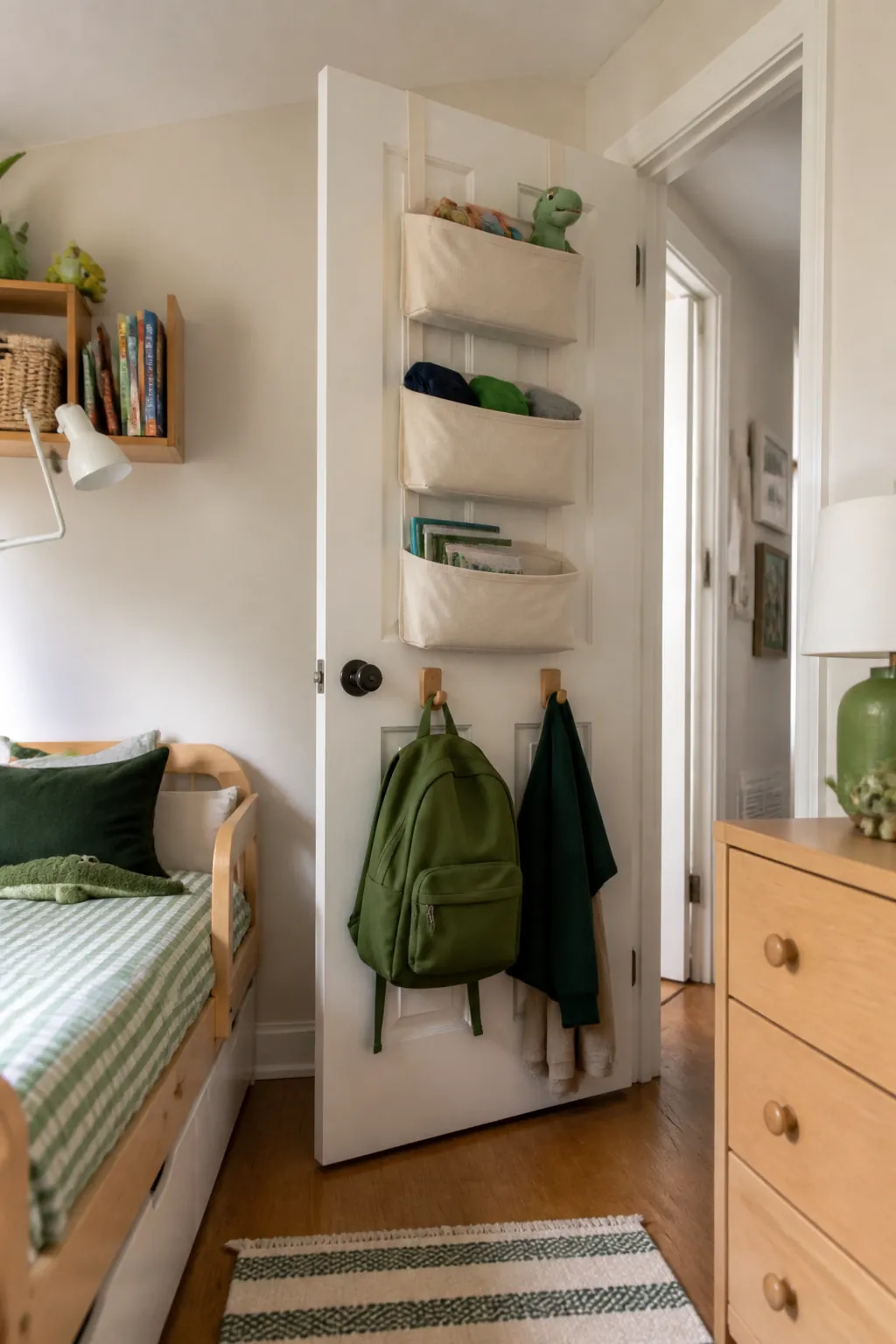
Select shallow fabric pockets or low hooks that cannot reach the handle, frame, or floor when loaded. Add one light bag and a complete outfit, then test the hinges, latch, and full swing from both sides with the child using the door. Remove anything that is not part of the next-day routine; spare capacity here is safer and more useful than maximum storage.
Swap a Wide Dresser for a Tall One
A tall chest exchanges wall width for height, which can release a meaningful strip between the bed and closet in an otherwise blocked layout. The same proportions concentrate the drawers and make restraint, reach, and loading more consequential than they are with a low dresser.
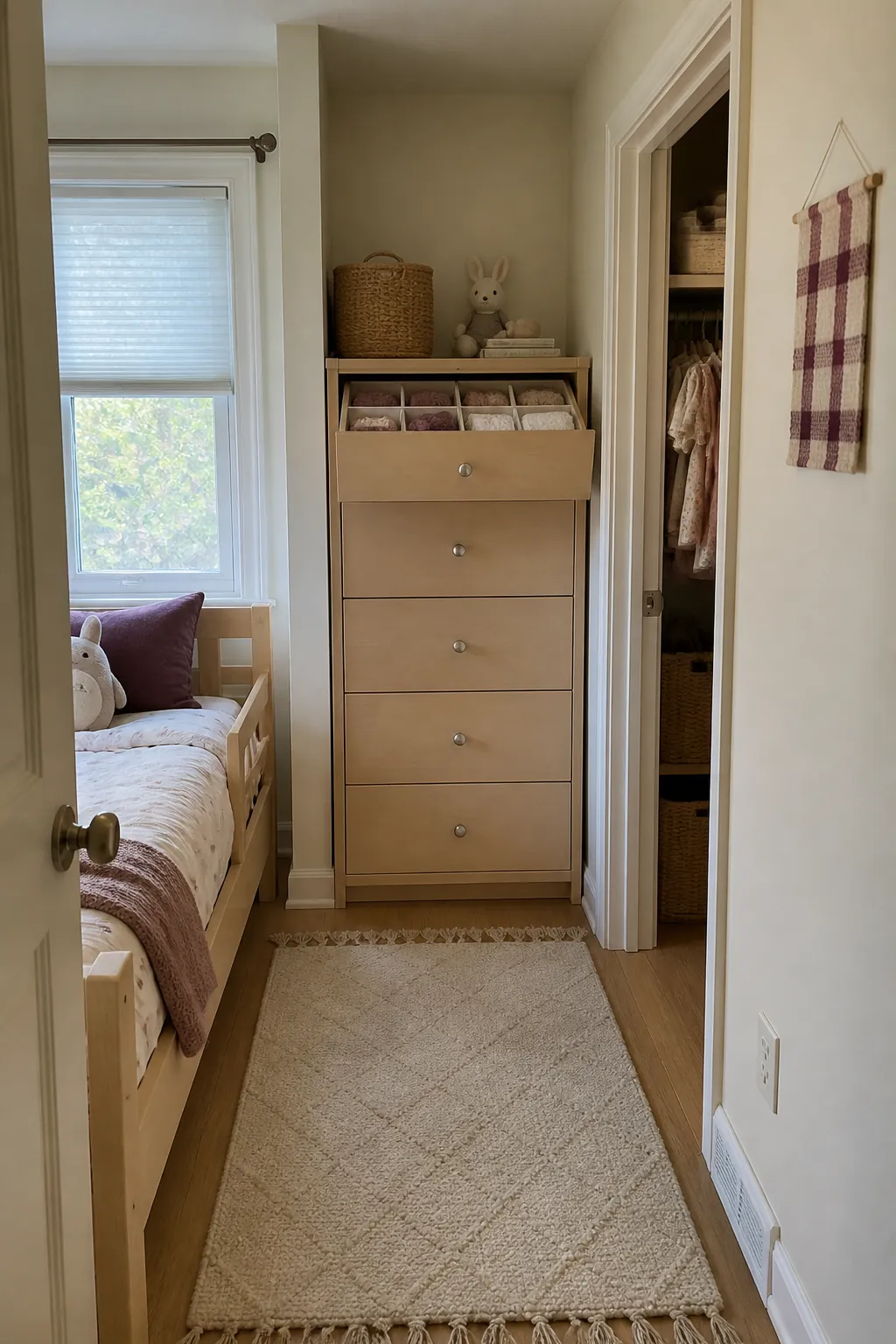
Install the manufacturer’s restraint system with hardware appropriate to the wall, and follow any directions concerning drawer operation or stops. Put everyday clothing in the lower pulls and leave the top free of objects that might invite climbing. Open a normally used drawer while standing in front of it to confirm that the newly gained route still functions during dressing.
Create One Open Play Lane
One continuous patch of open floor can serve building, dressing, stretching, and nighttime movement without being assigned permanently to any of them. That adaptability is more useful in a small bedroom than several leftover gaps between furniture. Treating emptiness as a planned feature also makes it easier to see when the room has accumulated too much.
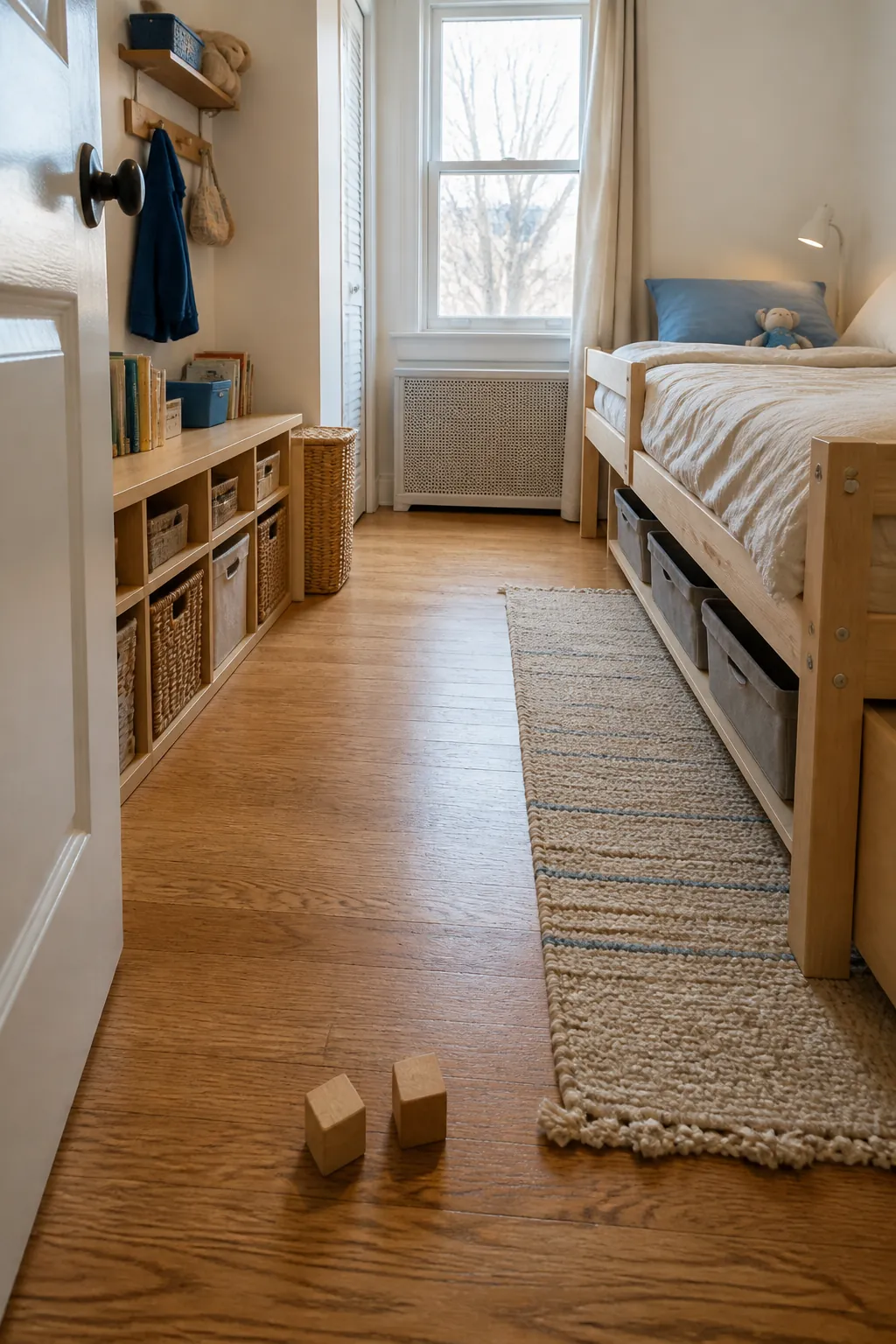
Place storage along the perimeter and park reachable toy baskets at one edge, allowing play to spread across the lane temporarily but giving every piece a nearby return point. Include a quick low-light floor check in the bedtime reset so blocks, open drawers, and dropped clothes do not remain in the route overnight.
Divide Sleep and Play With a Rug
A rug can tell a child where active play begins without inserting a divider between play and sleep. Its outline creates a readable home for blocks and figures, while the bed remains associated with the calmer floor beyond it. This soft boundary is especially useful when the same open lane changes roles several times a day.
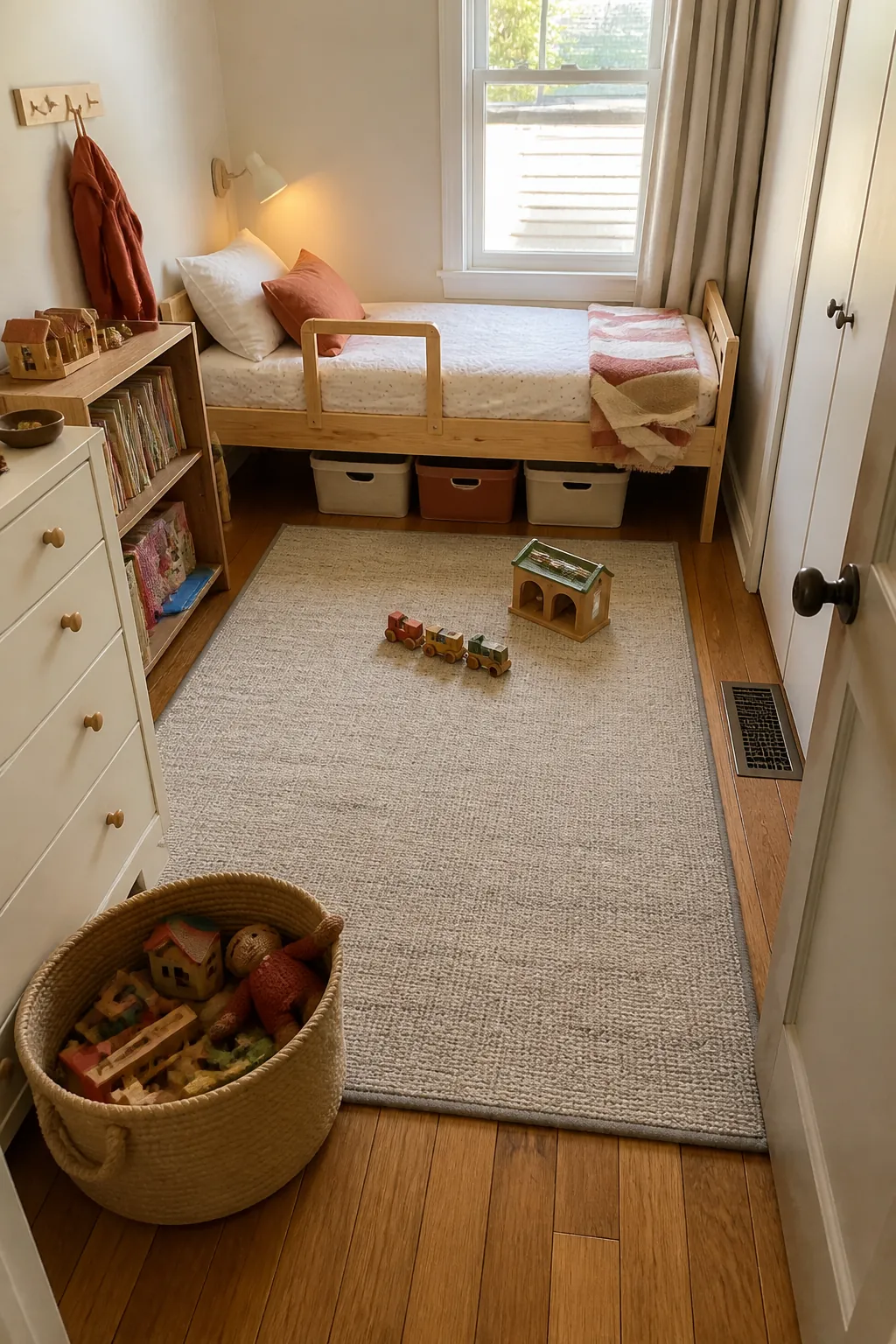
Choose a washable low pile and set the complete shape clear of door arcs, drawers, and rolling storage. Secure the edges as appropriate for the floor, then touch one toy basket to the rug so the relationship between play and cleanup is obvious. If the rug introduces bunching or complicates washing more than the visual zone helps, furniture placement alone may be the simpler boundary.
Add a Fold-Down Activity Desk
A fold-down desk gives drawing a proper horizontal surface while returning the same wall bay to circulation when the activity ends. Closing the panel creates a clear transition from making to bedtime, a benefit a permanently open desk cannot offer in such a compressed room.
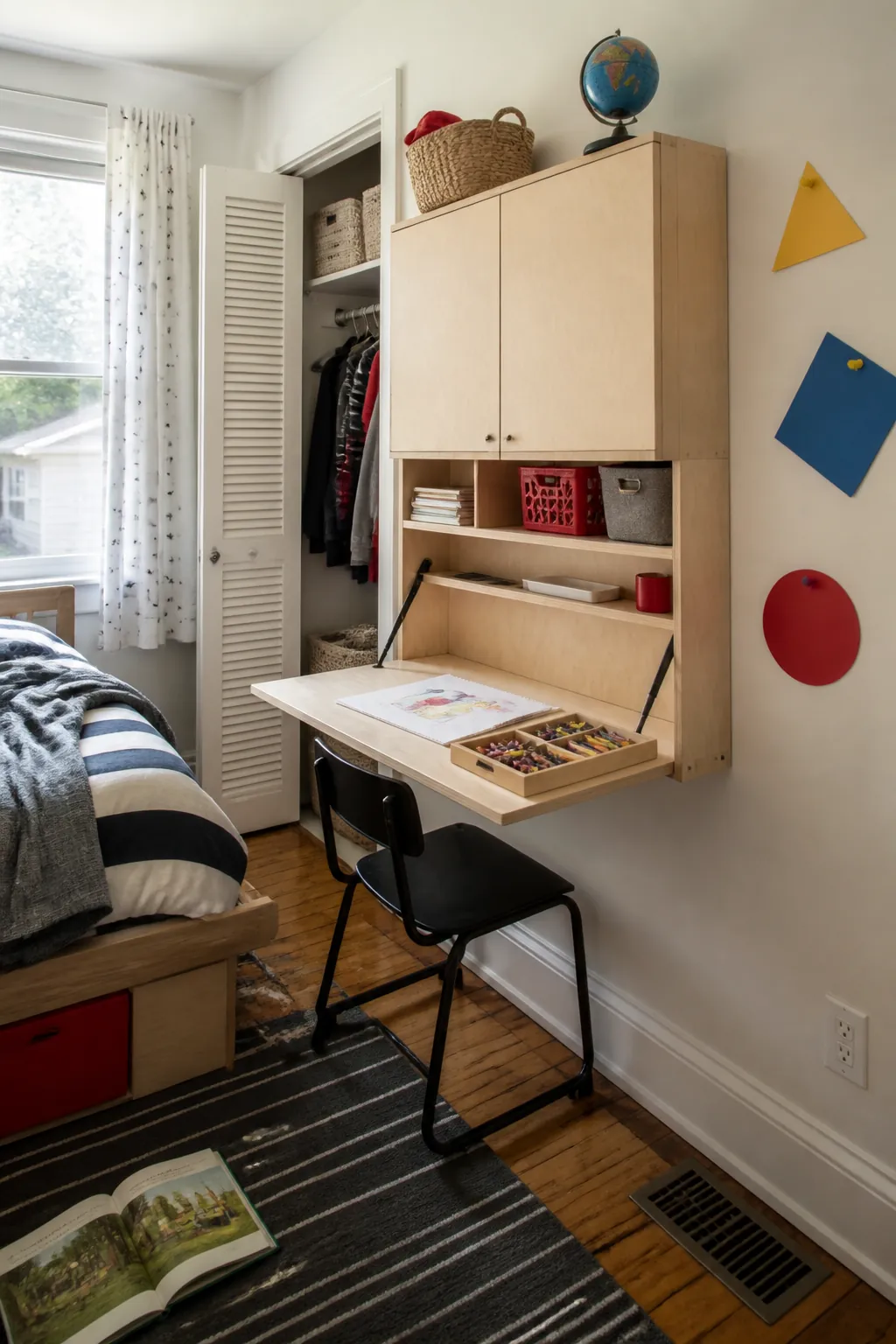
Attach the unit to suitable structure and use hardware, stays, and edges appropriate to a child-accessible moving surface, avoiding exposed pinch points. Open it with the chair occupied to test the closet and walking route rather than judging the closed profile alone. Limit supplies to one divided tray that fits inside, so the desk can actually close without relocating a project across the bedroom.
Choose a Bench That Hides Toys
A bench can replace both a toy box and a dressing chair, which makes its footprint easier to justify at the foot of a small bed. The broad compartment suits train sets and other bulky playthings that fit poorly in shallow baskets. Its convenience depends on whether a child can use the moving lid safely and whether the seat remains free rather than becoming a pile.
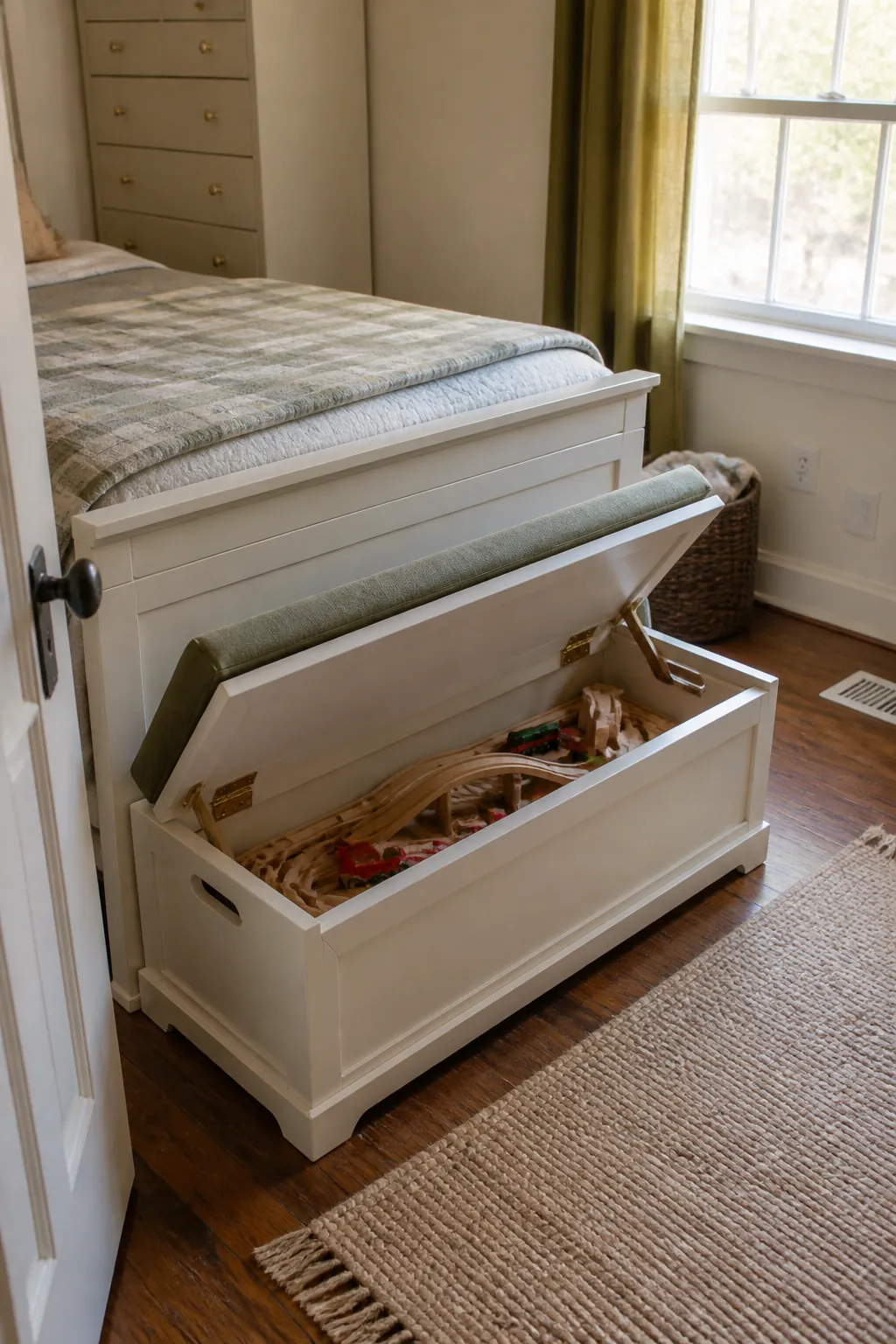
Select a child-appropriate design whose construction, ventilation, and lid hardware address its intended use, then check the open-lid arc against the wall and footboard. Keep the contents loose enough to lift without digging and within a volume the child can reset, or a pair of open baskets will be more practical than the deep compartment.
Make the Closet Child-Reachable
A child-scale closet moves dressing decisions into the storage already built into the room and may remove the need for a separate chest. Independence comes from a short, visible set of choices rather than access to every garment the child owns. Dividing the closet by reach keeps adult-managed seasonal storage from overwhelming the morning routine.
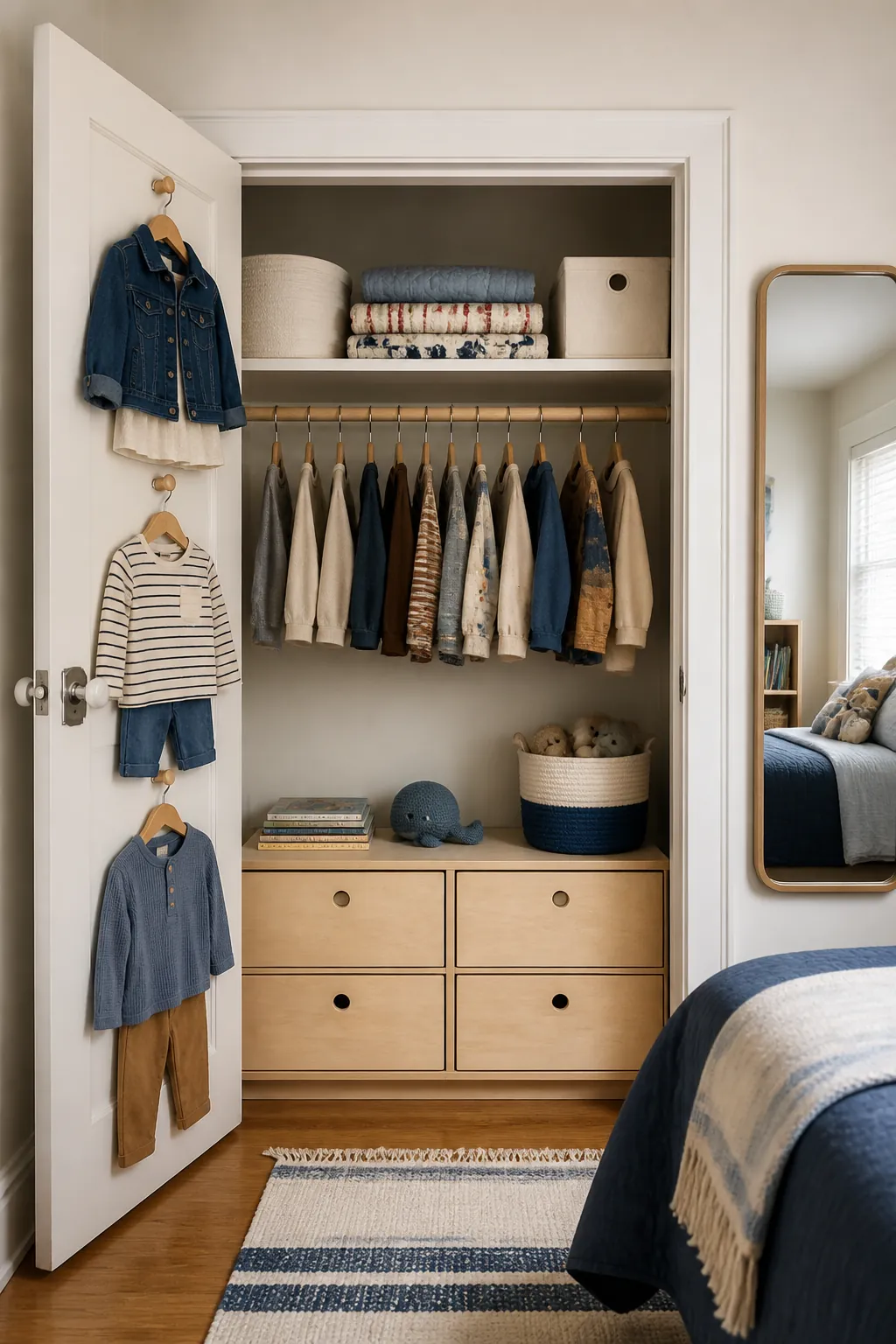
Set one rail at the child’s current reach, add low baskets for folded pieces, and restrict that zone to a manageable run of everyday outfits. Keep the upper shelf adult-only without providing a bedroom step stool, then observe whether clean clothes return to their destinations before adding labels or more containers. A system that still requires constant adult correction needs fewer categories, not greater complexity.
Mount a Peg Rail at Their Height
A child-height peg rail turns the recurring clothes pile into a one-motion routine for pajamas, tomorrow’s outfit, and a fabric bag. Because each item remains visible, the rail works as a simple sequence cue as well as storage, without the effort of opening drawers or closet doors.
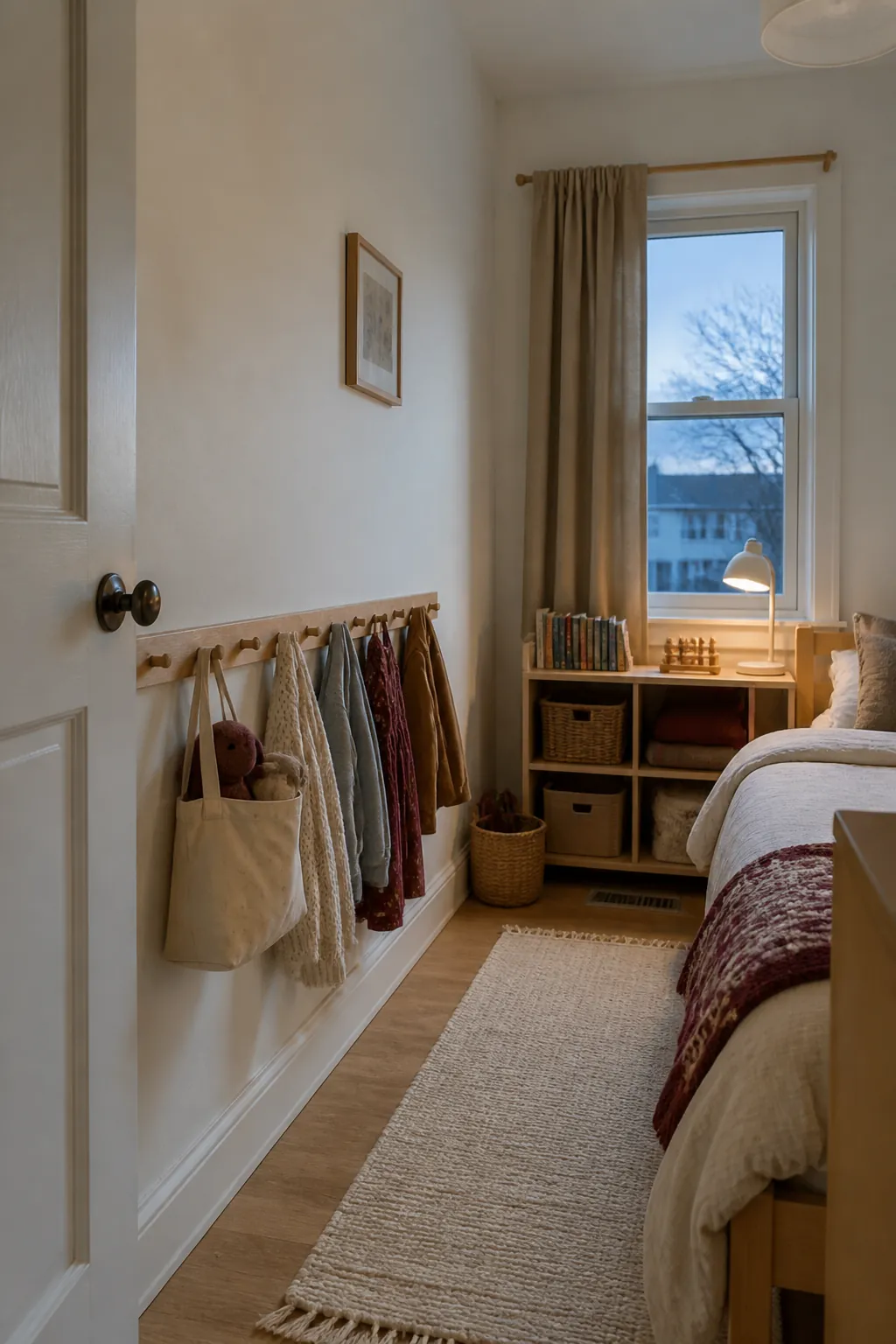
Mock up the hanging drop of the longest garment before choosing a clear wall outside the bed and door paths. Install rounded pegs with fasteners suited to the substrate, leaving enough distance between them for small hands to return one item without dislodging another. Cap the daily load at the available pegs; adding layers defeats the visual cue and turns the rail back into a heap.
Layer Task and Bedtime Lighting
Cleanup, dressing, and reading ask for different light, so one bright ceiling fixture is a poor compromise for the entire evening. General illumination helps find clothing and reset the floor, while a focused source keeps attention on the page once the room is settling. Separate control of those layers turns dimming the room into part of the bedtime sequence.
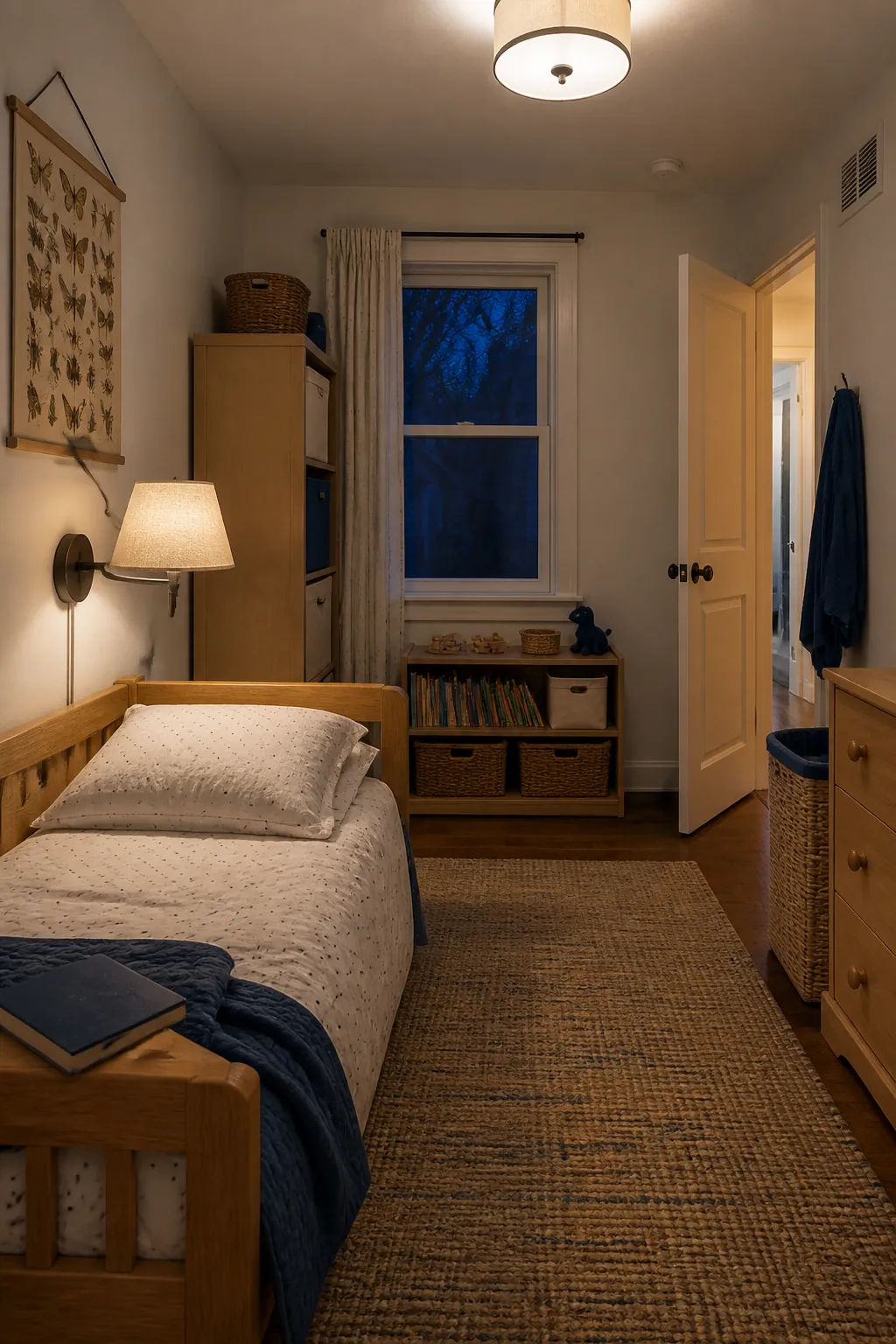
Choose a shaded reading fixture whose placement keeps bright or hot parts and accessible cords away from bedding, while leaving its control safely reachable. Use compatible lamps and dimming equipment, follow the installation requirements, and test the beam from the child’s normal pillow position rather than aiming it in an empty room.
Use Blackout Curtains Without Bulk
Blackout curtains can improve control over early daylight without requiring the bed to move away from the room’s only window. A high, slim track draws the eye upward and occupies less depth than a projecting rod, which matters when the mattress and glass are close. The visual benefit disappears if bulky fabric consumes the window recess whenever it is open.
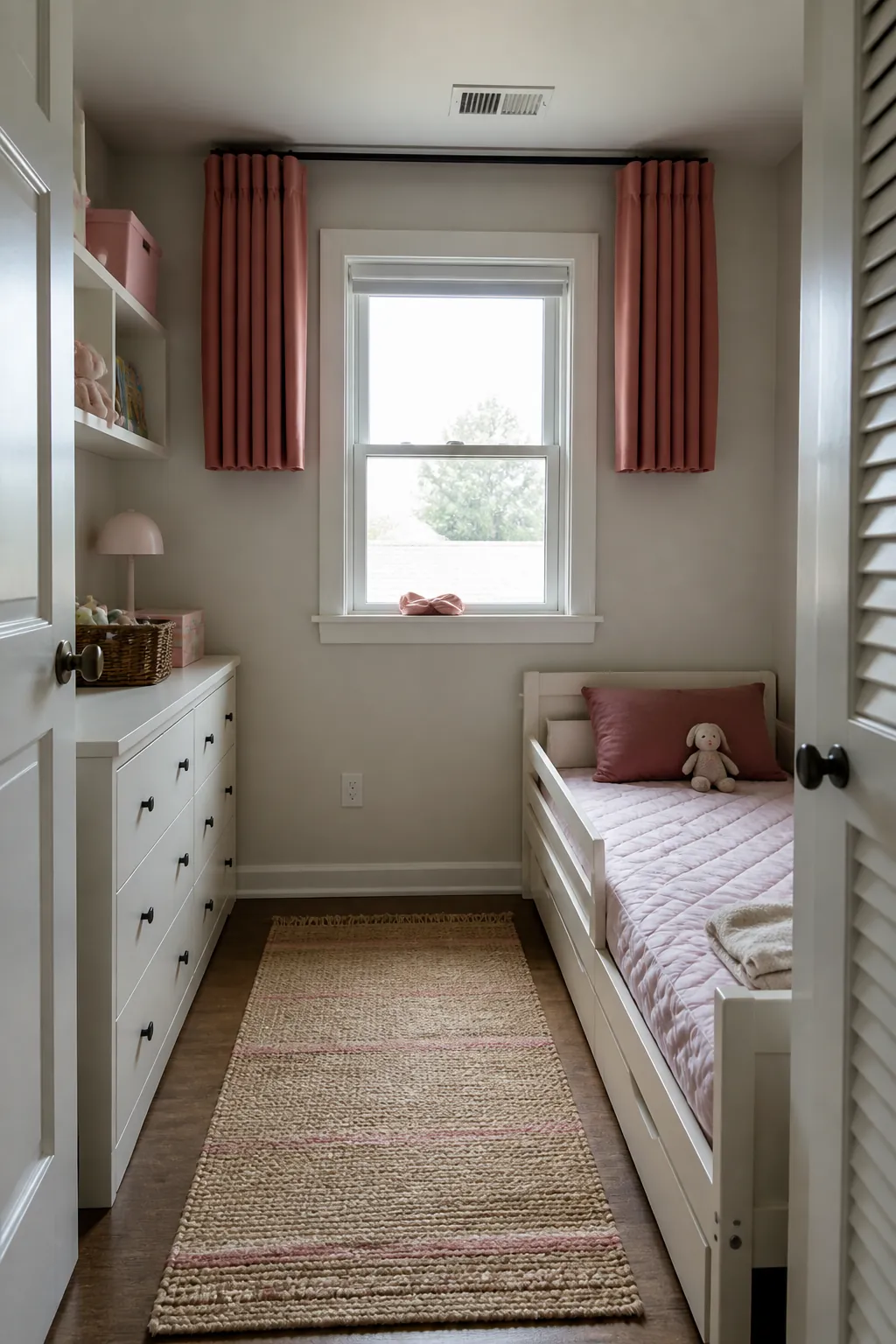
Select a child-safe operating method and keep cords inaccessible, using enough track width for the panels to stack beside rather than over the glass. Maintain separation from heaters, vents, lamps, and the bed, and confirm that latches and any needed window opening remain usable. A washable, accurately hemmed panel is preferable to extra pooling fabric, which adds dust and another obstacle at floor level.
Give One Wall a Calm Color
One muted blue-green plane can give the bed a distinct zone and add visual depth without occupying a single inch of floor. In a room already working hard, color is often a better source of personality than another shelf, banner, or collection.
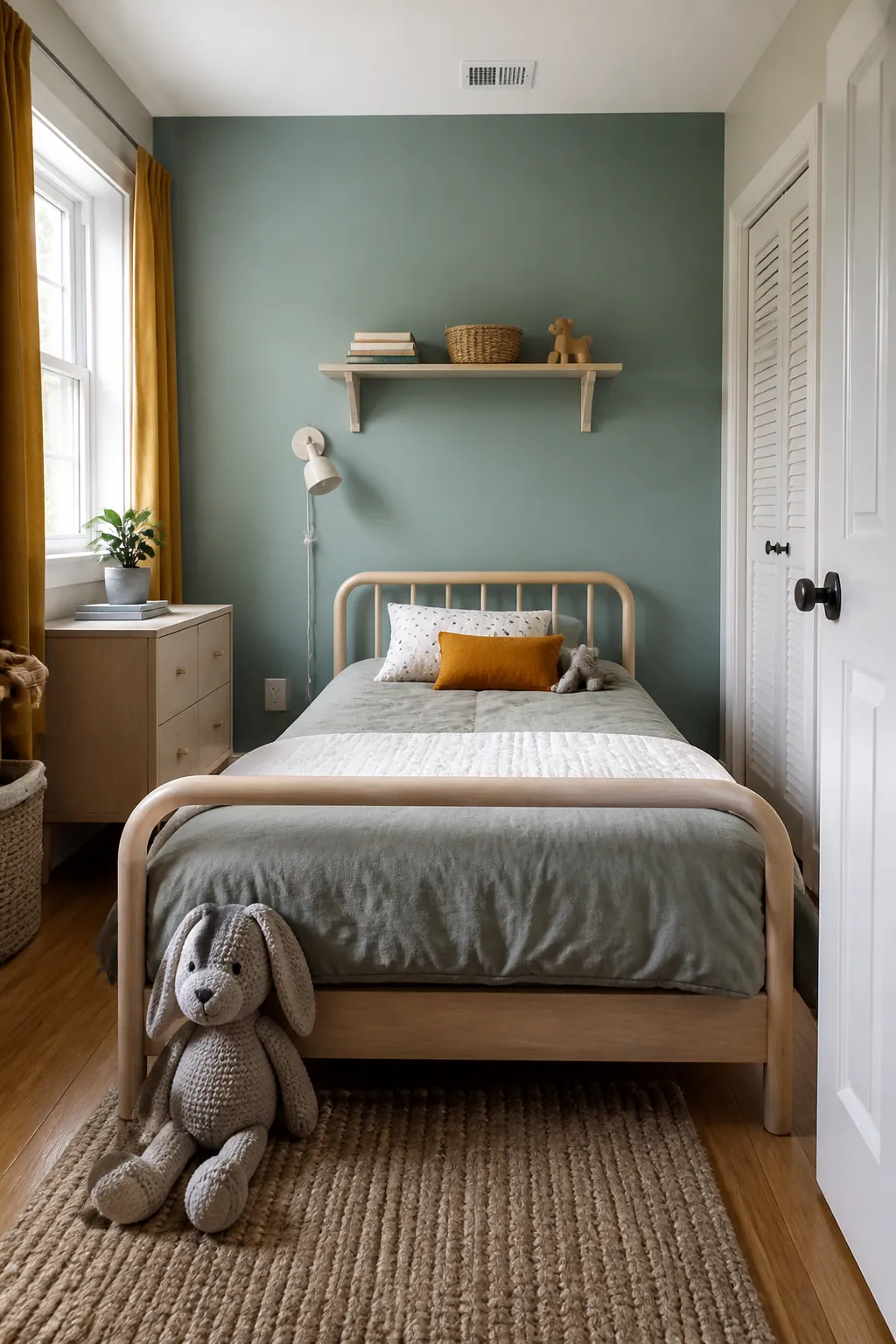
Apply generous samples behind the bed and watch them in morning daylight, ordinary playtime, and the actual bedtime lamps before choosing the undertone. Let three neutral walls preserve brightness, using one ochre textile or toy to warm the cooler field. Prepare the surface and use a paint suited to the room, then keep the adjacent shelf spare enough for the new backdrop to remain visible.
Keep Favorite Toys in Rotation
A smaller visible selection reduces the time spent searching and makes it easier to finish one kind of play before starting another. Rotating the reserve can renew attention without requiring new purchases or a larger storage unit. Broad categories such as blocks, figures, and making supplies are more durable than an elaborate adult labeling scheme.
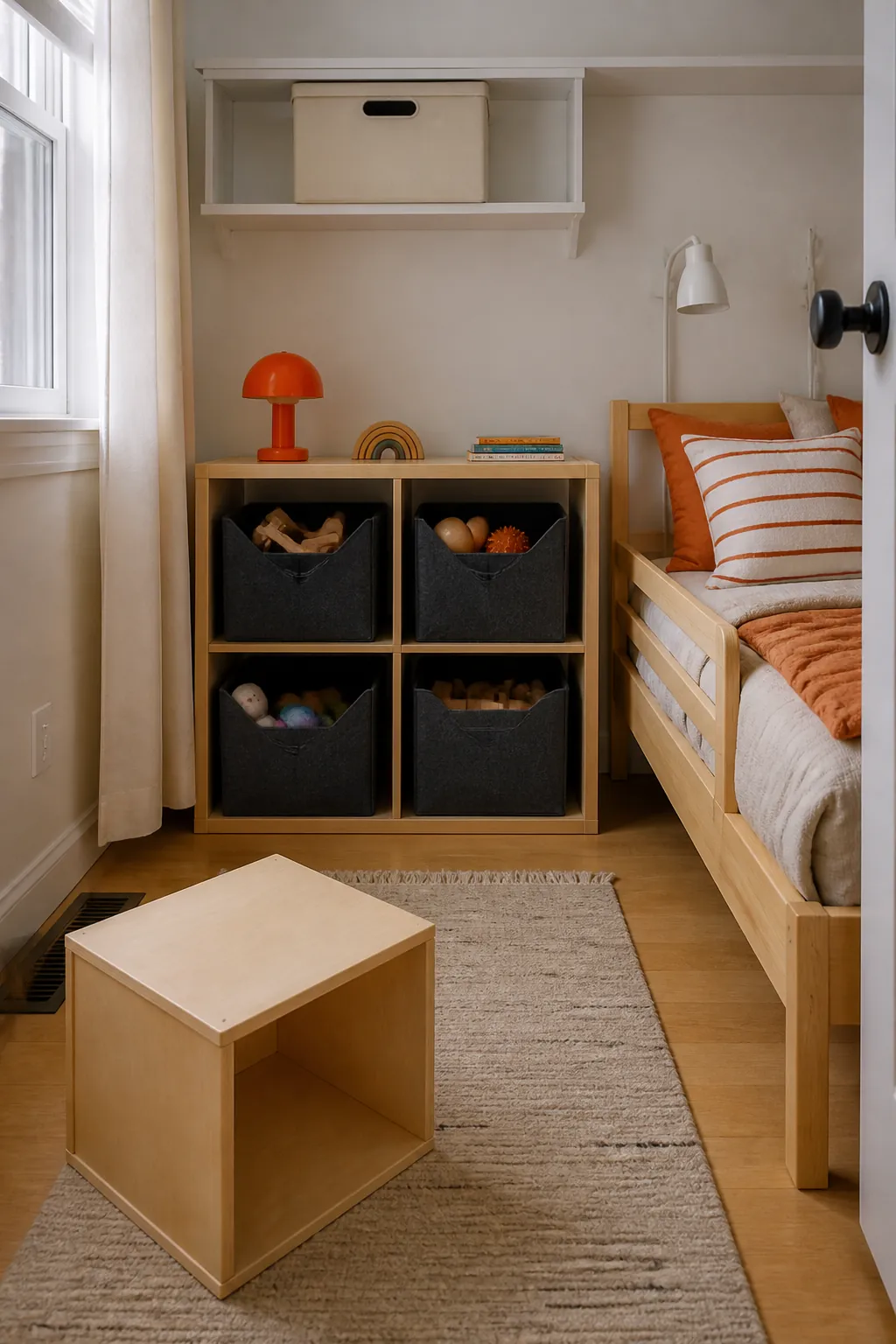
Use four reachable baskets and preserve part of one cube as landing room, stabilizing or securing the low unit as its design and use require. Store the reserve elsewhere and exchange only a small group at a time, letting the child’s actual play reveal which category deserves more space.
Leave Growth Room Beside the Bed
The last open strip beside a young child’s bed is not necessarily unused space; it may be the only place a longer frame or later study surface can fit. Reserving that option protects otherwise useful storage from becoming obsolete at the next room transition. In the meantime, the unfilled area contributes to play and caregiver access.
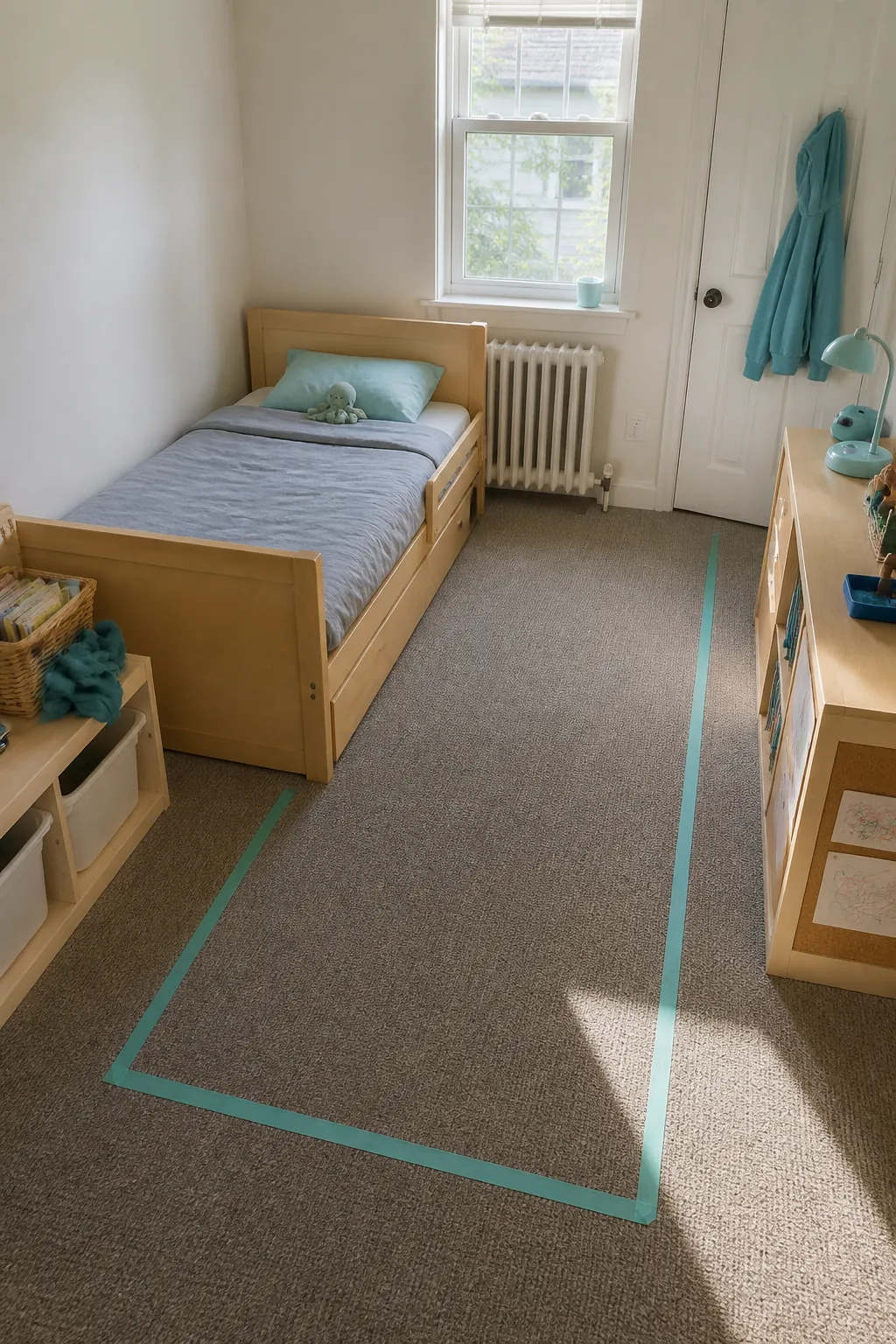
Outline a plausible future bed with its headboard, frame, and opening storage, not just the mattress dimensions. Try that footprint against the door, radiator, outlets, closet, and the space needed to change sheets. Recheck the assumption before any purchase, but avoid filling the reserved area now with a cabinet whose only virtue is fitting the temporary gap.
Anchor Tall Furniture Safely
Tall furniture changes the room’s risk as well as its storage capacity, particularly when drawers, shelves, or a nearby window invite climbing. A restraint belongs in the layout and installation plan from the beginning; it is not a cosmetic detail to add after the unit has been filled.
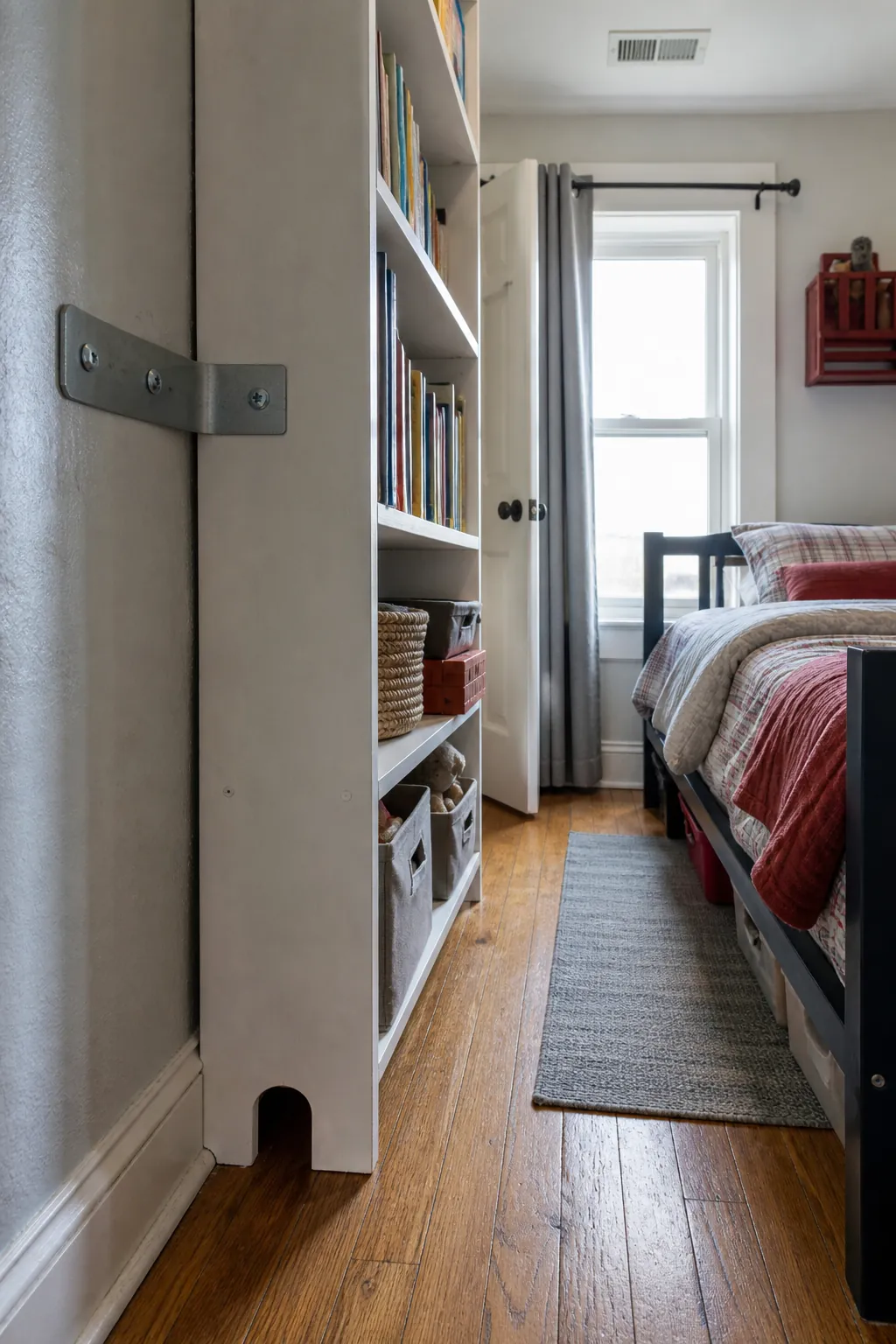
Follow the furniture maker’s anchoring directions and select hardware appropriate to the wall, resolving any baseboard gap without leaving the unit tilted. Place heavier belongings low and keep the furniture away from windows or objects that encourage access to its upper levels. Inspect the connection after moving the piece or changing its load, and install a new suitable restraint rather than reusing damaged hardware.
Finish With a Five-Minute Reset Zone
A reset is easier when the room asks for a few obvious decisions: dirty clothing, tomorrow’s outfit, current books, and loose toys. Grouping those destinations near the exit matches the order in which a child leaves play and prepares for bed. The useful measure is independent completion, not a perfectly styled room or a literal race against a timer.
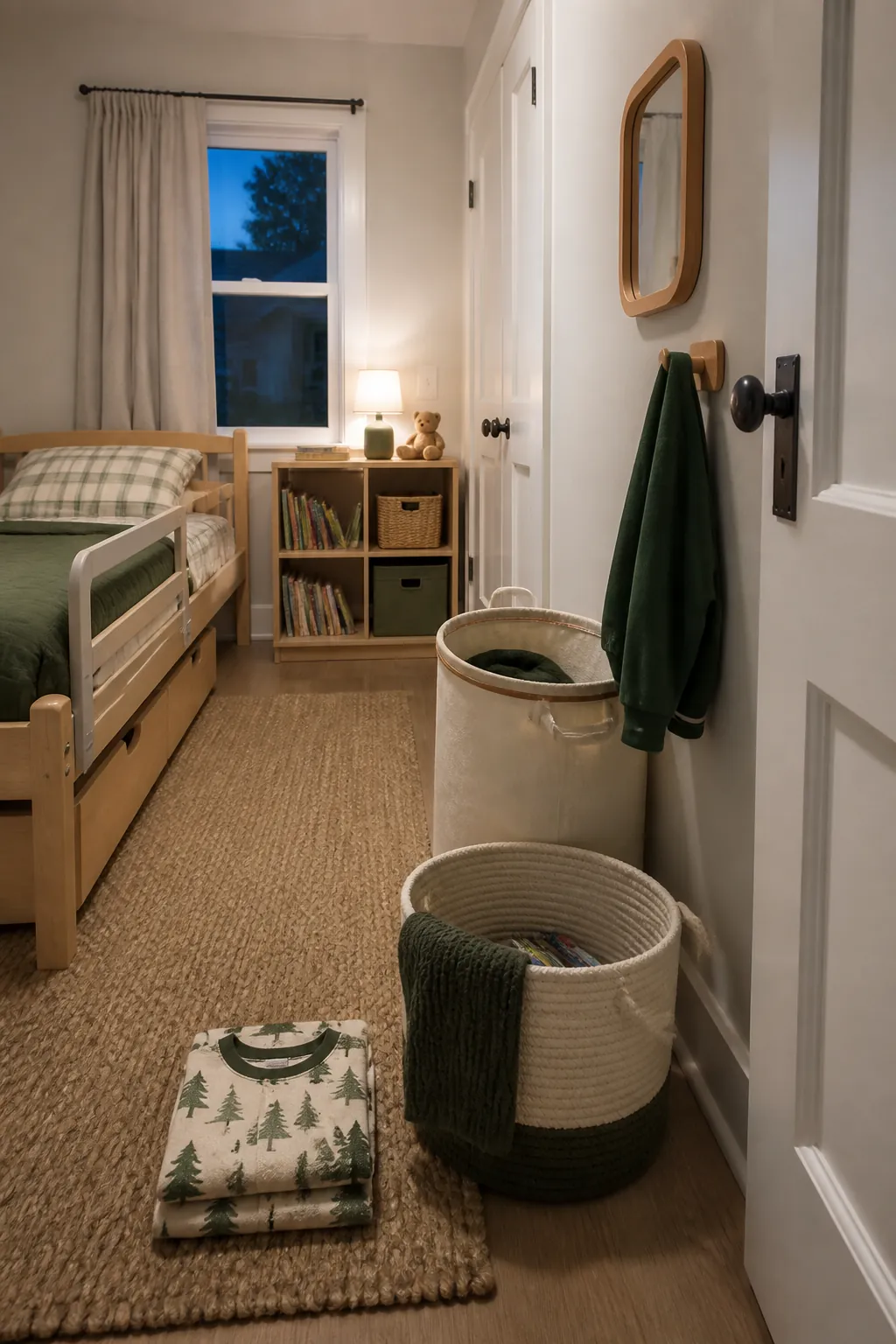
Place an open hamper, landing basket, and low hook entirely outside the door swing, choosing containers that accept an item in one motion. Practice with the belongings that actually collect at night; repeated misses show that a destination should move closer or the routine should lose a category.