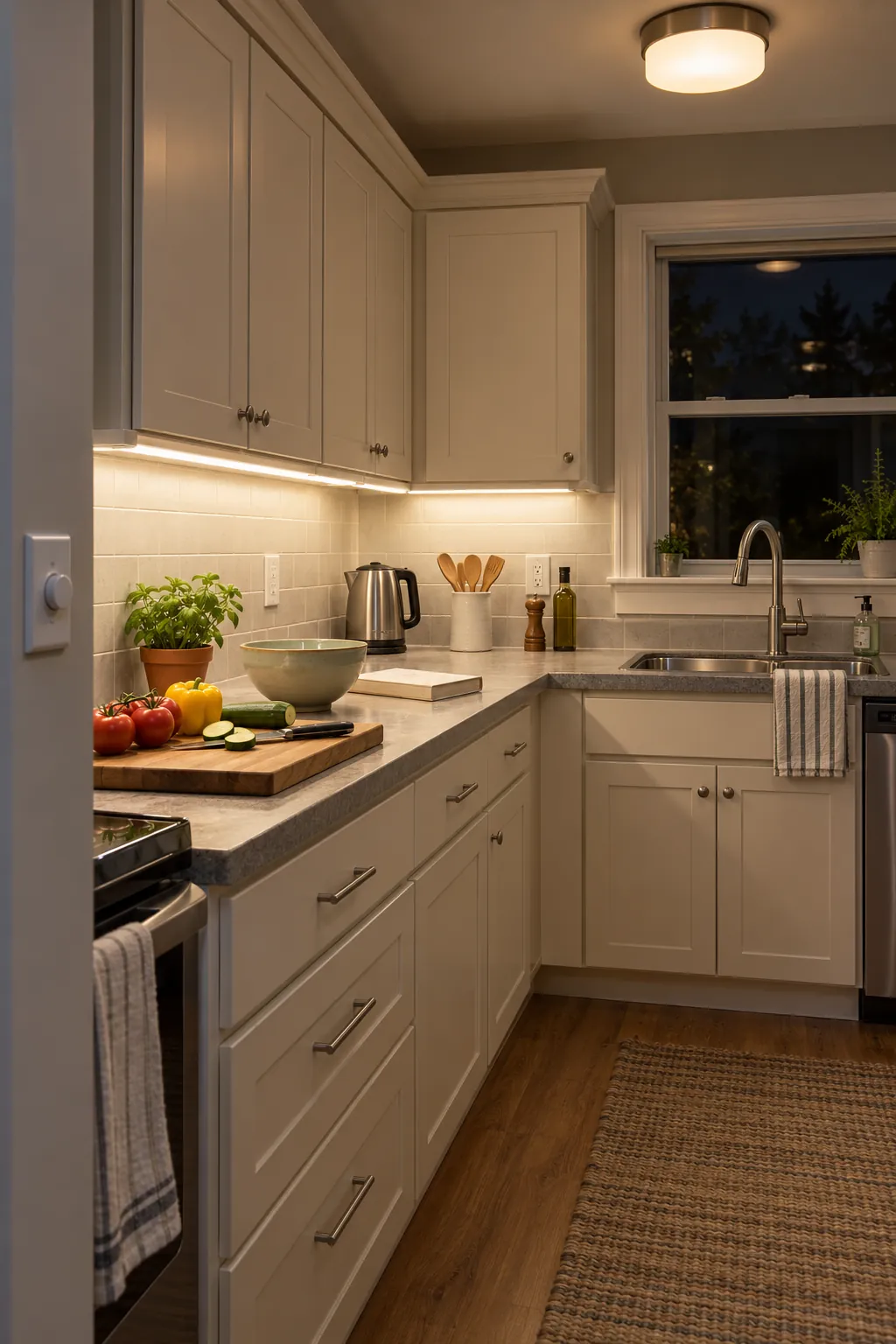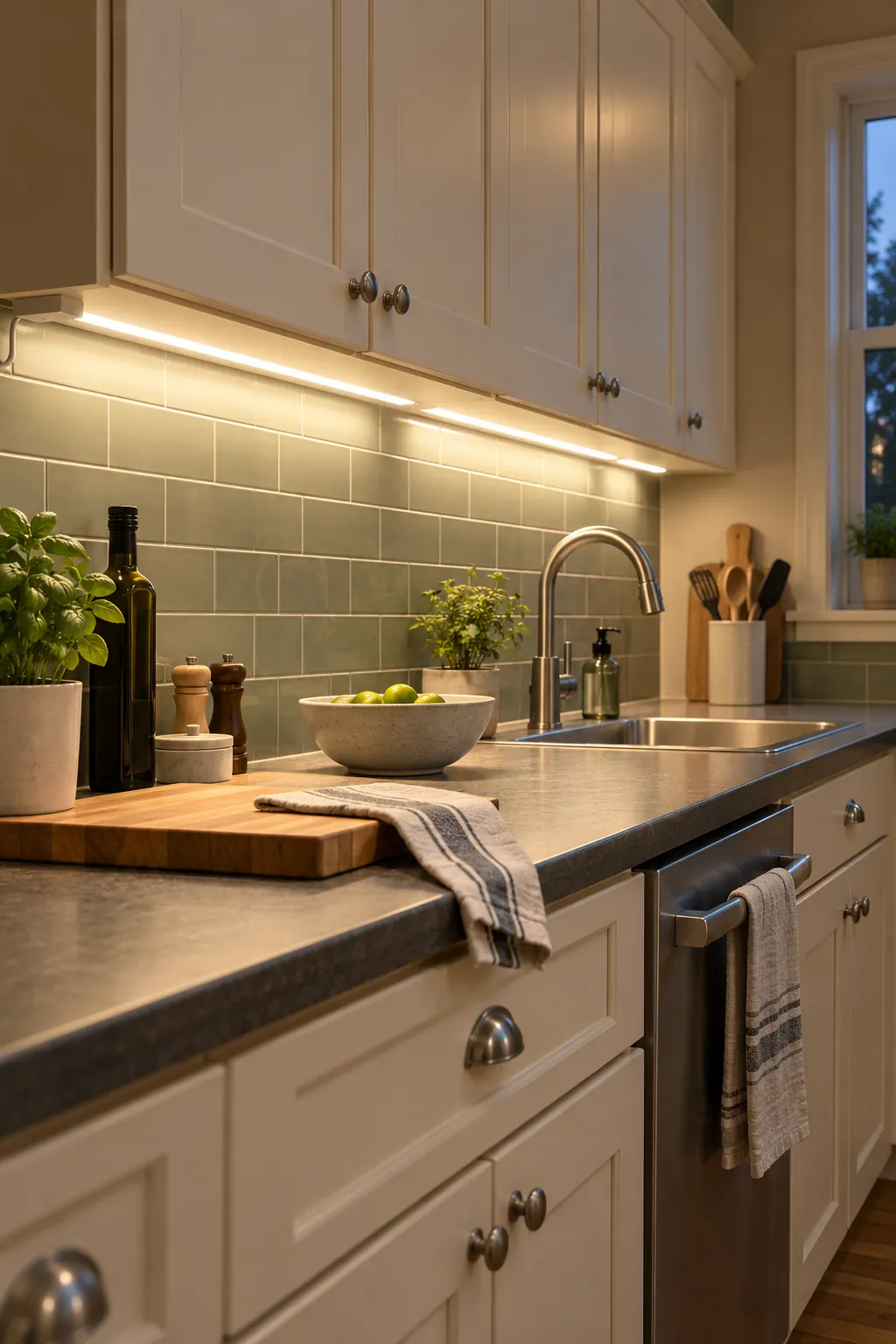
Under cabinet lighting can be a simple afternoon upgrade or a small electrical project. The difference is not only the fixture price. Power location, switch control, driver access, visible cords, backsplash condition, and cabinet layout decide which system is truly cheaper.
Plan the light first and the wiring second. A clean hardwired installation can be worth the labor during a remodel, while a plug in system often gives the best value in a finished kitchen or rental.
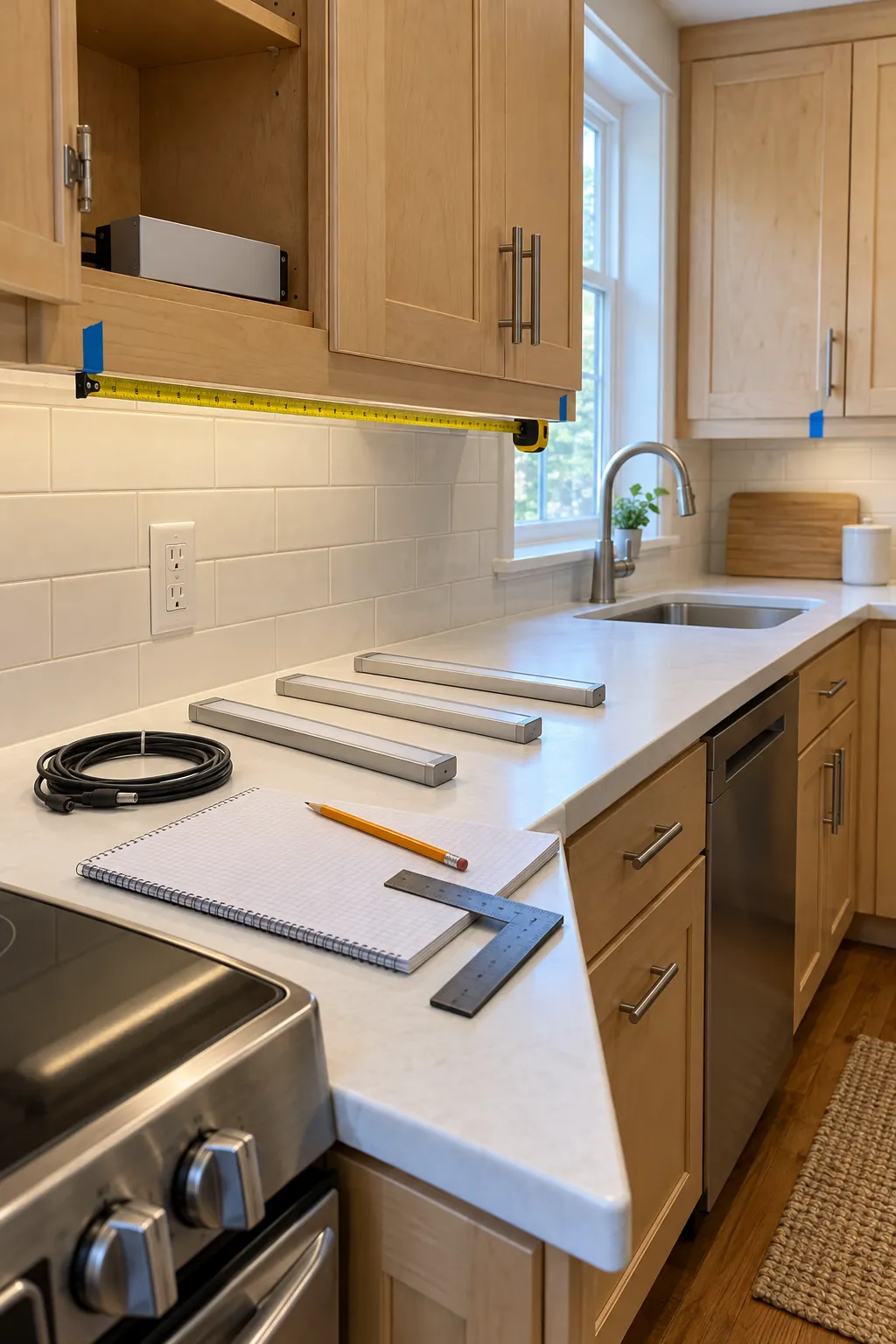
Map every cabinet run and available power source
Measure the usable underside of each cabinet run, then mark sinks, ranges, windows, corner gaps, and existing receptacles. Decide whether separate runs should switch together. Also choose an accessible location for each driver or transformer because this component may need replacement before the LEDs do.
Do not route a cord across a sink, cooking surface, drawer path, or sharp cabinet edge. Electrical rules vary by location, and kitchen counter circuits have special requirements. Ask a qualified electrician when a project adds fixed wiring, changes a circuit, or places equipment near wet areas.
Choose plug in lights for a fast reversible upgrade
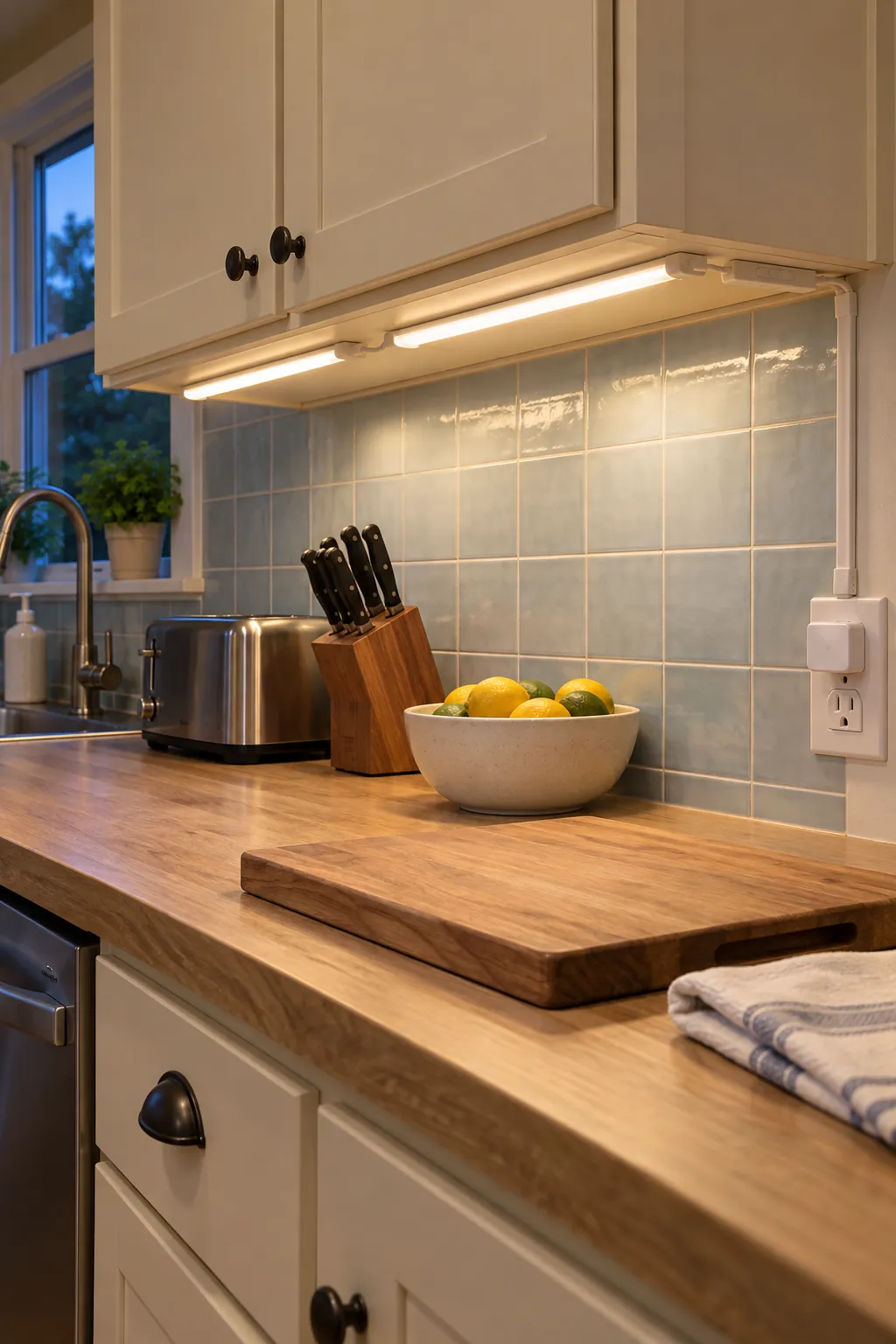
Plug in under cabinet lighting works well when a receptacle is close, the backsplash is finished, and you want to avoid opening walls. Good kits can link several bars or strips to one adapter. A built in switch, wireless control, or switched receptacle can make daily use convenient.
The tradeoff is wire management. The adapter can occupy a needed outlet, and cords may remain visible at cabinet breaks. Use the listed clips, channels, and connectors for the product. Never cut a plug from a fixture or improvise a line voltage connection unless the manufacturer specifically approves that conversion and a qualified person performs the work.
Use hardwired lights when walls are open or control matters
Hardwired under cabinet lights can operate from a familiar wall switch and keep counter receptacles free. Low voltage systems may use a remote driver in an accessible cabinet or utility space, with smaller cable feeding the light channels. Direct wire fixtures can connect to approved boxes or cables as their instructions require.
Hardwiring is usually most economical before cabinets and backsplash are complete. In a finished room, fishing cable, adding boxes, repairing walls, and matching tile can raise the under cabinet light installation cost. The transformer, connections, and junctions must remain accessible rather than being buried behind permanent finishes.
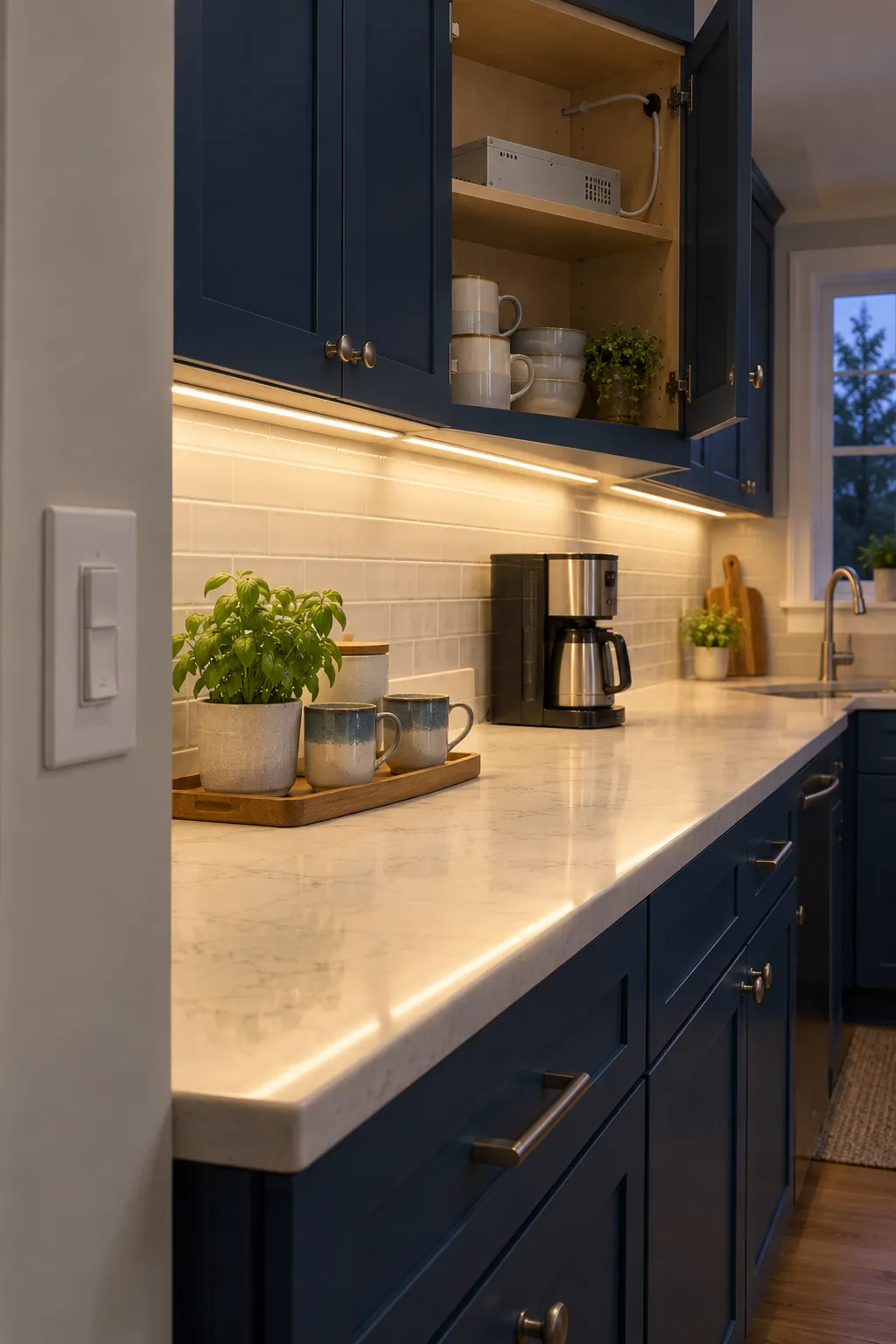
Buy useful task light instead of maximum brightness
Kitchen task lighting brightness should be even across the preparation surface without producing harsh reflections. Place the light toward the cabinet front so your body casts less shadow on the counter. A diffuser softens visible LED points on glossy stone and polished backsplash tile.
Warm white versus neutral white kitchen lights is a practical finish decision. Warm light often suits wood and cream cabinets. Neutral light can help food preparation and works well with gray or white finishes. Compare samples in the actual kitchen because the same color temperature can look different beside painted walls and daylight.
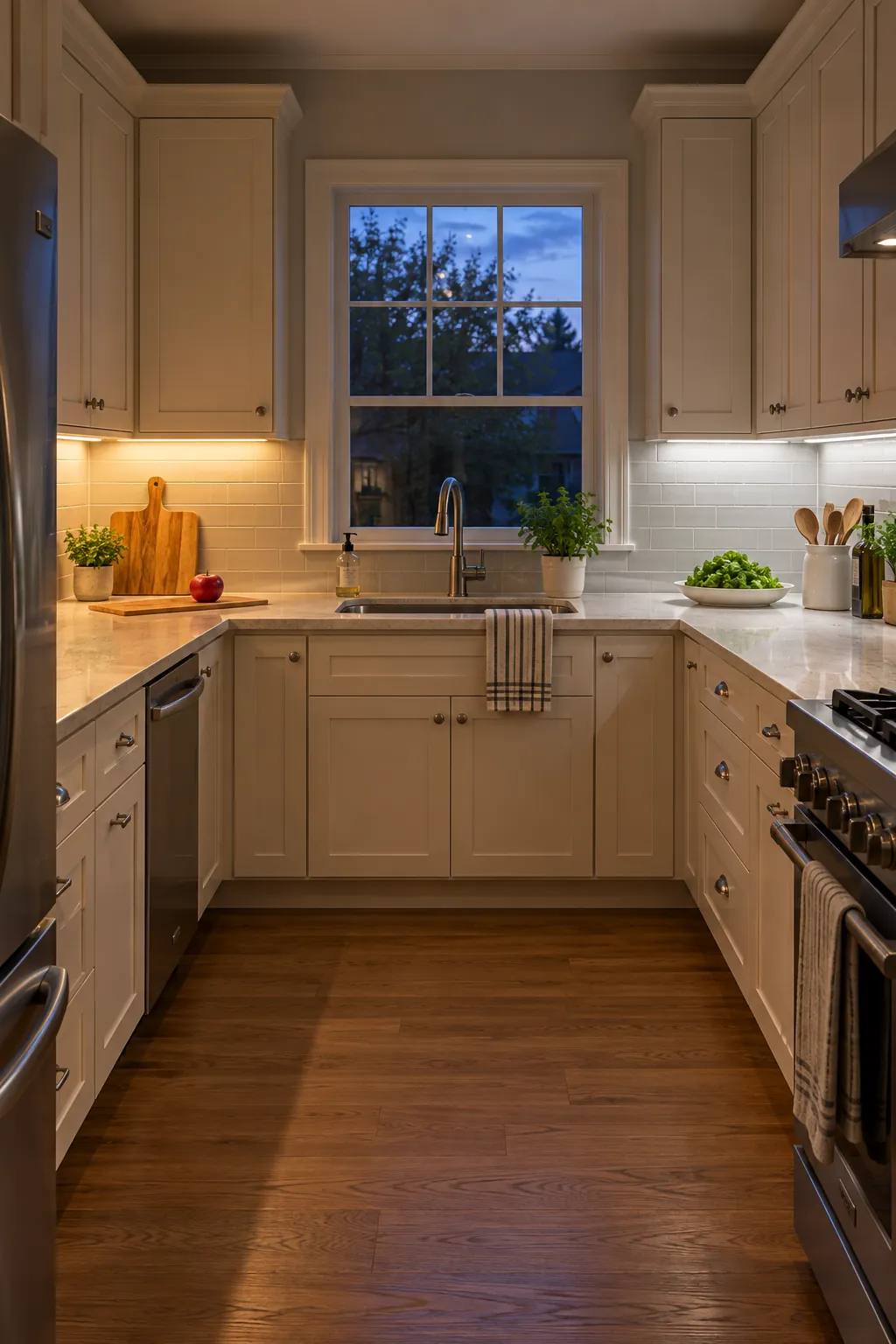
Match strips bars or pucks to the cabinet shape
LED light bars for kitchens provide a finished housing, predictable linking, and simple replacement. LED strips create continuous light and fit long irregular runs, but they need a suitable channel and diffuser for protection and a smooth appearance. Puck lights make pools of light that can suit display cabinets but may leave dark gaps across a worktop.
Battery operated cabinet lights are useful where no cable route exists or where the light is used briefly. They are less convenient for long daily task lighting because charging or battery replacement becomes part of the routine. Before buying, confirm the switch method, dimming range, connector lengths, replacement parts, and whether one driver can support the planned total load.
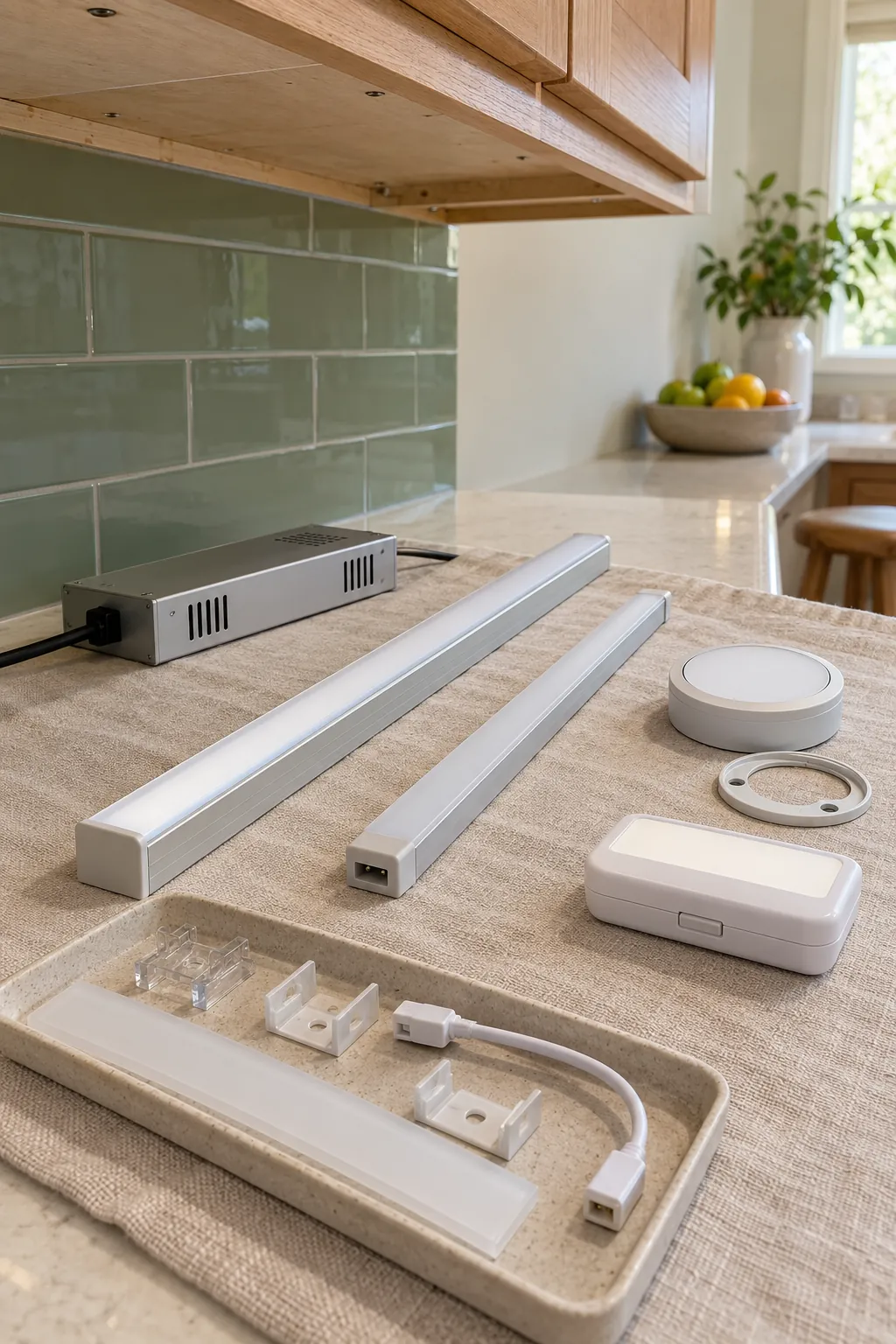
Compare the complete installed cost and future service
A plug in budget includes fixtures, adapter, linking cables, cord channels, clips, control, and any outlet space the adapter occupies. A hardwired budget includes fixtures, compatible driver, dimmer or switch, approved boxes and cable, electrician labor, permits when required, and finish repair. Price the complete system rather than one light bar.
Kitchen light fixture energy use is usually small with efficient LEDs, so reliability and control often matter more than a tiny watt difference. Keep drivers ventilated and accessible, record compatible replacement parts, and avoid a proprietary system that becomes useless when one connector fails.
Choose plug in lighting when reversibility and low installation cost matter most. Choose hardwired lighting when the kitchen is already open for work, wall switch control matters, and a qualified installation fits the budget. Either system succeeds when the counter receives even light and every connection remains safe and serviceable.