
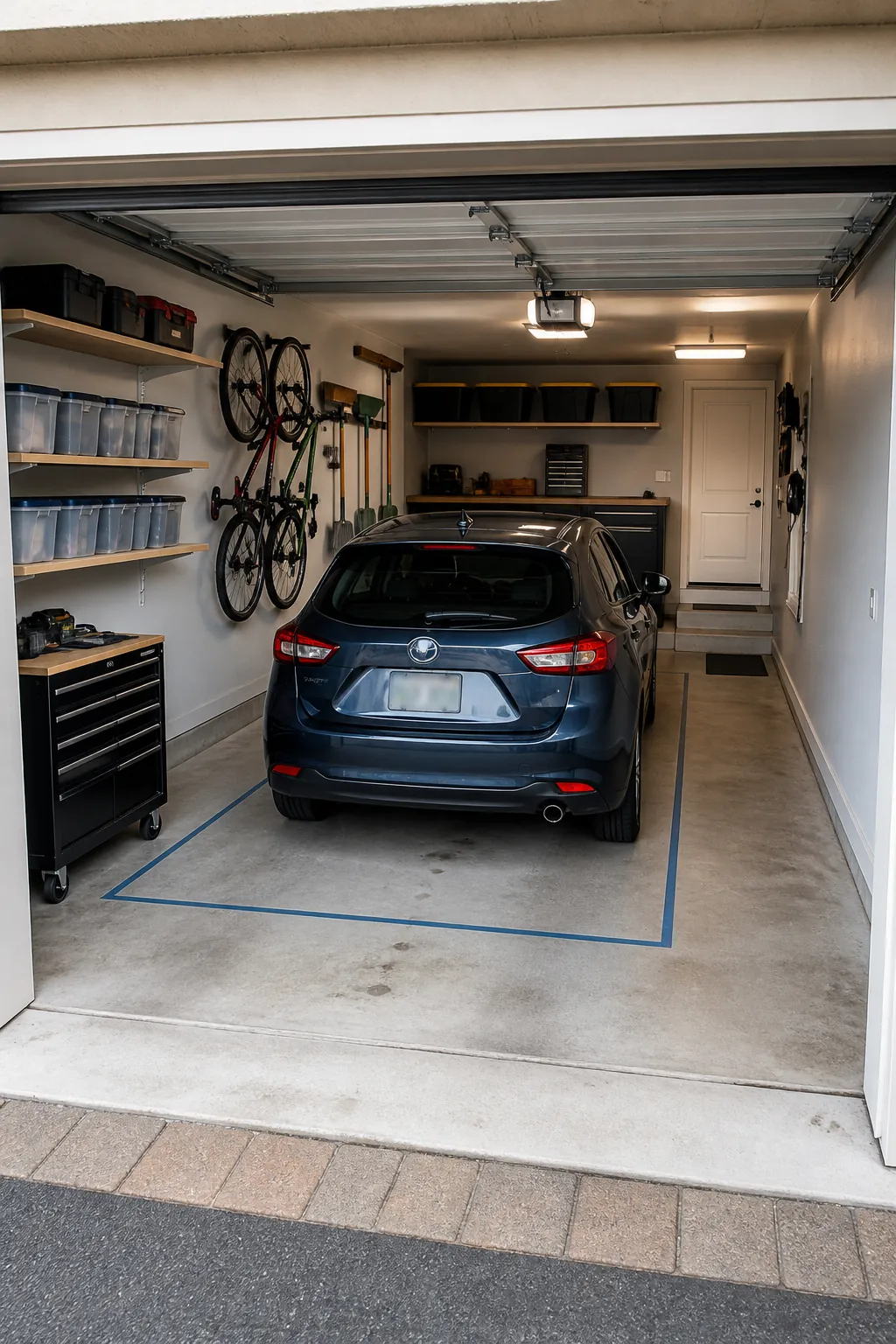
A small garage is usually not short of cubic feet; it is short of reachable cubic feet. Deep shelves swallow parts, bikes lean into car doors, and every project begins by moving three unrelated piles. These 25 small garage organization ideas prioritize retrieval, parking clearance, and a reset you can repeat.
Before mounting anything, identify wiring, plumbing, door tracks, fire-rated surfaces, and the manufacturer’s fastening requirements. Keep exits, panels, appliances, vehicle clearance, and garage-door hardware open. Follow local fire guidance and product instructions for fuels, batteries, chemicals, and charging; organization never makes incompatible or damaged products safe.
Mark the Parking and Door Footprint
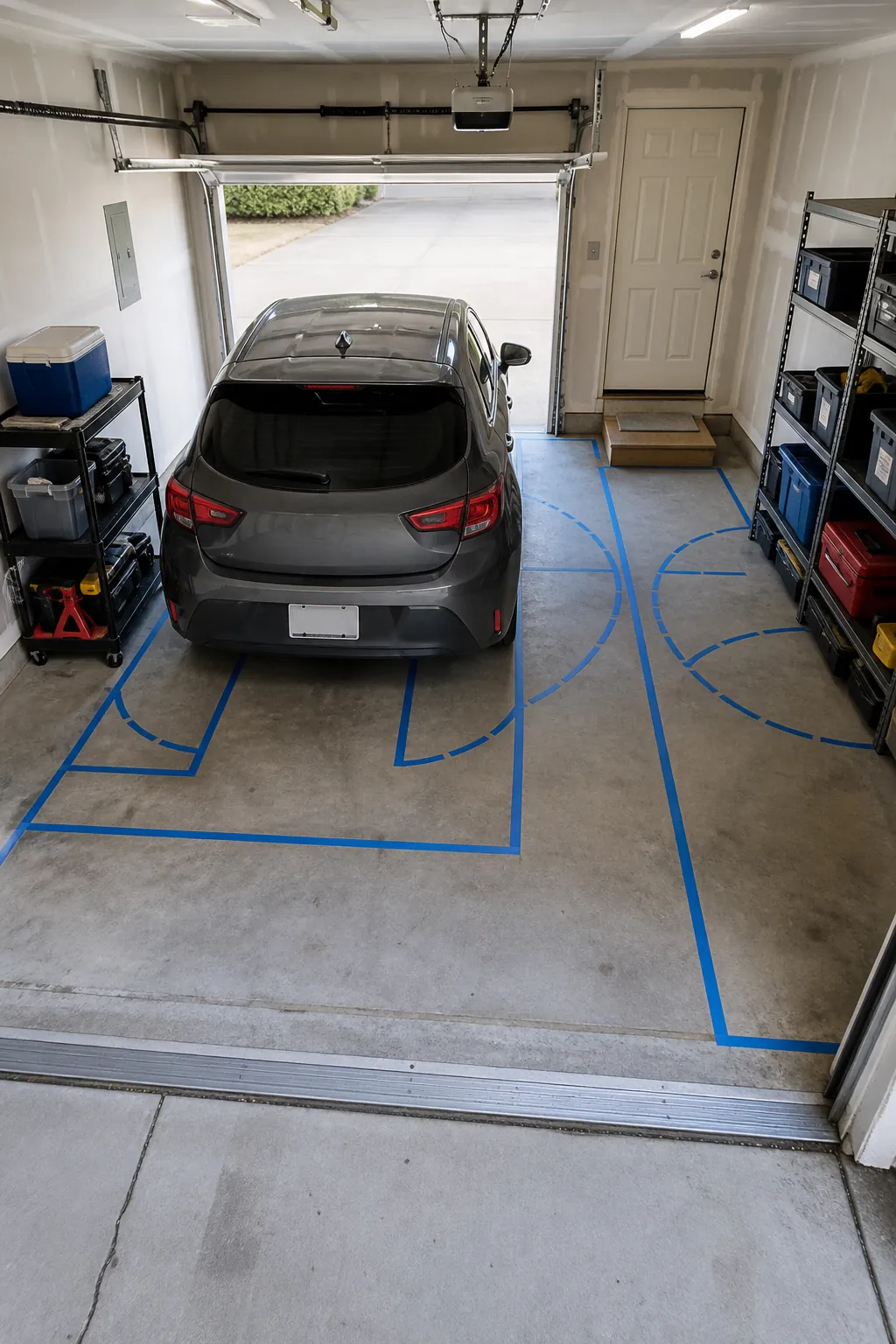
Park the car, open every door, and mark the usable perimeter with removable tape. Include the route to the house and garage door. Storage belongs outside that envelope. This simple boundary prevents a new shelf from “fitting” on paper while making the driver’s door unusable.
Create Everyday and Seasonal Zones
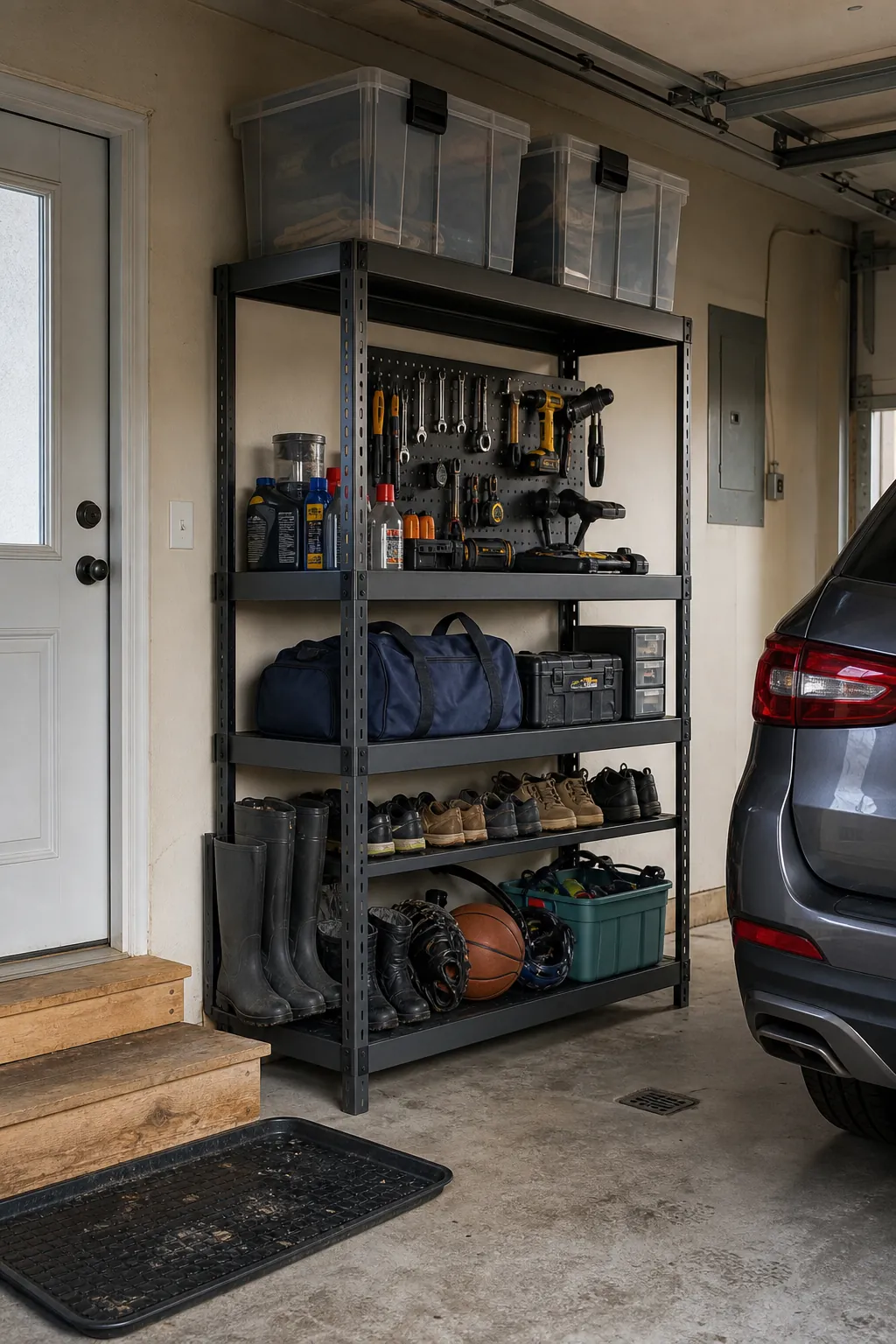
Put frequently used tools, shoes, and sports gear between waist and eye height near their point of use. Reserve high or remote shelves for sealed seasonal bins. The rule is simple: retrieval frequency determines height, not whether matching containers look attractive together.
Use Shallow Wall Shelves
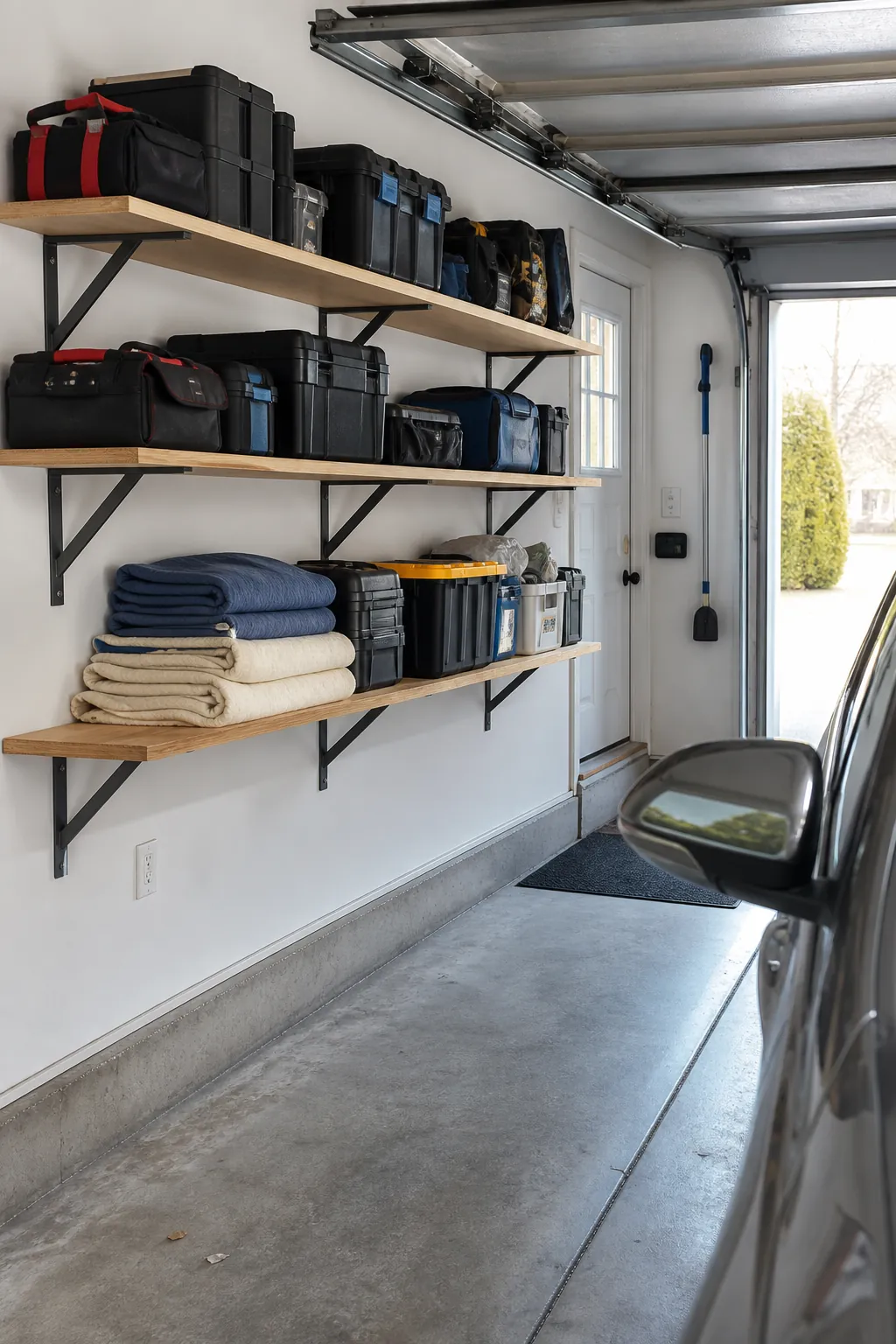
Eight- to twelve-inch shelves can hold cases, small bins, and bottles without forming a second hidden row. Use a rated system installed into appropriate structure, retain required clearances, and keep heavy items low. Visibility reduces duplicate purchases and abandoned supplies.
Build a Pegboard Hand-Tool Station
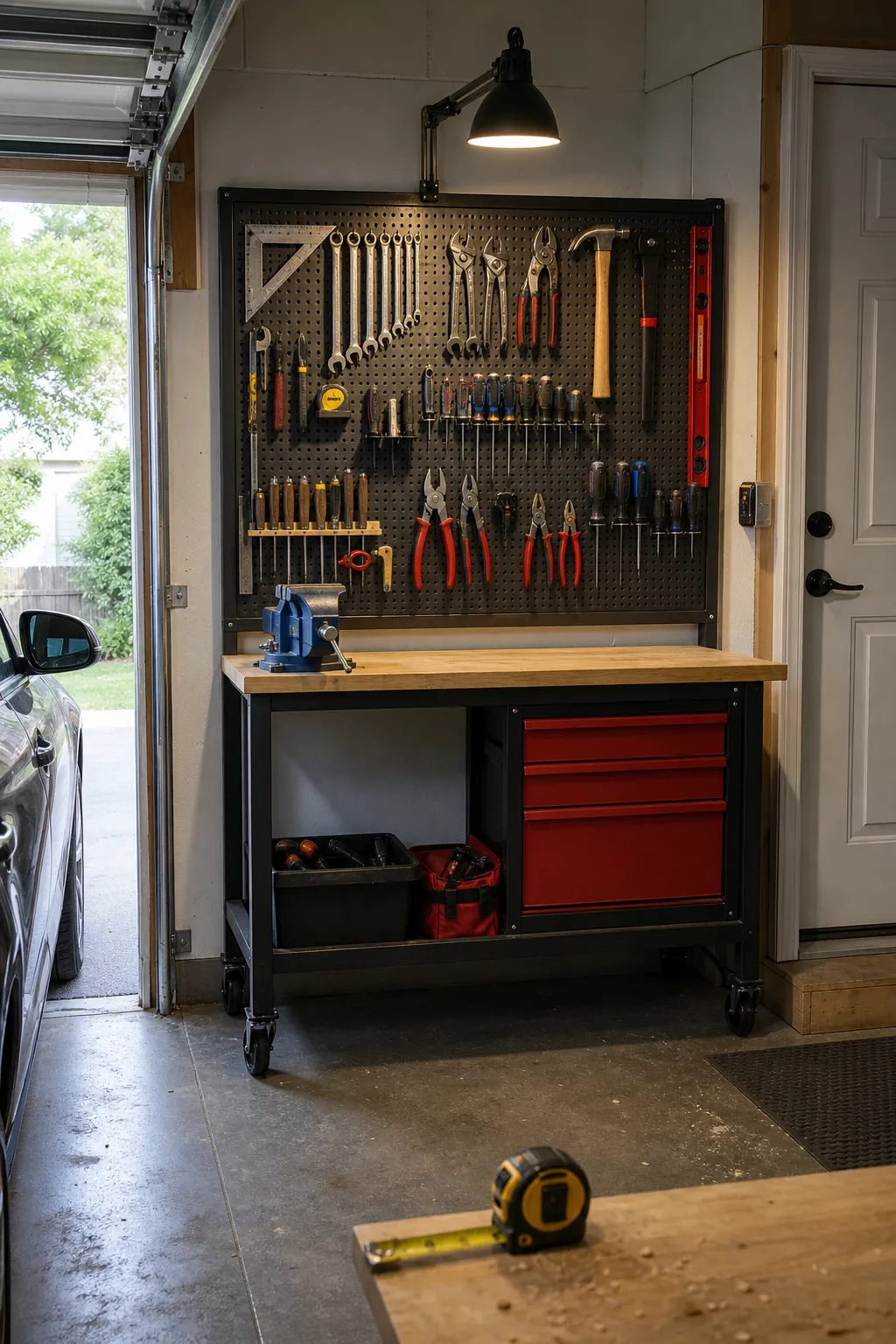
Hang the hand tools used weekly above a bench, leaving their shapes visible. Group by task—measuring, fastening, cutting—rather than by color. Use locking accessories where appropriate and leave enough space to lift each tool without knocking down its neighbor.
Add an Adjustable Slatwall Strip
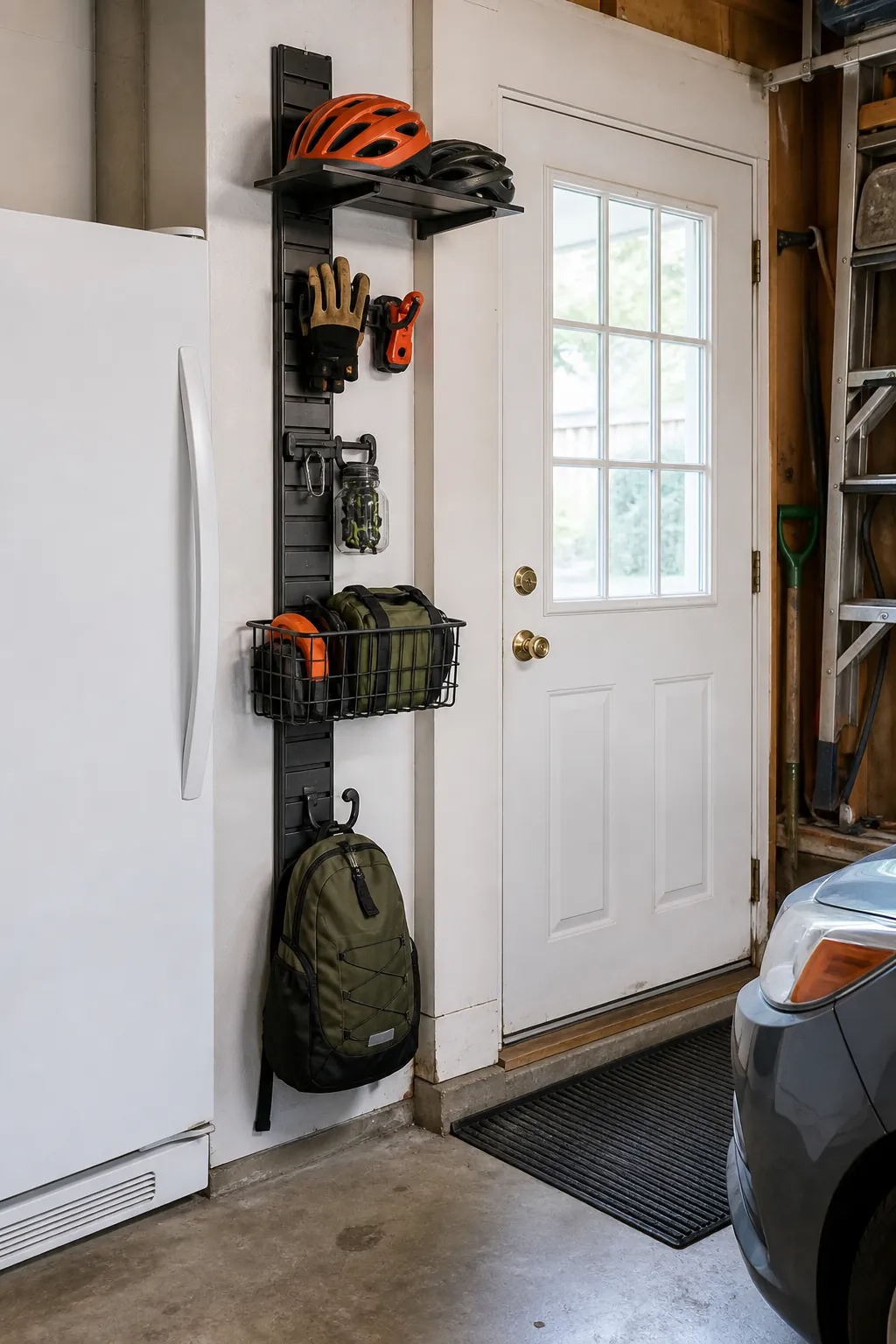
A narrow slatwall or track section lets hooks and baskets move as hobbies change. Start with one useful strip rather than covering every wall. Confirm the system’s load ratings and compatible hardware; mixed or improvised hooks can defeat the track’s design.
Mount a Magnetic Tool Bar
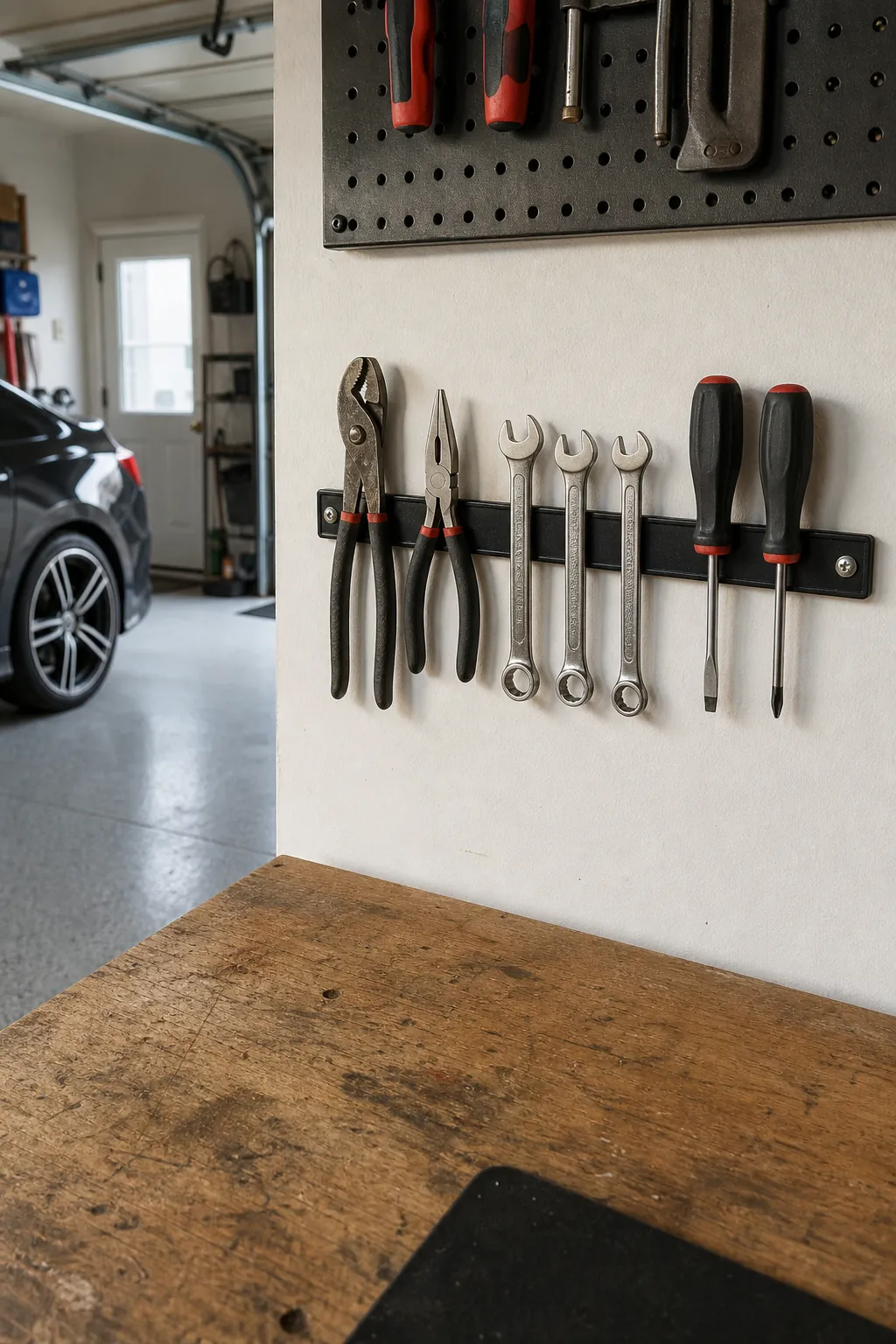
A manufacturer-rated magnetic bar keeps frequently used metal hand tools in one visible row. Place it away from children’s reach and electronics affected by magnets, and do not use it for heavy, sharp, or awkward items the product cannot securely hold.
Choose a Narrow Rolling Tool Chest
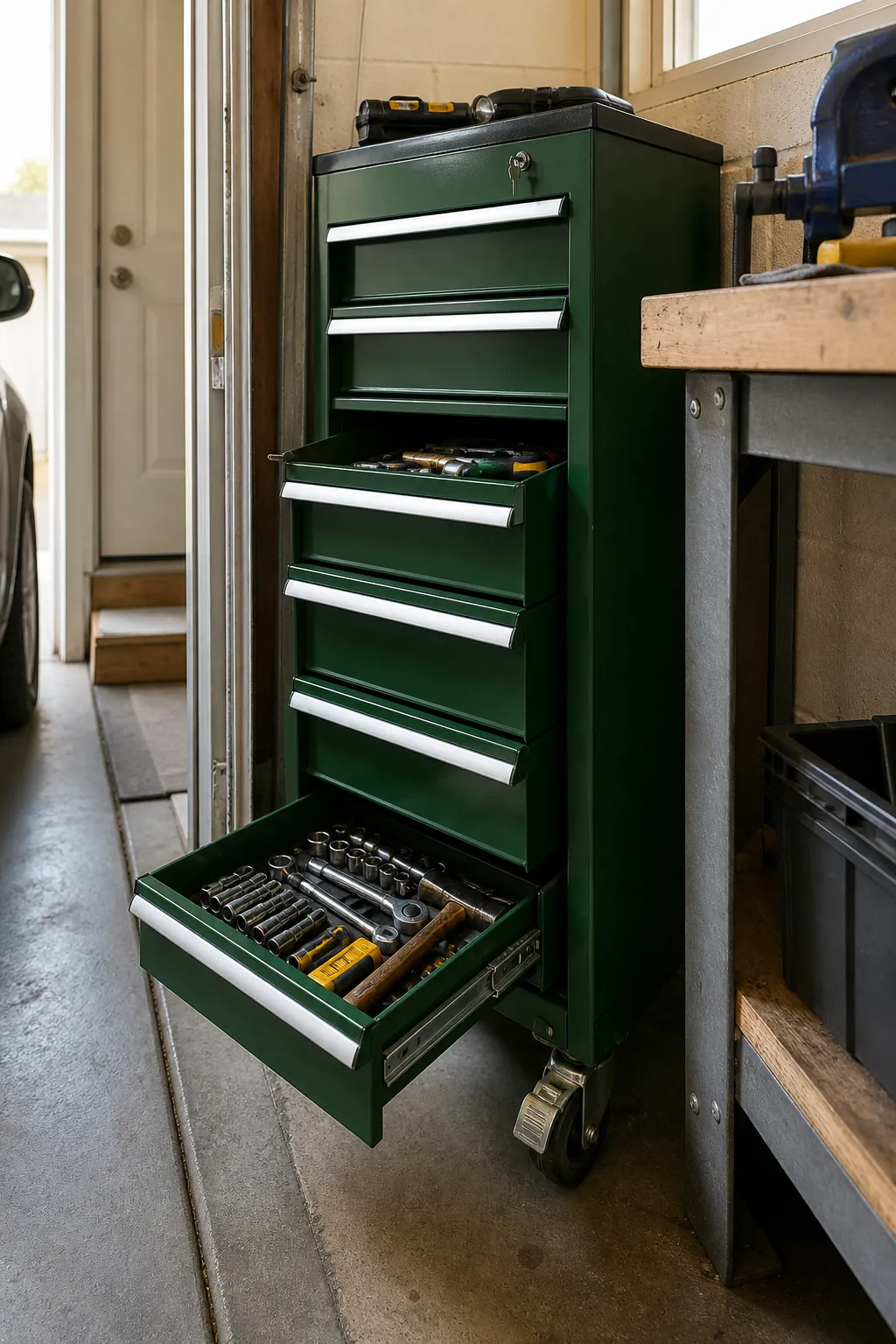
A tall, narrow chest uses vertical drawer space while preserving the car envelope. Assign one drawer per tool family, use nonslip liners, and lock casters before opening drawers. Keep heavy tools low so the cabinet remains stable.
Use a Mobile Workbench
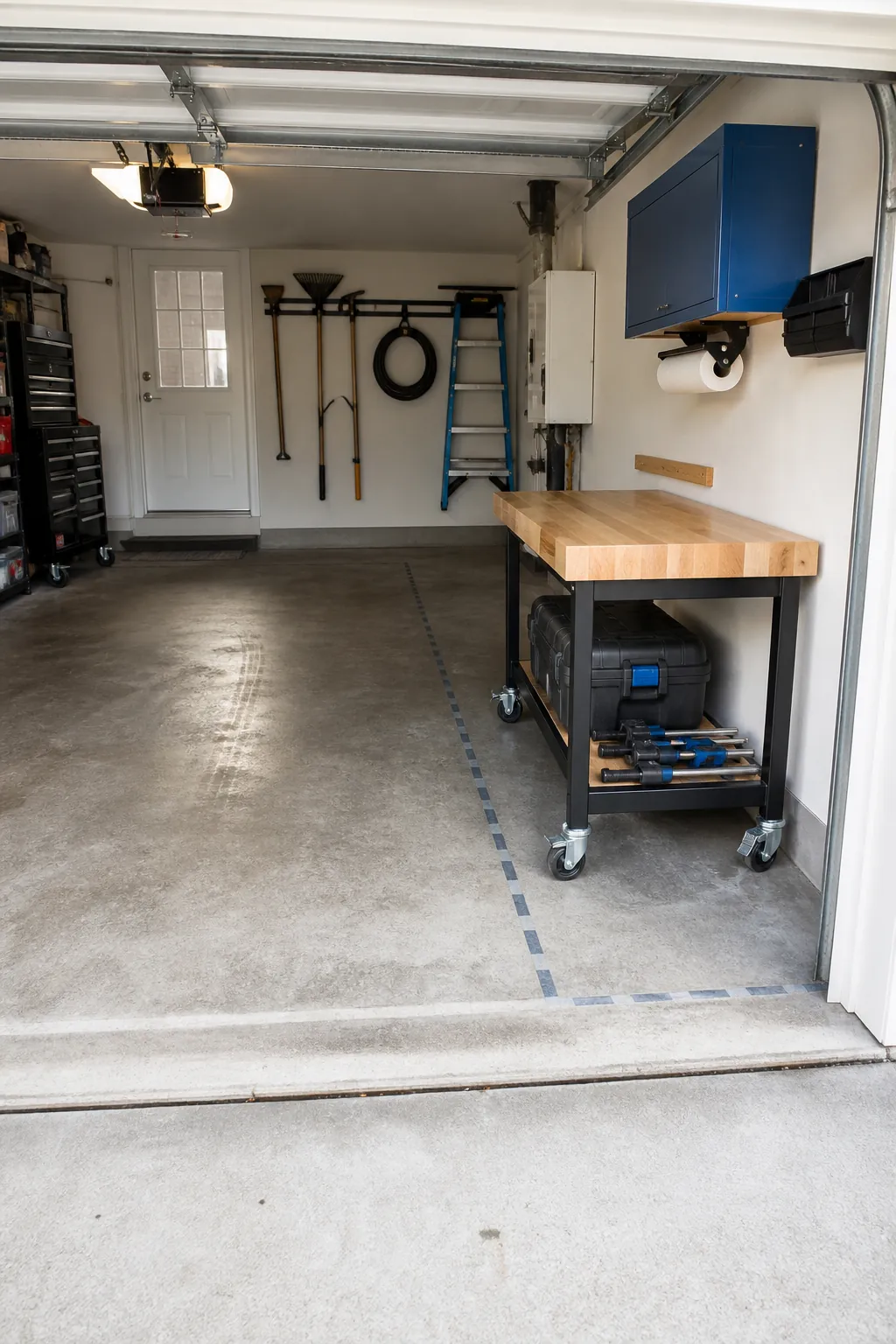
A sturdy bench on lockable casters can park against the wall and roll into the cleared car bay for projects. Size it to turn within the garage, manage cords safely, and never operate tools until every caster is locked and the workpiece is properly supported.
Install a High Perimeter Shelf
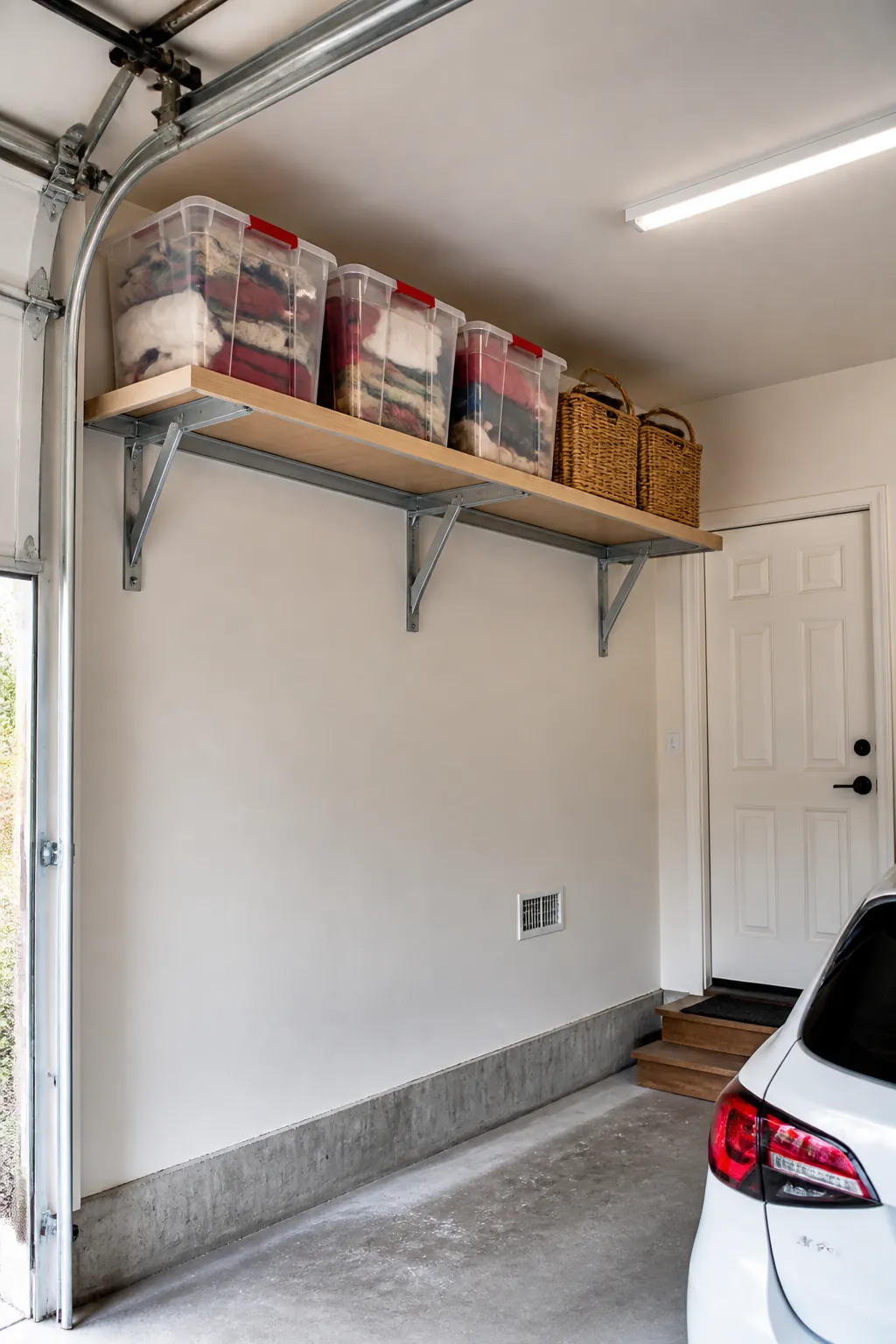
A narrow high shelf can hold lightweight, infrequently used bins while keeping the floor free. Maintain clearance from tracks, openers, doors, sprinklers, lights, and required systems. Use securely latching containers and a safe retrieval method—never balance on a chair.
Reserve Overhead Racks for Bulky Seasonal Gear
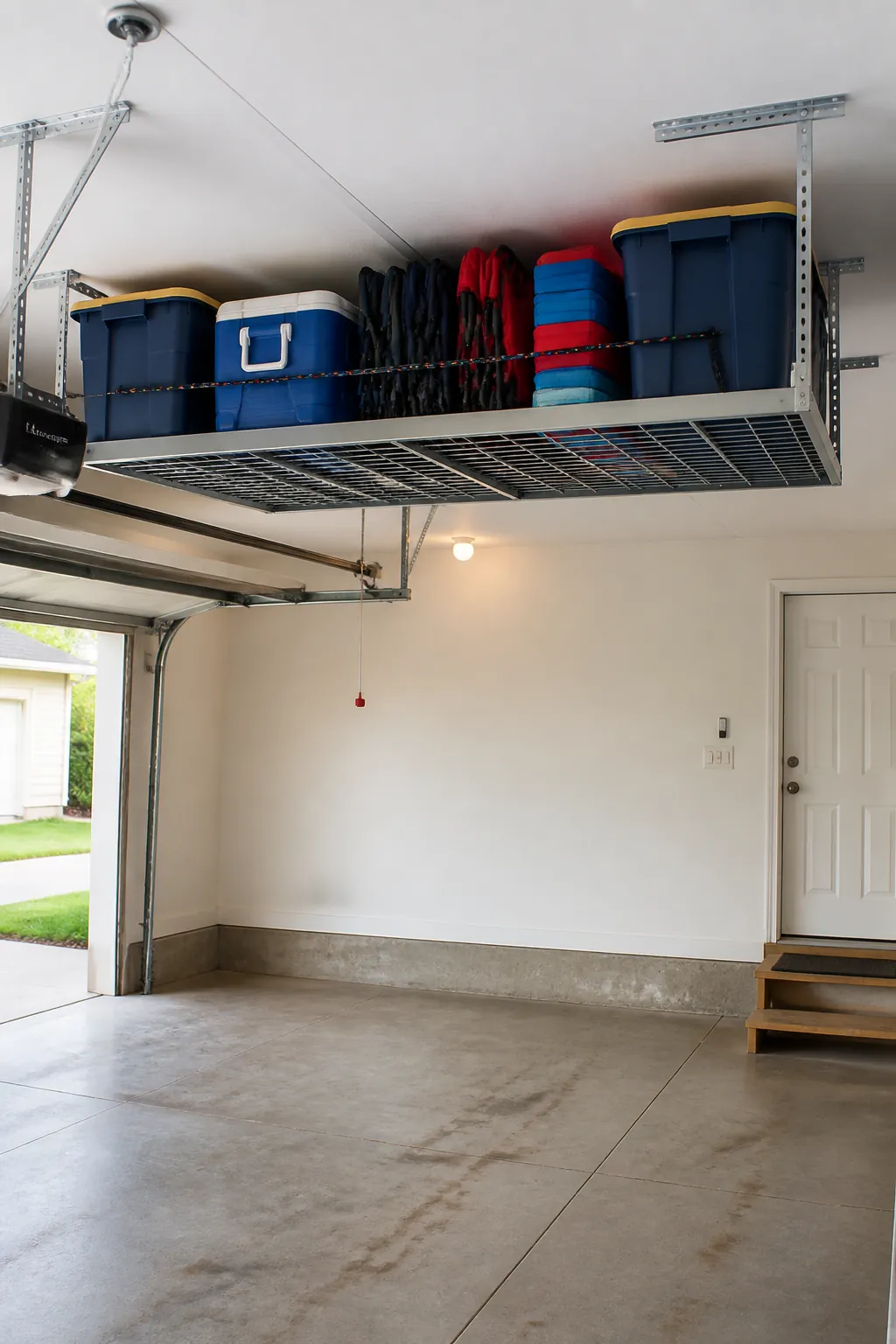
Where structure and clearance permit, a professionally appropriate rated rack can hold empty coolers or lightweight camping gear. Do not improvise ceiling supports or place heavy loose objects above a car. Verify load, anchoring, seismic considerations, and door movement before use.
Hang Bikes Vertically in Individual Bays
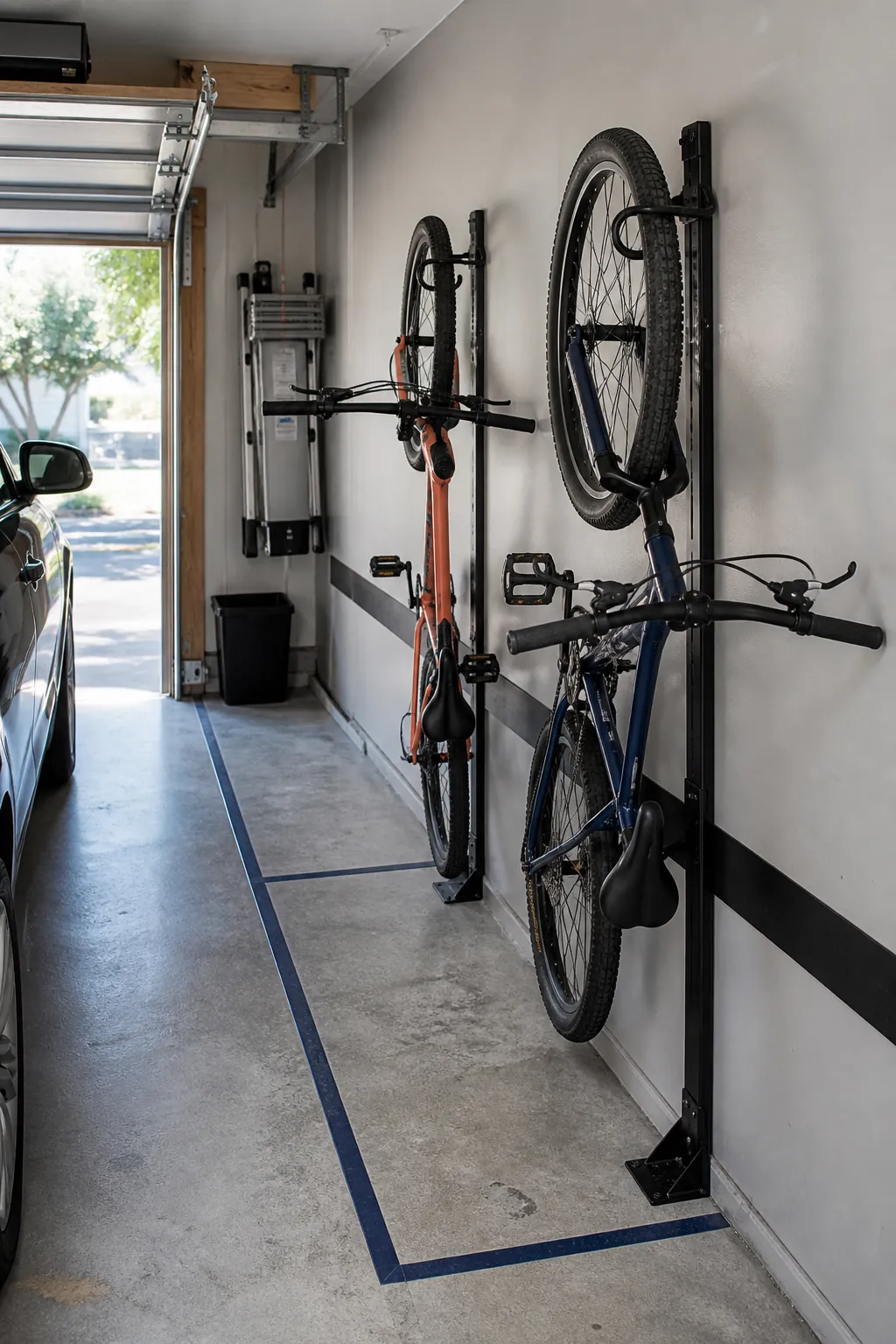
Individual vertical bike mounts can shrink the floor footprint and prevent handlebars from tangling. Check wall structure, hook rating, wheel compatibility, and lifting ability. Alternate handlebar heights and keep pedals out of the walking route.
Rack Long-Handled Garden Tools
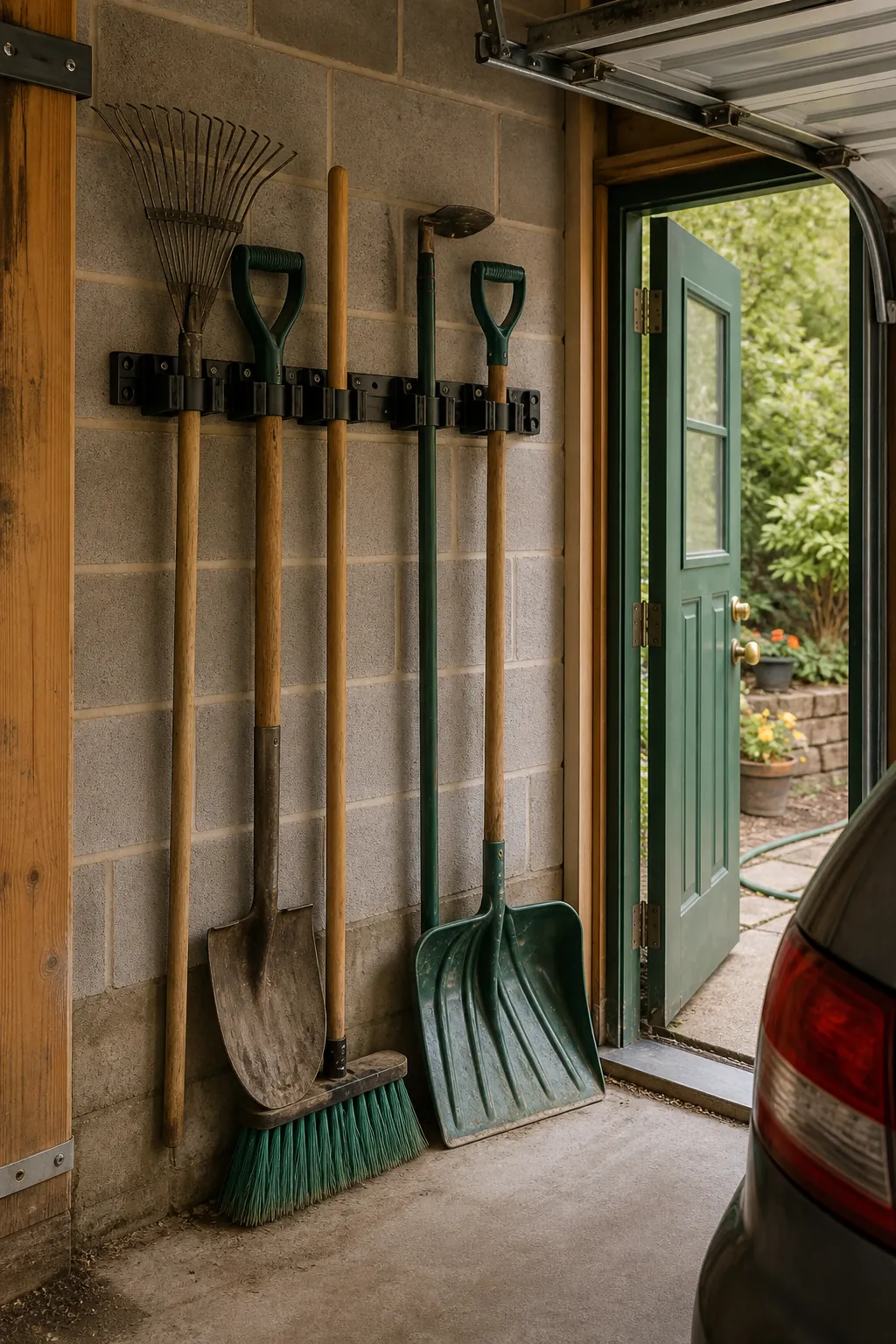
Secure rakes, shovels, and brooms in individual clips with working ends controlled. Keep the heaviest tools at accessible height and avoid a crowded cluster that must be unloaded to reach one item. Leave the floor below clear for sweeping.
Build a Ventilated Ball Corral
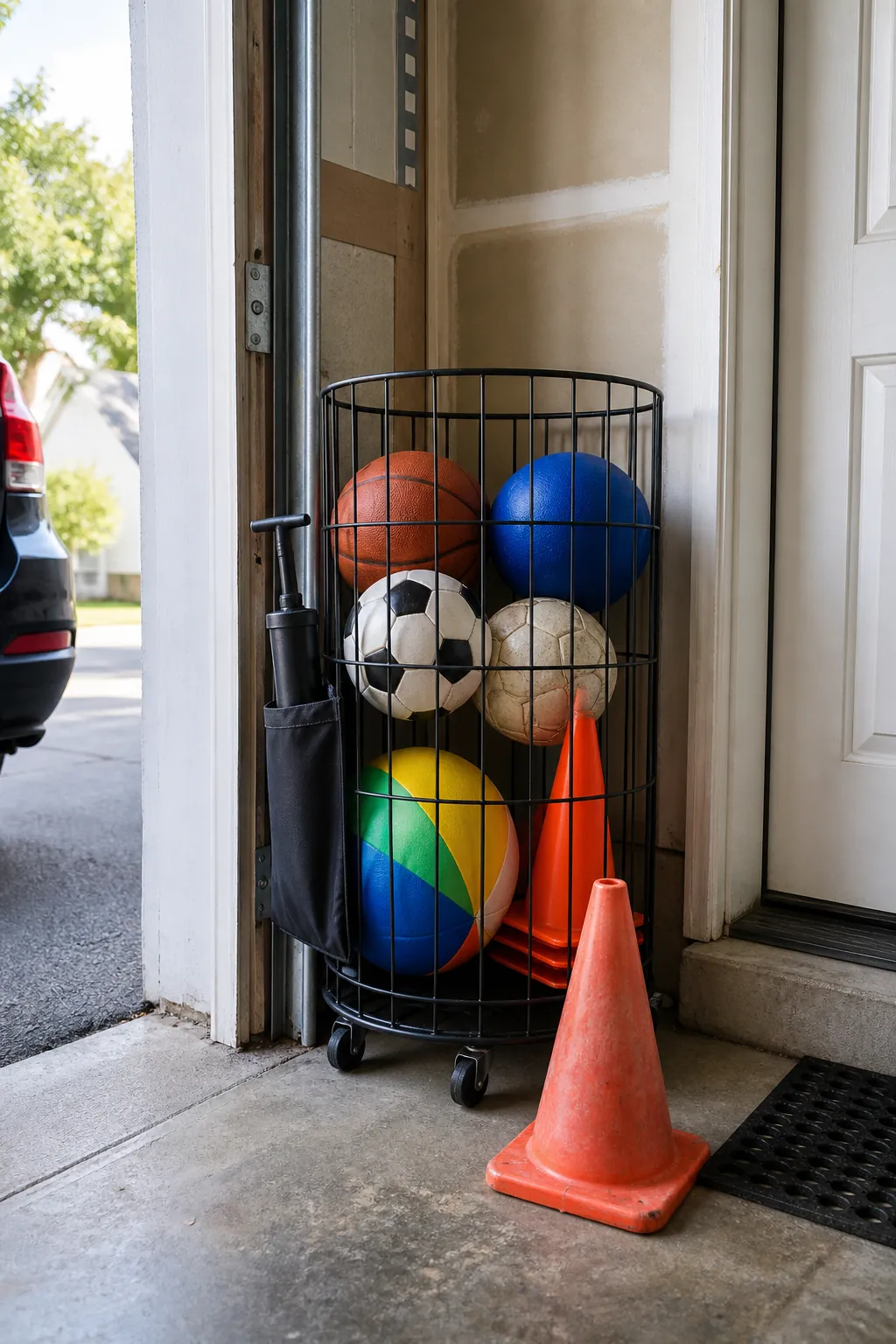
A tall open basket or purpose-made corral lets children return balls without opening lids. Add a side pocket for pumps and cones, keep the unit stable, and place it near the exterior door but outside the car’s tire and door zones.
Make a Garage Entry Drop Zone
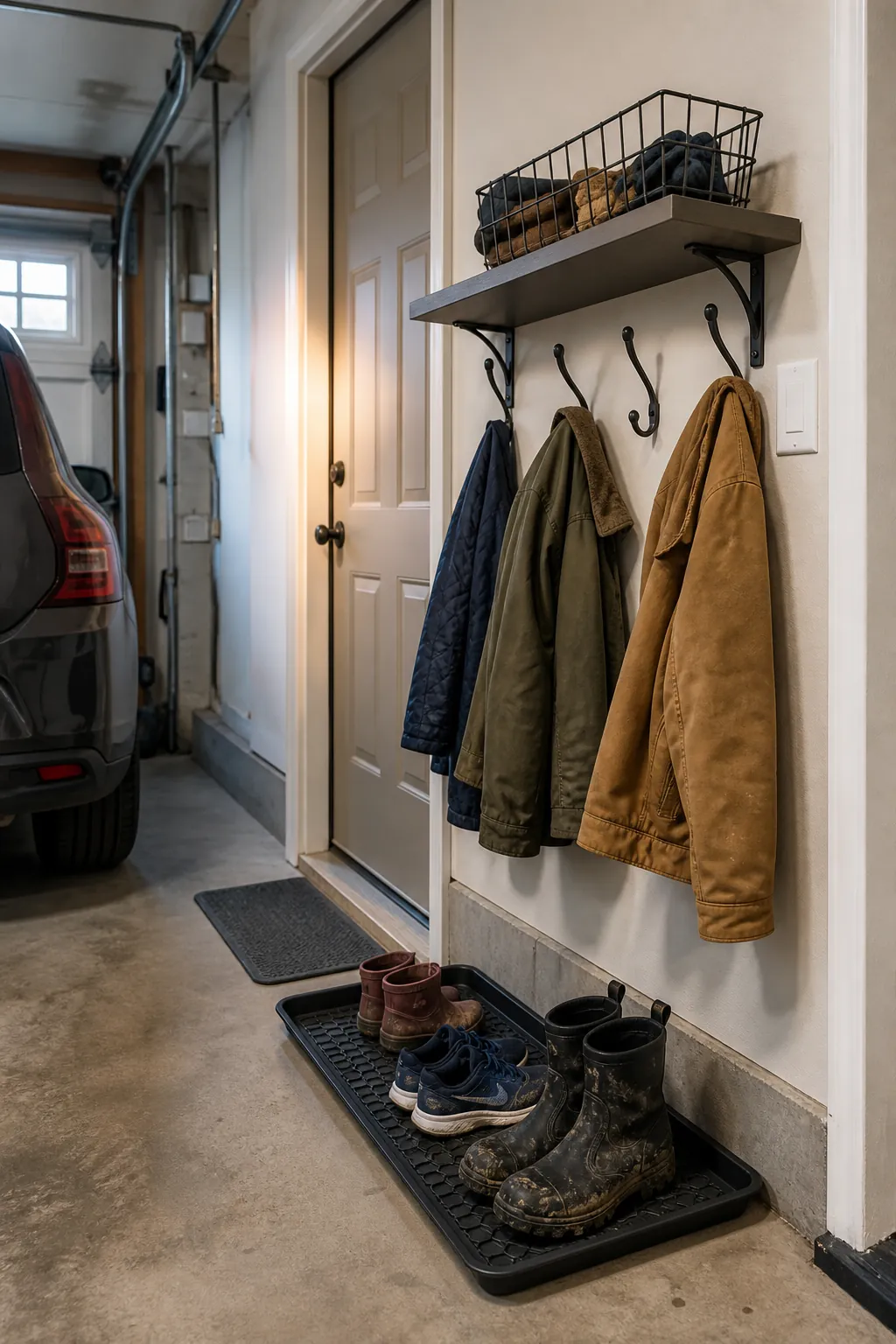
Place a washable boot tray, shallow shelf, and a few sturdy hooks beside the house door. Limit each person to one active pair of shoes and one outer layer. This prevents household overflow from spreading onto work surfaces and car paths.
Put Recycling on a Pull-Out Cart
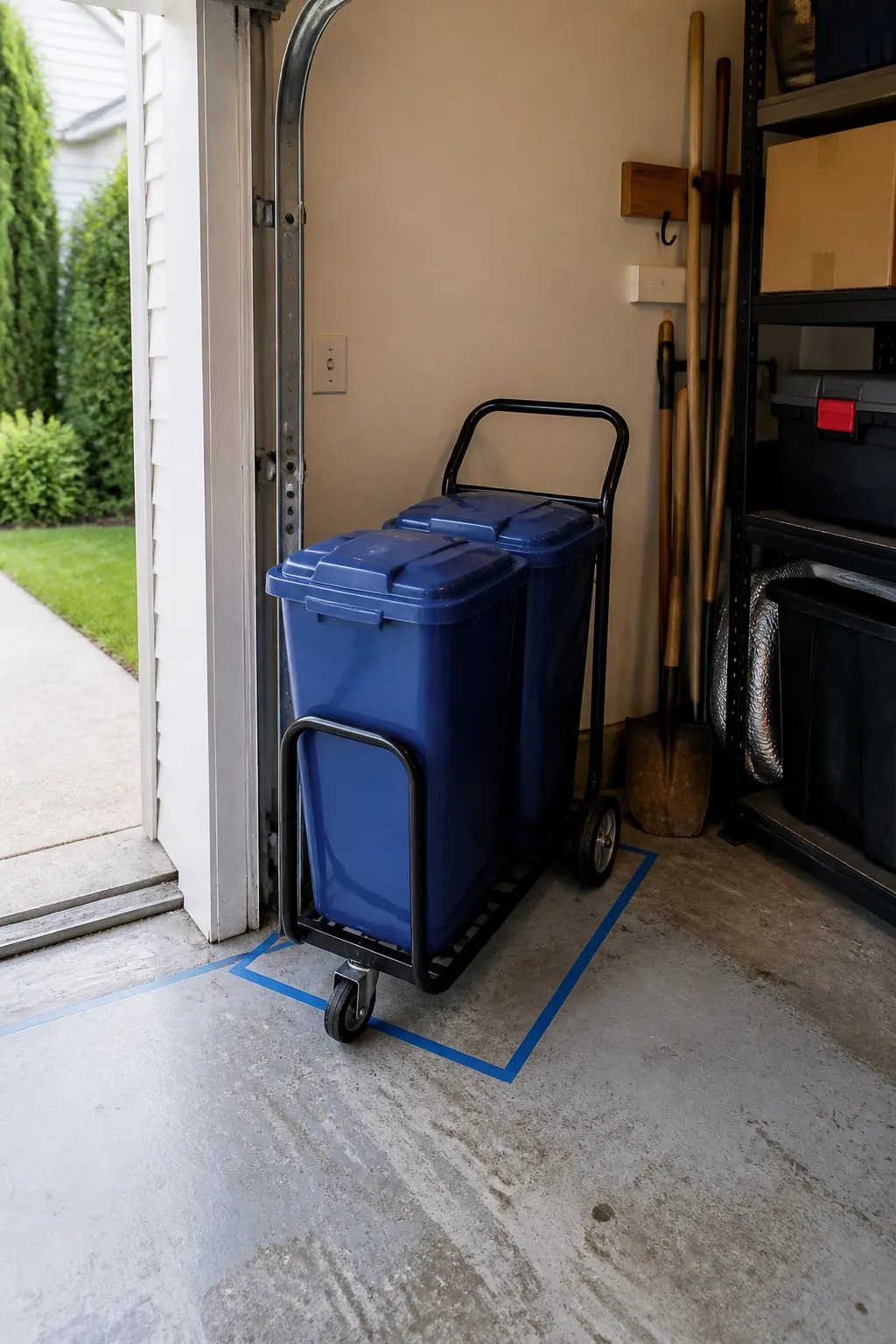
A narrow wheeled cart can hold sorted recycling and roll to the curb in one trip. Use washable containers with secure contents, lock the cart in its parking bay, and keep it away from heat sources, stairs, vehicle movement, and the house-door route.
Store Cleaning Supplies in One Caddy
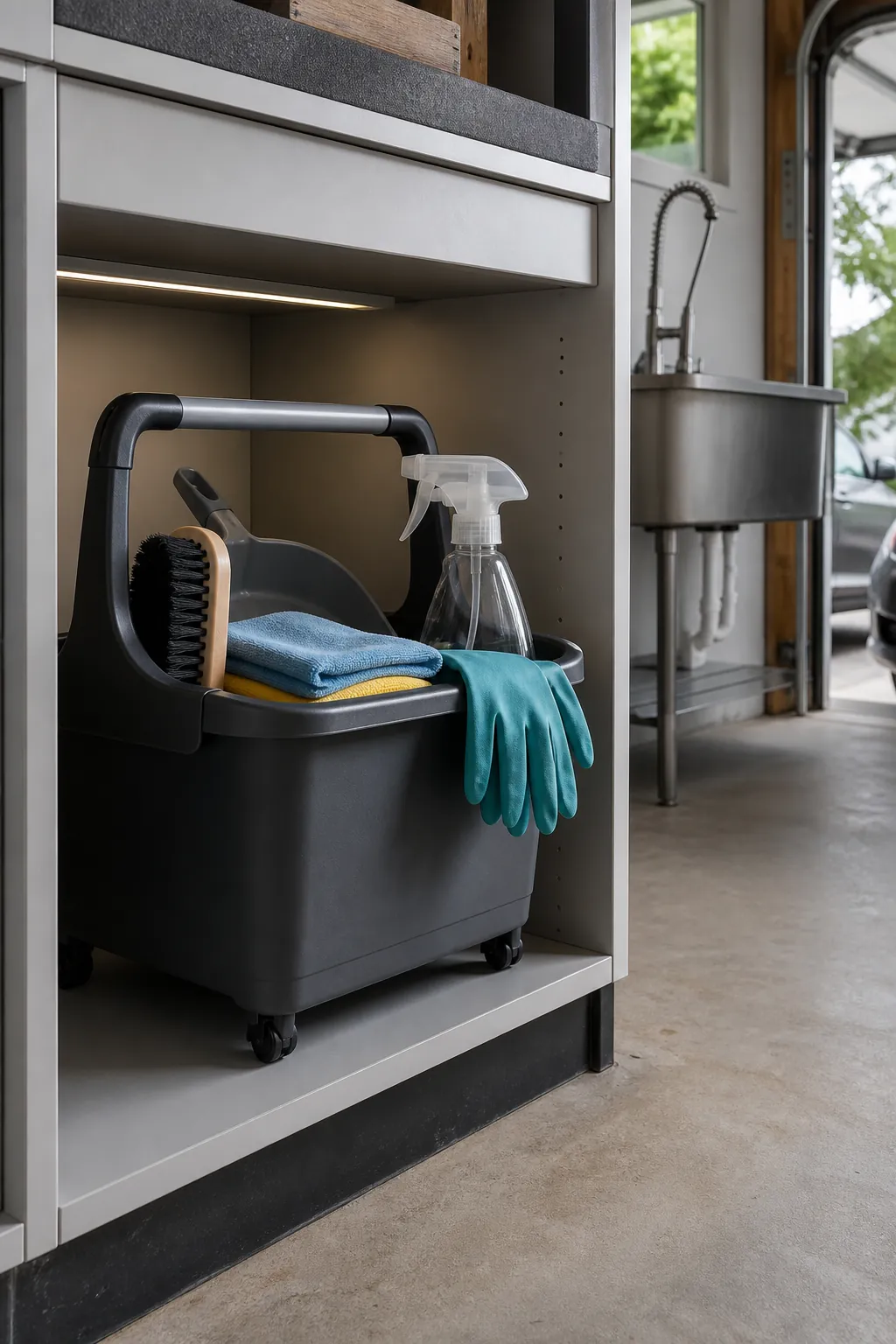
Keep a brush, dustpan, cloths, and other compatible basic cleaning items in one portable caddy. Return products to original containers and store hazardous or incompatible substances according to their labels and local guidance—not wherever a decorative bin happens to fit.
Sort Fasteners in Shallow Drawers
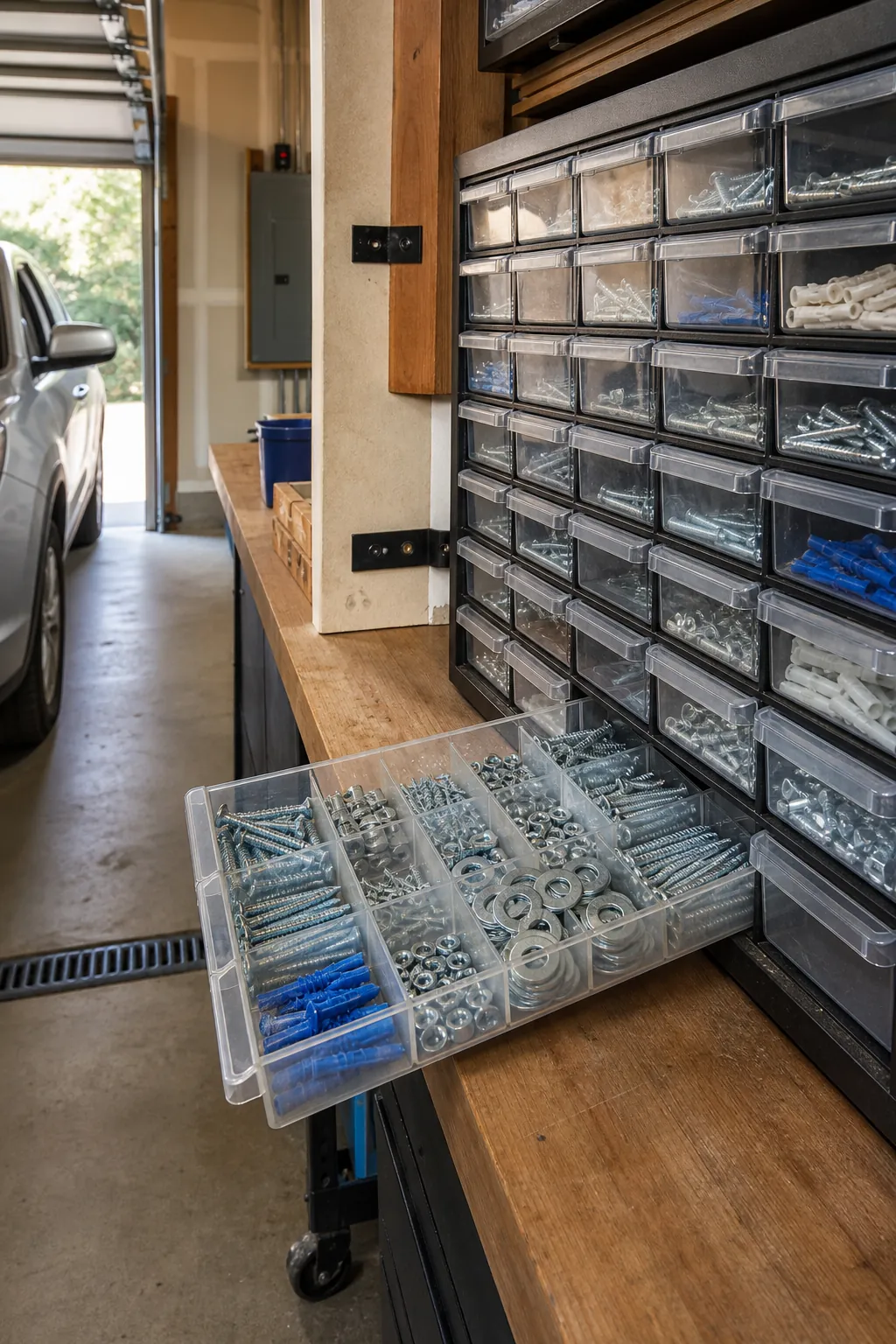
Shallow transparent drawers prevent screws, anchors, and washers from becoming one heavy mystery box. Sort by type and size, label plainly, and keep a small “identify or discard” cup for strays. Mount or place the cabinet so drawers cannot tip the unit forward.
Use Clear Latching Project Bins
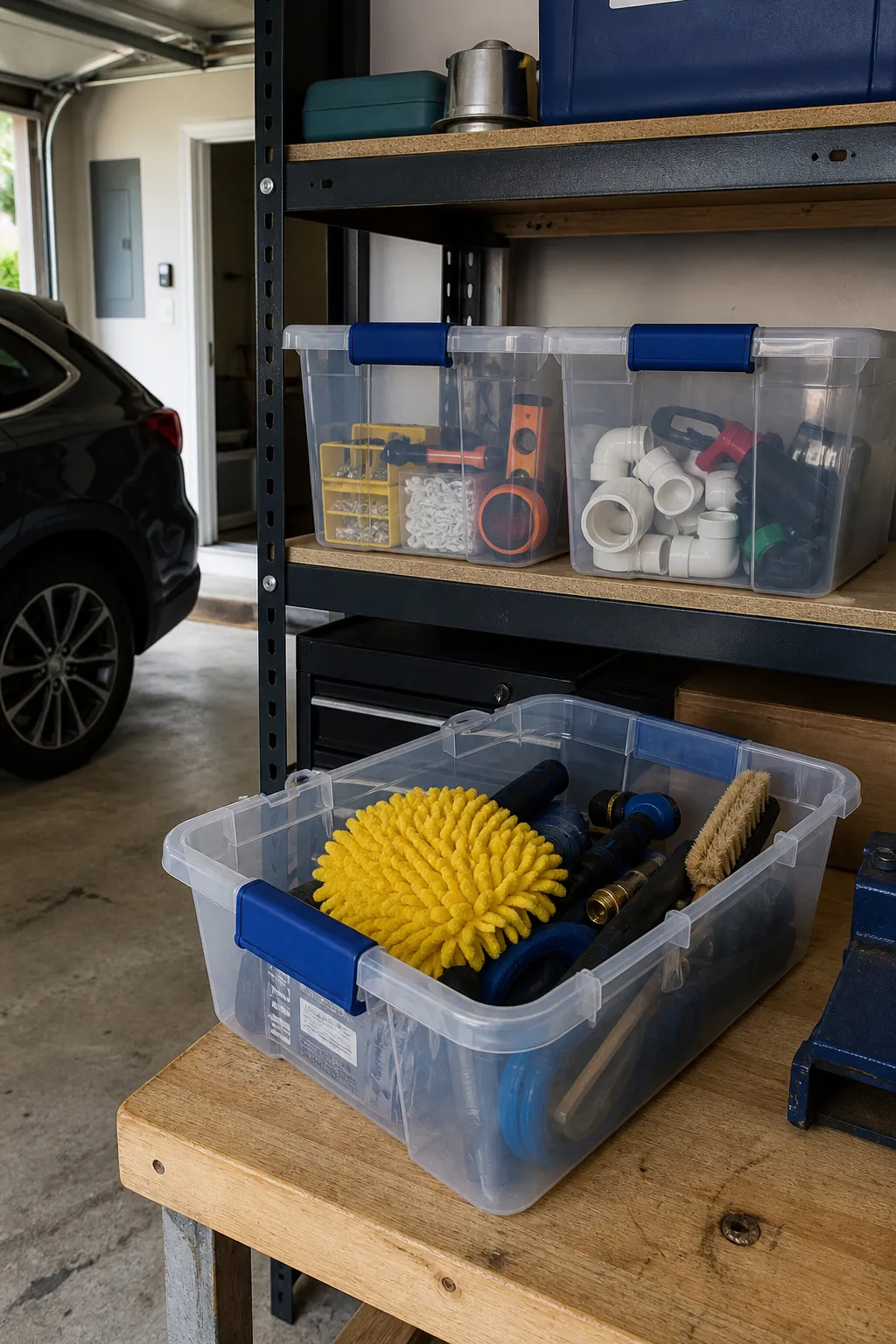
Group each active project into one clear latching bin: picture-hanging, car washing, sprinkler repair. The container should hold the parts and compatible hand tools needed to finish, not become permanent storage for abandoned intentions. Review unfinished bins monthly.
Color-Code Seasonal Bins
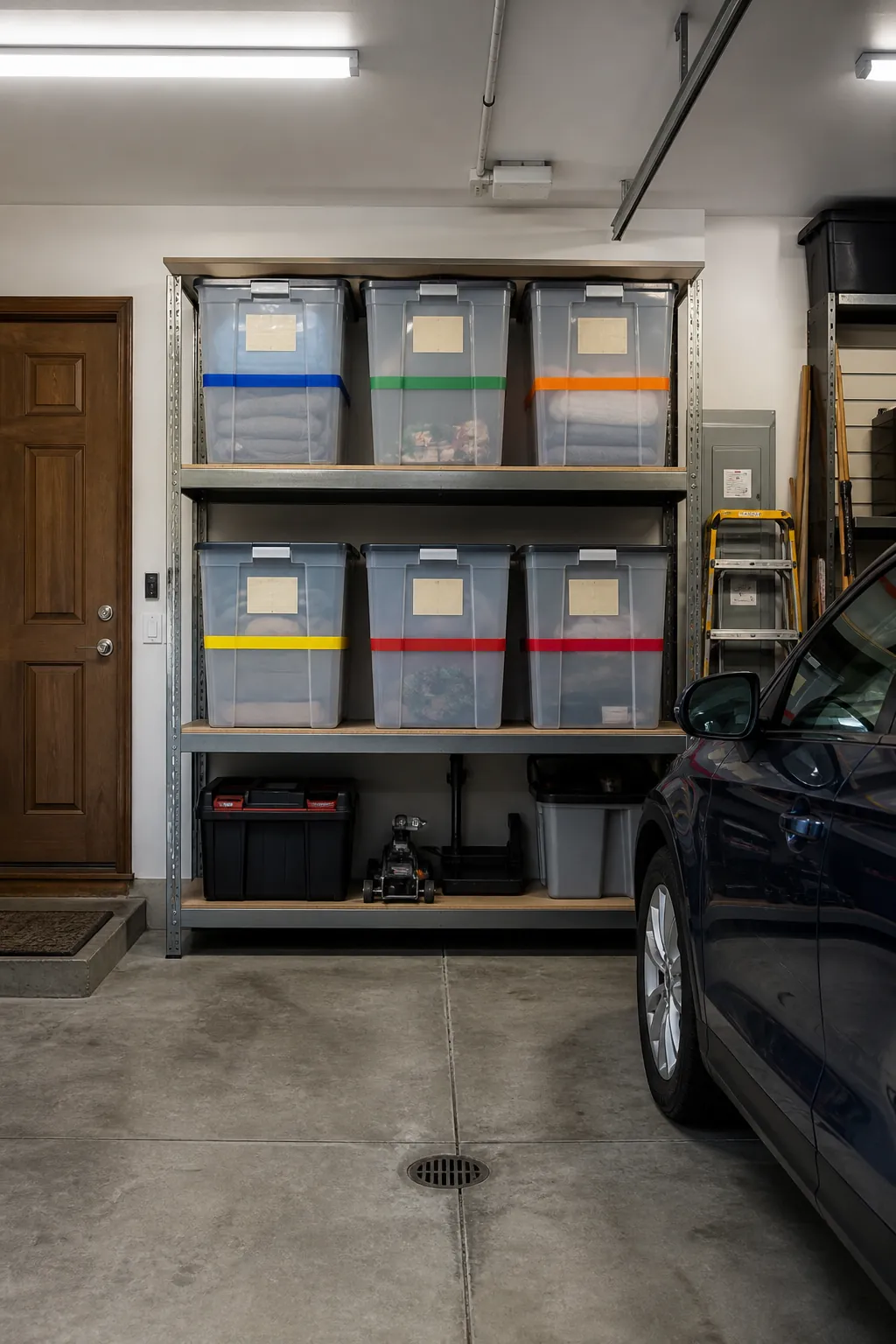
Use one small color marker per season on otherwise consistent, labeled bins. Bring the next season to the accessible shelf and move the outgoing season higher. The color helps scanning; the written inventory prevents a clear box from becoming an excuse to skip labeling.
Create a Camping Grab-and-Go Tote
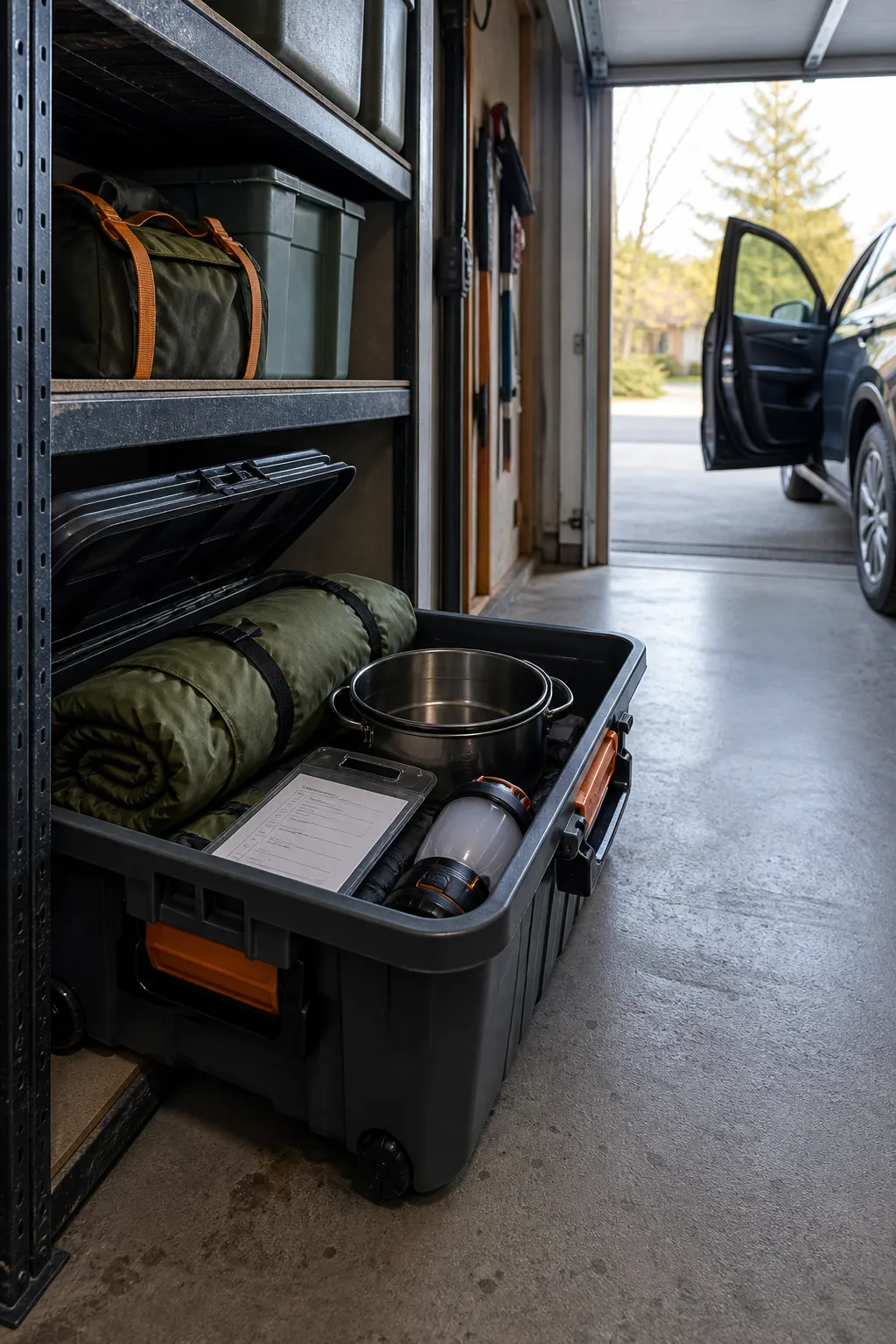
Keep durable, clean camping basics in one latching tote on a low shelf, with soft gear compressed separately as appropriate. Dry everything before storage, remove food and batteries when required, and use a simple inventory so packing does not begin with opening every bin.
Set Up a Compact Garden Station
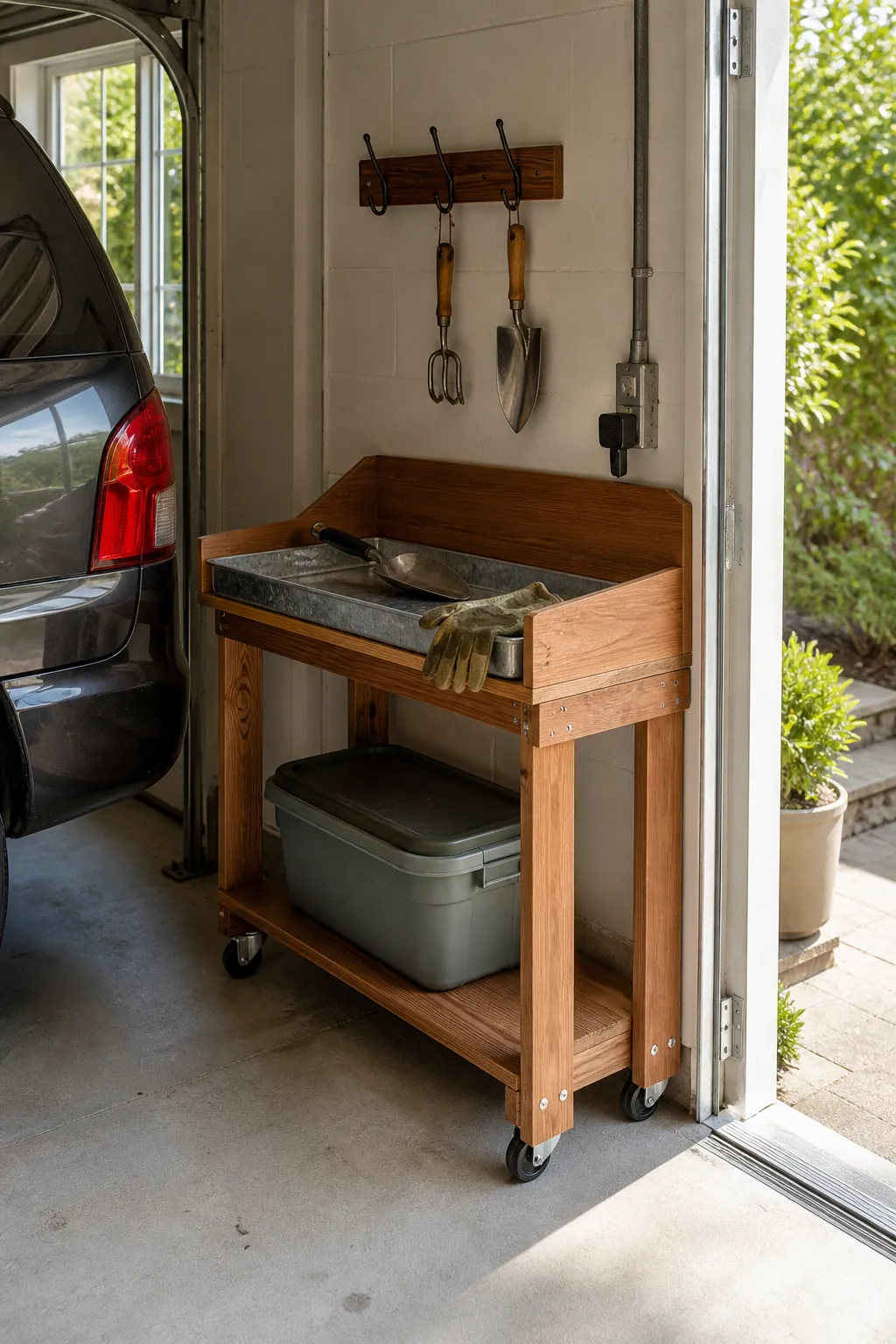
A narrow bench with a washable tray, hook rail, and one soil container can support routine potting without claiming a full workshop. Keep tools clean and dry, return chemicals to compliant storage, and leave the worktop empty after each session.
Separate and Inspect Chemical Storage
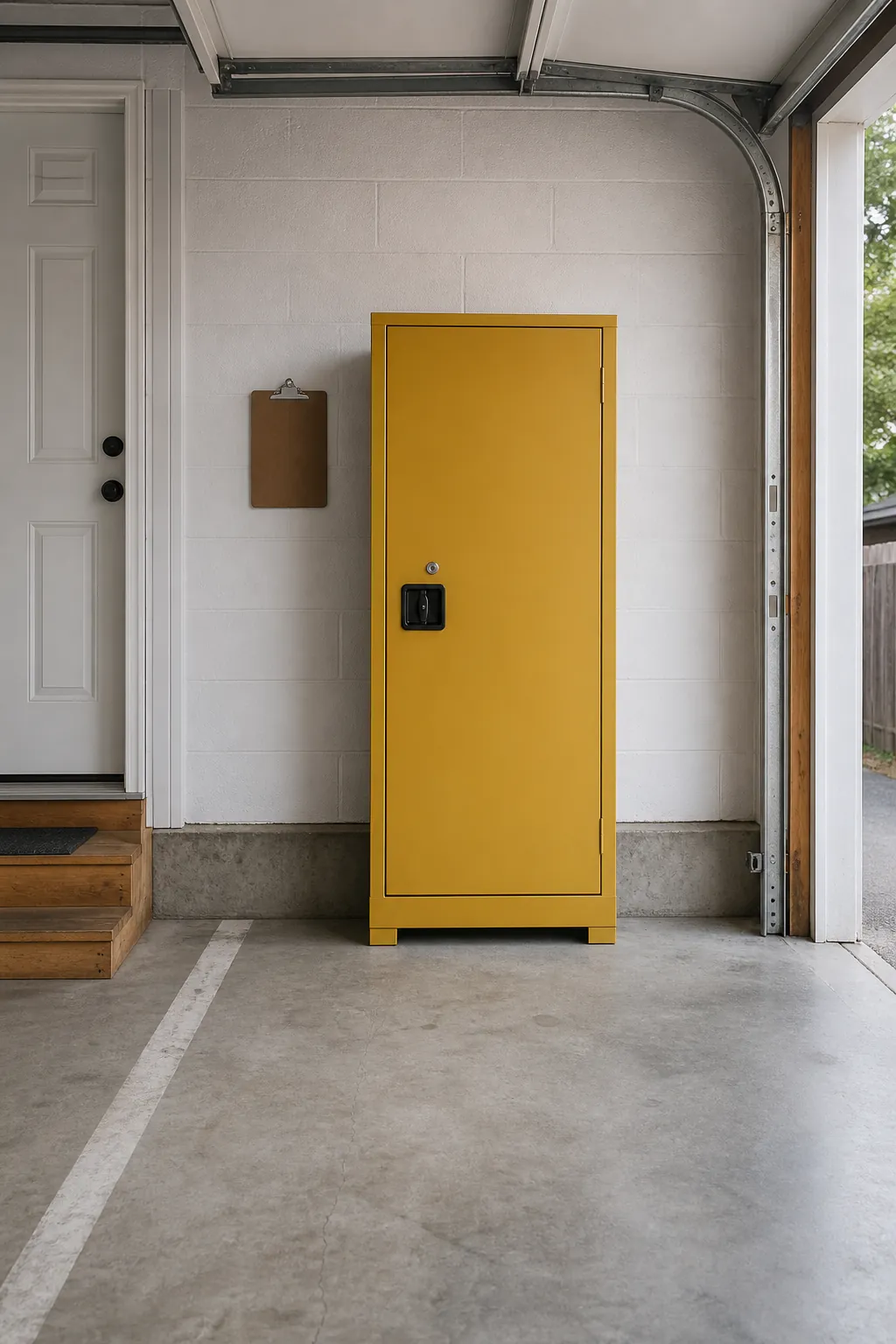
Follow product labels, local fire guidance, and building requirements for paints, fuels, aerosols, pool products, pesticides, and batteries. Keep original containers intact, inspect seals and damage, separate incompatibles, and use any required compliant cabinet. Do not invent a universal storage scheme from a pretty photograph.
Support Short Lumber Horizontally
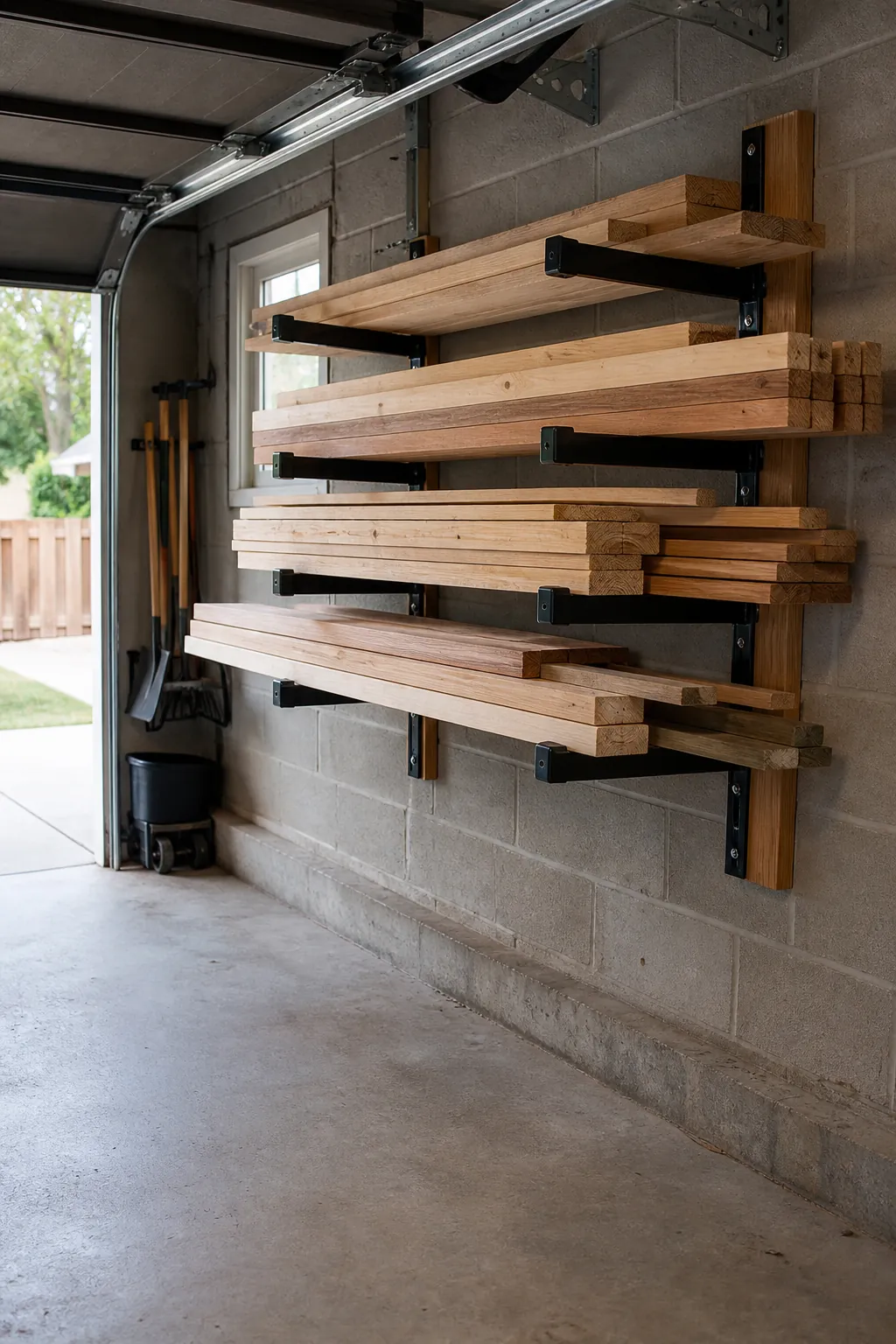
Store usable short boards on a rated multi-arm rack with support at enough points to prevent bowing. Sort by length, keep ends out of paths, and remove tiny scraps that never become projects. Respect the rack and wall’s load limits.
Add a Fold-Down Task Surface
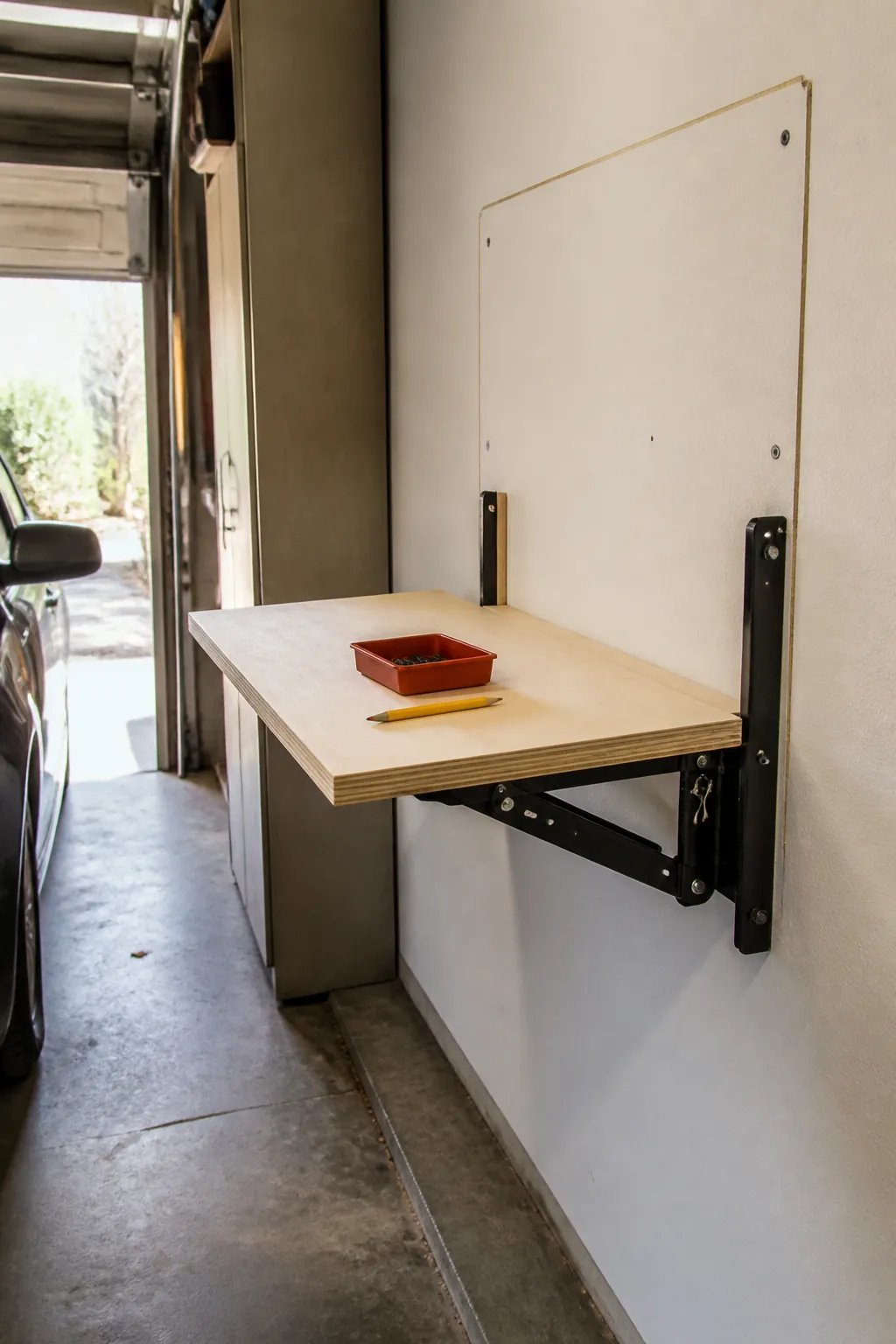
A properly mounted fold-down surface offers a temporary place for sorting, repairs, or gardening tasks, then returns the car clearance. Use rated brackets and suitable structural fastening, check that the folded panel cannot strike vehicles, and clear it completely before closing.
Keep a Visible Reset Strip
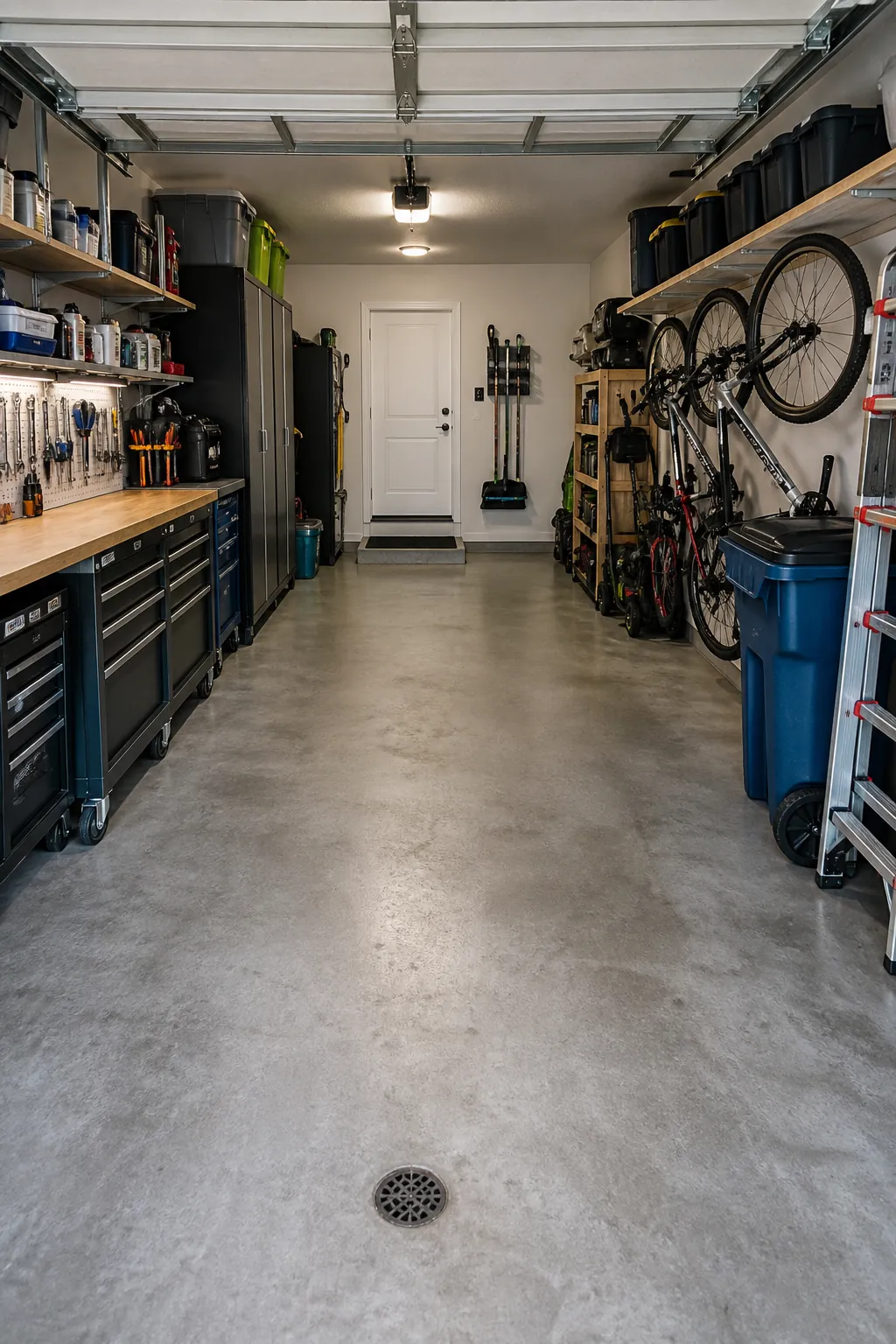
Protect one continuous strip of empty floor from the garage door to the house entry. Nothing is allowed to “temporarily” live there: no delivery box, stroller, project offcut, or recycling overflow. The strip makes parking, sweeping, and carrying groceries predictable.
Use the strip as the nightly audit. If an item crosses it, return the item to its zone, decide whether that zone is too full, or remove what no longer earns space. A well-organized garage is not the one with the most hardware. It is the one that can return to a safe, car-ready state without a weekend reorganization.