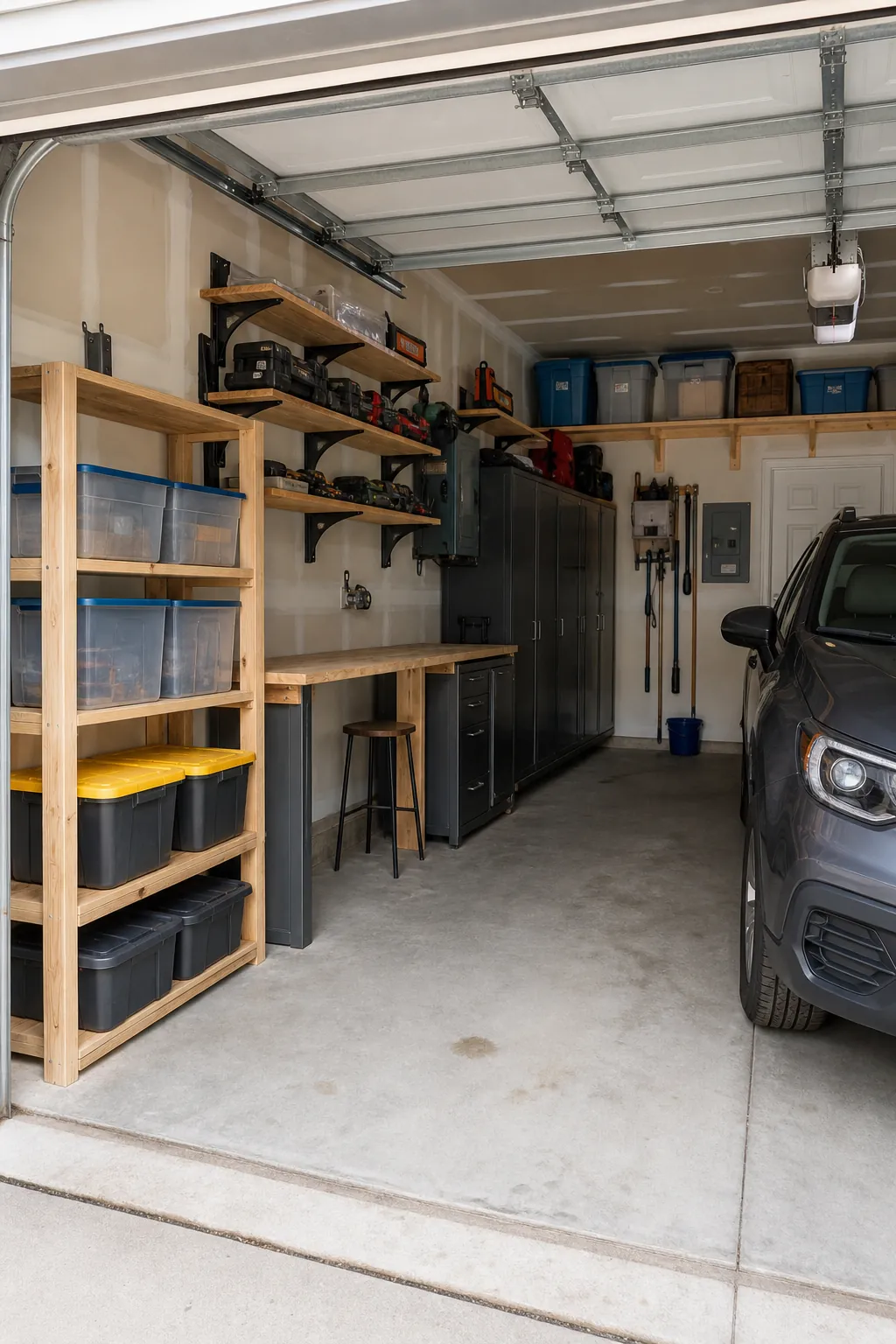
Good garage shelving begins with what you need to store, not with a generic rack dimension. Measure your largest bins, locate studs and utilities, and protect the space needed for car doors, walkways, and the garage-door mechanism. These 27 DIY garage shelving ideas range from simple wall ledges to full storage walls, with options for renters, workshops, and tight one-car garages.
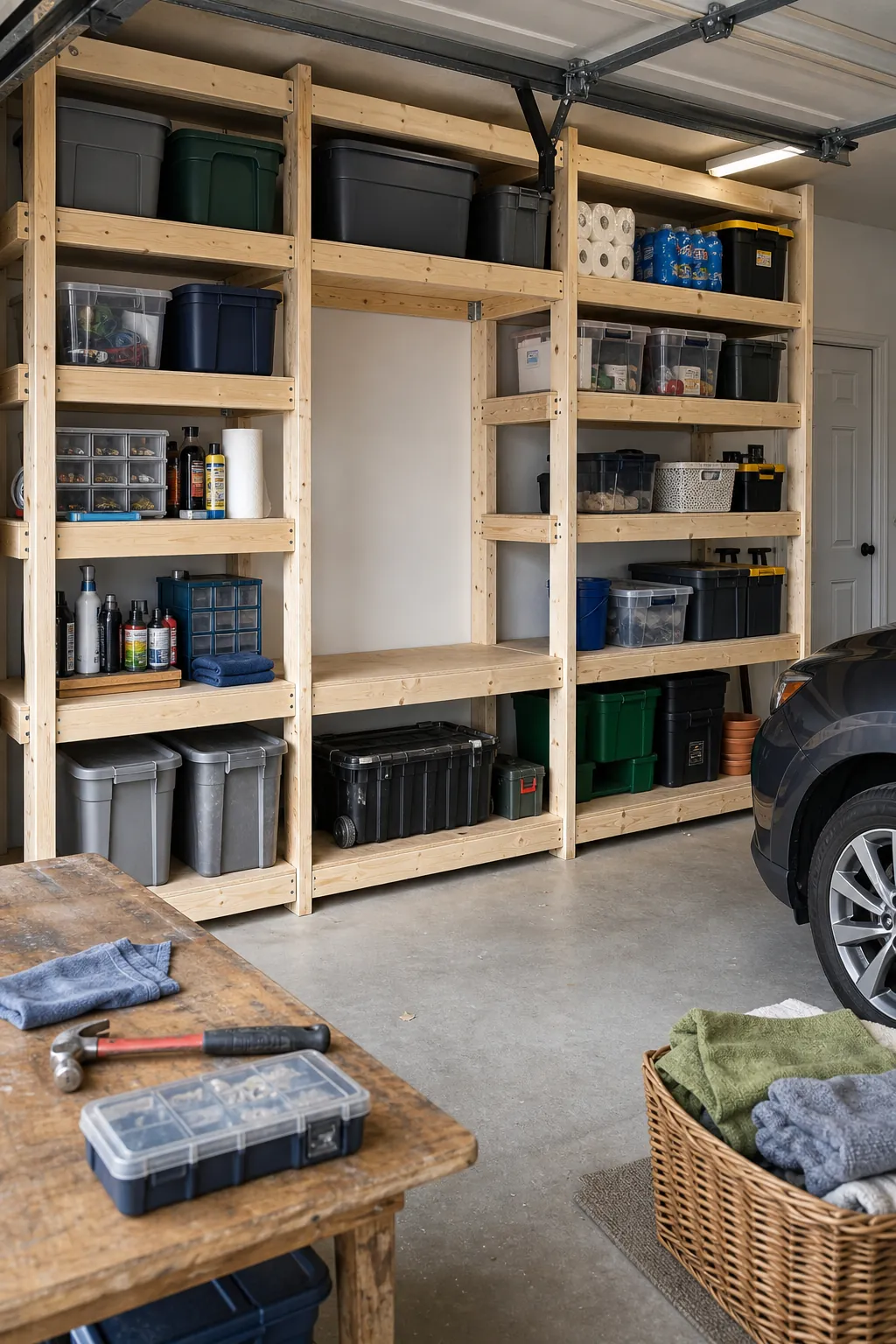
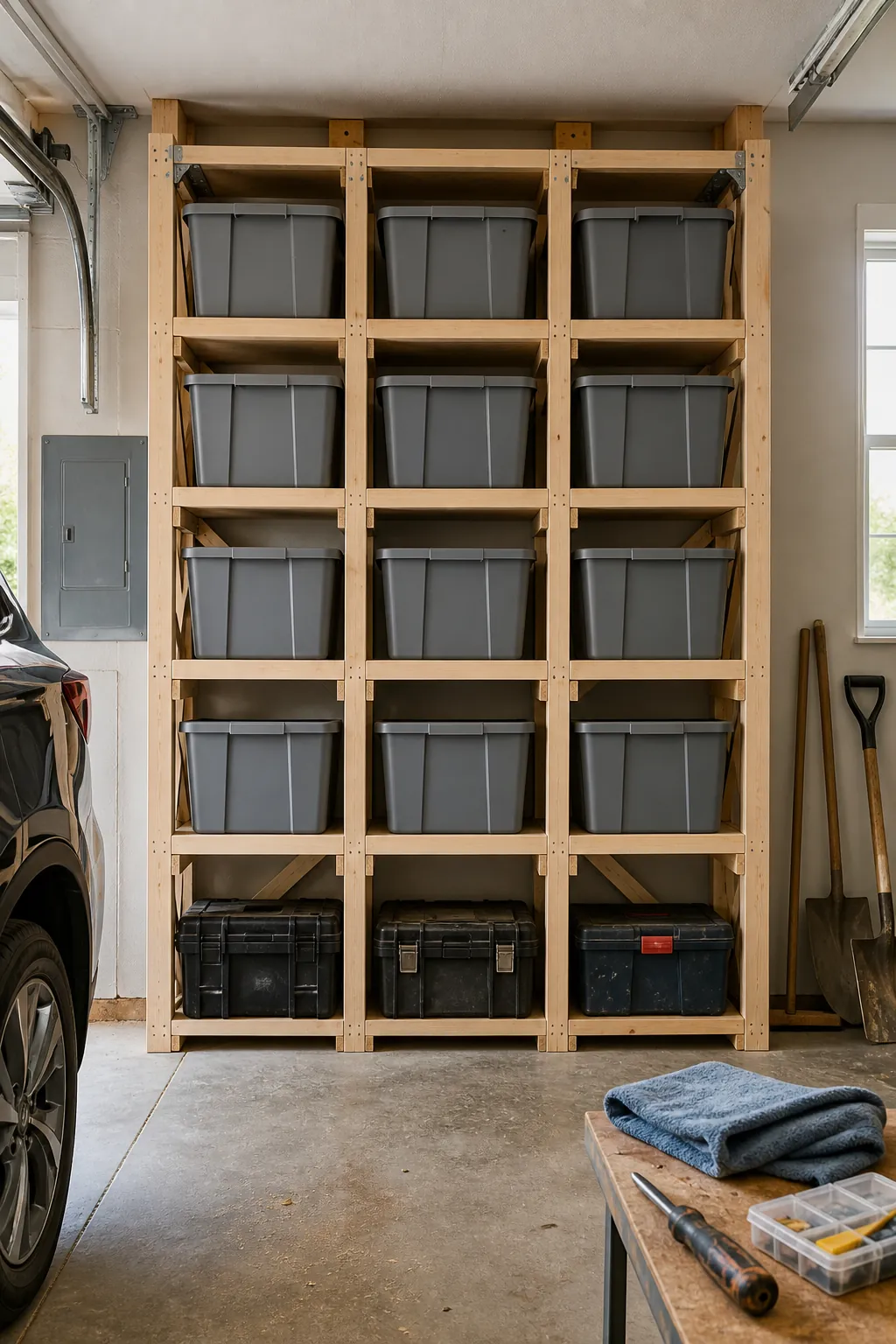
Build a tote-sized 2×4 storage wall
Buy or gather the lidded totes first, then size each bay with a little finger clearance above and at the sides. A framed 2×4 rack anchored to studs gives heavy household storage a stable home while eliminating wasted gaps.
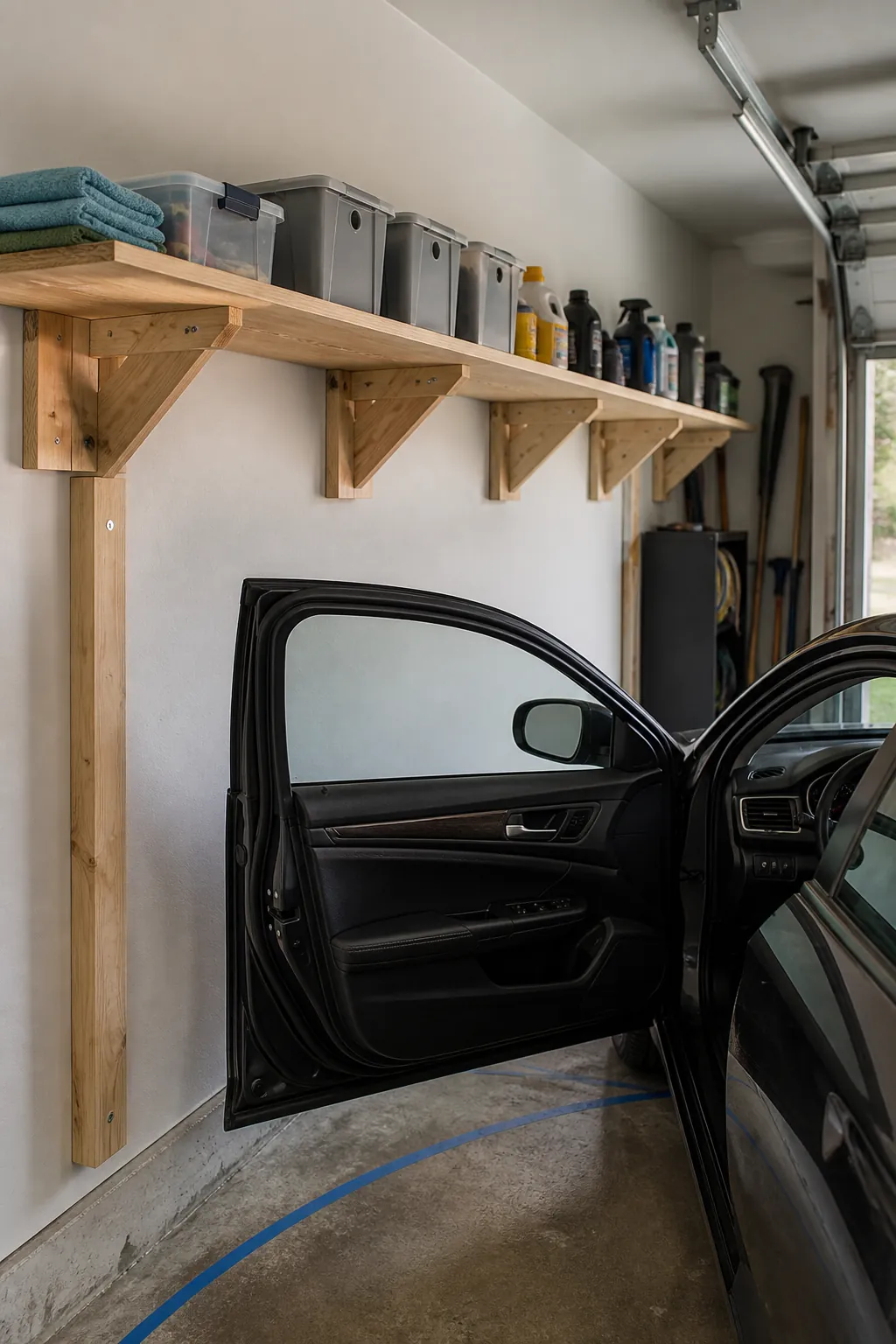
Run a shallow shelf above the car doors
Tape the fully opened door arcs before building. A slim shelf mounted just beyond that envelope can hold narrow bins and car-care supplies without turning every arrival into a careful squeeze.
Frame a freestanding renter-friendly rack
Build a self-supporting rack with braced sides, a rigid back, and broad feet when wall fastening is prohibited. Keep the heaviest objects low and shim the base so all uprights bear evenly on a sloped slab.
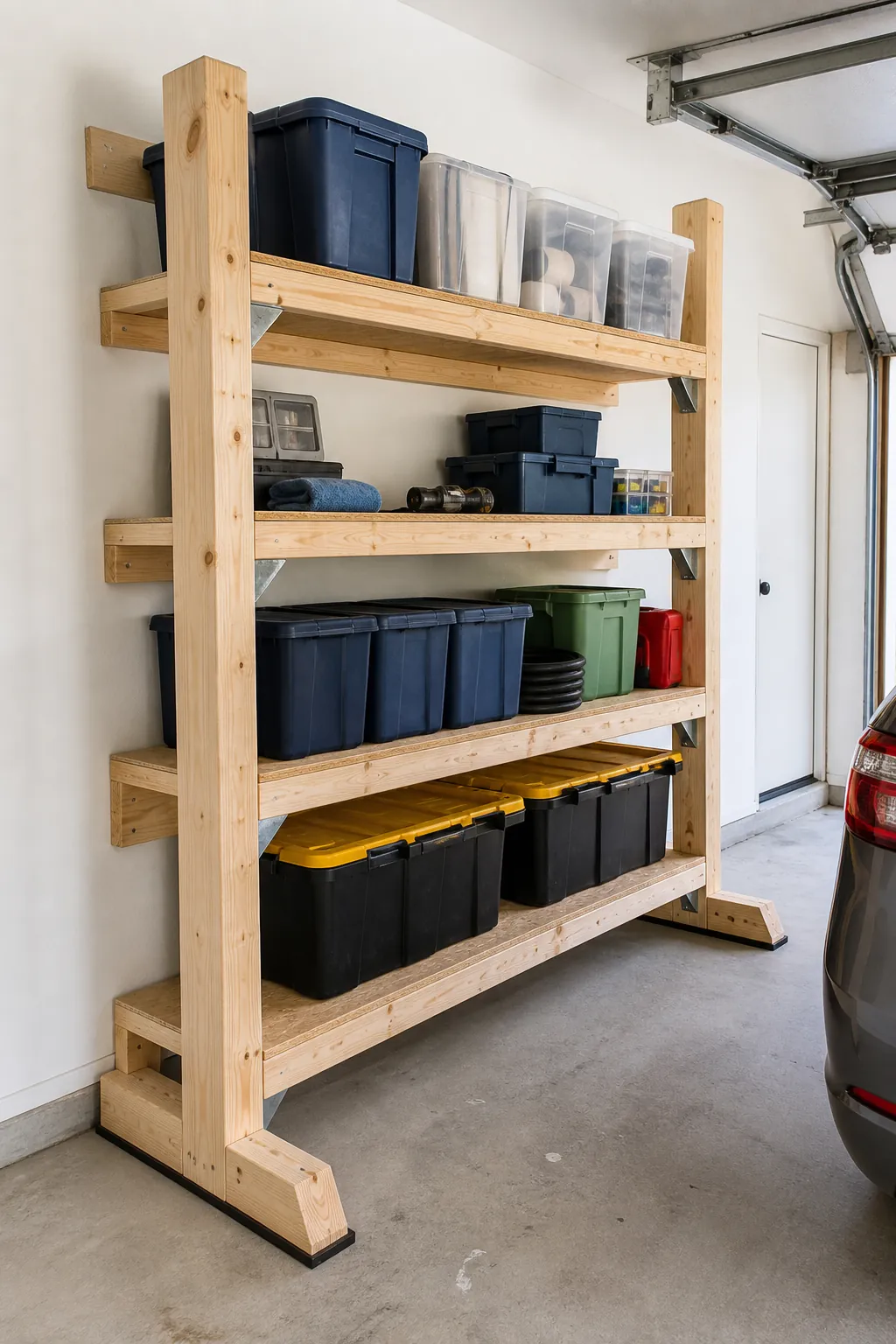
Suspend shelves with threaded rod
For open floor space, fasten the back ledger to wall framing and support the front edge with properly anchored threaded rods. Use rated hardware, lock the nuts, and verify the ceiling structure before loading anything.
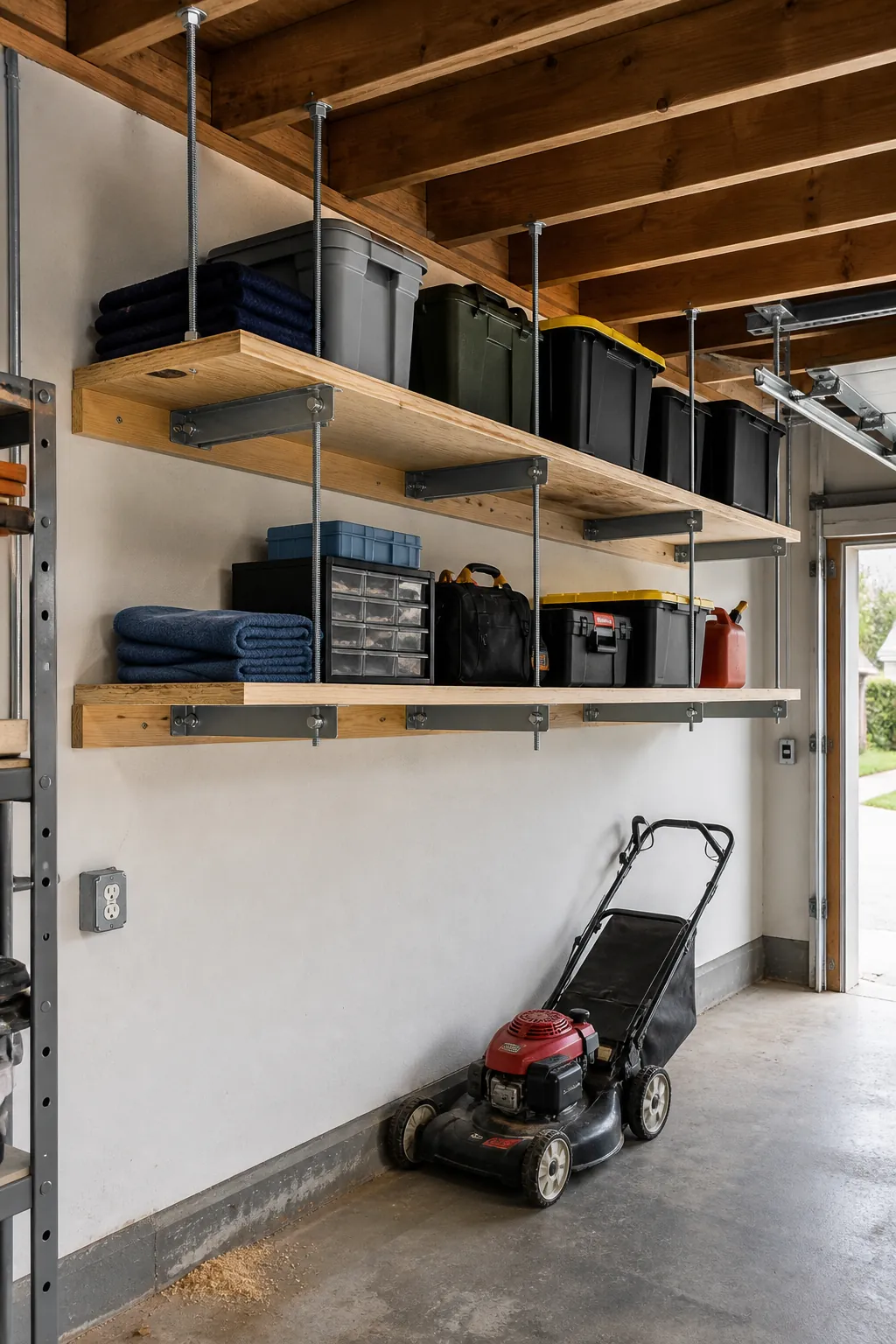
Create a floating ladder-frame shelf
A 2×4 ladder frame fixed across several studs can carry a plywood deck without front legs. Keep the depth modest, add blocking beneath sheet seams, and reserve it for loads appropriate to the anchors and framing.
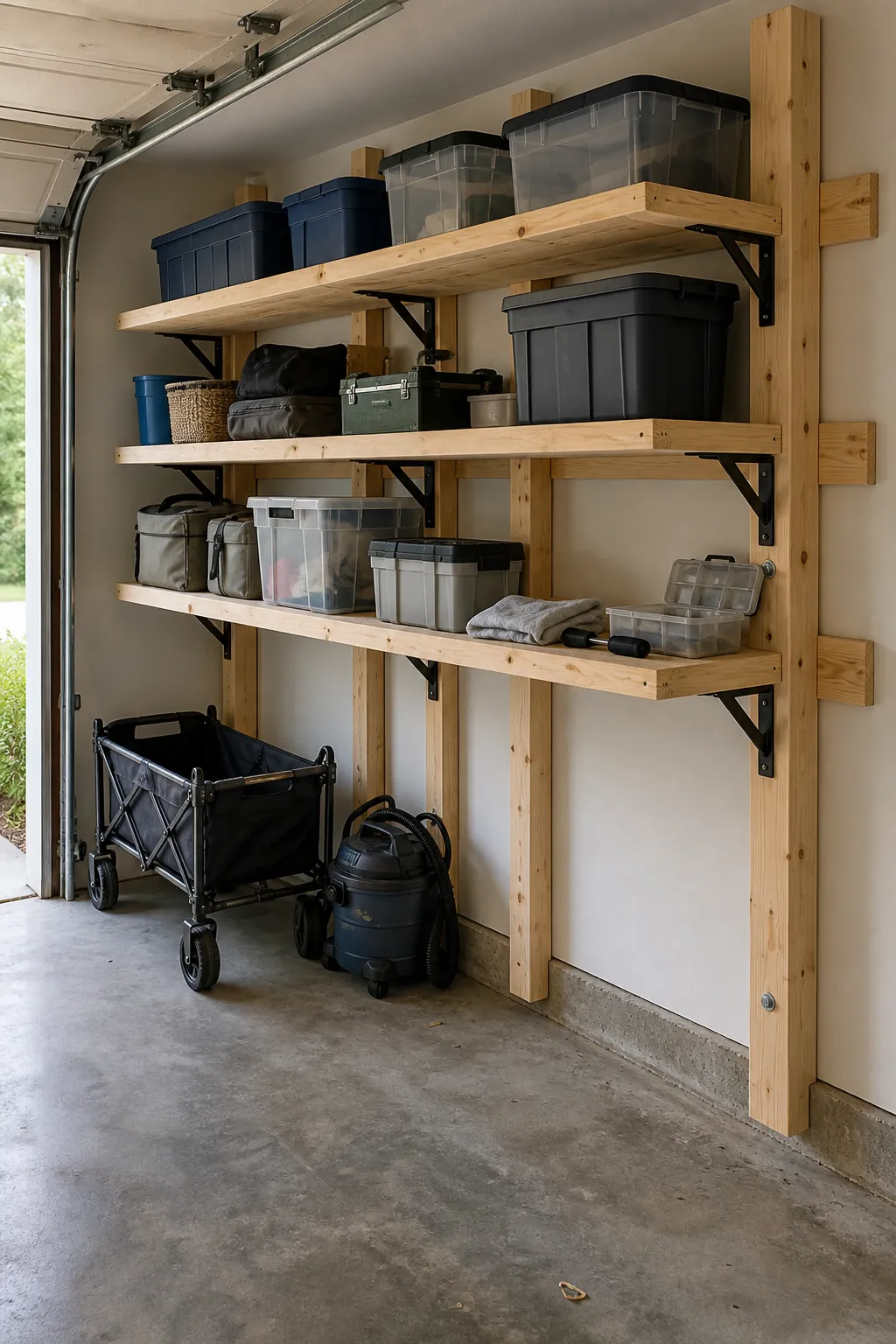
Wrap an inside corner with connected shelves
Join two shelf runs around a corner with shared posts and full bearing beneath both frames. Stop one deck short of the wall so bins can turn in and out instead of disappearing into an unreachable blind corner.
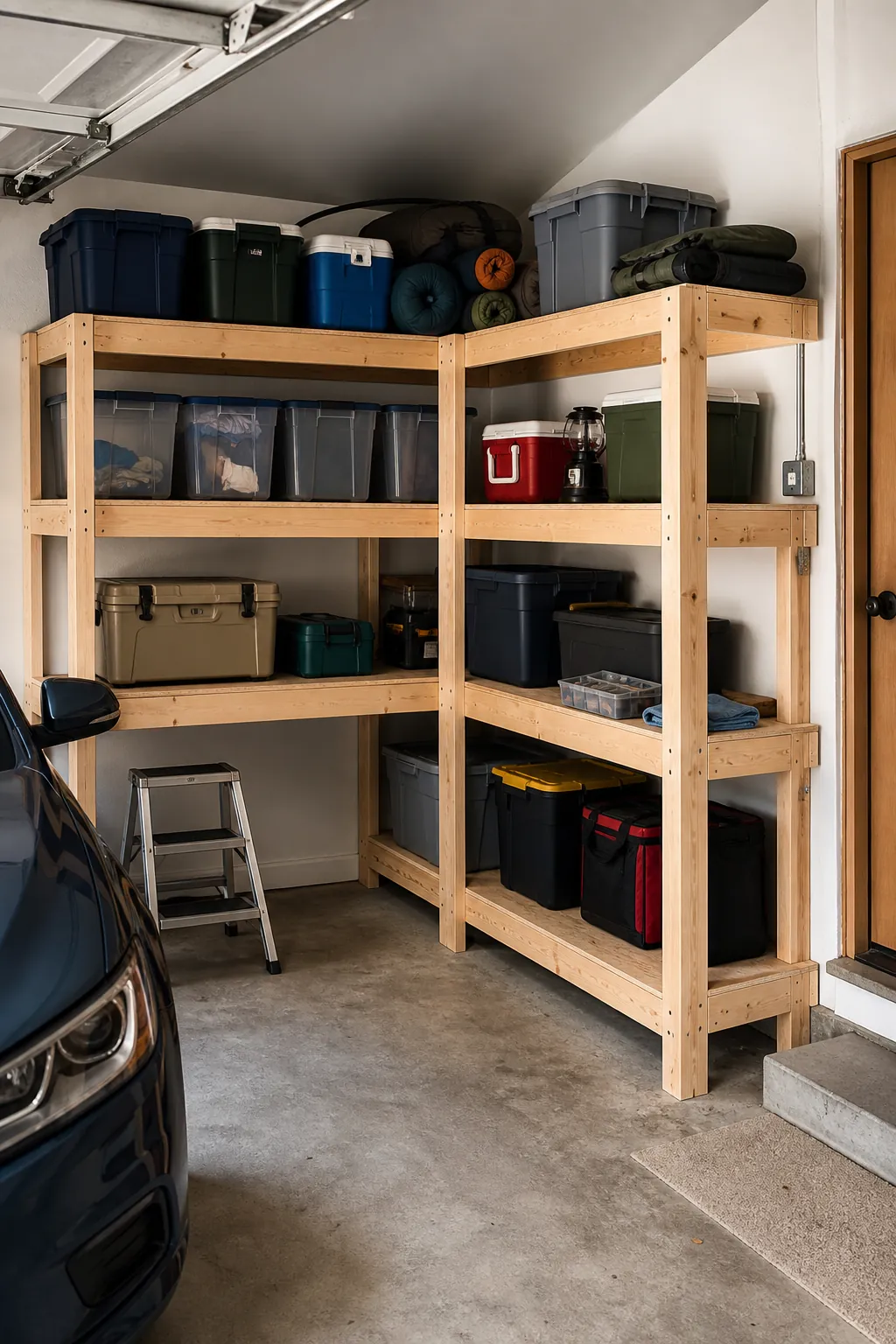
Bridge a workbench with an upper shelf
Carry uprights past the bench and add a shallow upper deck for tools, jigs, and project bins. Leave generous headroom and install bright task lighting beneath the shelf rather than working in its shadow.
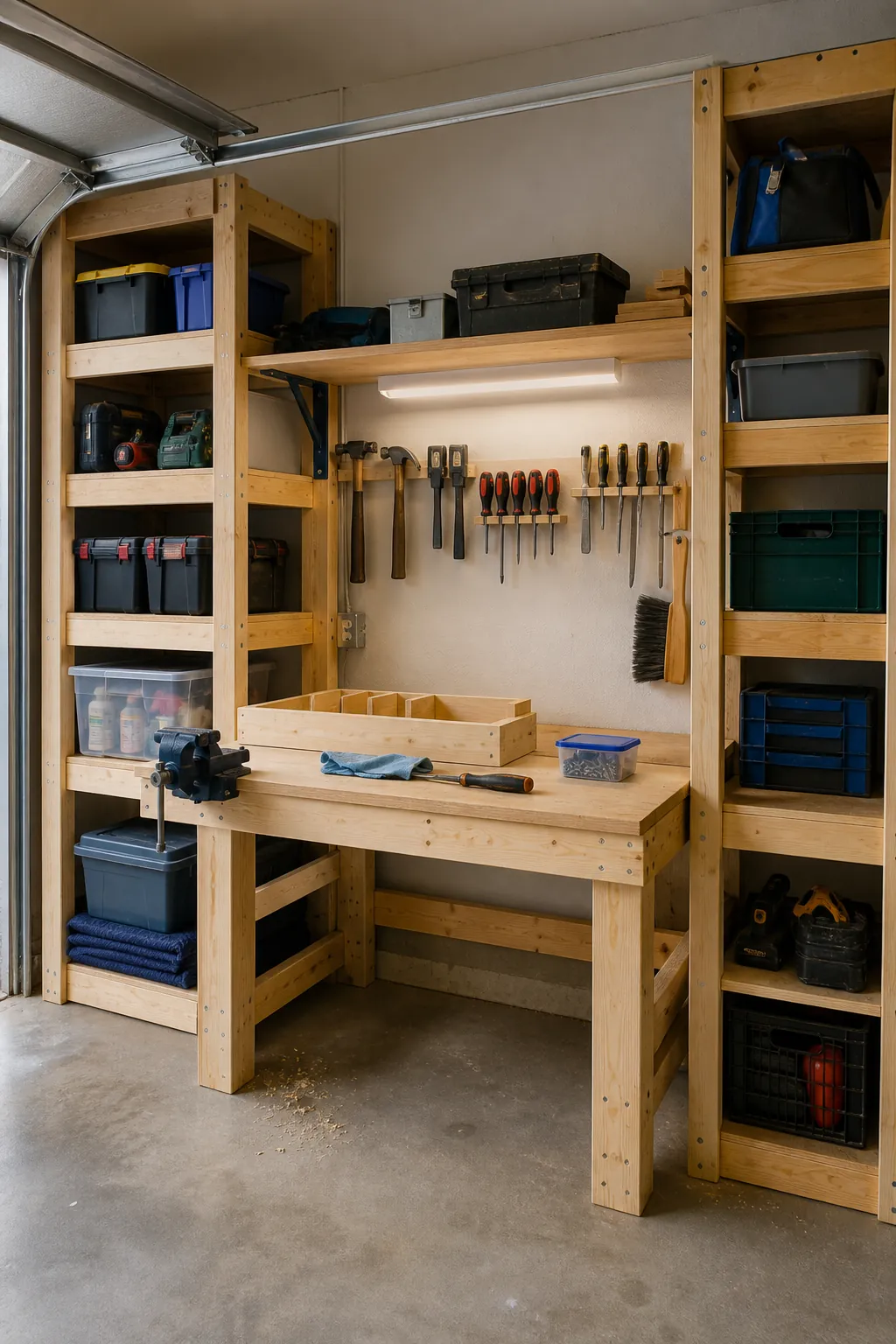
Turn one bay into a miter-saw station
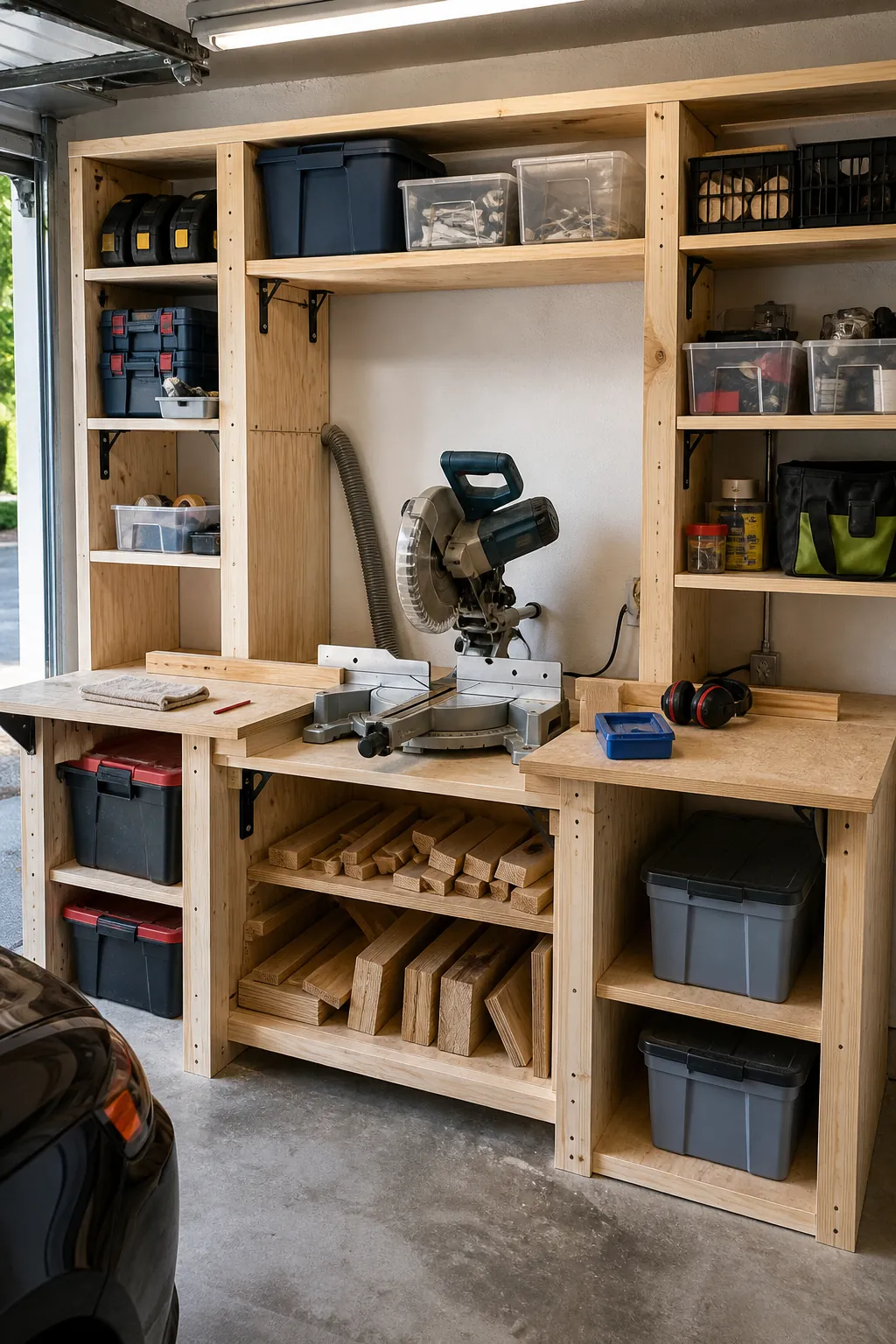
Set the saw deck so its table aligns with long support wings on both sides. Give the tool enough rear clearance, preserve access to controls, and collect offcuts on a strong lower shelf.
Add pull-out shelves for benchtop tools
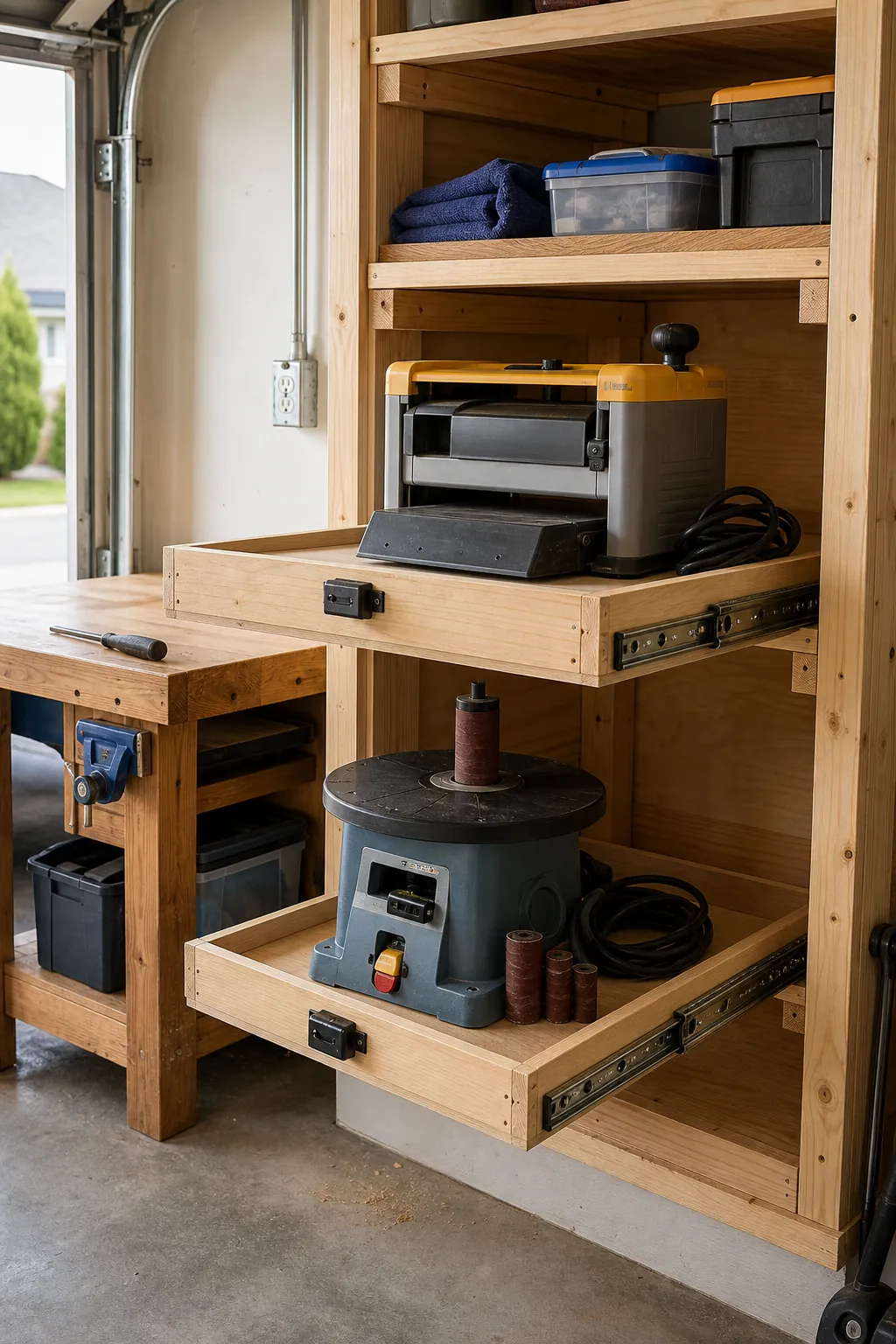
Mount compact tools on stout plywood trays with load-rated full-extension slides. Include a positive latch so a planer or sander cannot roll forward while parked, and operate tools only in a supported, ventilated position.
Build narrow shelves between studs
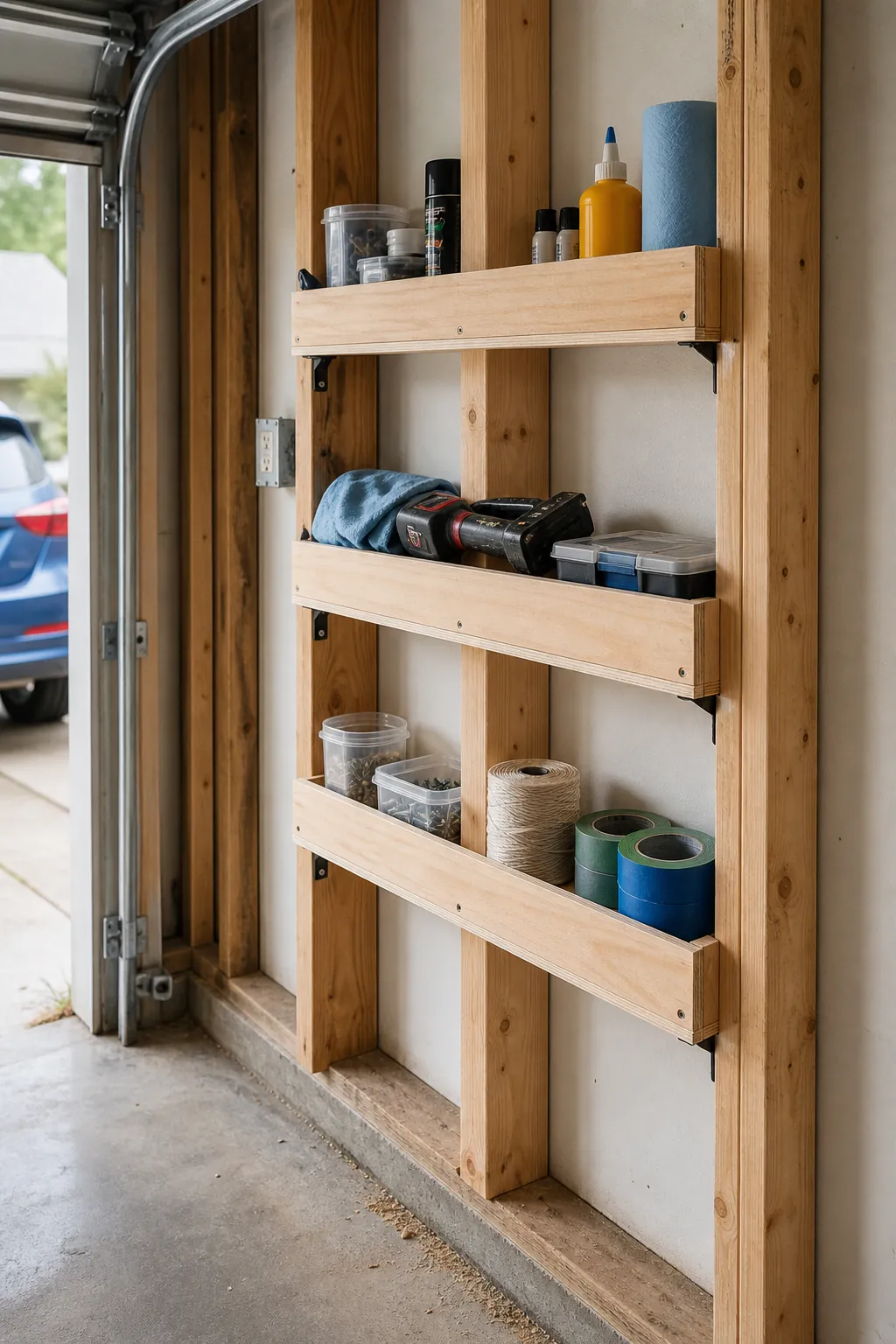
On an unfinished non-rated partition, shallow plywood boxes can fit between exposed studs for spray cans and small supplies. Never alter fire separation, wiring, plumbing, or structural members, and add a front lip.
Use cleats for adjustable plywood shelves
Drill a repeatable line of holes or install vertical standards so shelf heights can change with your storage. Adjustable supports make a small garage more resilient when tools, hobbies, or bin sizes evolve.
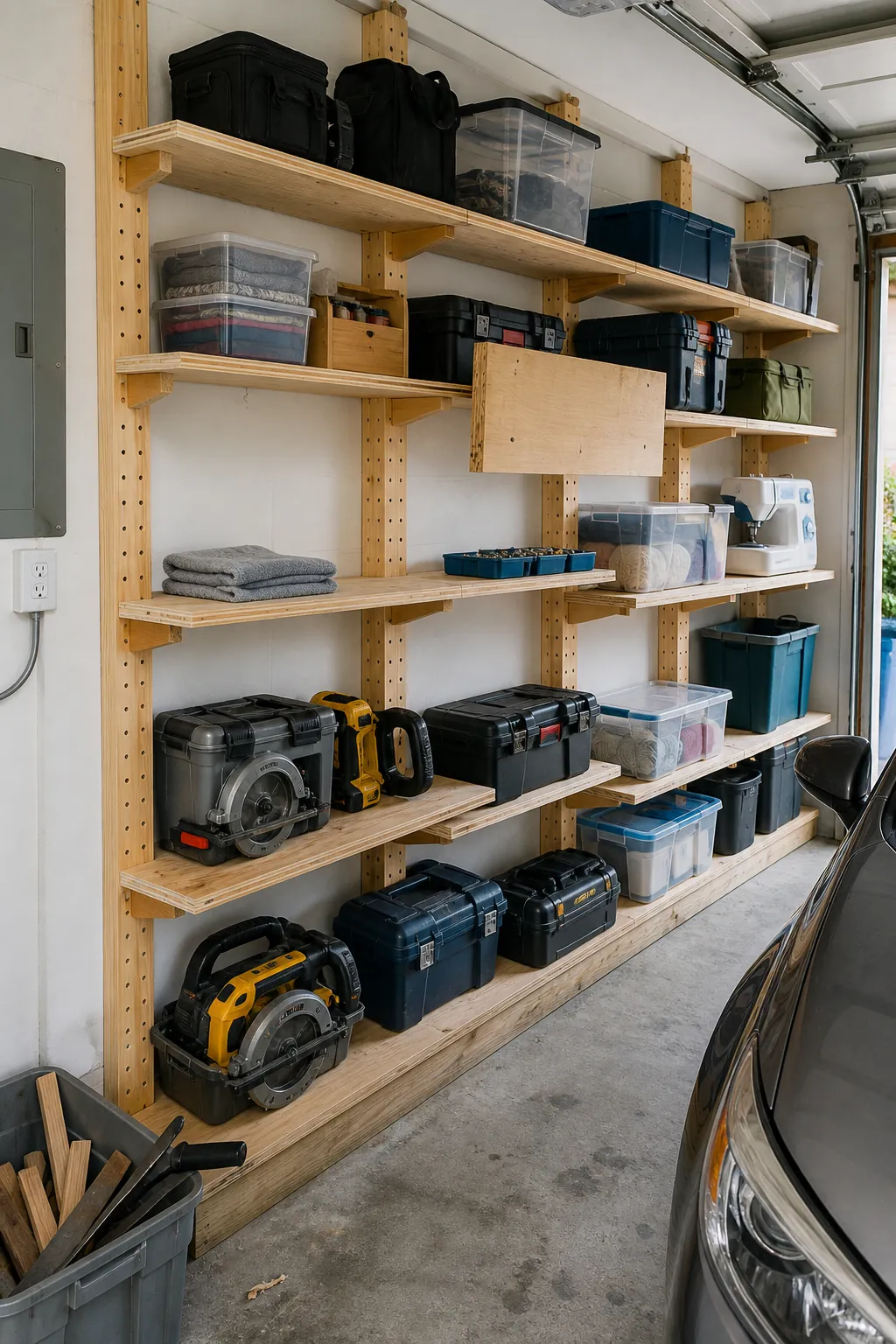
Make rail shelves for identical totes
If every container has a strong molded rim, parallel wood rails can replace full decks and reduce material cost. Test the exact tote under load, prevent sideways slip, and never assume another brand has the same rim strength.
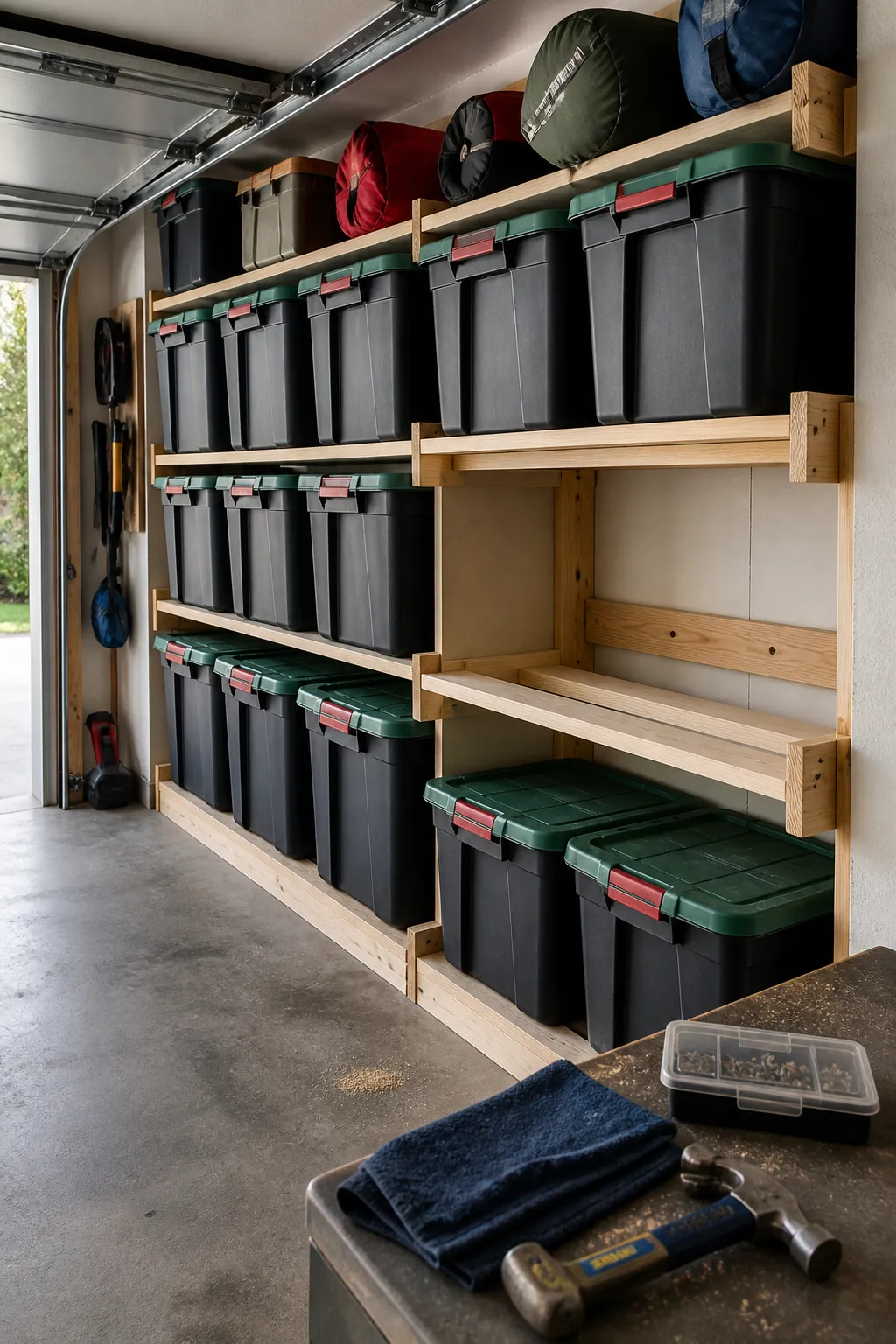
Reuse sound cabinets as closed shelving
Salvaged kitchen cabinets hide visual clutter and protect supplies from dust. Inspect every box for swelling or damage, fasten a level ledger into studs, and screw adjacent cabinets together through their structural sides.
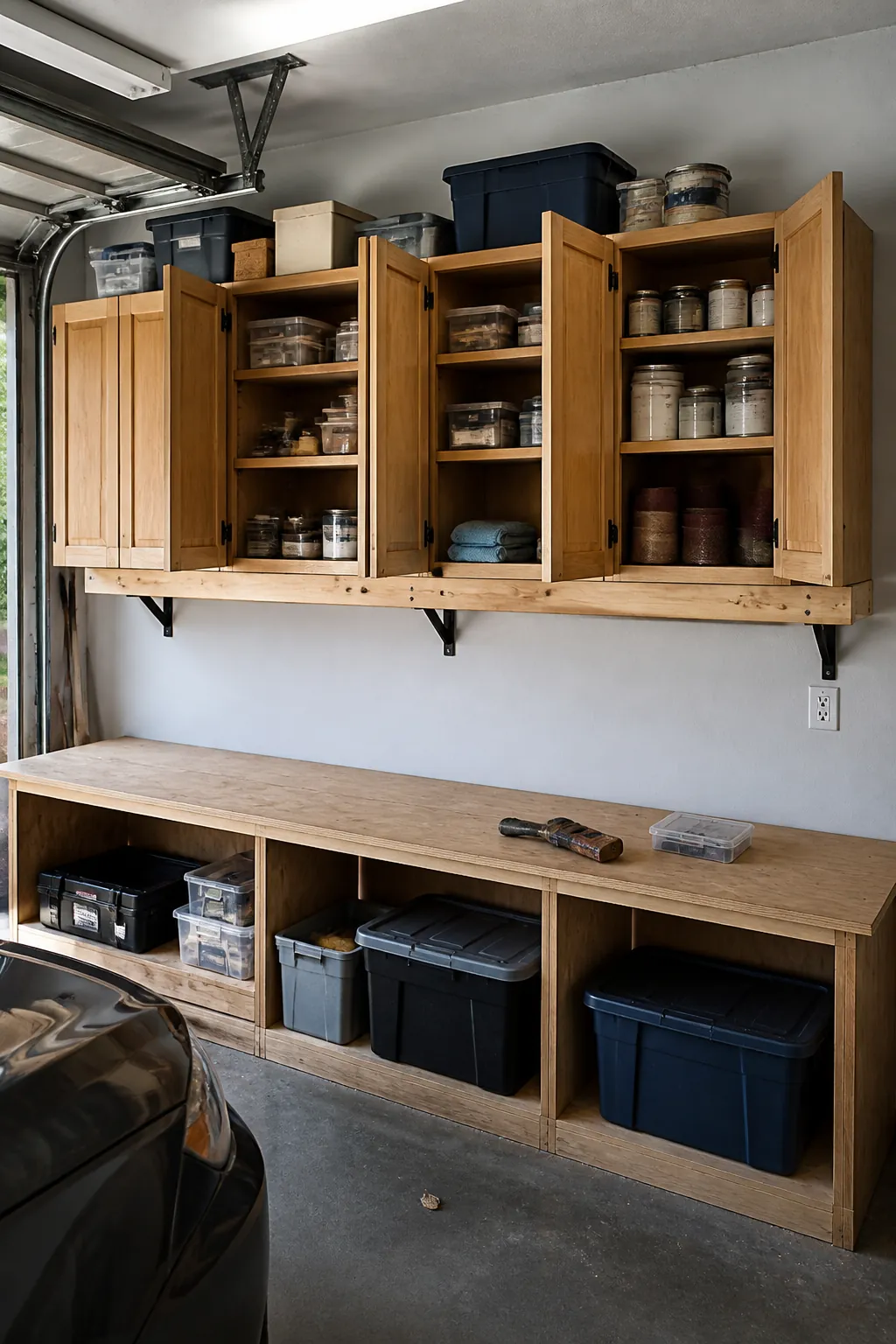
Stack crate modules into a cubby wall
Build matching plywood crates that work alone or fasten into a larger grid. Secure the finished stack against tipping and use the lower cubbies for dense tools while lightweight helmets and towels sit above.
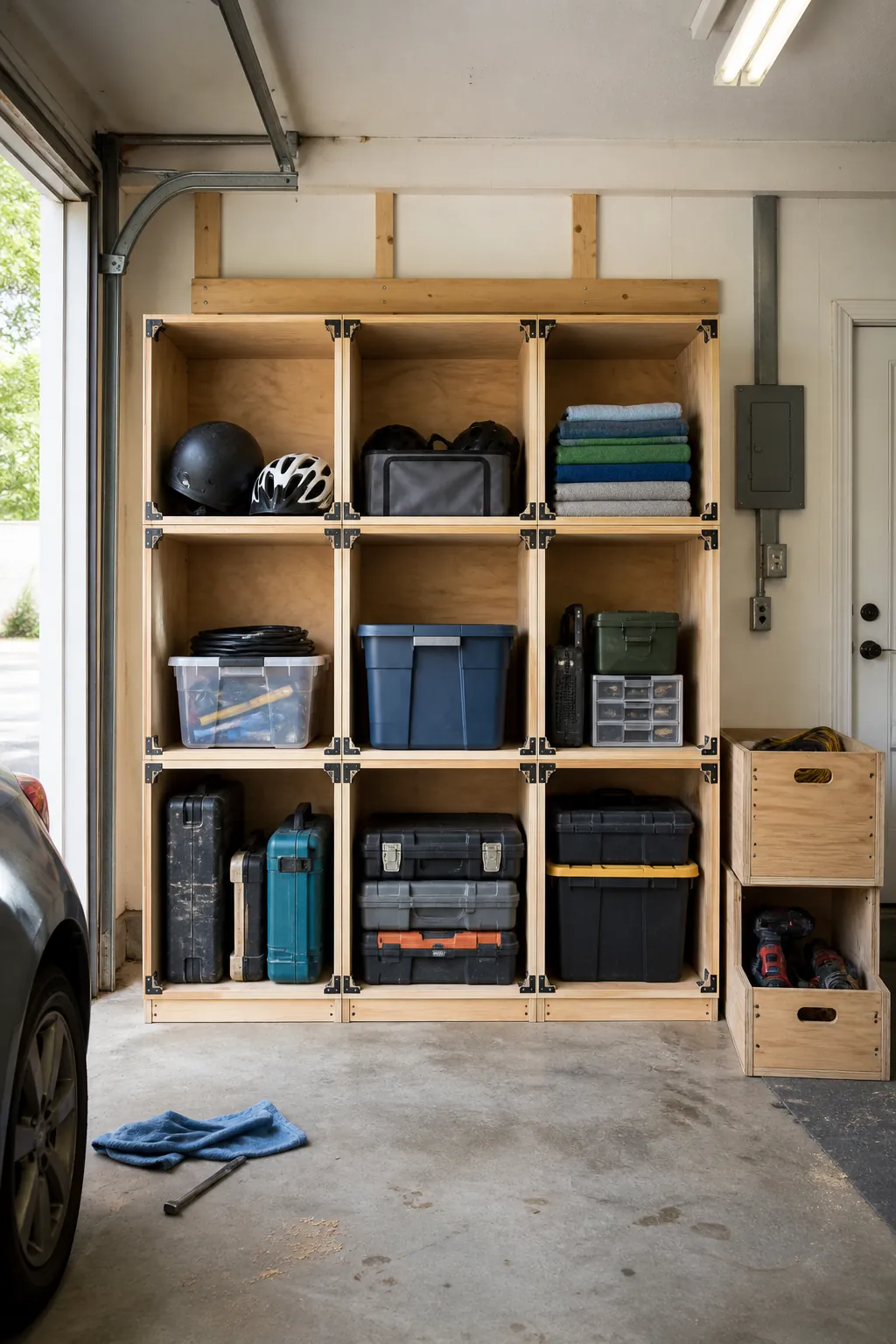
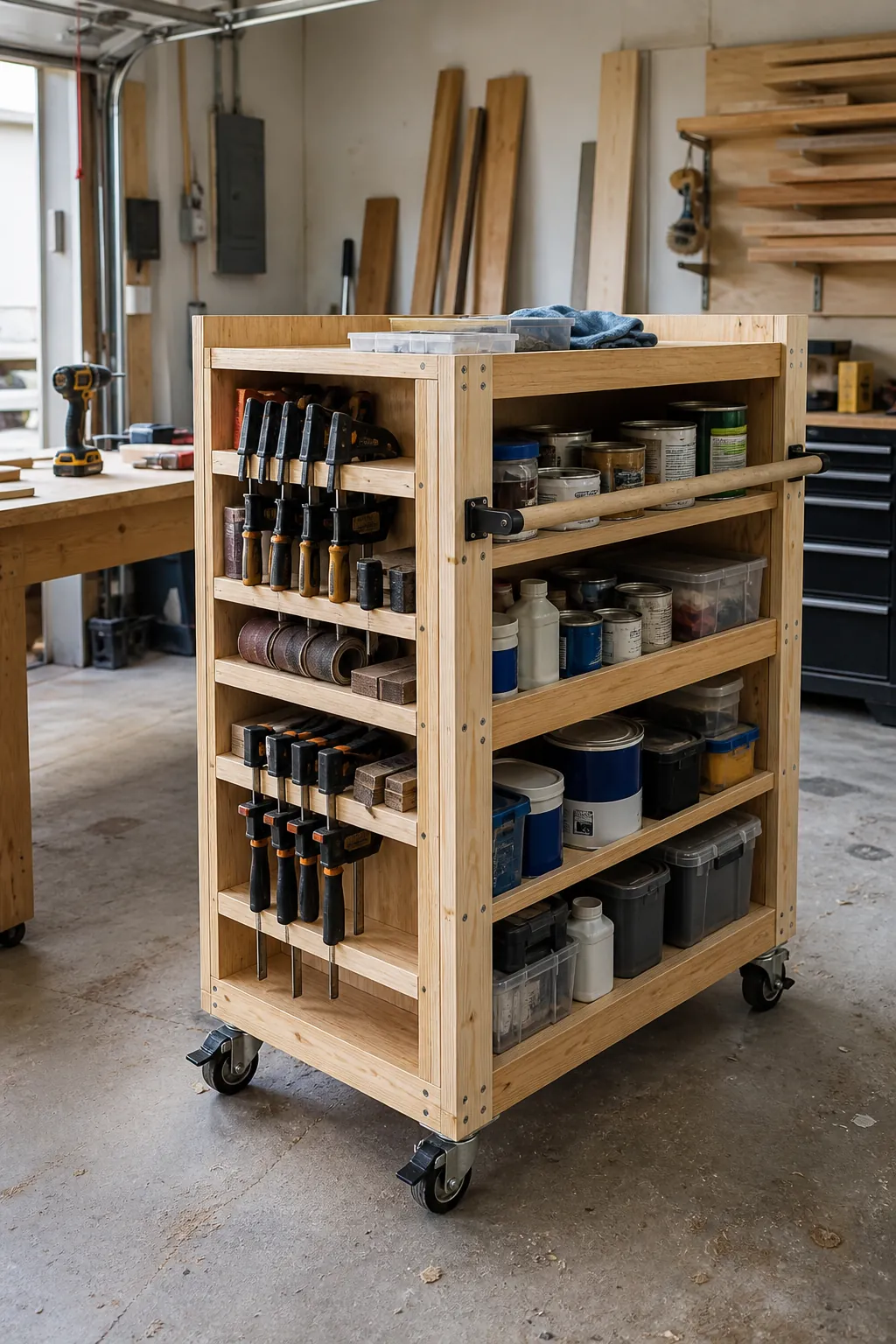
Roll a double-sided shelf cart
A compact rack on locking casters can store supplies on both faces and move beside the current project. Keep its footprint broad, its height conservative, and its center of gravity low enough to resist tipping.
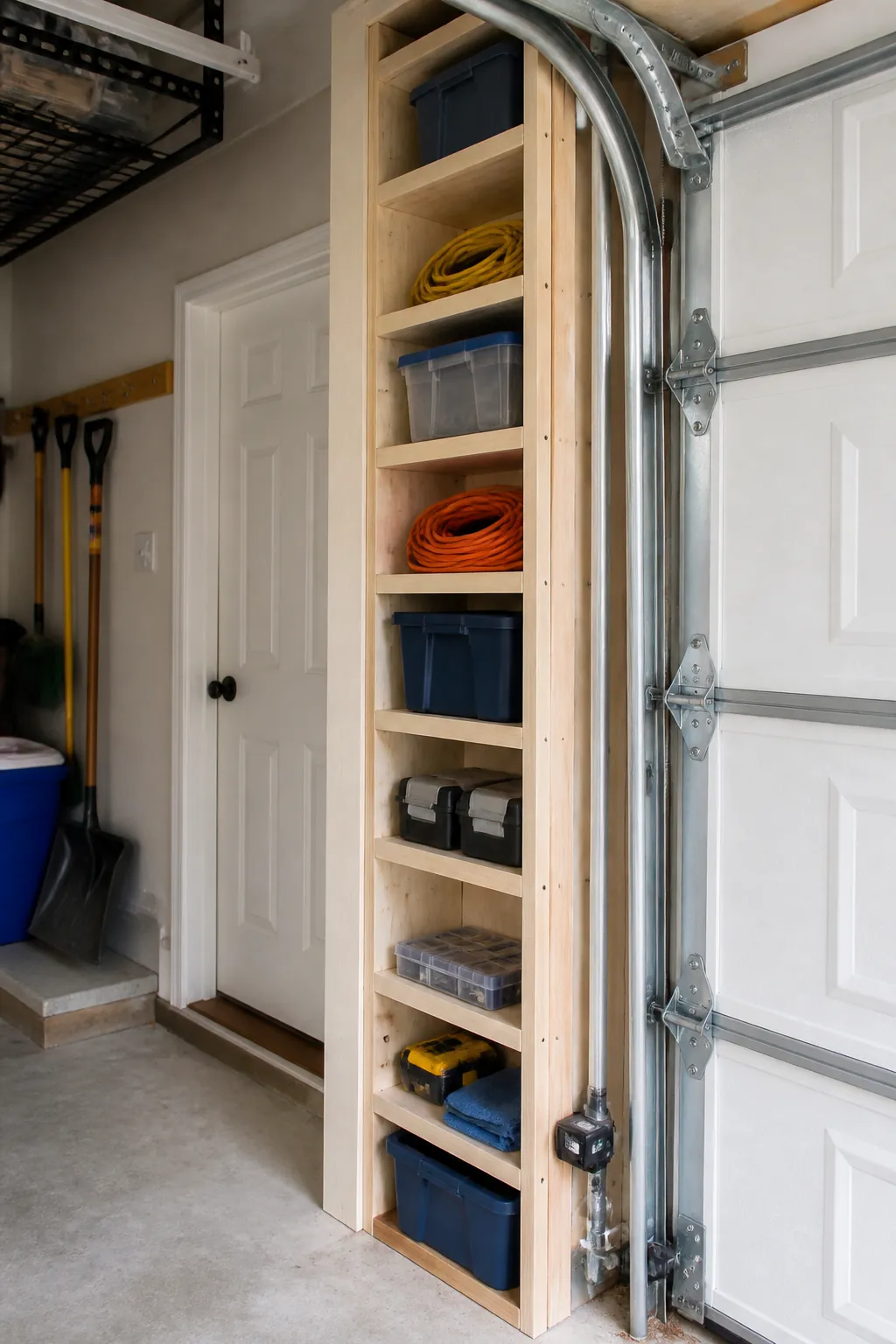
Fit a shelf tower beside the garage door
Measure the track, spring, cable, sensor, and service space before filling the narrow pier beside a sectional door. A tall shallow tower can use this awkward strip without interfering with moving hardware.
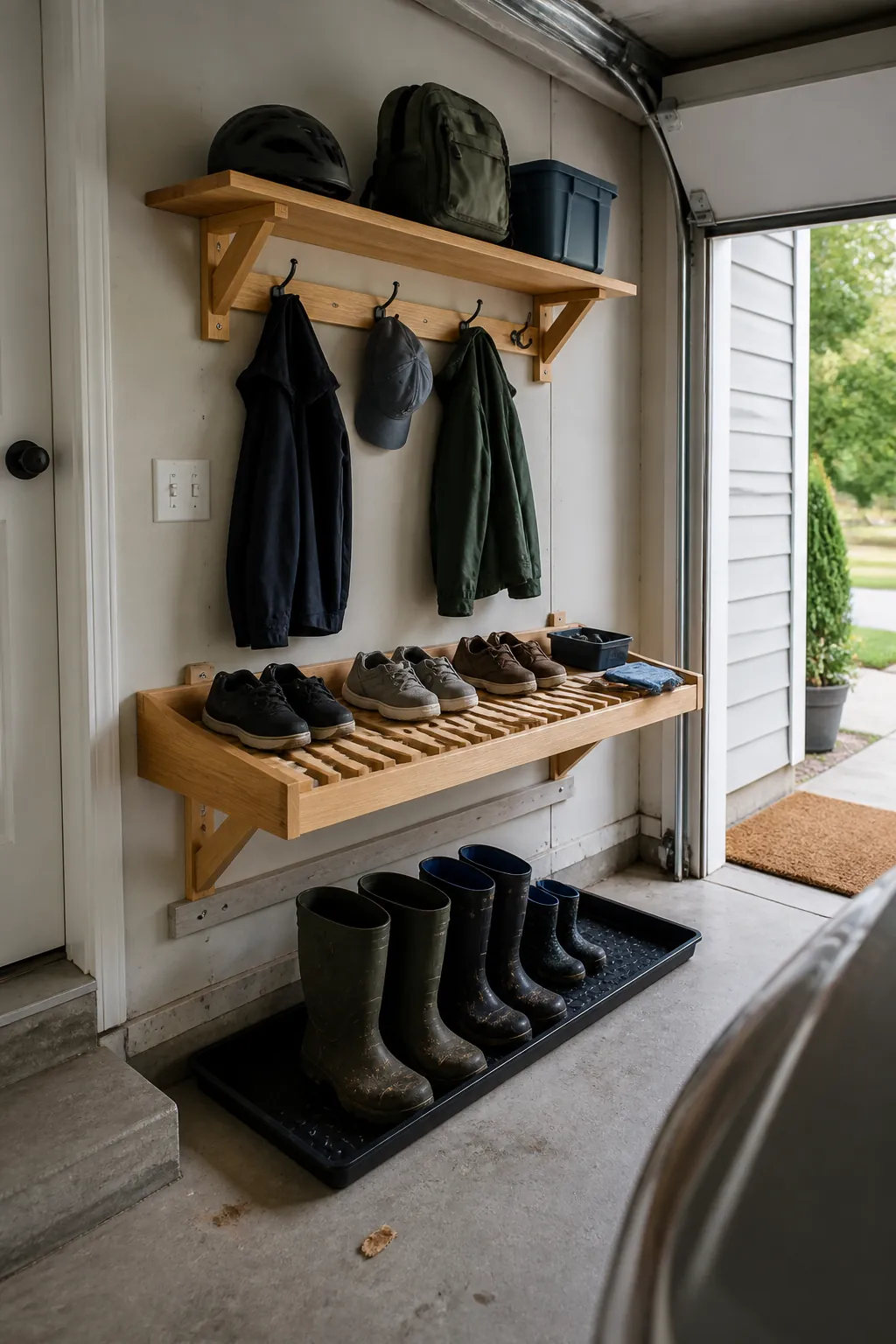
Raise a shoe shelf near the house entry
Mount a washable slatted shelf above a boot tray so wet footwear can drip without trapping dirt. Add a second narrow ledge for helmets or bags, but keep the door swing and required egress completely clear.
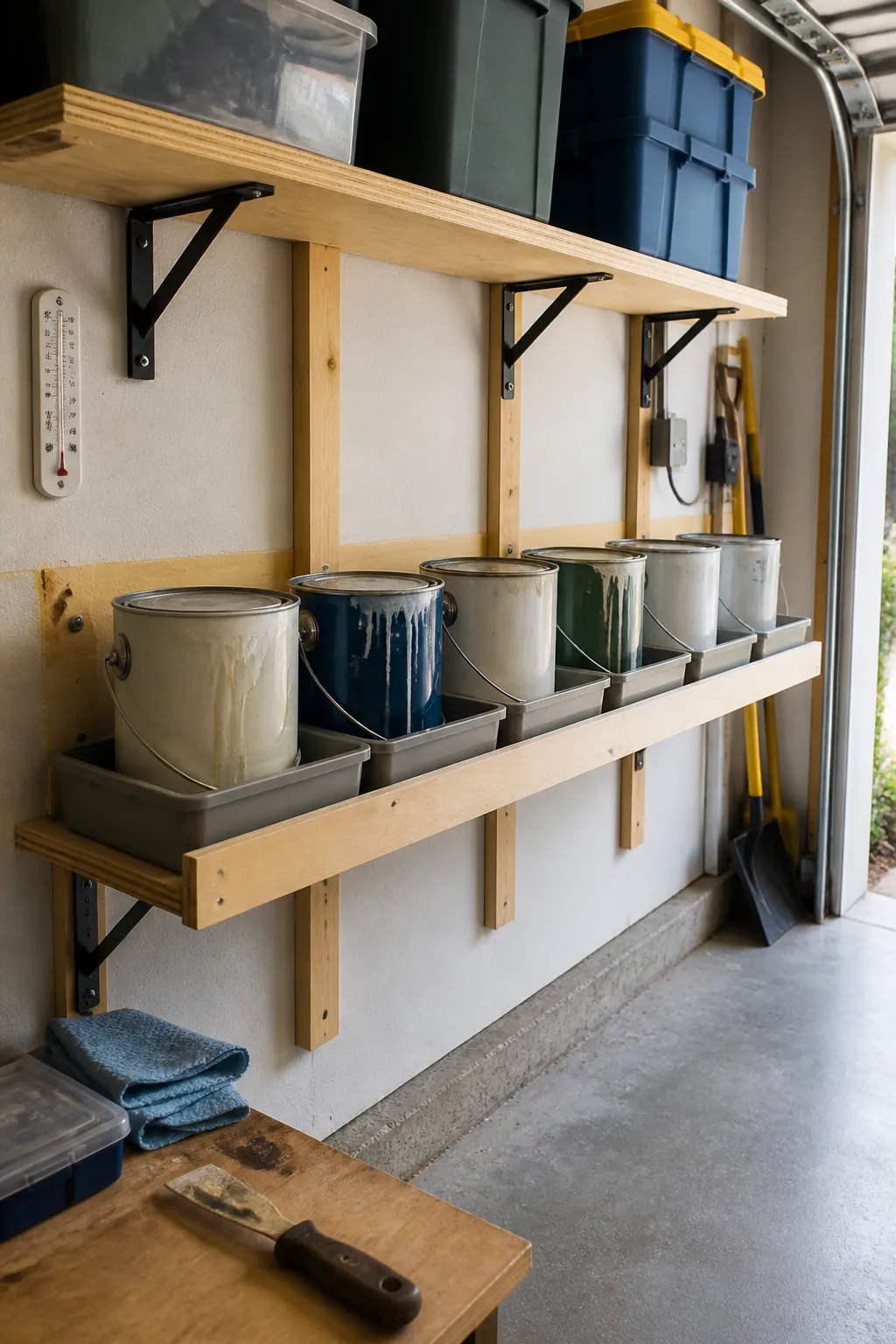
Build a ventilated paint-and-finish shelf
Group compatible finishes upright in shallow trays on a shelf with a retaining edge. Follow every product’s storage temperature and fire-safety directions; many garages are too hot, cold, or close to ignition sources for certain chemicals.
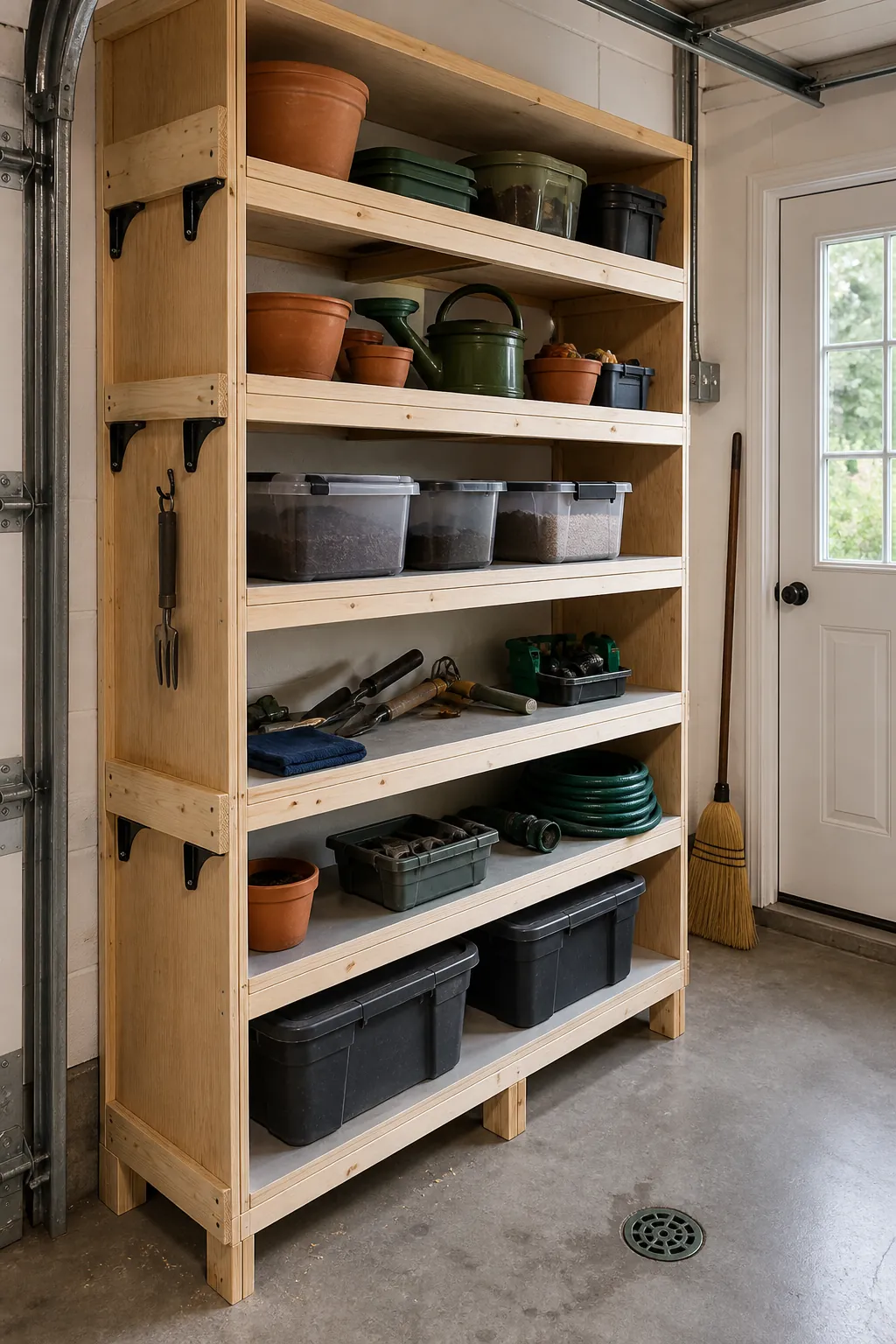
Give garden supplies a washable shelf
Use sealed plywood or removable plastic liners for pots, hand tools, and dry garden supplies. Position the unit near the exterior door, lift its lowest rail off damp concrete, and brush soil out regularly.
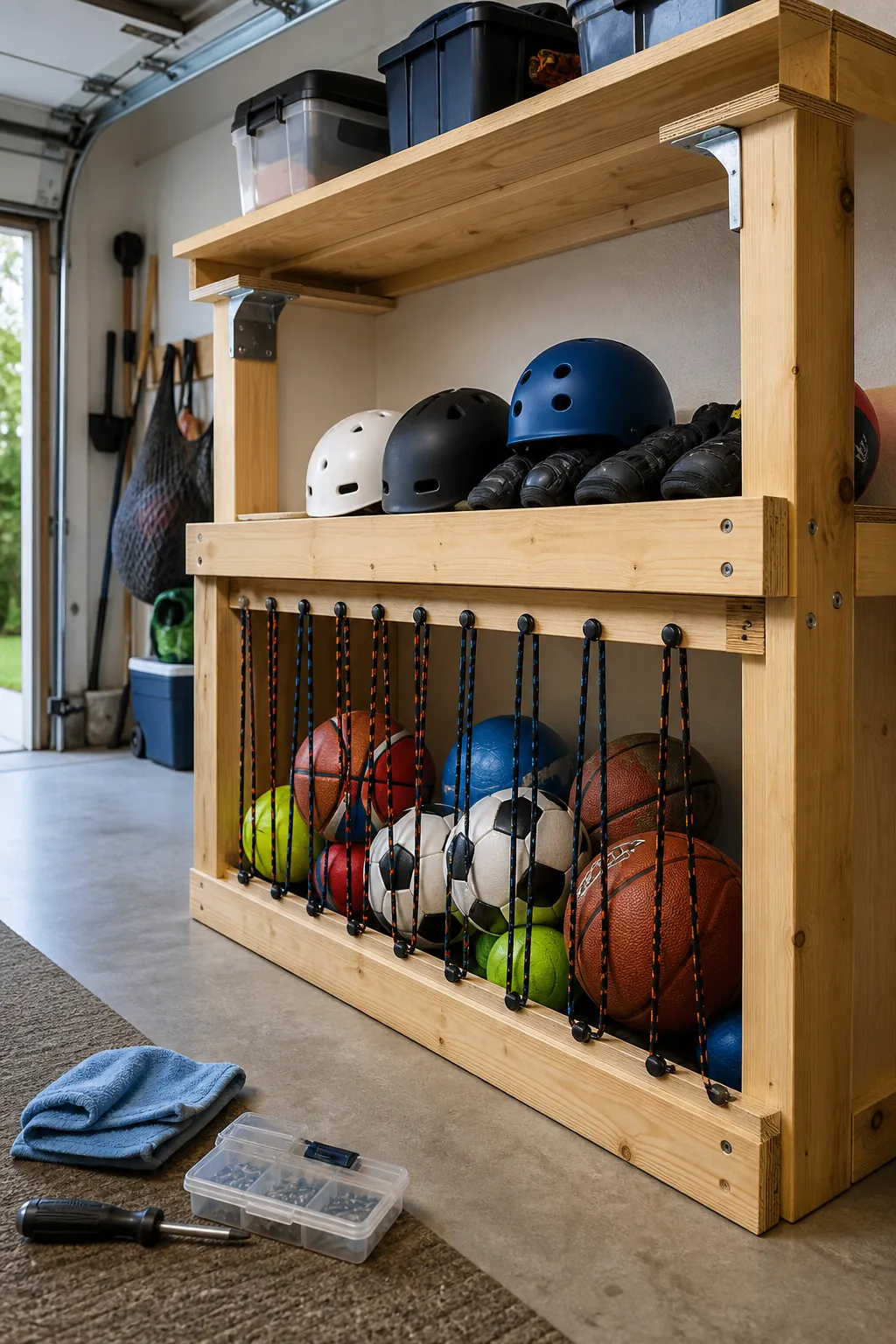
Add a ball corral beneath open shelves
Reserve the bottom bay for a flexible bungee front that contains sports balls but lets children pull one out. Place helmets and pads on the shelf above, away from chemicals and sharp workshop tools.
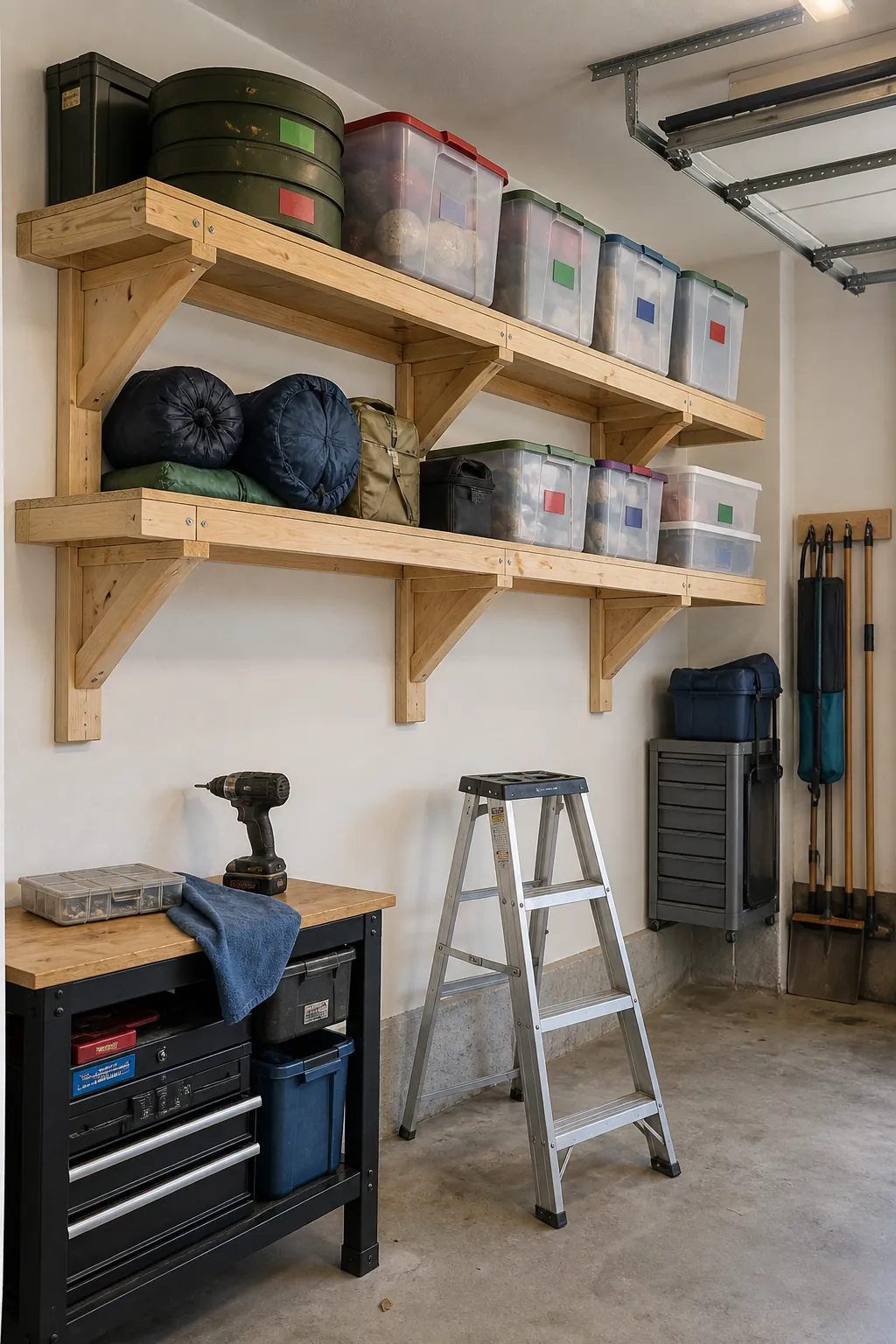
Create seasonal shelves above eye level
High wall shelves suit lightweight holiday decor and rarely used camping textiles, not dense machinery. Use lidded bins, label the visible ends, and keep a stable step ladder nearby rather than climbing the rack.
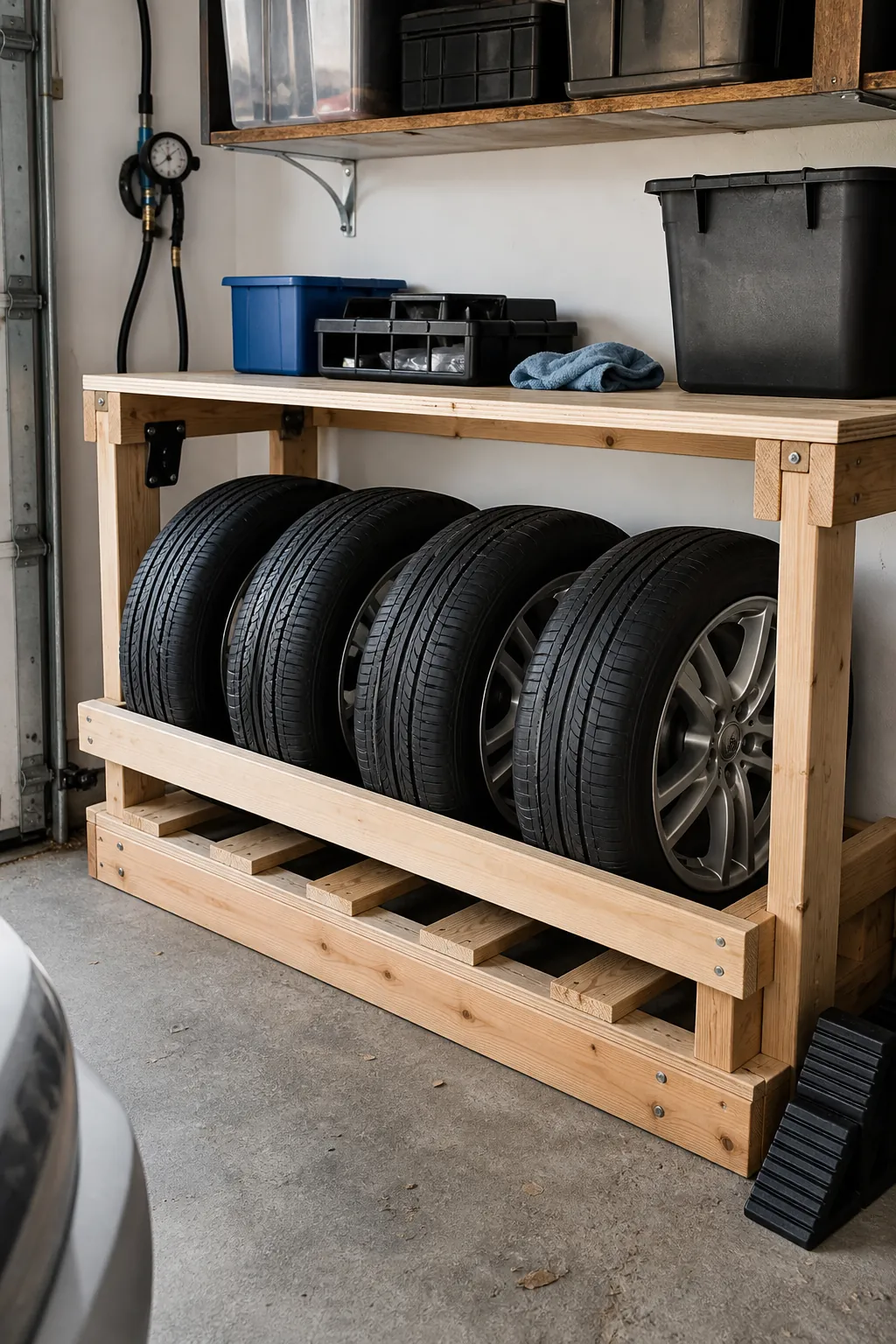
Build a low tire-and-wheel shelf
A deep, heavily braced lower rack keeps wheels upright and prevents them from rolling. Confirm the shelf and anchors can handle the actual weight, and follow tire-storage guidance for cleanliness, dryness, and positioning.
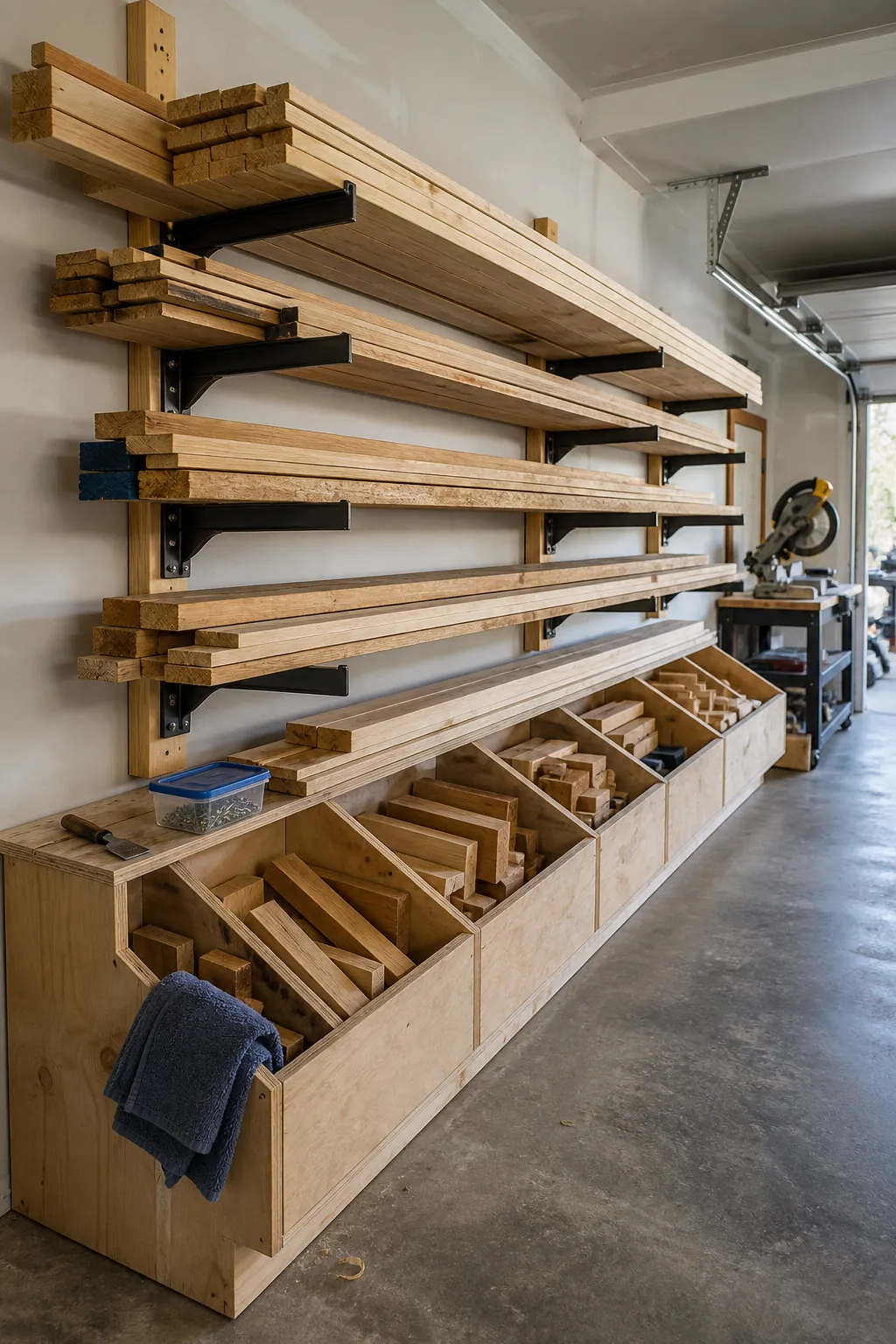
Divide lumber shelves by length
Mount horizontal arms for long boards and place short offcuts upright in divided bins below. Keep stock supported at several points, retain it against rolling, and set a minimum scrap length so the collection stays useful.
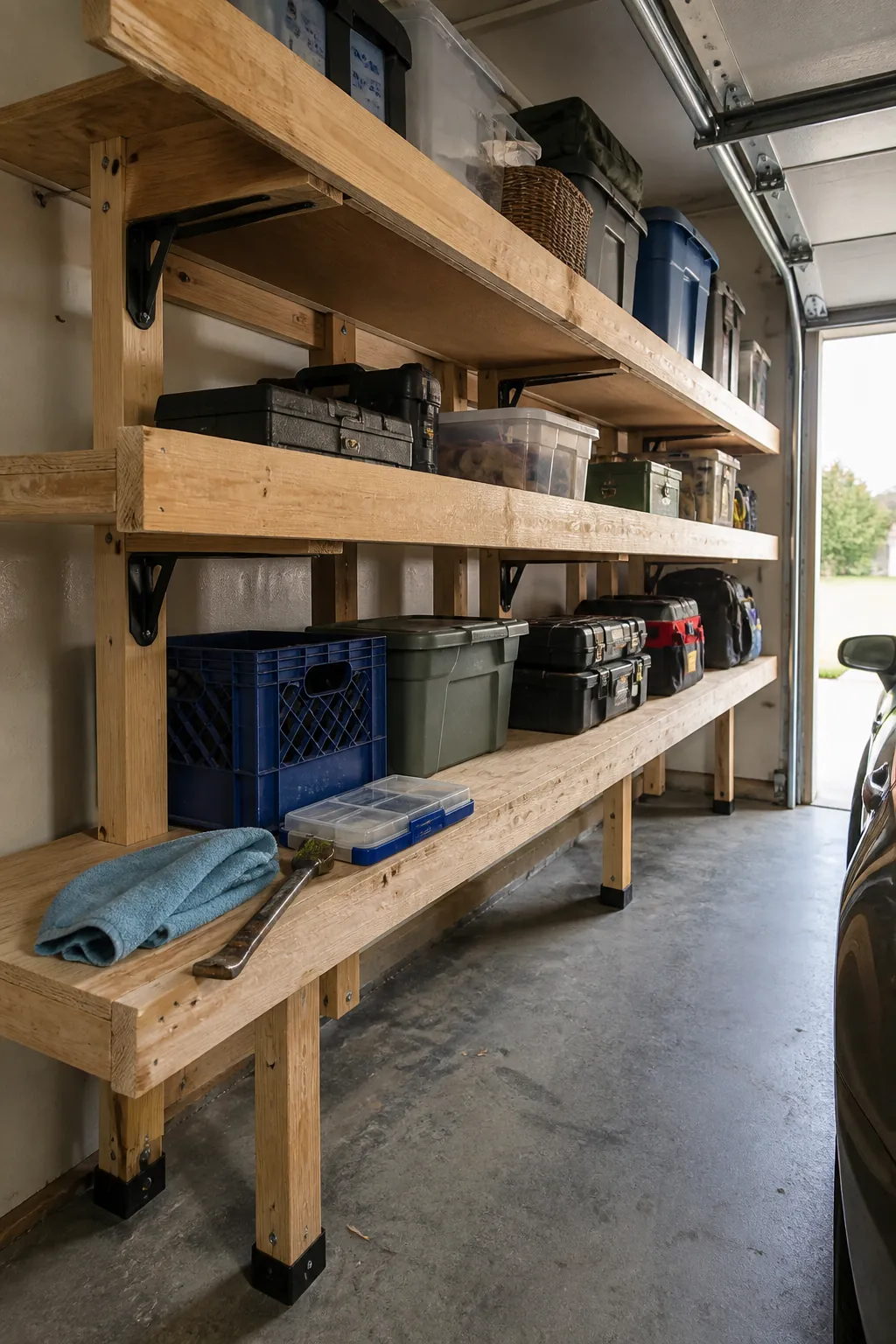
Cap deep shelves with front-edge stiffeners
Reduce sag by shortening spans and fastening a solid-wood stiffener along the front of each plywood deck. Support every sheet edge, orient the best face upward, and seal exposed edges where dampness is likely.
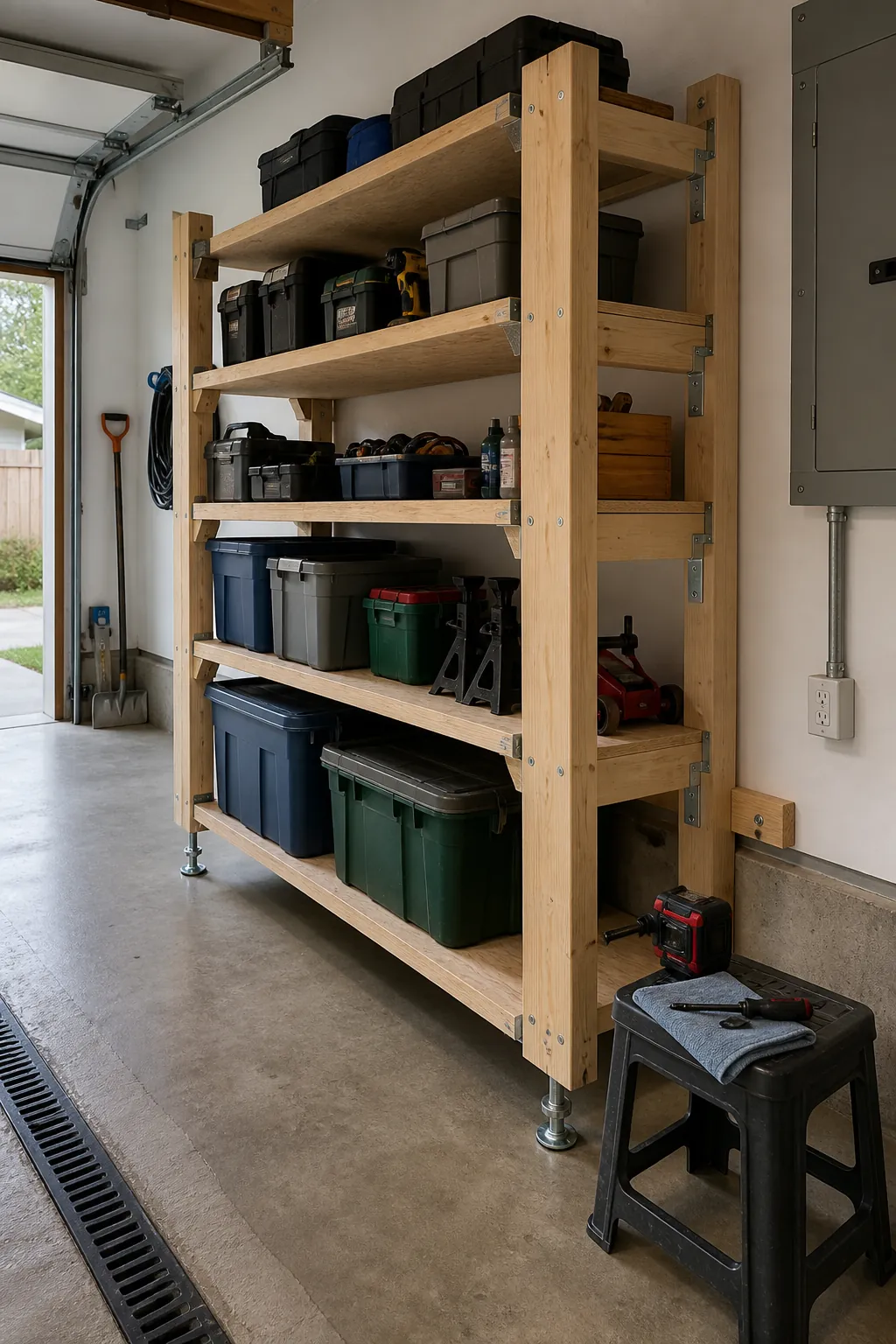
Level shelving on a sloped slab
Garage floors usually pitch toward the door. Scribe legs individually or install adjustable rated feet so posts share the load; do not force a tall rack upright with a loose stack of scrap shims.
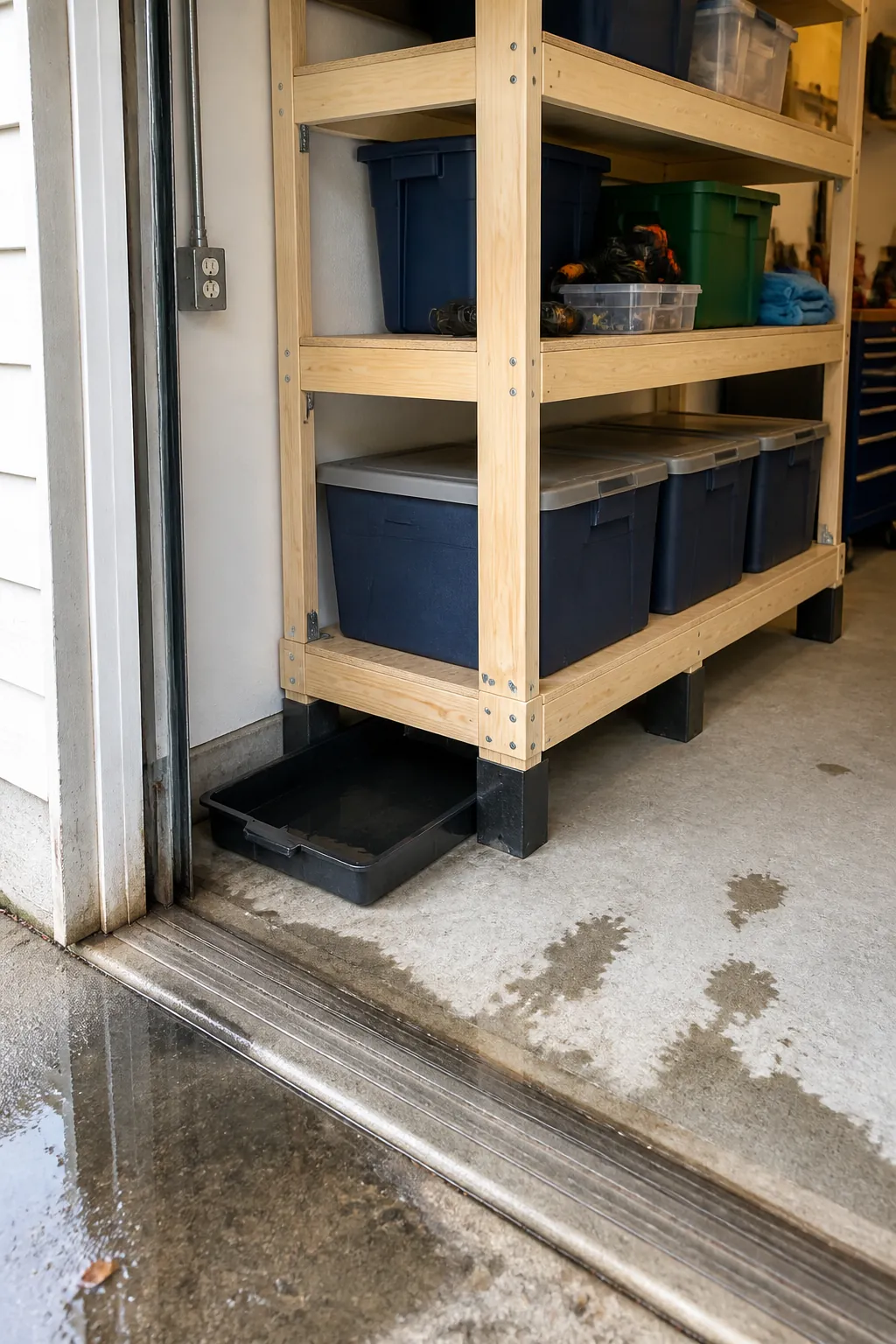
Protect the bottom shelf from moisture
Lift wood off concrete with appropriate feet and keep the first deck above minor puddles. Seal cut plywood edges and store absorbent cardboard or textiles in lidded bins rather than directly on the lowest shelf.
Finish with one empty flex shelf
Leave one accessible shelf intentionally empty. It becomes a landing place for incoming bulk goods or an unfinished project, preventing the workbench and floor from absorbing every temporary item. Reassess the shelf monthly and return what no longer belongs.