A beautiful overhead frame can still leave your table in full sun or send roof runoff across the doorway. Start with the time you use the patio and the route you walk from the house. Shade, rain cover, and privacy are separate decisions, so choose the features that solve your actual problem before filling the space with furniture.
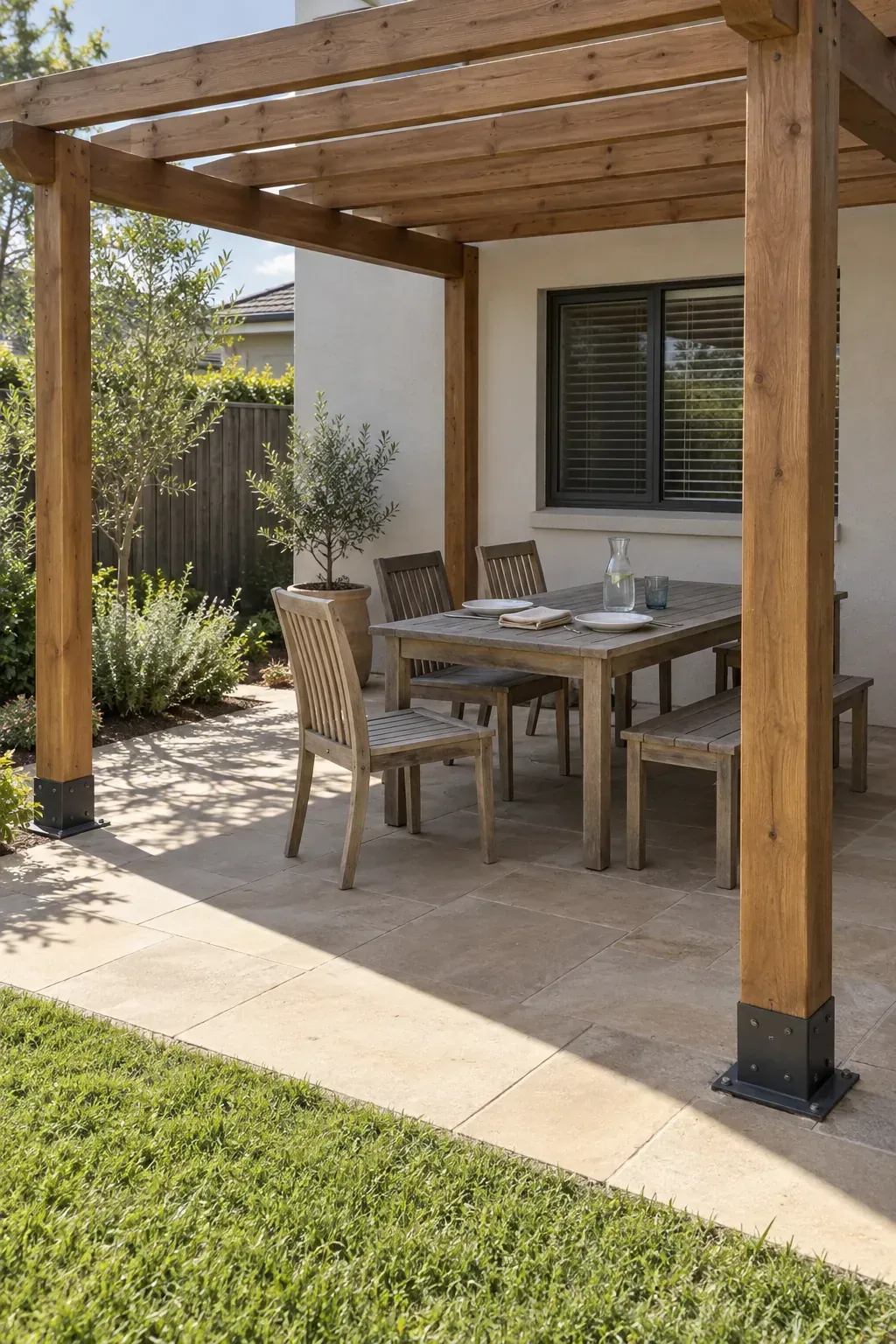
A dining table inside the afternoon shade
Put the table where the roof casts shade at the time you usually eat, rather than automatically centering it beneath the frame. Check that position on a sunny afternoon before choosing the pergola footprint. Leave space behind occupied chairs so a guest can walk through without squeezing between a post and the table. A rectangular table often fits a narrow patio better than a round one.
Retractable fabric for changing seasons
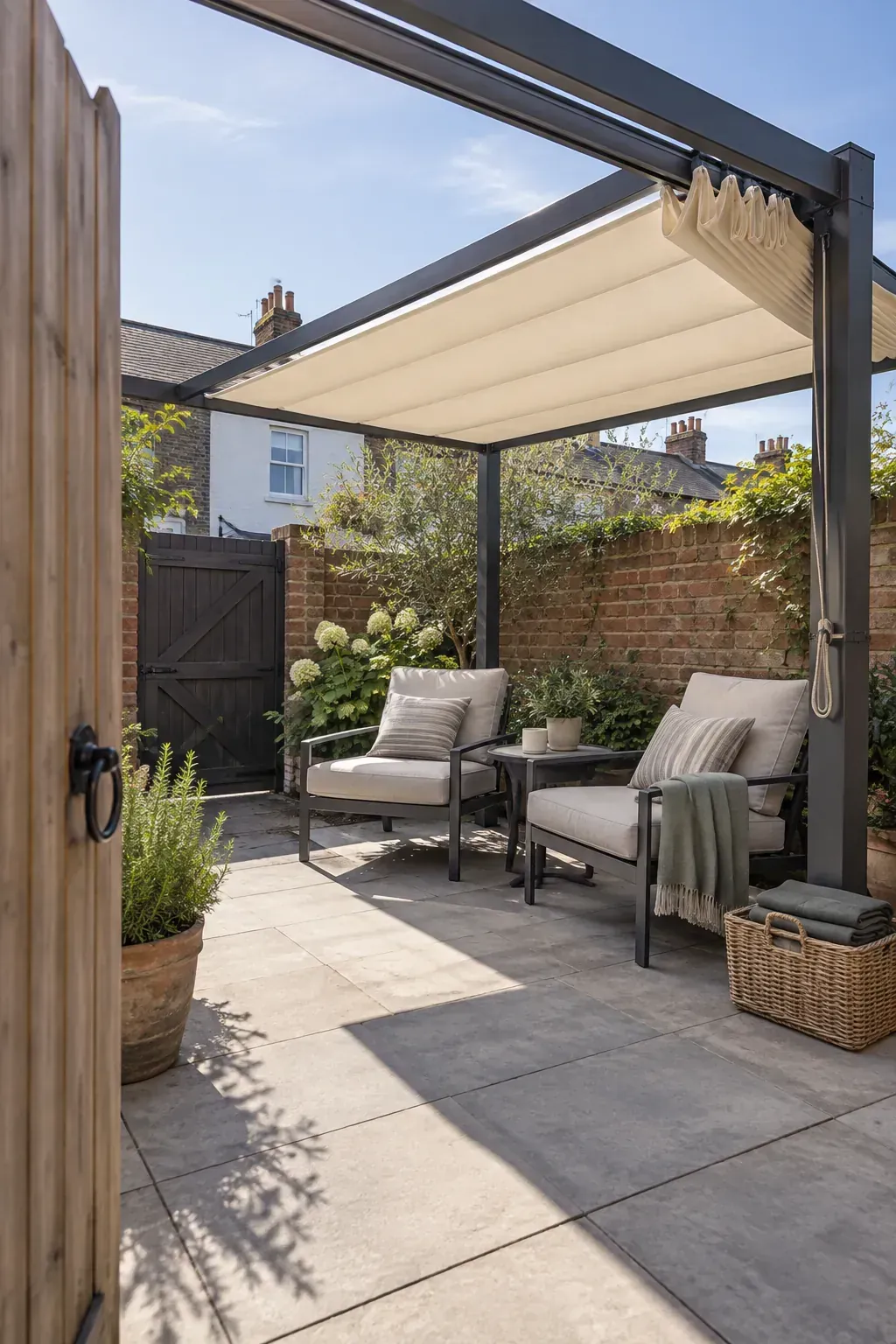
A retractable canopy lets you cover a seating area in summer and admit more light during cooler months. Choose a system designed for the frame, with fabric and hardware rated for outdoor use. Check its wind limits and retract it when the manufacturer requires, because a stretched cover adds load to the structure. Shade fabric is not automatically a waterproof roof.
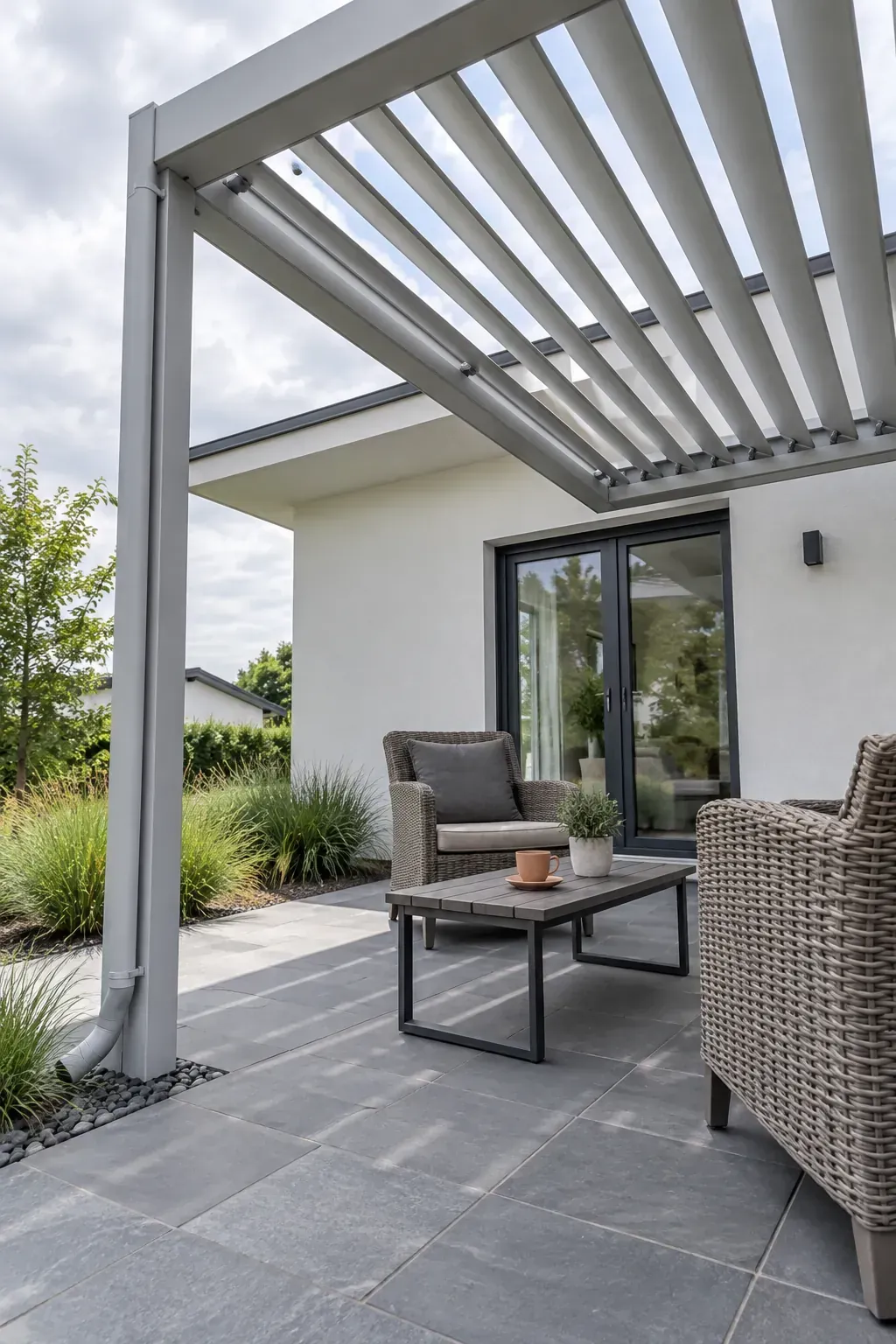
Louvers for adjustable overhead light
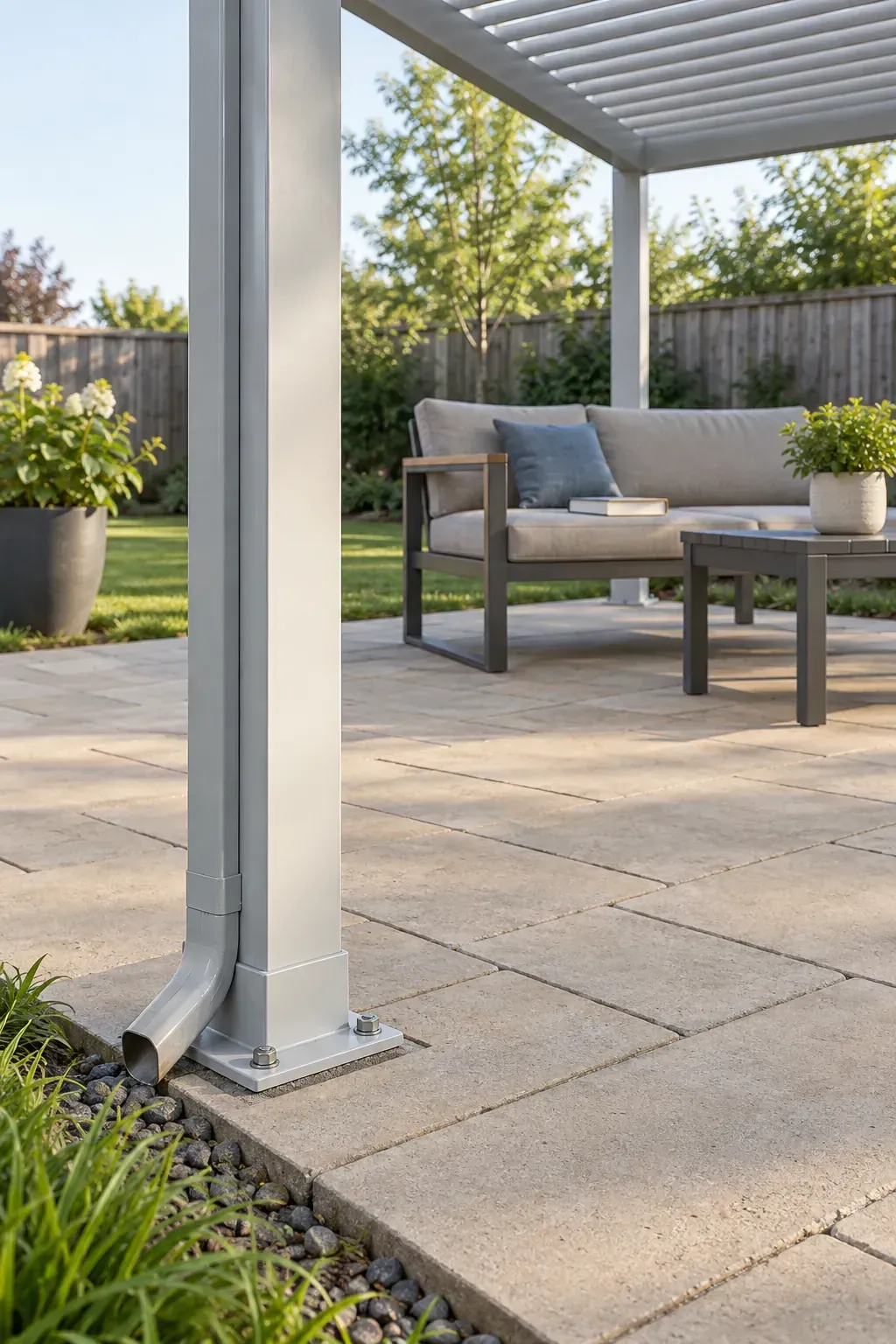
A louvered pergola gives you more control over the balance between sunlight and overhead cover. Look at drainage details as carefully as the opening mechanism, particularly where water exits near a patio door. Closed louvers may reduce rain exposure, but performance depends on the specific system, installation, and wind conditions.
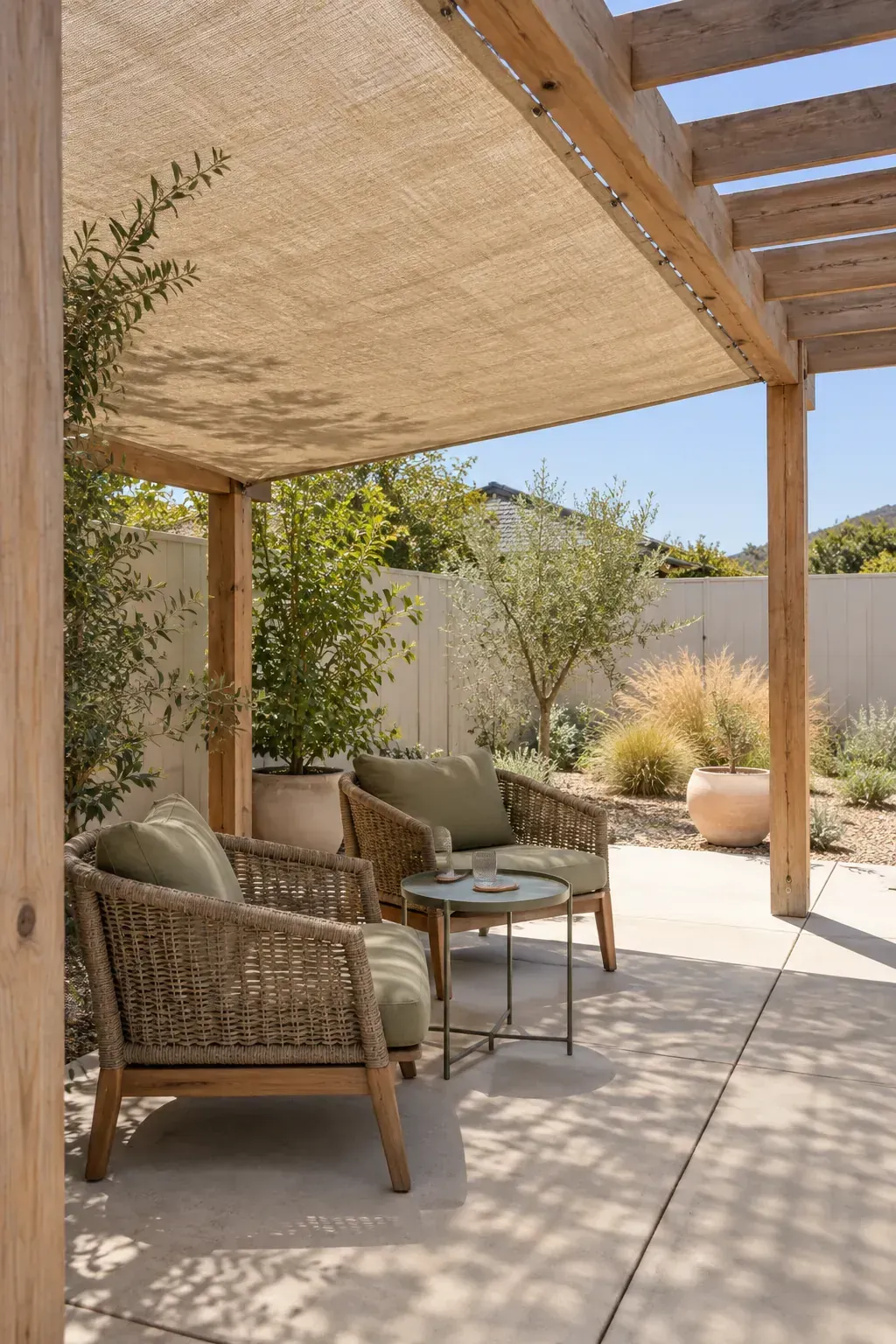
A permeable shade cloth above the lounge
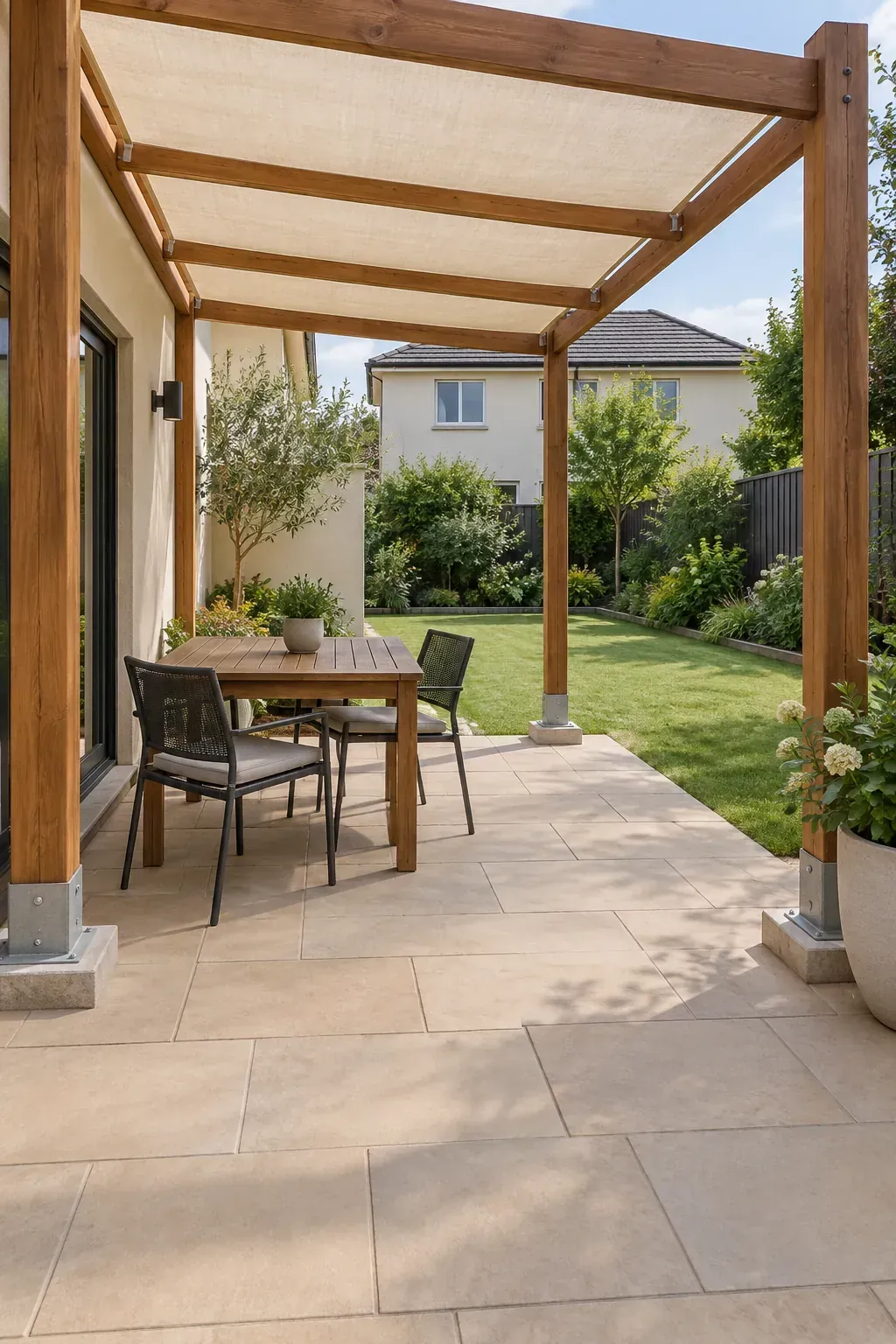
If sunshine is the main problem, a purpose made shade cloth can be a simpler choice than a solid roof. Match the cloth dimensions and fixings to the frame instead of improvising attachment points. Water can pass through permeable fabric, so store cushions indoors before wet weather. A pale cloth keeps the sheltered area visually light.
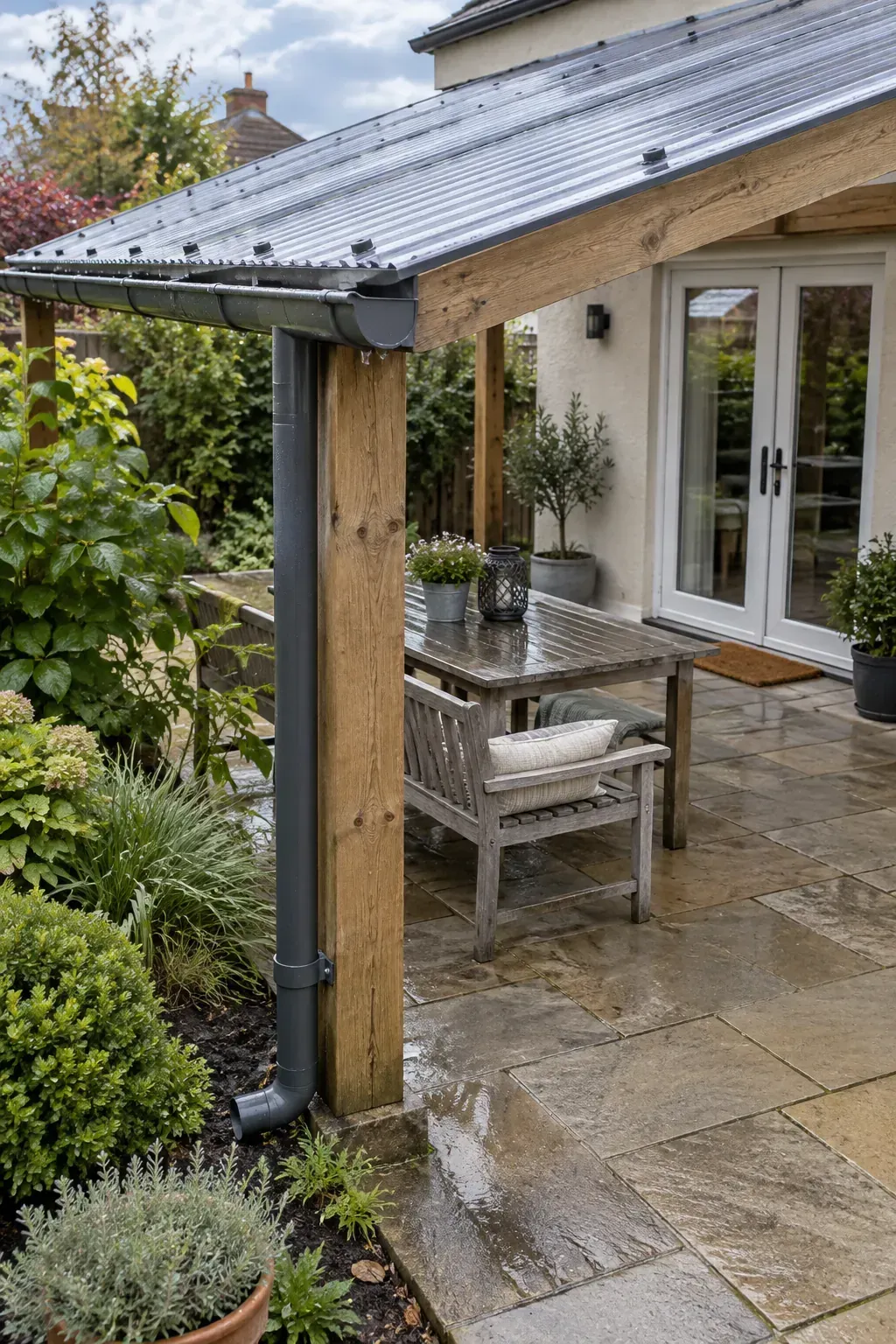
Roof panels with a planned water outlet
Roof panels can make a patio more useful in passing rain, but they change the loads and drainage demands on a pergola. Ask the installer to confirm the required slope, panel support, and compatible fasteners. Direct runoff away from door thresholds and frequently used paths. Check local approvals before converting an open frame into a roofed structure.
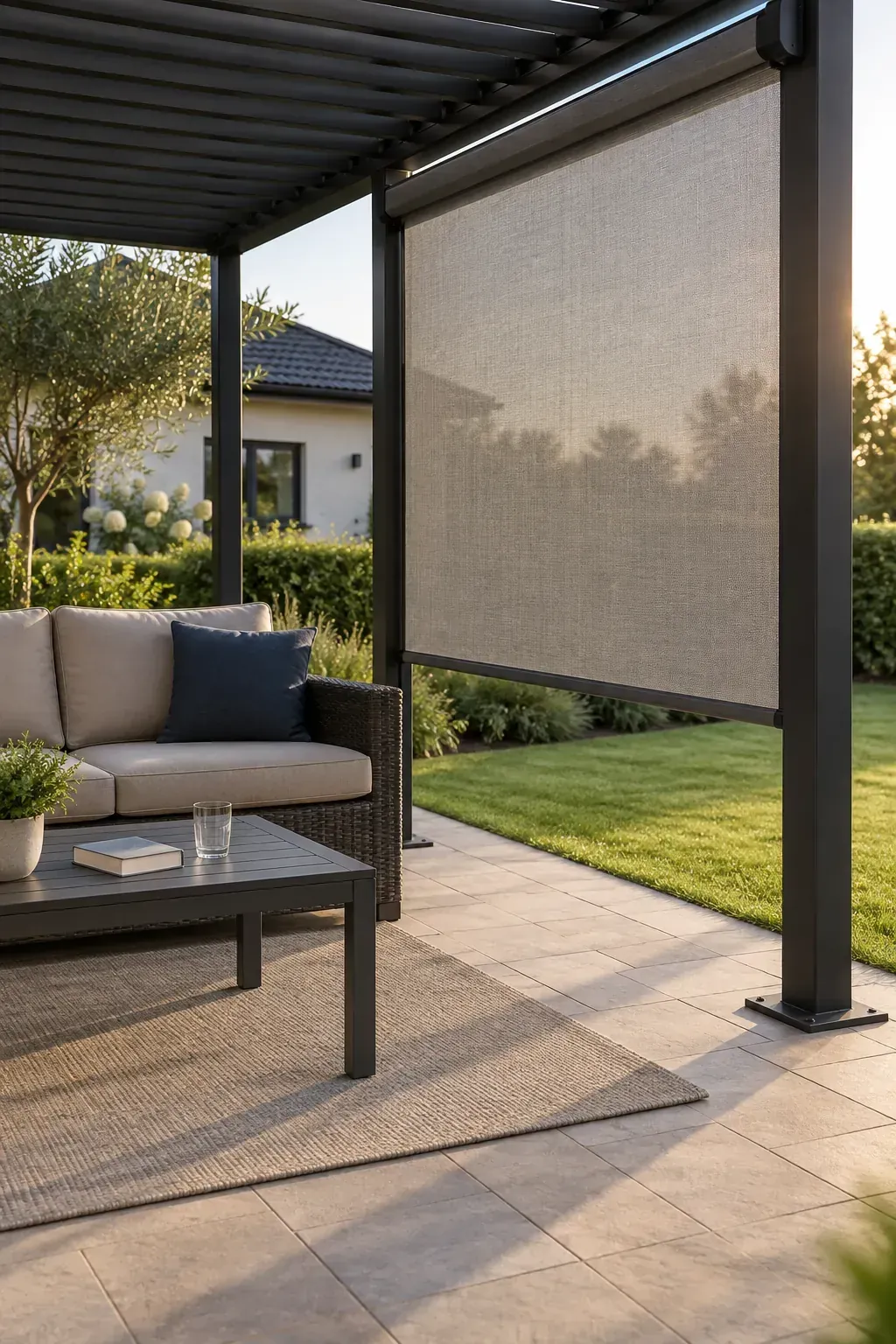
A screen on the low sun side
Overhead slats do little against sunlight entering from the side late in the day. Place an outdoor roller screen on the affected edge and leave the other sides open for air. Verify its wind rating and mounting requirements before buying. Test the view from the house so the lowered screen does not hide a garden feature you enjoy.
Curtains that can be tied back
Outdoor curtains can soften a seating corner and offer occasional privacy. Keep the fabric clear of wet paving and use secure ties so loose panels do not whip around the posts. Choose washable fabric and removable hardware because curtains need more upkeep than a fixed screen.
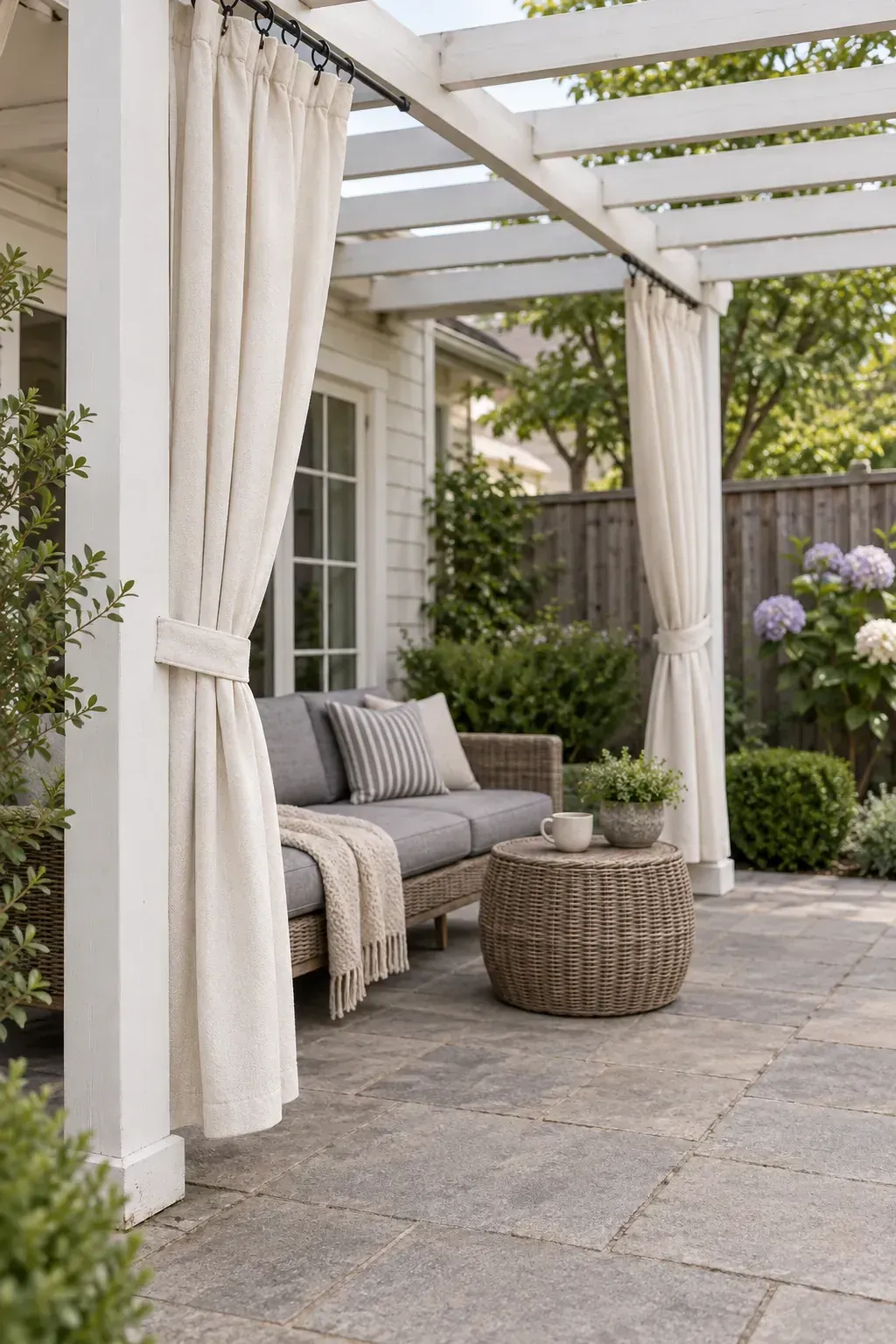
A narrow slat privacy return
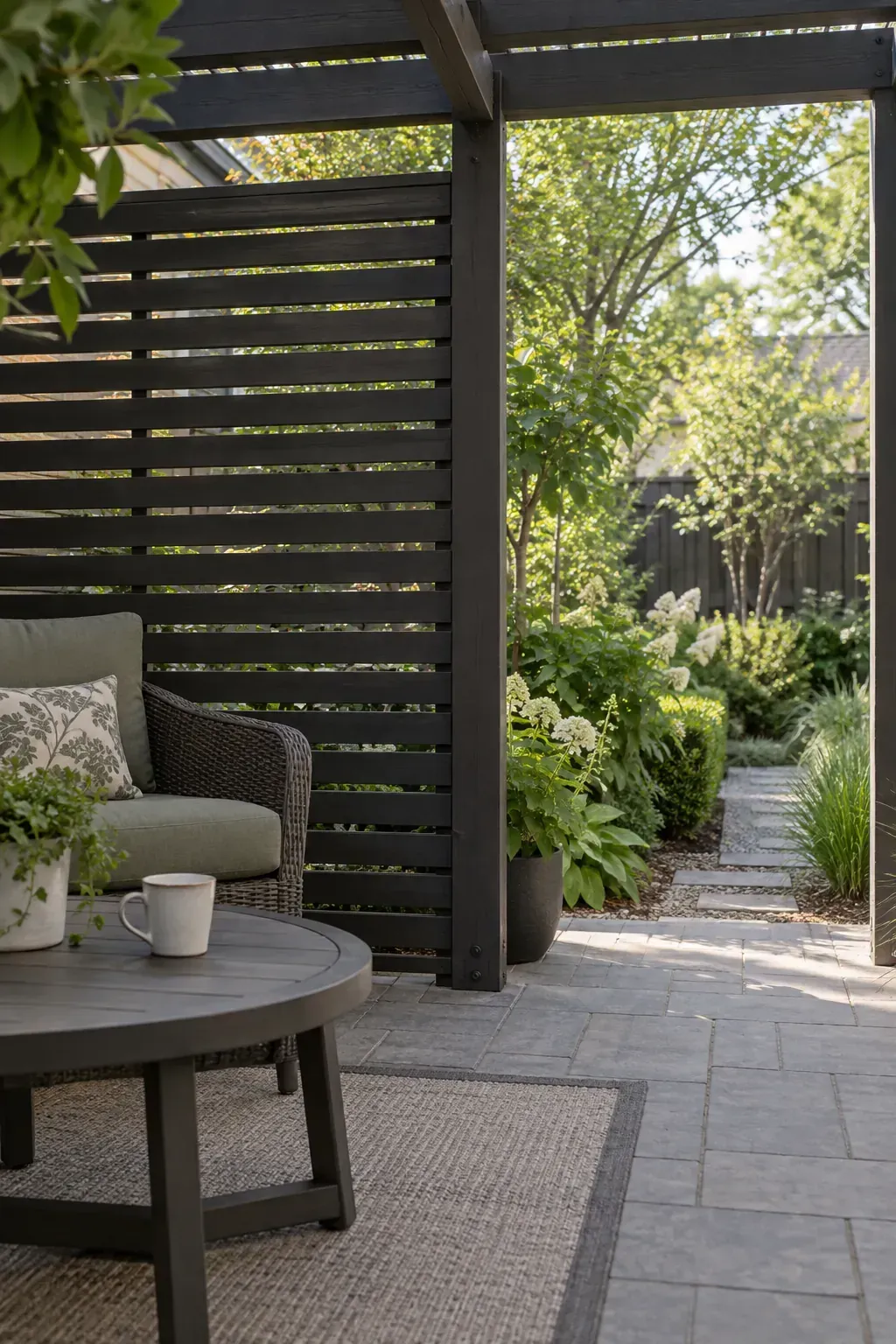
A short slatted return beside the pergola can block a direct sightline without enclosing the whole patio. Stand at seat height to find the position and spacing that work for your neighbor facing view. Keep an opening toward the garden to preserve a route around the furniture. Confirm that any added panel is supported for local wind loads.
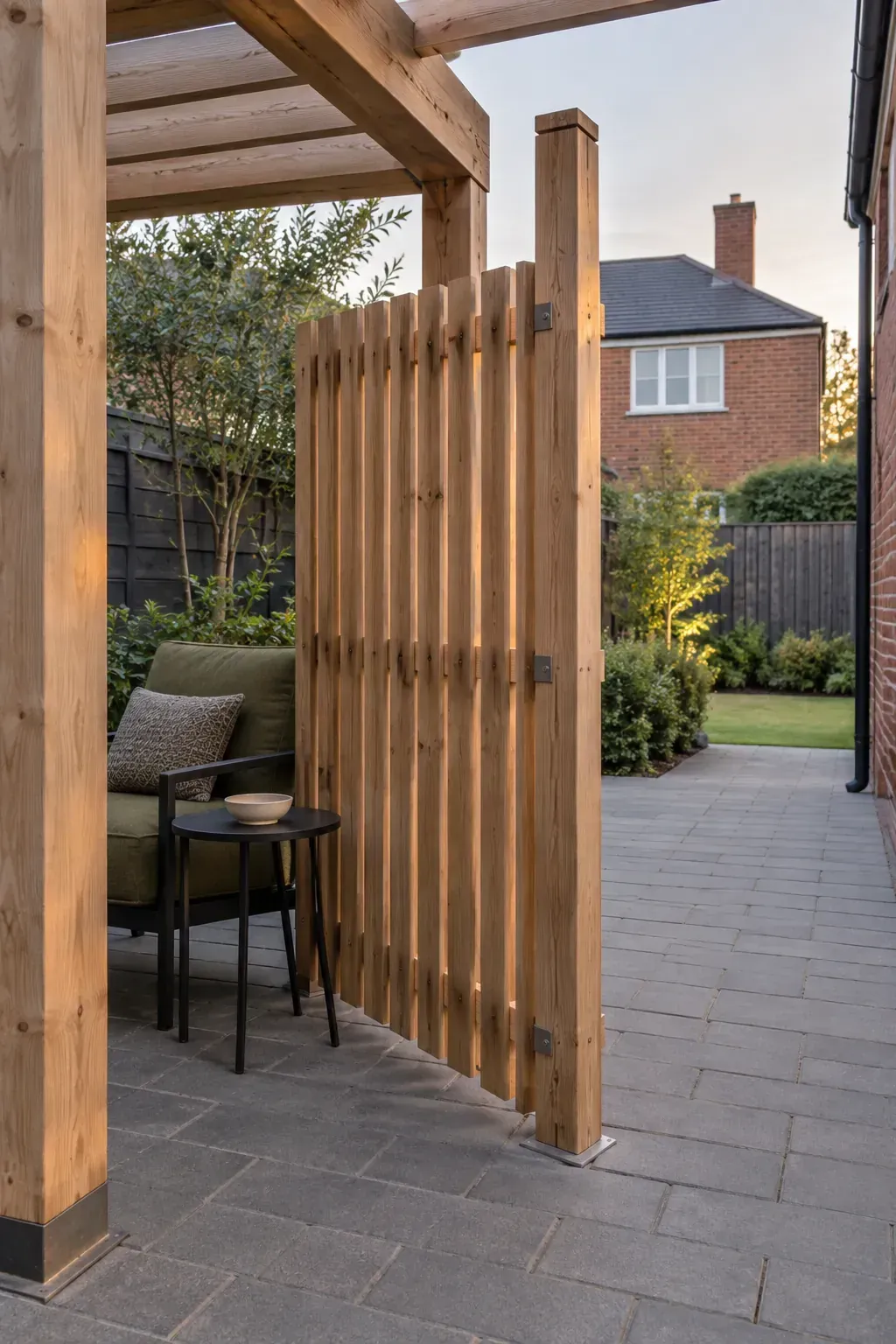
Climbers supported on separate wires
Grow suitable climbers along a wire system attached with fixings approved for the structure. Keep vigorous stems away from moving louvers, gutters, and fabric tracks. Match the plant to your climate and allow for pruning access rather than choosing only for its flowers. Plants provide seasonal shade, so the patio may be much brighter before leaves emerge.
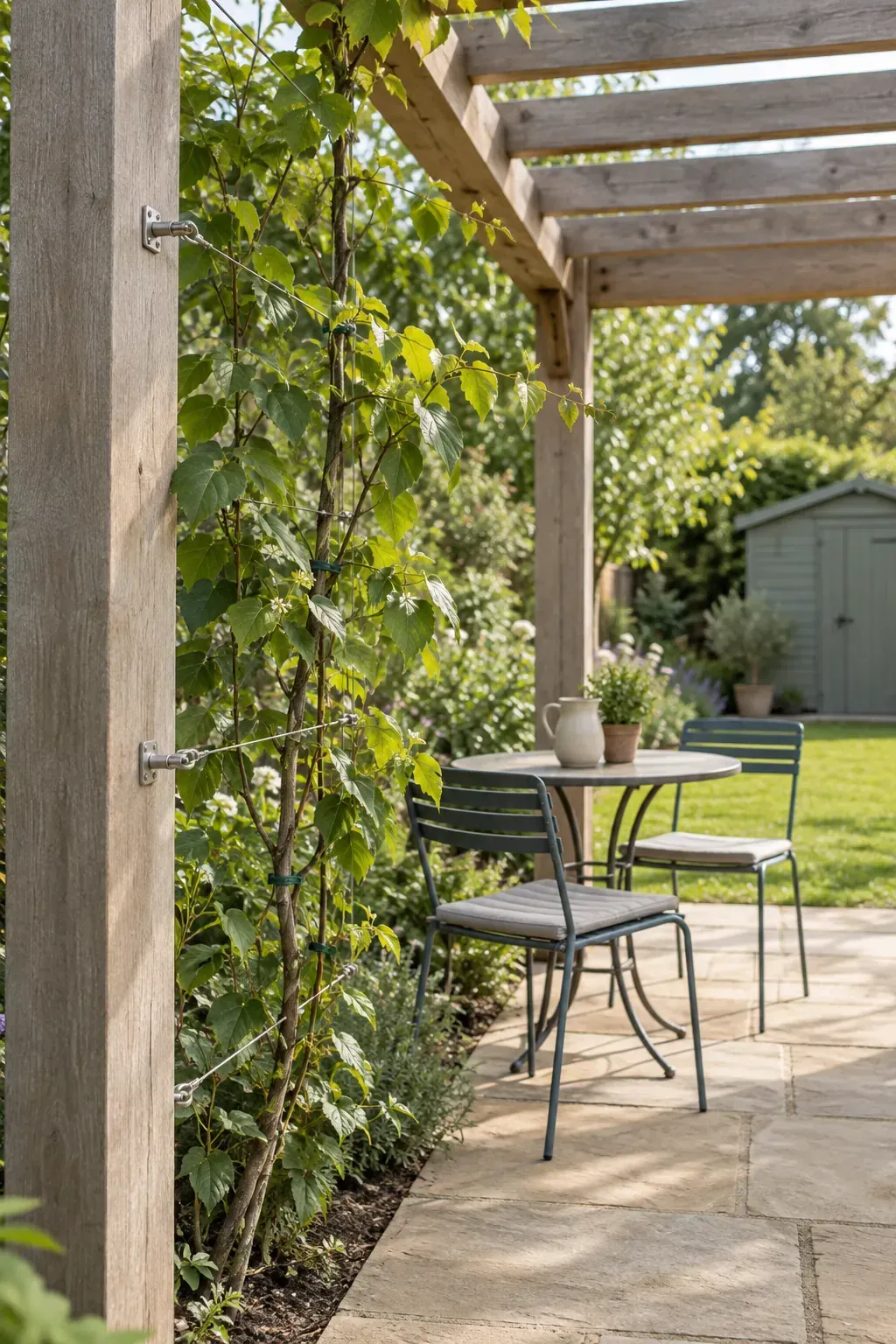
A compact bistro corner
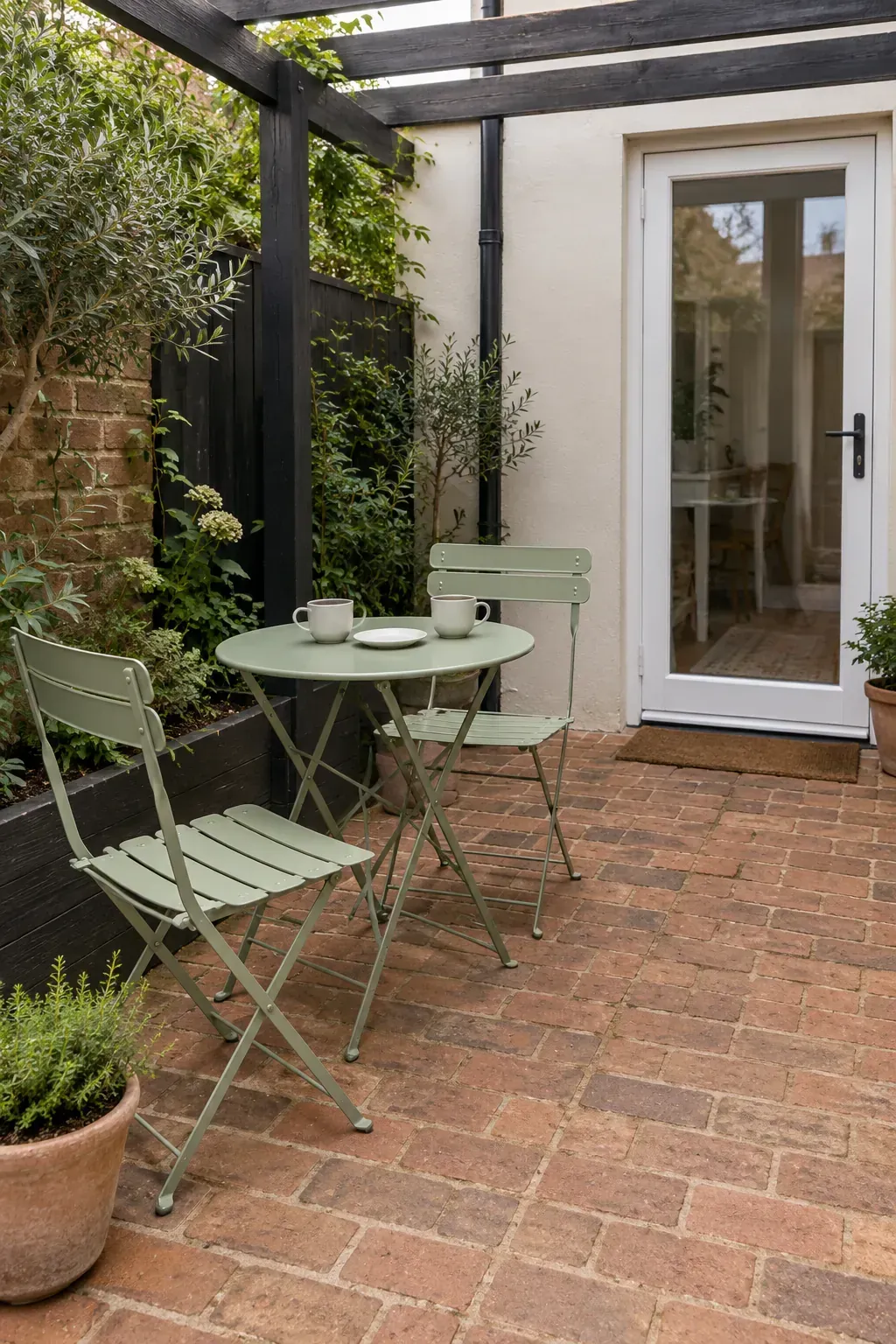
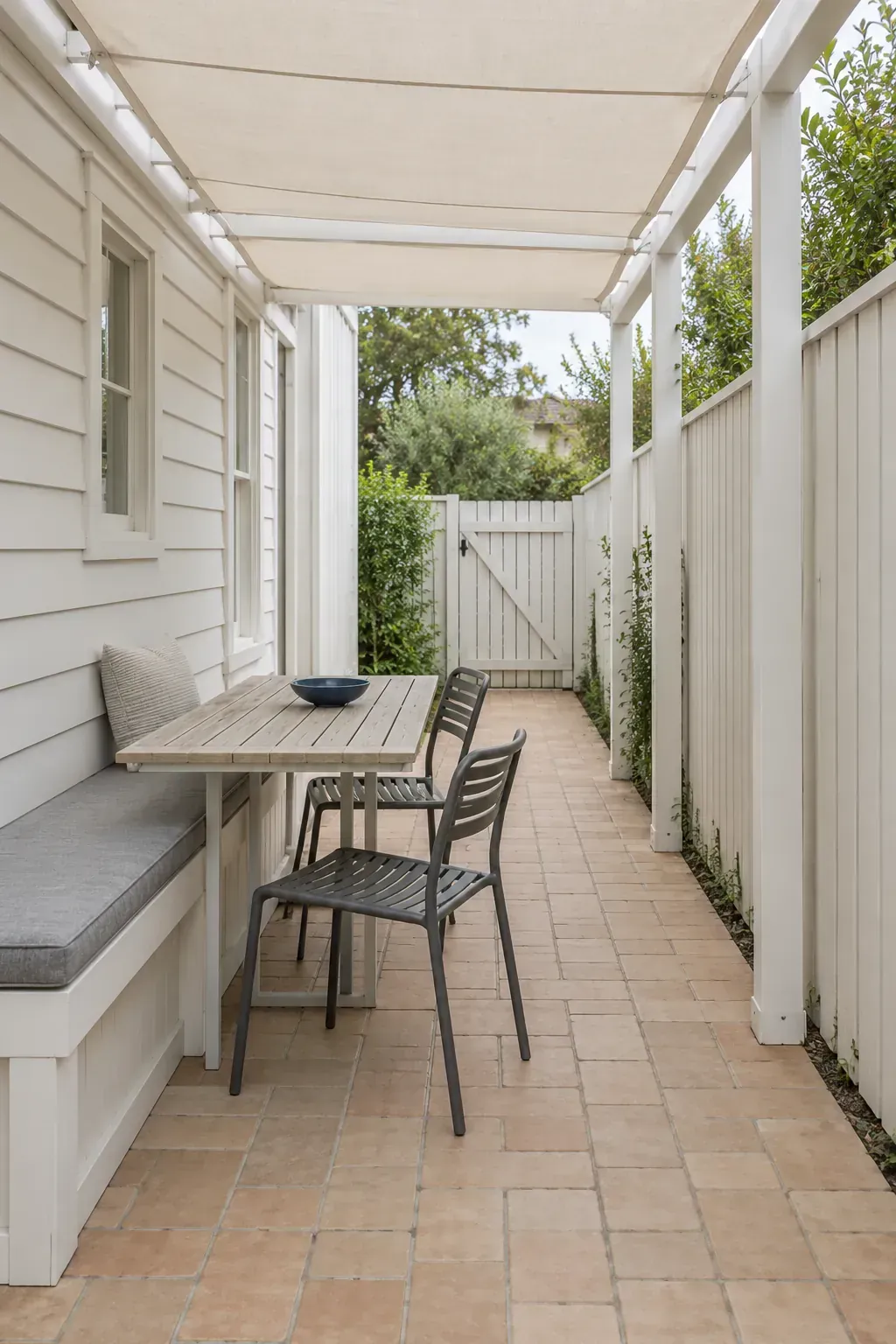
For a small patio, two chairs and a bistro table can make better use of a pergola than a full sofa set. Place the chairs where their backs will not obstruct the doorway when someone sits down. A folding table offers flexibility, but check its stability on your paving. Keep the surrounding pots low enough to preserve elbow room.
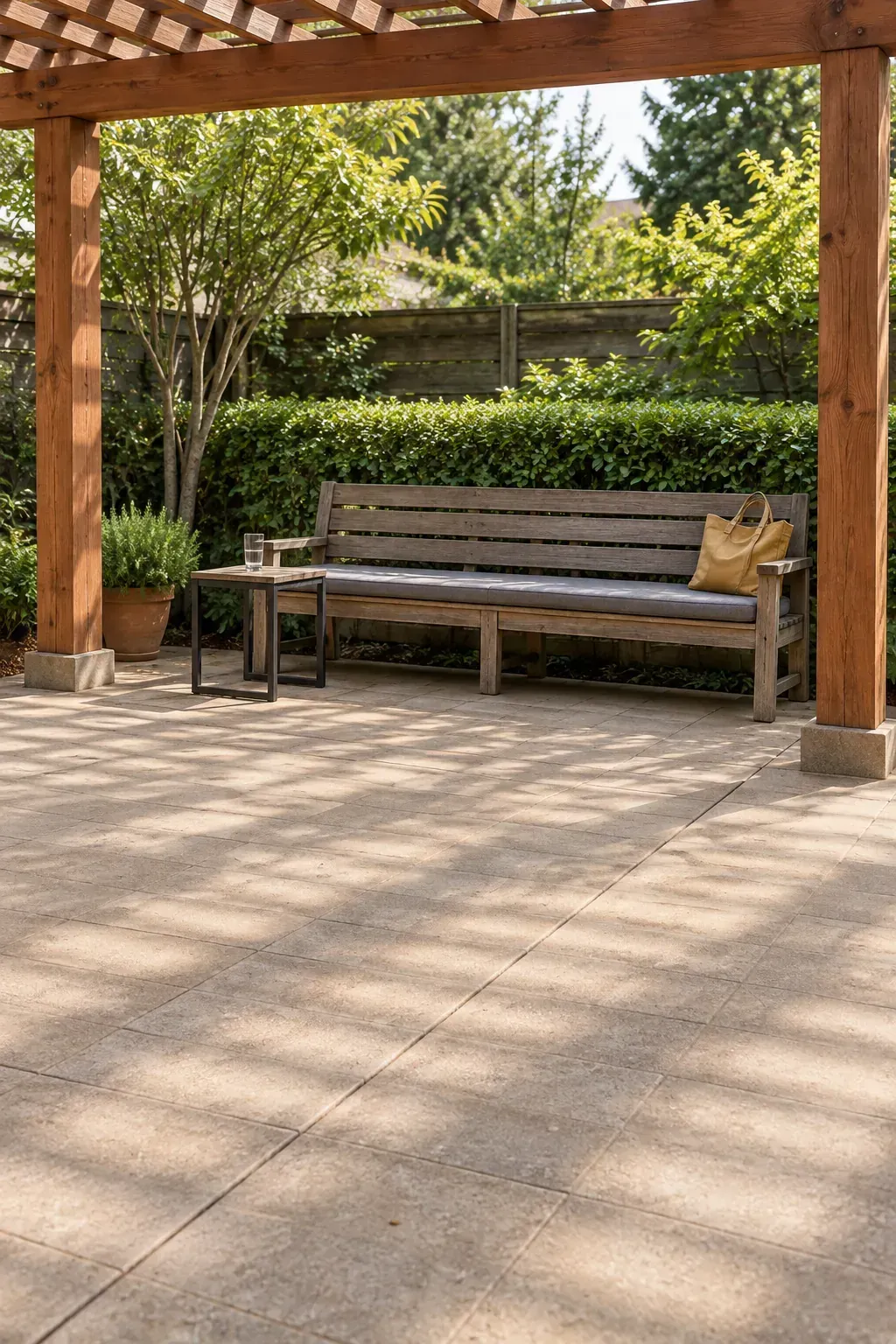
A bench along one boundary
Use a bench on the pergola edge to free the middle of the patio for movement. A comfortable back and seat depth matter more than filling every inch of the boundary. Keep the bench independent of the posts unless its connections are specifically designed, and leave access to inspect the post bases.
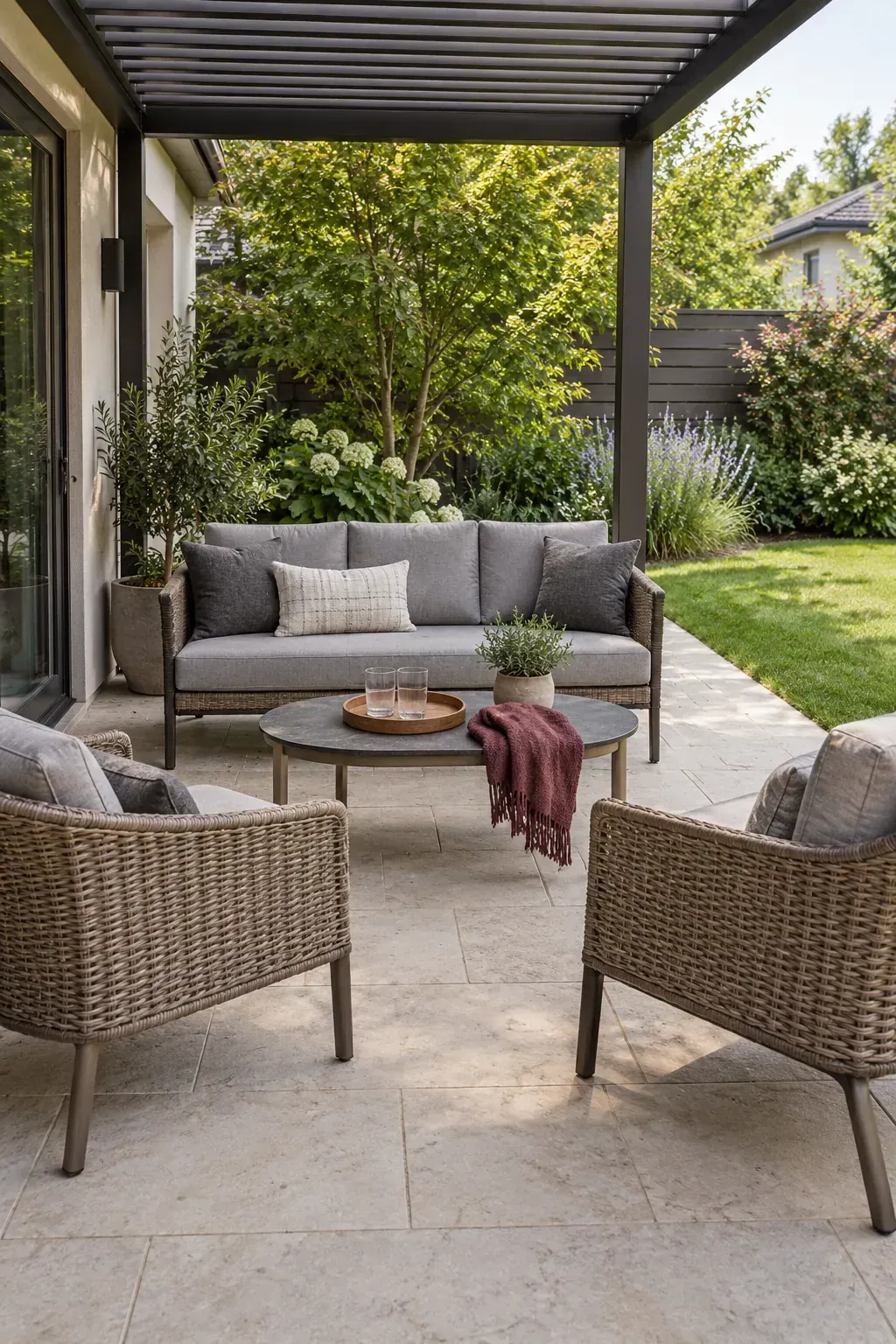
A lounge arranged around conversation
Turn two chairs toward a small outdoor sofa instead of pointing every seat at the lawn. Put a reachable table inside the group so drinks do not end up on the paving. Leave a clear passage along one side, especially if this patio connects the house and garden. Loose cushions should have an indoor storage spot for wet nights.
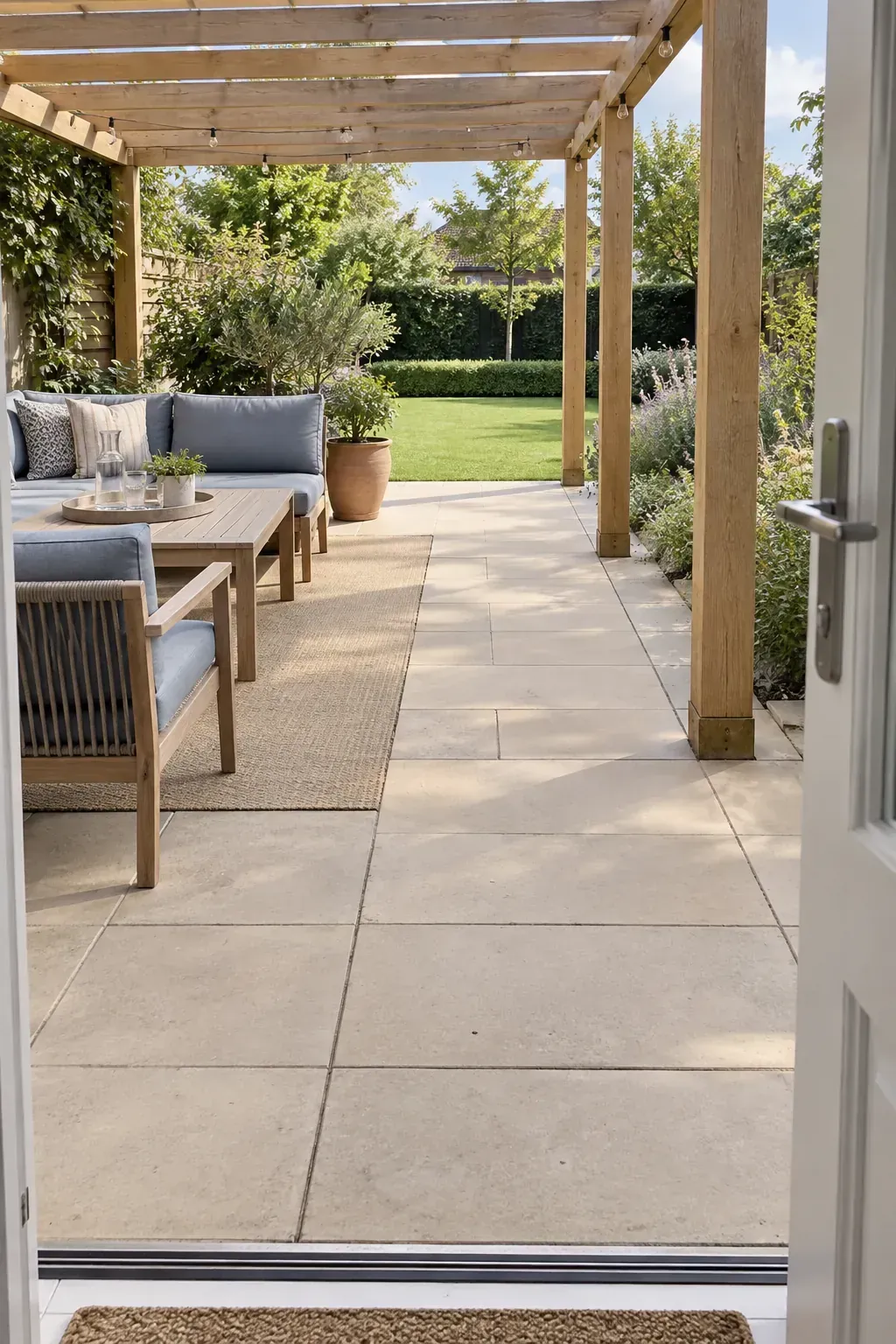
A clear route from the patio door
Treat the door to garden route as the first part of the layout, not the space left after furniture is bought. Mark it with temporary tape or movable objects and walk through carrying a tray. Set pergola posts and chair backs outside that route. A simple layout often feels larger because movement stays easy.
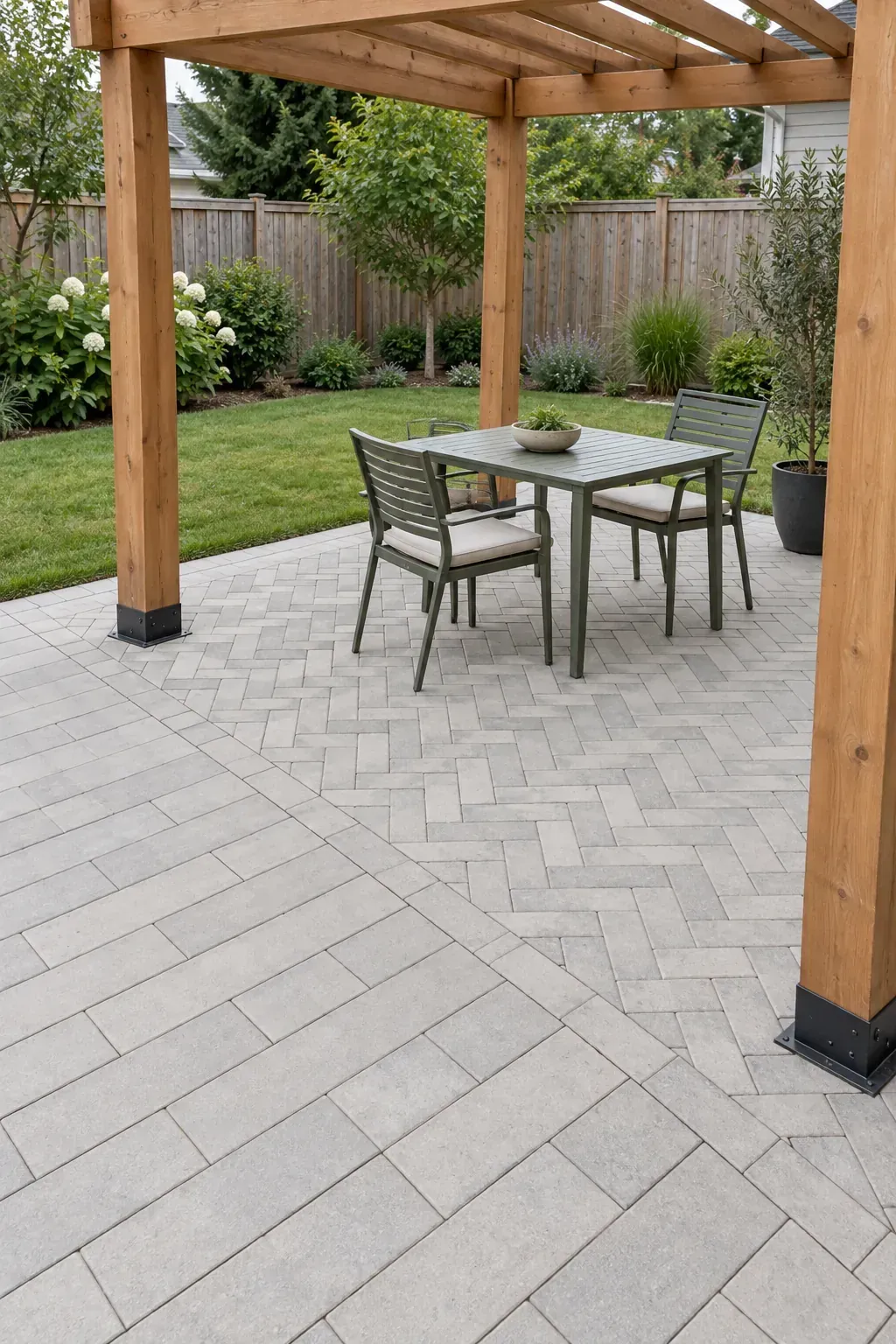
Pavers that define the sheltered room
A change in paver pattern can show where the pergola seating area begins without adding a raised edge. Use a compatible base and drainage approach for the site so the new surface does not settle differently from the surrounding patio. Carry the same paving level through the walking route. Ask your contractor to check the fall away from the house.
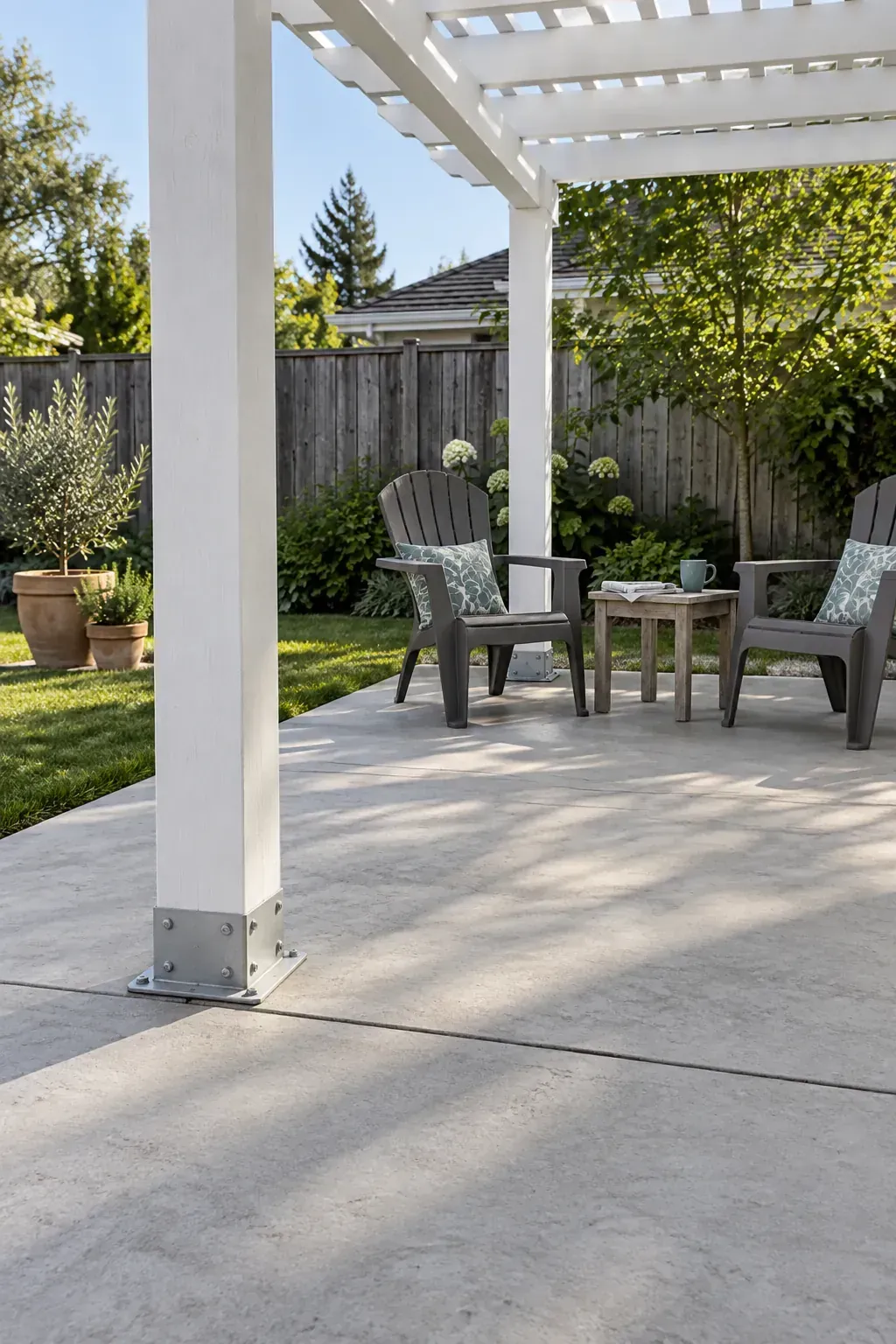
An existing concrete slab kept simple
An existing concrete patio can support a tidy pergola layout without an elaborate decorative finish. Have its suitability for post anchoring assessed rather than assuming any slab can hold the structure. Use furniture with stable feet that do not rock on minor surface variations. A few movable planters can soften the outline without hiding cracks or drains that need inspection.
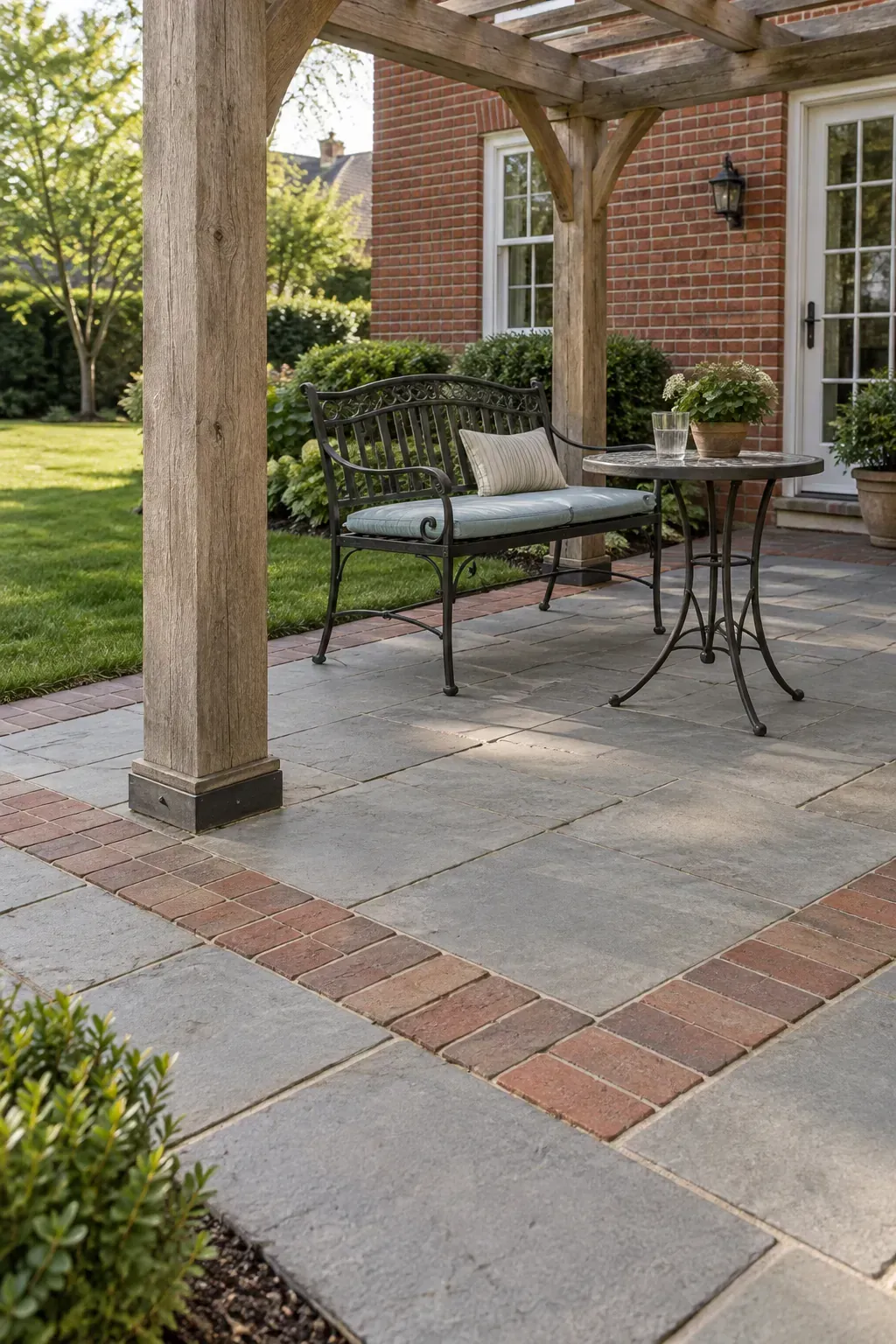
A brick border around the seating zone
A brick border gives a plain patio a warmer edge and can echo older house materials. Keep it flush with the neighboring surface where people walk, because a raised trim can become a trip point. Choose paving brick appropriate for your climate and install it on a properly prepared base.
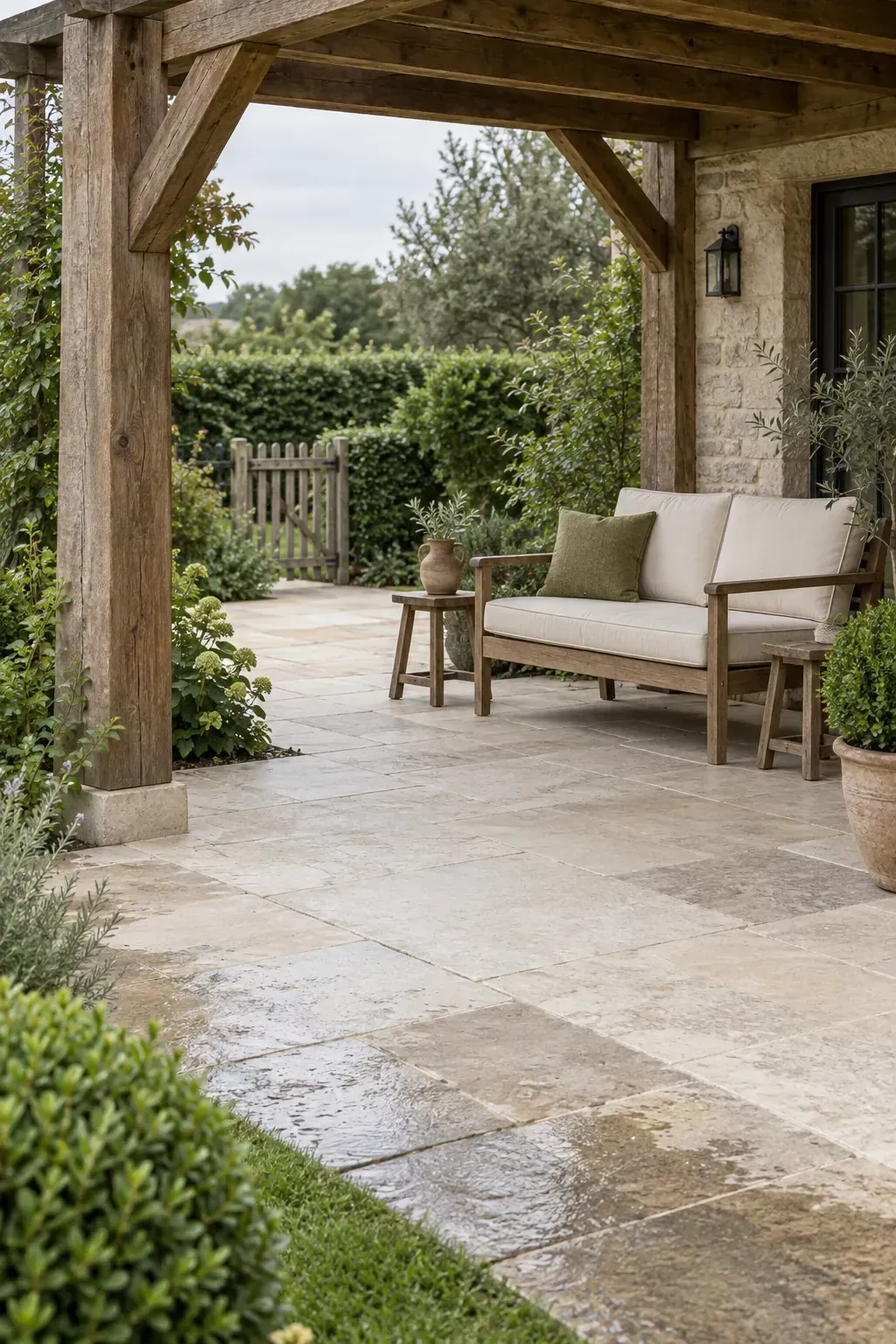
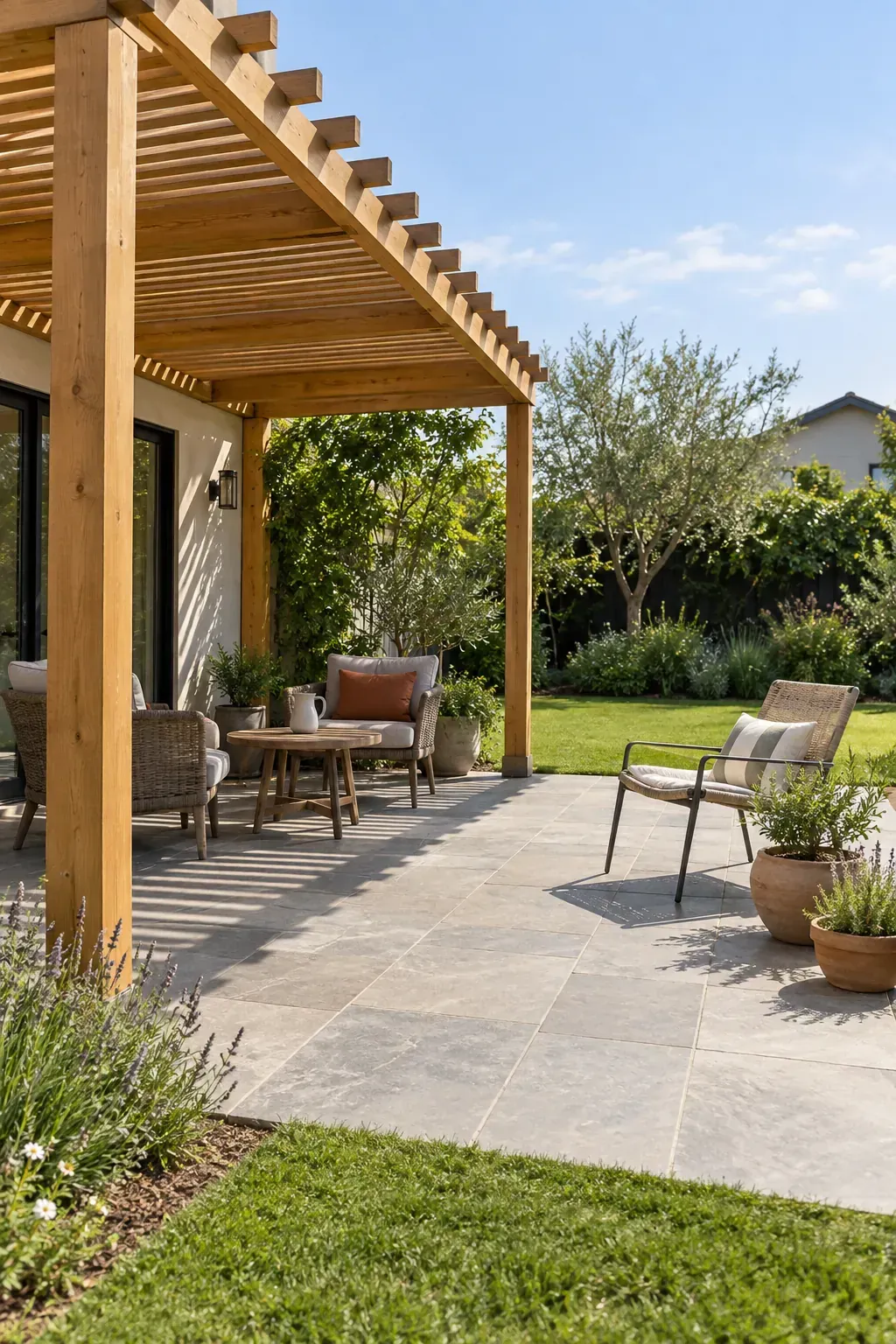
A pale stone patio with timber overhead
Light stone and timber create a calm material contrast without needing many accessories. Compare stone samples outdoors, including when wet, to assess color and grip. A roof will not prevent every splash or blown leaf, so select a surface you can clean with a method suitable for that stone. Keep the timber finish consistent across visible posts and beams.
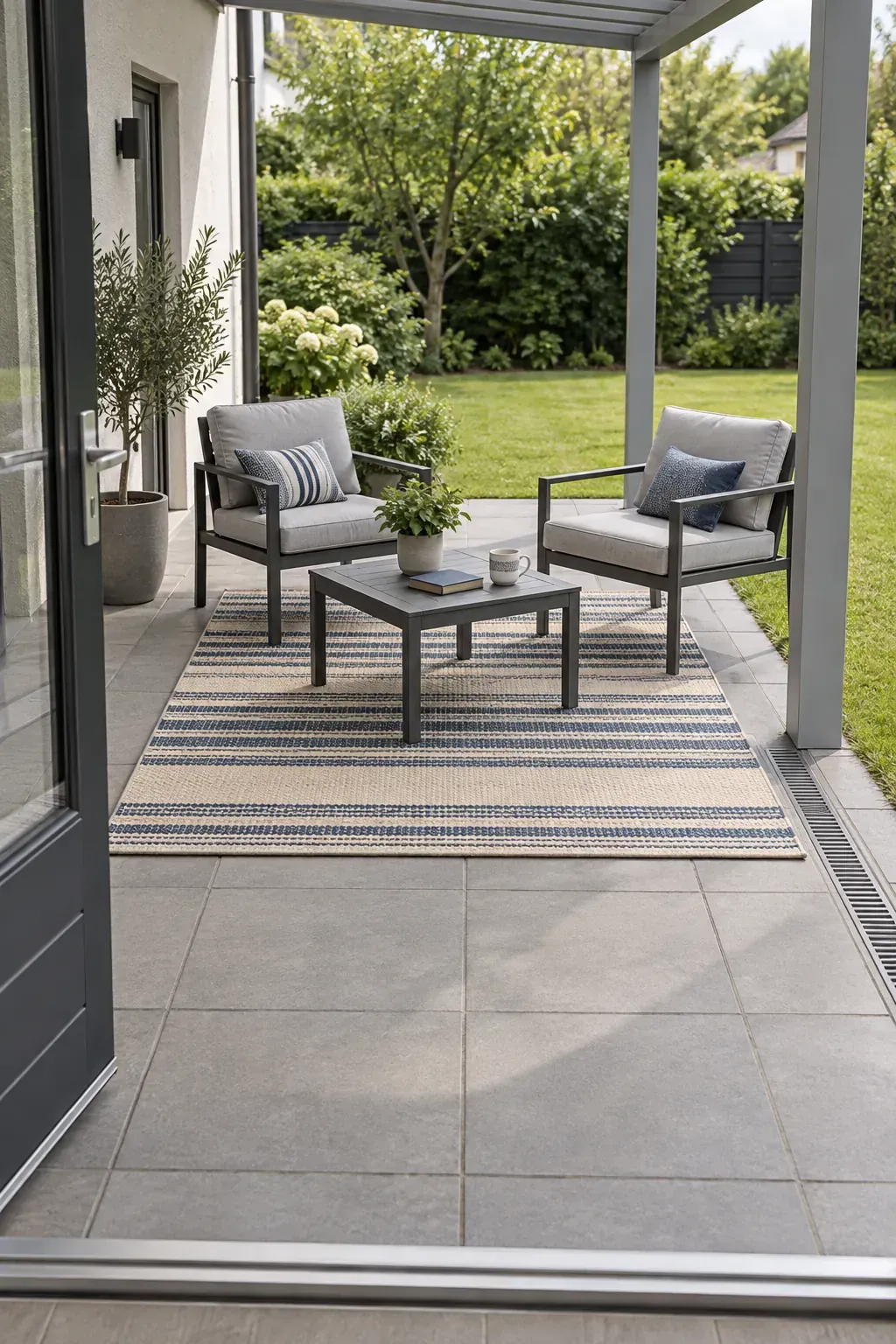
An outdoor rug inside a dry seating area
Use a rug to pull a loose lounge arrangement together when the patio has a suitable surface and drainage. Choose a material intended for outdoor use and lift it regularly to let the area beneath dry. Do not use a rug to hide uneven paving or slippery algae. Leave the door swing and main walking route clear.
Planters outside the chair pullout space
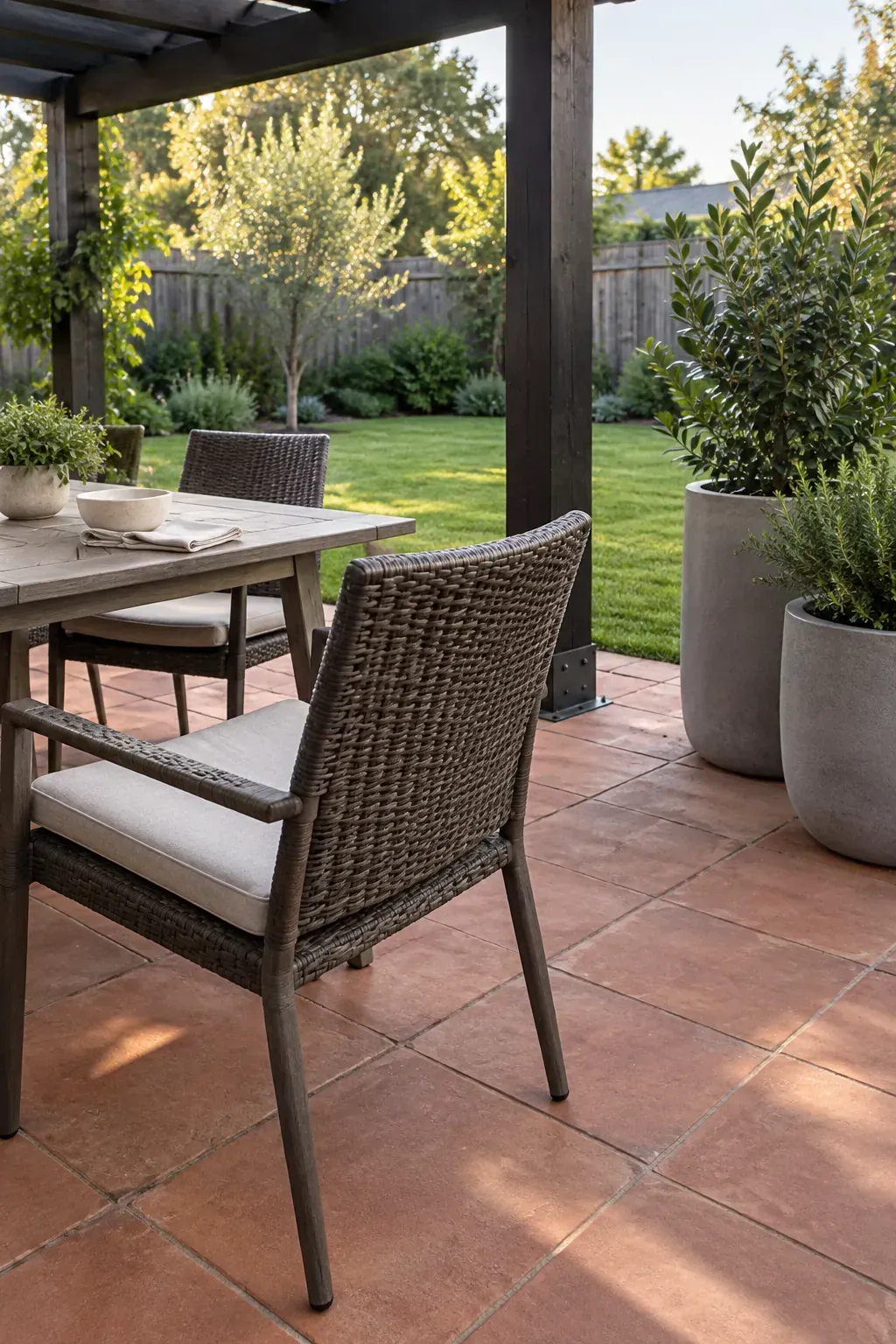
Large planters look settled beside a pergola, but their placement should account for people moving chairs. Group them outside the furniture footprint and keep a gap around each post base. Pots need drainage holes and a surface arrangement that will not leave water trapped against timber. Choose a restrained mix of plants rather than crowding every corner.
Herbs near an outdoor dining edge
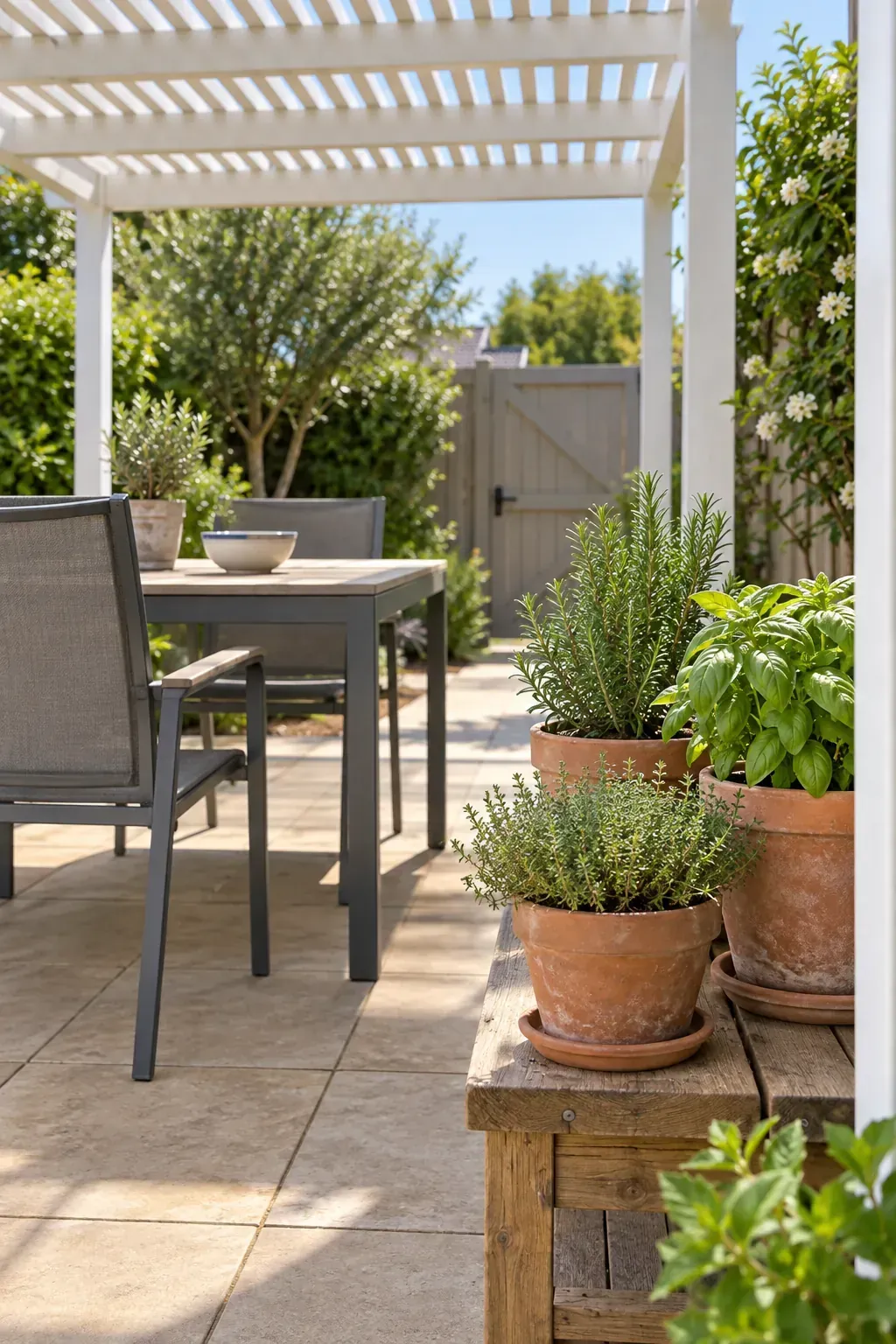
Keep a small herb collection near the dining zone where you can reach it without crossing between chairs. Select herbs for the light that actually reaches this edge, because a pergola may shade pots for much of the day. Place saucers carefully so runoff does not stain the patio or keep a post base wet.
Low lighting tucked under the beams
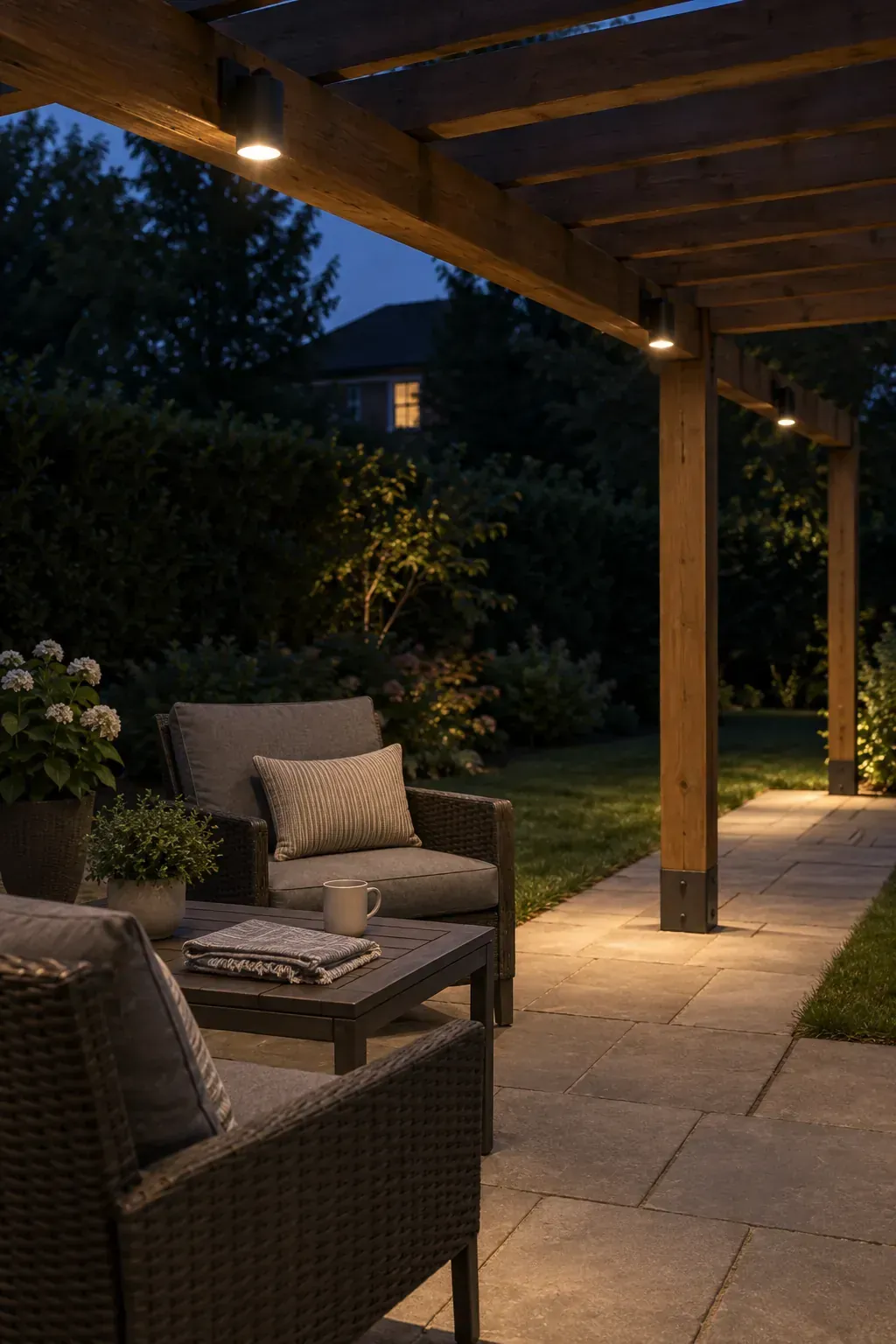
Small outdoor rated lights beneath the beams can make a patio easier to use after sunset. Aim them toward the seating and path rather than into neighboring windows. Have powered fixtures and wiring installed to local requirements with equipment rated for the exposure. Test the brightness at night before adding more lights.
A restrained run of string lights
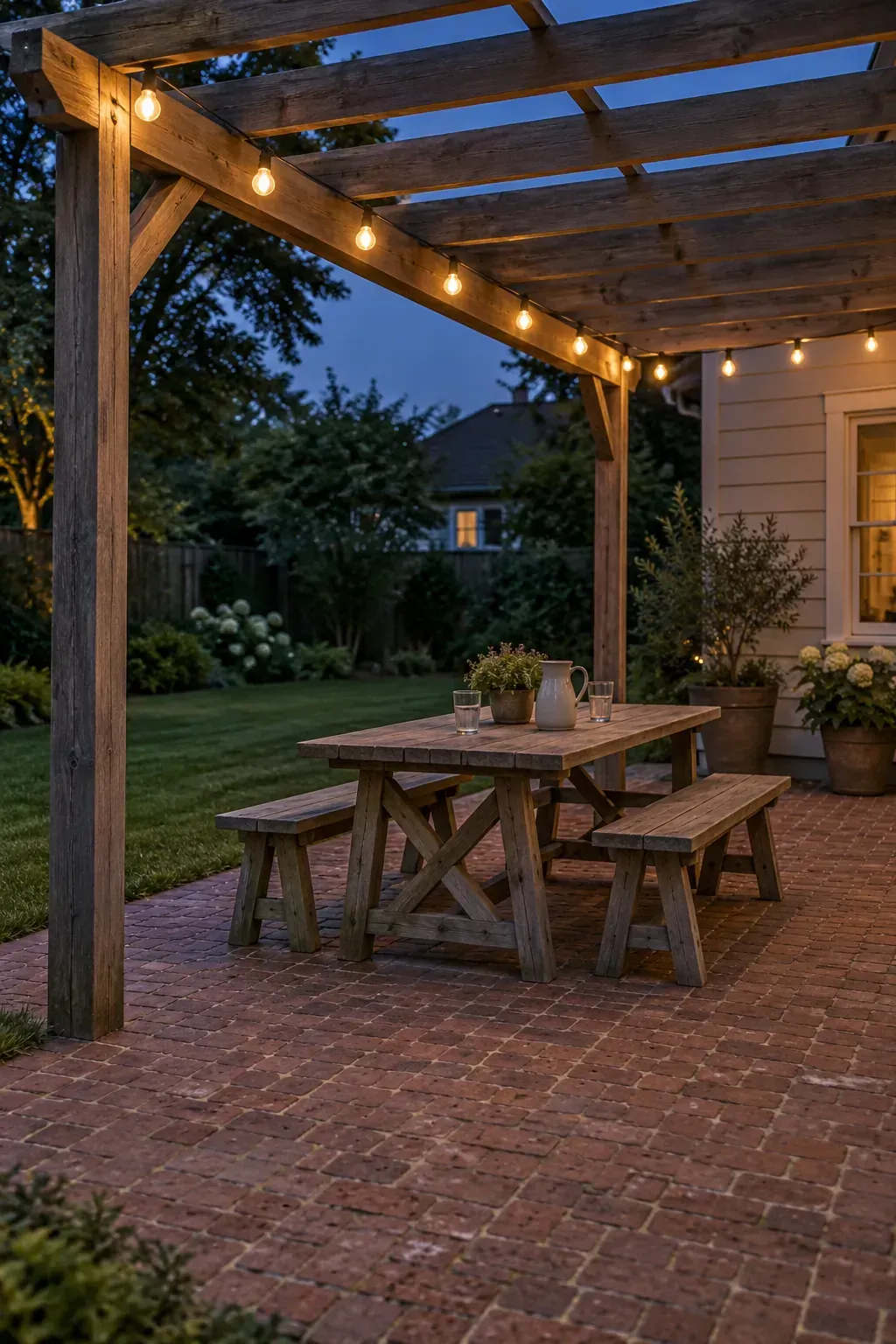
String lights suit an informal pergola when the cable follows a clear route and does not sag into head space. Use outdoor rated equipment and the support method specified by the manufacturer. Keep cables away from moving roof parts and avoid wrapping them tightly around growing plants. Warm light can soften the scene without turning the whole patio orange.
Battery lanterns on a side table
Battery lanterns provide a movable glow without fixing a light to every post. Put them on a stable table, away from the edge and the main path. Check whether they are weather resistant or need to be brought inside after use. Their low light works best alongside a separate source that makes steps and exits visible.
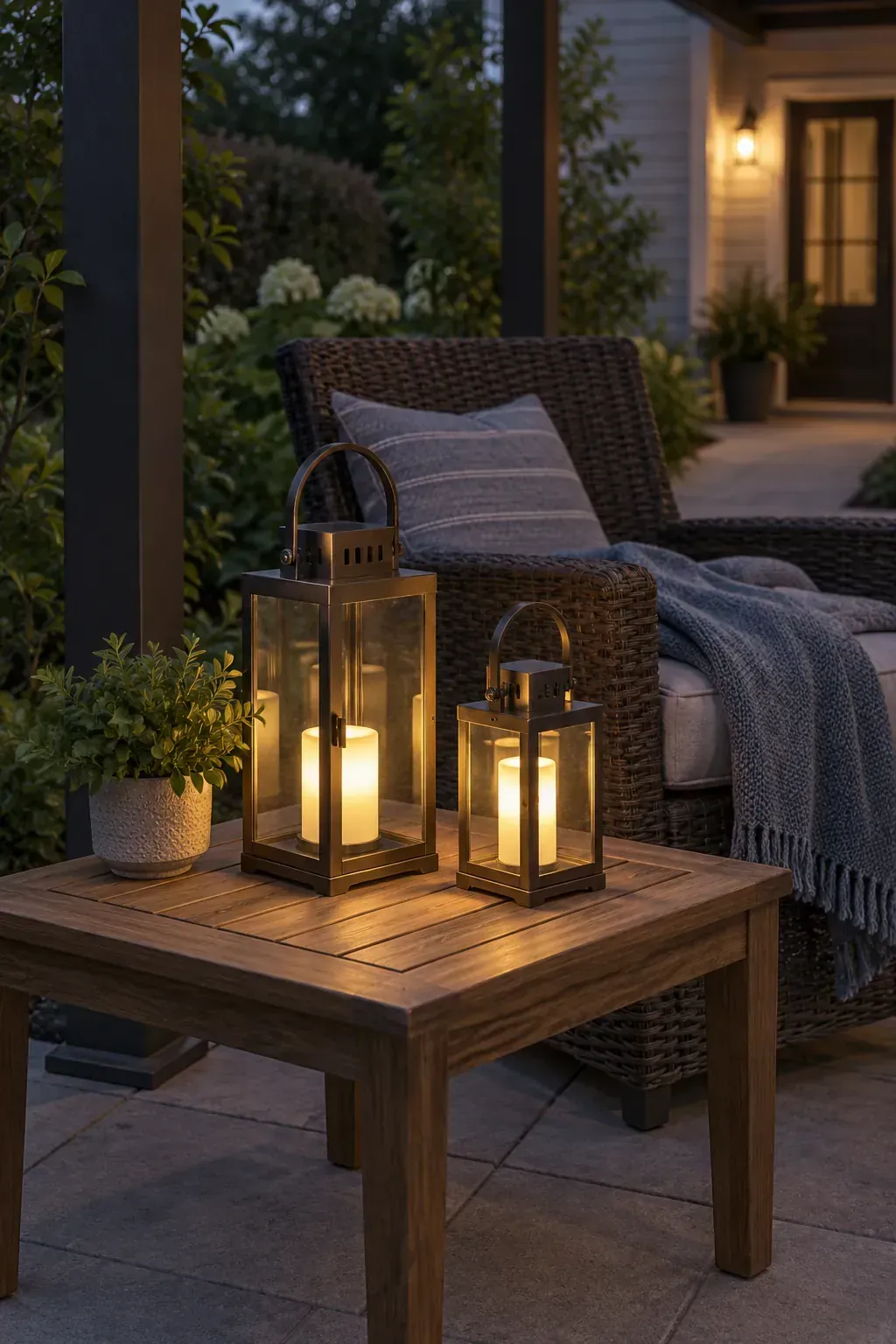
A fan designed for the exposed location
A suitable outdoor fan can improve comfort where still air makes the patio feel hot. Choose equipment rated for the actual exposure and verify that the frame can support its mounting loads. Plan blade clearance, roof movement, and electrical installation with a qualified installer. A fan moves air; it does not replace shade or make a wet floor safe.
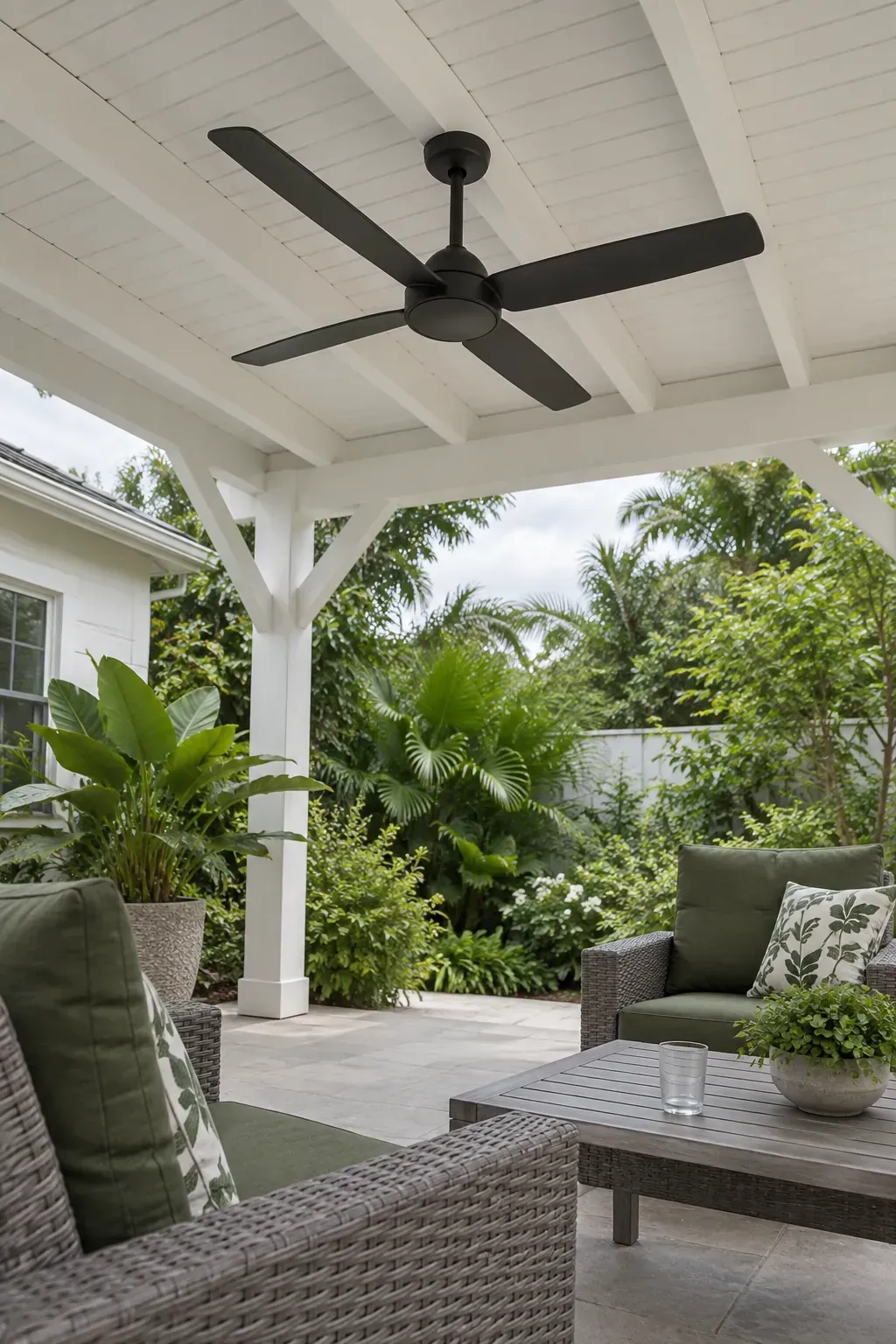
A reading chair in the quiet corner
A single comfortable chair can turn an unused pergola edge into a useful retreat. Choose a position with indirect light and enough space for a small table rather than placing the chair directly in a passing route. Keep books indoors between uses and bring out only what you need. A footstool that tucks beneath the seat helps a small patio stay flexible.
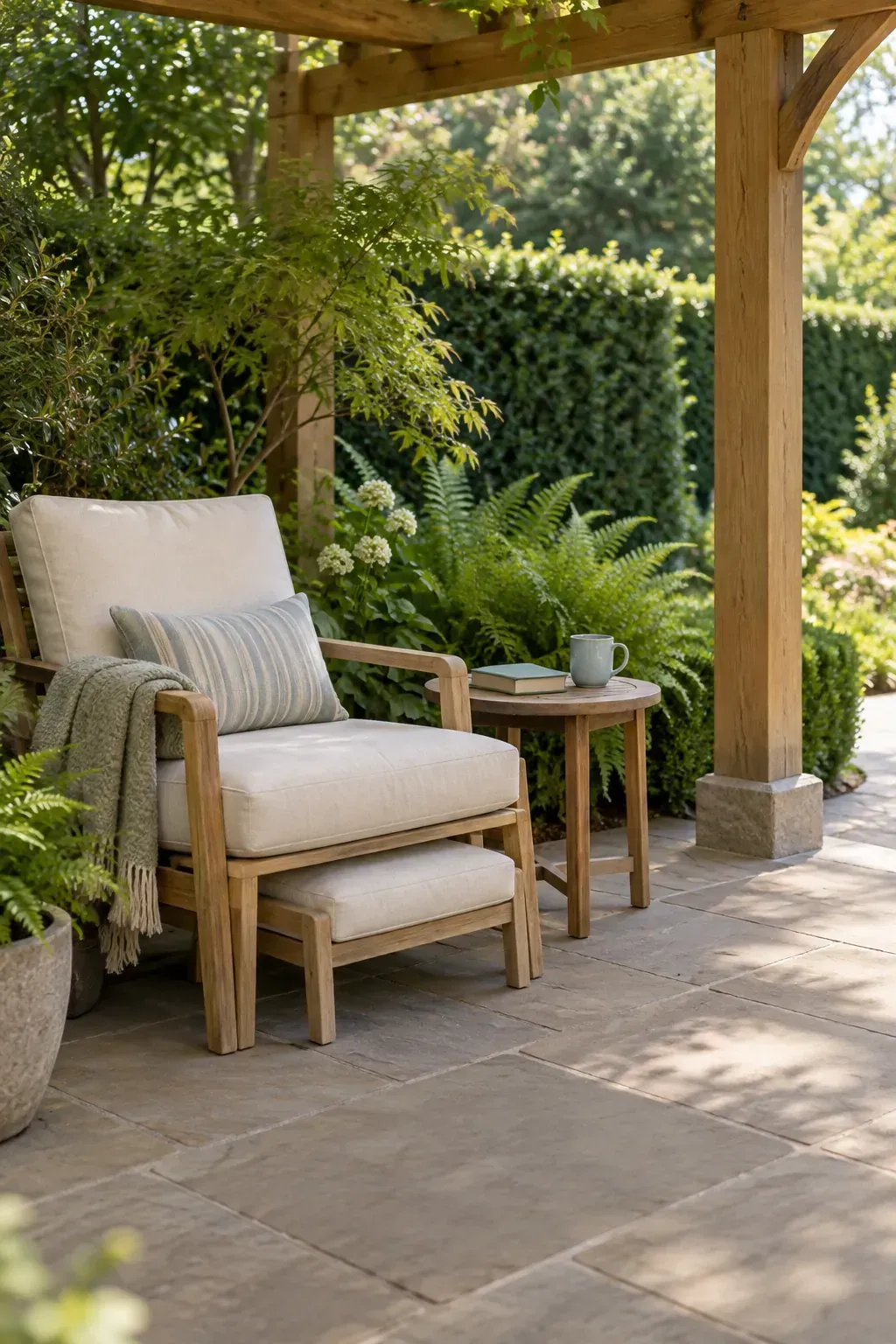
A storage box beyond the seating group
A weather resistant storage box gives cushions a nearby home when the patio is not in use. Check interior dimensions against your largest cushion before buying, and open the lid fully during your layout test. Keep the box clear of drains and post inspection points. Dry cushions before storing them because a sealed box can trap moisture.
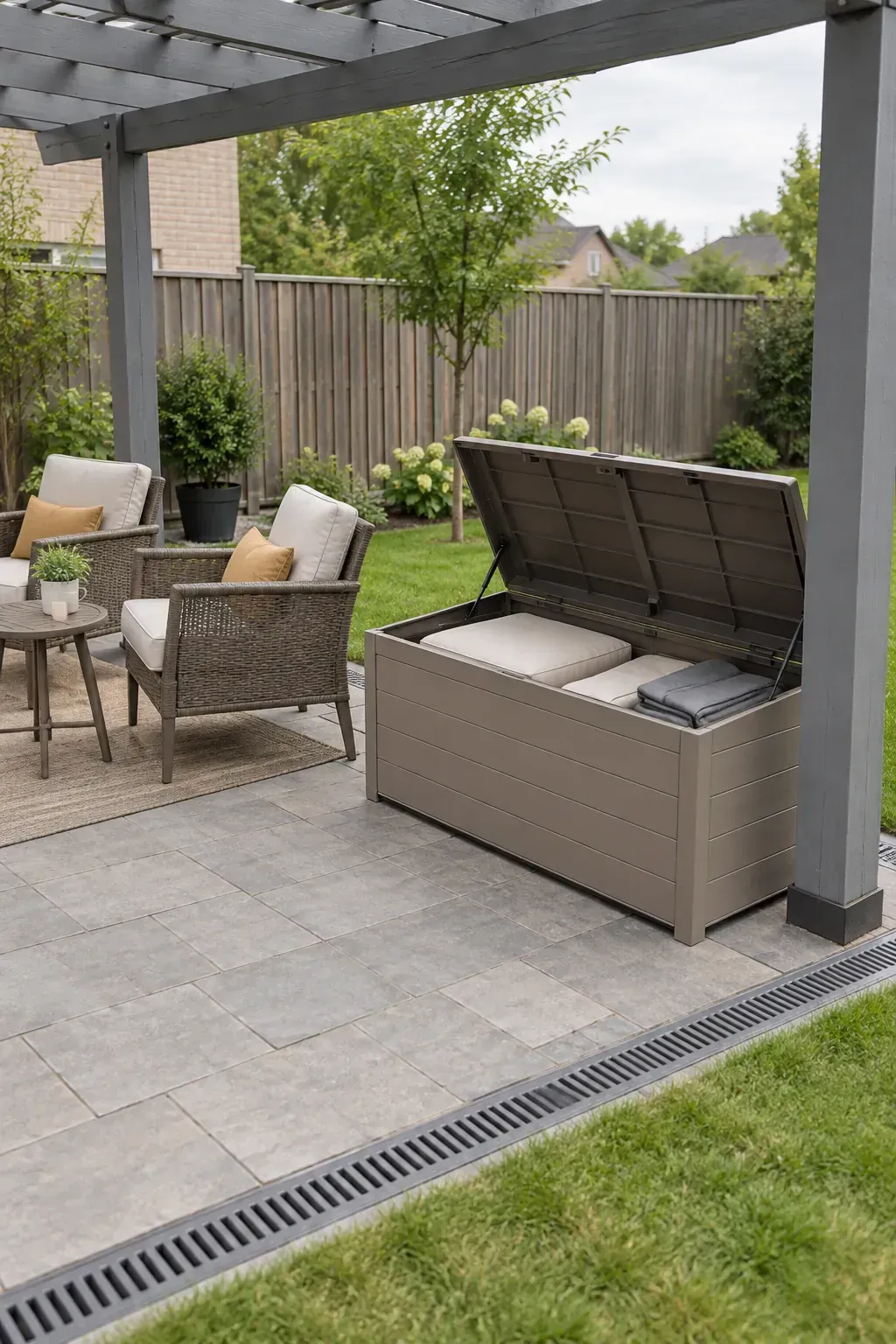
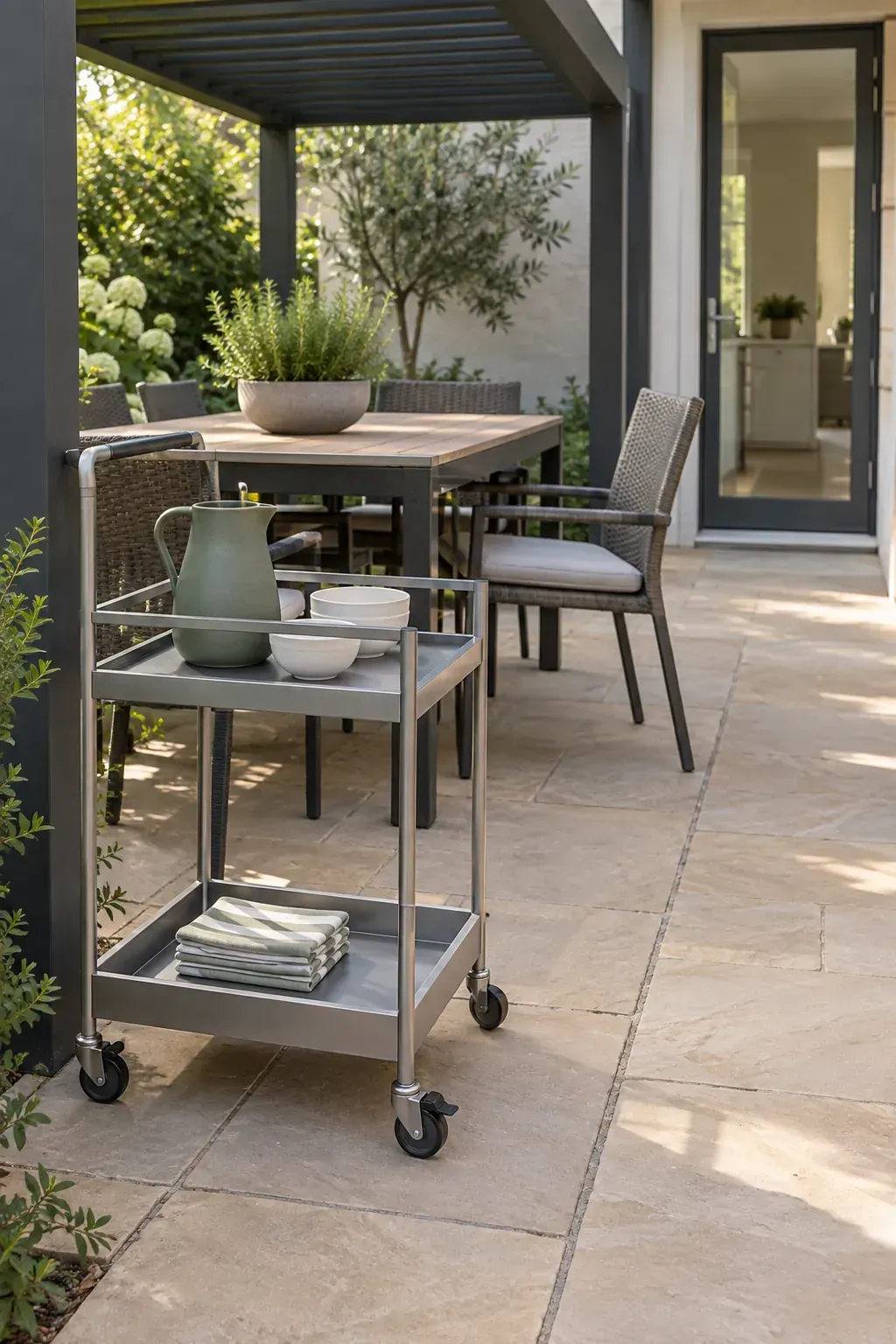
A serving cart with a parking space
A compact cart makes outdoor dining easier when there is a defined place to park it. Allow enough space for the handle and turning movement, not just the cart body. Choose wheels suited to the patio joints and secure it when stationary. Bring food and delicate serving pieces inside after the meal.
A detached frame beside the house
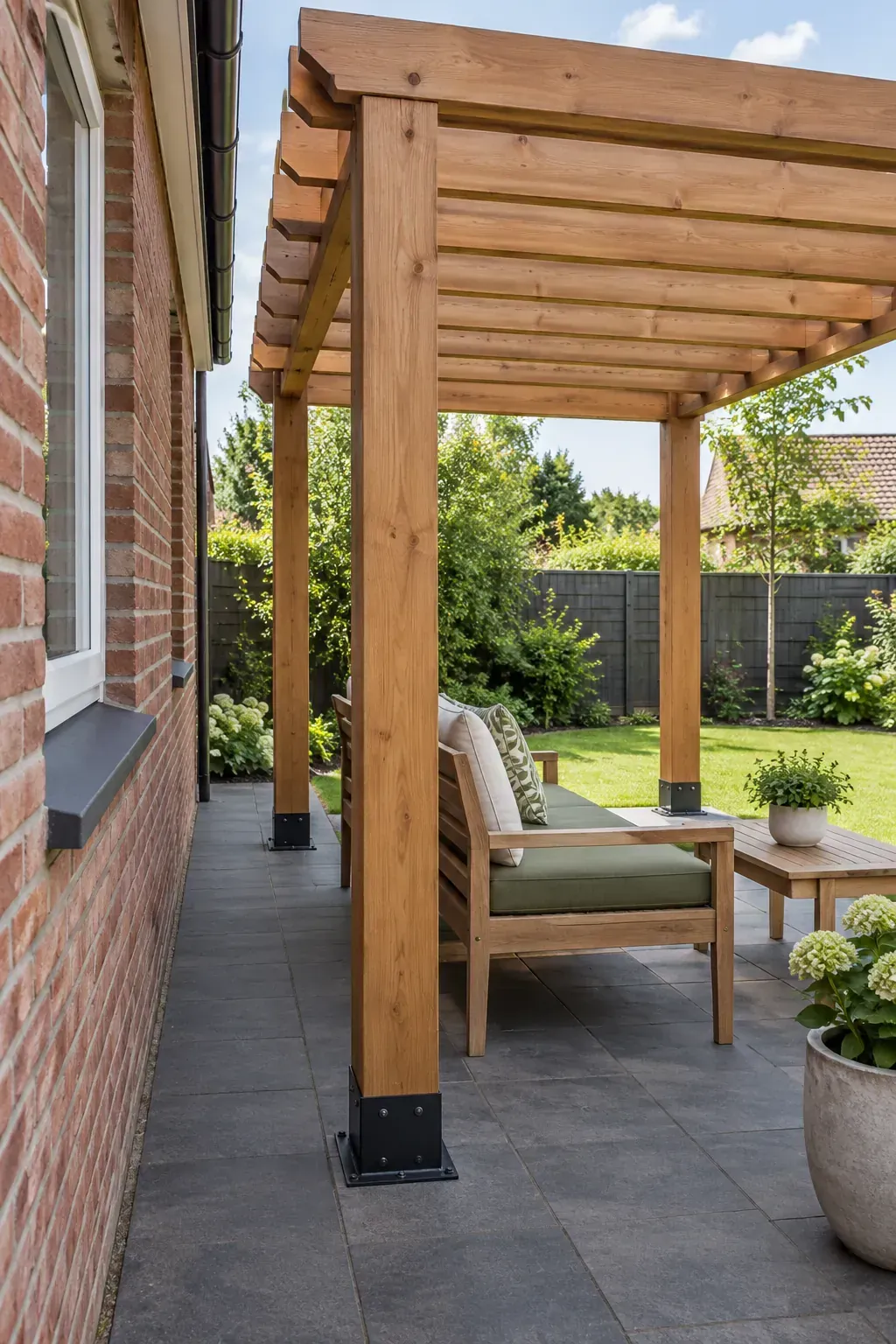
A freestanding pergola close to the house can define a back patio without relying on a wall connection. Its posts still need foundations and anchoring appropriate to the site, wind, and structure. Leave room to clean the gap between the frame and the building. This approach may help where wall fixings are unsuitable, but it still requires a site specific design.
A roof line that respects upstairs windows
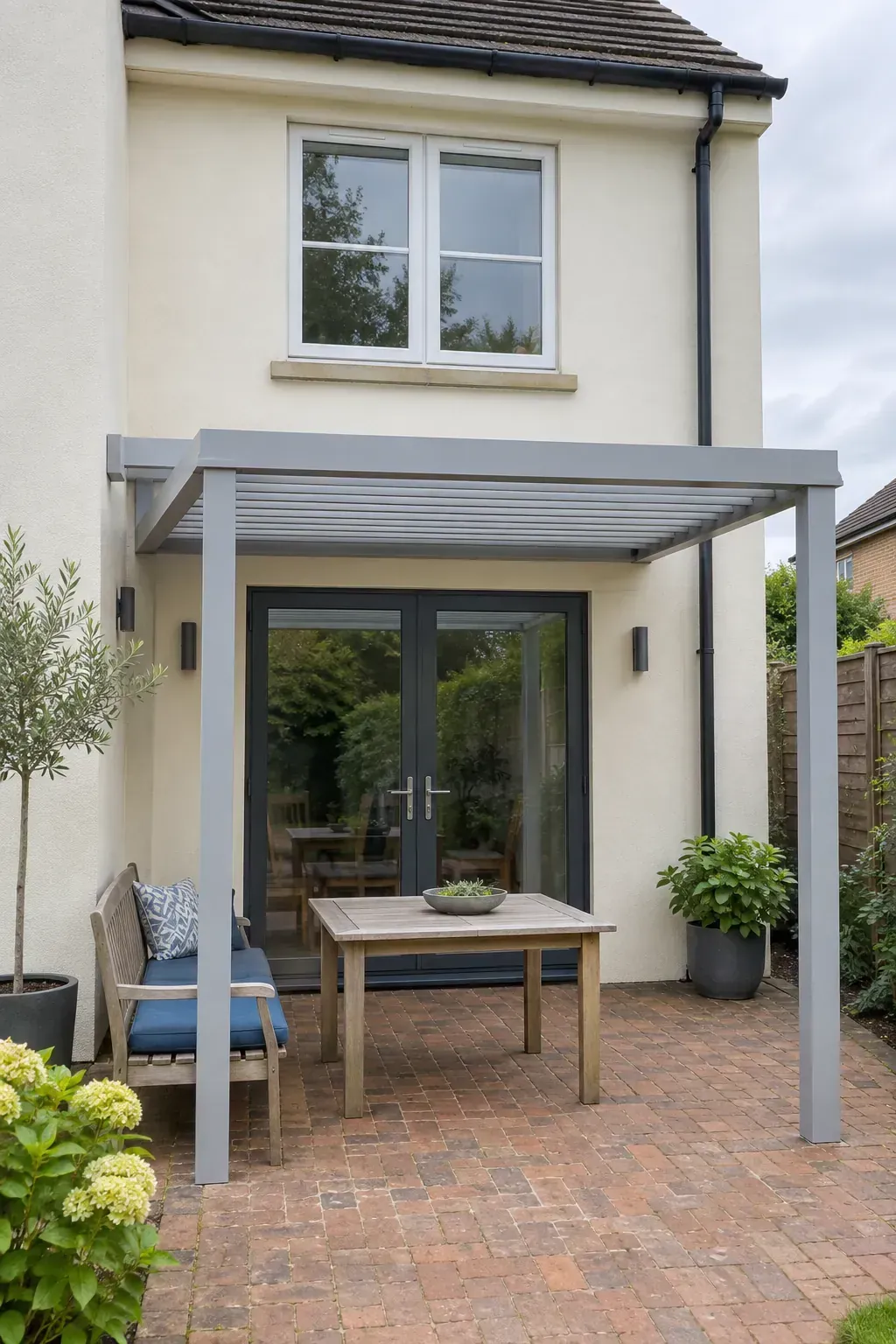
Position the pergola so beams and shade fabric do not unnecessarily darken important windows. Look from inside each affected room before fixing the height and footprint. On a small property, reducing the projection can be more useful than choosing thinner looking posts. Keep maintenance access to windows and external fittings in the plan.
A pergola offset from the garden view
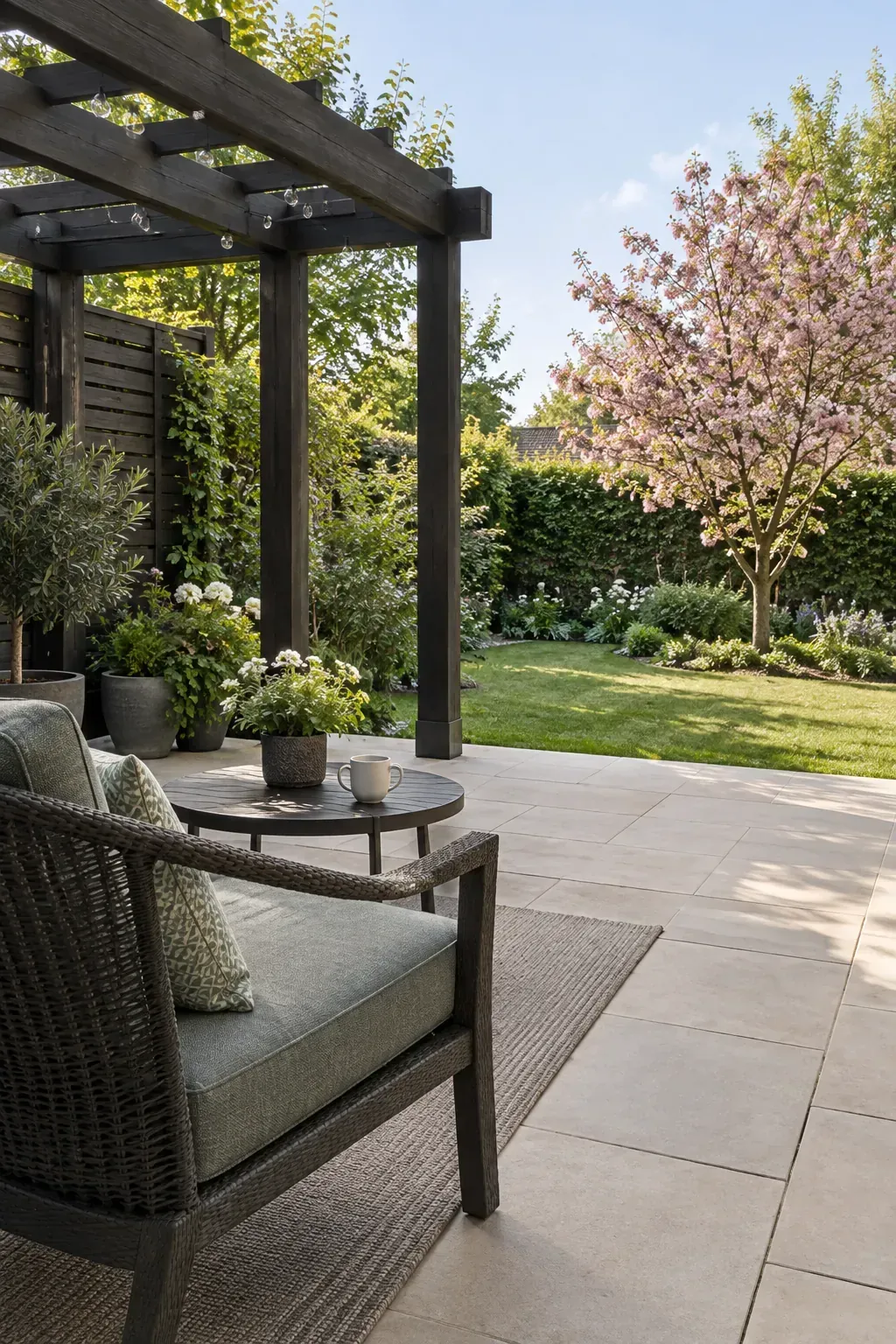
Move the frame slightly to one side when a centered structure would block the view you most enjoy. A seat facing through the open edge can capture that view without placing every chair under the same roof area. Check that the offset still gives useful shade at your preferred sitting time. The patio can remain connected through matching paving and planting.
A narrow patio with furniture in a line
On a narrow patio, align a compact bench and table along the long edge rather than forcing a deep lounge group across it. Keep posts outside the main corridor where the design allows. Measure the space with seats occupied, since a chair pushed beneath a table hides the true clearance. A light canopy can reduce visual bulk overhead.
A pergola over only part of the patio
Cover the area you use most and leave another part of the patio open for sun loving plants or winter seating. This gives you a choice of exposure without building the largest possible frame. Arrange the boundary so a post does not interrupt the route between the two areas. Check where roof runoff lands if the covered part has solid panels.
A side screen with a garden opening
Combine a privacy panel with a deliberate opening rather than wrapping every side in screening. Place the opening where it frames planting and offers a direct exit to the garden. Screen spacing should respond to the view at seated height, not only the view when standing. Keep vegetation trimmed so the useful gap remains clear.
A hose friendly planting edge
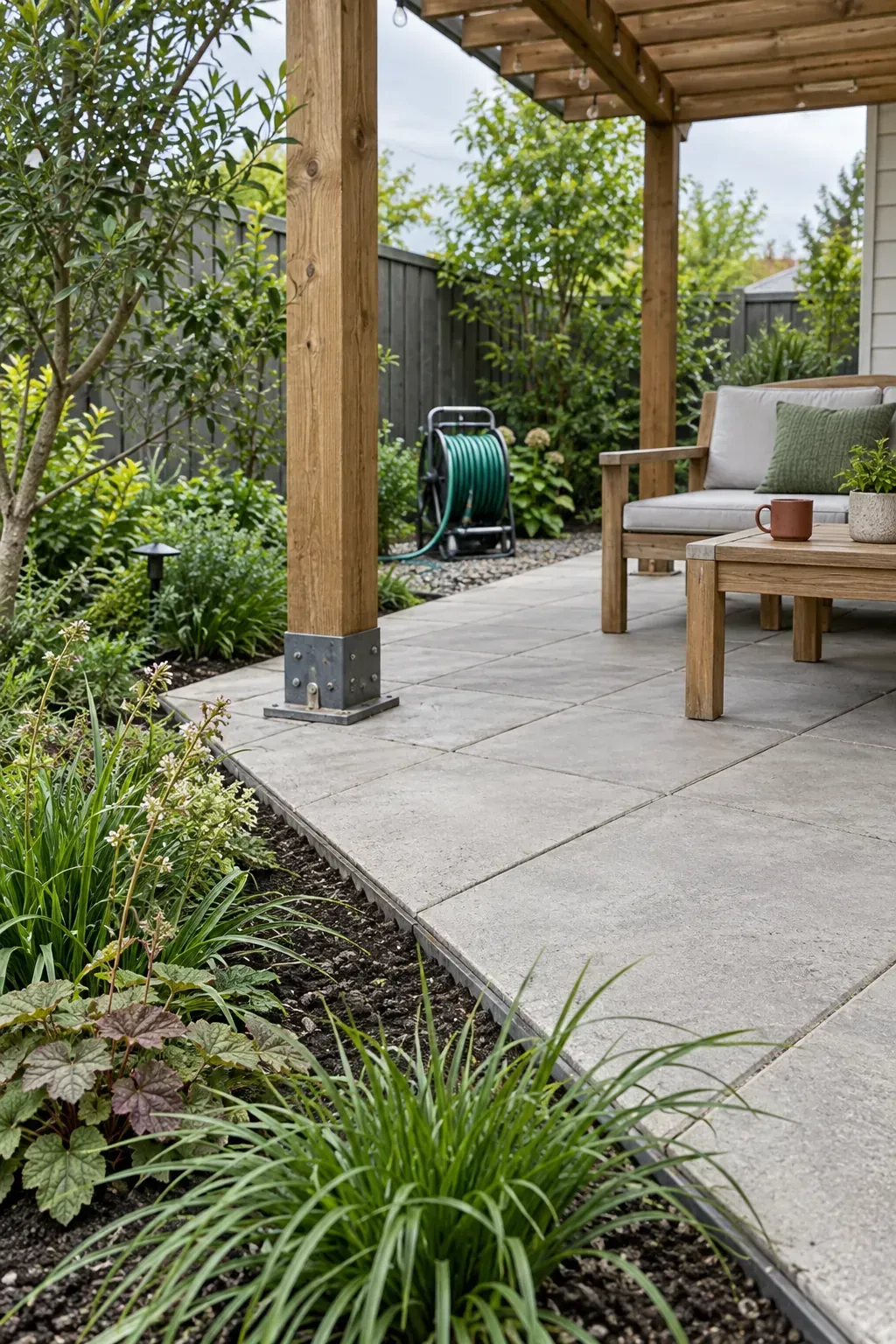
A planting strip beside the pergola can soften paving while leaving the central patio easy to sweep. Keep soil below the paving edge so rain does not wash mud across the sitting area. Route irrigation and a hose where neither crosses the main path. Select plants that tolerate the light and water conditions at the roof edge.
A simple finish with inspection access
Leave post bases, drainage outlets, and canopy mechanisms accessible instead of concealing them behind permanent furniture or tightly packed pots. Choose a finish whose care requirements fit the time you want to spend maintaining the patio. Check fasteners and moving parts on the schedule specified for the structure. The most useful final detail is one that lets you enjoy the shade and still see what needs attention.