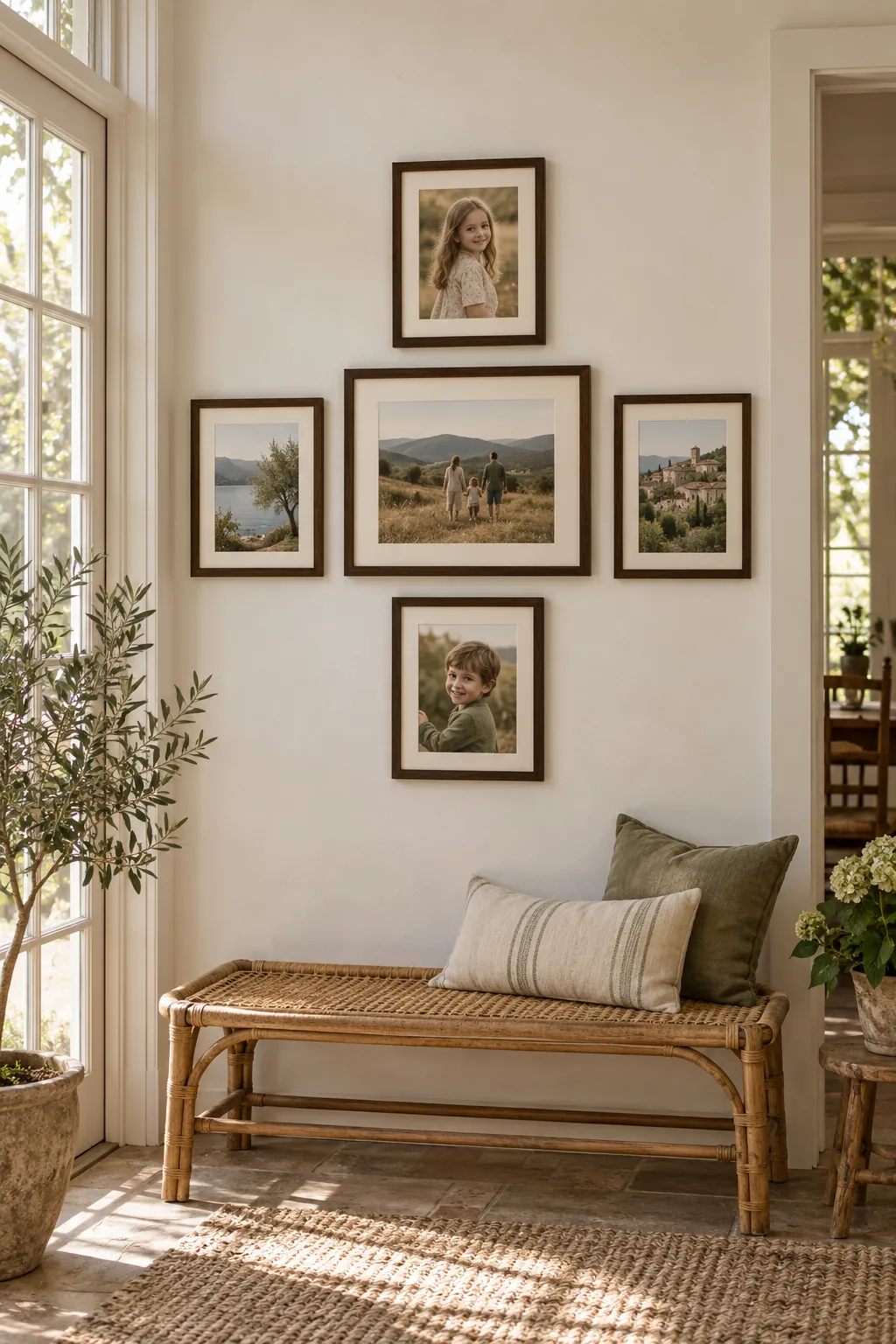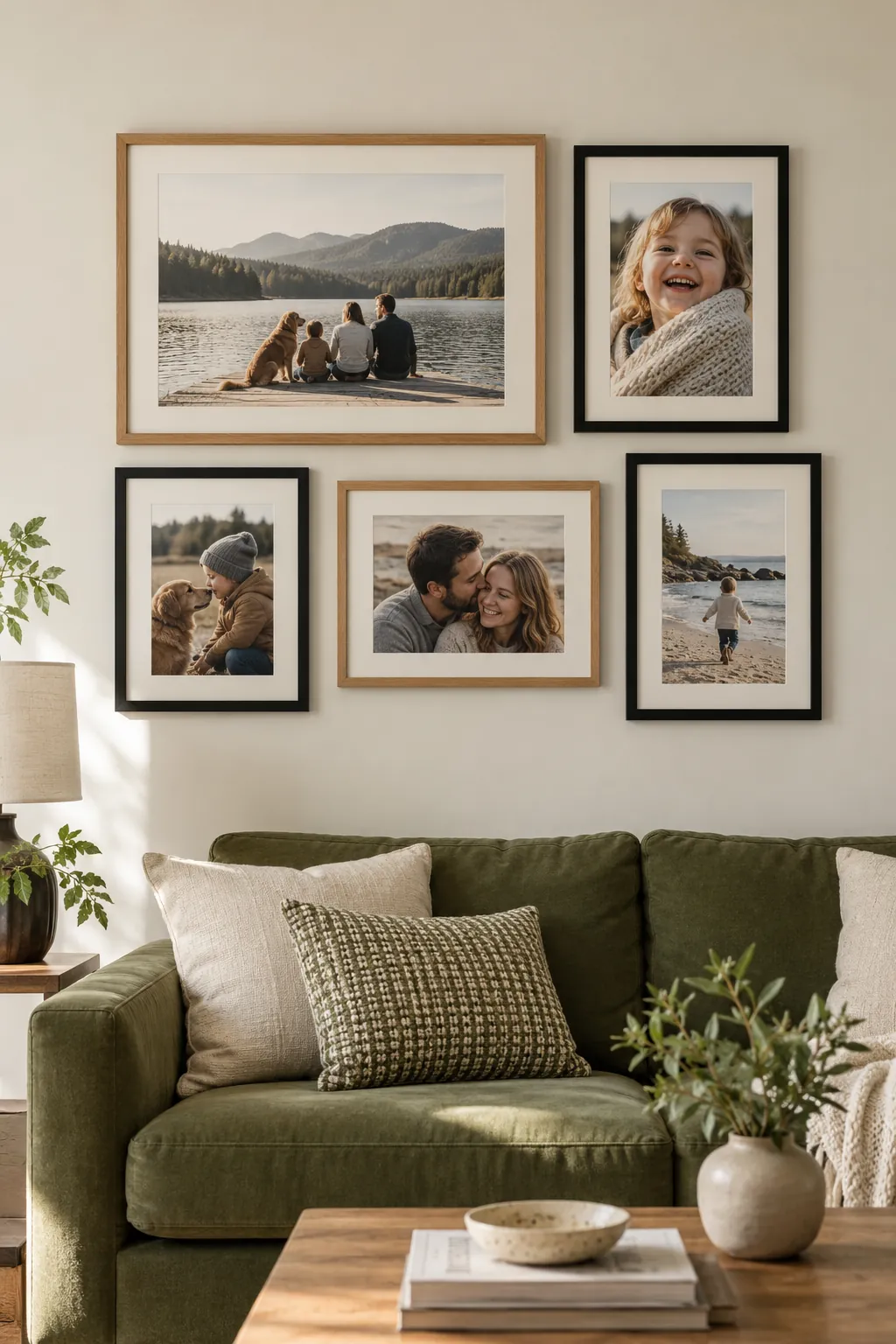
Five family pictures are enough to make a complete photo wall, provided the arrangement has one clear rule. Decide whether the frames share a size, a center line, an outer boundary, or a focal point before choosing exact gaps. Trace the frames on paper and test the group at room distance before hanging.
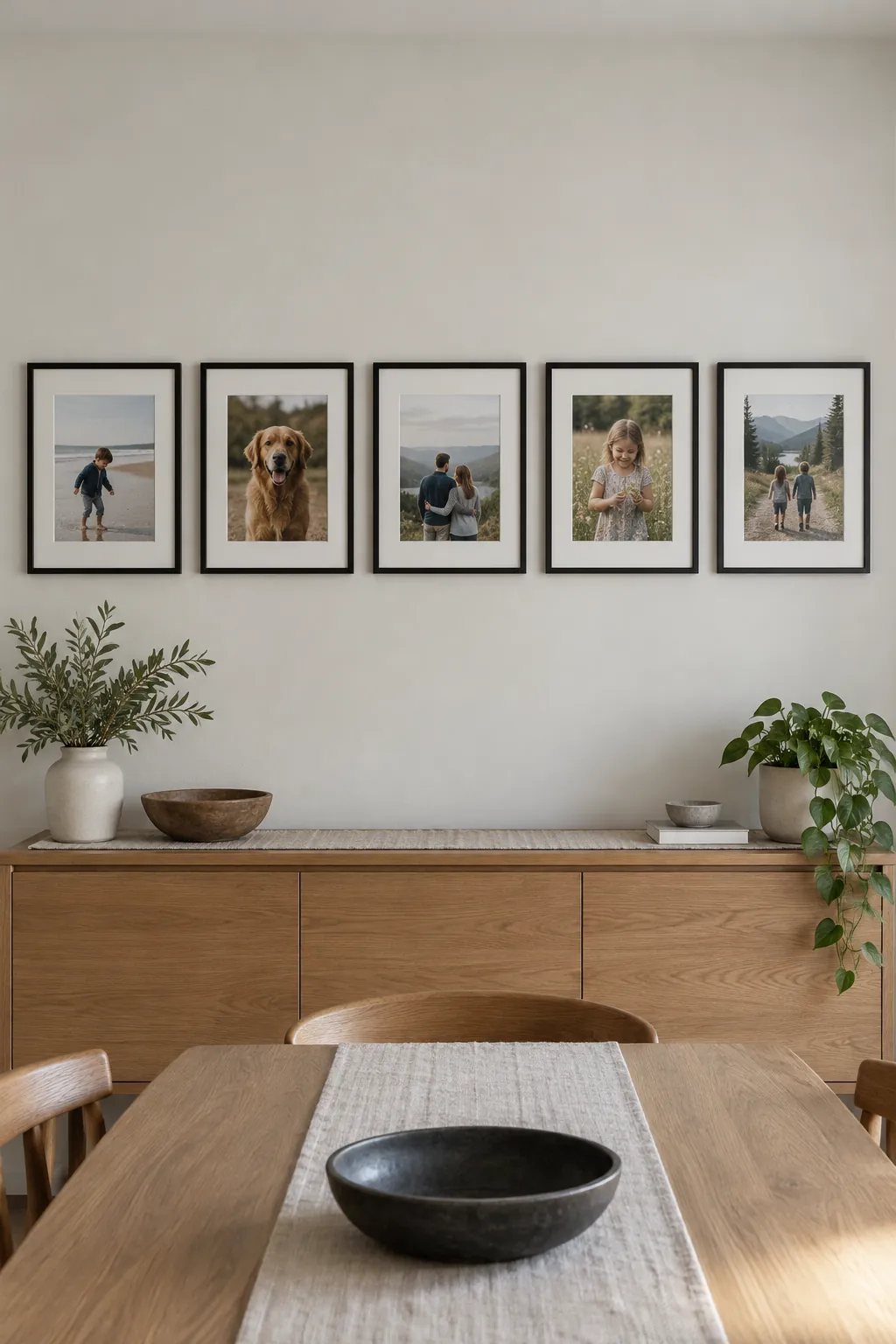
Straight Row With Equal Gaps
Place five same size frames on one shared center line for the cleanest layout. Measure the total frame width, subtract it from the available wall width, and divide the remaining interior space by four for equal gaps. Keep the two outside margins visually related to nearby furniture rather than forcing them to equal the interior gaps.
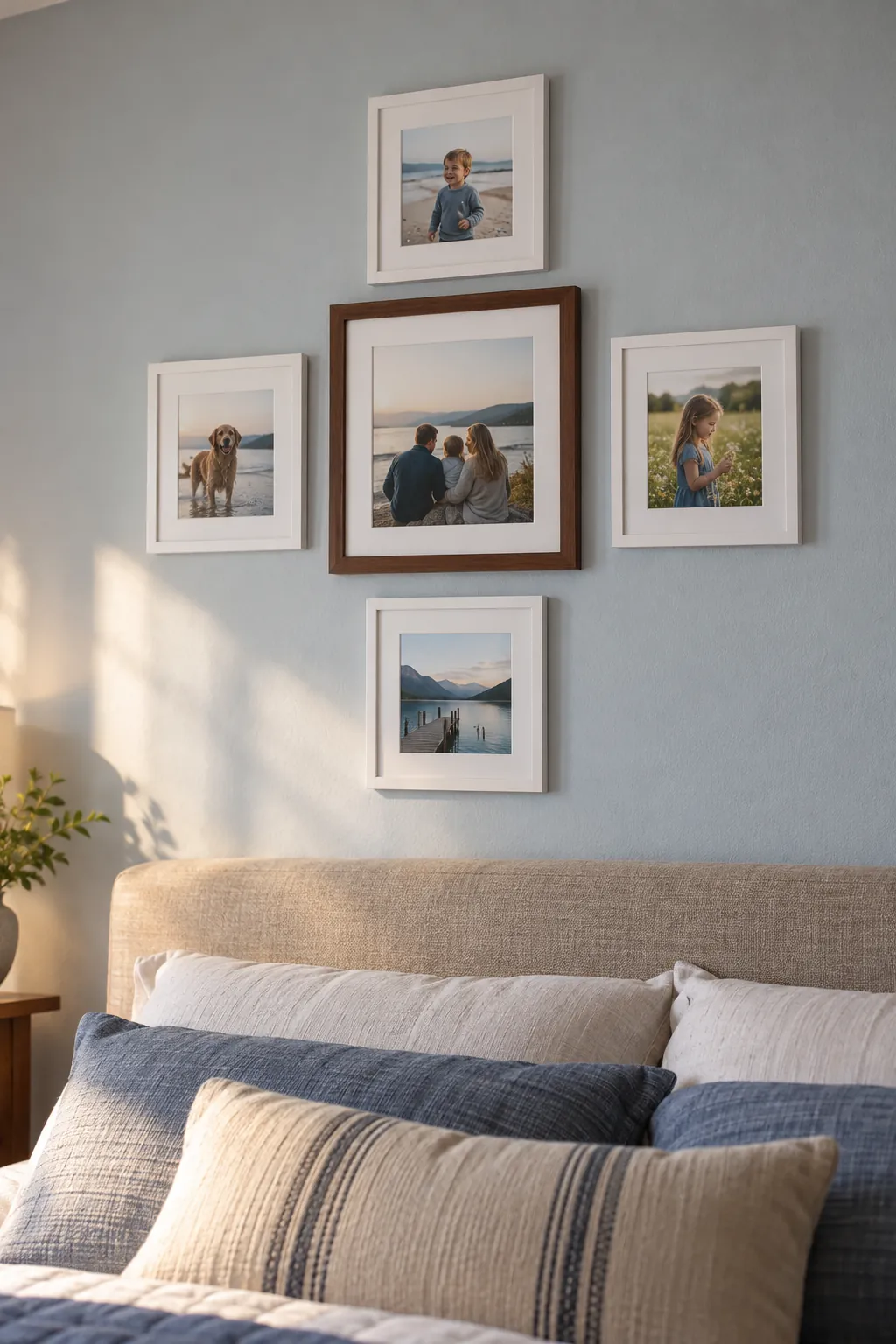
Centered Cross Formation
Put one picture at the center, then place one above, below, left, and right. Match the horizontal and vertical gaps so the cross feels intentional. This works best with equal frames or with one slightly larger center frame.
Three Over Two Grid
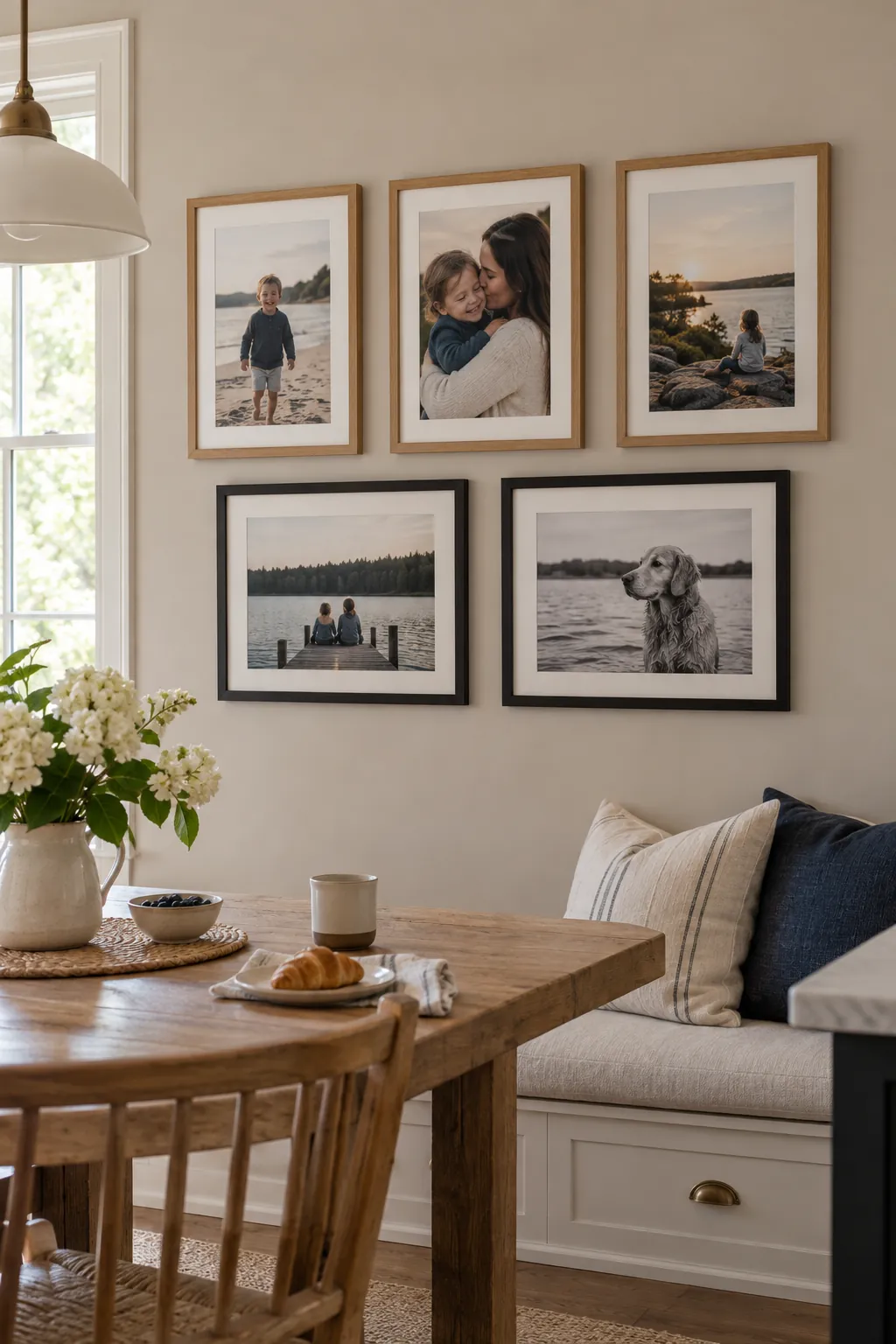
Use three frames across the top and two centered beneath them. Align the lower pair with the gaps above rather than pushing both frames to the outer edges. The staggered seams soften the grid while the shared rows keep it calm.
Two Over Three Grid
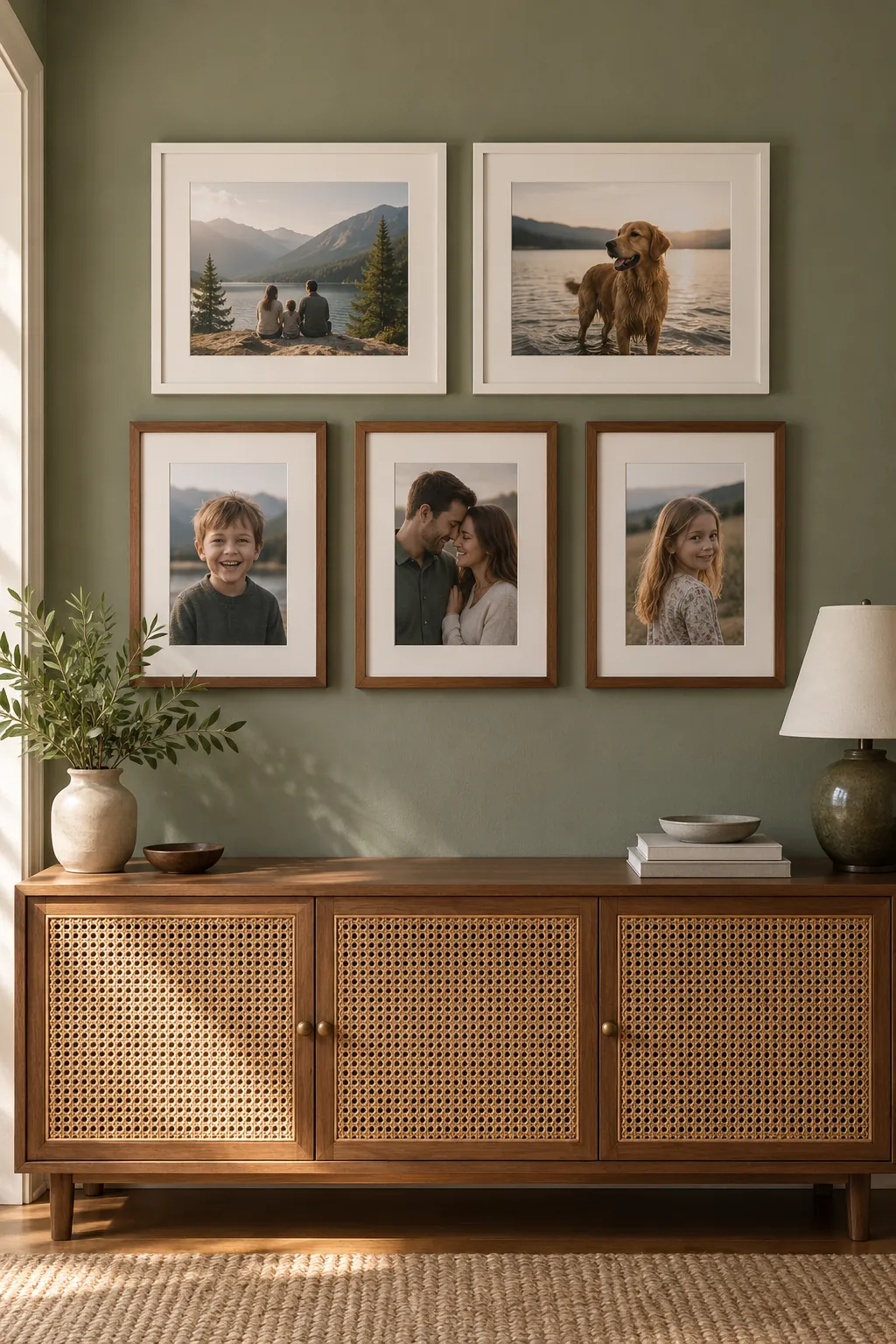
Place two pictures in the upper row and three in the lower row for a visually grounded group. Center the upper pair above the spaces between the lower frames. Use this arrangement above a sideboard when you want the wider base to echo the furniture.
Large Center With Four Corners
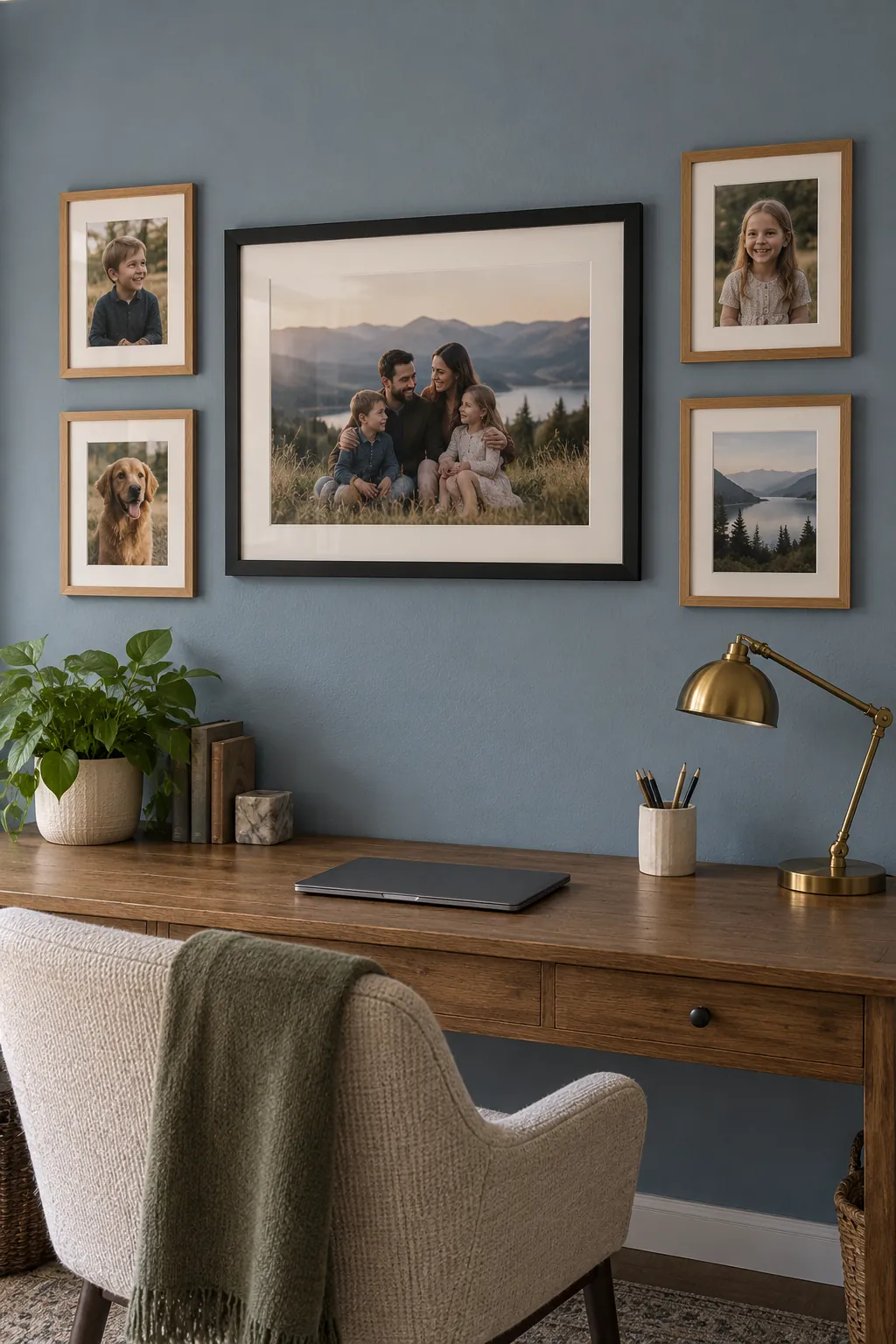
Make the most important family photograph the large central anchor. Place four smaller frames around its corners with equal breathing room. Keep the outer frames close enough that they support the anchor instead of reading as separate pictures.
Asymmetrical Anchor Cluster
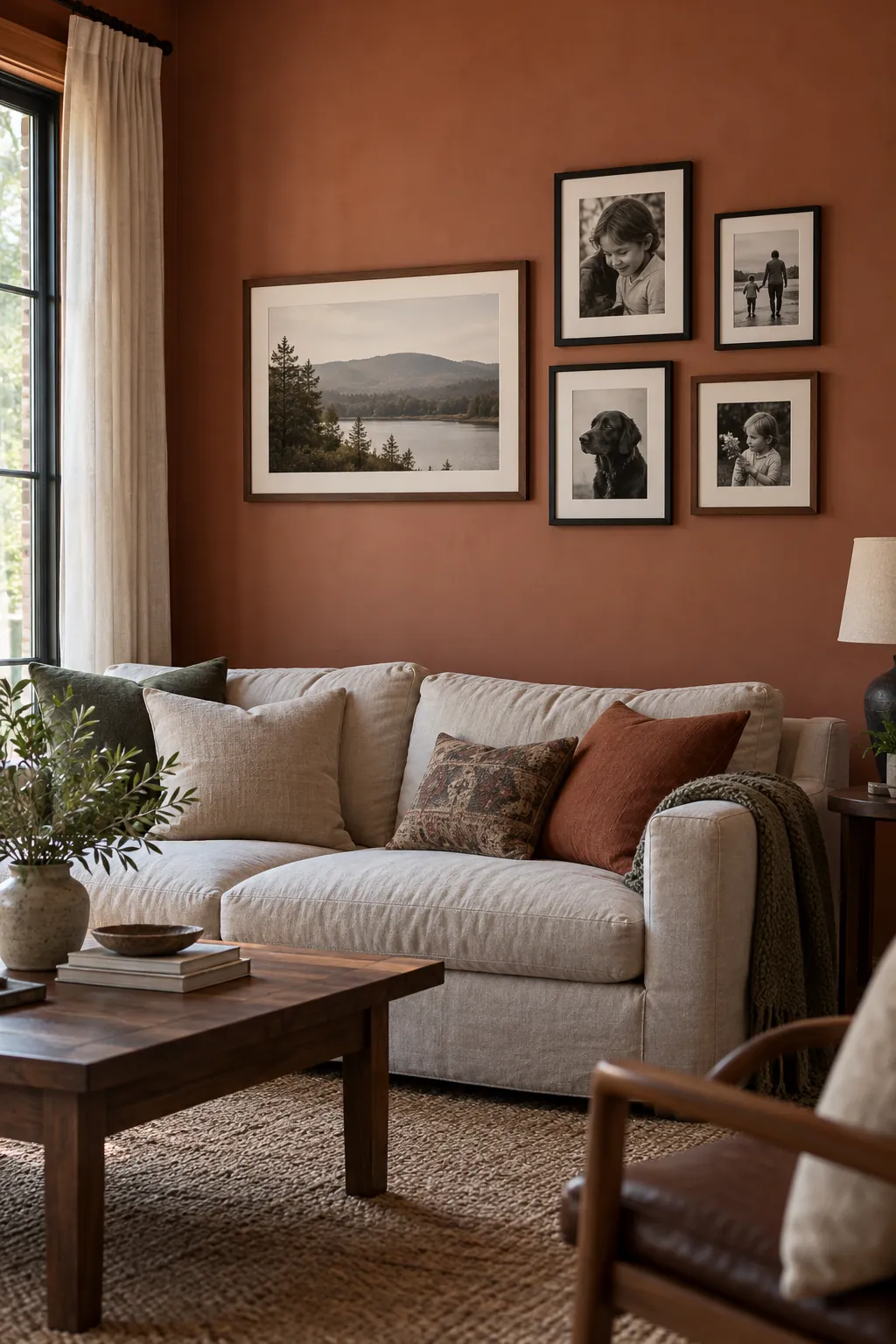
Set one landscape frame slightly away from center and group four smaller portraits along two adjacent edges. Leave the opposite edges more open to create direction. Balance the total dark area and frame size rather than mirroring exact positions.
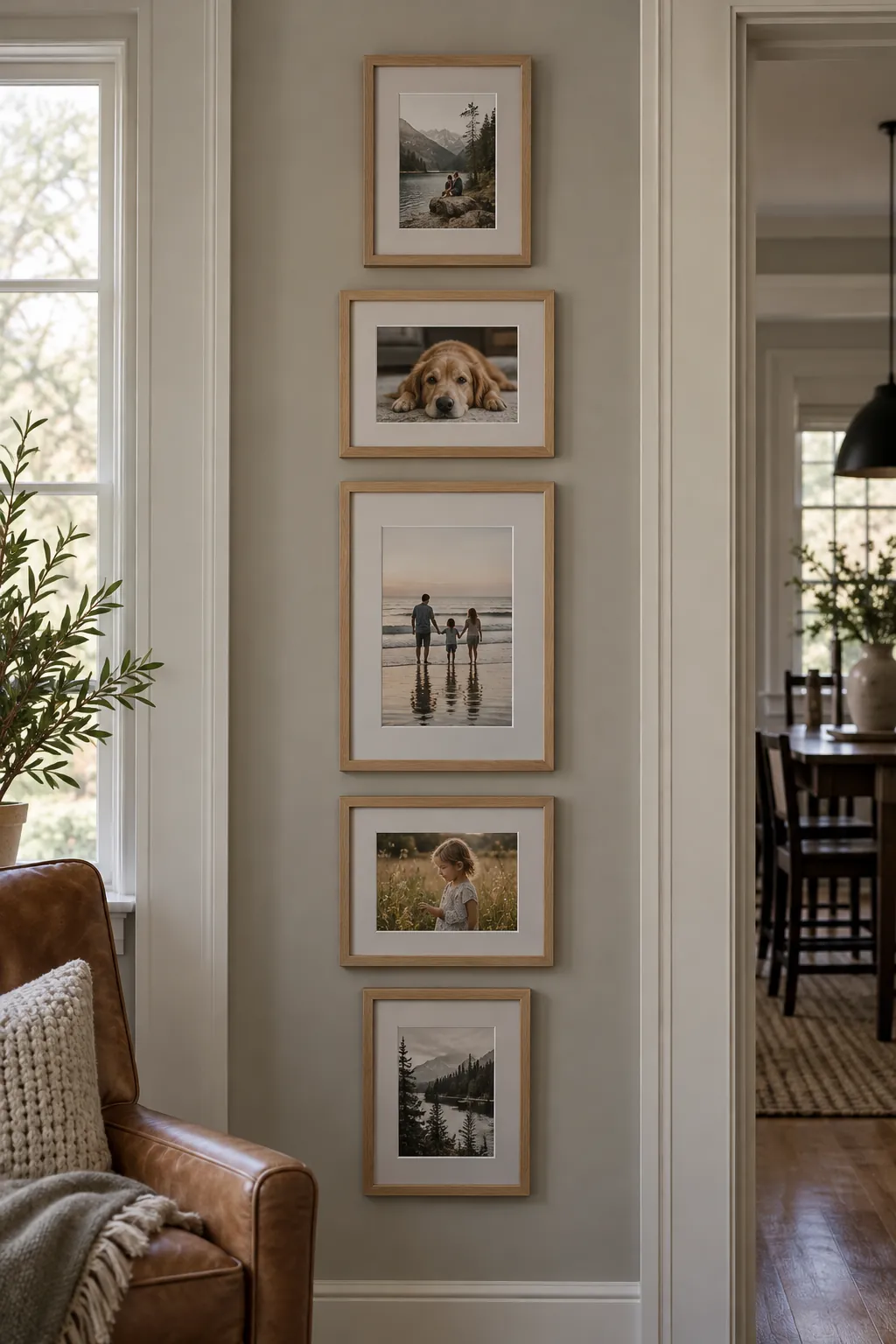
Tall Vertical Column
Stack five frames along one vertical axis for a narrow wall between doors or beside a reading chair. Vary orientation only if the frame centers remain aligned and the gaps stay steady. Put the visually heaviest picture near the middle so the column does not appear to lean.
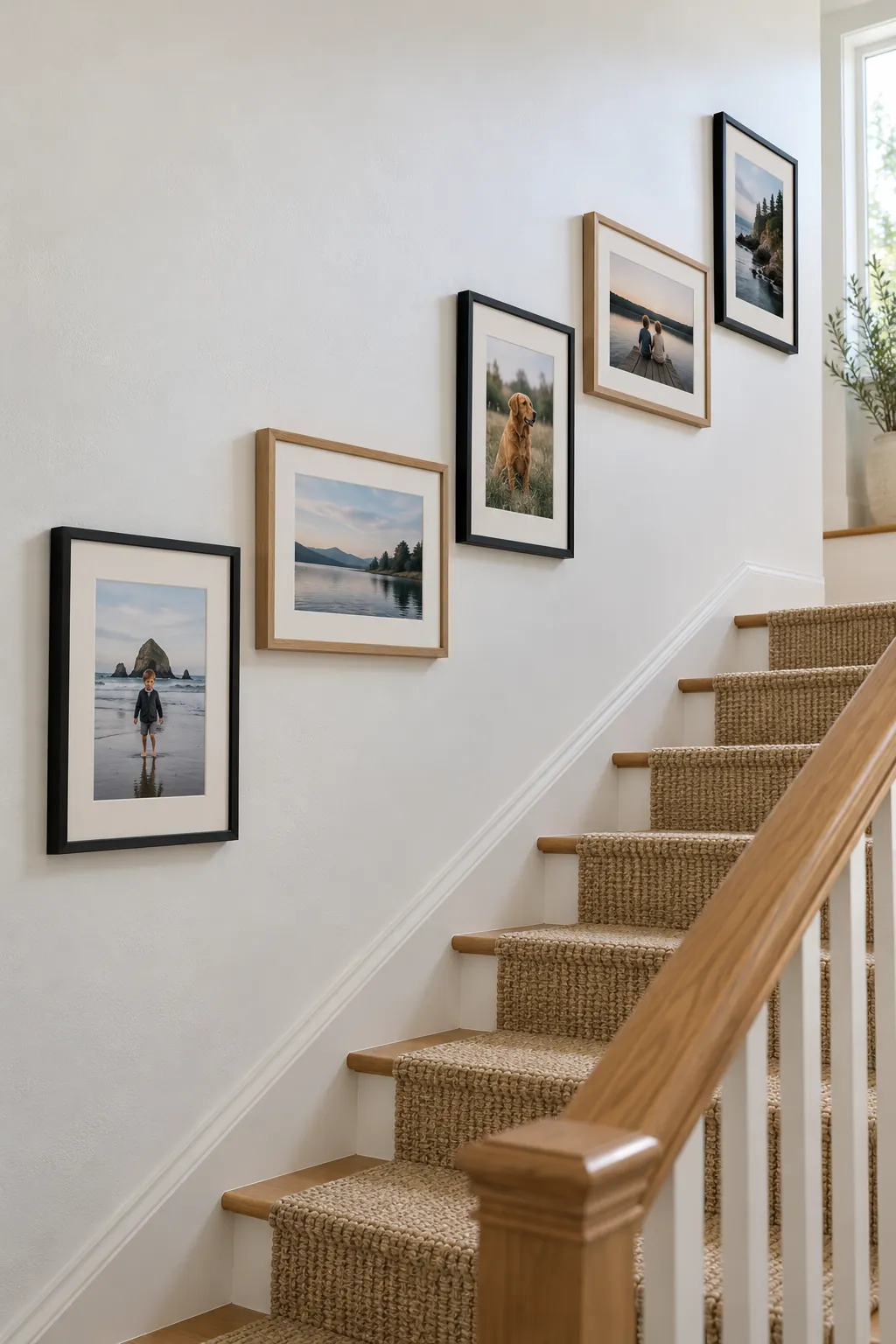
Gentle Stair Step
Raise each frame gradually across the wall along one implied diagonal. Measure from the same corner of every frame so the rise remains consistent. This layout suits a short stair wall or a hallway where the eye already moves in one direction.
Loose Oval Balance
Arrange the five frames around an implied oval with the largest piece near the middle. Let one portrait rise at the top and another settle lower while two landscape frames widen the sides. Keep the empty center small enough that the pictures still form one minimal gallery wall.