
The front yard is the first thing people see when they visit your home, yet it often becomes a cluttered space of overgrown bushes and aging lawns. A modern approach to landscaping focuses on simplicity and intentionality, stripping away the chaos to reveal a look that is both calm and visually impactful. By shifting the focus from quantity to quality, you can create an entrance that feels like an extension of your home's architecture.
This article covers how to use geometric shapes, limited color palettes, and structural plants to build a front yard that stands out. You will learn how to balance hardscaping with greenery to achieve a professional finish that requires less work to maintain over time.
Focus on defined geometric shapes and clean lines
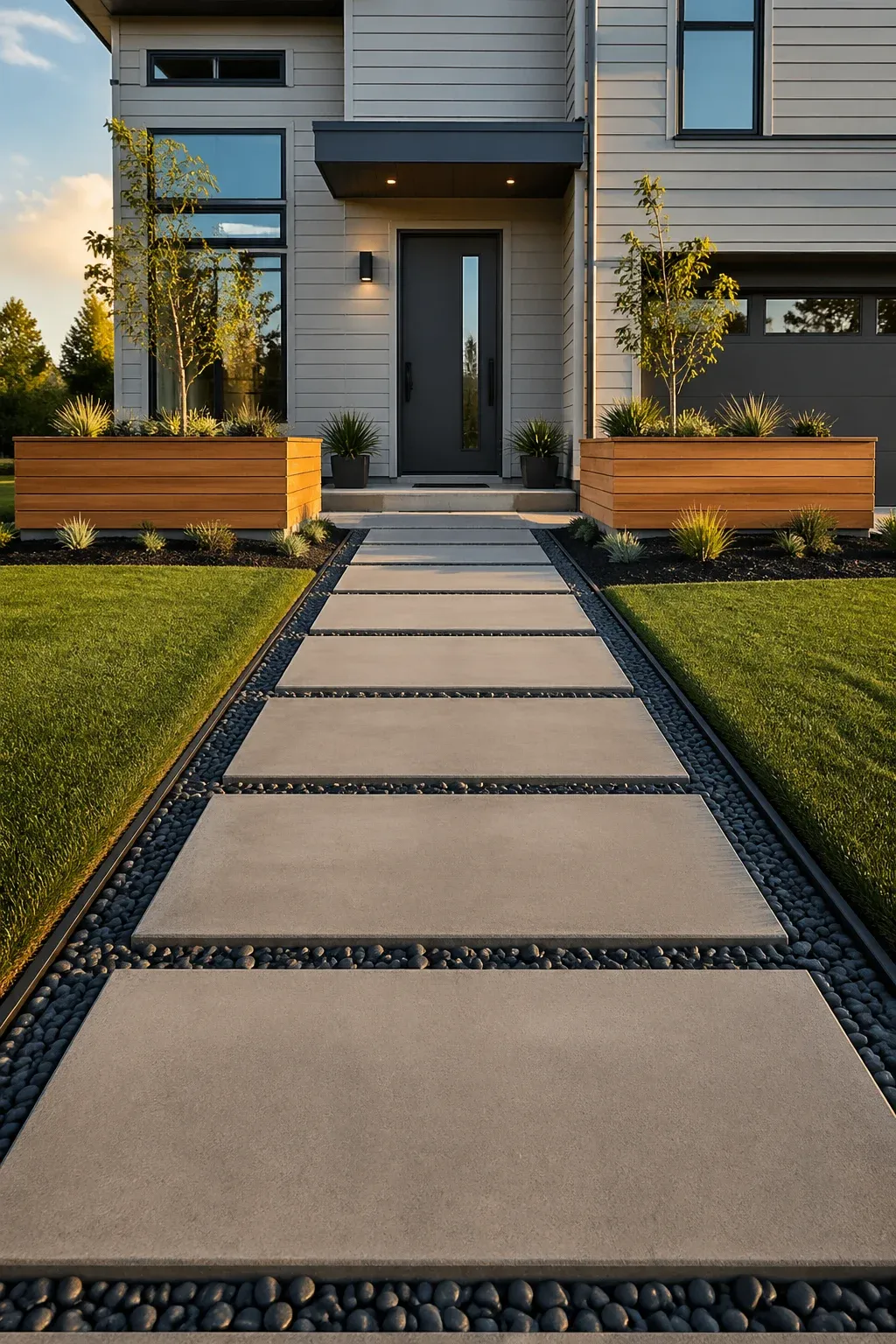
Modern design relies heavily on the use of geometry to create a sense of order. Instead of the traditional curved flower beds, consider using sharp right angles and straight lines. This can be achieved through the layout of your walkways, the shape of your planters, or even the way you edge your lawn. Rectangular pavers or square concrete pads separated by small gaps create a rhythmic pattern that guides the eye toward the front door.
When you organize your yard into distinct zones using these shapes, it looks organized even when the plants are in their dormant season. You can use steel edging to keep garden beds crisp or build raised wooden planters that mirror the horizontal lines of your siding. These structures provide a framework that makes the entire landscape feel intentional rather than accidental.
Choose a limited color palette for plants and materials
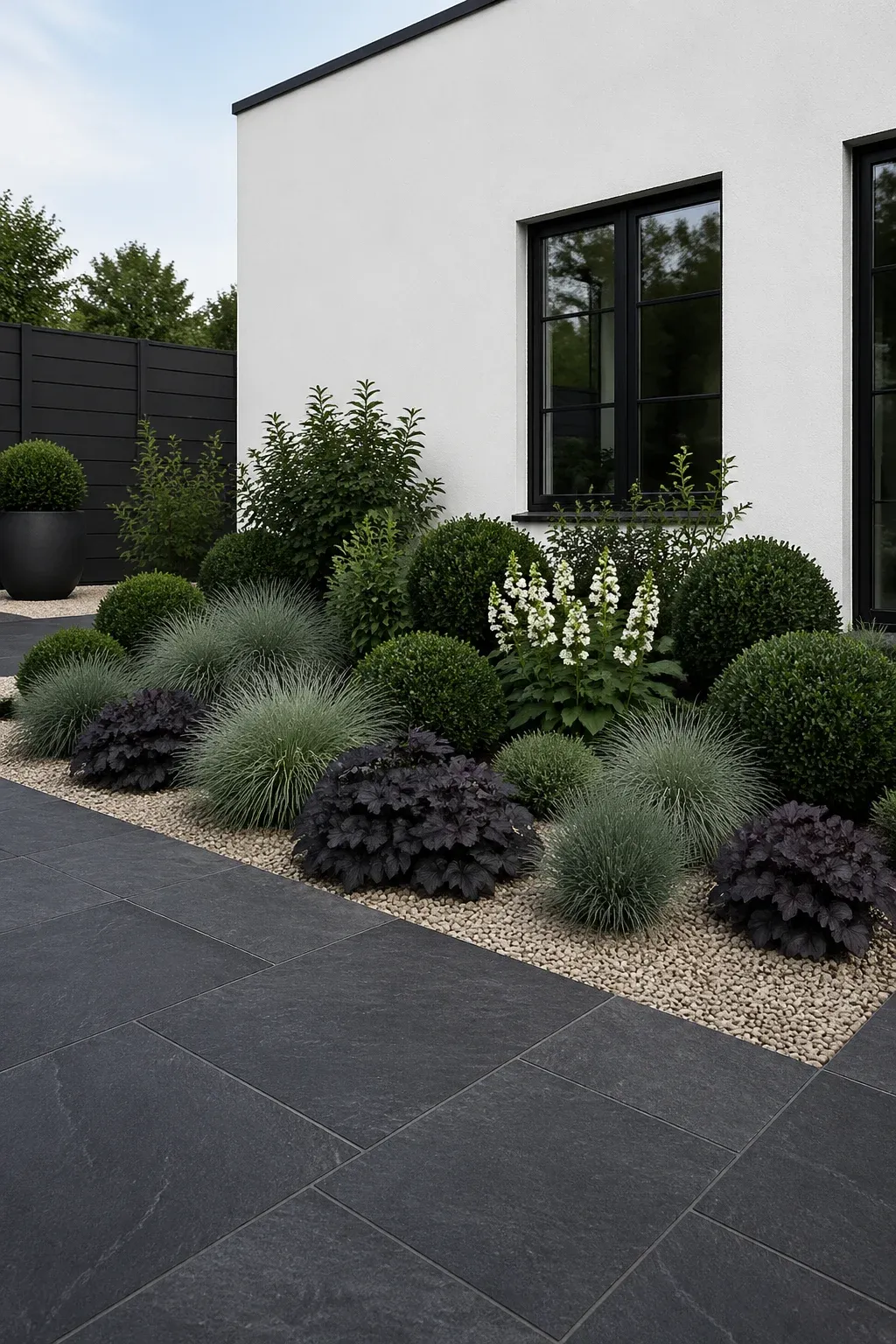
A common mistake in landscaping is trying to use too many colors at once. For a modern look, it is better to stick to a tight palette of three or four colors. Neutral tones like charcoal grey, slate, and sand work well for hardscaping materials. For the plants, focus on various shades of green, with one or two accent colors like deep purple or white.
Using a restricted color scheme creates a cohesive feel that is easy on the eyes. It prevents the yard from looking busy and helps the architectural features of your house pop. If your home is white, dark grey stones and deep green foliage provide a sharp, clean contrast. If your home has wood accents, look for plants with warm yellow-green leaves to complement the natural tones.
Use gravel and pavers to create low-maintenance texture
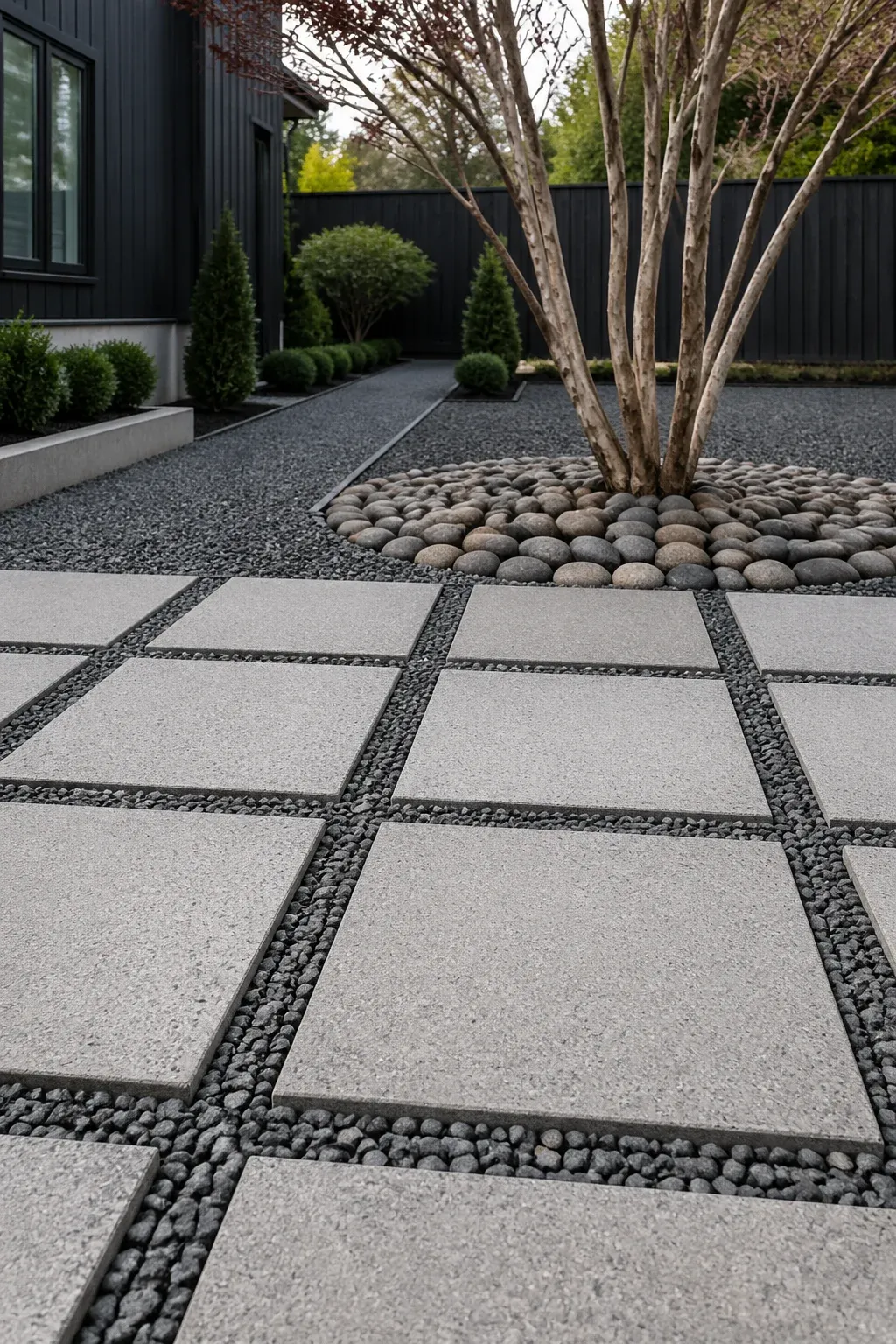
Lawn maintenance can be a full-time job. Modern designs often replace large sections of grass with gravel, river rocks, or large-format pavers. This shift reduces water usage and eliminates the need for constant mowing. Gravel comes in various sizes and colors, allowing you to add texture to the ground level without adding clutter.
To keep this look clean, always use a high-quality landscape fabric underneath your stone to prevent weeds from poking through. You can mix different sizes of stone to define different areas—use smooth river rocks around the base of a tree and crushed pea gravel for a side path. These materials drain well and provide a stable surface that looks good in both rain and shine.
Select structural plants that provide year-round visual interest
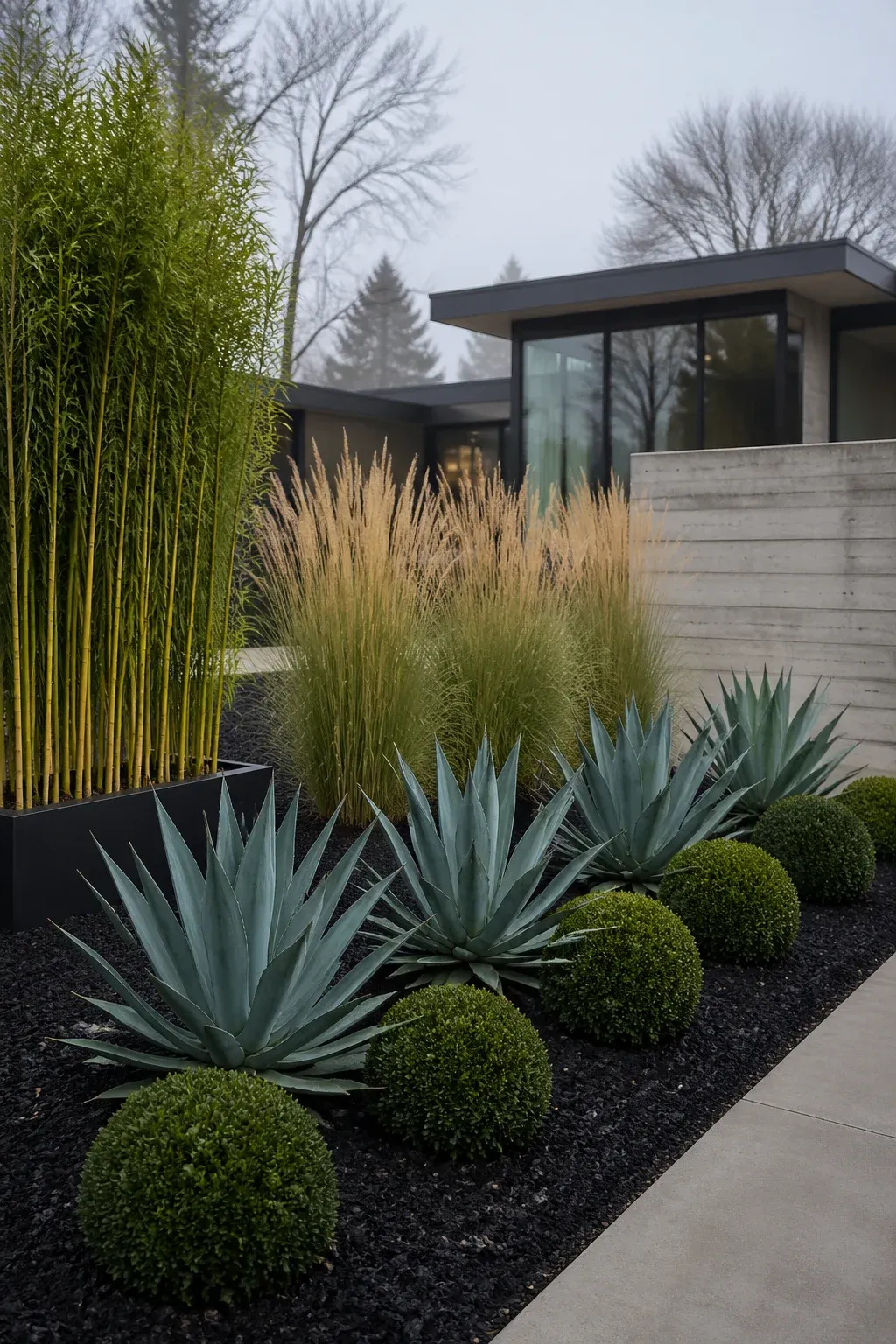
In a modern yard, plants are treated like living sculptures. Instead of messy wildflowers, choose species with strong, distinct shapes. Ornamental grasses, agaves, and boxwoods are excellent choices because they hold their form throughout the seasons. Bamboo is another great option for adding vertical height and a sense of privacy, provided it is planted in containers or with proper root barriers.
Think about how the plant looks in the winter. Evergreens are essential because they provide structure when other plants have died back. Arrange them in clusters of three or in straight rows to reinforce the geometric theme. The goal is to have a landscape that looks just as good in January as it does in July.
Incorporate subtle outdoor lighting to highlight architectural features
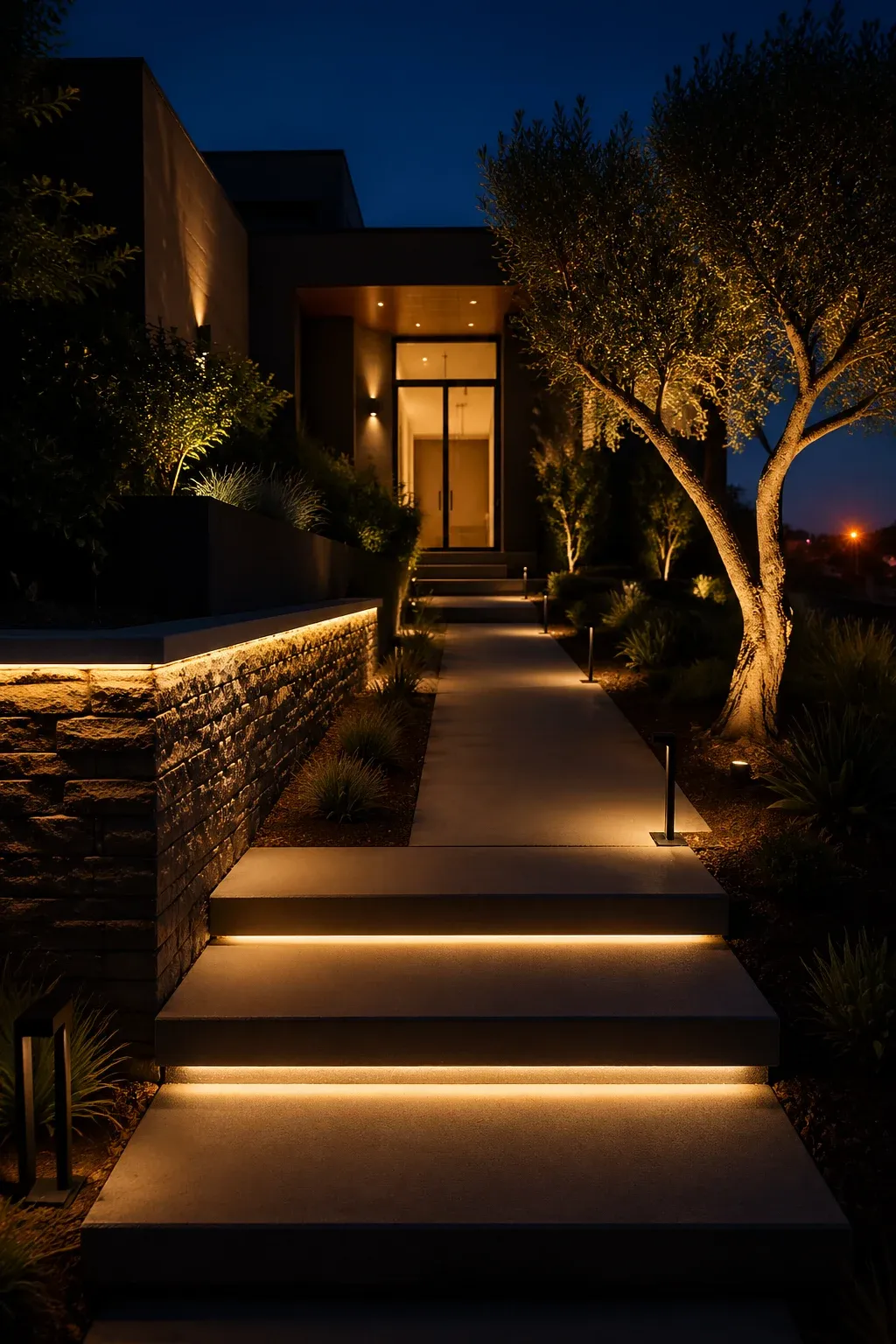
Lighting is what makes a modern yard look high-end after the sun goes down. Avoid bright, blinding floodlights. Instead, use low-voltage LED lights to highlight specific features like a beautiful tree, a stone wall, or the path leading to the door. Path lights should be simple and low to the ground, casting light downward rather than outward.
Up-lighting a structural plant from the base can create dramatic shadows that add depth to the yard. You can also hide strip lighting under the lip of a step or a raised planter for a soft, floating effect. This subtle approach makes the space feel safe and welcoming without being overwhelming.
Maintain the landscape with simple pruning and edging
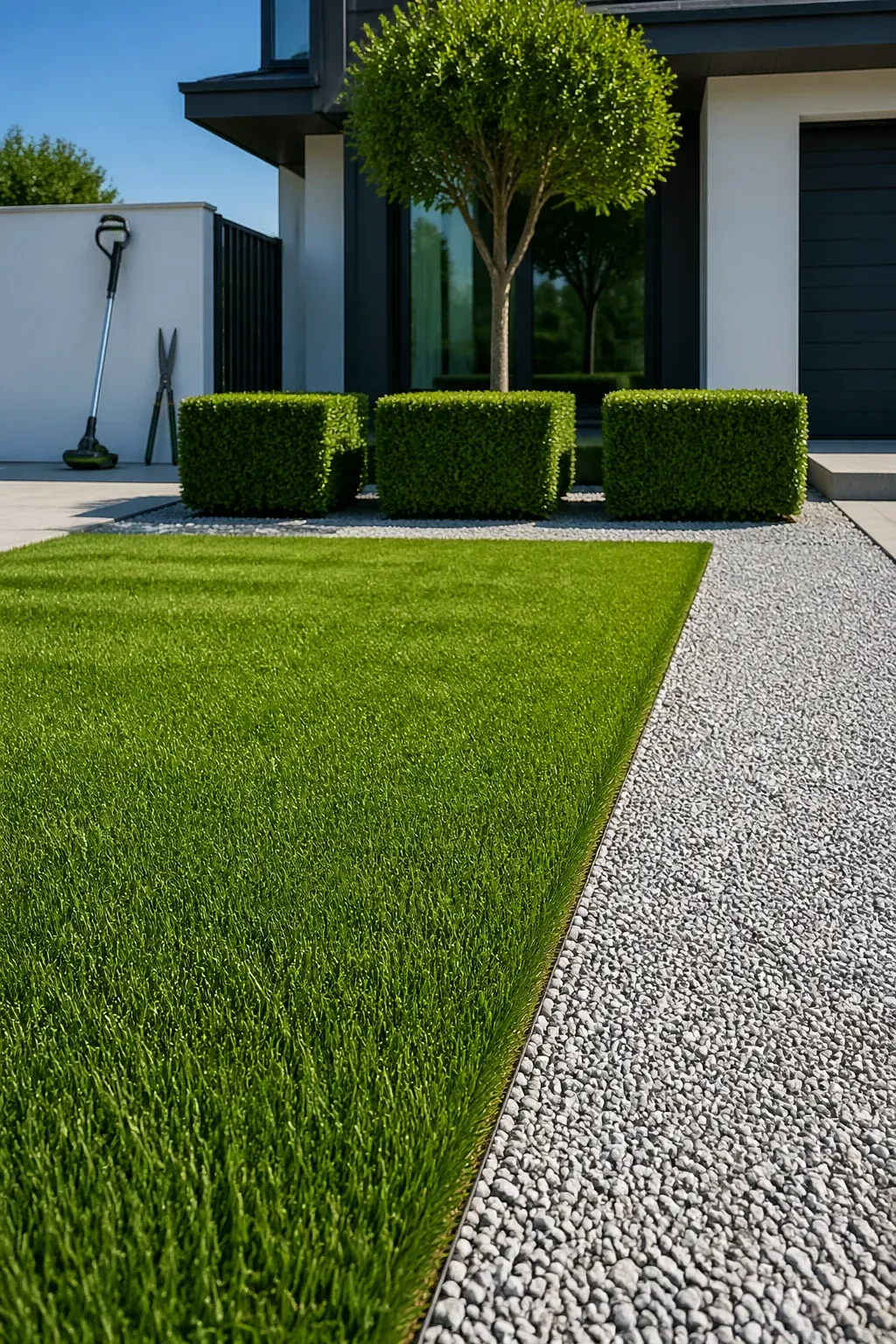
Even a low-maintenance yard needs some attention to stay looking sharp. The key to the modern look is crispness. This means keeping your hedges trimmed into clean boxes or spheres and ensuring that grass or weeds don't creep into your gravel areas. A quick pass with a string trimmer along your edges once every two weeks makes a world of difference.
Pruning should be done to maintain the natural or intended shape of the plant rather than letting it grow wild. Remove any dead or yellowing leaves immediately to keep the greenery looking vibrant. Since you have chosen a limited number of plants, the actual work involved is minimal but the impact of these small chores is significant.
Creating a modern front yard is about making deliberate choices that favor simplicity and structure. By focusing on clean lines and a limited selection of plants, you can build a space that is both beautiful and easy to manage. Start by looking at your yard and identifying one area where you can introduce a geometric shape or a new texture, and build your design from there.