
A modern front yard is all about restraint and intentionality. Instead of the cluttered flower beds of the past, contemporary landscapes use shrubs to create living architecture that complements the clean lines of a home. When you simplify your plant palette, you emphasize the shapes and textures of the plants themselves, leading to a look that feels both calm and sophisticated.
This guide covers how to select shrubs that provide year-round structure and how to arrange them in ways that highlight your home's entryway. You will learn about using geometry in your planting beds and why focusing on a few high-quality varieties is better than filling space with random choices.
Prioritizing Structure and Form for a Minimalist Aesthetic
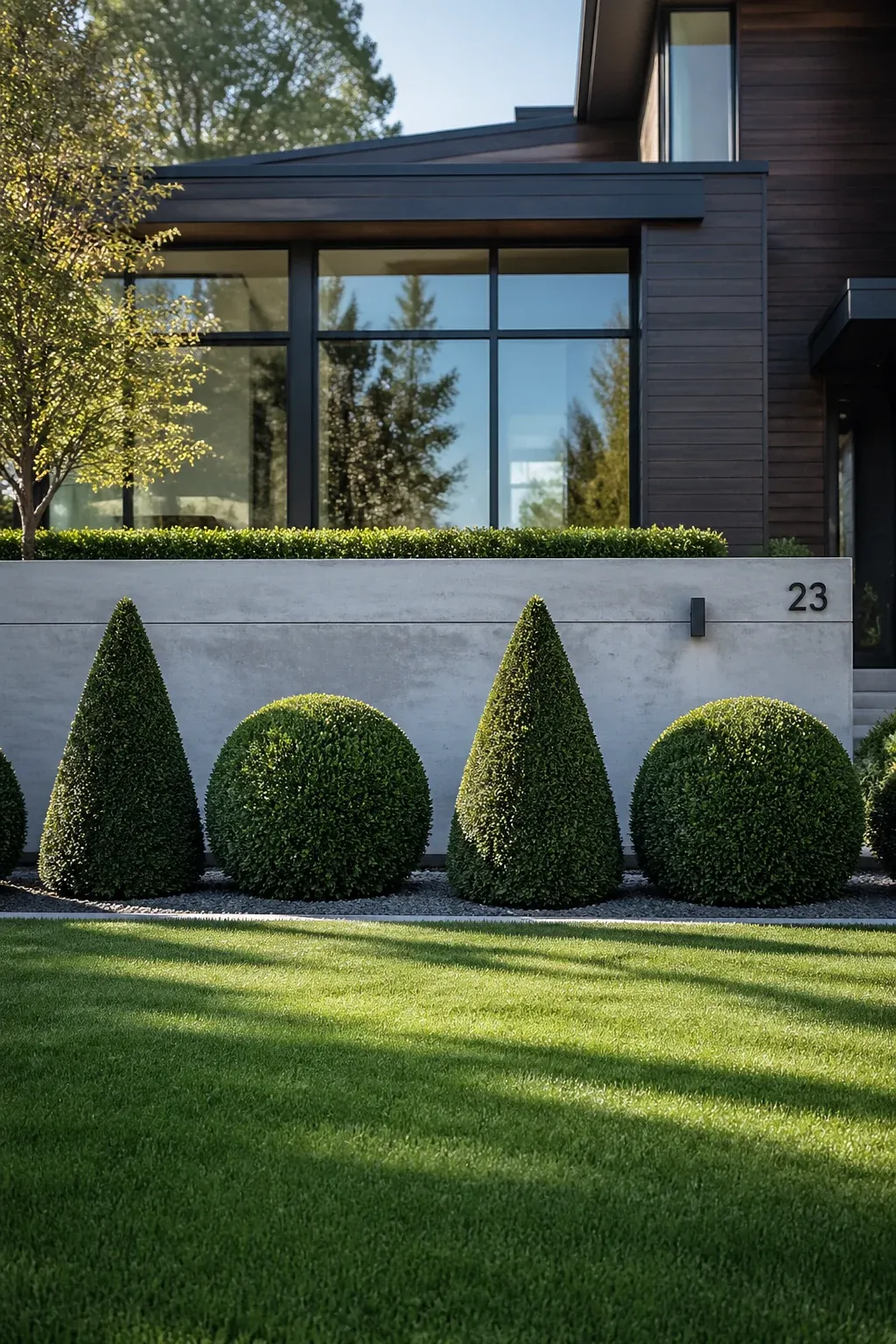
Modern design relies on strong shapes. When choosing shrubs, look for plants that have a naturally defined form, such as spheres, cones, or flat-topped mounds. These shapes act as anchors in your yard. Instead of letting plants grow into each other in a messy tangle, give each shrub enough space to be seen as an individual object.
Think about the silhouette of the plant against your home’s siding or a concrete wall. Boxwoods and certain hollies are favorites because they can be kept in tight, tidy shapes. By focusing on form rather than a riot of color, you create a sense of order that makes the front of your house look more organized and expensive.
Selecting Low Maintenance Evergreen Shrubs for Year Round Color
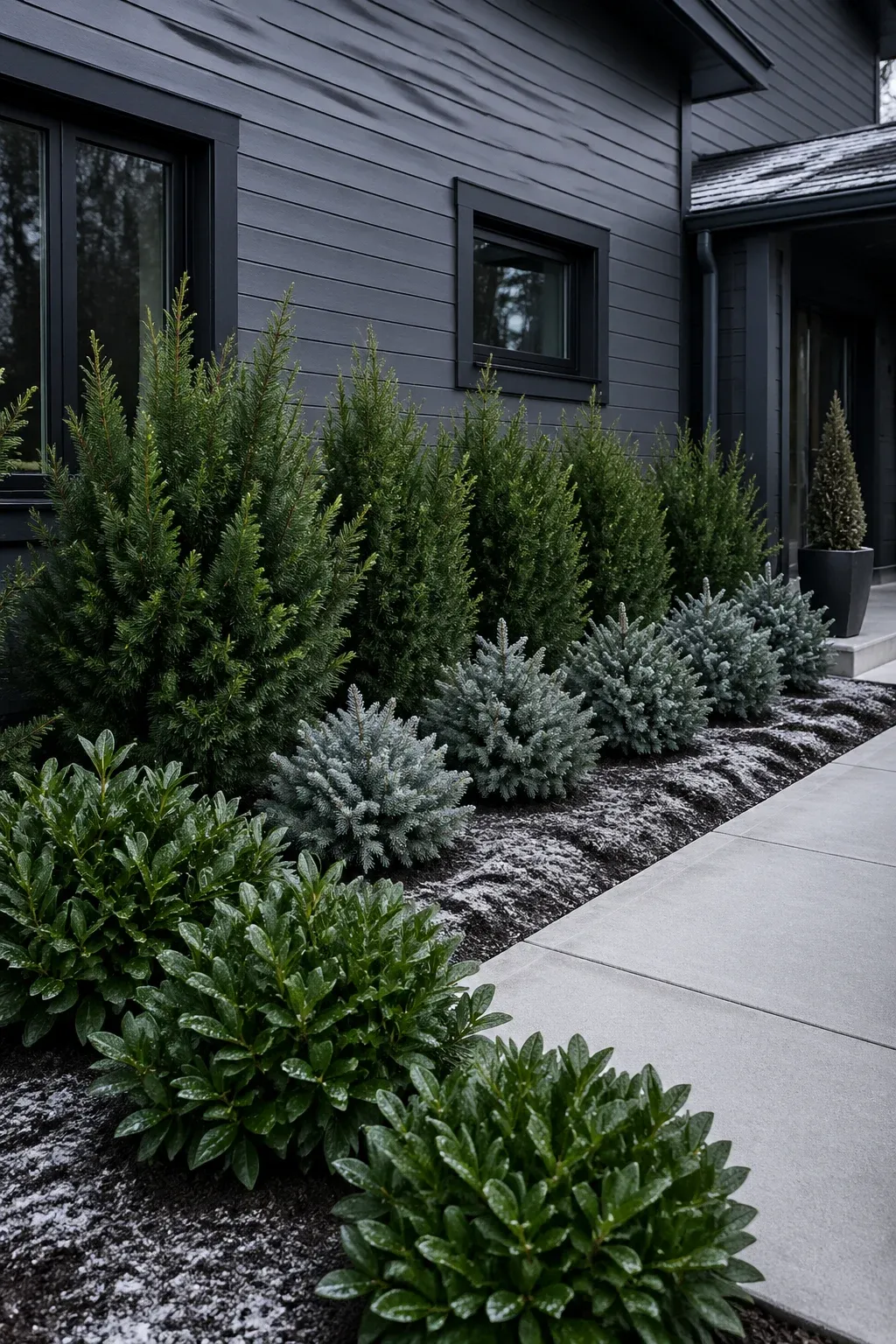
A modern yard needs to look good in the middle of winter just as much as it does in the spring. Deciduous shrubs that lose their leaves can leave your front yard looking bare and twiggy for half the year. Evergreens provide a consistent backdrop of green, blue, or silver foliage that keeps the design intact through every season.
Choose varieties that don't require constant attention. Yews, dwarf conifers, and cherry laurels are sturdy options that grow at a manageable pace. These plants provide a 'green screen' that hides foundations and utility boxes without needing weekly pruning. Stick to a limited color palette—mostly deep greens with perhaps one accent color—to maintain that clean, cohesive look.
Using Columnar and Upright Varieties to Frame Your Entryway

Tall, skinny shrubs are excellent tools for modern landscaping. Columnar varieties like Sky Pencil Holly or Italian Cypress draw the eye upward and can make a small entryway feel more grand. Placing a pair of these upright shrubs on either side of your front door creates a formal, welcoming frame.
These vertical plants also work well in tight spaces. If you have a narrow walkway leading to your porch, columnar shrubs provide green height without overgrowing the path. They act like pillars of living architectural detail, reinforcing the vertical lines of your doors and windows.
Creating Texture and Contrast with Grasses and Soft Foliage

While structure is important, a yard full of rigid spheres can feel a bit stiff. You can soften the look by adding ornamental grasses or shrubs with fine, feathery foliage. The contrast between a solid, clipped boxwood and a wispy grass like Mexican Feather Grass creates visual interest without adding clutter.
Look for plants that move in the breeze. This movement adds a dynamic element to an otherwise static modern design. Using plants with different leaf sizes—placing large-leafed hostas or fatsia near fine-needled evergreens—adds depth and prevents the landscape from looking flat or boring.
Grouping Shrubs in Geometric Patterns and Simple Drifts

Modern arrangement is rarely about single, isolated plants scattered around. Instead, try planting in groups or 'drifts.' You can plant three or five of the same shrub in a straight line or a crisp grid to mimic the geometry of your home. This repetition is a hallmark of professional modern design.
If you prefer a softer look, use simple curves, but keep the groupings large and uniform. Avoid the temptation to buy one of everything at the garden center. Choosing ten of the same plant and spacing them evenly creates a much stronger visual impact than ten different plants ever could.
Maintaining Sharp Lines Through Regular Pruning and Mulching
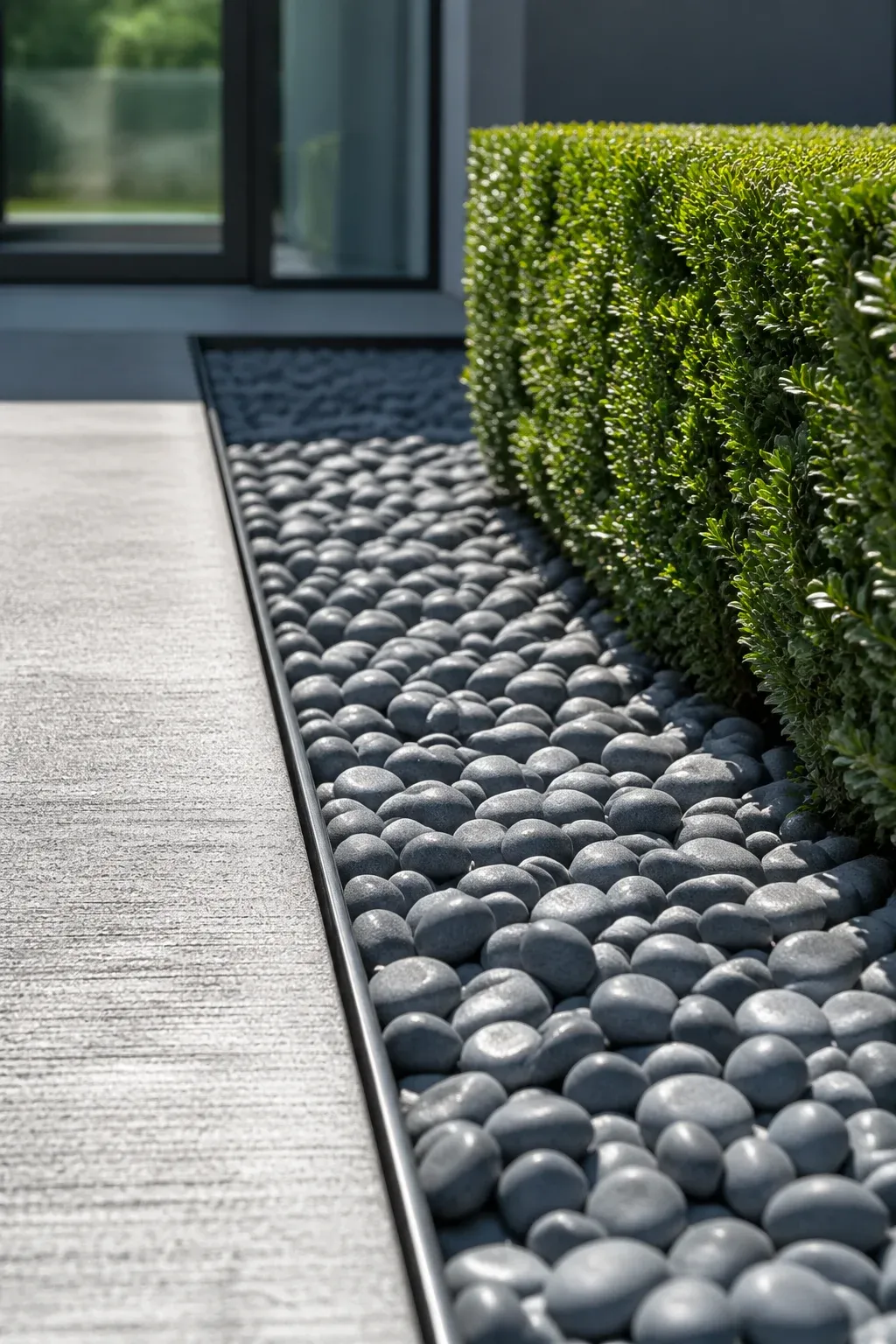
The difference between a modern yard and a neglected one is often the edge. To keep your shrubs looking intentional, you need to maintain their crisp outlines. Use sharp shears to tip back any stray growth that breaks the desired shape. This doesn't mean everything has to be a perfect ball, but the edges should look defined.
Ground cover is the final touch. Use a dark, uniform mulch like black forest floor or simple cedar to make the green of your shrubs pop. Better yet, consider using river stone or gravel in modern beds. Stone doesn't break down, so it keeps those sharp lines between the plants and the walkway looking clean for years.
A clean, modern front yard is within reach if you focus on a few well-chosen shrubs and a structured layout. By prioritizing evergreen forms and geometric groupings, you create a landscape that feels like a natural extension of your home’s architecture. Start by clearing out the clutter and selecting three or four key varieties that you truly love, then plant them with plenty of space to breathe.