
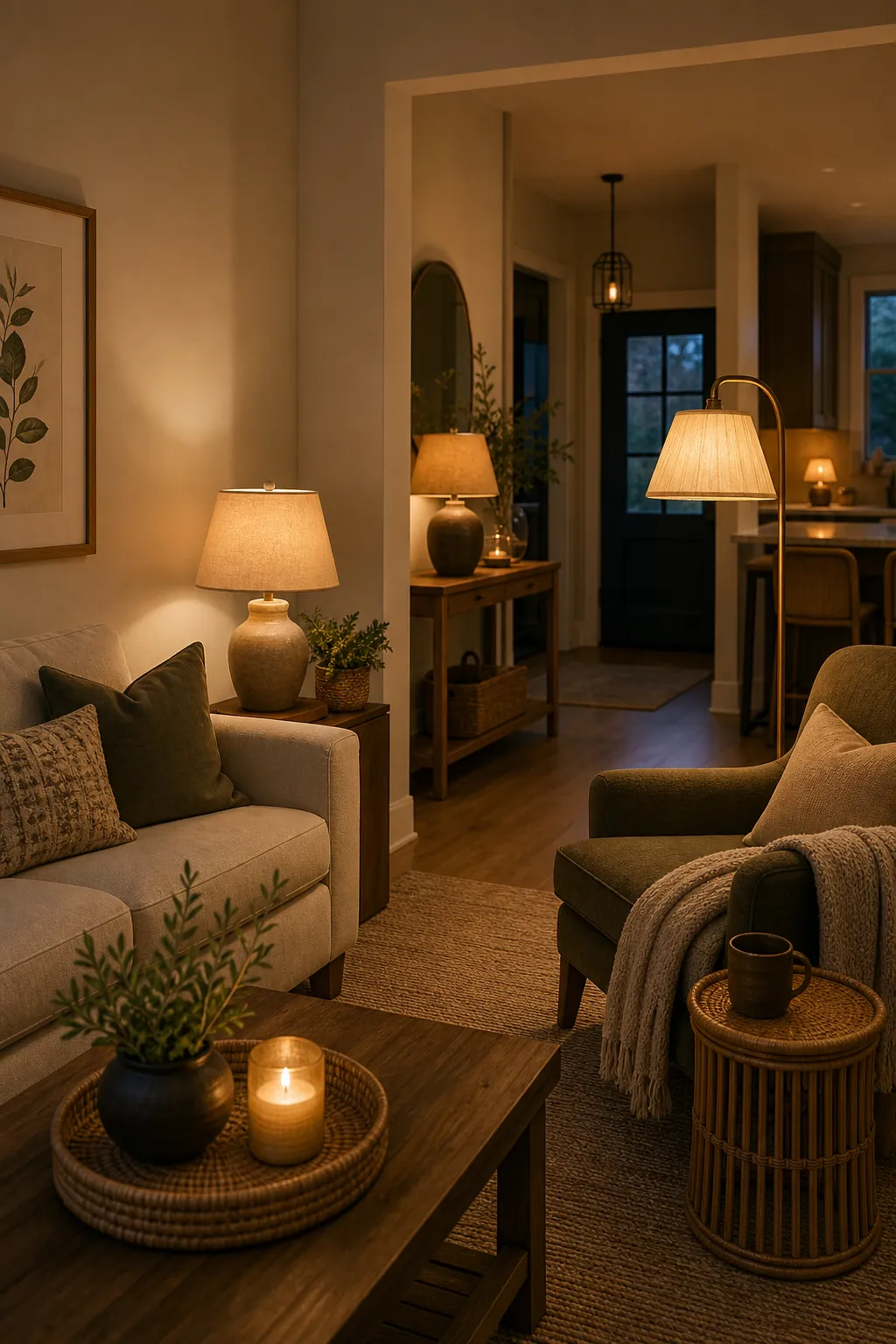
A cozy home is rarely lit from one bright ceiling fixture. It feels cozy because the light is lower, warmer, and closer to the places where life actually happens: the sofa, the bed, the entry table, the kitchen corner, the reading chair, and the desk.
The easiest rule is this: put lamps where people pause, sit, read, enter, cook, or wind down. Then spread those lamps around the room so the glow does not collect in one corner.
The Cozy Lamp Placement Rule
Every room needs three kinds of light, even if the room is small:
- Task light: a lamp close to reading, cooking, writing, dressing, or grooming.
- Ambient light: a soft lamp that fills a dark corner or wall.
- Accent light: a small glow that makes shelves, art, plants, mirrors, or a console feel intentional.
If a room feels flat, add light at another height. If a room feels cluttered, remove one lamp or simplify the shade. The goal is not more lamps everywhere. The goal is warm light in the right places.
Living Room: Make A Triangle Around The Seating
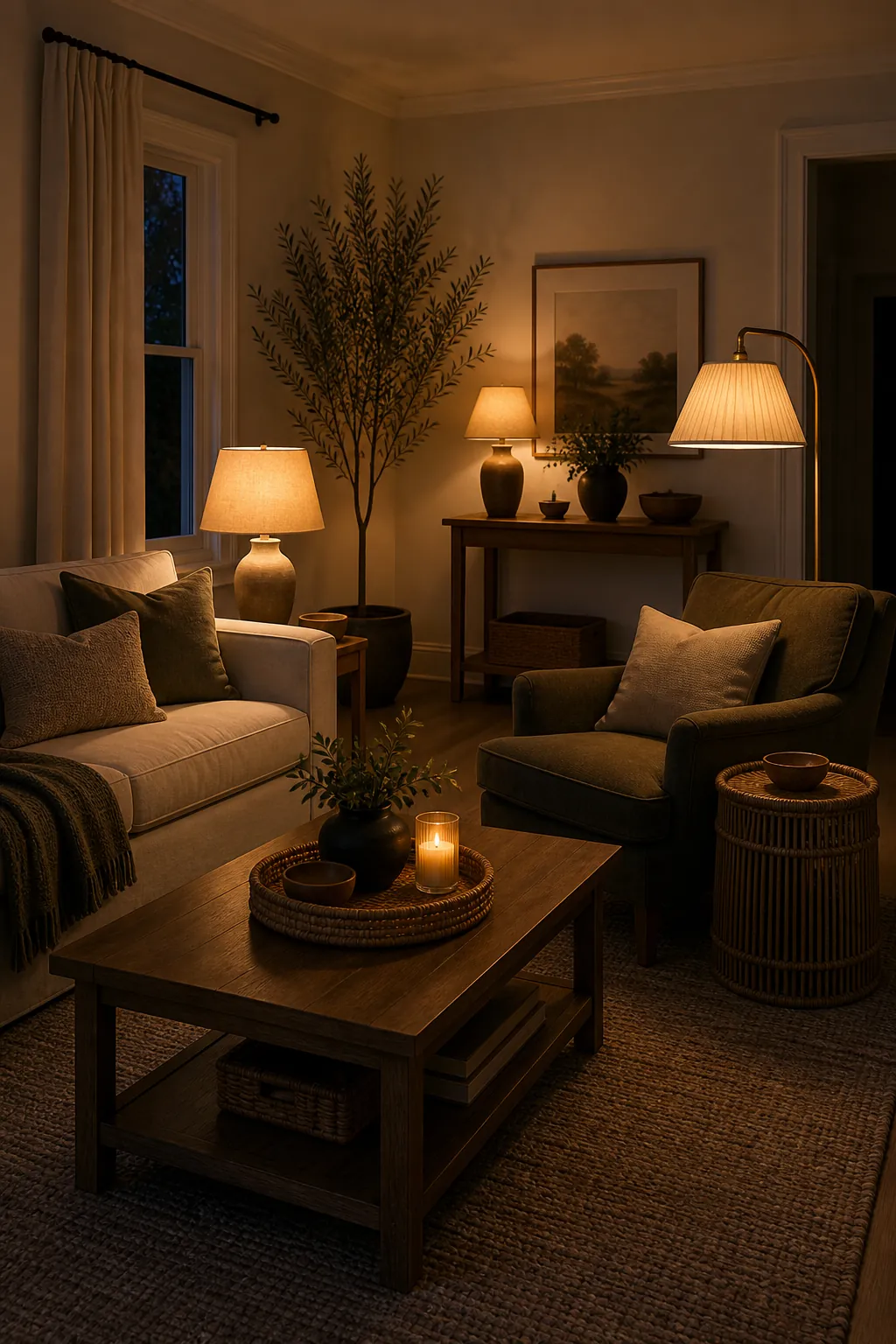
In a living room, do not line all the lamps along one wall. Place them in a loose triangle around the main seating area. Put a table lamp beside the sofa, a floor lamp near a chair, and a smaller lamp on a console, shelf, or cabinet across the room.
The best living room lamp height is usually near seated eye level or slightly below. A shade that sits too high can glare into your eyes; a shade that sits too low may not light a book or conversation area. When you sit down, the bulb should be hidden by the shade.
Bedroom: Put Light Where You Reach For It
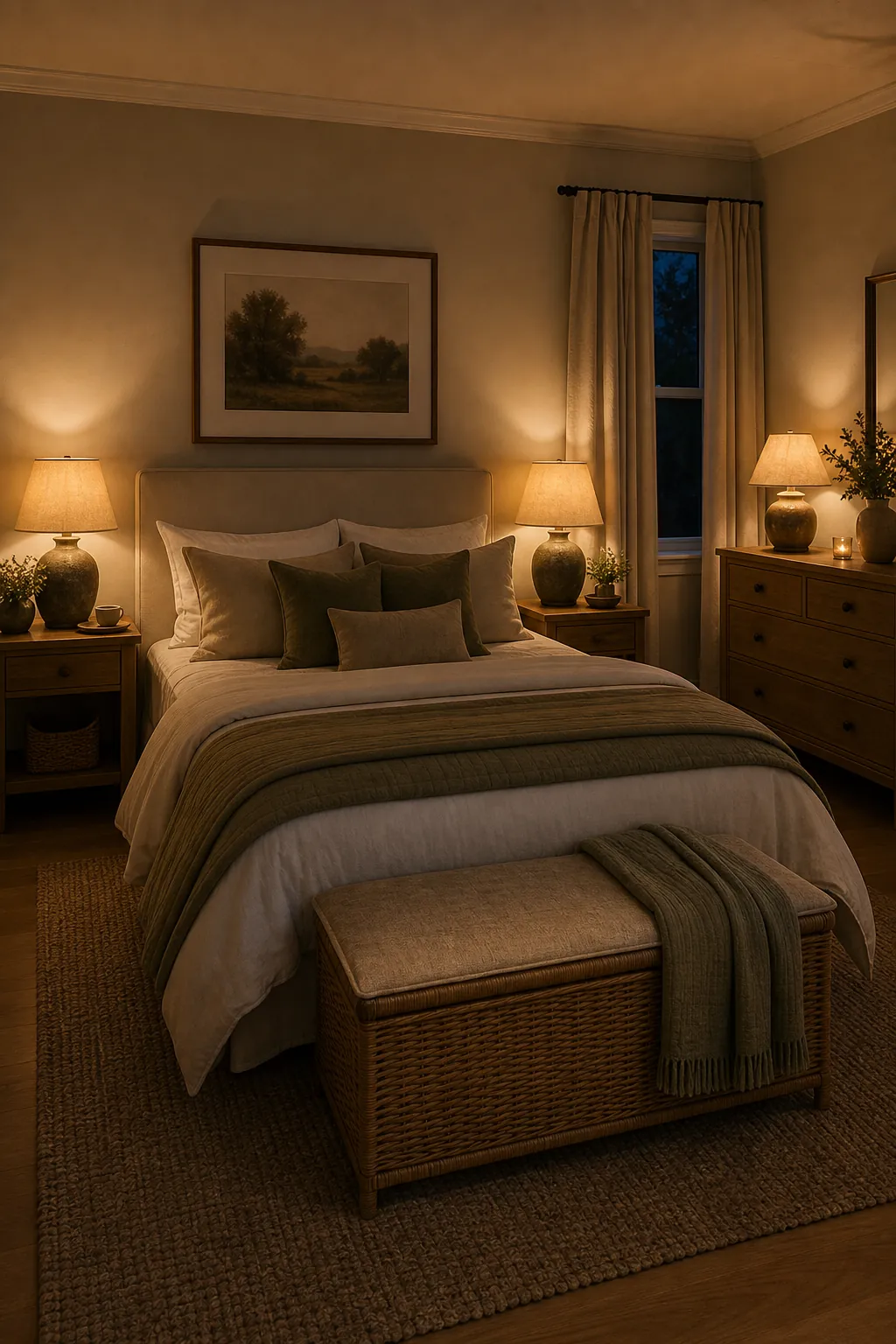
Bedroom lamps should be easy to reach from bed and gentle enough to use before sleep. Place bedside lamps on both sides if two people use the bed. If only one side is used, one good lamp can work, but balance the other side with art, a plant, a dresser lamp, or a wall sconce.
The lampshade should usually land around shoulder height when you are sitting in bed. That gives enough light for reading without shining directly into your face. Use warm bulbs and opaque or linen shades for a softer bedtime glow.
Entryway: Put One Lamp Beside The Mirror
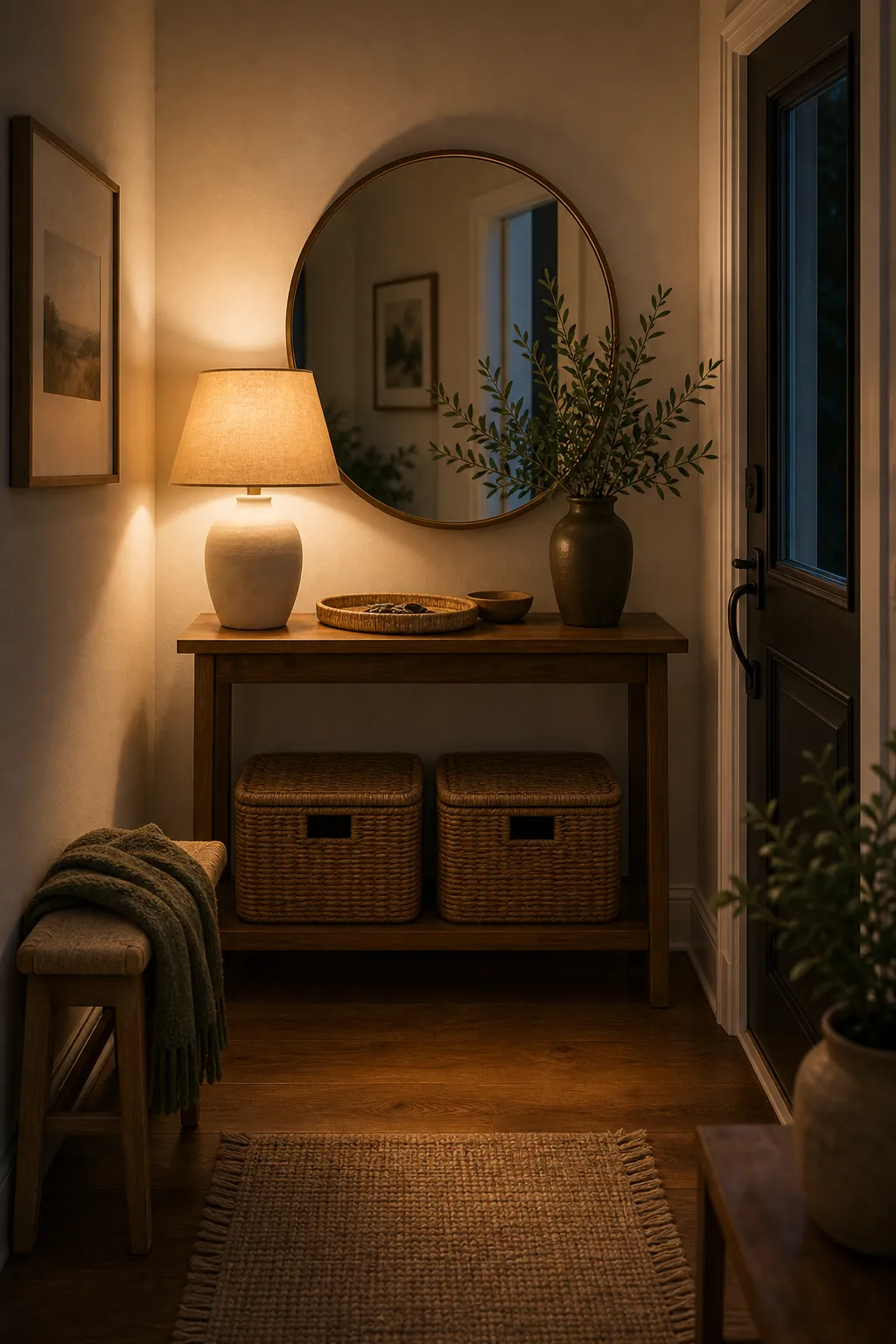
The entryway should feel welcoming before the living room does. A lamp on a console gives the first wall a soft glow and makes the drop zone feel intentional instead of messy. If you have a mirror, place the lamp near it so the light reflects gently back into the space.
Keep the lamp base narrow if the console is shallow, and leave clear space for keys, mail, or a tray. An entry lamp works best when it lights the wall, not when it crowds the surface.
Kitchen: Use A Small Lamp In A Dry Corner
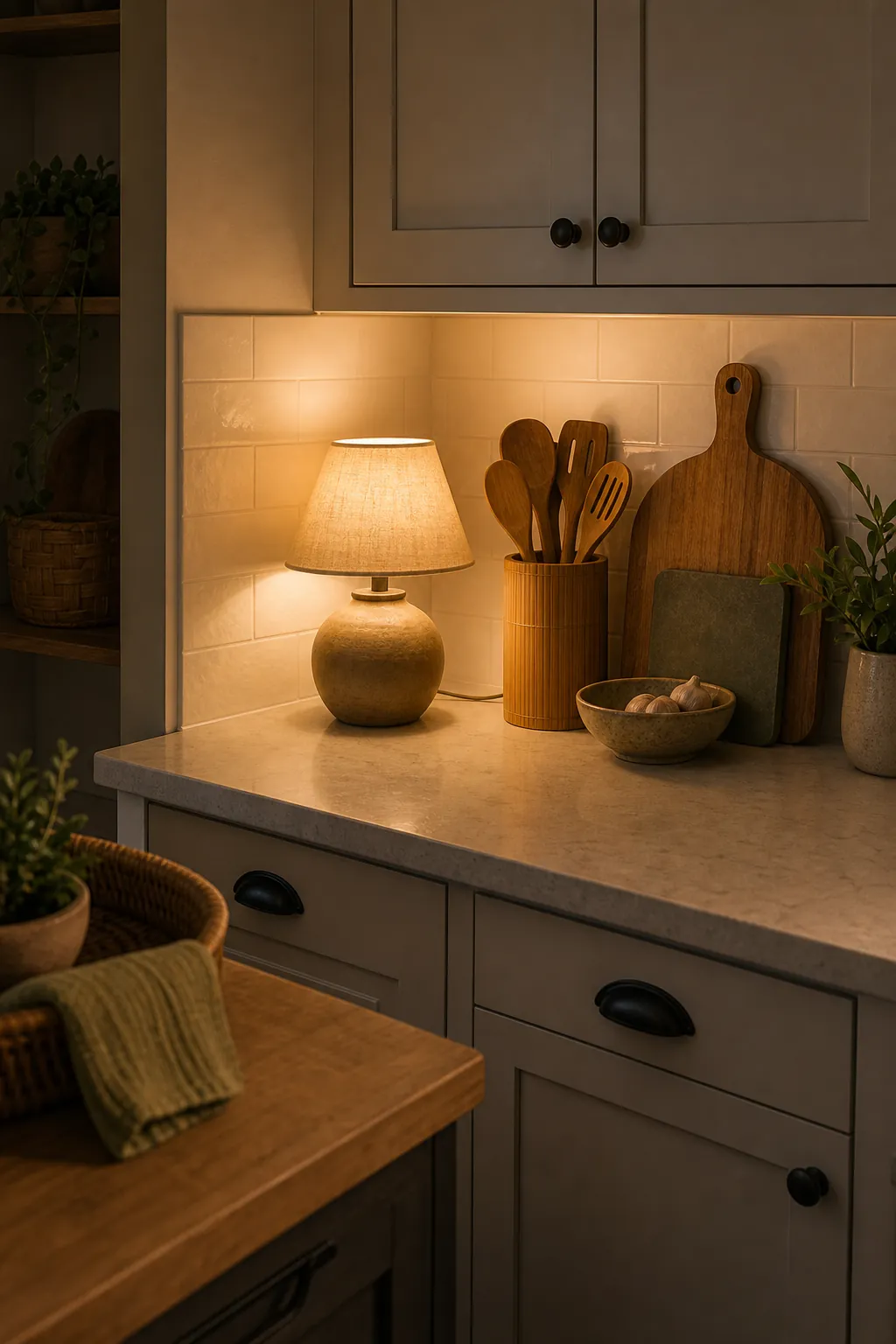
A kitchen lamp can make the room feel calm after dinner, but placement matters. Put a small shaded lamp in a dry counter corner, under open shelving, on a breakfast cabinet, or on a sideboard near the kitchen. Keep it away from the sink, stove, splashes, and heat.
This is not the lamp you use for chopping onions. It is the lamp you turn on when the dishes are done and the kitchen becomes part of the evening. Use the kitchen lamp as soft ambient light, not as your main prep light.
Dining Room: Add Side Light, Not Table Clutter
If your dining room only has a pendant or chandelier, the table can feel bright while the corners feel dead. Add a lamp on a buffet, sideboard, bar cabinet, or nearby shelf. That side light makes dinner feel warmer and keeps the room from turning into one spotlight over the plates.
A dining lamp should not block serving space or compete with the centerpiece. Use a slim base, a warm shade, and a dim bulb. The lamp belongs on the edge of the room, where it can soften the walls.
Bathroom: Choose Sconces, Not A Plug-In Lamp Near Water
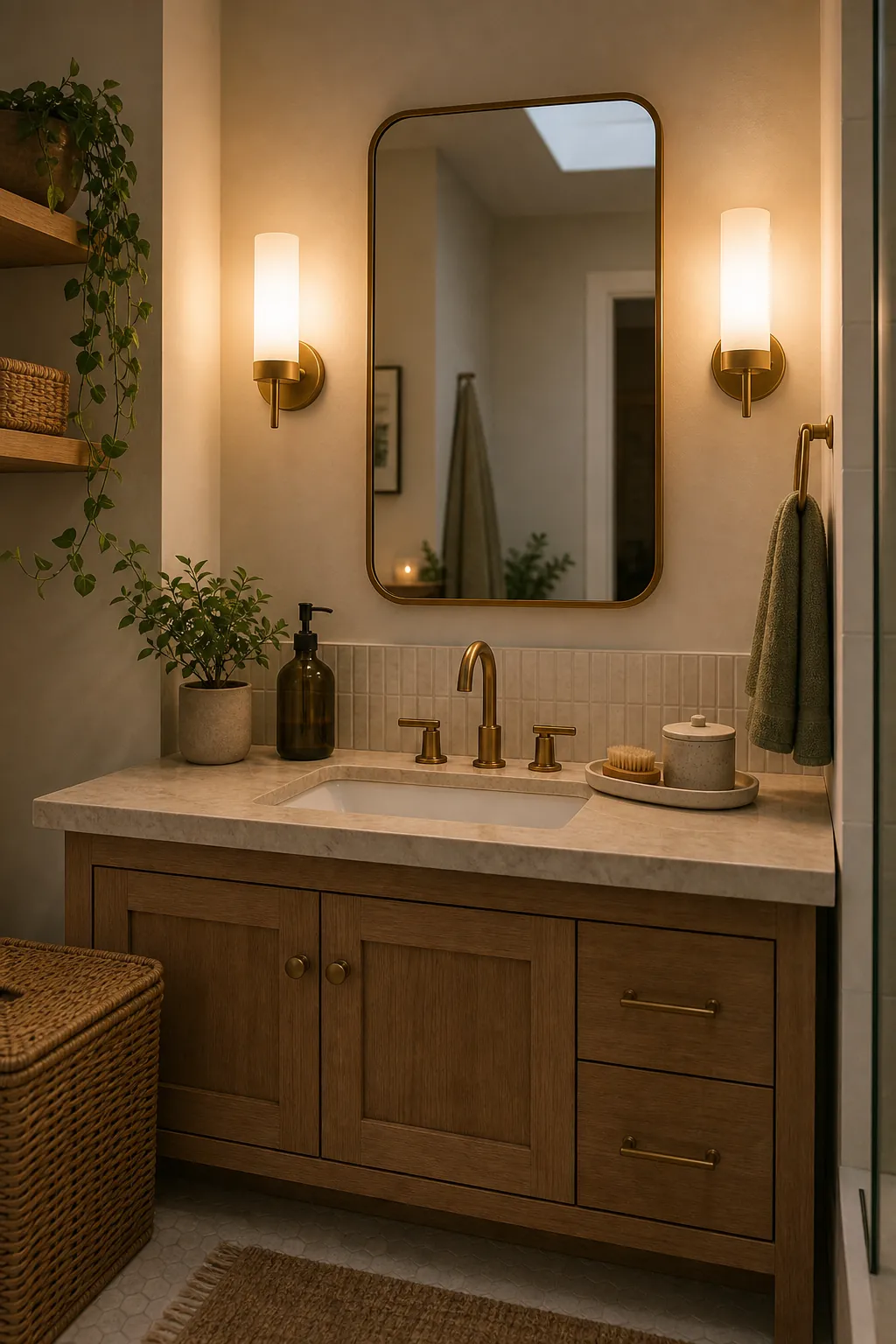
Bathrooms need extra care. Avoid plug-in lamps near sinks, tubs, showers, or wet counters. For cozy bathroom light, use properly rated wall sconces, vanity lights, or hardwired fixtures installed in safe locations.
For the most flattering light, place sconces on both sides of the mirror instead of only above it. This lights the face more evenly and makes the room feel softer. When water and electricity are involved, follow local code and use a qualified electrician for fixture placement.
Home Office: Put The Task Lamp On The Working Side
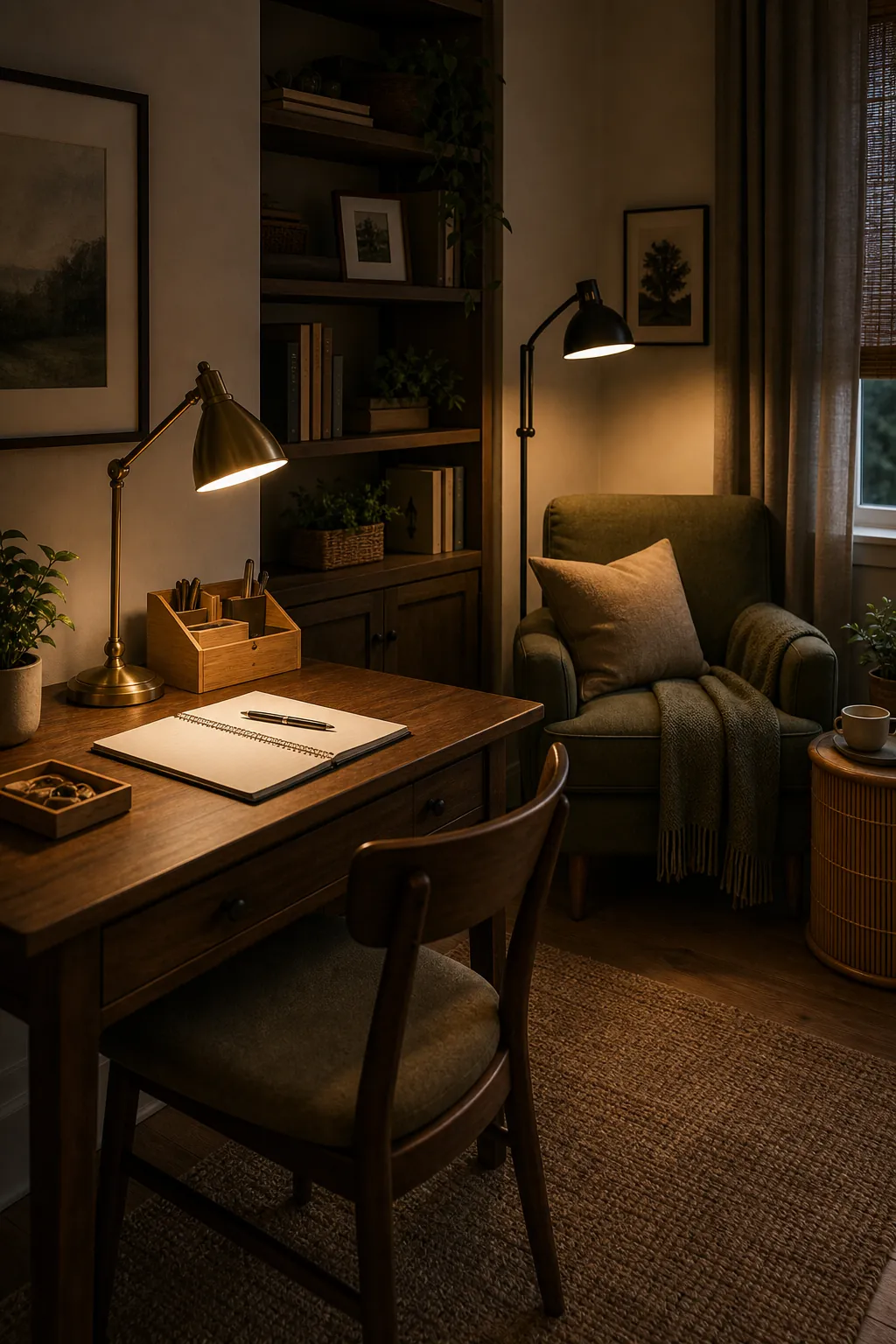
A desk lamp should light the work surface without shining into your eyes or reflecting off the screen. Put it where the light falls across papers, notebooks, or keyboard work. If you write by hand, place the lamp on the side that reduces shadows from your writing hand.
If the office also has a reading chair, add a floor lamp just behind the shoulder of the chair. Task light belongs close to the task; cozy light belongs slightly behind or beside you. One lamp cannot do both well in every corner.
Hallways And Dark Corners: Light The Destination
A hallway, landing, or dark corner does not always need a floor lamp. Sometimes a small lamp on a narrow console, a picture light, or a plug-in wall sconce can make the space feel finished. Put the light at the destination: near art, a mirror, a plant, a bench, or a shelf.
Do not place a lamp where people will bump the shade, trip over cords, or block a doorway. Cozy lighting still has to respect traffic flow.
The Room-By-Room Lamp Checklist
- Living room: one lamp near the sofa, one near a chair, and one across the room for balance.
- Bedroom: bedside lamps within reach, plus a dresser or corner lamp if the room feels flat.
- Entryway: a console lamp near a mirror or wall art.
- Kitchen: a compact lamp in a dry corner, away from sink, stove, and heat.
- Dining room: a buffet or sideboard lamp to soften the edges of the room.
- Bathroom: properly rated sconces or vanity lights, not plug-in lamps near water.
- Office or reading nook: a task lamp for the surface and a separate lamp behind the reading chair.
The best lamp placement is not about filling every surface. It is about giving each room a reason to glow. Place lamps where people live, keep the bulbs warm, hide the glare, and let the overhead light become the backup instead of the main event.