
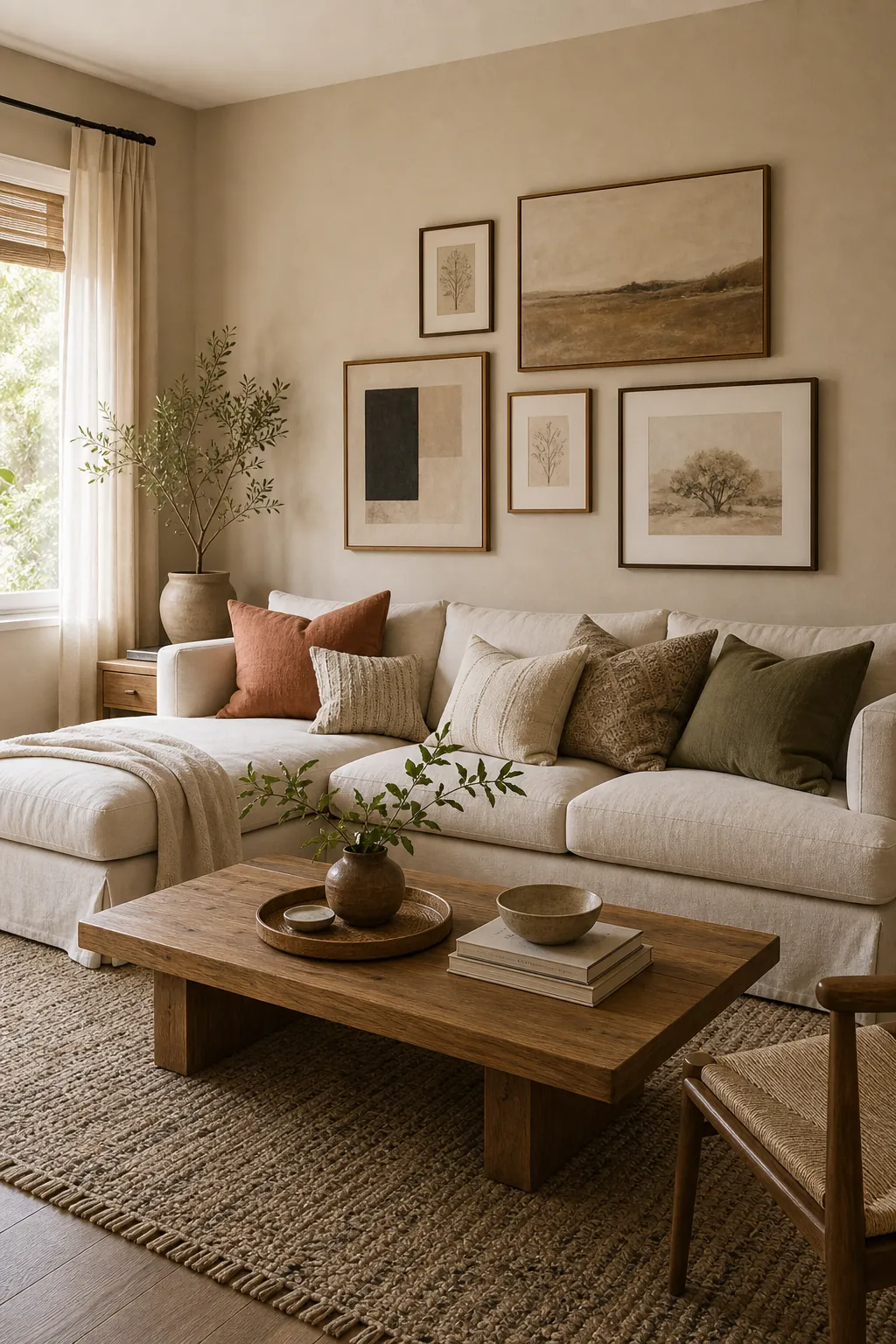
Beige walls are not the problem. The problem is usually that the room has no clear anchors. Without a rug, art, and pillow mix that all work together, beige can look like a blank pause instead of a finished design choice.
The easiest way to style beige walls is to give the room three jobs: ground the floor with a real area rug, structure the wall with properly scaled art, and soften the seating or bed with pillows that vary in texture. Once those pieces are in place, beige decor starts to feel warm and intentional.
Use Wall Art For Scale First, Color Second
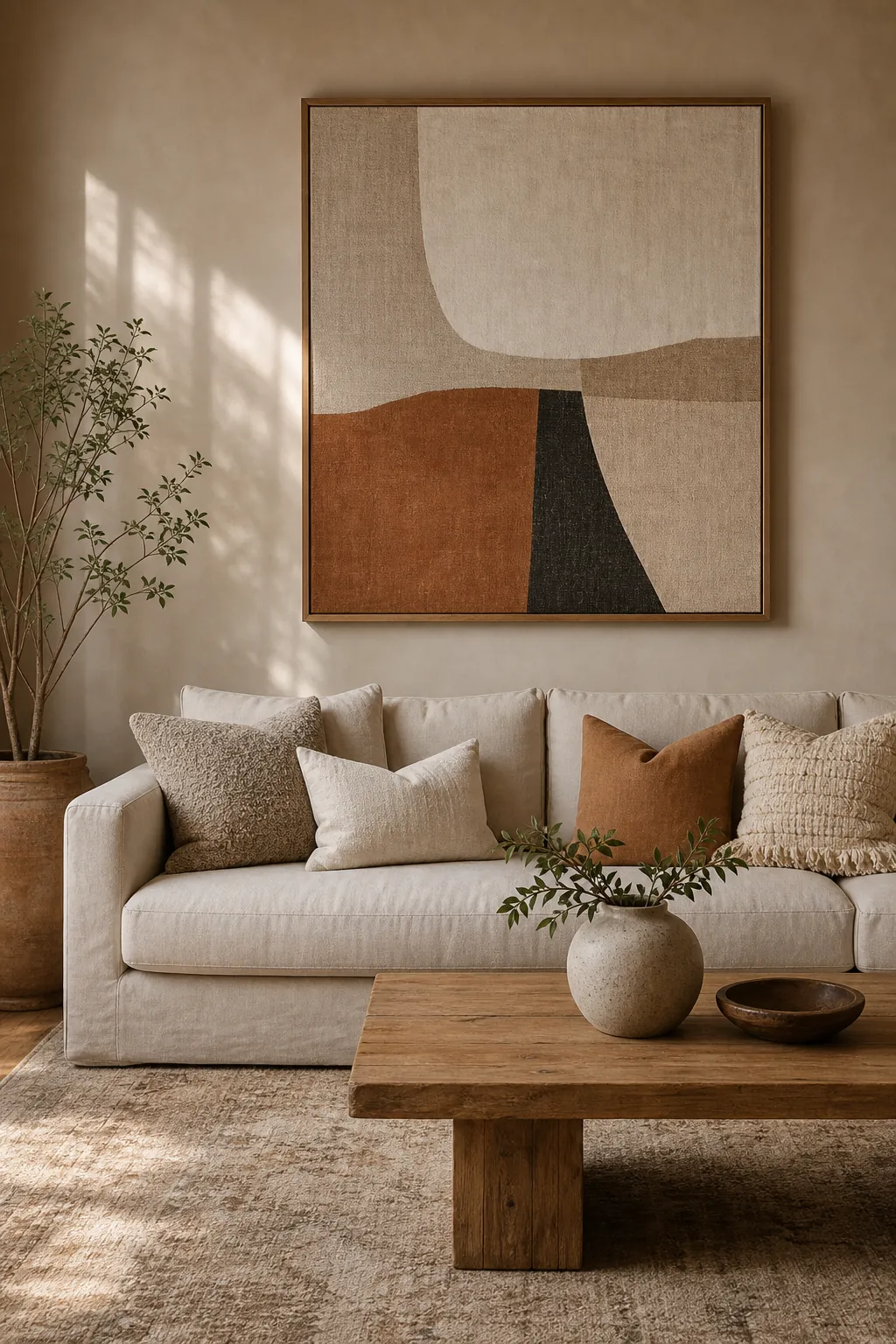
Many beige walls look unfinished because the art is too small. A tiny frame above a sofa or bed makes the empty wall feel even larger. Before worrying about the exact print, check the scale. Art above a sofa often looks strongest when it fills roughly two-thirds of the sofa width, either as one large piece or a clean pair.
For beige walls, art does not need to be loud. Warm abstracts, textile-inspired pieces, charcoal linework, muted landscapes, and simple natural forms can add structure without breaking the calm mood. The art should give the wall a focal point, not fight the whole room.
If the room already has many small accessories, choose one larger art piece. If the room feels too minimal, a small gallery wall can work, but keep the spacing generous and the palette connected to the rug and pillows.
Let The Rug Ground The Beige
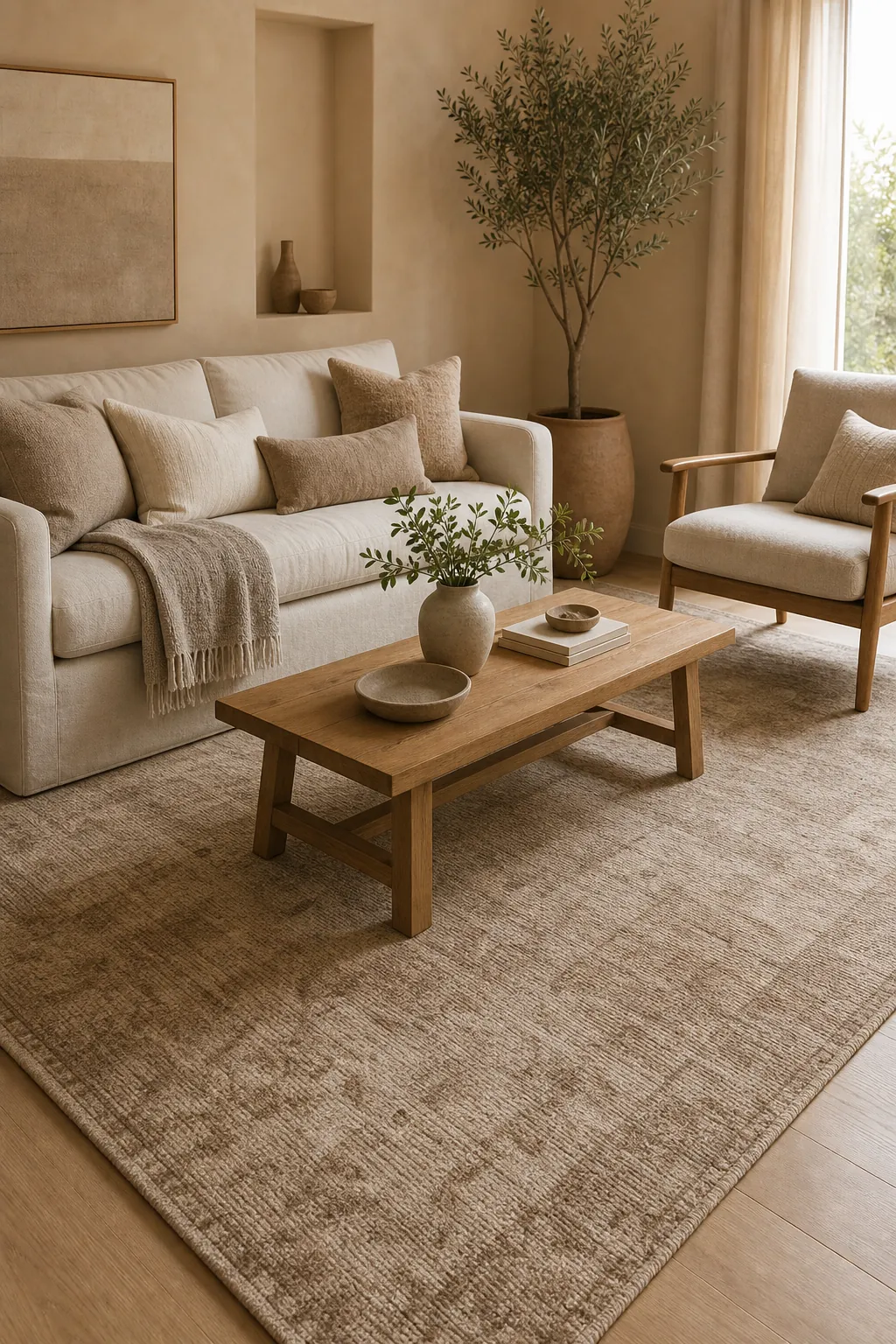
An area rug does more than cover the floor. It tells the furniture where to belong. In a living room, choose a rug large enough for the front legs of the main seating pieces to sit on it. In a bedroom, the rug should extend beyond the sides and foot of the bed so it feels deliberate rather than like a small mat.
With beige walls, rugs are a chance to add quiet contrast. Look for woven texture, a low pattern, or subtle variation in cream, oatmeal, taupe, clay, and muted brown. A flat beige rug on beige walls can disappear. A textured beige rug gives the room depth while keeping the neutral room decor calm.
- Use texture if you want calm: wool, jute, sisal, cotton, or a blended rug.
- Use pattern if the room feels plain: faded stripes, soft geometrics, or low-contrast vintage-style designs.
- Use a deeper border or accent if the furniture is very pale.
Choose Pillows By Texture, Not Just Shade
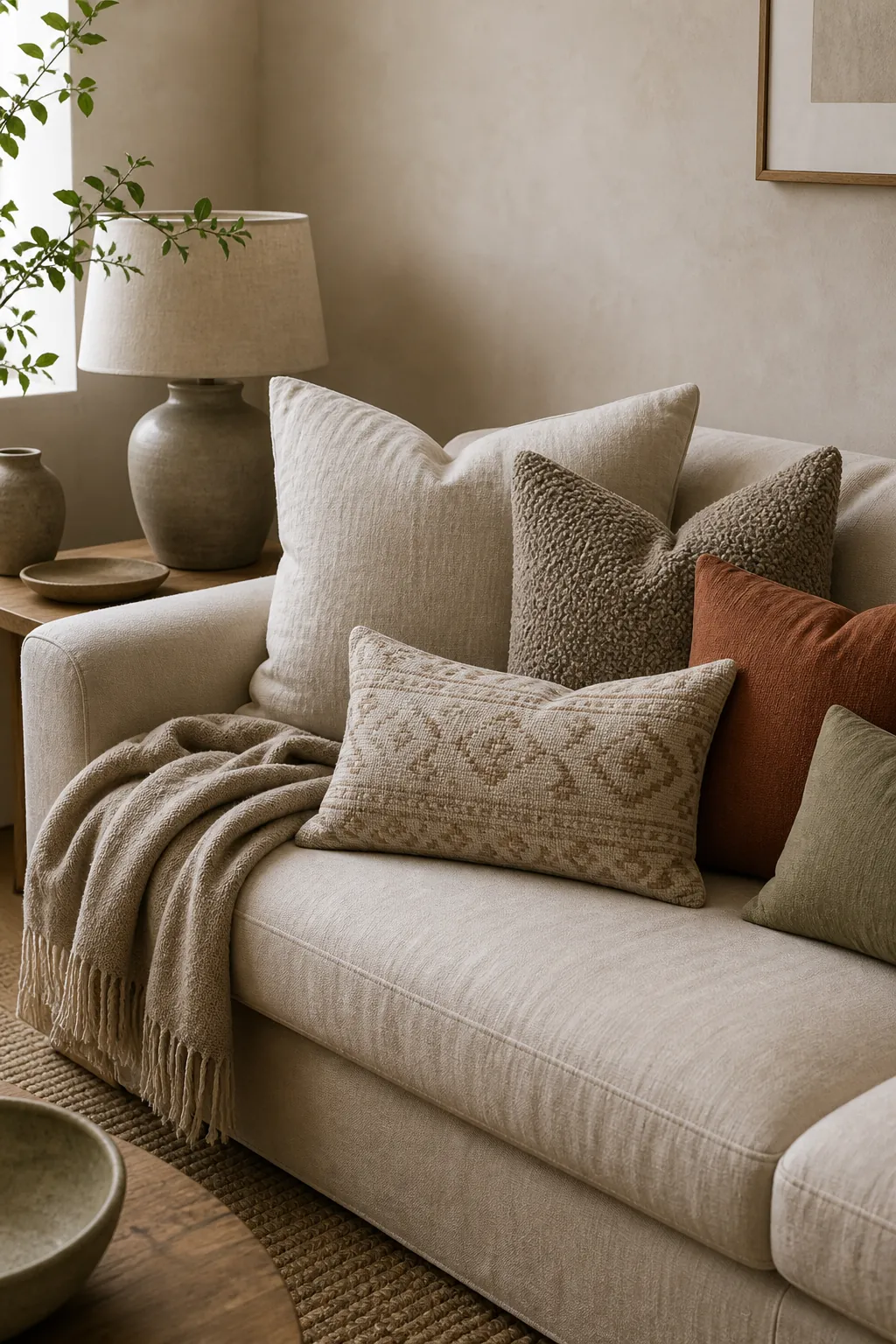
Throw pillows are where beige rooms often become either too flat or too busy. Five identical beige pillows will not make the room feel styled. Five unrelated colors can make the beige walls feel accidental. The better approach is to keep the palette close but vary the fabric.
Try one smooth linen pillow, one nubby boucle pillow, one woven cotton pillow, and one small accent in clay, muted olive, warm brown, or charcoal. The shift in texture gives the eye something to read without forcing the room into a bright color scheme.
Scale matters too. A sofa usually looks more relaxed with two larger pillows and one smaller accent than with a row of small squares. On a bed, use pillows to bridge the wall, art, bedding, and rug so the whole room feels connected.
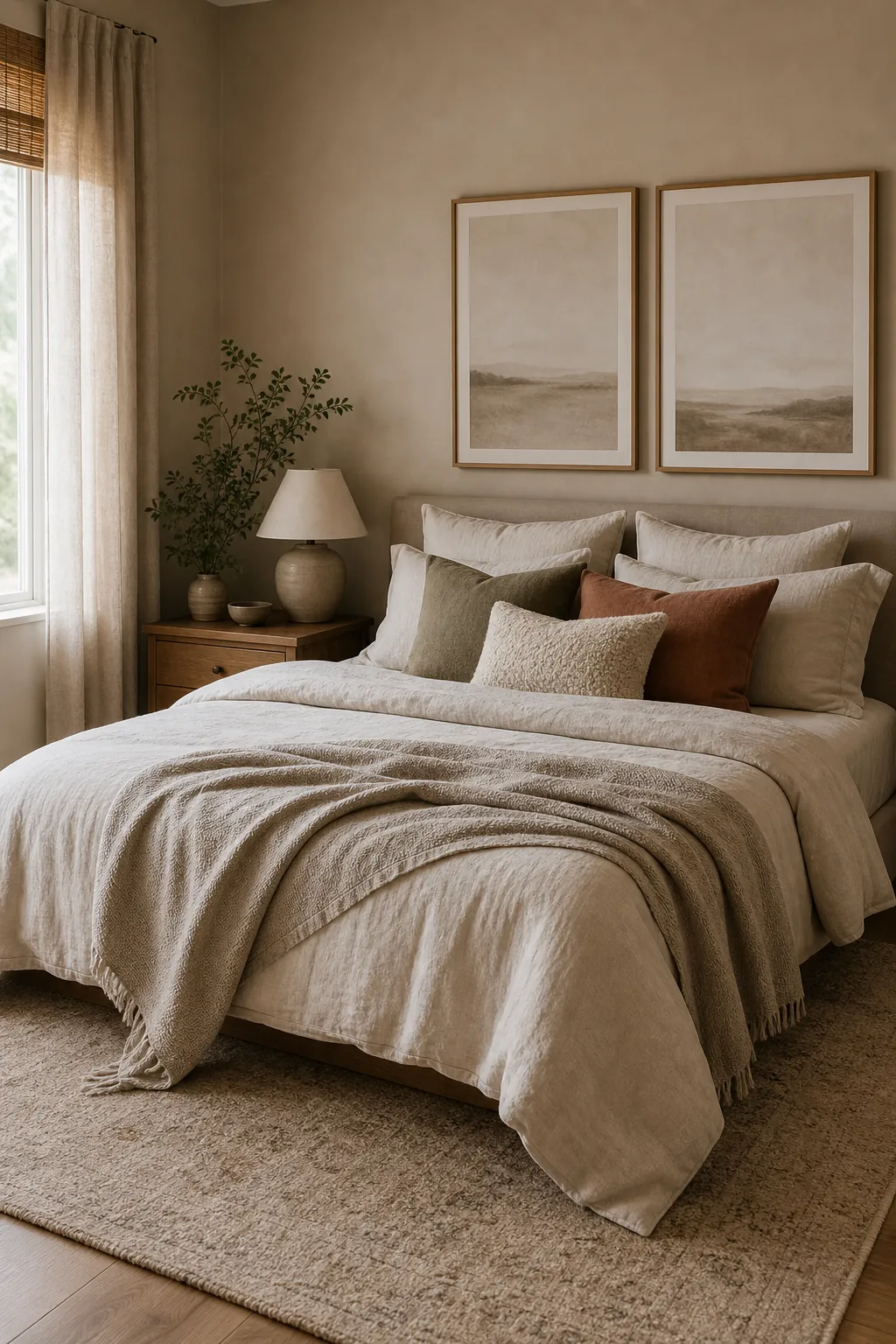
In Bedrooms, Repeat The Wall Color More Softly
Beige bedroom walls can feel especially calm when the bed repeats the wall color in softer textures. Use cream bedding, oatmeal throws, warm taupe pillows, and a rug that contains the same undertones. Then let the wall art give the bed wall shape.
A bedroom does not need dramatic contrast to feel finished. It needs layers that are visible up close: linen bedding, a wool throw, a woven rug, a wood nightstand, and matte ceramics. Soft textures make beige walls feel restful instead of empty.
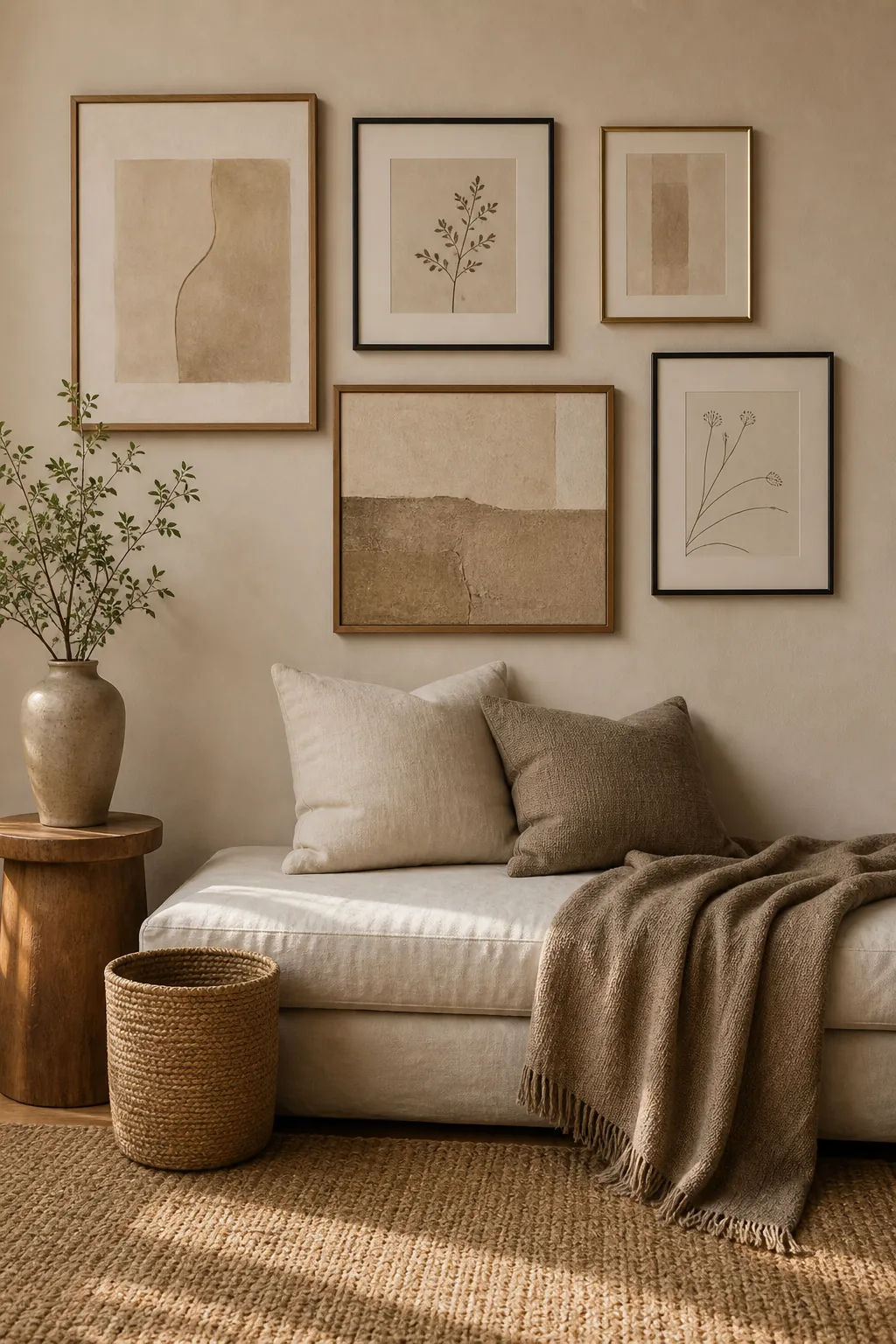
Keep Gallery Walls Restrained
A gallery wall can work beautifully on beige walls, but it needs restraint. Too many small frames can make the wall feel nervous. Choose fewer pieces, give them room, and vary frame materials slightly: pale wood, thin charcoal, warm brass, or natural oak.
Connect the gallery wall to the rest of the room by repeating tones from the rug and pillows. If the art has clay, add a clay pillow or ceramic vase. If the frames are wood, repeat that wood tone in a table, bench, or lamp. This is what makes home styling feel intentional rather than collected at random.
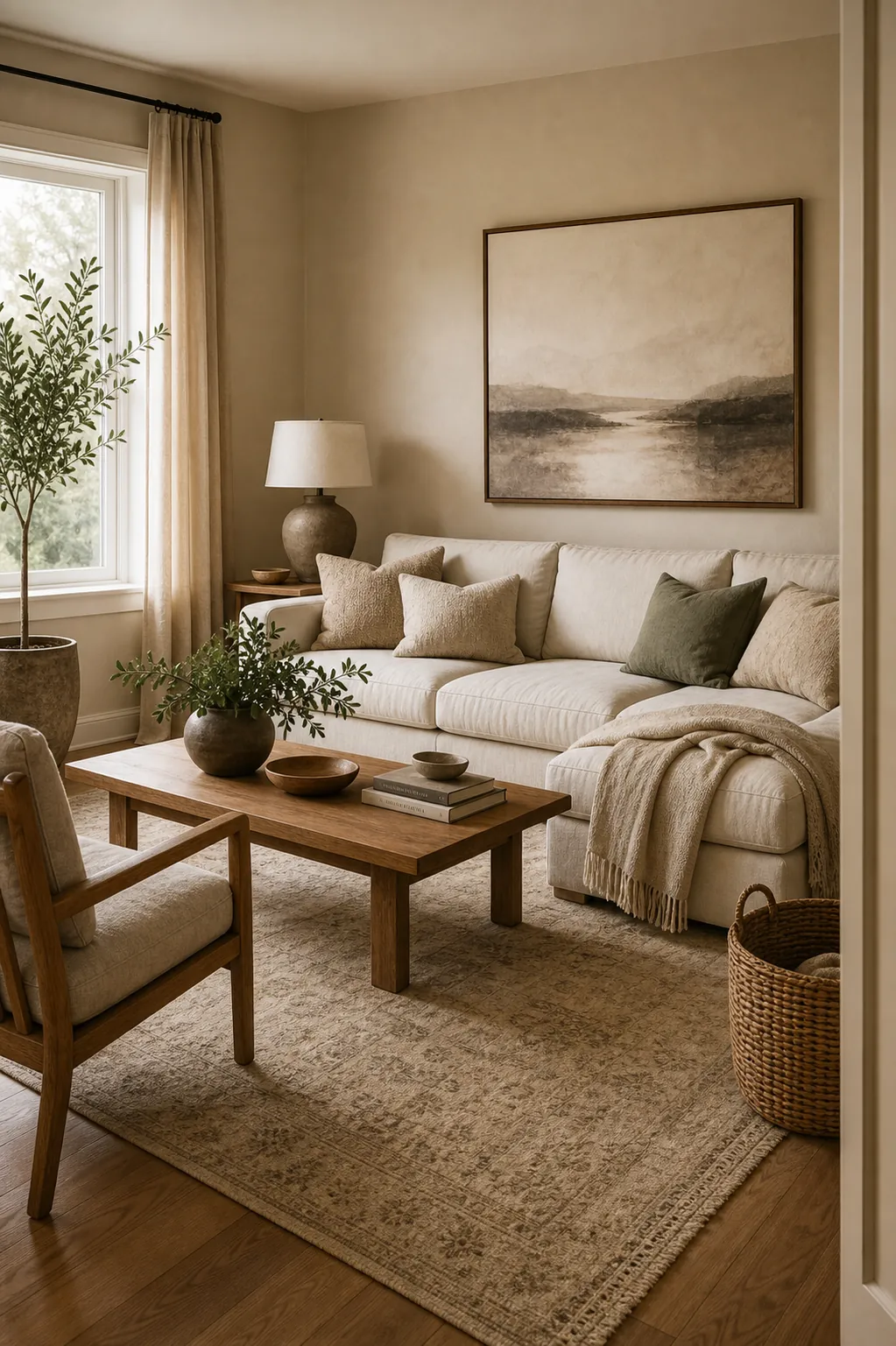
The Beige Wall Formula That Usually Works
Start with the rug because it sets the room’s footprint. Add wall art at the right scale so the beige wall has structure. Then choose throw pillows that repeat the palette while changing the texture. After that, add only a few supporting pieces: wood, ceramics, greenery, or a woven basket.
When beige walls are styled well, they stop feeling like a compromise. They become a warm background for texture, shape, and quiet contrast. The room feels finished because every soft layer has a role.