

A home does not need a separate mudroom to have a better landing zone. Most small-entry problems are smaller and more specific than that: wet shoes drift into the walkway, coats pile on the closest chair, keys disappear, and the first view from the front door starts to feel like a storage room.
The fix is not to force a full built-in mudroom into a corner that cannot hold one. The better move is to make one corner work like a compact routine: shoes down low, coats and bags on the wall, daily items at hand height, and seasonal overflow somewhere else. That gives you mudroom function without turning the entry into a bottleneck.
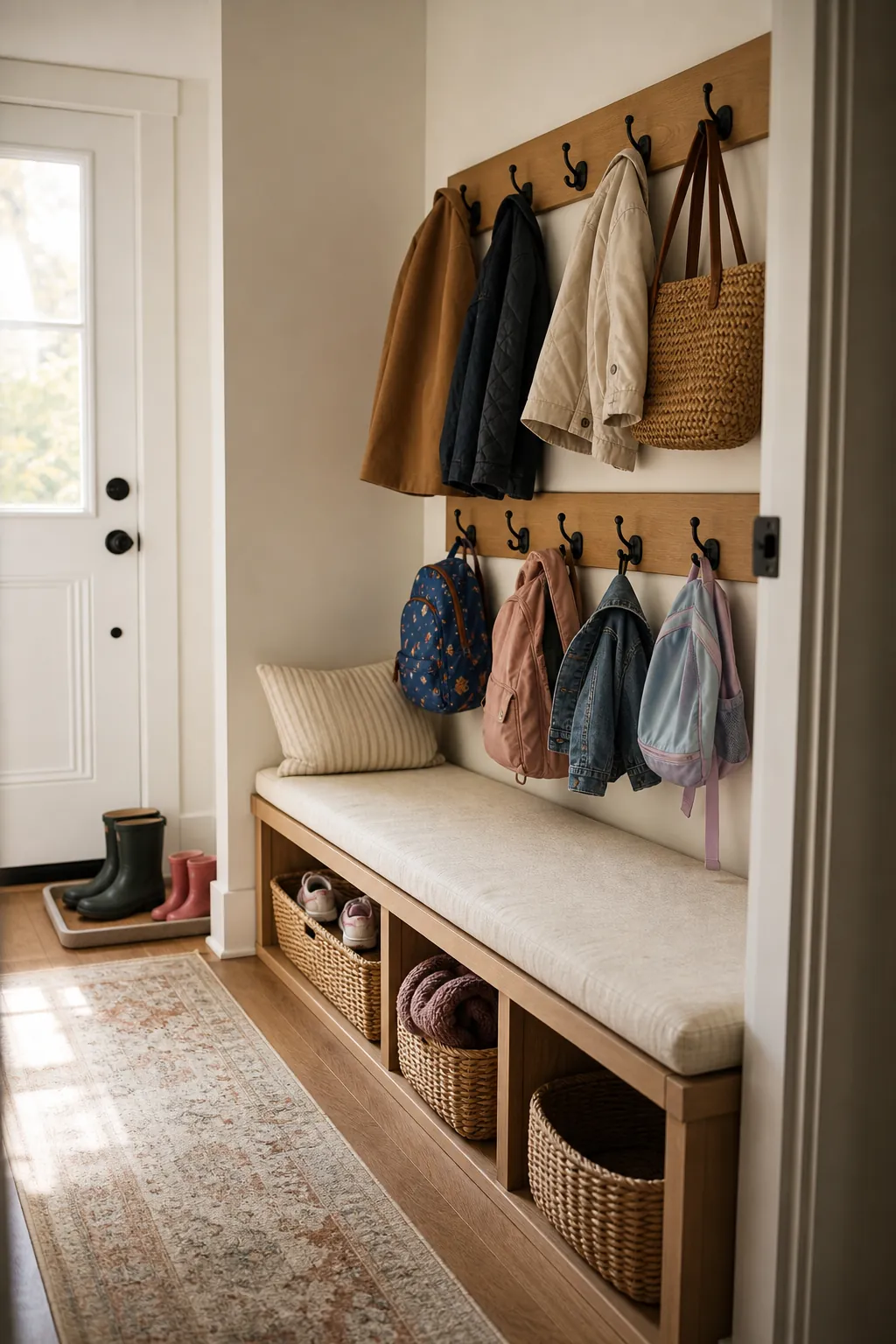
Start With The Mess You Actually Have
Before buying a mudroom bench or hall tree, stand in the entry and name the daily mess. Is it shoes? Backpacks? Dog leashes? Mail? A place to sit? A narrow hall that gets blocked by anything deeper than a few inches? Good Entryway Organization starts with the exact problem, not with the prettiest inspiration photo.
A useful mudroom corner usually needs four jobs covered:
- A shoe zone for the pairs people actually wear every day.
- A hanging zone for coats, bags, hats, umbrellas, and leashes.
- A small drop zone for keys, sunglasses, mail, and wallets.
- A visual boundary such as a runner rug, wall color, art, or lighting so the corner looks intentional.
That last point matters. A corner full of hooks can look like clutter even when it is functional. A corner with the same hooks, a slim shelf, a washable rug, and one tight color story looks like planned Hallway Decor.
Choose Closed Shoe Storage First
In homes without a real mudroom, shoes are usually the first thing to solve because they spread outward. Open racks are easy, but they also show every pair, every sole, and every mismatch. If the entry is small, closed or semi-closed Mudroom Storage makes the whole corner feel calmer.
Look for a narrow shoe cabinet, a storage bench with doors, a low cabinet with ventilated fronts, or a lidded basket for the pairs that can be out of sight. Keep only the everyday shoes here. Dress shoes, seasonal boots, backup sandals, and special-occasion pairs should live in a closet, bedroom, or under-bed box. The mudroom corner is not the family shoe archive.
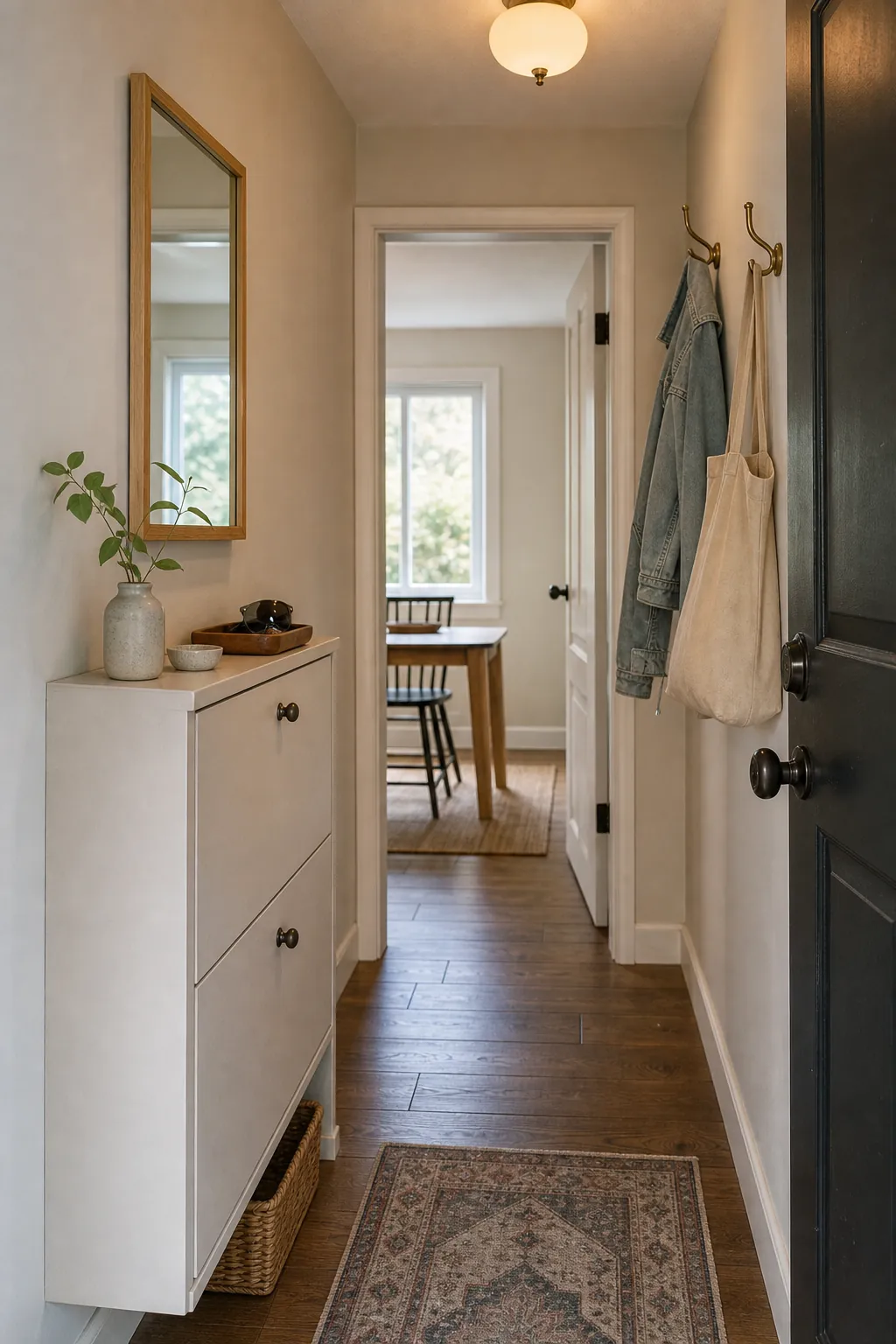
If the corner is tight, measure depth before anything else. A cabinet that is beautiful but too deep will make the entry feel pinched. In a narrow hallway, even a few inches decide whether people can pass each other comfortably.
Use A Mudroom Bench Only If It Earns Its Footprint
A Mudroom Bench is useful when people actually need to sit to put on shoes, help kids, or take off boots. It is less useful when it becomes a wide surface for bags, packages, and jackets. In a compact entry, a bench should do at least two jobs: seating plus shoe storage, seating plus drawers, or seating plus baskets below.
For a true corner, an L-shaped bench is often too large. A better choice may be a 30- to 36-inch bench, a wall-mounted folding seat, a small stool tucked under a console, or a low cabinet with a cushion on top. If the bench blocks the door swing or narrows the walking path, skip it and use a shoe cabinet plus a nearby stool instead.
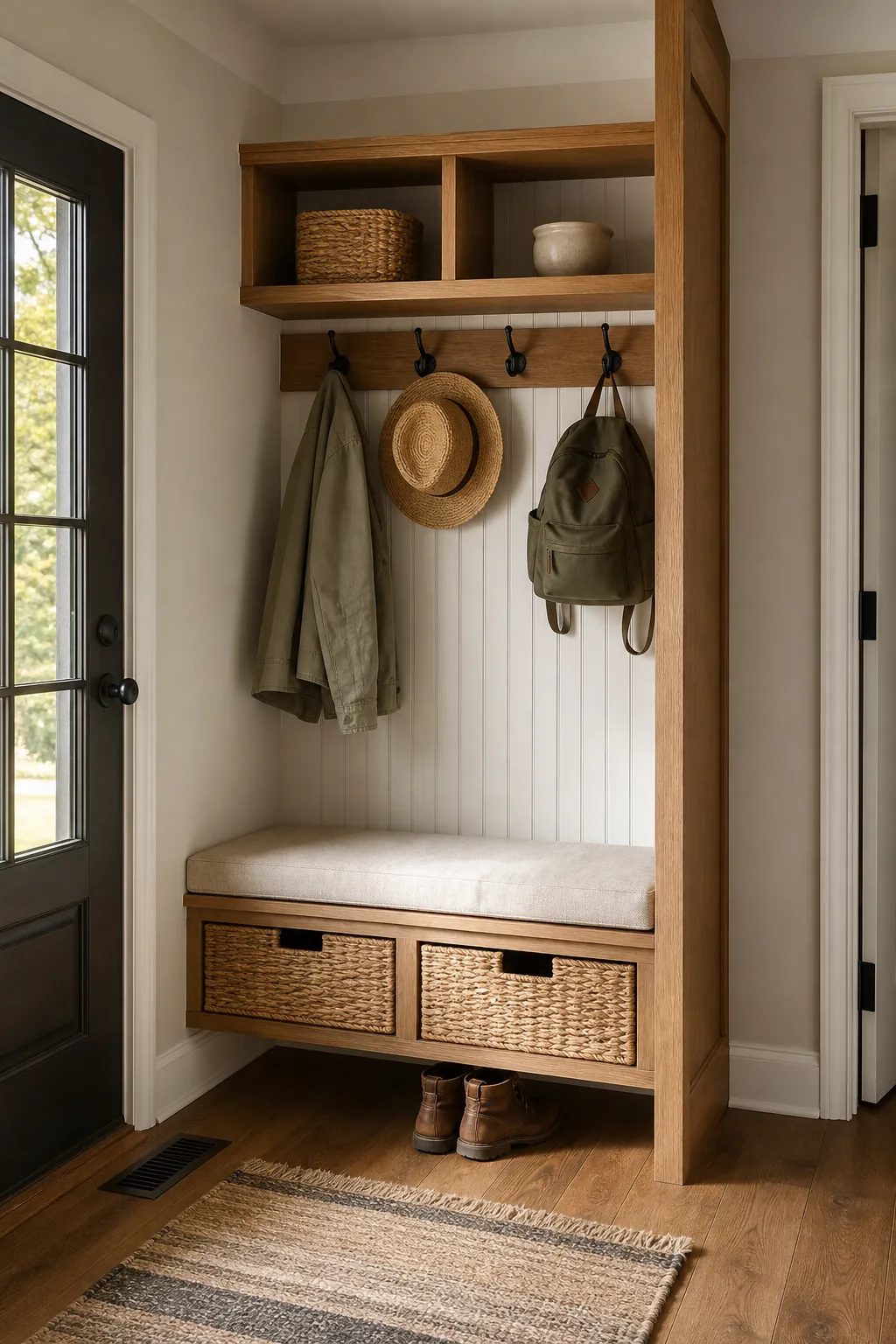
The best bench setup has a hard limit. One basket per person, one cushion, and nothing stored on top overnight. That sounds strict, but it is what keeps Home Organization from turning into a pile with better furniture.
Build Up The Wall Instead Of Spreading Across The Floor
Small entries need vertical thinking. A row of hooks, a shallow shelf, a peg rail, or a wall-mounted cubby can hold more than a floor piece without stealing walking space. This is where many Mudroom Ideas fail: they add another cabinet when the wall could have carried the load.
Stagger hooks so bulky coats do not overlap too much. Use lower hooks for kids, backpacks, dog leashes, or tote bags. Add one narrow shelf or small tray for keys and mail, but keep it shallow enough that it does not invite piles. If you like a cleaner look, use a hook rail with a ledge above it and a closed shoe cabinet below.
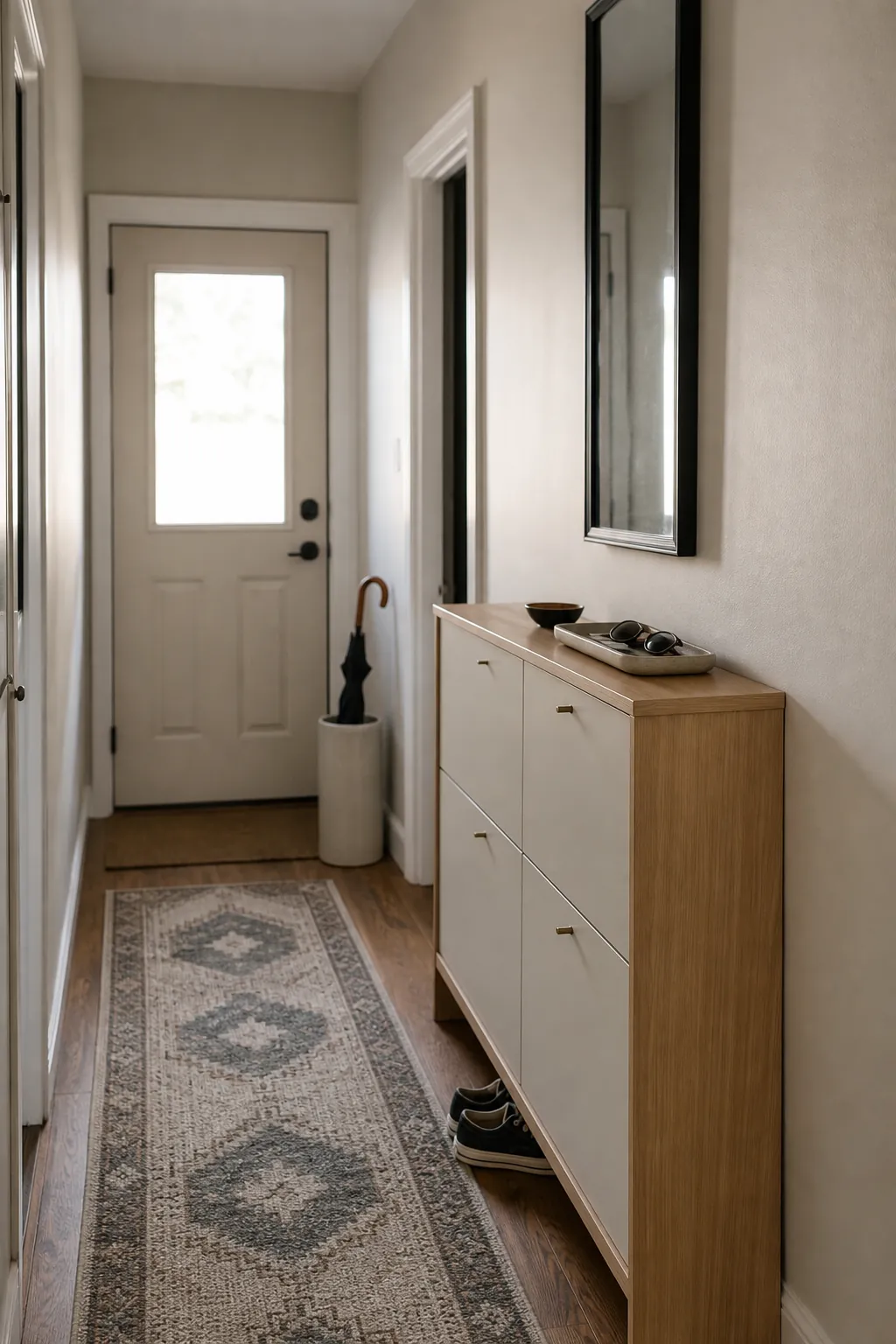
A mirror can work hard here too. It reflects light, gives the corner a finished look, and makes a small foyer feel less squeezed. Just do not let the mirror compete with hooks. If coats hang below it, keep the mirror narrow or place it on the side wall.
Make The Corner Easy For Kids And Guests To Use
A mudroom corner fails when the system is technically organized but too fussy for real life. If kids use the entry, give them hooks they can reach, baskets they can throw shoes into, and labels or picture tags if needed. If guests use the same door, leave one or two empty hooks. A system with no empty space is already overloaded.
For family homes, separate the daily zone from the overflow zone. Daily coats and shoes can stay near the door. Sports gear, extra winter accessories, reusable bags, and out-of-season items should move to a closet, laundry shelf, garage bin, or bedroom storage. This keeps the entry working even on busy mornings.
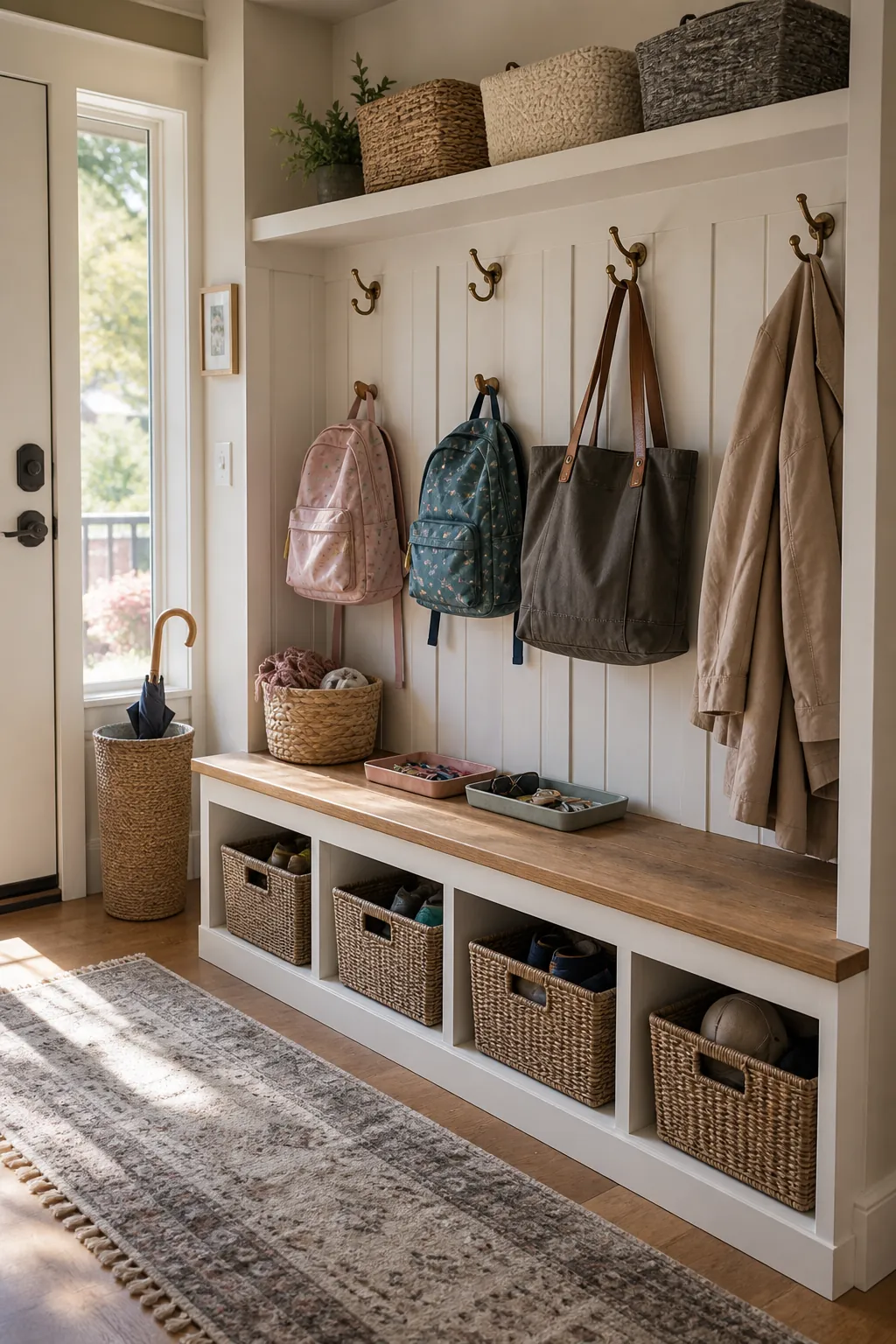
This is also where a small corner can beat a large mudroom. When storage is limited, everyone has to make choices. The result can be a neater entry because the space does not pretend it can hold everything.
Use A Runner Rug To Define The Mudroom Zone
Runner Rugs do more than soften the floor. In a no-mudroom home, a washable runner tells the eye where the landing zone begins and ends. It also catches grit, protects flooring, and makes a skinny hallway feel more designed.
Choose a low-profile, washable rug with a grippy pad. In very narrow halls, avoid thick edges that catch the door or trip people as they carry groceries. Pattern is helpful because it hides everyday dirt better than a flat pale rug. If the corner has a lot of baskets, wood, and coats, the rug can be the place where the color and pattern live.
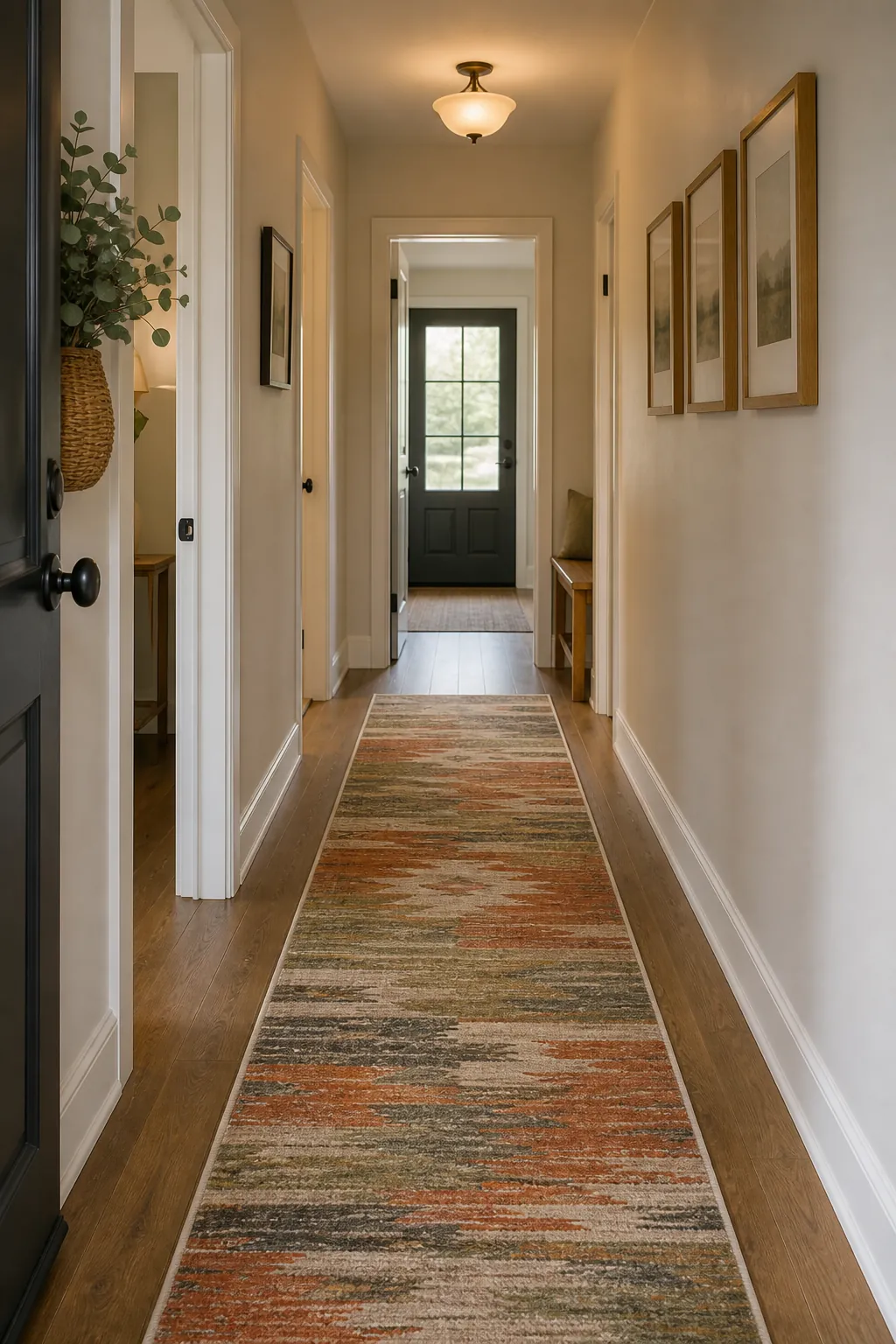
Lighting helps the same way. A sconce, small lamp on a console, or brighter ceiling fixture makes the corner feel deliberate instead of leftover. That is the difference between storage shoved by the door and polished Entryway Decor.
Keep Seasonal Items Out Of The Daily Corner
The fastest way to ruin a small mudroom corner is to let every season live there at once. Winter boots, summer sandals, rain gear, sports bags, and extra scarves cannot all be daily-entry items. A small space needs rotation.
Use one high shelf, a lidded basket, or a closet bin for off-season accessories. Put boot trays away when the weather changes. Move extra coats to bedroom closets. If you have a tall cabinet, reserve the easiest-to-reach section for current use and the upper or lower sections for seasonal storage. The visible corner should show the season you are actually living in now.
A Simple Formula For A No-Mudroom Corner
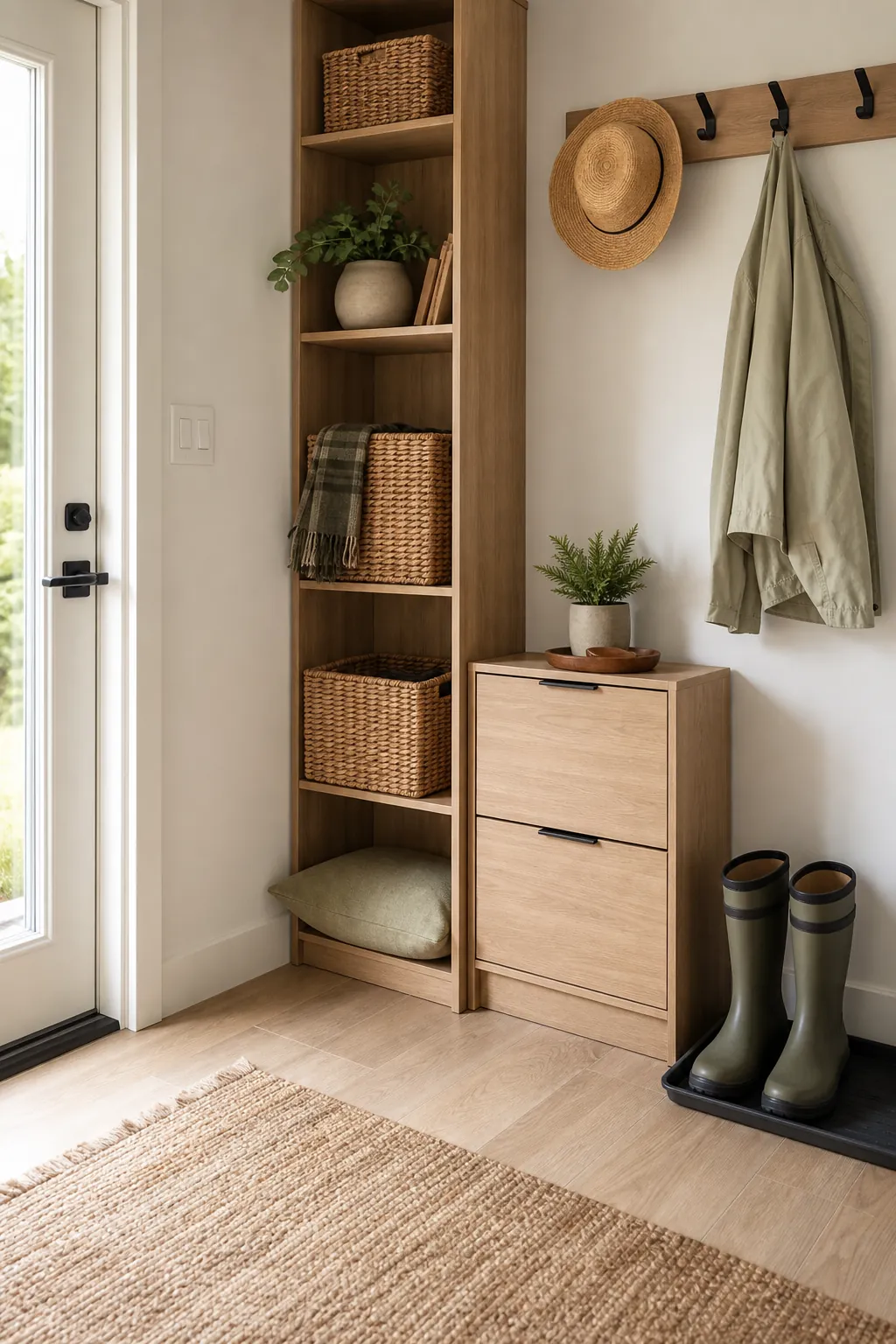
If you are starting from an empty corner, use this formula:
- One closed shoe piece that fits the depth of the hallway.
- One wall-mounted hanging system with hooks at adult and kid height if needed.
- One small surface for keys, mail, sunglasses, or a tray.
- One washable rug to define the landing zone.
- One decorative layer such as a mirror, art, wallpaper, paint, or a sconce.
That combination works for many Foyer Ideas because it balances storage and breathing room. It also scales. A tiny apartment may use a wall shelf, hooks, and a narrow shoe cabinet. A house entry may use a built-in bench, cubbies, and a larger runner. The principle stays the same.
Mistakes That Make A Small Mudroom Corner Look Messy
- Buying furniture before measuring door swings and walkway width. The piece may fit the wall but still ruin the flow.
- Using only open storage. Open hooks are fine; open hooks plus open shoes plus open baskets can feel busy fast.
- Keeping every pair of shoes by the door. Daily access is not the same as permanent storage.
- Choosing a bench with no storage. In a compact entry, seating should work harder.
- Skipping lighting and decor. A functional corner still needs one visual choice that makes it feel intentional.
The best mudroom corner is honest about capacity. It gives the entry a clear job, holds the items that truly need to live by the door, and sends the rest somewhere better. That is what makes Small Space Decor feel calm instead of cramped.