
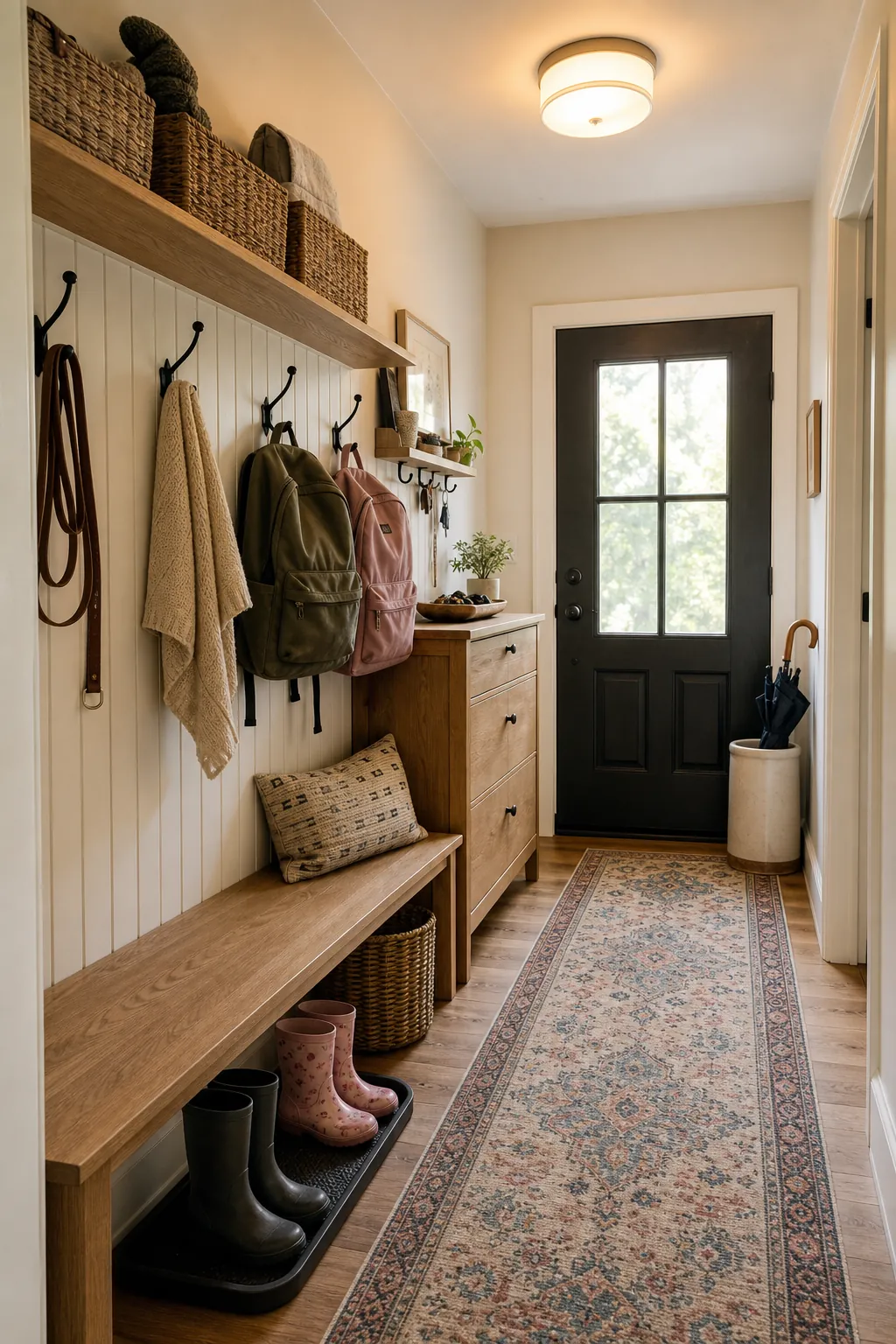
The entryway that frustrates a family is rarely failing because it needs one more pretty basket. It fails because it asks tired people to behave better than the room allows. Backpacks land on the floor because the hook is too high. Shoes pile up because the cabinet takes two hands. Mail spreads across the bench because there is no obvious place for “I need to deal with this later.”
The better goal is not a spotless foyer. The better goal is a family entryway that makes the easiest action the right action. A good drop zone catches shoes, coats, bags, keys, school papers, pet gear, and the tiny things everyone grabs on the way out without turning the front door into a storage room.
That means building from real behavior first. People will drop things near the door. Kids will use what they can reach. Guests need a visible cue. Small spaces need shallow storage, not deeper clutter caves. These entryway ideas are designed for families who come in fast, unload faster, and need the house to recover without a full nightly organizing project.
Start With the Traffic Path, Not the Furniture
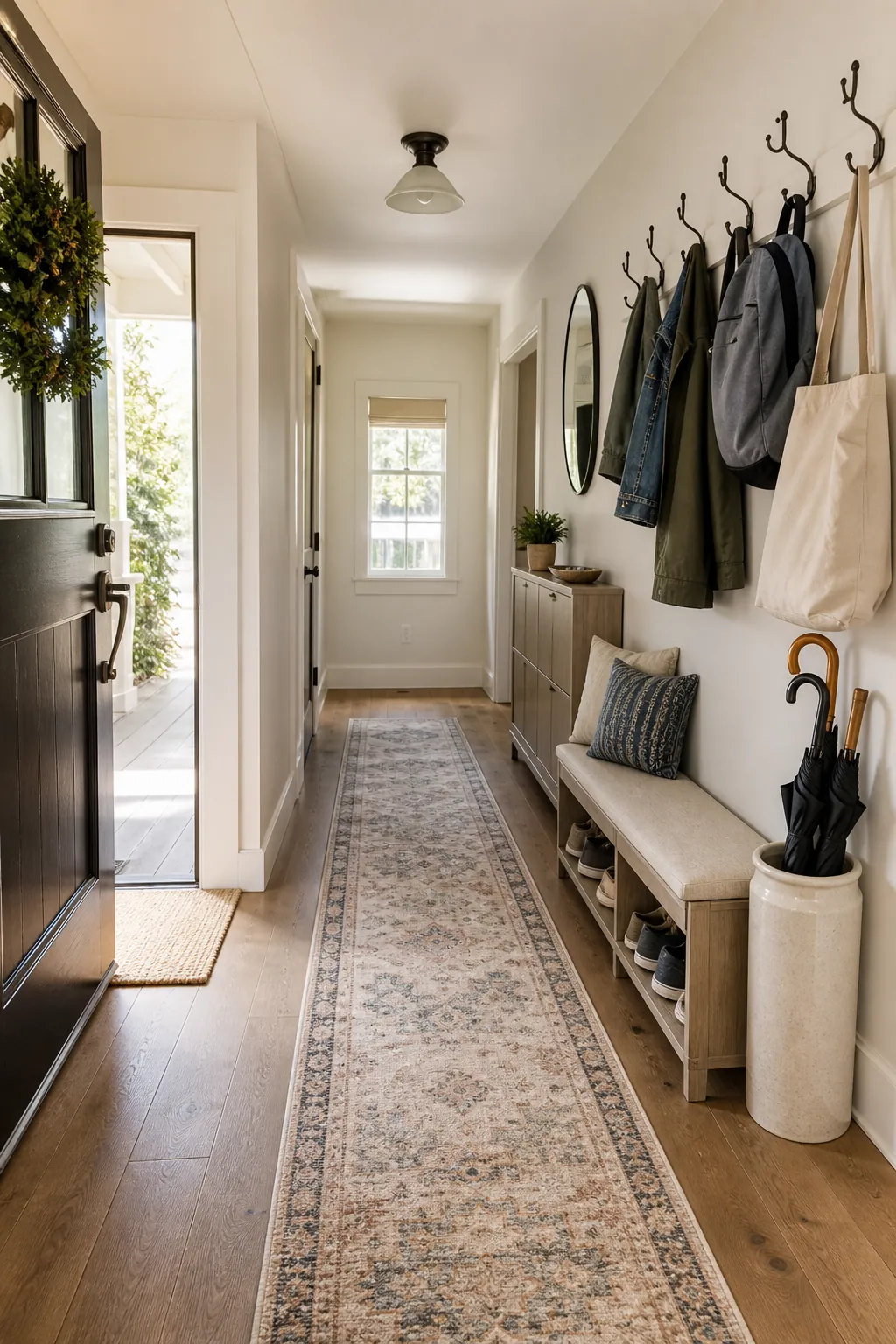
Before buying a bench, console, or shoe cabinet, stand at the open door and watch what the door swing, stroller path, grocery path, and daily shoe path actually need. A beautiful entryway that blocks the door by four inches will become annoying by the second week. A slim, less dramatic setup that lets everyone walk through without turning sideways will stay useful.
For a tight hallway or foyer, protect a clear strip of floor first. Then place storage on the wall that people naturally face when they enter. If the entry opens straight into a living room, the drop zone can borrow the first few feet of the room instead of forcing every coat and backpack into the tiny door pocket.
- Keep the door swing empty. Anything behind the door should be flat, shallow, or mounted high enough not to interfere.
- Use the longest open wall. A narrow shoe cabinet, hooks, and a small shelf usually beat a deep bench in a cramped foyer.
- Leave room for the messy moment. Someone will be carrying groceries, sports bags, or a tired toddler. The floor plan has to survive that moment.
Give Every Family Member One Easy Landing Spot
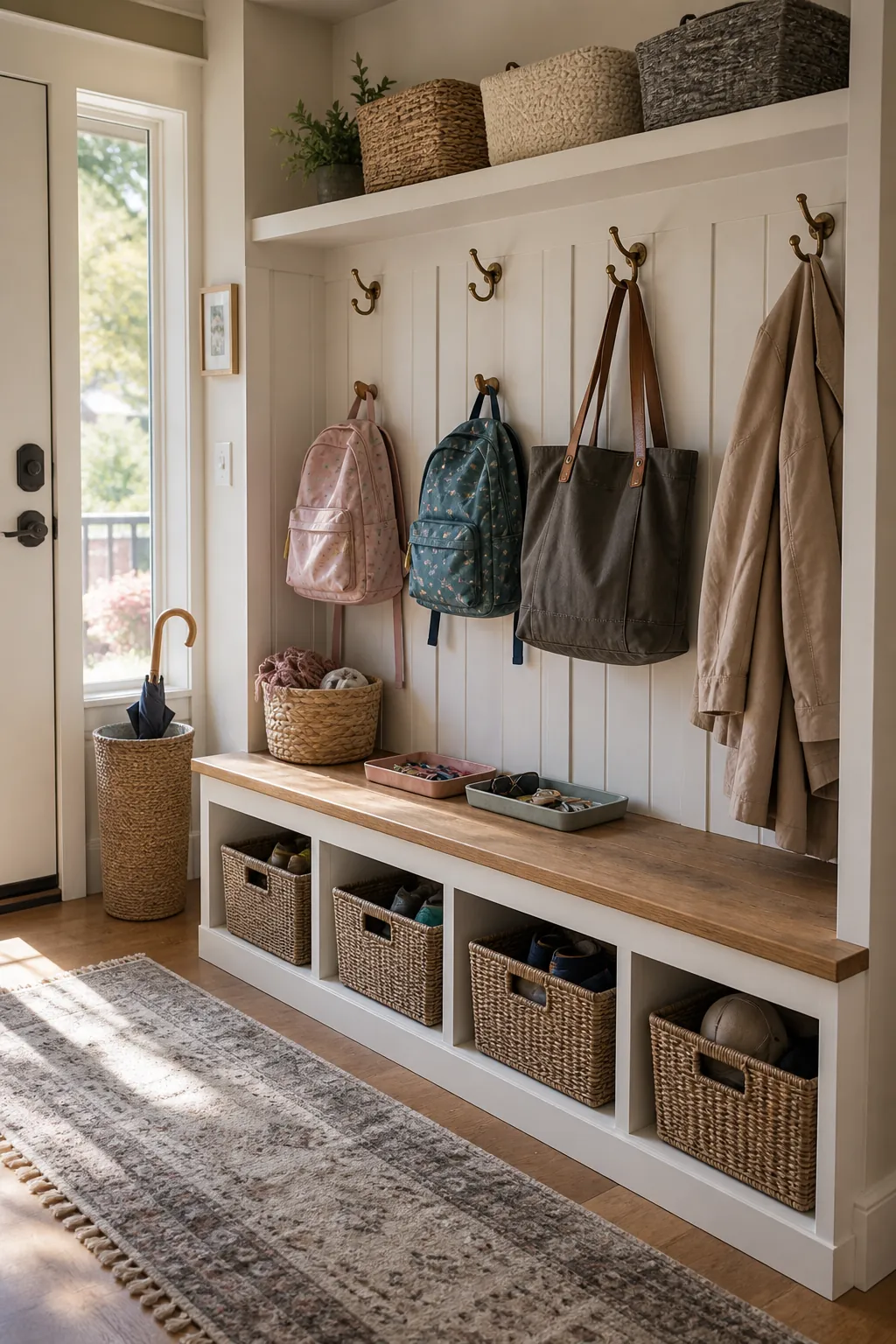
A shared basket sounds simple until it becomes a black hole for mittens, library books, sunglasses, dog bags, and one lonely shin guard. Families do better when each person has a visible home base. It can be a cubby, basket, drawer, hook pair, locker-style section, or labeled tray. The exact furniture matters less than the rule: one person, one obvious landing spot.
This is where home organization becomes easier than nagging. A child can put a backpack on “their” hook. A parent can drop sunglasses in “their” small drawer. A guest can see which hooks are free. The entryway stops asking everyone to remember a system and starts showing the system at a glance.
If your space is narrow, stack the personal zones vertically. Hooks above, baskets below, a shallow shelf for keys and wallets, and a runner rug to define the strip. If you have room for a mudroom storage bench, divide the lower baskets by person rather than by item type. The family thinks in people first, not categories.
Hide Shoes Without Making Them Hard to Grab
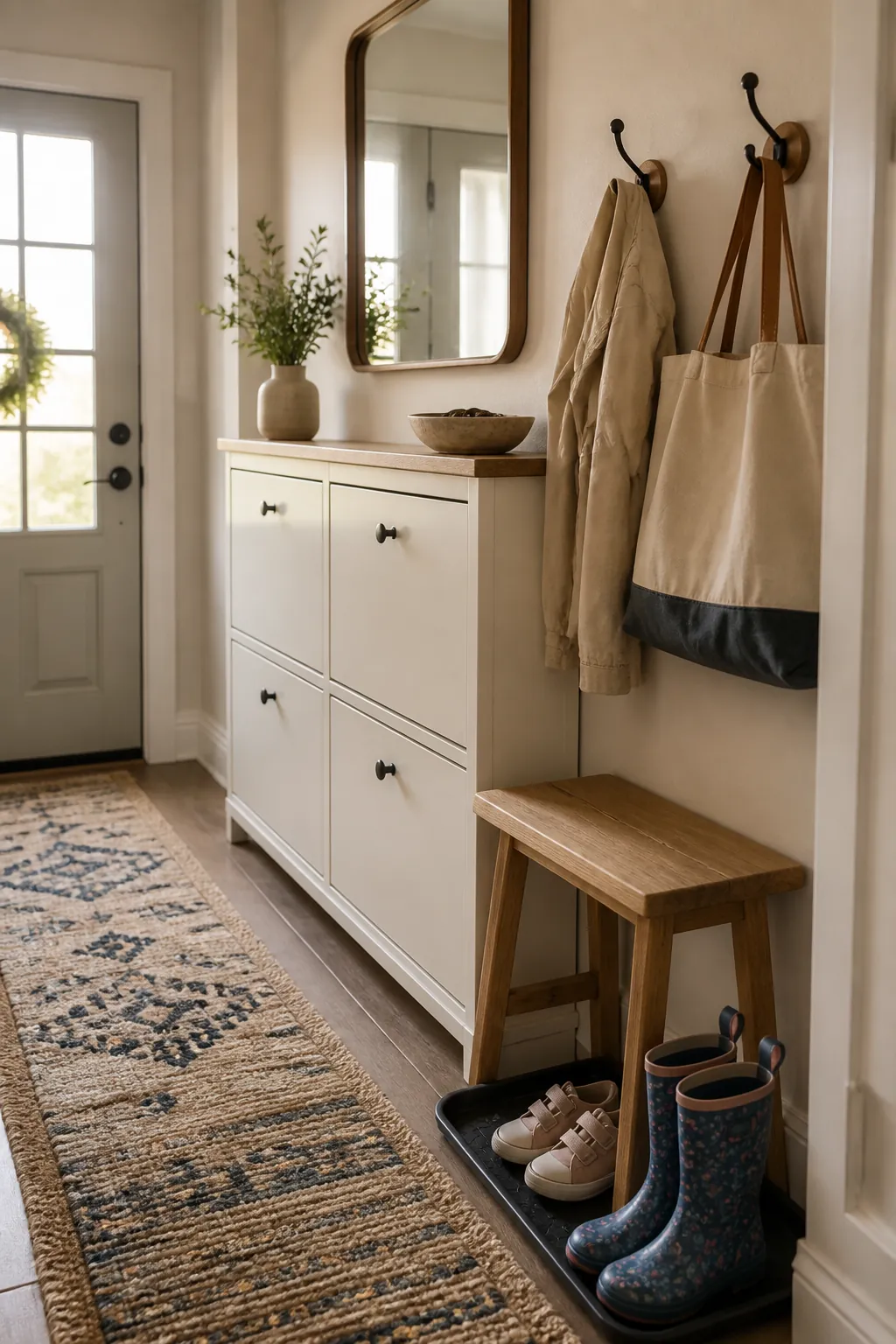
Shoes are the fastest way for an entryway to look chaotic. Open racks are easy, but they put every sneaker, boot, sandal, and muddy sole on display. Fully closed storage looks calmer, but if it is awkward to open, the shoes will still land beside it. The best family entryway splits the difference: daily shoes stay easy, extra shoes leave the door area.
Try a one-pair rule for the most visible spot. Each family member gets one pair by the door, with seasonal or occasional shoes moved to a closet, bedroom, or garage shelf. In a small entryway, a shallow tilt-out cabinet can hide several pairs without stealing walkway depth. In a wider foyer, a bench with open lower shelves can work if the shoes are limited and the shelves are not treated as overflow storage.
- Use closed storage for visual clutter. A slim cabinet instantly makes hallway decor feel calmer.
- Use trays for wet shoes. A washable boot tray protects floors and tells people exactly where dirty shoes belong.
- Rotate by season. Winter boots, rain shoes, and sports cleats should not all live at the door at the same time.
Make Kid-Height Hooks Do the Daily Work
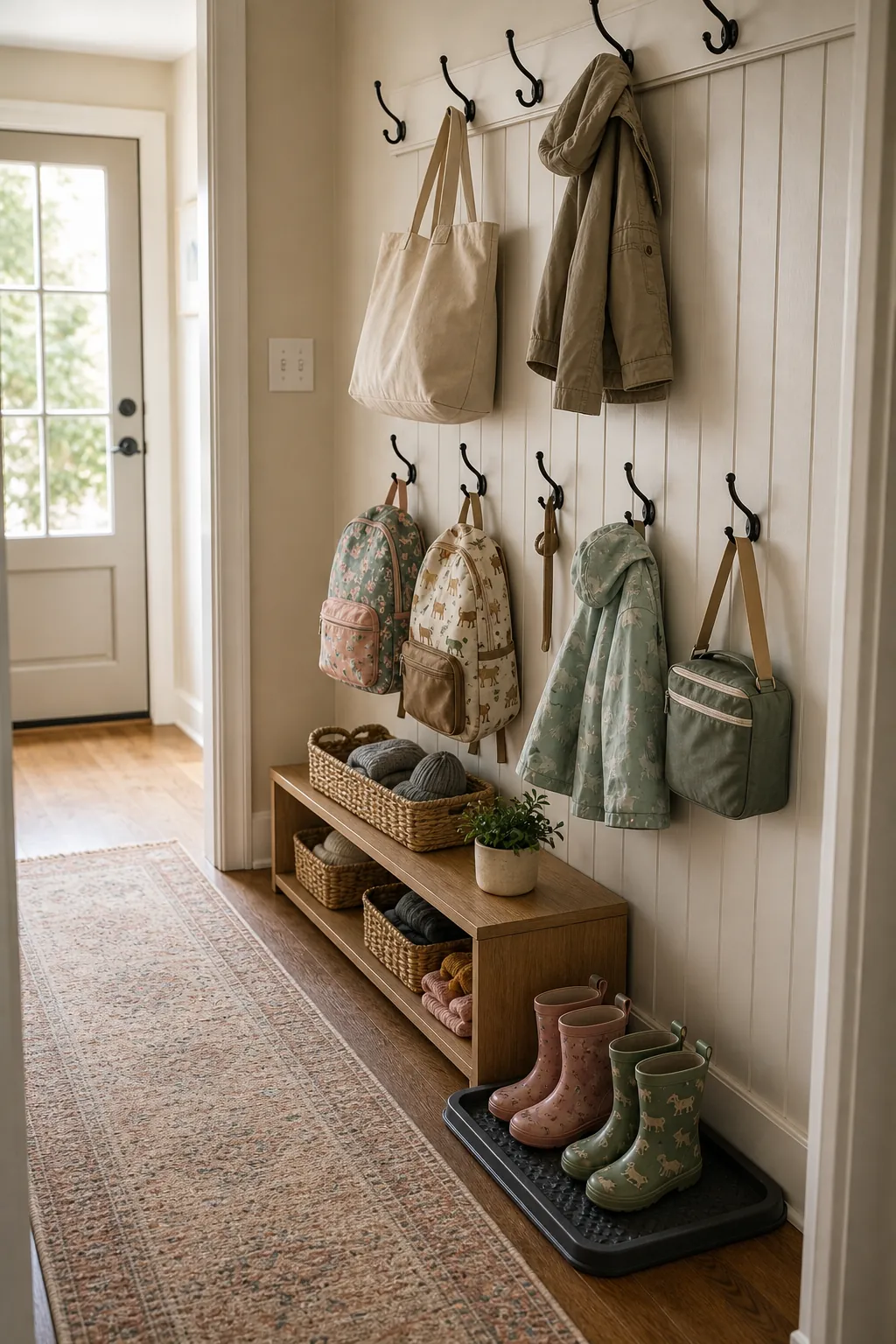
If a hook is too high for a child, the floor becomes the hook. Lower hooks are one of the simplest mudroom ideas for families because they let kids participate without being reminded every time. Put adult coats higher, kid coats and backpacks lower, and pet leashes or umbrellas on a smaller side rail so everything is visible but not competing for the same hook.
Choose sturdy hooks with enough spacing. A tight row of tiny hooks looks neat when empty and fails when real backpacks arrive. Double hooks are useful because the coat and bag can separate, so no one has to remove a coat to get a backpack or pull three items down at once. The goal is not perfect styling. The goal is fewer items sliding to the floor at 7:30 a.m.
For renters or anyone avoiding wall damage, a freestanding hall tree can work, but watch the footprint. A tall coat tree in a busy family drop zone often becomes a leaning pile. Wall hooks, a rail, or a mounted board usually feel calmer because they use vertical space without wobbling into the walking path.
Keep Mail, Keys, and School Papers From Taking Over
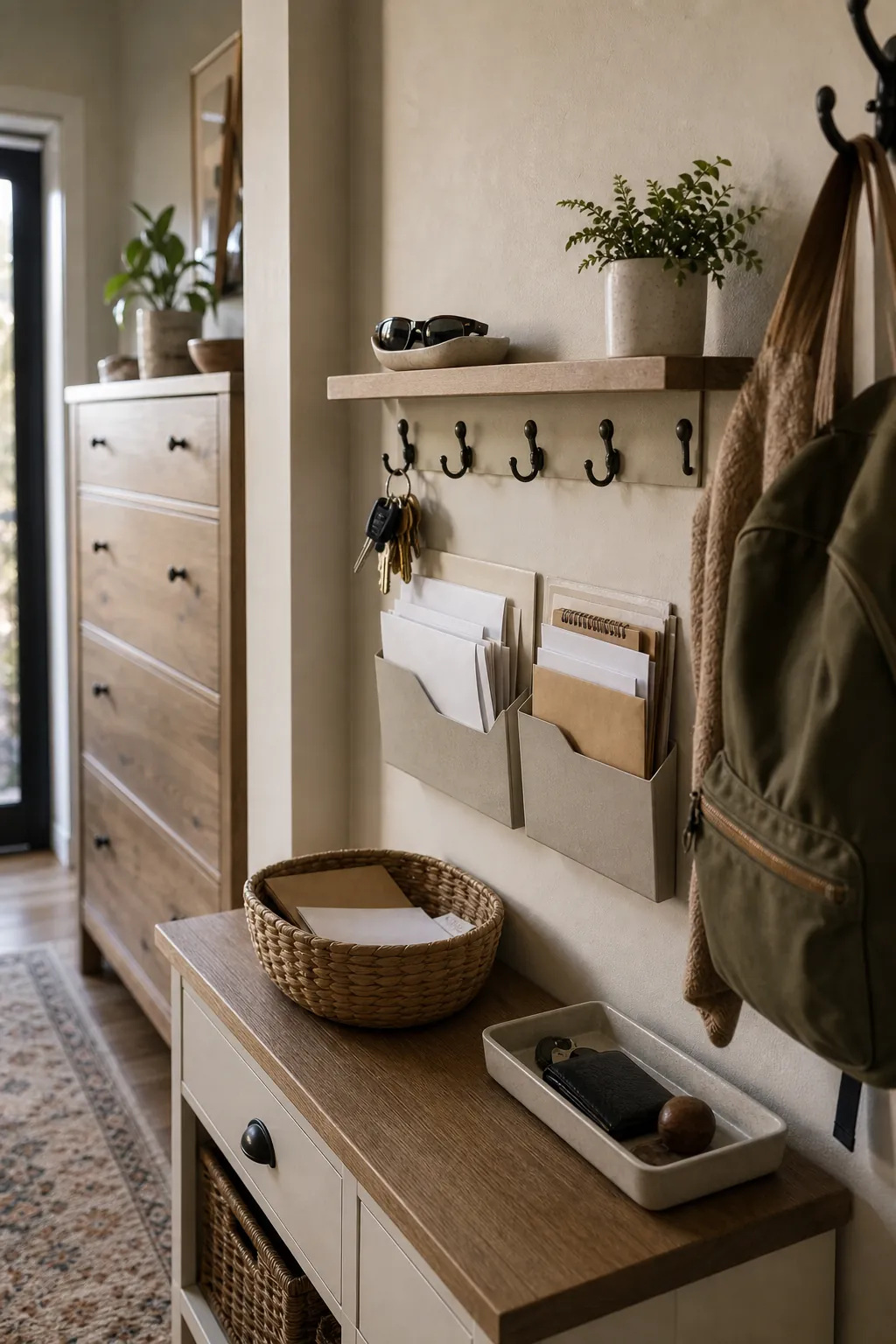
Paper clutter needs a decision point, not a bigger pile. A small command center beside the door can handle mail, keys, sunglasses, school forms, and “take this tomorrow” items, but only if every category has a narrow job. A tray that holds everything will hold everything forever. A simple wall pocket or file slot labeled by action works better.
- Keys: hooks under a small shelf, close enough to the door that no one has to think.
- Mail: one slot for unopened mail and one slot for action papers, not a deep basket.
- School papers: a separate folder or magazine file so forms do not disappear under catalogs.
- Outgoing items: a small bin for library books, returns, or things that need to leave the house.
The tighter the system, the better. A family entryway is not the place to archive life. It is the place to catch what moves in and out. If papers need real sorting, move them to a desk or kitchen command spot during a weekly reset. The entryway should only hold the next step.
Use a Runner Rug and Lighting to Define the Zone
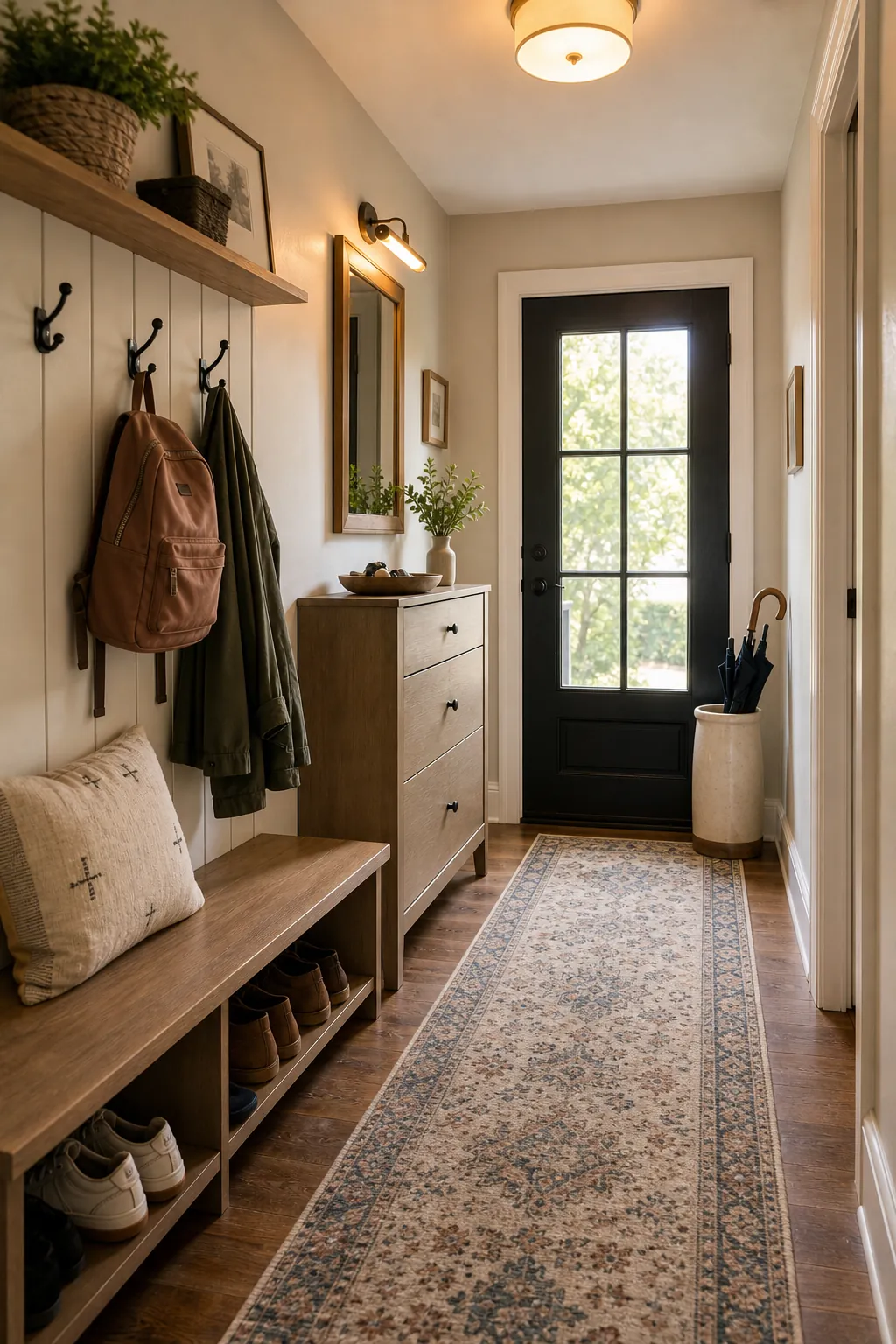
Function gets used more when the space feels intentional. A runner rug can visually lengthen a hallway, catch dirt, and tell the eye that this strip is its own zone. Good lighting does the same. In a small foyer, one warm sconce, a flush mount, or a battery picture light can make the entry feel finished even when the storage is simple.
Choose a runner rug that can handle shoes, grit, and real life. Flatweave, indoor-outdoor, washable, or low-pile rugs are easier under a busy door than a thick rug that catches every swing. Use a quality rug pad so the rug does not slide when kids run through with backpacks.
For hallway decor, keep the wall treatment strong but not crowded. A mirror, a single large piece of art, beadboard, wallpaper, or a painted accent can give the foyer ideas some personality without adding more loose objects to manage. Decor should make the drop zone feel deliberate, not give the family more surfaces to cover.
Build a Tiny Mudroom When You Do Not Have One
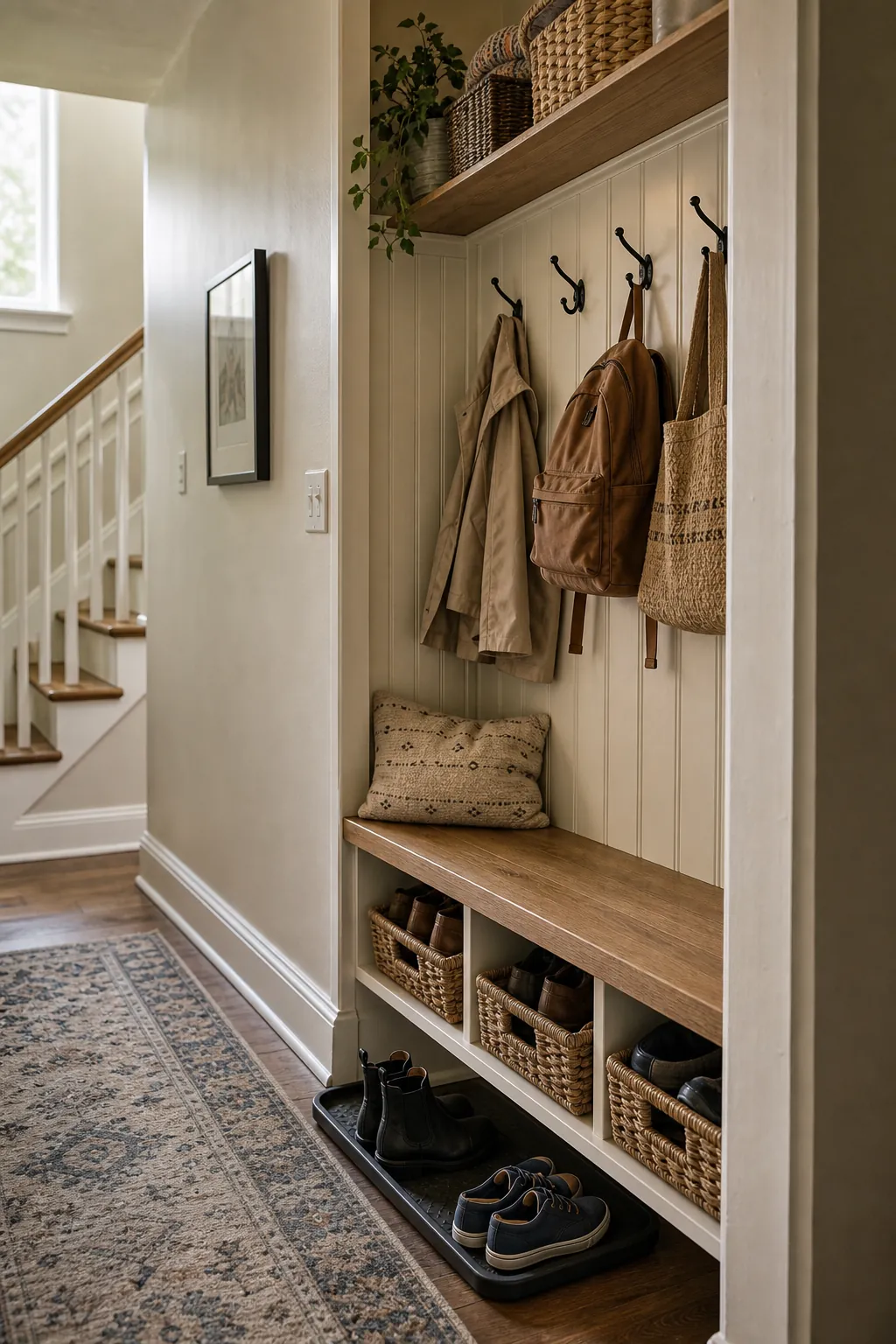
A real mudroom is nice, but a mudroom behavior can happen in a corner, hallway, closet wall, stair landing, or back door alcove. The formula is simple: a place to sit or pause, a place for shoes, a place for bags and coats, and a small place for essentials. If you can fit those four functions, you have a working mini mudroom.
In a narrow home, skip bulky furniture and build upward. Use a shallow bench or stool only if it does not block the walkway. Add hooks above it, baskets below it, and a shelf for hats or seasonal accessories. If you have a closet near the door, improve the closet before buying more entryway furniture. Raising the rod, adding a second lower rod, using the back of the door, and adding shelf dividers can recover space that was already there.
The most common mistake is making the bench do too much. Deep benches swallow hats, gloves, dog gear, and blankets until no one wants to open them. For a family drop zone, shallow and specific usually beats deep and flexible. If an item is used every day, it should be reachable in one motion.
Keep the System Alive With a Two-Minute Reset
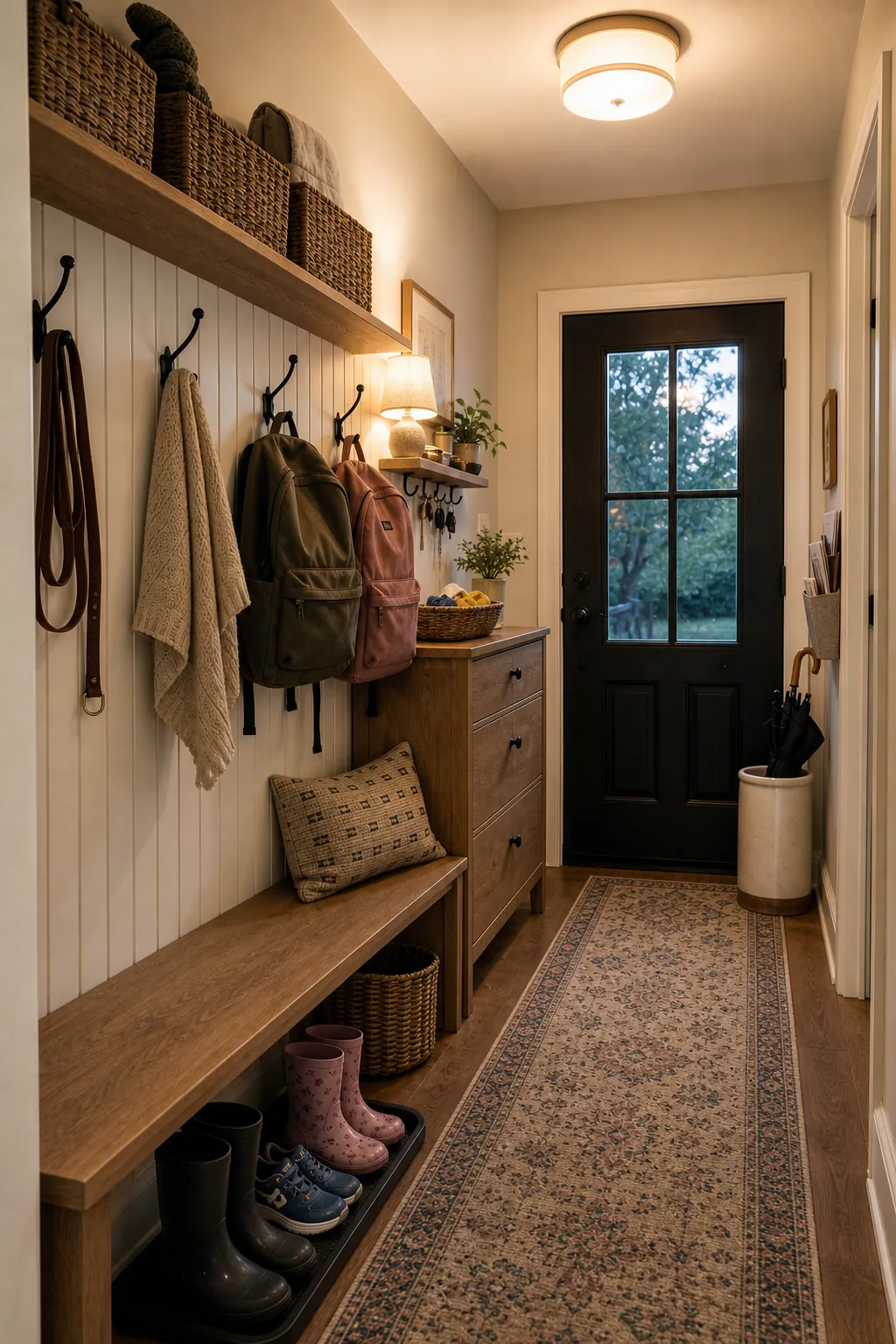
No entryway system stays perfect without a reset. The trick is making the reset short enough that it actually happens. Two minutes is enough to return shoes to the right row, hang stray bags, toss trash, move mail to the action spot, and put one or two out-of-place items into an “elsewhere” basket.
Do the reset when the family is already passing through the space: after dinner, before bedtime, or right after school bags are unpacked. Do not turn it into a lecture. The room should be set up so the reset is mostly obvious. If the same item keeps landing in the wrong place, treat that as design feedback. Move the hook lower. Add a tray. Remove the extra shoes. Make the right place easier.
The best entryway ideas for families are forgiving. They assume people are busy, carrying too much, and moving quickly. A strong drop zone does not fight that pattern. It catches it, sorts it, and gives the front door back to the house.