
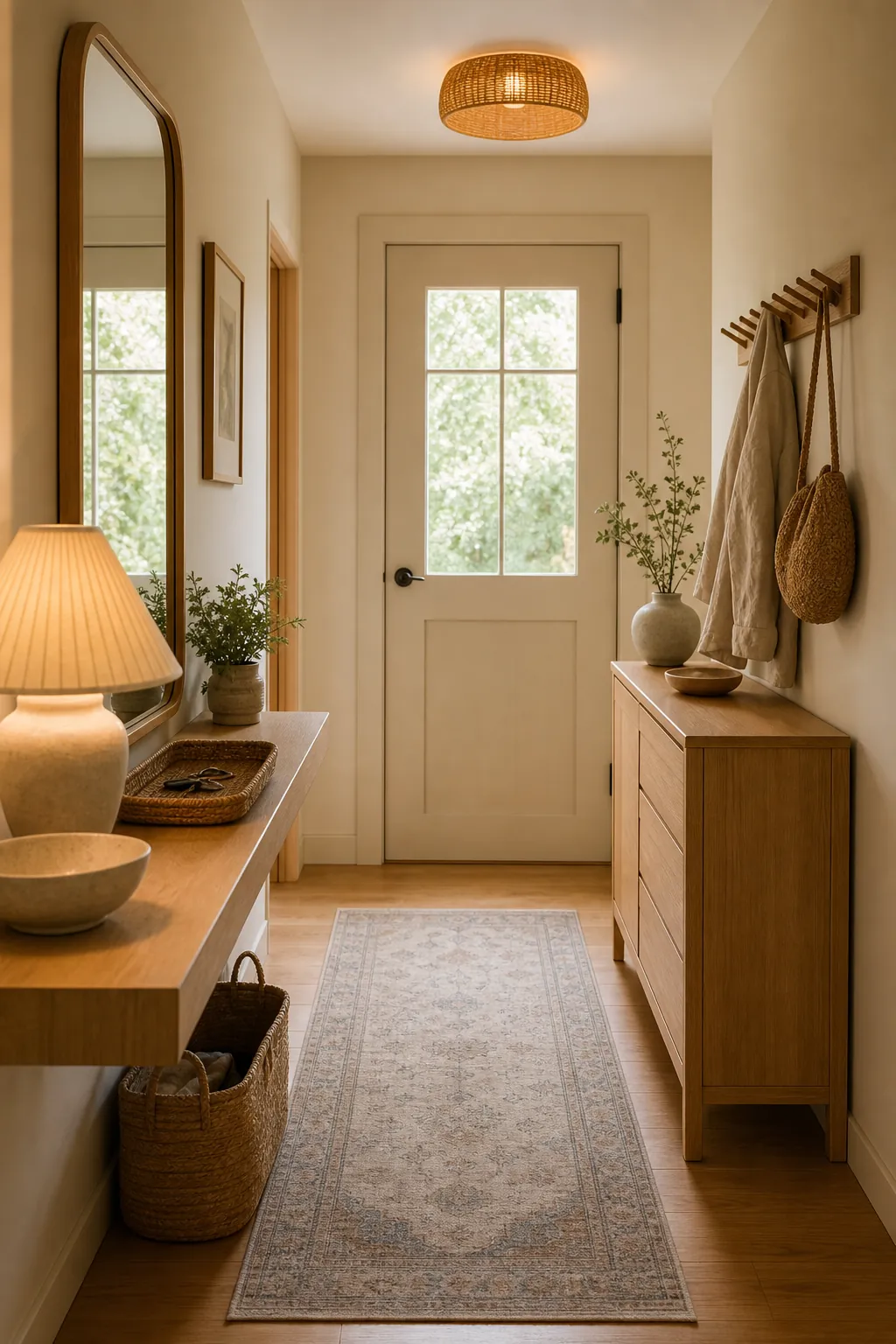
The most calming entryways are not the ones with the most decor. They are the ones that make the first thirty seconds at home feel easy. Shoes have a place. Keys have a place. The lighting is warm. The path is clear. Nothing shouts for attention before you have even set your bag down.
That is the real goal behind these entryway decor ideas: not a more decorated foyer, but a softer landing. A calm entryway starts with function, then uses scale, texture, light, and wall decor to make that function feel intentional.
Start With One Quiet Drop Zone
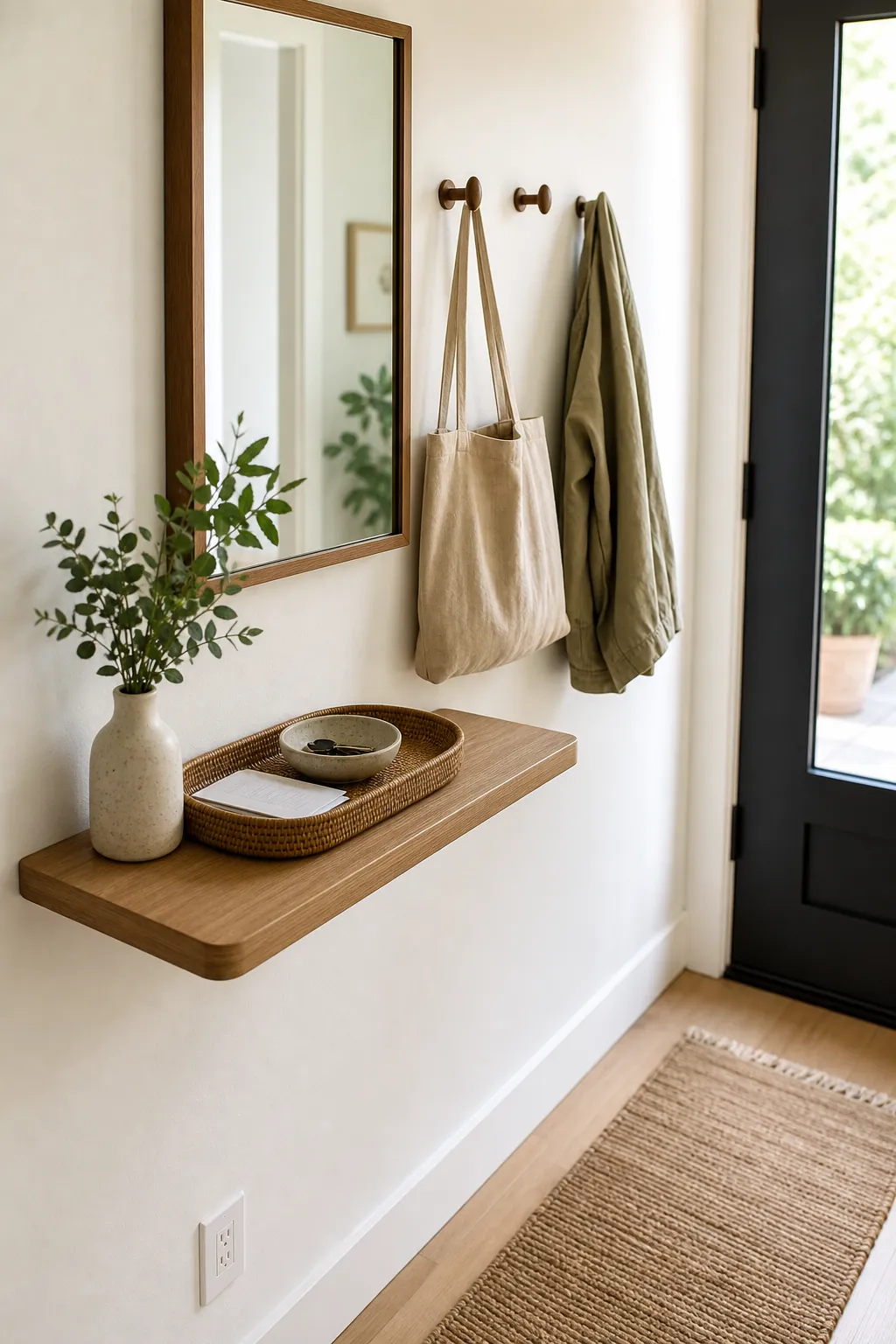
If keys, mail, sunglasses, and bags never get a real home, the entryway becomes messy even when the decor is pretty. The first move is simple: create one narrow drop zone close to the door. It can be a slim console, a wall shelf, or the top of a closed shoe cabinet.
Keep the surface edited. A shallow tray, a small bowl, and one lamp or vase usually work better than a row of tiny accessories. The tray is not decoration first; it is a boundary. It tells daily clutter where to stop.
Choose Closed Storage Before More Styling
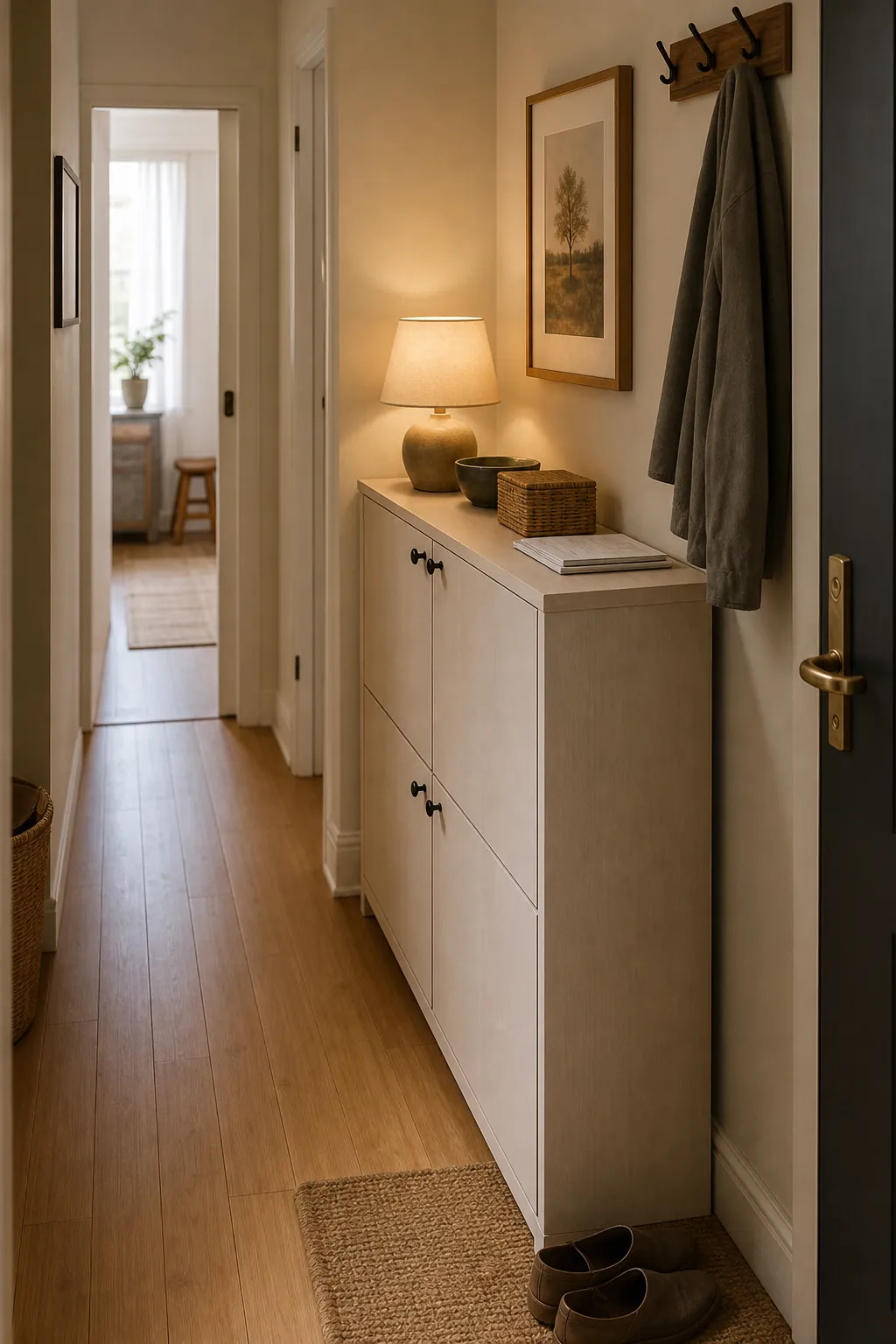
Open shoe racks are useful, but they often make a small foyer feel busy because every pair of shoes becomes part of the view. For a calmer first impression, closed storage usually wins. A shallow shoe cabinet, drawer console, or bench with doors can hide the visual noise while still keeping shoes near the door.
This matters most in narrow hallway decor. When the entry is tight, the eye reads clutter faster than it reads style. One closed cabinet with a lamp and a bowl can do more for calm than five decorative objects on an open shelf.
Use a Bench Only When It Solves a Real Problem
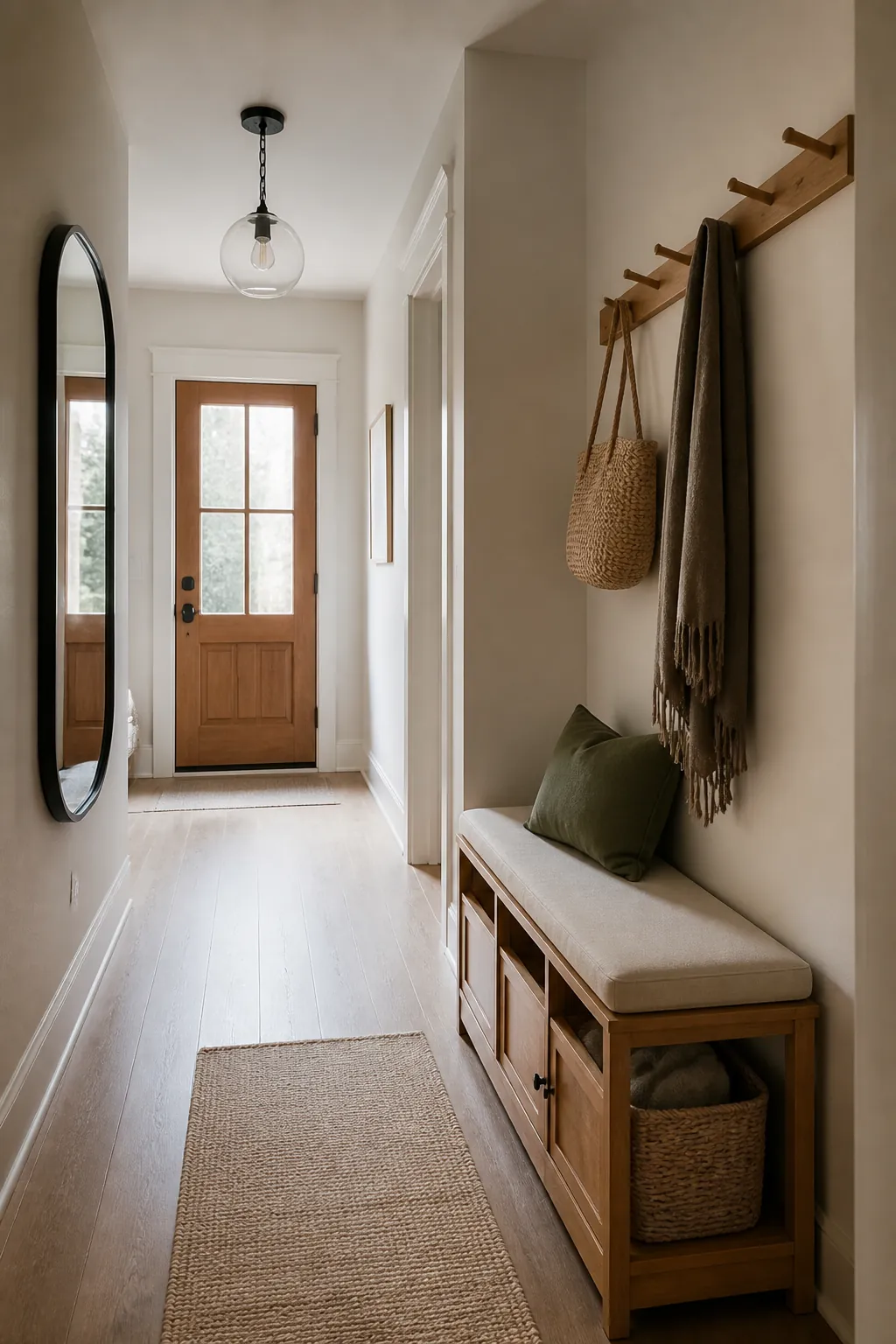
A bench can make an entryway feel welcoming, especially if children, guests, or anyone in the house needs a place to sit while putting on shoes. But in a tight foyer, a bench should earn its footprint. Look for a narrow depth, shoe storage underneath, or a design that visually blends with the wall.
If the bench blocks the door swing, crowds the walkway, or becomes a landing pad for laundry, skip it. A folding stool, wall-mounted seat, or compact shoe cabinet may do the job with less pressure on the floor plan. Comfort should not cost the entryway its breathing room.
Let a Runner Rug Define the Entry
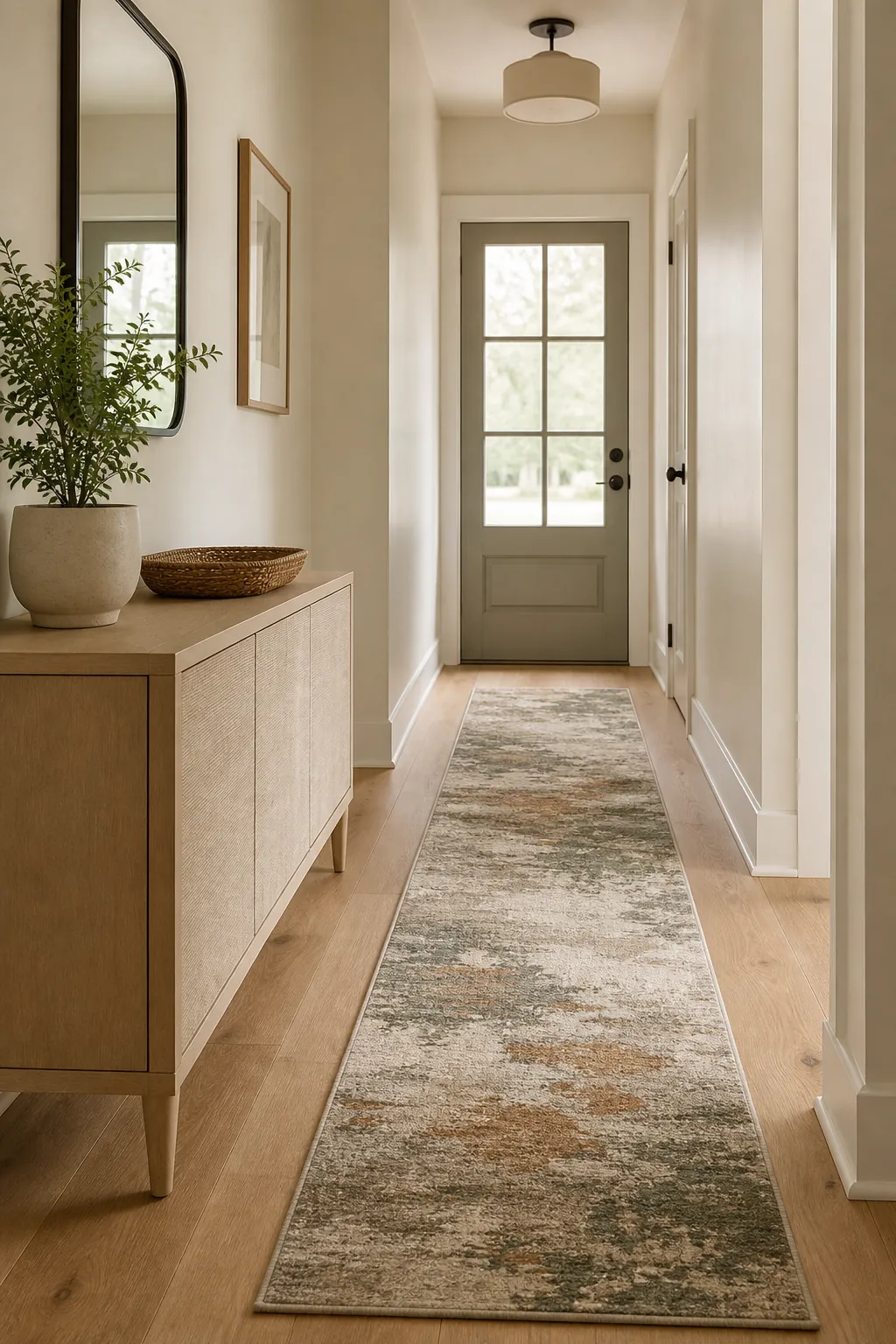
A runner rug is one of the easiest foyer ideas because it tells the entryway where it begins and where the path should flow. In a long or narrow hall, a low-pile runner visually organizes the floor and makes the space feel more intentional.
Choose a runner that leaves even margins on both sides, lies flat, and repeats a color already used in the entry. A muted pattern can hide dirt without making the space loud. If robot vacuums or tripping corners are a concern, use rug tape and choose a low profile. The best runner rug feels like guidance, not another obstacle.
Use Mirrors for Light, Not Just Decoration
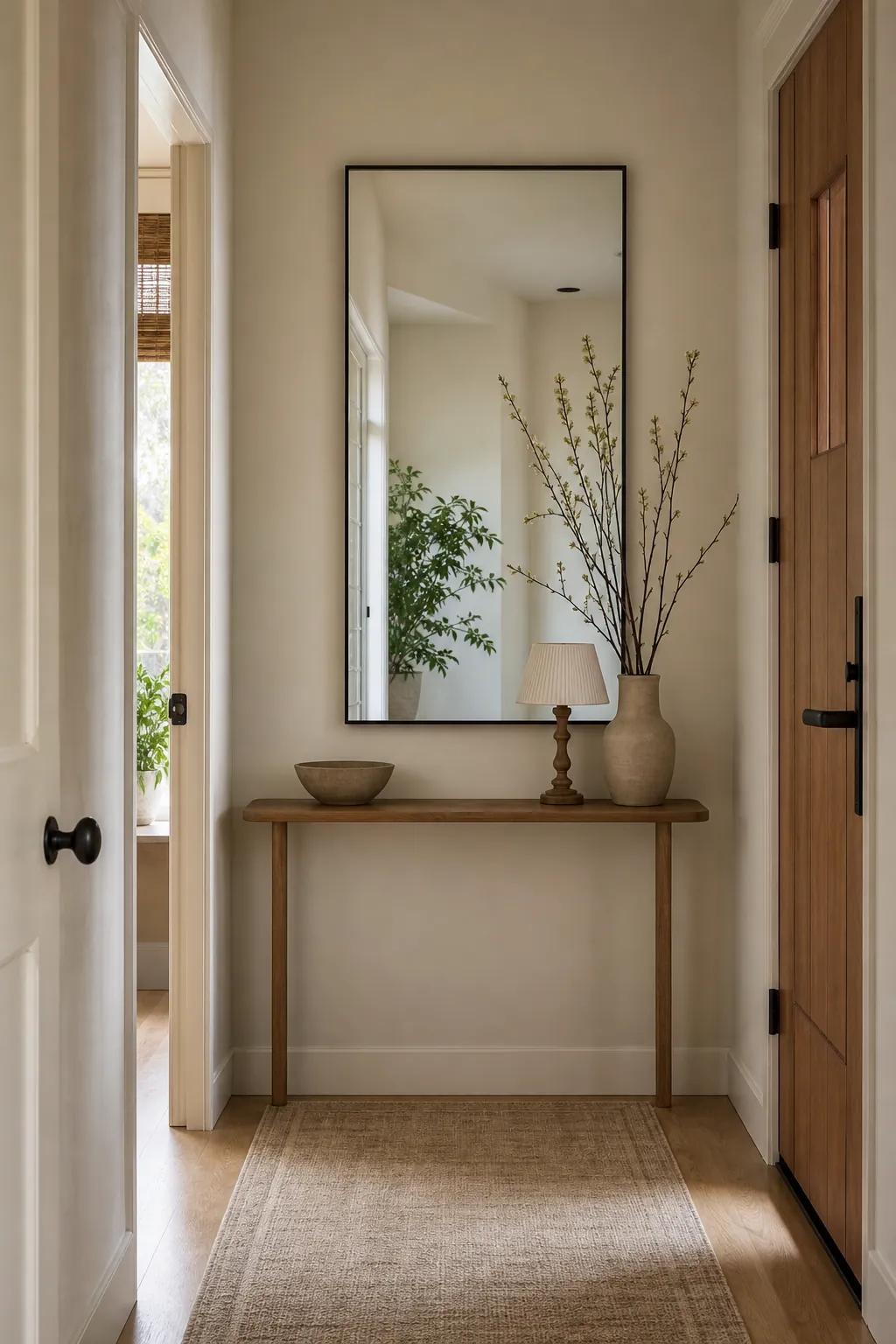
Mirrors are popular in entryway decor because they make small spaces feel lighter, but shape and placement matter. A mirror should reflect something calm: daylight, a plant, a clean wall, or a warm lamp. If it reflects a pile of shoes or a busy room, it doubles the visual noise.
For narrow spaces, rectangular mirrors often feel steadier than very ornate shapes. Leave breathing room around the frame, align it with the furniture below, and avoid hanging it too high. A mirror works best when it supports the architecture instead of fighting it.
Layer Warm Lighting So the Entry Does Not Feel Sterile
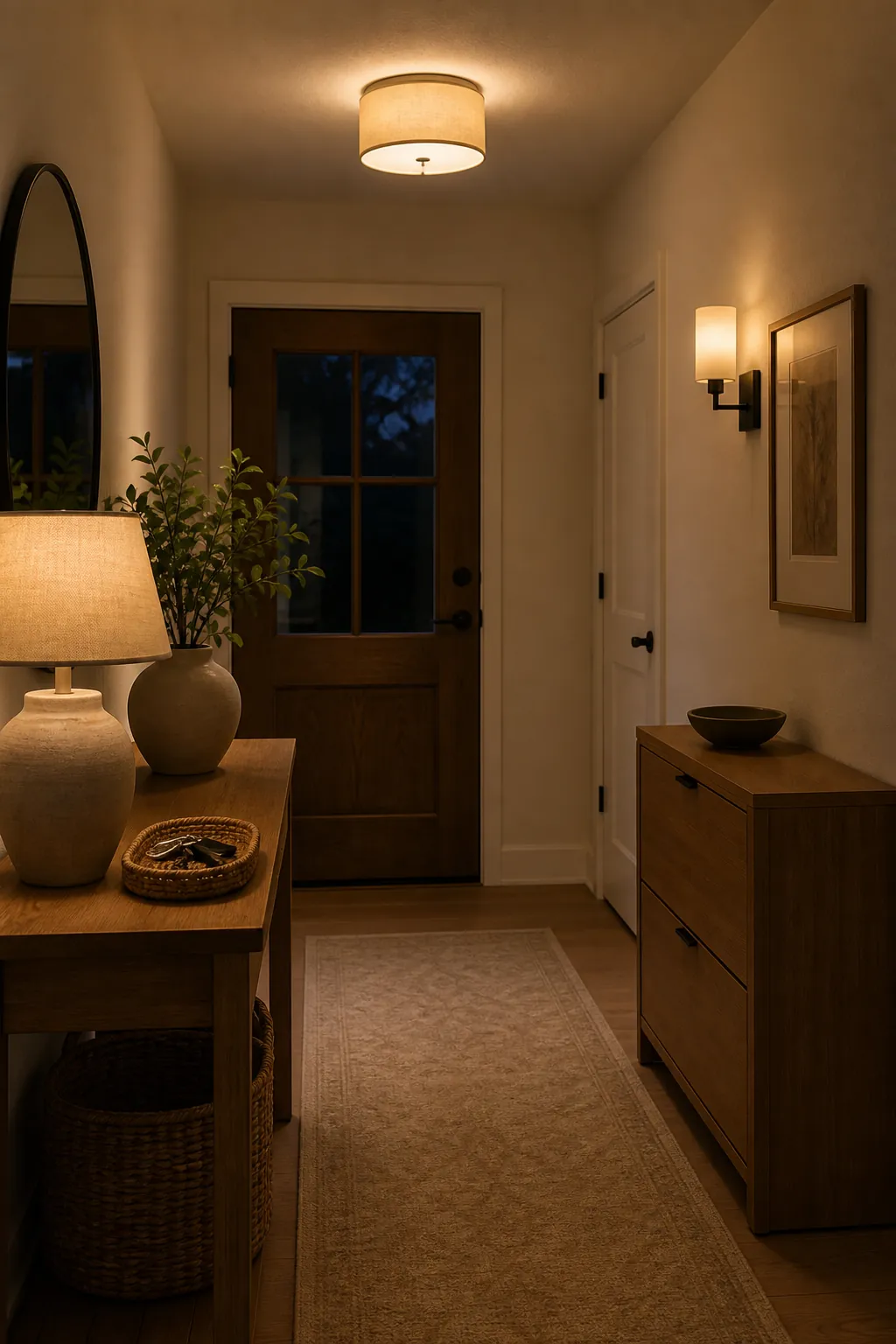
Many entryways rely on one ceiling fixture, and that can make the space feel flat or harsh. A calm entryway usually needs at least one warmer light source at human height: a table lamp, wall sconce, plug-in picture light, or covered fixture that softens the bulb.
Warm lighting makes a practical drop zone feel more considered. It also helps art, mirrors, and natural materials look richer after sunset. If the entryway feels cold but the furniture is fine, start with the bulb temperature and shade before buying more decor. Lighting changes the mood faster than another basket.
Scale Wall Decor to the Wall, Not the Table
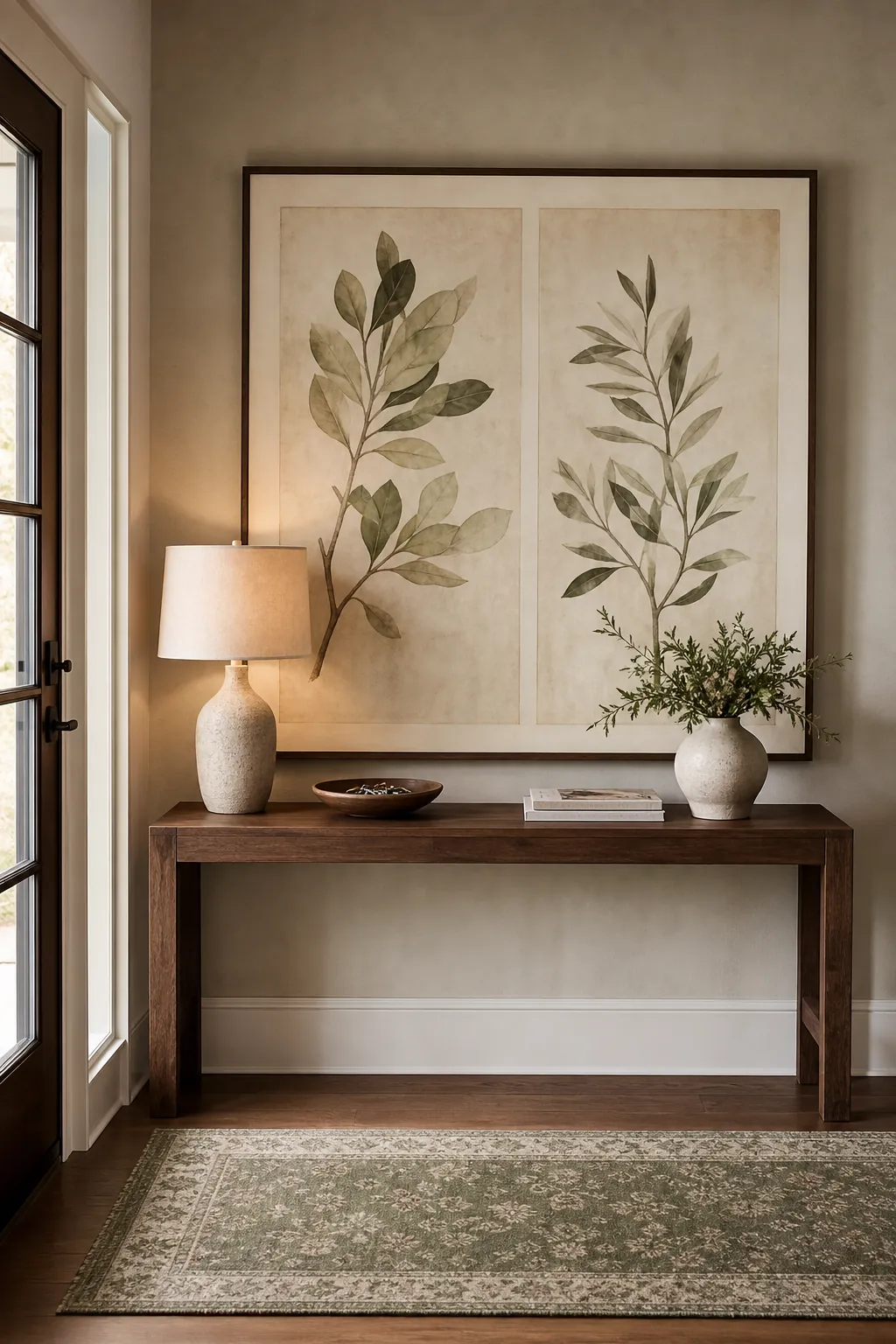
Small art can look lonely in an entryway because the wall is often taller and wider than people expect. If the wall feels empty, the answer may not be more pieces. It may be one larger piece, two aligned prints, or a mirror that relates to the width of the console below it.
Pull colors from the runner rug, lamp shade, door hardware, or nearby living room so the foyer feels connected to the rest of the home. Keep the surface below simple. Large wall decor gives the eye a place to rest; too many small objects make the entry feel unsettled.
Borrow Mudroom Ideas Without Overloading the Foyer
Not every home has a mudroom, but many entryways need mudroom behavior: hooks, shoe storage, bags, seasonal gear, and a washable landing place. The trick is to keep the system compact and edited. Use hooks in a neat row, one bench or closed cubby, and baskets that hide the small items.
For families, lower hooks can help children put backpacks and coats away. For adults, a hidden hamper or closed bin is calmer than leaving laundry, returns, or extra shoes in the walkway. Home organization works when the easiest habit is also the cleanest-looking habit.
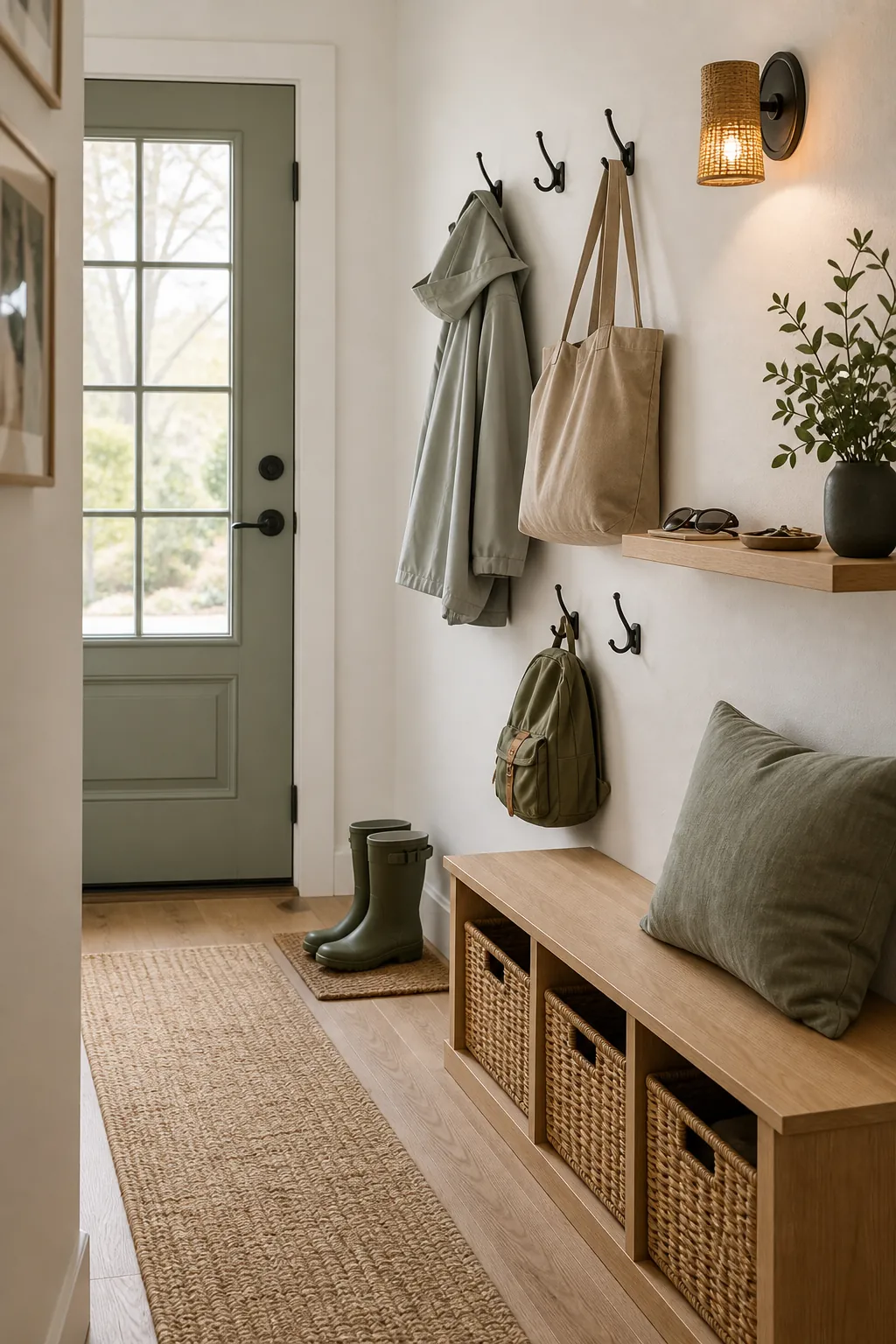
A Simple Calm Entryway Edit
If the space already feels overwhelming, do not start by shopping. Start by editing. Remove anything that does not need to greet you at the door, then rebuild the entryway around what actually happens there every day.
- Clear the walkway first. If a guest has to angle around shoes, hampers, or bags, the entryway will never feel calm.
- Hide the repeat clutter. Shoes, mail, pet leashes, and backpacks need closed storage, hooks, trays, or baskets.
- Add one warm light source. A lamp or sconce makes even a plain hallway feel more welcoming.
- Choose one visual anchor. Use a mirror, large art, or a runner rug to organize the view instead of filling every surface.
- Repeat natural texture. Bamboo, rattan, wood, linen, and ceramic add warmth without making the foyer feel crowded.
A calm first impression is not about making the entryway perfect. It is about making arrival feel lighter. When storage is quiet, lighting is warm, and the floor path stays open, the whole home feels more settled before anyone even reaches the next room.