
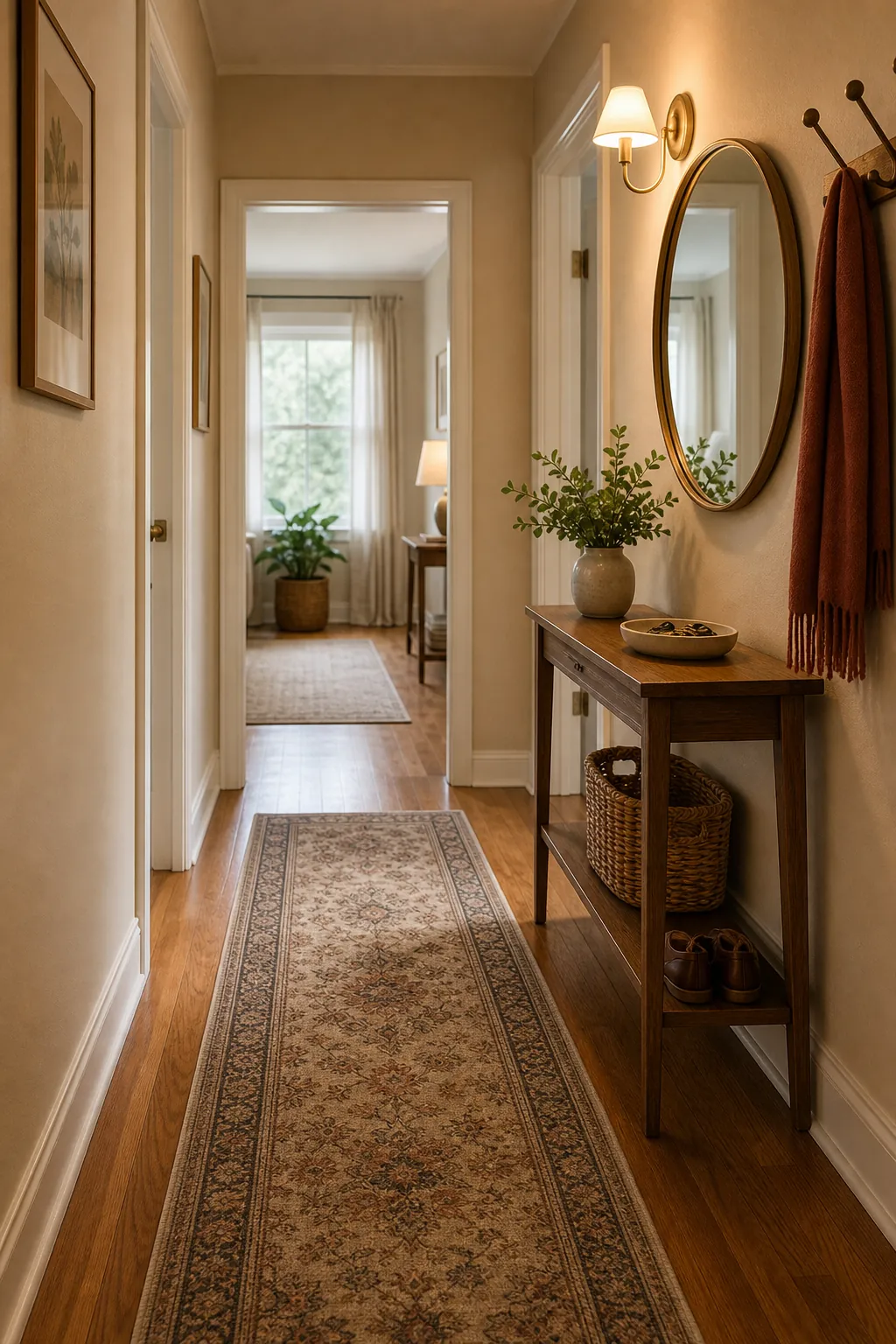
A hallway makeover does not have to start with paint, flooring, drywall, or a contractor. Most hallways feel unfinished for a simpler reason: the space has no visual rhythm, no landing zone, and no reason for the eye to pause.
That is why the best no renovation decor usually works in layers. A runner rug softens the tunnel effect. A mirror or art grouping gives the wall a clear job. Better lighting makes the space feel intentional. A narrow storage piece handles real life without turning the entryway into a drop zone.
The goal is not to fill every inch. The goal is to make the hallway feel designed while keeping the walking path clean. These hallway makeover ideas work especially well for renters, tight foyer ideas, narrow mudroom ideas, and anyone trying to improve a small space without permanent changes.
Start With the Floor, Because the Runner Sets the Whole Mood
When people ask why a hallway still looks empty after adding a mirror or a few frames, the answer is often on the floor. A long bare strip of flooring makes the eye rush from one end to the other. A runner slows that down and gives the hallway a finished center line.
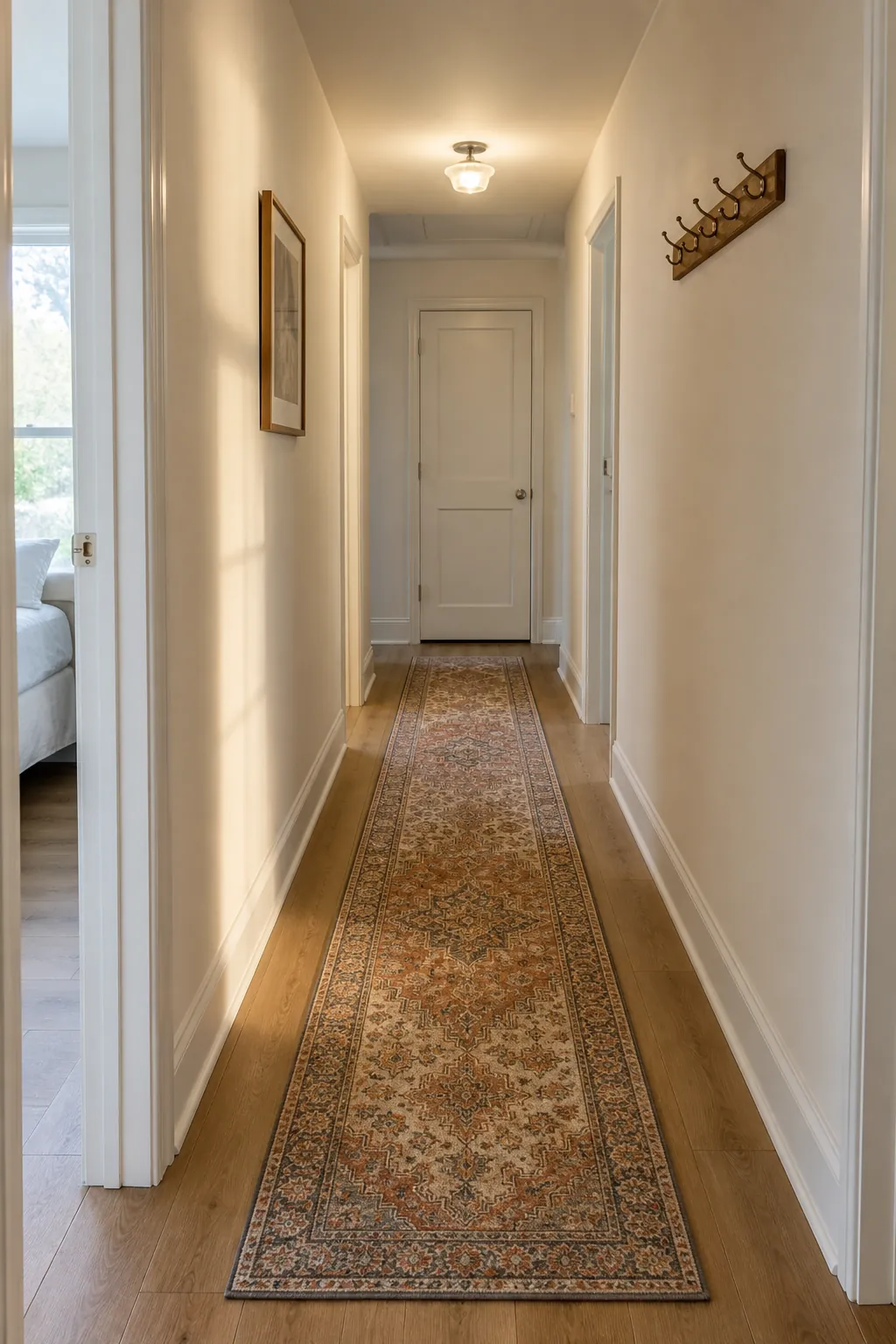
For a narrow hallway, choose a runner that leaves a visible border of floor on both sides. If the rug is too wide, the space feels cramped. If it is too short, it looks like a mat that wandered away from the door. In most homes, a runner that follows the main walking path but stops before door swings feels cleaner than a wall-to-wall carpet effect.
Pattern matters too. Very strong stripes can make a long hallway feel even longer, especially when the flooring already has a strong grain. For a calmer entryway decor look, try a vintage-style pattern, small geometric repeat, or softly faded color. A runner rug is one of the fastest budget home decor upgrades because it changes the scale of the hallway immediately.
- Center the runner visually, not just mathematically, if the walls or doorways are uneven.
- Use a low-profile rug pad so the rug does not curl near thresholds.
- Let the runner connect the entry, closet, stairs, or main room instead of floating randomly.
Give One Wall a Clear Job Instead of Decorating Both Sides
A common hallway mistake is trying to balance both walls with the same amount of decor. In a tight corridor, that can make the space feel busy and boxed in. A better approach is to choose one primary wall and let it carry the personality.
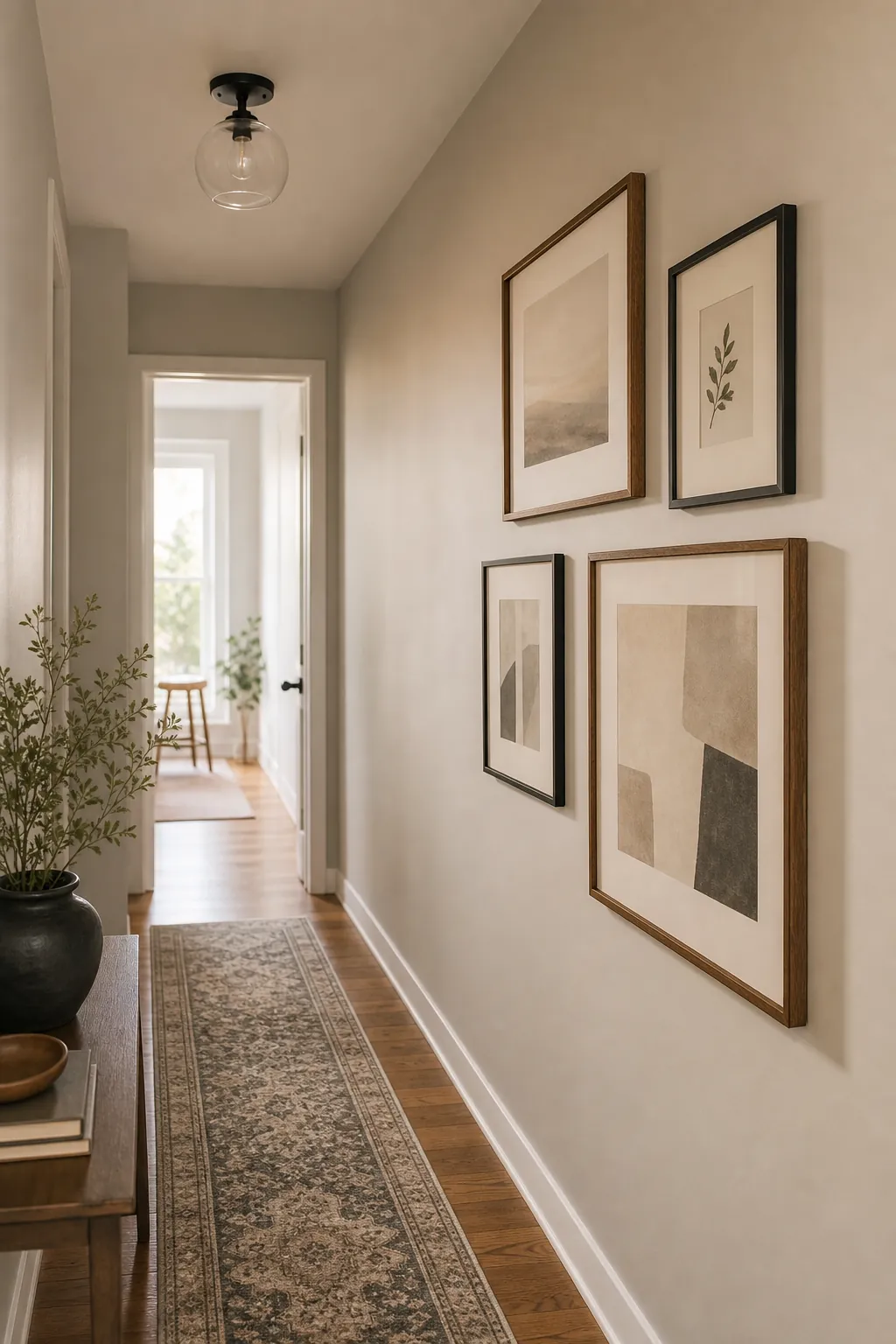
If your hallway is long, a small gallery wall can create movement. Keep the frames related by color, finish, or matting so the wall reads as one decision, not a collection of leftovers. If your hallway is short or already has many doors, one larger mirror or one oversized art piece can feel more polished than five small frames.
The blank opposite wall can stay mostly quiet. That quiet is what keeps the hallway from feeling crowded. Negative space is not a missed opportunity when the walking path is narrow. It is part of the design.
A helpful test is to tape paper templates to the wall before hanging anything. Live with them for a day. If the hallway feels narrower, reduce the number of frames. If the wall still feels bare, increase the scale instead of adding more tiny pieces.
Use Lighting That Looks Built In, Even When It Is Not
Most hallways have a single overhead light, and that light often makes the space feel flat. Renovation would solve this with hardwired sconces or recessed lighting, but no renovation decor can still improve the mood. The trick is to add light at human height.
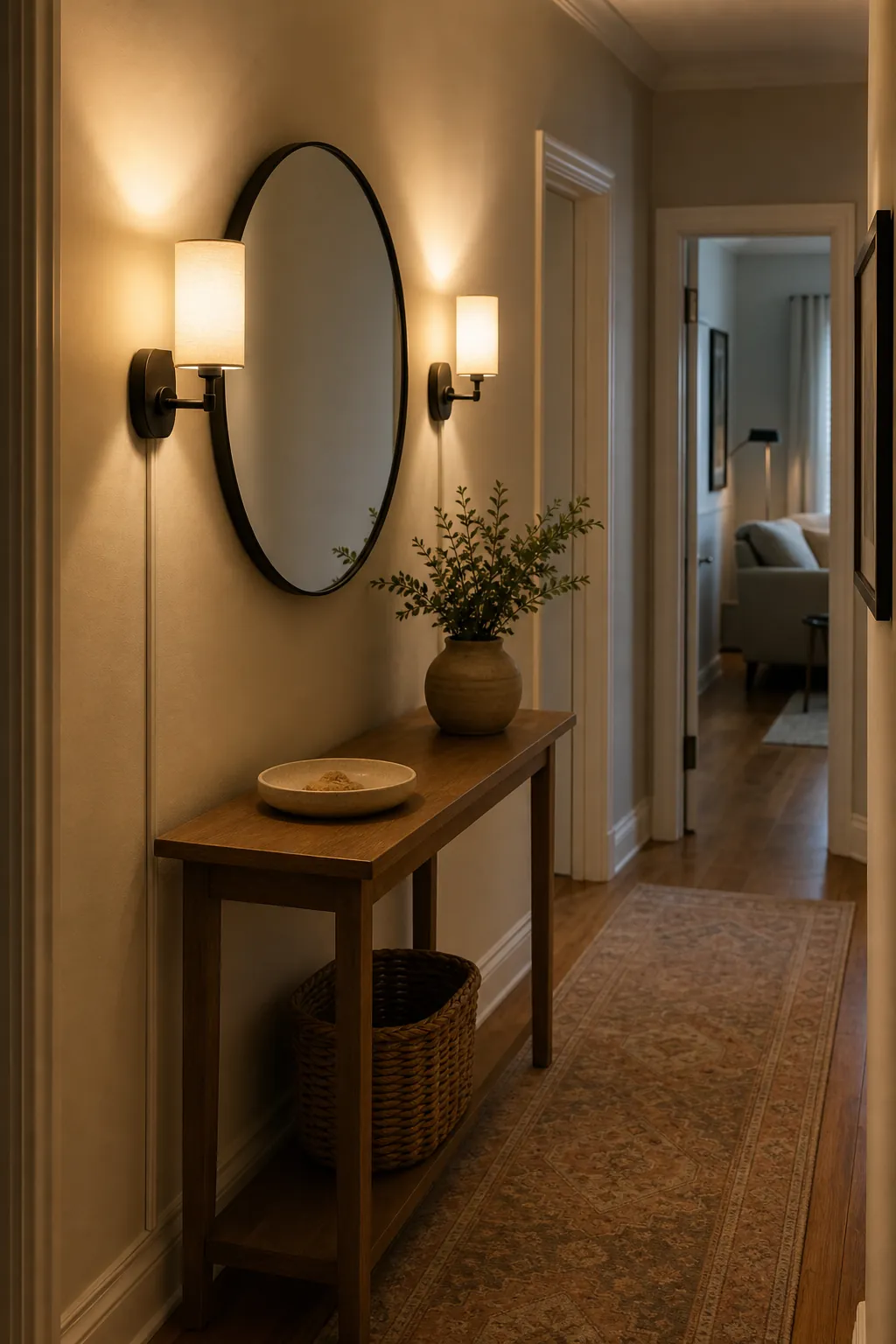
Rechargeable wall sconces, plug-in picture lights, and battery-operated accent lamps can make a hallway feel finished without opening a wall. Use warm white bulbs, not harsh blue-white light. Hallways already have little softness, so the light should make the space feel calm rather than clinical.
Lighting is also useful when the hallway has no natural focal point. A pair of sconces around a mirror, a picture light above art, or a tiny lamp on a shallow console gives the wall a reason to exist. Good hallway decor is often less about objects and more about shadows, glow, and proportion.
- Use peel-and-stick cord covers if a plug-in light needs to cross a short wall section.
- Repeat finishes already in the home, such as brass, black, wood, or white ceramic.
- Keep bulbs warm and soft so the hallway feels connected to the rest of the home.
Add Shallow Storage That Solves the Real Mess
A hallway can look styled in photos and still fail in daily life. Shoes pile up. Keys land on the nearest surface. Bags slump against the wall. A makeover only works if it handles that traffic.
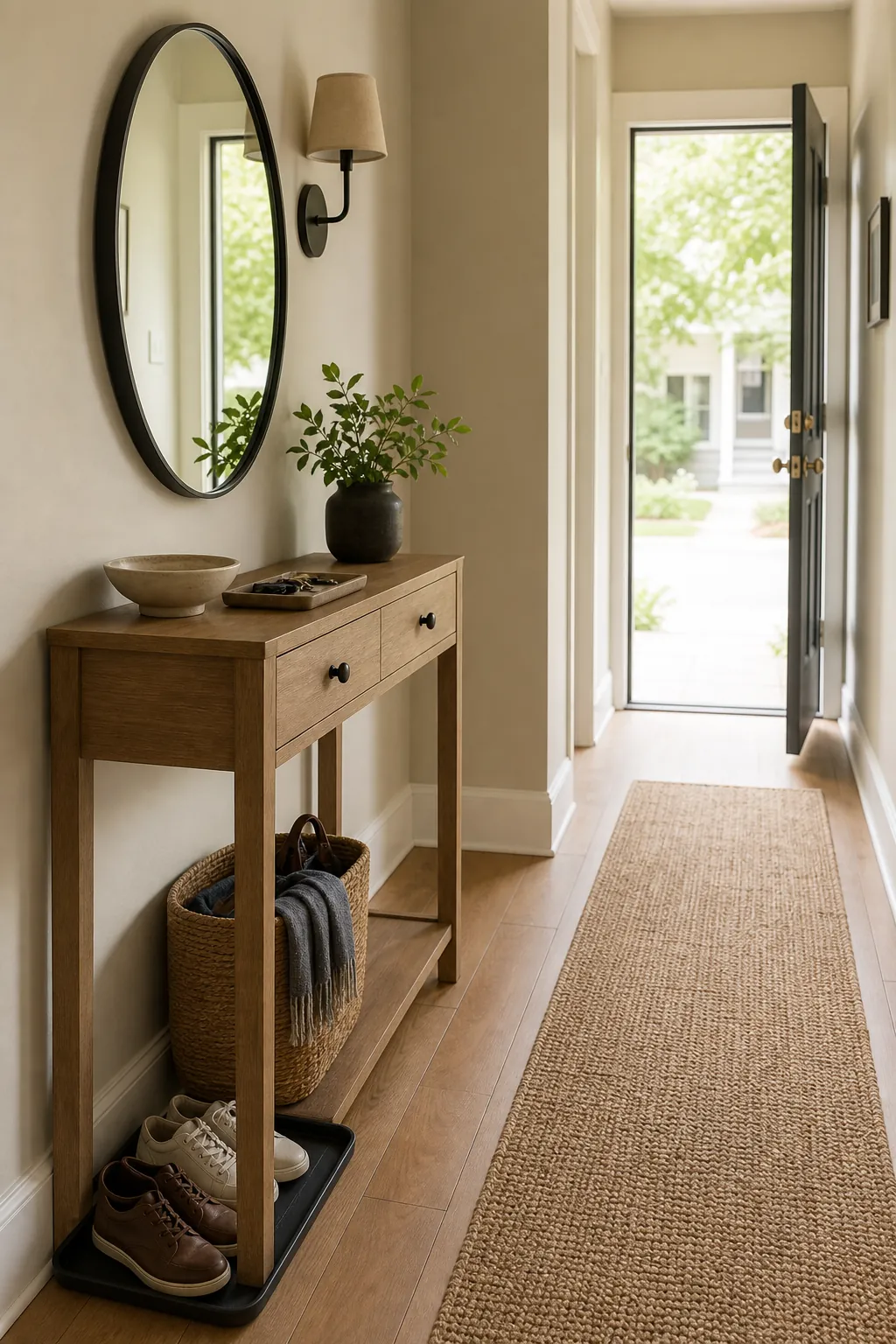
Look for storage that is shallow, closed when possible, and easy to reset. A narrow console with a tray, a wall-mounted shelf, a small shoe cabinet, or hooks with a basket below can do more than a wide bench that blocks the path. In a tiny foyer, even a six-inch-deep ledge can become a useful landing zone.
The best small space decor has a job. A basket is not just texture; it holds scarves. A tray is not just pretty; it catches keys. A hook rail is not just farmhouse style; it keeps bags off the floor. If the item does not solve a real hallway problem, it probably does not belong there.
For a renter-friendly mudroom idea, use a freestanding shoe cabinet, adhesive hooks rated for the weight you need, or an over-the-door organizer inside a nearby closet. The hallway can look calm because the mess has somewhere predictable to go.
Turn the End of the Hallway Into a Small Destination
The end of a hallway is easy to ignore, but it controls the view. If the eye lands on a blank wall, laundry door, or dark corner, the whole hallway can feel unfinished. You do not need a built-in feature wall to fix it.
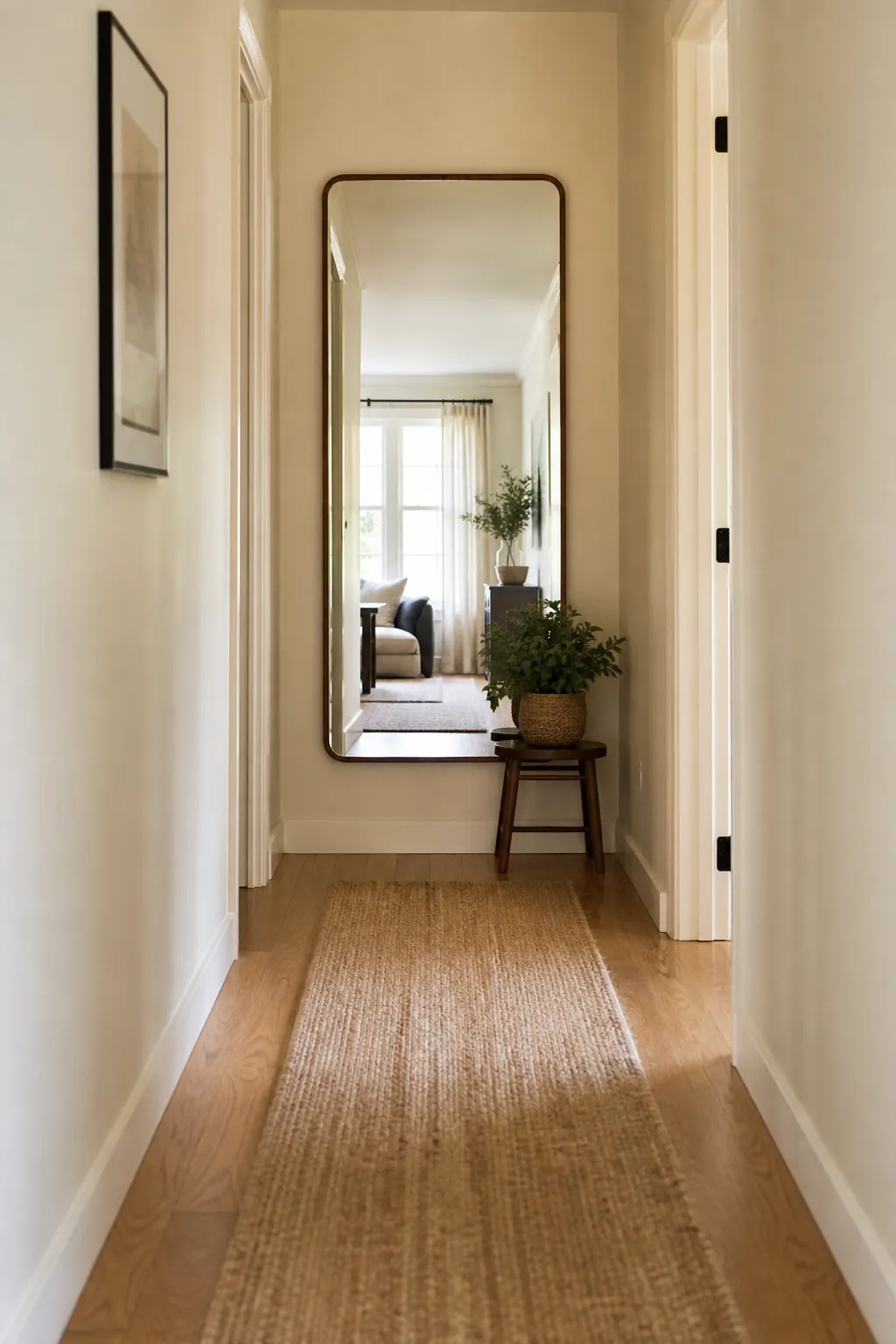
A large mirror at the end can bounce light and make the hallway feel more open. A single piece of art can create color without cluttering the side walls. A small stool with a plant, a tall basket, or a framed textile can work if the end wall has enough depth and does not block a door.
This is where scale matters. Tiny art at the end of a long hallway can feel accidental. Choose one confident piece and give it breathing room. The end point should feel like a pause, not a storage corner.
If your hallway ends at a door, decorate around the door instead of fighting it. A runner that leads to it, a warm light nearby, and one clean wall element can make the door feel integrated.
Layer Texture Instead of Adding More Stuff
When a hallway feels cold, the instinct is to add more decor. That can backfire. The space may not need more objects; it may need better materials. Texture gives warmth without stealing width.
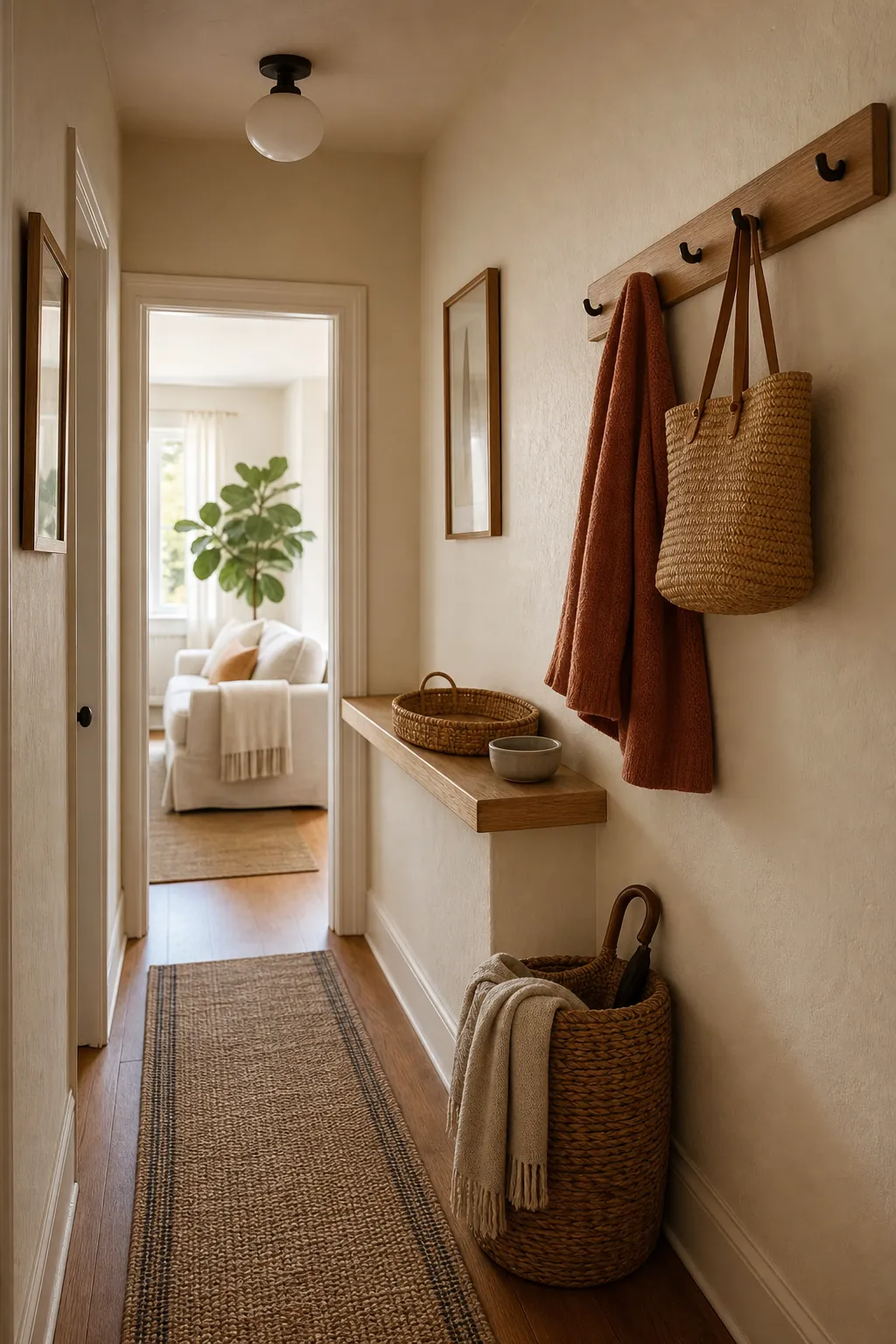
Try a woven basket, linen shade, wood frame, bamboo tray, jute runner, rattan mirror, or matte ceramic bowl. These pieces bring natural home character into the hallway while keeping the footprint small. They also help budget home decor feel more collected because texture hides the fact that the pieces may come from different places.
The key is restraint. Repeat two or three materials rather than introducing a new finish with every item. For example, black hooks, light wood frames, and a warm vintage rug can be enough. A limited material palette makes inexpensive hallway decor look deliberate.
This is especially useful for entryway decor that has to handle seasons. A woven basket can hold winter gloves, summer sandals, dog leashes, or umbrellas without changing the entire design.
Control the First Five Feet
If your hallway starts at the front door, the first five feet matter more than the rest. That is where guests form the first impression and where daily clutter usually begins. A beautiful runner will not save the space if shoes, mail, and bags take over the entrance.
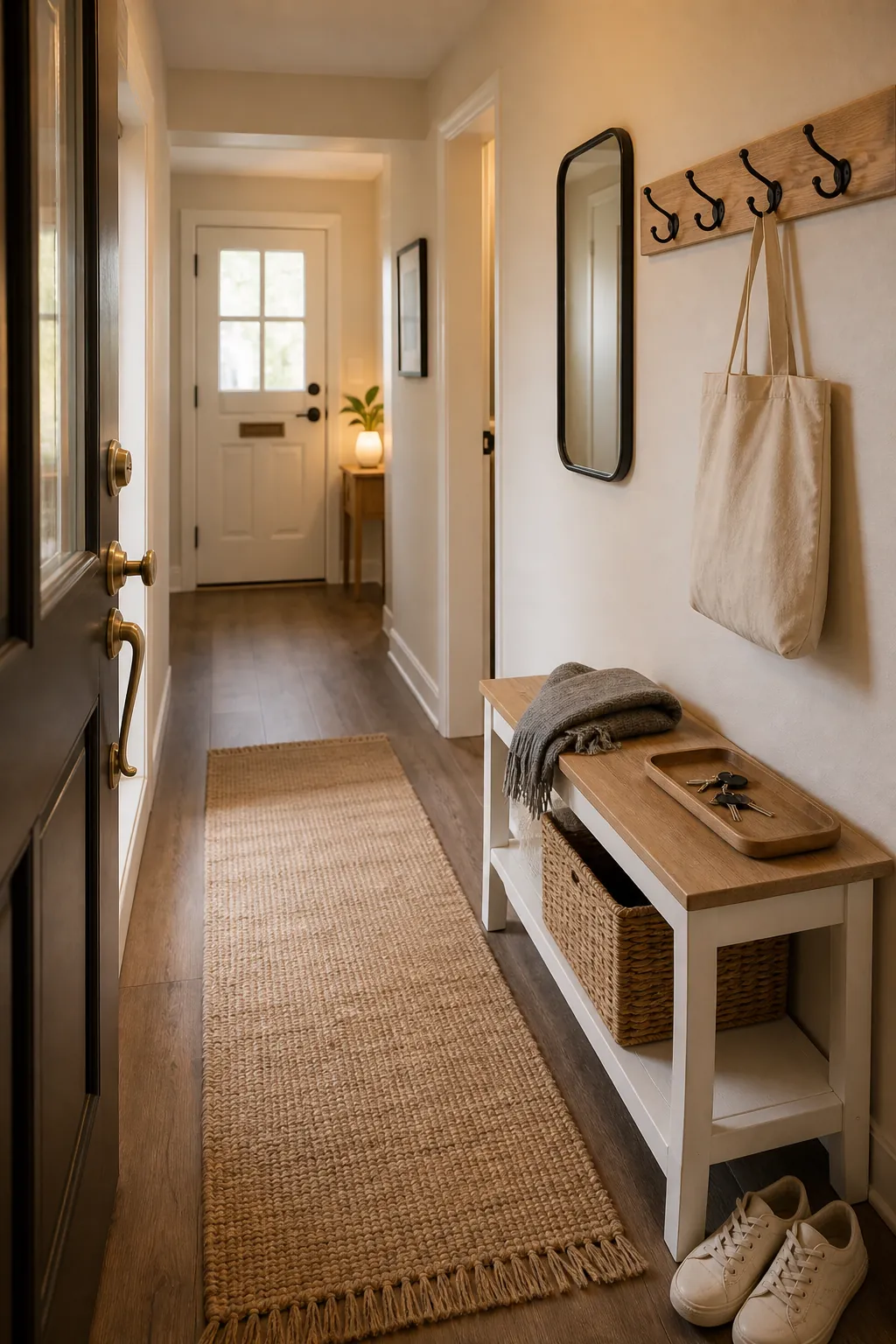
Build a small landing zone with only the pieces you truly use: one place for keys, one place for shoes, one place for a coat or bag, and one visual anchor. That might be a mirror plus hooks, a shoe cabinet plus tray, or a bench with baskets underneath. Do not add all of them if the hallway is too narrow.
The practical test is simple: can you come home with your hands full and reset the space in under one minute? If not, the hallway needs less styling and better placement. A no renovation hallway makeover should make the space easier to live in, not just nicer to photograph.
A Simple No Renovation Hallway Formula
If you want the fastest path, use this order: runner first, focal wall second, lighting third, storage fourth, texture last. That sequence prevents the most common problem, which is buying small decor before the hallway has a real structure.
- For a long narrow hallway: use a centered runner, one gallery wall, and a confident end focal point.
- For a small foyer: use a mirror, shallow shelf or console, hooks, and one contained shoe solution.
- For a renter: use plug-in or rechargeable lighting, removable hooks, freestanding storage, and art hung with low-damage hardware.
- For a plain hallway: add texture before adding more color, especially if the rest of the home is warm and neutral.
The best hallway makeover ideas do not pretend the hallway is a full room. They respect what the space actually is: a transition, a first impression, and a daily traffic lane. Once the floor, wall, light, and landing zone work together, even a small hallway can feel calm, useful, and finished without renovation.