
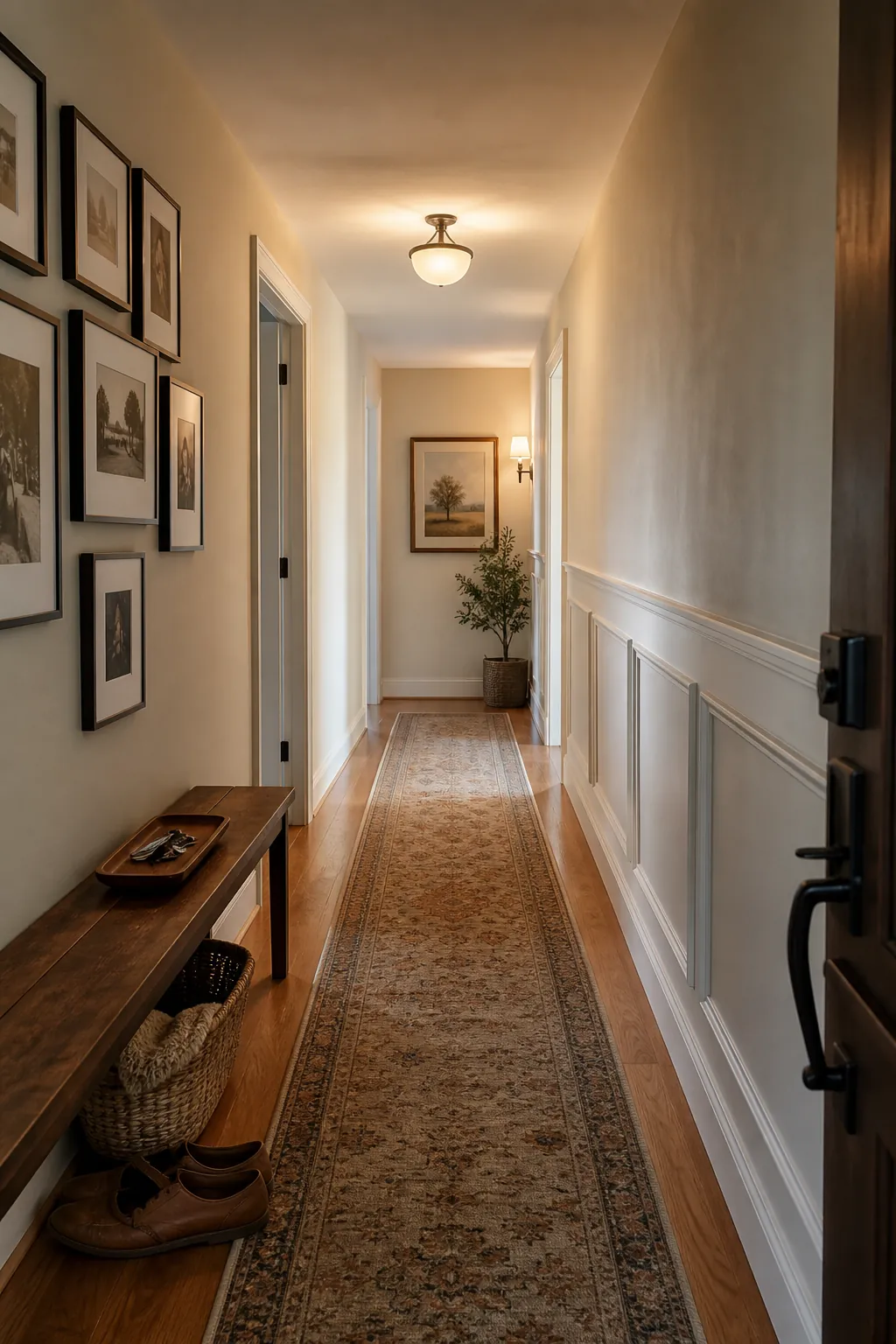
A long hallway usually feels empty for one simple reason: your eye has nowhere useful to stop. The fix is not to fill every blank inch. The best long hallway ideas create rhythm, warmth, and a few practical landing points while keeping the path clear.
That is the tension people run into with a long narrow hallway. A runner rug sounds right, but which pattern will make the space look even longer? A console table sounds useful, but will it block the walkway? Wall art helps, but too much can turn the hall into visual noise. The goal is to make the hallway feel intentional, not crowded.
Use the hallway as a route with moments. Give it a beginning, a middle, and an end. Then use texture, lighting, art, mirrors, and small-scale home organization to make those moments feel finished.
Start With One Small Landing Zone
If your hallway begins at the front door, treat the first few feet as the entryway, not just the start of a corridor. This is where a very narrow bench, a shoe tray, a wall hook rail, or a slim shelf can make the whole space feel more useful. A long hallway feels less empty when the first section has a clear job.
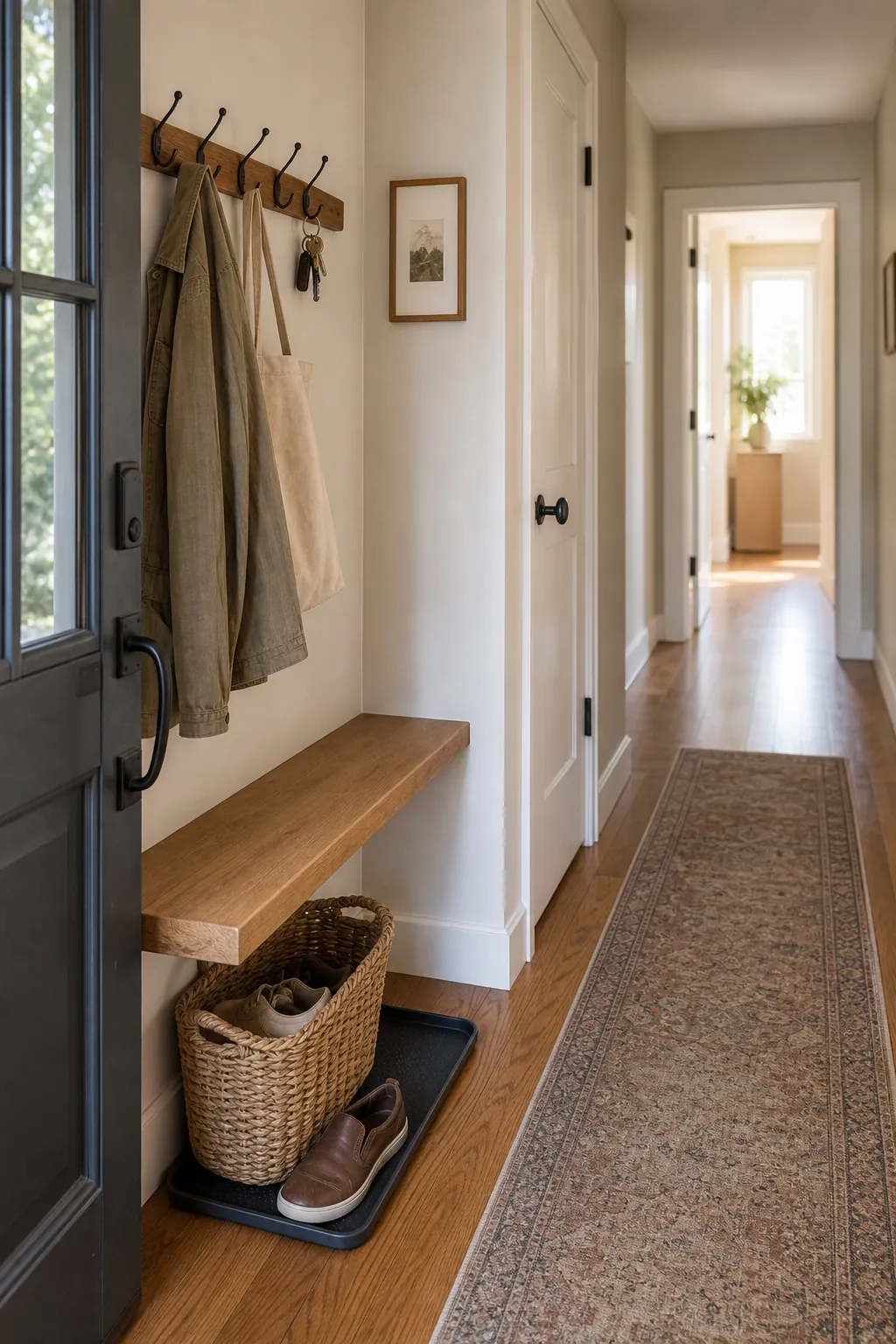
The important word is small. In a narrow entry or foyer, depth matters more than style. Look for pieces around 10 to 12 inches deep, or skip furniture and use the wall instead. A peg rail, a shallow picture ledge, a key shelf, or a row of hooks can give you function without stealing floor space.
If the hall is also a mudroom path, keep the practical items near the door. Shoes, bags, dog leashes, and keys should not migrate down the whole corridor. This one decision makes the rest of the hallway easier to decorate because you are not trying to solve storage everywhere.
Use a Runner Rug to Give the Floor a Spine
Runner rugs are one of the fastest ways to make a long hallway feel warmer. They soften sound, add color, and visually connect the stretch of floor. But the runner should not look like a thin strip lost in the middle of the hall. Leave a consistent border of visible floor on both sides so the rug looks intentional.
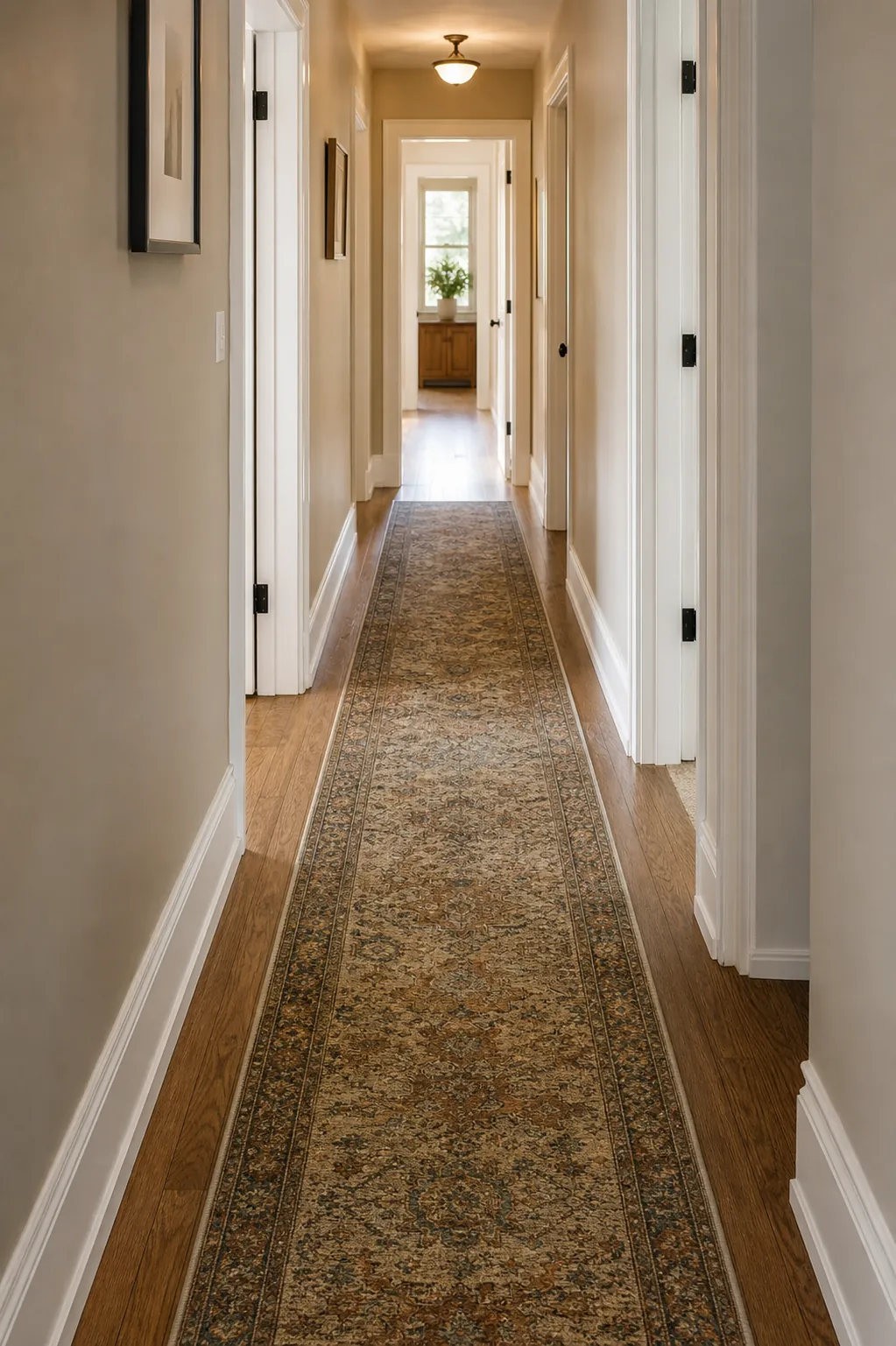
For most narrow hallway ideas, a low-pile runner is easier to live with than a thick rug. Doors clear it more easily, shoes do not catch, and pets can move through without bunching it up. If the hallway is dark, try a runner with warm mid-tones instead of a very pale rug that shows every mark or a very dark rug that turns the floor into a tunnel.
Pattern can help. A subtle vintage pattern, small check, stripe with softened edges, or earthy geometric design gives the floor movement. If your walls and doors are plain, the runner can carry more personality. If your walls will have art, trim, or wallpaper, keep the runner quieter so the small space decor does not fight itself.
Break the Wall Into a Few Strong Moments
A blank wall makes a long hallway feel like leftover space. A wall covered with too many small frames can make it feel busy. The middle ground is to create a few strong moments: one gallery cluster, one large piece at the end, or a repeated set of frames with enough breathing room between them.
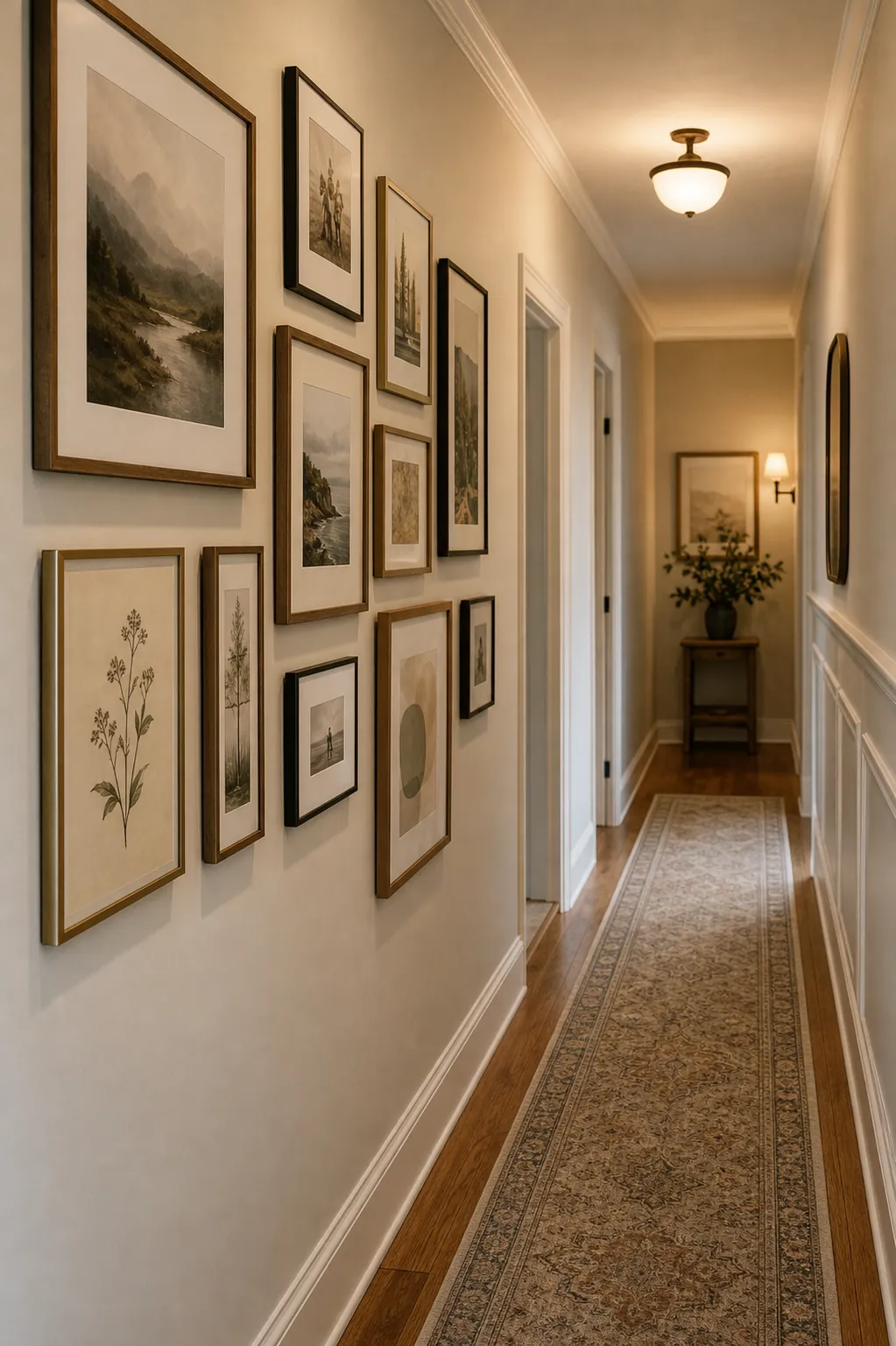
Think of the wall as a walking view. People are moving past it, so the best hallway decor is easy to read at a glance. A series of family photos in matching frames can work. So can one oversized textile, a pair of vertical prints, or a narrow picture ledge with layered frames. Do not make every wall compete for attention.
If the hallway has many doors, use art to simplify the view rather than add more visual fragments. Place the strongest art where the eye naturally lands: the end wall, the wall opposite the entry, or the longest uninterrupted stretch. Leave awkward door-heavy sections quieter.
Put Mirrors Where They Solve a Real Problem
Mirrors are useful in a long narrow hallway, but they are not magic. A mirror works best when it reflects something pleasant: daylight from a nearby room, a warm light fixture, art, plants, or the entry zone. If it only reflects another blank wall, it can make the hallway feel colder.
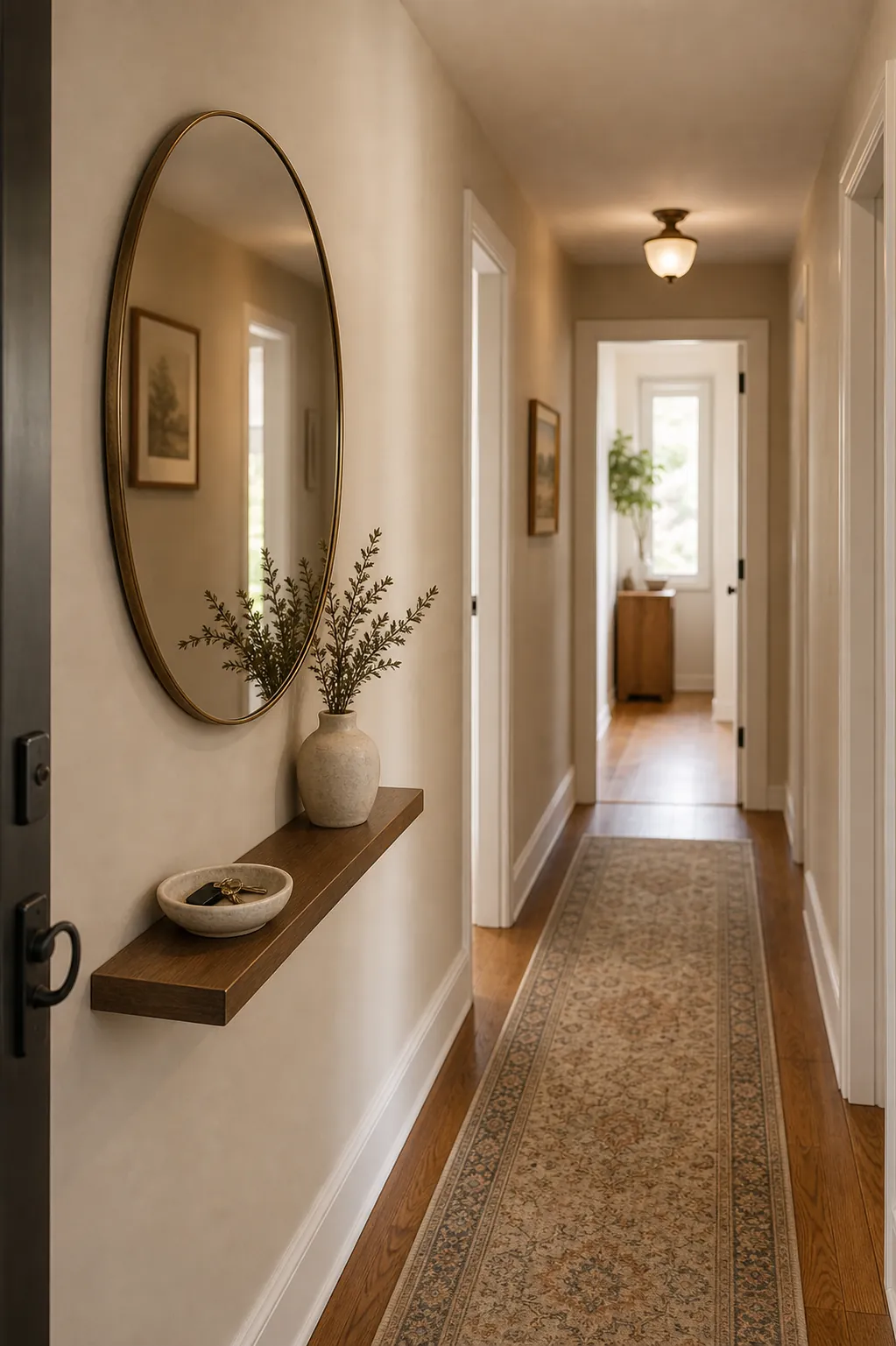
Use a mirror near the door if you need a last-look spot before leaving. Use a long horizontal mirror on one wall if the hall feels compressed. Use a tall mirror only if there is enough distance to stand back from it. The mirror should expand light or function, not just cover emptiness.
If you are unsure, test the scale before hanging. Tape out the mirror size with painter’s tape, or use a piece of paper to judge the footprint. In a tight hallway, even a beautiful mirror can feel too aggressive if it is too wide or placed directly across from a busy gallery wall.
Upgrade the Lighting Before Adding More Decor
Many long hallways feel empty because the lighting is flat, harsh, or too small for the length of the space. A tiny ceiling fixture can make the hall feel unfinished even after you add art and a rug. Better lighting makes every other decor choice look more deliberate.
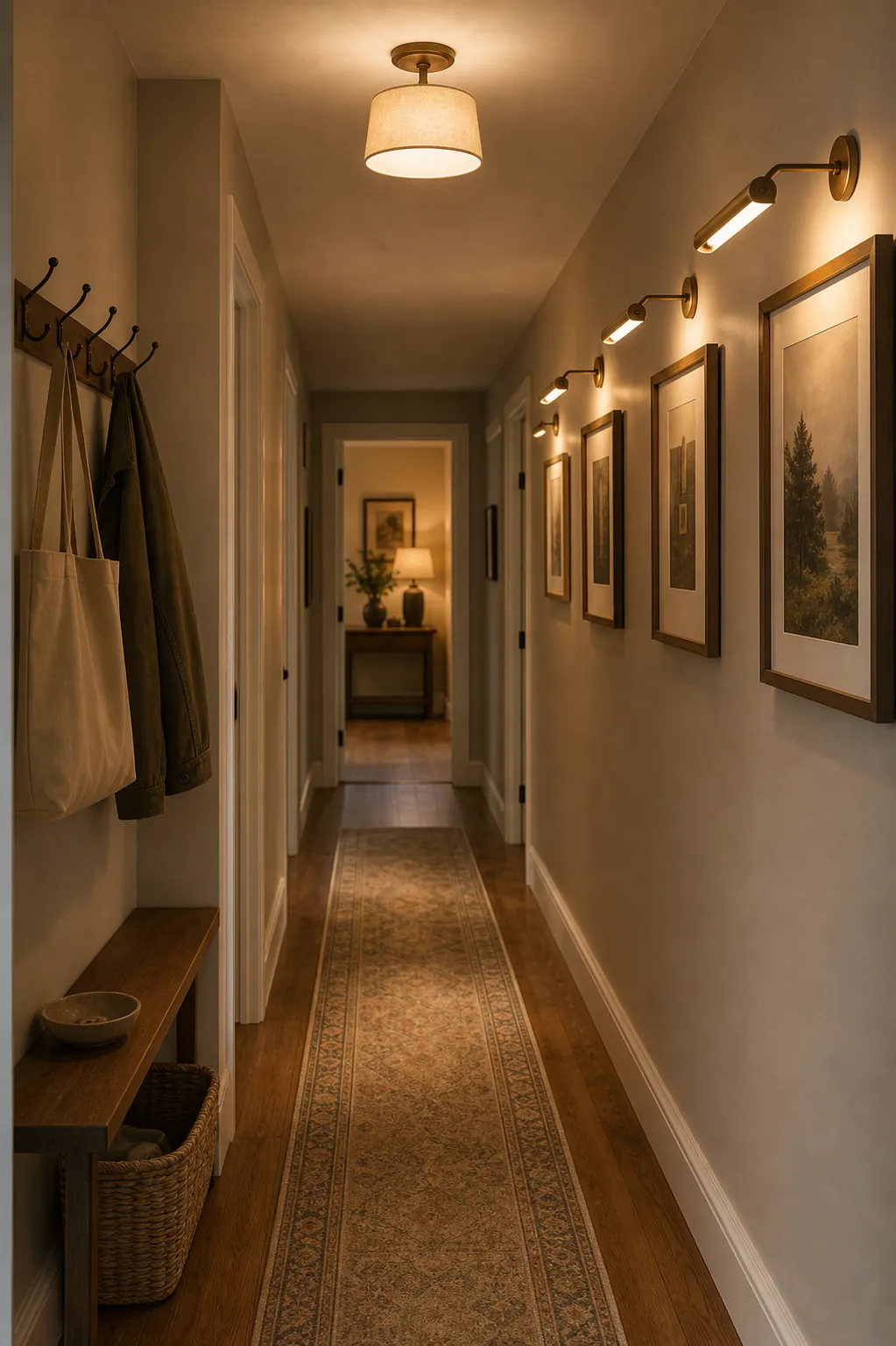
If you can change fixtures, consider a pair of semi-flush lights, small pendants, or wall sconces that spread light along the corridor. Warm bulbs are usually more forgiving than cool white bulbs in a narrow space. If the ceiling is low, avoid anything that hangs too far down or makes the walkway feel cramped.
Renters can still improve the mood with plug-in sconces, picture lights, rechargeable wall lights, or a small lamp on a slim console. The point is to create layers. A hallway with only overhead light often feels like a passage. A hallway with glow on the walls feels like part of the home.
Choose Shallow Storage Instead of Bulky Furniture
Function matters, especially in an entryway. But a long hallway can quickly become a dumping zone if every storage idea is freestanding. The better approach is shallow and vertical: hooks, peg rails, floating shelves, shoe trays, wall baskets, or a bench with storage only where the width allows it.
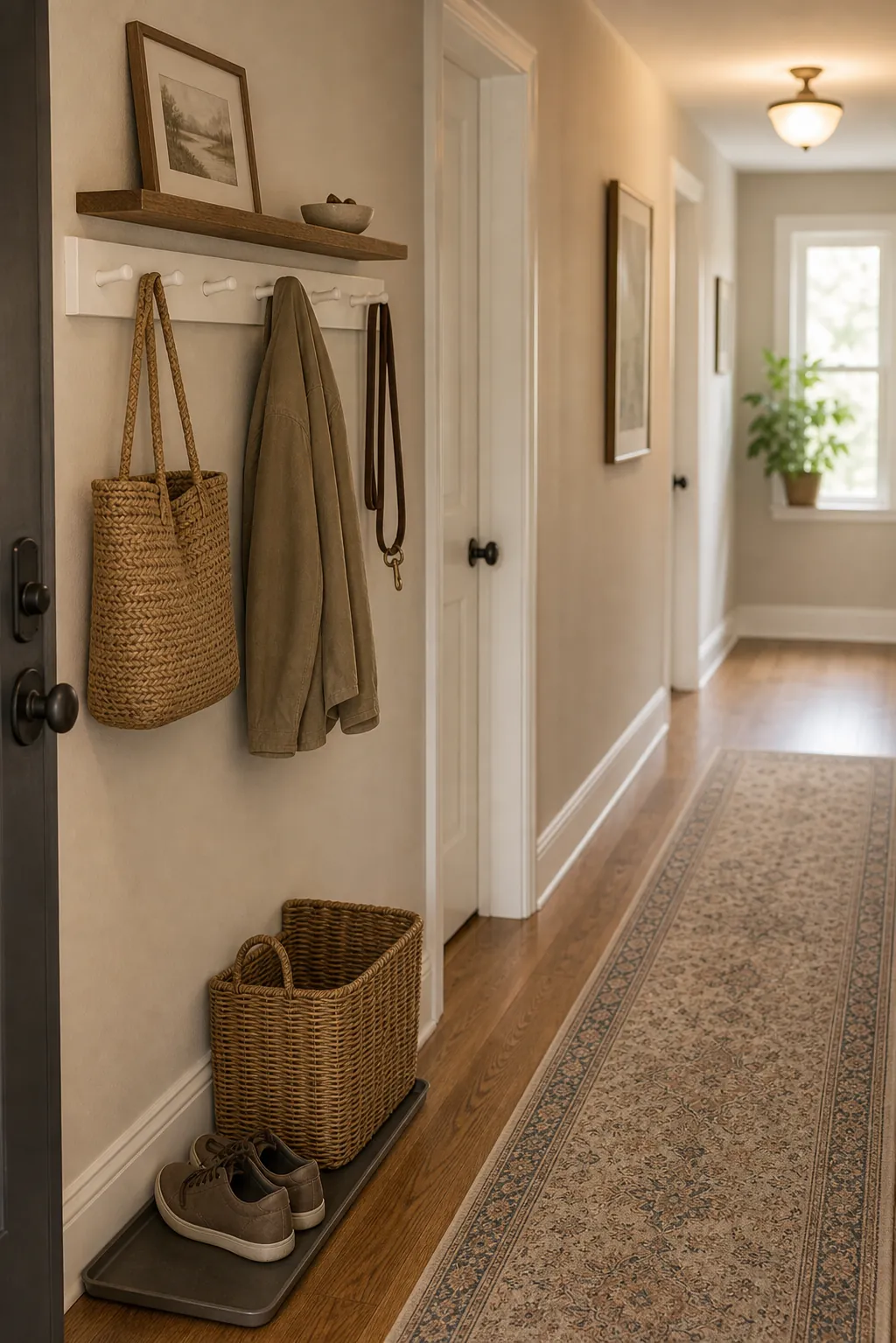
Before buying anything, measure the clear walkway. You should be able to carry groceries, pass another person, open nearby doors, and move a vacuum through without shifting decor. If a console makes you turn sideways, it is too deep. If a bench becomes a place to pile laundry, it is solving the wrong problem.
This is where home organization and hallway decor need to work together. Use closed baskets for messy items, hooks for daily items, and one tray for shoes that are actually in rotation. The more visible the storage, the stricter the edit needs to be.
Add Texture So the Hallway Does Not Feel Like a Plain Box
Texture is often what separates a finished hallway from a decorated hallway. Paint, wallpaper, wainscoting, board and batten, picture molding, grasscloth, or even a woven runner can give the walls and floor more depth. Texture makes a narrow space feel designed without requiring a lot of furniture.
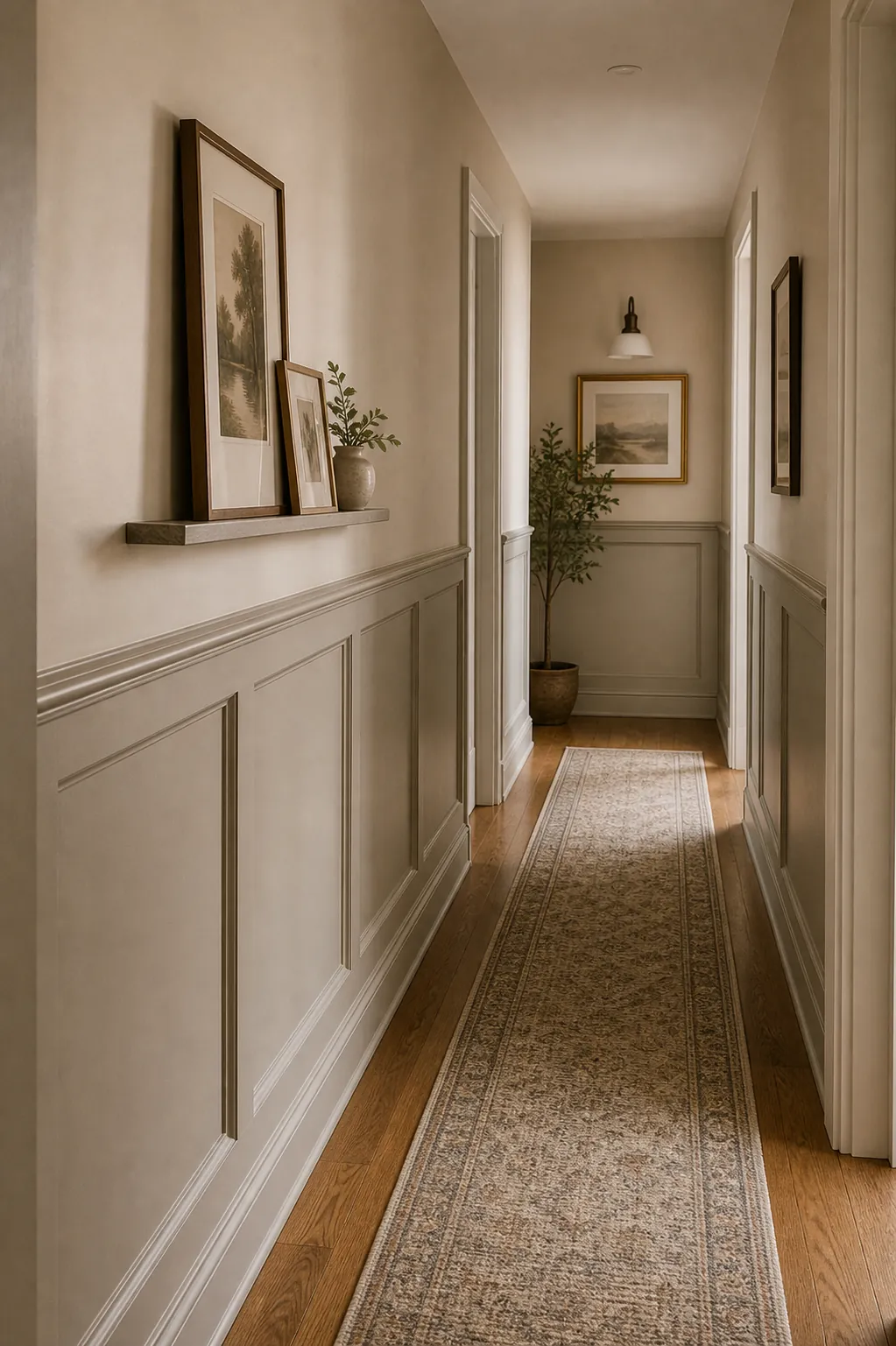
If you own the home, half-wall paneling or picture-frame molding can make the length feel architectural. If you rent, try removable wallpaper on the end wall, peel-and-stick trim in a simple pattern, or a long fabric wall hanging. Even changing a glossy wall finish to a softer matte paint can reduce glare and make the hallway feel less tight.
Use color with intention. A slightly deeper neutral on trim, a warm white on the upper wall, or a muted green, clay, or greige can add character without shrinking the space. Very high contrast can work, but it needs confidence. If the rest of the home is calm, let the hallway be warm rather than loud.
Finish the End Wall So the Hall Has a Destination
The end of the hallway is the place most people forget, but it is often the most powerful spot. When the end wall is blank, the hallway feels like a tunnel. When it has a strong focal point, the hall feels like it leads somewhere.
Try a large piece of art, a small wall shelf with a lamp, a tall plant if there is light, a mirror that reflects the entry, or a painted end wall. If the hall turns a corner, place the focal point where the eye lands from the main view. The end wall should stop the eye gently, not shout for attention.
This is the easiest place to make entryway decor feel polished because it does not usually interfere with walking space. It also lets you keep the side walls calmer. A strong end wall plus a runner rug can do more for a long narrow hallway than several small purchases scattered along the way.
A Simple Plan That Works in Most Long Hallways
If you are stuck, use this order. First, clear the floor and decide what the hallway actually needs to do. Second, add a runner that fits the length and leaves a clean floor border. Third, improve the lighting. Fourth, create one entry zone and one wall moment. Fifth, finish the end wall.
- For a dark hallway: prioritize warm lighting, a medium-tone runner, and a mirror that reflects light.
- For a very narrow hallway: skip deep furniture and use wall hooks, art, paint, and shallow ledges.
- For a plain rental hallway: use runner rugs, removable art, plug-in lights, and one statement end wall.
- For a busy family hallway: create one controlled drop zone near the door and keep everything else visually quiet.
The hallway does not need to become another room. It needs enough warmth, rhythm, and function that it feels like part of the home. When the path stays clear and every decor choice has a reason, even a long hallway can feel welcoming instead of empty.