

A small kitchen with almost no counter space needs a different strategy than a bigger kitchen. You cannot simply organize the counter if the counter barely exists. The better move is to create a few temporary work surfaces and move as many standing items as possible to the wall, cabinet doors, or a rolling cart.
The best small-space changes are specific, repeatable, and easy to maintain. Choose the storage move that fixes your daily bottleneck first, then make the surrounding decor quieter so the room feels cleaner and easier to use.
Give Every Counter Inch One Job
When counter space is limited, every item left out should earn its place. Keep the coffee maker, cutting board, or dish rack only if it supports daily cooking. Decor should not compete with meal prep space.
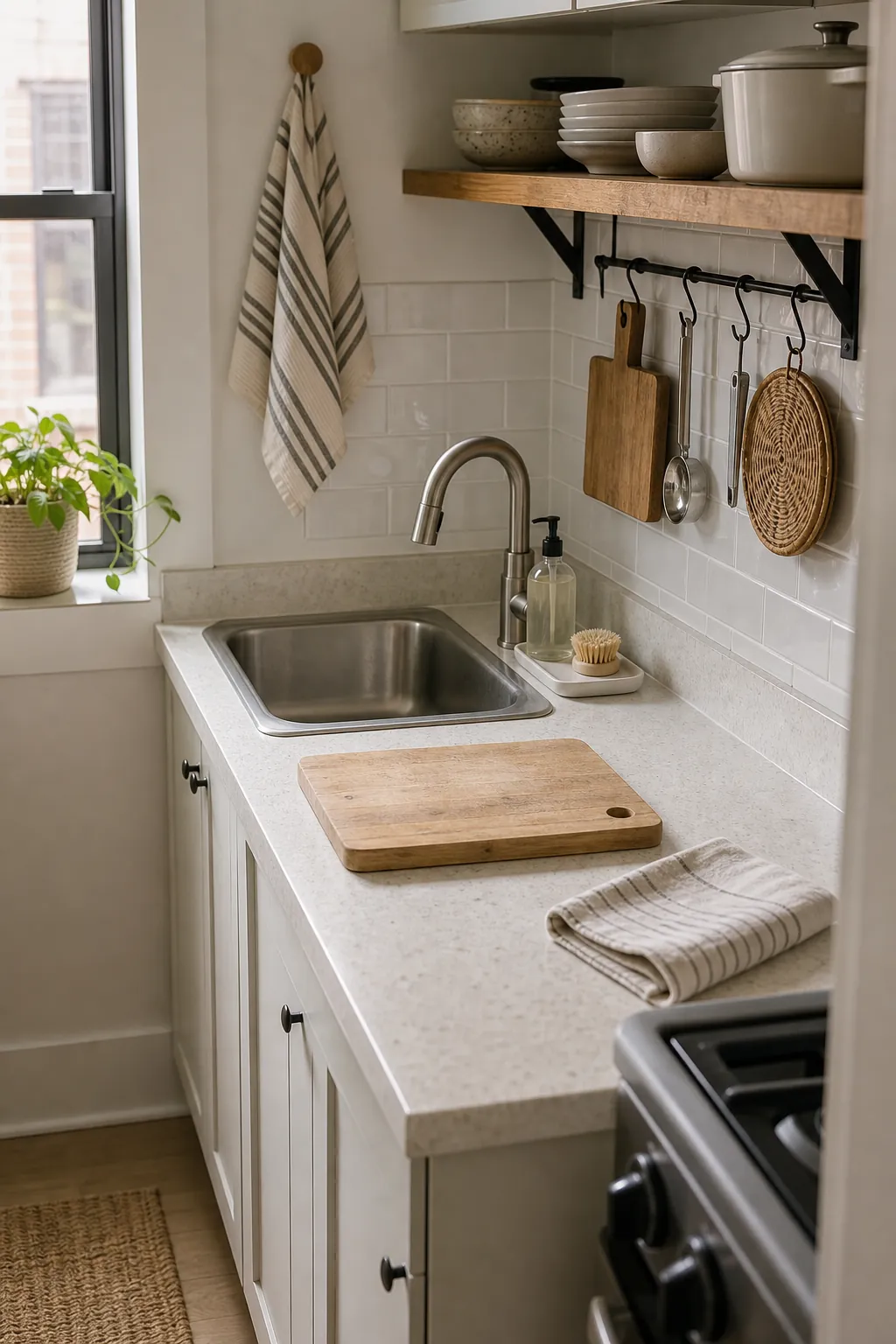
Use Wall Storage For Tools You Reach For Often
Rails, hooks, magnetic strips, and shallow shelves can move utensils, knives, spices, and mugs off the counter while keeping them easy to grab. Wall storage works best when it is edited, not packed.
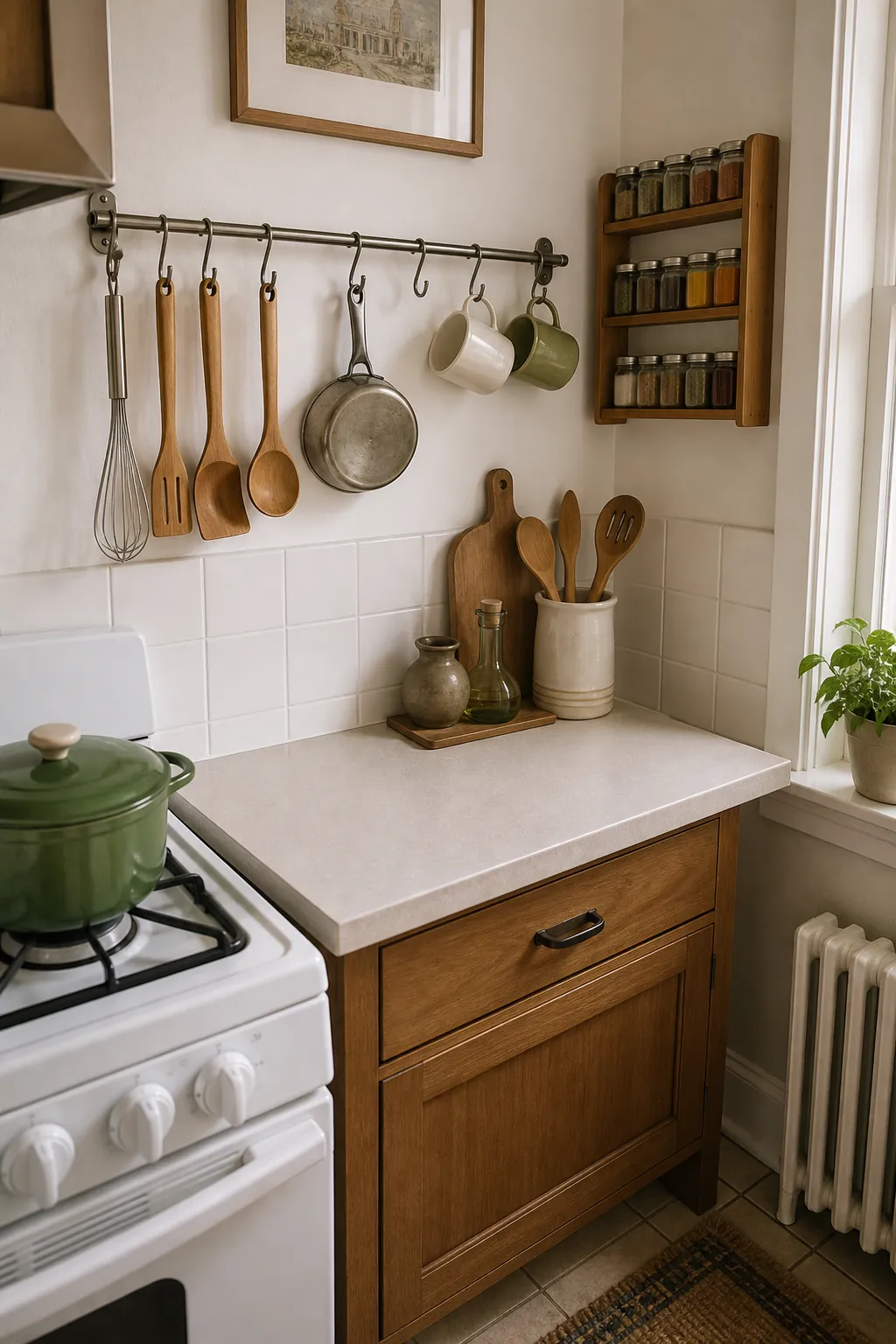
Add A Rolling Cart As A Flexible Prep Zone
A rolling cart can become extra counter space, pantry storage, or a landing spot for groceries. Choose one that fits the narrowest path in the kitchen and has a top surface strong enough for prep.
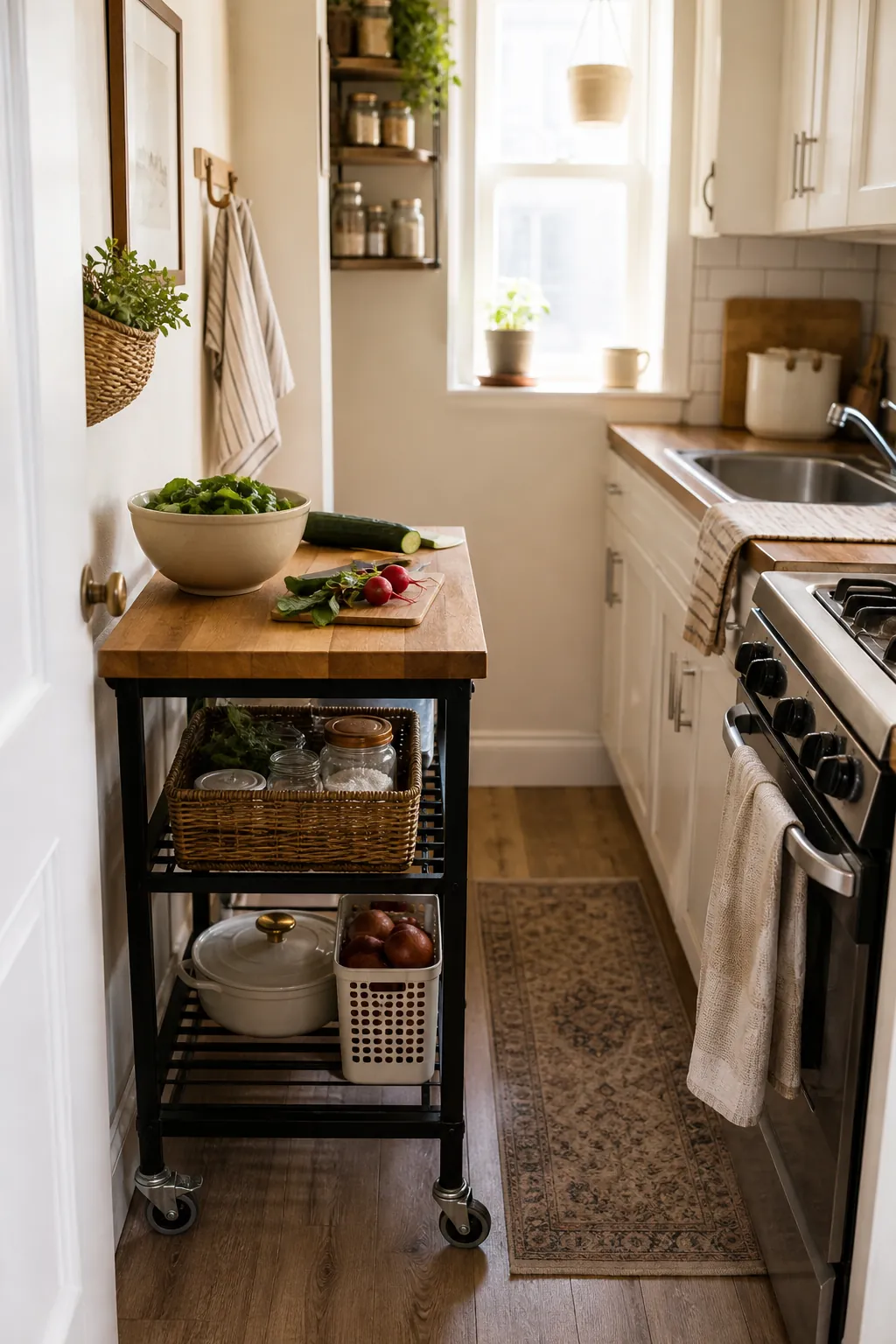
Turn The Sink Area Into Temporary Work Space
A sink cover board or over-sink drying rack can create a small prep surface when you are cooking. It should be easy to remove, rinse, and store so it does not become another obstacle.
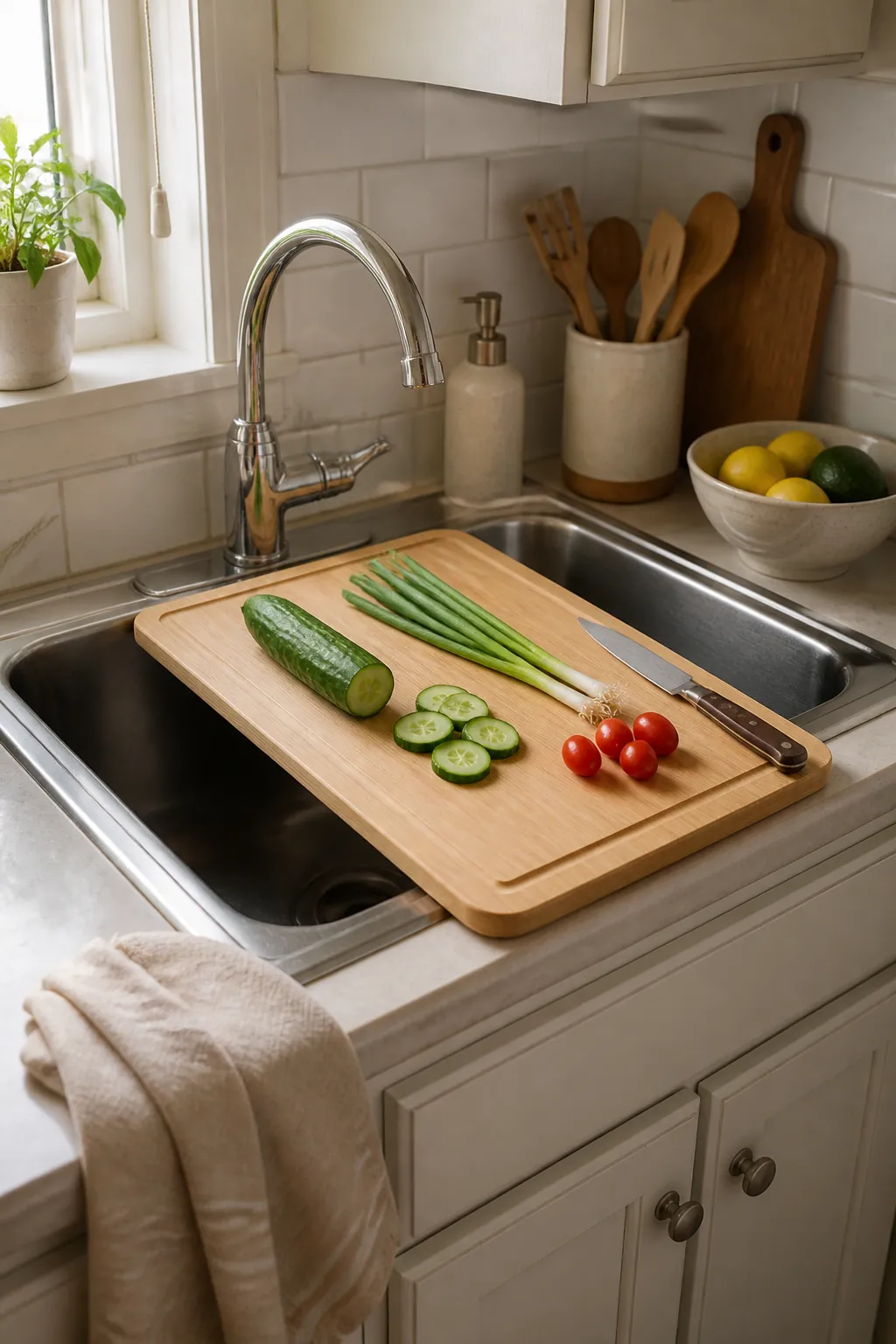
Store Vertically Above The Backsplash
A compact kitchen often has useful height above the backsplash. Use narrow shelves, a peg rail, or a magnetic spice rack to move small items upward without deep cabinets.
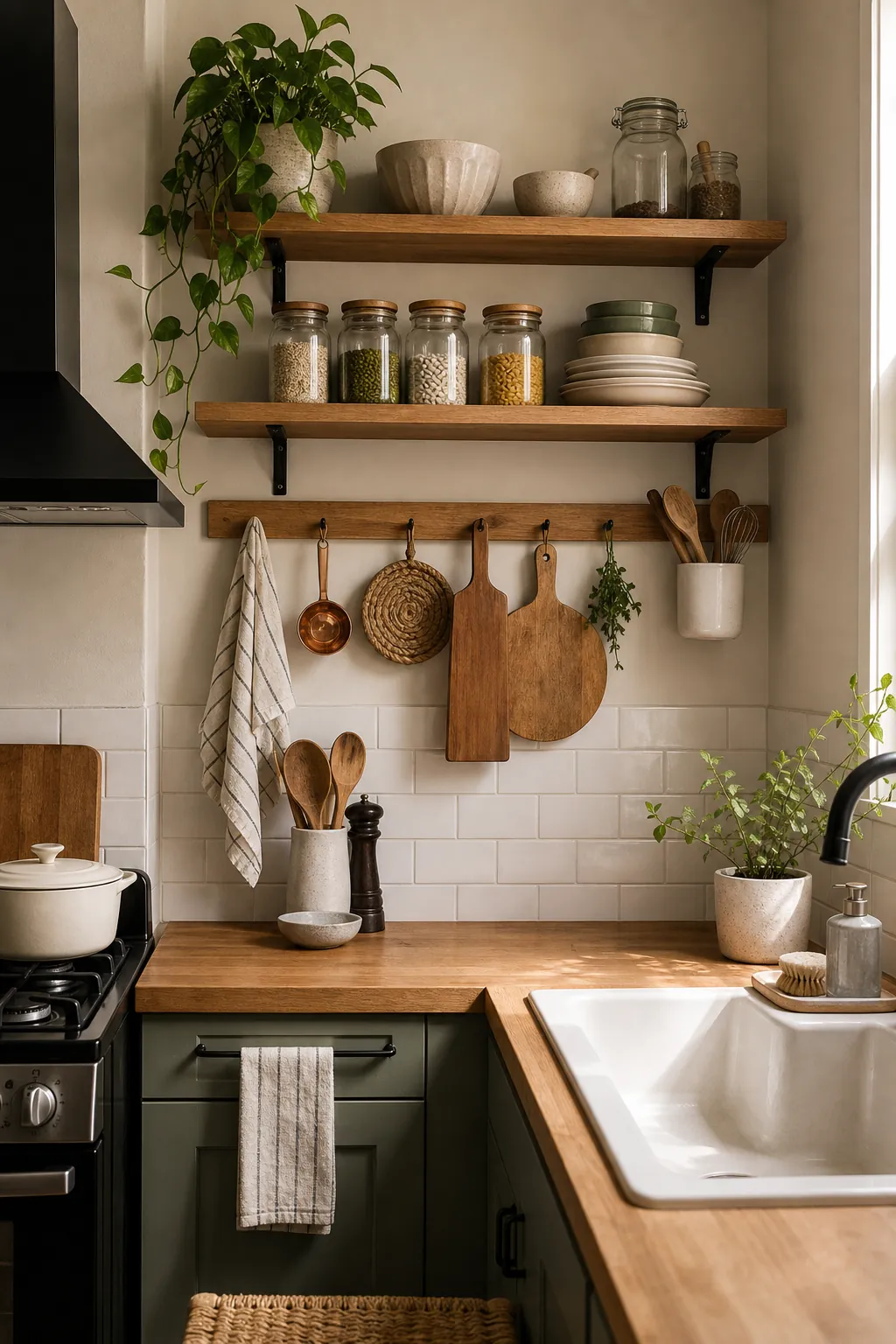
Protect One Clear Landing Spot
Even the smallest kitchen needs one clear landing spot for a plate, pan, or cutting board. Keep this area empty every night so cooking the next day starts with less friction.
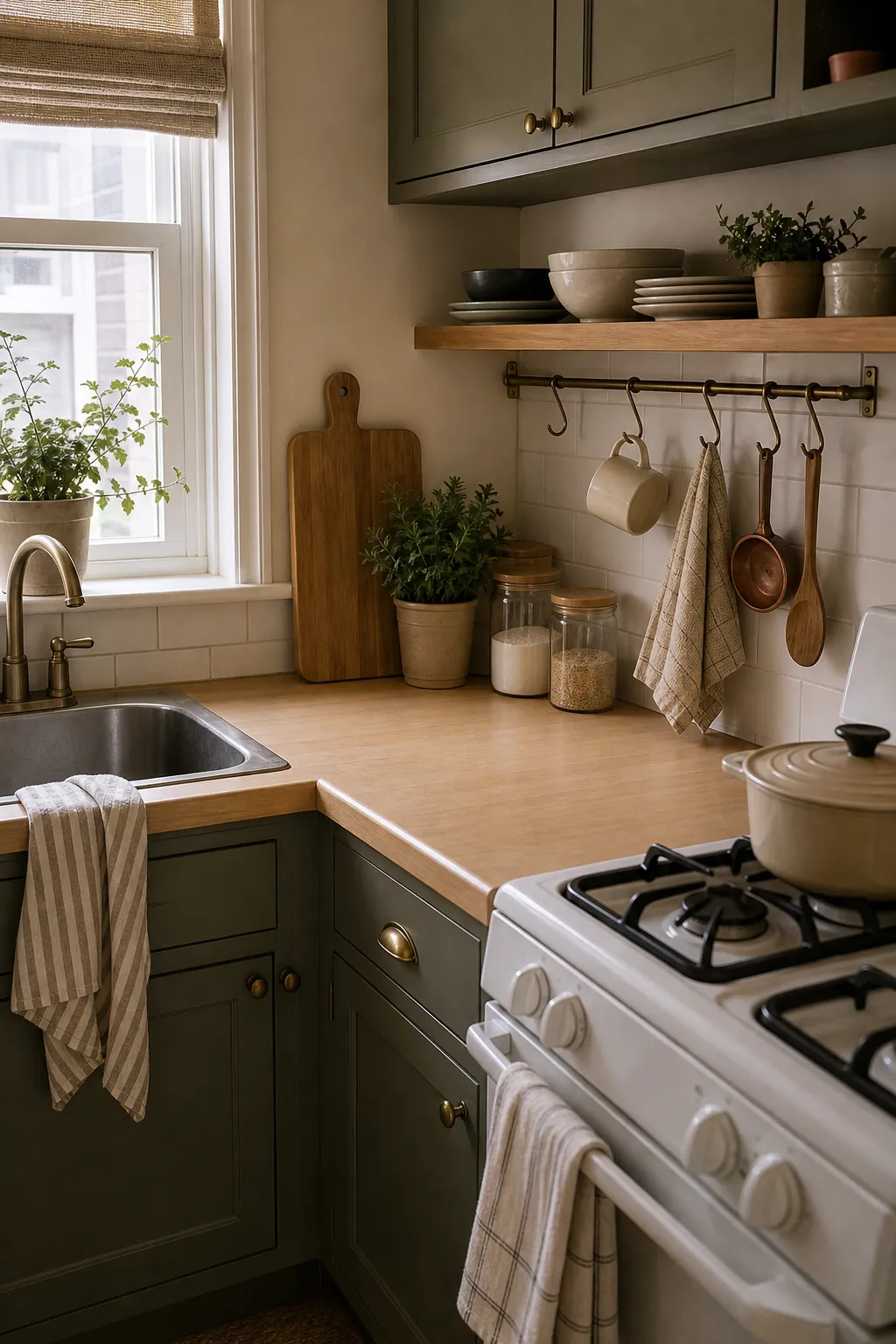
The Practical Finish
Before adding another product, reset the room and test the flow for one normal morning or one normal meal. If the surface stays clearer, the most-used items are easier to reach, and the room still feels open, the idea is working. Small rooms improve most when every inch has a purpose and every visible item earns its place.