
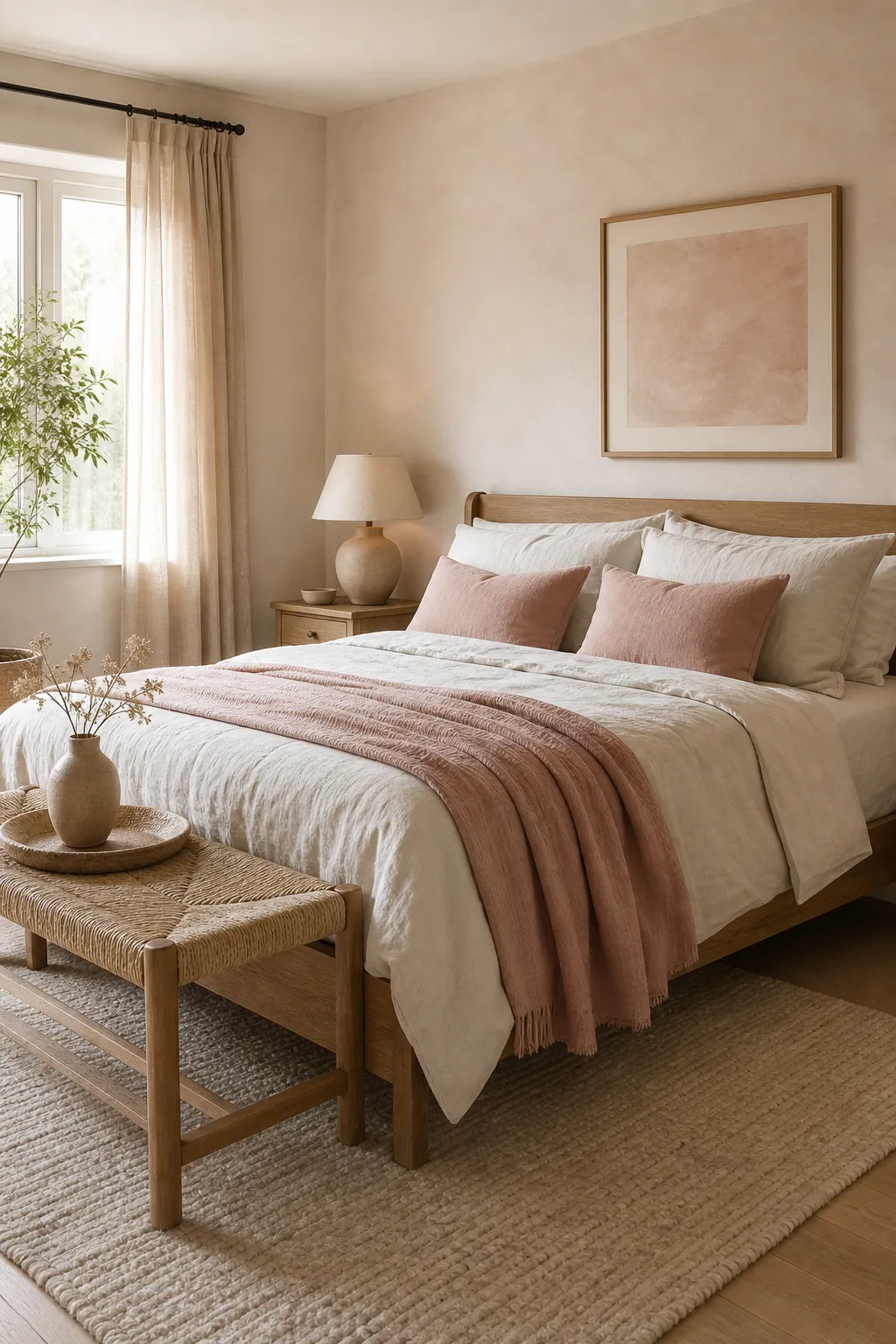
Pink gets overwhelming when it has to do every job in the room. The softer approach is quieter: let pink set the mood, then let warm whites, oatmeal linen, pale wood, muted brass, stone, and a few earthy accents hold the room steady. That is what makes pink room decor feel calm instead of sugary.
The real question is not whether pink belongs in a bedroom or bathroom. It is where the eye gets to rest. If every wall, rug, curtain, towel, pillow, and accessory competes for attention, even a pale blush can feel busy. If pink appears in controlled layers, it reads soft, personal, and grown-up.
Start With One Pink Job, Not Seven
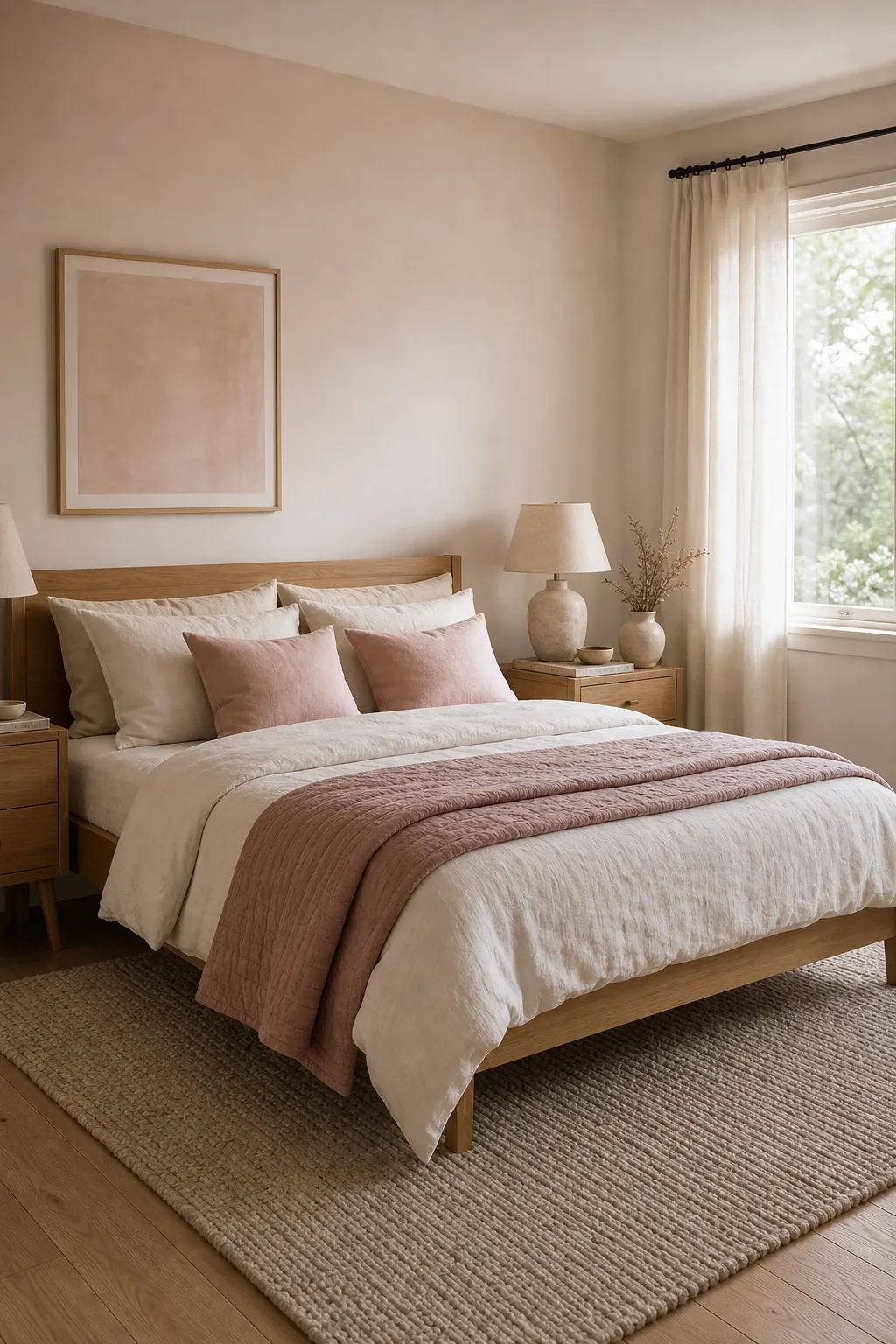
The easiest way to control pink is to give it one main role. Pink can be the wall color, the bedding color, the curtain color, or the accent color, but it usually should not be all of those at once. A blush wall behind the bed looks intentional when the sheets stay ivory and the furniture stays natural. Pink bedding feels fresh when the walls are warm white. A pink rug works best when nearby textiles are quieter.
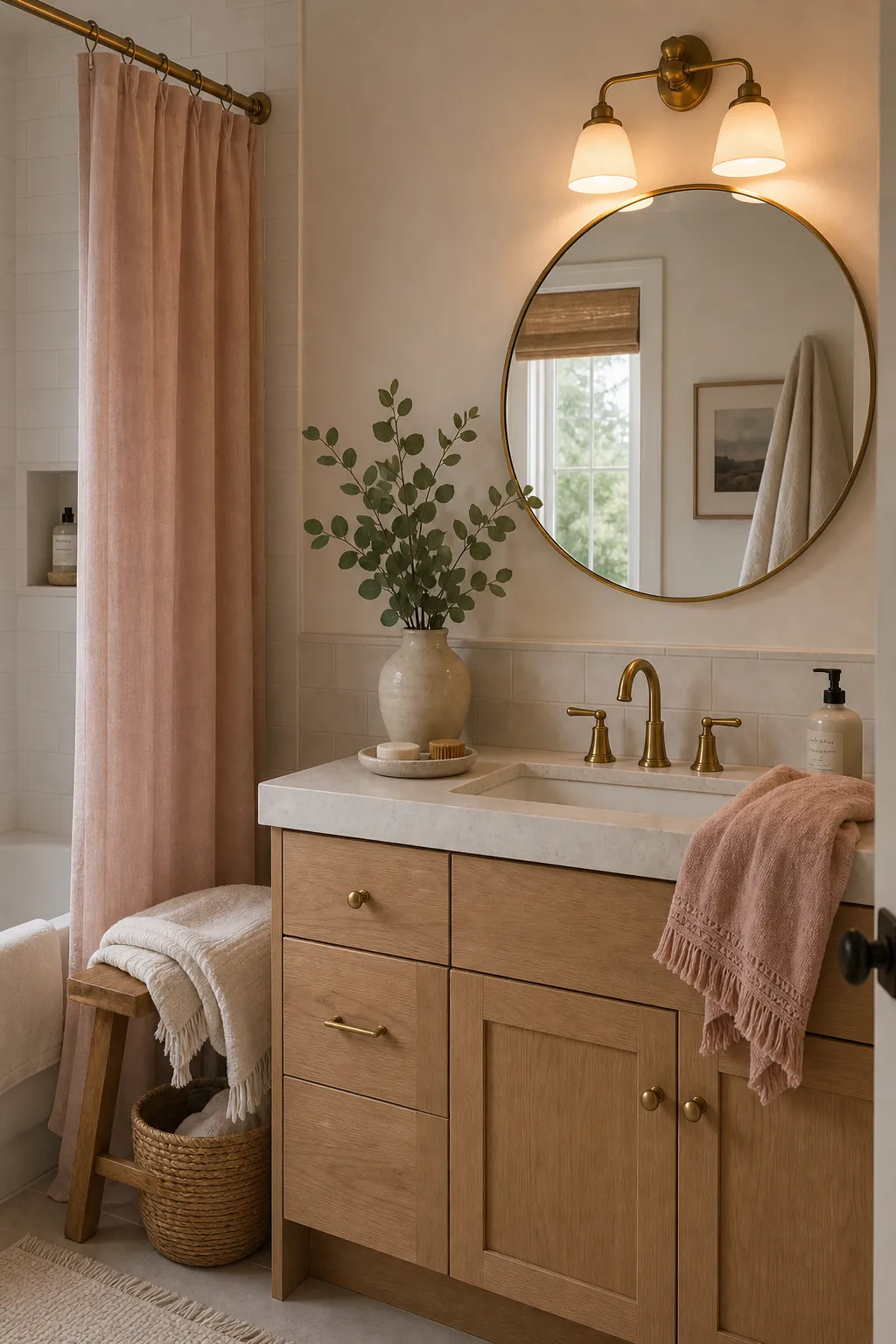
This is the difference between a pink room and a room with a pink mood. Use pink as the atmosphere, then use neutrals as the structure. In a bedroom, that structure might be a light oak bed, cream lampshades, linen curtains, and a beige wool rug. In a bathroom, it might be white tile, stone counters, simple towels, and one blush shower curtain or bath mat.
Choose Dusty, Plaster, or Blush Pink Instead of Candy Pink
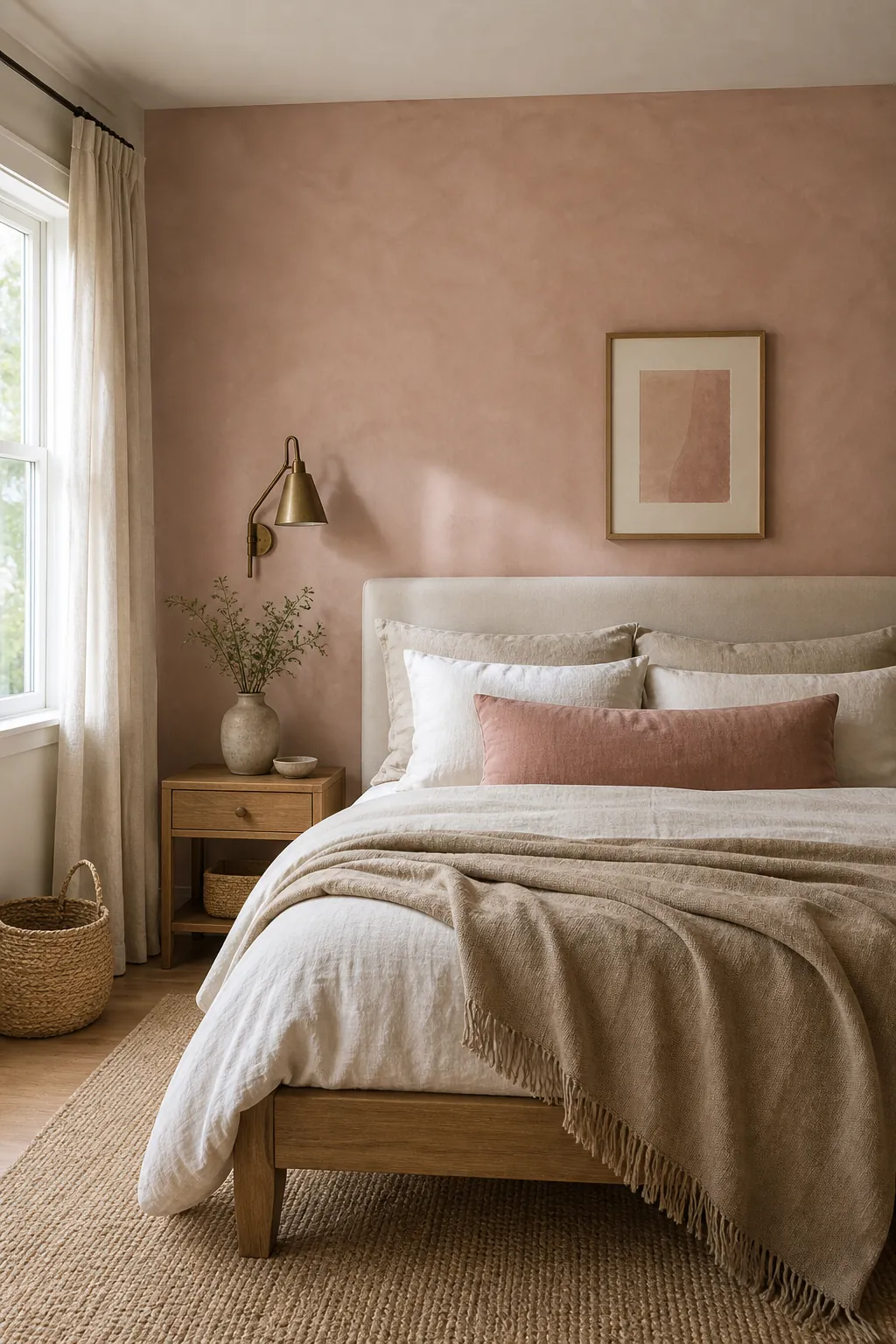
The shade matters. Soft pink decor becomes easier to live with when the color has a little beige, clay, peach, or gray in it. Dusty rose, plaster pink, warm blush, and pale mauve feel closer to a neutral. Bright bubblegum pink, cool baby pink, and hot pink can still work, but they need more restraint and stronger grounding colors.
If you are choosing paint, test the pink beside your flooring, trim, and largest furniture piece. Pink changes fast under different light. A shade that looks delicate in a paint chip can turn peach at sunset or lavender in a north-facing room. The goal is a color that still feels soft at night, not only in perfect daylight.
Keep the Bed Calm, Then Add Blush in Layers
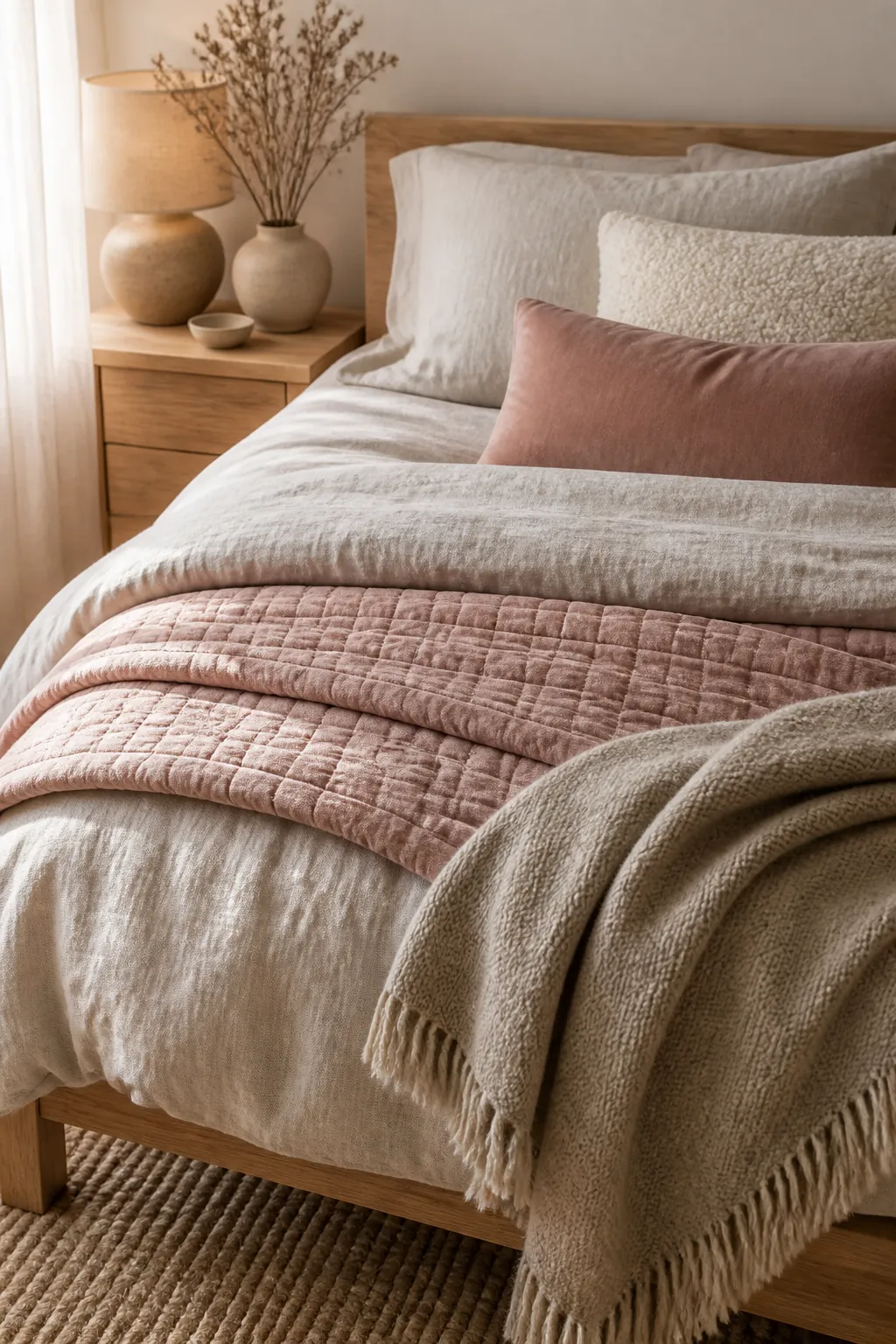
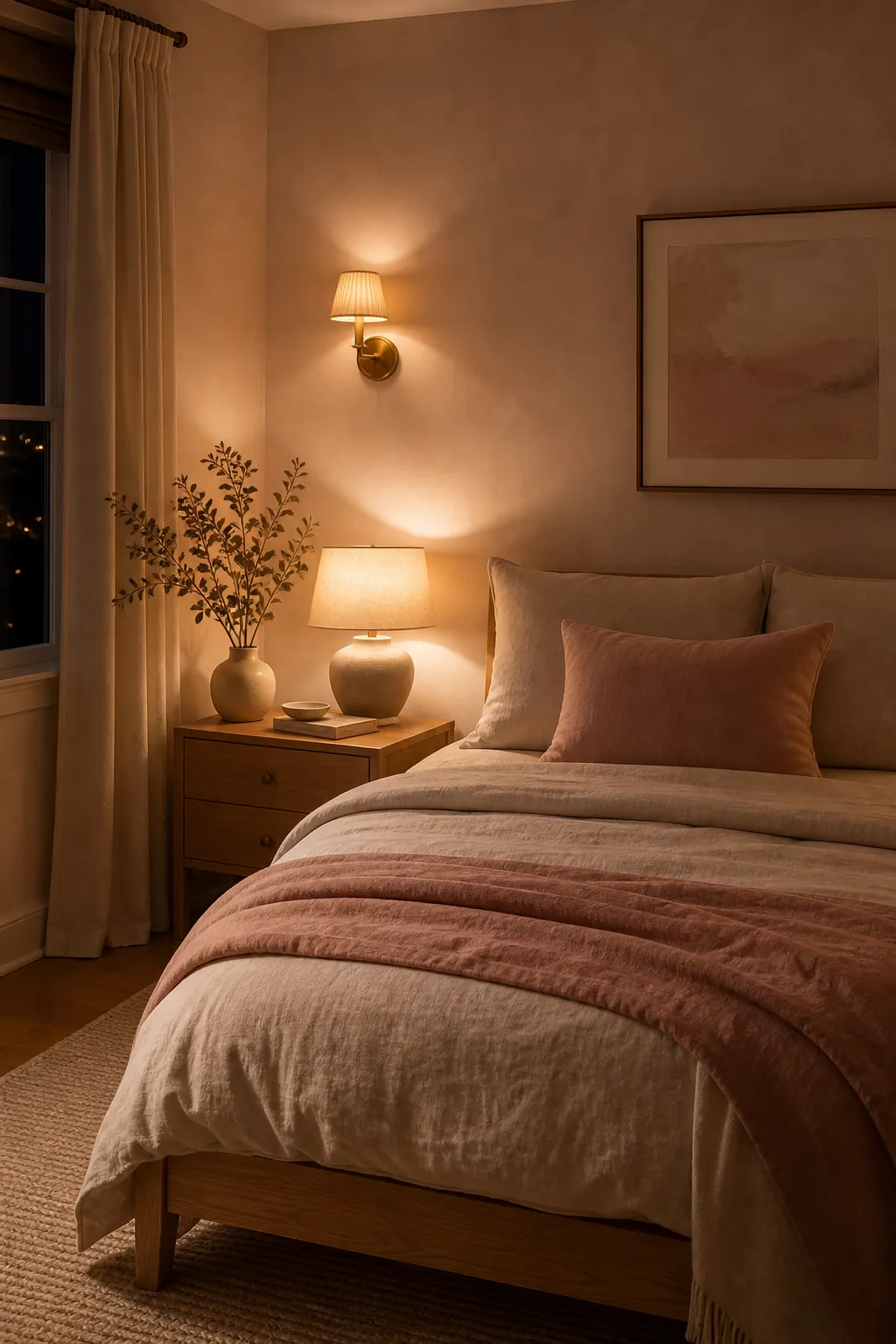
For a bedroom, the bed is the largest visual block. If the bed is too pink, the entire room becomes pink instantly. A calmer formula is ivory or oatmeal sheets, a textured white duvet, then blush pillows, a rose throw, or a muted pink quilt folded at the foot of the bed. This gives you the softness without locking the whole room into one color.
Texture is what keeps a pale palette from looking flat. Mix washed cotton, linen, bouclé, velvet, ribbed ceramics, woven baskets, and wool. Soft textures make blush decor feel layered, not childish. They also let you use less color because the room already has depth.
- Use two or three blush pieces near the bed, not ten scattered pieces.
- Repeat the same pink family so the accents feel related.
- Add one grounding texture, such as wood, jute, rattan, or stone.
- Leave some plain wall or bedding visible so the room can breathe.
Use Neutral Accents to Make Pink Feel More Expensive
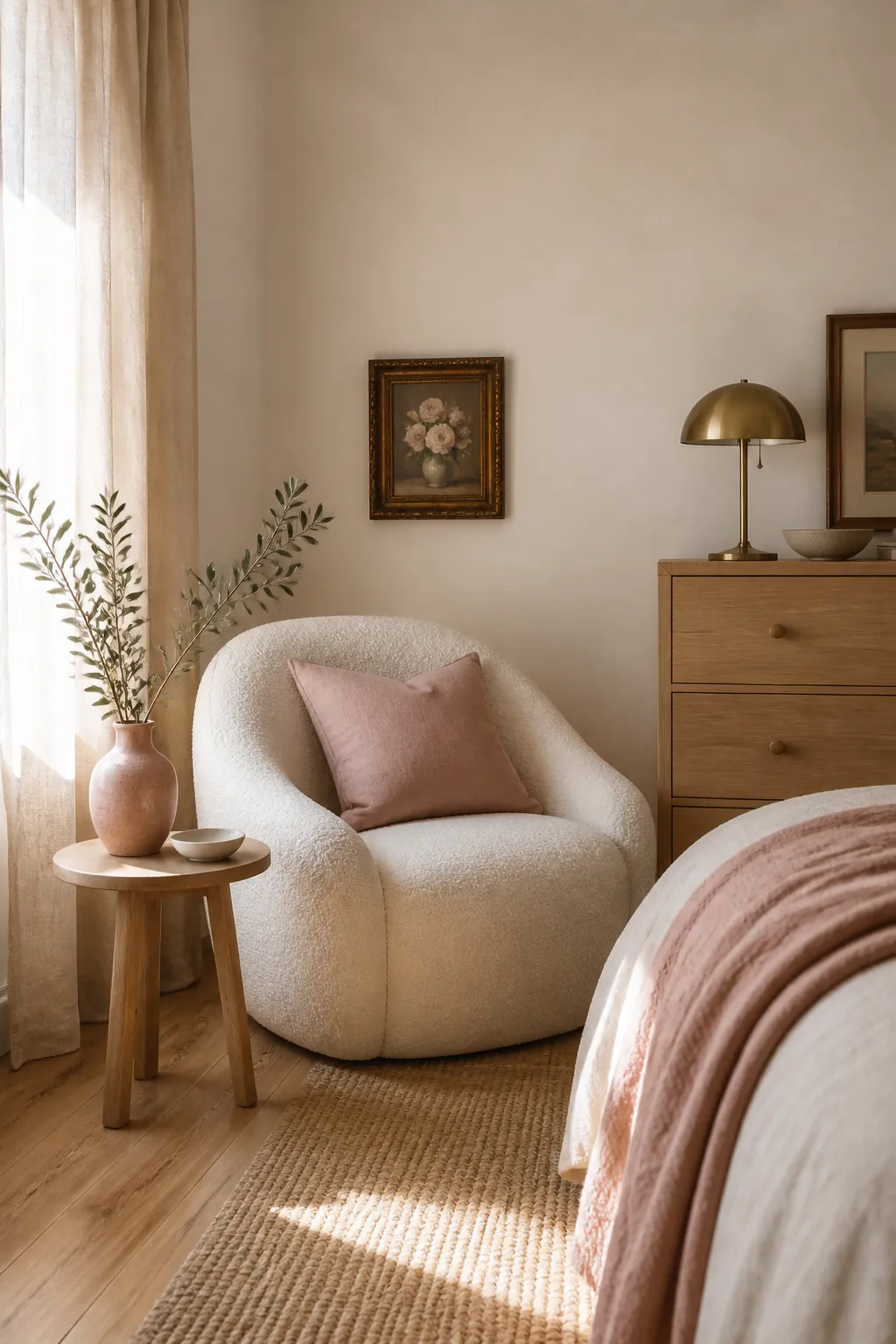
Pink often looks more sophisticated when it is paired with materials that are not cute. Light oak, walnut, travertine, aged brass, linen, plaster, cream bouclé, and matte black all pull pink into a more adult direction. This is why one blush pillow on a natural linen bed can look better than five pink accessories on glossy white furniture.
For calm room decor, try a 70-20-10 balance: about 70 percent warm neutral, 20 percent wood or texture, and 10 percent pink. You do not need to measure it exactly. Just step back and ask: does the room read mostly calm, with pink as the glow? If the answer is no, remove one pink item before adding another.
Let Lighting Soften the Color
Lighting can make pink feel gentle or harsh. Cool bulbs often push blush toward a flat, sweet tone. Warm bulbs, fabric shades, wall sconces, and indirect light make the same pink feel calmer. In a bedroom, use bedside lamps instead of relying only on a bright ceiling fixture. In a small bathroom, a warm wall sconce or shaded vanity light can make pink towels, tile, or paint feel softer.
This is also where mirrors matter. A mirror opposite a pink wall doubles the color. That can be beautiful in a quiet room, but too much in a small space. If the room already feels pink-heavy, place the mirror where it reflects a window, neutral curtain, wood dresser, or simple artwork instead.
Borrow Bathroom Lessons Without Turning the Bedroom Into a Theme
Pink bathrooms reveal the same rule very clearly: pink needs contrast. A tiny room with pink rugs, pink curtains, pink towels, pink storage, and pink wall art can feel chaotic because the pieces rarely match exactly. A better bathroom formula is one fixed pink surface or textile, then white, cream, stone, warm wood, and maybe a little green through a plant or artwork.
That lesson helps bedroom decor too. Avoid buying pink items one at a time just because each piece is pretty. Instead, choose a small pink family and repeat it with purpose: one blush textile, one muted art print, one ceramic vase, or one lamp base. The room feels more styled when pink is edited.
A Simple Soft Pink Room Formula
If you are starting from scratch, use this formula before shopping: warm neutral base, muted pink accents, one natural texture, one deeper contrast, and warm lighting. The deeper contrast can be olive, clay, walnut, charcoal, antique brass, or a small amount of burgundy. It keeps the room from floating away into pastel sweetness.
For renters or cautious decorators, start with changeable pieces: pillow covers, a throw, art, a lampshade, a vase, towels, or a small rug. Live with those for a week. If the room still feels calm, then consider a larger pink move like curtains, an accent wall, or upholstered seating. Soft pink works best when the room earns each layer.
The most livable pink rooms are not afraid of restraint. They have quiet areas, natural materials, and enough contrast to make the pink feel intentional. That is how blush decor becomes warm and personal without taking over the whole room.