
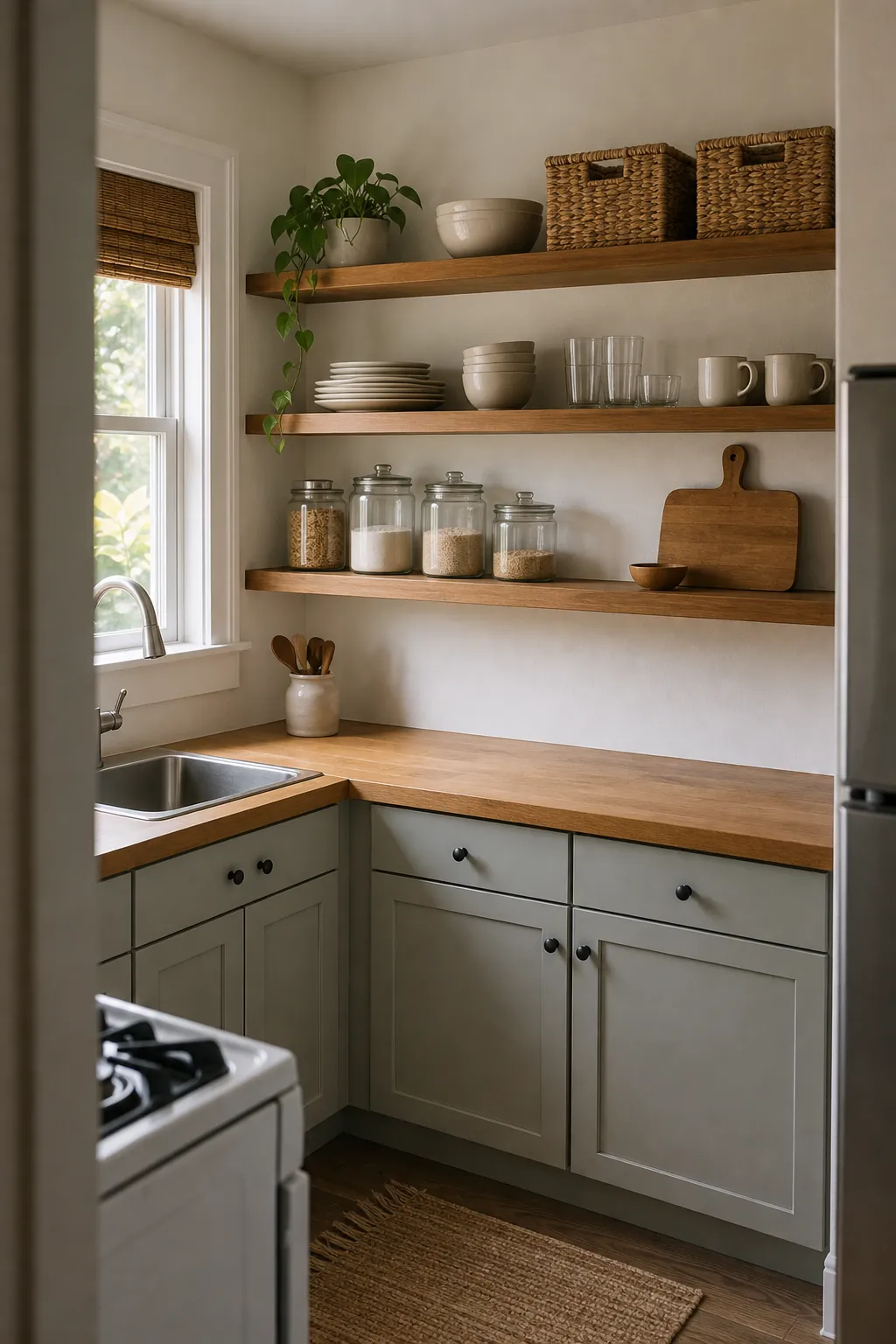
Open shelves can make a small kitchen feel calmer, but only when they are treated like active storage instead of a place to display every pretty thing you own. The shelves that stay tidy have a clear job: they hold the pieces you reach for every day, keep small items contained, and leave enough empty space for the kitchen to breathe.
The real problem is not open shelving itself. It is asking one short wall shelf to behave like a cabinet, a pantry, a decor ledge, and a junk drawer at the same time. In a compact kitchen, that becomes messy fast. The better approach is more selective: put only the most useful, easy-to-clean, visually quiet items on display, then move the rest behind doors, into drawers, or into baskets.
Start With The Shelf Job, Not The Shelf Style
Before choosing brackets, wood tones, or a styling scheme, decide what the open shelves are supposed to solve. In a small kitchen, shelves usually work best for one of three jobs: daily dishes, a coffee and breakfast zone, or a narrow overflow area for beautiful essentials. They work poorly when they are expected to hold rarely used serving pieces, random food packets, appliances, and seasonal decor all at once.
A simple rule helps: if you do not use it at least weekly, it should earn its spot visually or leave the shelf. Everyday bowls, stacked plates, mugs, clear canisters, a small plant, and one leaning cutting board can look intentional. Half-empty bags, mismatched plastics, novelty cups, extra water bottles, and backup pantry goods usually make open shelving feel crowded.
Keep Open Shelving Away From The Greasiest Zone
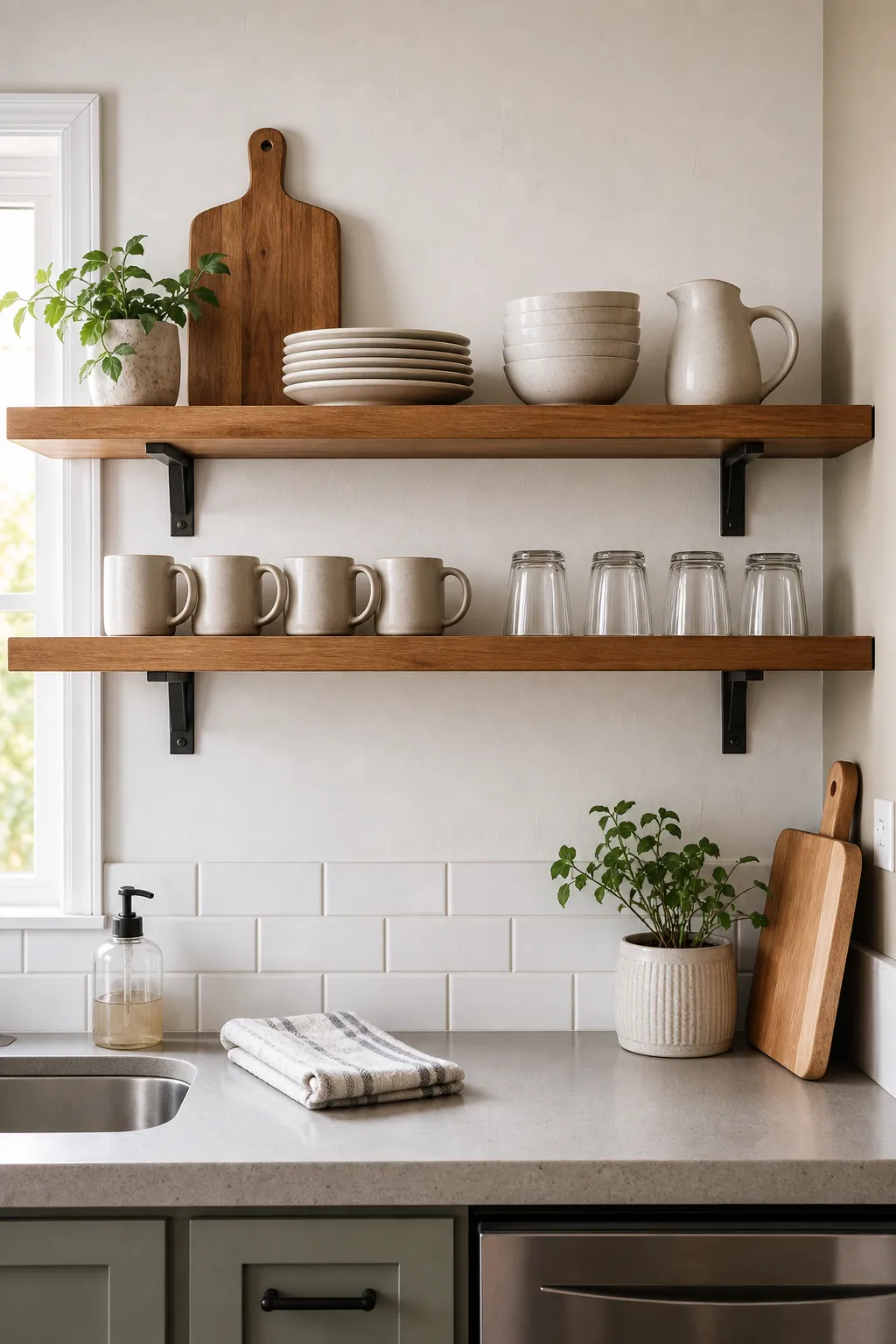
The most common complaint about open shelving is not styling; it is cleaning. Dust mixes with cooking grease, especially near the stove, and suddenly the shelf that looked airy in a photo becomes another surface to scrub. In a small kitchen, where walls are limited, this is easy to overlook. Still, shelf placement matters more than shelf styling.
If possible, place open shelves near the sink, dishwasher, coffee area, or prep counter instead of directly beside the cooktop. This keeps everyday dishes close to where they are washed and used, while reducing the sticky buildup that makes people regret open shelving. If the only available wall is near the range, keep that shelf shorter, simpler, and easier to wipe down.
Choose shelf materials with cleaning in mind. Smooth painted wood, sealed wood, metal brackets, and washable shelf liners are easier to maintain than raw porous surfaces. A tidy kitchen is not just organized; it is quick to reset.
Use A Tight Everyday Dish Edit
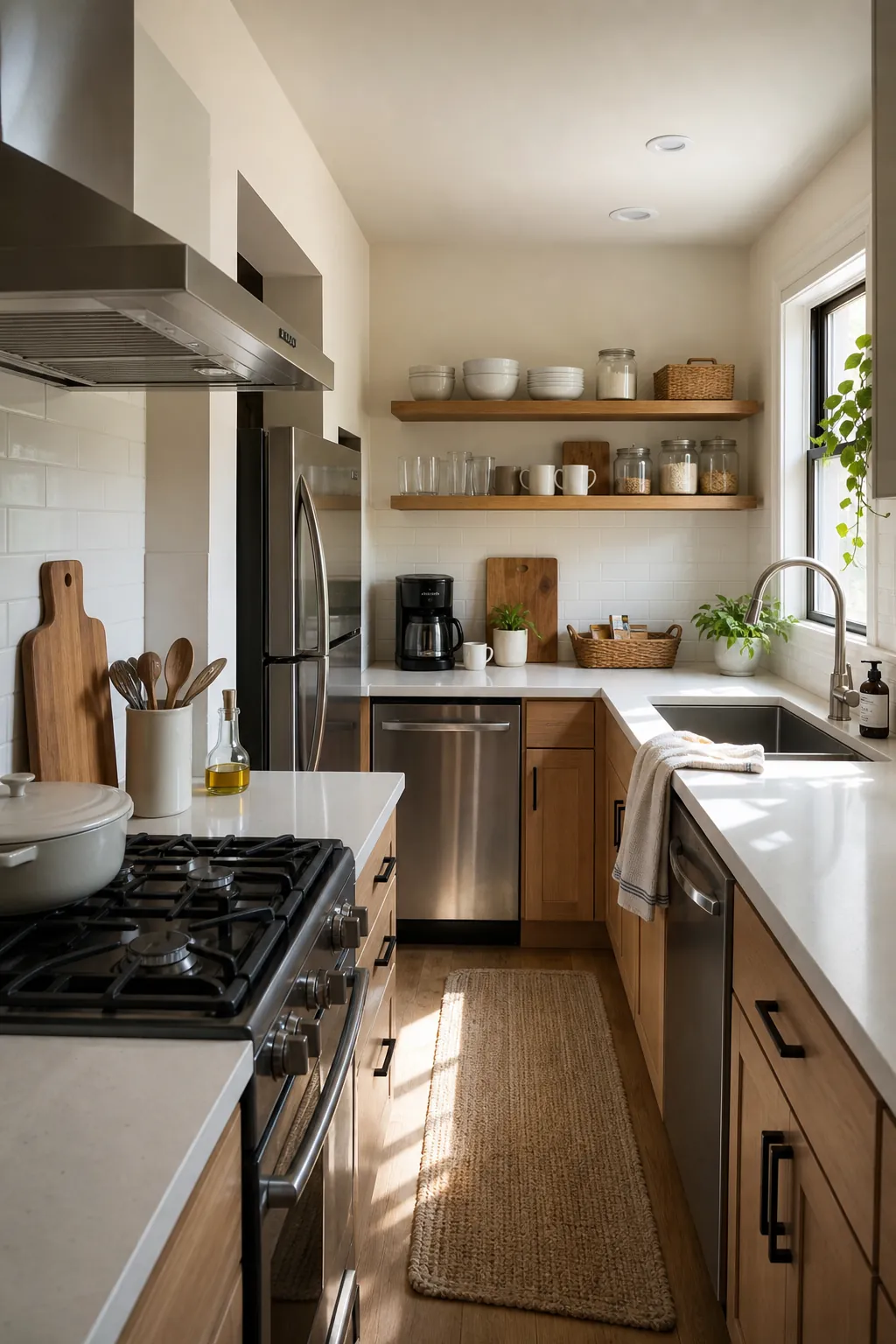
The easiest open shelves to keep neat are the ones that hold a small, repeating set. Four plates, four bowls, four mugs, and four glasses can look calm because the shapes repeat. The same shelf with twenty unrelated pieces feels busy even if every item is clean.
For a compact kitchen, think in sets and limits. Stack plates by size. Keep bowls nested. Turn mugs in the same direction or line them in a short row. Store glasses upside down if dust is a concern and you use them constantly. This is not about making the shelf look staged; it is about making the shelf easy to return to order in ten seconds.
Color also matters. You do not need everything white, but you do need a visual pattern. A shelf of cream dishes, clear glass, wood boards, and one dark accent reads as styled. A shelf of every color, logo, and souvenir reads as clutter. Open shelving rewards repetition more than decoration.
Hide Small Clutter In Matching Baskets And Canisters
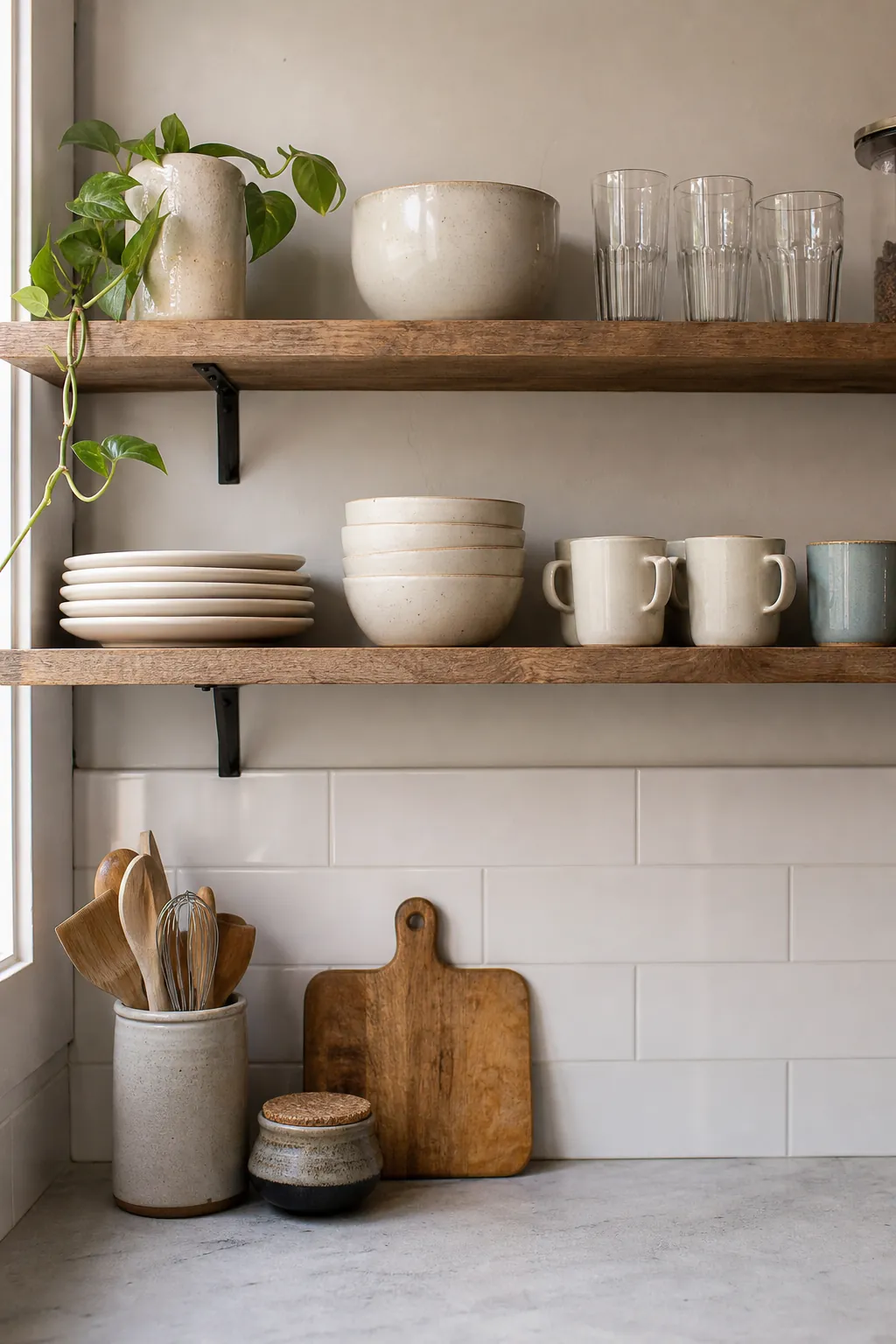
Small items create the most visual noise: tea bags, snack packets, measuring spoons, jar lids, spice refills, napkins, clips, and packets from takeout drawers. On a small kitchen shelf, these items need containment. Otherwise, they spread across the shelf and make the whole kitchen look less tidy.
Use two or three matching baskets, lidded boxes, or clear canisters rather than many tiny containers. Baskets are best for unattractive items you still need nearby. Clear jars are best for dry goods that look consistent, like oats, rice, pasta, tea, or coffee pods. Keep labels simple and front-facing if you use them.
The important part is restraint. One basket can look intentional. Six baskets on a short wall can feel like a storage unit. Contain clutter, but do not let containers become the clutter.
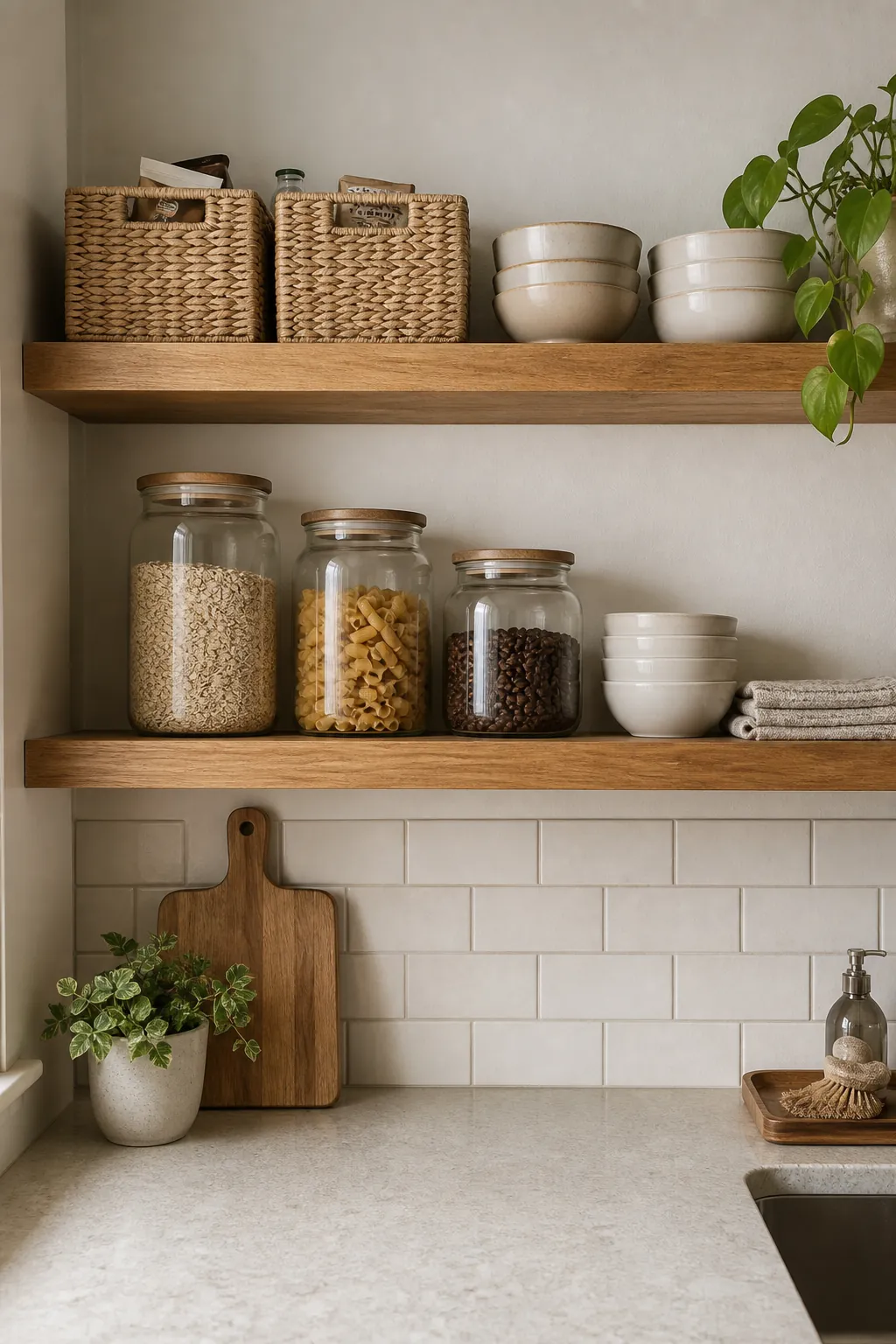
Style Shelves With Breathing Room
Open shelves look best when they are not filled edge to edge. Empty space is what makes the storage feel intentional instead of desperate. In a tiny kitchen, that can feel counterintuitive, but a slightly edited shelf often makes the whole room feel bigger than a fully packed one.
Try a simple rhythm: stack, upright item, open space, small object. For example, place plates on the left, a cutting board behind a jar in the center, and mugs on the right. Or use one shelf for daily dishes and the next for canisters, a small plant, and a cookbook. Varying height helps, but keep the color palette controlled.
Decor should be useful or very limited. A plant, framed recipe, small lamp, or piece of pottery can soften the shelf, but too much kitchen decor competes with the dishes. The goal is a shelf that looks lived-in, not merchandised. One beautiful pause is stronger than five tiny decorations.
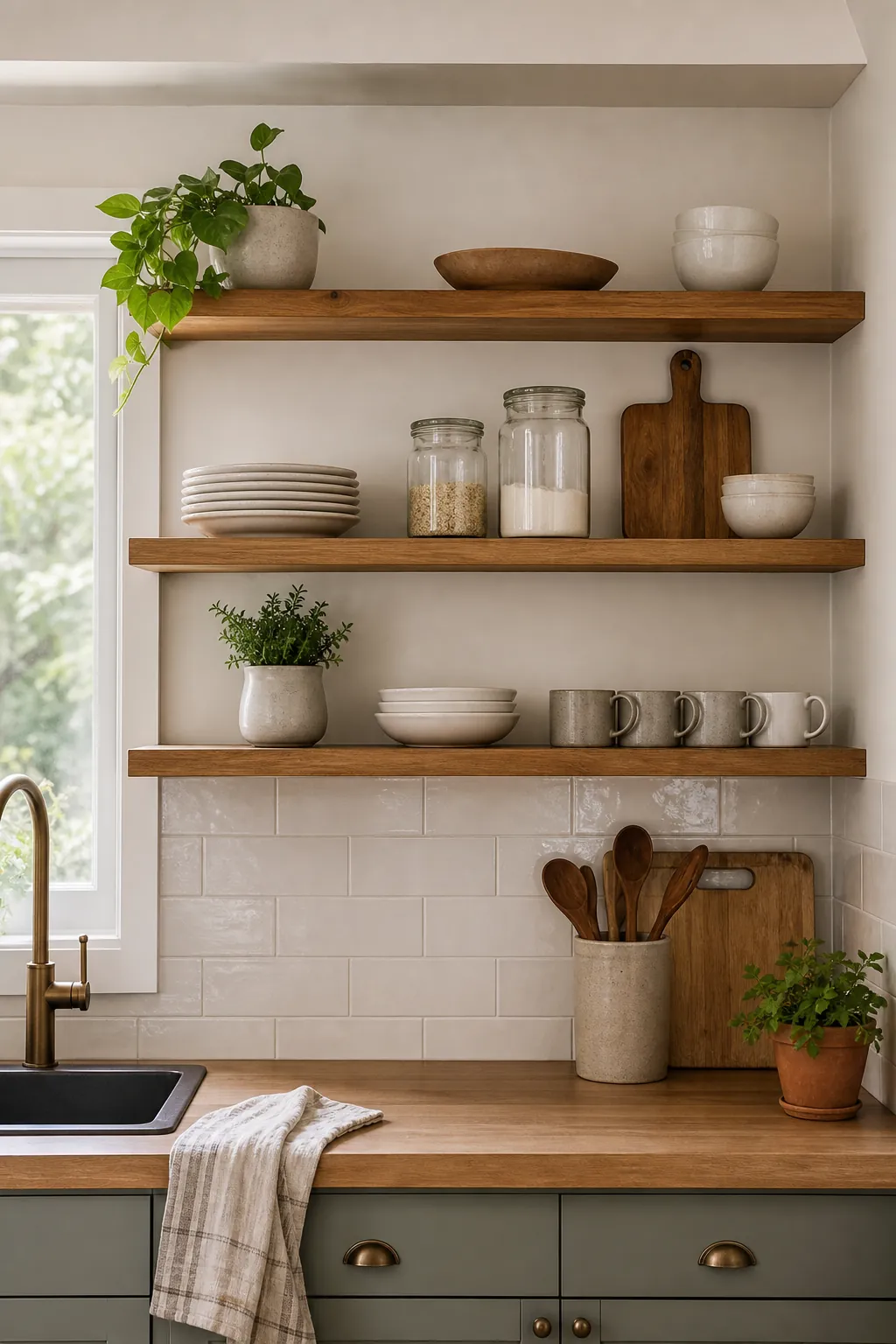
Build A Five-Minute Reset Into The Design
The shelves that stay tidy have a reset routine built into them. Every item has a home, every stack has a limit, and nothing requires a long decision. If putting away dishes means rearranging a display, the shelf will eventually fail.
Use the front edge as your warning line. When mugs, jars, or packets start creeping toward the edge, the shelf is over capacity. Remove one category instead of reorganizing everything. Keep a small microfiber cloth nearby and wipe the shelf while the dishwasher runs or while coffee brews. That small habit handles dust before it becomes sticky work.
A good open shelf system should make your compact kitchen easier, not more performative. If it only looks good after a deep clean, it is too fragile for daily life. The best small kitchen ideas are the ones that still work on a Wednesday night.
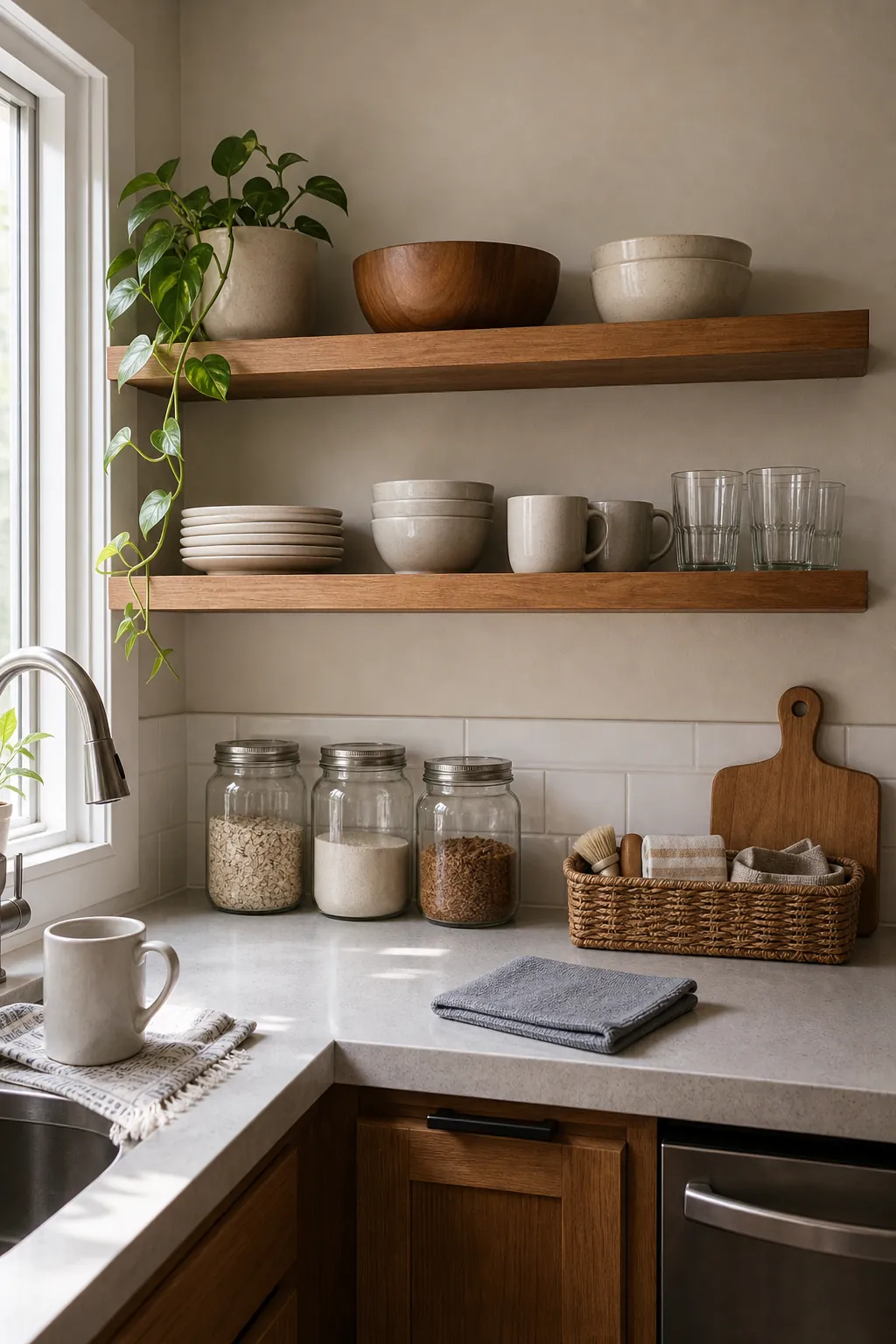
The Tidy Open Shelf Formula
If your shelves already feel chaotic, do not start by buying more organizers. Empty the shelf, wipe it down, and rebuild it with a stricter formula:
- One daily-use category, such as plates and bowls, mugs, coffee supplies, or dry goods.
- One containment type, such as matching baskets, clear jars, or lidded boxes.
- One visual anchor, such as a cutting board, small plant, cookbook, or ceramic pitcher.
- One open area that stays deliberately empty so the shelf does not look packed.
This formula keeps open shelving useful without turning it into a styling project. It gives you storage, keeps the wall light, and makes the shelf easy to maintain. In a small kitchen, that balance matters more than perfection.
Open shelving can absolutely work in a small kitchen, but it needs boundaries. Use it for items that earn their visibility, protect it from grease when you can, repeat shapes and colors, and leave space between things. That is how open shelves stay tidy after the photo moment is over.