

A plain sofa is not usually the real problem. The room around it is. A simple beige, gray, white, brown, or linen sofa can look flat when every surrounding choice feels accidental: pillows that are too small, a coffee table with scattered objects, a rug that floats by itself, blank walls, cold lamps, and no strong color rhythm. The fix is not to replace the sofa. The fix is to make the sofa look like it belongs to a deliberate living room decor plan.
The fastest way to make a plain sofa look more designed is to give it proportion, contrast, repetition, and one clear point of interest. Those four ideas matter more than buying a trendy couch. When the pillows are scaled correctly, the rug anchors the seat, the coffee table decor has a reason to exist, and plants or art repeat the same colors, a basic sofa starts to feel custom.
Start With Bigger, Better Sofa Pillows
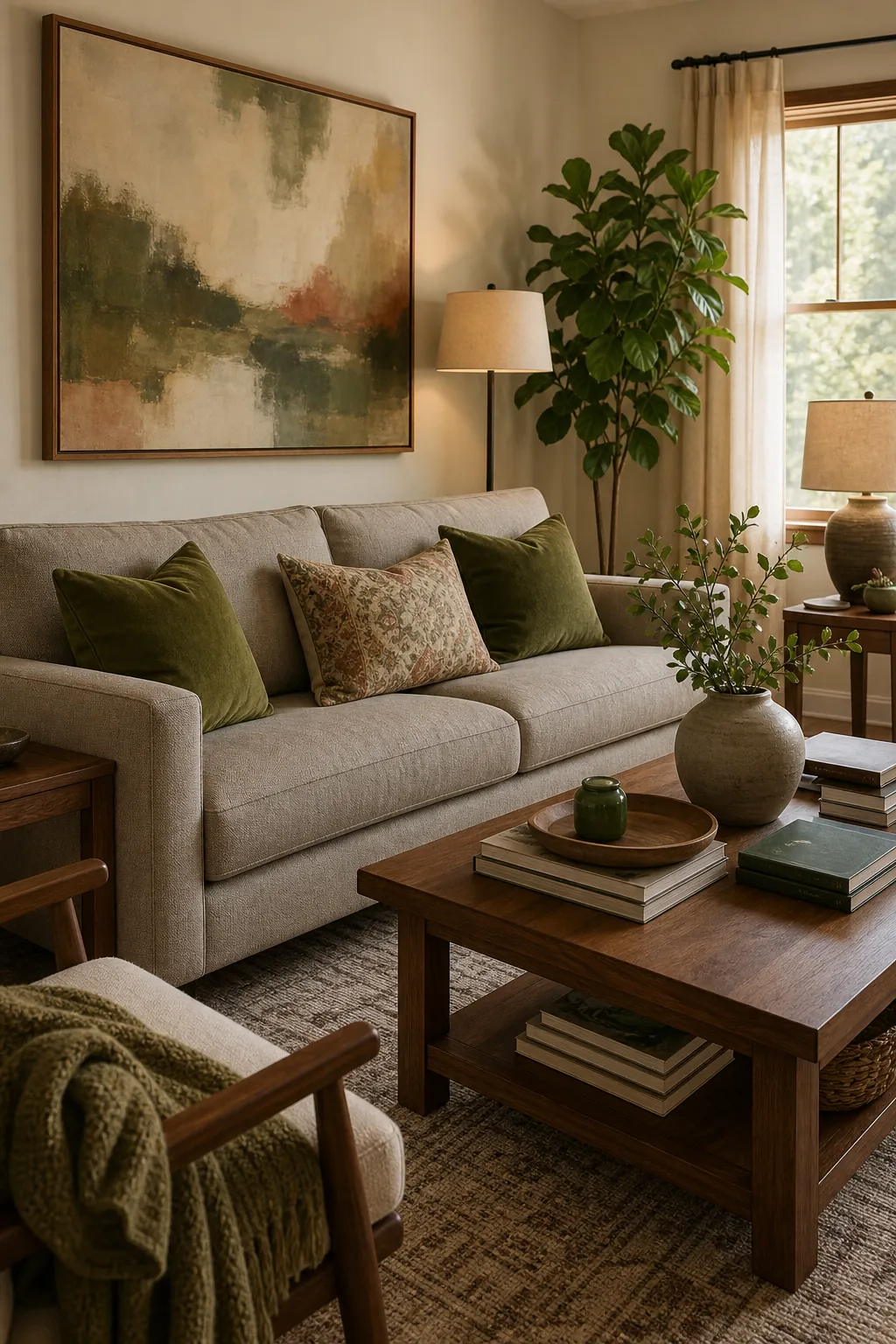
Most plain sofas look unfinished because the pillows are too small. Tiny matching pillows can make even a nice couch look like it came straight from a furniture showroom. For a standard three-seat sofa, start with two larger square pillows in the corners, then layer one smaller pillow or lumbar pillow in front. For a loveseat, two strong pillows can be enough. For a sectional, use the same idea in each corner instead of spreading little pillows evenly across every seat.
The designer move is not “more pillows.” It is larger pillows with different jobs. Choose one hero pillow with pattern, texture, embroidery, fringe, boucle, or a stronger color. Let the other pillows support it with quieter solids or smaller patterns. This keeps sofa styling from looking chaotic while still giving the room personality.
- Use a larger back pillow so the sofa feels grounded, not skimpy.
- Add one lumbar pillow to break up all the square shapes.
- Repeat one color from the room so the pillows feel connected to art, curtains, a rug, or plant decor.

Build a Three-Color Thread Through the Room
A plain sofa looks accidental when it is the only calm thing in a room full of unrelated pieces. It also looks bland when everything around it is the same neutral tone. The sweet spot is a small color palette that repeats on purpose: one base neutral, one warm natural material, and one accent color.
For example, a beige sofa can look more designed with warm oak, black metal, and moss green. A gray sofa can look softer with walnut, ivory, and rust. A white slipcovered sofa can feel richer with cane, olive, and aged brass. The exact colors matter less than the repetition. If your pillow has sage green, repeat that green in a plant, a book spine, a vase, a curtain stripe, or a small artwork. This is how a living room refresh starts to feel collected instead of random.
Do not try to match everything. Matching is what makes a sofa look like a set. Repeating is what makes it look styled. A color only needs to appear two or three times for the eye to understand the connection.
Anchor the Sofa With a Rug That Actually Reaches It
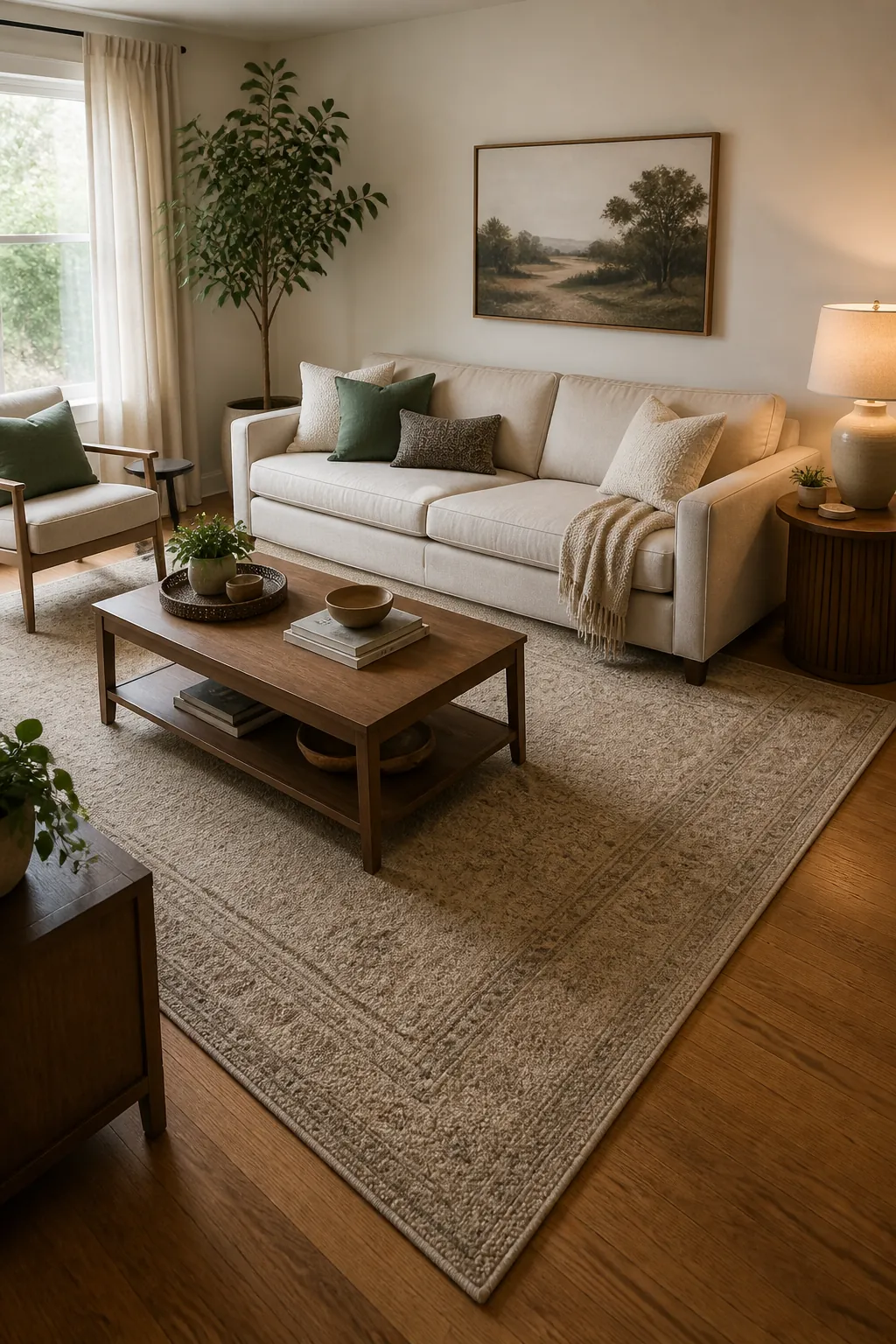
A rug can make a plain sofa look intentional faster than almost any small accessory, but only if the scale is right. A rug that sits alone in the middle of the floor makes the sofa and coffee table look disconnected. A rug that reaches under the front legs of the sofa creates a visual zone. It tells the eye, “This is the seating area.”
If your room allows it, place the front legs of the sofa on the rug, with the coffee table fully on the rug. The rug does not need to fill the whole room, but it should be large enough to connect the major pieces. In a small living room, this one adjustment can make the space feel calmer and more expensive because the furniture stops floating.
Pattern is optional. Texture is not. If you want neutral decor, look for a rug with wool, jute, subtle striation, a low contrast pattern, or a border. Those details add depth without forcing the room to become colorful.
Add Texture Before You Add More Stuff
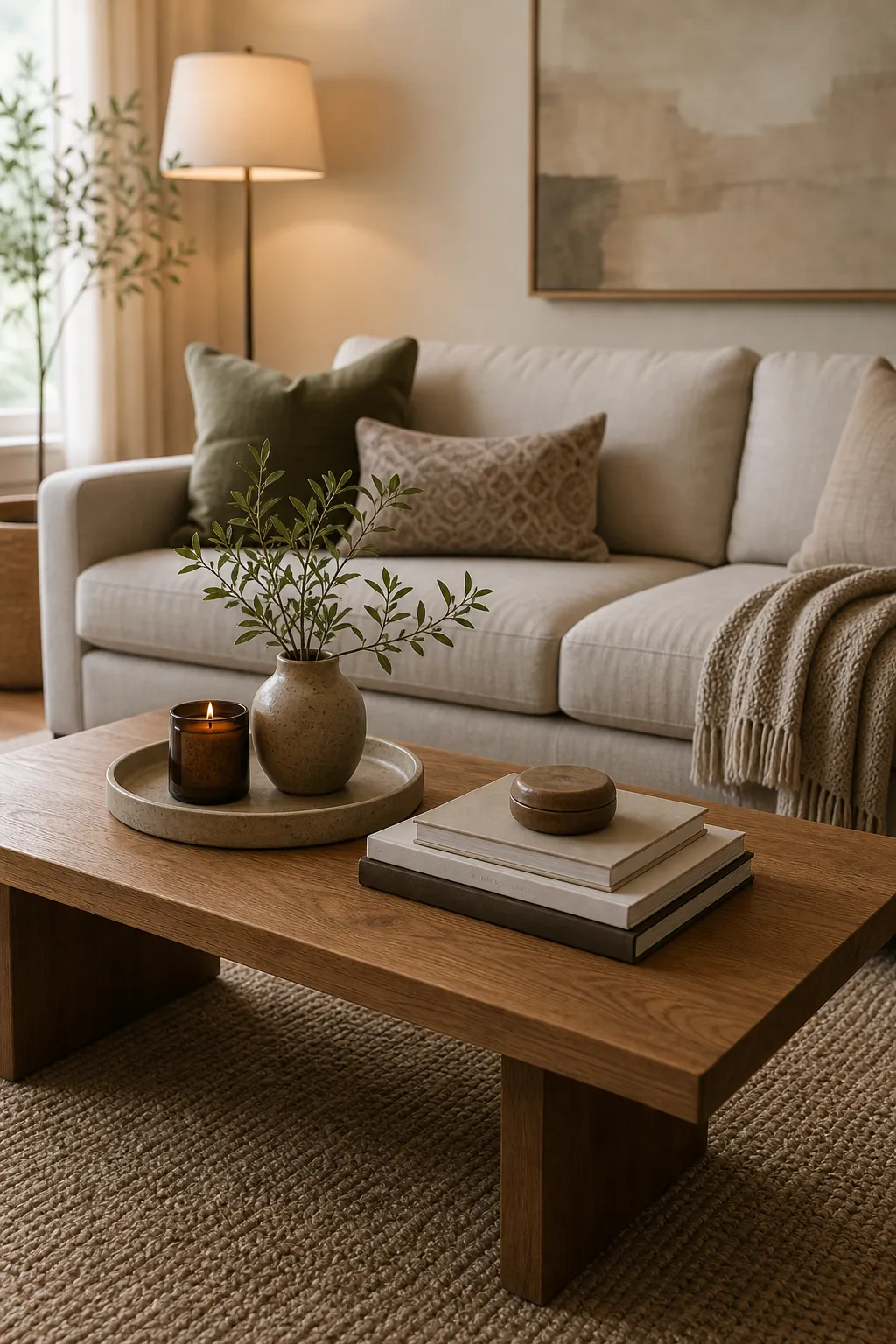
When a sofa feels plain, the first instinct is often to buy more decor. That can make the room busier, not better. Texture is the cleaner fix. A nubby pillow, a chunky knit throw, a linen shade, a ceramic lamp, a woven tray, a wood coffee table, and a leafy plant can do more than five random accessories.
The goal is to make the sofa feel touchable and layered. Drape a throw in a relaxed way over one arm or across the chaise. Let one pillow be smoother and one pillow be rougher. Mix matte ceramics with wood grain. Add one woven piece so the room has a natural home styling note. This is especially useful for neutral decor, where the whole room can fall flat if every surface is smooth.
Texture works because it creates shadow. Shadow is what gives a plain sofa depth in photos and in real life. If the room currently looks washed out, texture may help more than color.

Style the Coffee Table Like It Belongs to the Sofa
Coffee table decor is where many living rooms start looking designed, because it sits directly in front of the sofa. The table should not feel like a dumping spot. It should echo the sofa styling and create a middle layer between the seating and the rest of the room.
A simple formula works well: one tray, one stack of books, one living or sculptural object, and one practical object. The tray gives the arrangement boundaries. Books add height and a color cue. A small plant, branch, or vase softens the hard table surface. A candle, coaster set, or lidded box keeps it usable. Leave negative space so the table still works for drinks, remotes, and everyday life.
The coffee table should also be proportional. If it is too tiny, the sofa looks heavier. If it is too bulky, the room feels cramped. As a rough guide, choose a coffee table about half to two thirds the length of the sofa and close to the height of the sofa seat. That keeps the arrangement practical and visually balanced.
Finish the Sofa Wall With Plants, Art, and Better Light
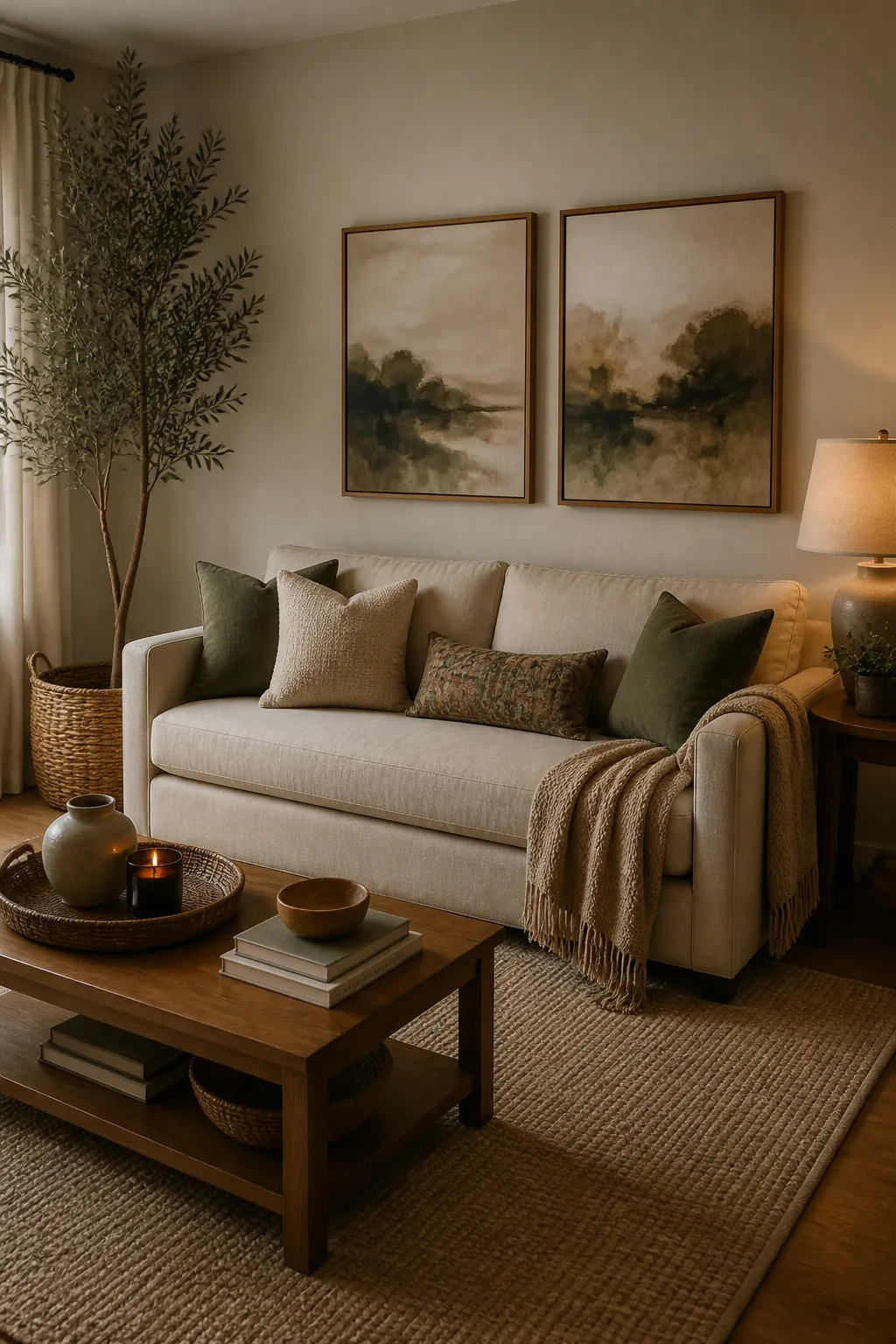
A sofa can look plain because the wall behind it is unfinished. This does not mean every sofa needs a gallery wall. It means the area above and around the sofa needs height, life, and light. A large artwork, two framed pieces, a tall plant, floor-to-ceiling curtains, or a warm lamp can complete the composition without changing the couch at all.
Plant decor is especially useful because it solves several problems at once. Greenery adds color, shape, height, and softness. A tall plant near one side of the sofa can balance curtains or a floor lamp. A smaller plant on the coffee table can repeat the same green in the pillows. This is the kind of repetition that makes decorating ideas feel intentional.
Light is the final check. If the living room relies on a cold ceiling light, the sofa will look flatter than it should. Use warm bulbs, a shaded table lamp, a floor lamp, or a wall sconce to create softer shadows. A designed room almost always has layered light, not one overhead source doing all the work.
The Simple Sofa Styling Formula
If your sofa feels boring, resist the urge to solve everything with shopping. Stand in the room and check the design order instead. Is the rug connecting the furniture? Are the sofa pillows large enough? Does one color repeat across the room? Does the coffee table have shape and height? Is there art, plant decor, or warm lighting to finish the wall?
The strongest living room decor is usually not complicated. It is edited. A plain sofa becomes a designed sofa when the surrounding choices give it context: a better pillow mix, a grounded rug, layered texture, styled coffee table decor, repeated color, plants, art, and warm light. Once those pieces are working together, the sofa stops looking plain and starts looking calm on purpose.