
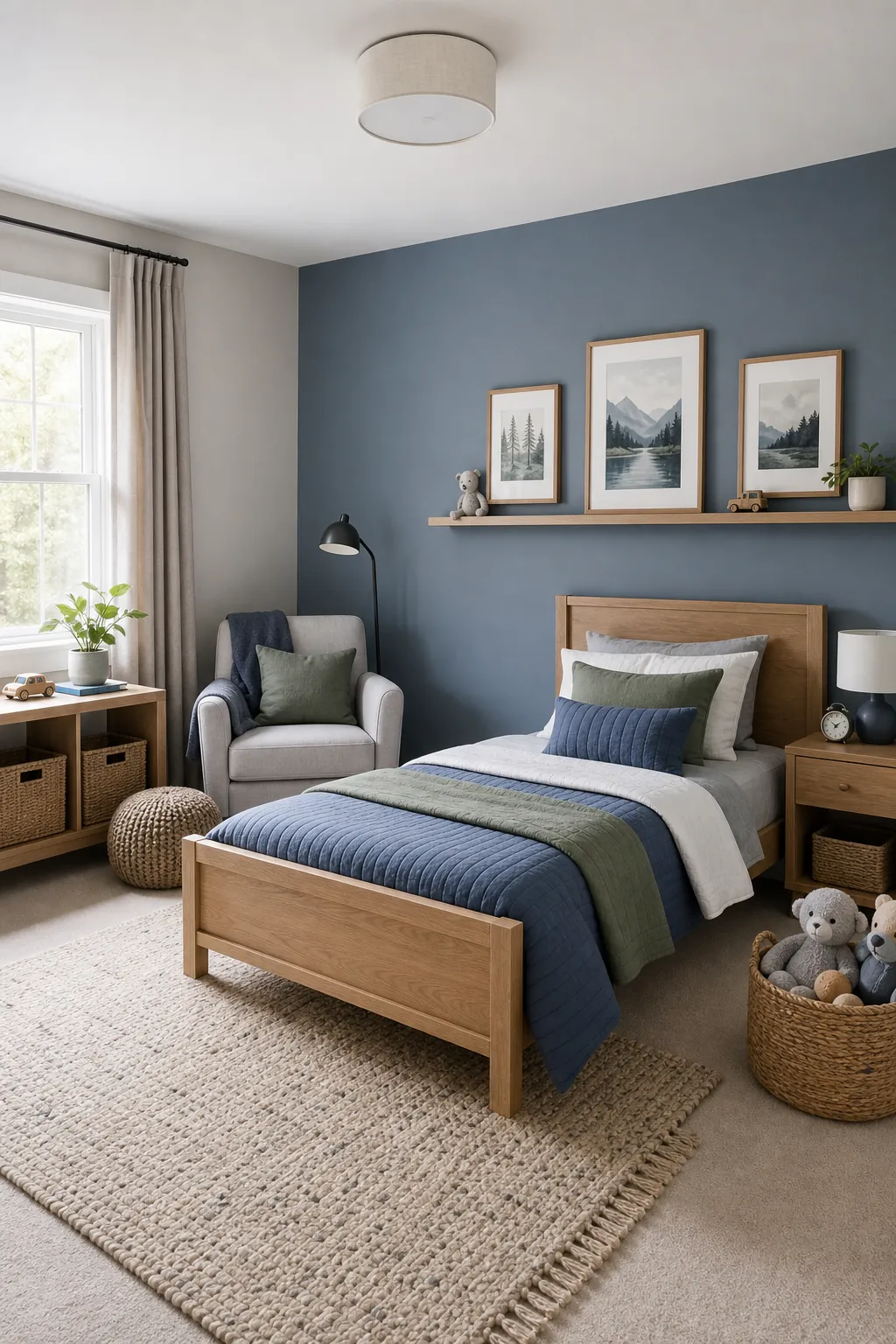
A kids bedroom can have the right bed, clean storage, and decent bedding, then still feel unfinished because the walls are doing nothing. The fix is not more stuff. The rooms that look pulled together usually have three clear layers: one wall that anchors the room, one flexible place for changeable art, and one personal detail that belongs to the child who sleeps there.
That is the practical way to think about kids bedroom wall decor. It keeps the room from looking random, but it also respects real family life: changing interests, rental rules, bedtime routines, toy storage, and the fact that kids room decor has to survive more than a pretty photo.
Before choosing paint, shelves, or wall art, do the safety check first. Anything heavy, climbable, or mounted within reach should be installed like a permanent fixture, not styled like a prop. Anchor tall furniture, use proper wall hardware, avoid heavy objects over beds, and keep cords out of reach. Once that foundation is handled, these wall ideas can make the room feel finished without making it feel overdecorated.
A Quiet Accent Wall Behind the Bed
An accent wall is the fastest way to give a kids bedroom a focal point. The strongest version is usually behind the bed because it makes the sleep zone feel intentional as soon as you walk in. For a younger child, that might mean removable wallpaper with soft clouds, woodland shapes, stars, or a small-scale botanical print. For an older child, it can be a painted half wall, a color-blocked arch, or a subtle striped treatment.
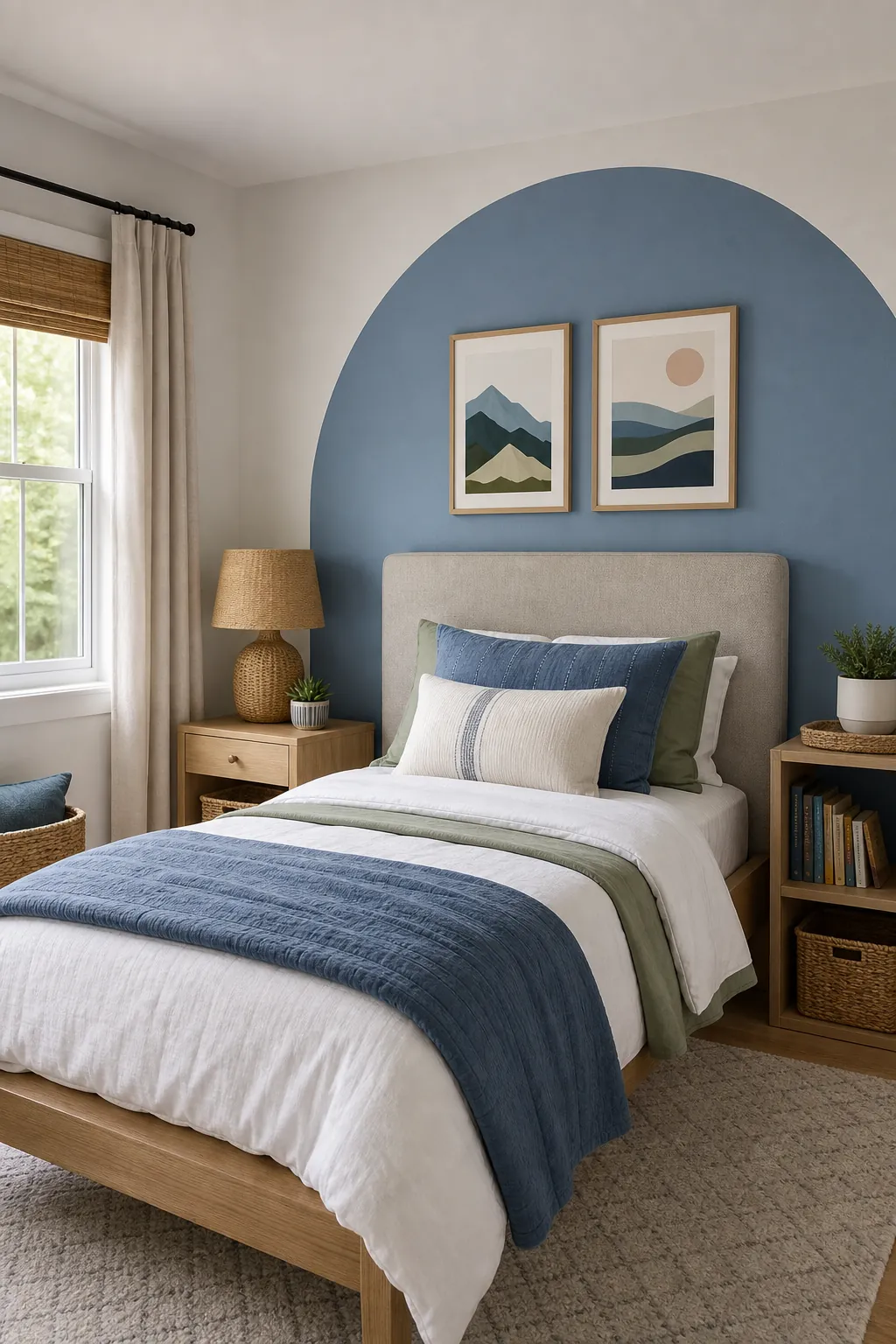
The mistake is making every wall compete. Let one wall carry the personality, then keep the other walls quieter. A pale blue, moss green, muted mauve, clay-neutral, or warm white background can still feel playful when the pattern scale and bedding are right. A finished kids bedroom does not need a loud theme; it needs a clear visual center.
- Use removable wallpaper or decals if the room changes often.
- Repeat one color from the accent wall in the bedding, rug, or lamp.
- Keep heavy shelves and bulky wall decor away from the sleeping area.
Picture Ledges for Art That Can Change
Picture ledges are useful because they solve the biggest problem with kids bedroom ideas: children change their minds. A ledge can hold framed prints, favorite books, a small canvas, a card from a grandparent, or a seasonal piece of wall art without creating a dozen new nail holes every time the room gets refreshed.
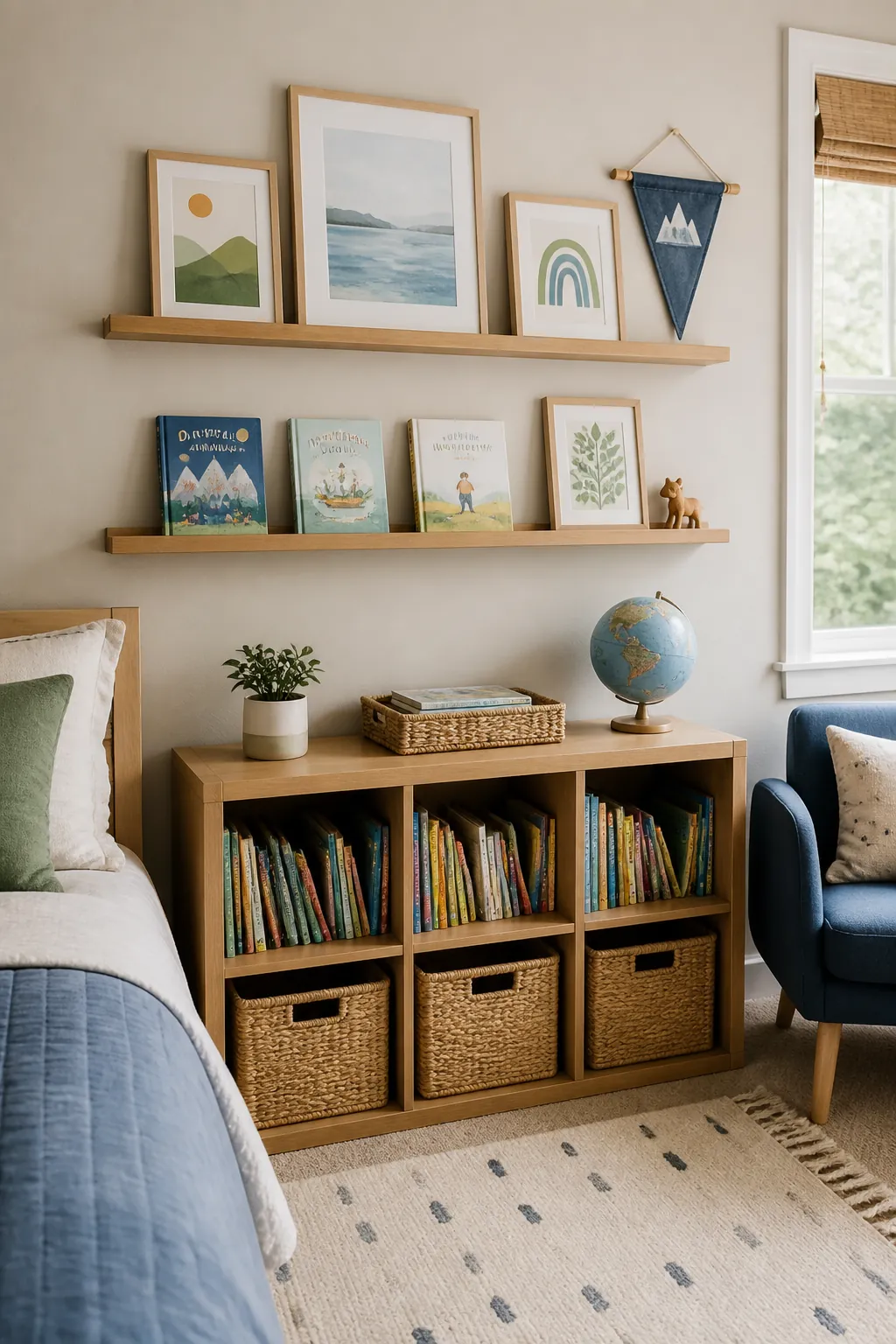
This is where shelves are most effective: not as random clutter storage, but as a shallow display line. Use two ledges stacked with enough breathing room between them, or one longer ledge above a desk, reading chair, or low bookcase. Keep the objects lightweight and edit the display so it looks deliberate. The goal is a small rotating gallery, not a crowded shop shelf.
For bedroom styling, repeat the same frame color two or three times. White frames feel clean, natural wood warms up the room, and black frames can make soft colors look sharper. If the room already has a bold accent wall, use simpler art. If the walls are plain, the ledges can carry more color.
A Reading Nook Wall That Feels Like a Destination
A small reading nook can make an empty corner feel like part of the plan. It does not require a built-in bench or a big budget. A cushion, a low book bin, a plug-in-free wall light or nearby lamp, and two pieces of calm wall art can turn an overlooked wall into a place that invites slower bedtime routines.
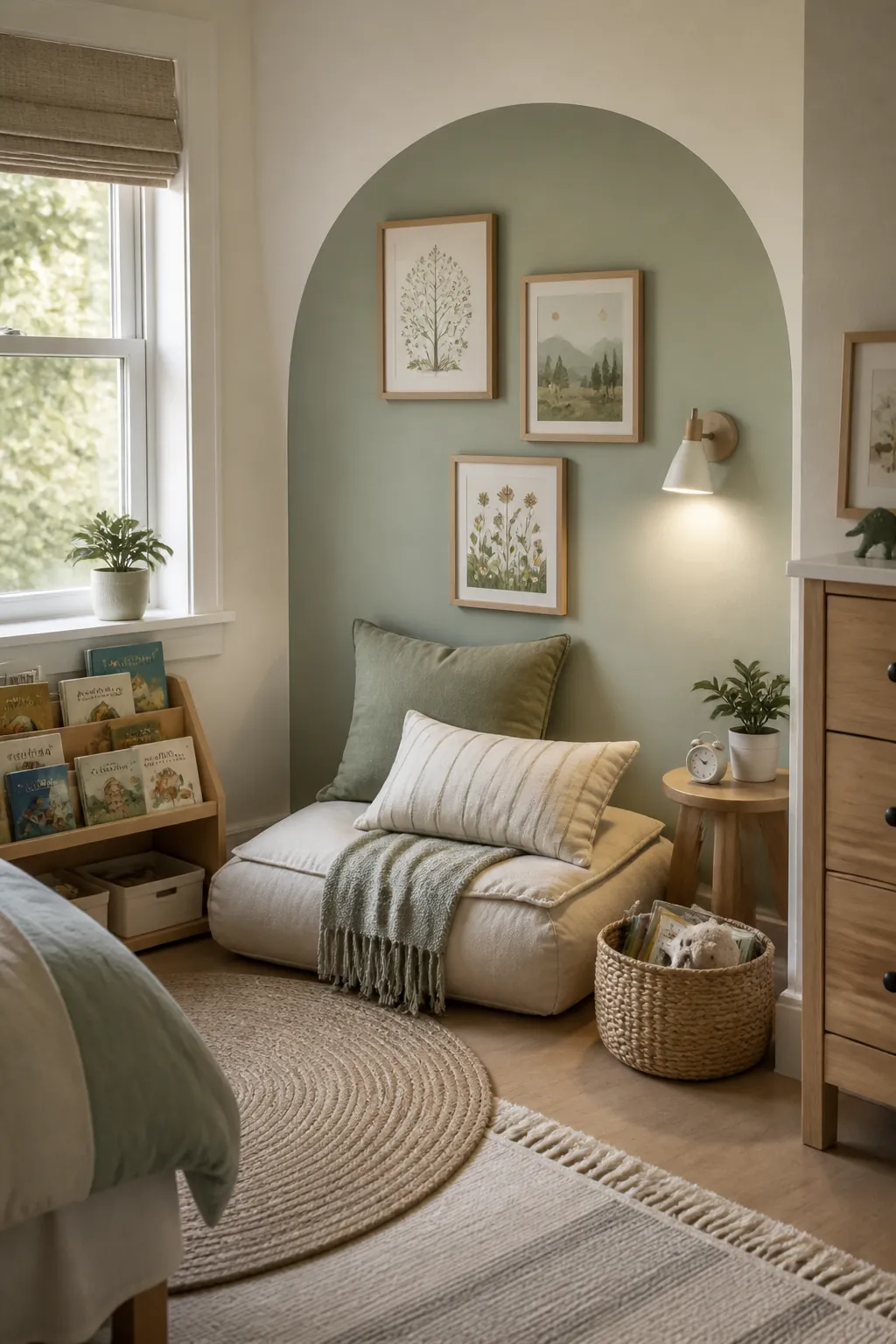
Keep the wall treatment low-pressure. A simple painted shape behind the nook, a row of framed animal prints, or a fabric wall hanging can be enough. This is a good place for nursery wall decor to grow up: keep the soft colors, but replace babyish art with storybook prints, maps, nature sketches, or the child’s own framed drawings.
The design test is simple: if the nook were photographed from the doorway, would it read as one finished moment? If not, connect the pieces with one repeated color and one repeated material. A small wall looks finished when the art, seat, books, and light feel related.
A Low Gallery Wall Over Storage
Gallery walls work best in kids rooms when they have boundaries. Over a dresser, toy cabinet, or low storage unit, use the furniture width as the guide and keep the frames inside that invisible rectangle. This gives the display structure, which is why it feels finished instead of scattered.
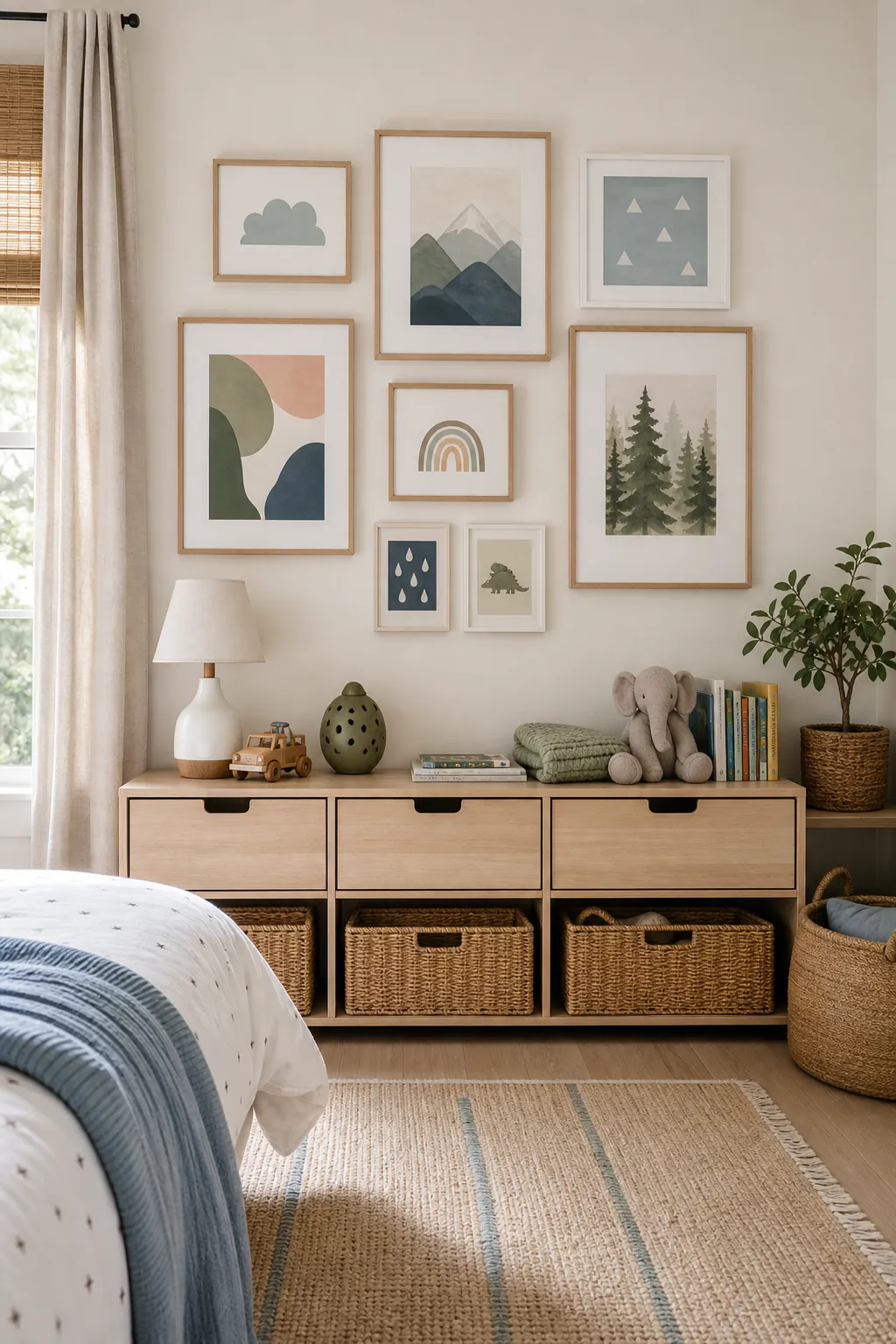
Mixing sizes is fine, but avoid mixing every possible style. Choose one main frame finish, one secondary frame finish, and a color palette that repeats. A strong combination might be natural wood frames, two white mats, one woven piece, and a small mirror placed high enough that it is not treated like a toy. For kids room decor, variety feels charming only when there is a visible rule behind it.
- Use paper templates before hanging so the layout is not guessed on the wall.
- Keep the bottom frame line close enough to the furniture that the pieces feel connected.
- Leave some blank wall around the grouping so the room can breathe.
A Personal Art Spot That Does Not Take Over
Children’s rooms feel better when the child is visible in the design. The challenge is making personal art look intentional instead of taped randomly across every surface. Give it a defined home: a cork strip, magnetic rail, framed clipboards, or a narrow section of wall near a desk or dresser.
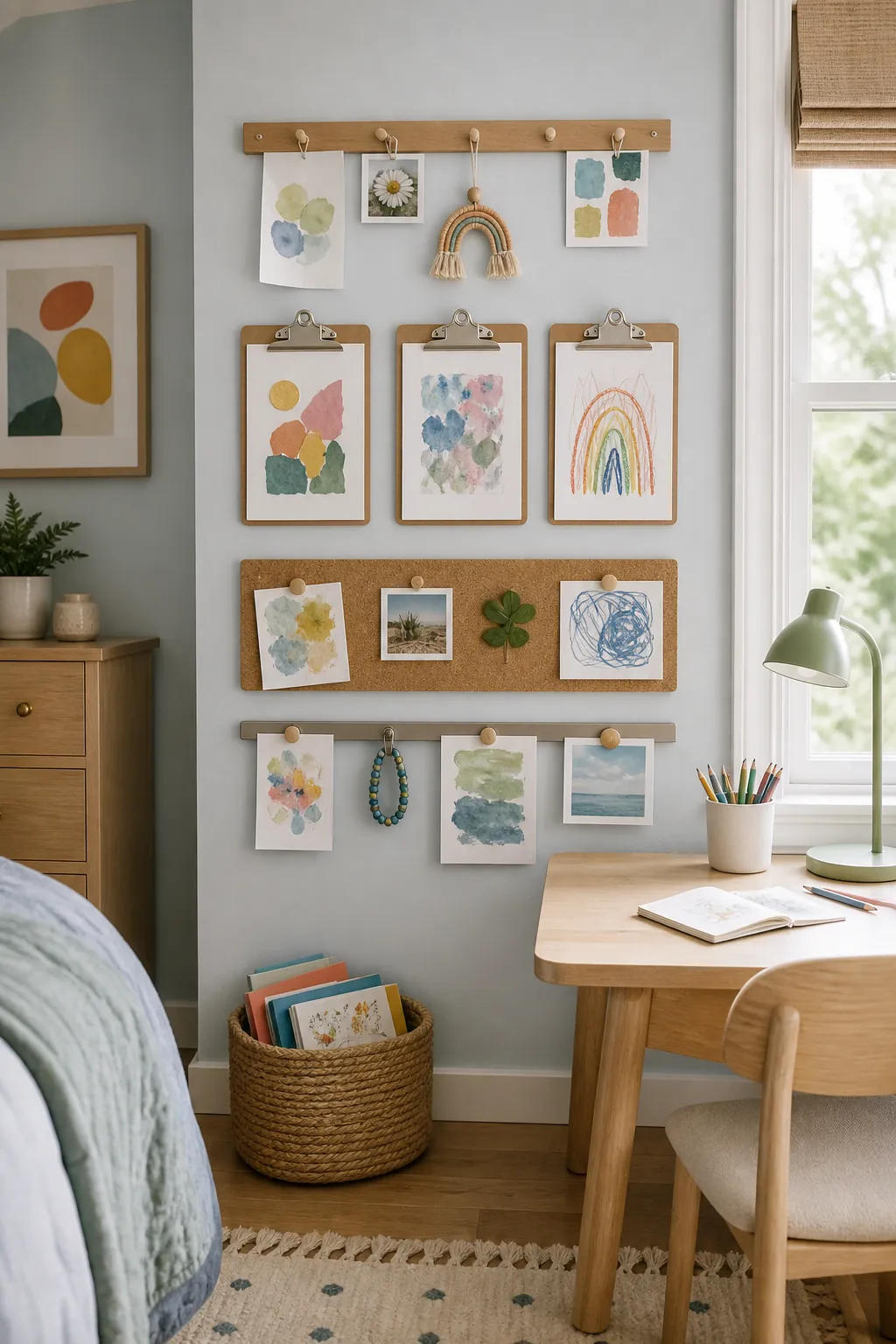
This works especially well during a room makeover because it gives the child ownership without handing the whole design over to one short-lived obsession. Let them choose what gets displayed, then keep the display area consistent. The frame is the grown-up part; the art inside can change as often as it needs to.
If the room is shared, make one display zone for each child. Matching clipboards or rails keep the wall calm, while each child’s work makes the space feel personal. That small decision can do more for the room than another generic print.
A Playroom Wall That Hides the Visual Noise
Many kids bedrooms also function as playrooms, which is why the walls often feel chaotic. The answer is not to put every toy on display. Instead, let the lower half of the wall handle storage and let the upper half carry simple decor. Closed bins, a low cabinet, or a bookcase with baskets can contain the visual noise while the wall above gets one calm row of prints, hooks, or a small display shelf.
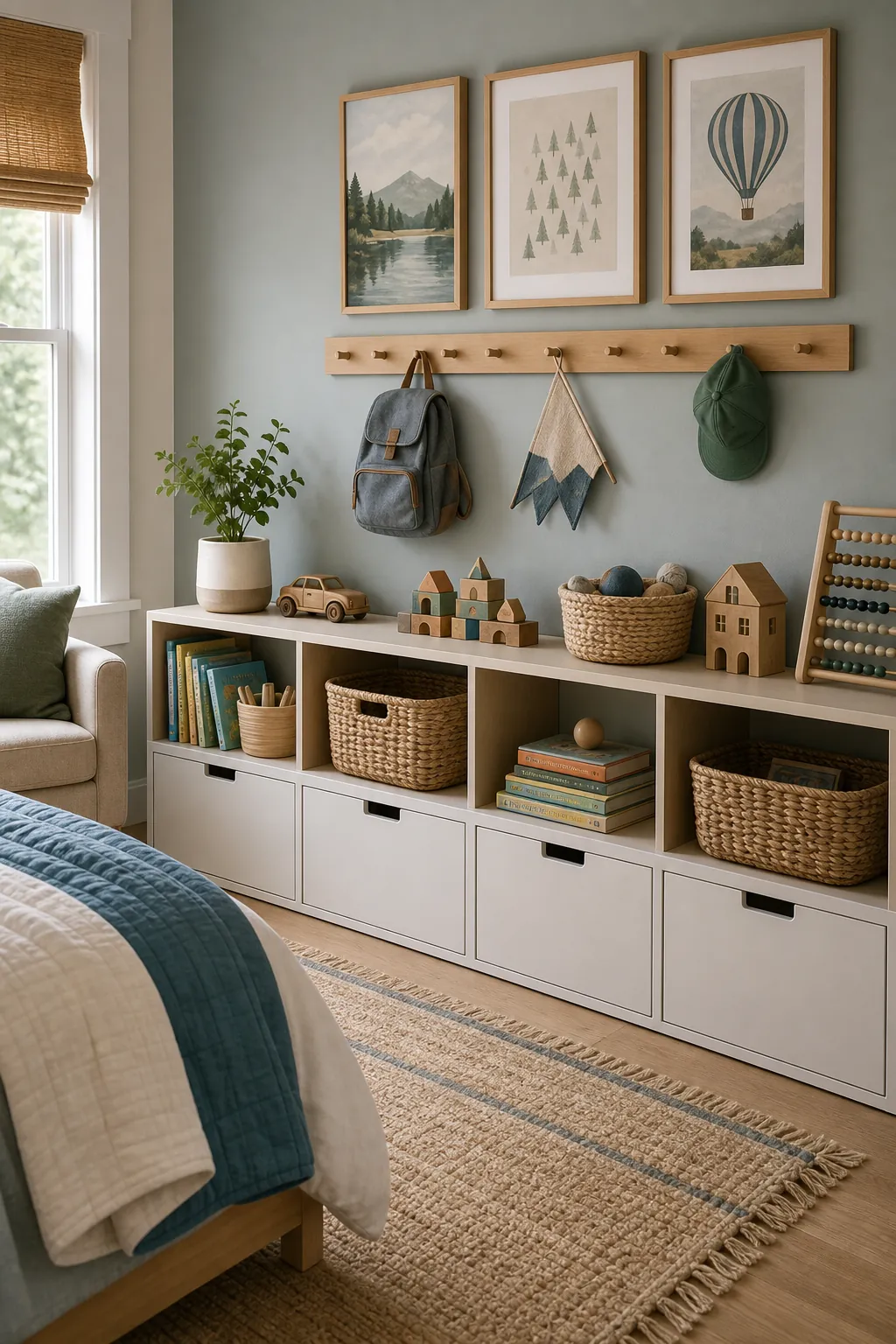
This is the difference between decorated and cluttered. A playroom decor wall can still feel polished if the toys are grouped, the colors are repeated, and the open shelves are edited. Put the most attractive books, blocks, or baskets where they can be seen, then hide the busy pieces. Open storage is display; closed storage is relief.
For a small bedroom, keep the display shallow. A peg rail, low book ledge, or narrow shelf usually works better than deep wall shelves. The room will look bigger, and the wall will still have enough detail to feel finished.
The best kids bedroom wall ideas are the ones that leave room for the child to grow. Pick one focal wall, one easy-change display, and one personal zone. Then stop before every wall becomes a project. A finished room has rhythm, not decoration on every inch.