
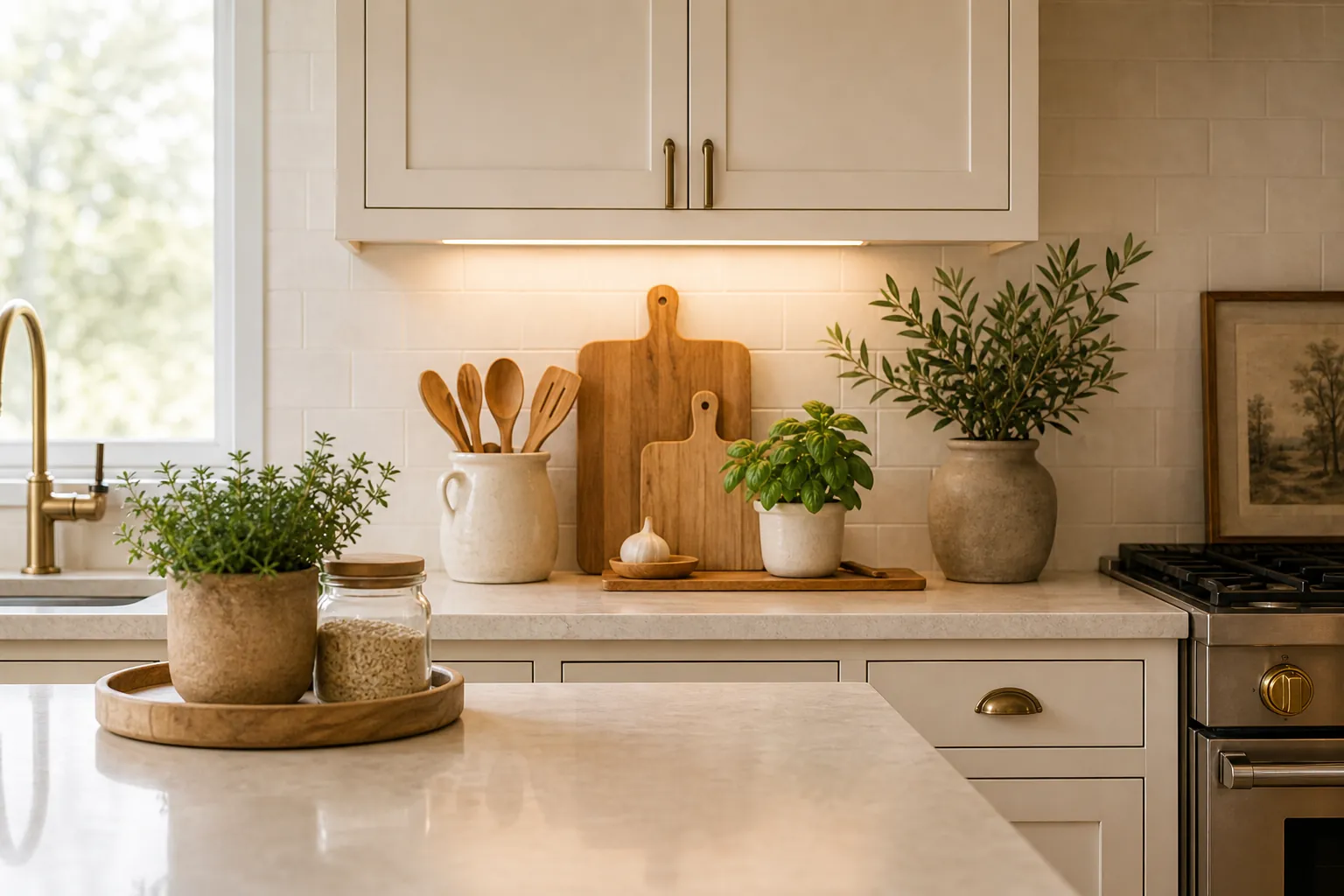
A kitchen counter can look styled and still stay ready for dinner prep. The difference is not usually the price of the objects on it. It is whether every visible thing has a job, a boundary, and enough empty space around it to breathe.
That is why the best kitchen counter decor starts with editing, not shopping. If mail, supplements, random mugs, and small appliances keep landing on the counter, more decor will only make the surface harder to use. A counter looks calm when the daily items are intentional, the extras are contained, and at least one generous prep zone stays clear.
For a natural kitchen or a boho kitchen, this approach works especially well. Bamboo, wood, ceramic, glass, stone, and kitchen plants add warmth without needing a crowded display. The goal is simple: make the counter feel finished without turning it into another storage shelf.
Start With the Clear-Space Rule
The most useful styling decision is deciding what stays empty. A clutter free kitchen needs visible open counter, not just prettier containers. Before adding a tray or plant, choose the area where chopping, plating, coffee making, or school-lunch packing actually happens. Keep that stretch open every day.
A practical target is to leave more than half of each counter run open. On a small counter, that may mean one styled moment and nothing else. On a long counter, it may mean two tight zones with open space between them. The empty space is not unfinished. It is what makes the decor look deliberate.
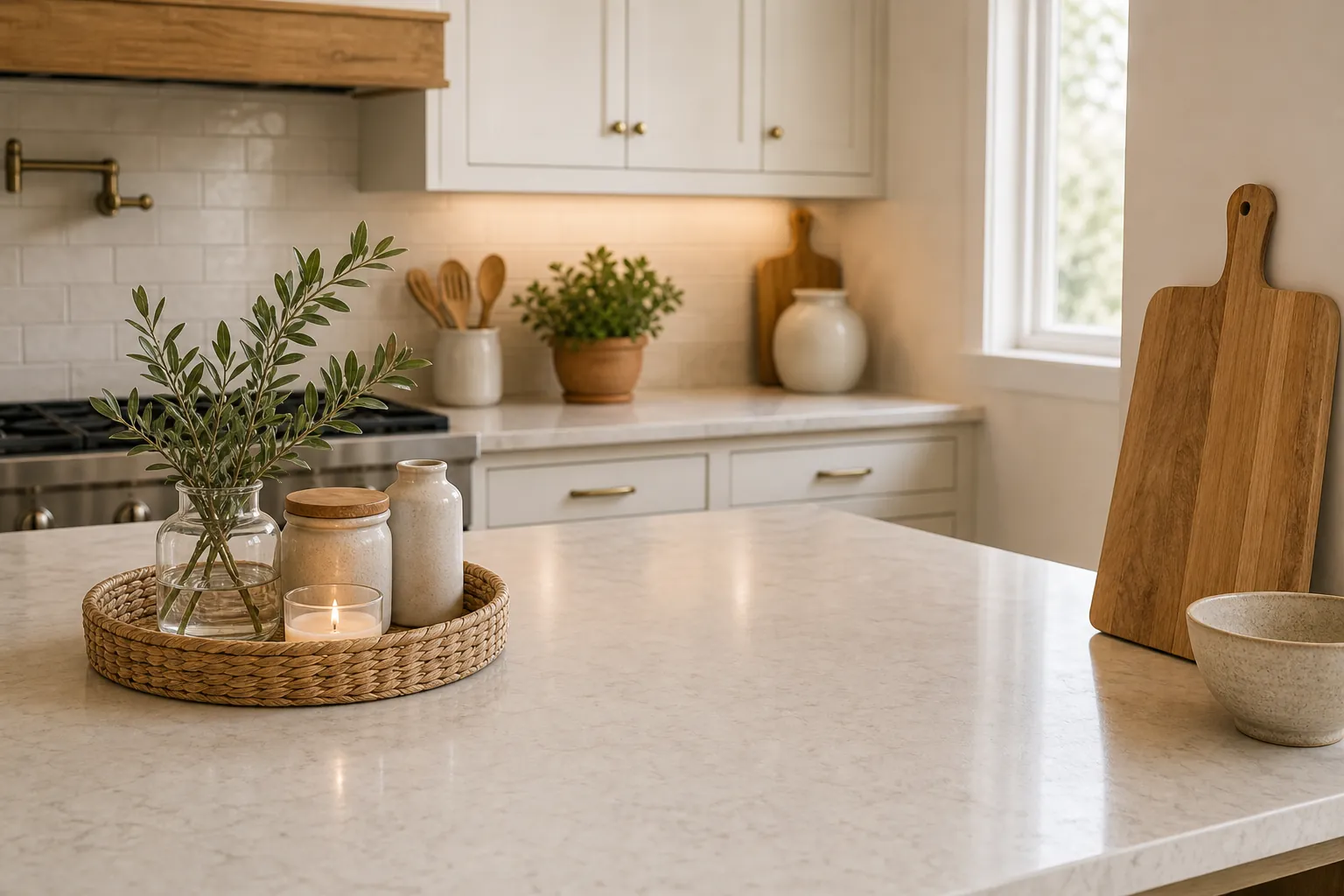
If your counter always looks busy, remove everything first and put back only what supports a daily routine. This turns counter organization into a design tool. A clean work zone makes a wood board, a small herb pot, or a ceramic bowl feel more intentional because it is not fighting for attention.
Use One Tray to Turn Small Items Into a Zone
Small objects create visual noise when they are scattered. Olive oil near the stove, salt near the cutting board, soap by the sink, and a candle at the far end may all be useful, but the counter reads them as separate clutter. A tray solves this by giving the eye one boundary.
Choose a low bamboo, wood, stone, or woven tray and keep the grouping tight. A simple formula works: one tall item, one medium item, and one small item. For example, place an olive oil bottle, a ceramic salt cellar, and a small herb pot on one bamboo tray near the cooking zone. It looks styled, but everything still belongs in the kitchen.
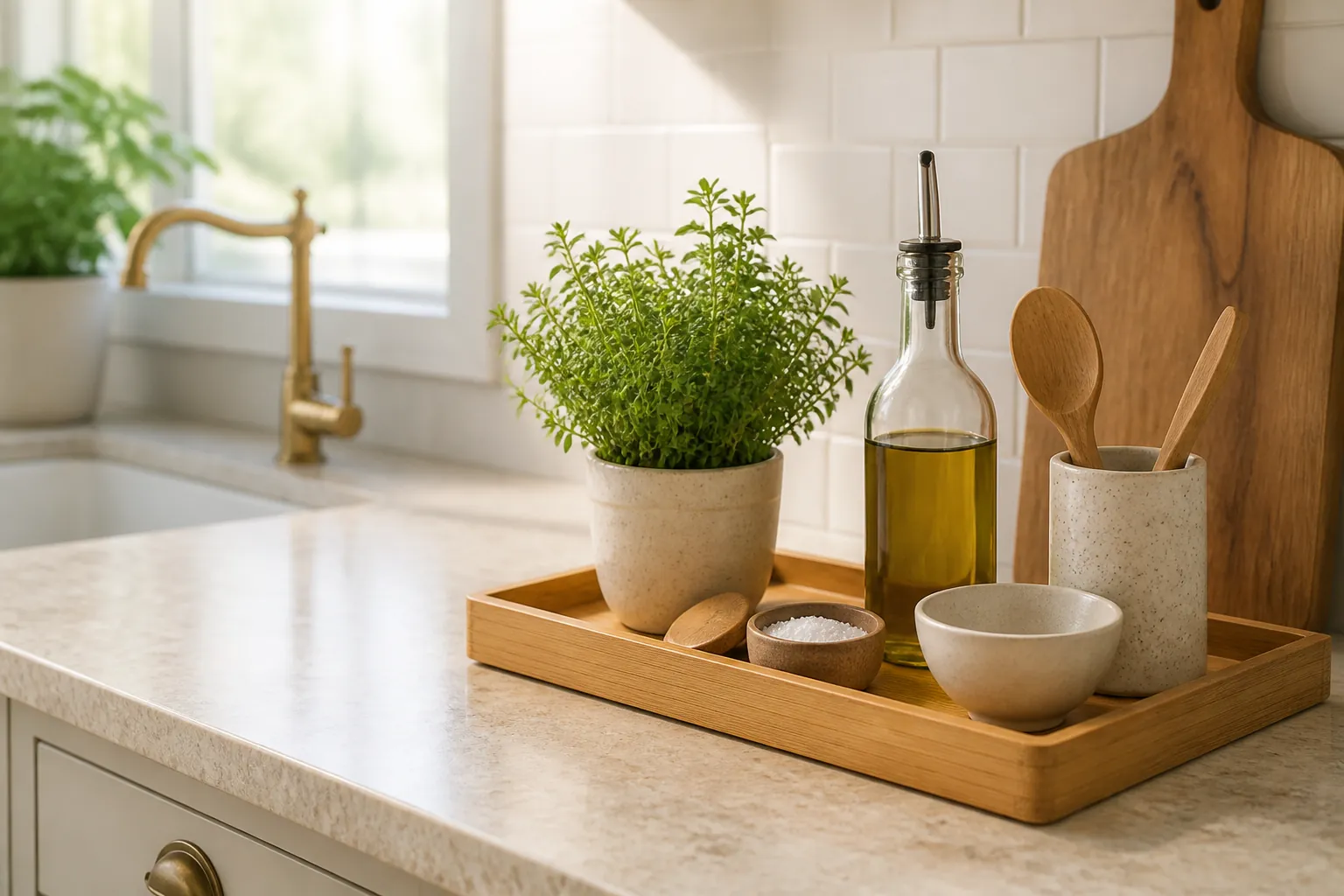
This is also easier to clean. Instead of moving five separate things to wipe the counter, lift one tray. That small habit matters because kitchen styling fails when it makes the room harder to maintain.
Decorate With Useful Kitchen Materials
The safest way to avoid clutter is to decorate with objects that already make sense in a kitchen. Cutting boards, a ceramic utensil crock, a fruit bowl, glass jars, a linen towel, or a cookbook on a stand can all add warmth while still serving the room.
Natural texture is the reason these pieces work. A bamboo board softens stone counters. A white ceramic crock calms a busy backsplash. Clear glass canisters keep ingredients visible without adding color noise. A woven basket makes fruit feel like kitchen decor, not a pile waiting to be moved.
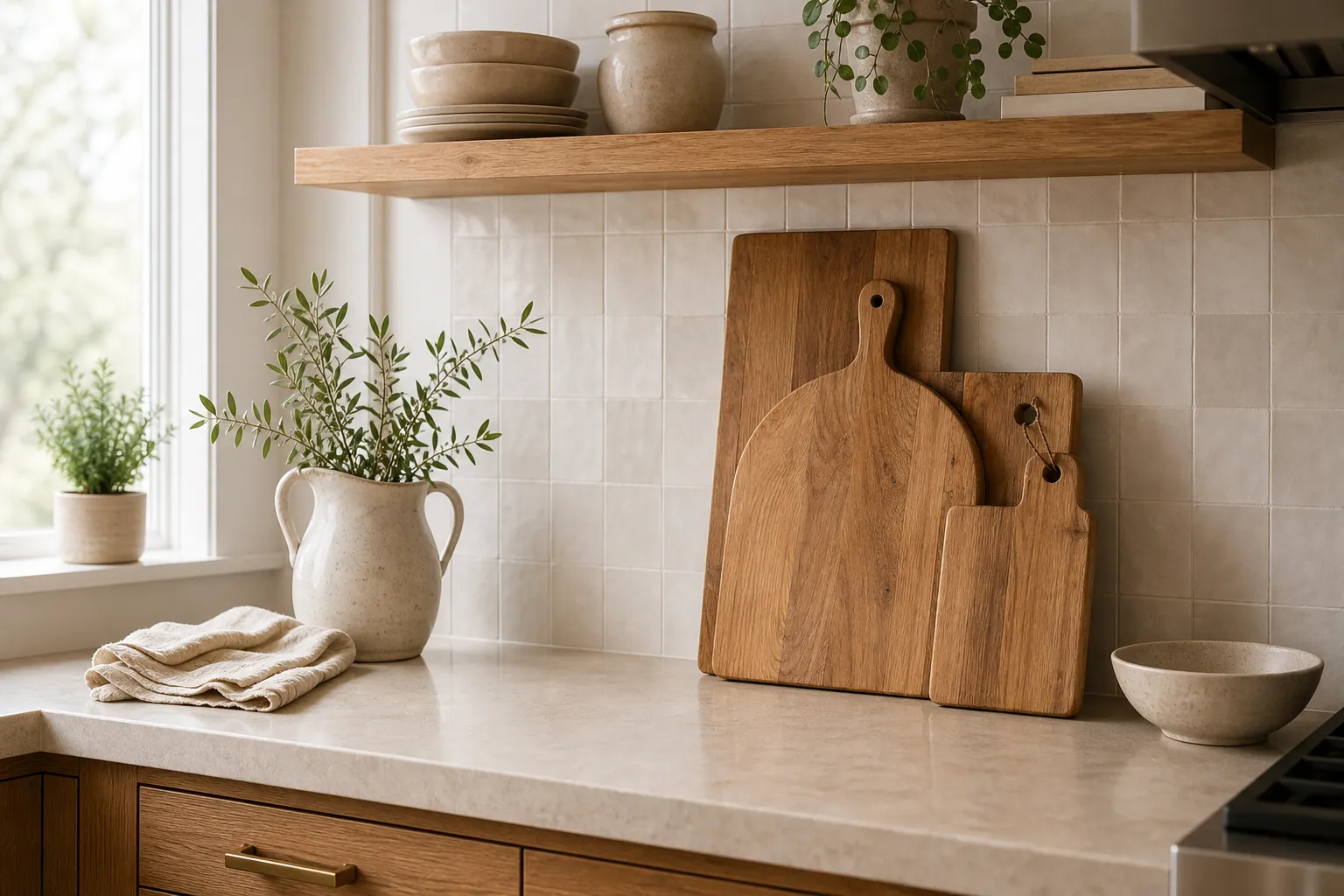
The key is restraint. One leaning board can look sculptural. Four boards, three crocks, and a row of jars can look like the counter is doing the cabinet’s job. If you love open shelving, let the shelf carry some of the display so the counter can stay functional.
Add Greenery Without Losing Work Space
Kitchen plants are one of the fastest ways to make a counter feel alive. They add height, soften hard cabinetry, and connect naturally with bamboo or wood details. But the plant should be sized for the surface. A sprawling vine beside the sink may look charming for a week and then become another thing to clean around.
For counters, compact herbs are usually better than oversized houseplants. Basil, rosemary, thyme, mint, or a small pothos cutting can bring in green without taking over. Place one plant in a warm ceramic or woven pot, then give it a defined home: beside the sink, on a small tray, or under open shelving where it adds vertical contrast.
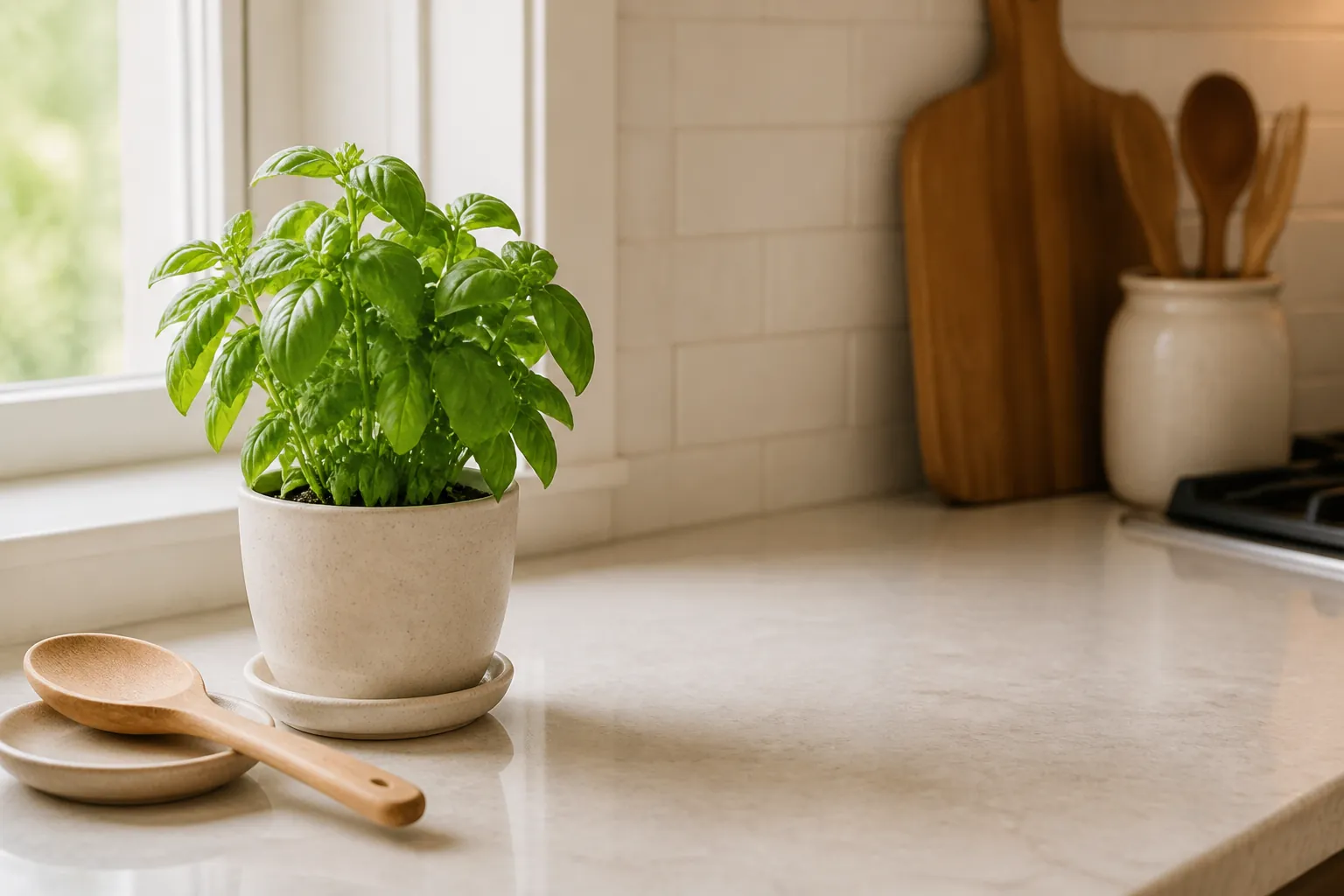
If the counter is narrow, move greenery up instead of out. A shelf above the counter, a wall rail, or a small hanging planter can create the same natural kitchen feeling while preserving the work surface below.
Make Daily Appliances Look Intentional
Most counters do not look cluttered because of one pretty bowl. They look cluttered because appliances never leave. The coffee maker, toaster, blender, air fryer, stand mixer, and drying rack all have strong shapes. When too many stay out, they break the counter into visual obstacles.
Start by choosing what truly earns counter space. If coffee happens every morning, the coffee maker can stay. If the blender is used twice a week, a nearby cabinet may be better. Then style the appliance zone instead of pretending it is not there. A small bamboo tray for coffee supplies, one matching canister, and a mug rail can make the setup feel planned.
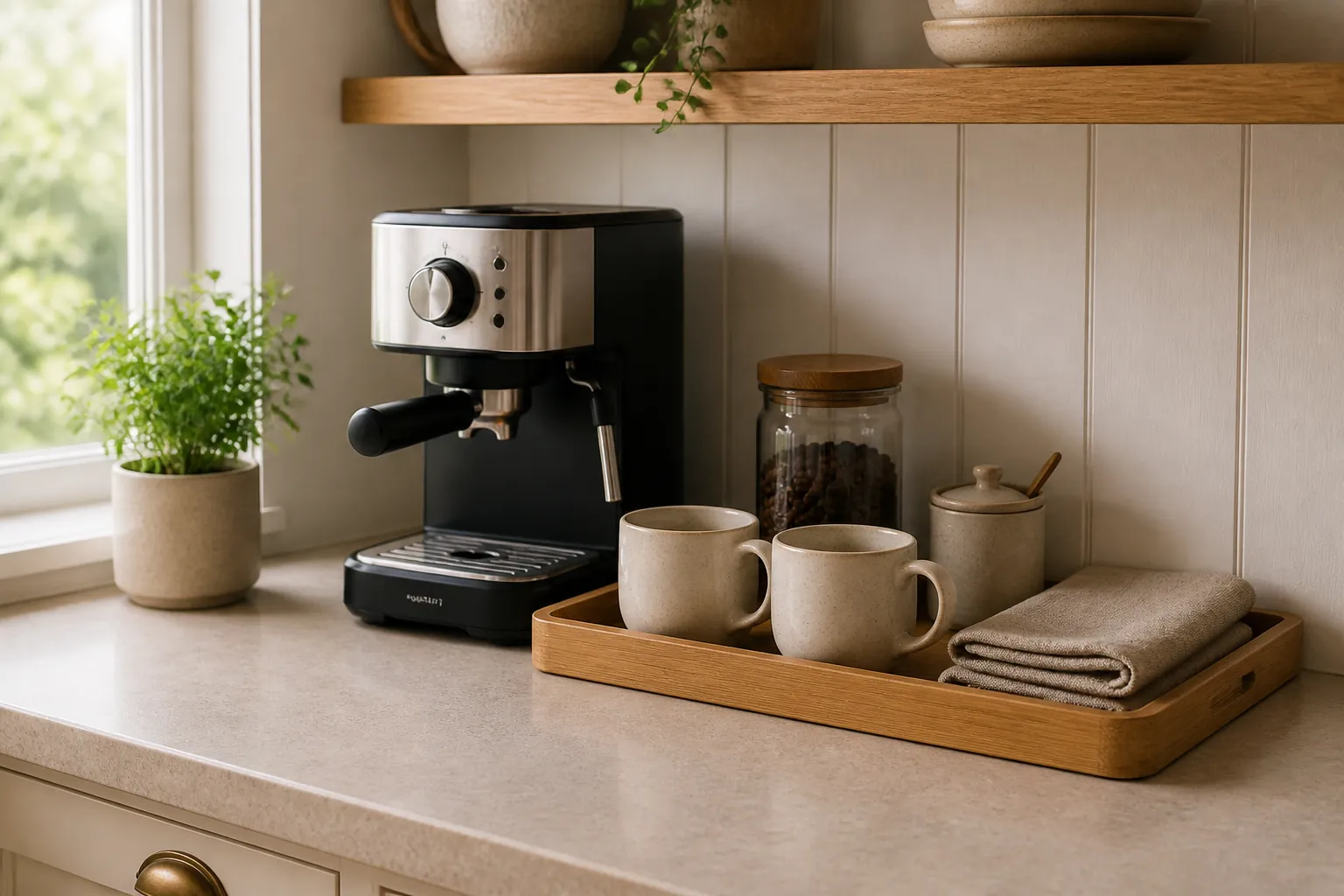
This is where kitchen styling becomes honest. You do not need to hide every sign of use. You need the visible tools to look chosen. Matching finishes, a contained footprint, and clear space around the zone make daily function feel calm instead of messy.
Style the Island Like a Serving Surface, Not a Display Shelf
A kitchen island is tempting because it has so much visible space. That is also why it can become a drop zone. If the island is used for prep, homework, serving, or casual dining, keep the decor low and movable. The best island arrangement can be lifted away in one motion.
Use one centerpiece instead of several small displays. A shallow bowl of fruit, a low basket with linen napkins, or a single vase with branches can work. If your island connects visually to the dining room decor, repeat one material from that space, such as woven texture, warm wood, black metal, or white ceramic. The link feels intentional without crowding the counter.
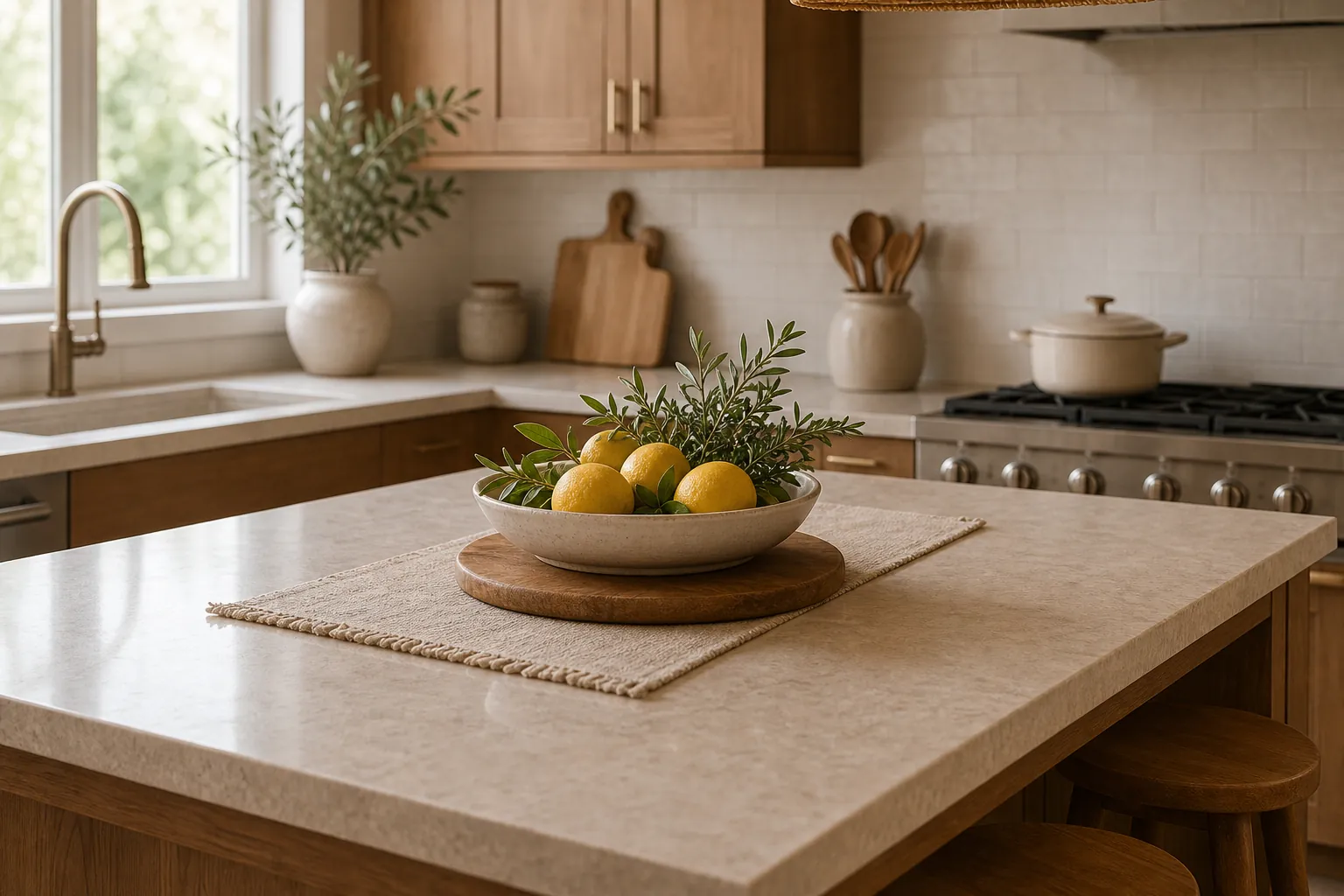
A good test is whether the island still feels ready for real life. If you would need to clear a collection of decorative pieces before setting down groceries or serving dinner, the arrangement is too demanding for a kitchen.
Edit by Height, Color, and Quantity
When a counter still feels cluttered after organizing, the issue may be visual weight. Too many items at the same height create a flat line. Too many colors make the eye jump around. Too many small pieces make the surface feel dusty before it is even dirty.
Use a quick edit: keep one vertical piece, one useful middle-height piece, and one low piece in any styled zone. Repeat a limited material palette, such as bamboo, white ceramic, clear glass, and one green plant. Put away anything that repeats the same job. One fruit bowl is decor. Three fruit bowls are storage looking for a cabinet.
This is the simplest way to make counter decor feel grown-up. You are not stripping the kitchen bare. You are letting fewer, better pieces carry the warmth while the open counter carries the calm.
A Clutter-Free Counter Is a Habit, Not a Look
The most polished counter will not stay that way if it has to absorb every object without a home. Give paper, chargers, grocery overflow, supplements, and extra appliances somewhere else to land. Then let the counter hold only what supports cooking, cleaning, gathering, or a single natural accent.
That is the real secret behind kitchen counter decor ideas that do not create clutter. The decor is not doing all the work. The editing is. Once the counter has clear zones and useful materials, a bamboo tray, a plant, a cutting board, or a bowl of fruit is enough to make the kitchen feel warm, styled, and ready to use.