
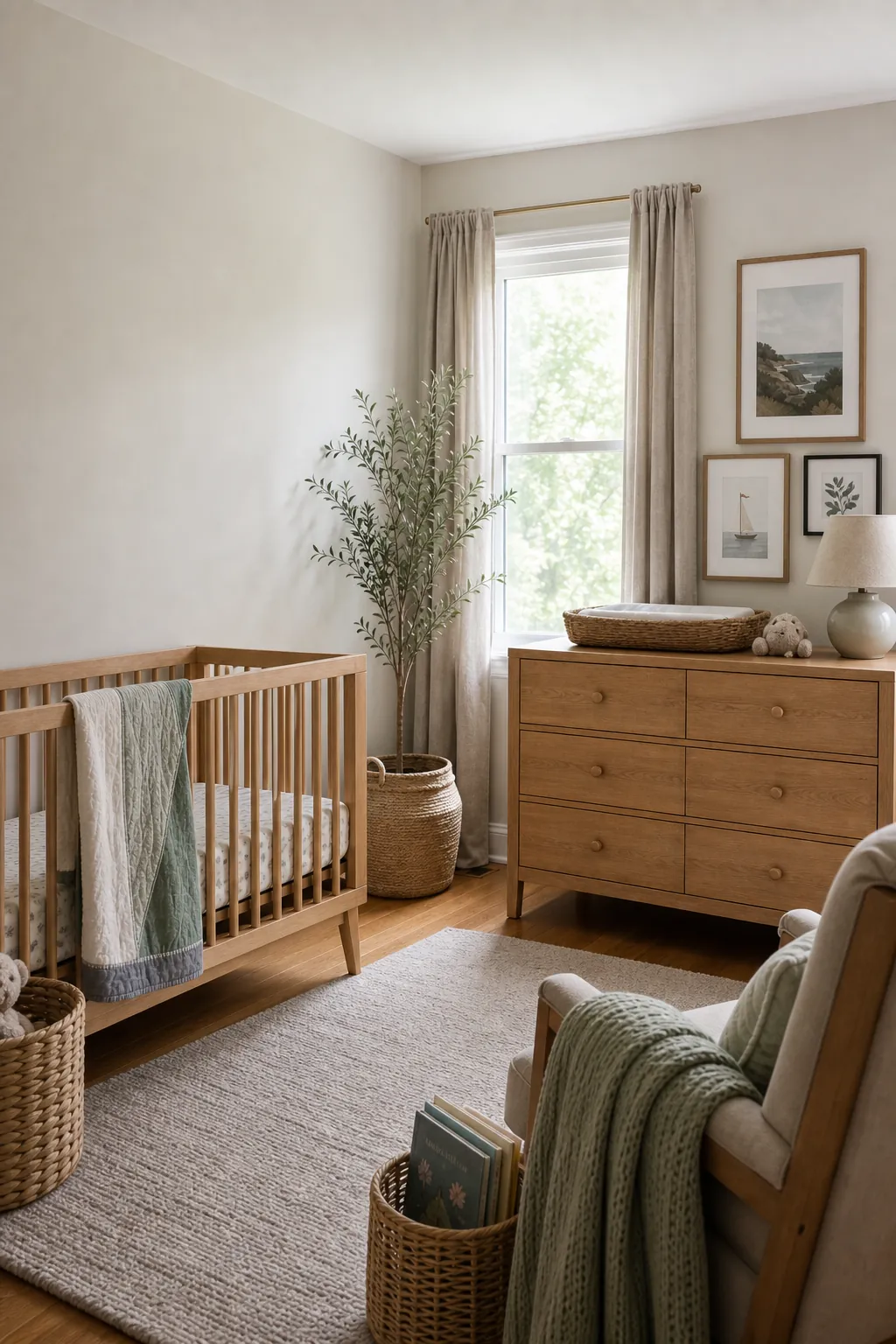
The best nursery wall decor does not freeze the room at the newborn stage. It gives you a sweet first nursery, then leaves room for a toddler bed, favorite books, school drawings, odd little collections, and the child’s own opinions.
That is the real problem parents run into. A nursery can be beautiful in photos and still feel too themed, too fragile, or too expensive to update a year later. The smarter approach is to build a flexible wall system: calm base colors, safe placement, swappable wall art, and a few display zones that can change without repainting the whole kids bedroom.
Use these nursery wall decor ideas as a grow-with-me room plan, not a one-time shopping list.
Start With a Base That Does Not Sound Babyish
A wall color or wallpaper pattern should be the part of the room you are least eager to redo. If the base is too specific, every later update has to fight it. Think soft white, warm greige, pale sage, clay, mushroom, muted blue, or a quiet stripe. These colors still work with a crib, but they also make sense with a twin bed, a reading corner, or a small desk.
This is where neutral nursery decor earns its keep. Neutral does not mean bare. It means the biggest surfaces are calm enough that the child can grow into stronger details later. The wall art, bedding, lampshade, rug, and baskets can carry the personality.
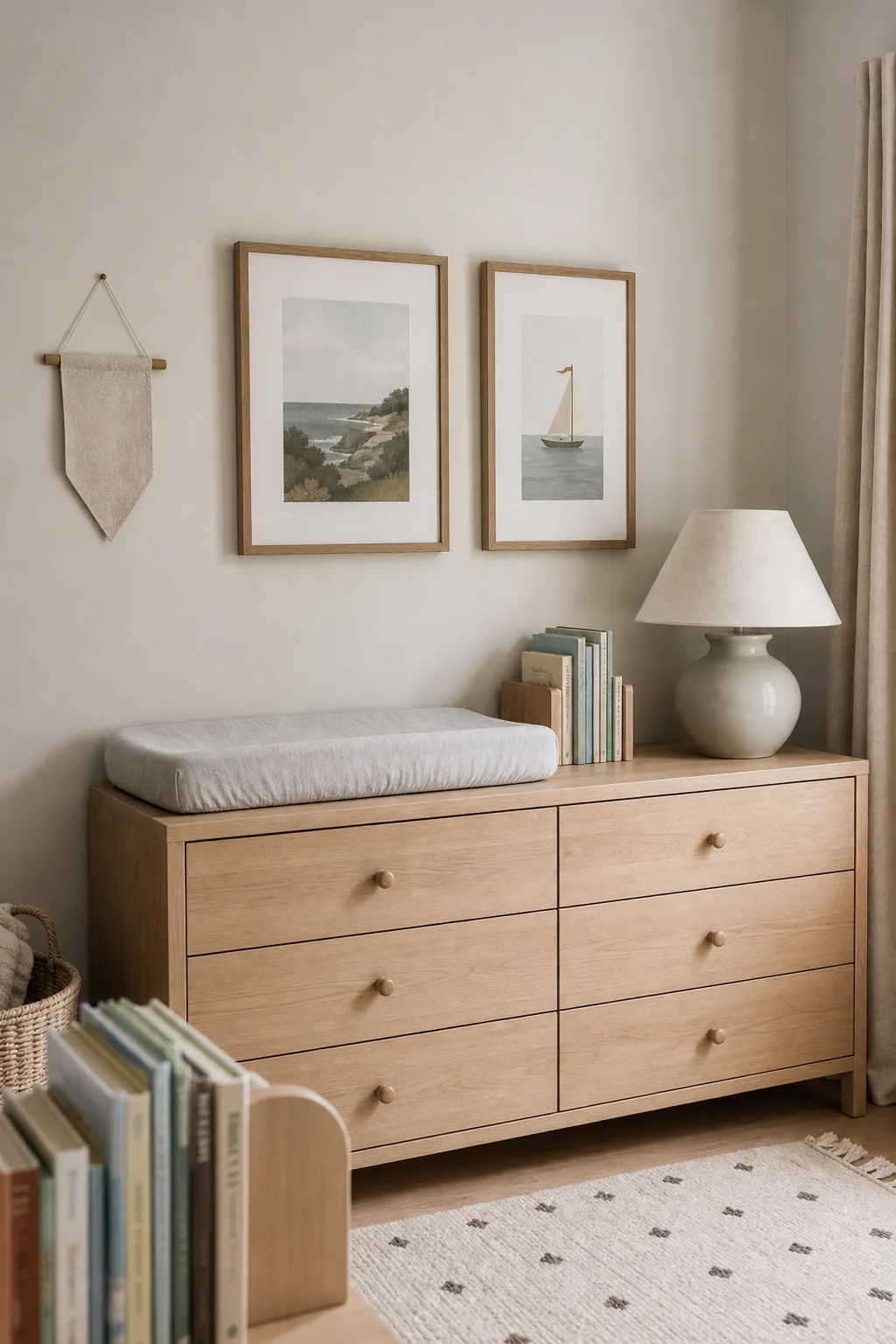
A good test is simple: remove the crib from the room in your mind. If the wall still works behind a bed, dresser, bookcase, or small table, the foundation is flexible enough.
Keep the Crib Wall Beautiful, But Keep It Light
The crib wall is usually the first place people want to decorate. It is also the wall that deserves the most restraint. Heavy frames, shelves, mirrors, glass, and anything with a cord should not sit where a baby can pull, kick, or be hit if something fails. The American Academy of Pediatrics parent checklist on making baby’s room safe also warns against cords near the crib and recommends keeping cribs away from windows; CPSC’s window covering safety guidance makes the same cordless point.
That does not mean the crib wall has to be empty. Use the lightest treatments here: removable wall decals, painted shapes, a mural, peel-and-stick stars, a soft color-block arch, or a wallpaper panel that has no separate hard parts. If you want framed wall art, move it to the dresser wall, reading corner, or a side wall where it can anchor the room without hanging over the sleep space.
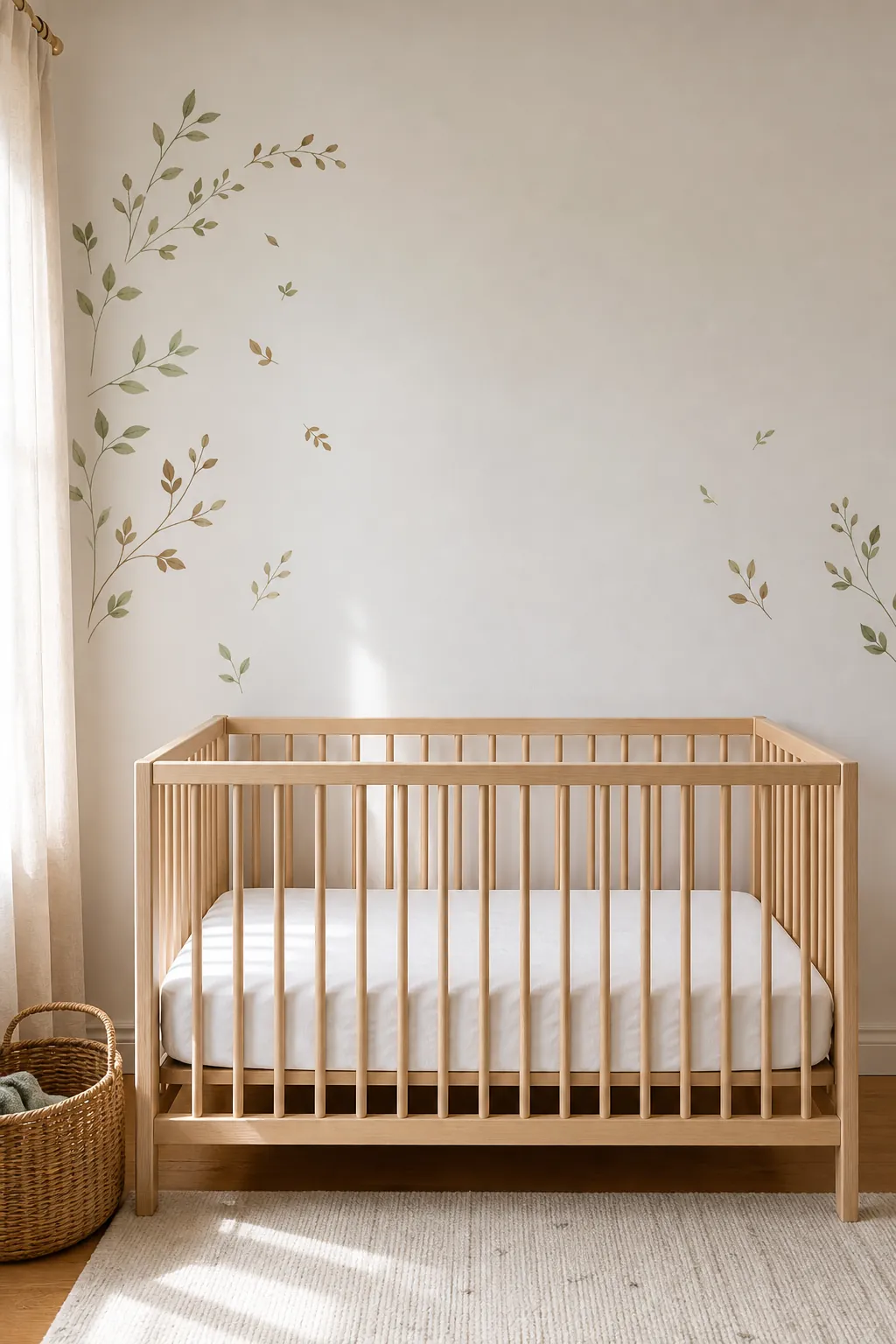
This one choice also helps the room age well. A decal wall can become a toddler headboard moment, a reading nook backdrop, or a blank wall again without patching anchor holes.
Use a Side Wall for Display, Not the Sleep Zone
If you love scalloped shelves, peg rails, small ledges, or layered objects, give them their own display wall. A side wall near the glider, dresser, or storage bench is usually more useful than the wall over the crib. It lets you style the nursery decor now, then swap the objects as the child grows.
Scalloped shelves work especially well because they can change roles. In the baby stage, they hold a tiny board book, a soft rattle, a framed print, and a small keepsake. In the toddler stage, they can hold animal figures, seasonal books, a flashlight, or a rotating favorite object. In the preschool stage, the shelf becomes a place for collections, trophies, rocks, art supplies, or whatever the child suddenly cares about that month.
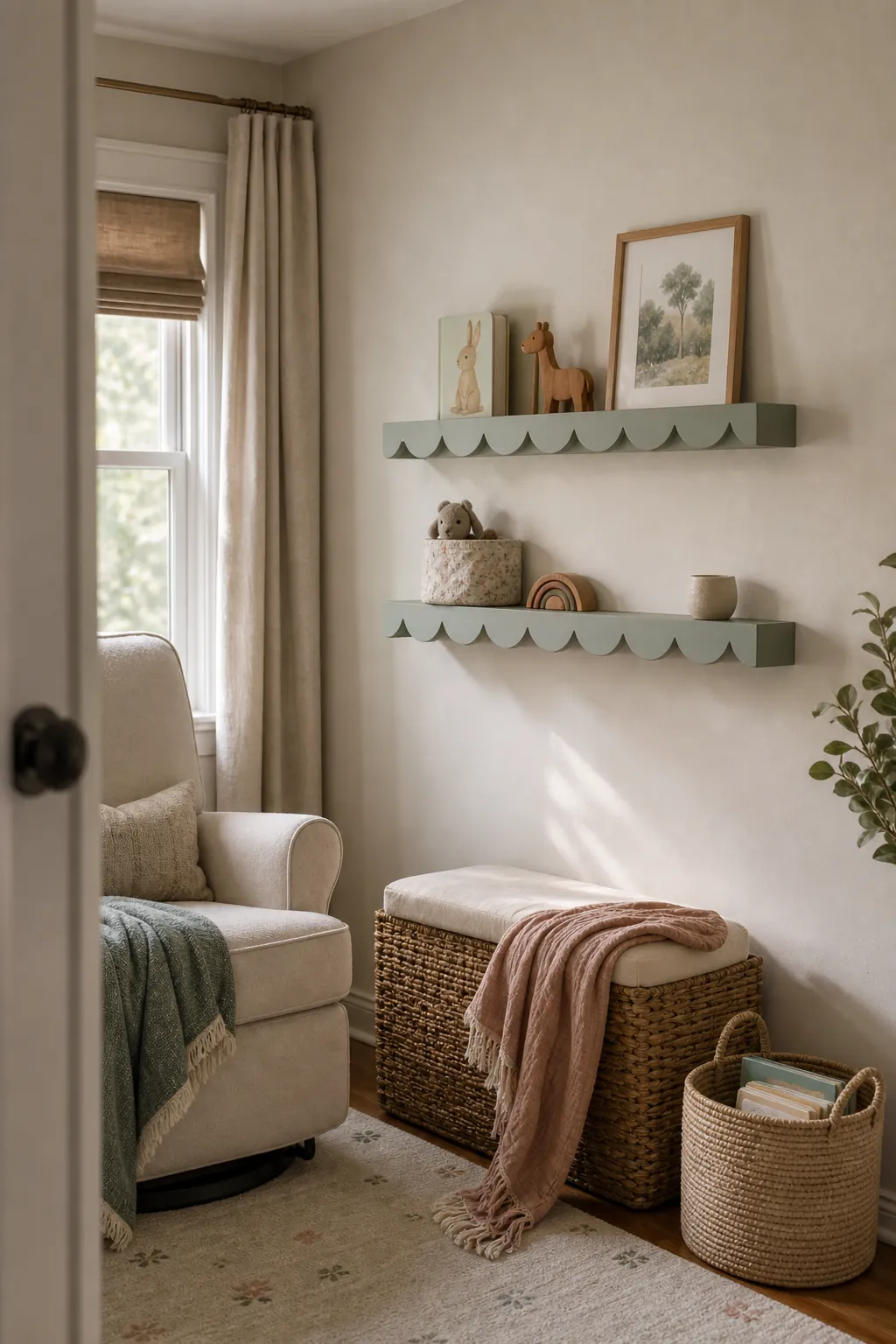
Keep the shelf color simple if you want the longest life. Painted cream, sage, clay, dusty blue, or natural wood can handle many phases of kids room decor. A very specific baby motif, like one animal or cartoon-style theme, is harder to reuse.
Create One Rotating Wall Art Zone
A grow-with-me room needs a place where the art can change quickly. That can be a picture ledge, a small gallery wall, a magnetic strip, clip rails, cork tiles, or a mix of two frames and one child-art clip. The point is not to fill every inch. The point is to create a flexible zone where new wall art can appear without starting the room styling over.
For a nursery, the first version might include a family photo, a soft landscape, a tiny alphabet print, and a sentimental card. When the room becomes a toddler bedroom, swap one piece for a favorite animal print. Later, replace another with the child’s own drawing. The room slowly becomes theirs, while the base still looks intentional.
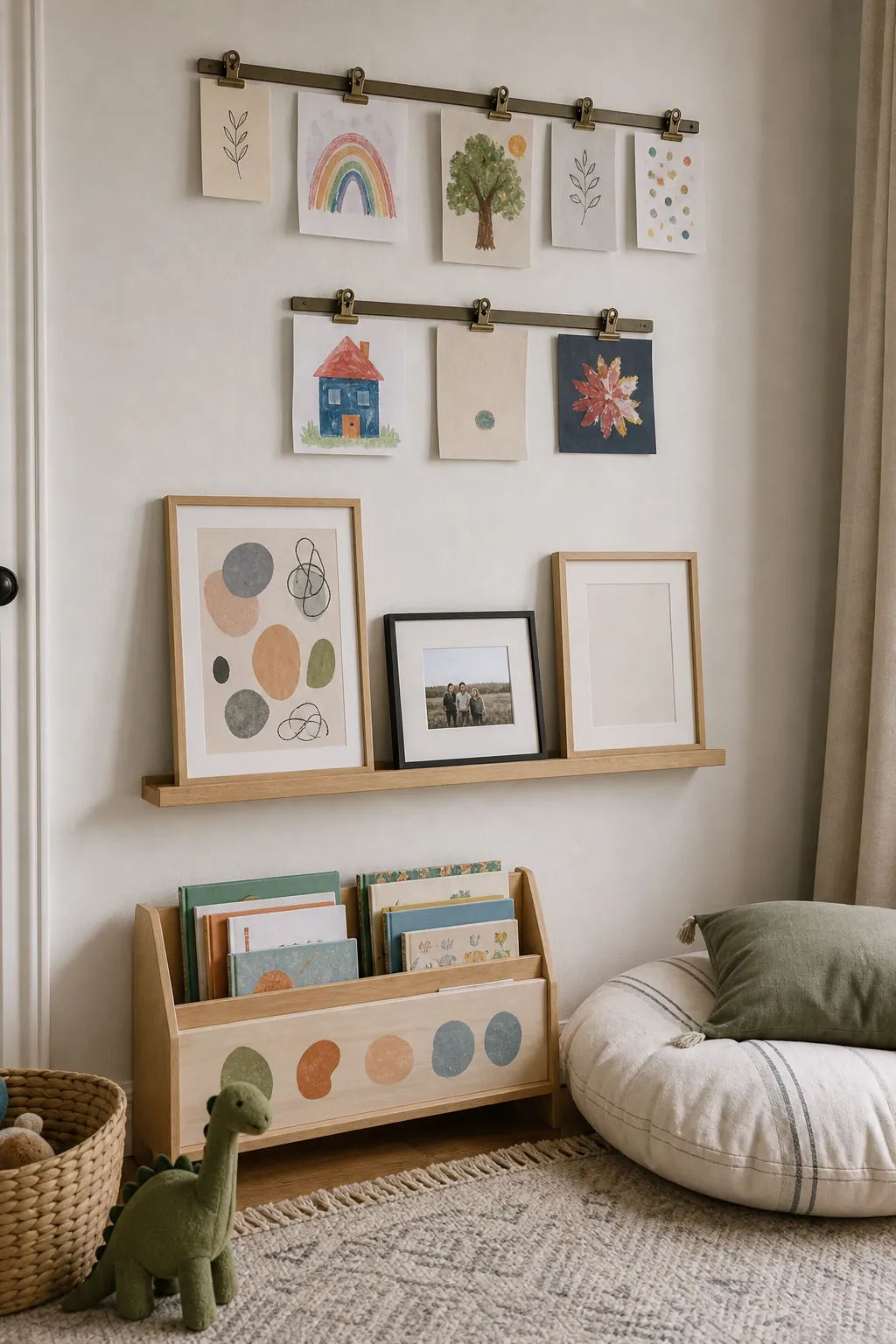
This is the easiest way to avoid theme fatigue. You can love woodland, sky, vintage animals, garden, ocean, or space without locking the whole bedroom decor into one idea. Let the theme live in the replaceable layer.
Turn Wall Decor Into a Reading Corner
Forward-facing book ledges are one of the rare nursery wall decor ideas that become more useful with age. In the beginning, they bring color and shape to the wall. Later, they help a toddler see choices and build a bedtime routine. Add a floor cushion, a small washable rug, and two calm prints above the ledges, and the wall becomes a tiny reading corner.
The best placement is low enough for a walking child to choose a book, but not so crowded that the wall feels busy. Keep the art above the books simple: one large print and one smaller frame, or two same-size frames with a picture light nearby. If the nursery is small, this reading wall can replace a separate bookcase.
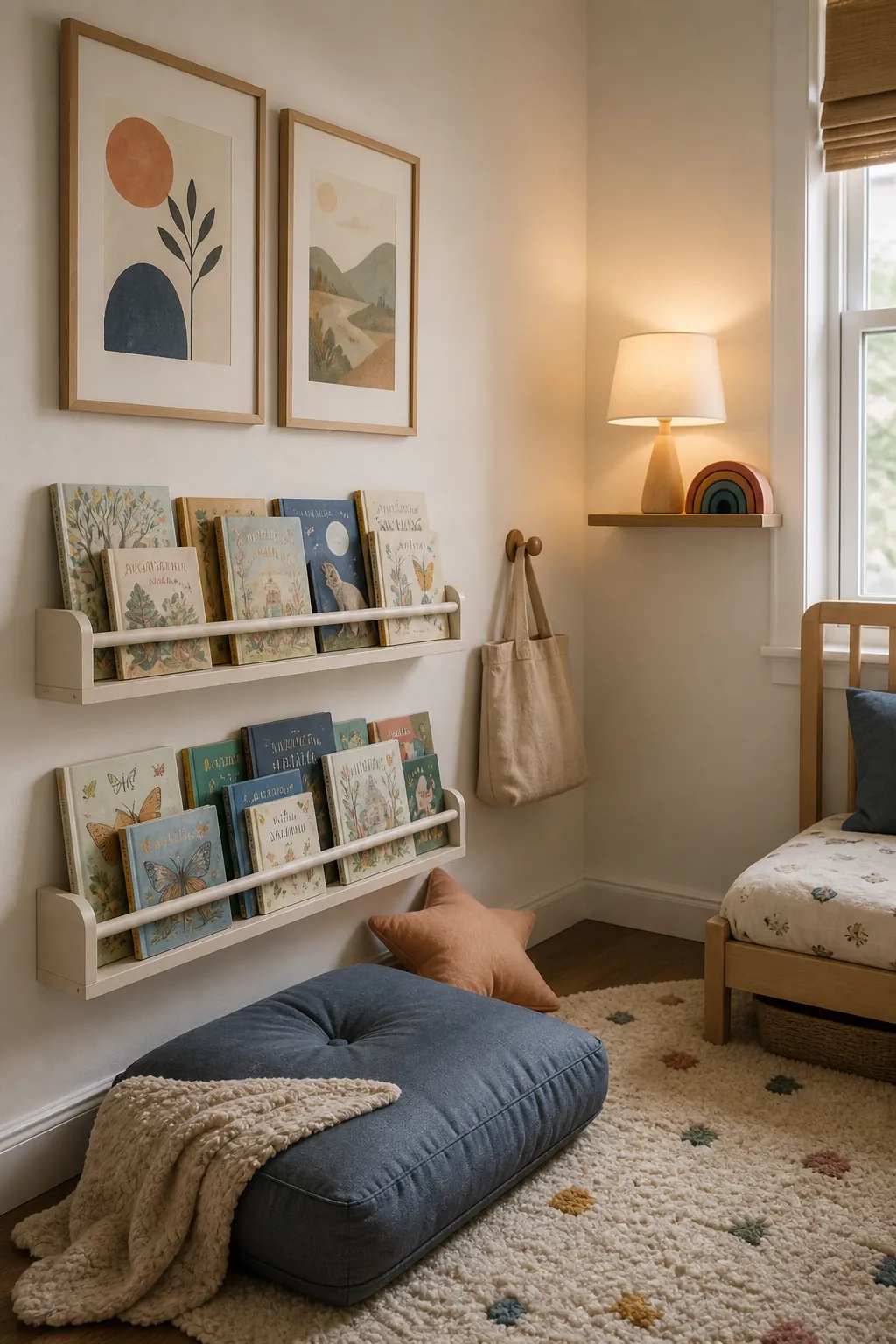
This type of room styling also makes updates cheaper. Change the book covers, swap a print, add a cushion cover, and the whole corner feels new.
Design for the First Big Bedroom Change
The first major shift usually happens when the crib leaves. That is when parents discover whether the nursery decor was flexible or too tied to one furniture layout. Before you hang anything permanent, picture the future bed on two possible walls. Then keep the strongest decor zones in places that still work with those layouts.
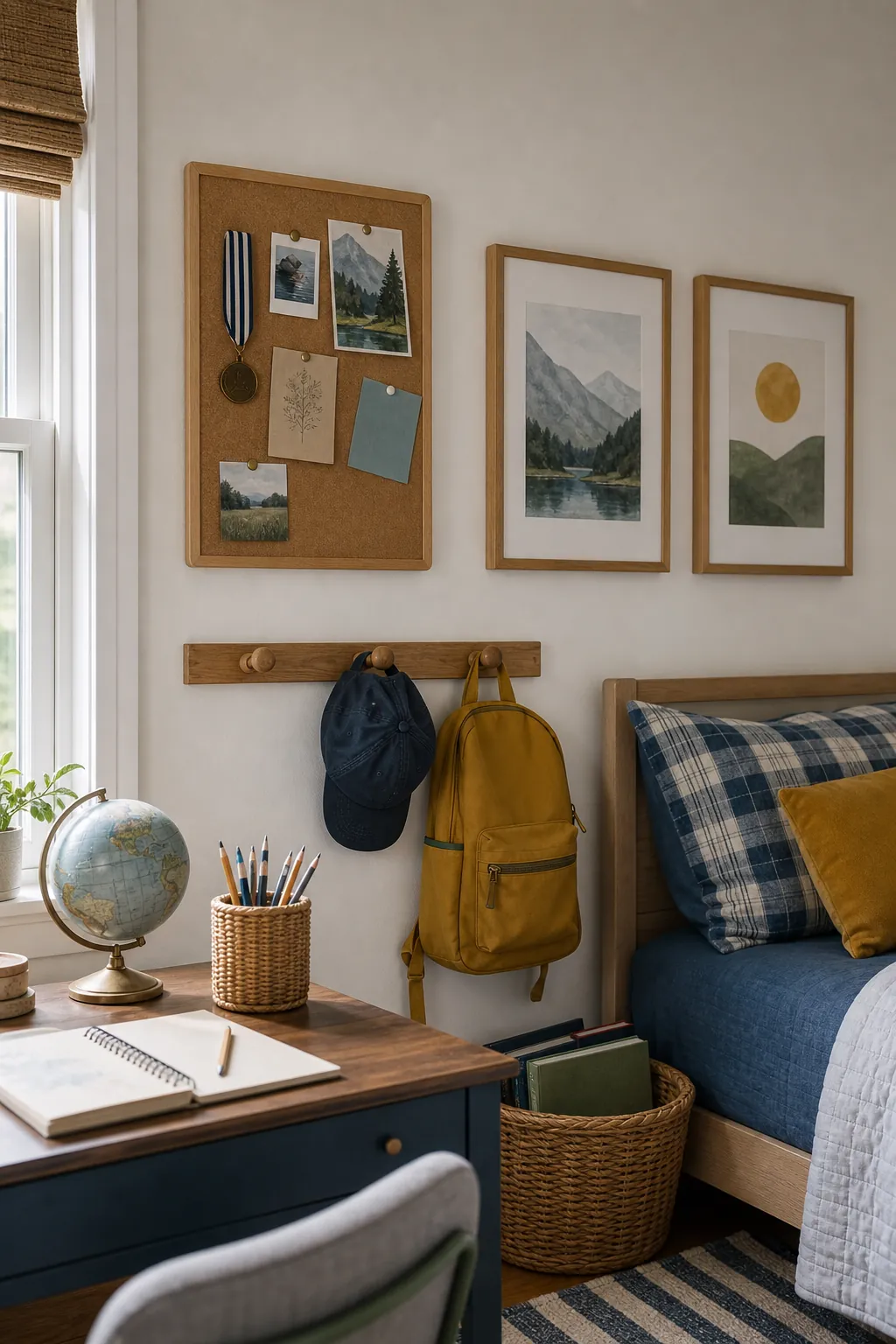
A dresser wall can become a desk wall. A reading corner can stay a reading corner. A low book ledge can stay useful. A picture rail can rotate from baby prints to school art. The wall over the crib, however, may become the headboard wall later. If you kept it light with paint or decals, that transition is easy.
Choose Themes as Accents, Not Architecture
Themes are not the problem. Permanent themes are. If you love a sky nursery, use a pale blue print, a moon-shaped light, and a few cloud decals. If you love garden decor, use pressed-flower art, a botanical sheet, and a scalloped shelf in sage. If you love animals, choose one framed animal print and a soft toy basket instead of covering every surface.
This keeps the room personal without making every later choice expensive. The child can grow out of dinosaurs, rabbits, rainbows, or trucks, and you only have to change the accent layer.
A Simple Grow-With-Me Wall Plan
- Crib wall: paint, wallpaper, mural, or removable decals. Keep it light and free of heavy objects.
- Dresser wall: framed nursery wall decor, a mirror placed safely away from the crib, or a small gallery arrangement.
- Side wall: scalloped shelves, a peg rail, or a display ledge for changing objects.
- Reading wall: forward-facing books, a cushion, and two flexible prints.
- Future wall: a corkboard, clip rail, or picture ledge ready for school art and hobbies.
You do not need to finish every wall before the baby arrives. In fact, the room usually gets better when one wall stays unfinished. Leave space for the child’s art, their books, their first collections, and the practical changes that come with real family life.
The nursery can be beautiful now and still make sense later. Build the calm base, keep the sleep zone safe, put personality in the swappable layers, and let the bedroom decor grow at the same pace as the child.