
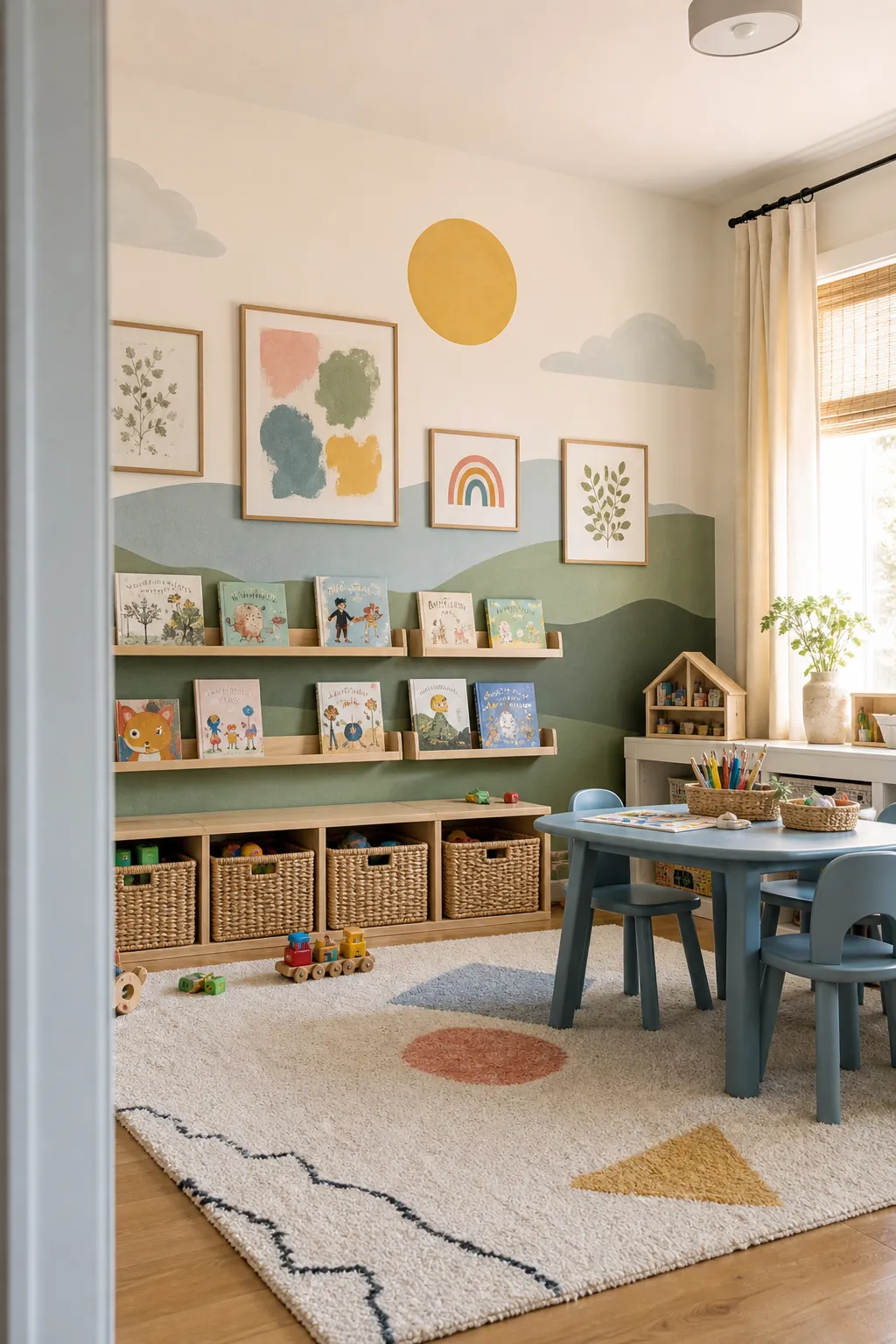
A good playroom wall has to do more than look cute in a photo. It needs to survive fingerprints, give toys a place to land, keep the room from feeling chaotic, and still feel fun enough that kids actually want to use the space. That is why the best playroom wall decor ideas usually mix color, storage, display, and a little bit of imagination.
The simplest way to plan it is to ask what the wall should do first. Does the room need a colorful playroom idea, a small playroom design trick, a kid-height art zone, or a playroom accent wall that makes the whole room feel finished? Start there, then choose the idea that gives the biggest upgrade without making the room harder to clean.
1. Build a kid-height gallery wall
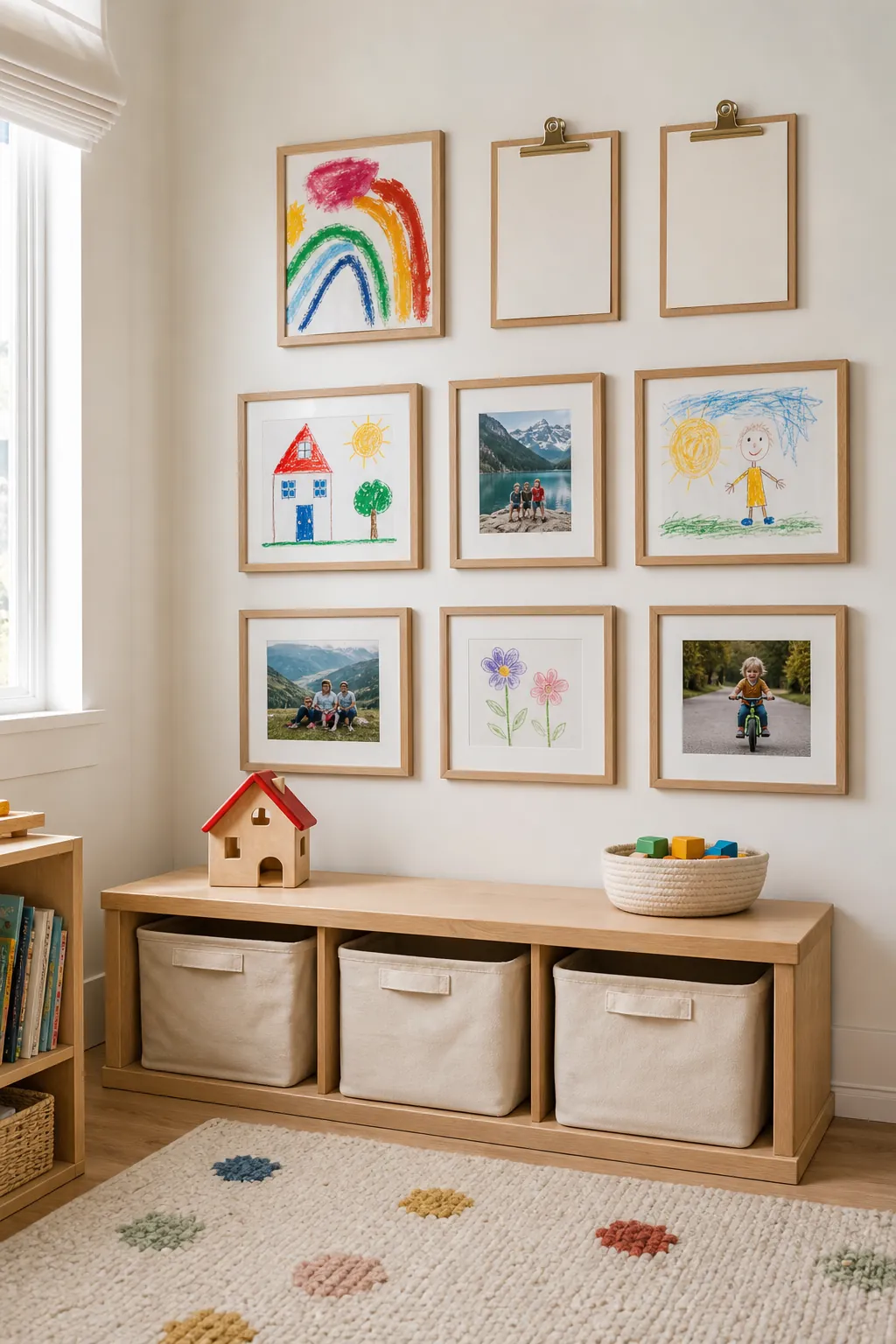
A gallery wall works better in a playroom when the frames sit lower than they would in a formal living room. Hang the bottom row where kids can actually see it, then mix framed prints, family photos, and a few pieces of their own art. This keeps the wall personal without turning it into a pile of taped-up paper.
For a small playroom design, use slim frames in two finishes at most. White, pale wood, or black frames keep colorful art from feeling messy. If the room already has bright toys, leave more white space between pieces so the wall can breathe.
2. Paint a washable mural instead of buying more decor
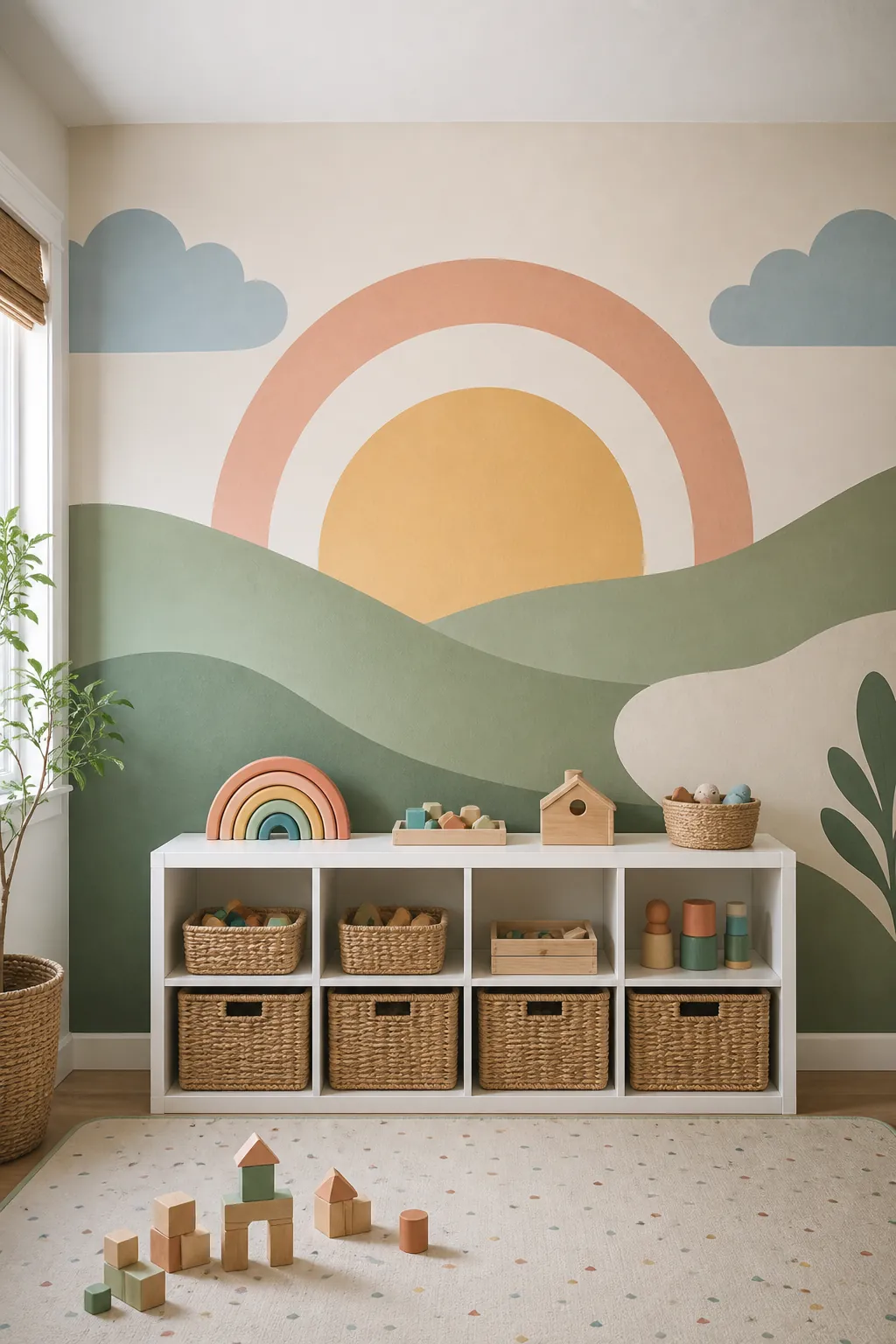
A painted mural can make the whole room feel designed even when the furniture is simple. Think oversized arches, rolling hills, clouds, color-block houses, a rainbow stripe, or a loose mountain shape behind the toy shelf. The key is to keep the shapes large and simple so the wall feels intentional, not busy.
Choose a scrubbable finish and limit the palette to three or four colors. Muted greens, dusty blues, clay pinks, warm yellows, and soft terracotta can feel playful without making the playroom wall colors too loud. This is one of the easiest kids playroom paint ideas when you want impact on a budget.
3. Add a chalkboard wall that has boundaries
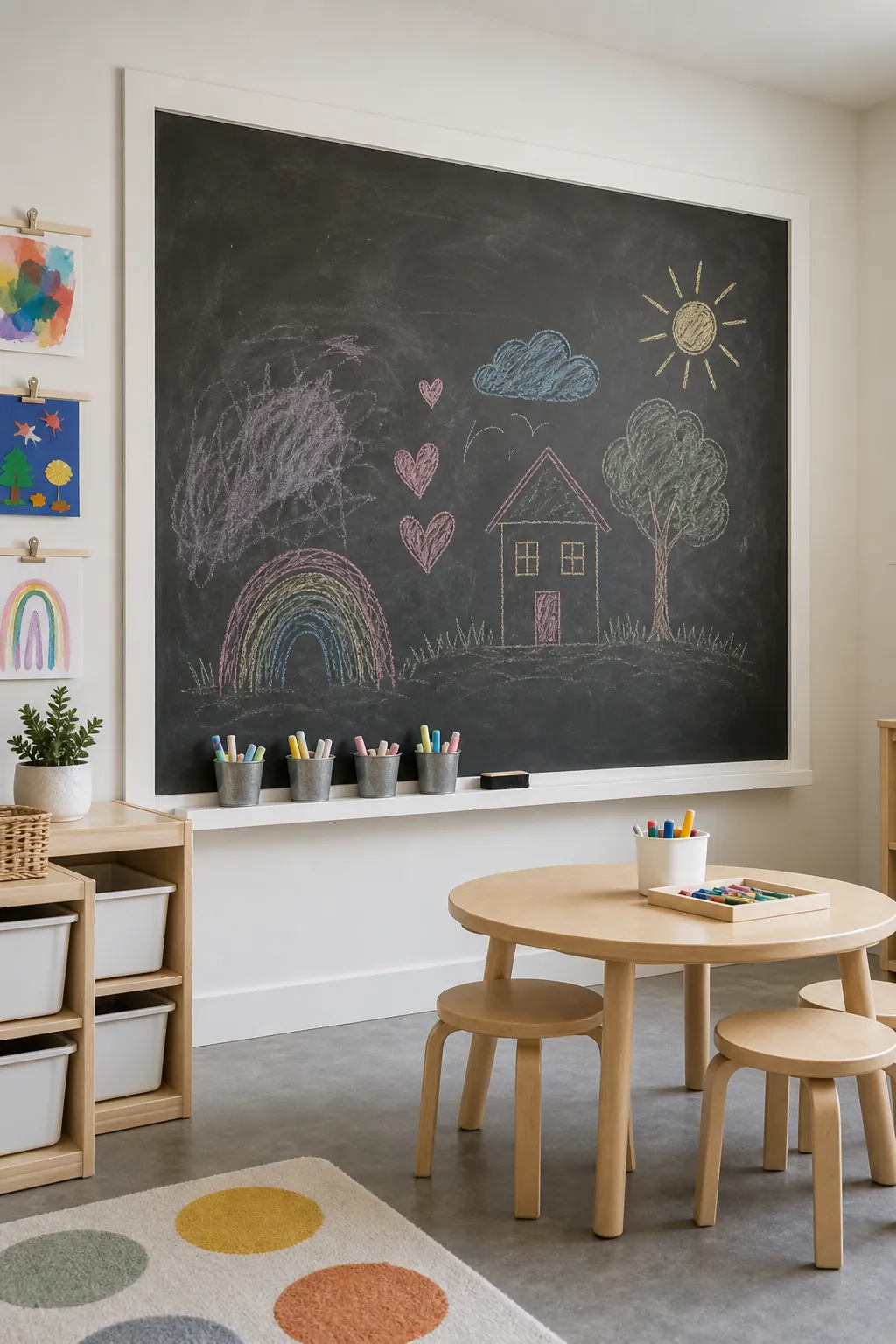
A chalkboard wall is useful because it gives kids permission to draw big. The mistake is painting an entire room in chalkboard black and then wondering why the space feels dark. A framed rectangle, a half wall, or one vertical panel usually works better.
Mount a small chalk rail or cup nearby so chalk does not end up on every surface. If you want a softer look, try green, navy, or charcoal chalkboard paint instead of pure black. It still feels like a creative wall, but it blends more easily with natural home decor.
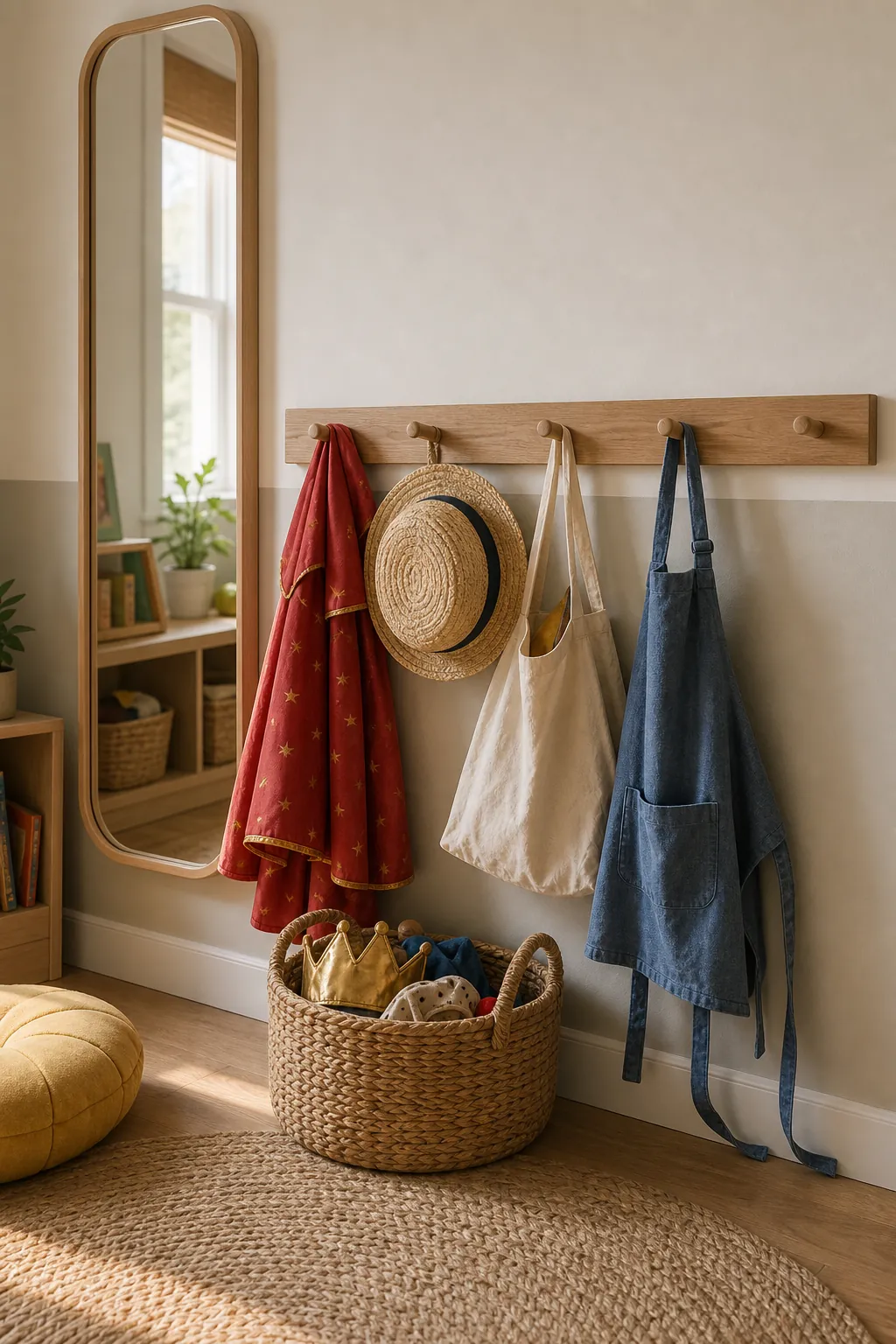
4. Use a peg rail for dress-up clothes and daily clutter
A peg rail is wall decor that earns its place every day. It can hold dress-up capes, canvas totes, headphones, small backpacks, art aprons, or a basket for stray blocks. Because the hooks are visible, kids can put things away without opening drawers.
Install the rail low enough for children to use, but keep heavier items on anchored furniture or adult-height hooks. A painted peg rail that matches the trim can look tidy, while a natural wood rail adds warmth to a colorful playroom idea.
5. Turn book ledges into a reading wall
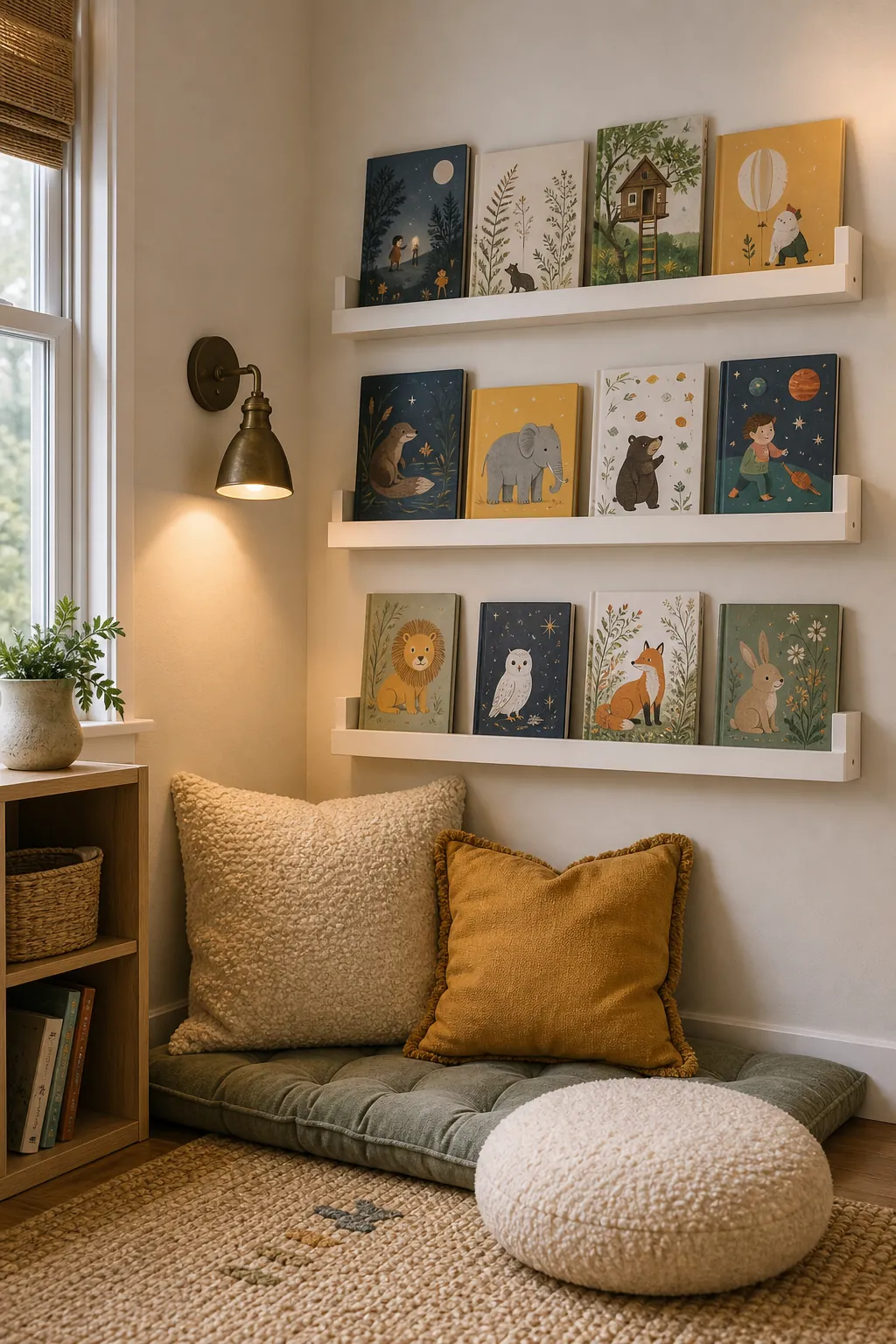
Forward-facing book ledges are one of the most reliable kids playroom wall ideas because they show the book covers. That matters for younger kids who choose books by color, character, and memory before they can read the spine.
Stack two or three ledges over a floor cushion, play sofa, or small rug. Keep the ledges shallow and avoid overloading them. The wall becomes decor, storage, and a quiet invitation to slow down after louder play.
6. Create a magnetic learning wall
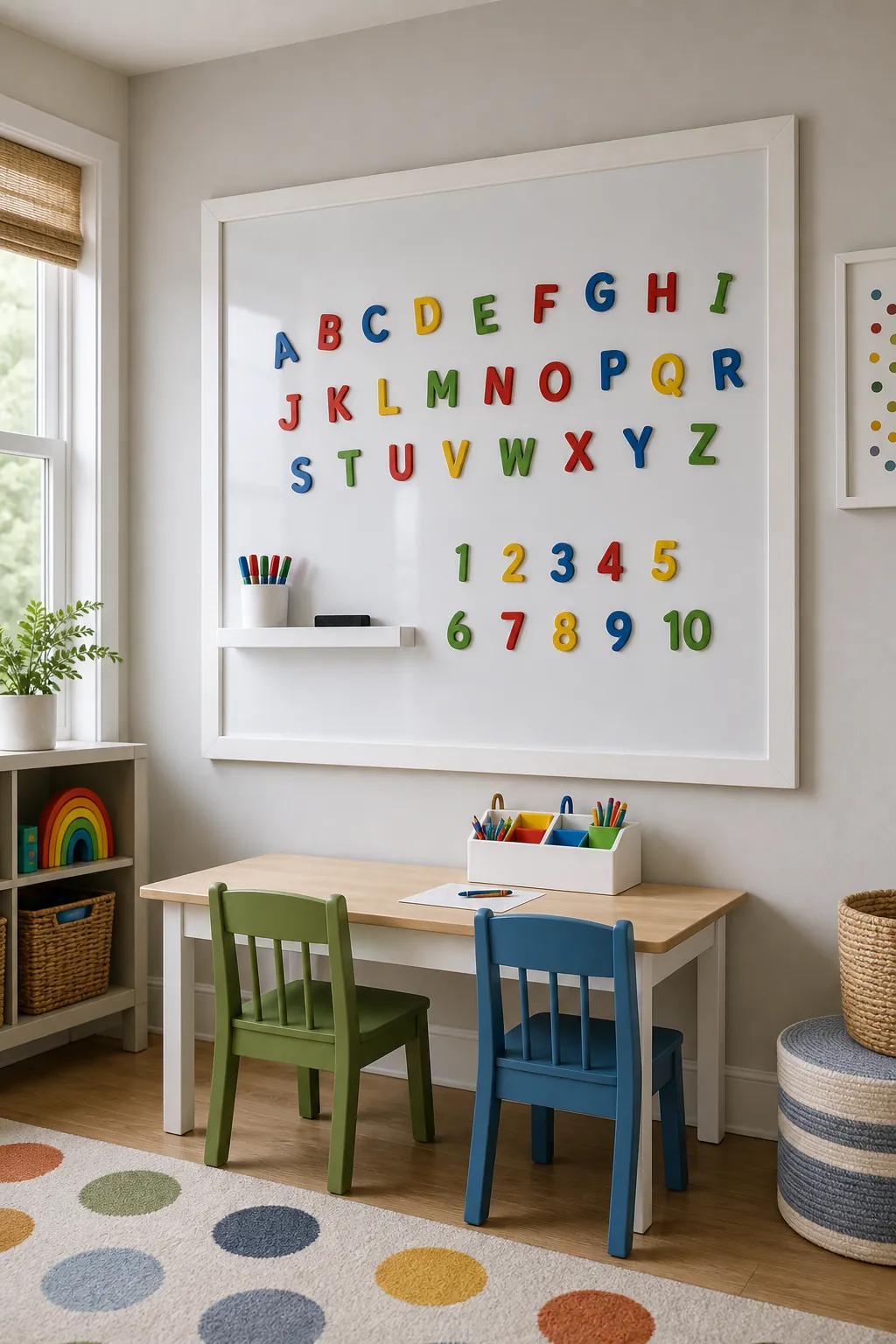
A magnetic board, steel panel, or magnetic paint section gives kids a place for letters, numbers, puzzle pieces, and pretend menus. It also keeps magnets out of the kitchen traffic zone, which is a common parent complaint in busy homes.
For a cleaner look, frame the magnetic area with simple trim or mount a large white magnetic board above a small table. Keep tiny magnets away from toddlers and choose oversized pieces for younger children.
7. Try peel-and-stick decals for a renter-friendly accent
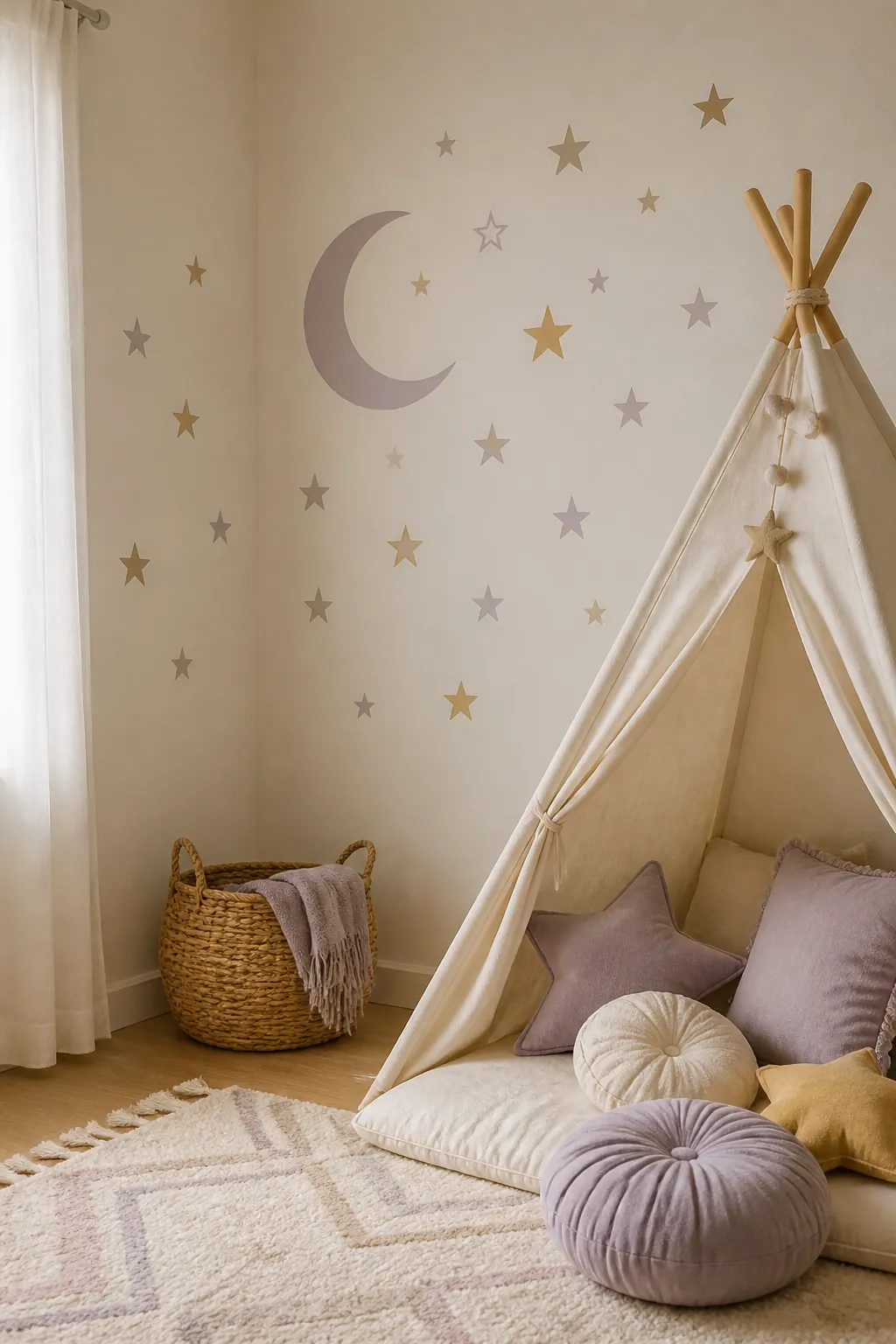
Peel-and-stick decals are useful when you want a playroom makeover without committing to paint or wallpaper. Dots, stars, trees, clouds, animals, and simple geometric shapes can turn a blank wall into a theme in an afternoon.
The trick is scale. Tiny decals scattered everywhere can look like visual noise. Larger shapes placed in one zone, such as behind a reading nook or craft table, feel more polished and are easier to remove later.
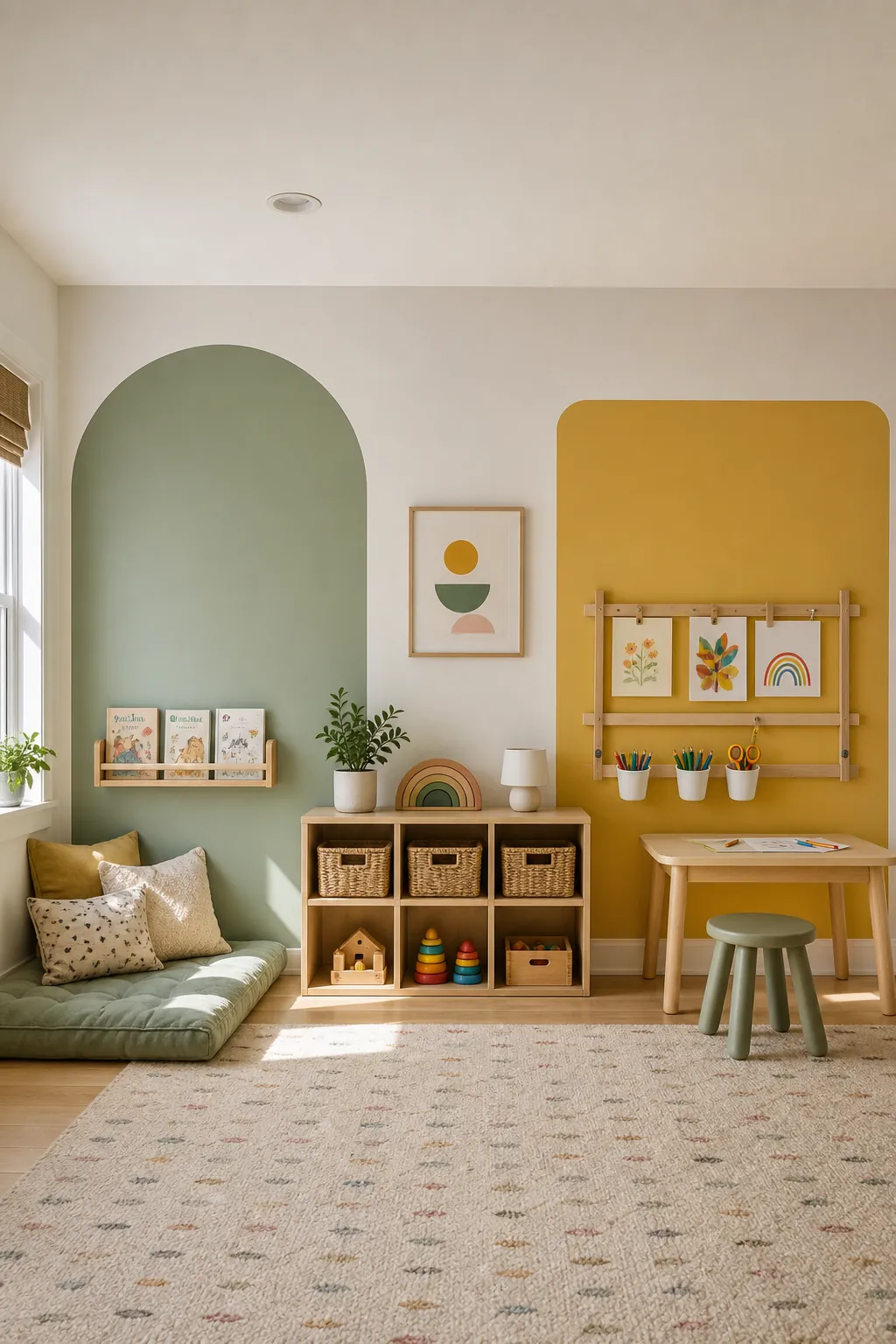
8. Color-block the wall into play zones
Color blocking is a smart playroom wall decor idea when one room has to handle many jobs. Paint one shape behind the art table, another behind the reading corner, and a third behind the toy storage. The wall quietly tells kids where each activity belongs.
This works especially well in open basements, bonus rooms, and shared living spaces. Use rounded arches, wide horizontal bands, or a half-painted wall. The room gets structure without needing dividers or extra furniture.
9. Style low display shelves for favorite toys
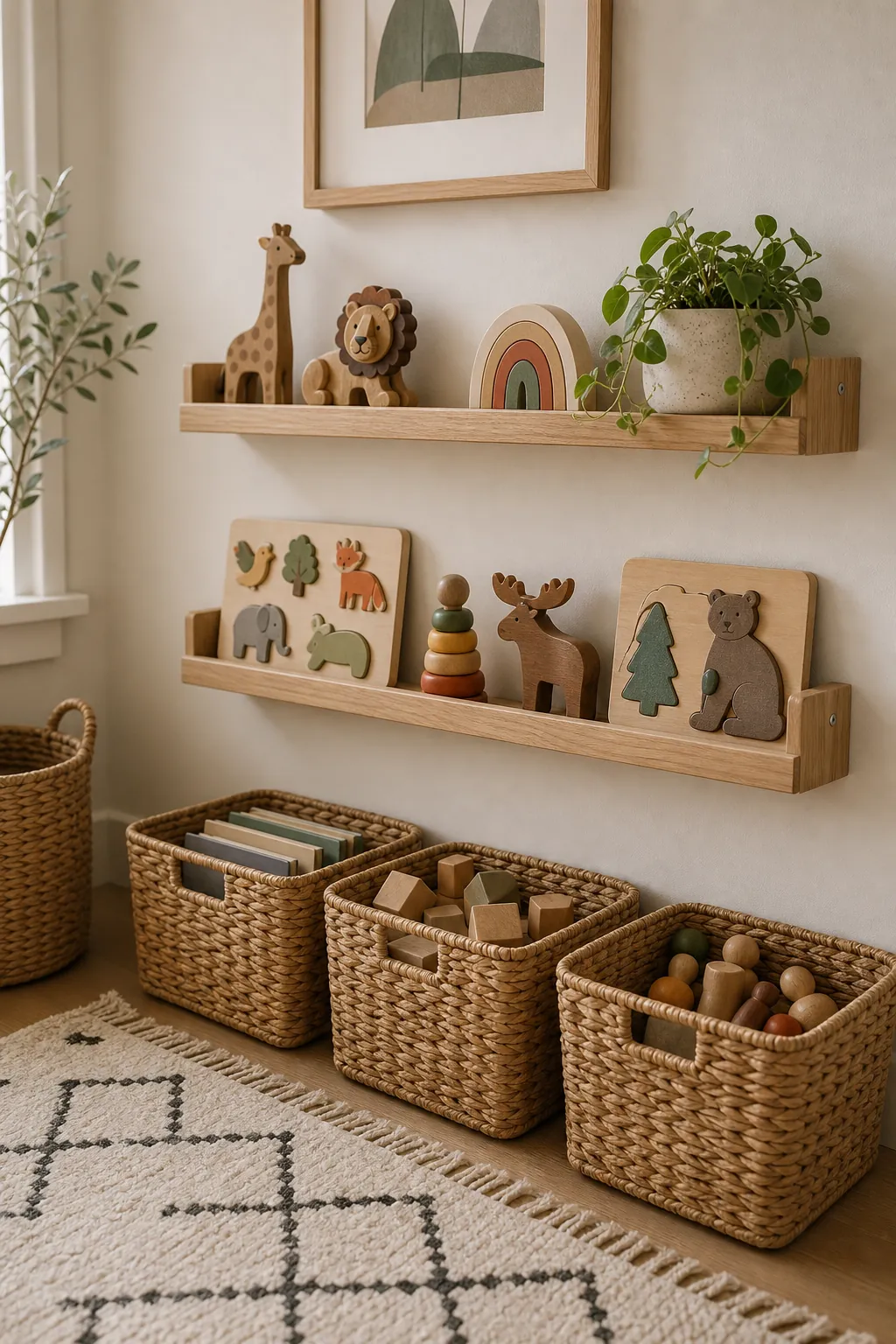
Low display shelves can make everyday toys look deliberate. A few wooden animals, building sets, dolls, puzzles, or seasonal pieces become part of the room instead of clutter. Rotate the display so the wall stays fresh and the shelf does not become a dumping spot.
Any shelf in a playroom should be secured properly, and heavier items belong low. The U.S. Consumer Product Safety Commission’s Anchor It campaign is a useful reminder that furniture and TVs should be anchored to reduce tip-over risk in homes with children.
10. Make an alphabet, map, or number wall feel modern
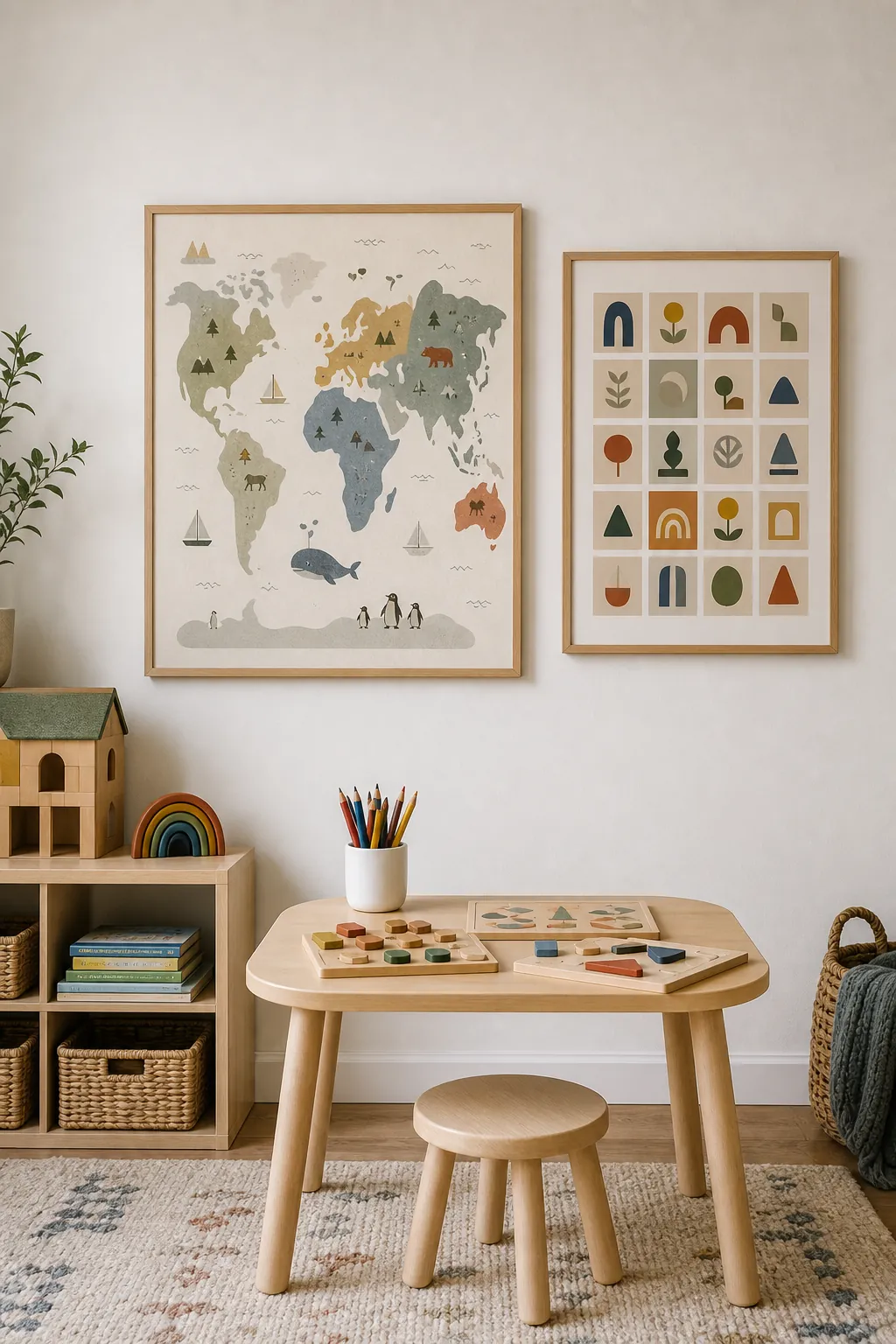
Learning walls can look stylish when they are treated like real decor. Instead of a busy classroom poster, choose one large alphabet print, a muted world map, a number chart in a clean typeface, or a set of framed flashcard-style prints.
Keep the wall near a table, reading nook, or floor cushion so it connects to how the room is used. This idea is especially good for families who want fun playroom ideas that still feel calm enough for a main-floor space.
11. Add soft texture with felt, fabric, or woven pieces
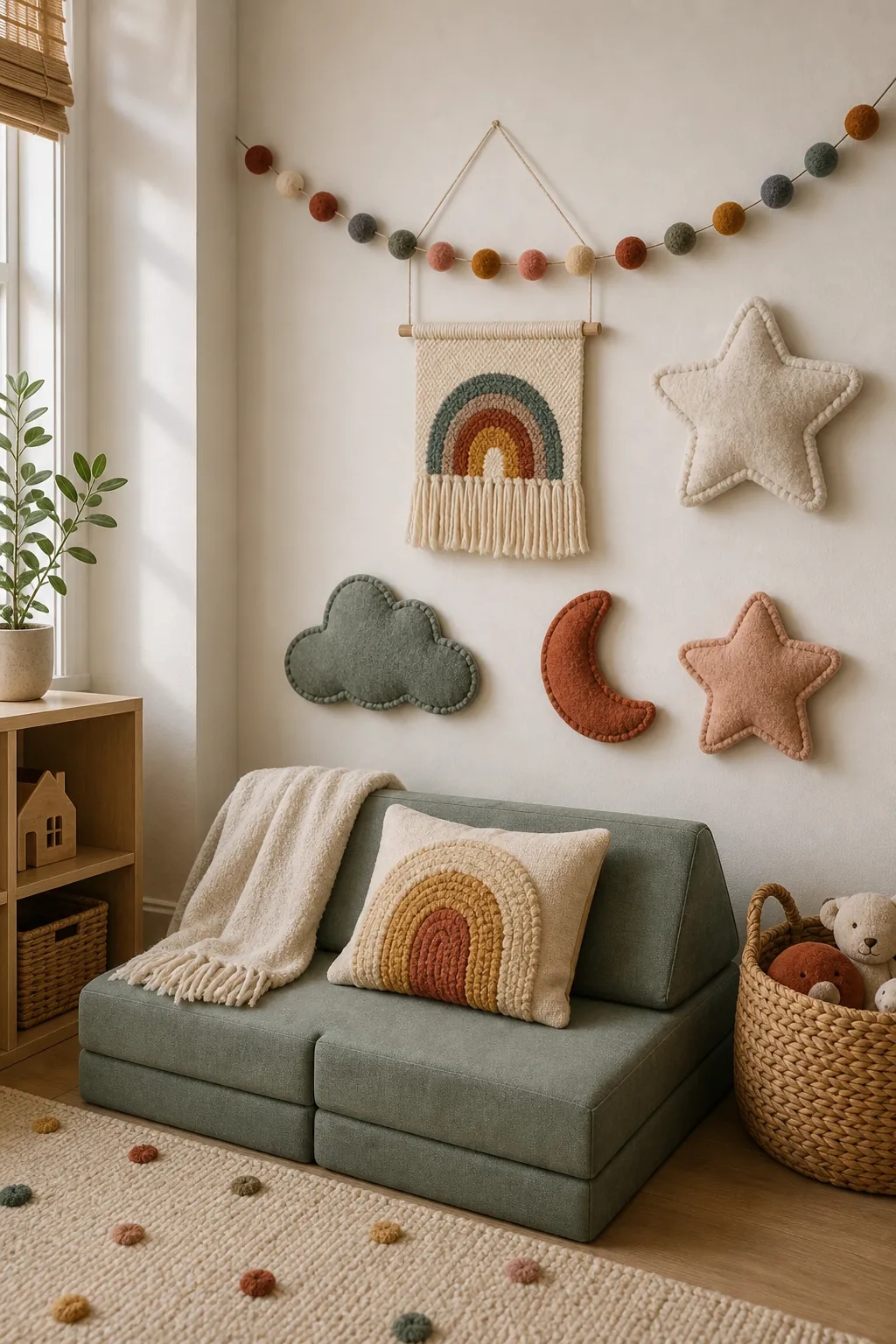
Not every wall needs framed art or paint. Felt garlands, woven hangings, fabric banners, acoustic felt tiles, and soft pennants can warm up a playroom that has hard floors and plastic toys. Texture helps the room feel layered instead of flat.
Choose pieces that sit close to the wall and avoid long cords or loose strands in rooms used by very young children. A simple felt shape wall can also become a soft alternative to a playroom accent wall.
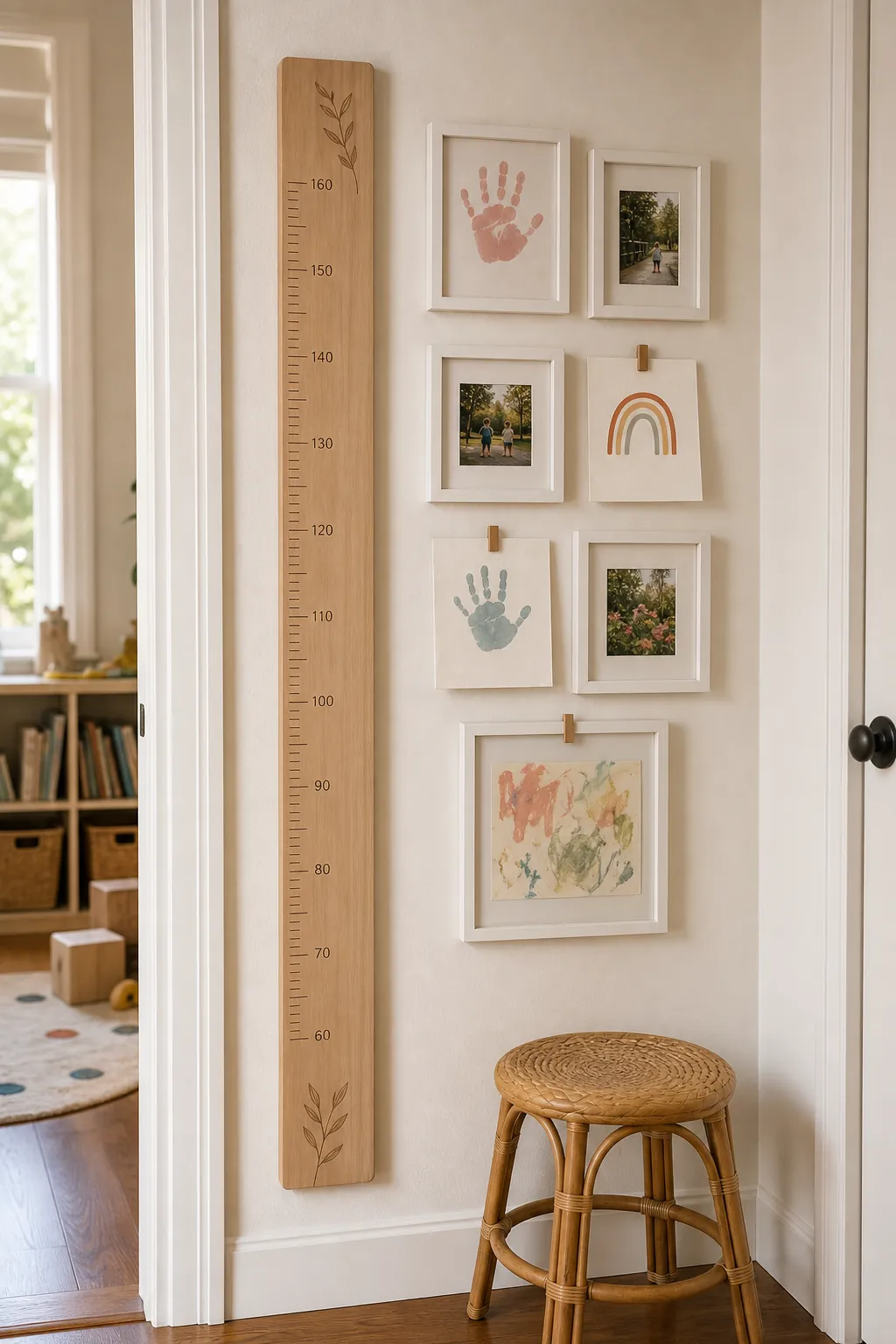
12. Combine a growth chart with a memory wall
A growth chart gives the playroom a sweet family detail, but it looks better when it has breathing room. Mount a removable wooden chart or painted measuring strip beside a small set of photos, handprints, or dated art pieces.
This is a good wall for a narrow corner because it does not need much depth. It also adds meaning to a playroom without relying on a theme your child may outgrow quickly.
13. Use labels and picture tags as wall decor
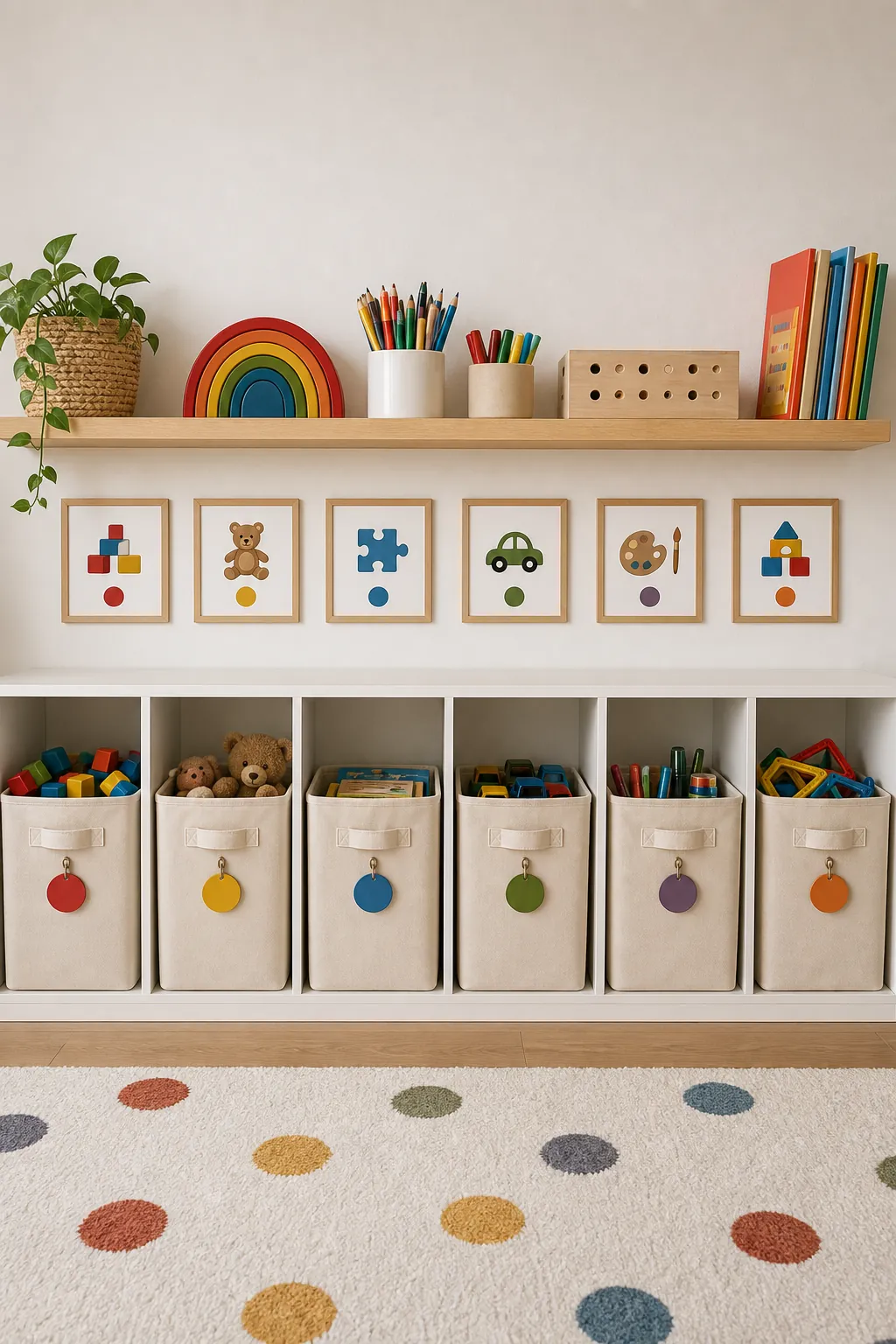
Storage labels can be surprisingly decorative when they are consistent. Picture labels above bins, simple word tags on baskets, or small wall signs for blocks, art, puzzles, and dress-up areas help kids clean up with less adult direction.
This is one of the most practical DIY playroom ideas because it turns organization into a visual system. Match the label style to the room: black-and-white icons for a modern space, wood tags for a natural room, or colored labels for a brighter playroom.
14. Hang a mini stage curtain or pretend-play backdrop
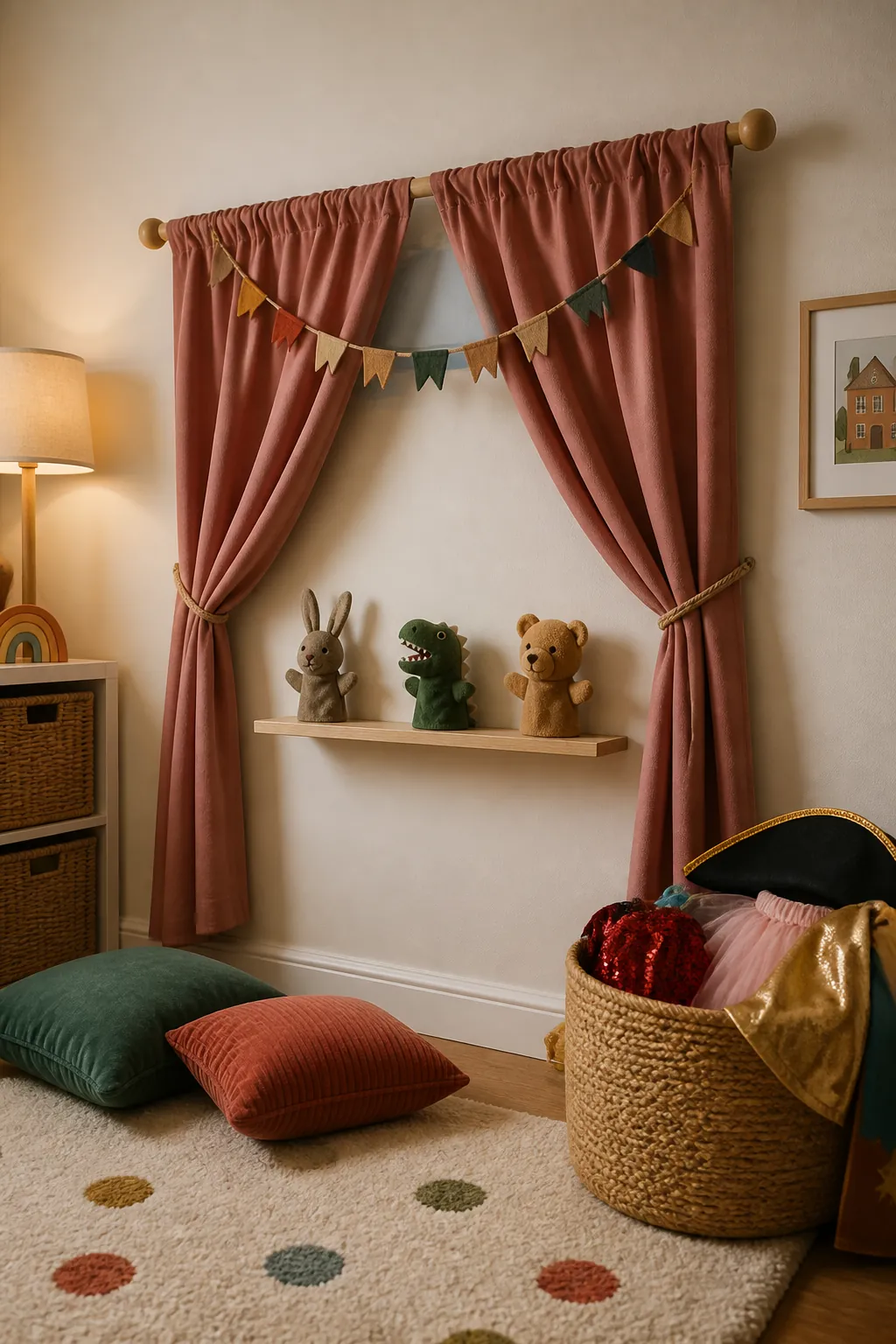
A small fabric curtain, theater-style backdrop, or wall-mounted canopy can turn one corner into a stage, puppet area, reading den, or pretend shop. It gives the wall a job and encourages open-ended play.
Keep the hardware simple and secure, and avoid heavy rods in rough play areas. A short curtain on a low tension-free mounted rail can create the feeling of a stage without taking over the whole room.
15. Install a cork board wall for rotating masterpieces
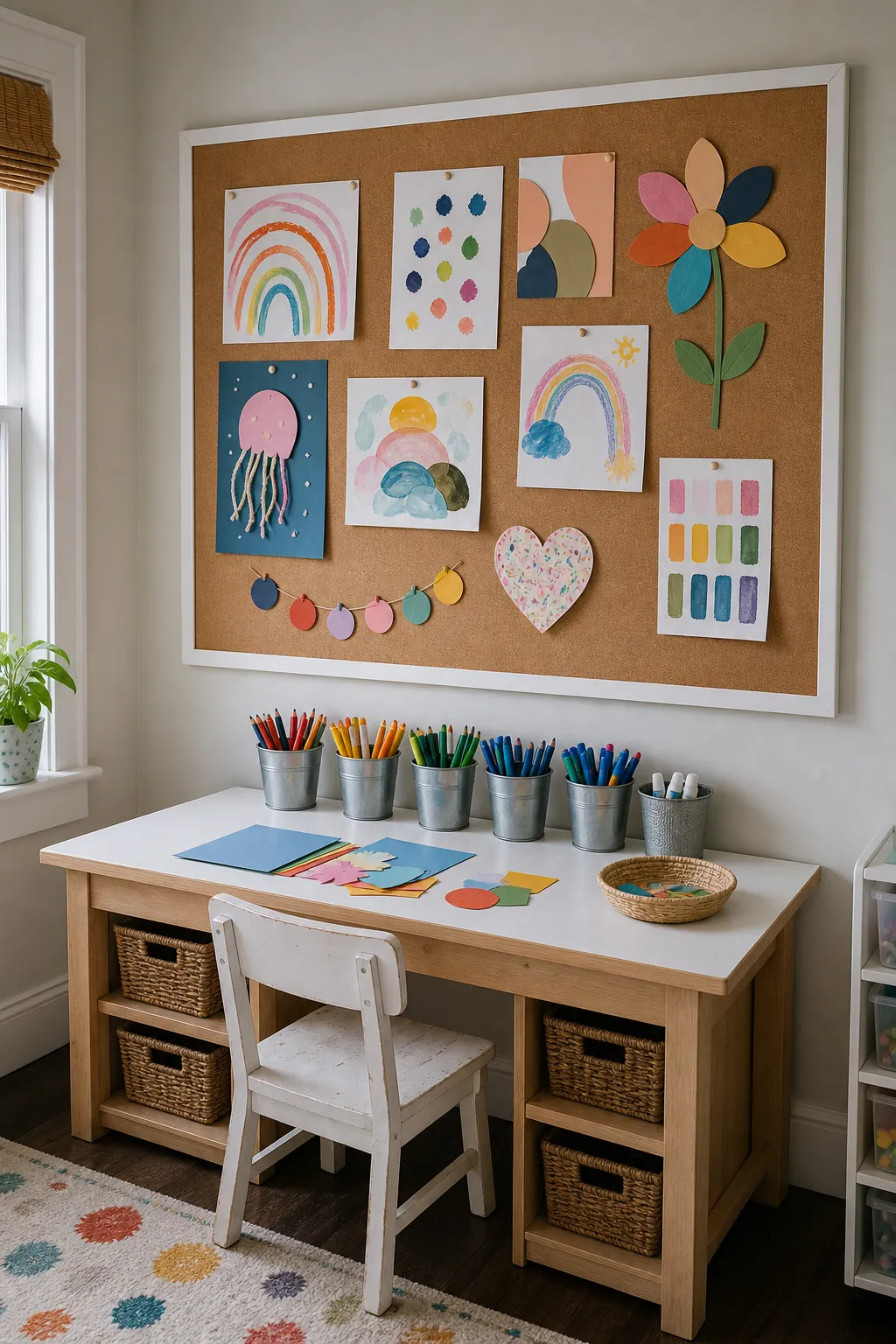
If your child brings home constant art, a cork board wall is cleaner than taping paper all over the room. Use one large framed cork panel, cork tiles in a grid, or a long bulletin strip above a craft table. The wall can change every week without creating new nail holes.
Keep the rotation tight. A few favorite pieces look curated; every worksheet from the last six months looks stressful. This is the easiest way to make playroom wall decor feel personal and still controlled.
How to choose the right idea for your room
- For a small playroom: choose one strong wall moment, such as book ledges, decals, or a mural, instead of spreading decor around the room.
- For a shared living space: use calmer playroom wall colors, low storage, and framed art so the room still fits the rest of the home.
- For a high-energy playroom: try a chalkboard, magnetic wall, peg rail, or mini stage so the wall supports real play.
- For an easy refresh: use peel-and-stick decals, rotating cork boards, fabric banners, and labels before committing to permanent changes.
The best playroom wall is not the one with the most decor. It is the one that solves the room’s biggest problem. If the room feels blank, add color. If it feels messy, make the wall work harder. If it feels too grown-up, lower the art and make room for play. A few focused choices can make the whole playroom feel colorful, useful, and easy to love.