
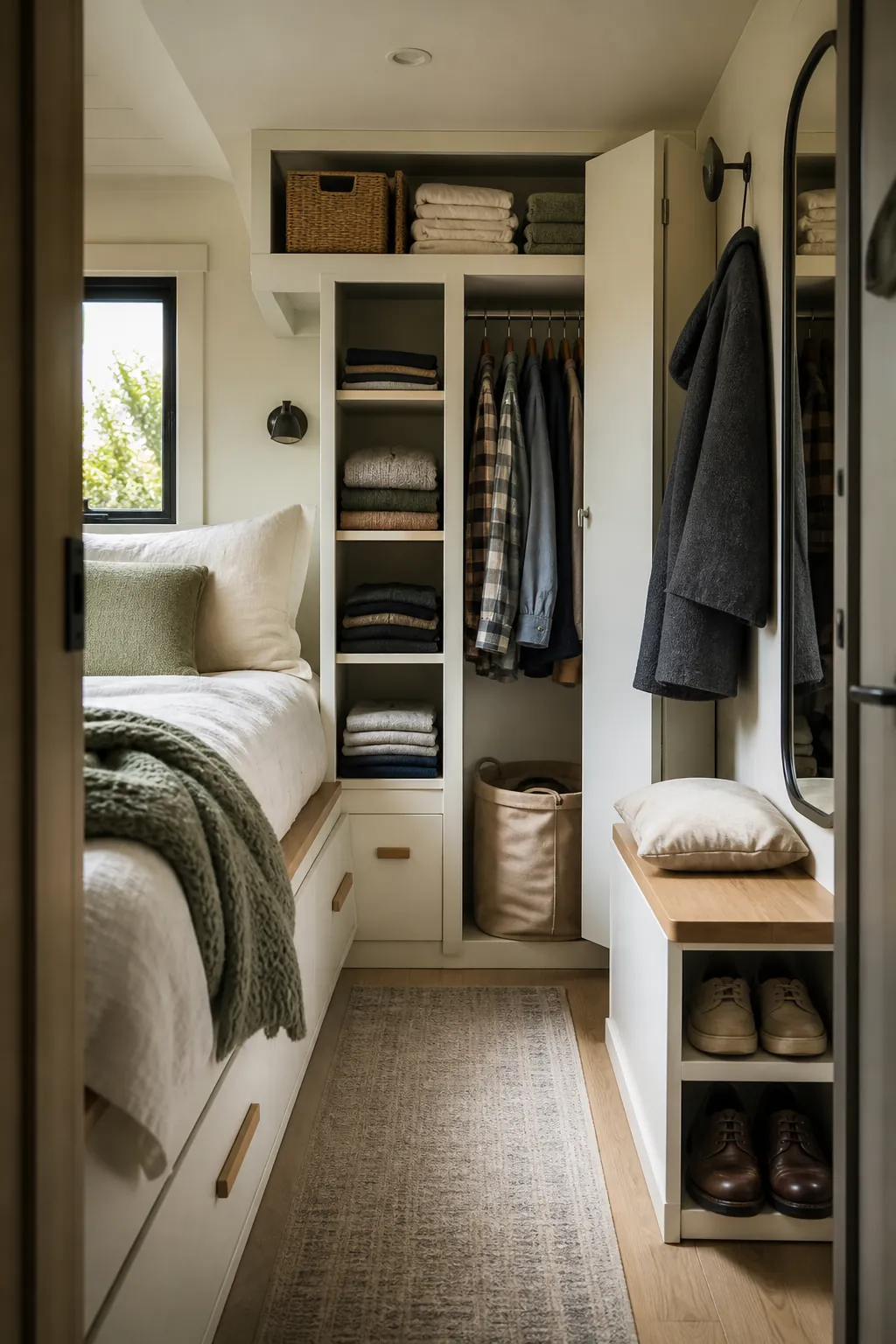
Tiny house storage works best when it stops pretending to be a normal closet. A small home rarely has spare space for a full wardrobe, a linen closet, a mudroom, and a laundry room, so the real goal is sharper: give clothes, shoes, and linens the right kind of storage for how often they are used.
The biggest mistake is buying more bins before deciding what each zone is supposed to do. That is how a tiny house ends up with baskets everywhere, shoes under chairs, towels shoved behind doors, and a bed platform that is technically “storage” but impossible to open on a normal weekday.
A better system starts with access. Daily clothes need fast reach. Shoes need a landing zone that can handle dirt. Linens need dry, breathable storage. Seasonal pieces can live higher, lower, or deeper because they are not used every morning. When those rules are clear, tiny house storage feels less like a constant puzzle and more like a quiet routine.
Map Storage by Use Before Buying Organizers
Before adding a wardrobe, drawer stack, shoe cabinet, or linen basket, sort every item into four groups: daily, weekly, seasonal, and backup. This one step prevents the classic compact-living problem where rarely used blankets take the easiest drawer while everyday socks live in a basket on the floor.
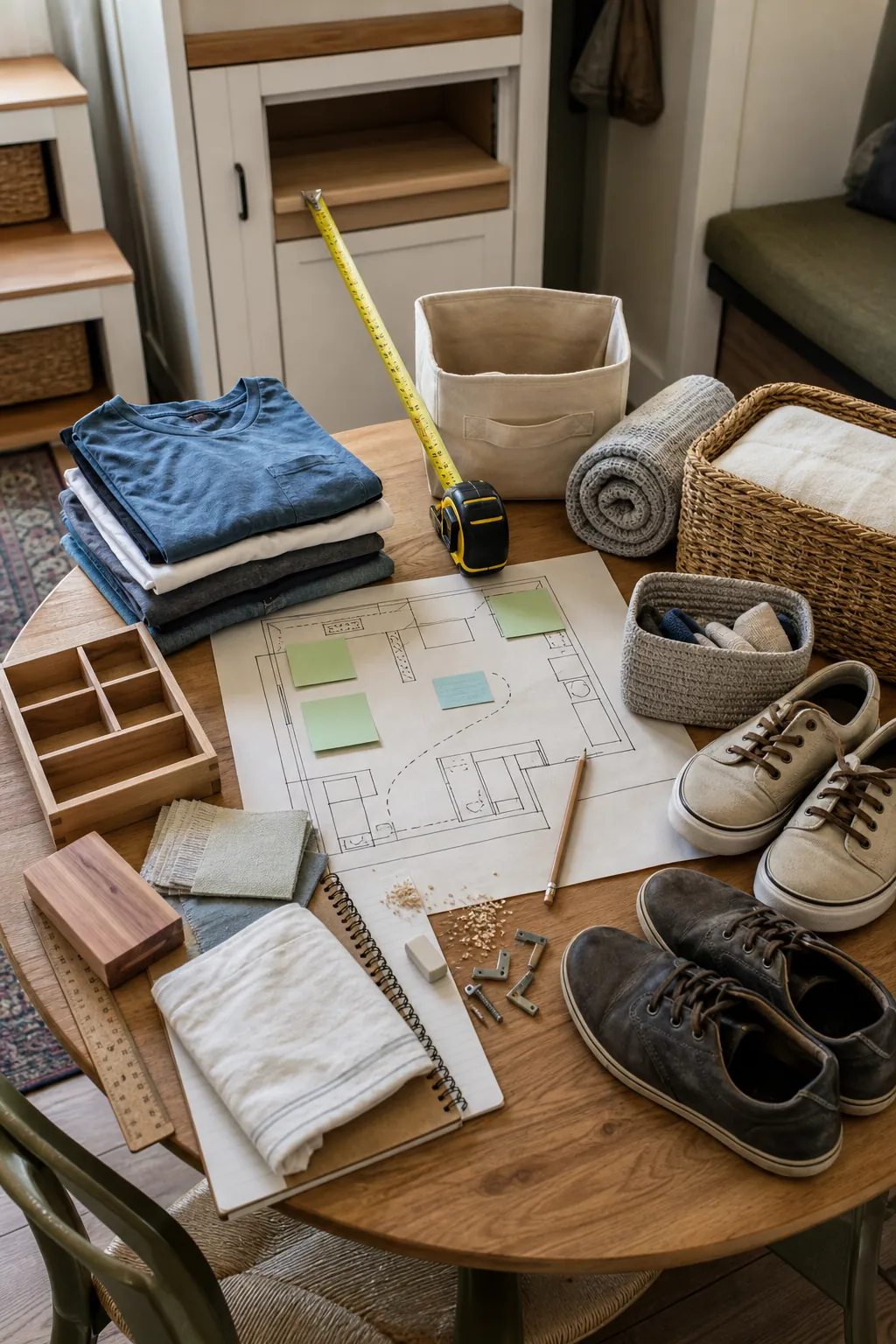
Walk through the house with a tape measure and mark the places that are convenient, merely reachable, and awkward. Convenient spots are for what you touch every day: underwear, socks, current-season shirts, work shoes, towels in active use. Reachable spots can hold weekly items: spare sheets, laundry supplies, extra shoes, sweaters. Awkward spots are for seasonal clothing, guest bedding, holiday linens, and weather-specific boots.
Measure depth as carefully as width. A 12-inch-deep cabinet can be better for folded clothes than a deep box where everything disappears. A shallow shelf by the door can handle keys and dog-walk gear, but it will fail as shoe storage. In a tiny house, storage that is too deep often becomes forgotten storage.
- Prime storage: waist to eye height, opened daily, no moving furniture required.
- Secondary storage: low drawers, upper shelves, under-bed bins, and baskets used weekly.
- Deep storage: stair compartments, loft-edge shelves, high cabinets, and exterior sheds for seasonal pieces.
Build Clothes Storage Around Folding, Hanging, and Rotation
Most tiny homes do not need a large traditional closet as much as they need a balanced clothing system. Hang only what truly suffers when folded: coats, dresses, structured shirts, a blazer, or the outfit that needs to stay ready for work. Fold the rest into drawers, baskets, or shelf cubes where the full stack is visible from the front.
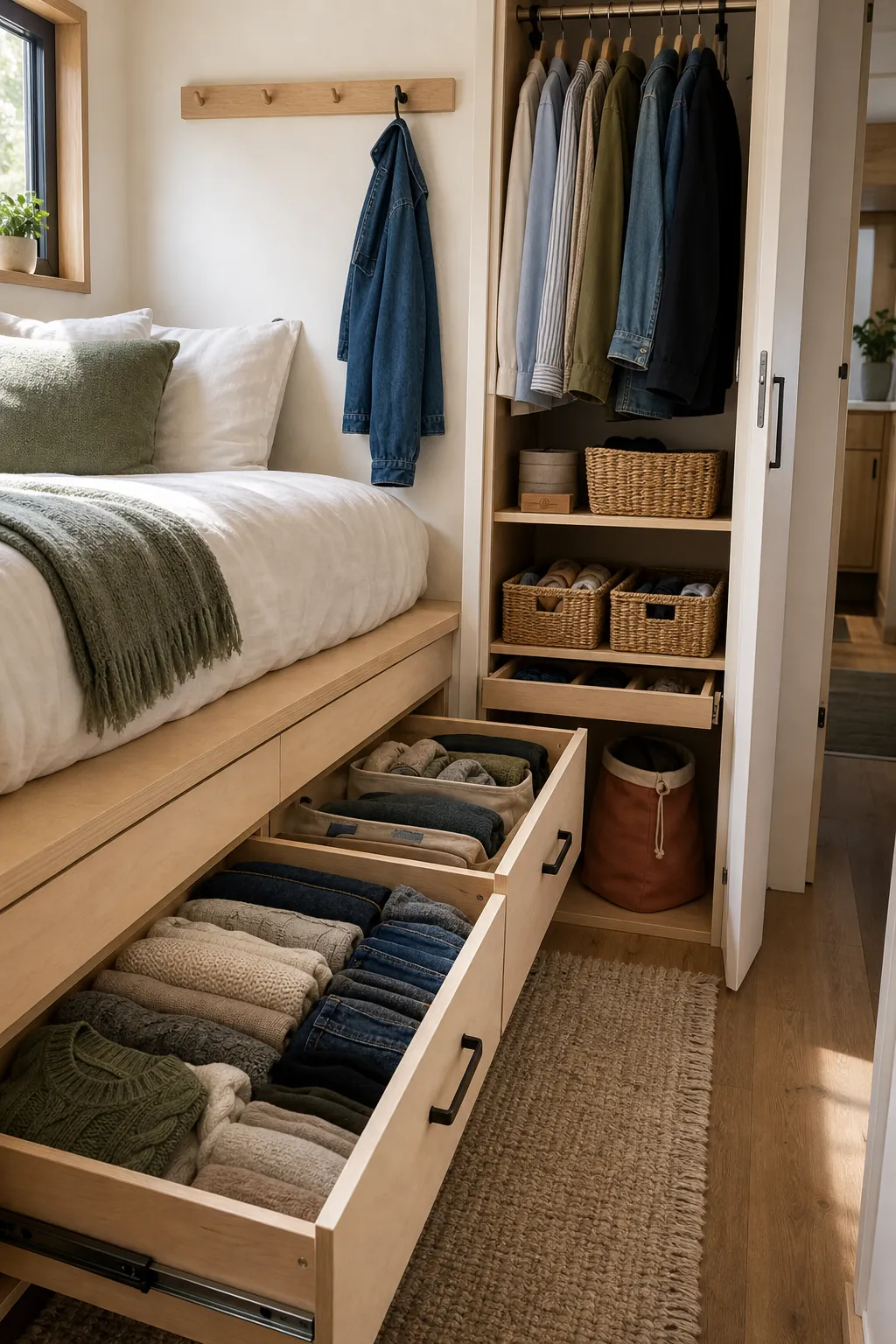
Under-bed drawers are ideal for folded clothes because they use a large footprint that already exists. Choose drawers or bins on wheels when the bed is low, and leave enough clearance to open them without shifting a rug, ladder, or nightstand. If the bed platform is custom, divide the base by category: current-season folded clothes in the easiest drawers, off-season clothing in the back, and bulky sweaters or jeans in deeper sections.
A narrow wardrobe can still work if it has more than a hanging rail. Add one short rail, two shelves, a basket for small items, and a hook outside the door for tomorrow’s outfit. Slim hangers help, but they are not magic. The real win is limiting the hanging section to clothes that actually need it.
For tiny house clothing storage, file folding is usually more useful than stacking. You can see every shirt, avoid digging, and return clean laundry without rebuilding the whole drawer. If a drawer is too deep, use smaller fabric boxes inside it so socks, base layers, gym clothes, and sleepwear do not migrate into one mixed pile.
Give Shoes a Landing Zone Instead of Scattering Them
Shoe storage needs to live where shoes actually come off. If the front door opens straight into the living room or kitchen, a beautiful shoe cabinet on the opposite wall will not change the habit. The landing zone has to catch dirt, daily shoes, bags, and coats before they reach the rest of the tiny home.
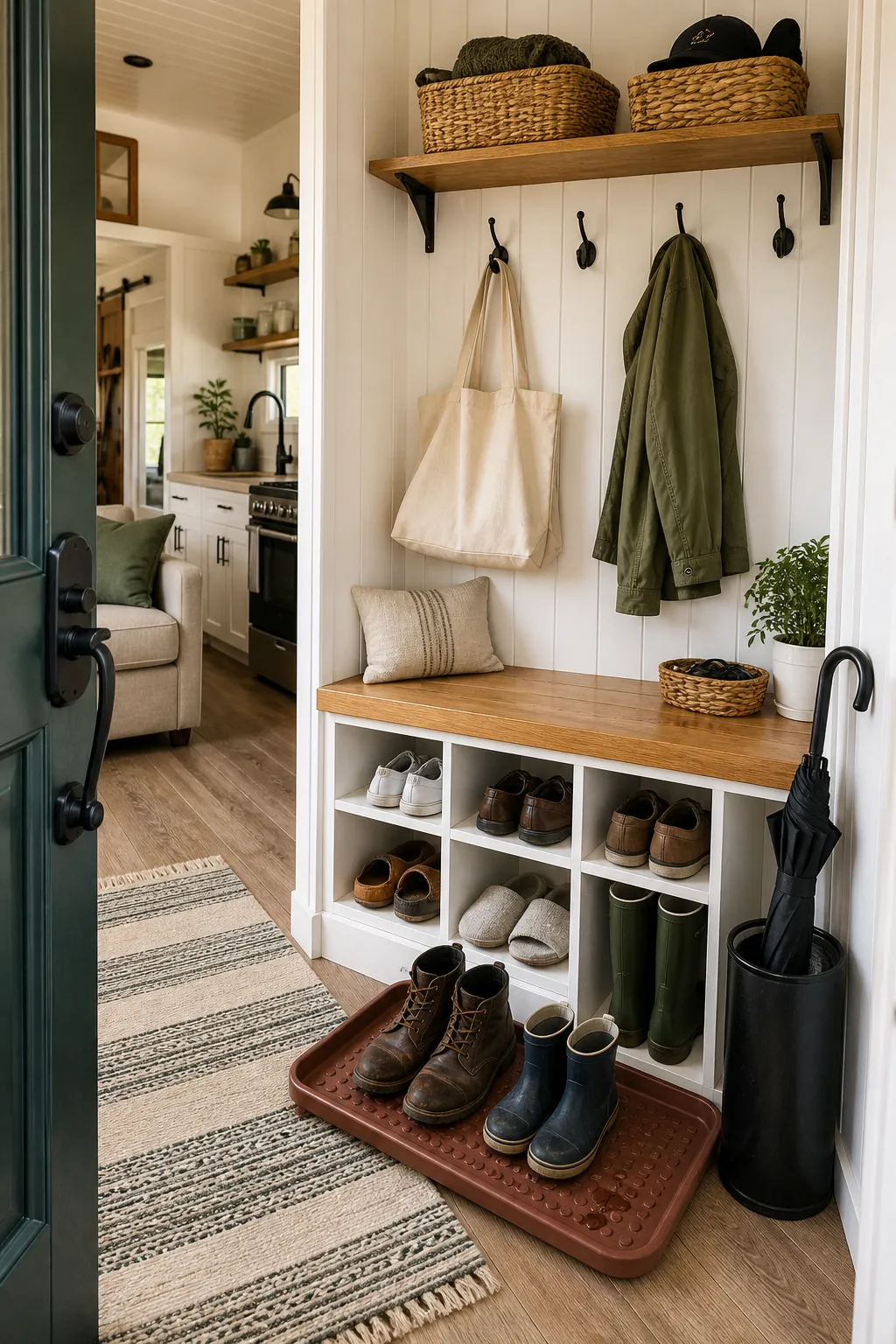
The best tiny house shoe storage is shallow, washable, and honest about weather. Use a bench with cubbies for daily pairs, a removable boot tray for wet soles, and hooks above for bags or jackets. If there is no room for a bench, use a narrow tilt-out shoe cabinet, an over-door organizer, or a wall-mounted pocket system that keeps shoes off the walkway.
Keep only active shoes in the entry zone. Off-season boots, dress shoes, and backup pairs can move to high shelves, under-stair cubbies, or under-bed bins. A tiny entry cannot function if it is trying to hold every pair you own.
- Daily pair: open cubby or mat, fastest access.
- Wet pair: boot tray, washable liner, good airflow.
- Occasional pair: closed box, upper shelf, or under-bed container.
- Guest shoes: one spare open spot, not a permanent pile.
Replace the Missing Linen Closet With Vertical, Breathable Storage
Linen storage fails when every towel, sheet, blanket, and extra pillow is treated as one category. In a tiny home, linens need to be split by use and moisture risk. Towels should stay near the bathroom. Active sheets should be near the bed. Guest linens and seasonal blankets can live higher or deeper, as long as they stay dry and easy to identify.
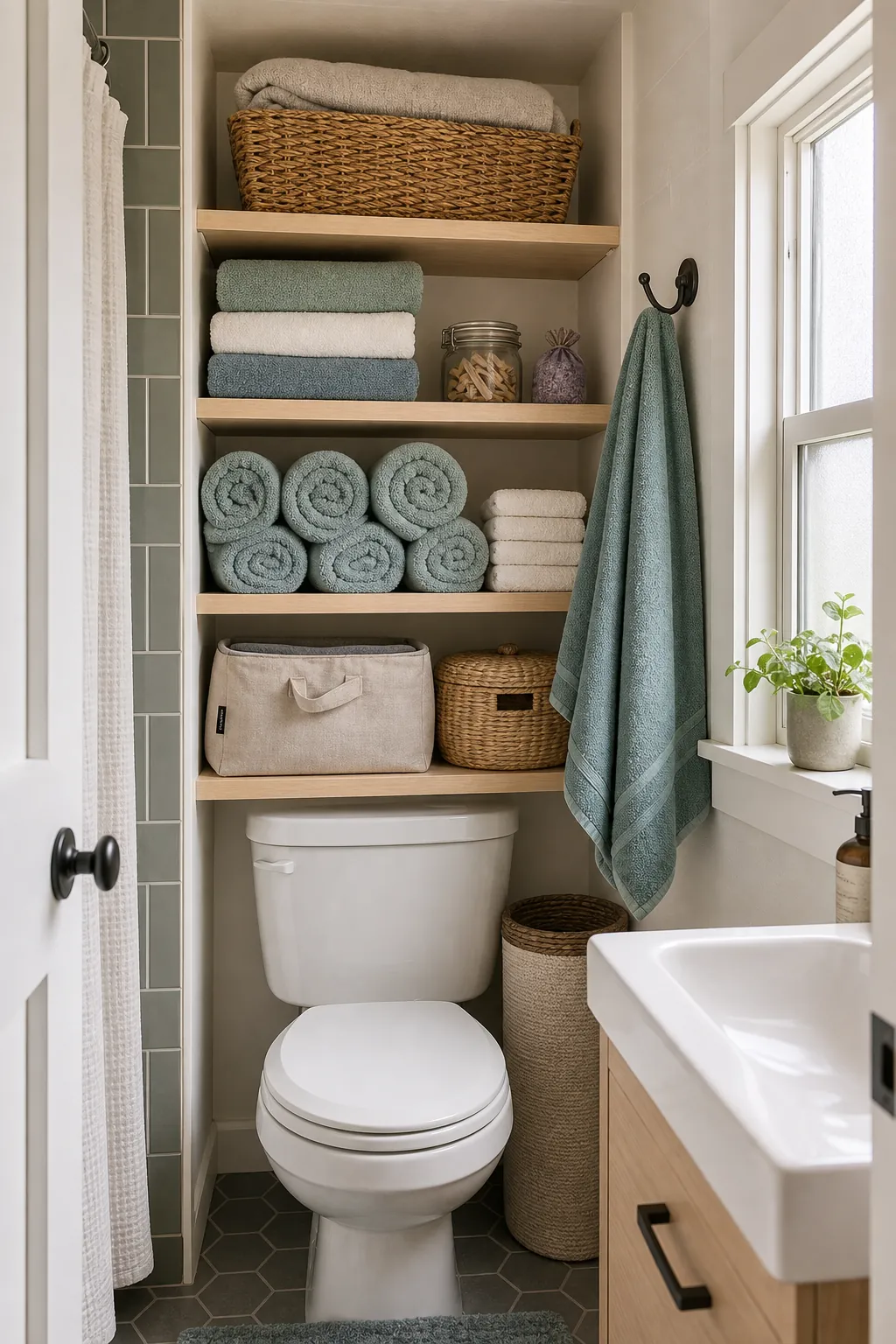
If there is no linen closet, use one vertical zone instead of scattering linens through the house. Over-toilet shelves, a shallow hall cabinet, a high bathroom shelf, or the back of a bathroom door can work if the storage is breathable and not overloaded. Roll towels when shelves are narrow. Fold sheet sets into their matching pillowcase so one grab gives you the full set.
Avoid sealing damp towels or recently washed linens in airtight containers. In a compact house, airflow matters. Use baskets, fabric pouches, shelf dividers, or vented bins for textiles, and keep heavy blankets away from humid bathroom corners unless they are fully protected and rarely opened.
The easiest linen rule is this: two active towel sets per person, two sheet sets per bed, and one guest or seasonal layer per realistic need. If you keep more, give the extras a deep-storage address instead of letting them claim daily storage.
Use Built In Storage for Specific Categories, Not Mystery Compartments
Built in storage is powerful in a tiny house, but only when every compartment has a job. Under-stair drawers, bench seats, toe-kick drawers, loft-edge shelves, and wall cavities can add a surprising amount of capacity. They can also become inconvenient junk zones if they are too deep, too mixed, or too hard to open.
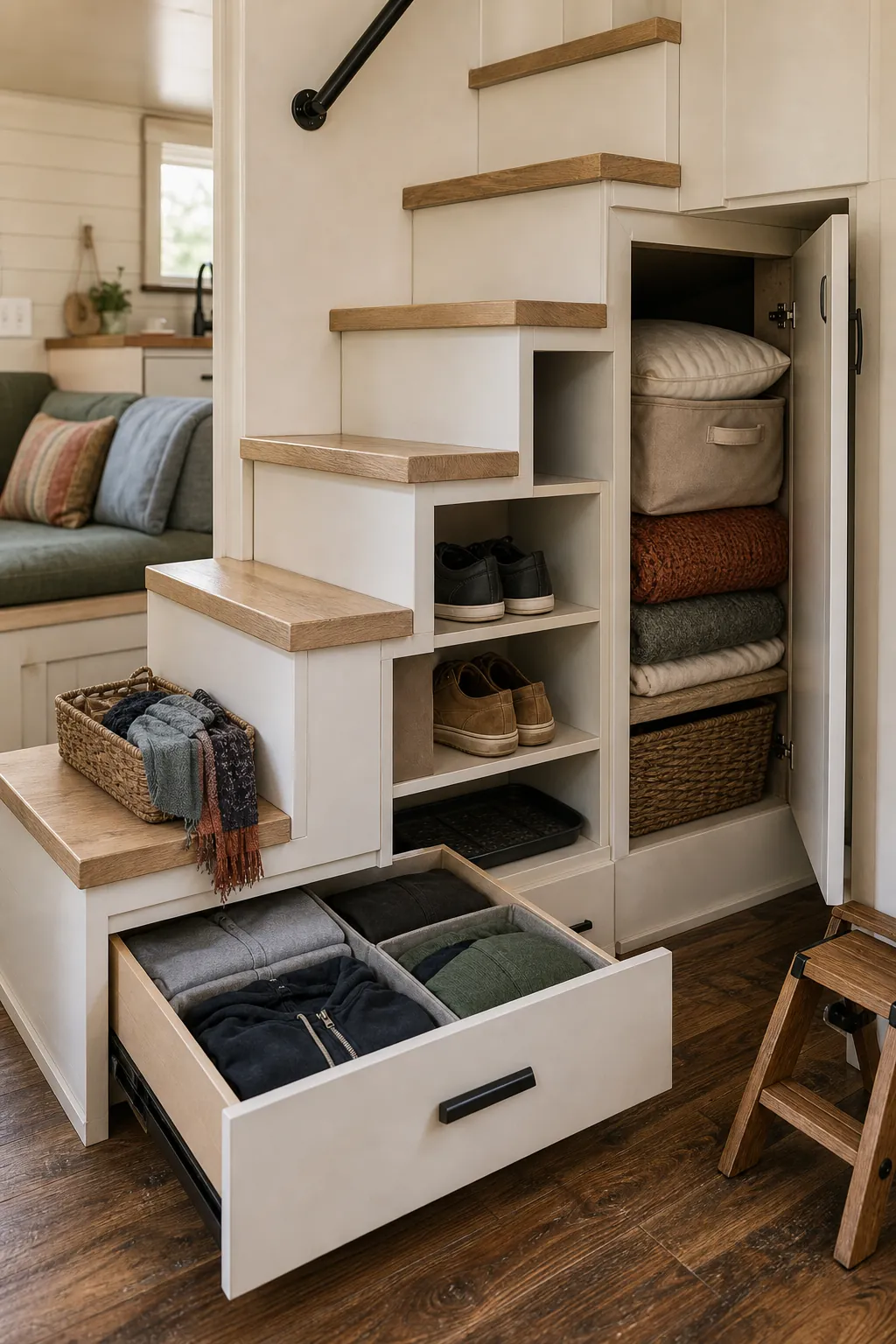
Think of built-ins as storage neighborhoods. The lowest drawers can hold shoes, pet gear, or dirty outdoor items because they are close to the floor. Mid-level drawers are better for folded clothes, linens in active rotation, and accessories. Higher or deeper compartments should hold lightweight seasonal pieces, spare pillows, and blankets that do not need daily access.
Do not mix clean linens with shoe dirt. Do not put daily socks behind a stair panel that requires moving a chair. Do not store a heavy blanket on a shelf that needs a wobbly reach. The cleverest storage is not the hidden compartment; it is the compartment you can actually use on a tired Tuesday night.
- Under stairs: shoes, folded clothing, blankets, pet supplies, or seasonal gear in separated compartments.
- Bench seats: guest linens, throws, hats, gloves, or off-season accessories.
- Wall cavities: shallow shelves for folded tees, toiletries, baskets, or laundry supplies.
- Loft edges: lightweight seasonal textiles, not heavy daily items.
Create a Laundry Loop So Clothes Do Not Live on Chairs
Tiny house organization is not finished when the drawers look good. It has to survive laundry day. Dirty clothes need a contained place before washing, damp clothes need a drying plan, clean clothes need a folding surface, and folded clothes need to return to storage quickly. If any part of that loop is missing, the bed, sofa, or dining table becomes the temporary closet.
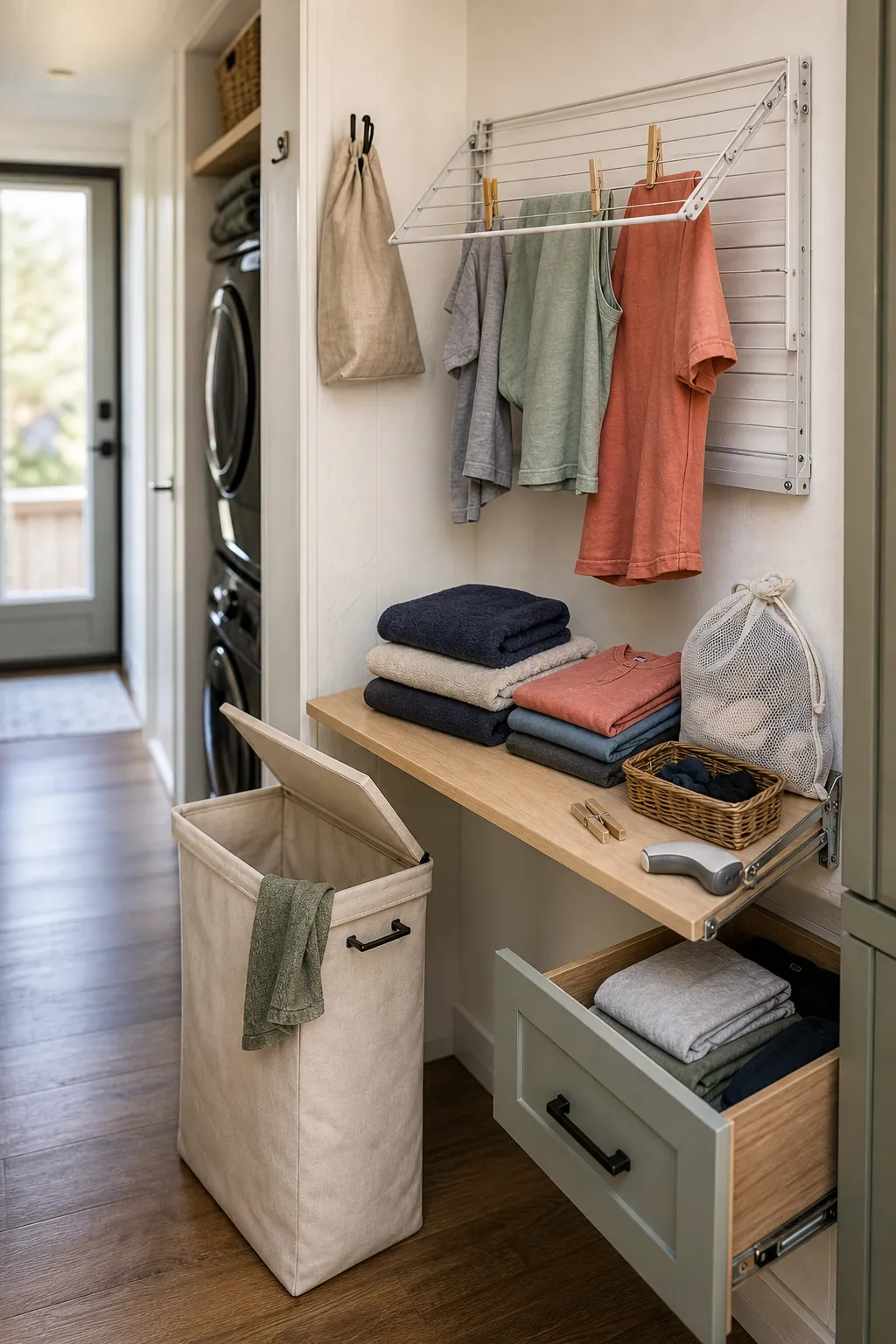
Use the smallest laundry station that completes the loop: a covered hamper, a wall rack or folding drying rack, a small shelf for folding, and a drawer or wardrobe within a few steps. If you hand-wash, use a mesh bag or ventilated hamper rather than trapping damp fabric in a sealed bin. If you use a washer-dryer combo, resist using the machine as permanent storage; that only delays the pile.
The laundry loop also controls how many clothes the tiny house can support. If the hamper is always overflowing, the problem may not be the hamper. It may be too many duplicates, too long between wash days, or drawers that are difficult to return items to after folding.
Move Seasonal Items Out of Prime Space
Prime storage is too valuable for “just in case” items. Winter boots, spare blankets, dress shoes, guest towels, and off-season clothes should not compete with the jeans, towels, and shoes used this week. Move occasional items to high shelves, under-seat drawers, loft-edge cubbies, or a small exterior shed if climate and security allow.
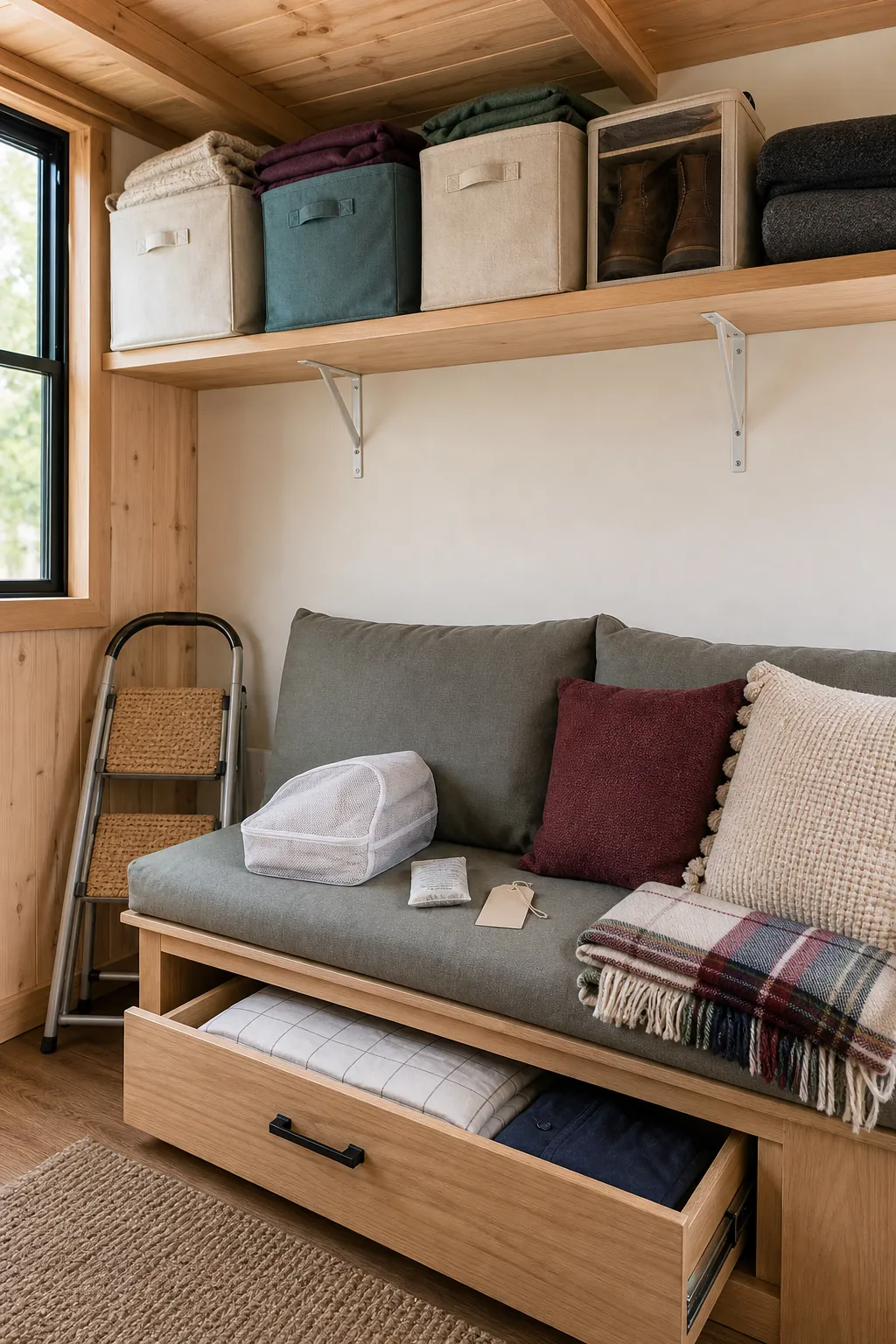
The key is keeping seasonal storage visible enough to remember but not so accessible that it steals daily space. Use breathable bags for textiles, ventilated boxes for shoes, and one simple inventory card for each bin. If a container is hard to reach, it should hold lightweight items only.
Review seasonal storage twice a year. If a bin has not been opened through a full season, it deserves a hard decision. Tiny house storage works because it stays current. A compact home can hold more than people expect, but it cannot comfortably hold every possible future version of your wardrobe.
Keep the System Small Enough to Maintain
The best tiny house storage ideas are not the most complicated ones. They are the ones that survive ordinary life: wet shoes by the door, laundry after work, changing sheets, packing away sweaters, and finding a clean towel without moving three boxes.
Start with the storage map, then solve one zone at a time. Give clothes a mix of hanging, folding, and under-bed storage. Give shoes a dirt-friendly landing zone. Give linens breathable vertical space. Give built-ins specific jobs. Give laundry a loop. When every category has a clear address, compact living starts to feel less like squeezing and more like editing.