
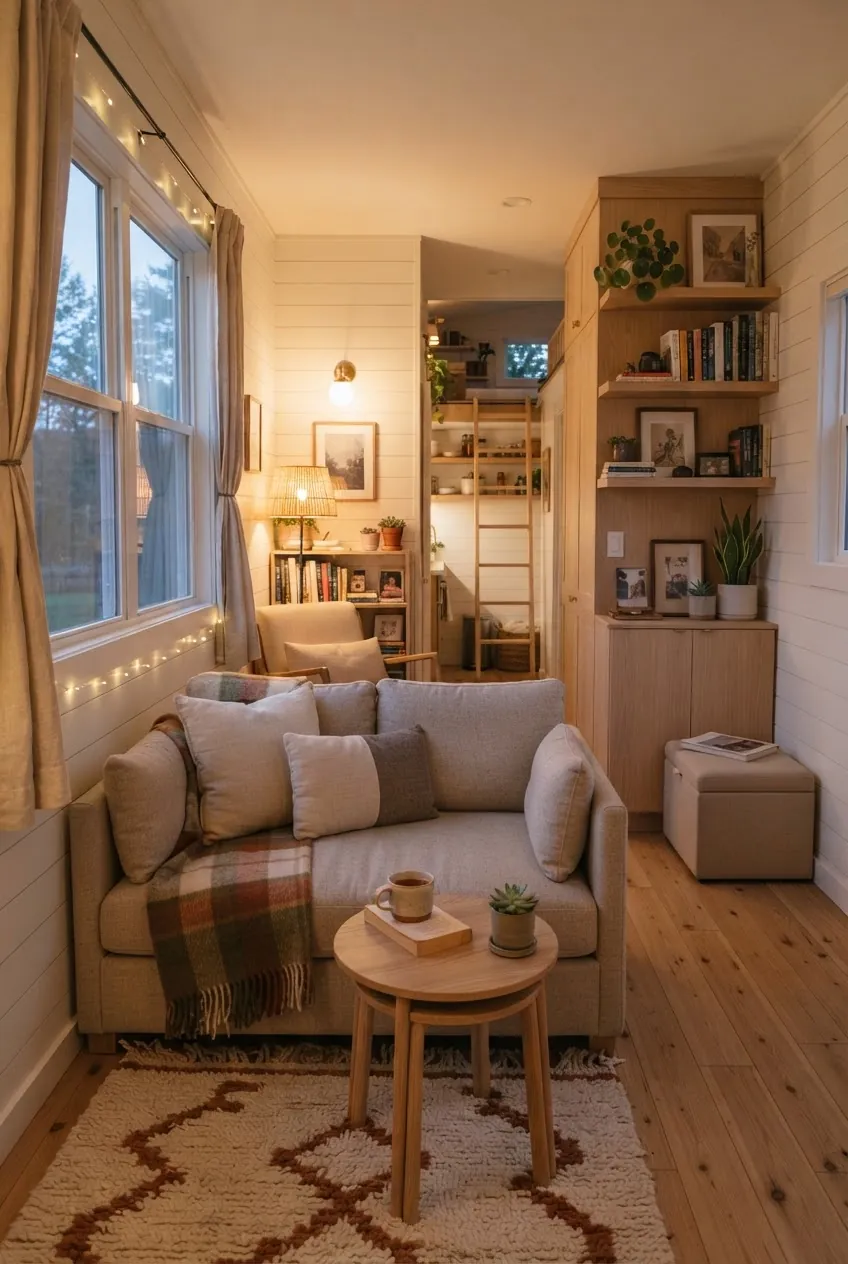
A cozy tiny house living area is not created by adding more pillows to a cramped corner. It starts with a sharper decision: what should this room help you feel at the end of the day? Rested, welcome, settled, and able to move without bumping into furniture. In a tiny house, coziness has to be engineered. Every seat, lamp, surface, and storage choice needs to earn its place.
The best tiny house living room ideas protect comfort without pretending the room is bigger than it is. They use compact furniture, warm lighting, soft texture, smart storage furniture, and a layout that keeps the walkway open. The result is not a miniature version of a suburban living room. It is a small living area with its own logic.
Choose One Comfort Anchor First
Start with the one piece that makes the room feel like a place to stay, not just pass through. For many tiny homes, that anchor is a compact sofa, a deep window bench, or a built-in lounge with real cushions. Pick it before you pick the rug, coffee table, shelves, or decor. A cozy room needs a clear place for the body to land.
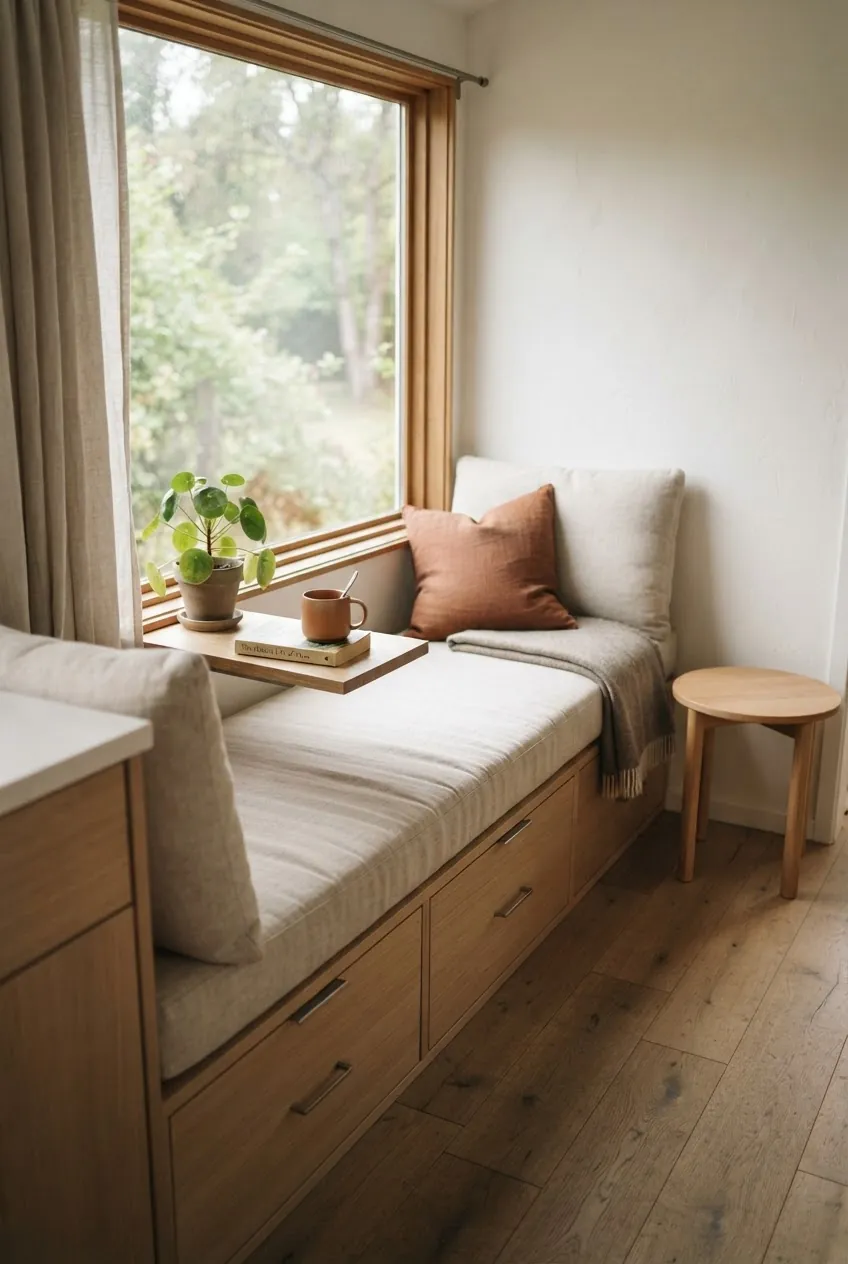
If the room is narrow, a built-in lounge can work better than freestanding seating because it uses the wall edge cleanly. If the room has more width, a small apartment sofa may feel more residential. What matters is seat depth, back support, and reach. You should be able to sit down, place a drink nearby, turn toward the window or another person, and relax without rearranging the entire room.
Use Compact Furniture That Still Feels Generous
Compact furniture should save space without punishing comfort. Look for smaller-scale pieces with rounded corners, raised legs, hidden storage, and softer profiles. A loveseat with a storage ottoman, a narrow chaise, nesting tables, or a slim lounge chair can keep the room flexible while still feeling like a proper living area.
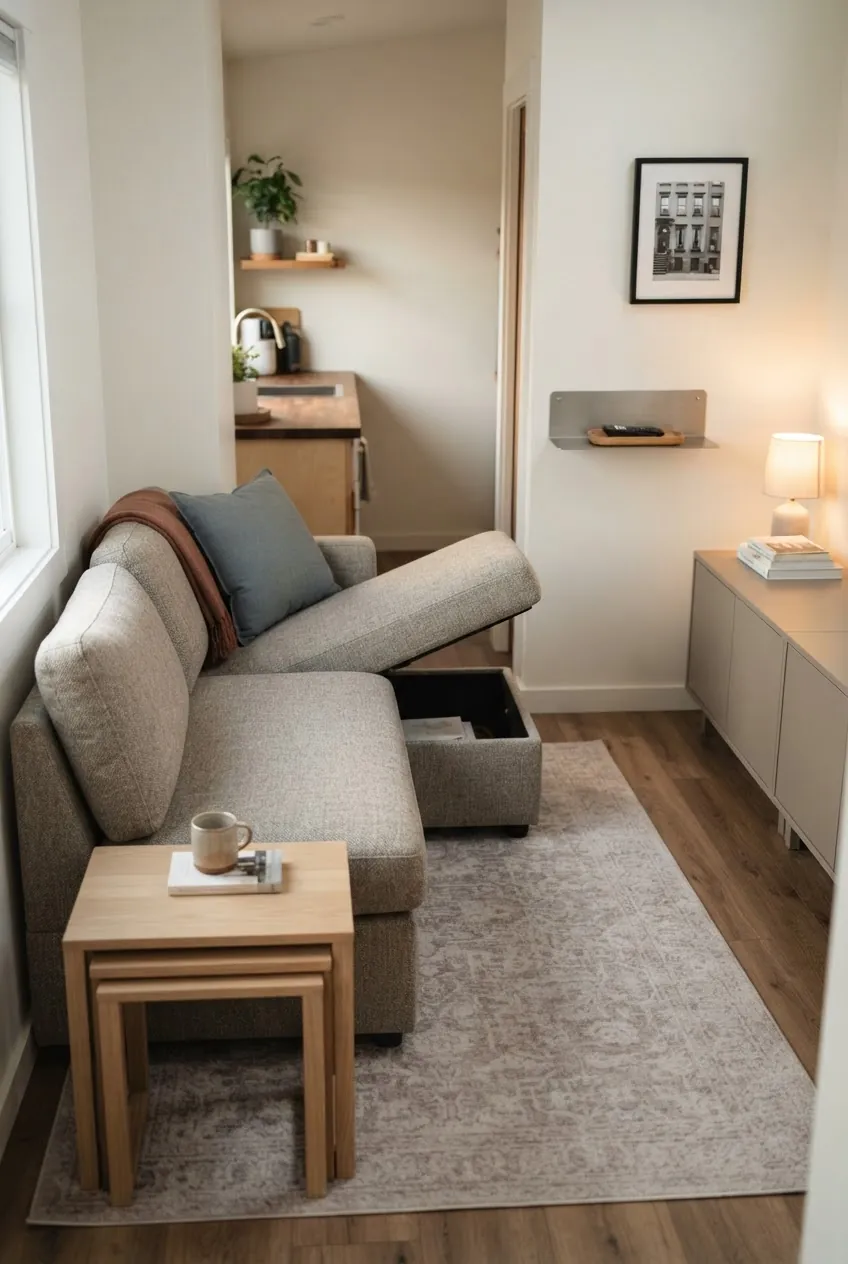
The key is not to buy the smallest item available. Too-small furniture can make the room feel temporary and uncomfortable. Instead, choose one or two pieces that are scaled correctly and then leave enough floor showing around them. Visible floor is a design tool in small space living because it keeps the eye moving.
Layer Warm Lighting Instead of Relying on the Ceiling
A single ceiling light can flatten a tiny house interior and make every corner feel exposed. Cozy lighting comes from layers: a low lamp near the sofa, a small wall sconce, under-shelf glow, a reading light, and dimmable overhead light only when needed. The room should shift from practical daytime use to a softer evening mood.
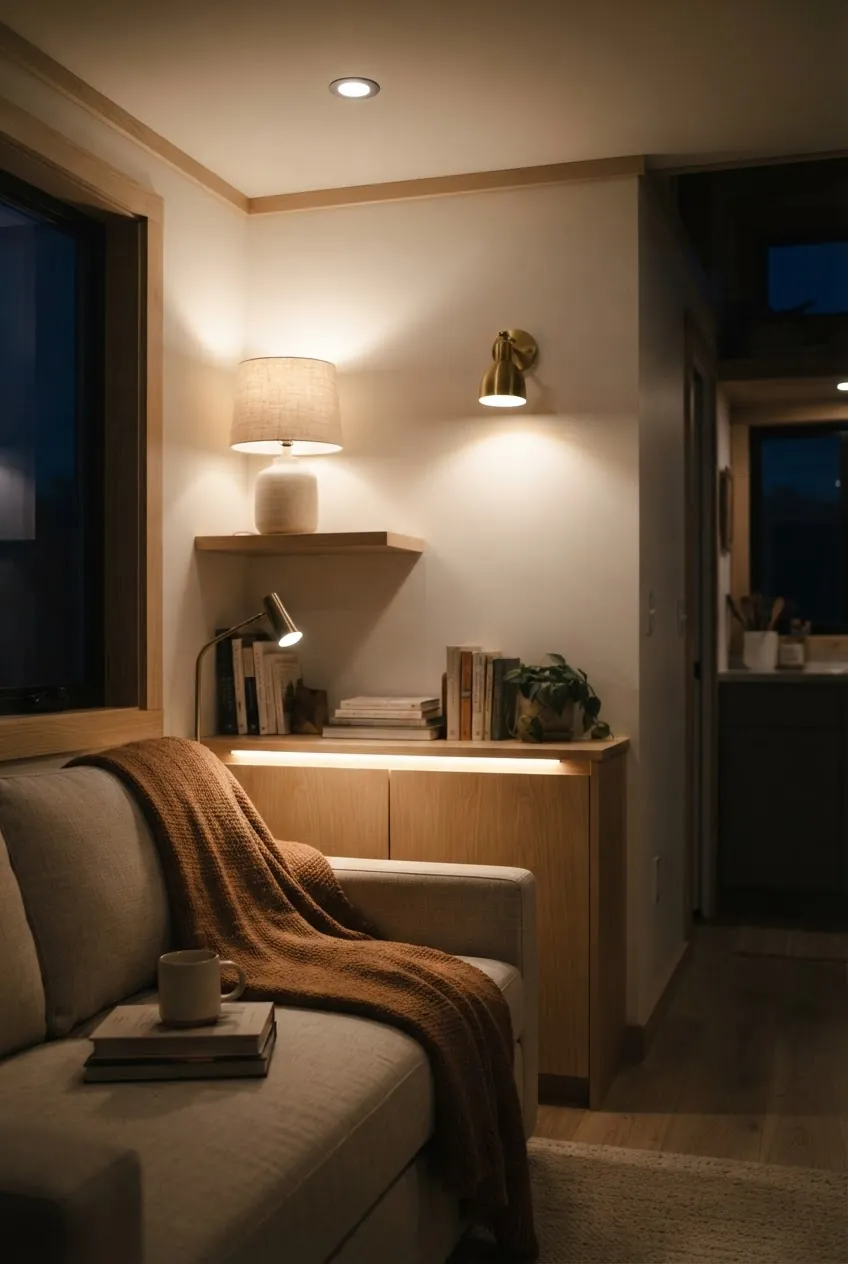
Place lighting where routines happen. If you read on the sofa, put light at shoulder height. If the living area shares space with a kitchen, use under-cabinet light so the living zone can stay calm after dinner. If the ceiling is low, choose wall lights or small shaded lamps instead of bulky pendants.
Hide Storage Inside the Living Room Pieces
Storage makes or breaks a cozy tiny home. When blankets, chargers, games, books, pet items, and hobby supplies have nowhere to go, the living area becomes visual noise. The fix is not always more shelving. Often it is better to hide storage inside the furniture you already need.
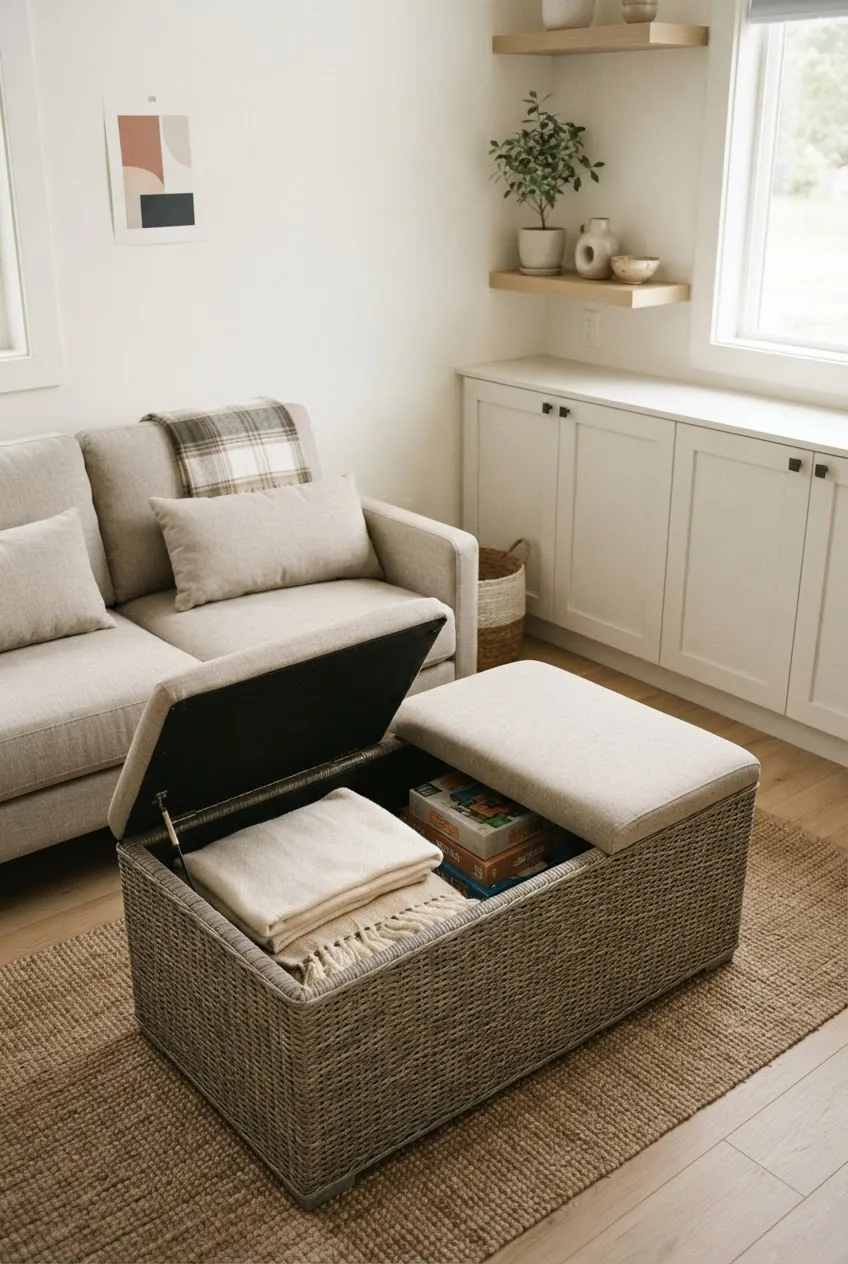
A storage ottoman can hold throws and board games. A sofa base can hide off-season textiles. A shallow cabinet under a window can hold media equipment. A narrow shelf can display a few personal objects while closed doors handle the rest. The most comfortable small living areas mix one visible layer of personality with a larger hidden layer of function.
Make the Window Area Work Harder
Windows are emotional space in a tiny house. A living area feels bigger when it has a view, daylight, and a reason to sit near the glass. If your layout allows it, build the cozy zone around the window instead of treating the window as leftover wall space.
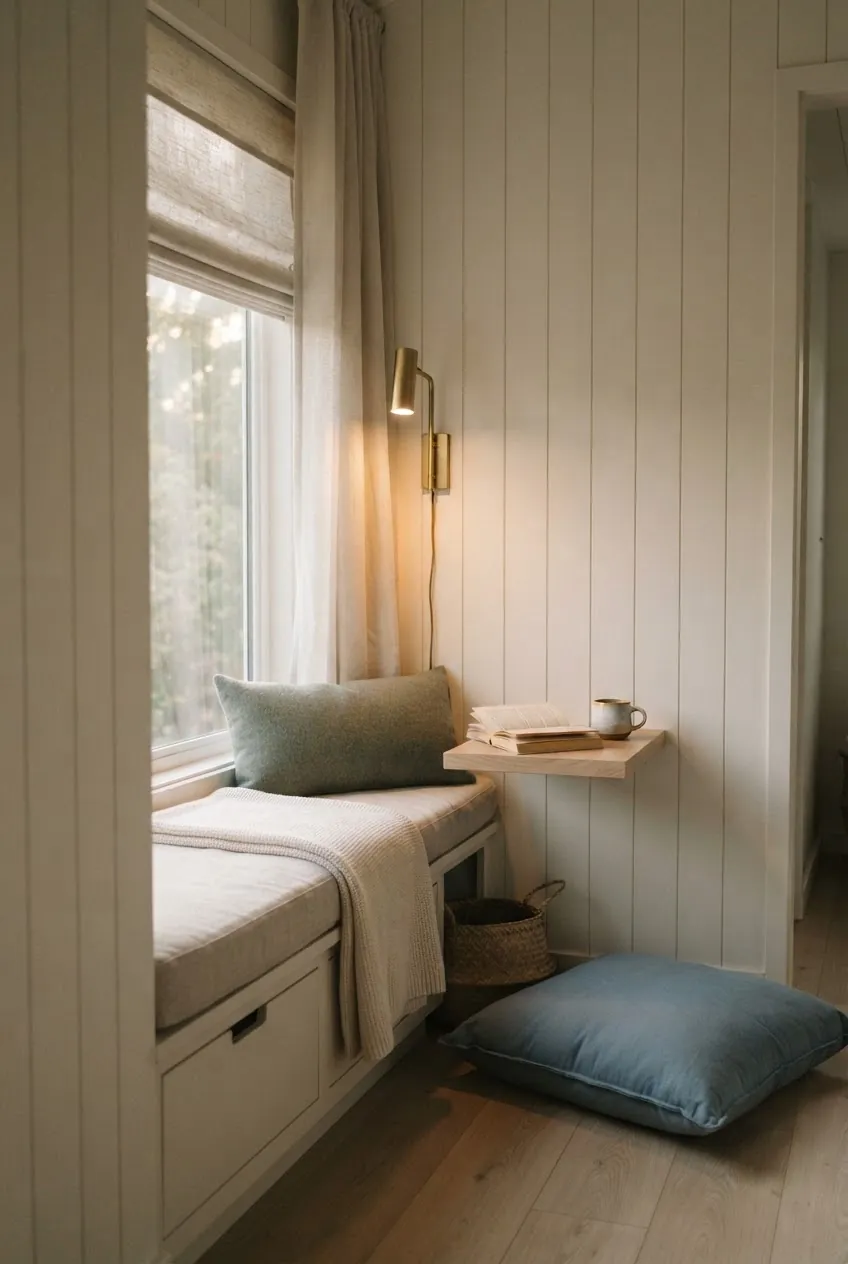
A window seat can become a reading corner, guest perch, hidden storage box, or extra dining seat. Sheer curtains soften daylight without stealing space. A small side shelf near the window can replace a bulky end table. If privacy is an issue, use top-down shades or textured glass films that let light in while protecting the room from feeling exposed.
Use Texture Instead of Clutter
Cozy does not have to mean crowded. In a compact living area, too many small accessories quickly become clutter. Texture is usually a better tool. Linen curtains, a wool rug, a woven basket, a nubby pillow, a matte ceramic lamp, and warm wood can create depth without filling every surface.
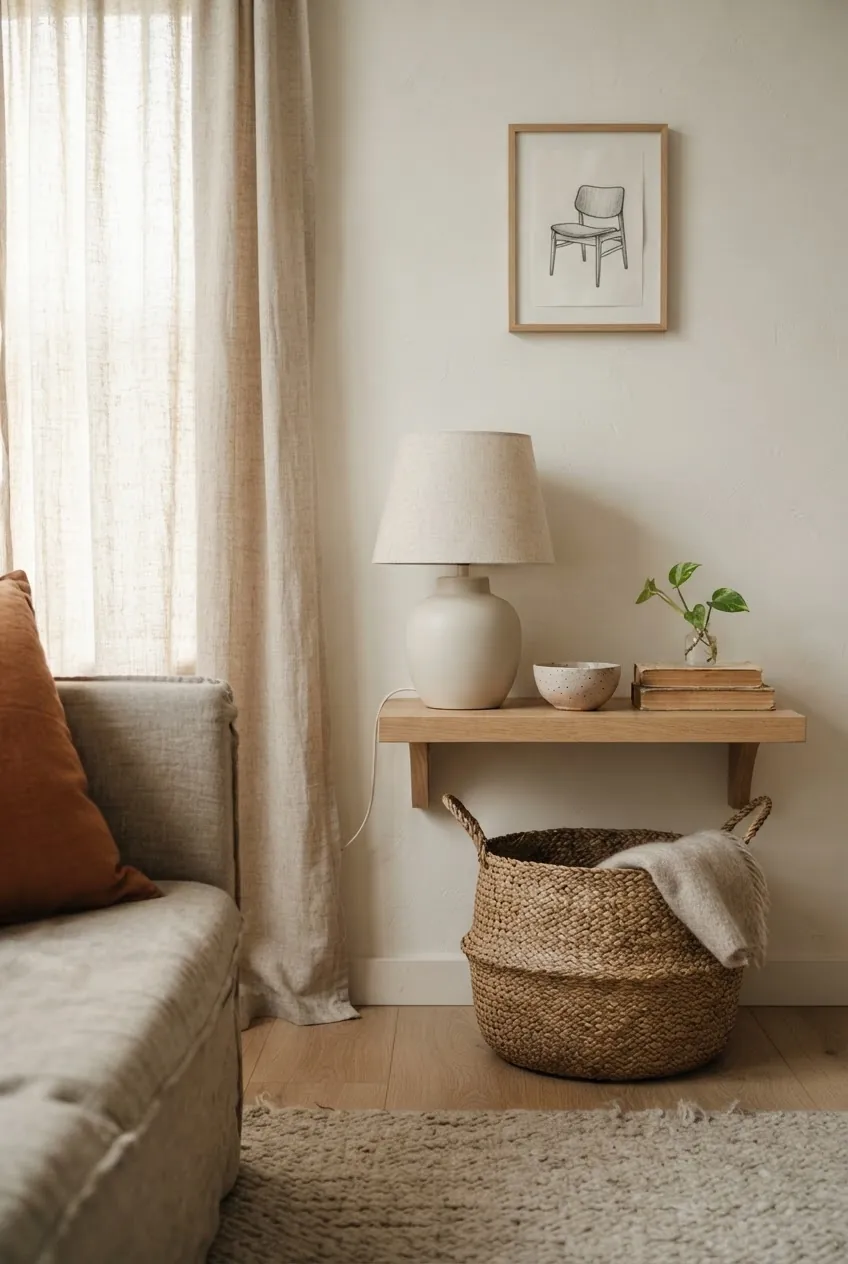
Pick a few personal details that matter and let them breathe. A framed family photo, a handmade bowl, a favorite book stack, or a small plant can be enough. The room becomes more inviting when the eye has places to rest. A tiny house living area should feel personal, but it should not ask every object to be visible all the time.
Keep the Layout Easy to Reset
The coziest tiny house ideas are the ones that stay cozy after real life happens. Choose furniture that can be reset in five minutes. Give blankets a drawer, remotes a tray, shoes a landing spot, and chargers a hidden outlet. Keep a clear path from the entry to the kitchen and bathroom. If the living area works only when every object is perfectly staged, it will not feel relaxing for long.
A tiny living room can be small, flexible, and deeply comfortable at the same time. Start with the comfort anchor, add compact furniture that respects the walkway, layer warm lighting, hide storage where your hands already go, and use texture instead of clutter. That is how a small living area becomes the heart of a home.