
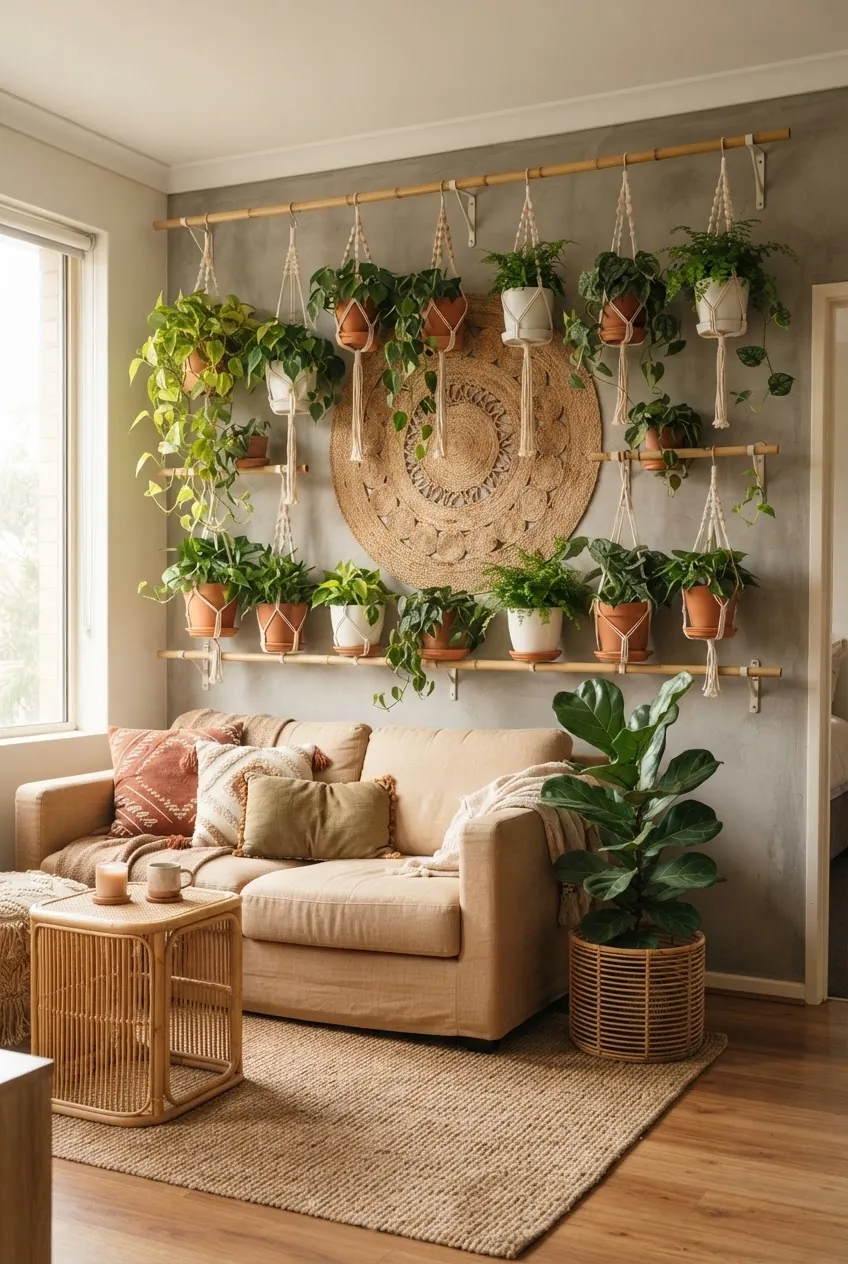
A bohemian indoor plant wall should feel loose, layered, and alive. The mistake is treating it like a flat decor trend. Real plants bring water, weight, light needs, pests, dust, and weekly maintenance with them. That does not make a plant wall a bad idea. It means the best plant wall ideas indoor bohemian homes can actually live with start from the boring question first: how will this wall be watered, protected, and cleaned?
That practical lens is what separates a cozy plant feature wall from a damp drywall problem. In plant and home-improvement discussions, the same concerns come up again and again: renters do not want dozens of holes, homeowners worry about moisture behind pots, and beginners underestimate how much light a true living wall needs. A good boho version solves those problems with removable planters, open shelving, waterproof trays, airy spacing, and easy-care trailing plants.
Start With The Plant Wall Illusion, Not A Full Living Wall
A true living wall is a planted system with irrigation, a growing medium, drainage, and often lighting. It can be beautiful, but indoors it is closer to a small vertical garden installation than a simple wall decor project. For most homes, a plant wall illusion is smarter: individual pots, shelves, rails, wall pockets, or a freestanding frame arranged tightly enough to read as one lush green surface.
This approach gives you the boho plant wall design people save on Pinterest without locking you into one complicated system. You can remove one sick plant, rotate a pot toward the window, lift everything off the wall for cleaning, and change the styling when the room evolves. It is also much more forgiving for apartments, small living rooms, and home offices.
The Best Boho Indoor Plant Wall Formula
The strongest bohemian plant walls use three layers: a practical support layer, a living greenery layer, and a texture layer. The support layer is the part that keeps your wall safe: shelves, rails, a trellis, pegboard, a ladder shelf, or a framed planter grid. The greenery layer is the plant mix. The texture layer is what makes it feel boho instead of like a shop display: rattan, bamboo, cane, terracotta, jute, linen, carved wood, warm brass, or handmade ceramic.
Keep the palette earthy but not muddy. Green leaves already add a lot of color, so the wall looks calmer when the hardware and containers stay in natural materials. White ceramic planters, terracotta pots, woven baskets, bamboo rails, and a few aged brass hooks usually give enough variation without making the wall chaotic.
1. Rattan Rail With Trailing Pothos
A rattan or bamboo rail is one of the easiest ways to make wall plants indoor living rooms feel intentional. Mount a horizontal rail, hang several small planters from S-hooks, and let pothos, philodendron, or scindapsus trail down at different lengths. The rail keeps the composition clean while the vines create the relaxed bohemian movement.
This is a good first project because each pot stays separate. If one plant needs more water or less light, you can move it without disturbing the whole plant accent wall. Add a narrow catch tray or saucer inside each decorative basket so the natural texture is visual, not structural.
2. Renter-Friendly Plant Shelf Wall
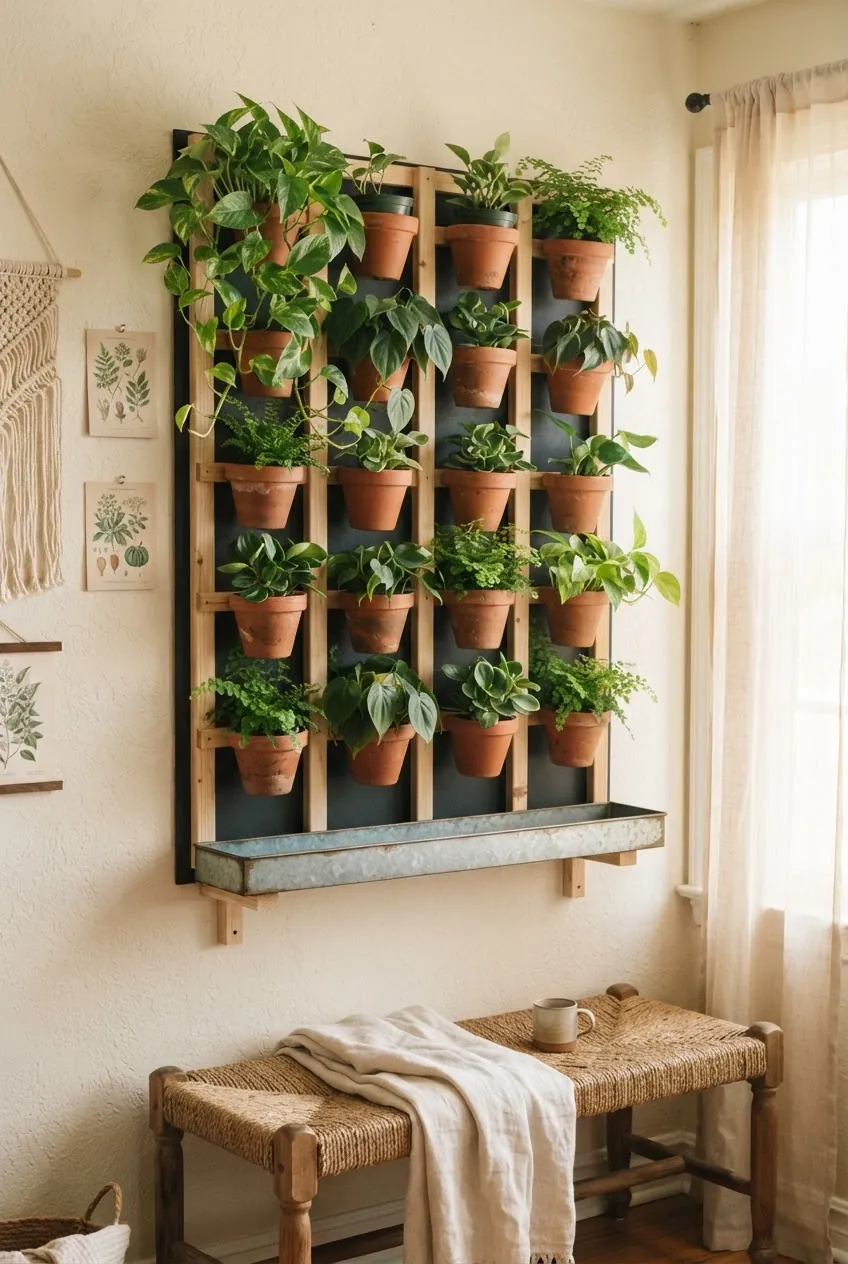
If you rent, skip a grid of small wall planters. Too many individual hangers create too many holes and too many chances for water marks. A single leaning ladder shelf, tension-pole shelf, or freestanding etagere can give you the same vertical plant wall effect while keeping the actual wall mostly untouched.
Style it like a wall garden ideas indoor board: heavier pots at the bottom, medium plants at eye level, and trailing vines near the top. Mix in one woven basket, one ceramic pot, and one warm wood object so the setup feels collected instead of stacked.
3. Propagation Tube Wall
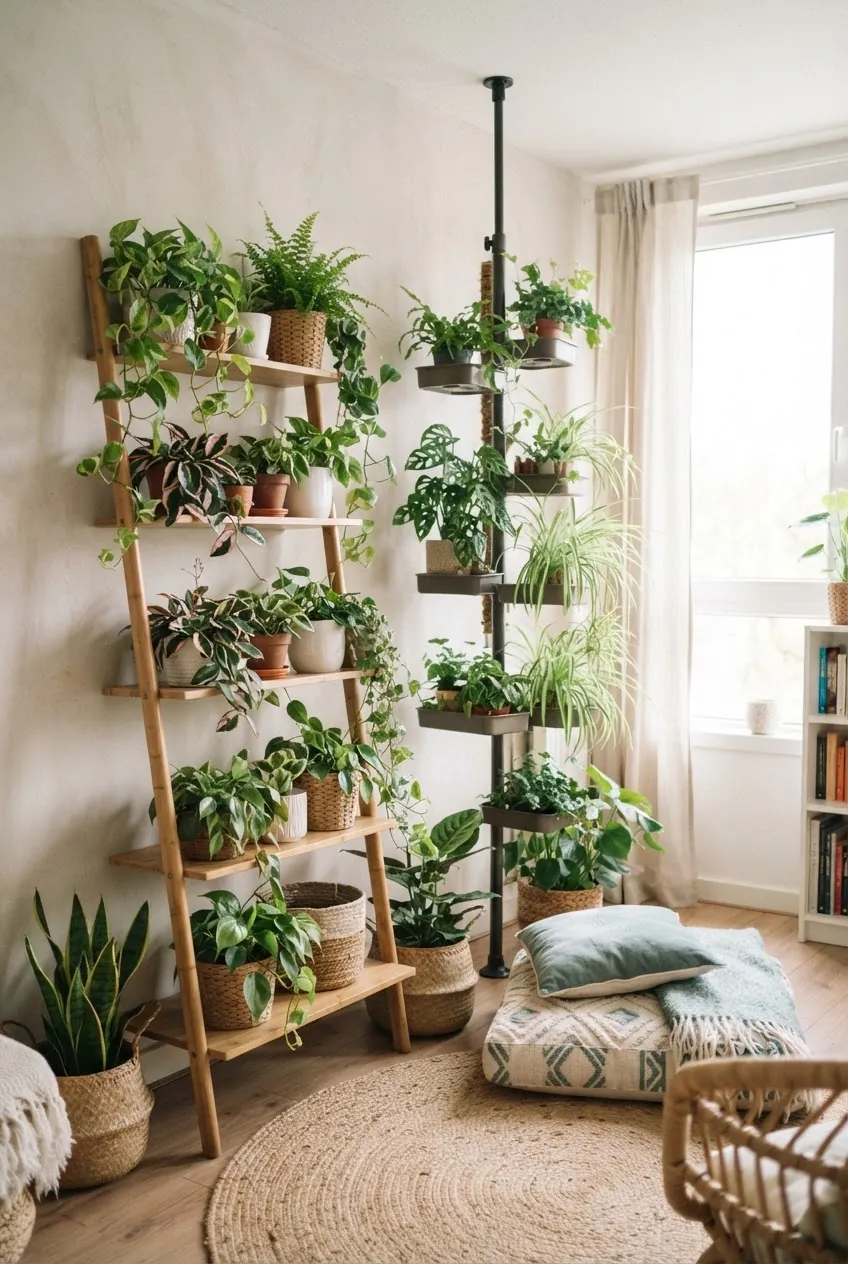
A propagation wall is perfect when you want a DIY plant wall indoor project without building a heavy planter system. Mount a slim wood rail, hang glass tubes or small bottles, and root pothos, philodendron, monstera, or tradescantia cuttings in water. It gives you movement, shine, and botanical detail with very little soil weight.
The tradeoff is cleaning. Clear glass shows algae and mineral marks quickly. Keep the tubes removable, change the water weekly, and avoid placing the rail where direct sun can heat the glass. The look is delicate and handmade, which suits bohemian rooms better than a bulky plastic pocket wall.
4. Modular Pot Grid For A DIY Living Wall Indoor Look
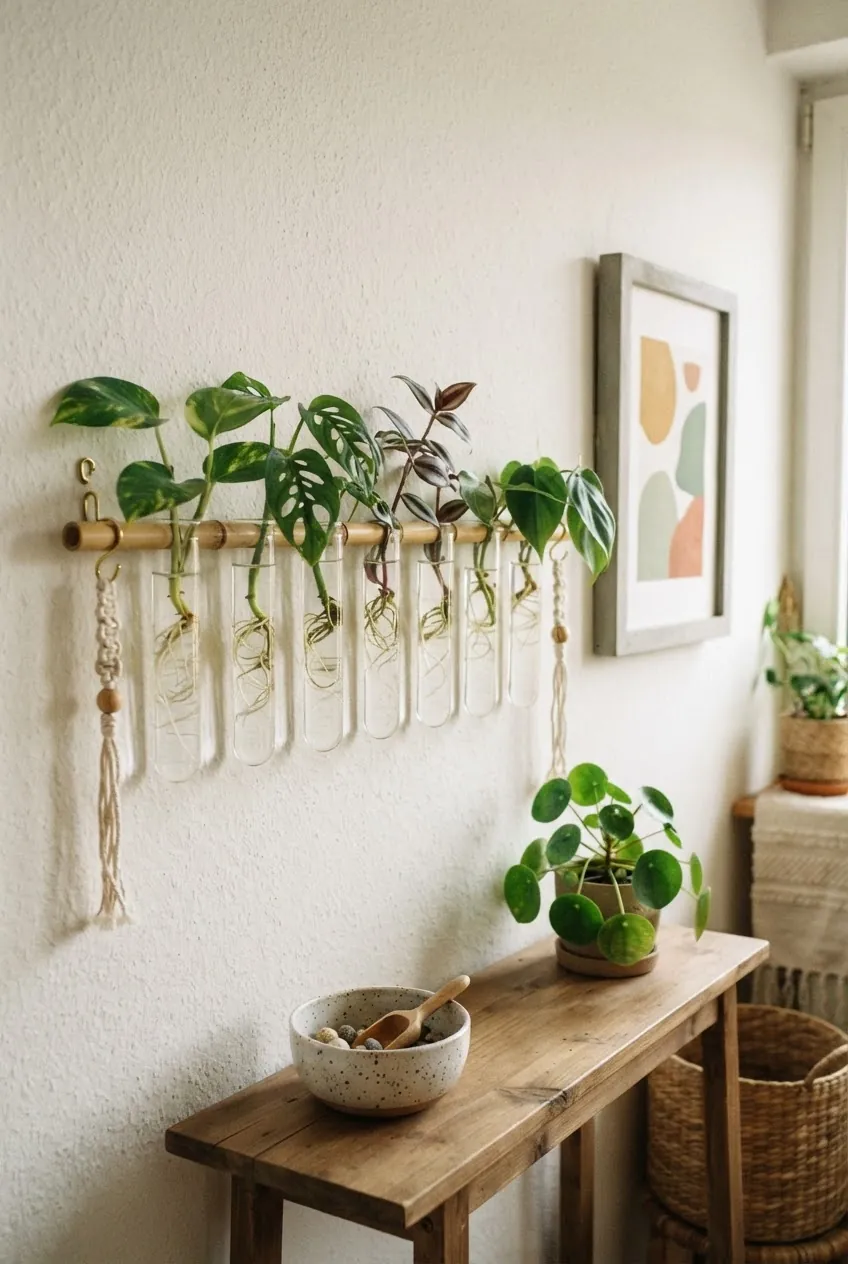
If you want something closer to a living wall ideas photo, use a modular grid that holds individual nursery pots. A wood slat frame, metal grid panel, or purpose-made wall planter system can make several small plants read as one plant feature wall. The key is to keep each pot removable and each planter backed by a waterproof liner.
Do not pack the plants so tightly that you cannot inspect the soil or wipe the wall. Leave enough space for airflow. Boho rooms can handle a little asymmetry, so stagger leaf shapes rather than forcing a perfect checkerboard. Ferns, pothos, heartleaf philodendron, peperomia, and small syngonium varieties can work well if the light is bright but indirect.
5. Living Room Plant Accent Wall Around A Mirror
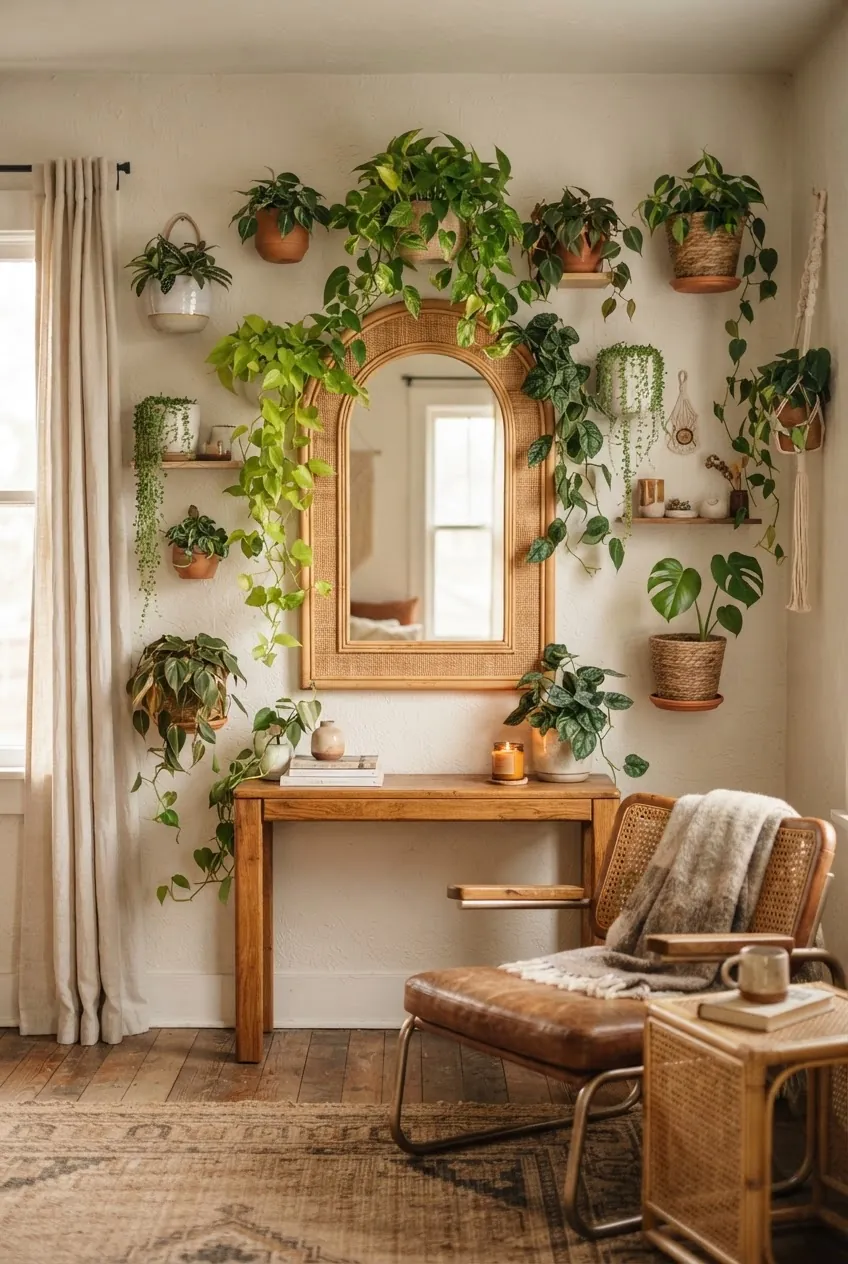
A mirror makes a plant wall feel larger without adding more plants. Place an arched rattan mirror or simple wood mirror in the center, then build greenery around it with hanging pots, small shelves, and trailing vines. This works especially well behind a sofa, beside a reading chair, or on a narrow living room wall that needs depth.
Keep the mirror clear enough to function. If vines cover the whole edge, the wall can look messy instead of lush. Let a few stems cross the frame and prune the rest. A plant accent wall should still have shape.
6. Plant Wall Office With A Peg Rail
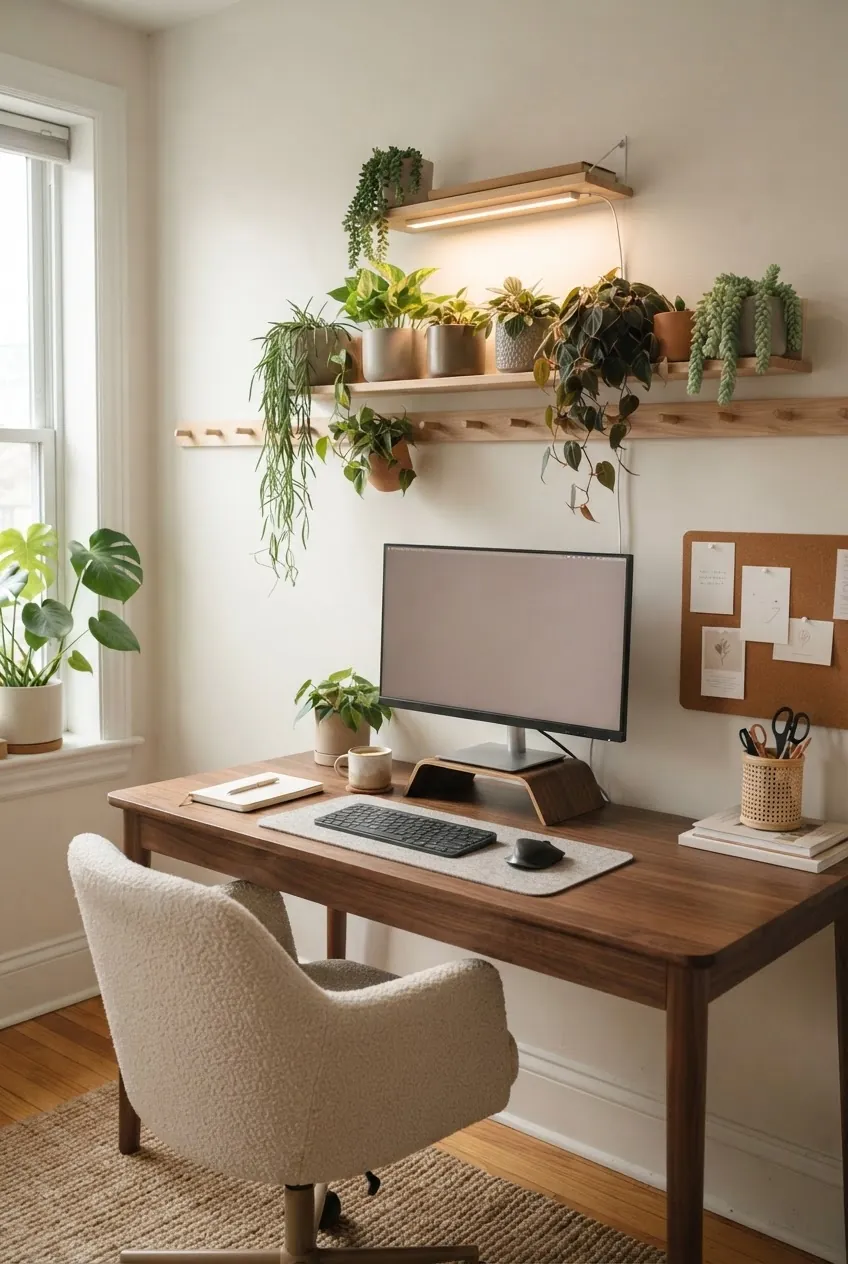
A plant wall office needs to stay calmer than a living room version. Too many dangling vines near a desk can compete with screens, lamps, and storage. A peg rail or shallow shelf above the desk gives you a vertical green strip without crowding the work surface.
Use compact plants with predictable growth: hoya, small pothos, peperomia, trailing philodendron, or a compact fern if the room is humid enough. Add one cork pinboard, one cane pencil cup, and a warm wood shelf to keep the bohemian feeling practical. This is also a good place for a grow light if the office does not get enough natural light.
7. Bathroom Fern Wall Or Humidity Corner
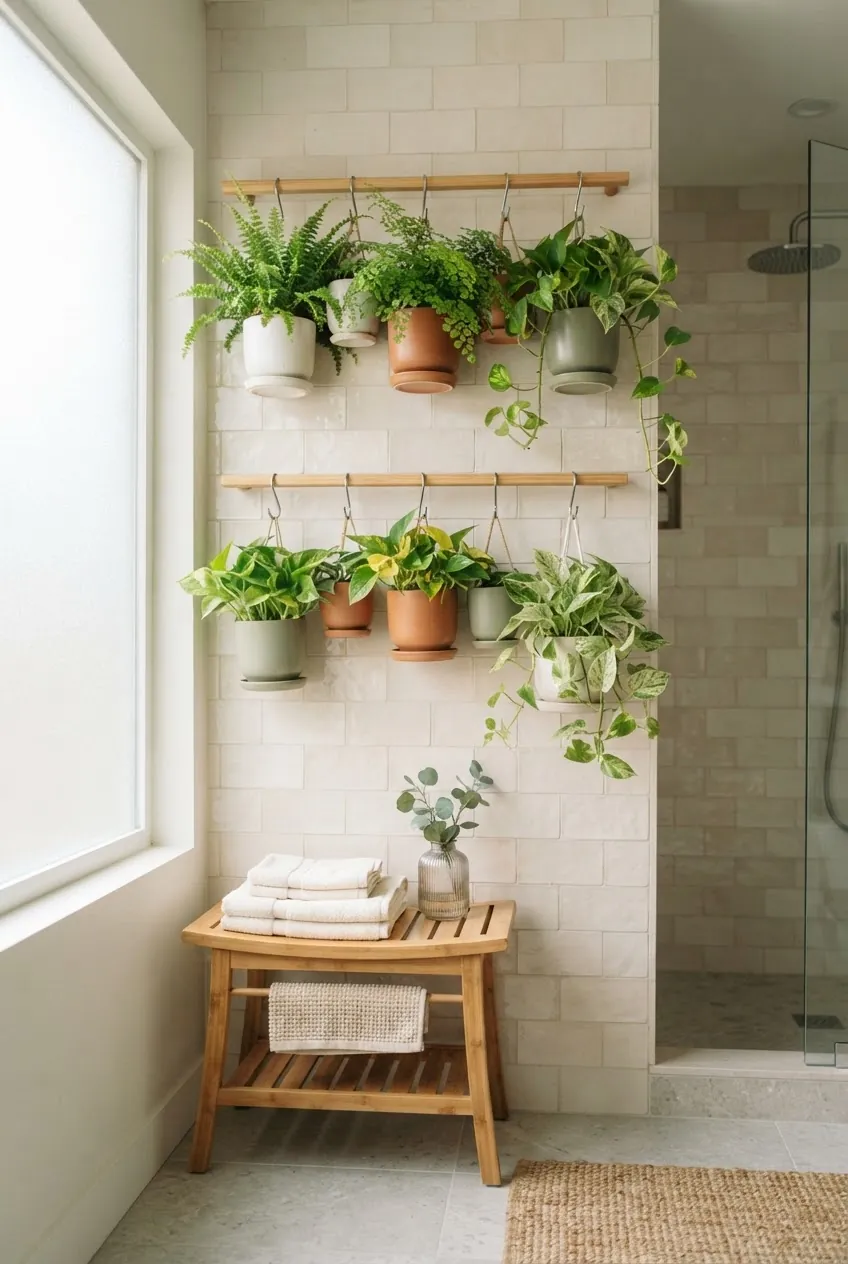
Bathrooms can be good for certain wall plants because humidity is naturally higher, but only if there is real light and ventilation. A windowless bathroom is not automatically plant-friendly. If you have bright indirect light, try a small fern wall, pothos rail, or hanging plant corner near the tub but away from direct water spray.
Use washable surfaces here. Tile, sealed wood, and metal rails are safer than fabric pockets against painted drywall. Boho details can come from a bamboo bath stool, ribbed glass, woven baskets, and warm towels rather than fragile wall-mounted planters.
Choose Plants By Light, Not By Aesthetic
The most common plant wall failure is choosing plants because they match a mood board. Start with the wall’s actual conditions. Bright indirect light can support a wider mix of pothos, philodendron, scindapsus, ferns, hoya, peperomia, and some syngonium. Lower light can still work, but growth will be slower, variegation may fade, and you should lean harder on tough green varieties.
Keep plants with similar water needs together. A fern that wants steady moisture should not share a tiny wall pocket with a succulent that wants to dry out. For a beginner-friendly indoor bohemian plant wall, pothos and heartleaf philodendron are usually easier than moss, orchids, or dense tropical wall systems.
Protect The Wall Before You Style The Wall
Every planter needs a water plan. That can mean removable nursery pots inside cachepots, sealed saucers, a narrow tray, a waterproof backing panel, or a freestanding shelf that keeps moisture away from drywall. Avoid fabric pockets directly on painted walls unless you are comfortable managing dampness and stains.
Also think about weight. Wet soil is heavier than dry soil. A small terracotta pot can become surprisingly heavy after watering, and a full wall of them needs proper anchors. When in doubt, use a freestanding frame or a shelf system rated for more weight than you expect. The prettiest plant wall is not worth a sagging bracket.
A Simple Care Routine That Keeps It Looking Good
- Weekly: check soil moisture, refill propagation tubes, wipe visible dust from larger leaves, and empty any catch trays.
- Every two weeks: rotate pots so vines grow evenly, prune leggy stems, and inspect the underside of leaves for pests.
- Monthly: rinse removable planters, trim dead leaves, check wall anchors, and clean shelves or rails.
- Seasonally: adjust watering for winter light and dry indoor air, move struggling plants, and refresh the layout.
A bohemian room can look relaxed, but the plant wall itself needs a routine. Plants in warmer, brighter spots usually drink more. Plants in cooler or darker areas stay wet longer. That is why a fixed watering schedule is less reliable than checking the soil and learning the wall’s microclimate.
When Faux Or Preserved Greenery Makes Sense
There is no shame in mixing real and faux greenery if the wall is far from light, above electronics, or difficult to water safely. Use real plants where you can reach them and preserved or faux pieces where maintenance would be awkward. The trick is to make the mix honest: pair high-quality faux trailing stems with real potted plants nearby, and avoid shiny plastic panels that collect dust and flatten the whole room.
For a natural home decor look, let the supporting materials do the styling. Bamboo, rattan, jute, cane, linen, terracotta, and warm wood make even a small plant wall feel bohemian. The greenery should soften the room, not create a maintenance project you secretly resent.
The Easiest Starting Point
If you are starting from scratch, choose one sunny wall, one shelf or rail, three to five easy plants, and one waterproof watering habit. Live with that for a month. If the plants stay healthy and the wall stays dry, expand the design. That slower approach gives you the layered boho look people want from indoor plant wall ideas while avoiding the maintenance trap that makes full living walls fail indoors.