
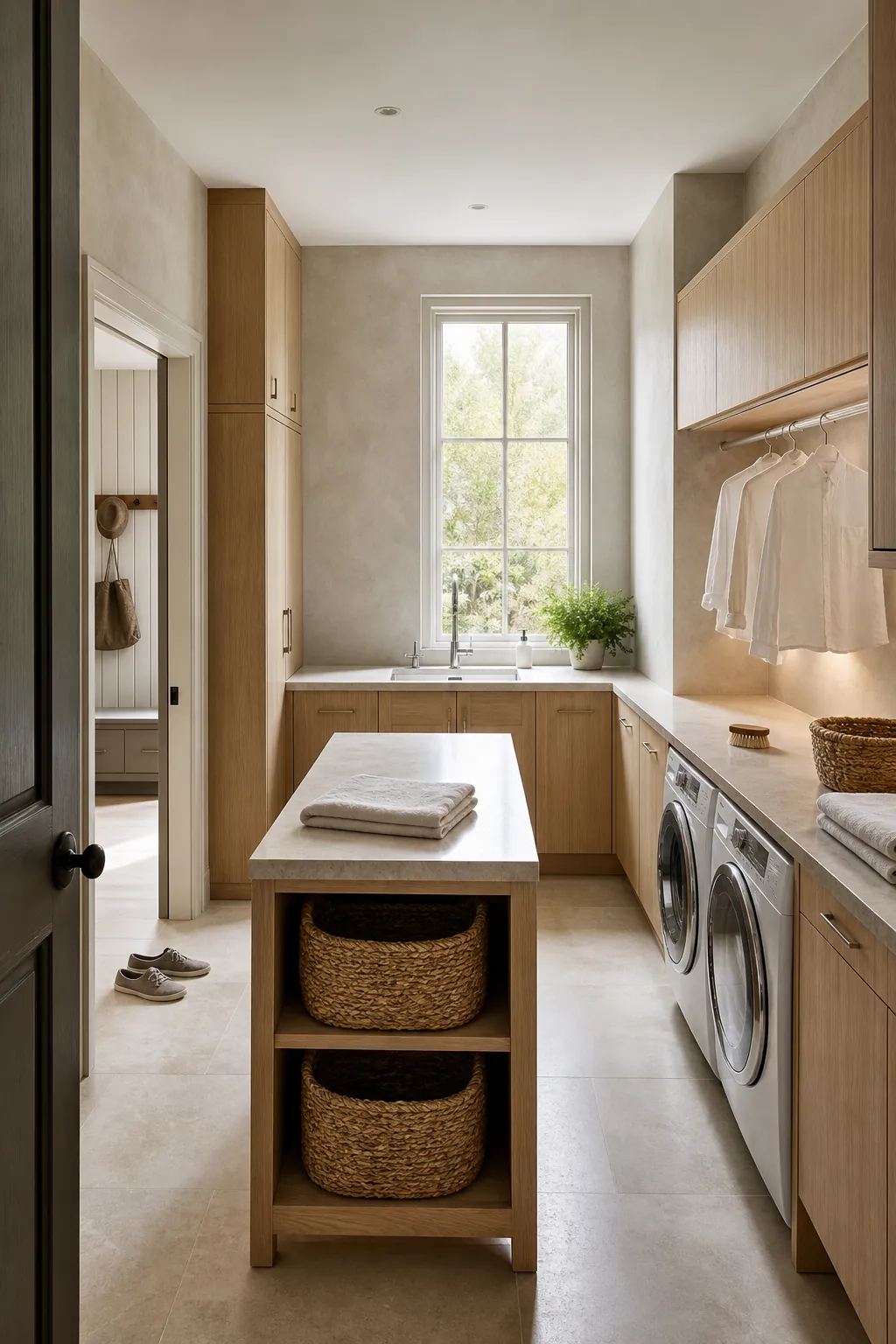
A luxurious laundry room is not defined by marble alone. The rooms that feel genuinely indulgent are the ones that prevent small annoyances from multiplying: baskets have a place to land, damp clothes can hang without blocking a doorway, detergent is within reach but out of sight, and the folding counter is not buried under household overflow. The best luxury laundry room ideas make the work feel lighter before they make the room look expensive.
That distinction matters whether you are planning a generous utility suite or trying to give a compact room the calm of a custom interior. Start with the routine, build storage around it, and use beautiful materials where your hands and eyes meet the room most often.
Start With a Laundry Workflow, Not a Finish Board
Before choosing a cabinet color, walk through one complete load of laundry. Where does the basket arrive? Where do you check pockets, treat stains, wash, dry, hang, fold, and sort? A large laundry room design can still feel awkward when those steps zigzag across the room or require moving the same basket three times.
Create a simple sequence: drop zone, preparation area, appliances, drying zone, folding surface, then finished-load storage. Side-by-side machines suit a long counter and make a natural folding station. Stacked appliances release floor area for a sink or tall cupboard. In a galley layout, keep the main route open and place shallow storage opposite the machines rather than forcing deep cabinetry into the walkway.
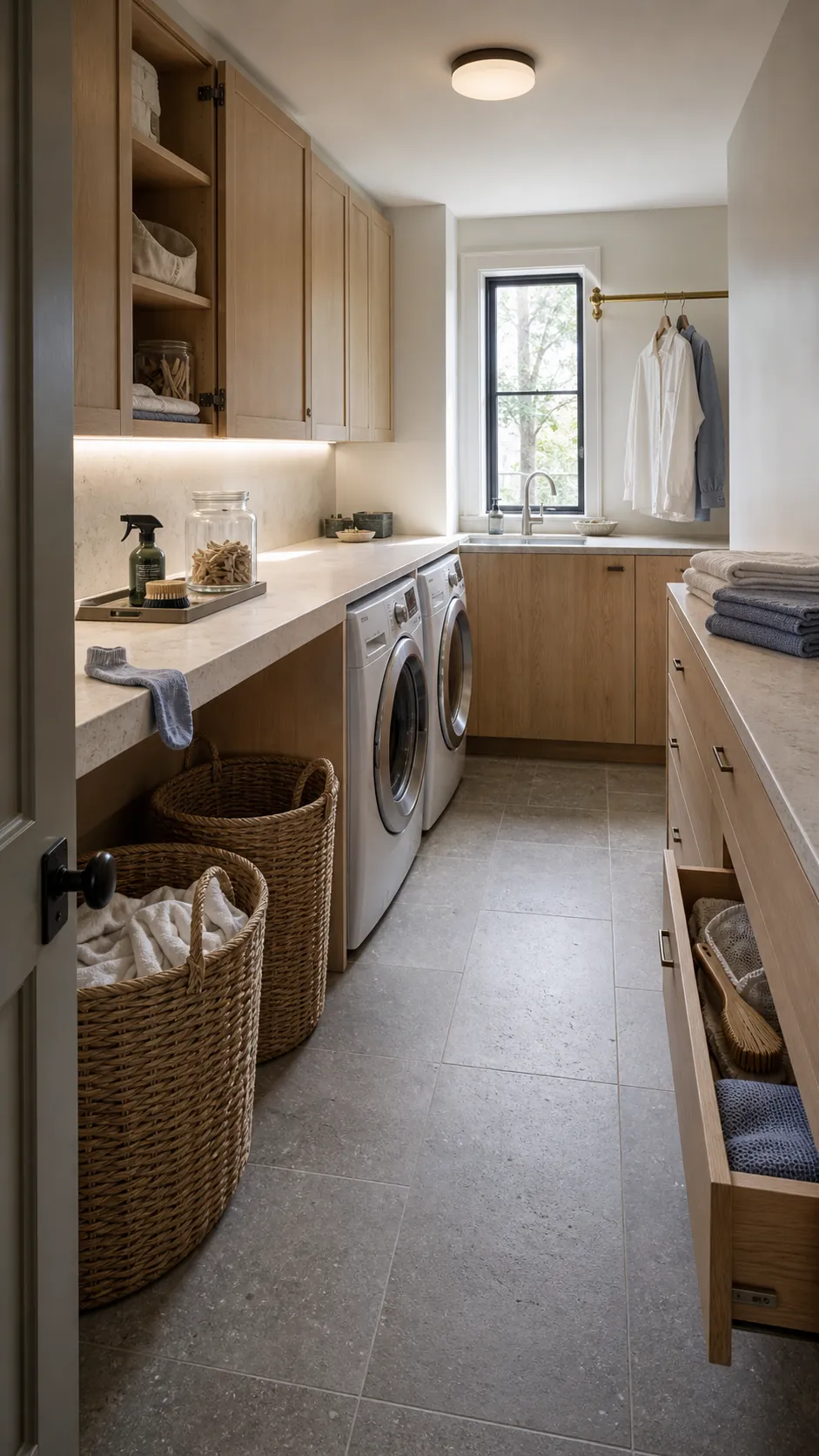
Mark the appliance doors at full swing on your plan. Add the depth of an open cabinet drawer and the width of a person carrying a basket. Those unglamorous measurements protect the graceful feeling you want later. If your dream laundry room luxury plan includes an island, confirm that it improves circulation instead of becoming an obstacle between the washer and dryer.
Give the Folding Counter a Protected Purpose
A broad, uninterrupted counter is one of the most useful upgrades in both modern laundry rooms and traditional utility rooms. The key word is uninterrupted. A beautiful surface loses its value when detergent bottles, loose socks, pet supplies, and delivery boxes occupy every inch.
Protect the counter by assigning nearby homes for the things that usually invade it. Put everyday products in a shallow upper cabinet or a pull-out beside the machines. Add a small divided drawer for stain tools, mesh bags, clothespins, and spare buttons. Plan an open bay below the counter for the basket currently in use. When storage supports the task, the worktop can remain a worktop.
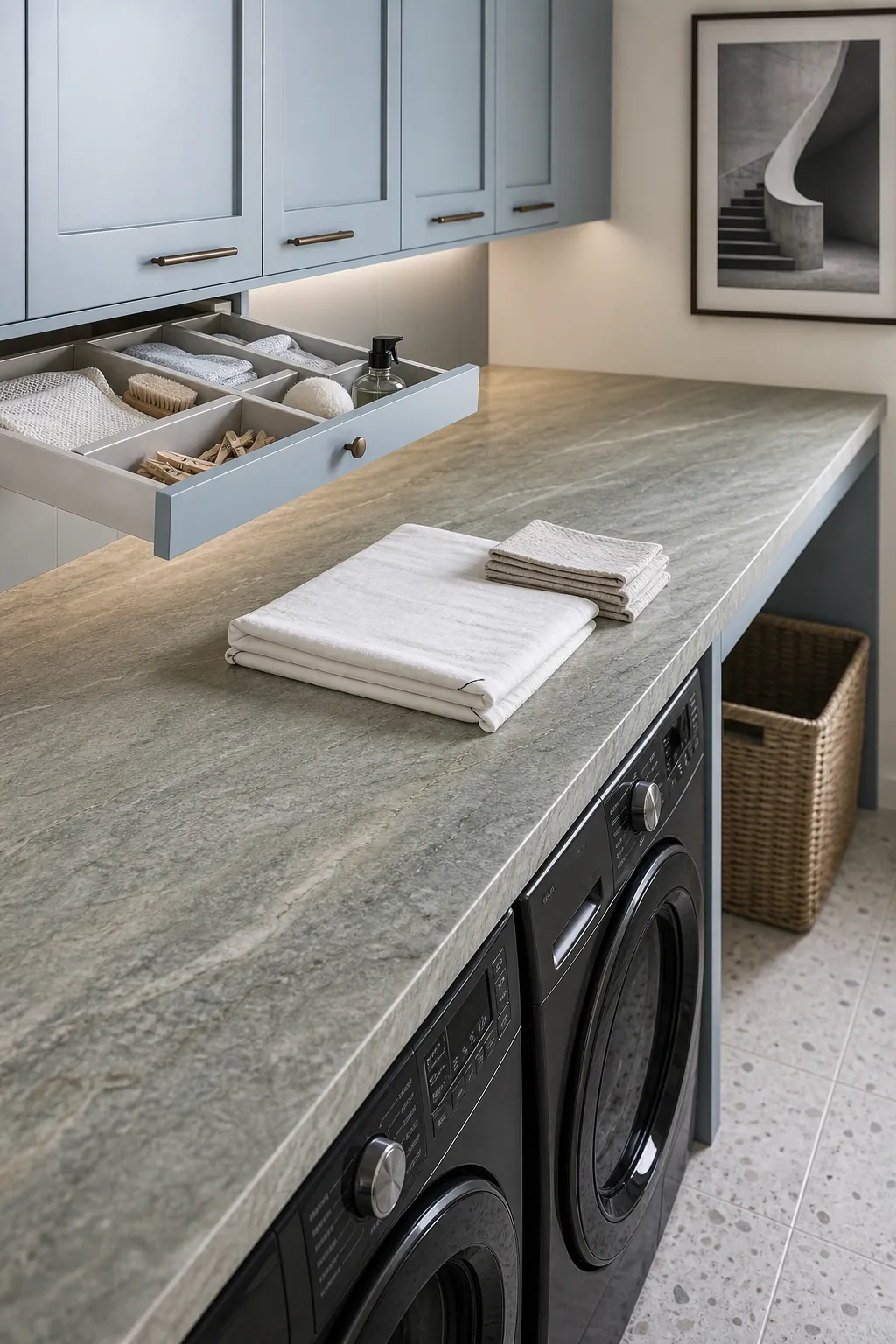
For front-loading machines, a counter spanning the appliances creates a clean architectural line. Leave enough clearance and follow the appliance manufacturer’s installation and ventilation requirements. If the machines are top-loading, place a dedicated counter beside them or use a wall-mounted surface that folds away. A waterfall edge can look striking, but a simple eased edge is often more forgiving when baskets are dragged across it every day.
Use Full-Height Cabinetry to Quiet the Visual Noise
Closed storage is what gives many beautiful laundry rooms their calm. Ceiling-height cabinets hide bulk detergent, spare paper products, cleaning refills, an ironing board, vacuum attachments, and the awkward objects that make open shelves look cluttered. They also eliminate the dusty ledge above short wall cabinets.
Mix cabinet depths according to what they hold. A tall, deep unit can conceal brooms, a cordless vacuum, and a fold-down ironing board. Shallower upper cabinets keep small bottles visible and easy to reach. Pull-out hampers sort lights, darks, and linens without leaving baskets on the floor. If children use the room, reserve lower storage for safe items and keep cleaning products in secured upper cabinetry.
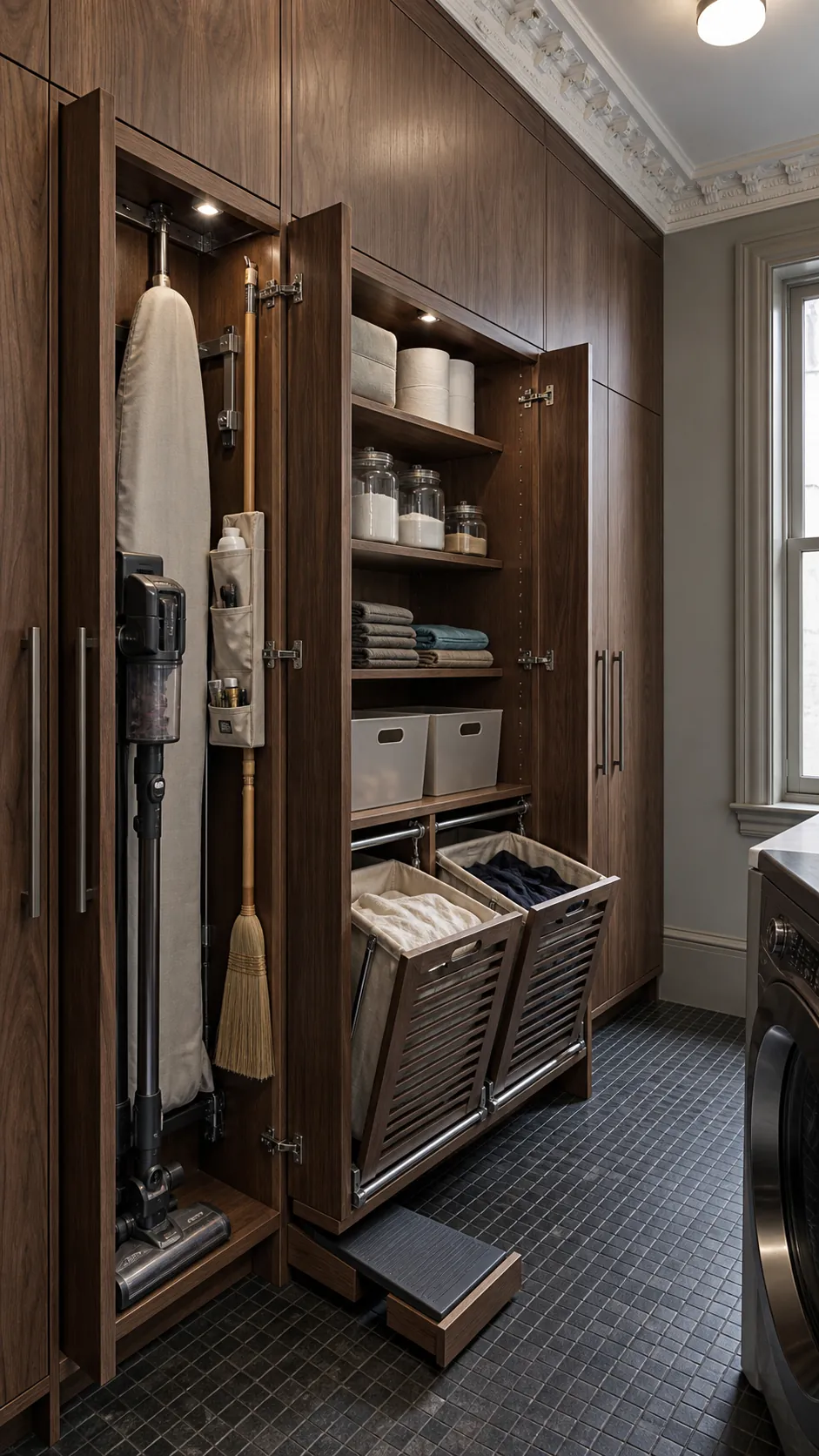
Luxury comes from the cabinet interiors as much as the doors. Adjustable shelves accommodate changing supplies. Ventilated hamper fronts help laundry breathe. A narrow vertical slot keeps an ironing board from fighting with mops. Soft-close hardware reduces noise, while simple labels inside doors preserve an uncluttered exterior. This is how a fancy laundry room stays functional after the photographs are taken.
Make Air-Drying Part of the Architecture
Air-drying is frequently treated as an accessory added at the end of a remodel. Then a freestanding rack blocks the aisle, wet shirts hang from cabinet knobs, and the polished room stops working. Instead, decide what you regularly hang and design for that amount.
A brass or blackened-steel rail over the sink handles a few hand-washed pieces. A wall-mounted accordion rack expands for a larger load and closes nearly flat. A ceiling-mounted airer uses height in rooms with a generous ceiling. A ventilated drying cabinet is the most integrated option for a big laundry room, especially in a wet climate or a household that washes delicate clothing and sports gear.
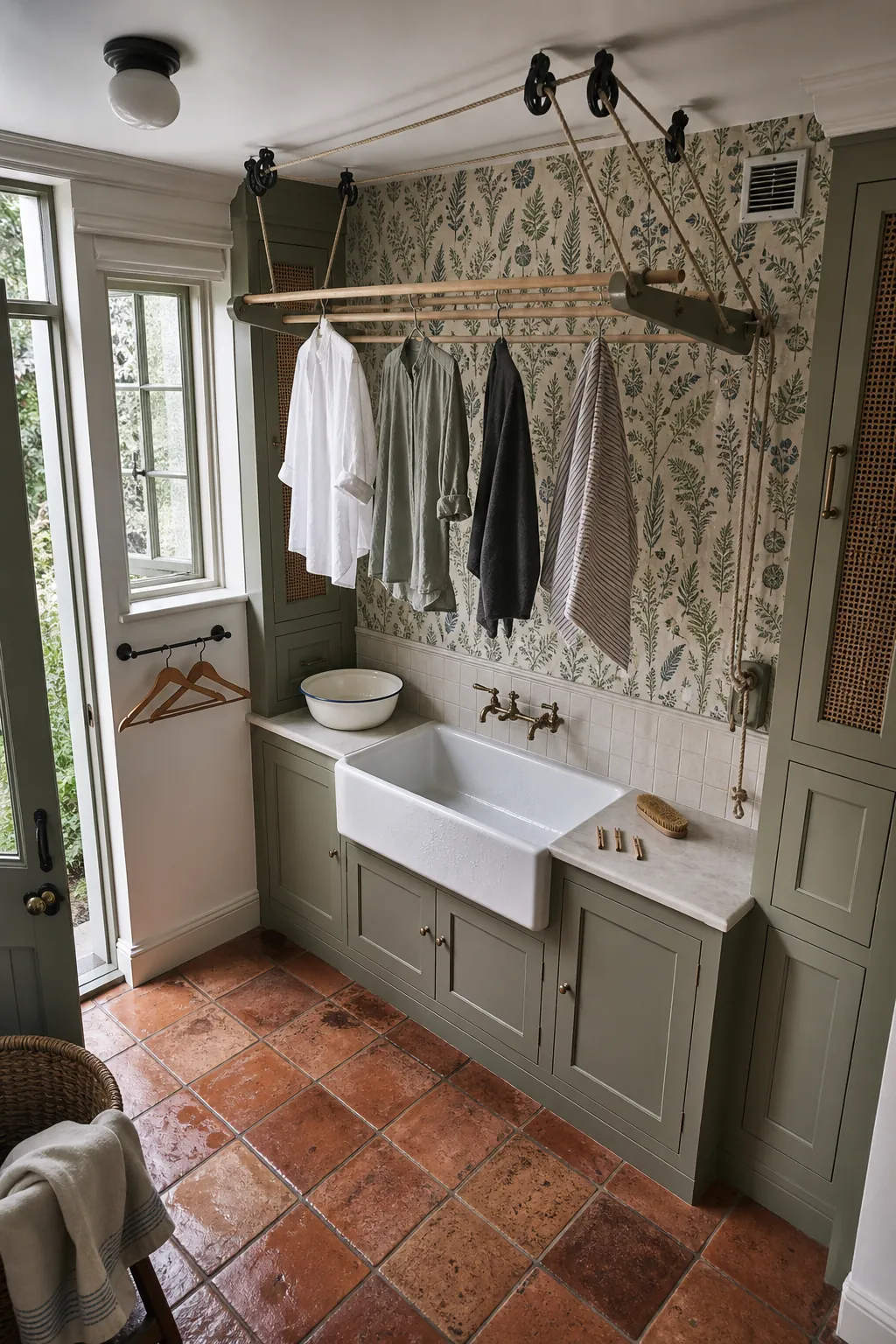
Keep hanging clothes clear of cabinet doors and the main path. Place drip-prone garments over a sink, tray, or water-tolerant floor rather than above a wood worktop. Ventilation matters here: moisture should leave the room instead of collecting inside joinery. A planned drying zone is a small detail that makes the whole room feel custom.
Choose a Sink for the Messiest Job You Actually Do
A laundry sink earns its footprint when it is sized for real household tasks. Think about soaking a sweater, rinsing muddy shoes, filling a cleaning bucket, washing a paintbrush, or bathing a small pet. A shallow decorative basin may photograph well but frustrate every one of those jobs.
For frequent soaking, prioritize a deep single bowl and a faucet with practical reach. An integrated or undermount sink keeps the counter line clean, while a fireclay apron-front sink can bring warmth to a farmhouse laundry room. Add a pull-out spray only if the hose can retract freely inside the cabinet. Store everyday stain products close by, but leave enough clear counter beside the basin to set down a dripping item.
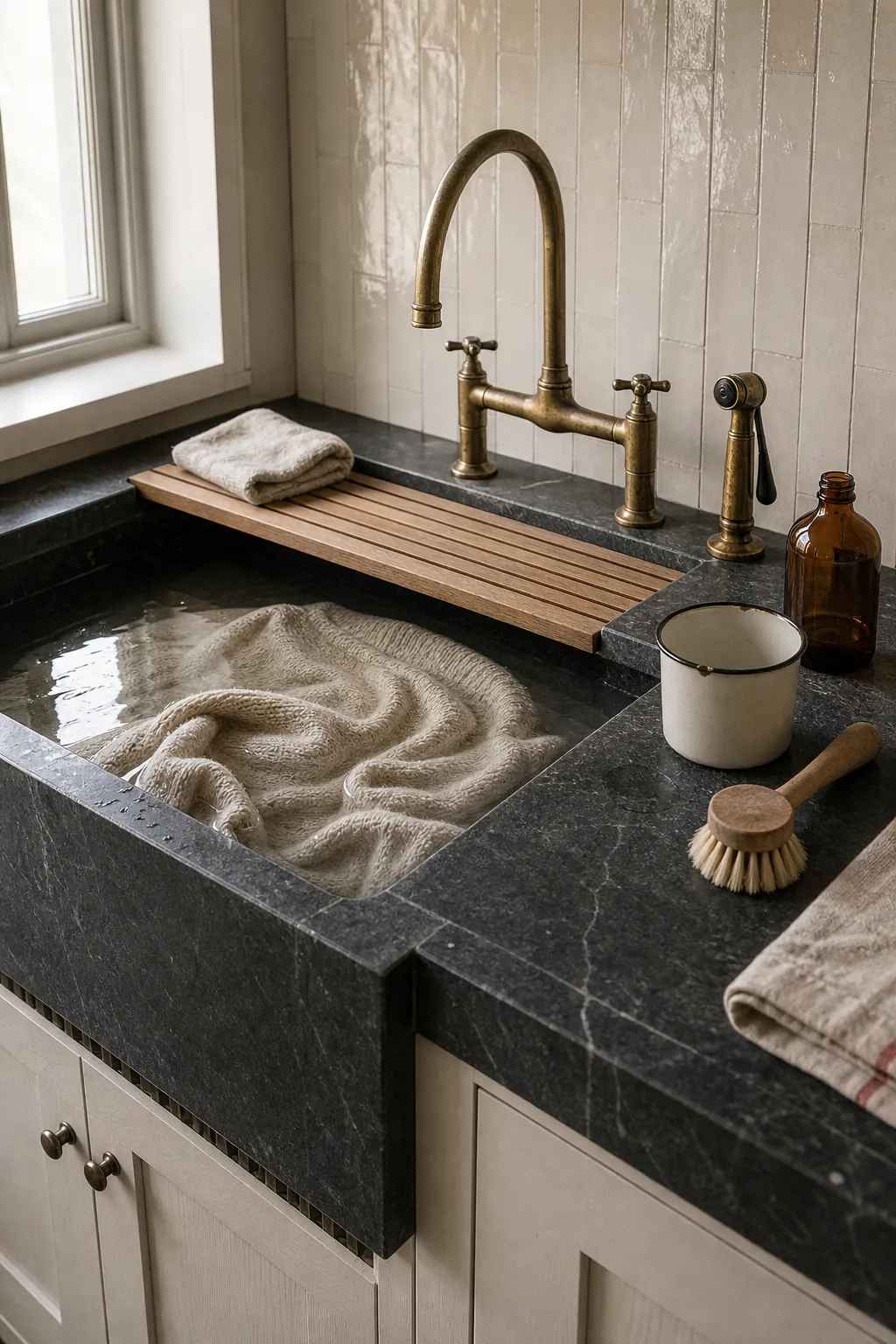
Do not let style hide maintenance. Make shutoff valves accessible, protect the sink cabinet from leaks, and choose a finish that can tolerate the cleaners you use. If plumbing a new sink would consume the only useful folding area in a small laundry room design, the counter may provide more daily value. Luxury is choosing the feature that serves your routine, not checking every box.
Layer Lighting for Both Stain Checks and Atmosphere
One ceiling fixture rarely does enough in a working room. It leaves shadows beneath upper cabinets exactly where you sort colors, read care labels, and inspect stains. A better lighting plan combines bright ambient light with focused illumination at counters, the sink, and the fronts of deep cabinets.
Use recessed or flush-mounted fixtures for even overall light, then add concealed under-cabinet LEDs across the work surface. Interior cabinet lights are helpful in tall utility storage. A small pendant or sculptural flush mount can provide the decorative note, but it should not be the only source. Put task and ambient layers on separate controls so the room can shift from high-clarity work mode to a softer evening setting.
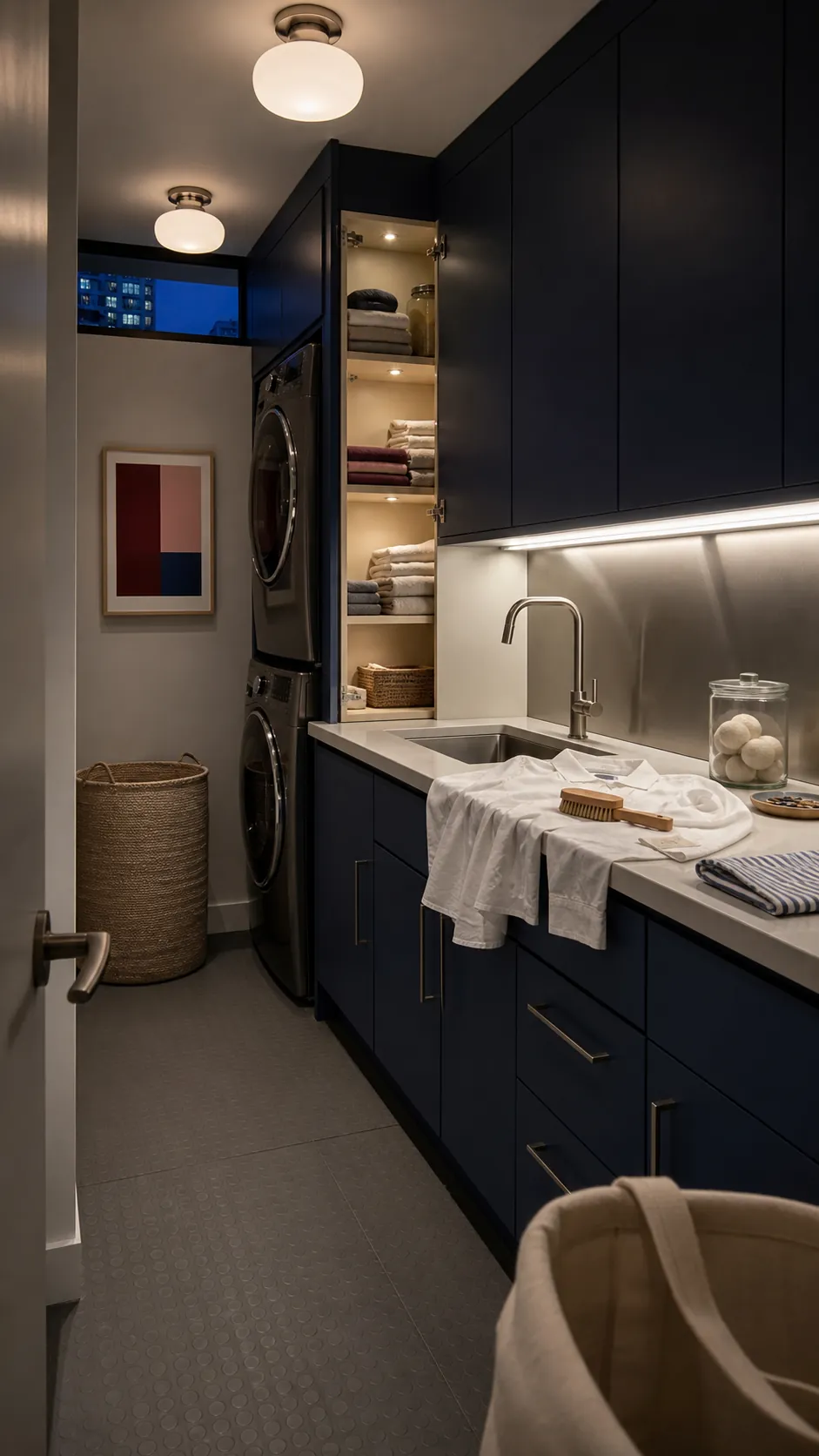
Natural light is valuable, but avoid relying on it for a room used early in the morning or after dark. If a window faces strong sun, consider a washable shade to reduce glare and fading. Good lighting is one of the most affordable ways to make modern laundry room ideas look deliberate, and it improves accuracy every time you treat a mark or match a sock.
Select Surfaces You Will Not Have to Baby
The room handles water, cleaning chemicals, lint, grit, and vibration, so durability is part of the aesthetic. Porcelain tile, properly specified stone, and water-tolerant resilient flooring can all create a refined foundation. Whatever you choose, check slip resistance, care requirements, and compatibility with the room’s moisture conditions. A continuous floor with easy-to-clean joints keeps the space feeling composed.
For counters, engineered quartz, sintered stone, soapstone, sealed natural stone, and quality solid surfaces each offer a different balance of character and upkeep. Test samples against the detergent and stain products used in your home. A backsplash protects the wall at the sink and creates an opportunity for texture without asking a fragile material to cover the entire room.
Patina and damage are not the same thing. Unlacquered brass that deepens in tone can add soul; an unsealed surface that etches every time bleach splashes may simply add stress. The most convincing luxury materials are the ones you can use confidently.
Treat Sound, Ventilation, and Maintenance as Design Features
A contemporary laundry room can look serene while sounding like a mechanical closet. Reduce vibration with a level, stable floor and properly installed appliances. Solid doors and soft-close cabinetry can help contain routine noise, especially when the room adjoins a kitchen, bedroom, or home office. Avoid building machines so tightly into cabinetry that servicing them becomes a demolition project.
Plan access to water shutoffs, electrical connections, drains, and dryer ventilation from the beginning. Confirm appliance clearances and exhaust requirements with the manufacturers and qualified installers. Add effective room ventilation where damp items will hang. A leak sensor and accessible shutoff are quiet upgrades, but they can be more valuable than a decorative faucet when something goes wrong.
Leave enough space to clean lint and dust around the machines. Specify removable toe-kicks or service panels where helpful. These decisions are invisible on reveal day, yet they are what keep large laundry room ideas practical for years.
Spend the Drama on One Memorable Material Moment
Once the workflow is resolved, choose one feature to give the room identity. It might be richly veined stone behind the sink, fluted oak cabinet fronts, handmade tile, a checkerboard floor, deep green lacquer, or a sculptural light. One confident gesture usually feels more luxurious than several competing statements.
Repeat quieter cues from adjoining rooms so the laundry space belongs to the home. Carry through the same wood tone, hardware finish, door style, or trim color. Then let the special material distinguish the room without turning it into a theme. Natural baskets, bamboo organizers, linen café curtains, and wood accessories can soften hard utility surfaces while still being useful.
This approach also protects the budget. Invest in cabinetry hardware that works smoothly, enough lighting, a generous counter, and durable flooring. Use the remaining decorative allowance for the element you will notice every day. That hierarchy creates a more convincing result than distributing money across details that do not improve the room.
Use This Planning Check Before You Finalize the Room
- Trace one full load: arrival, sorting, stain treatment, washing, drying, folding, and return.
- Open everything on the plan: appliance doors, cabinet doors, drawers, hampers, and drying racks.
- Assign the clutter: baskets, bulk products, ironing tools, hangers, cleaning equipment, and lost socks.
- Protect the work surfaces: keep daily supplies close without storing them on the folding counter.
- Plan for water: choose resilient finishes, accessible shutoffs, ventilation, and practical sink details.
- Plan for service: make sure appliances and connections can be reached without damaging custom joinery.
- Light the work: combine ambient, task, and cabinet lighting on useful controls.
- Choose one focal point: let a single material, color, or fixture carry the decorative impact.
The final test is simple: imagine the room on its busiest day, with a wet sweater at the sink, two baskets waiting, and a load ready to fold. If every item has a place and every task has room, the design will still feel beautiful in use. That ease—not the price tag—is what turns a utility room into a luxury.