
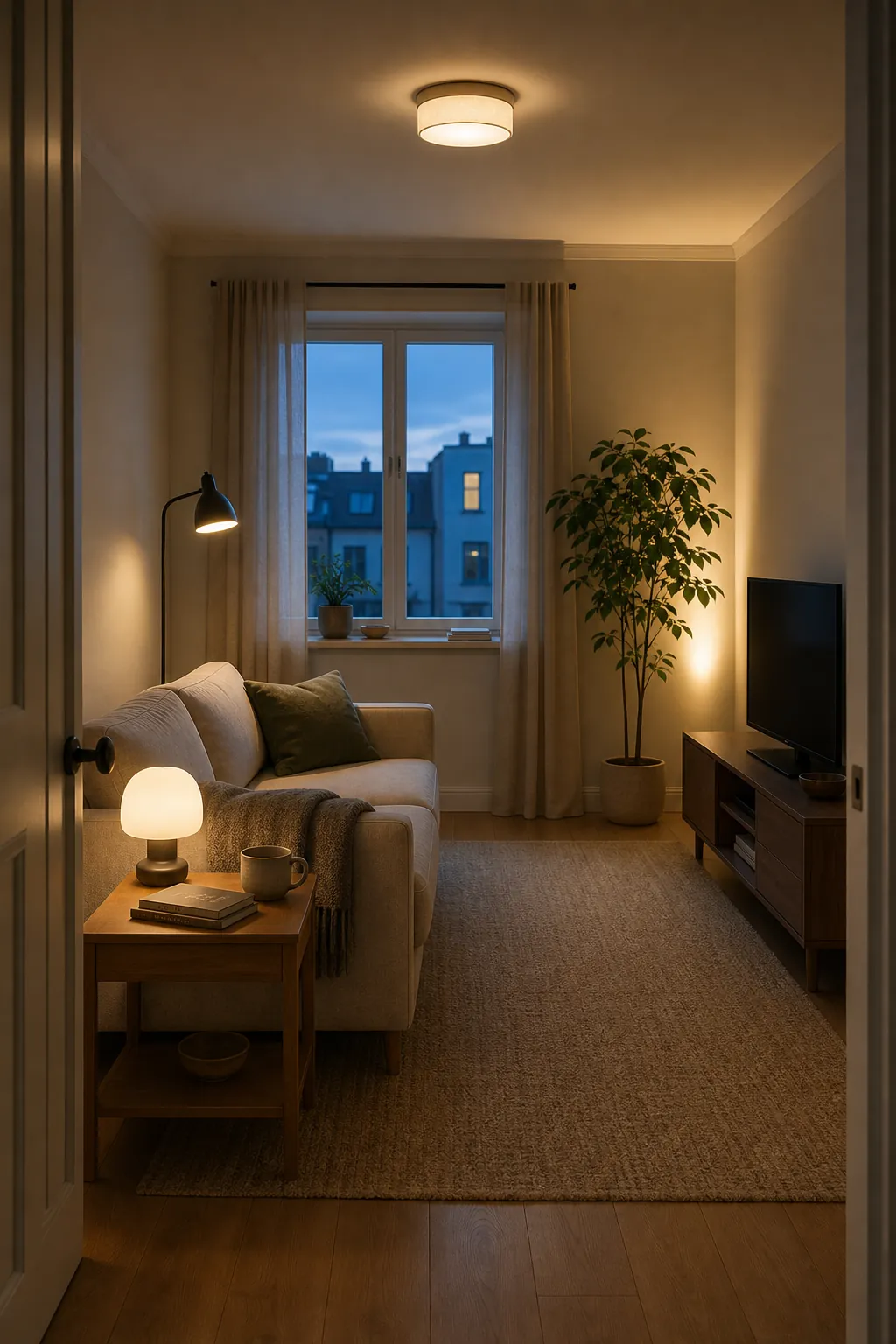
A brighter bulb can make a small living room feel worse. It flattens the room, throws glare onto the television, and still leaves the reading chair in shadow. The problem is not always a lack of light. It is usually that one source is being asked to do every job.
Layered lighting solves that problem by separating general visibility, focused light, and atmosphere. In a compact room, the idea is not to squeeze in a fixture everywhere. It is to give a few well-placed lights distinct roles, spread them across different heights, and control them independently. The result is more useful by day, calmer at night, and visually larger without adding floor-space clutter.
Begin With an Activity Map, Not a Fixture Catalog
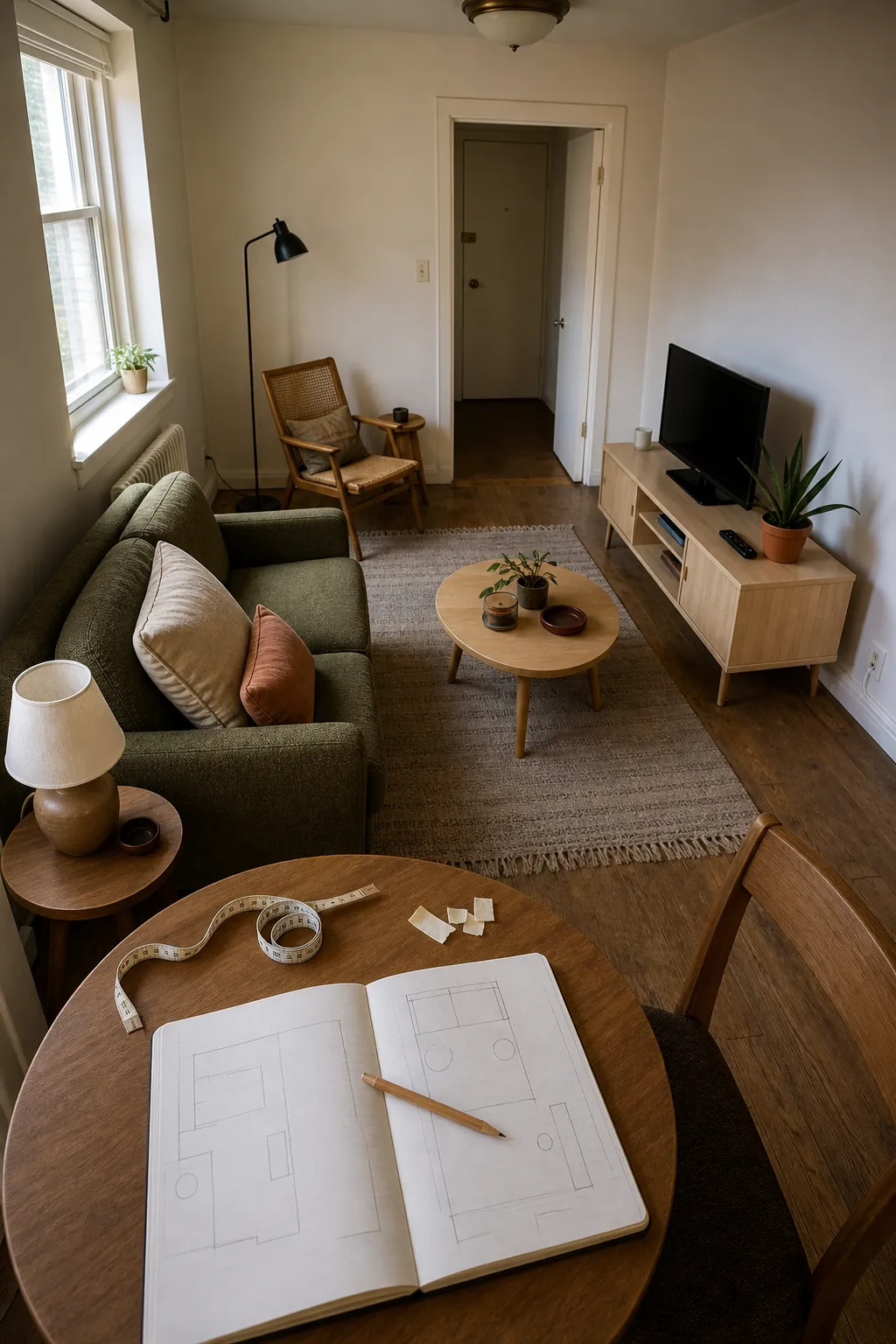
Before buying living room lamps, watch how the room actually works. Where do you read? Which seat is used for conversation? Does the coffee table become a laptop desk? Is there a dark route between the sofa and doorway? Does the television reflect the ceiling light? These questions reveal where light is needed and, just as important, where it is not.
Sketch the room as three or four small zones. A typical plan might include the sofa, a reading corner, a media wall, and the circulation path. Give each zone one lighting job:
- Ambient lighting makes the room safe and comfortable to move through.
- Task lighting puts useful brightness beside a book, game, craft, or keyboard.
- Accent lighting lifts a dark boundary or draws attention to one textured surface, plant, shelf, or architectural detail.
This is the same ambient-task-accent framework used in practical residential guidance. The categories are useful, but the real improvement comes from assigning each fixture a job. If two lamps do exactly the same thing from the same height, one may be unnecessary.
Let the Ambient Layer Be Soft, Broad, and Dimmable
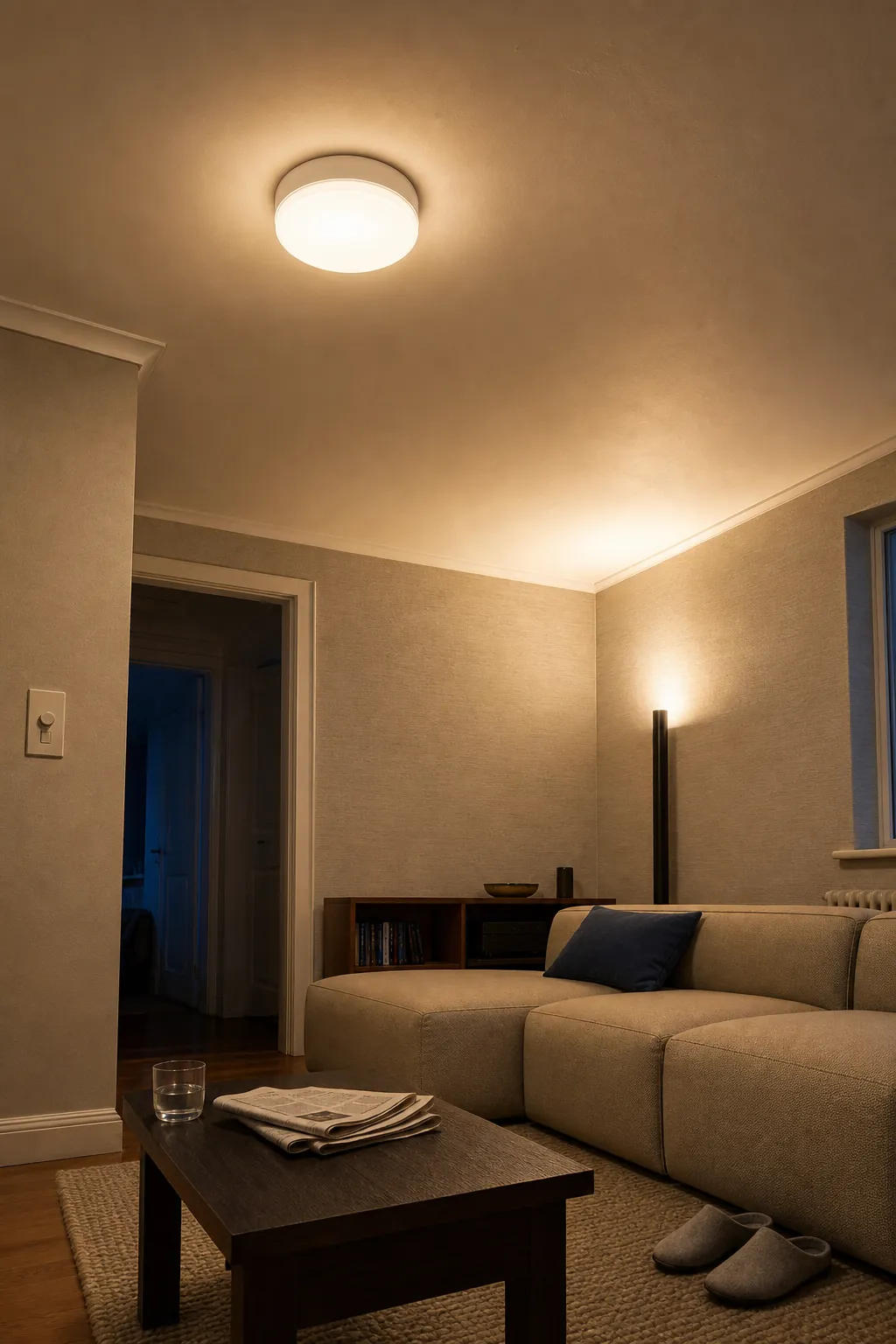
Ambient light is the base layer, not the star. Its job is to keep the room from feeling gloomy and make walking comfortable. In a small living room, a flush or semi-flush ceiling fixture often works better than a low pendant because it preserves headroom and visual breathing space. If the room has no ceiling point, an uplighter or shaded floor lamp can bounce light off the ceiling and create a broad glow.
Avoid treating an exposed, high-output bulb as the whole ambient plan. Even when it produces enough lumens, the direct glare can make eyes work harder while the corners remain flat and disconnected. A diffuser, fabric shade, opal glass globe, or ceiling bounce spreads the light across a larger surface and softens the contrast.
Put the ambient layer on a dimmer whenever the bulb and fixture are compatible. Full output is useful for cleaning or finding a dropped object. A lower setting is better for conversation and television. This single control makes a modest fixture serve several daily routines without filling the room with more hardware.
Put Task Light Close to the Eyes and Hands That Need It
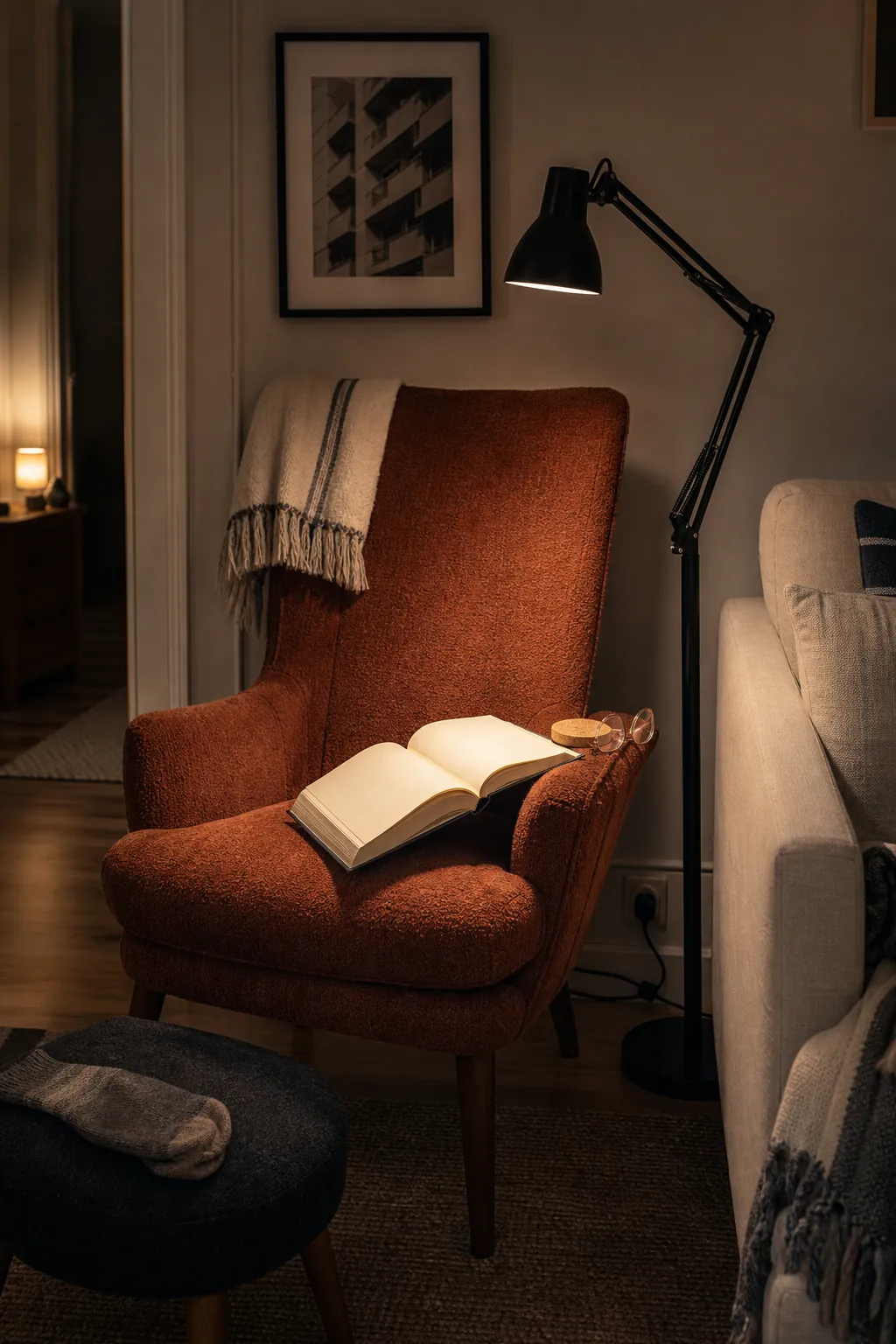
Task light should not brighten the entire room. It should make one activity easier. For reading, that usually means a floor lamp slightly behind and beside the chair or sofa, with the shade near shoulder level. For puzzles, homework, or board games, a compact table lamp or adjustable wall sconce can bring light down onto the surface instead of flooding the ceiling.
Placement matters more than raw bulb power. Sit in the exact position where the task happens. The light should land on the page or work surface without exposing the bare bulb to your eye. If you see a hard reflection on a glossy page, laptop, or television, move the fixture sideways or raise its angle before changing the bulb.
In especially tight small space lighting plans, choose fixtures that borrow unused volume: a slim floor lamp tucked behind a sofa, a clamp lamp on a sturdy shelf, or a plug-in swing-arm sconce. An adjustable head is valuable because the same fixture can support focused reading and then turn toward a wall for a softer evening glow.
Use Accent Light to Open a Dark Boundary
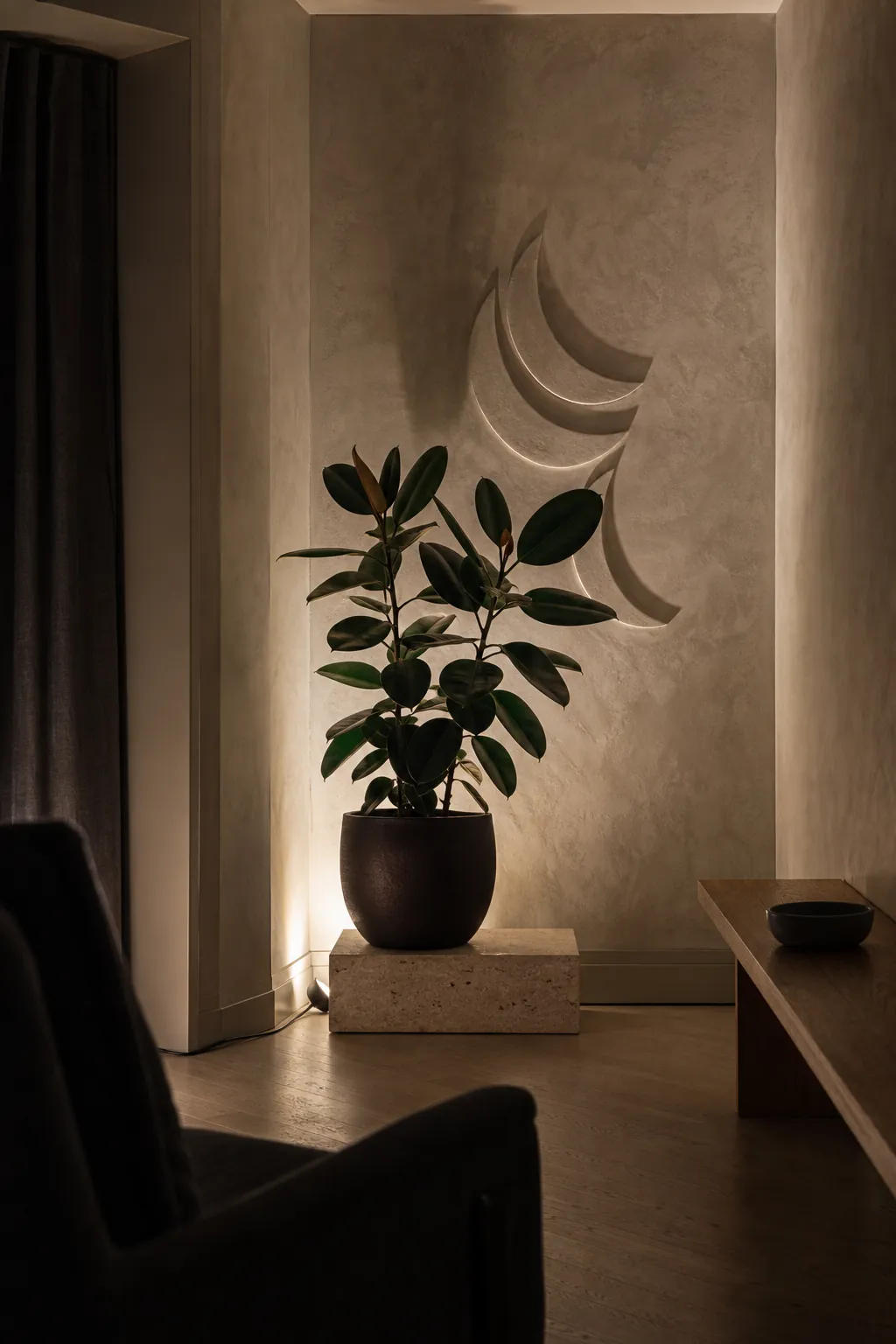
Accent light is often described as decoration, but it has a spatial job in a compact room. When the far wall or a deep corner disappears after sunset, the visible boundary of the room seems to move inward. A gentle wall wash, shelf light, or uplight behind a plant brings that edge back and gives the room depth.
Choose one or two surfaces worth revealing. A warm sconce can graze limewash or brick. A small lamp on a bookcase can show the objects around it. A shielded LED strip beneath a floating shelf can create a quiet band of light without showing individual diodes. Keep these sources softer than the task lamp so they support the scene instead of competing with it.
Do not aim a spotlight at every accessory. Too many bright accents create visual noise and can make living room decor feel like a shop display. One illuminated boundary and one functional pool of light are often enough to make a small room feel layered.
Mix Heights and Beam Directions to Avoid a Flat Room
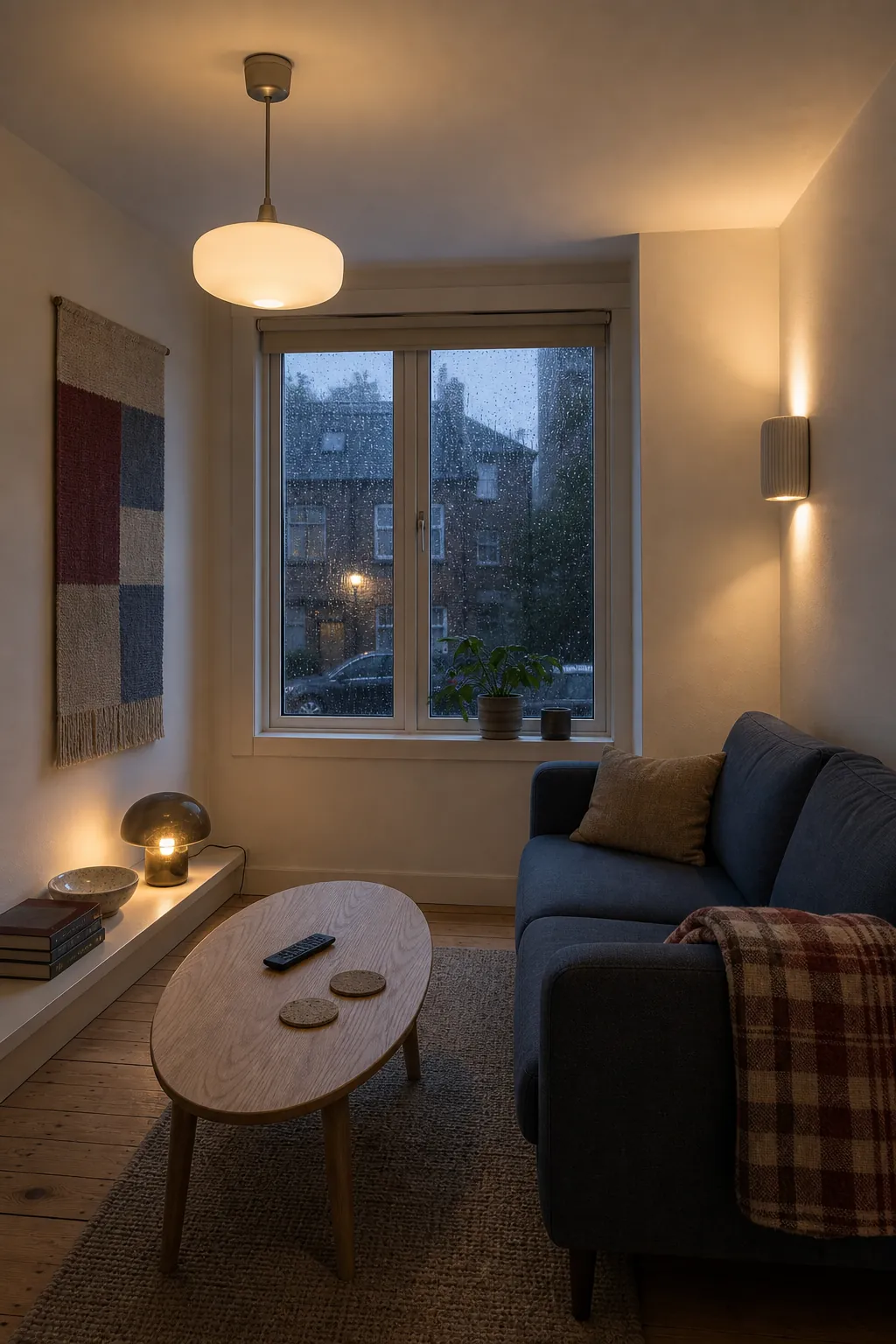
A room lit only from the ceiling can feel flat. A room lit only by low table lamps can feel cave-like. The easiest correction is to distribute light at high, middle, and low levels, even if each level has only one source.
- High: a flush light, ceiling bounce, or tall uplighter provides general orientation.
- Middle: wall sconces and shaded floor lamps add comfortable light near eye level.
- Low: a compact table, shelf, or floor-level accent lamp creates intimacy and keeps the scheme from feeling top-heavy.
Vary direction as well as height. Combine one source that spreads, one that points down, and one that reflects off a wall or ceiling. This creates soft changes in brightness across the room. Those gradients reveal depth, fabric, wood grain, and wall texture more effectively than a uniform blast of light.
You do not need matching fixtures from one collection. Repetition can come from a shared finish, shade material, or shape. A black reading lamp, an opal-glass wall light, and a small ceramic table lamp can coexist if their bulbs have a consistent color and their scale suits the furniture around them.
Keep the Bulbs in the Same Color Family
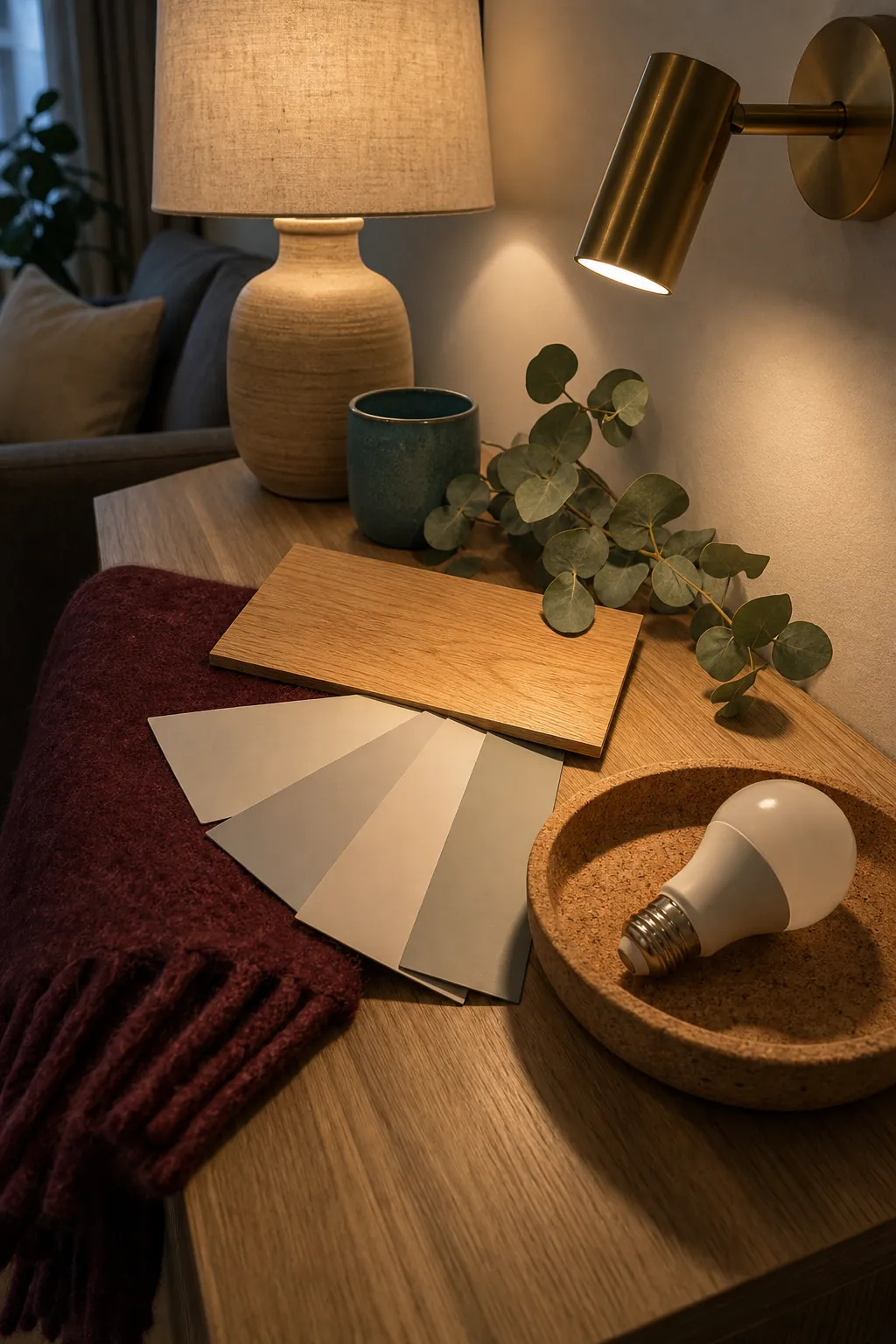
Layered lighting looks accidental when one lamp is orange, one is icy blue, and another gives the sofa a greenish cast. Check the Kelvin number on every bulb rather than relying on vague package names such as “warm white.” For cozy lighting in most living rooms, 2700K to 3000K creates a warm, coherent starting point. A multifunction room can use 3000K for slightly clearer task visibility without feeling clinical.
Color Rendering Index matters too. A bulb with a CRI of 90 or higher generally shows paint, fabric, wood, food, and skin more naturally. The difference between Kelvin and CRI: one describes whether light appears warm or cool; the other describes how faithfully colors appear.
Use lumens, not old wattage comparisons, to judge brightness. Start modestly, test after dark, and add output where a real activity needs it. A shaded task lamp may need more useful brightness than an accent sconce, while a diffused ambient source needs enough output to spread across the whole room. Dimmable LEDs make this easier, but confirm that the bulb, fixture, and dimmer are compatible to avoid flicker or buzzing.
Make Rental Limits and Floor Space Part of the Design
A layered plan does not require new ceiling wiring. Renters can combine a plug-in sconce, a slim floor lamp, and a rechargeable table lamp. Cable covers painted to match the wall make plug-in sconces look intentional. A wall-mounted fixture should use the correct anchors and comply with the lease; when drilling is not allowed, a stable floor lamp is safer than improvising a weak adhesive mount for a heavy fitting.
Protect circulation space. Tuck lamp bases behind or beside furniture rather than narrowing the main route. Keep cords along walls, never stretched across a doorway or under a rug where damage is hidden. Do not overload one extension lead with several high-draw devices, and keep hot bulbs away from curtains and soft furnishings. LEDs reduce heat and energy use, but the fixture’s wattage limit still applies.
Where surfaces are scarce, use lighting that shares space with something already needed: a shelf sconce above a side table, a narrow console with a small lamp, or a floor lamp whose base slides beneath the sofa. The best small living room lighting earns its footprint.
Build Three Scenes Instead of One Permanent Setting
Independent switches are what turn a collection of fixtures into a layered system. You can keep the setup simple by planning three repeatable scenes:
- Everyday: dimmed ambient light plus one soft accent at the far wall.
- Focused: task lamp at full useful output, with low ambient light to reduce contrast and eye strain.
- Evening: ambient light off or very low, with warm mid- and low-level lamps creating separate pools of light.
Smart bulbs can save these scenes, but ordinary switches, plug-in dimmers, or remote outlets work too. Group controls where you naturally enter or sit so the system is convenient enough to use every day.
Test the Room With the Big Light Off
Install one layer at a time and test it after sunset. Turn off the ceiling fixture. Sit in every chair. Read one page, watch the darkest television scene, walk the main route, and look for a bare bulb reflected in glass. Then switch on only the ambient layer, only the task layer, and only the accent layer. Each should have a clear purpose; together, they should feel balanced rather than simply brighter.
If the room still feels wrong, do not automatically add another lamp. First change the angle, height, shade, or bulb output of what you already have. A small living room feels generous when light reaches the right surfaces at the right time—not when every corner is equally illuminated.