

A rainy day can make any chair look inviting for five minutes. A reading space earns the word cozy when it still feels good an hour later: your back is supported, the page is bright, the blanket stays dry, and you can reach a drink without unfolding yourself from the seat.
Build the space around rainy-day conditions rather than piling on decorative softness. Dim daylight, cooler glass, damp air, and long stretches of sitting all change what the nook needs.
Enjoy the Window Without Pressing Against It
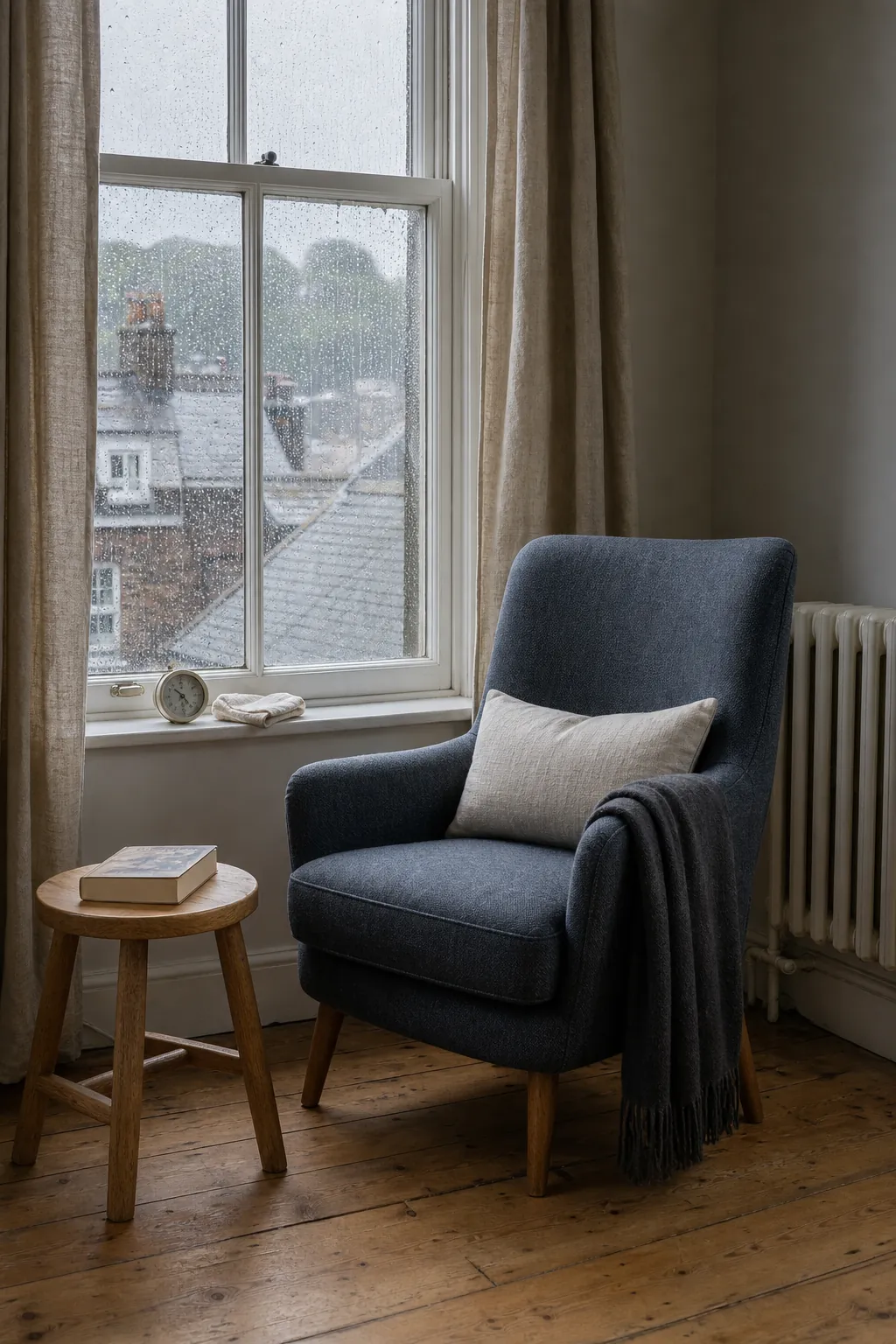
A window gives you the movement and sound of rain, but the glass can also be the coldest surface in the room. Angle a chair toward the view rather than pushing it against the sill. Leave room for curtains to hang freely and for air to circulate behind furniture. If condensation appears, wipe it up and address the humidity or ventilation problem instead of hiding it behind a cushion.
Keep books, baskets, and upholstered pieces away from any active leak or consistently damp exterior wall. A low stool can hold the current book near the chair while permanent book storage remains in a drier interior zone.
Layer a Reading Light Over Soft Room Light
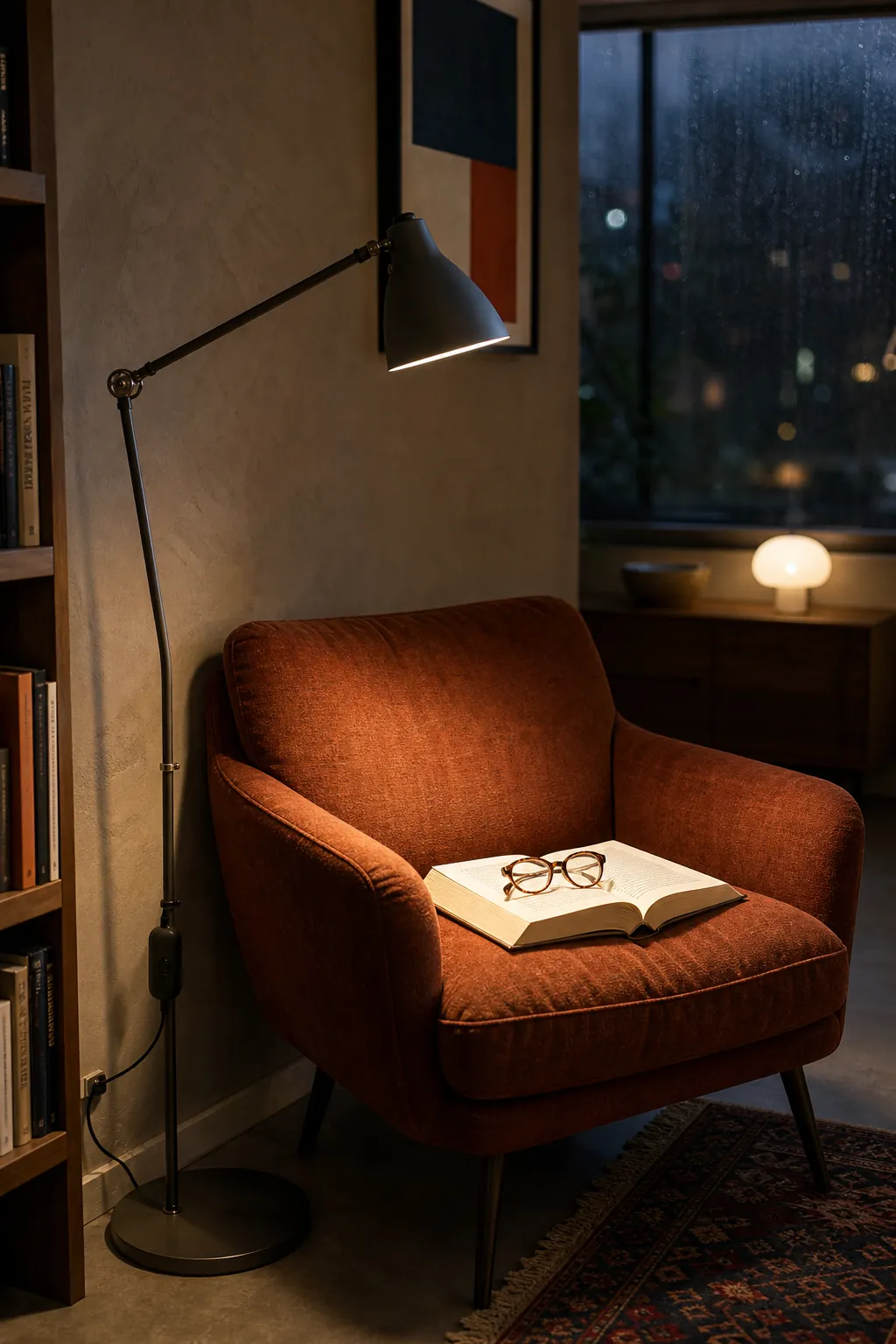
Cloudy daylight can be atmospheric and still too dim for print. Pair a focused floor lamp, swing-arm sconce, or table lamp with a softer ambient source elsewhere in the room. The task light should reach the pages from behind and beside your shoulder; the ambient light keeps the rest of the room from disappearing into a dark void.
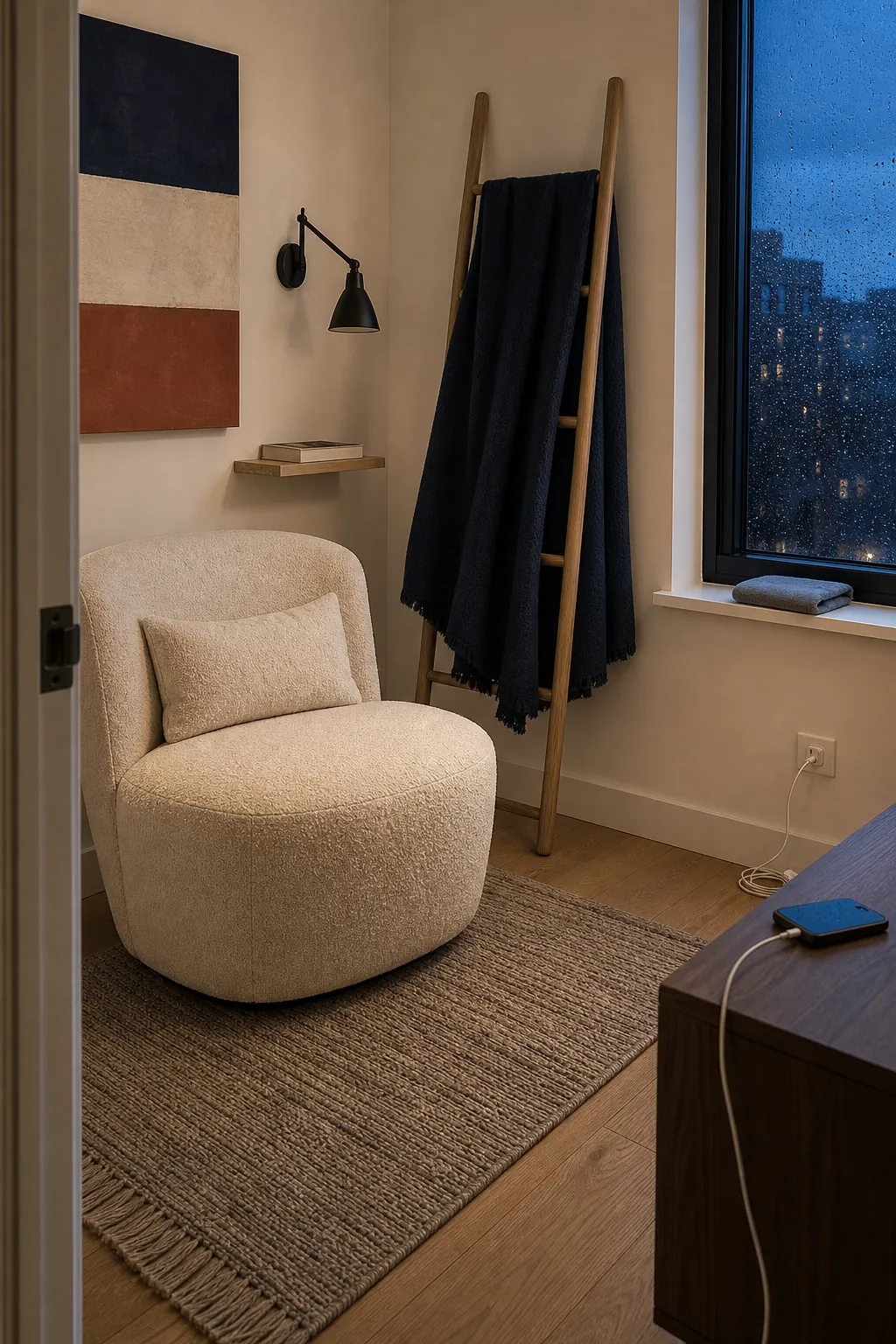
Choose a dimmable source when possible and test it with the book you are actually reading. Matte shades and adjustable arms make glare easier to control. Battery sconces can help renters, but secure cords and charging cables so the cozy corner does not become a trip hazard.
Use Fewer, Better Layers of Softness
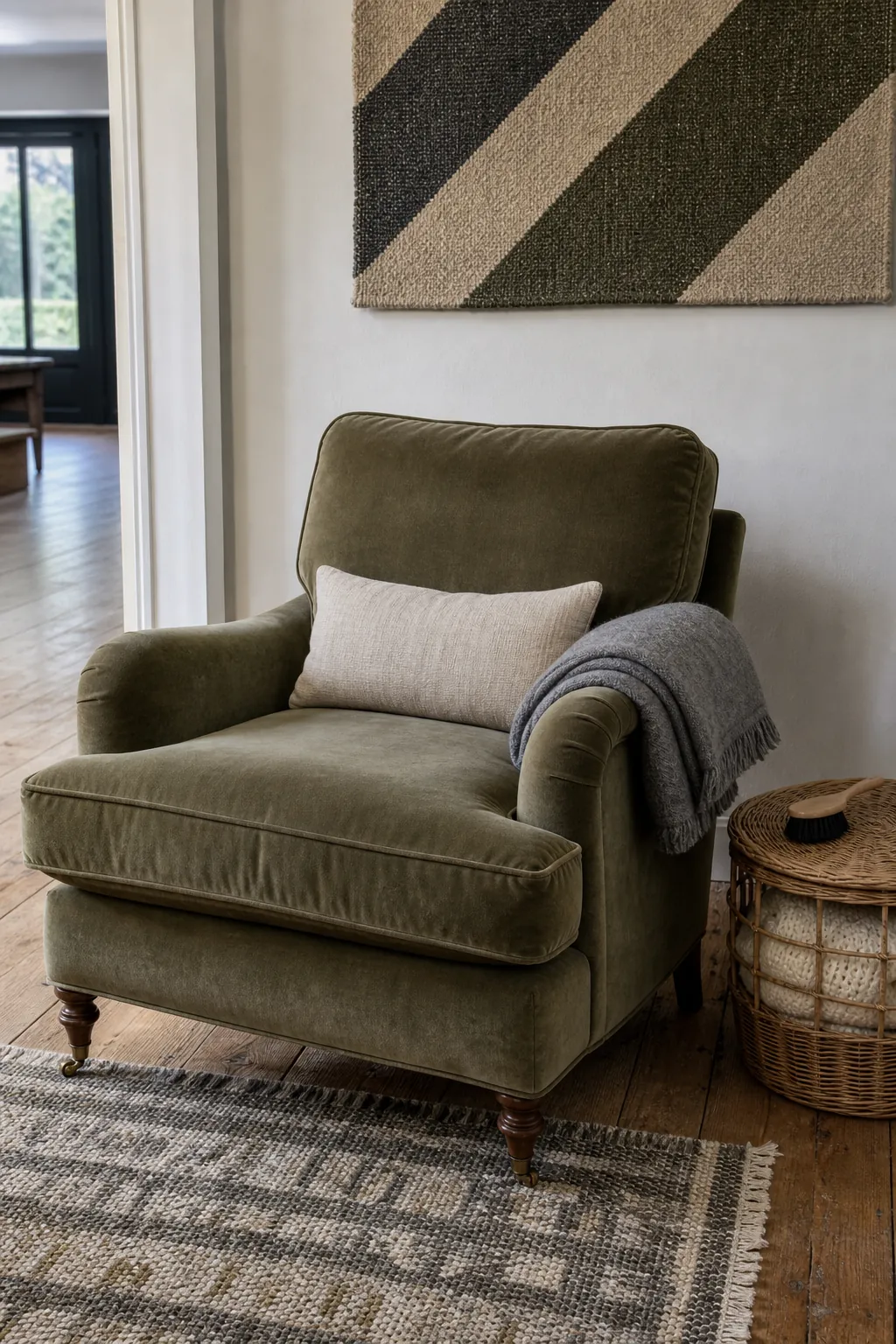
A washable throw and one supportive cushion usually do more than a chair buried under pillows. Put the lumbar cushion where it supports your actual posture, and choose a throw large enough to cover your legs without trailing across the floor. Wool offers warmth with less bulk; cotton and fleece are easier for many households to wash frequently.
Store spare textiles in a breathable basket in a dry part of the room. If a blanket feels damp or develops a stale smell, wash and dry it fully before returning it. Cozy home textures should make the seat easier to use, not trap moisture or dust.
Support Your Feet and Give the Book a Landing Place
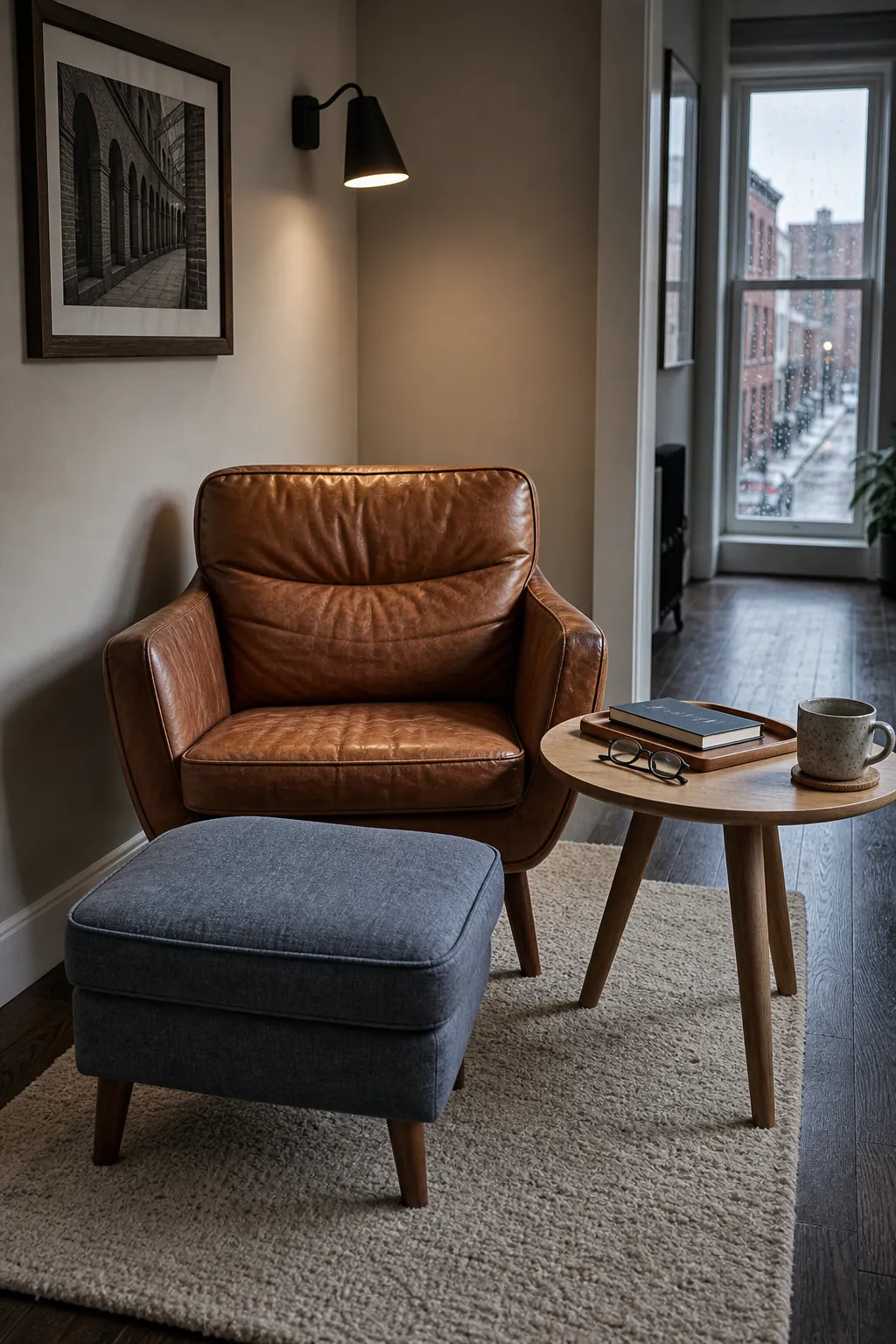
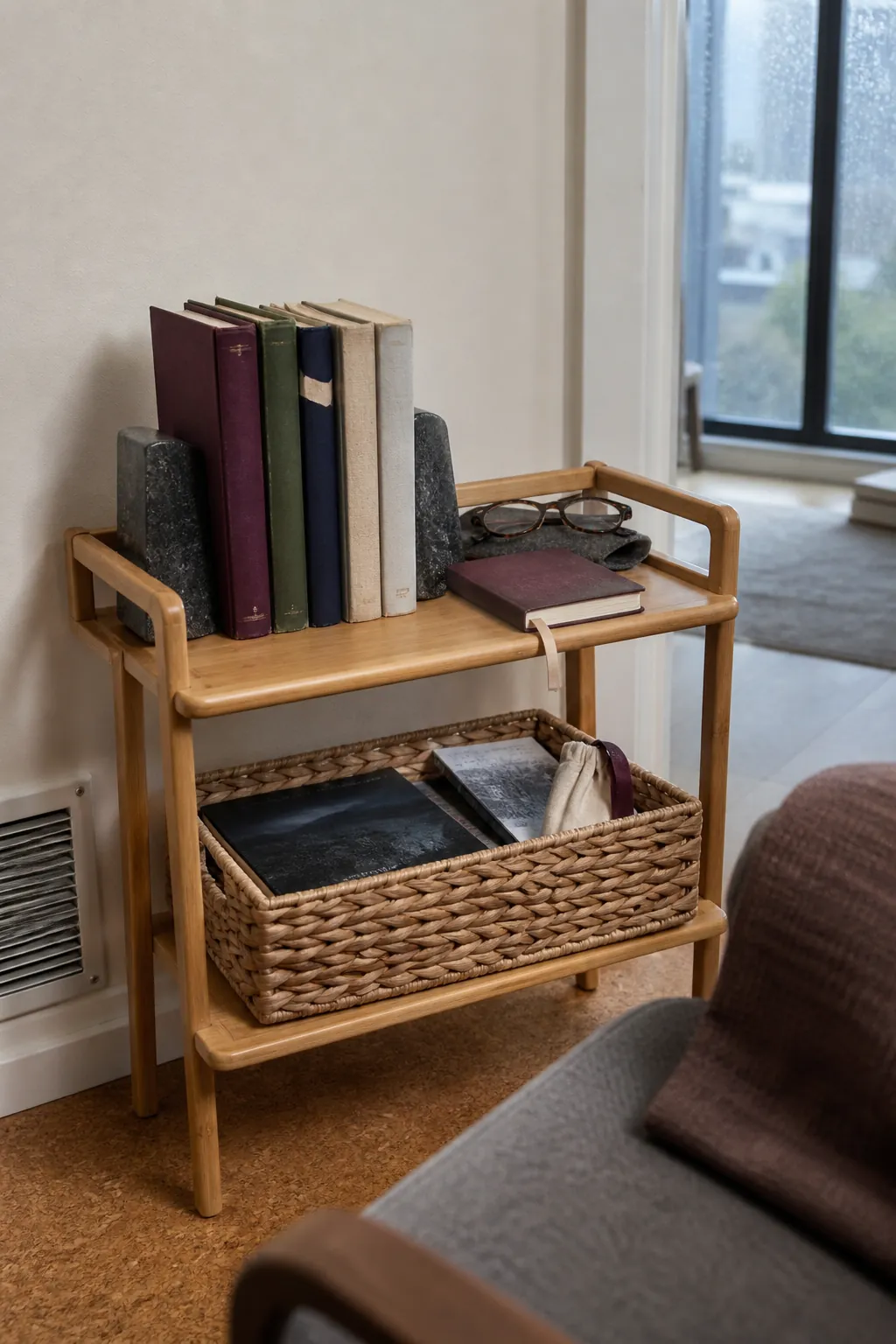
A compact ottoman or footstool changes how long many people can sit comfortably. Choose one that can move aside easily and does not block the path. Beside it, a small stable table should hold a book, glasses, and mug without forcing you to twist or reach past the lamp.
Use a coaster and keep drinks away from open books and electrical cords. A tray can make cleanup faster, but the surface does not need candles, flowers, and a stack of decorative books. Leave room for the objects the reading session actually produces.
Keep a Small Rainy-Day Reading Queue Nearby
Instead of moving the whole home library beside the window, keep a basket or narrow shelf for the next three to five books. Add a bookmark, notebook, and reading glasses. This creates enough choice without letting the chair corner turn into a holding zone for every unfinished title.
Use book storage that keeps volumes upright and off any potentially damp floor. Rotate finished books back to the main shelves. If a book becomes wet, separate it from the collection and dry it promptly rather than closing it inside a basket.
Create a Five-Minute Rainy-Day Reset
Before sitting down, clear yesterday’s mug, shake out the throw, switch on the task light, and choose one book. Put your phone on a charger outside arm’s reach if the point is to read rather than scroll. These small actions create a stronger sense of retreat than adding more rainy day decor.
When you finish, return the book to its queue, hang the throw so it can air, and check the window area for moisture. The reset protects the room and makes the next rainy afternoon easier to begin.
The rain supplies the atmosphere. Your job is to supply the support, light, dryness, and clear surface that let you stay with the book.