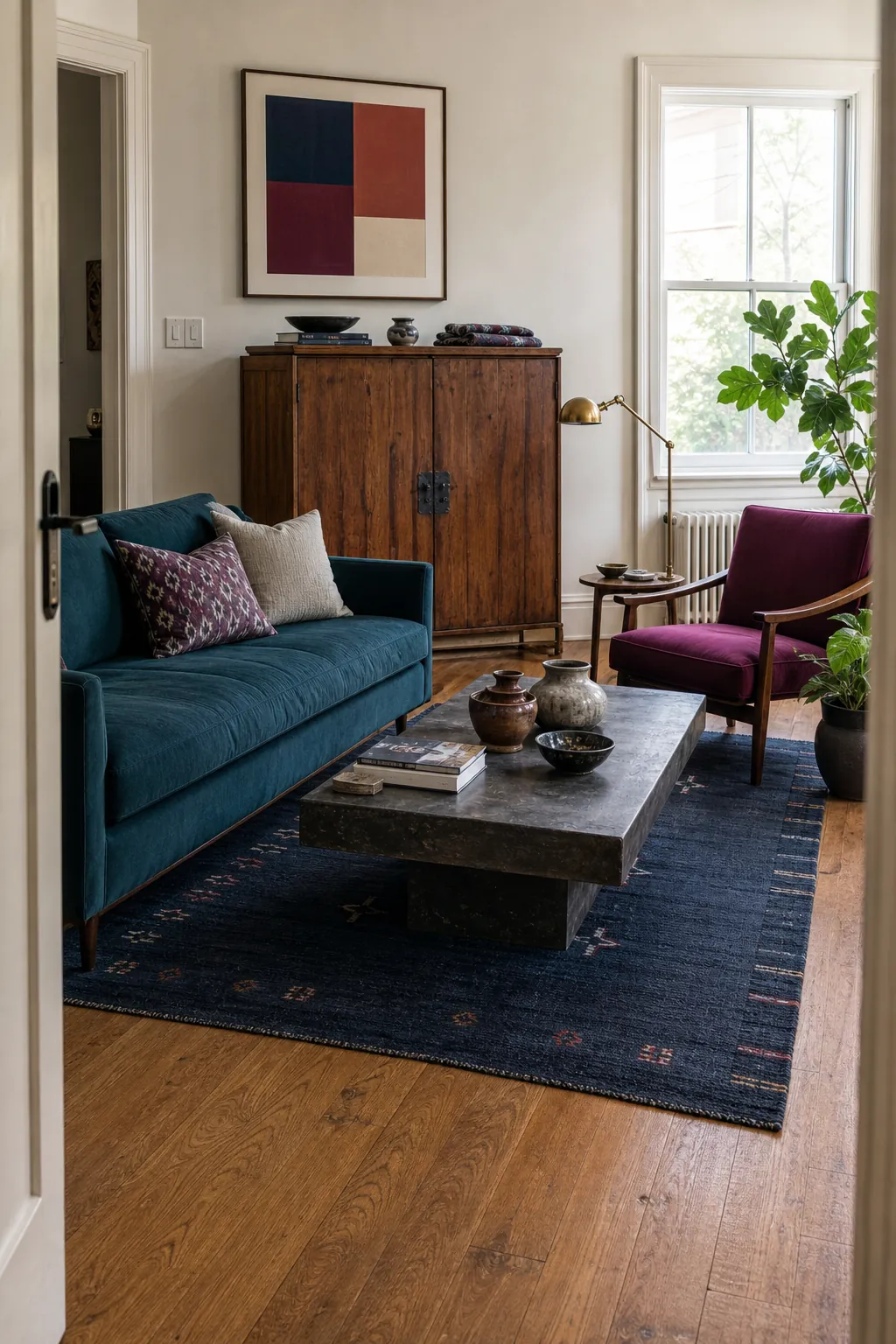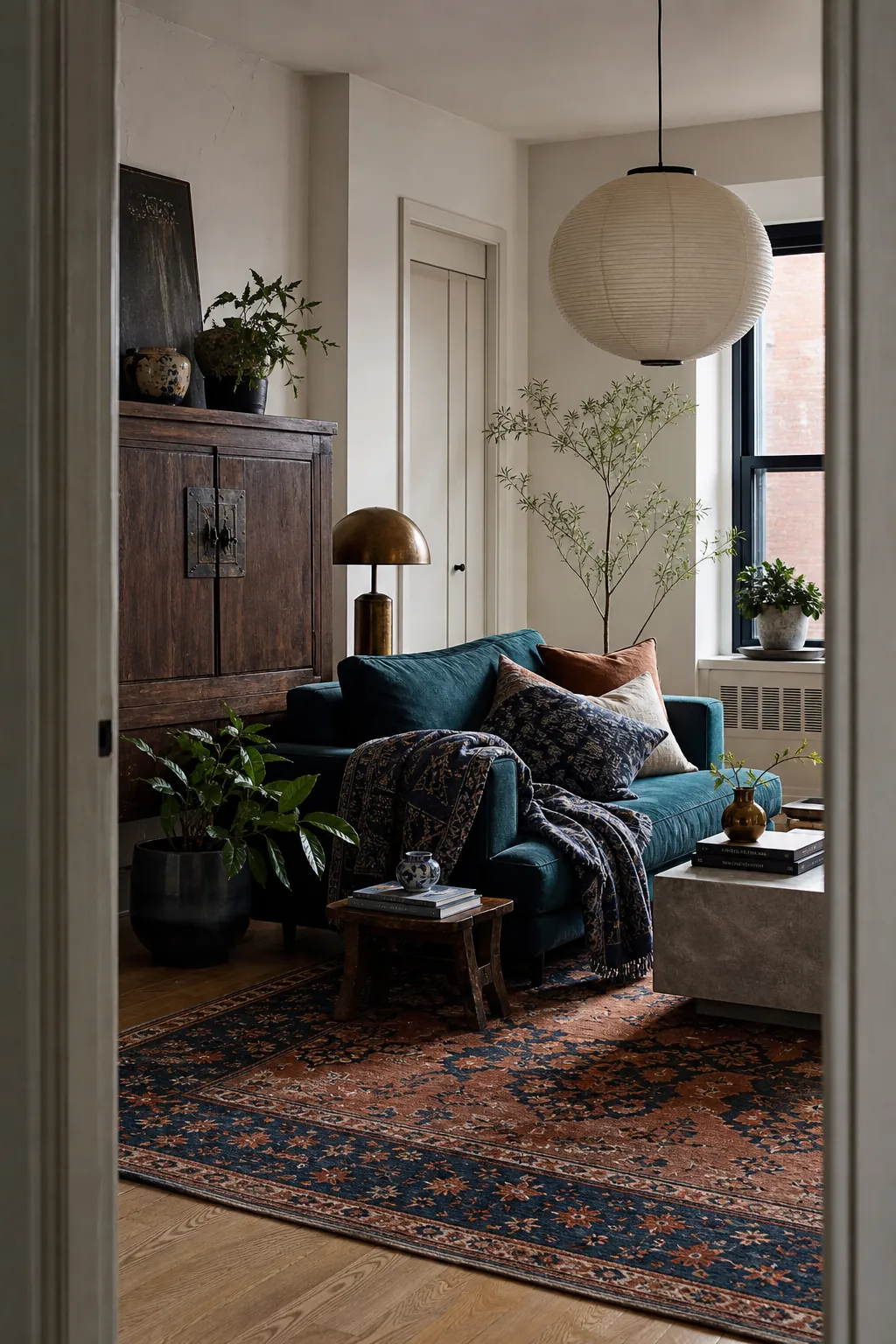
Asian eclectic decor is not a license to pile every pattern, souvenir, and red accent into one room. The best spaces feel layered because they have hierarchy, repetition, and real stories. Japanese restraint can sit beside Indian maximalism, a vintage Chinese cabinet can work with mid-century seating, and bold textiles can coexist with quiet walls—provided each piece has enough space to be seen.
Anchor the room with one regional story
Choose a clear starting point: perhaps Japanese ceramics, South Asian textiles, or New Chinese Style Interior joinery. Other influences can join later, but the anchor prevents the room from becoming an anonymous collection of “Asian” motifs.
Write the anchor in one sentence before shopping. “A modern living room built around indigo craft and dark wood” is more useful than a broad mood board because it helps you decide what belongs.
Pair a vintage Chinese cabinet with modern seating
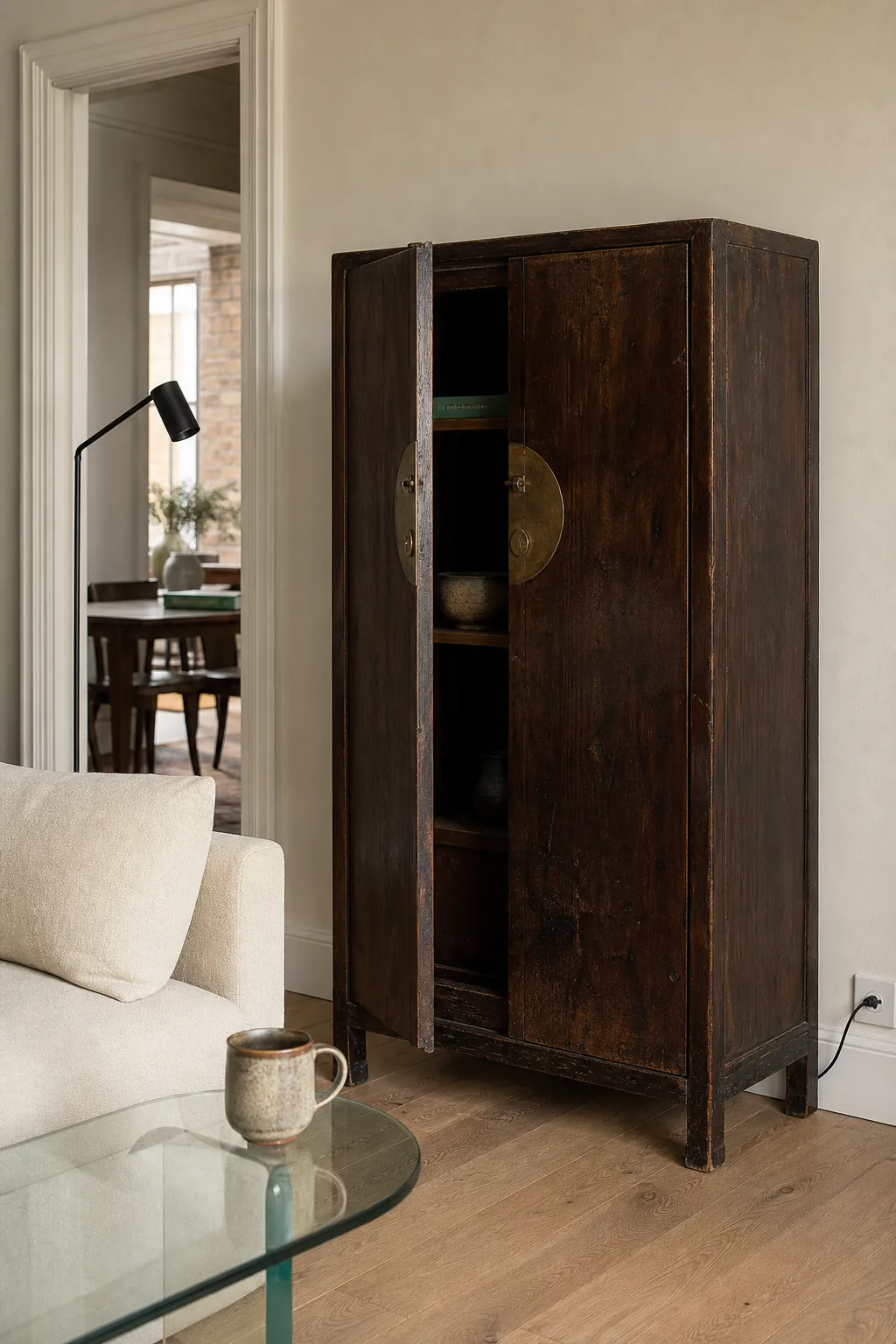
An aged elm or lacquer cabinet gives a clean room gravity, while a simple contemporary sofa keeps it from looking like a period set. Let the cabinet be the only strongly historic furniture piece on that wall.
Check storage, hinges, odor, and stability before buying. Eclectic rooms work better when their beautiful pieces also solve ordinary household problems.
Mix ikat and sashiko through color
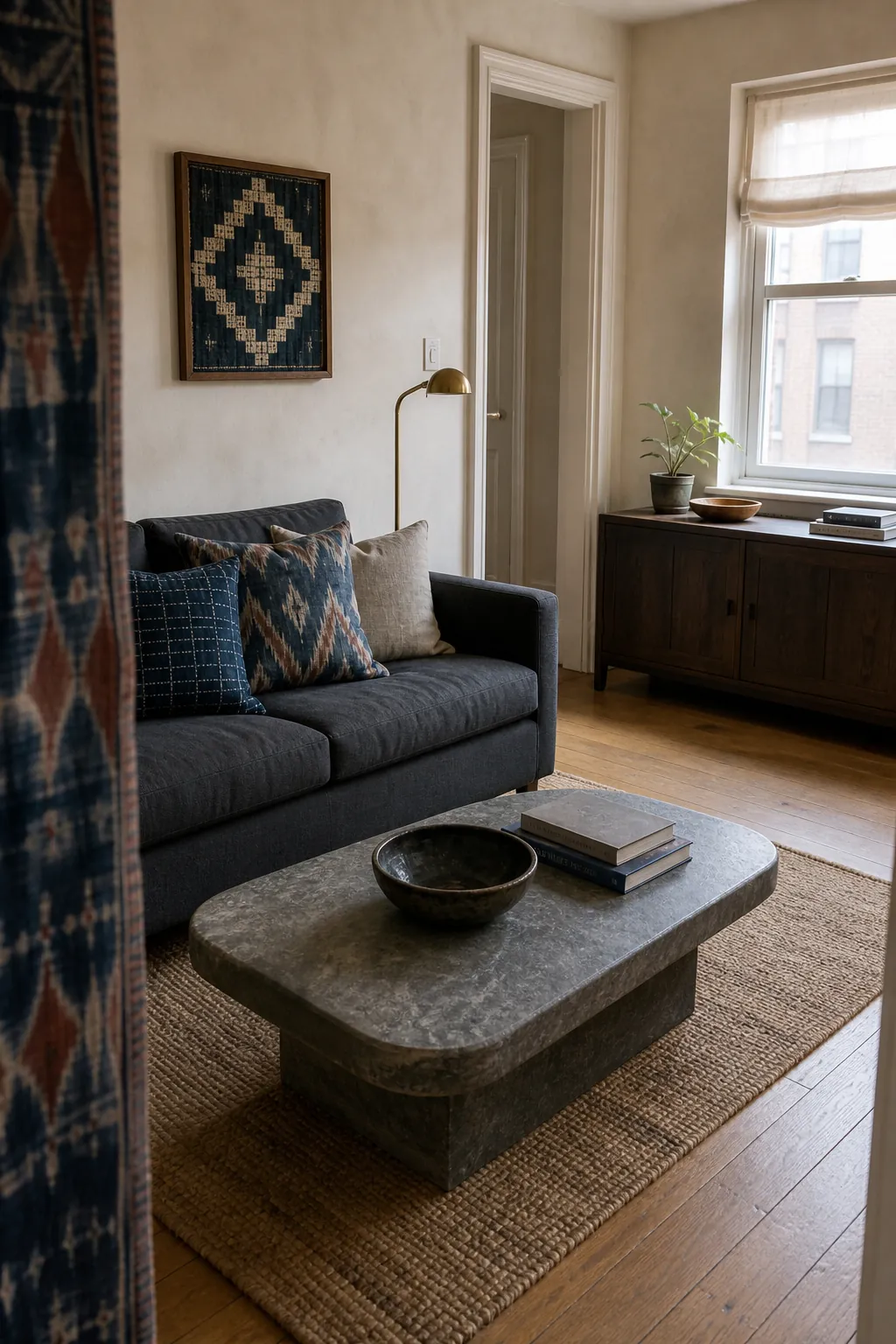
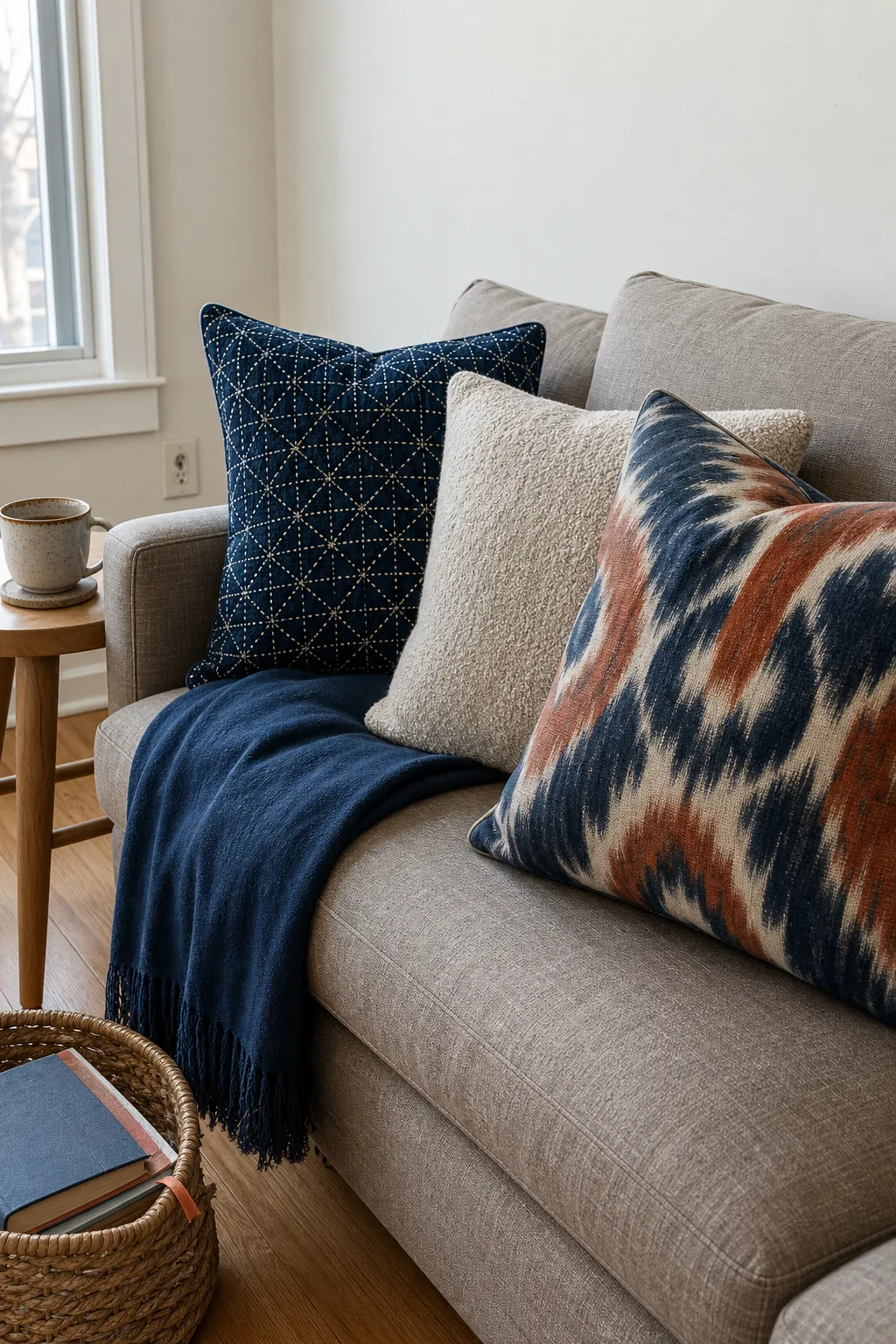
Patterns from different traditions can share a sofa when one color links them. Try an indigo sashiko-style cushion beside a rust-and-blue ikat, then repeat the indigo in a book spine or rug border.
Vary the pattern scale: one tight geometric, one broad blurred motif, and one plain textured fabric. This lets the eye distinguish each layer instead of reading visual static.
Use Japanese negative space around bold objects
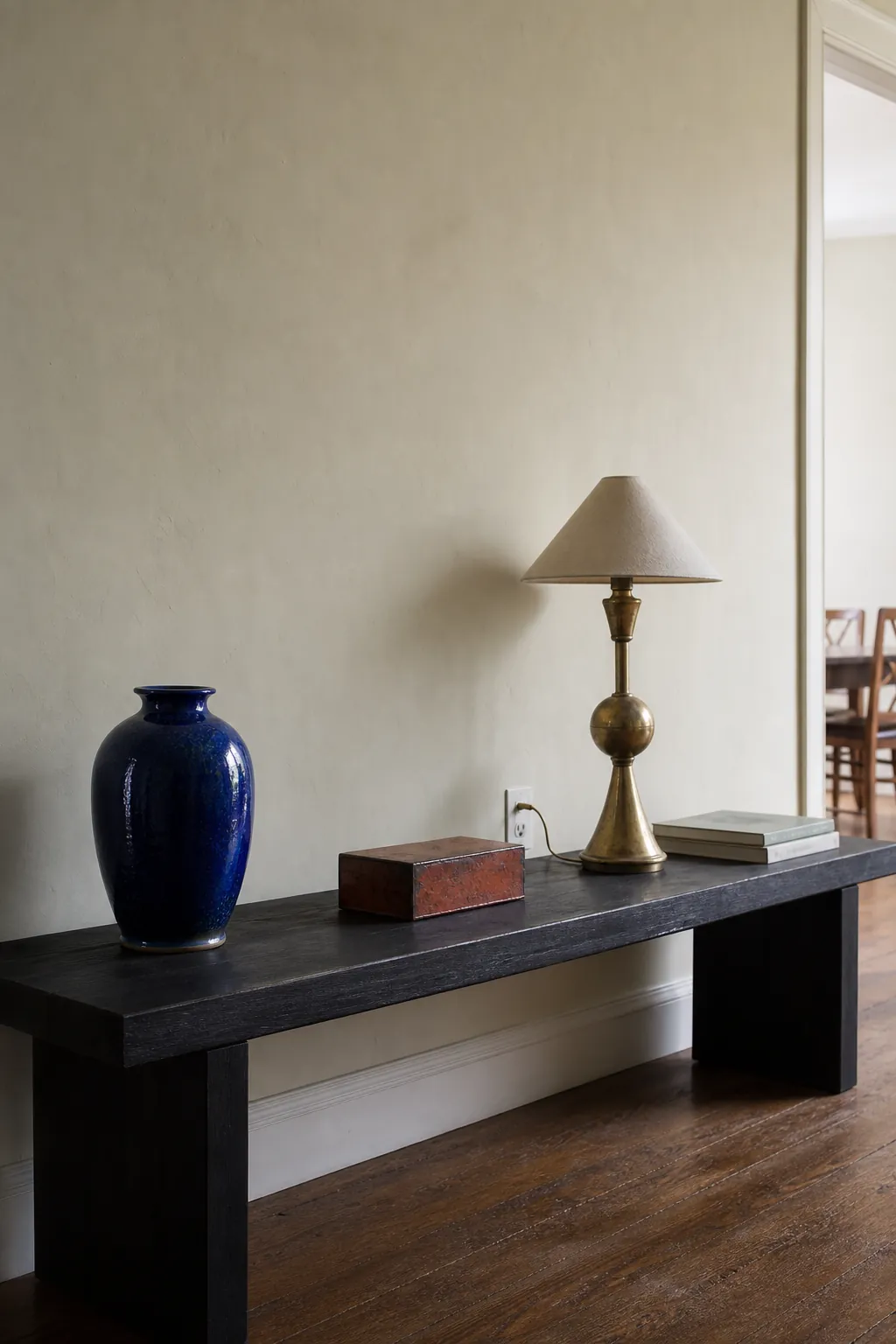
Negative space is not the opposite of maximalism; it is what makes a vivid object legible. Leave part of a console empty, keep clear wall around a textile, and give a sculptural lamp its own silhouette.
If every surface is full, rotate collections seasonally rather than forcing everything out at once. Editing protects the meaning of what remains.
Build a jewel-tone palette from one textile
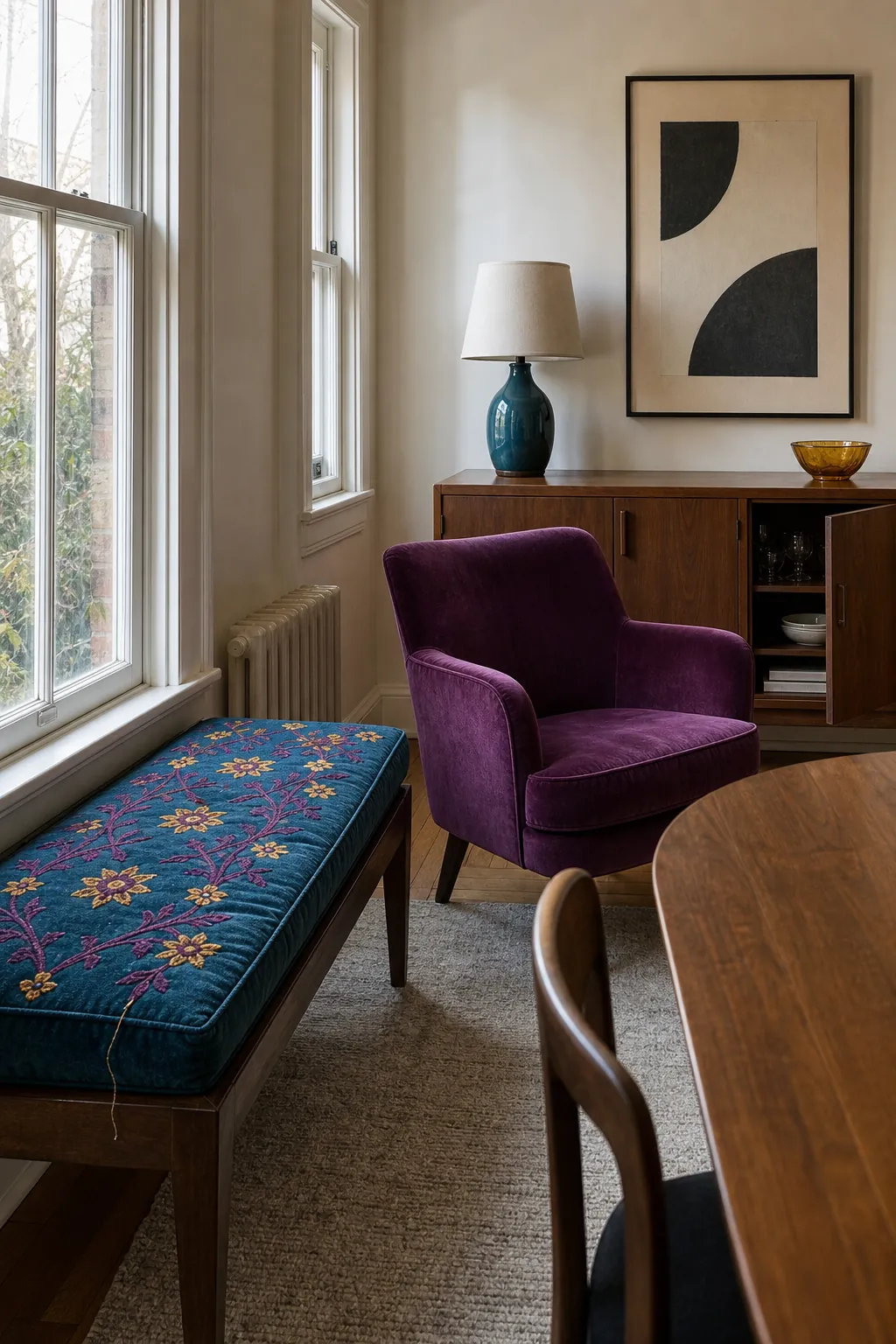
Pull three colors from a rug or embroidered cloth: one dominant, one supporting, and one sharp accent. A deep teal field might lead to plum upholstery and small saffron details without requiring colorful walls.
Repeat each color at least twice, but change the material—velvet, ceramic, paper, or glass. That repetition gives modern maximalist decor cohesion while preserving texture.
Hang a gallery wall with a common frame rhythm
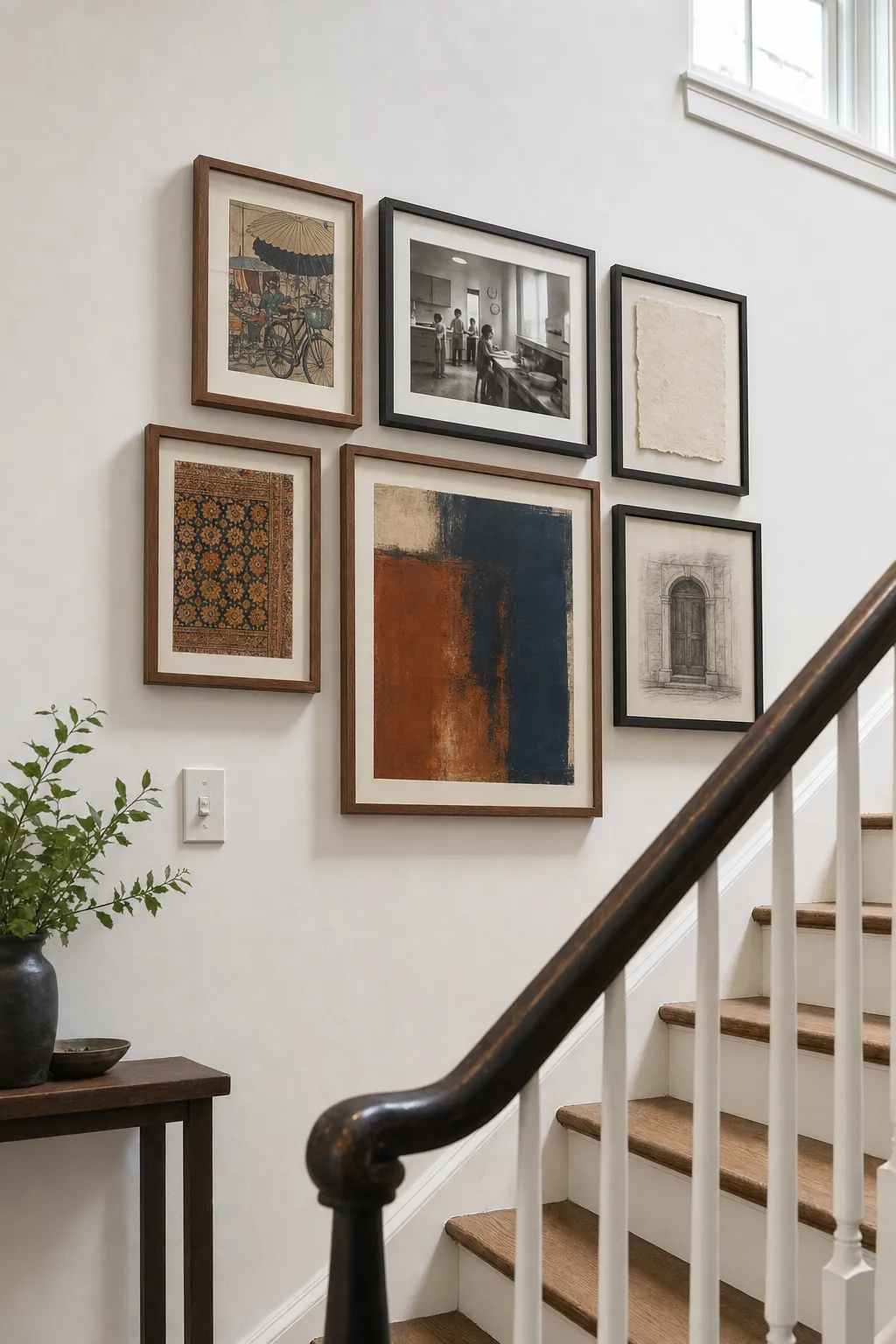
A gallery wall can combine a Japanese woodblock, family photograph, contemporary abstract, and textile fragment if the frames share two finishes and the gaps remain consistent. Cultural specificity matters more than making every subject match.
Arrange the composition on the floor first. Include at least one quiet piece so the wall has pauses rather than equal visual volume everywhere.
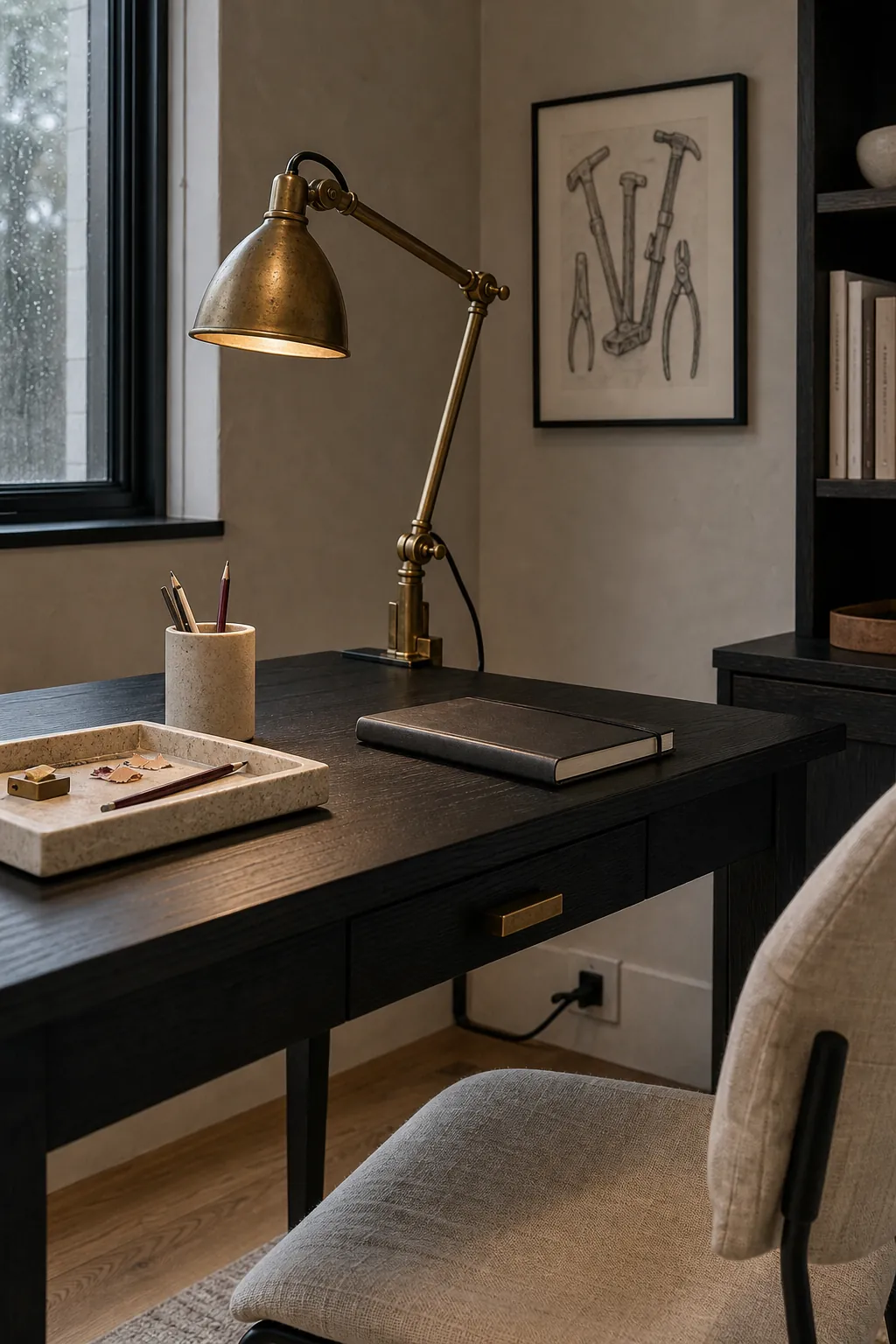
Layer brass beside blackened wood
Aged brass warms the depth of blackened timber without creating a flashy metallic theme. Use it on one lamp, tray, or cabinet fitting and allow a natural patina to develop.
Balance reflective metal with matte surfaces such as linen, stone, or plaster. The contrast reads richer than adding several different shiny finishes.
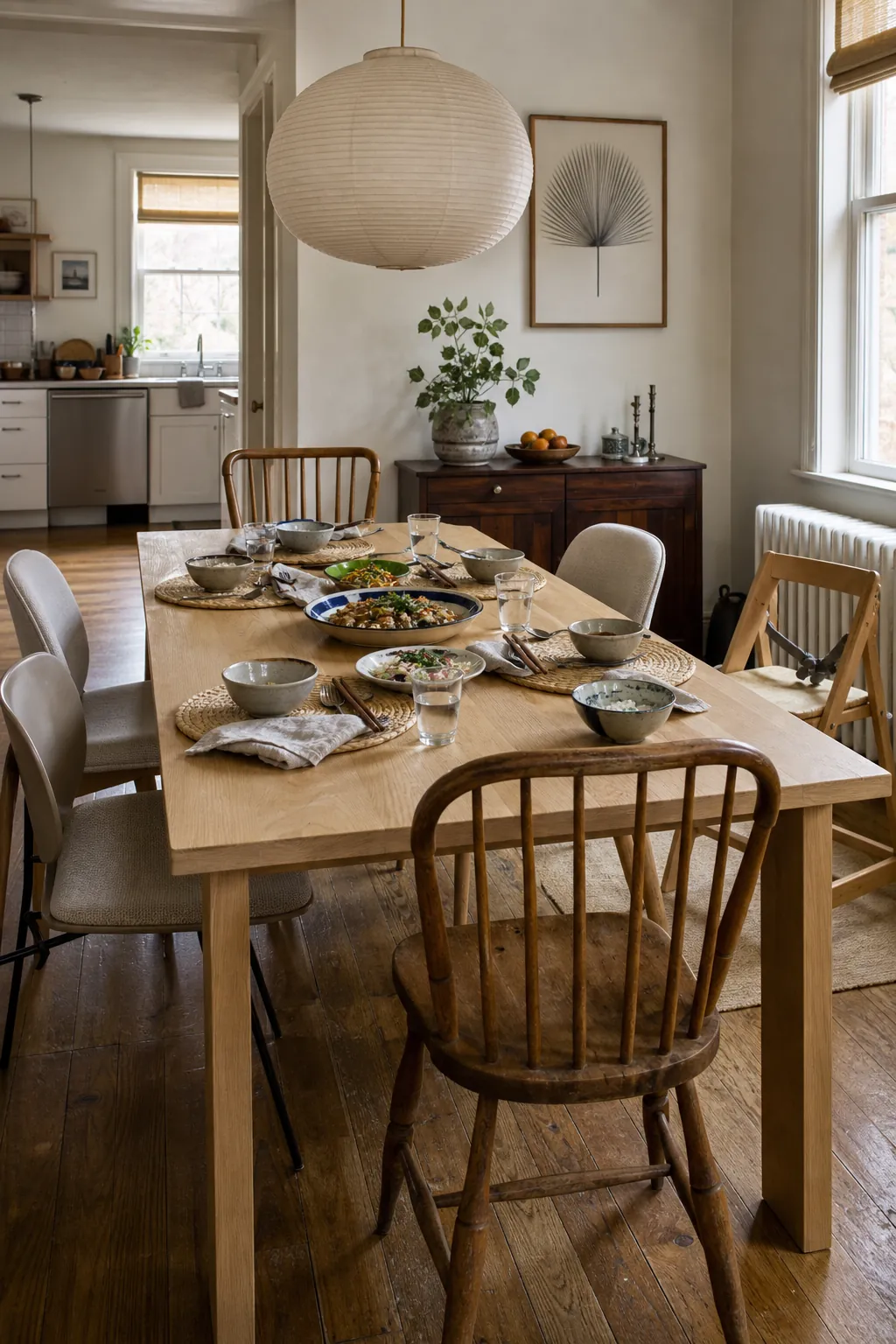
Turn the dining table into the collected center
Combine modern table lines with vintage chairs, handmade bowls, woven placemats, and a single expressive pendant. Keep the table setting loose enough that food can still be served and cleared easily.
Mixed chairs should share a compatible seat height. A visually layered dining room fails if someone is uncomfortable through every meal.
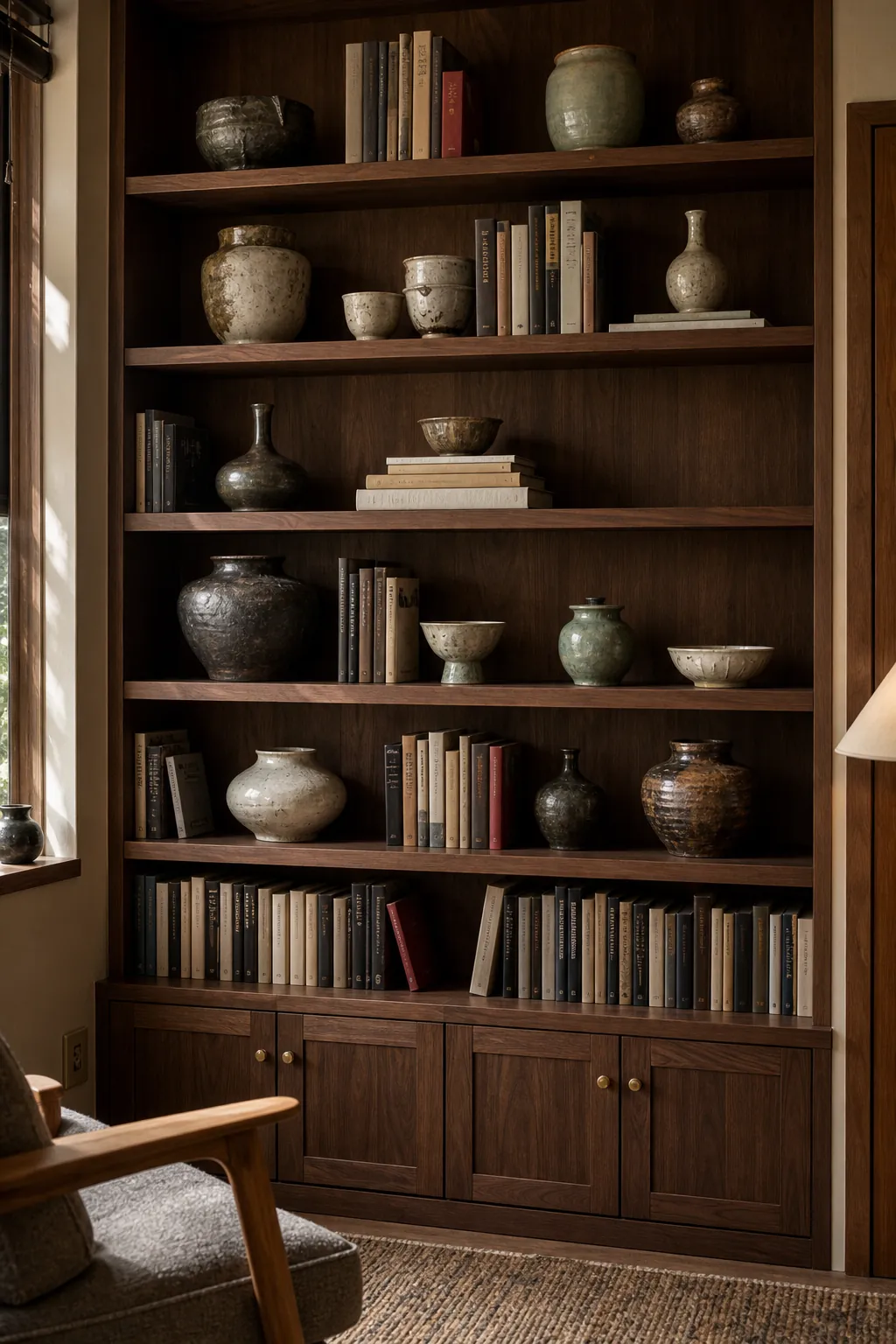
Create Japanese maximalism on open shelves
Japanese maximalism can be rich without being crowded. Group ceramics by glaze family, vary height, and leave one shelf partly empty. Books placed vertically and horizontally provide structure between irregular vessels.
Keep fragile objects above children and pets, and use museum putty where needed. Styling should respect the room’s actual users.
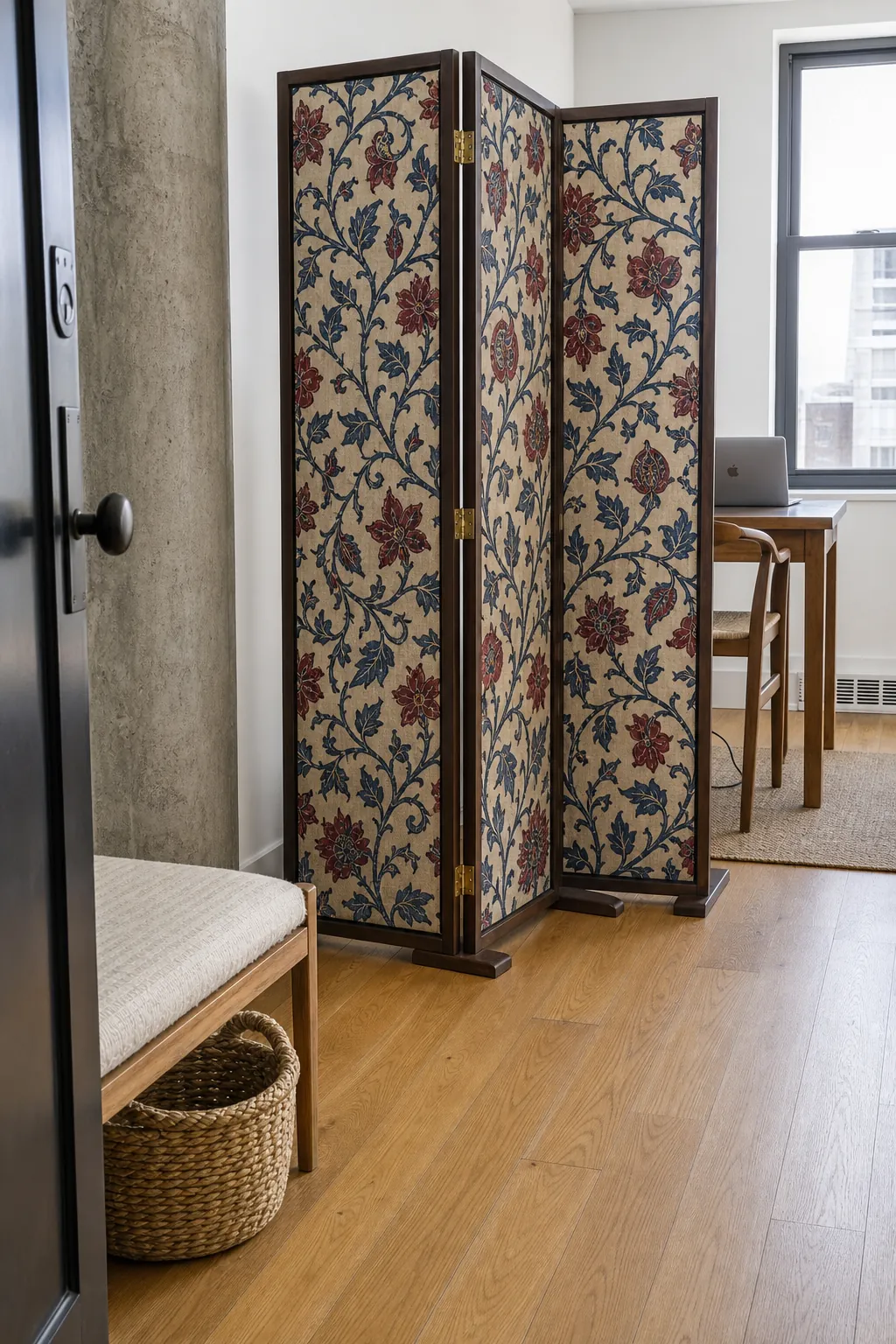
Use a patterned screen as movable architecture
A freestanding screen can hide a desk, create an entry, or soften an awkward corner. Choose one specific pattern—such as block-printed vines or a geometric cane weave—and keep nearby fabrics simpler.
Confirm the screen has a stable base and does not block vents or circulation. Its greatest value is flexibility, especially in a rental.
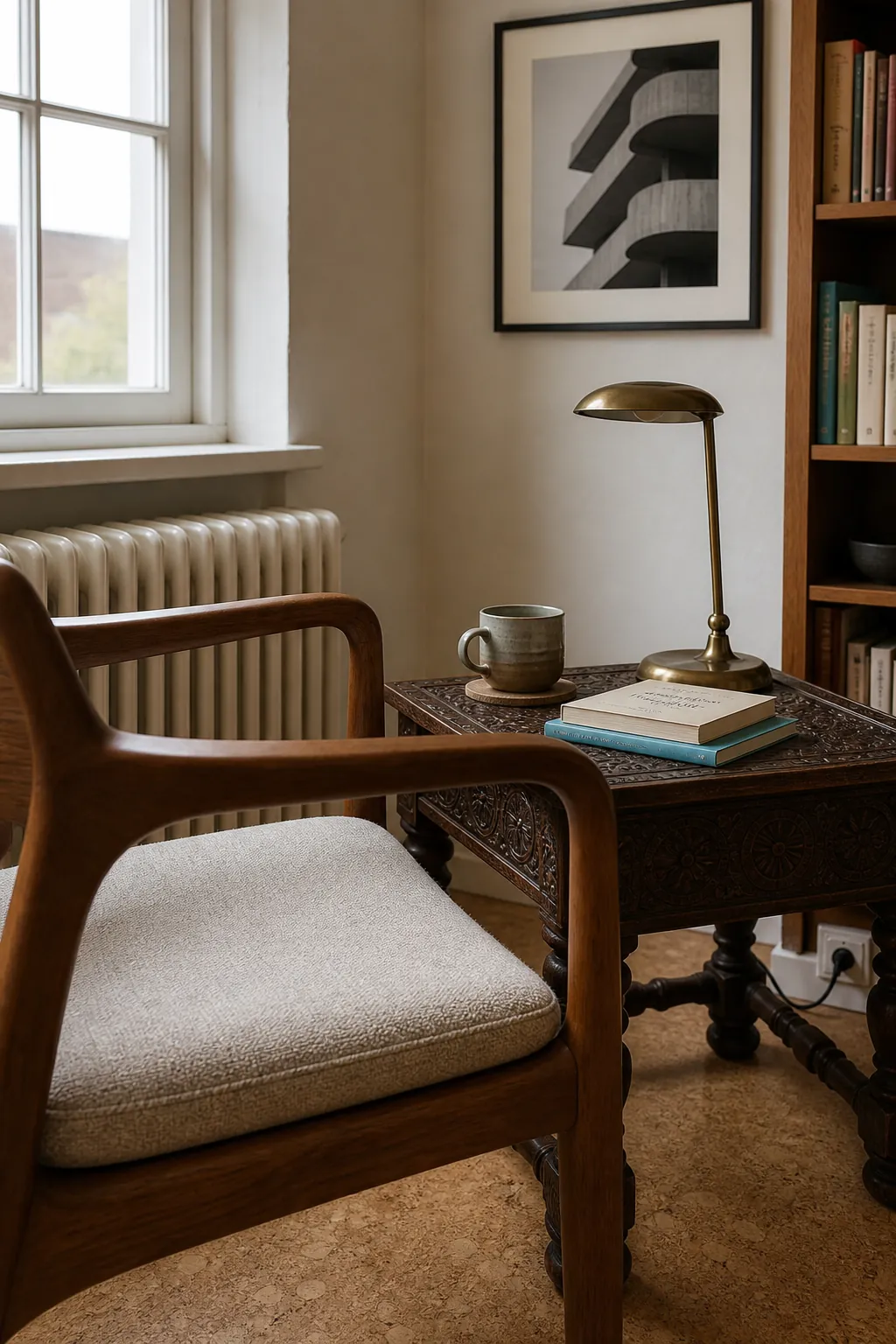
Mix mid-century curves with carved details
A curved mid-century lounge chair can calm the visual density of a carved side table or ornate chest. The contrast works because one piece offers a clean silhouette while the other carries detail.
Repeat the wood undertone so they converse. Avoid matching every furniture leg or forcing a full “set”; eclectic character comes from compatible difference.
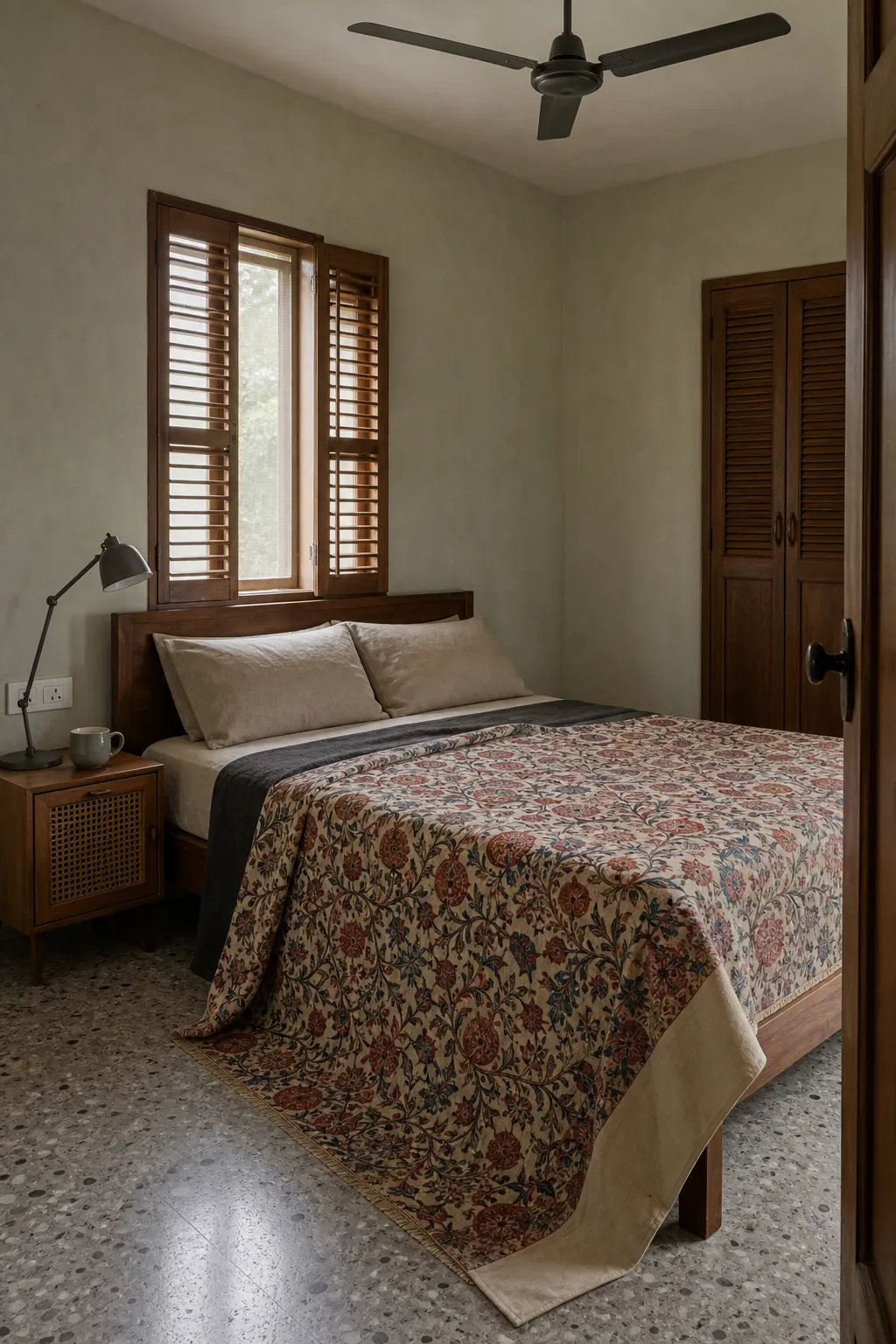
Add South Asian craft through one statement cloth
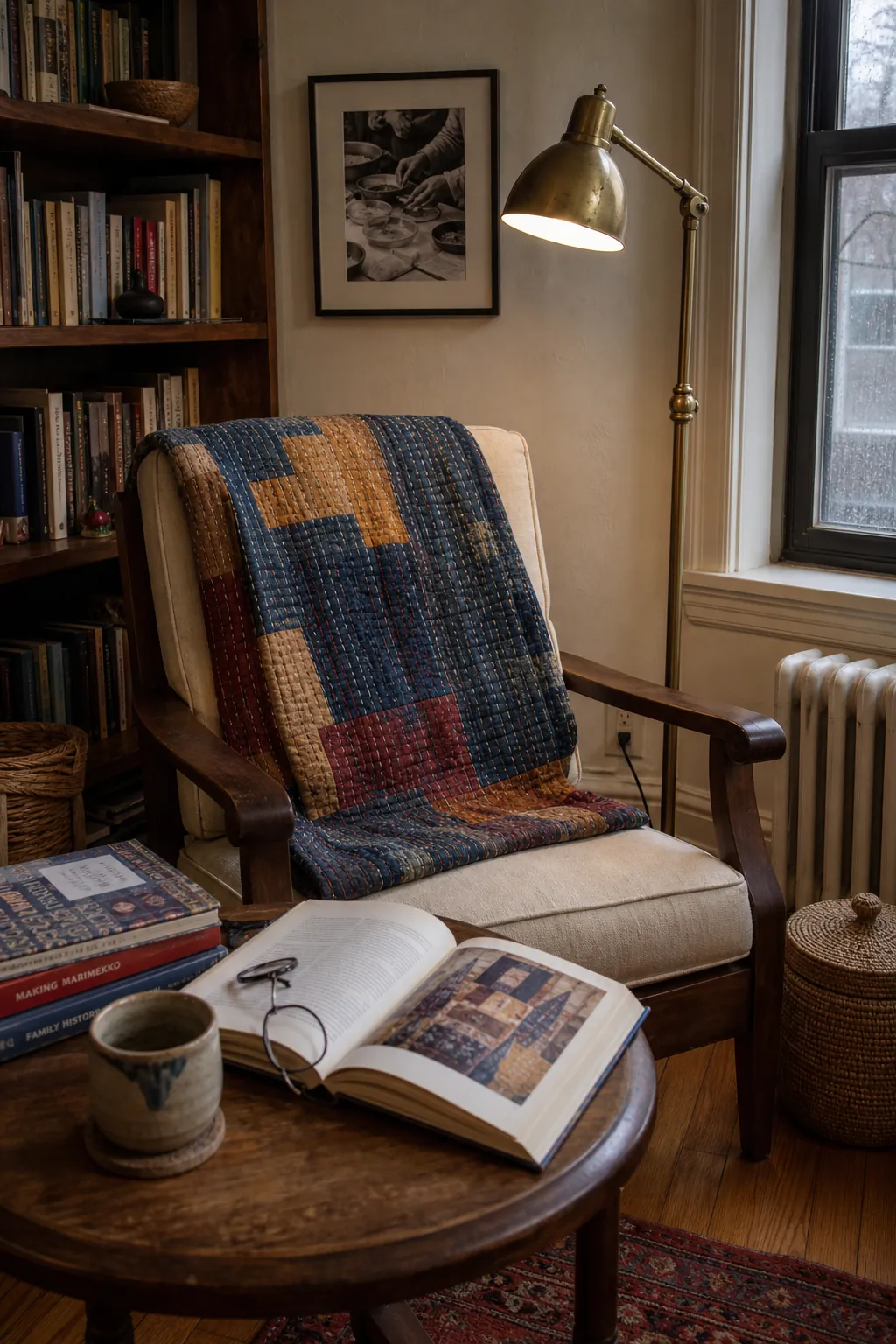
A hand-block-printed coverlet, kantha quilt, or embroidered panel can bring South Asian home decor into a room with clarity. Learn the textile’s origin and use it where the stitching can be touched and appreciated.
Let the cloth lead the bed or sofa, then quiet nearby patterns. Protect older dyes from strong sunlight and check for color transfer before daily use.
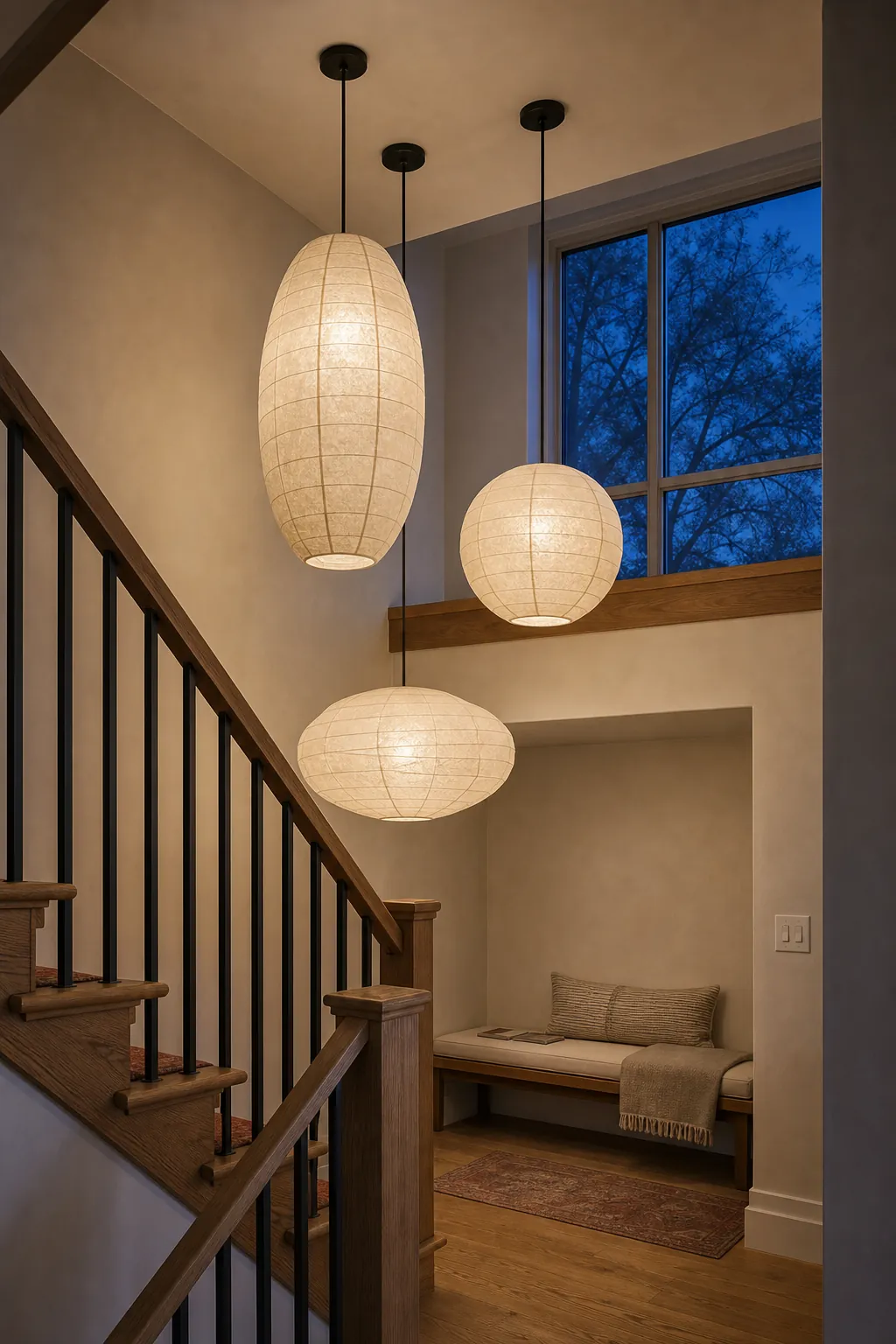
Cluster paper lights at different heights
Two or three paper lights can create a sculptural cluster when their shapes and heights differ but their material stays consistent. Use them over a stair void or dining corner where the composition has vertical room.
Choose dimmable warm-neutral bulbs and professional installation. More fixtures only work when glare, cords, and clearance are controlled.
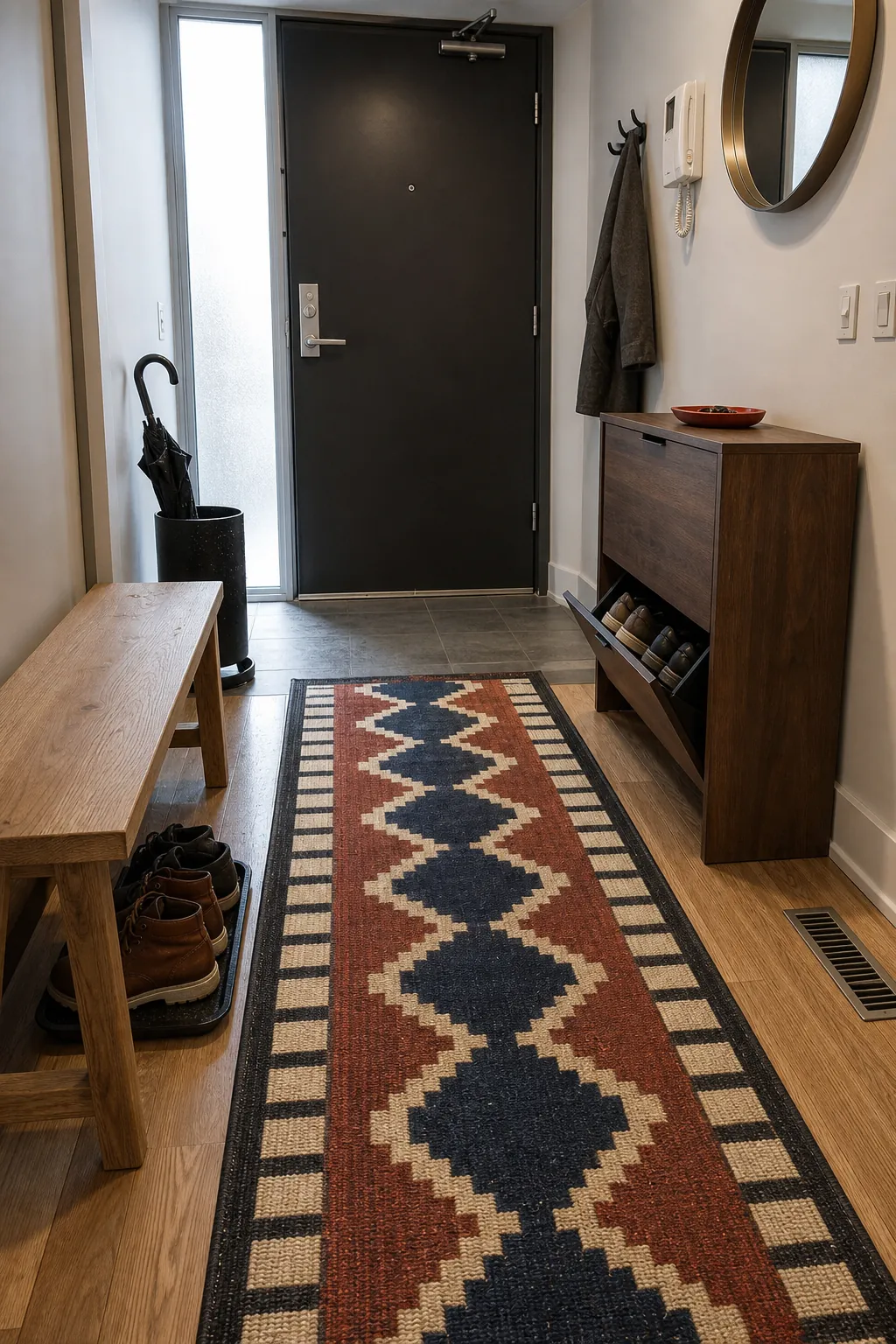
Give the entry a bold patterned runner
A durable runner can announce the palette before the living room begins. Look for a flatwoven geometric or floral block-print-inspired design with enough contrast to tolerate real foot traffic.
Use a nonslip pad and keep door clearance safe. Repeat one runner color in a key tray or umbrella handle rather than filling the foyer with matching accessories.
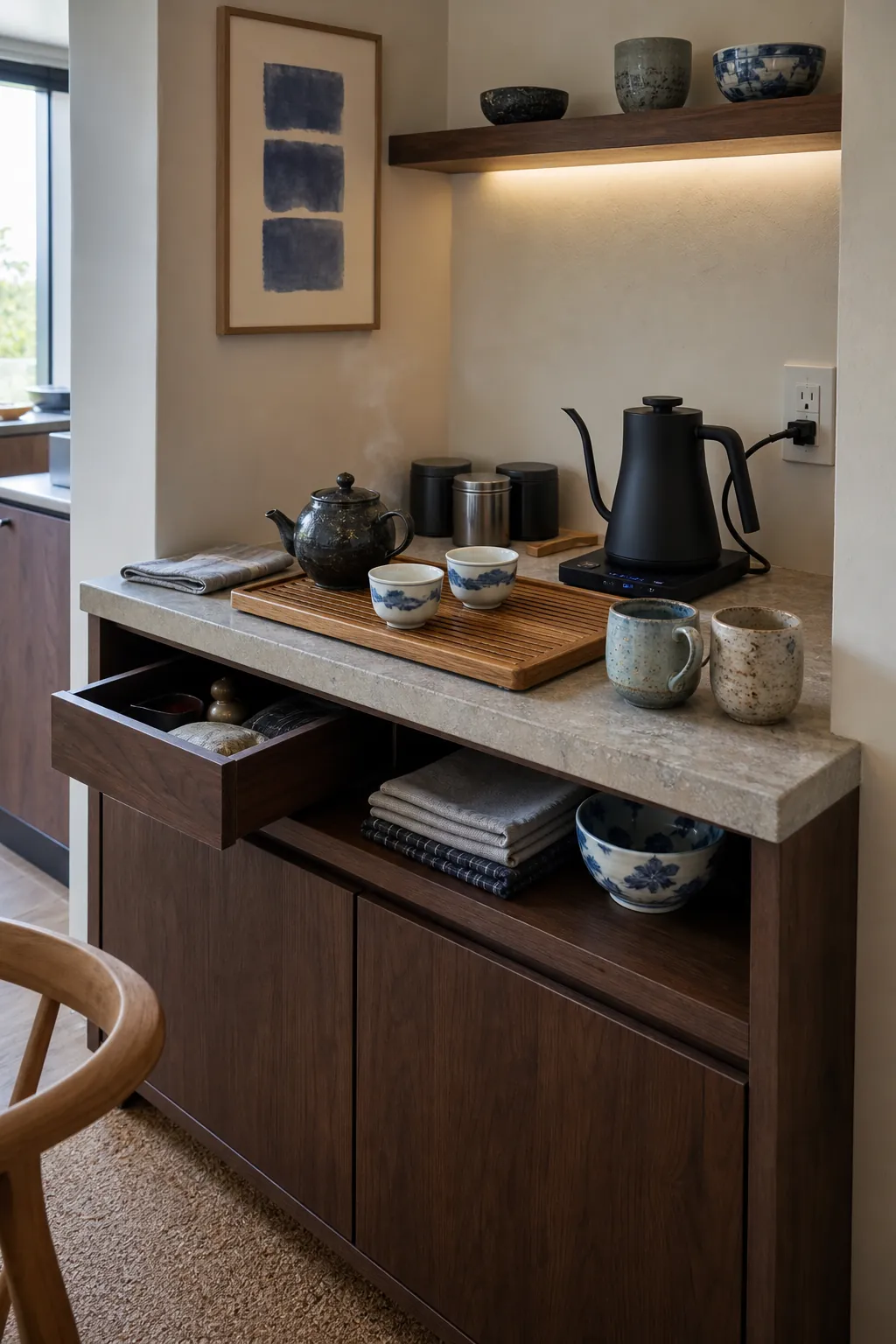
Style a tea bar with mixed ceramics
A tea bar can combine Japanese stoneware, Chinese porcelain, and contemporary local pottery if the pieces share use and a restrained color thread. Keep the kettle, tray, and cups easy to reach.
Open display should hold what you use weekly; store the rest behind doors. Function is the strongest organizing principle for a mixed collection.
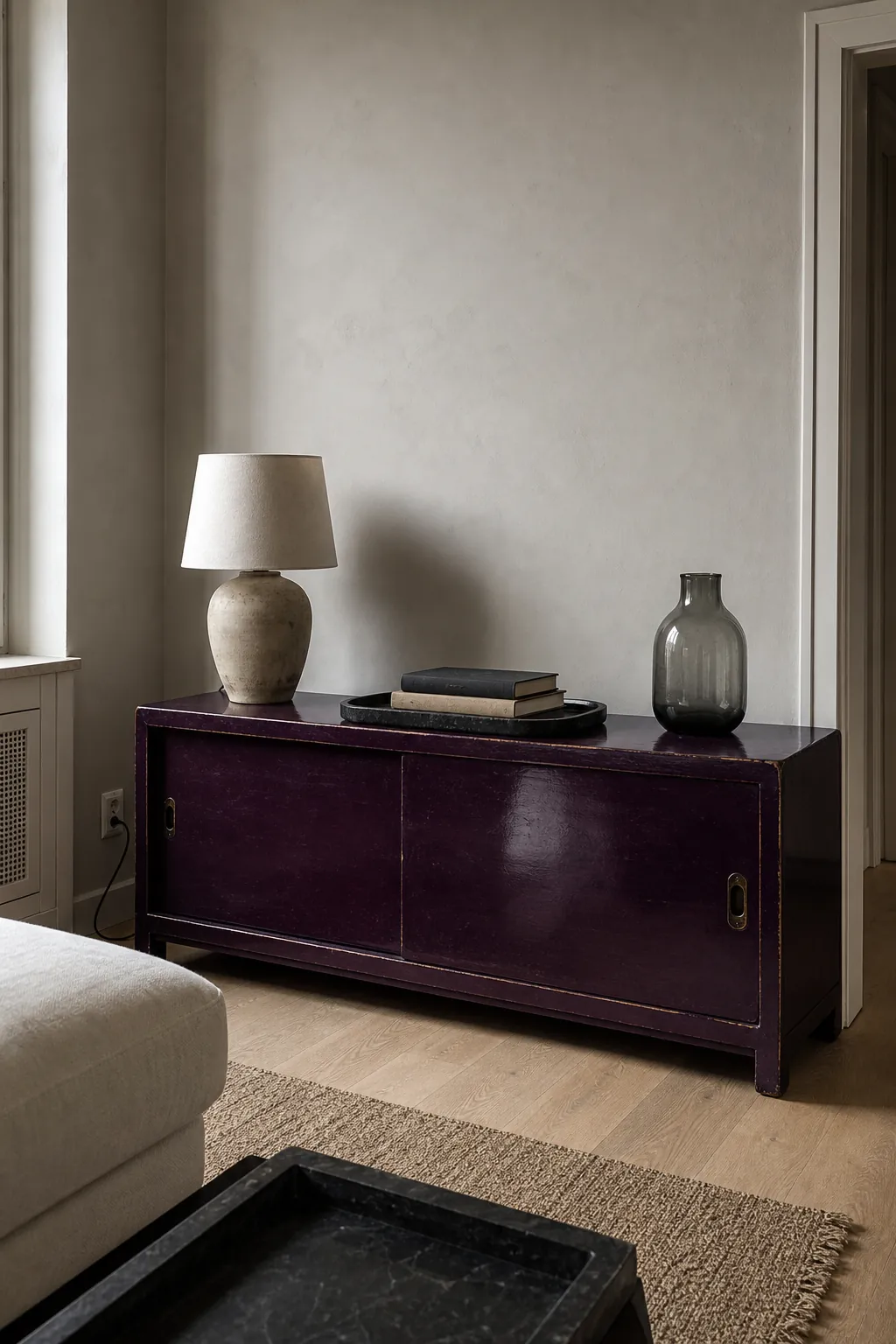
Use a lacquer color beyond traditional red
Deep aubergine, forest green, or inky blue lacquer can add polish without pushing the room toward a familiar red-and-gold formula. Apply the color to one cabinet or table and let its sheen contrast with matte walls.
Keep fingerprints and wear realistic; a lacquer piece in a home will be handled. Small patina can make the finish feel more collected than pristine.
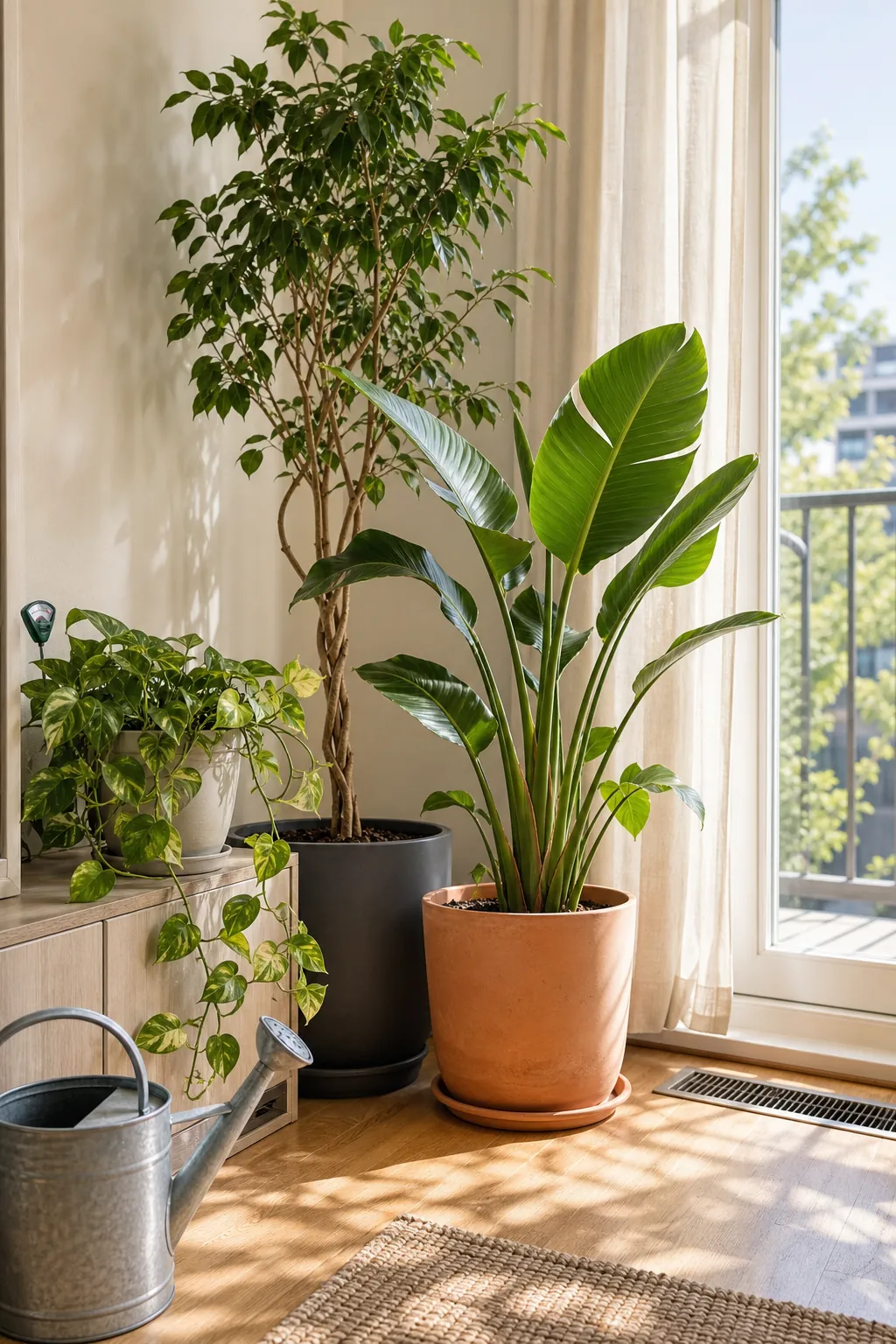
Layer plants by leaf shape instead of quantity
Three healthy plants with distinct forms—a small tree, broad leaf, and trailing vine—create more intentional depth than a dozen tiny pots. Group them near suitable light and provide trays for watering.
Leave floor and window access clear. Plants should soften an eclectic room, not turn maintenance into a second job or hide the objects you chose carefully.
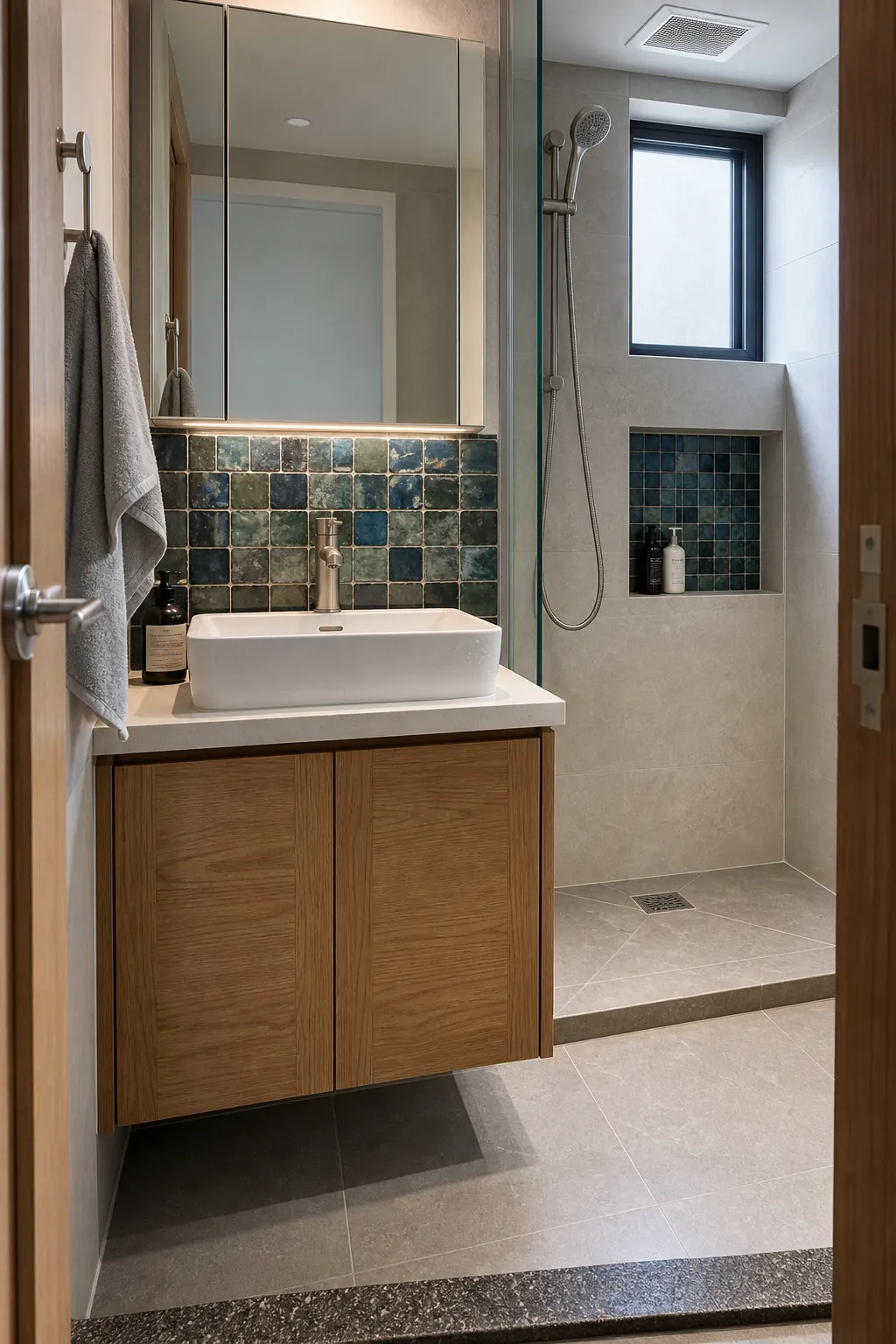
Make the bathroom rich through tile scale
Use one small-format glazed tile in a shower niche or vanity backsplash, then surround it with larger quiet surfaces. The concentrated pattern gives an Asian inspired bathroom depth without making every plane compete.
Choose slip-safe floors, sealed grout, and adequate ventilation. Decorative intensity should never obscure waterproofing or maintenance.
Create a reading corner from travel and family pieces
Place a comfortable chair beside a family textile, a travel-found lamp, and books that explain the places or crafts represented. The corner becomes personal because the objects are connected to memory and use.
Do not manufacture a travel story with anonymous props. A contemporary local piece chosen thoughtfully is better than a dubious “ethnic” object with no provenance.
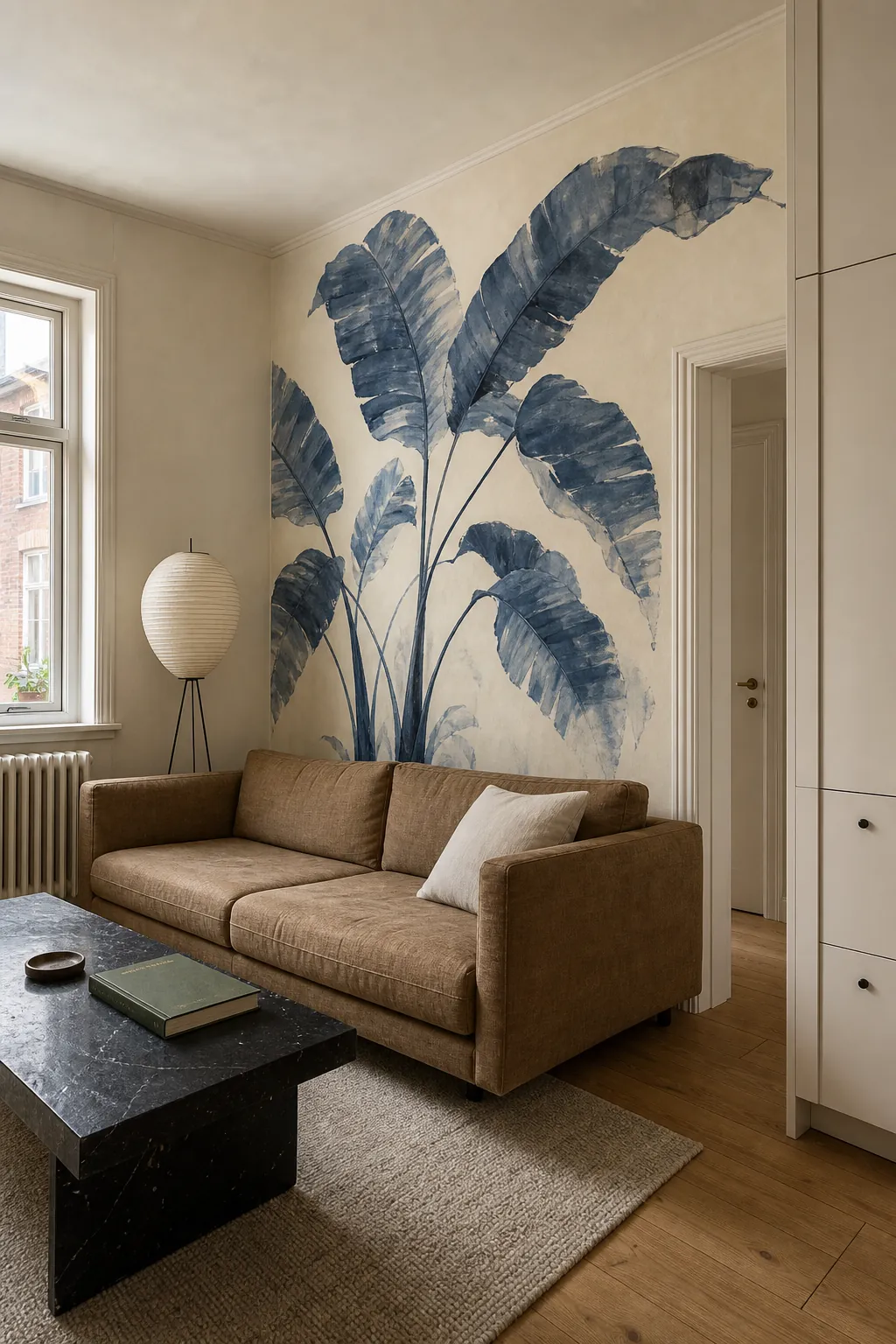
Balance a mural with plain furniture
If you love a mural, make it specific and let it lead. A hand-painted indigo botanical or abstract cloud study needs plain upholstery, simple tables, and fewer small objects nearby.
Sample the palette and scale first, especially in a small room. The mural should deepen the architecture rather than flatten it into a themed backdrop.
Edit the room by visual volume
Stand at the doorway and identify the loudest five elements. If they all demand equal attention, remove or relocate two. Then check that every surface includes a mix of full and empty areas and that walking paths stay clear.
The goal is not fewer stories; it is clearer storytelling. Keep the objects with provenance, function, or genuine affection, repeat a few colors and materials, and let quieter pieces support them. Asian eclectic decor feels rich when the room reveals itself in layers, not when everything speaks at once.