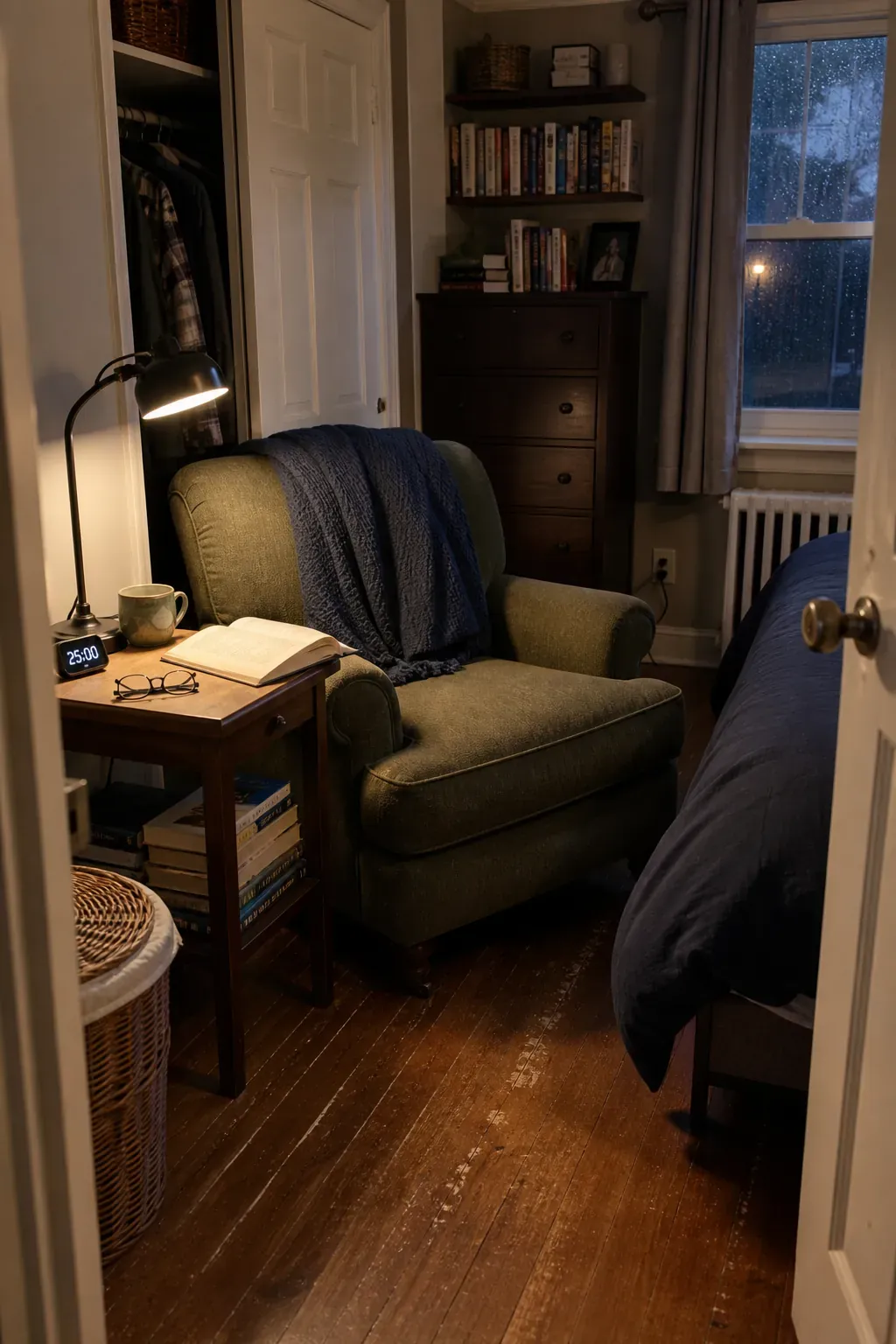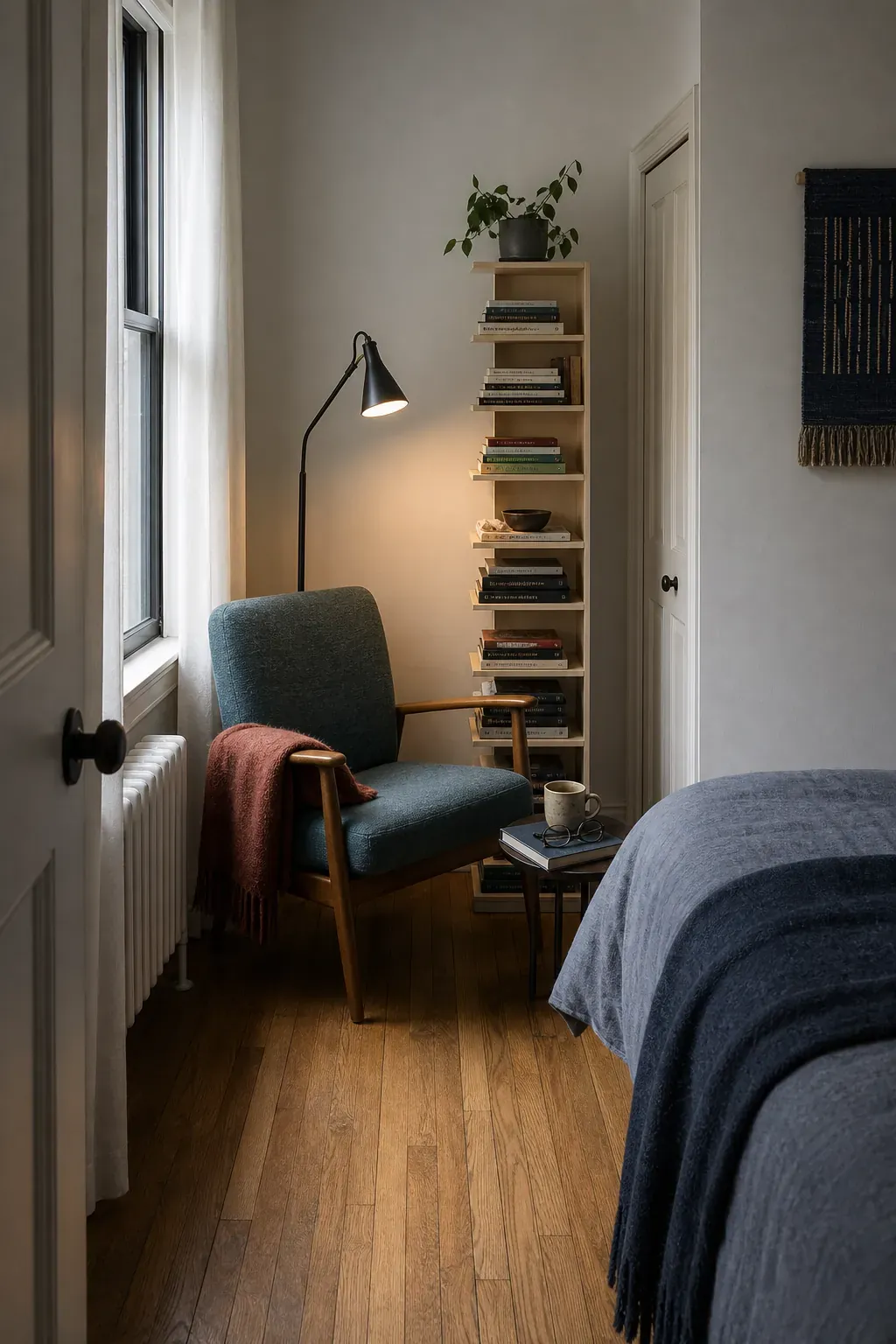
A bedroom reading corner does not have to begin with an empty corner. In a small room, it usually begins by asking one existing piece to work harder: a nightstand becomes a bookcase, a storage bench becomes a seat, or the chair that catches clothes finally gets proper light and a place for a cup.
Before adding anything, mark the door and drawer swings, the route around the bed, and the space needed to open the closet. Then choose the smallest change that makes reading comfortable. A supportive position, page-level light, and somewhere safe to rest a book matter more than decorative layers.
Angle a Compact Chair Beside the Window
A chair placed on a slight diagonal can fit between a window and the bed more easily than one pushed squarely into the corner. The angle creates shoulder room, opens the view, and keeps the chair from reading like leftover furniture.
Measure the chair’s full depth, not just its seat, and test the walking route with painter’s tape. Add a narrow drink table and position a lamp over one shoulder so daylight is a bonus rather than the only usable light.
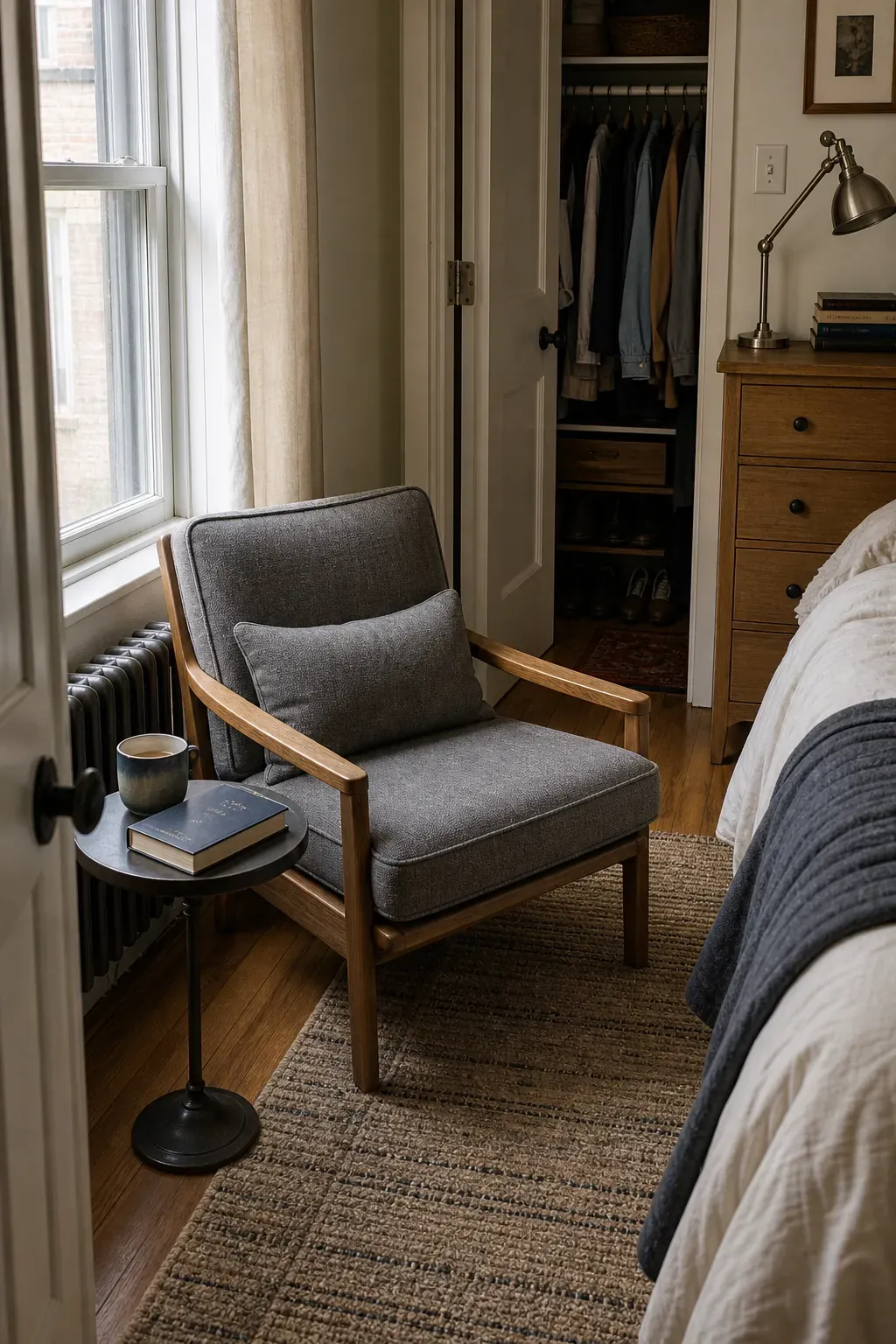
Replace One Nightstand With a Reading Chair
If two nightstands are not essential, trade one for a petite armchair. A slim wall ledge or the remaining shelf beside the bed can hold the current book, while a wall-mounted or clip-on lamp keeps the footprint clear.
This arrangement is particularly useful for solo sleepers or rooms where one side of the bed already faces a wall. Keep the chair far enough from bedding that it does not interfere with making the bed.
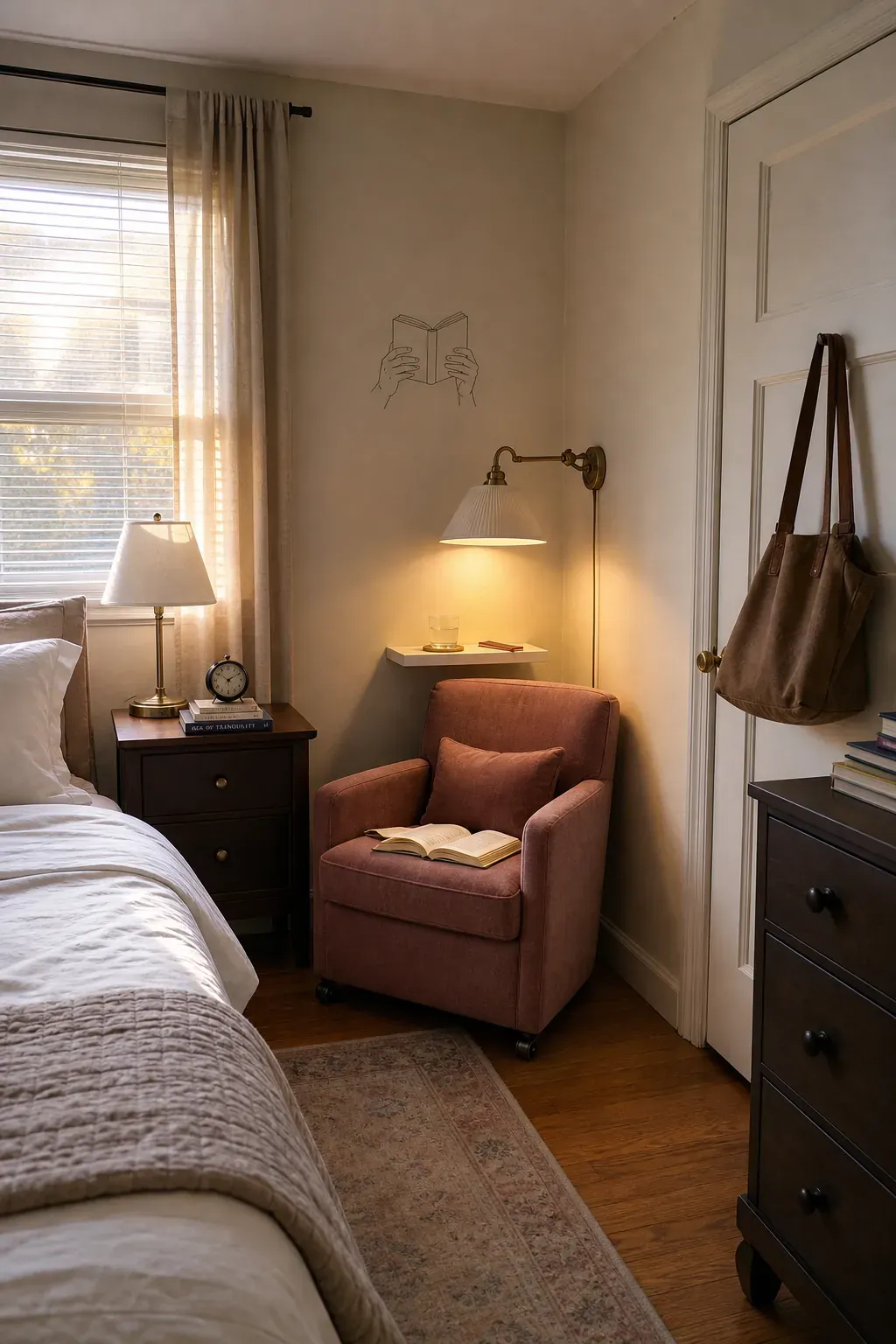
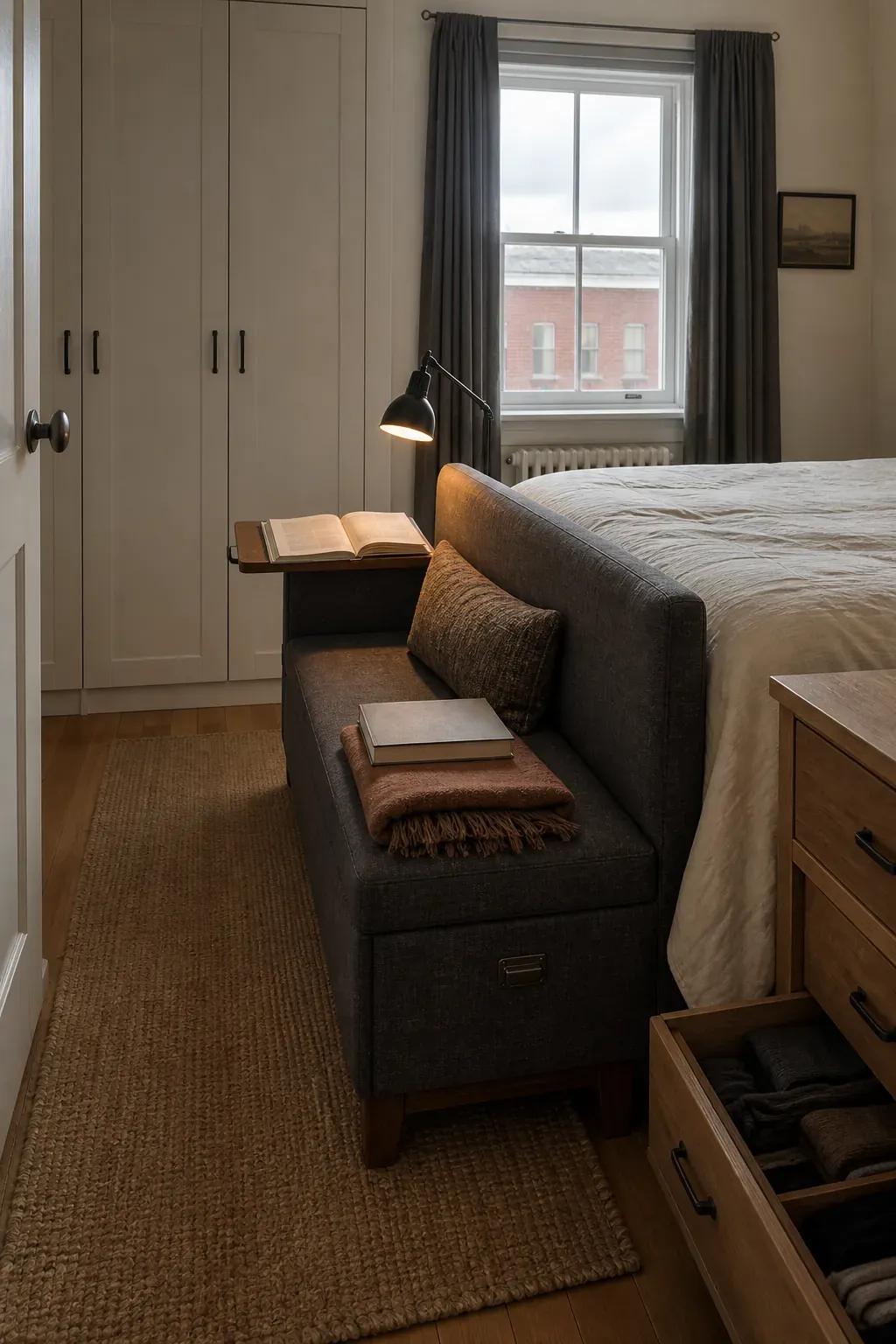
Use a Storage Bench at the Foot of the Bed
A firm upholstered bench provides a place to read without adding a new furniture zone. Choose one with a supportive back or place it against a wall only where head clearance is comfortable. Interior storage can hold spare bedding or unread books.
Leave enough room between the bench and the opposite wall for circulation. A small lumbar cushion and a nearby floor lamp improve comfort without burying the seat under decorative pillows.
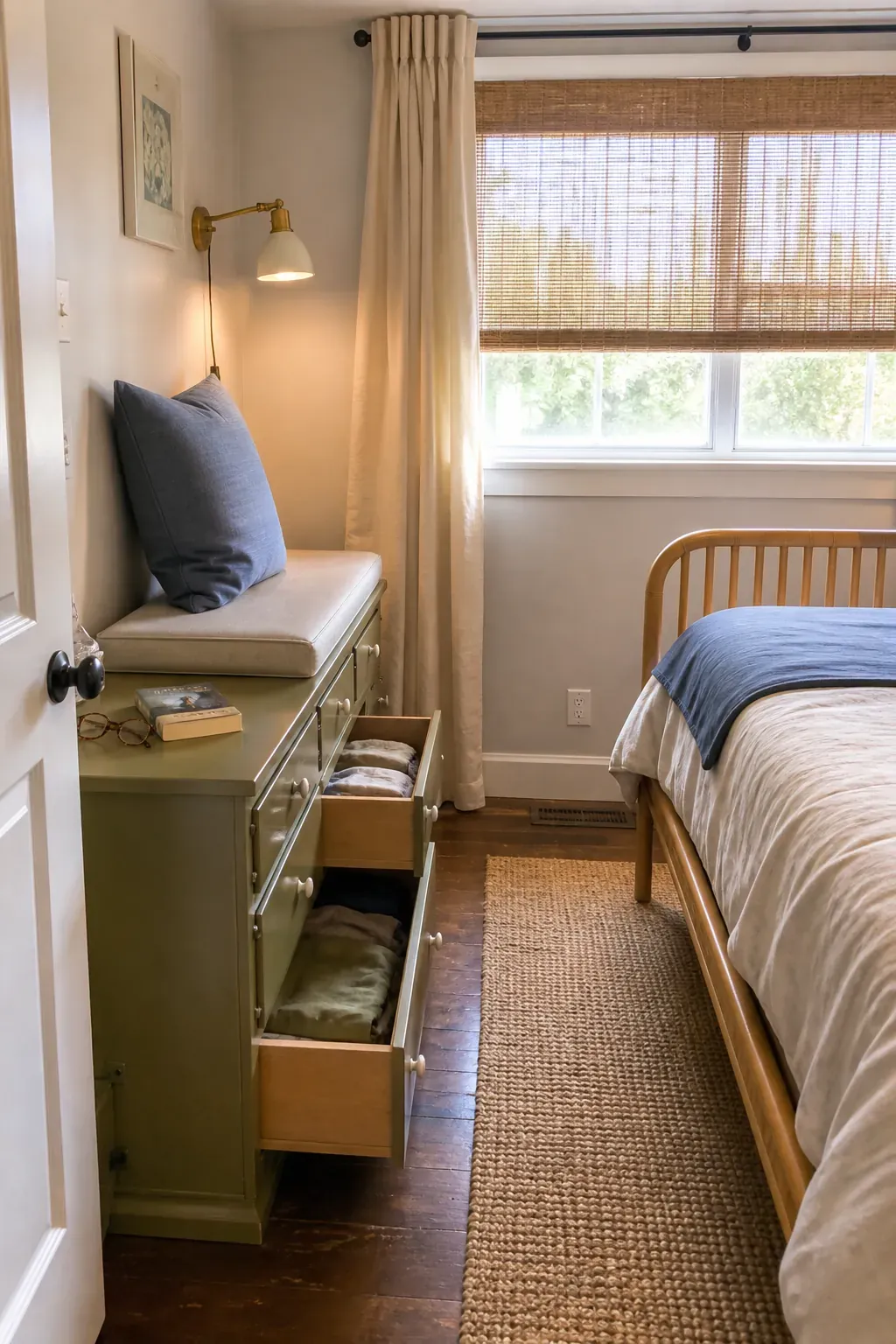
Turn a Low Dresser Into a Window Seat
A sturdy, appropriately rated low dresser beneath a window can become a reading perch with a thin nonslip cushion. This only works when the furniture is designed to bear weight and anchored safely; a delicate or unstable dresser is not a seat.
Keep drawers operable and leave blinds, curtains, and radiator airflow clear. The top should still have space for a book and glasses, or a tiny wall shelf can supply that resting point.
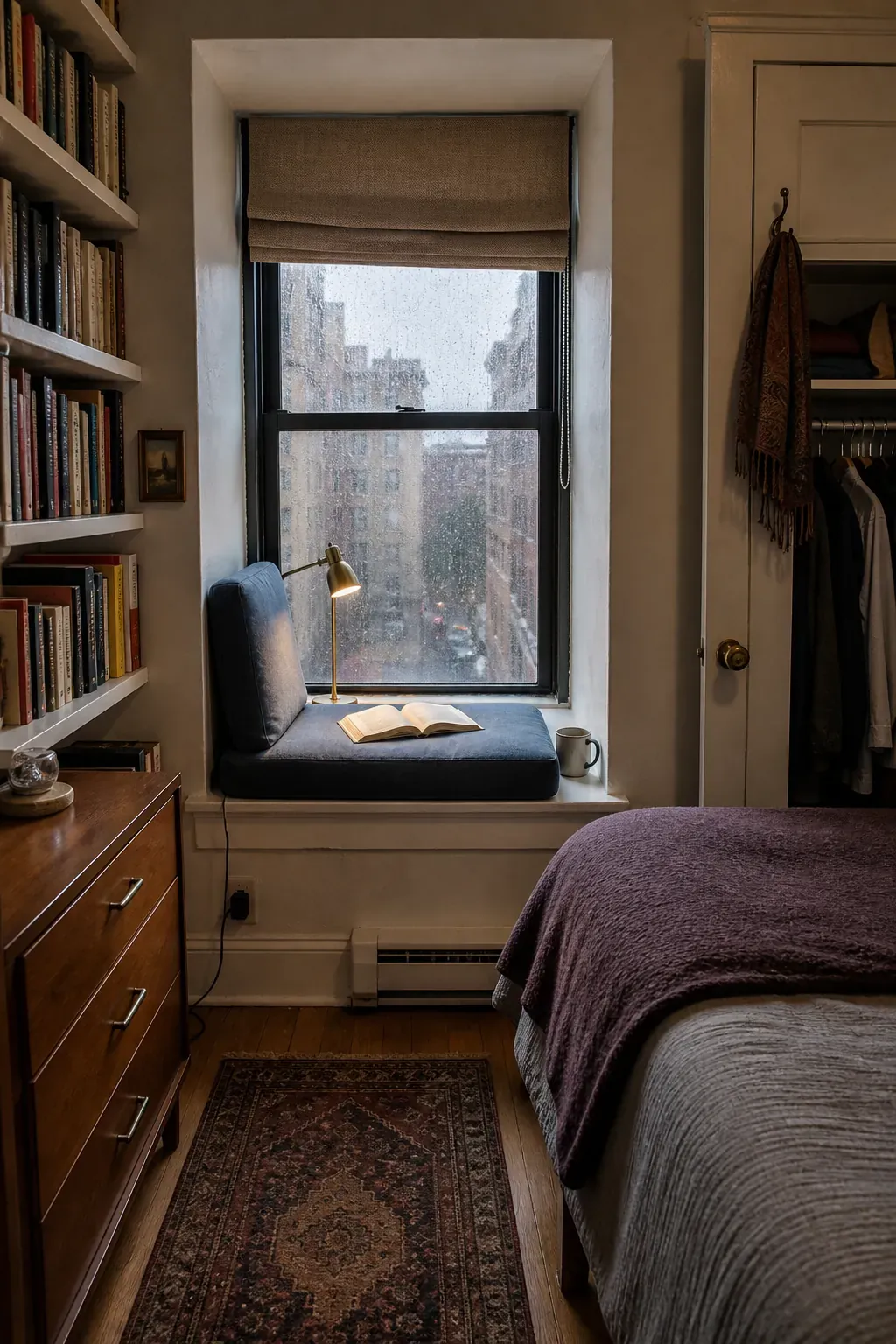
Add a Backrest to a Deep Window Ledge
A genuinely deep, structurally sound window ledge can support a fitted cushion and one firm back pillow. Avoid loose piles that reduce the seat depth or press against glass. If the ledge is narrow, use it for books and keep seating on the floor instead.
Use a woven shade to control glare and fading. A nearby sconce or cordless lamp makes the nook useful after sunset without trailing a cord across the room.
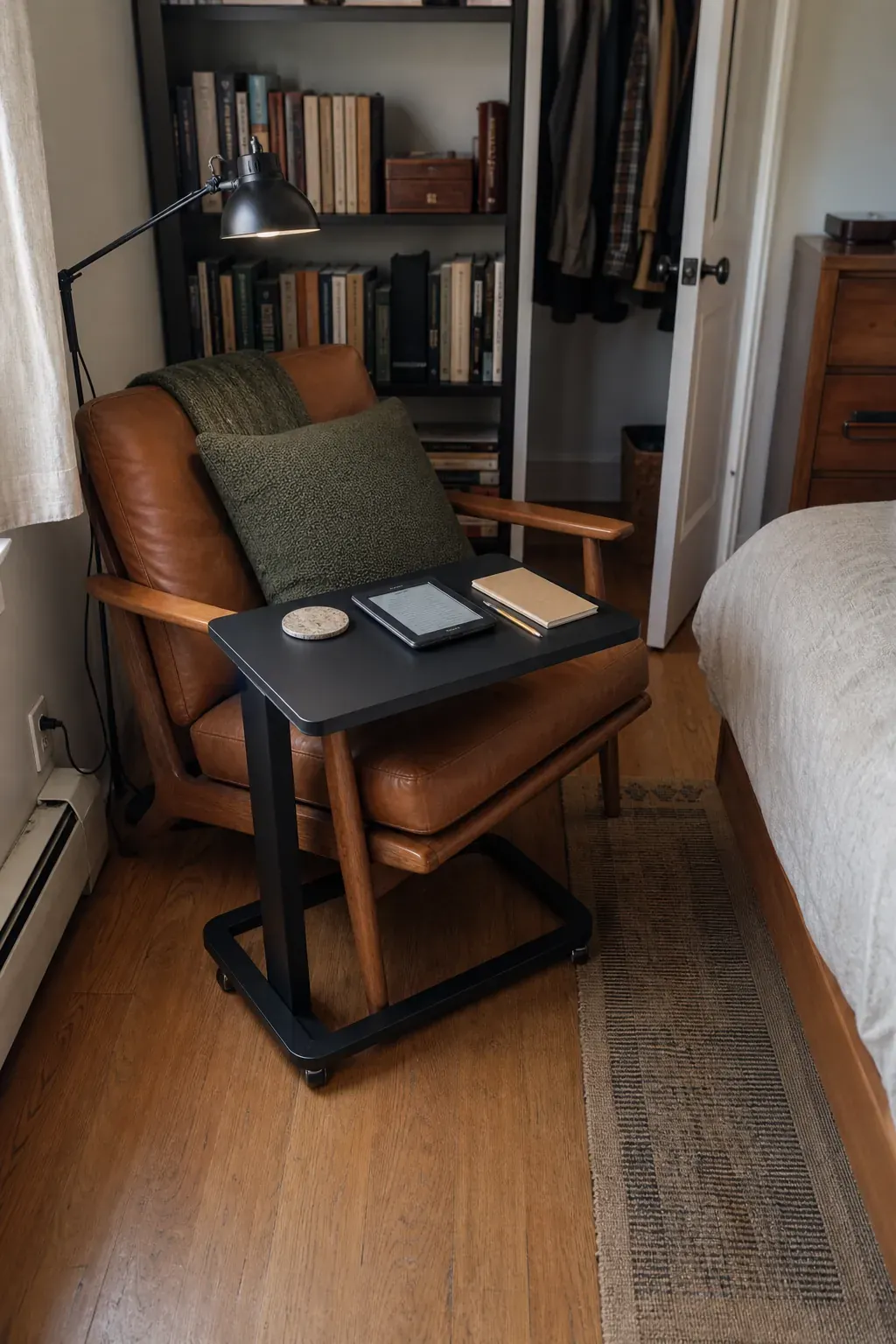
Slide a C-Table Under the Chair
A C-shaped table gives a tight reading corner a stable surface without requiring clearance on every side. Its base slides beneath the chair, bringing a drink, e-reader, or notebook within reach.
Check that the base fits around the chair legs and that the top does not crowd the armrest. Choose a weighted design that will not tip when nudged in a dim bedroom.
Choose a Pouf That Tucks Away
A firm pouf offers foot support for a compact chair and can slide beneath a console or into a closet when the floor is needed. That flexibility makes a modest chair far more comfortable for longer reading sessions.
Pick a low, dense fill that supports legs without collapsing. Avoid placing a tray of hot tea on a soft pouf; use a stable side surface instead.
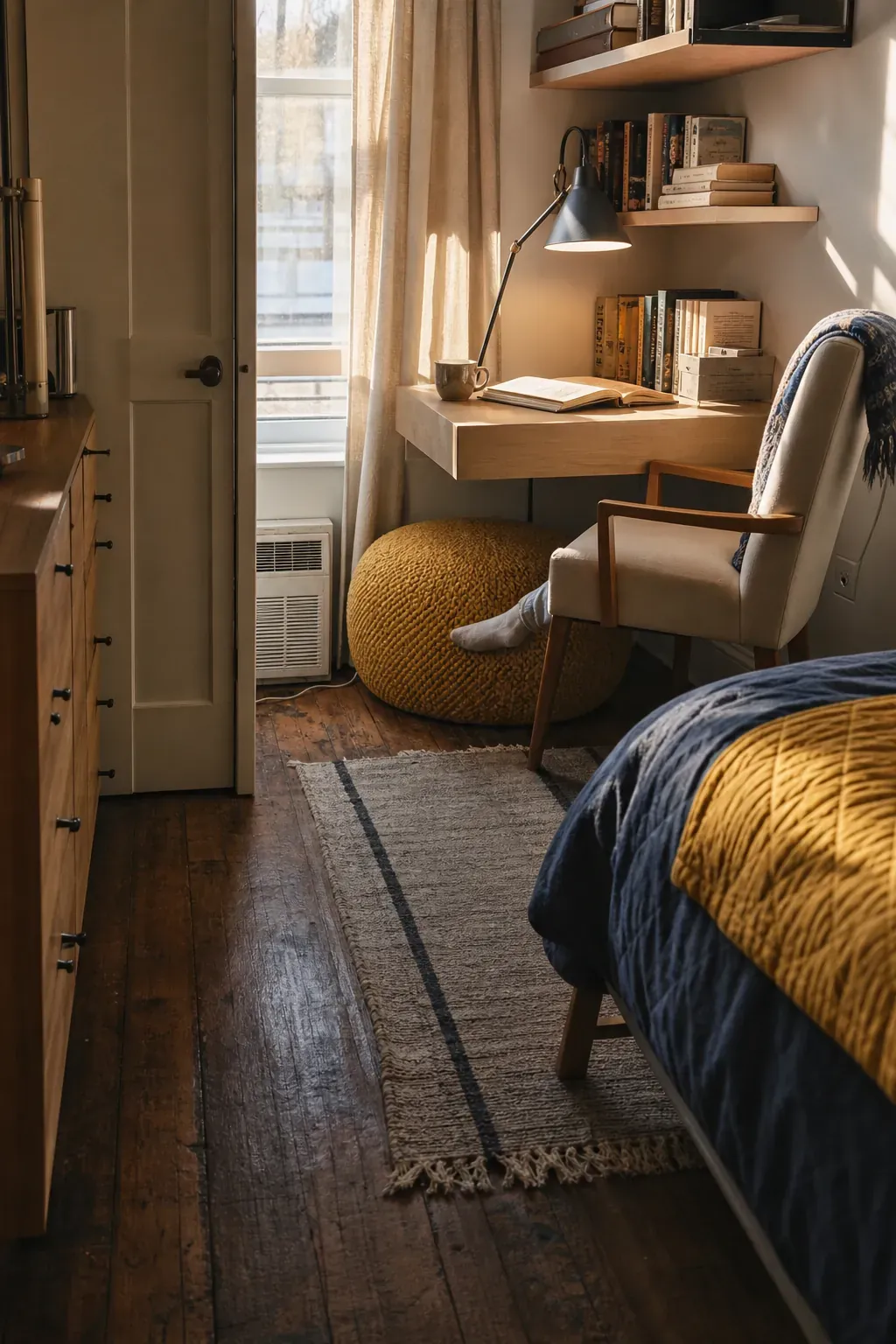
Mount a Swing-Arm Reading Light
A swing-arm sconce delivers page-level light without occupying the floor or nightstand. Position it so the shade can reach over the shoulder but fold back against the wall when the corner is not in use.
Renters can consider a plug-in model mounted only with approved hardware, or use a clamp lamp on a stable shelf. Choose a warm-neutral bulb and a shade that controls glare rather than flooding the whole bedroom.
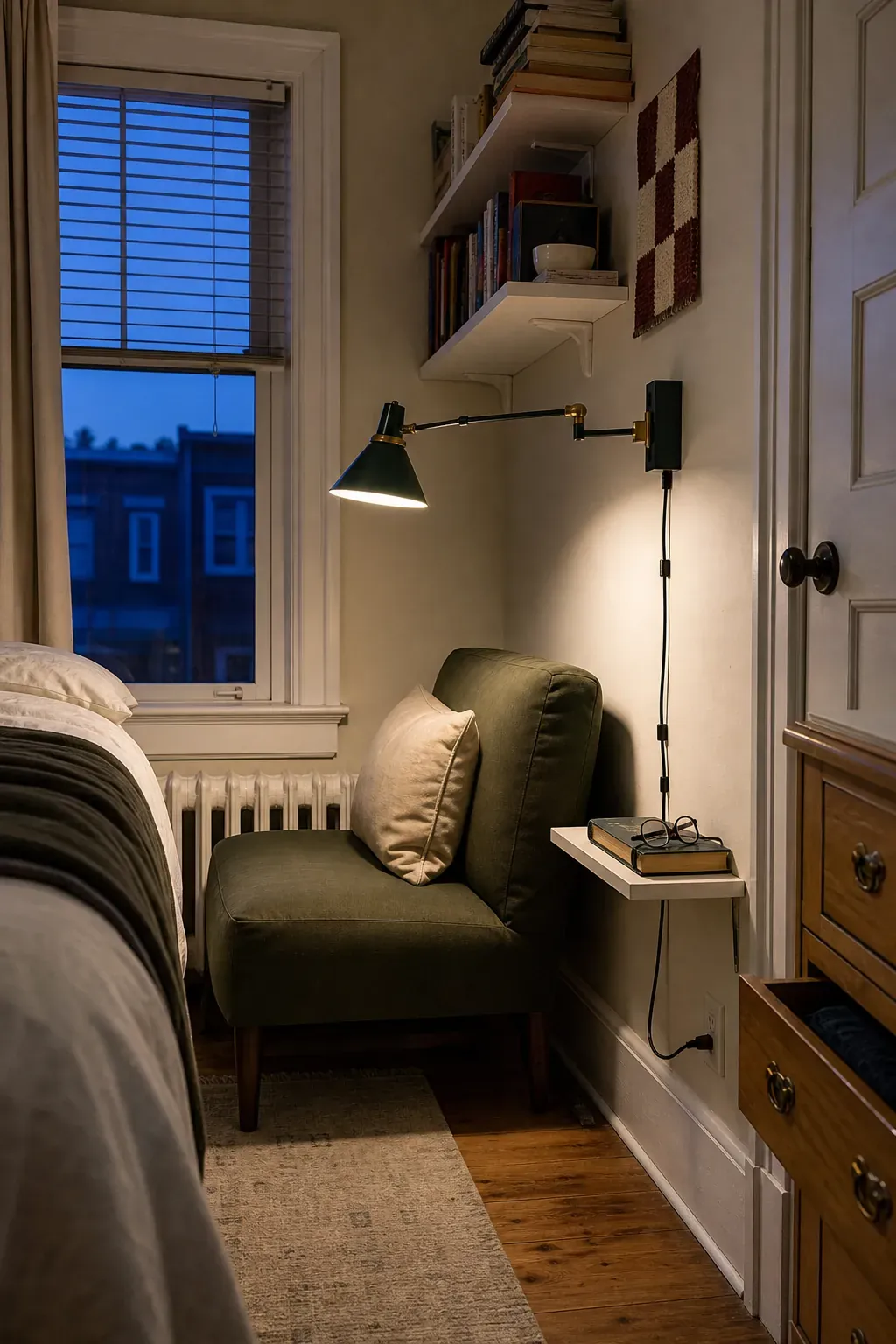
Clip a Lamp to the Headboard
When the bed is the only comfortable seat, a well-positioned clip lamp can turn one side into a focused reading corner. Clamp it only to a sturdy surface and route the cord where it cannot catch on bedding or feet.
Add a supportive wedge pillow and keep a shallow basket of current books beneath the nightstand. This approach separates reading from scrolling by giving the bed a clear physical setup for books.
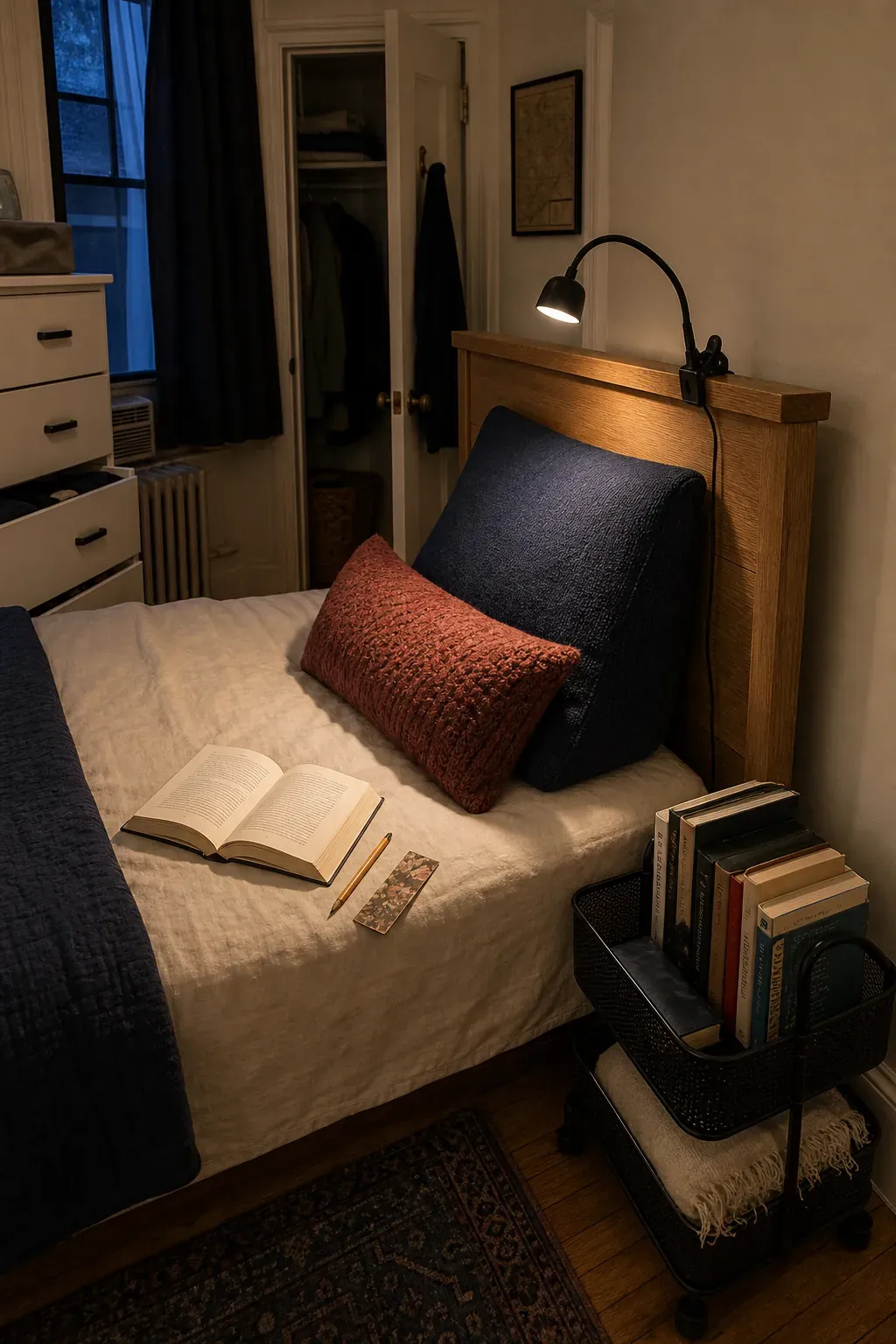
Park a Rolling Book Cart Beside the Bed
A narrow rolling cart can hold books, a rechargeable lamp, and reading supplies, then move away when drawers or closet doors need to open. Locking casters prevent it from drifting on hard floors.
Organize the tiers by current reads, notebooks, and library returns. Keeping the cart specific to reading stops it from becoming a second nightstand full of unrelated clutter.
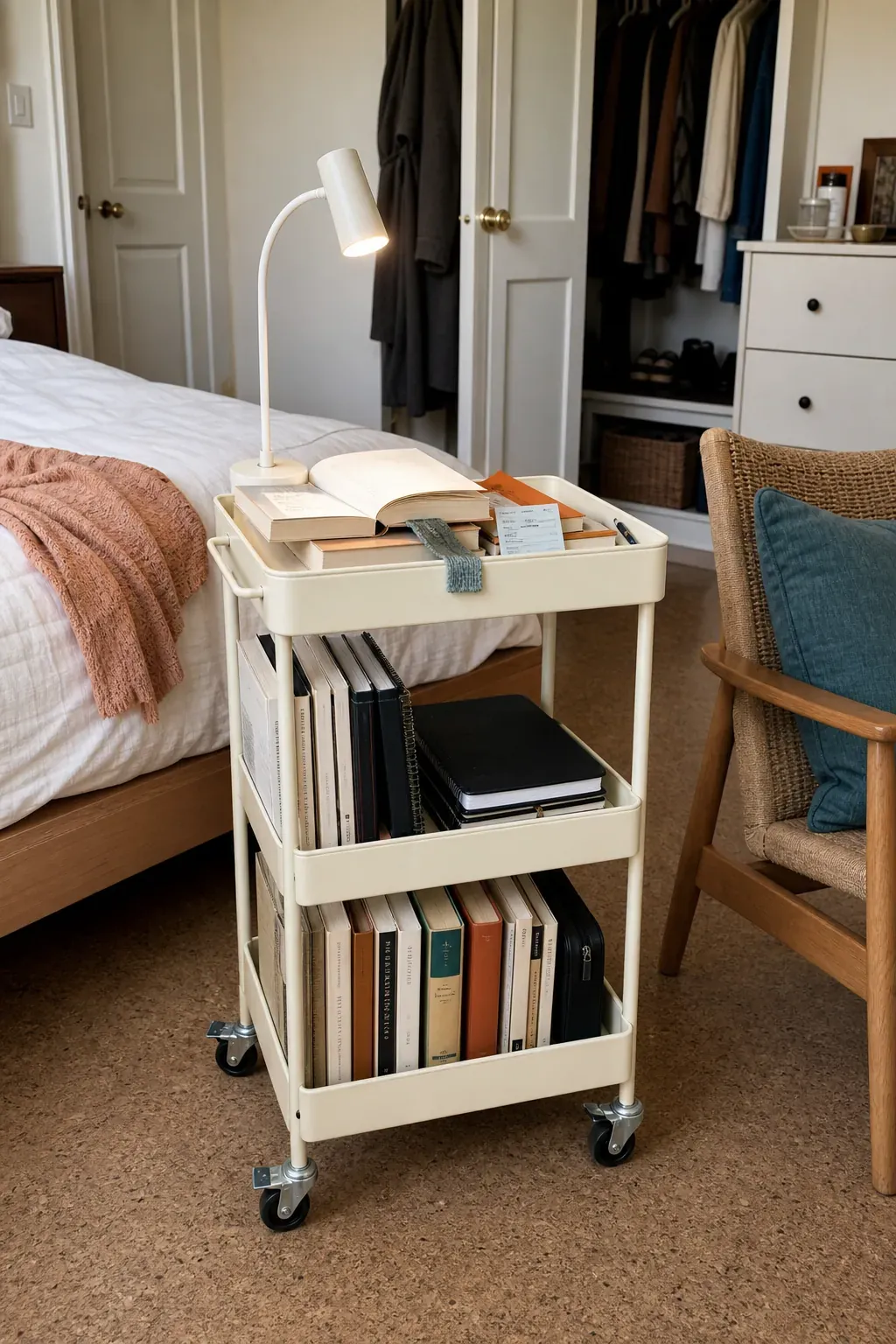
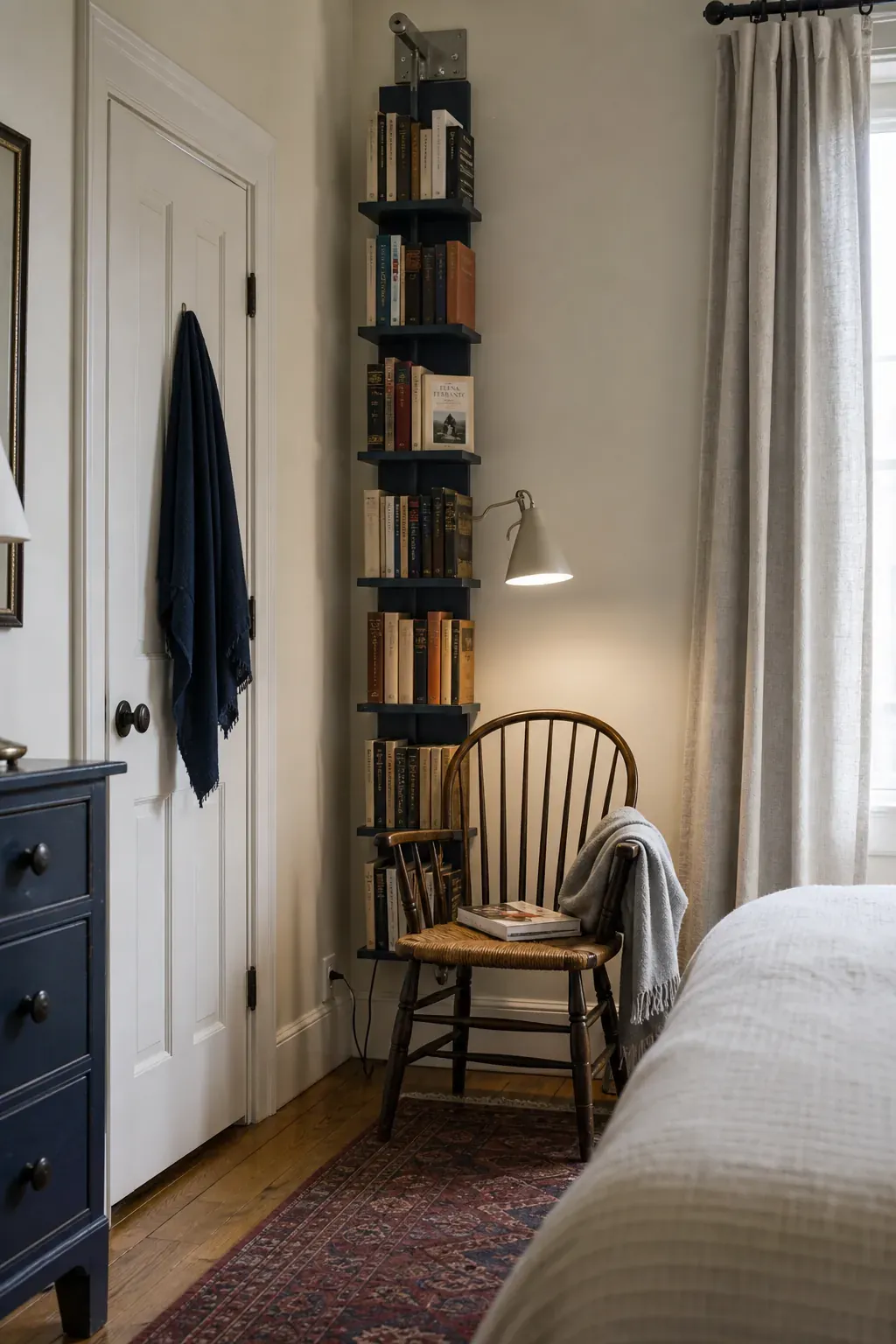
Fit a Slim Book Tower Behind the Chair
A shallow vertical book tower can use the strip of wall behind a chair without widening the reading corner. Put heavier books low and the current selection at shoulder height.
Anchor tall furniture and make sure shelves do not project where a reader’s head will lean. A narrow tower should support the chair, not make the corner feel boxed in.
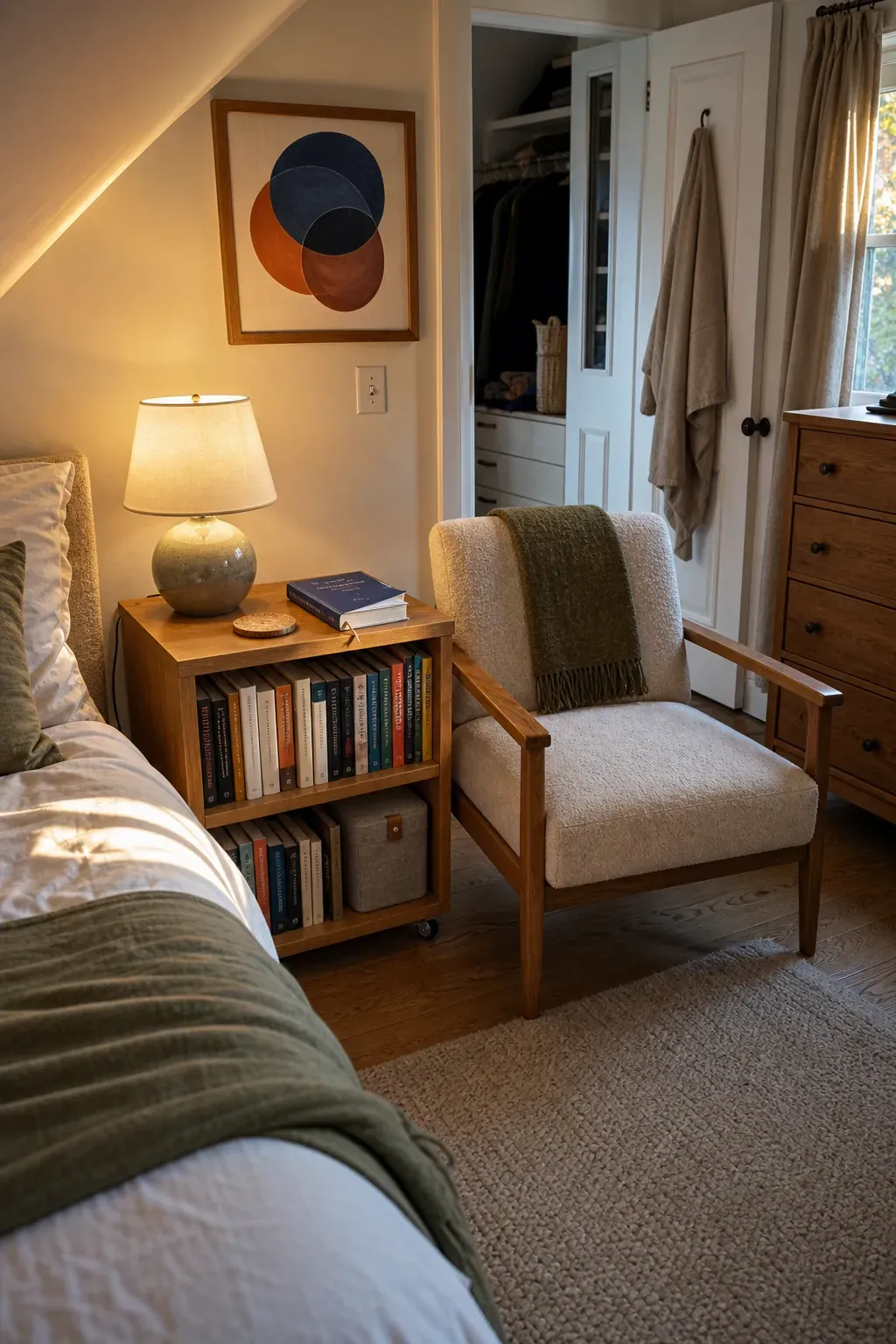
Use the Bookshelf Top as a Side Table
A low bookshelf next to the chair can store books and replace a separate table. Keep the top mostly clear so it remains useful for a lamp, drink, and the book in hand.
Choose a shelf near arm height and use a coaster or tray to contain spills. Closed bins on the bottom can hide bedroom items that would otherwise compete visually with the books.
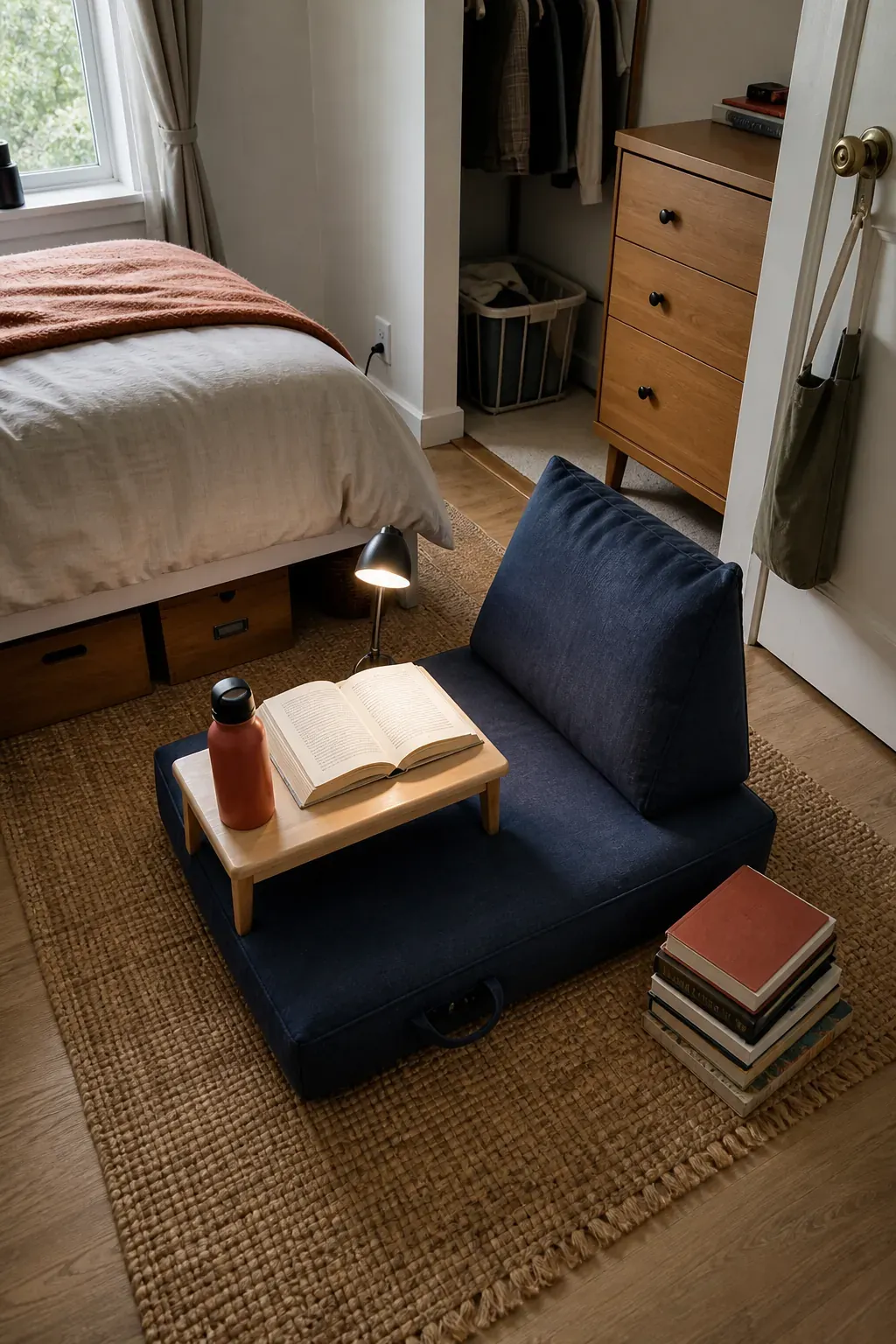
Lay Down One Supportive Floor Cushion
A structured floor cushion can fit where even a small chair would block the walkway. Pair it with a firm backrest against a clear wall and a low tray table, then store it beneath the bed when not in use.
This option works best for readers who can get up comfortably from the floor. Keep outlets, heaters, and door swings clear, and choose washable covers for a setup used at floor level.
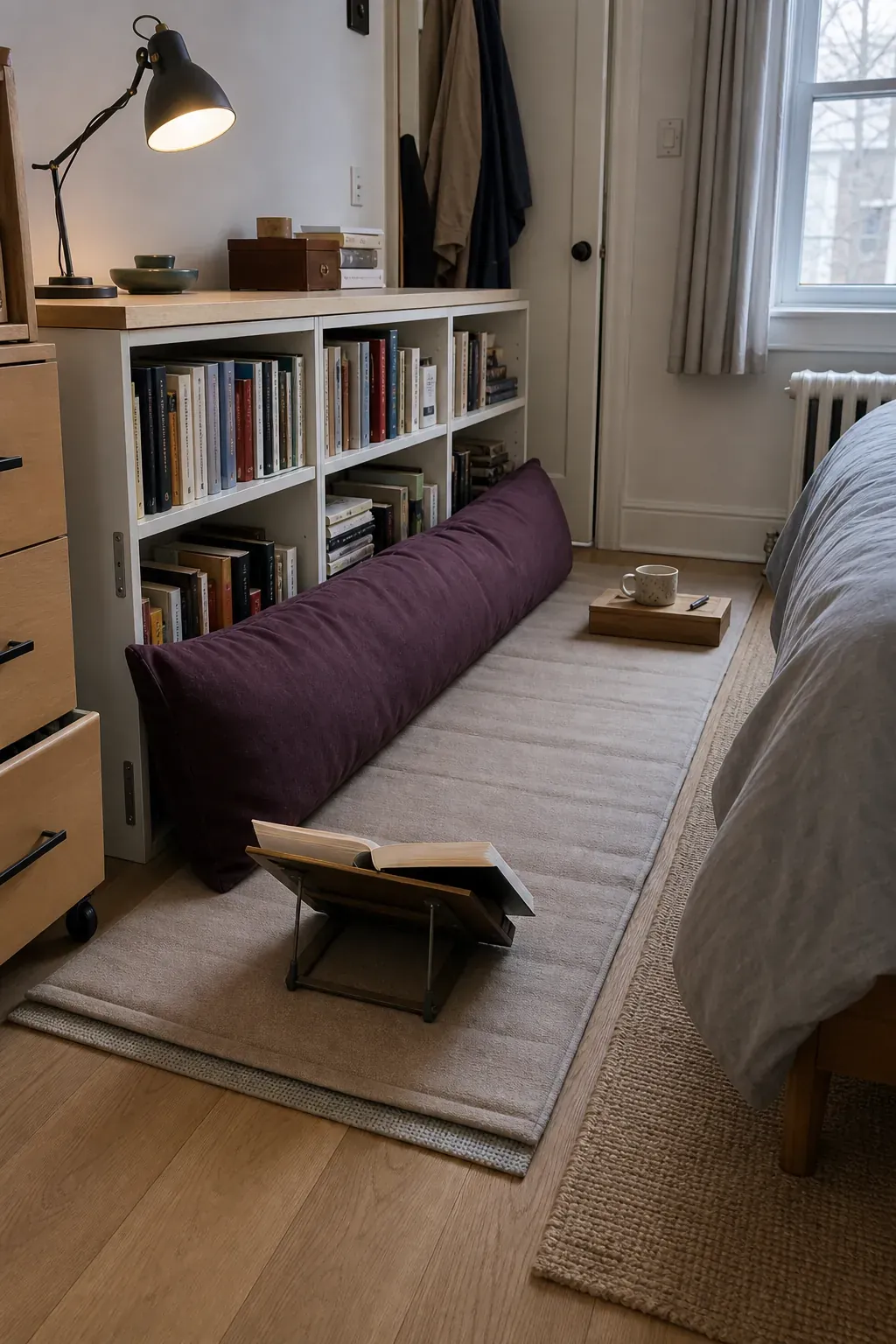
Lean a Pillow Against a Low Bookcase
A sturdy low bookcase can form the back boundary of a floor reading spot when it is anchored and has no sharp projecting hardware. A long firm cushion protects the back while books remain within reach.
Do not lean directly against shelves that can shift or tip. Use a rug pad beneath the floor cushion so the arrangement does not slide as the reader changes position.
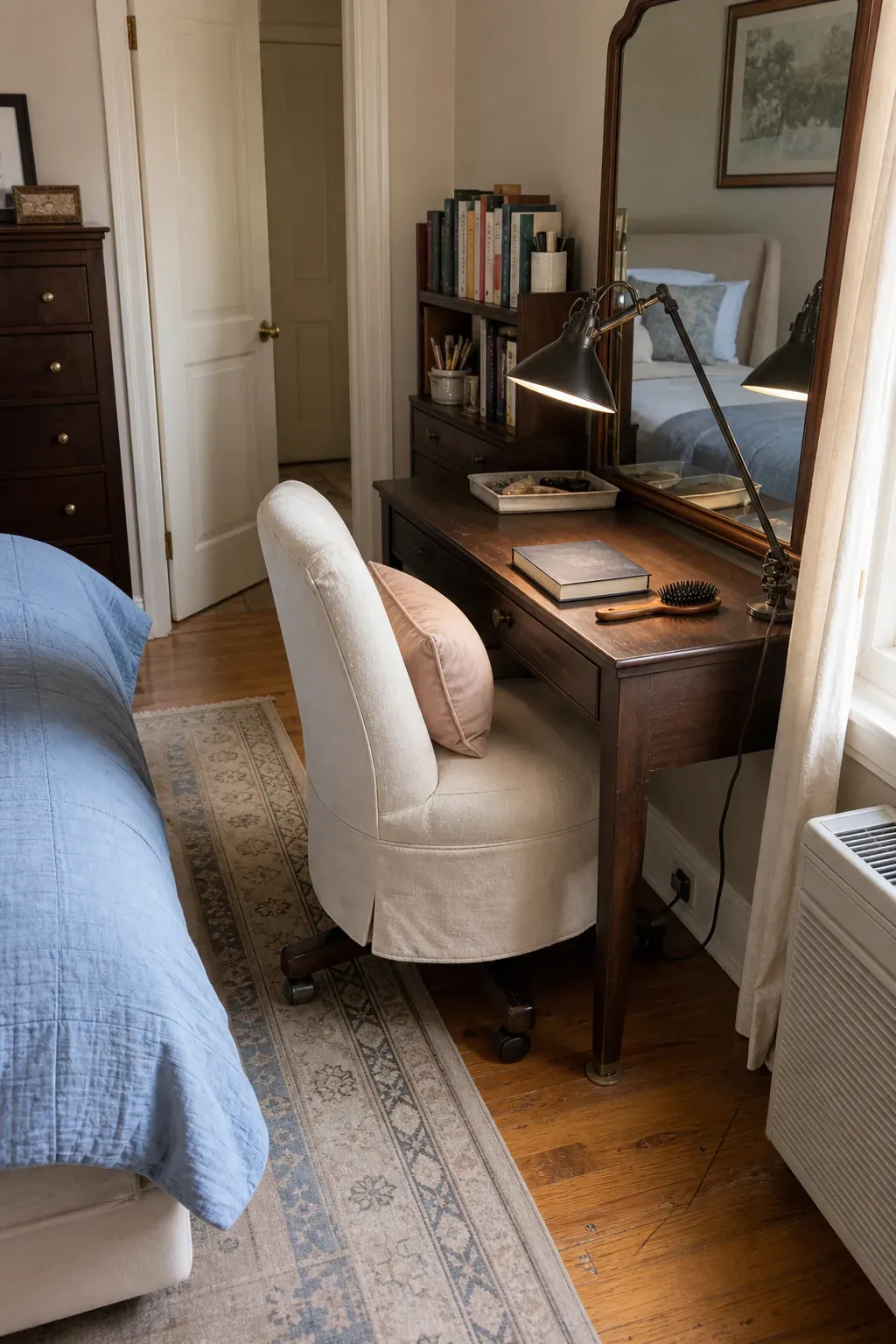
Turn a Vanity Stool Toward the Light
An upholstered vanity stool can become a brief reading perch when it is turned toward a window or lamp. It is not a substitute for an armchair during long sessions, but it makes use of seating already in the bedroom.
Add a small lumbar pillow only if the stool has a back. Keep the vanity surface clear enough to rest a book, and return the stool when the room needs its original function.
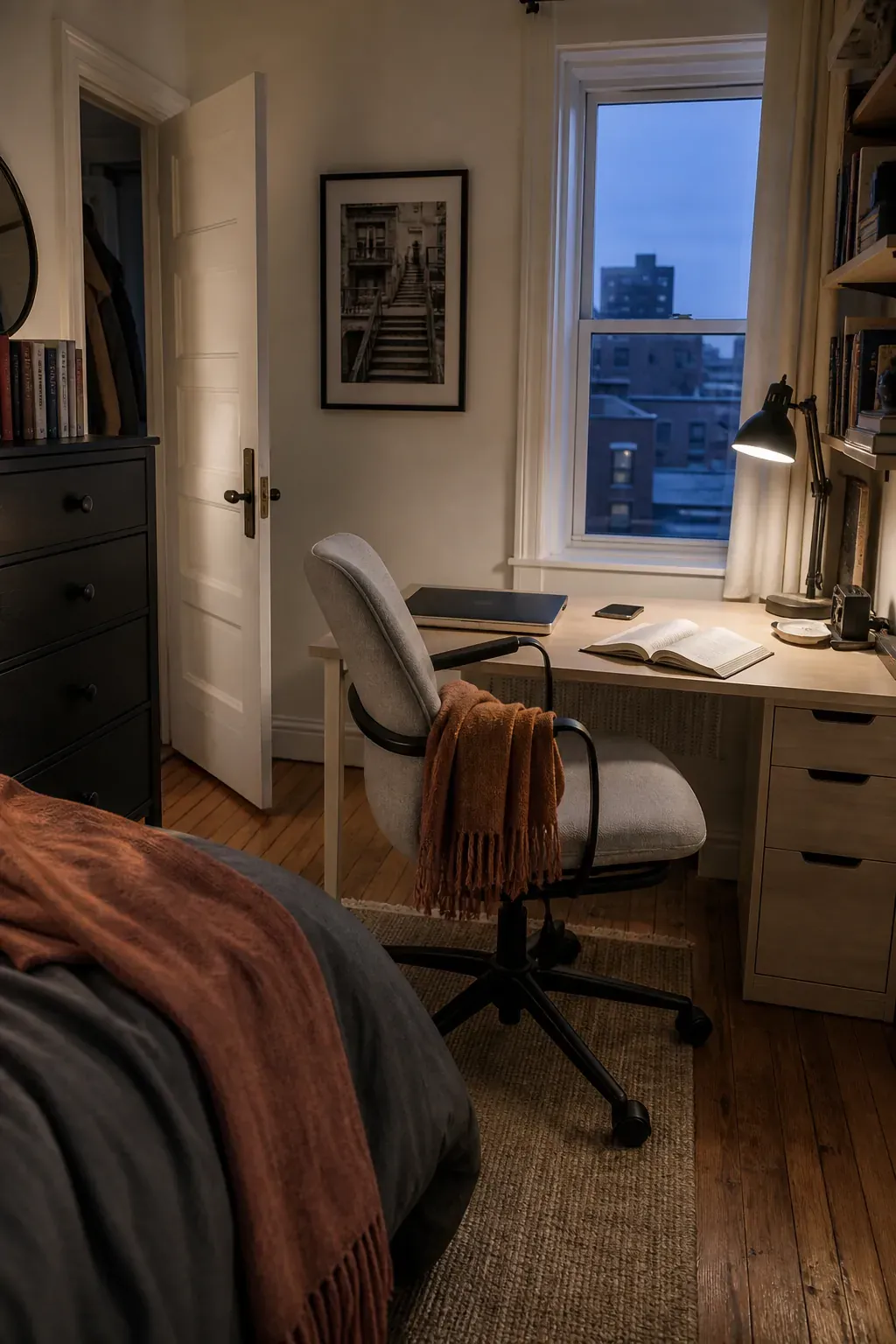
Pull the Desk Chair Into a Reading Position
A comfortable desk chair can serve a second role if it swivels toward a lamp and away from the screen. Store a soft throw nearby and keep the desk edge available as a place for tea and notes.
The key is a deliberate transition: close the laptop, clear the work surface, and change the light. That small ritual lets one chair support both work and rest without adding furniture.
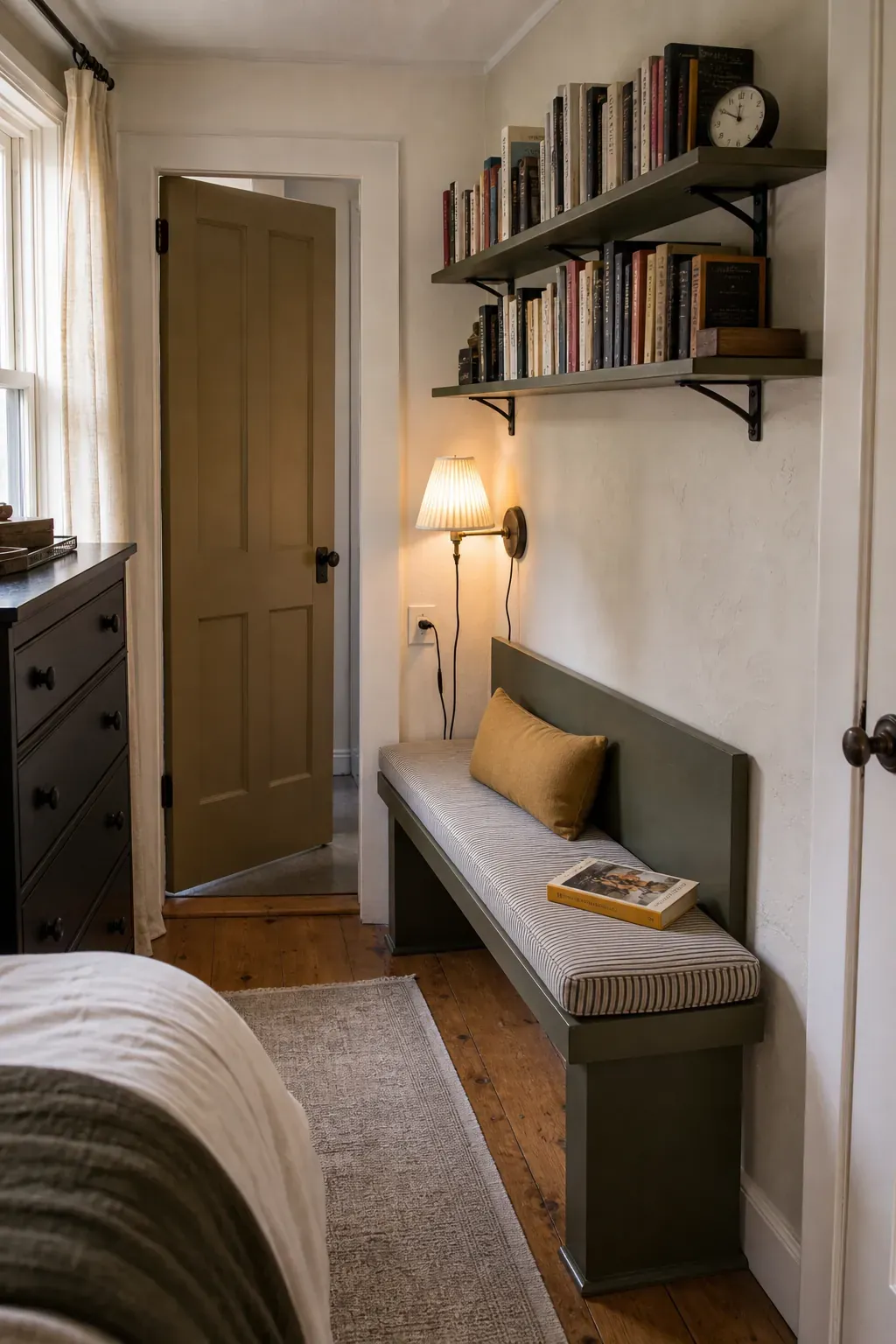
Place a Narrow Bench Under Wall Shelves
A slim backed bench can fit along a wall where a deep armchair would intrude into the bedroom. Shallow shelves above hold a small rotation of books, provided they are mounted safely and do not sit where the reader’s head will strike them.
Use one seat cushion and a supportive lumbar pillow. A plug-in sconce at one end leaves the floor open and defines the bench as a reading zone.
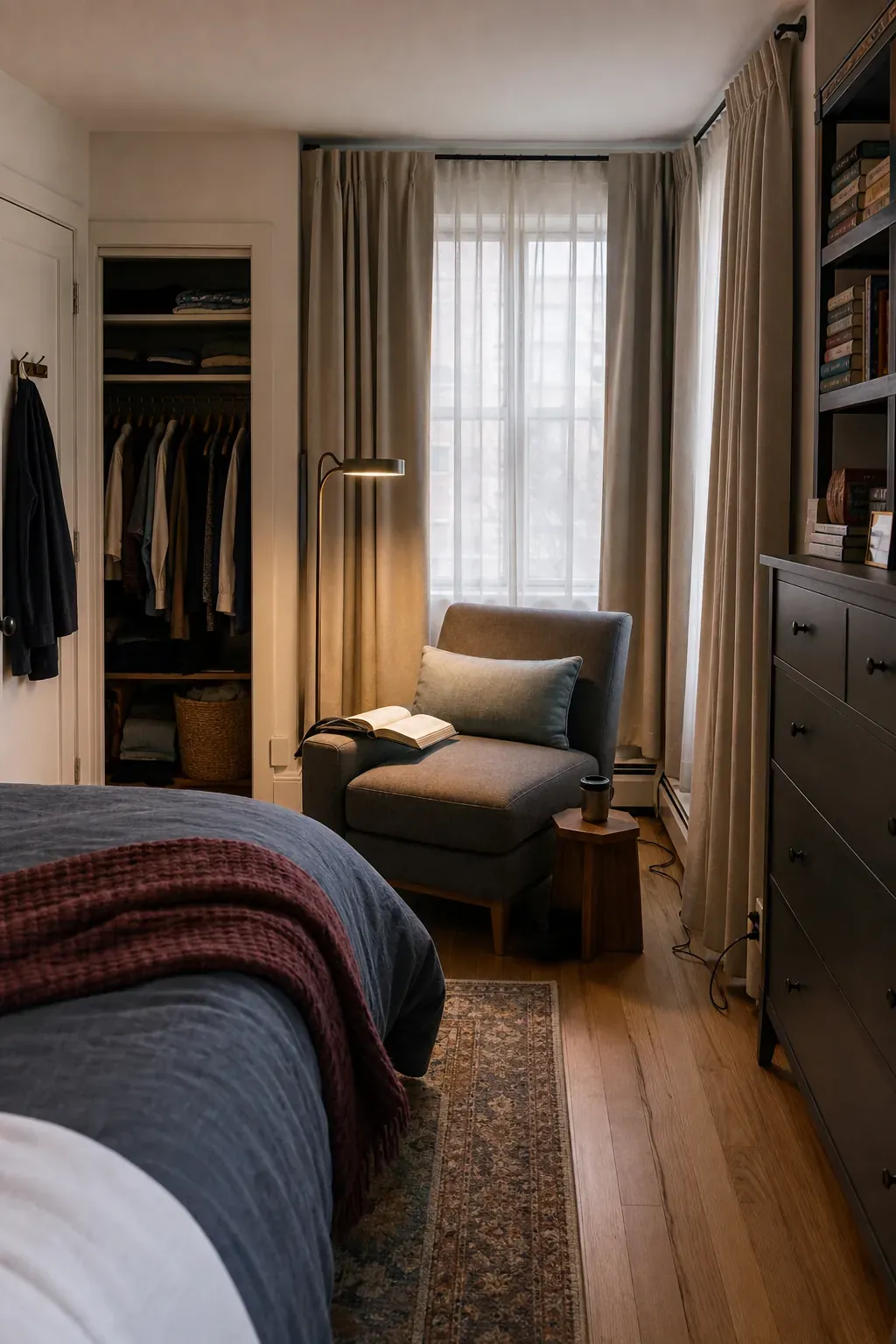
Use Curtains to Soften the Reading Edge
If a chair sits beside a window, full-length curtains can give it a softer visual boundary without adding another object. Hang them so fabric clears the chair, lamp, heater, and floor path.
A lined curtain controls glare and creates a calmer evening atmosphere. It should frame the reading corner, not close it into a cramped fabric enclosure.
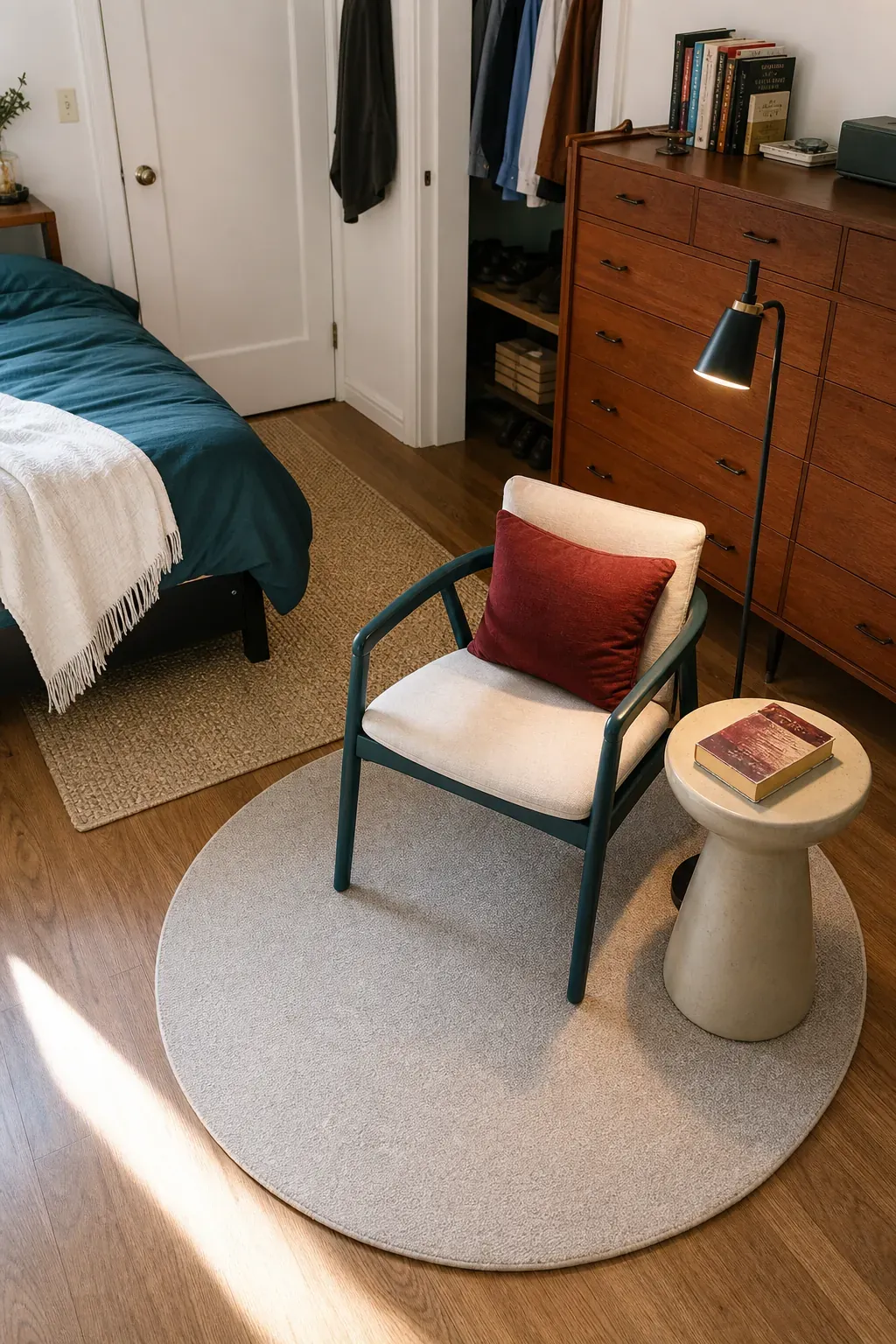
Anchor the Corner With a Small Round Rug
A small round rug can visually collect a chair, lamp, and tiny table without requiring the footprint of a large bedroom rug. Place at least the front chair legs on it so the arrangement feels connected.
Use a nonslip pad and keep the rug edge out of the main route around the bed. A low-pile surface is easier for chair legs and reduces the chance of a turned-up edge.
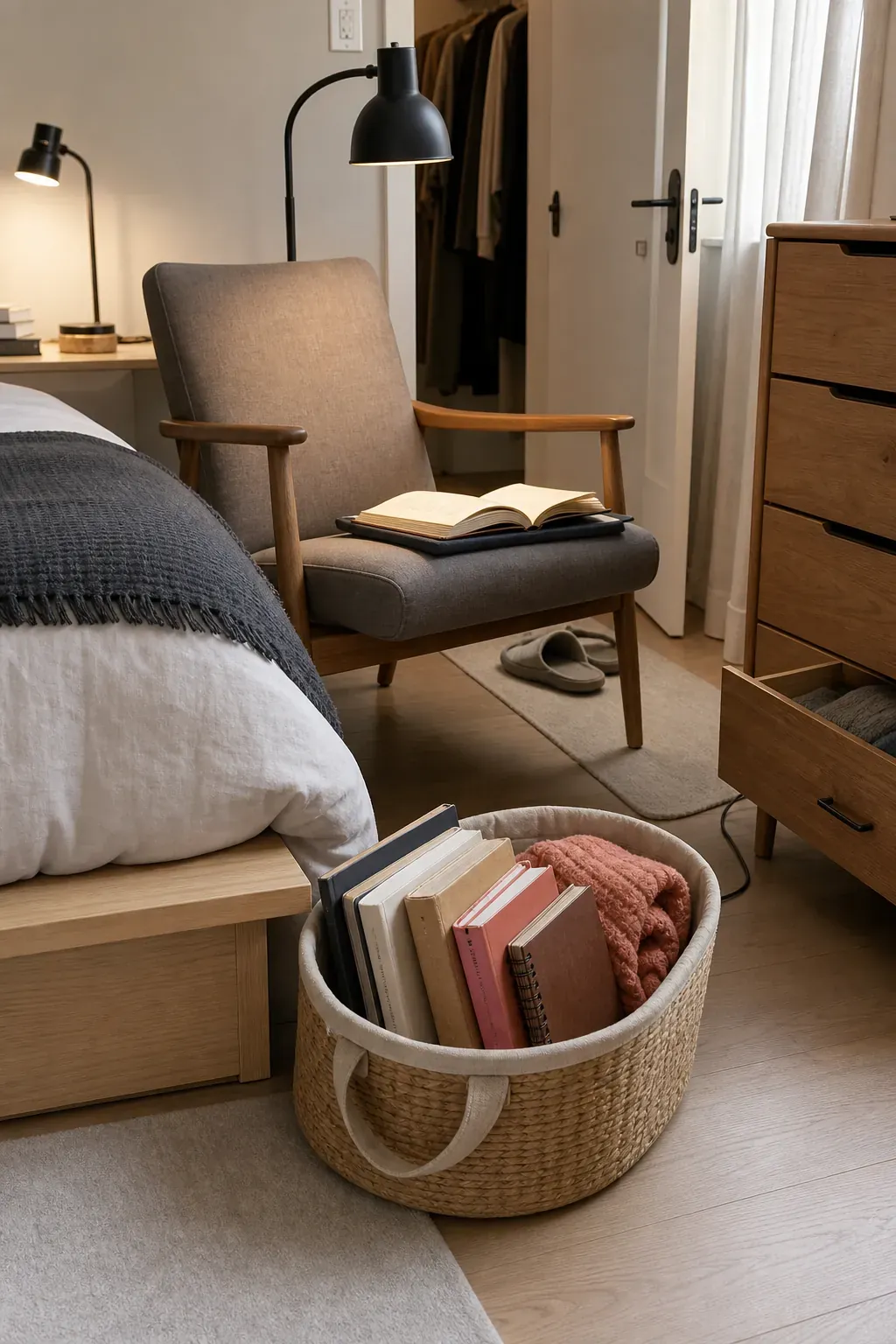
Keep a Bedside Basket of Current Reads
A handled basket can turn the side of the bed into a flexible reading station. Keep only a few current books, a notebook, and a throw inside so it remains light enough to move.
Choose a smooth-lined basket that will not catch book jackets. Place it where it cannot become a nighttime trip hazard, and return finished books to their main storage.
Make the Existing Chair Earn Its Place
The best small bedroom reading corner may be the chair you already own, moved six inches, cleared of clothes, and paired with proper light. Sit in it for twenty minutes before buying accessories. Notice whether the back, arms, and seat depth actually support how you read.
Give the chair one nearby book surface and a repeatable reset routine at bedtime. If it remains a laundry drop, the problem is not missing decor; it is that the chair is uncomfortable or badly placed. Keep only the furniture that makes reading easier and the bedroom more functional every day.