
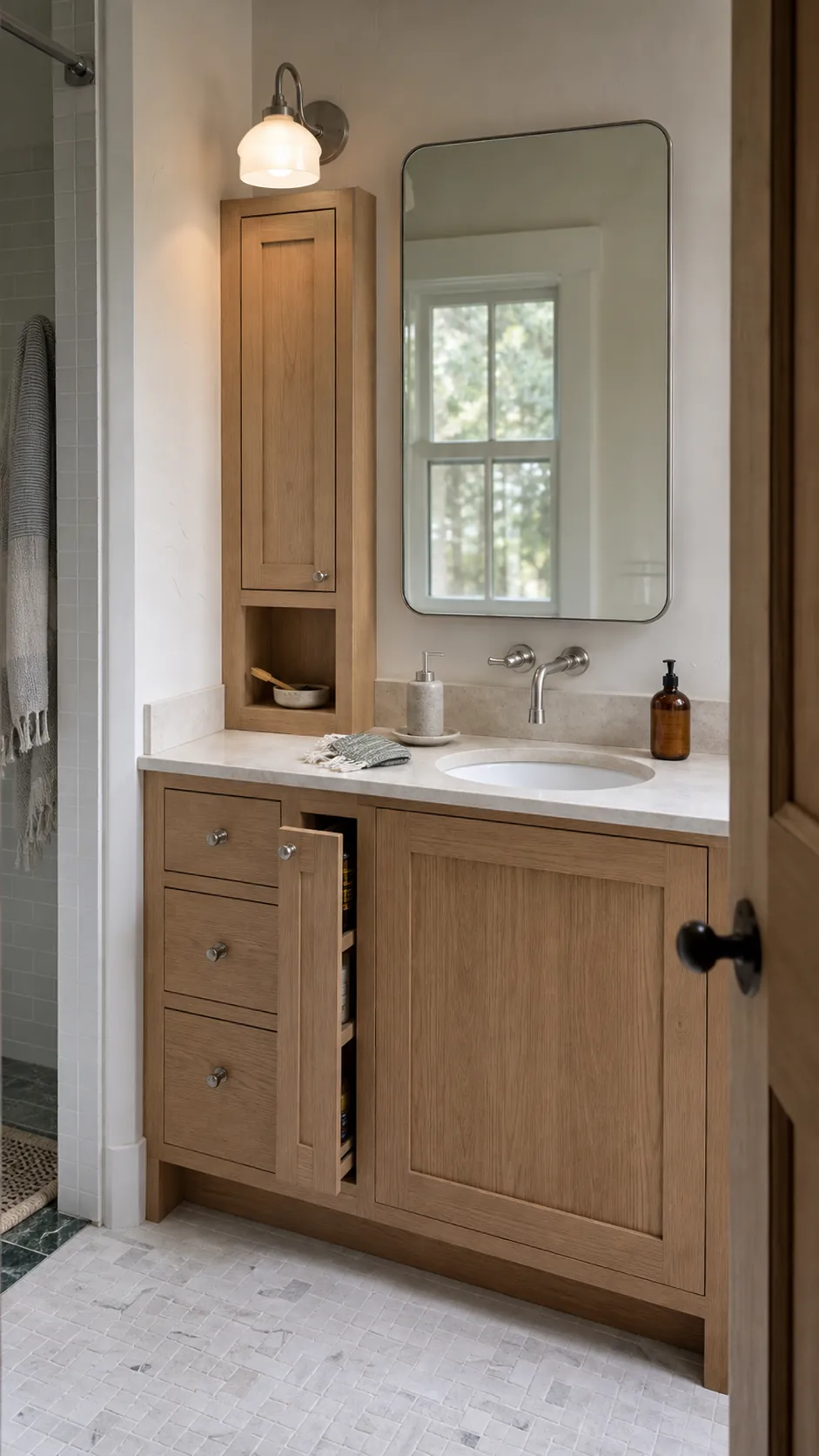
A bathroom vanity can look generous on paper and still feel useless every morning. The problem is usually not the total cabinet volume. It is where the storage sits, how it opens, and whether you can reach it without kneeling around the plumbing. Side storage solves that mismatch by moving small daily items away from the sink trap and into drawers, pullouts, towers, or open ends that are easier to see.
The best layout is not automatically the one with the most doors. It is the one that gives toothbrushes, skin care, towels, hair tools, cleaning supplies, and spare paper products separate homes while preserving a comfortable walkway. These bathroom vanity ideas with side storage show how to make that happen without turning the room into a wall of cabinetry.
Start With the Plumbing, Not the Cabinet Front
Before choosing drawers or a side tower, map the drain, supply lines, shutoff valves, baseboard, outlets, and door casing. Plumbing that enters through the wall is often easier to work around than pipes rising through the floor, but either arrangement can affect drawer depth. A beautiful run of full-depth drawers becomes an expensive mistake if the installer must cut away half of each box.
Measure the vanity wall at the floor, counter, and mirror height because old rooms are rarely perfectly square. Then mark the centerline of the drain and the outer edge of every supply valve. Ask for the cabinet’s interior drawings, not just its exterior dimensions. A side drawer bank, offset sink, or U-shaped top drawer can preserve useful storage while leaving a clean service zone around the trap.
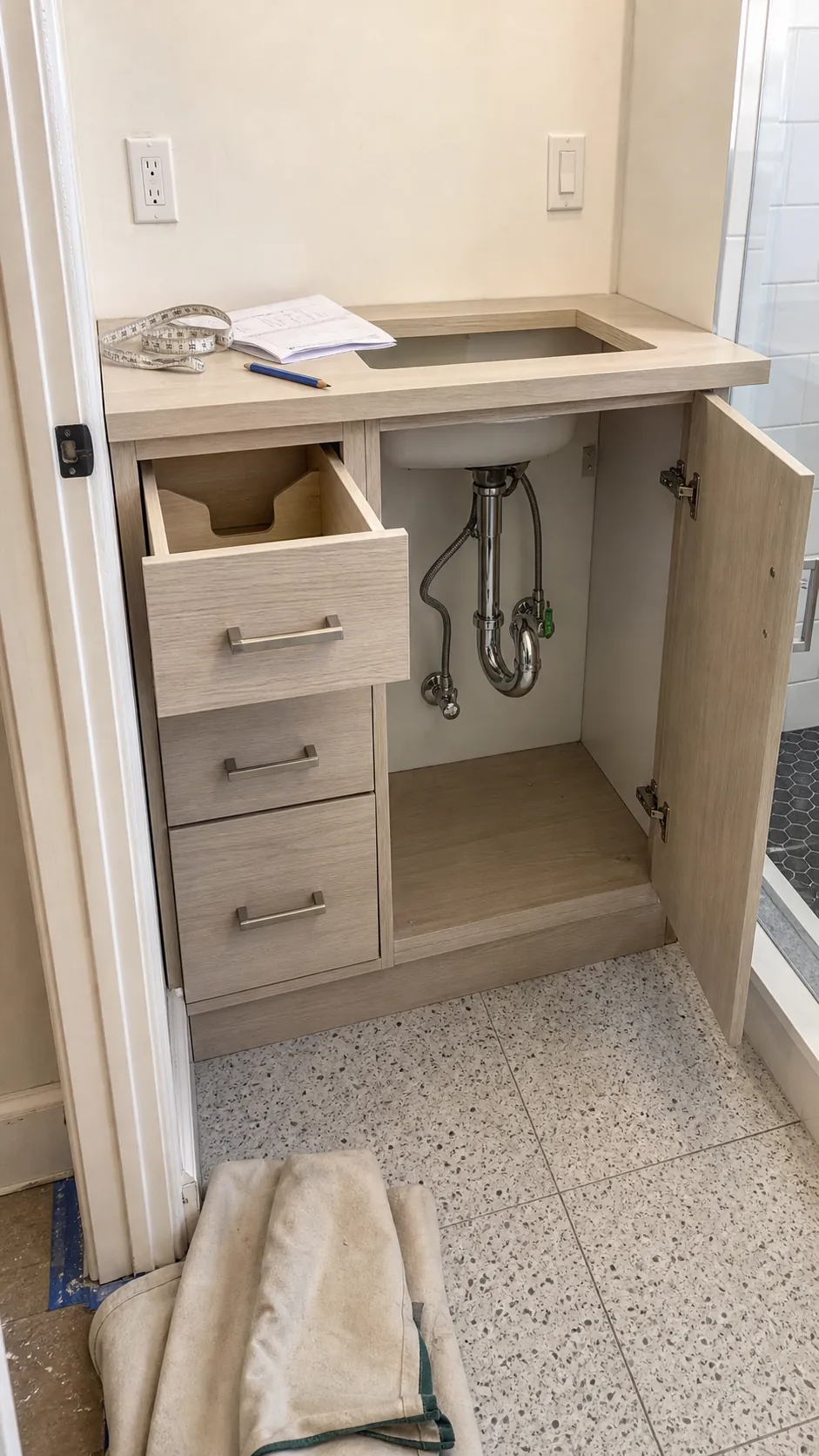
Use a Drawer Bank for Daily-Use Storage
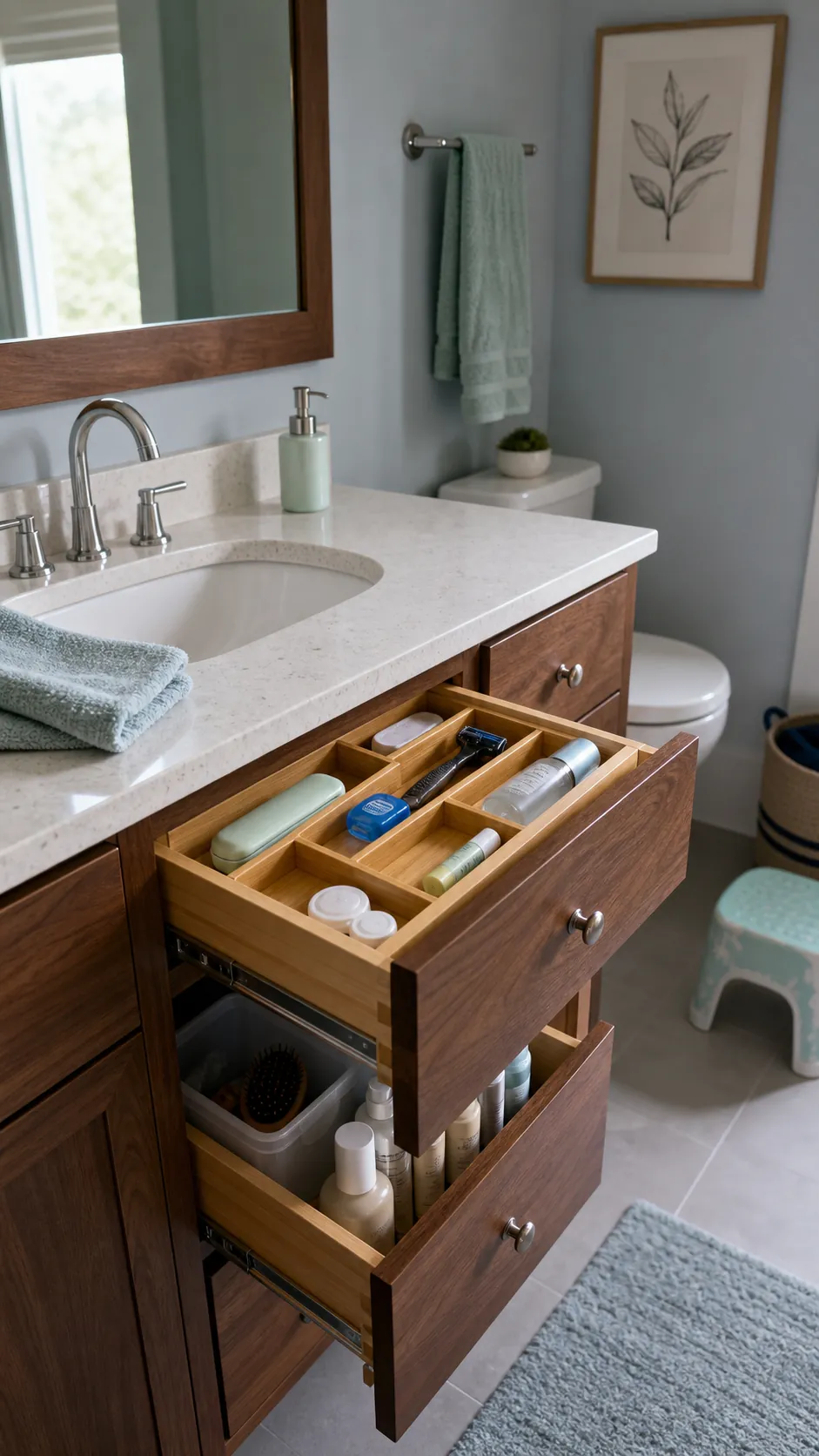
A narrow stack of drawers beside the sink is often more useful than one large under-sink cavity. Shallow top drawers keep makeup, razors, contacts, and toothbrush supplies visible. A medium drawer can hold skin care and hairbrushes upright in small bins. The deepest drawer can take backup toiletries or folded hand towels.
Choose full-extension slides so the back third of the drawer does not become a forgotten zone. Soft-close hardware is pleasant, but the more important specification is weight capacity—especially if bottles, styling tools, or bulk refills will live there. In a shared bathroom, divide drawers by person or routine rather than product type. That reduces the morning shuffle because each person opens one place instead of searching the whole bathroom vanity.
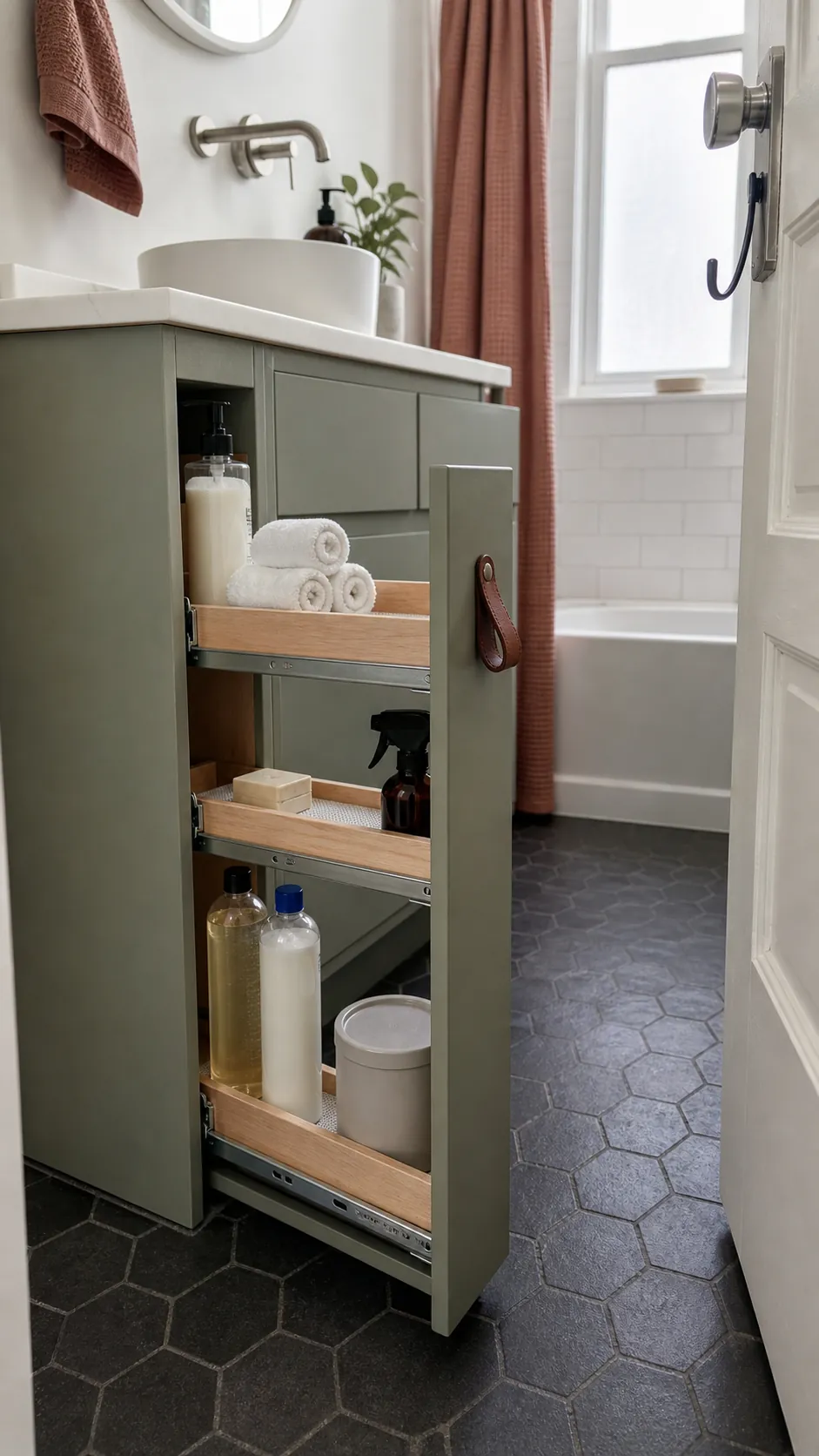
Turn a Slim Side Slot Into a Pullout
When there is only a few inches beside the main cabinet, a vertical pullout can work harder than a decorative filler panel. Narrow shelves bring bottles forward in one motion and stop smaller products from disappearing behind taller ones. It is especially useful for hair products, rolled washcloths, spare soap, and cleaning bottles that are too tall for a shallow drawer.
A pullout needs enough clearance for the handle and adjacent trim, and it should not open into the toilet or bathroom door path. Use restrained categories; packing every shelf makes the mechanism heavy and hard to scan. A slim pullout is best as a purpose-built station, not a miniature junk cabinet. Removable trays or wipeable liners also make leaks easier to manage.
Add a Countertop Tower Without Losing Light
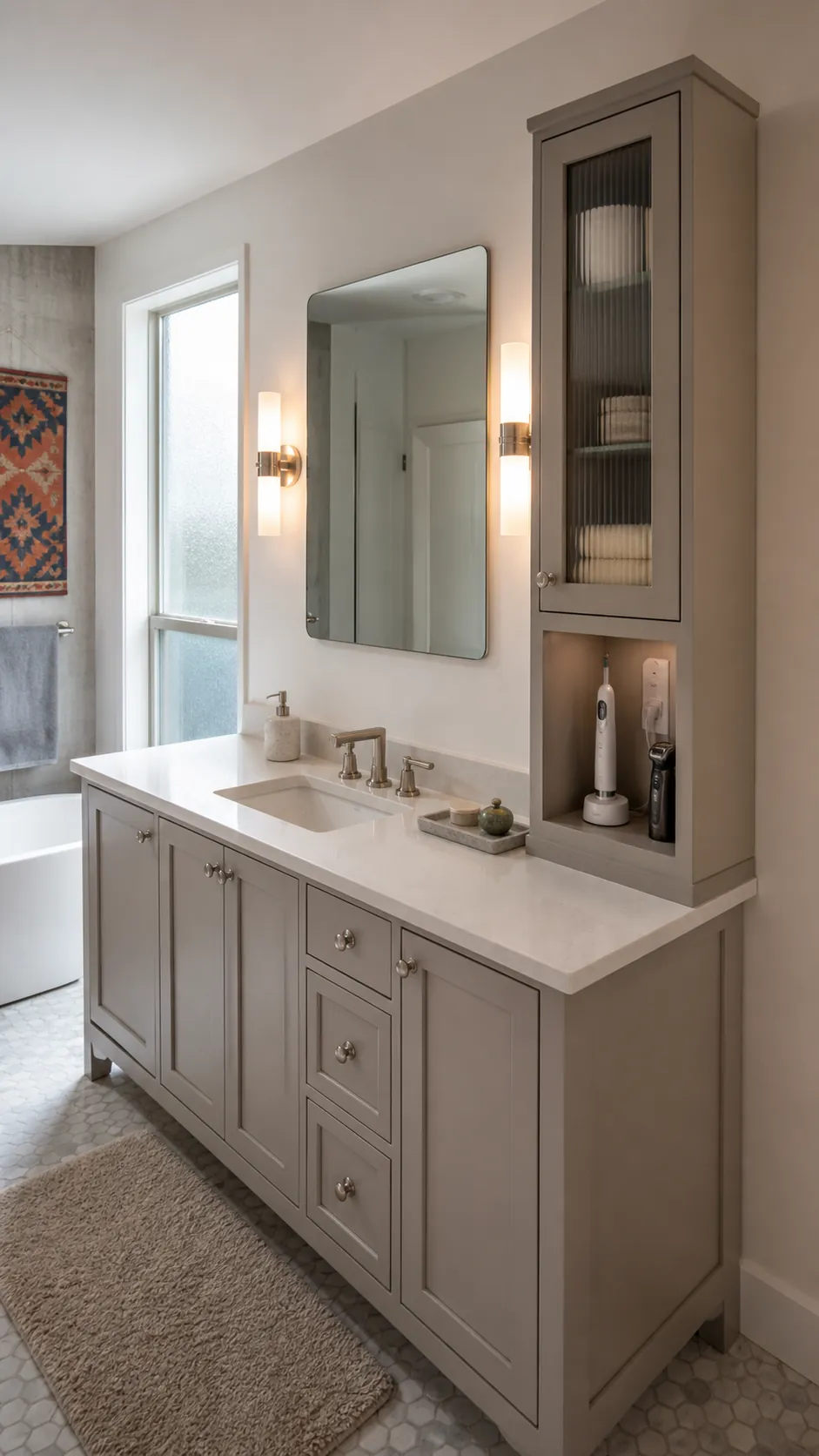
A tower placed at one end of a long vanity adds storage at eye level and can hide electric toothbrushes, shavers, medicines, and hair tools. It works best when the sink is offset and a useful landing zone remains beside the basin. If the tower crowds the mirror or blocks a window, the room may gain cabinets but feel smaller.
Keep the tower shallower than the vanity base so the counter edge remains visible and easy to wipe. An outlet inside can create a charging station, but electrical work in a bathroom must suit local code and the cabinet needs ventilation for warm tools. A light interior finish, glass upper door, or open lower niche can soften the mass while closed shelves conceal visual clutter.
Make an Exposed End Panel Useful
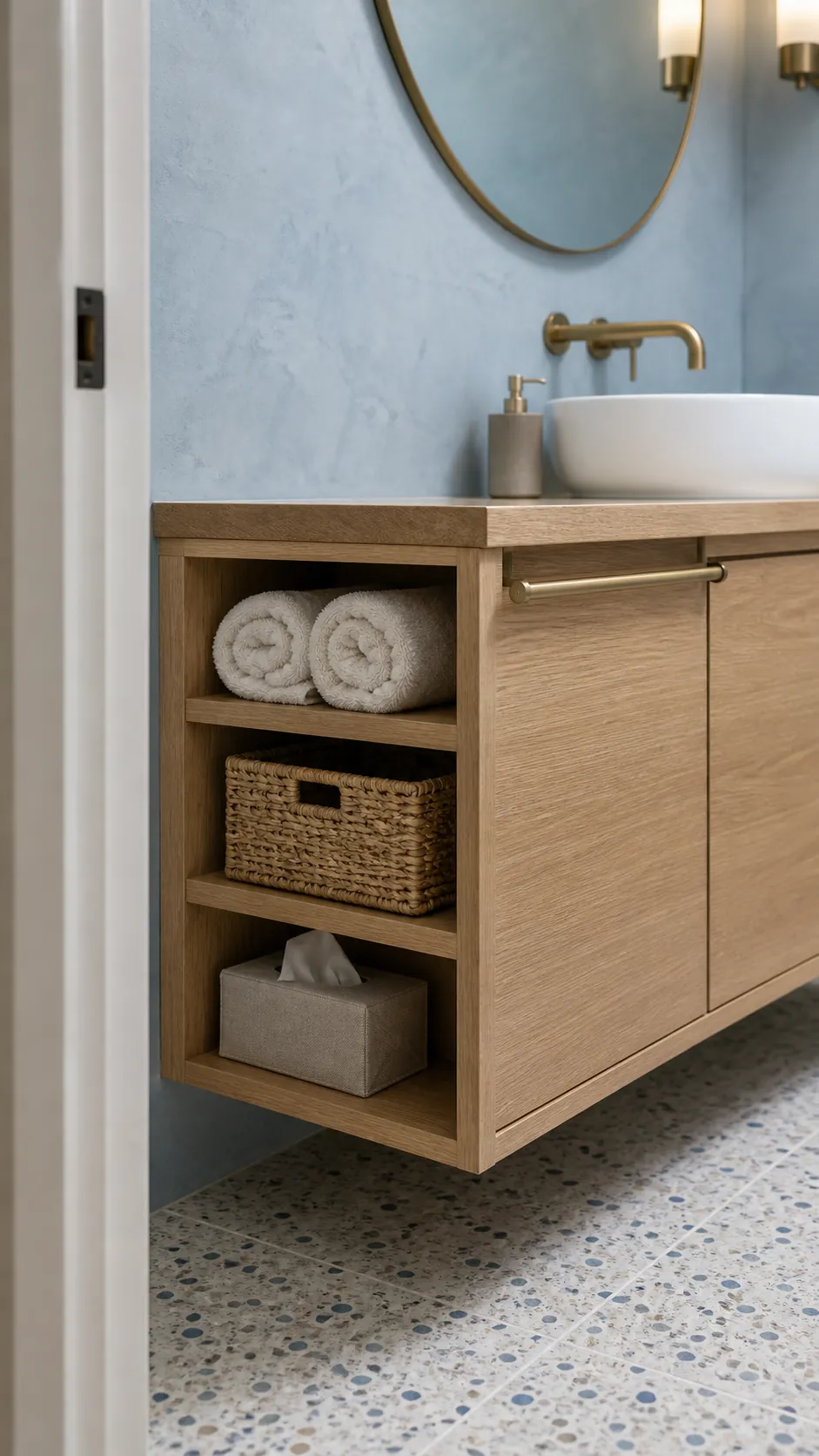
If one end of the vanity faces the room, treat it as usable real estate. Shallow open cubbies can hold rolled hand towels and baskets. A recessed toilet-paper niche, narrow door, or rail for a hand towel can add function without changing the main cabinet footprint. This is particularly effective when a smaller ready-made vanity leaves an intentional side zone.
Open storage should hold only objects that tolerate humidity and look orderly with minimal effort. Keep medicines, loose cosmetics, and cleaning chemicals behind a door. For vanity styling, repeat one or two materials already in the room—a woven basket, warm wood tray, or stone container—rather than filling every shelf with decorative accessories. The end should read as part of the furniture, not an organizer attached afterward.
Bridge a Side Gap With a Freestanding Cabinet
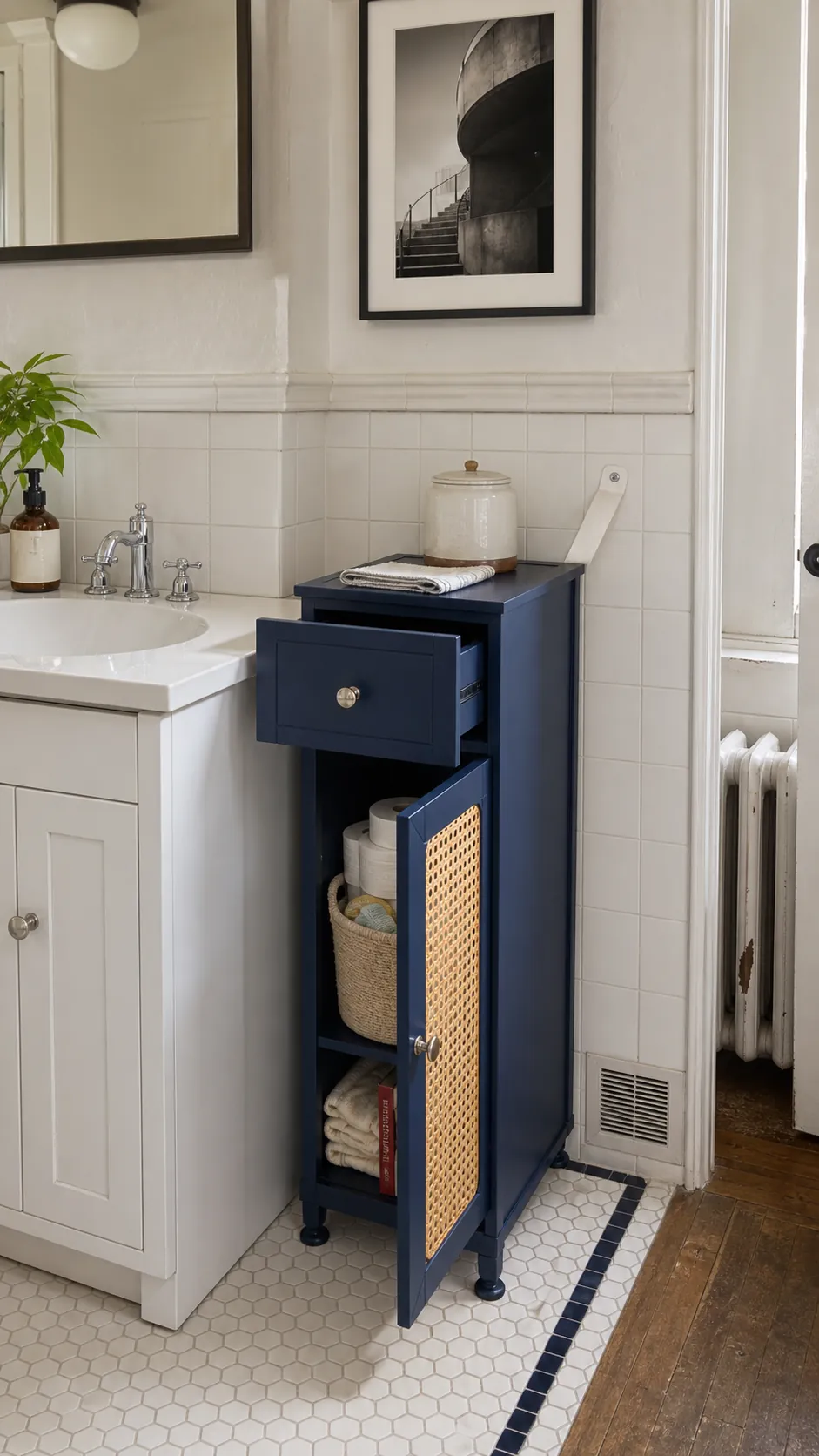
A freestanding side cabinet is the most flexible answer when renovation is not practical or the vanity is already installed. Match the vanity height for an extended counter effect, or choose a taller linen cabinet when vertical storage matters more. A deliberate gap can hold a slim trash bin or hamper, but two accidental slivers on both sides usually collect dust and make the vanity look undersized.
Secure tall furniture to the wall, confirm that drawers and doors clear the vanity hardware, and leave enough space to clean the floor. In a renter bathroom, a narrow metal cabinet or sealed wood unit can provide side storage without altering the sink base. Matching every finish exactly is less important than repeating the room’s undertone and hardware shape.
Choose the Layout That Makes Mornings Easier
Side storage succeeds when it matches a routine. Keep frequently used items between waist and eye level, backups lower down, and occasional supplies higher up. Leave breathing room around the basin so bathroom counter decor never competes with handwashing space. If two people share the vanity, give each a drawer or shelf and reserve one common zone for towels and cleaning supplies.
Before ordering anything, tape the full cabinet footprint on the floor and the tower outline on the wall. Open the bathroom door, stand at the sink, reach toward the proposed storage, and imagine cleaning every edge. That five-minute test exposes cramped clearances faster than a showroom display. The right bathroom vanity with side storage is not the largest one that fits; it is the one whose useful compartments remain easy to open, see, and maintain every day.