
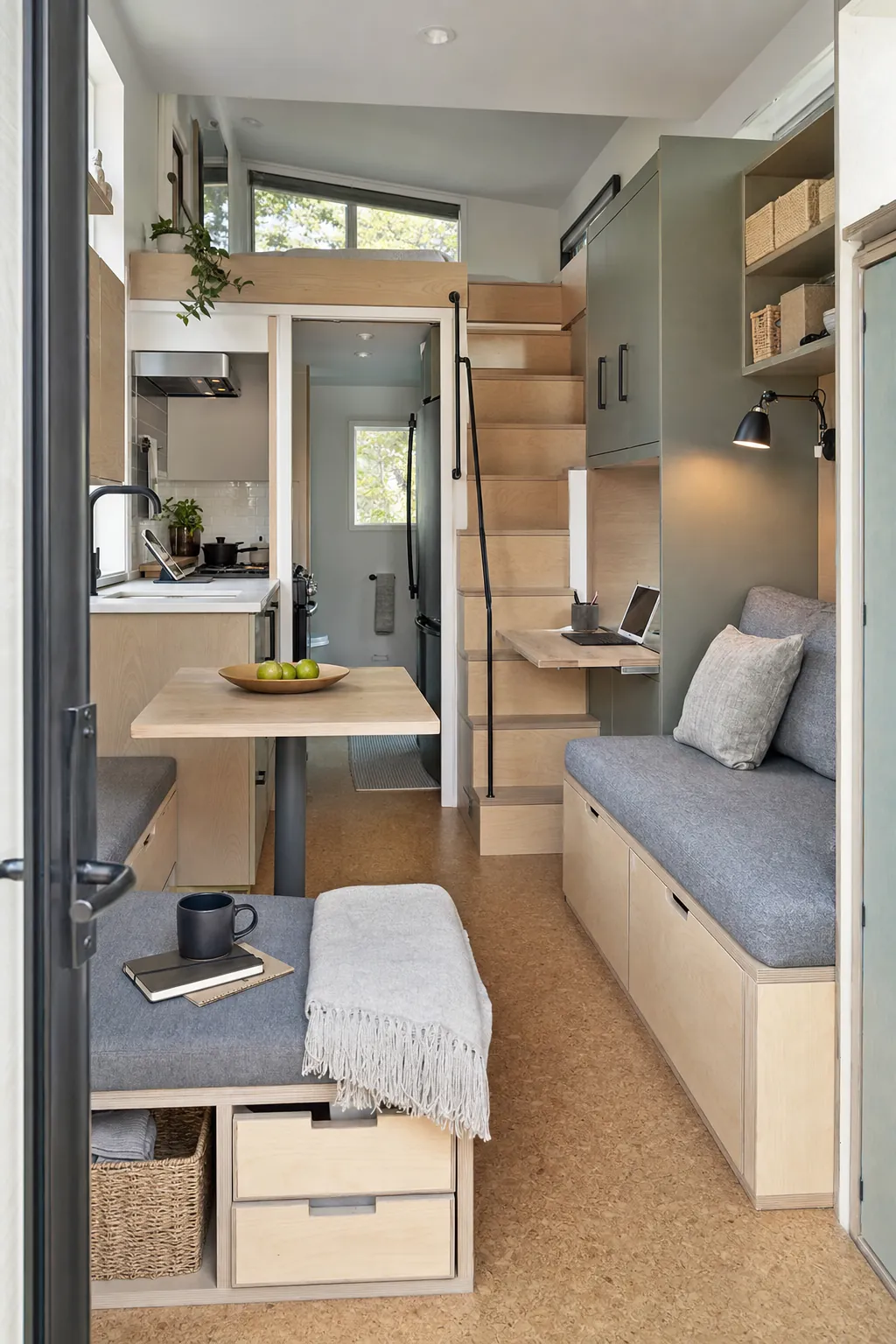
Multi purpose furniture can give a tiny house more useful space, but only when it simplifies daily life. A clever mechanism that takes ten minutes to clear, unfold, and reset is not saving space; it is creating another chore. The best tiny house furniture changes purpose in one or two easy movements and remains comfortable in its main role.
Before buying convertible furniture, list what the room must do every day and what it must do occasionally. Give permanent comfort to daily activities. Let occasional activities borrow space. Then measure every piece both closed and fully operating, including the person using it, nearby doors, and the route through the house.
Build a Storage Bench Into the Dining Zone
A fixed bench uses less pull-back space than dining chairs and can hold bulky items beneath the seat. Pair it with a pedestal table so knees are not trapped by corner legs. Drawers are easier for daily use than a hinged lid covered by cushions; reserve the lift-up section for seasonal linens or guest bedding.
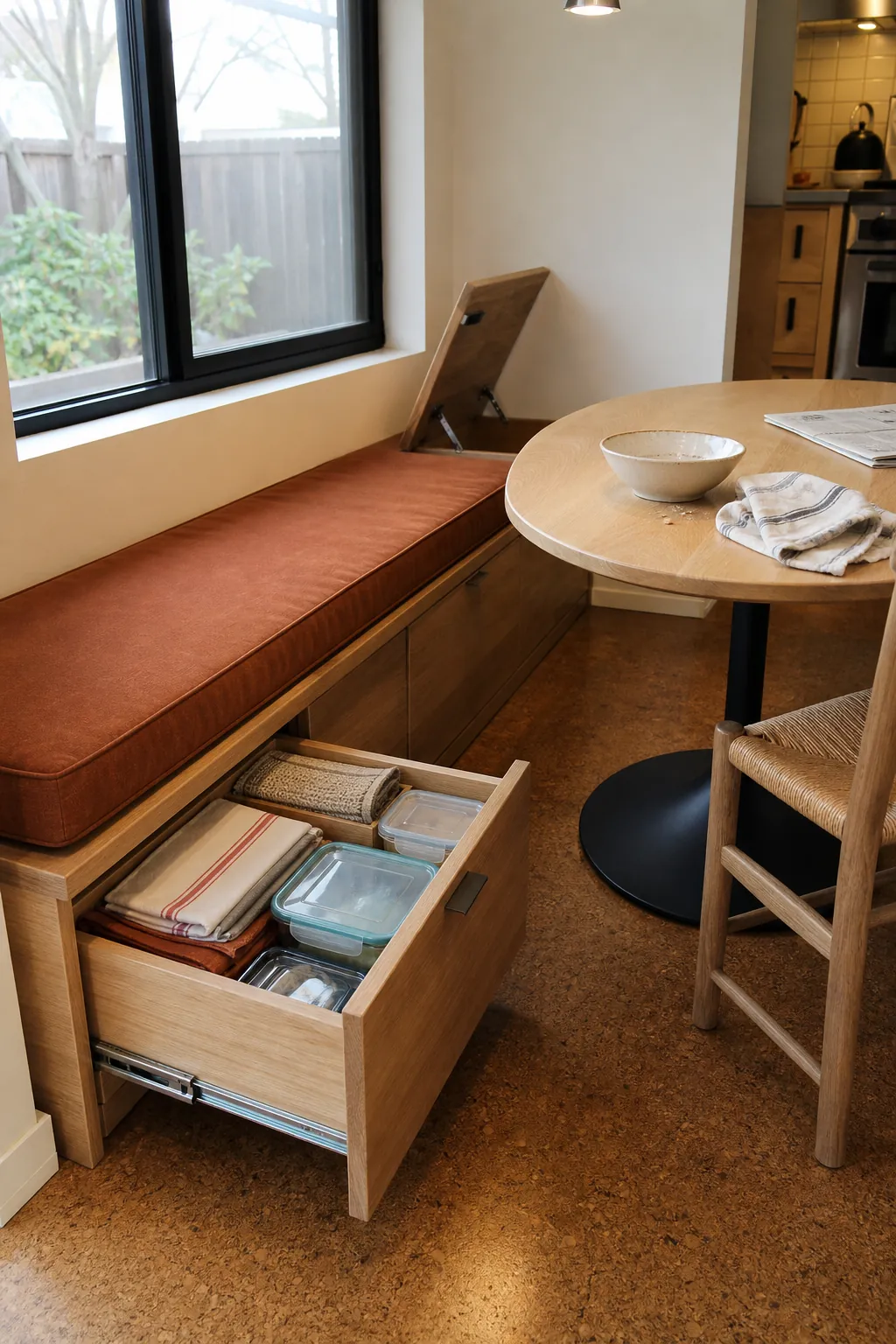
Place the bench against a window or wall where it can remain set up. A removable, washable cushion and finger-safe drawer hardware make this storage furniture suitable for daily meals rather than occasional staging.
Use a Wall Desk That Stays Ready to Work
A fold-down desk is valuable when it closes with the essentials still connected. Include a shallow upper cabinet for the laptop, notebooks, and charger, plus cable routing to a nearby outlet. Choose a surface deep enough for comfortable forearm support and a bracket rated for real working weight.
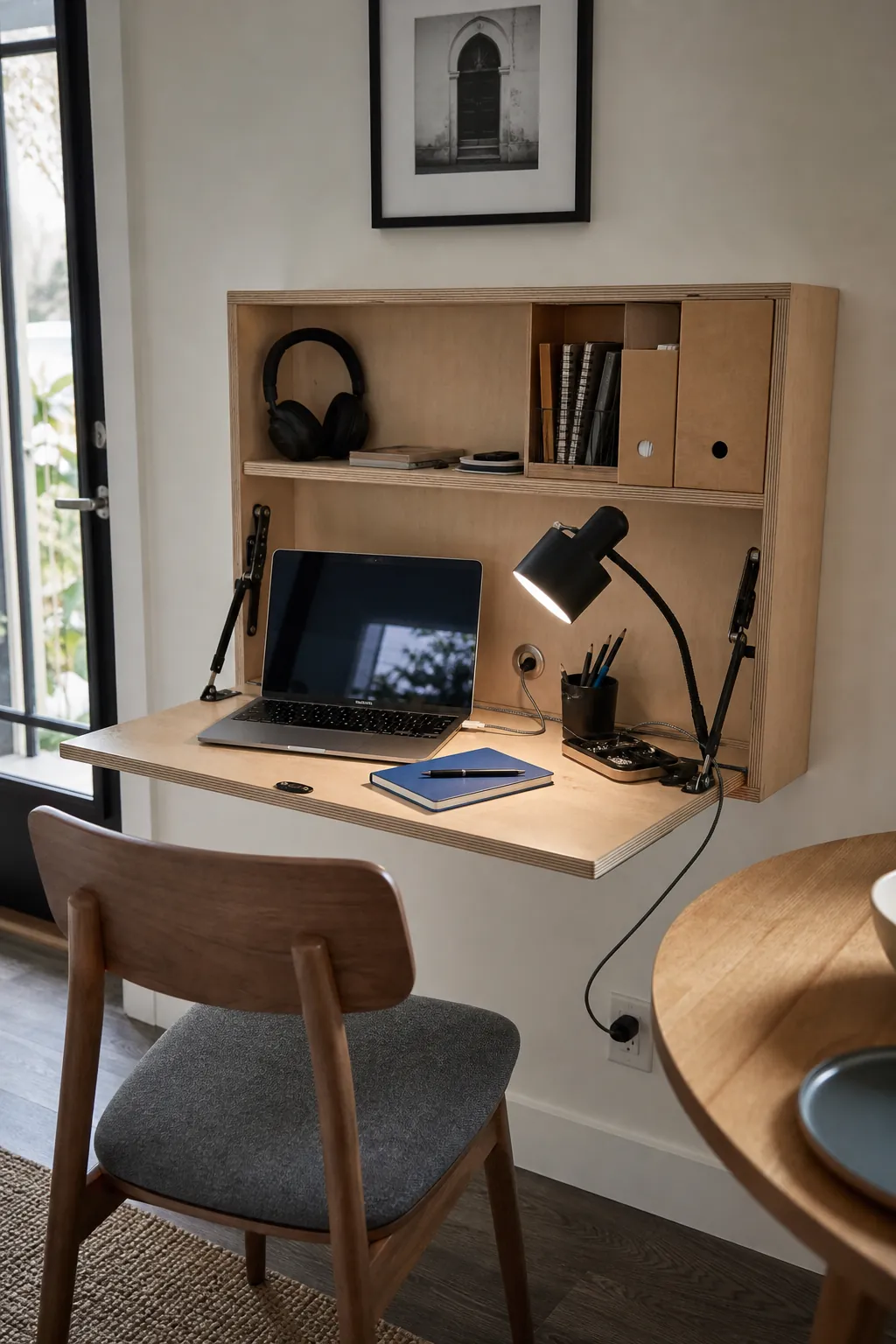
Mount it beside a chair that already serves the dining table instead of storing a special office chair. The desk should close in under a minute; otherwise work will migrate to the kitchen counter.
Choose a Sofa With Accessible Drawers
Under-seat storage works best when a drawer opens from the aisle. Deep lift-up sofa compartments are inconvenient beneath blankets, cushions, or a sleeping guest. Use accessible sections for games, cables, and throws, and ensure the seat remains supportive enough for everyday relaxation.
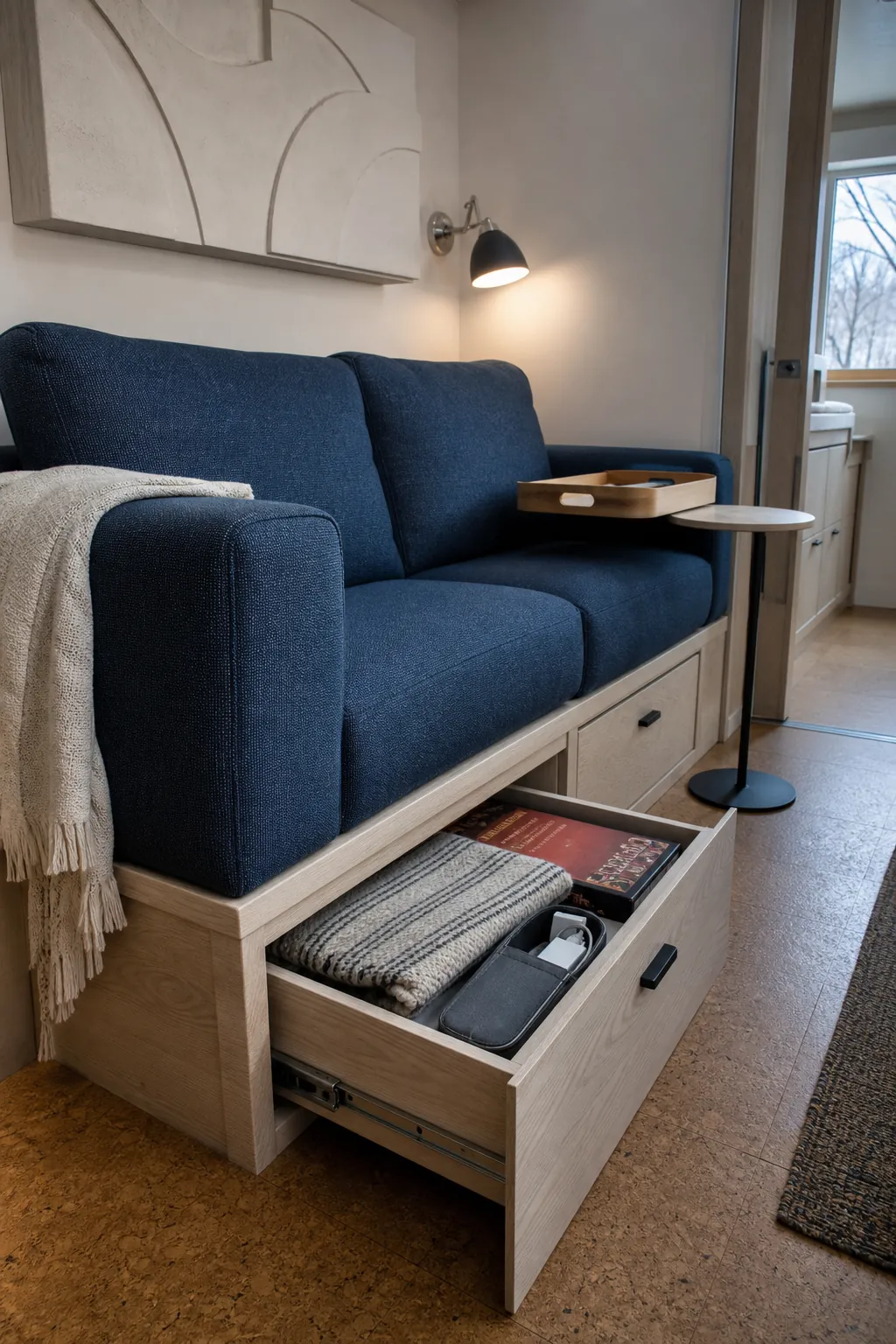
If the sofa converts to a guest bed, tape its open footprint on the floor. Confirm that the bathroom remains reachable and the exterior door can still open. An occasional bed should not disable the whole home.
Turn the Staircase Into Reachable Storage
Storage stairs can replace a separate dresser or pantry, but safety comes first. Keep tread dimensions consistent, add a secure handhold, and avoid handles that catch toes. Put heavy or frequently used objects in the lowest drawers and lightweight seasonal items higher up.
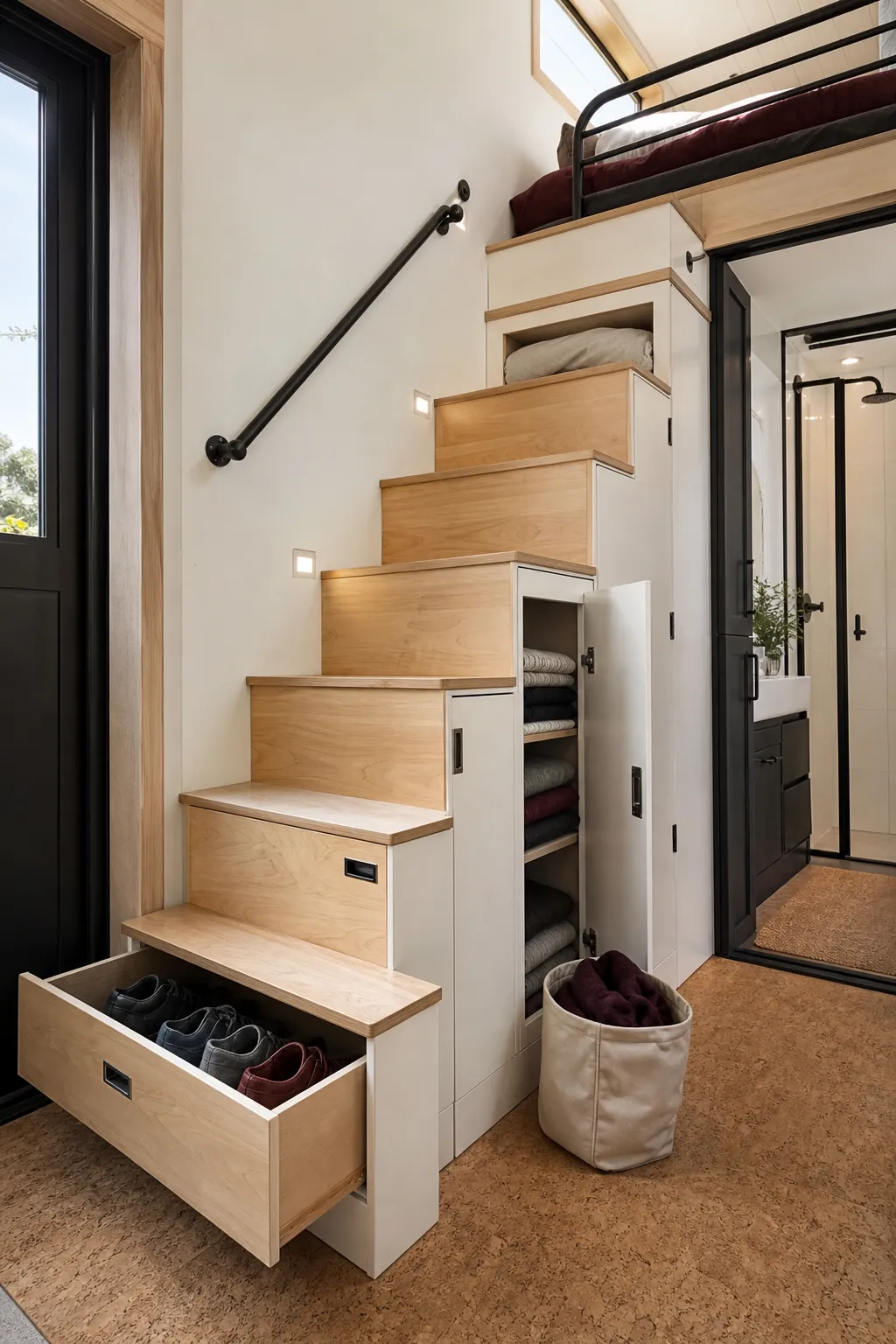
Give each compartment one purpose. Mixed deep cavities become forgotten clutter. Shallow drawers for shoes, tools, or folded clothes are easier to see and maintain.
Add a Pull-Out Counter Only Where It Has Clearance
A pull-out kitchen surface can create a prep station or breakfast perch, but it needs empty space in front. Install it at a point where an open surface does not block the refrigerator, sink, or main route. Use full-extension hardware, a positive stop, and material that tolerates spills and heat.
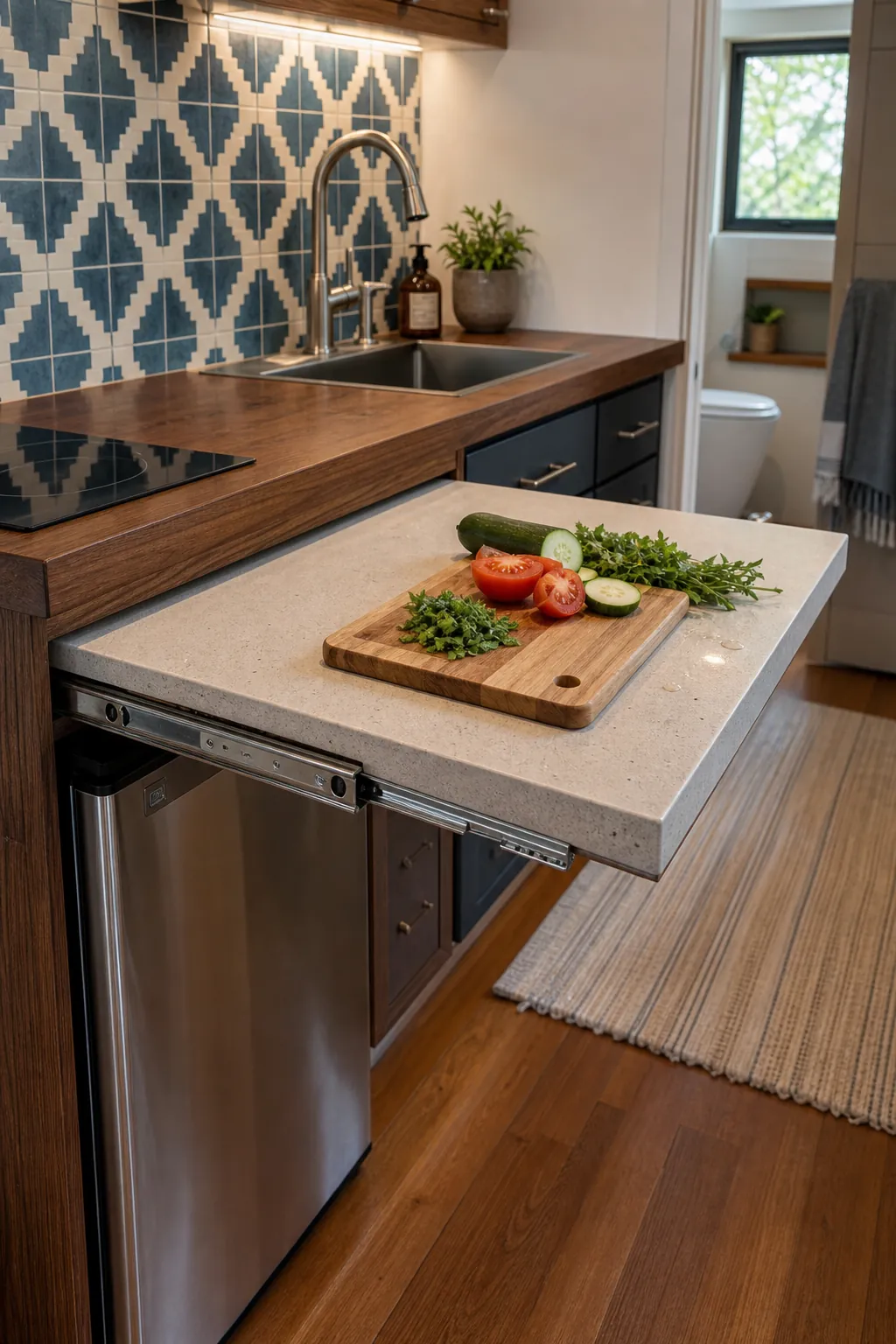
Do not count the extension as permanent countertop space. The kitchen still needs a small landing area available when the pull-out is closed and dishes are waiting.
Let an Ottoman Handle the Occasional Jobs
A light storage ottoman can be a footrest, extra seat, side table with a tray, or temporary laundry surface. Because it moves easily, it can support the unusual moments without permanently consuming a large footprint.
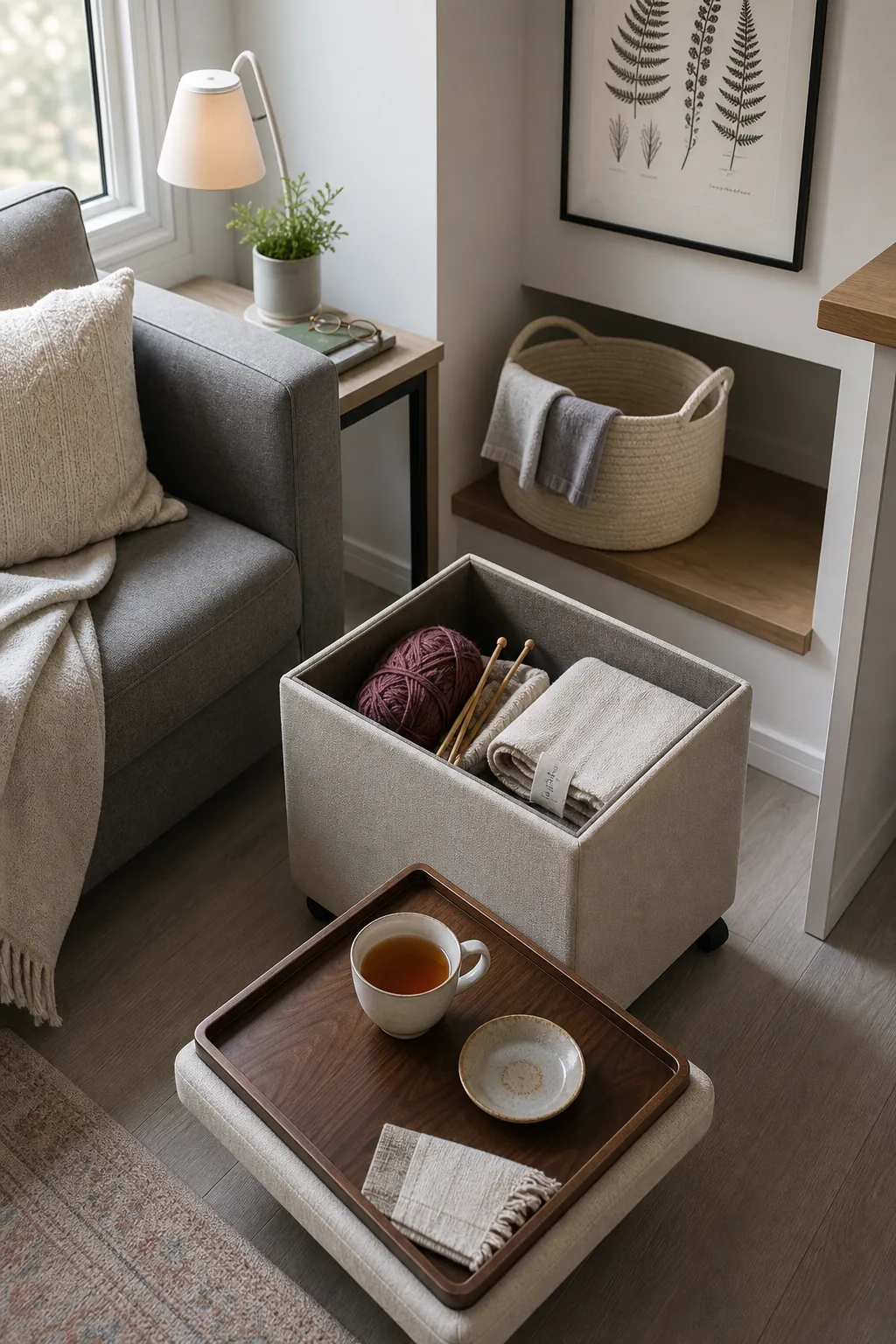
Keep it small enough to tuck beneath a table or stair landing and light enough for one person to move. A flat, firm lid is more versatile than a deeply tufted top.
Test Every Transformation Before You Commit
Mock up each item with boxes and painter’s tape. Open the drawer, pull out the chair, lower the bed, and stand where the user must stand. Check outlets, baseboards, window handles, and door swings. Add the weight of stored objects to the effort required.
Then ask one hard question: would you perform this change on a tired weekday? If the answer is no, choose a simpler piece. Good multi purpose furniture makes compact living feel effortless because its secondary function is always nearby, easy to reach, and quick to reverse. The goal is not to make every object perform three tricks. It is to let a few well-chosen pieces remove the need for several others.