
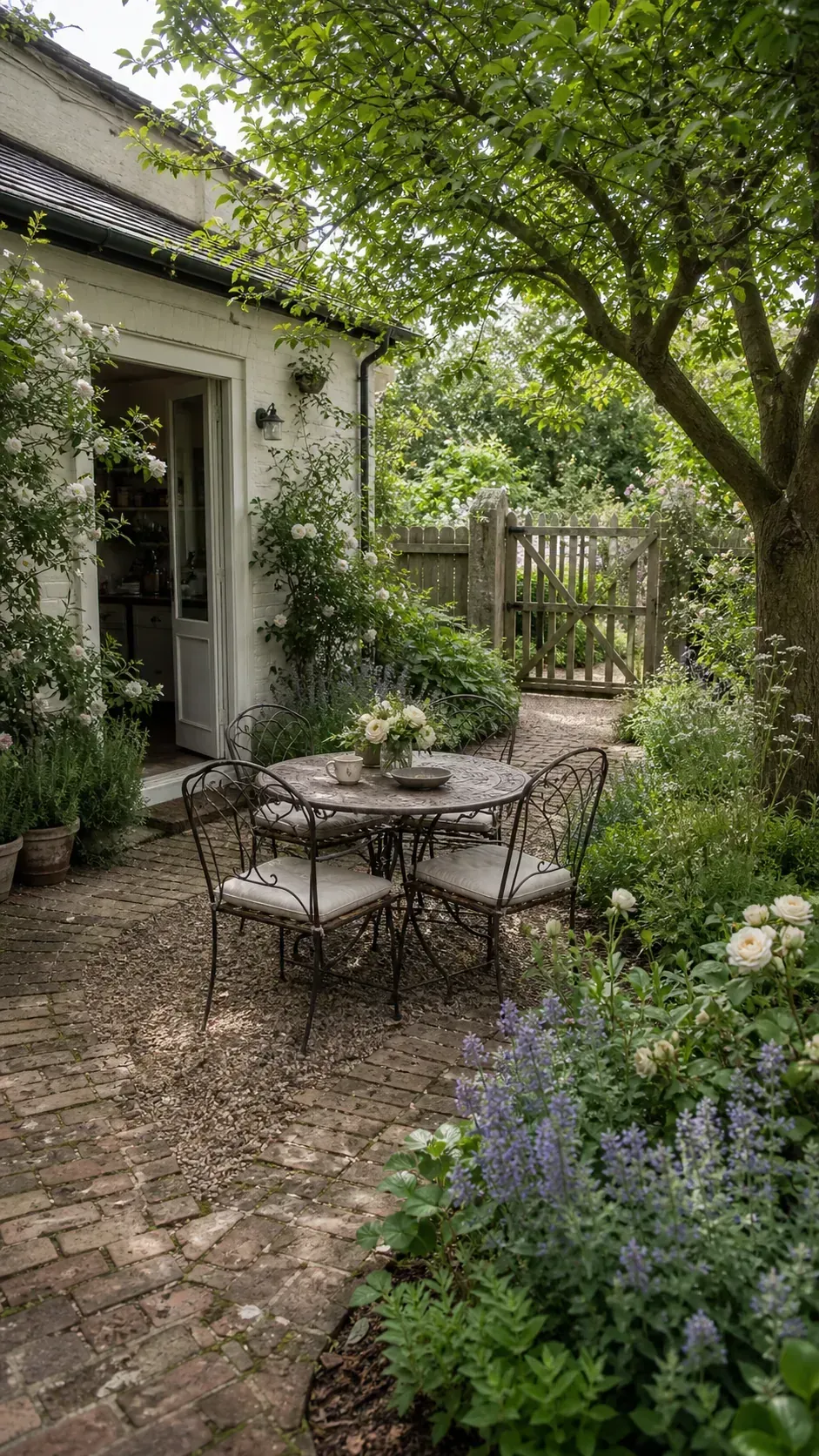
The best French country cottage patio does not look decorated; it looks as if the garden slowly leaned toward the chairs. That apparent ease still needs structure. Clear paths, mature plant spacing, useful herbs, and weathered materials are what keep loose planting from becoming an overcrowded mess. These 19 cottage garden patio ideas create softness without sacrificing drainage, seating, or the time needed to maintain them.
An Old-Brick Patio Edge
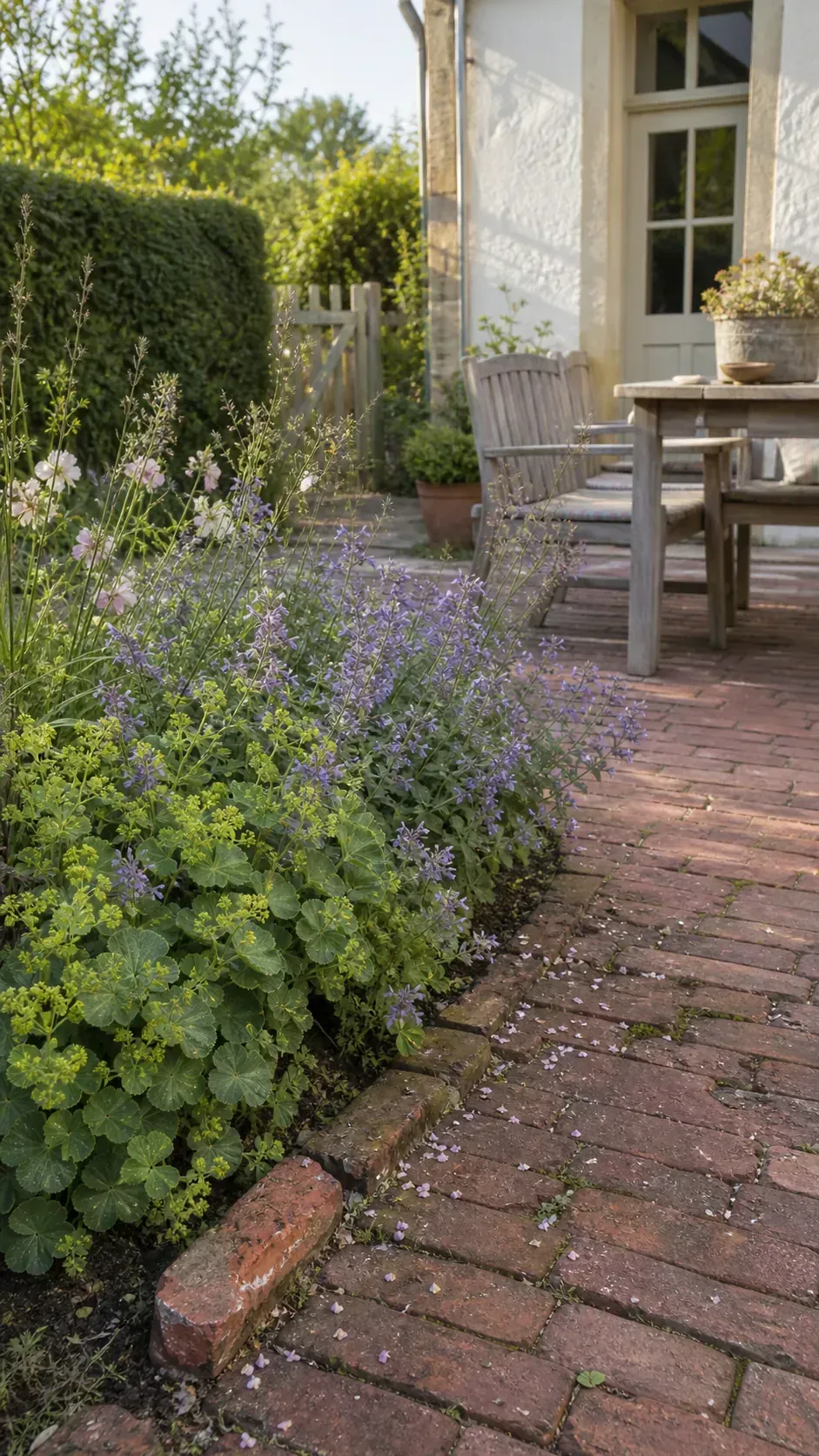
Use reclaimed brick as a border or small sitting pad rather than forcing it across a huge yard. Its irregular color gives new planting immediate age. Set bricks on a stable base, keep joints flush, and maintain a clear margin where chairs pull out.
A Gravel Circle Among Flowers
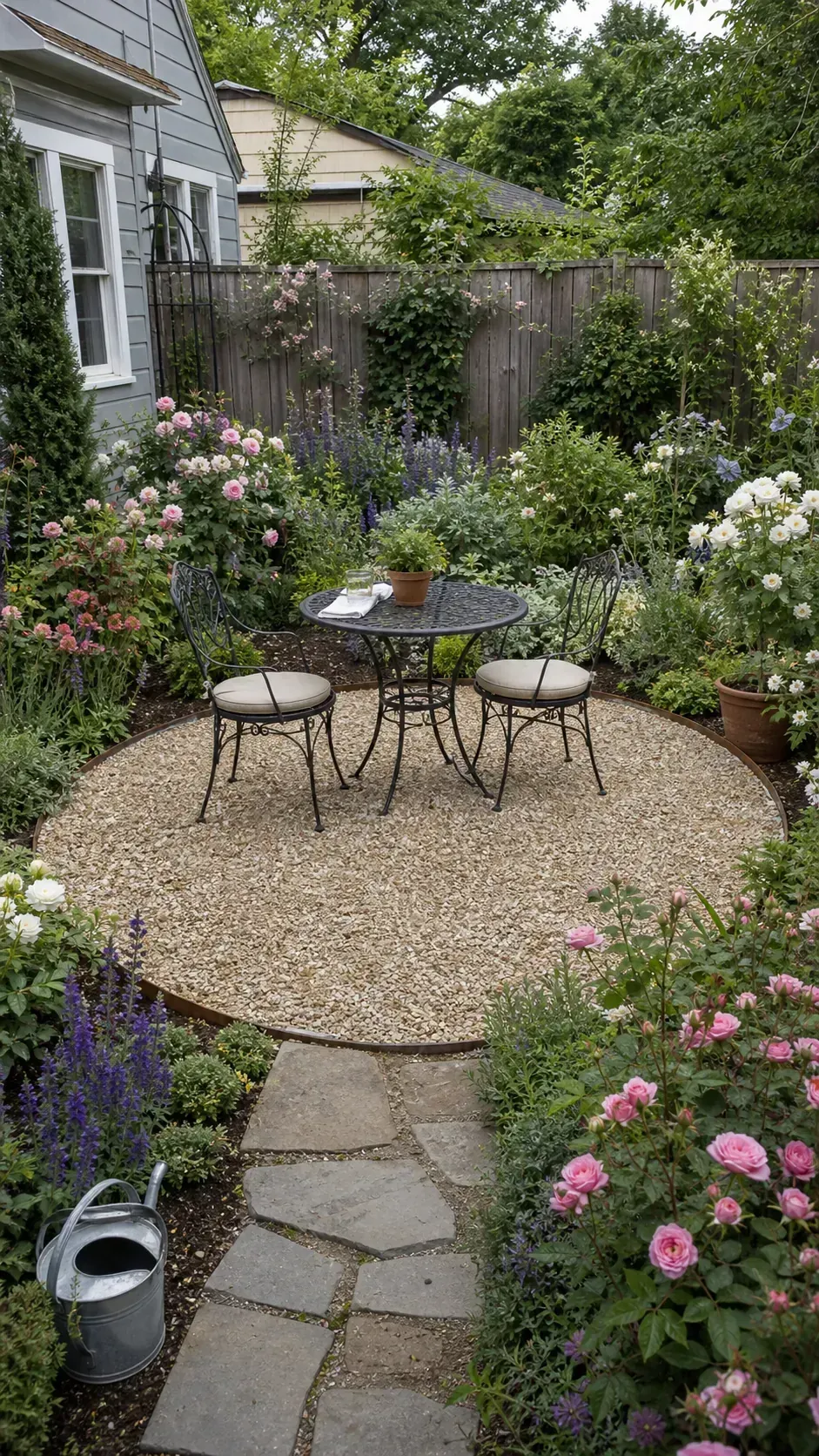
A small circular gravel zone makes an inviting destination inside a French country backyard. Give it a solid compacted base and enough diameter for occupied chairs. The planting can lean inward visually, but it should not narrow the path or brush every seated guest.
A Rose Arbor Threshold
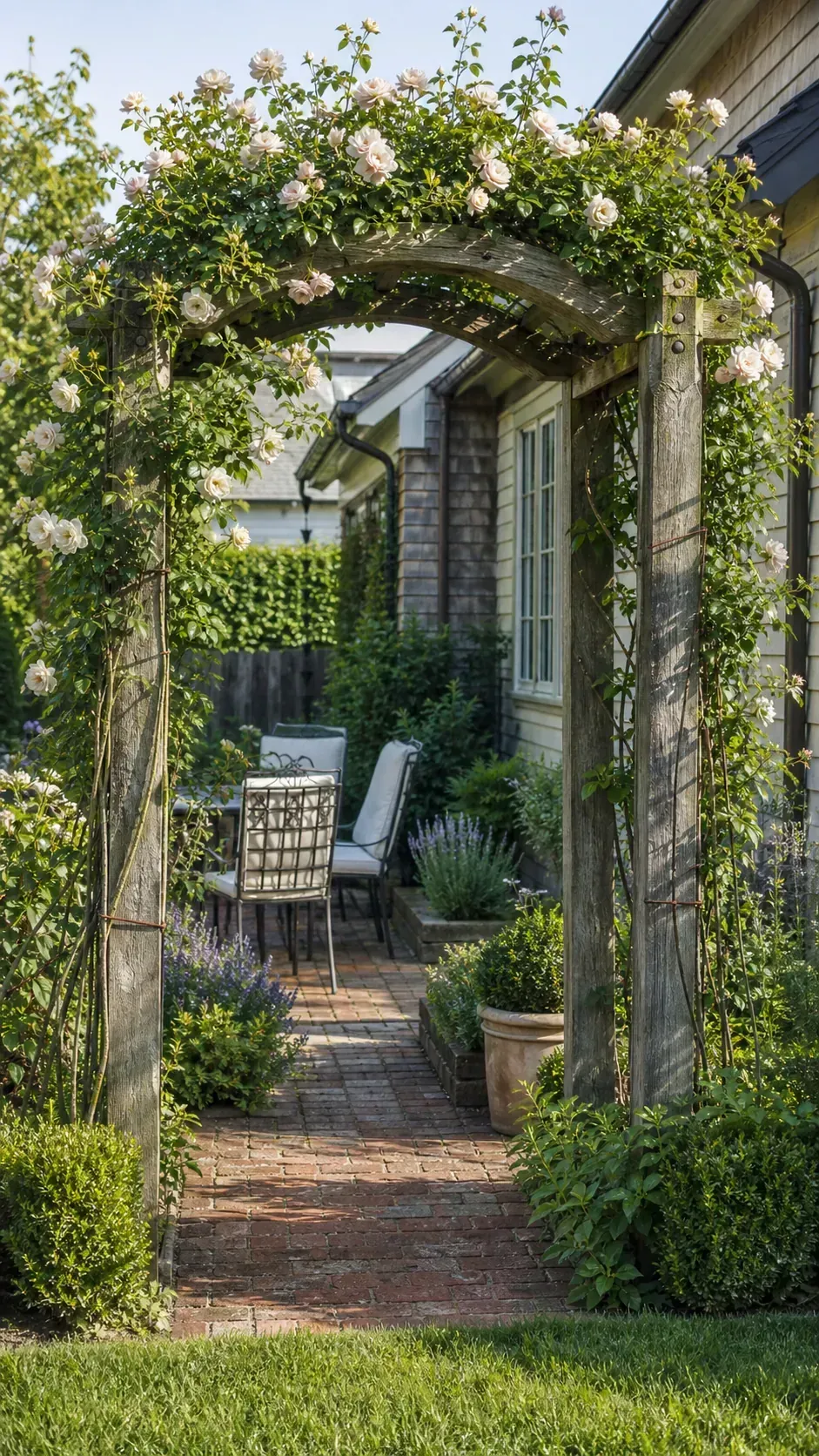
Place a rose-covered arbor where it marks a real transition from lawn or path to patio. Choose a climber suited to the structure and climate, tie canes horizontally to encourage flowers, and preserve headroom. Thorny growth belongs above shoulders, not across the route.
Herbs Within One Step
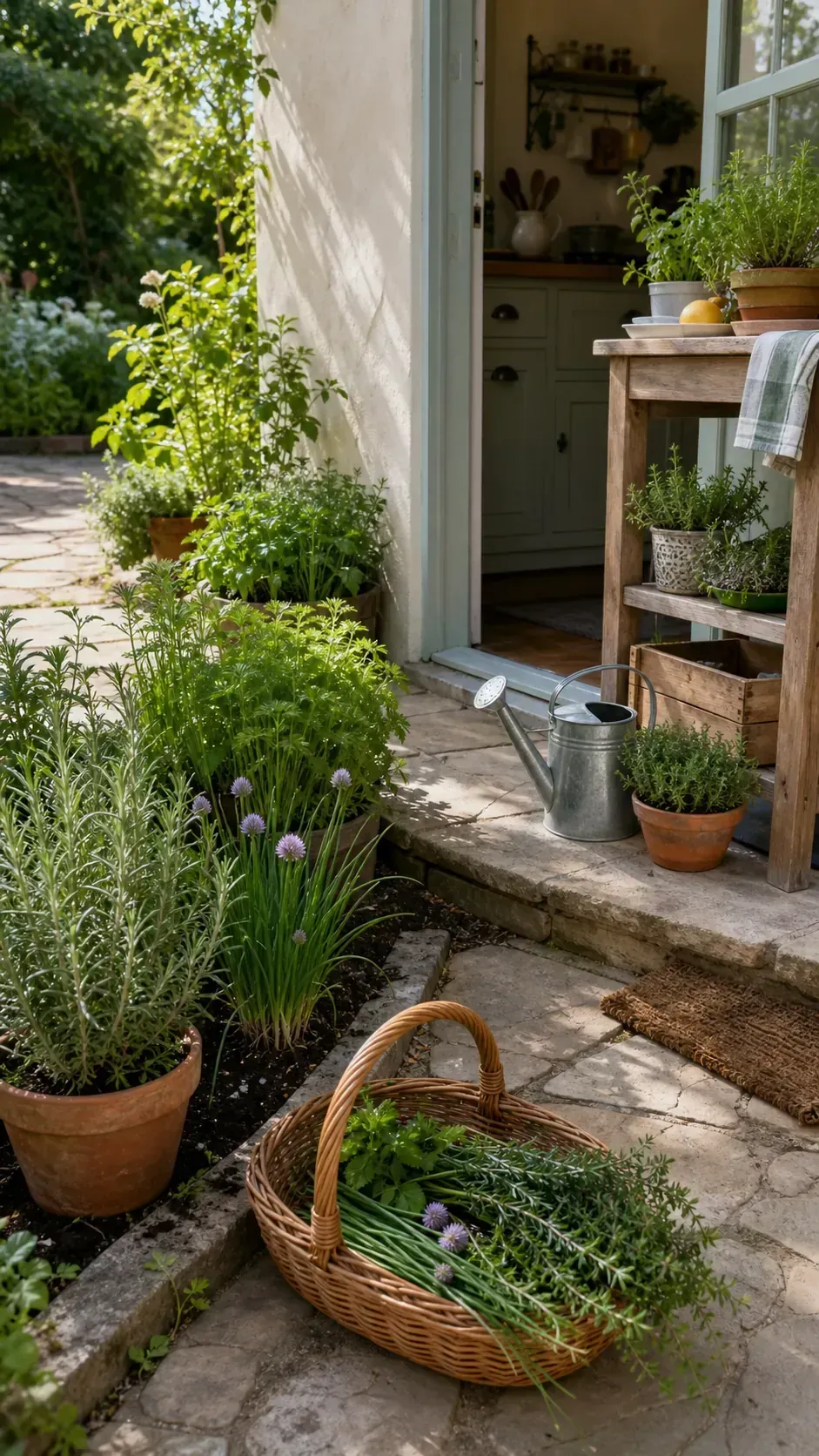
Thyme, chives, parsley, and rosemary make the patio smell good and earn their footprint. Put the most-used herbs beside the kitchen route in pots or a narrow bed. Match plants by sun and water needs instead of mixing them only for appearance.
A Zinc Trough Planter
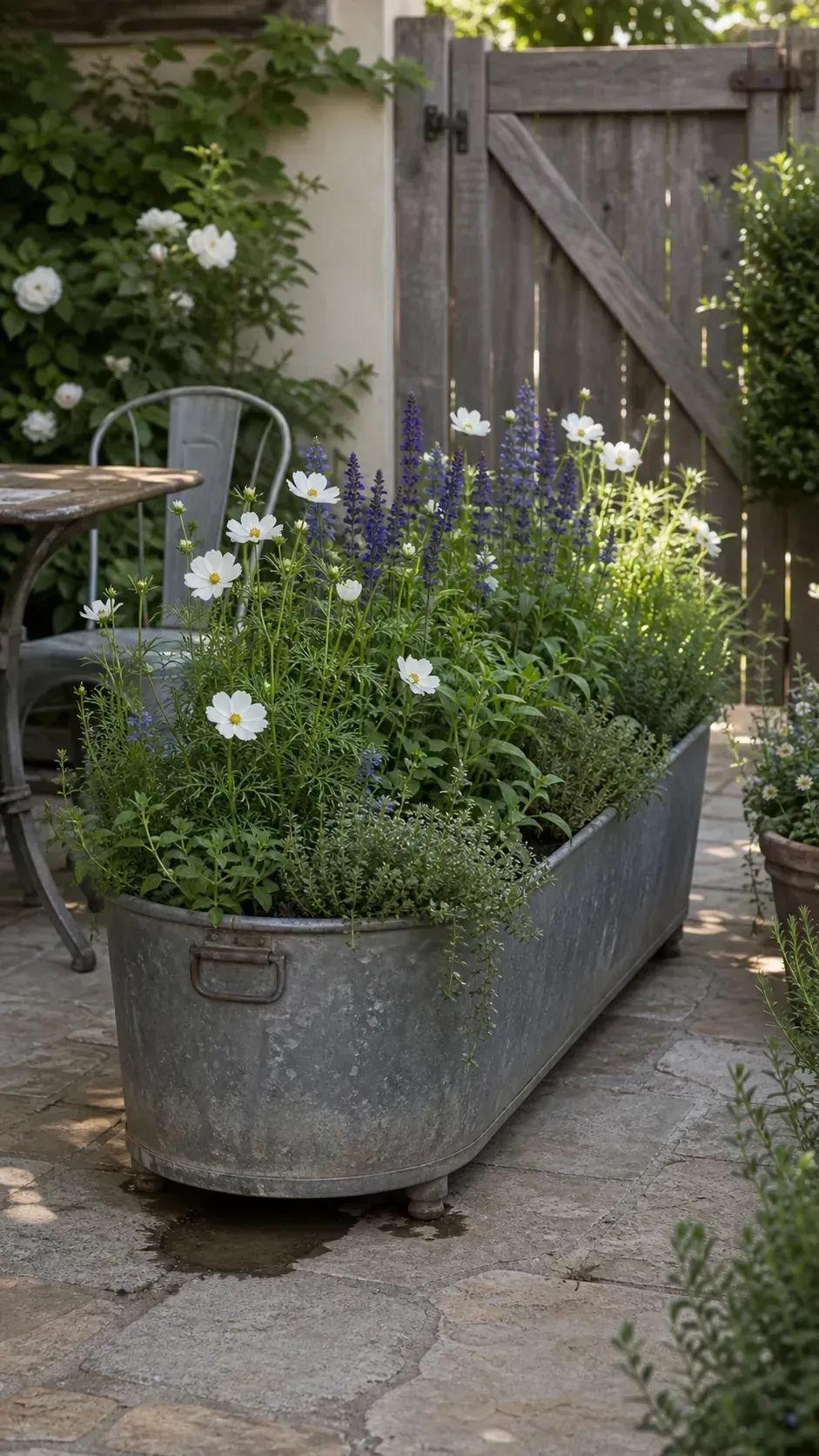
An old zinc trough can create one broad planting gesture where digging is impossible. Confirm drainage, insulate roots from extreme heat, and use a lightweight soil mix. Repeating three or four plants in the trough looks calmer than squeezing in every cottage favorite.
Shade from a Small Apple Tree
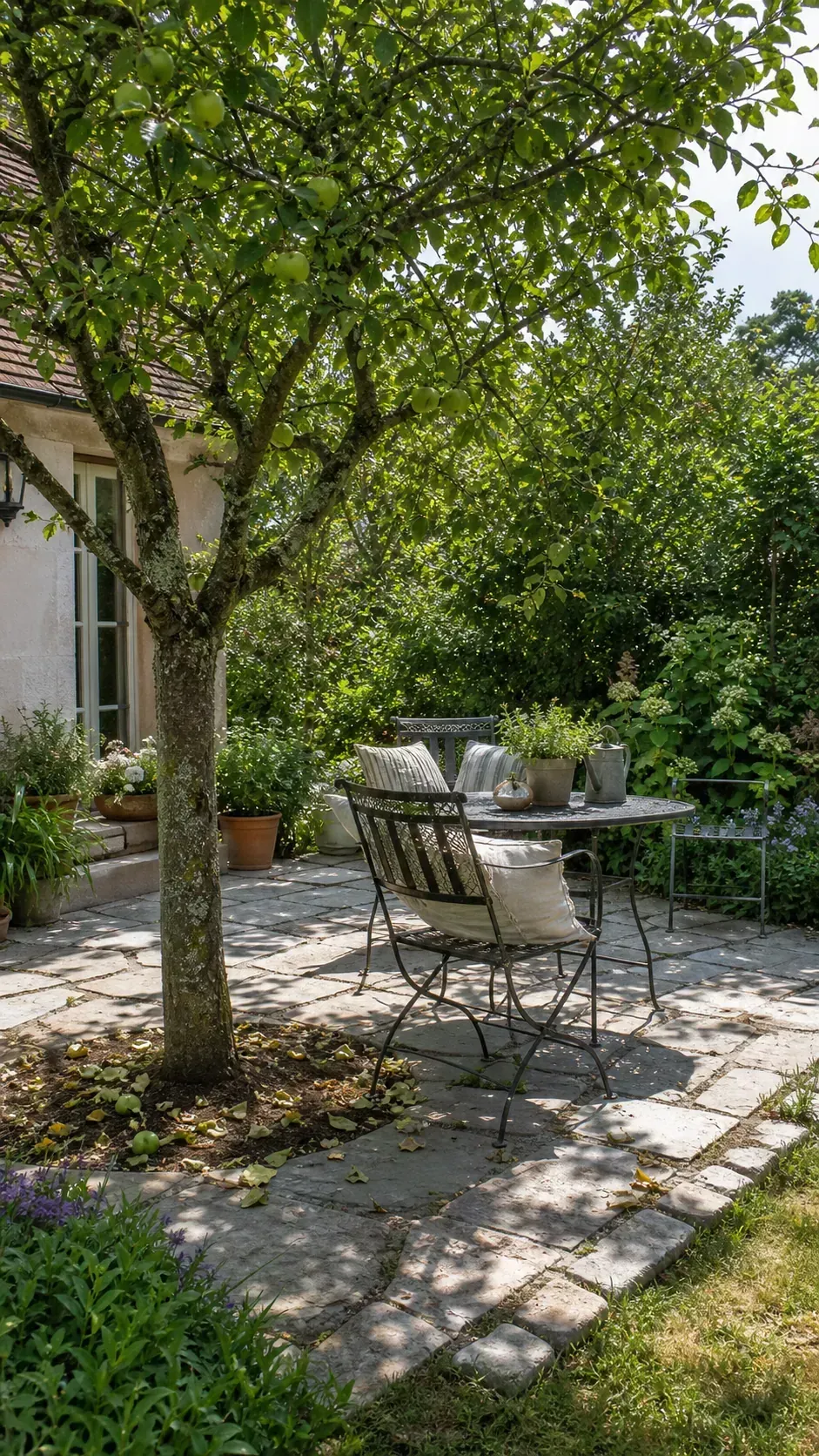
A compact apple tree brings blossom, fruit, and dappled shade to a cottage backyard. Site it beyond the paving so roots and fallen fruit do not disrupt the dining floor. Select a rootstock that fits the mature space and check pollination requirements before buying.
A White-and-Blue Planting Drift
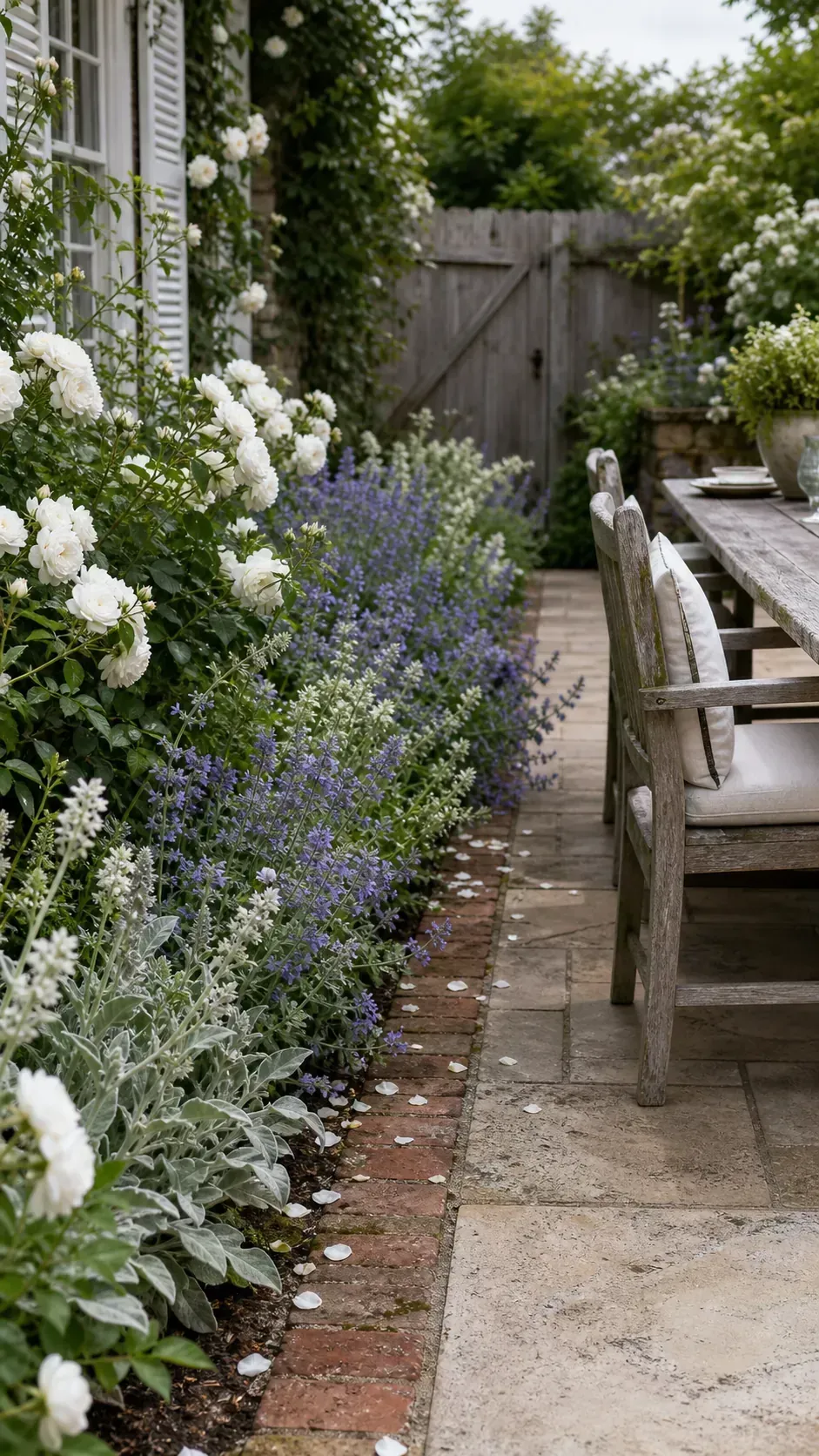
A narrow palette makes dense planting feel intentional. Repeat white roses, blue catmint, pale salvia, and local substitutes in broad drifts. Limit new flower colors, but vary leaf shape and height so the border remains interesting before and after peak bloom.
A Worn Timber Gate
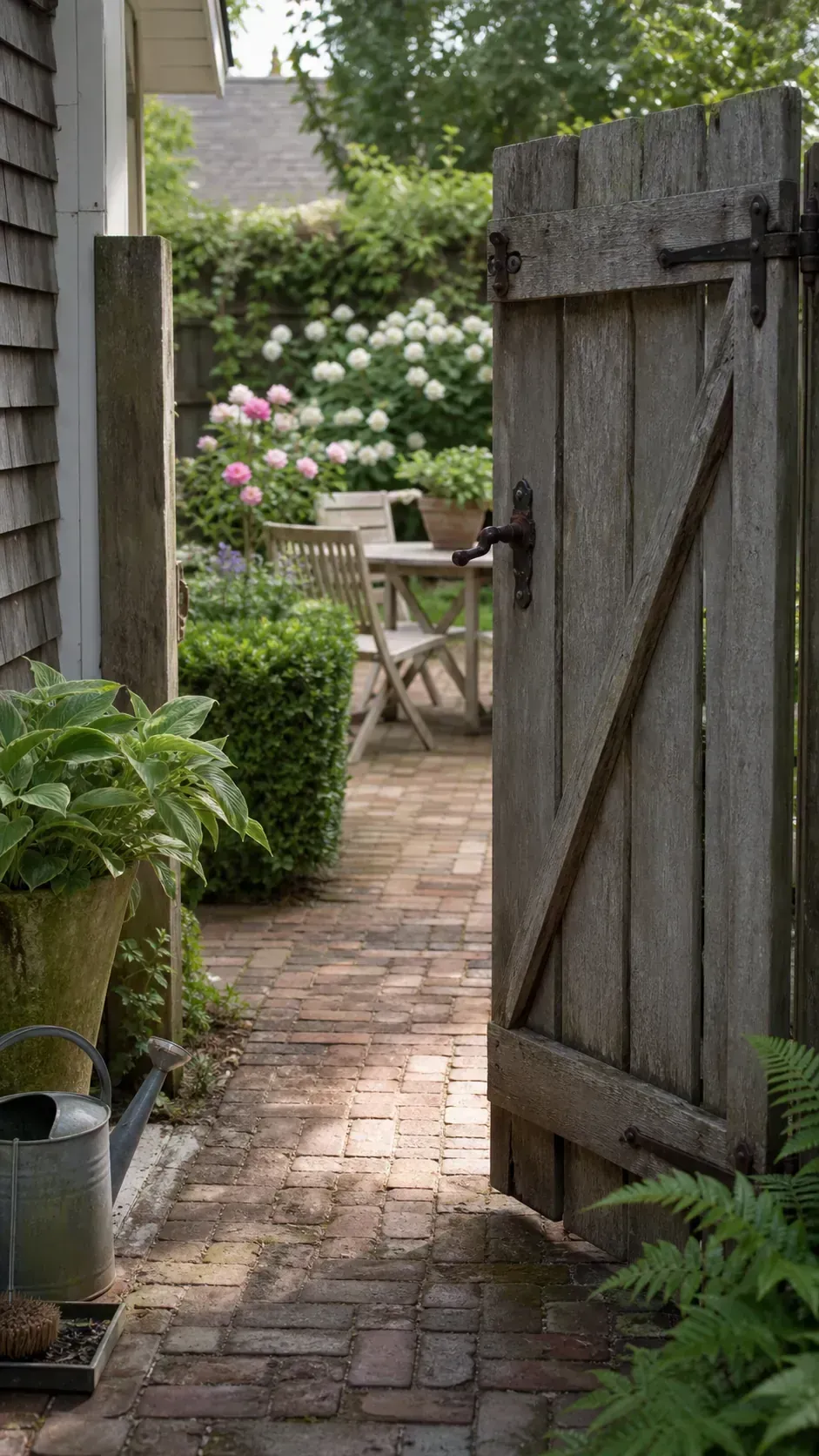
A simple gate turns the patio into a discovered outdoor room. Let real wood grain and iron hardware provide character; decorative slogans are unnecessary. Make the opening wide enough for a wheelbarrow and keep vigorous plants away from the latch and hinge sweep.
A Low Stone Sitting Wall
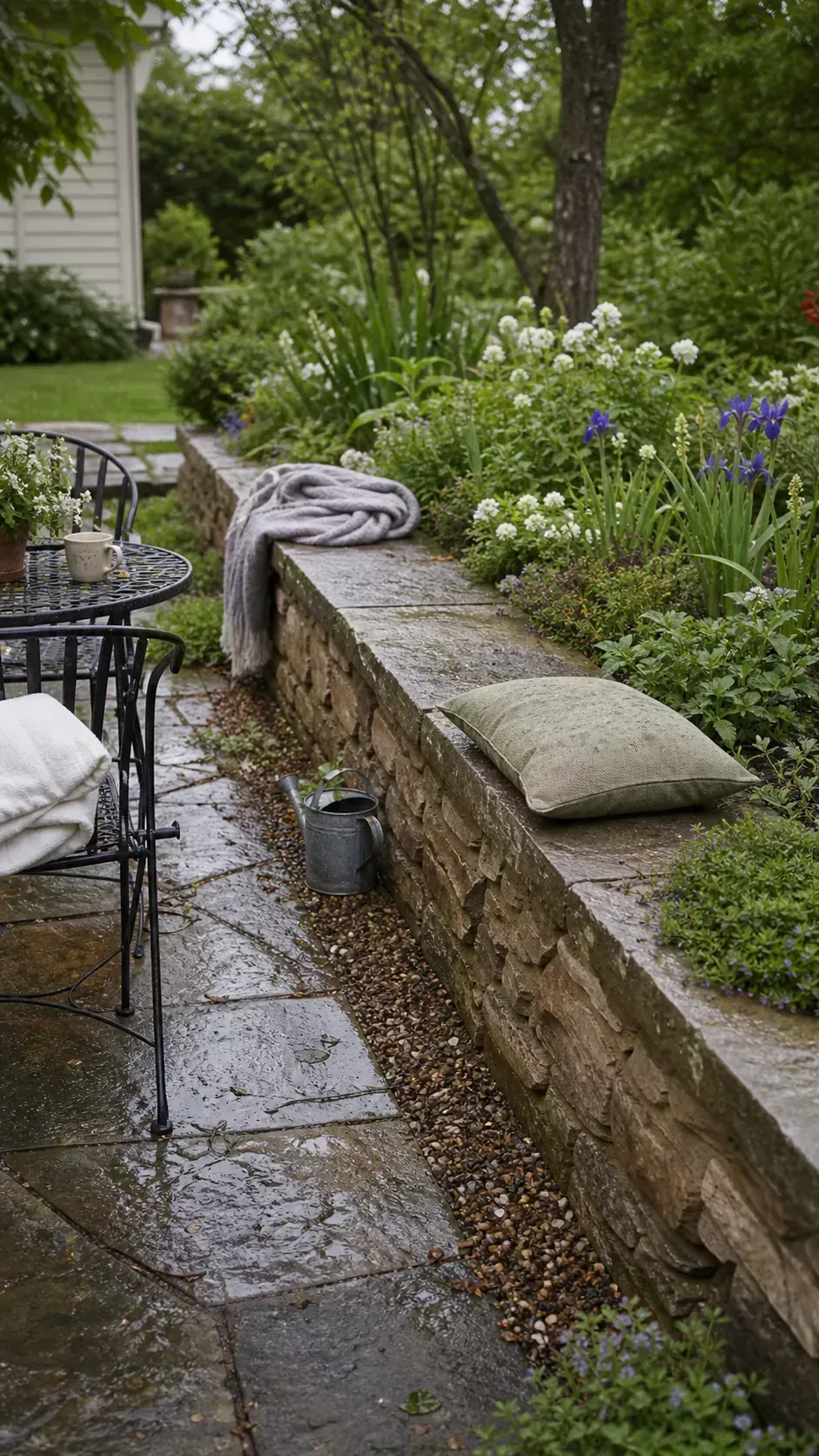
A low retaining wall can hold raised planting and provide overflow seating. Use a comfortable cap depth, avoid spiky plants behind shoulders, and confirm construction requirements locally. Creeping thyme can soften the top edge without turning the seat into a wet tangle.
A Linen-Covered Garden Bench
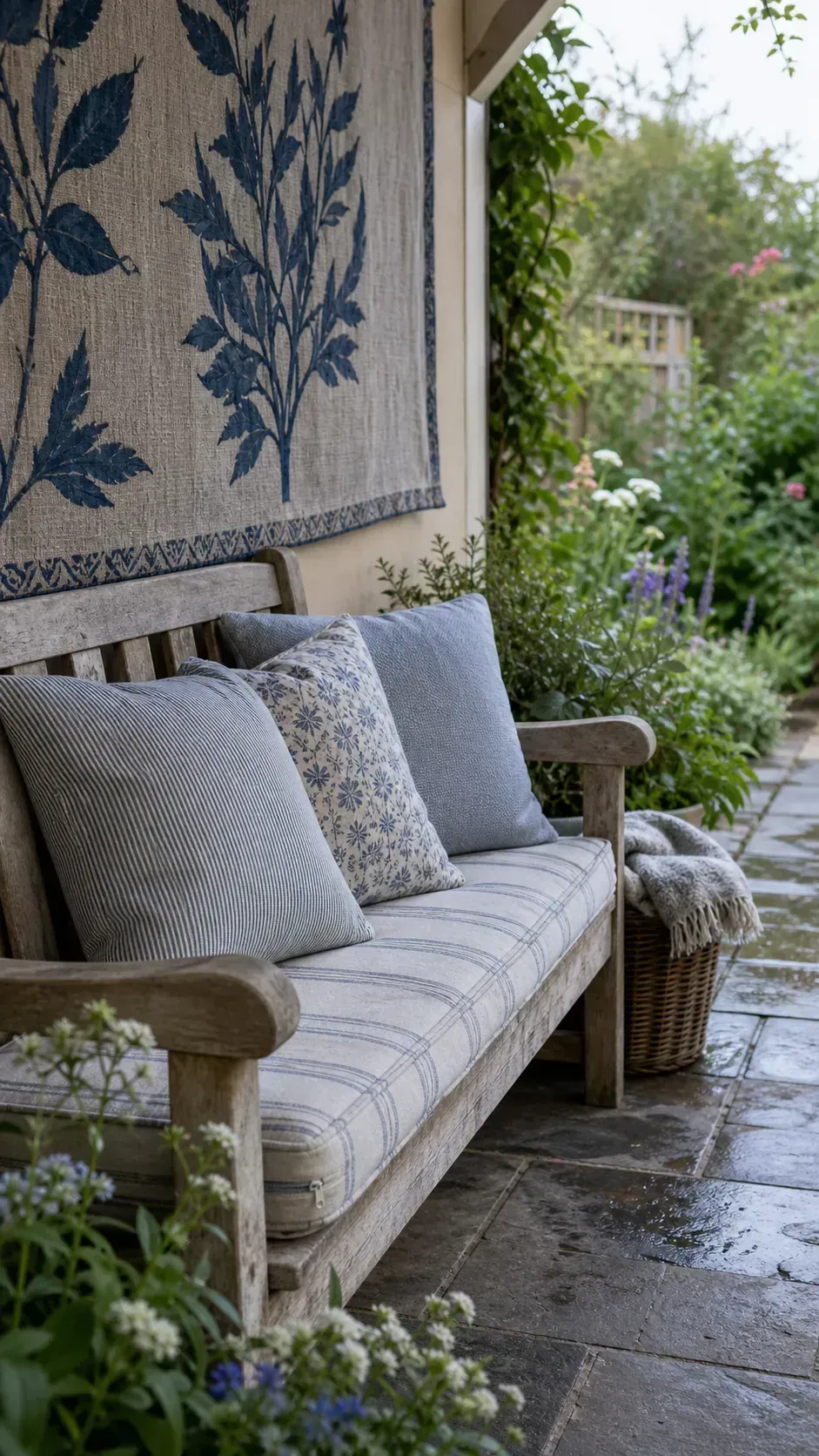
A weathered bench gains comfort from one fitted cushion and two washable pillows. Use outdoor-rated fabric in flax, faded blue, or a fine stripe, and plan where cushions go during rain. If storage is difficult, fewer textiles will make the patio easier to use.
Stepping Stones Through the Border
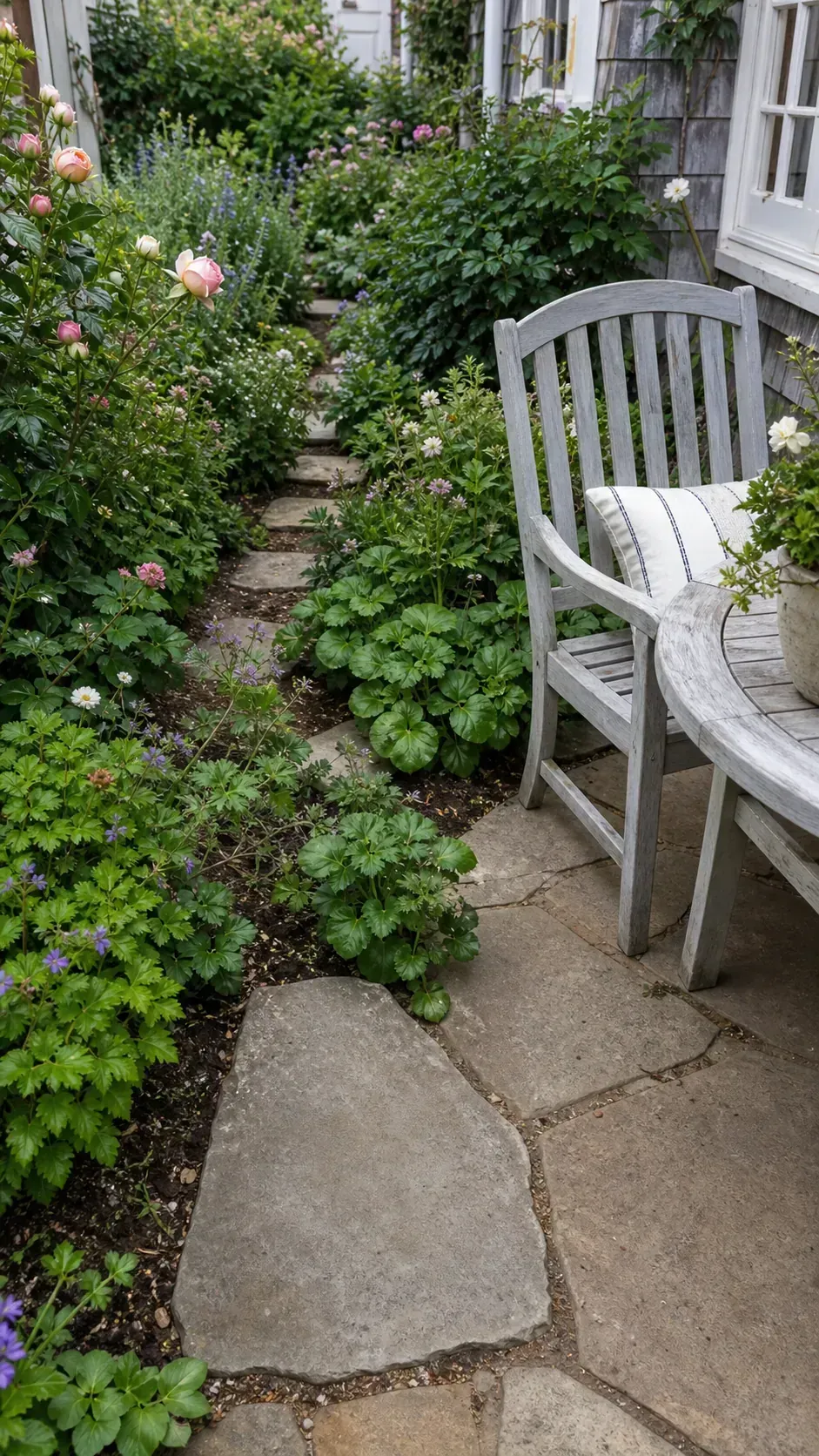
Dense cottage planting still needs access for pruning, staking, and weeding. Hide flat stepping stones inside deep beds at a comfortable stride. They disappear under foliage from the patio but prevent compacted soil and broken stems when maintenance is due.
Native Flowers in Cottage Form
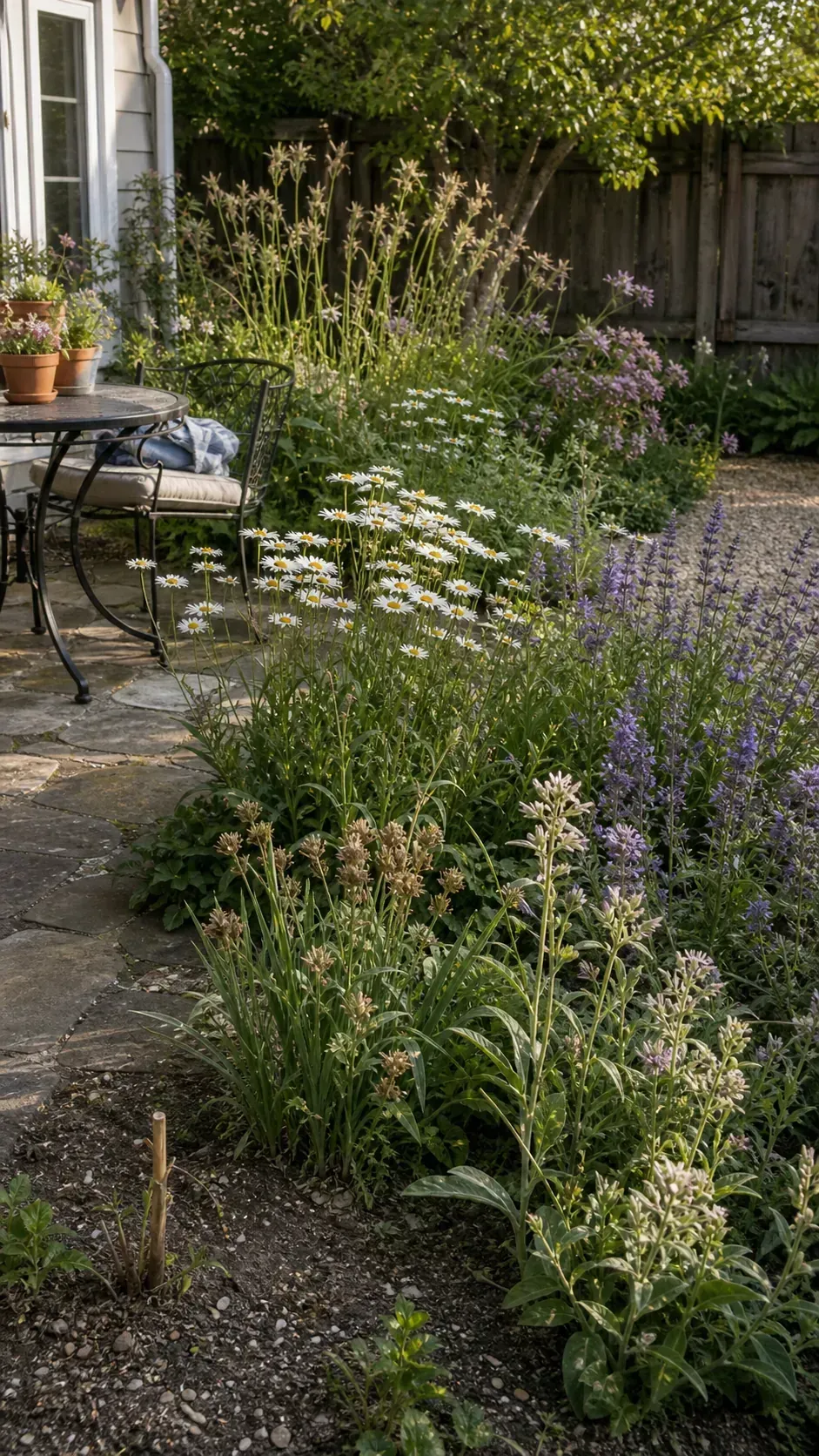
The cottage look does not require imported plants that struggle in your climate. Choose locally adapted flowers with airy stems, repeated color, and long bloom, then arrange them in loose groups. You get the same visual abundance with better resilience and pollinator value.
A Half-Barrel Water Garden
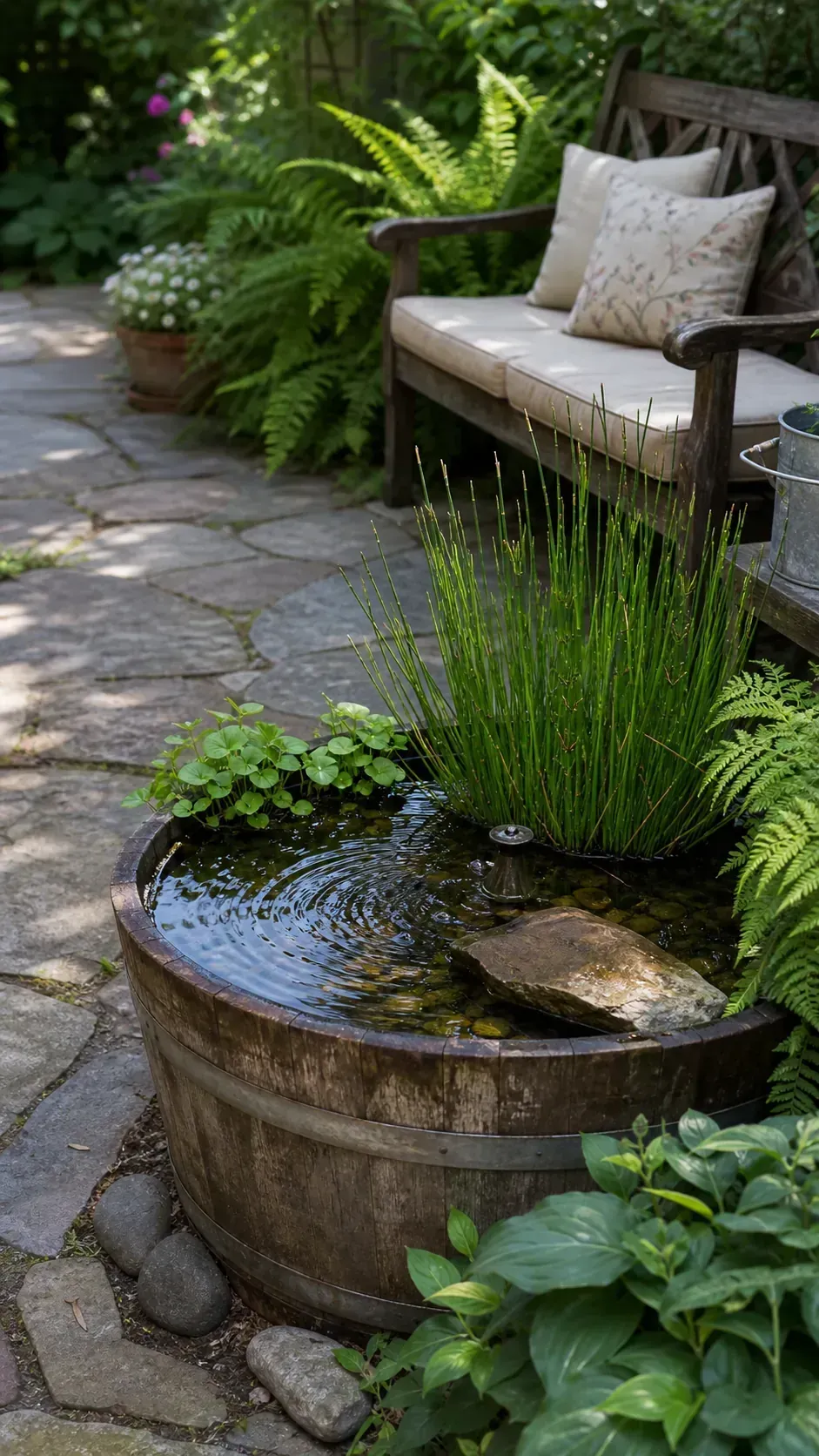
A lined half barrel can add reflection and habitat without a full pond. Keep water safe for children and pets, provide a wildlife escape, and use moving water where mosquitoes are a concern. Place it on a base rated for the substantial filled weight.
A Simple Potting Corner
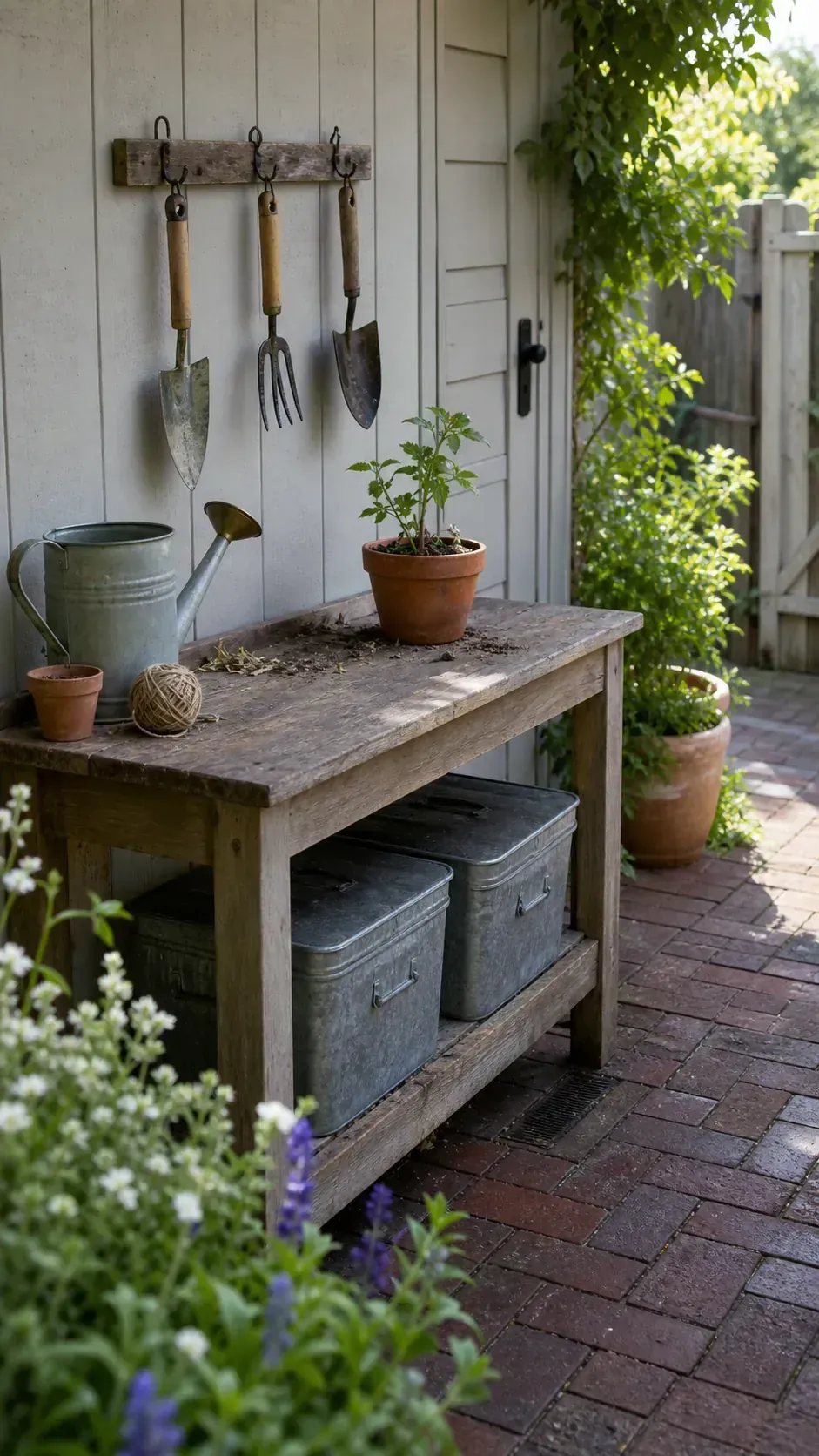
A narrow potting bench makes the garden easier to maintain and can still look calm. Store soil in lidded bins, hang only daily tools, and leave the worktop mostly clear. Position it away from dining chairs so wet compost and clipped stems stay in their own zone.
A Curving Brick-and-Gravel Path
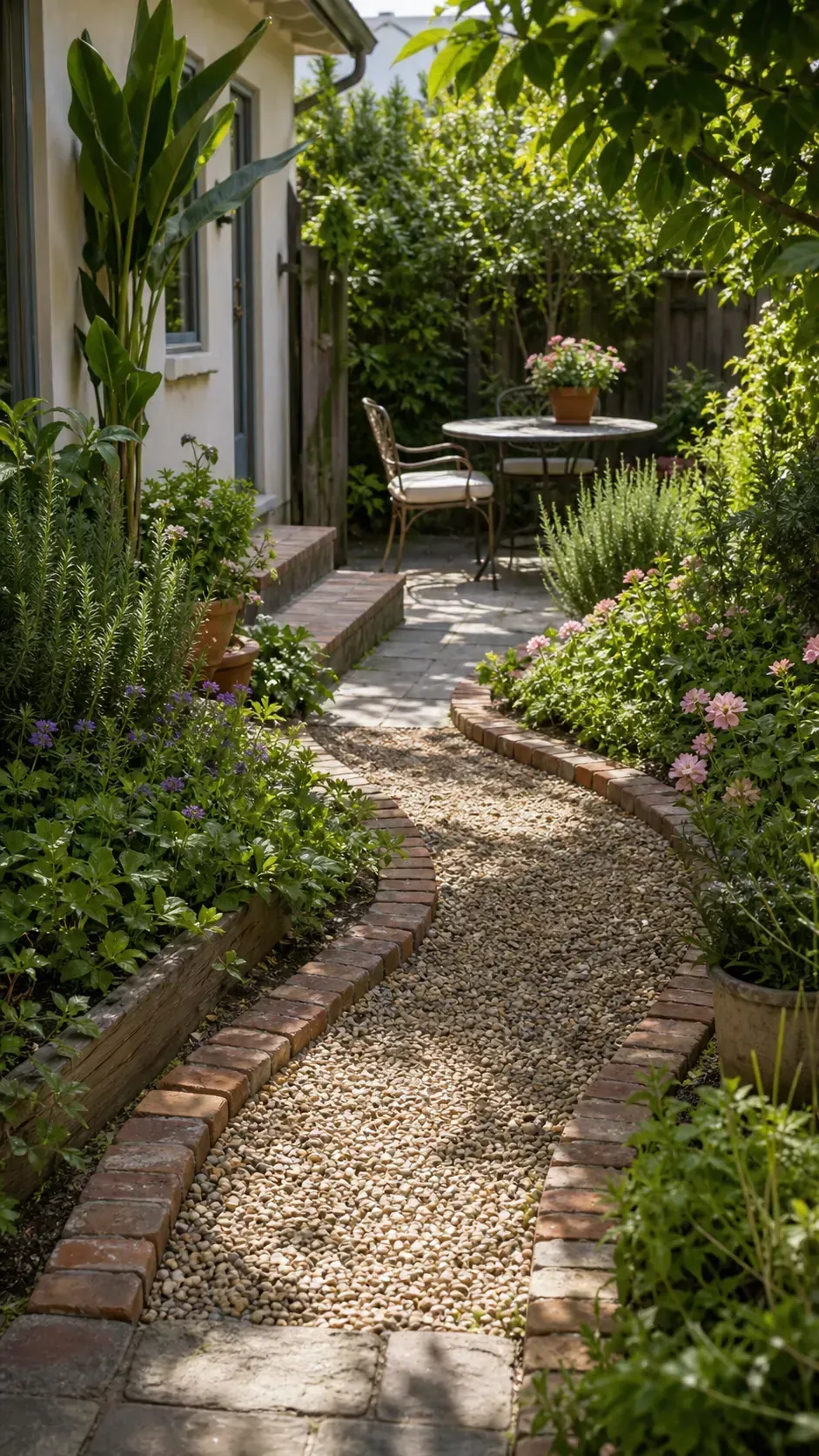
A gentle curve can make a small backyard feel less abrupt, but the route must remain direct enough for daily use. Use brick at high-wear edges and compacted gravel between. Keep plants from hiding changes in level or narrowing the path below safe width.
A Clematis Screen
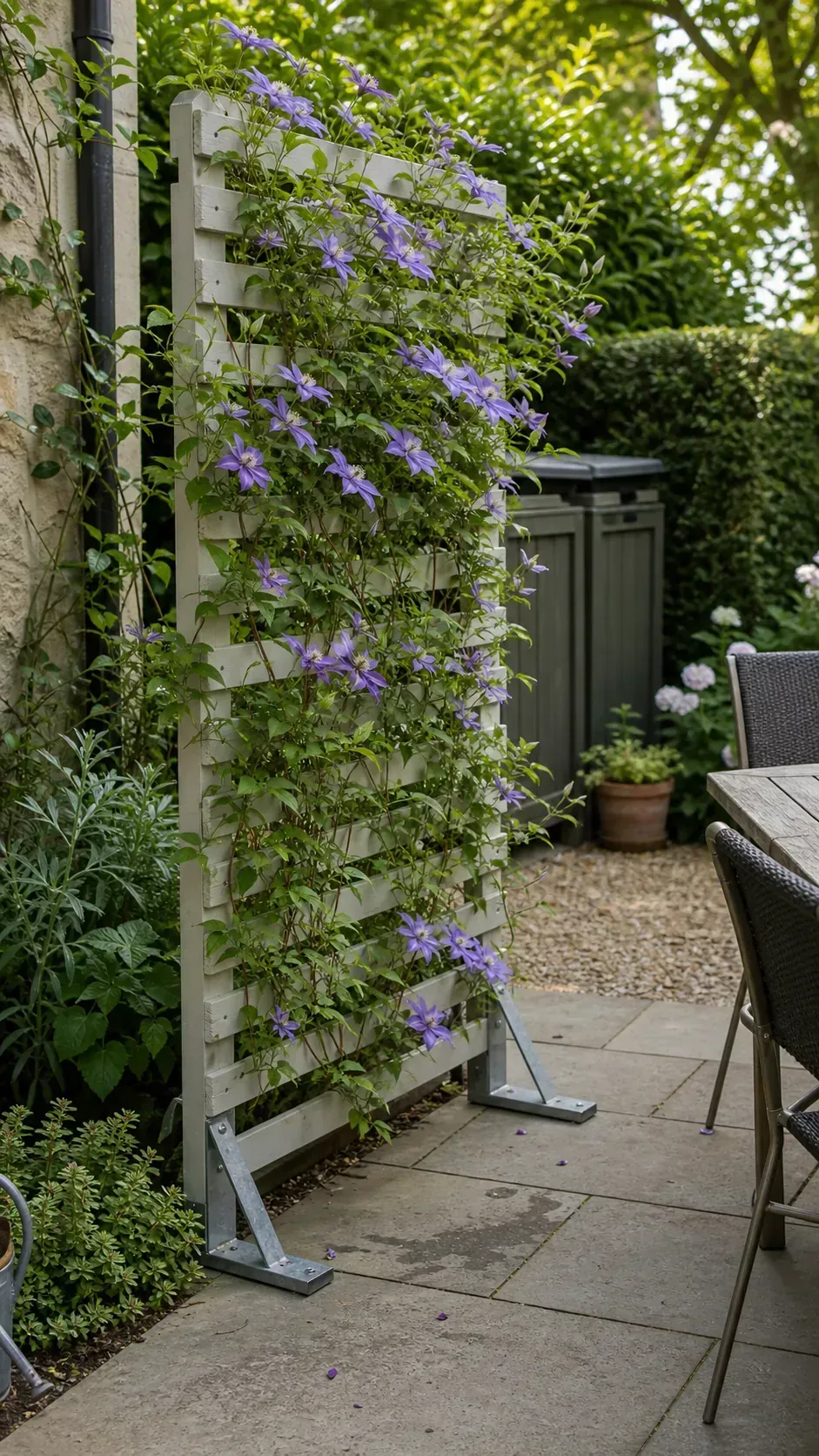
A freestanding trellis with clematis can screen bins or a neighboring view while consuming little floor space. Match the vine’s pruning group to the maintenance you can manage, secure the structure for wind, and keep airflow between foliage and any wall.
A Candlelit Supper Table
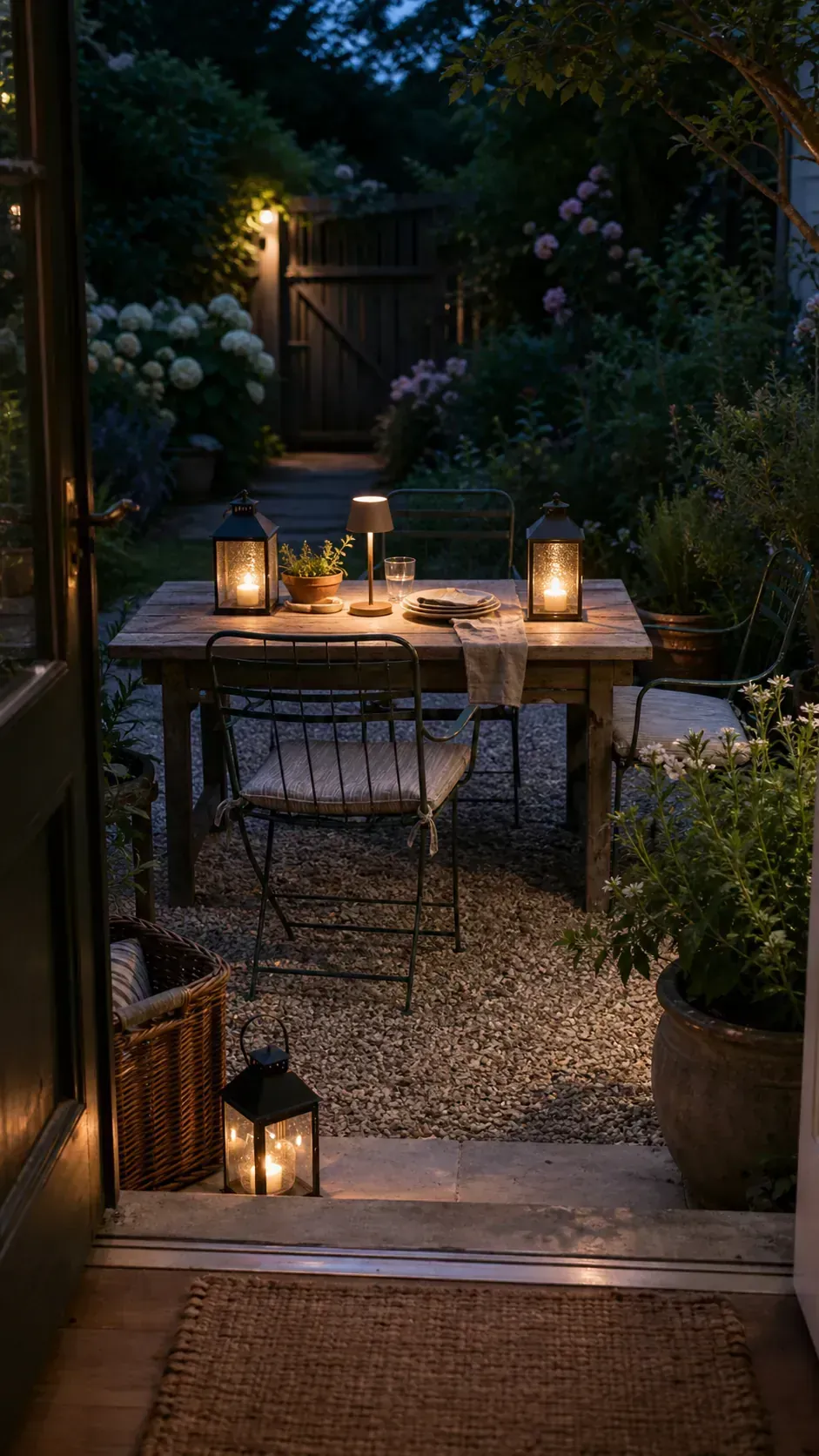
Evening atmosphere needs less styling than most photographs suggest. Use a rechargeable table lamp or two stable lanterns, plain dishes, and cut herbs from the garden. Keep flames protected, lighting warm but not orange, and the route back to the house clearly visible.
A Rainy-Day Covered Nook
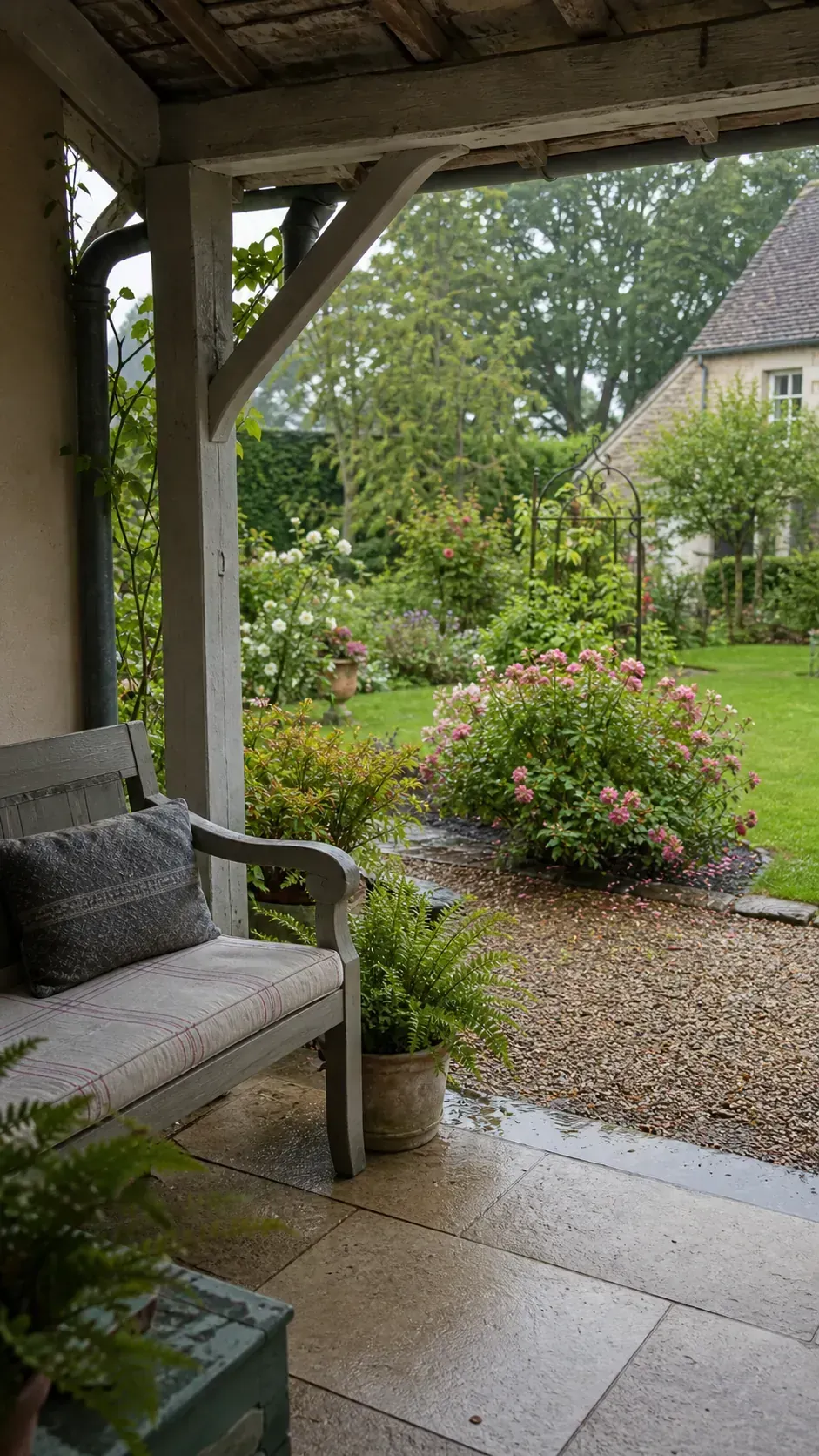
A small roofed edge extends patio use through spring rain and protects one bench. Direct runoff away from the house, choose slip-resistant flooring, and maintain a clear view into the garden. The contrast between dry seating and wet leaves supplies all the drama needed.
A Garden That Leaves Room to Grow
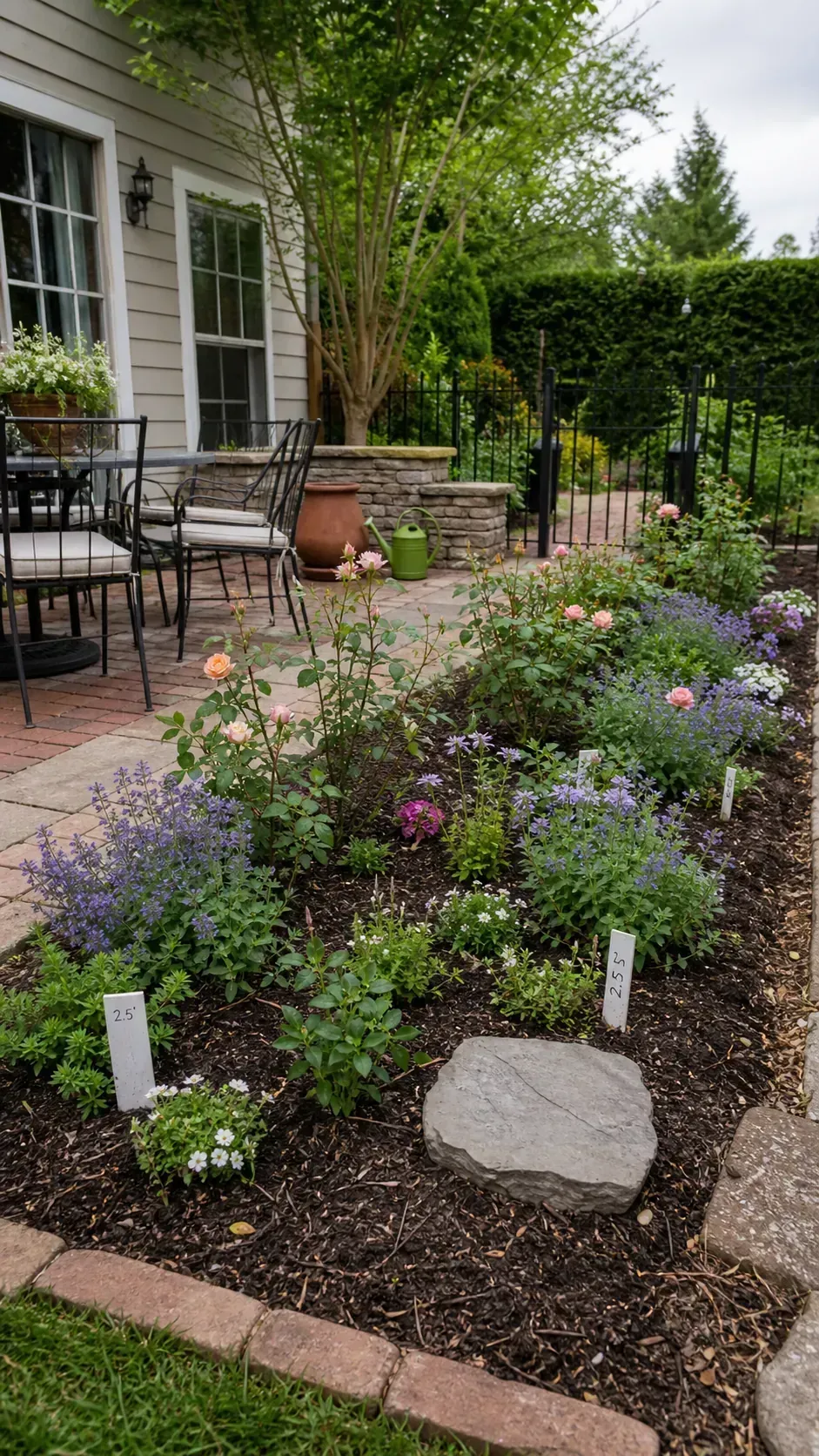
The most convincing cottage garden inspiration develops over seasons. Plant for mature width, repeat a smaller set of reliable species, and use annuals to fill temporary gaps. Abundance is the result of healthy plants meeting at the right time—not cramming the border on installation day. Leave access stones and edit seedlings each year so the patio remains a place to sit, not merely a view to maintain.