
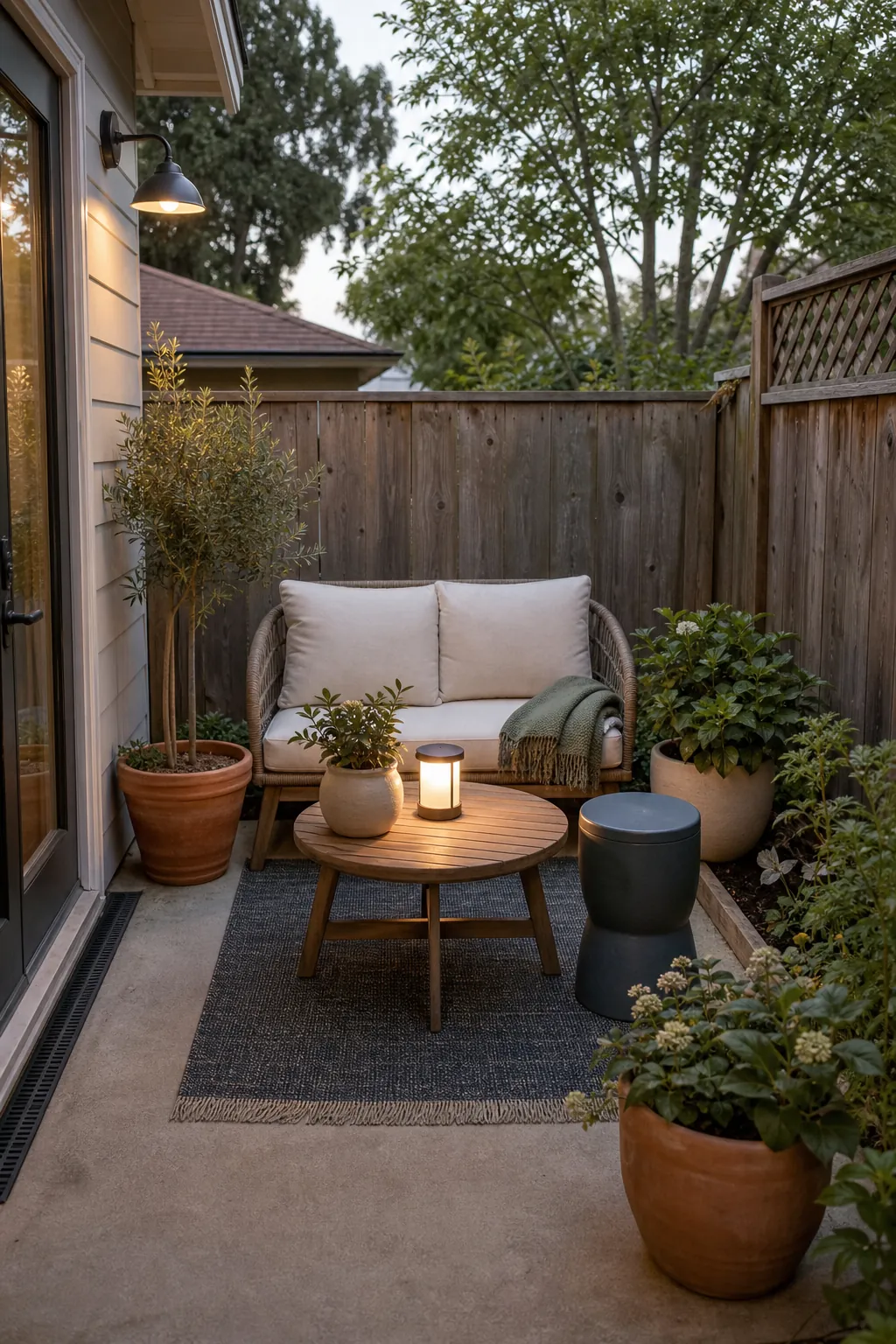
A cozy patio is not measured by how many cushions, lanterns, or plants fit into it. It feels cozy because the seating supports you, the light is gentle, the materials invite touch, and nothing interrupts the way you move through the space. On a small patio, restraint is what lets those details register.
These 26 cozy small patio ideas begin with comfort and build outward. Choose the ideas that suit your climate, surface, budget, and normal routine; preserve drainage and a clear exit; and use only outdoor-rated products. One well-made corner you use every evening beats an elaborate setup you have to dismantle before you can sit down.
Design Around One Favorite Patio Ritual
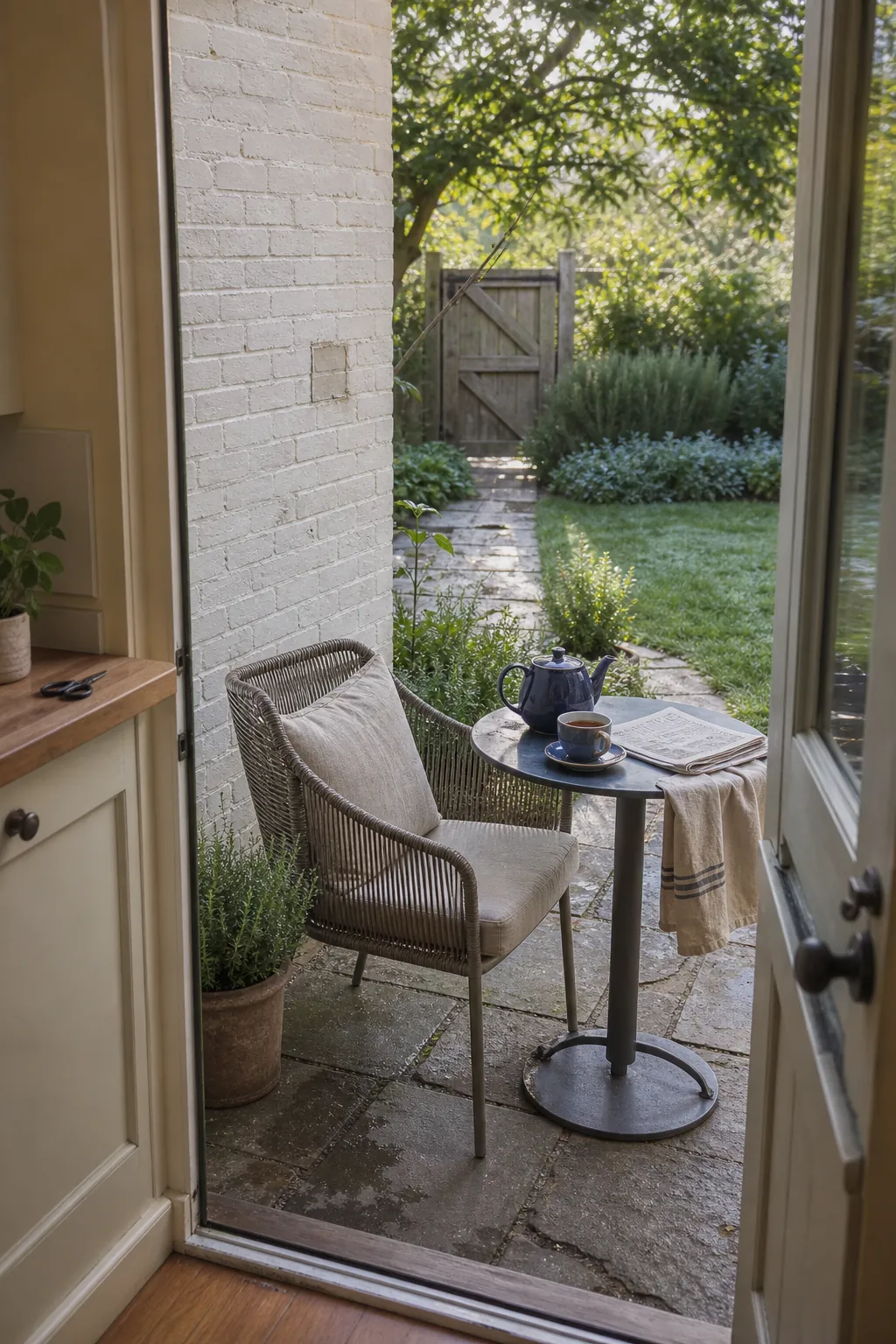
Decide what you want to do outside most often: drink morning tea, read after work, share dinner, or tend plants. Design for that real ritual first. A single purpose makes furniture decisions easier and prevents a tiny patio from becoming a storage place for several half-working layouts.
Place the essential seat and surface, test them for a week, then add only what improves the experience. Cozy begins with repeat use, not a shopping trip.
Choose a Loveseat With Upright Comfort
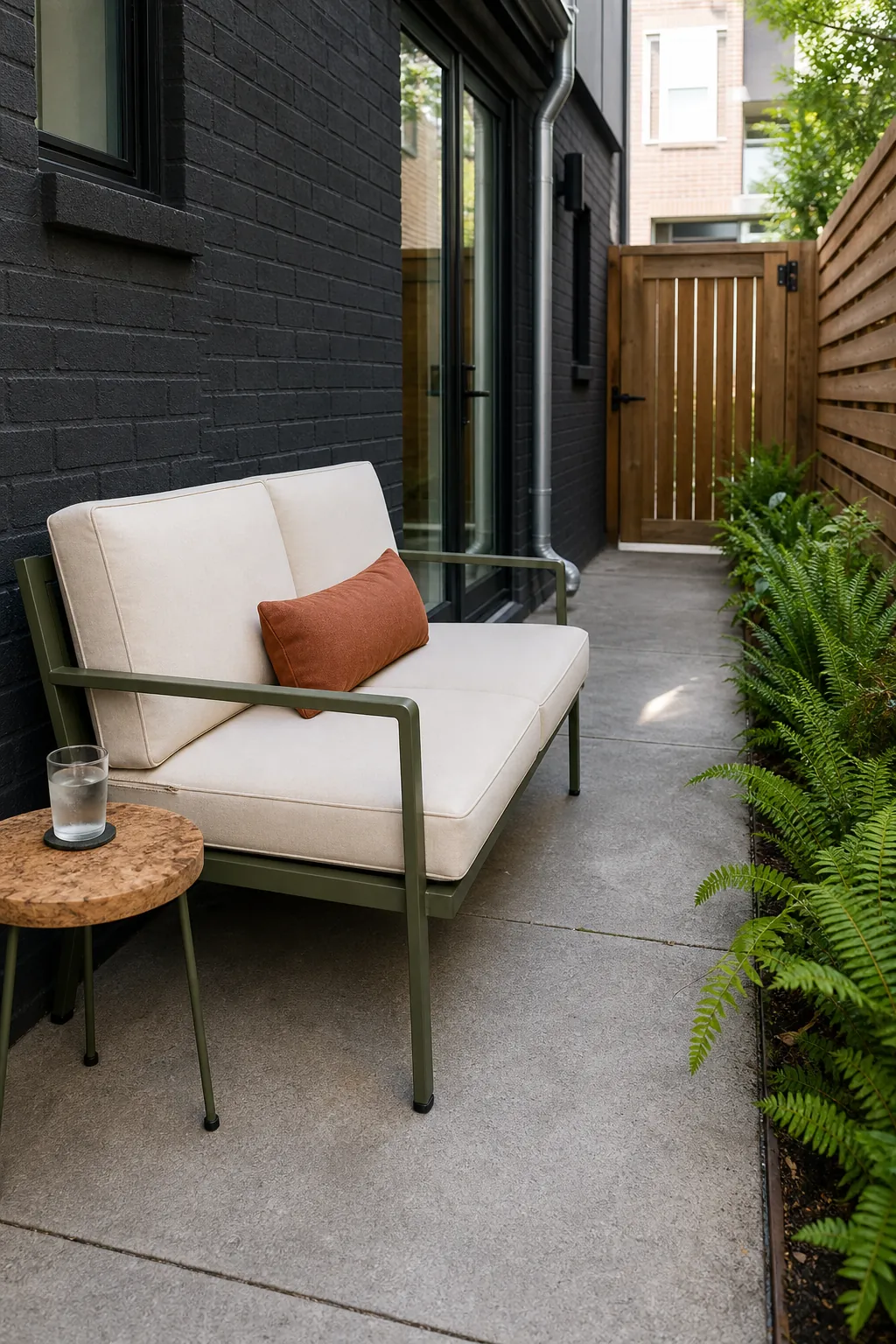
A compact loveseat can make a little slab feel like a real outdoor room, but deep lounge furniture often steals the walkway. Look for an upright back, open arms, raised legs, and cushions firm enough to sit comfortably without requiring a huge frame.
Measure the full depth and door swing, not just the advertised width. Two fitted cushions are easier to protect than a heap of decorative pillows.
Add One Gentle Rocking Chair
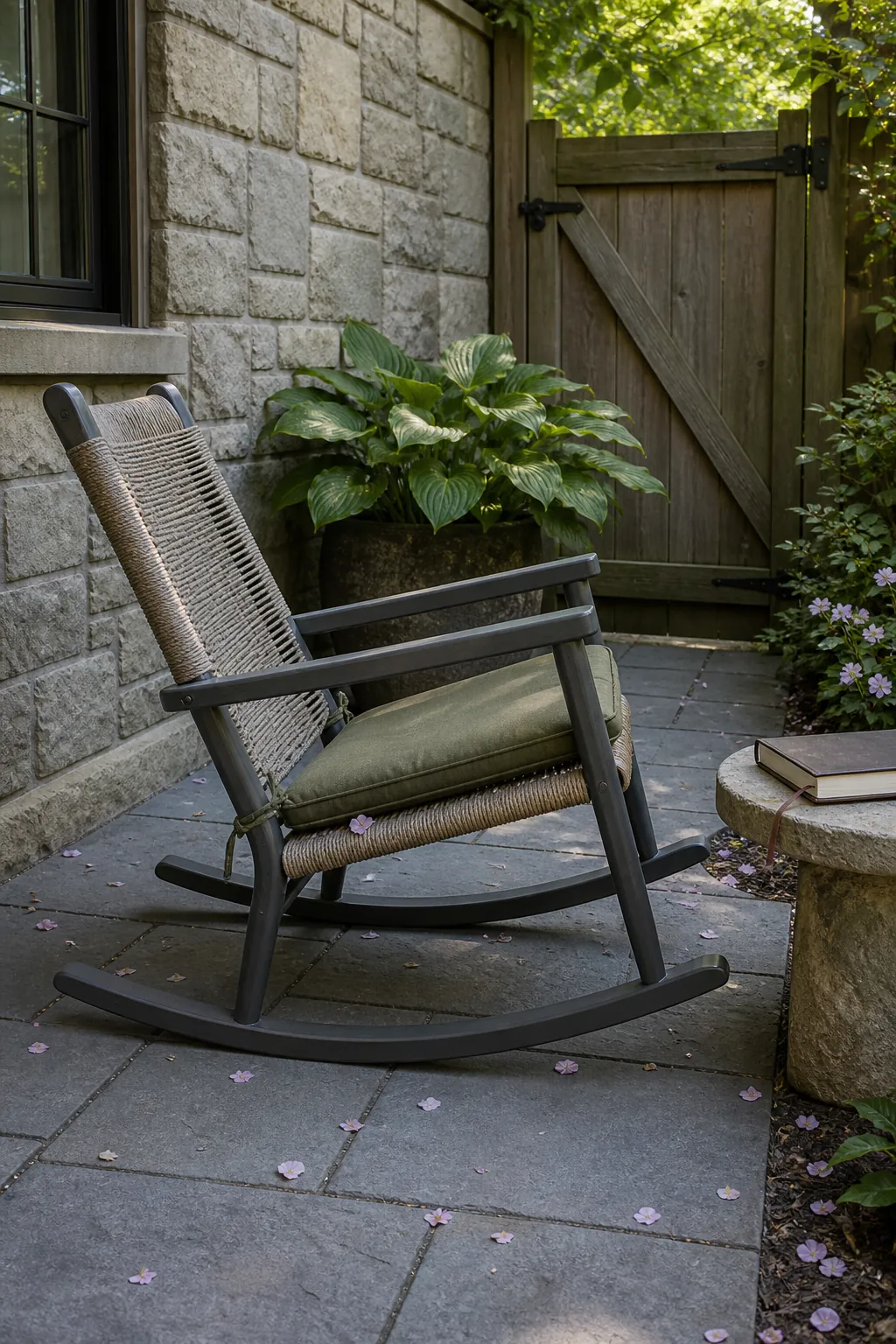
A compact outdoor rocker adds movement that makes a quiet corner feel restorative. Choose a stable base designed for the surface and leave enough clearance behind and in front for the full motion.
Test that the chair cannot strike a wall, planter, or railing. Keep the rest of the setting still and simple—a small side table and one plant are enough.
Let a Garden Stool Do Three Jobs
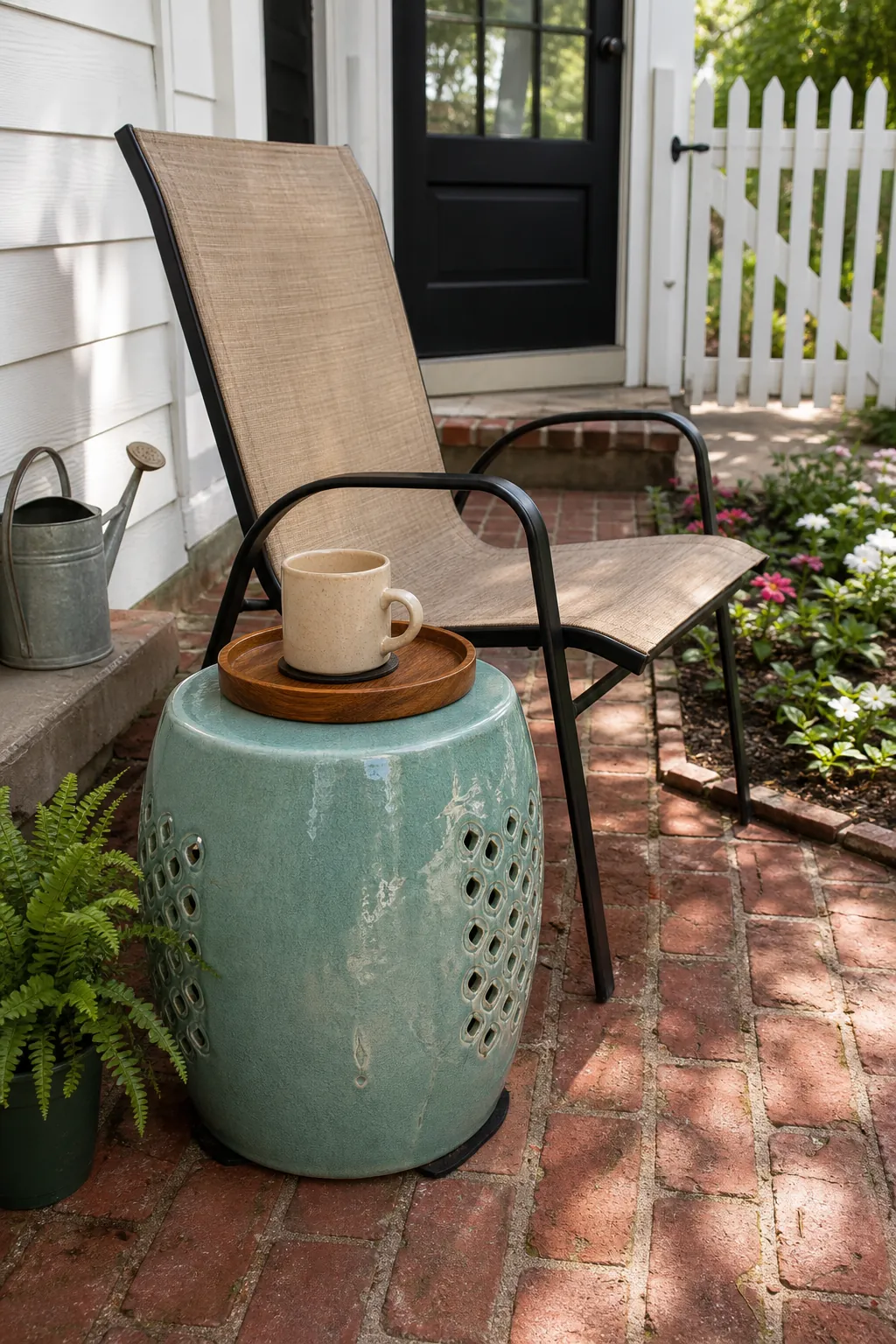
A weather-safe garden stool can hold a drink, elevate a planter, or provide an occasional perch if it is rated for seating. Its small round footprint slips beside furniture without creating another corner to bump.
Choose one with a stable base and drainage-safe placement. A visible hand-finished surface brings more warmth than several small accessories.
Swap Sharp Corners for a Round Table
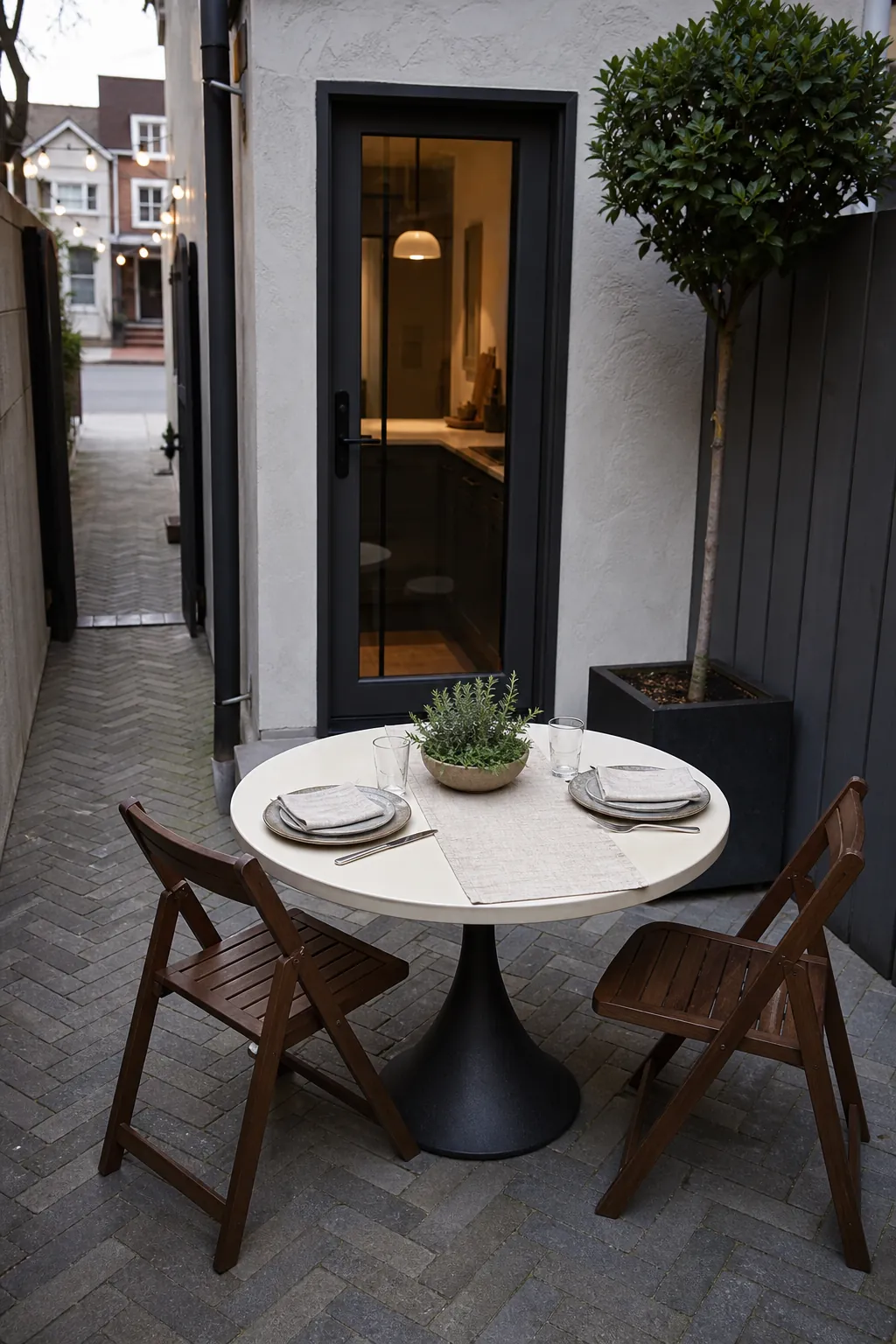
A round pedestal table gives knees and pathways more freedom than a four-legged square table. It also softens the hard lines of fences, pavers, and walls that dominate many tiny outdoor patio ideas.
Pick the smallest diameter that supports your routine, then confirm the base will not tip. Leave enough room to pull out a chair without backing into another object.
Make a Corner Bench Feel Tailored
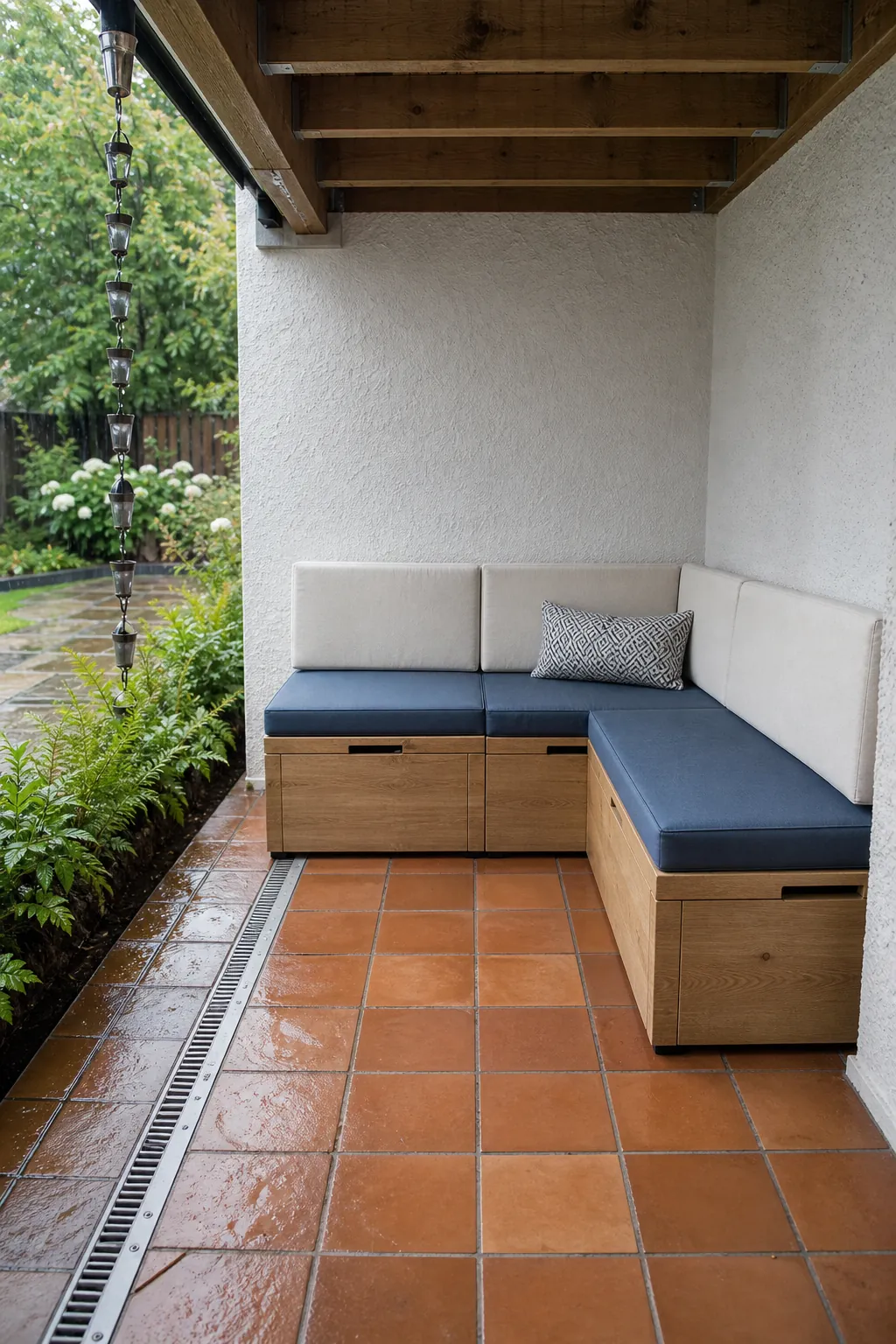
Fitted seat pads make a simple corner bench look deliberate and stay neater than loose cushions. Use outdoor foam and covers with zippers or drain seams, and limit the palette to one solid plus one small pattern.
Store cushions dry, keep the bench clear of damp walls, and avoid building over utilities or drainage. Tailored should still mean easy to remove and clean.
Soften the Floor With a Breathable Rug
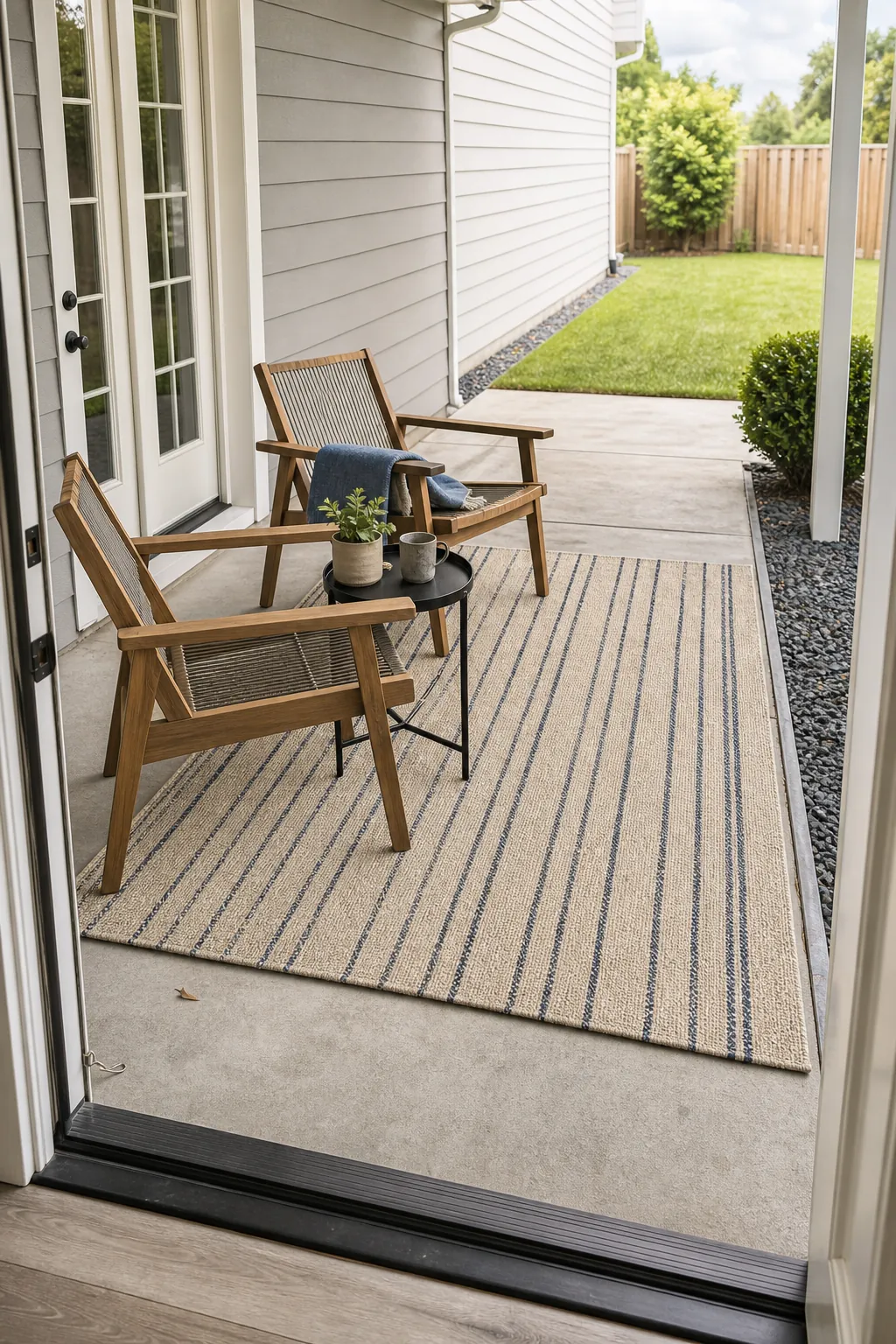
A low-pile outdoor rug adds softness underfoot and defines a small conversation zone. Use a size that supports the front feet of all seats while staying clear of the threshold and drains.
Lift it to dry and clean underneath. If the surface holds moisture or the climate stays humid, skip the rug and create warmth with washable seat textiles instead.
Warm Plain Concrete With Wood-Look Tiles
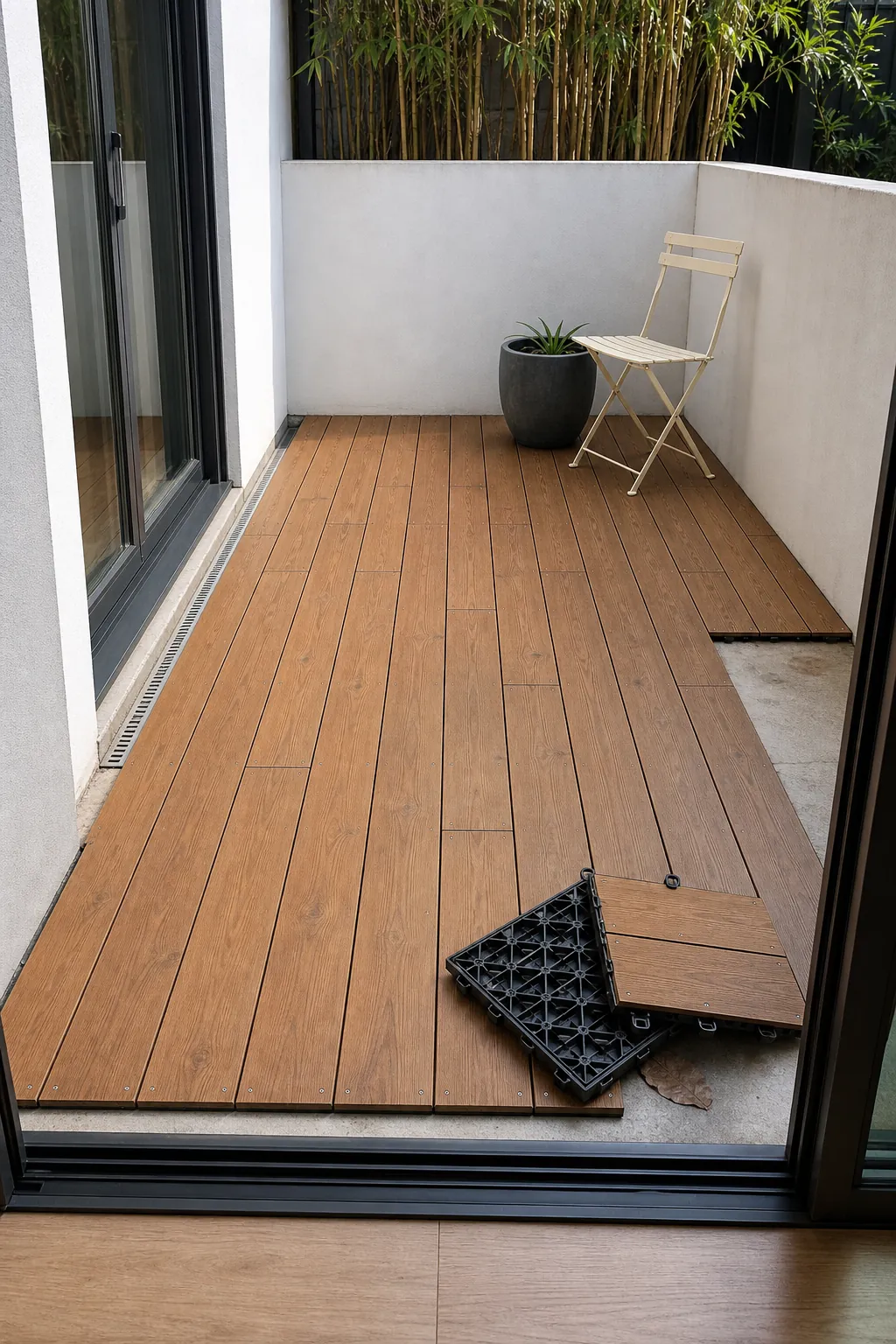
Removable deck tiles introduce wood color at the largest visual plane: the floor. Straight, consistent orientation feels calmer than a busy checkerboard and can make the patio read as an outdoor room.
Only install them over a sound, correctly draining surface. Preserve threshold clearance, lift sections for cleaning, and follow property rules.
Use One Soft Privacy Panel
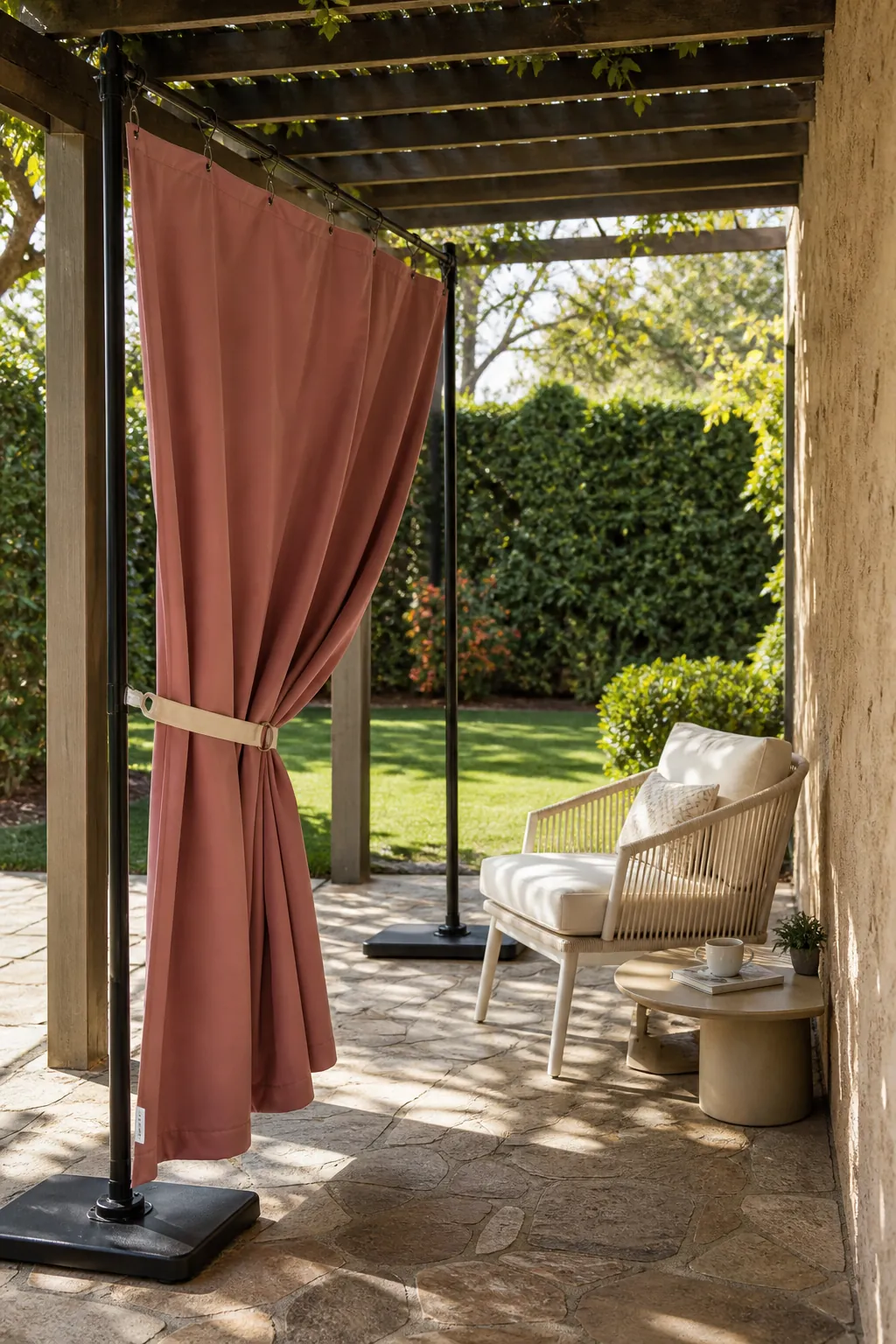
On a covered patio where attachments are permitted, one outdoor fabric panel can soften the exposed side without making the space feel enclosed. A tieback lets you adjust privacy and airflow throughout the day.
Use an approved support, weighted hem, and true outdoor fabric. Secure or remove the panel in wind, wash it regularly, and keep it away from exits, heaters, and fire-safety equipment.
Grow a Vine on a Narrow Freestanding Trellis
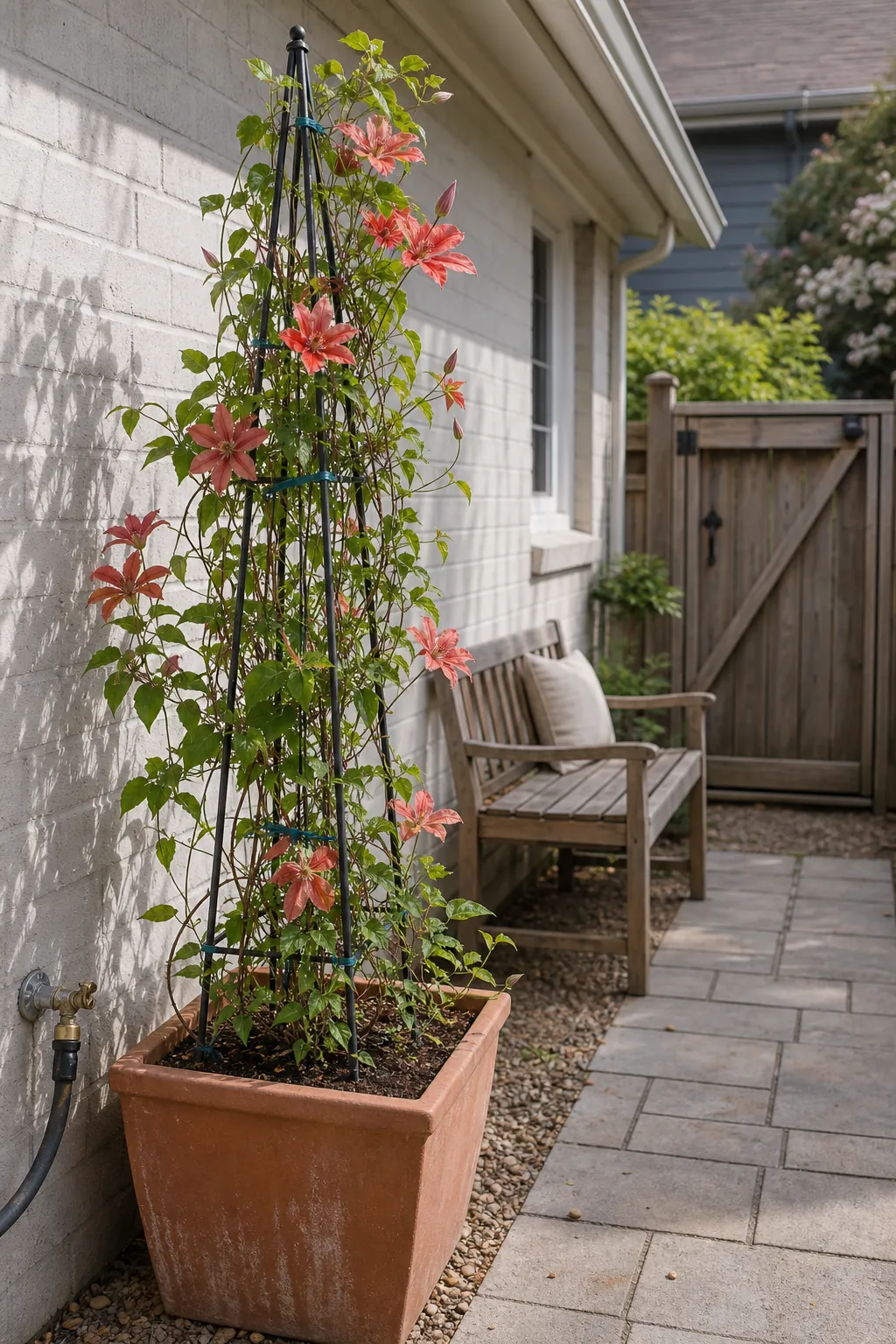
A slim trellis brings flowers and leaf texture to eye level without lining the floor with pots. Choose a noninvasive vine suited to the light and climate, and use a broad container or freestanding system designed for the mature plant.
Keep growth within your boundary, away from siding and gutters, and prune enough to preserve airflow. The support must remain stable in wind.
Create a Leafy Canopy With One Small Tree
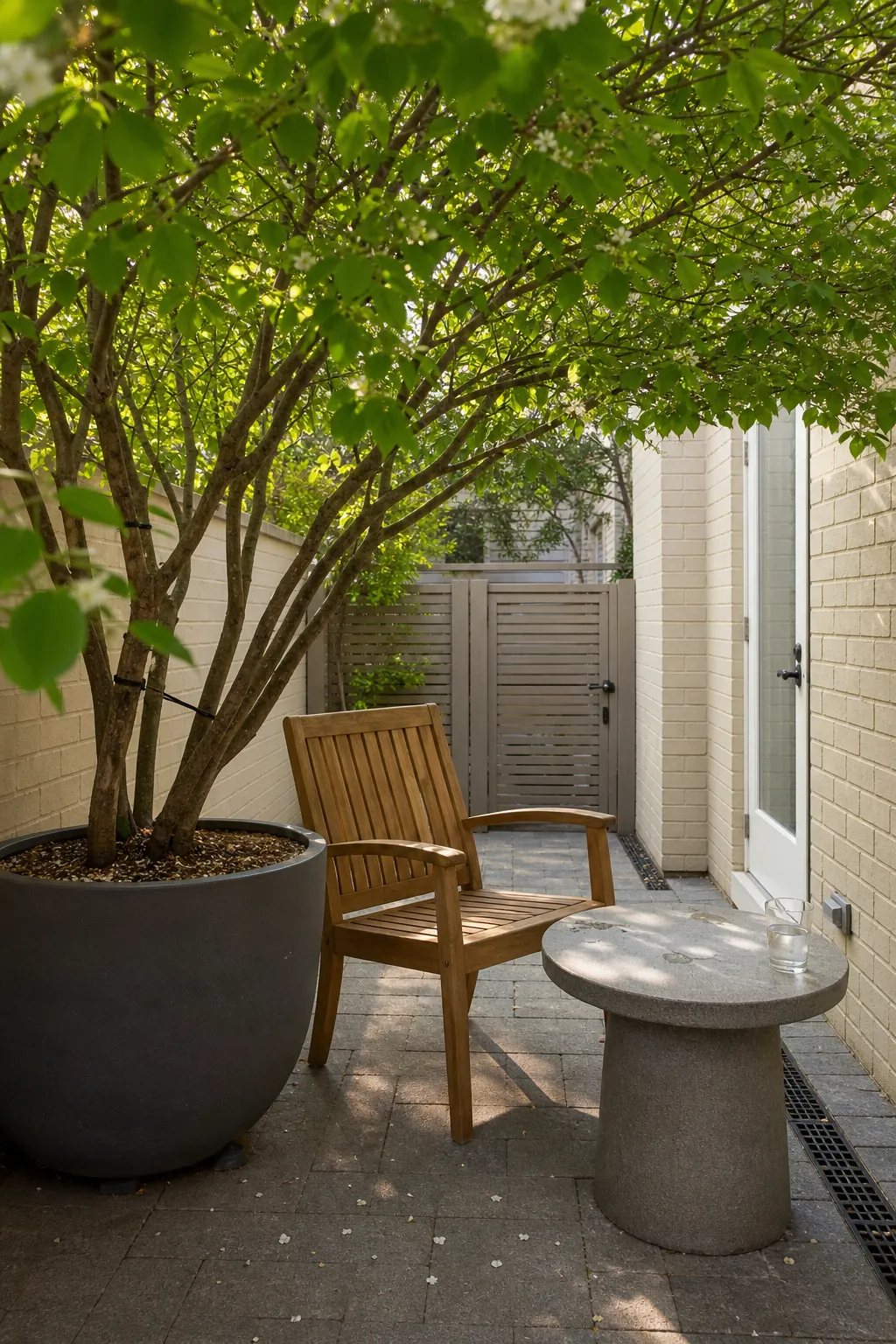
A single container-grown small tree can make a patio feel sheltered by placing foliage above seated eye level. Choose a species appropriate for container life, mature size, climate, and available sun.
Use a stable pot, confirm weight where relevant, and position branches away from doors and boundaries. This idea works because the tree earns the corner, not because more plants surround it.
Place Fragrant Herbs Beside the Seat
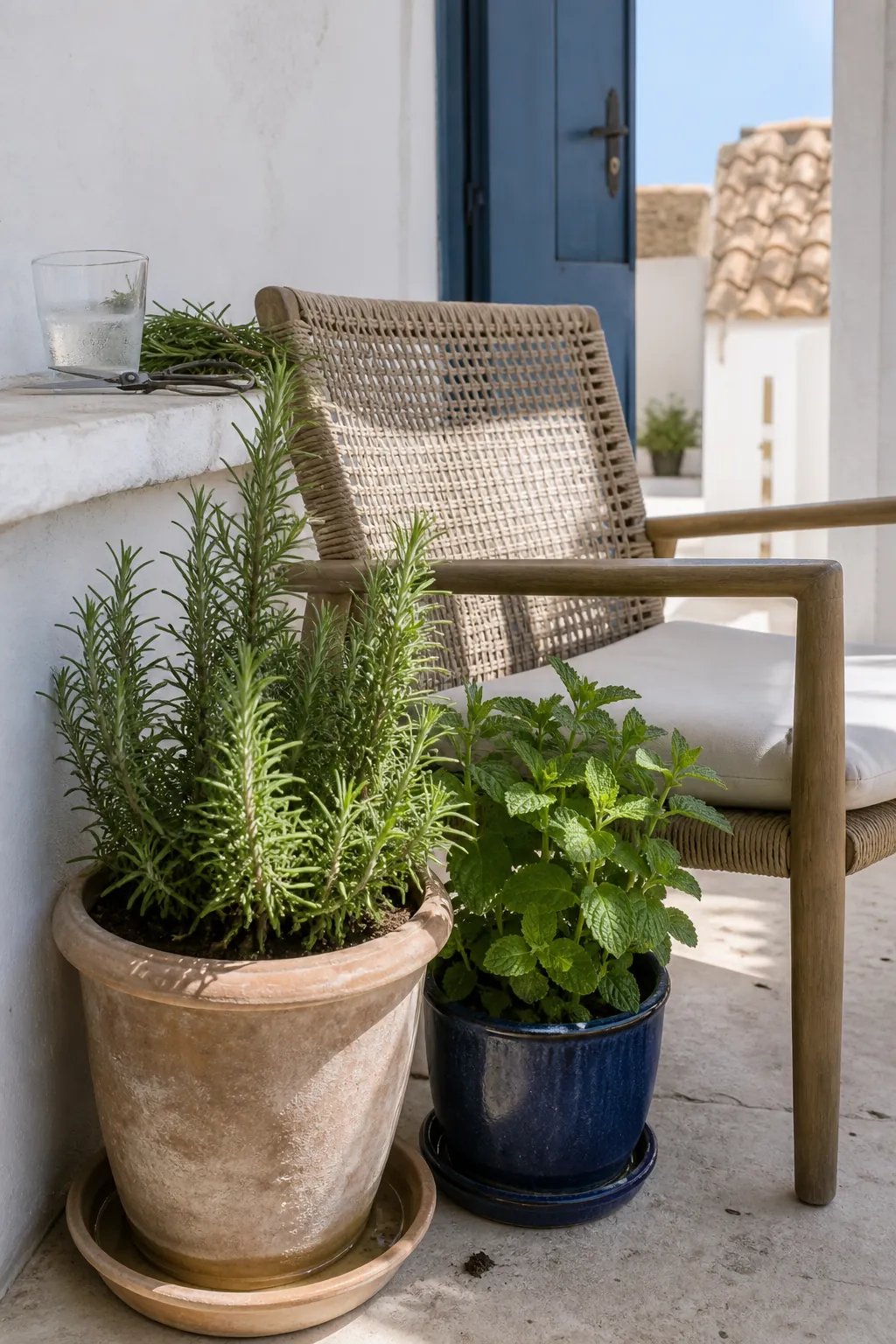
Put fragrance where you can notice it: a pot of rosemary near a sunny chair or contained mint beside the table. Brushing a leaf releases scent and makes the patio feel alive without adding another decorative object.
Match each herb to the real sun and watering conditions, and keep spreading plants contained. Check household pet safety before selecting any plant.
Rotate One Pot of Seasonal Flowers
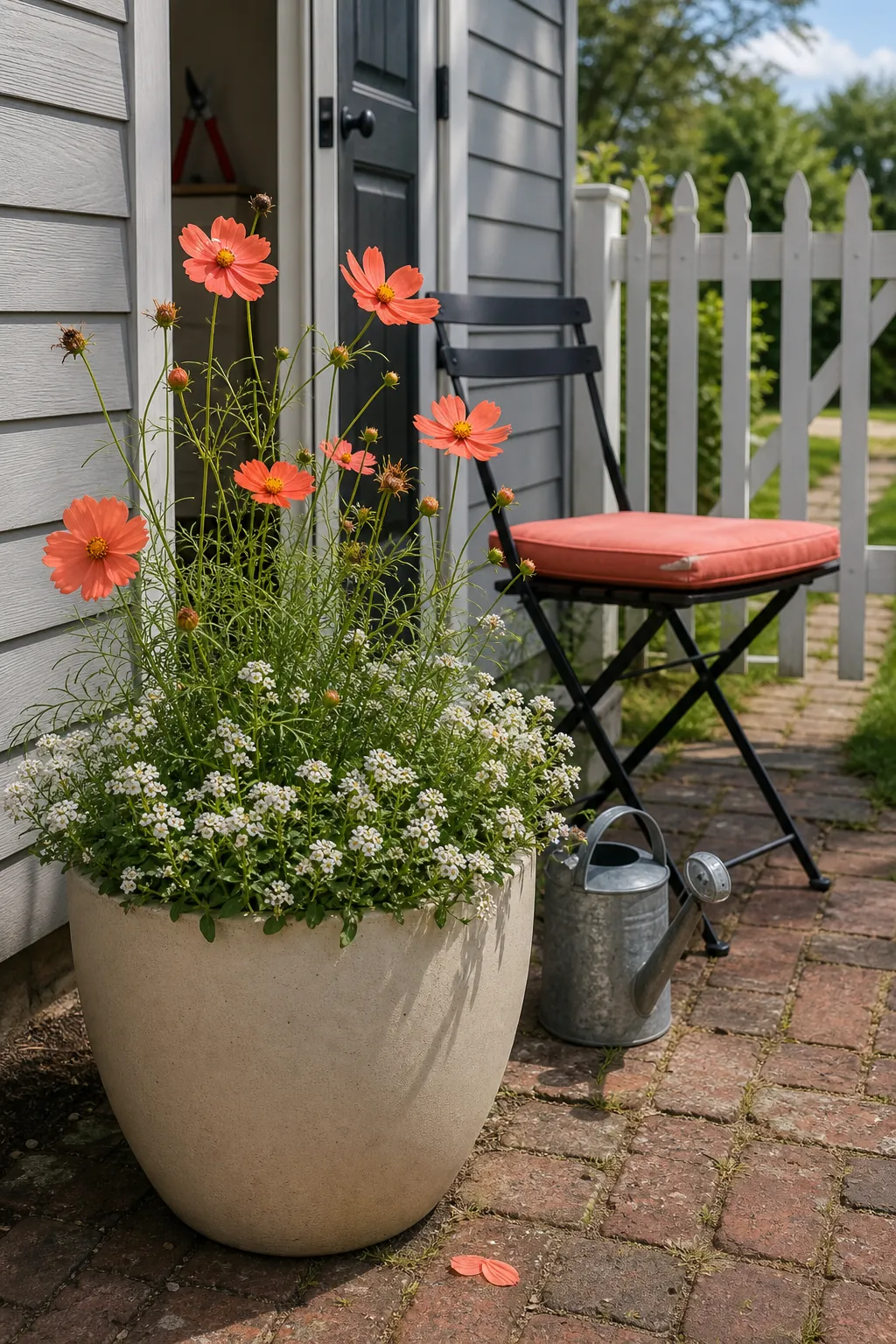
One generous pot of seasonal flowers supplies a changing color note without turning the patio into a maintenance project. Repeat its color once in a cushion or table linen so the addition looks connected.
Choose flowers that suit the local season and patio light. Deadhead, water responsibly, and replace the planting when it truly declines instead of adding more pots around it.
Limit the Palette to Three Warm Notes
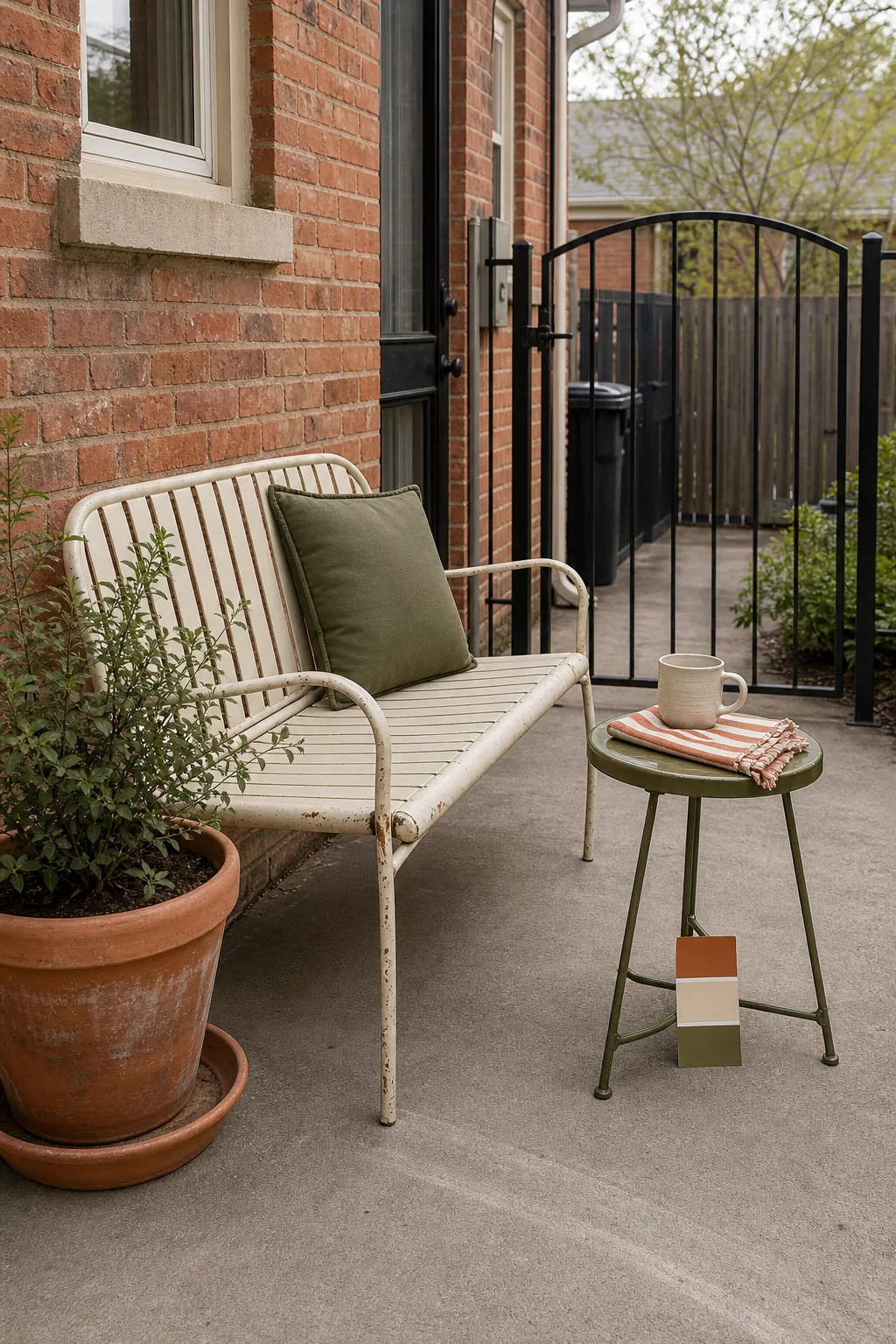
Terracotta, cream, and olive—or another restrained trio—can connect furniture bought at different times. Repeat each color in only one or two places and let fence, brick, or concrete serve as the neutral background.
A limited palette reduces visual noise, which is why it feels cozy instead of cramped. Texture can vary even when color stays disciplined.
Repeat Natural Wood in Small Doses
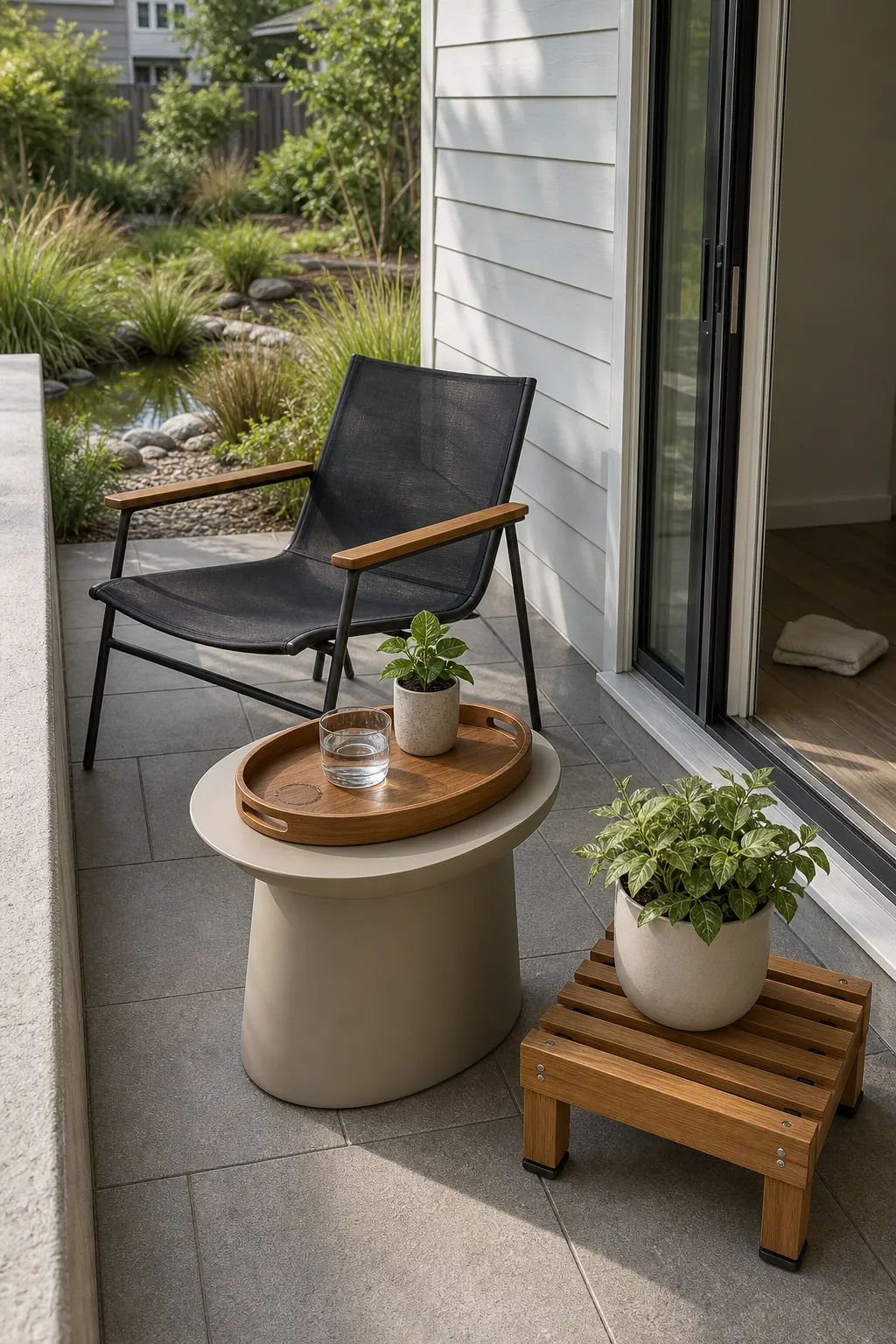
Warm wood can appear in a chair arm, tray, and planter stand rather than a full furniture suite. Repetition gives mixed pieces a common thread while preserving the durability of metal or composite frames.
Use exterior-suitable wood and maintain the finish as recommended. Keep wooden feet away from standing water and allow air beneath any piece that rests on the floor.
Layer Woven Texture Without Extra Pillows
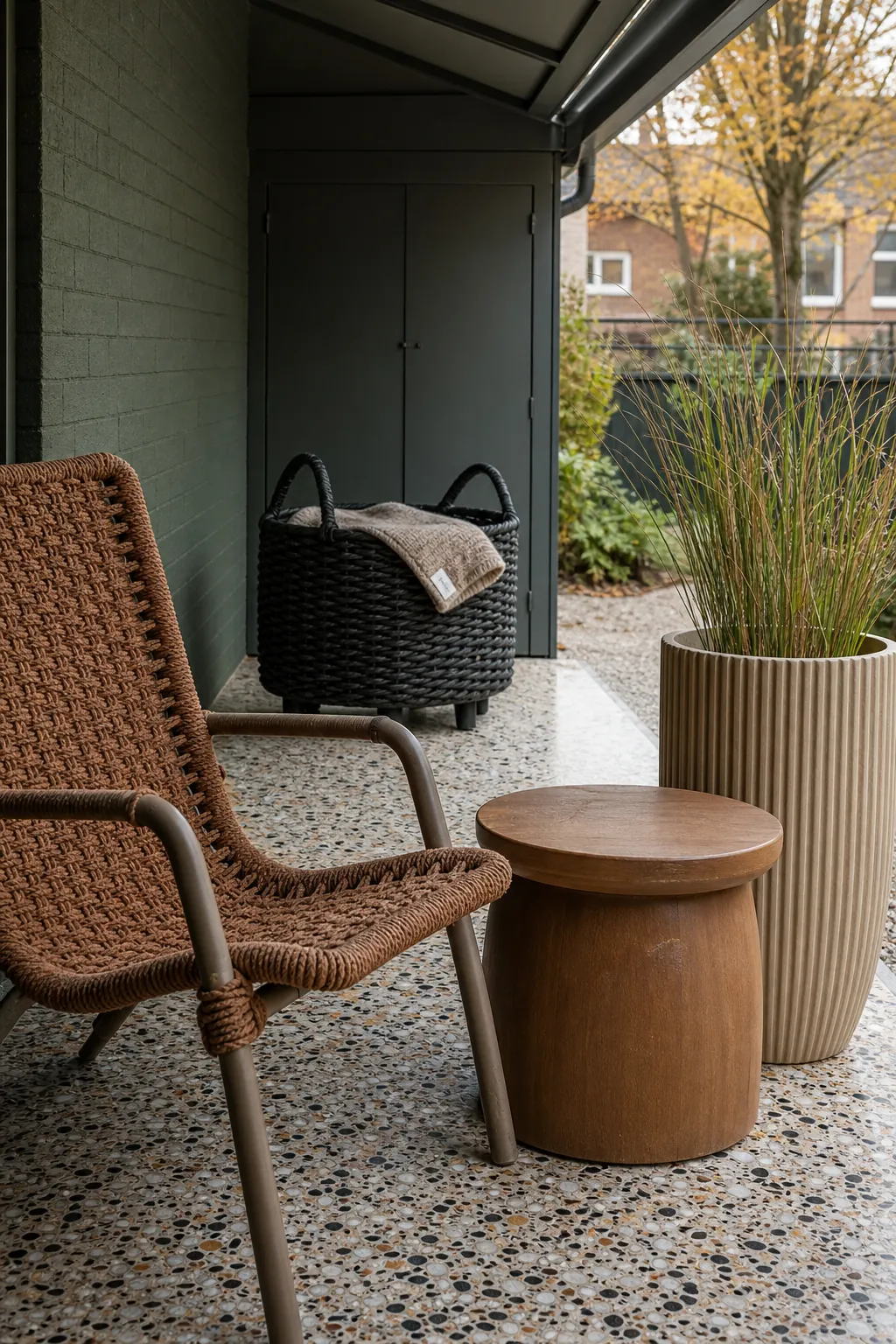
Woven chair cord, a handled basket, and one textured planter add visual softness that survives better than piles of loose fabric. Use different weave scales so the materials feel collected rather than matched.
Choose outdoor-rated fibers and inspect them for fraying or trapped moisture. Baskets should come indoors if they are not designed for weather.
Add a Dry Stone Bowl for Quiet Texture
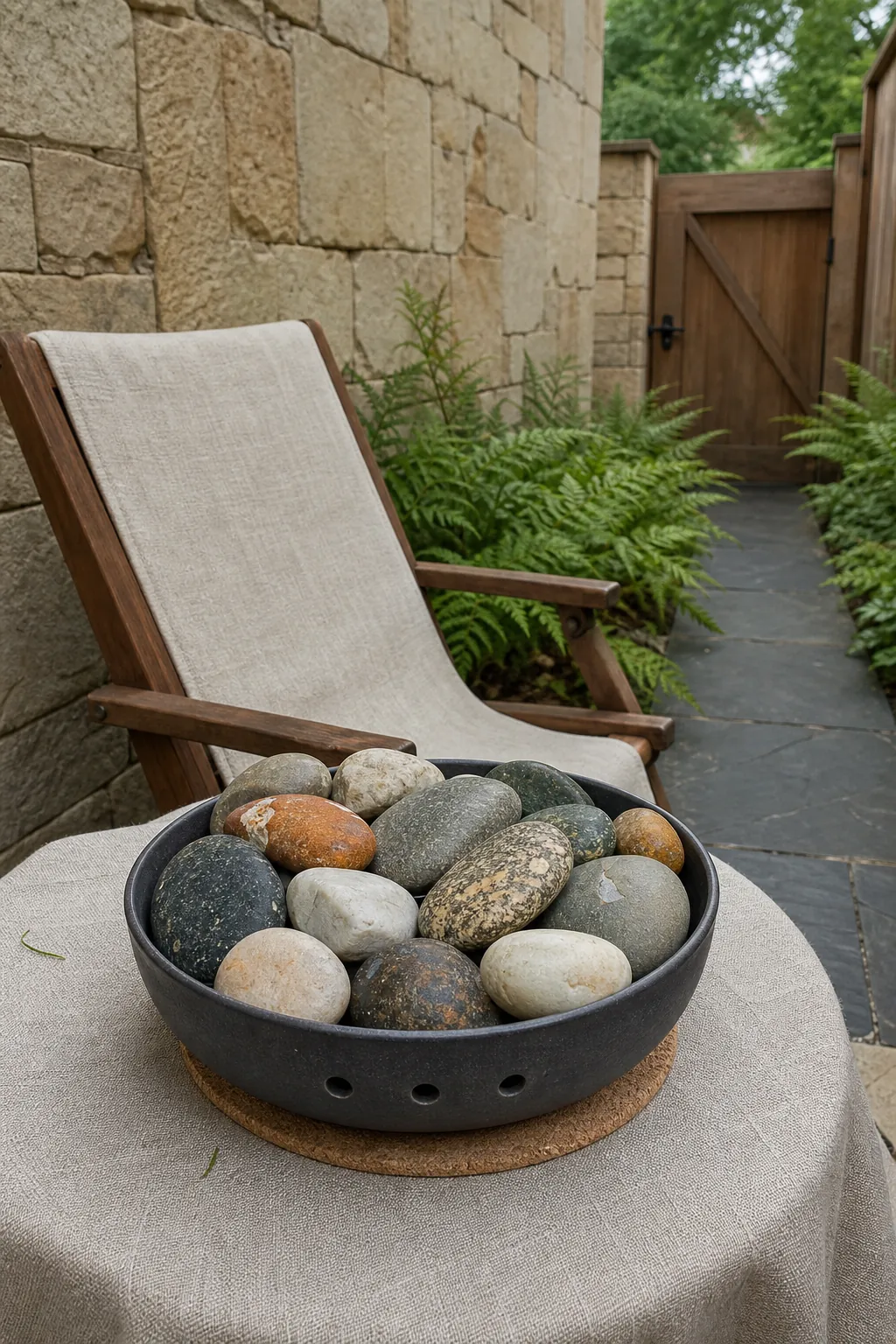
A shallow bowl of smooth dry stones brings natural weight and a quiet focal point to a table or ledge. Use a perforated container so rain cannot collect, and keep the arrangement light enough to move for cleaning.
This is a useful alternative to a small fountain where mosquitoes, electricity, leaks, or maintenance would outweigh the pleasure of water.
Trace the Perimeter With Warm Light
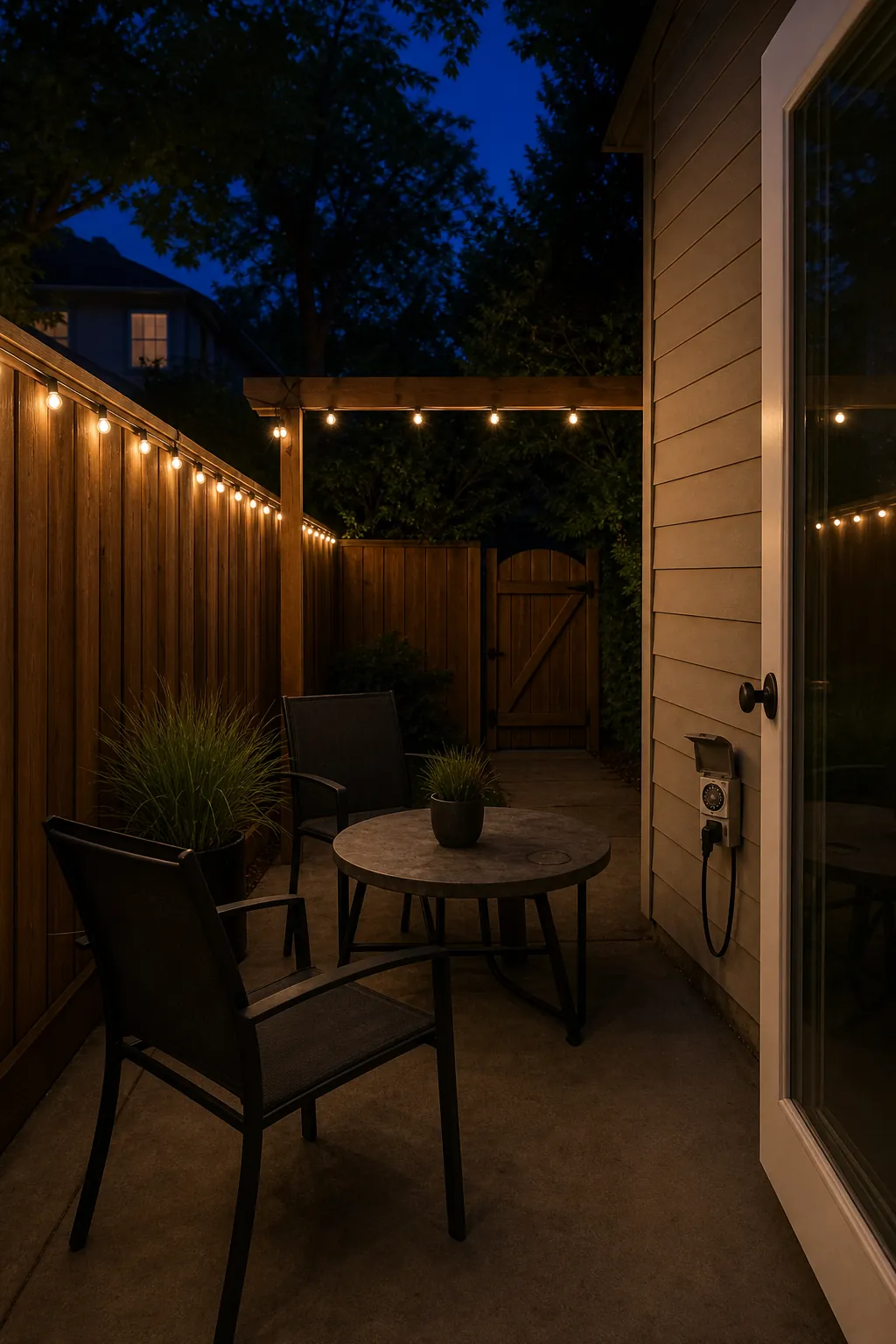
Outdoor-rated warm-white lights along a permitted fence or structure draw the eye around the space and make it feel deeper. Keep the line clean, bulbs modest, and connections protected.
Avoid crossing the center with multiple strands or aiming glare toward neighbors. Use a timer and keep cords out of wet walking routes.
Cluster Rechargeable Lanterns Low
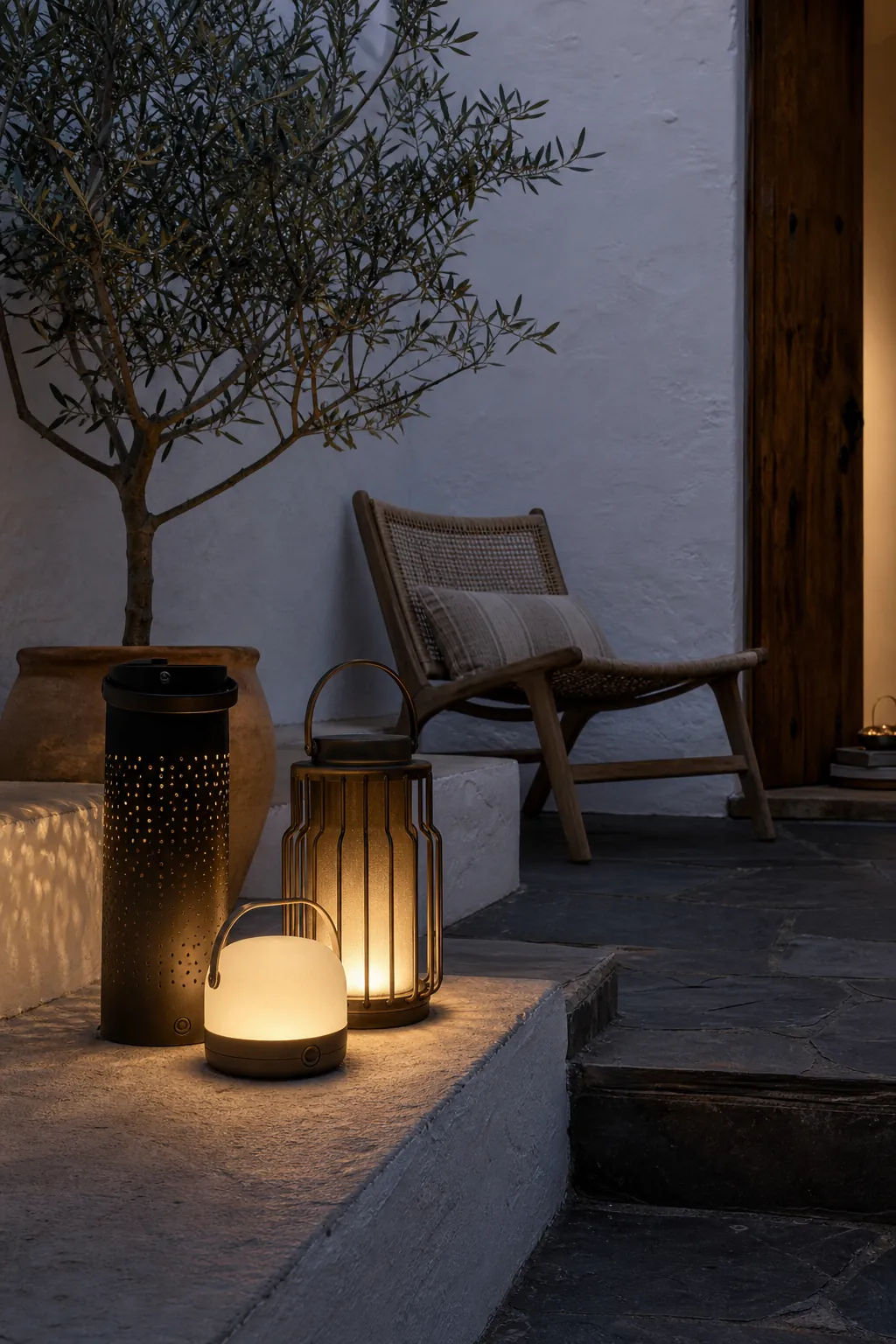
Two or three rechargeable lanterns at different low heights create gentle pockets of light without wiring. Group them on a stable ledge or table outside the path rather than scattering them across the floor.
Use outdoor-rated LED fixtures, bring them in to charge, and skip open candles. Keep enough shadow that the patio feels layered rather than overlit.
Uplight One Textured Plant
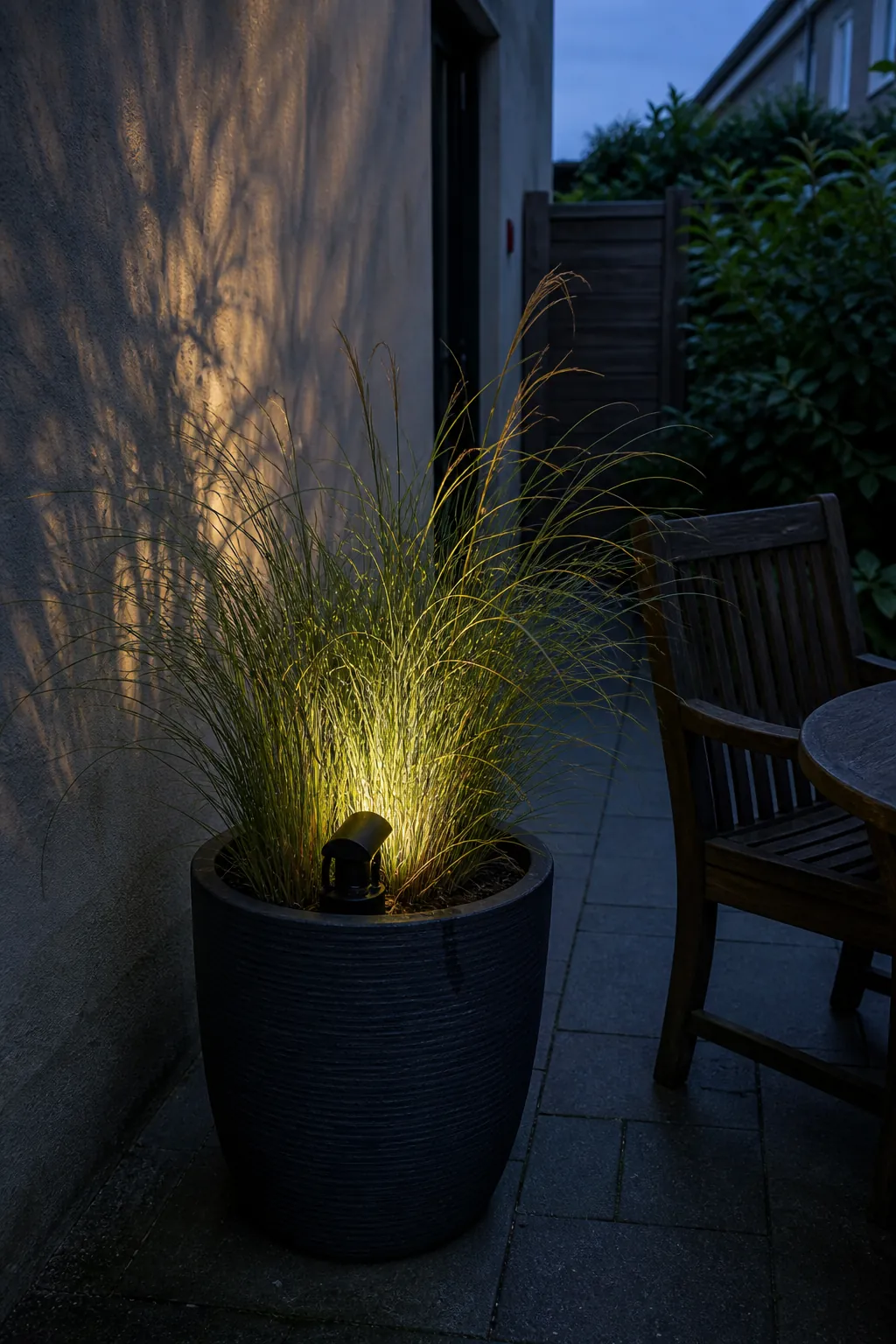
A small shielded light aimed into one airy plant creates soft leaf shadows and gives the corner depth after dark. The source should be less noticeable than the effect.
Use a low-output outdoor-rated fixture, keep it stable and dry, and aim it away from windows and wildlife-sensitive areas. One accented plant is enough in a mini patio.
Bring Out a Rechargeable Table Lamp
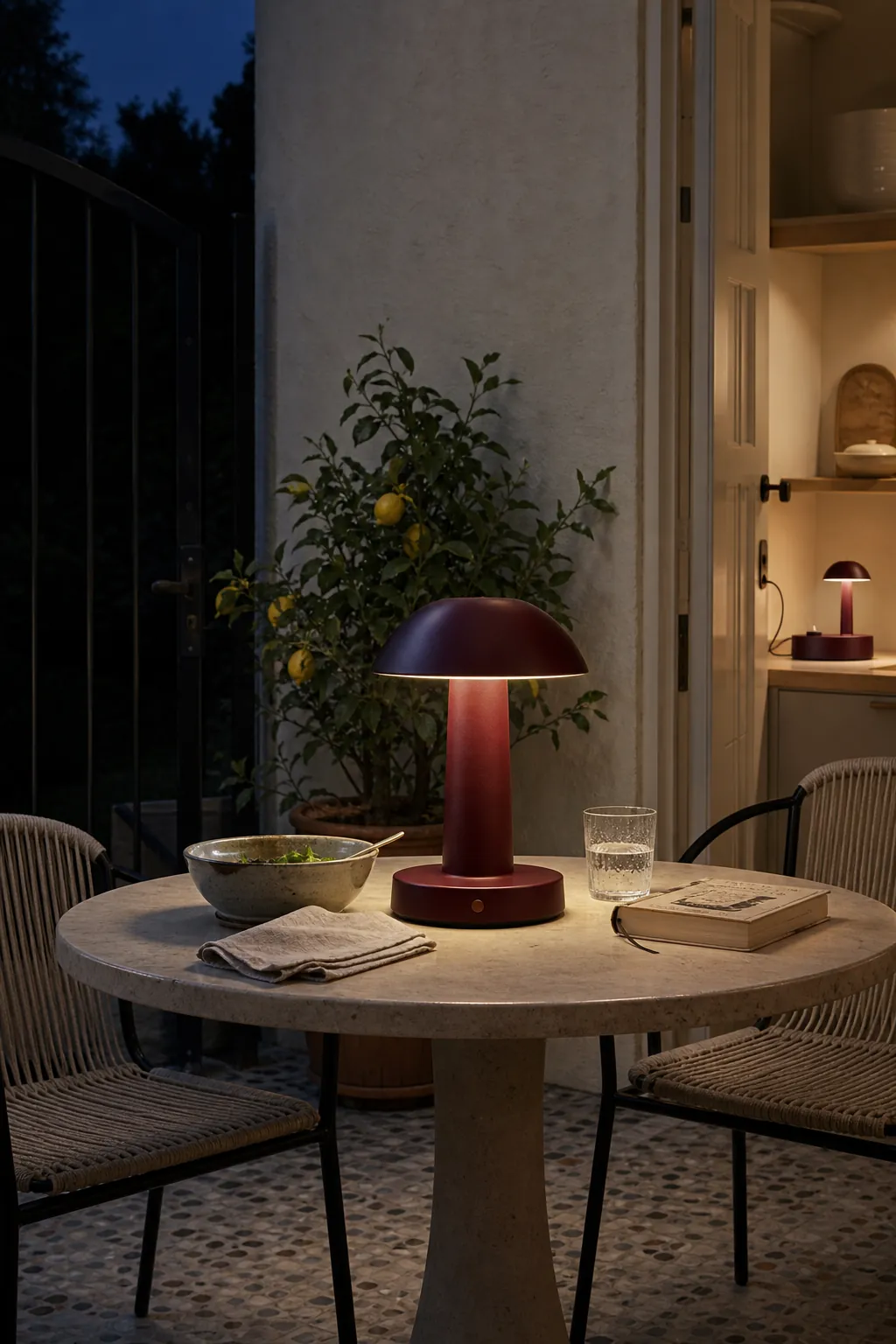
A shaded rechargeable lamp makes an outdoor table feel intimate and gives enough task light for dinner or a book. Pick a broad stable base and a dim setting that illuminates the tabletop rather than the whole yard.
Bring it indoors to charge and before weather. The lamp should support the evening, not become another permanent object to clean around.
Use a Compact Umbrella to Lower the Ceiling
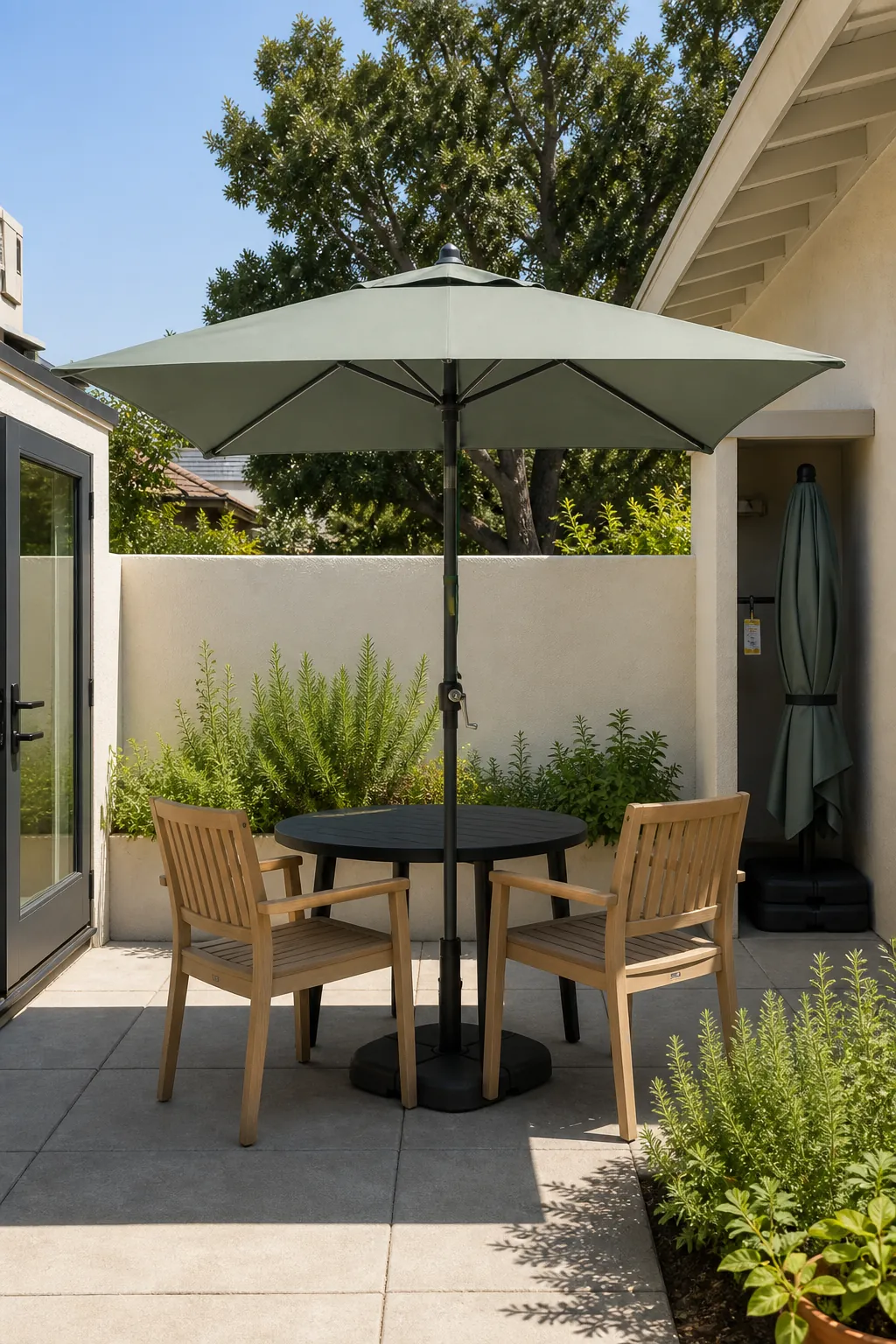
A properly sized umbrella can make an open ground-level patio feel more sheltered while solving glare and heat. Choose a canopy proportionate to the seating and use the base specified for the product.
Close it whenever unattended or windy, keep it inside boundaries, and confirm local or property rules. A compact canopy creates coziness through scale, not darkness.
Keep a Cooler-Evening Basket Indoors
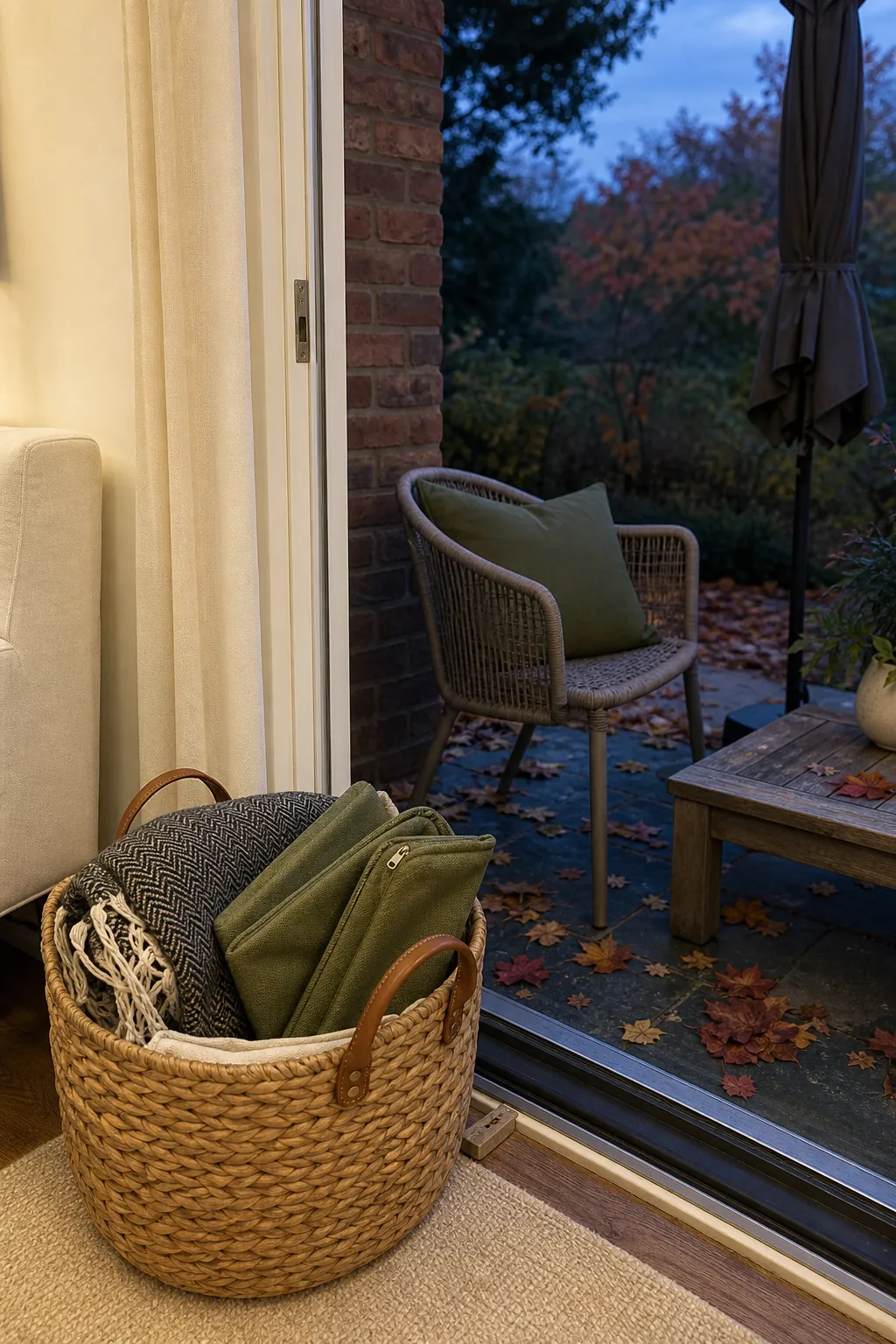
Store one washable throw and a pair of outdoor cushion covers in a handled basket just inside the door. You get softness on cool evenings without leaving fabric outside to collect dew, pollen, or rain.
Dry every piece completely before packing it away. A small textile kit extends the season more safely and simply than an unapproved patio heater or fire feature.
Carry Breakfast Out on One Tray
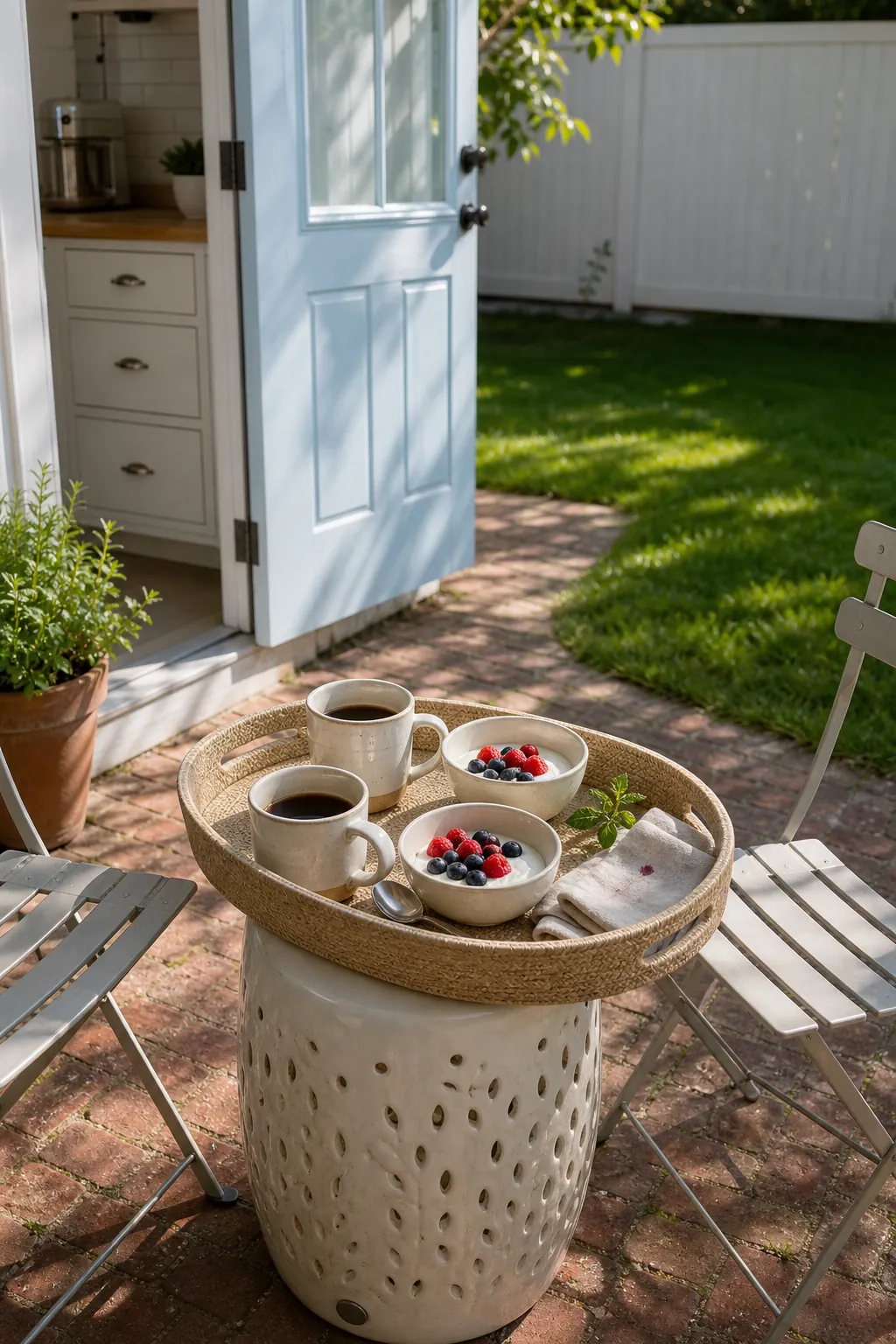
A handled tray turns even a garden stool or narrow bench into a useful breakfast surface. Carry everything in one trip, set the tray on a stable level base, and clear it just as easily.
Keep the meal simple and let the morning light provide the atmosphere. Coziness often comes from removing friction from a small daily pleasure.
Build a Rain-Ready Storage Routine
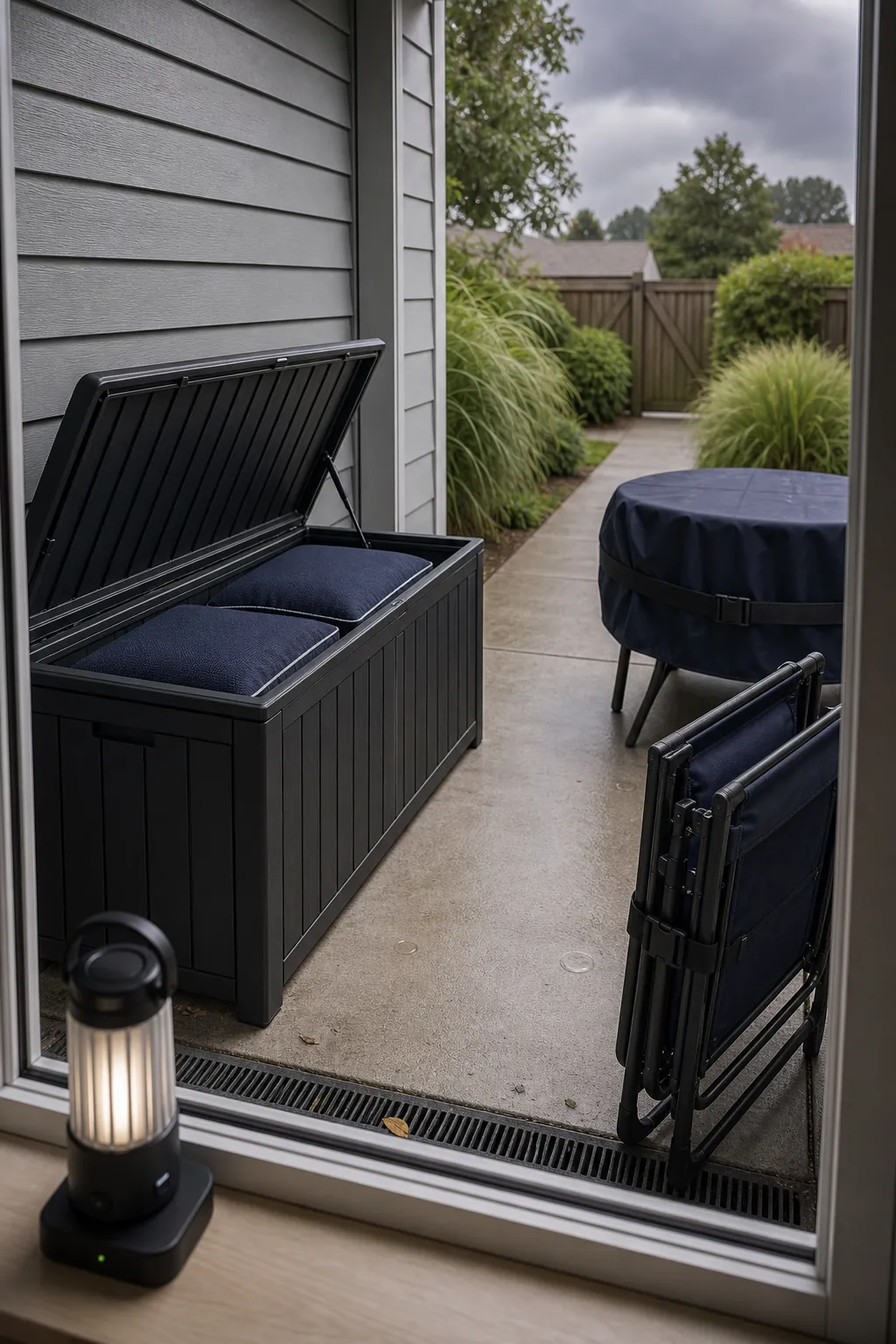
Give every weather-sensitive item a dry home before the forecast changes. Cushions go inside or into a suitable sealed box, folding pieces close, lanterns come indoors, and drainage stays visible.
A loose cover is not automatically safe in wind. Use only the fastening method intended for the product and never let stored items block the exit or trap moisture.
Finish With a Five-Minute Weekly Reset
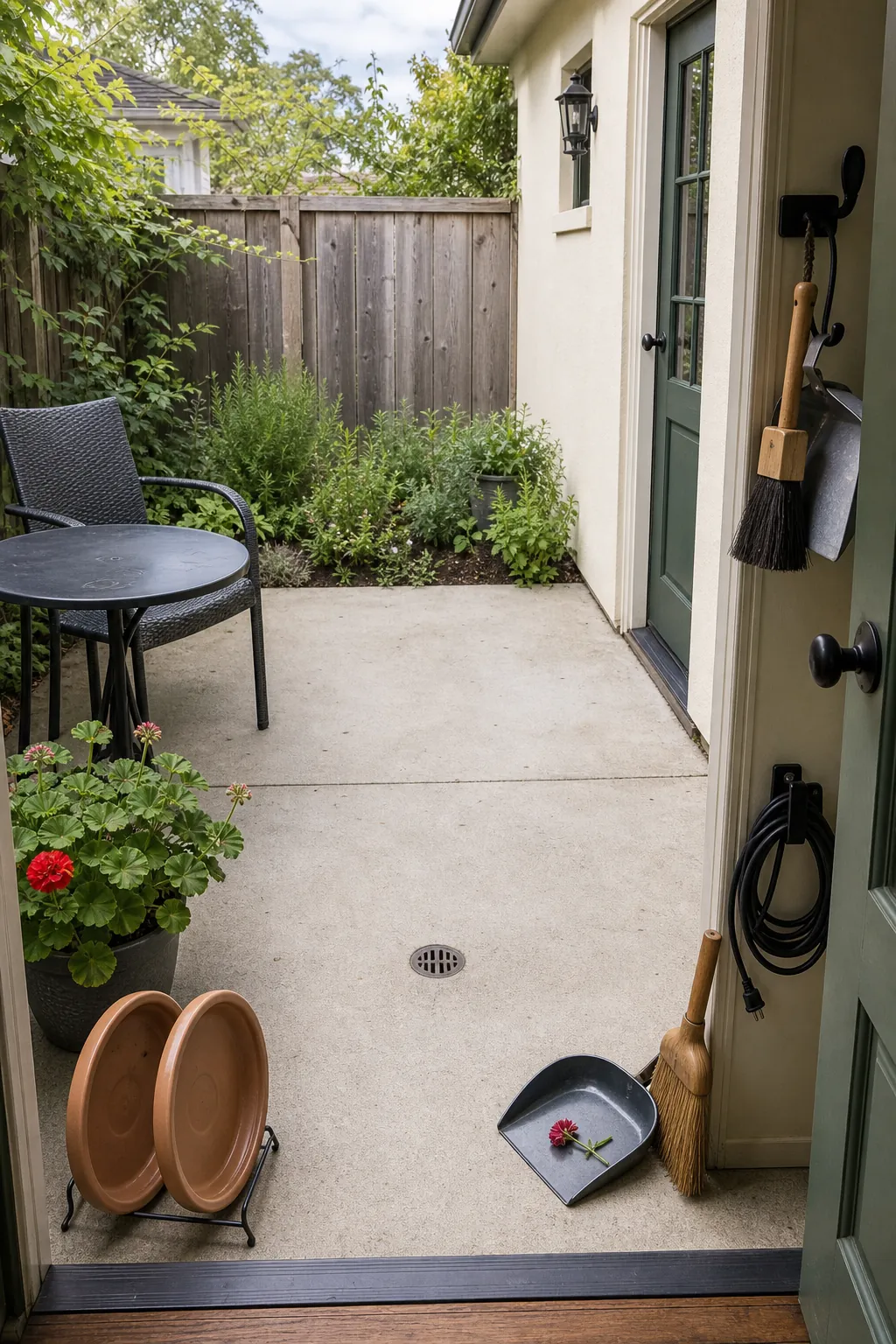
Once a week, sweep the floor, empty saucers, wipe the table, inspect cords and fabrics, deadhead one plant, and return anything that has drifted into the path. Five minutes keeps softness from turning into clutter and catches water or wear early.
Then stop adding. Sit in the place you made and notice what actually improves the next half hour. The coziest small patio is the one that stays ready for you.