
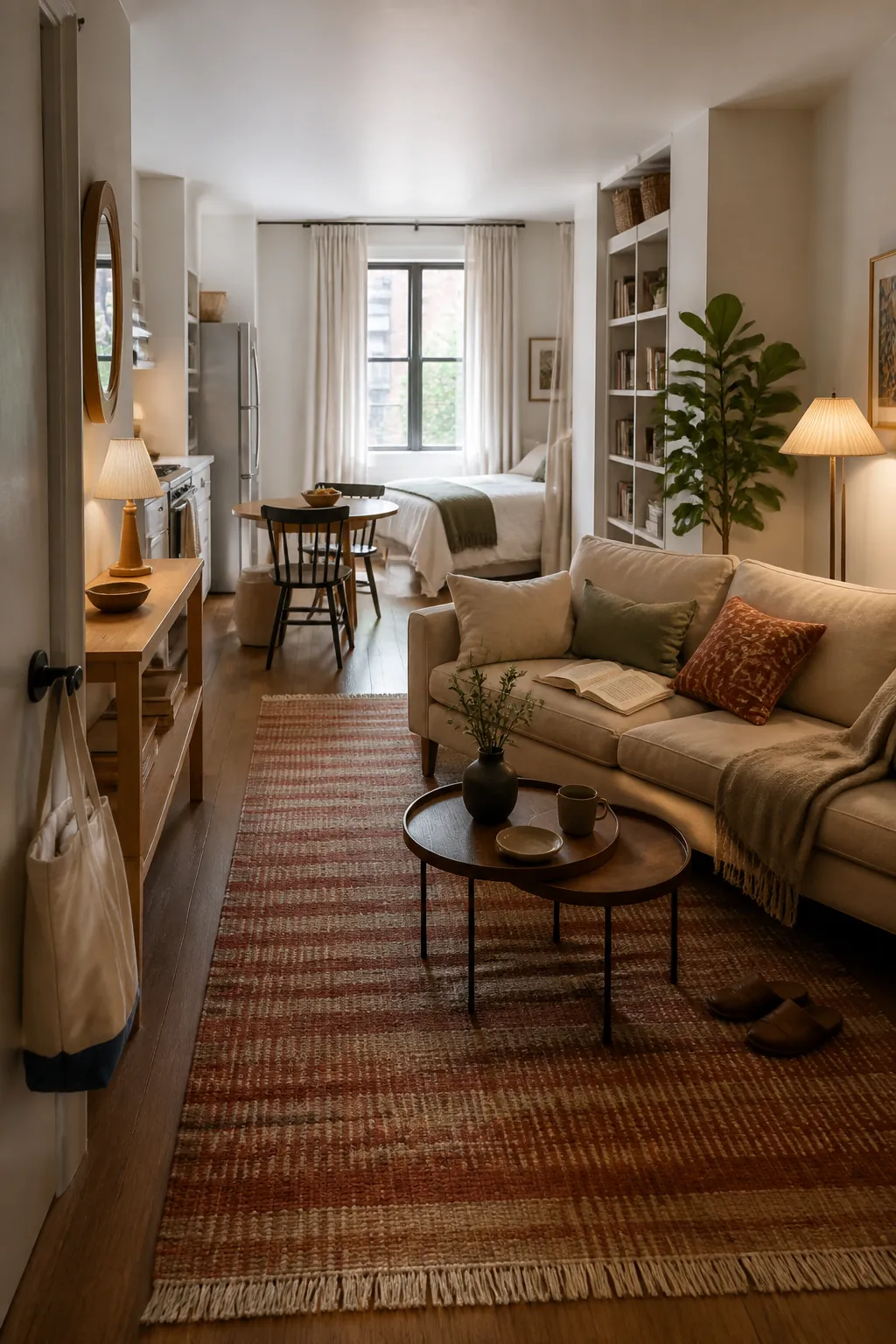
A small apartment rarely feels frustrating because it lacks square footage alone. The real problem is that every object is visible, every awkward gap matters, and one oversized purchase can disrupt the whole room. The most useful small apartment decorating ideas solve those pressure points before adding more decor.
This list starts with layout and storage, then moves into lighting, color, texture, and personality. You do not need to copy a showroom or buy everything at once. Choose the ideas that fix your daily annoyances first, measure before spending, and let the apartment become more personal one deliberate layer at a time.
Float the Sofa to Create a Clear Walkway
Pushing every piece against a wall can leave a small living room feeling like a waiting area. If the floor plan allows it, pull the sofa forward just enough to create a narrow passage or place its back toward the dining zone. A clearly defined path makes a compact room feel easier to use, even when the total open floor area does not change.
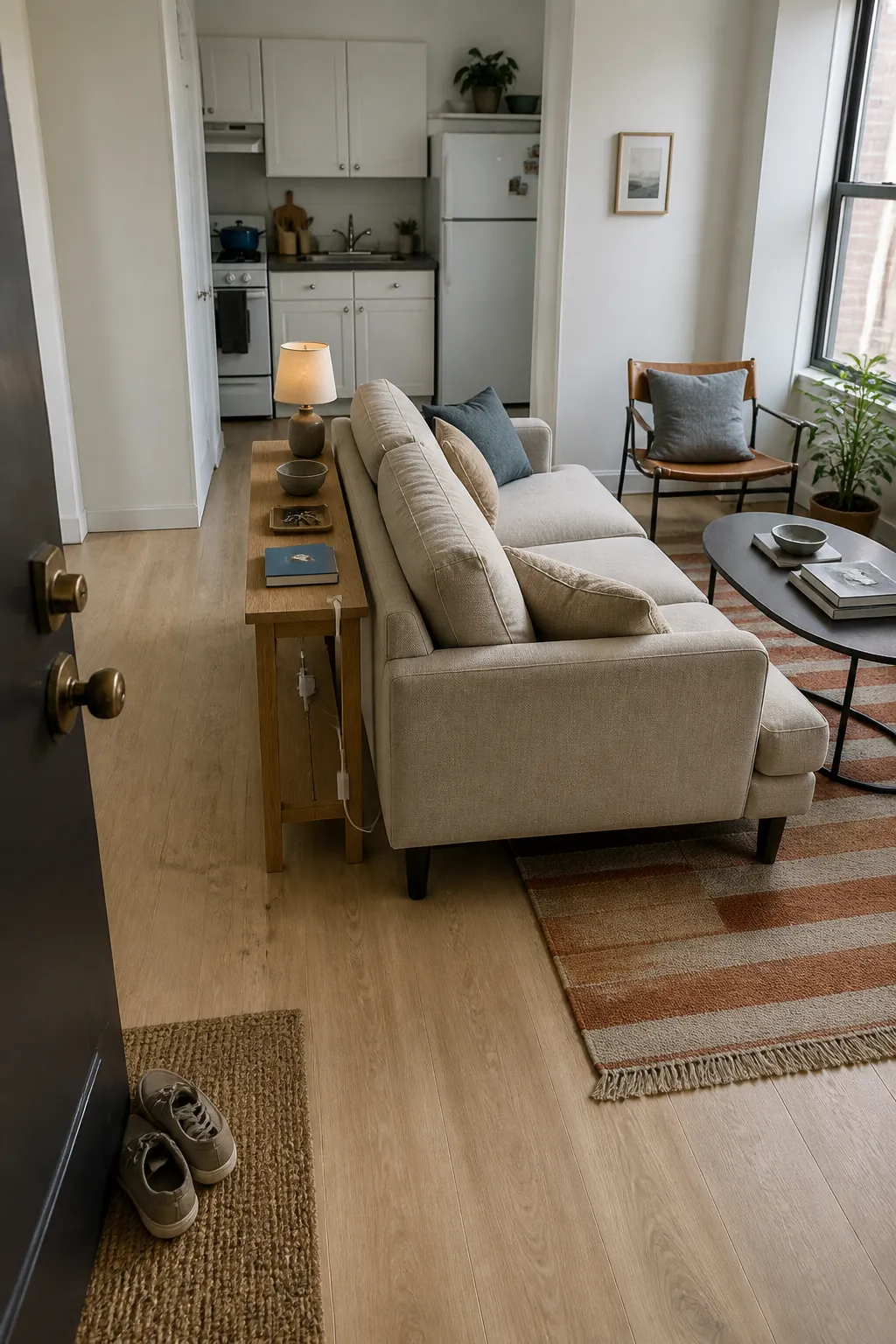
Test the arrangement with painter’s tape before moving furniture. Preserve the route you use most often—from the entrance to the kitchen, bathroom, or balcony—and avoid forcing people to sidestep a coffee table. A slim console behind the sofa can turn its exposed back into useful storage without closing the room.
Choose One Full-Size Comfort Piece
“Apartment-size” furniture is not always comfortable. Instead of filling the room with several undersized pieces, choose one sofa or lounge chair that genuinely supports how you relax. Comfort deserves priority because a small home has no spare room for furniture you avoid using.
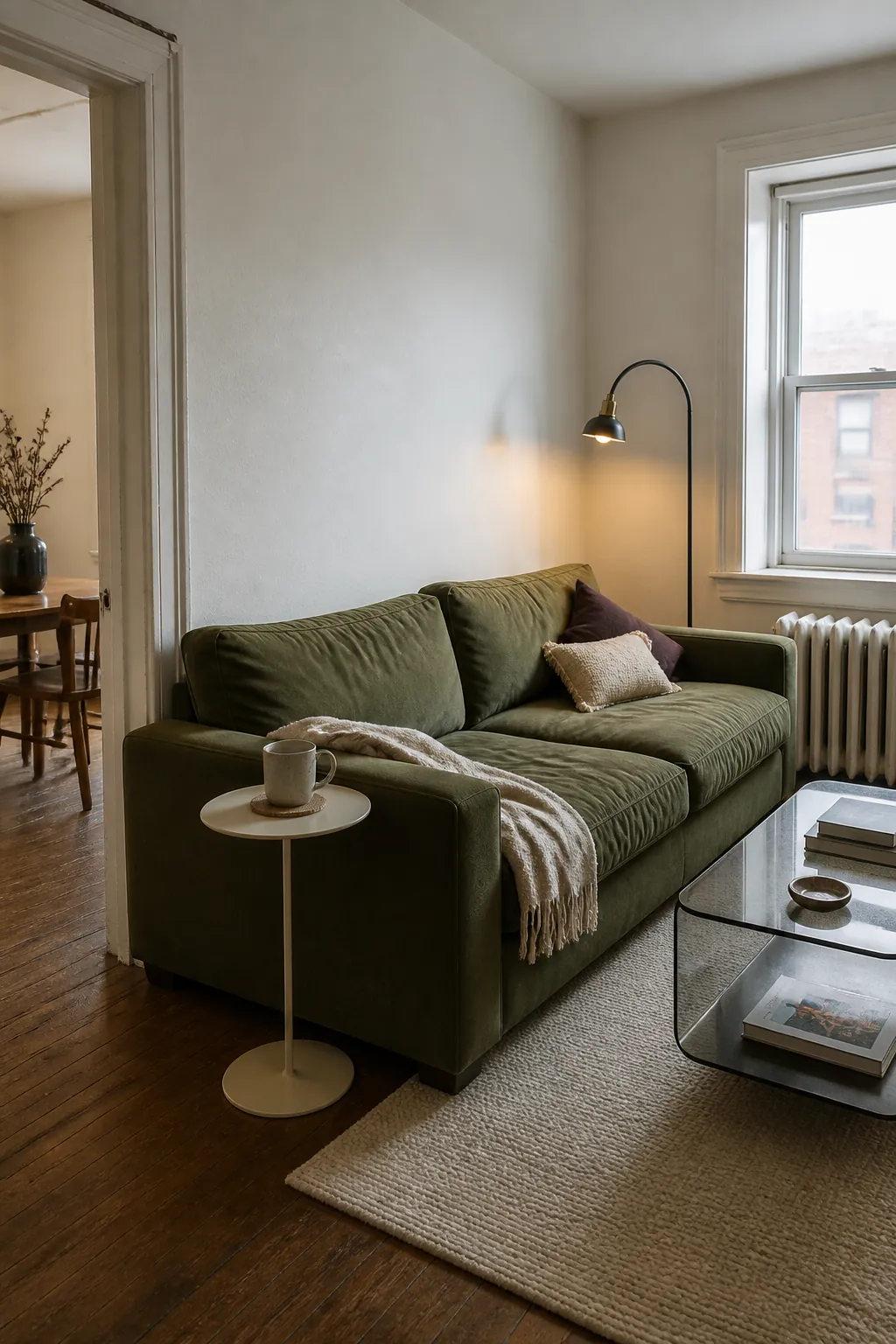
Balance that anchor with visually lighter companions: a pedestal side table, a narrow floor lamp, or an open-base coffee table. Measure the doors, elevator, and turning points as carefully as the final placement. A deep sofa that blocks circulation is too large; a comfortable one that leaves a practical route is not.
Use a Large Rug to Unite the Seating Area
A tiny rug floating between furniture can make the room look fragmented. Choose a rug large enough for at least the front legs of the sofa and chairs to rest on it. The continuous surface creates one readable zone and gives scattered pieces a shared visual foundation.
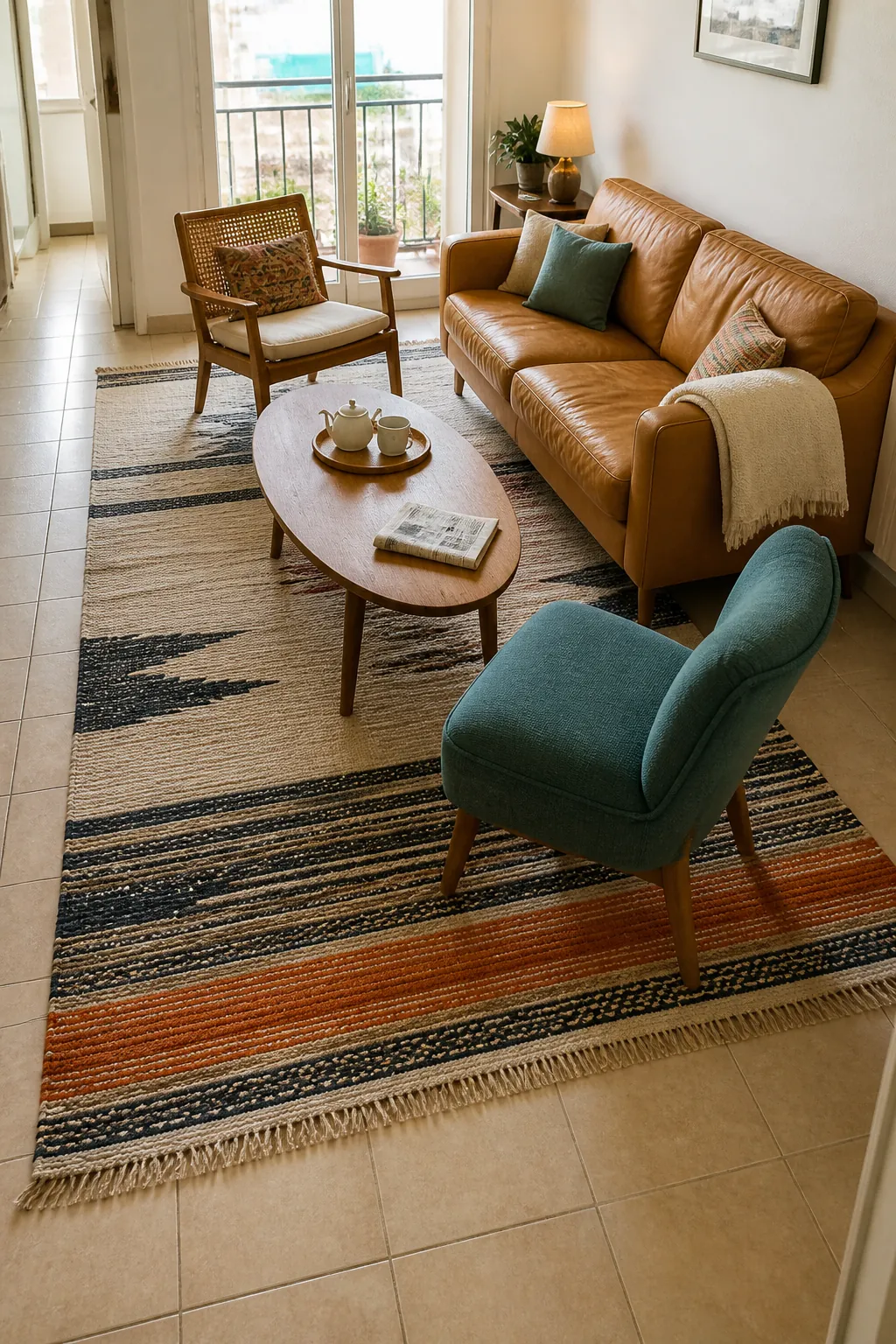
Low-pile or flat-weave rugs are easier beneath doors and dining chairs, while washable versions suit pets and busy households. If the budget is tight, shop secondhand, look for clearance sizes, or layer a smaller patterned rug over an inexpensive natural-fiber base. Correct scale matters more than a luxury label.
Replace the Coffee Table With Nesting Tables
Nesting tables provide surface area only when you need it. Keep them tucked together on an ordinary day, separate them for guests, or move one beside the sofa while working. Their smaller footprints also make it easier to maintain a comfortable route through a tiny living room.
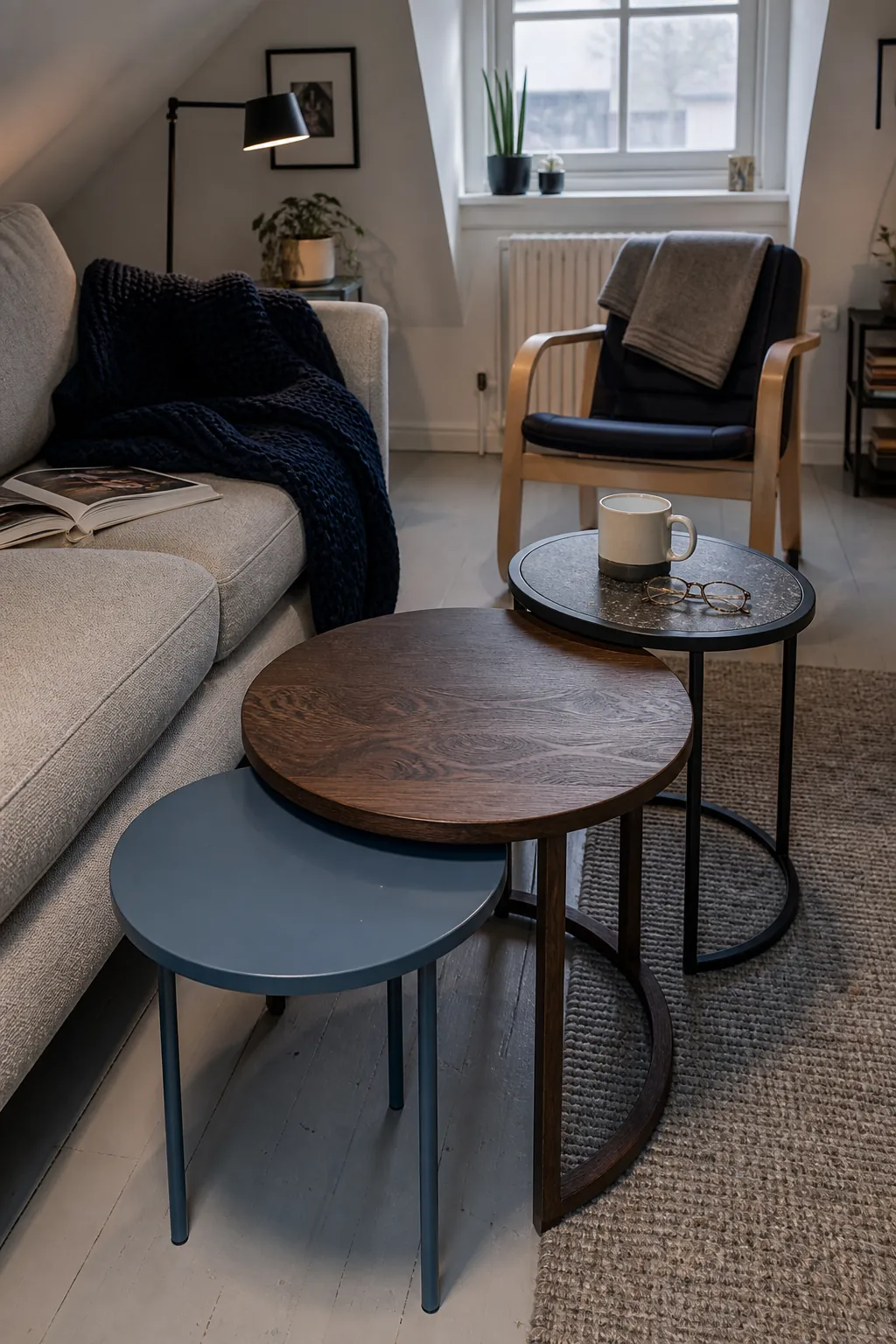
Look for stable bases and heights that work with your sofa rather than choosing by appearance alone. Rounded edges reduce bumps in tight quarters. A mismatched vintage pair can feel more personal than a set, as long as the materials or colors connect to something else in the room.
Build a Slim Entryway Landing Strip
Even an apartment without a foyer needs a place for keys, shoes, bags, and incoming mail. A narrow wall shelf, a few damage-free hooks, and one washable mat can form a landing strip within a few inches of depth. This catches clutter before it migrates to the table or sofa.
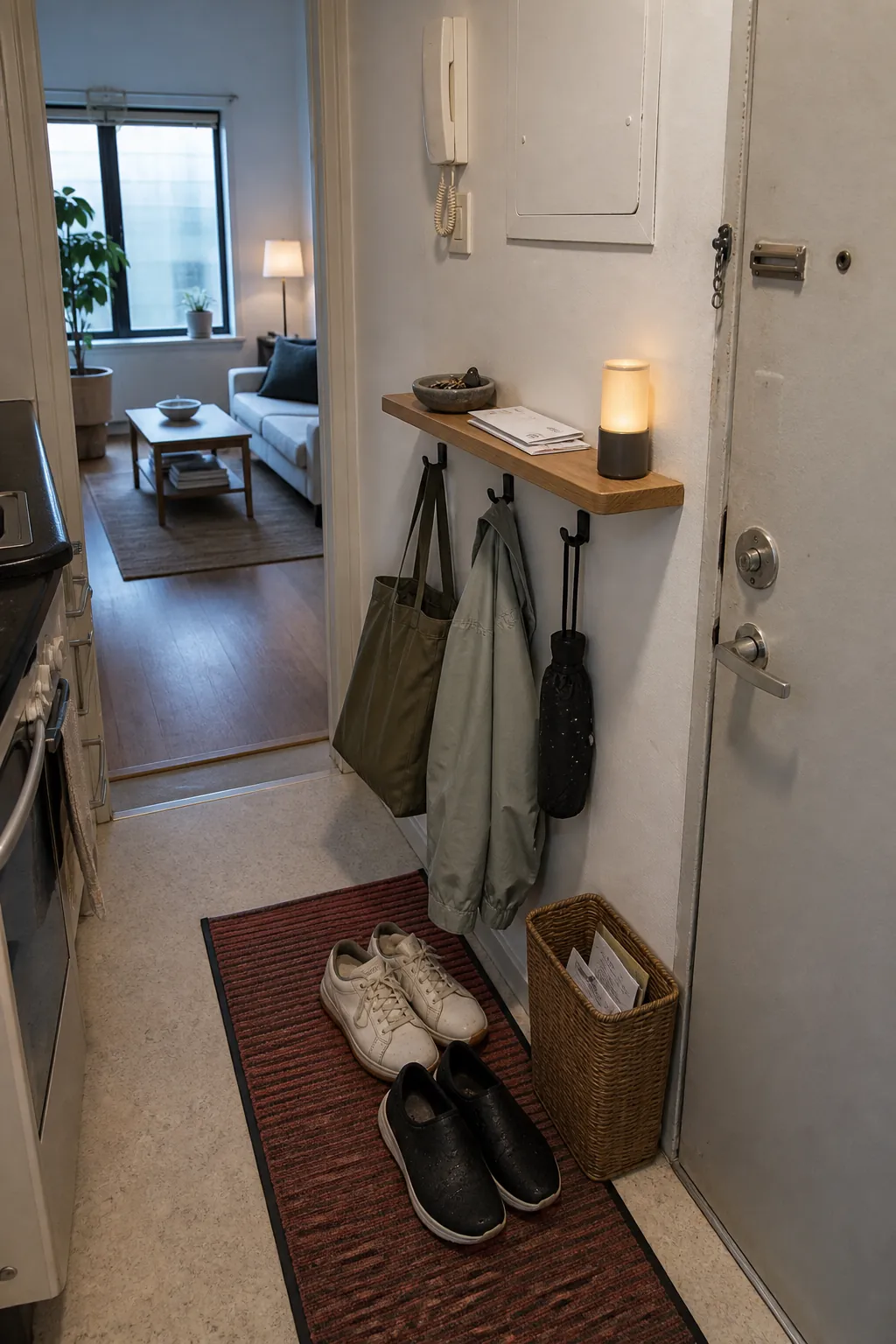
Limit the station to today’s essentials. Off-season shoes and rarely used totes belong elsewhere, or the landing strip becomes another storage pile. A good entry setup supports a quick daily reset: hang the bag, place the shoes, drop the keys, and move on.
Turn One Bookcase Into a Room Divider
In a studio or open-plan apartment, an open-backed bookcase can separate sleeping and living zones without constructing a wall. Light, sightlines, and air still pass through, while books, baskets, and a few decorative objects create partial privacy.
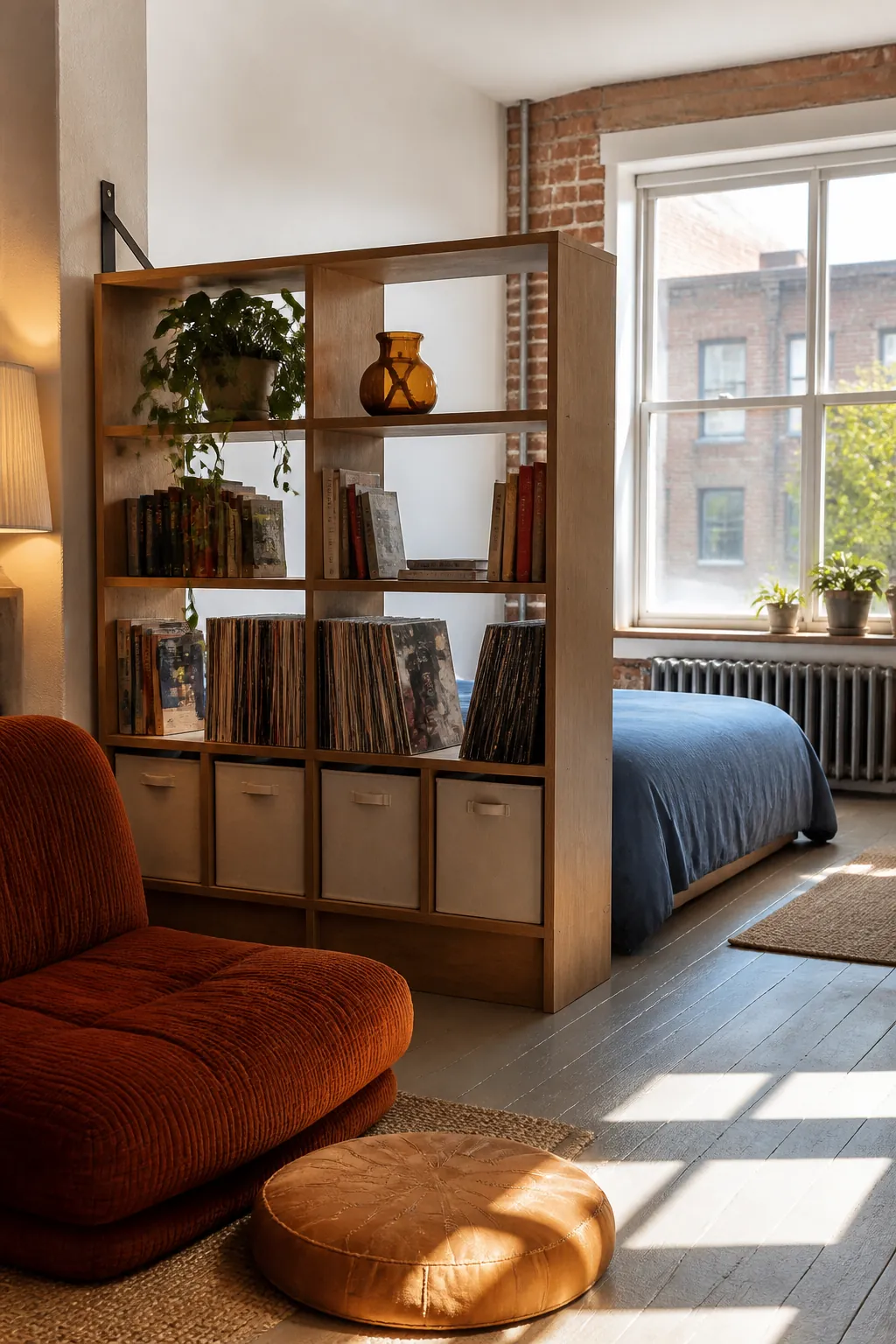
Anchor tall furniture according to its manufacturer’s safety instructions, especially in homes with children or pets. Keep the upper shelves airy and place heavier, less attractive storage near the bottom. The divider should clarify the room, not become an opaque wall of possessions.
Hang Curtains Close to the Ceiling
Mounting curtains above the window frame draws the eye upward and softens the hard edges common in rentals. Extend the rod beyond the glass so open panels reveal the full window instead of stealing daylight. The result feels taller, calmer, and more finished.
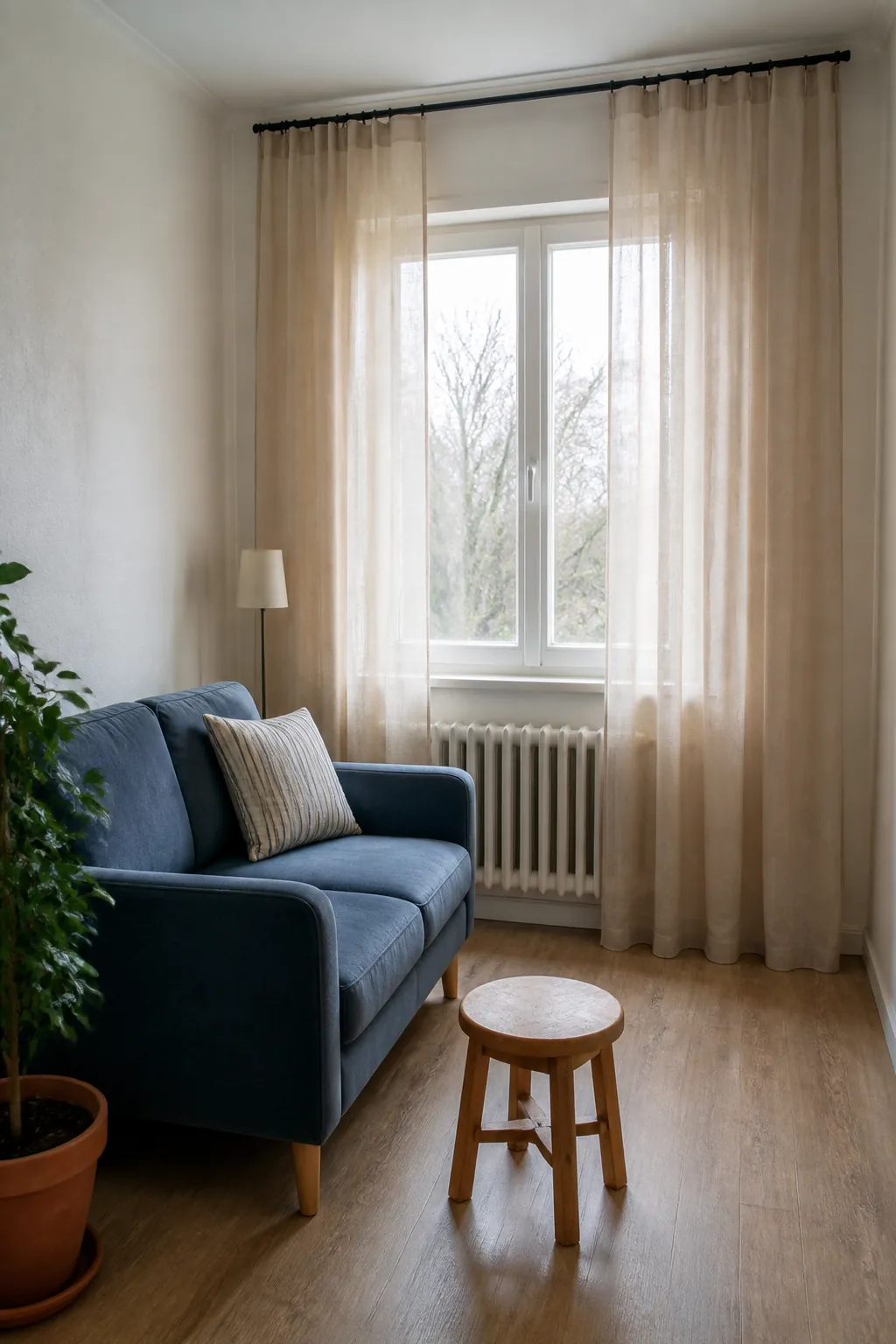
Choose sheers when privacy and daylight must coexist, or pair them with lined side panels for bedrooms. If drilling is prohibited, use a properly rated tension or no-drill system and keep the fabric lightweight. Let the hem barely meet the floor rather than pooling into a dust-catching heap.
Bounce Daylight With a Well-Placed Mirror
A mirror works best when it reflects something useful: a bright window, leafy view, lamp, or attractive corner. Place it across from or perpendicular to the light source and check the reflection from your normal seated position before mounting it.
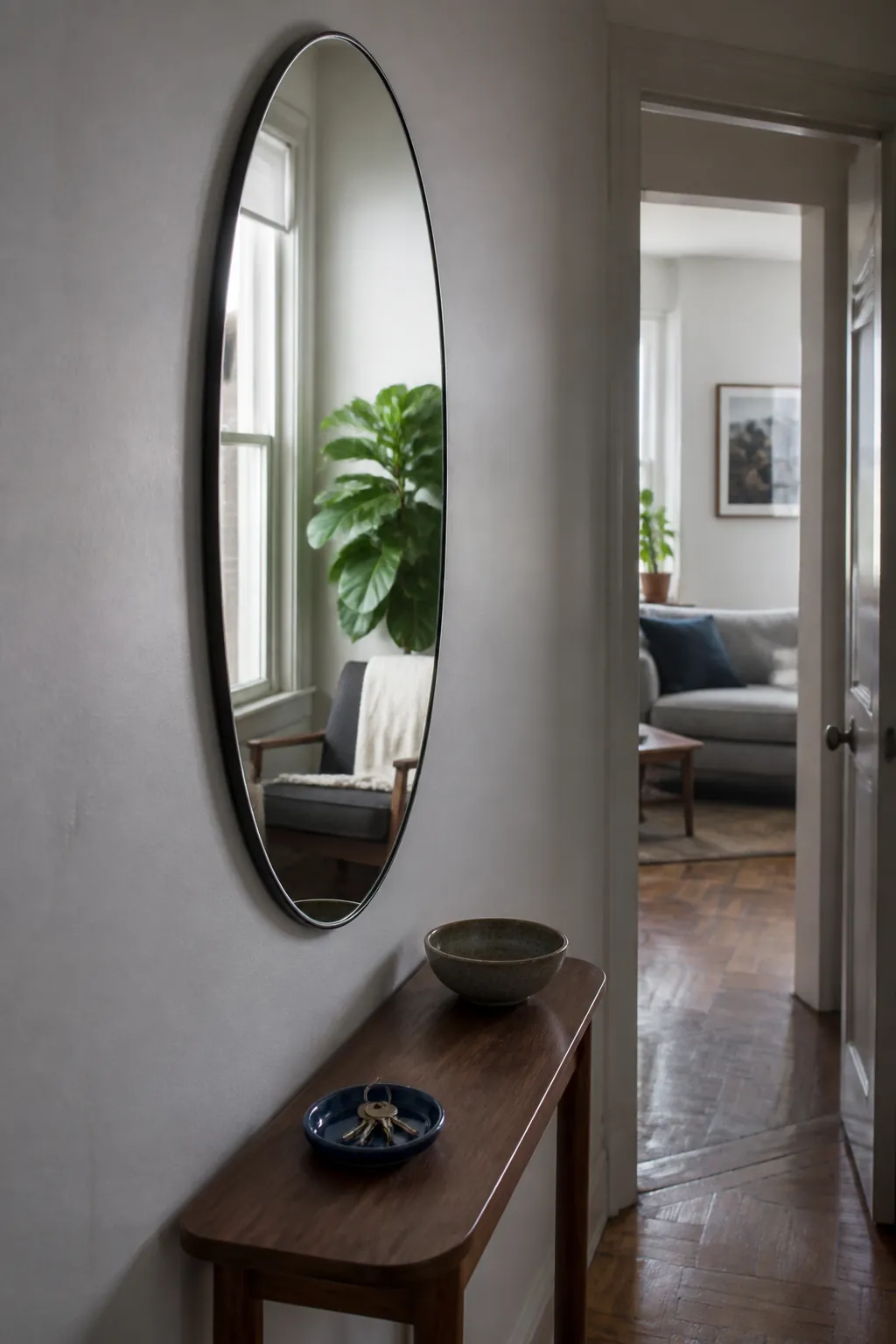
A single generous mirror often looks cleaner than a cluster of small ones. Leaning can work in adult-only homes when the mirror is designed and secured for it; otherwise mount it safely. The goal is better light and depth, not a reflection of the messiest zone.
Layer Lamps Instead of Relying on Overhead Light
One harsh ceiling fixture flattens a room and makes every corner feel exposed. Combine a floor lamp for ambient light, a small table or task lamp for reading, and a low accent light near a shelf or plant. Multiple pools of light create coziness without adding physical clutter.
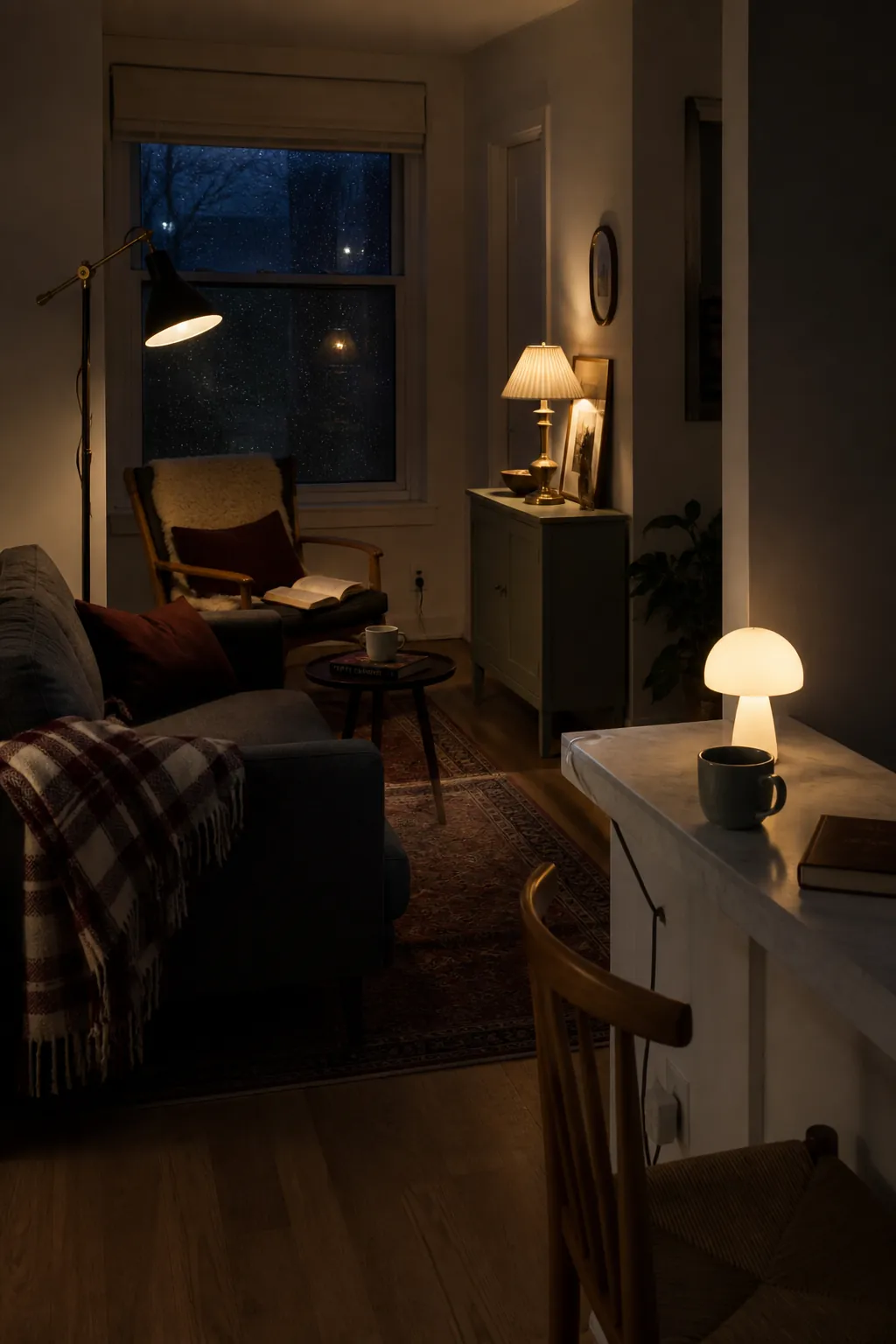
Use bulbs with compatible warm color temperatures so the room does not look patchy. Plug-in sconces and rechargeable lamps can solve dark corners where outlets are limited, but keep cords out of walkways. Dimmers or smart plugs make a bigger difference than another decorative accessory.
Hide Visual Clutter Behind Doors
Open shelving is attractive only when its contents can stay edited. For chargers, documents, cleaning supplies, hobby materials, and backup toiletries, closed cabinets create faster calm. A shallow cabinet can hold more than expected while occupying less floor depth than a bulky shelving unit.
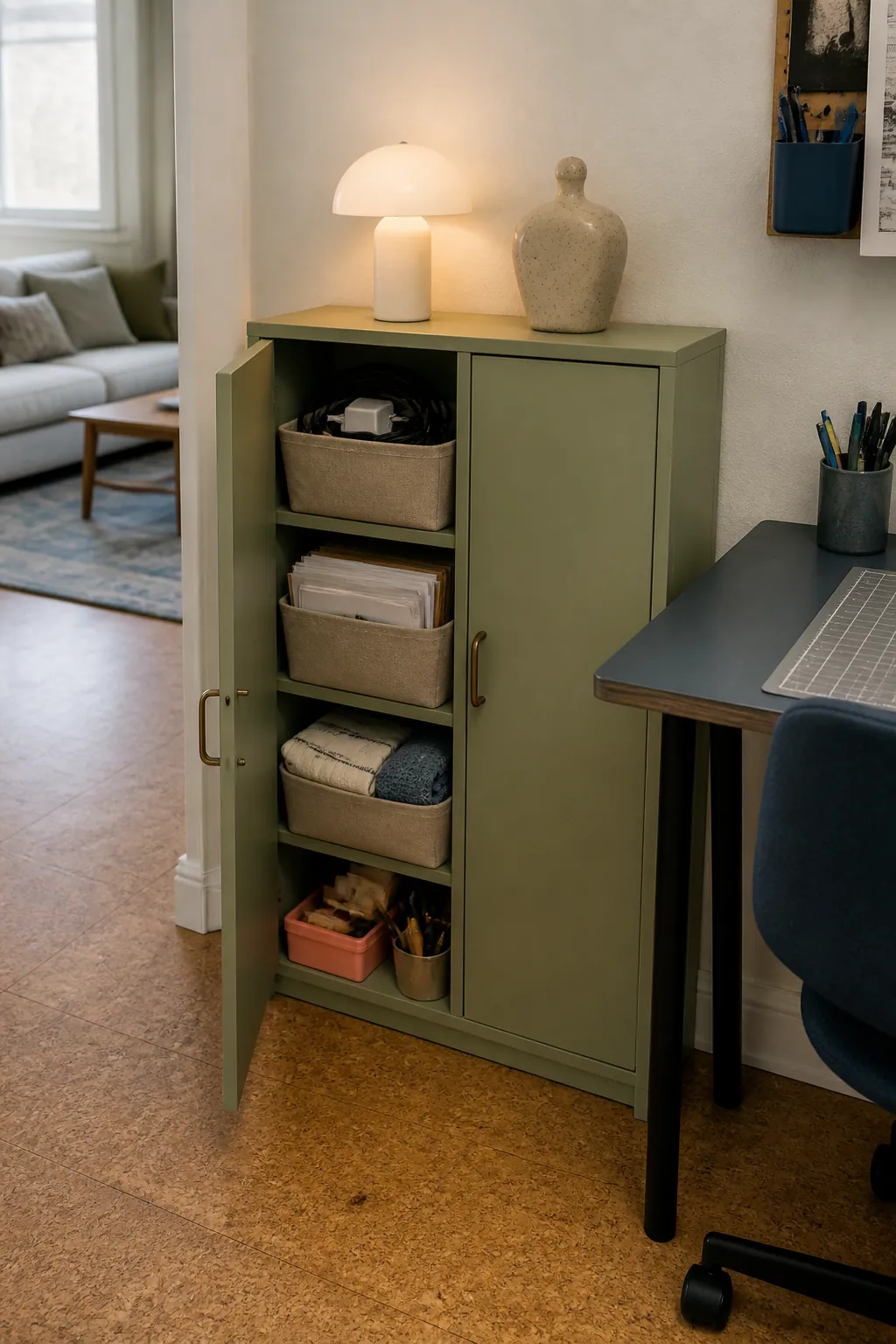
Assign broad categories rather than creating an elaborate organizer for every object. One labeled bin for cables is easier to maintain than a perfect grid of tiny containers. Storage succeeds when putting something away takes less effort than leaving it out.
Use the Space Under the Bed Deliberately
Under-bed storage is valuable because it uses an otherwise dormant footprint. Choose lidded, low-profile containers for seasonal clothes, spare linens, or luggage, and measure the clearance before ordering. Matching containers prevent the area from becoming a dusty collection of random bags.
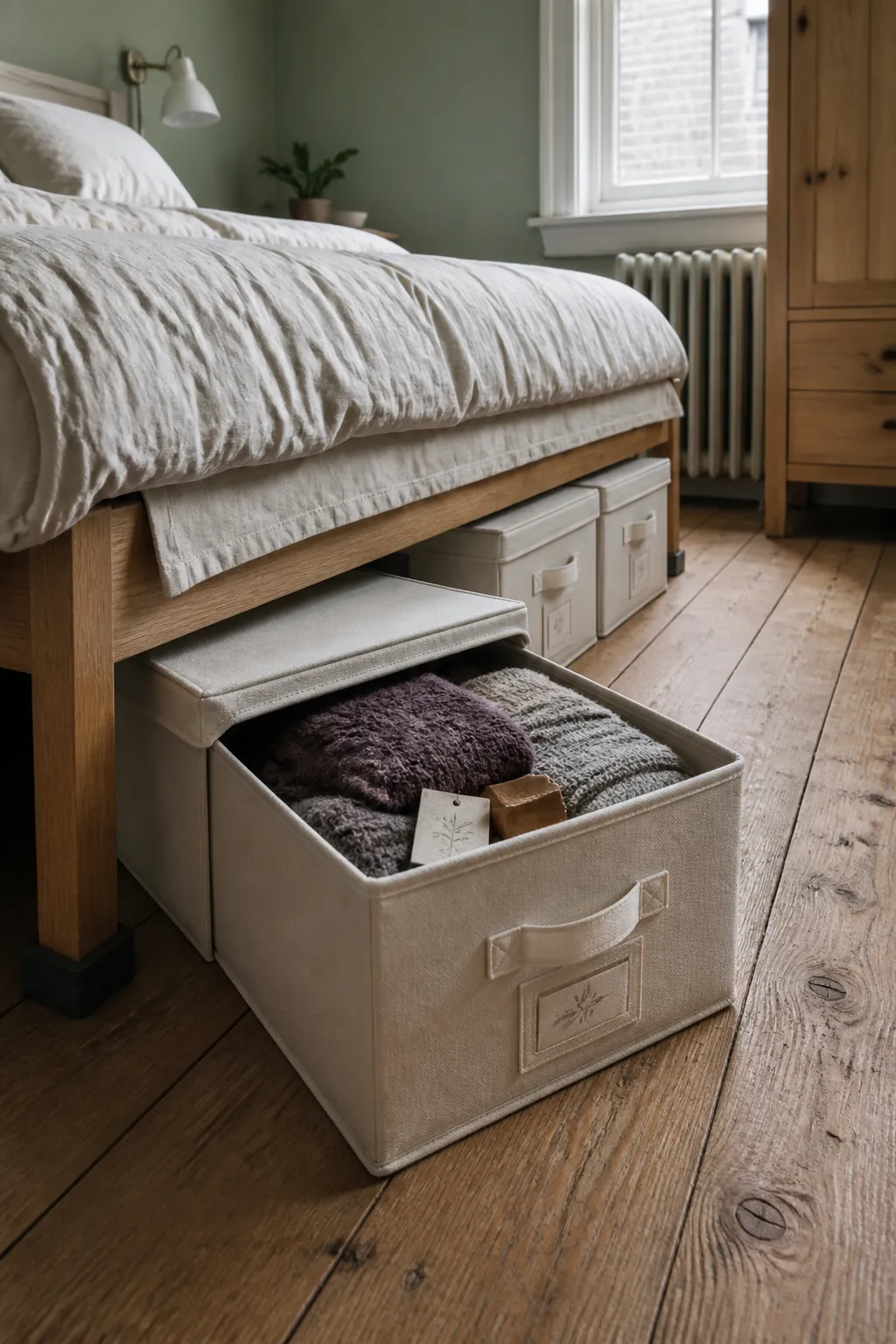
Keep frequently used items near the accessible side and add simple labels. Avoid storing moisture-sensitive materials directly on a damp floor, and leave ventilation where the climate requires it. A bed skirt or long coverlet can conceal practical bins without making the bedroom look fussy.
Add a Storage Bench at the Foot of the Bed
A compact storage bench can hold extra bedding, provide a place to dress, and prevent clothes from landing on the floor. Choose a length narrower than the mattress and maintain enough clearance to walk around it comfortably.
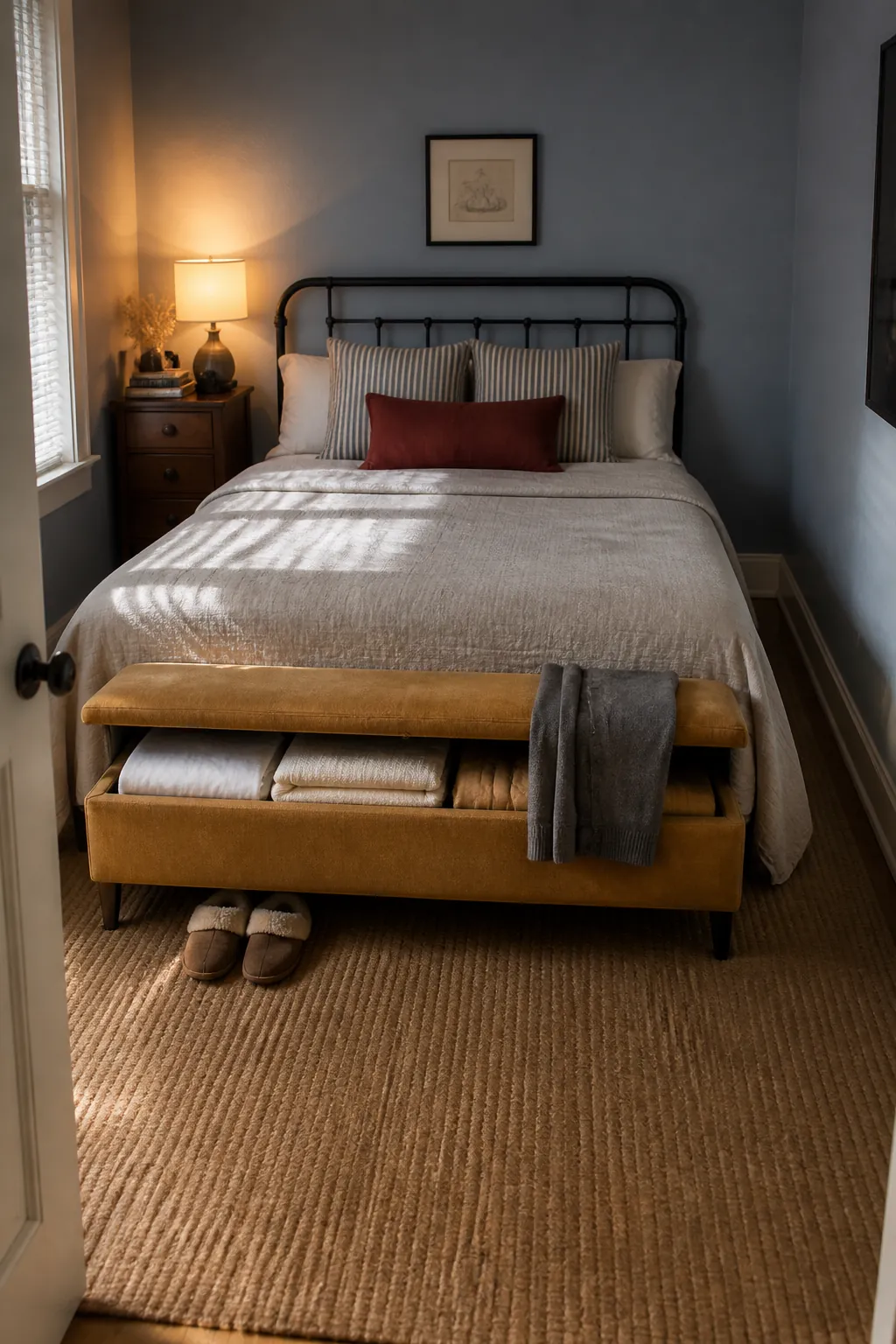
If the room is too tight, use a lidded ottoman beside the bed instead. Upholstery introduces softness, but a woven or wood piece may be easier to clean. Verify lid hinges and stability before treating any storage piece as seating.
Swap a Nightstand for a Wall Shelf
A small floating shelf can hold a phone, glass of water, and book without using precious floor space. It also exposes more flooring, which makes the sleeping zone feel less crowded and simplifies cleaning.
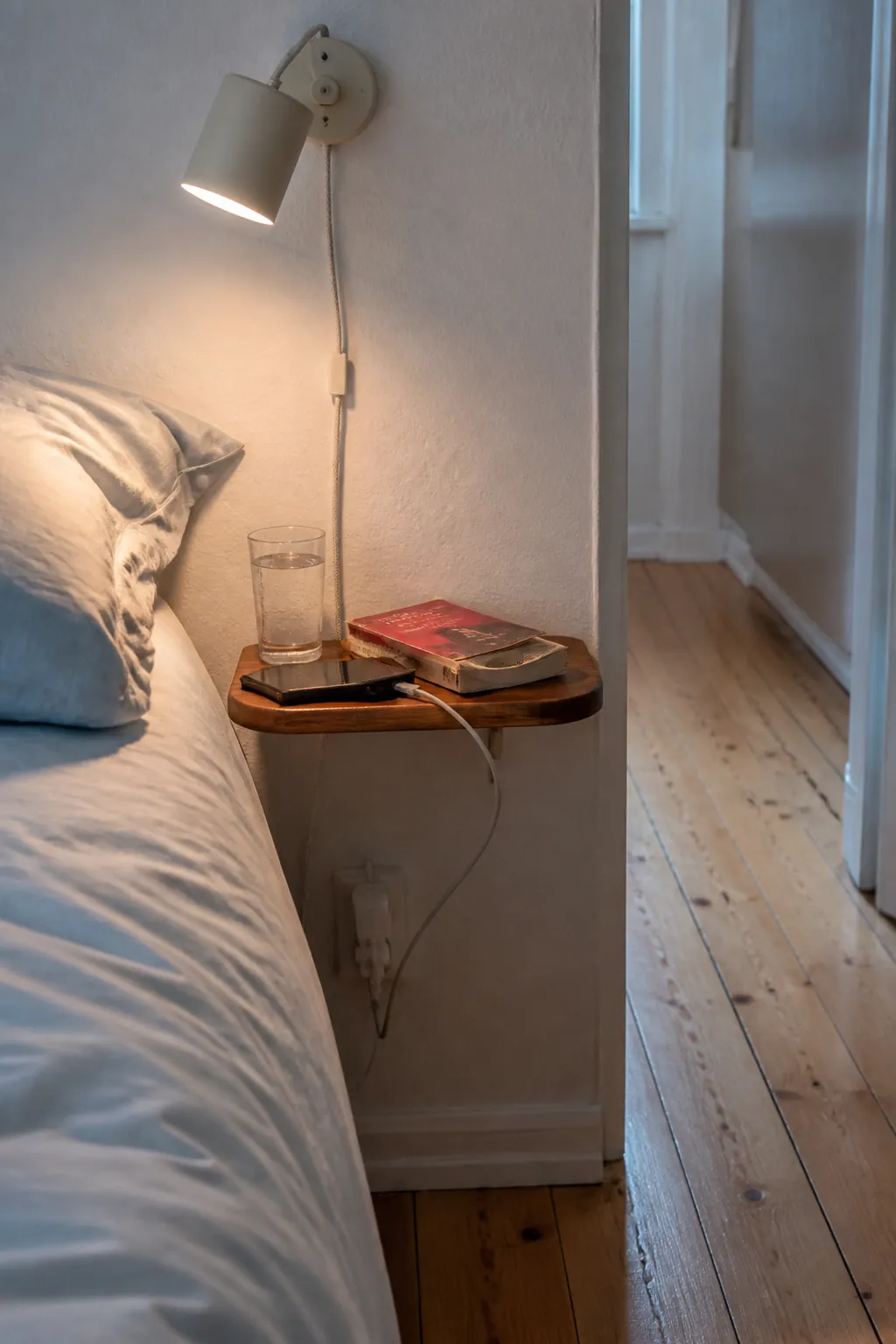
Renters can consider a headboard shelf, slim C-table, or bedside pocket when mounting is not allowed. Pair the surface with a plug-in wall light or clip lamp to free even more space. Keep only nighttime essentials there; a tiny shelf makes clutter obvious quickly.
Create a Headboard With Removable Material
A fabric panel, lightweight folding screen, or removable decal can visually anchor a bed without a bulky frame. This is especially effective in a studio where the sleeping area needs its own identity but cannot support more furniture.
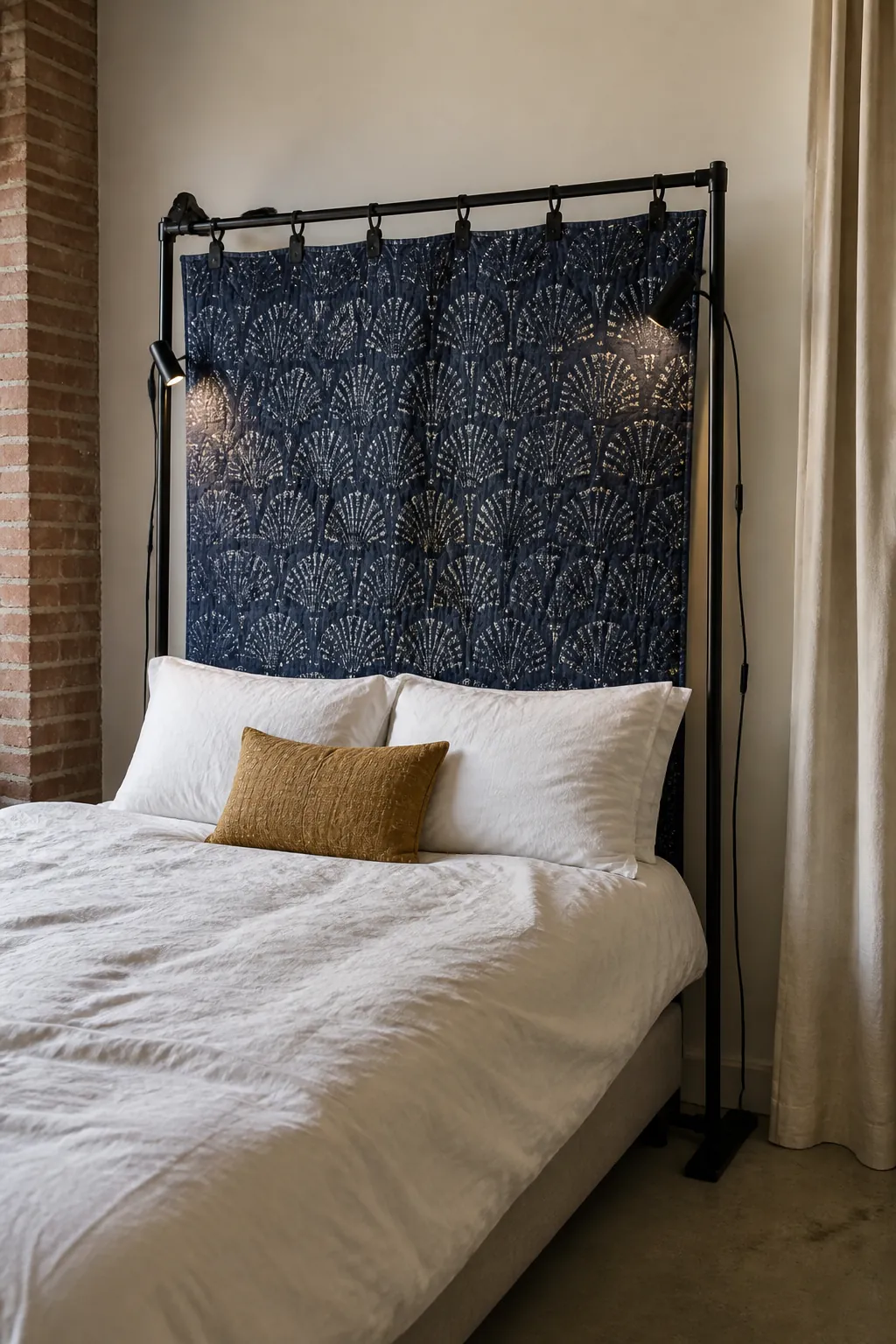
Test adhesive products in an inconspicuous location and follow the lease. If walls are fragile, hang fabric from a freestanding garment rack behind the bed or use a slim upholstered headboard that rests on the floor. The visual anchor matters more than the installation method.
Run Shelving Up an Awkward Corner
Narrow corners often cannot fit conventional furniture, but a vertical run of compact shelves can hold books, plants, or kitchen overflow. Repeating shelves upward turns an accidental gap into a composed feature and draws attention to the room’s height.
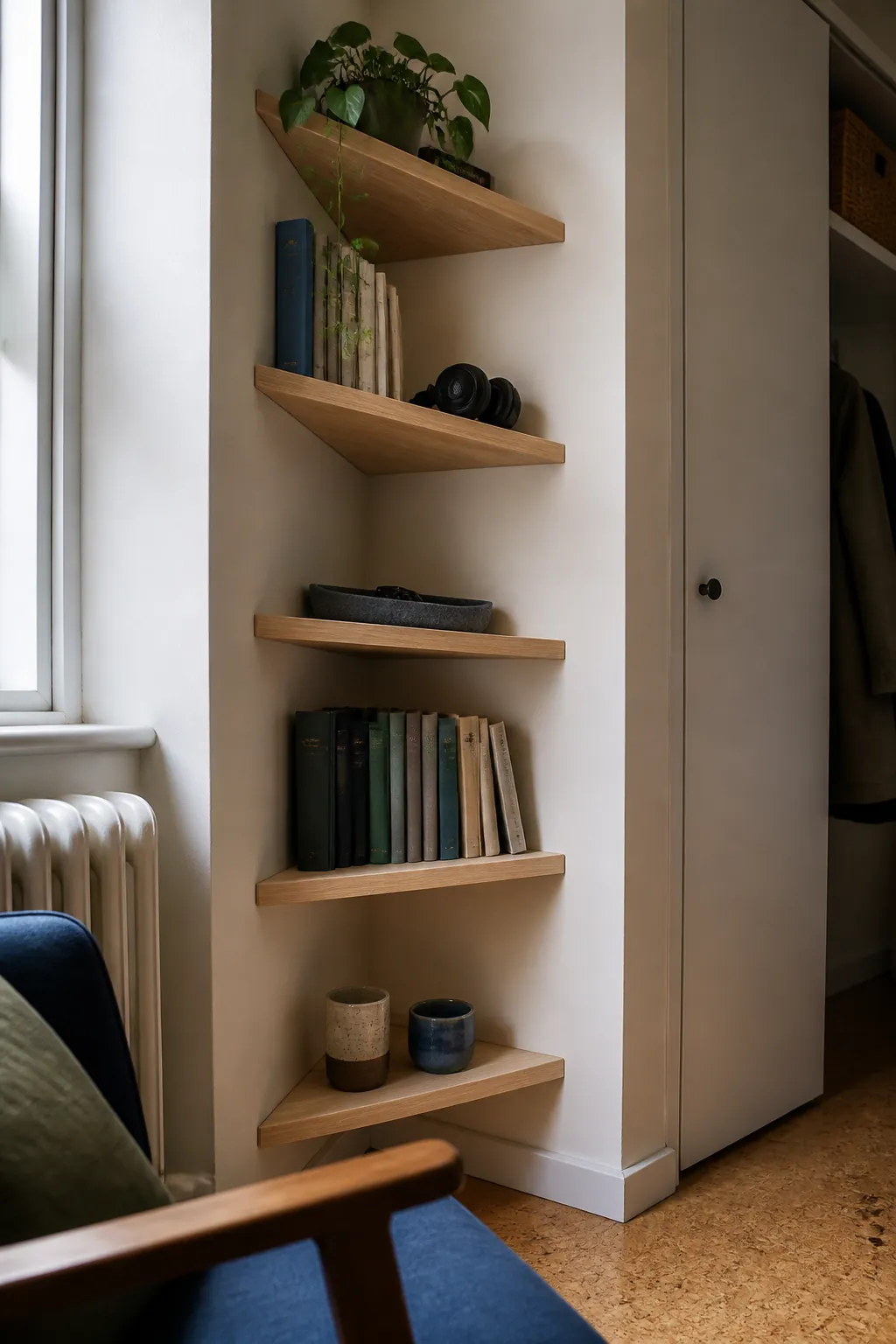
Keep shelf depth proportional to the corner and avoid projecting into a walkway. Place heavier objects low and leave breathing room between displays. If drilling is restricted, a freestanding corner tower provides similar function with less commitment.
Mount Hooks Where Habits Already Happen
Hooks work when they are installed at the exact point where an item is naturally dropped: a robe near the shower, a tote beside the door, headphones at the desk, or utensils near the stove. That placement turns unused vertical space into effortless organization.
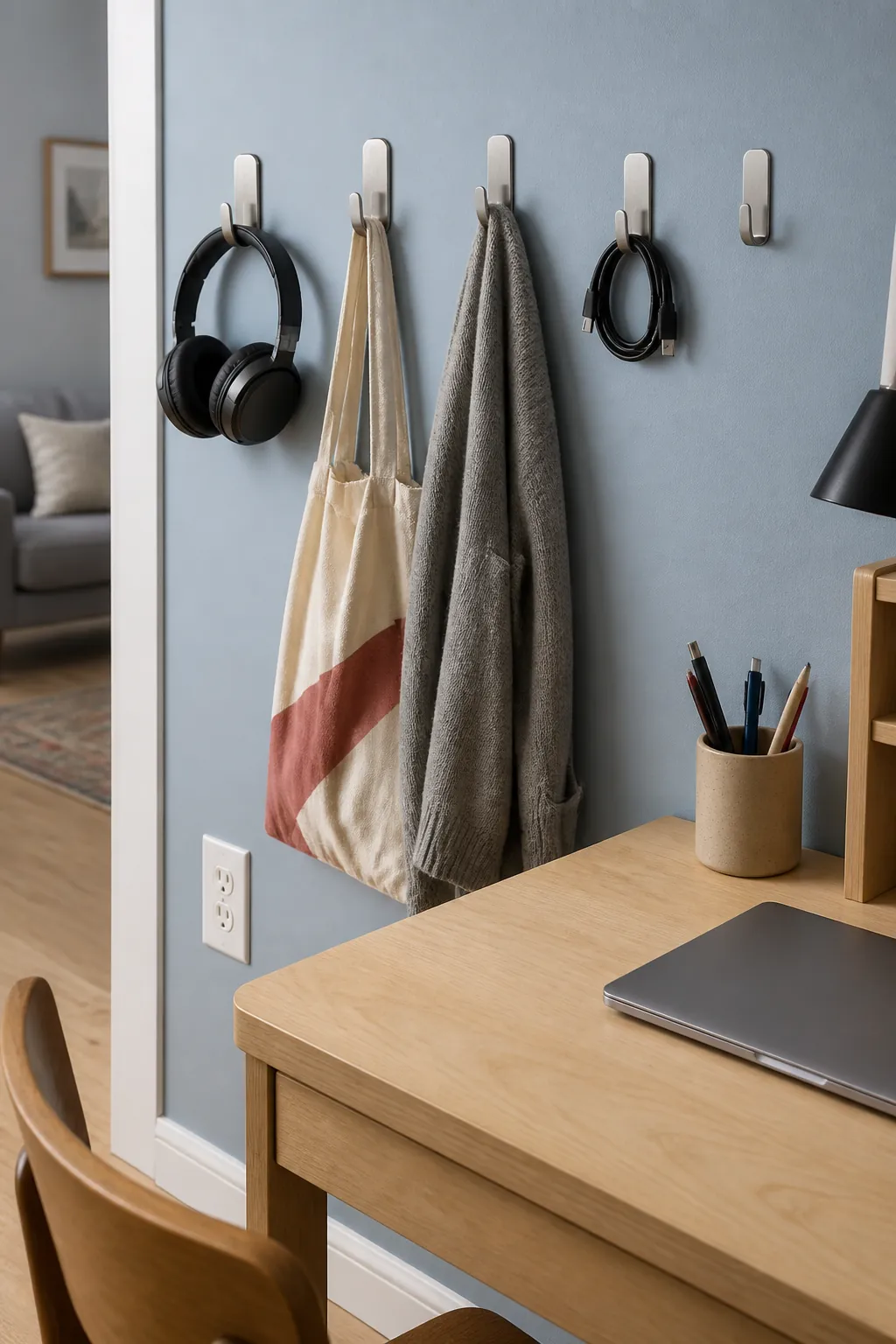
Respect weight ratings and surface requirements for adhesive hooks. Use a consistent finish so practical hardware reads as part of the decor. A crowded row becomes visual noise, so store occasional items elsewhere and reserve visible hooks for daily use.
Style Open Shelves With Useful Objects
In a small apartment, useful objects can carry the visual story. Stack attractive bowls, lean a well-used cutting board, group books by subject, or display a ceramic pitcher that also serves dinner. This approach reduces the need to buy decor whose only job is occupying space.
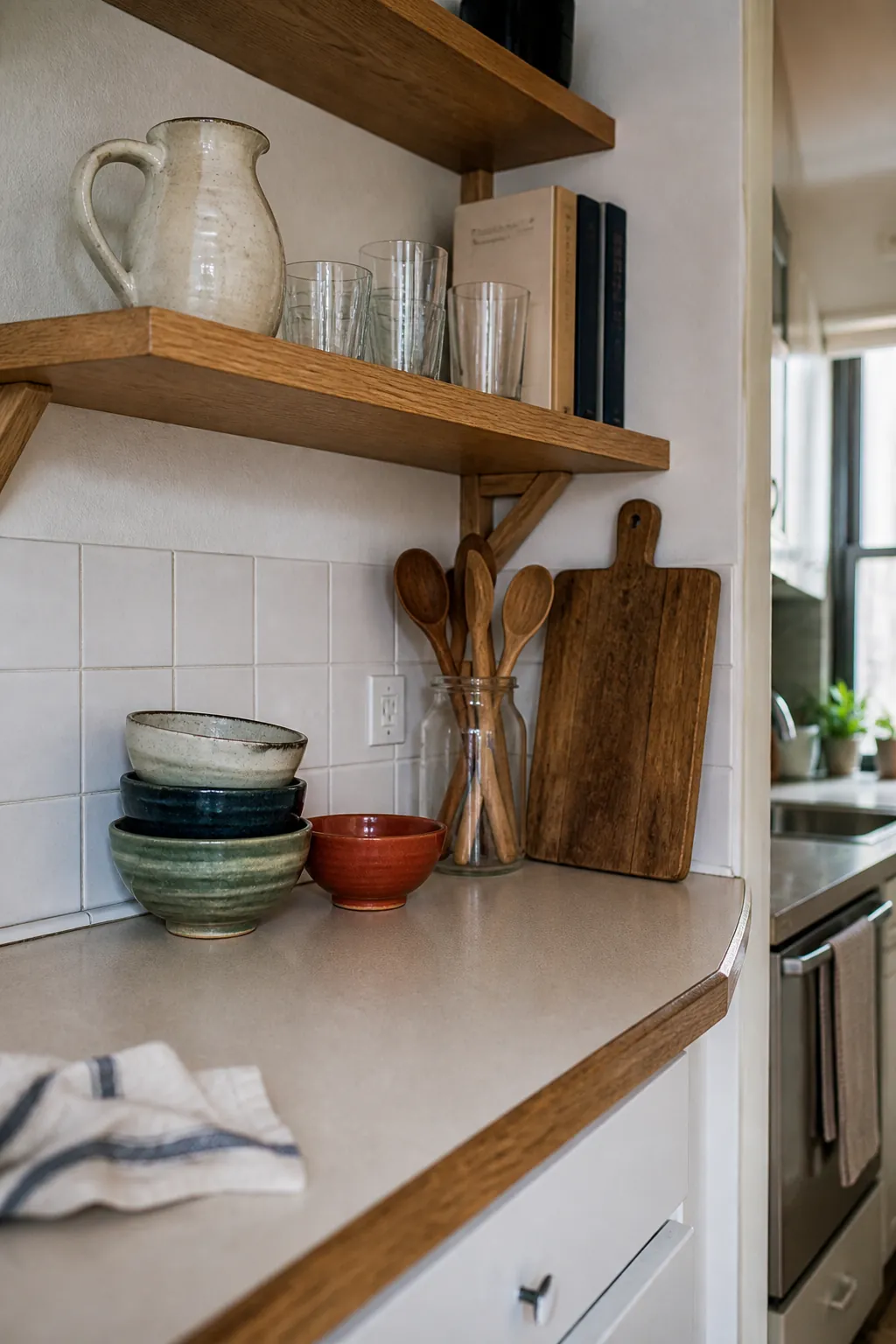
Repeat one material or color across the shelf, and vary object heights so it feels composed rather than lined up. Leave some open space. Visible storage must be edited more strictly than hidden storage, because every extra package becomes part of the room’s color palette.
Add a Peg Rail to a Narrow Kitchen Wall
A simple peg rail can hold aprons, measuring cups, market bags, and lightweight utensils on a strip of wall too shallow for cabinets. It keeps frequently used tools close while adding the rhythm and warmth of a traditional kitchen detail.
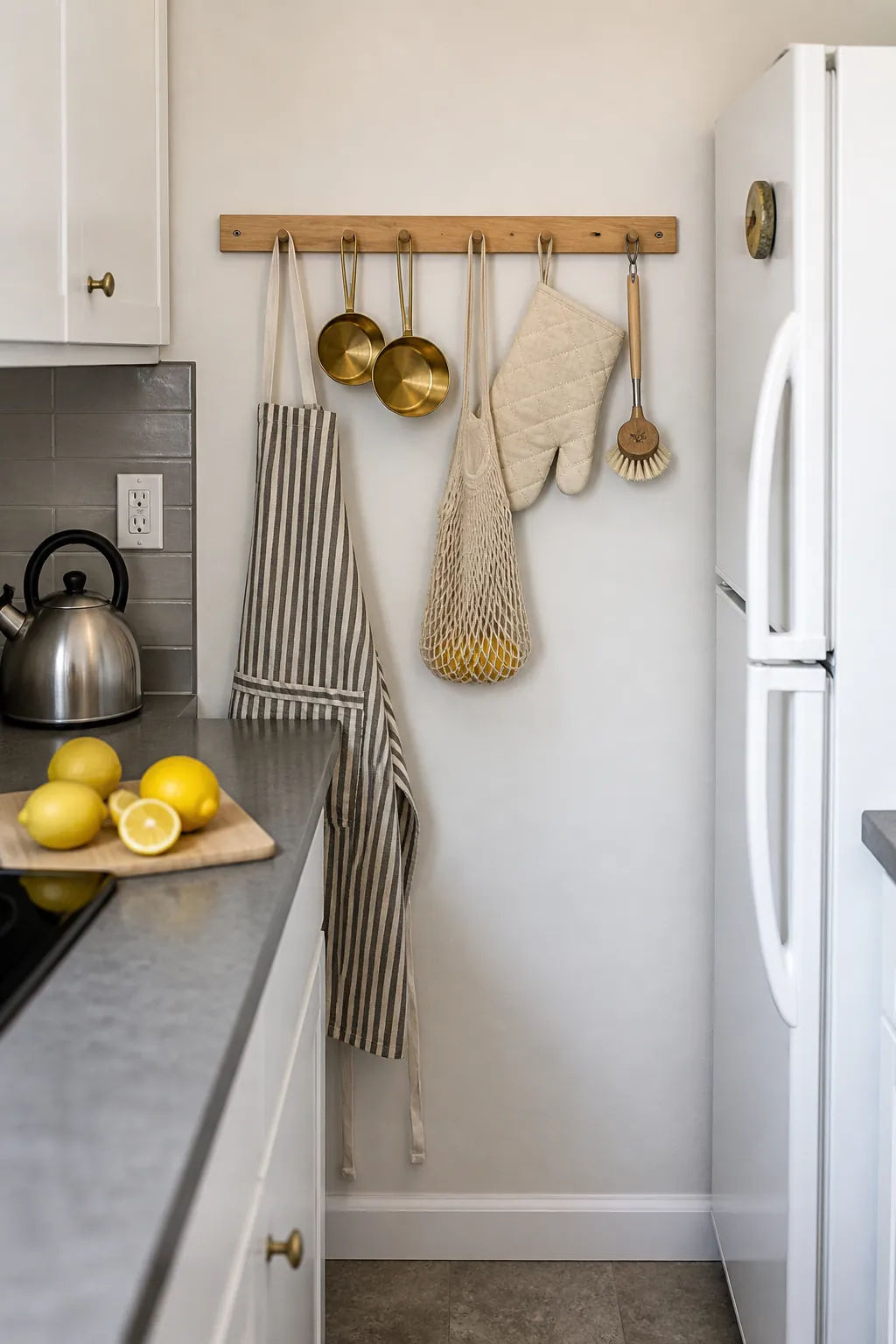
Keep the collection restrained and confirm that hanging items do not interfere with cooking. Renters can use an over-door rail, magnetic bar on a suitable appliance, or freestanding rack instead. Natural wood can soften an all-white rental kitchen without permanent renovation.
Use a Rolling Cart as Mobile Storage
A narrow rolling cart can serve as pantry overflow, a coffee station, bathroom storage, or a work-from-home supply cabinet. Mobility lets one footprint support different routines, which is especially useful when dining and work happen at the same table.
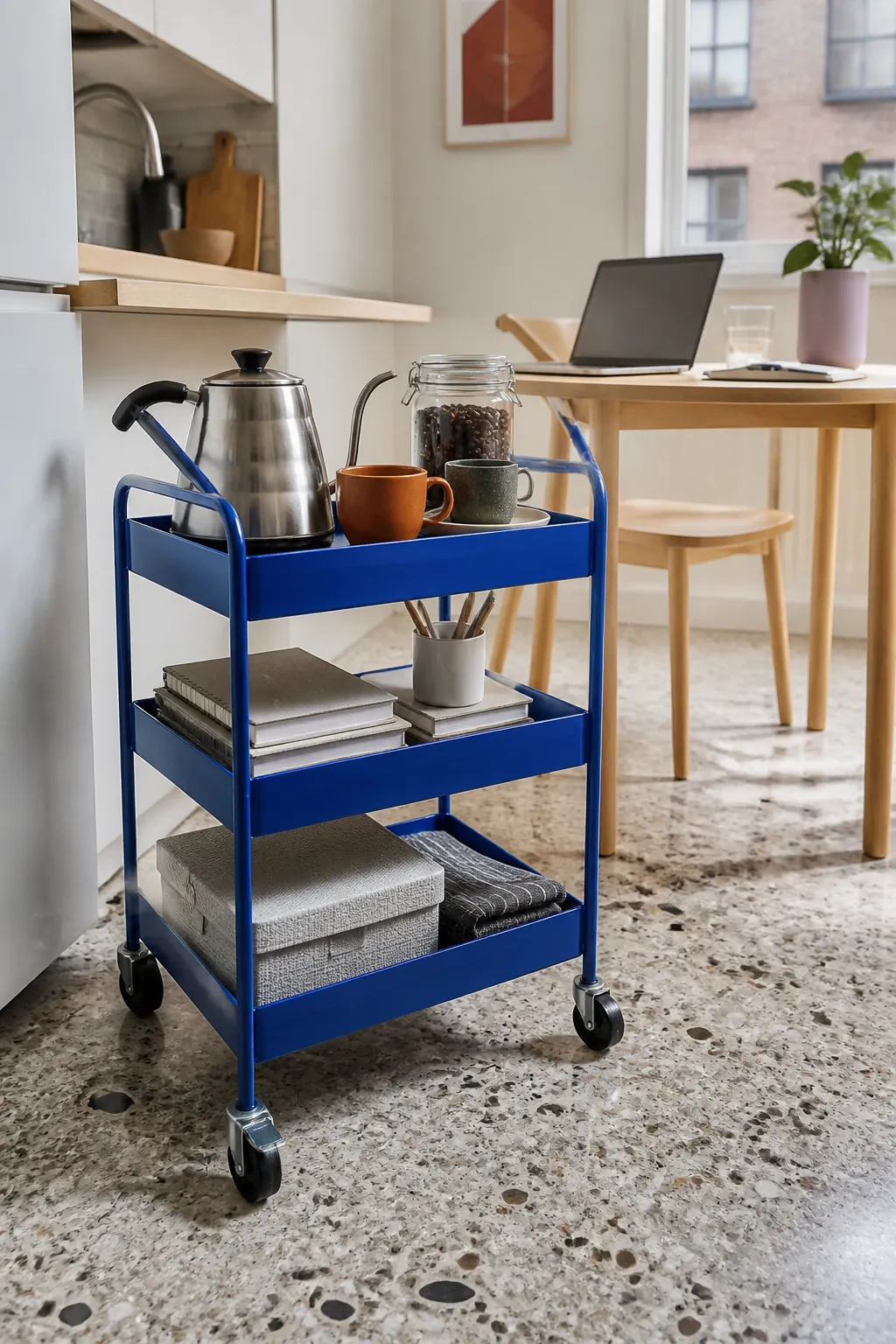
Measure the cart including handles and wheels, then identify its parking place before buying. Corral small items in trays so they stay put when moved. Locking casters are useful on uneven floors or in homes with children.
Install a Fold-Down Dining Surface
A wall-mounted drop-leaf table can provide a dining or work surface, then fold away to reopen circulation. It is one of the strongest solutions for a mini studio apartment where a permanent table would dominate the room.
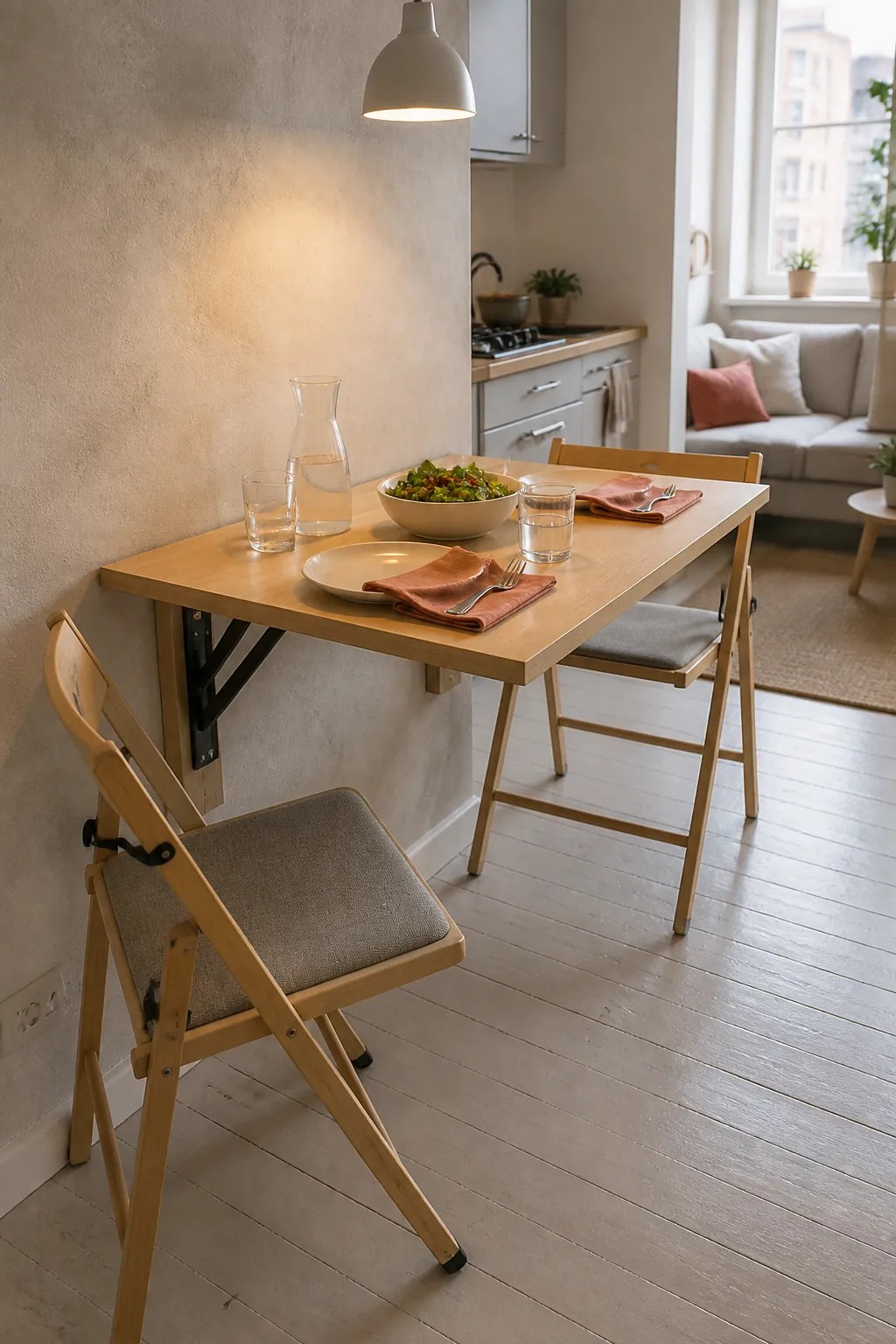
This solution requires secure installation into an appropriate structure, so renters need written permission or should choose a freestanding gateleg table. Pair it with folding chairs hung safely or stored behind a door. Confirm knee space and working height before committing.
Tuck a Desk Into an Existing Niche
A closet alcove, bay, or gap beside a wardrobe may fit a shallow desk better than another cabinet. Use the full width, add task lighting, and keep the desktop visually quiet so the niche reads as intentional architecture rather than squeezed-in office furniture.
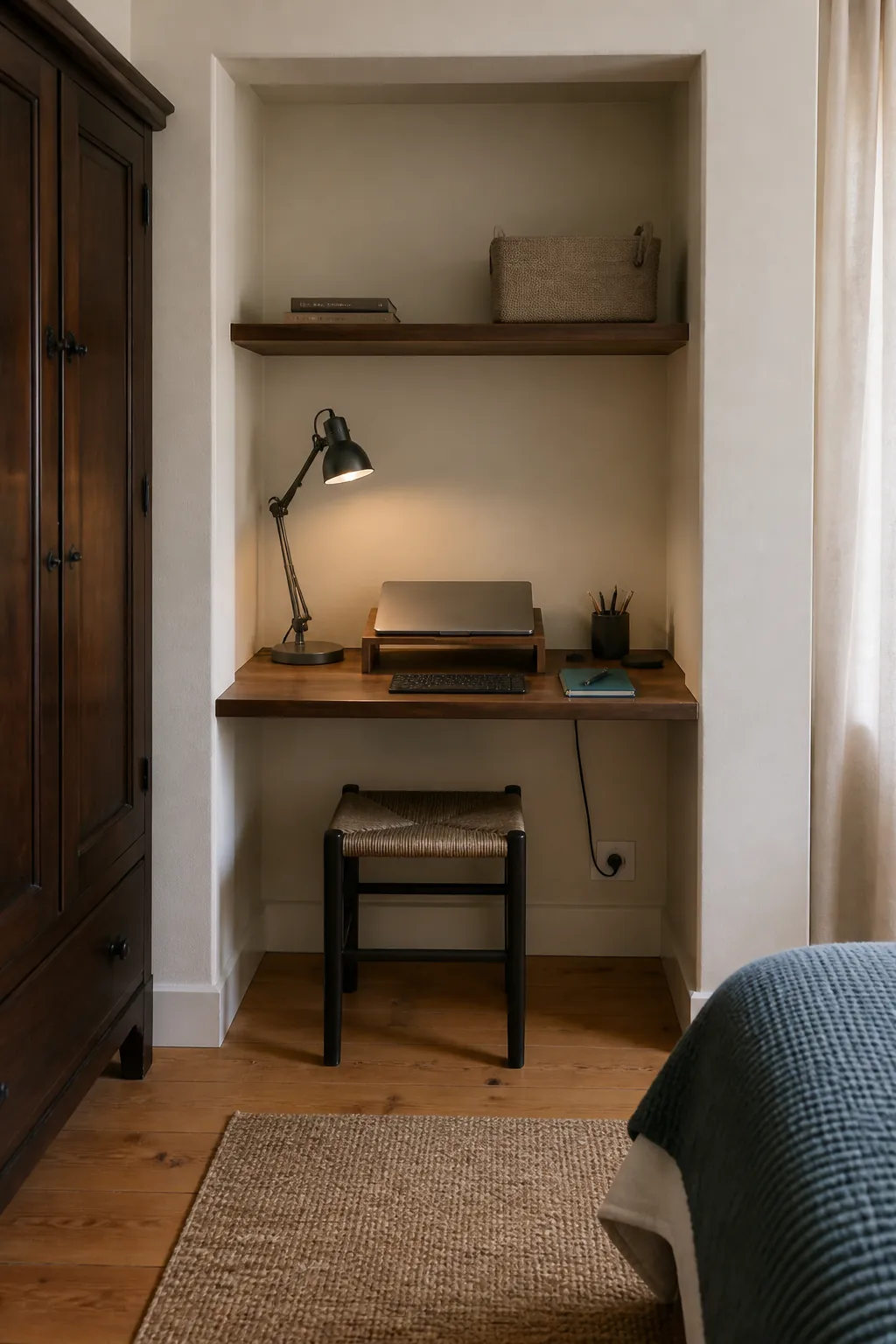
A wall shelf above the screen can hold supplies, while a stool that slides fully underneath preserves floor area. Plan cables before styling. The best tiny office disappears into the room when work is finished, even if that means closing a laptop and placing one basket on the shelf.
Define Zones With Repeated Color
An open room feels coherent when a few colors reappear across its zones. Repeat the living room’s rust cushion in a kitchen towel, or carry a muted blue from bedding into a desk accessory. The repetition creates connection without requiring matching furniture.
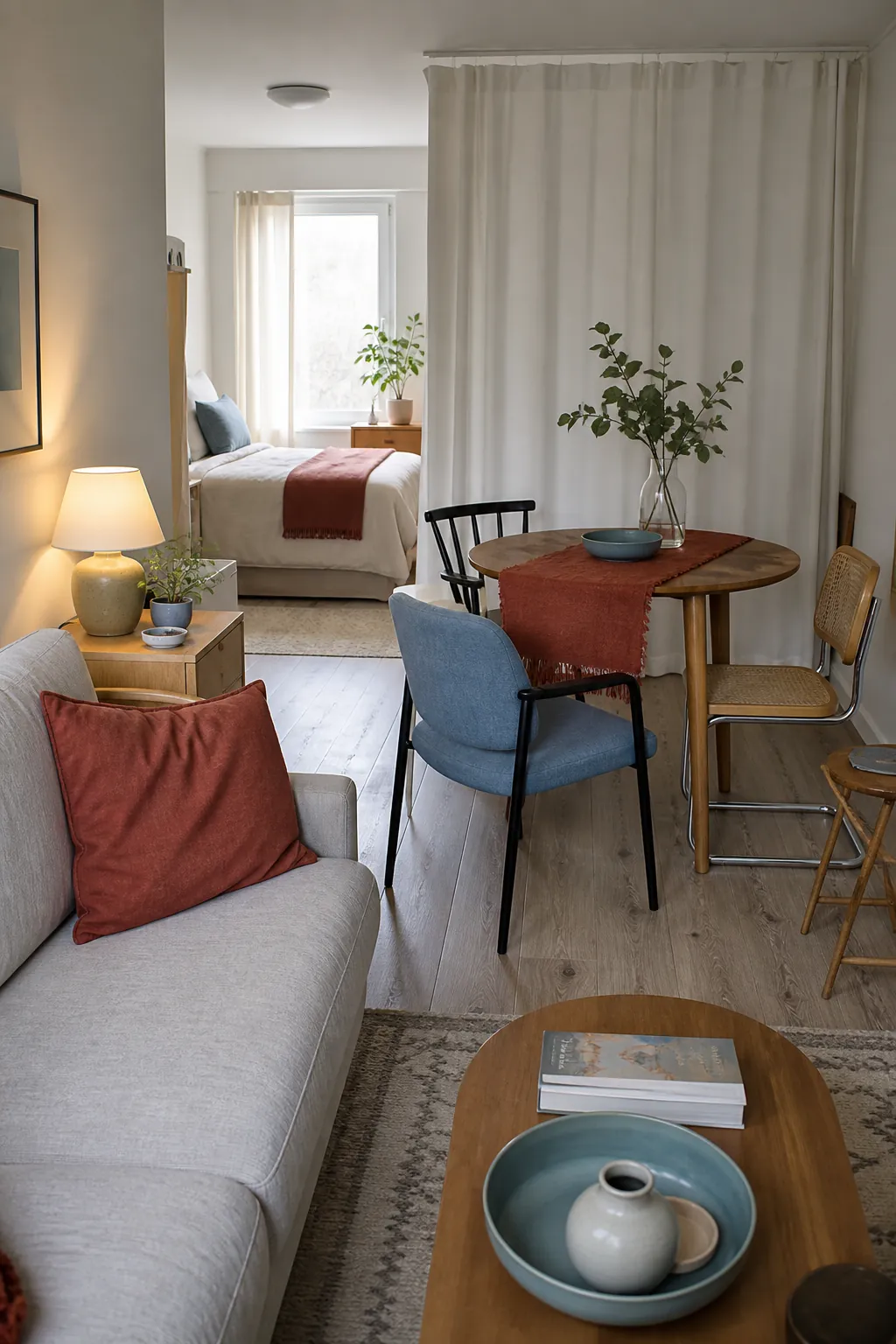
Choose two or three accents from something already owned—a rug, textile, or favorite print—and distribute them unevenly. Equal amounts everywhere look staged. A dominant neutral with smaller repeated colors keeps the apartment calm but not anonymous.
Paint or Wrap One Small Architectural Feature
Instead of changing every wall, focus color on a door, narrow recess, cabinet front, or the back of a bookcase. A compact feature creates a deliberate focal point with less material, expense, and visual weight than a full-room makeover.
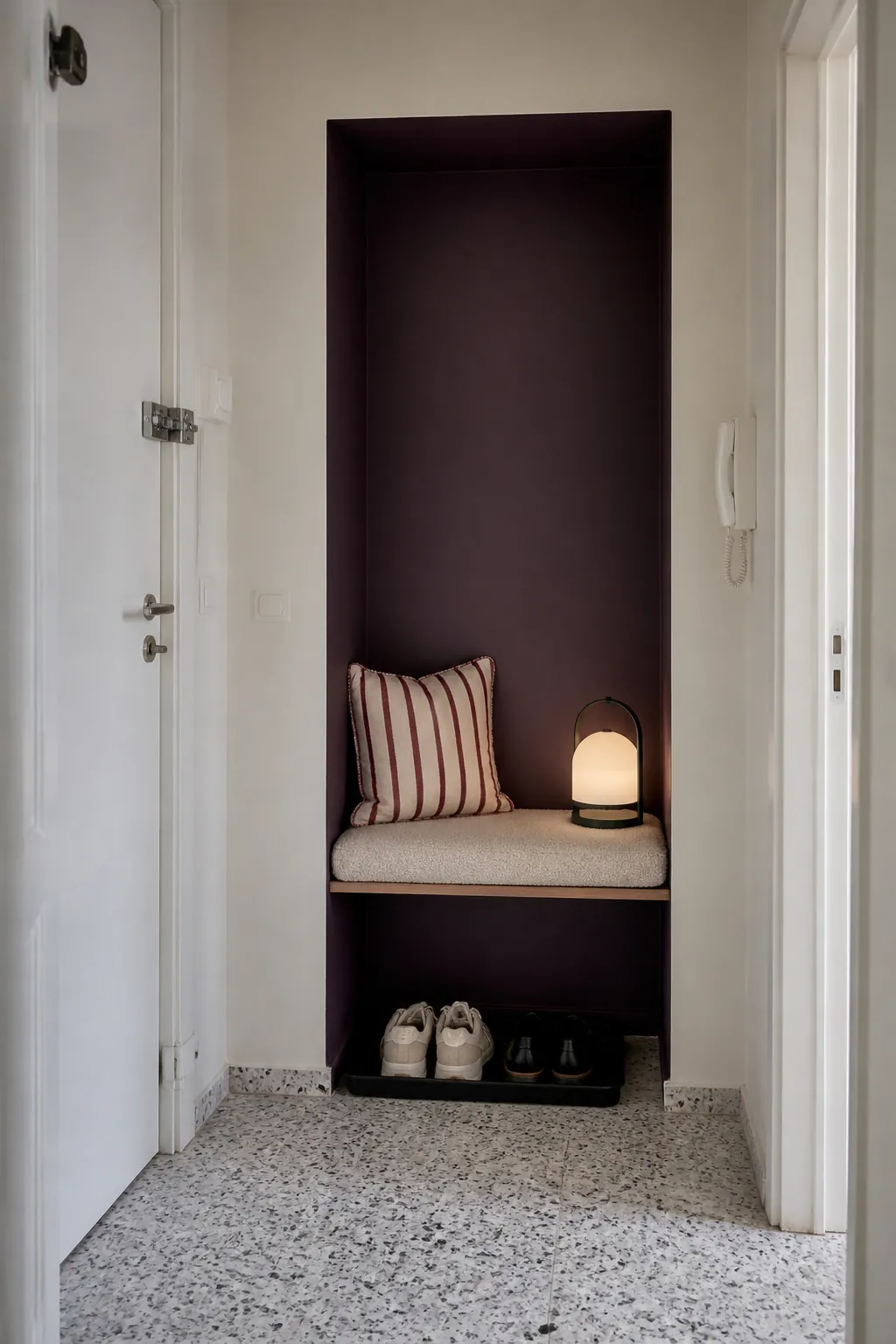
Use paint only with permission. Removable film can be an alternative on compatible surfaces, but always test it because adhesives can damage old finishes. Select a shade already present in the furnishings so the intervention feels connected rather than random.
Make One Oversized Art Moment
Many tiny decorations can make a small room feel busier. One large textile panel, bold abstract print, or black-and-white architecture photograph gives the eye a resting place and establishes personality from across the room.
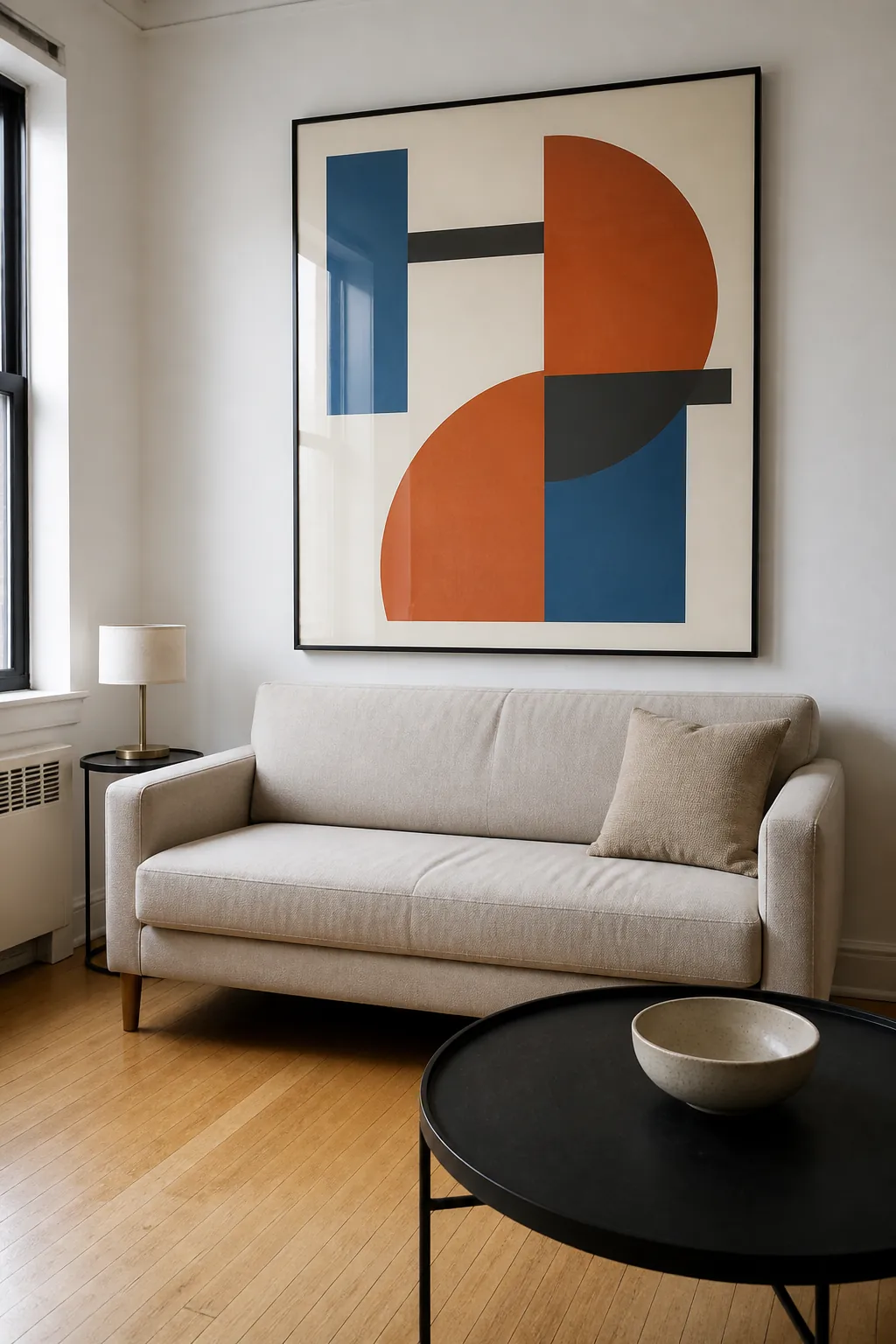
Large does not have to mean expensive. Frame a textile, print public-domain art at scale, or stretch painted canvas over a lightweight frame. Use mounting hardware suited to the wall and object weight. One confident piece often makes a rental feel more grown-up than a dozen filler objects.
Build a Personal Gallery on a Narrow Wall
A hallway, column, or strip beside a door can hold a vertical gallery of family photos, postcards, small drawings, and meaningful ephemera. Keeping the arrangement within a narrow boundary adds personality without competing with the main living zone.
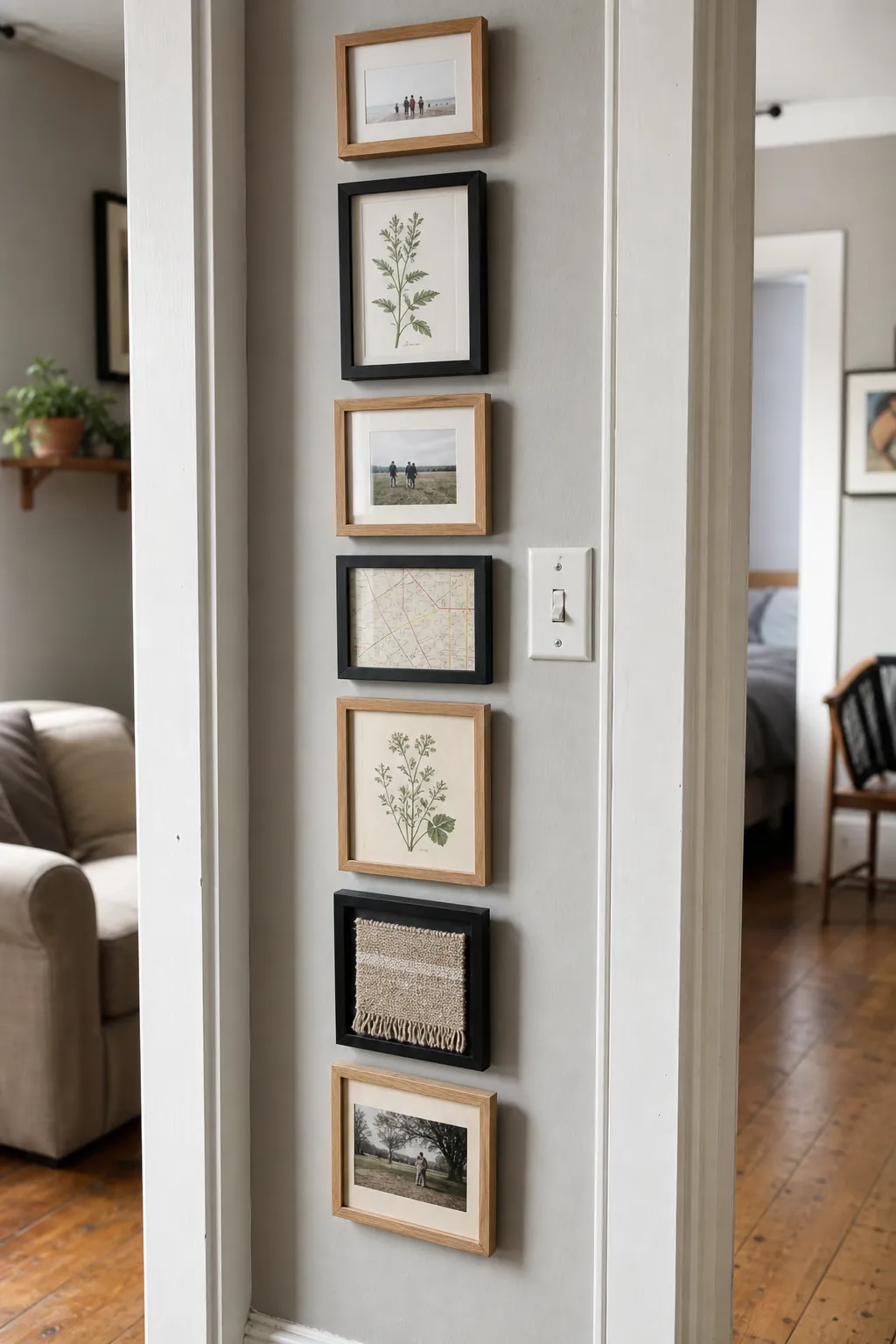
Unify mismatched pieces with one repeated frame color or consistent spacing. Lay the composition on the floor first and photograph it for reference. Lightweight frames and renter-safe strips reduce commitment, but follow surface and weight guidelines precisely.
Mix Textures Within a Restrained Palette
A neutral apartment becomes cozy through tactile contrast, not piles of accessories. Combine linen curtains, a nubby throw, smooth glazed ceramics, worn wood, and a tightly woven rug within a limited palette. Each material catches light differently and adds quiet depth.
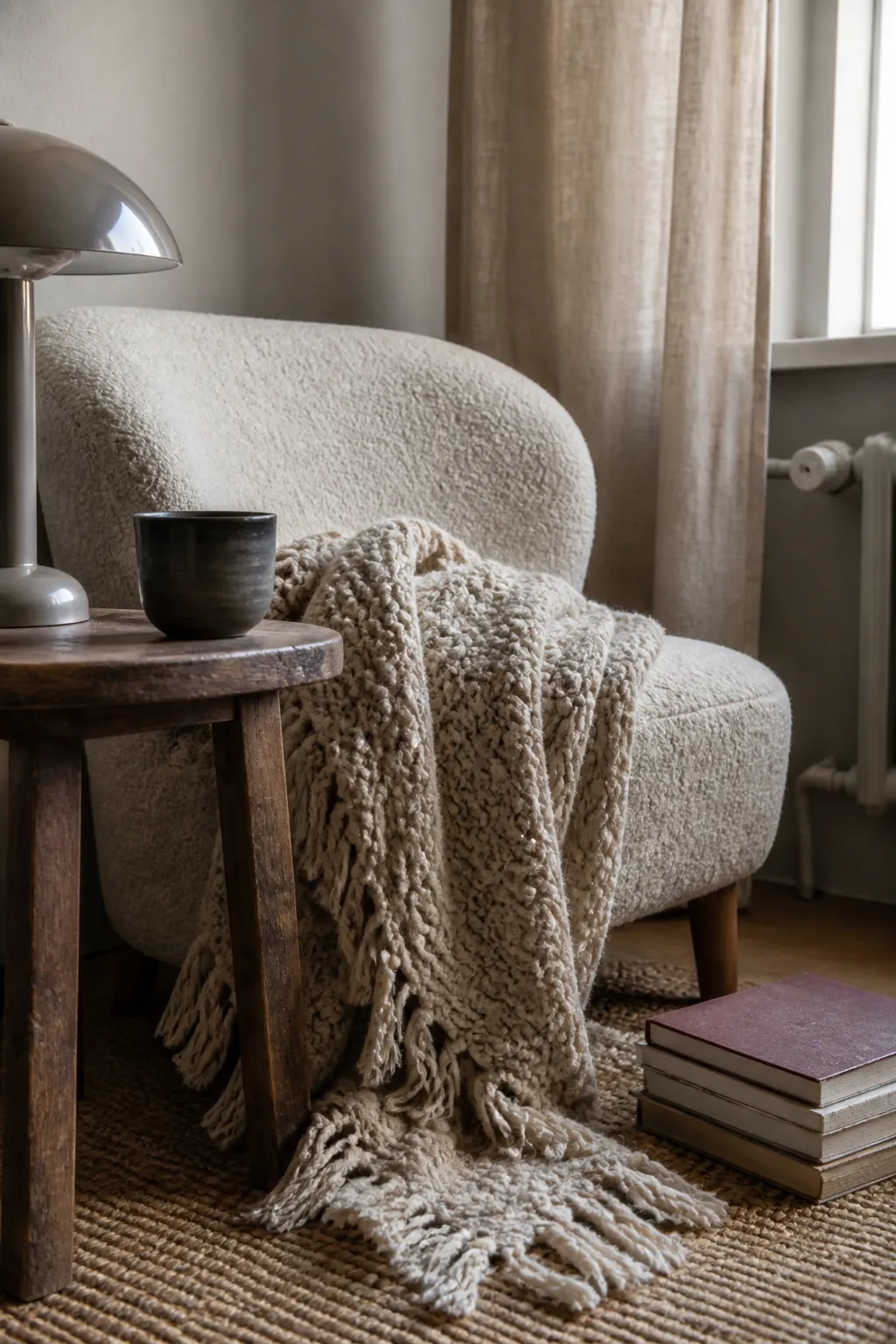
Use washable textiles on high-contact surfaces and reserve delicate fabrics for low-traffic areas. Vary the scale of texture—a broad blanket weave beside fine-grained wood—so the room does not feel uniformly fuzzy. This is a reliable way to create small apartment inspo that still works in daily life.
Repeat Rounded Shapes to Soften Tight Corners
Curved edges improve both movement and mood in close quarters. A round side table, arched mirror, globe lamp, and cylindrical planter can echo one another without becoming a themed set. Rounded shapes make hard rental architecture feel less severe.
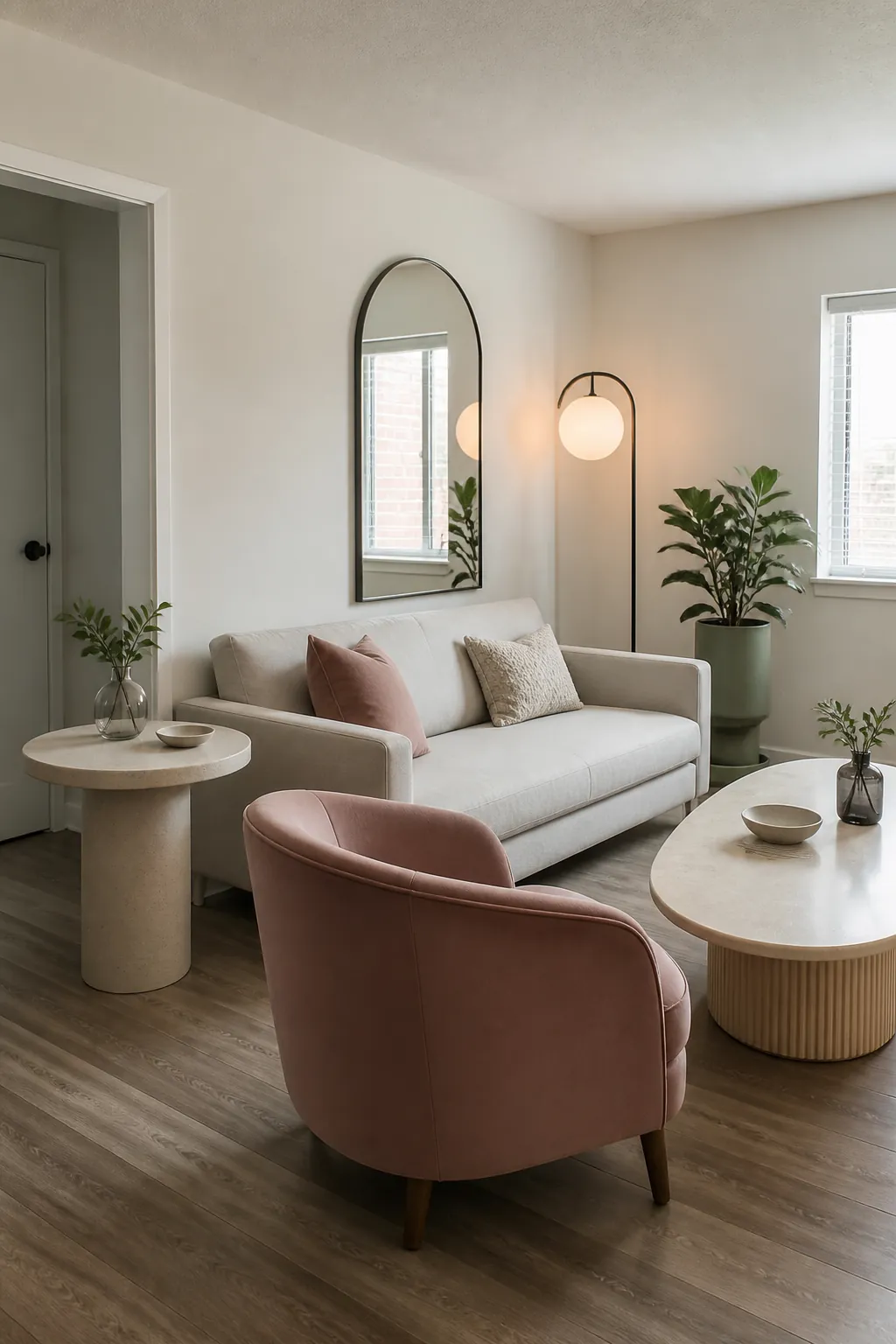
Prioritize curves on the objects closest to walkways, where sharp corners cause actual frustration. You do not need to replace everything; one round table can change circulation immediately. Repeat the shape twice more in smaller details to make the choice feel intentional.
Use Clear or Open-Base Furniture Sparingly
Acrylic chairs, glass tables, and open metal bases preserve sightlines, which can reduce visual blockage in a very small apartment. They work best as supporting pieces around one substantial, comfortable anchor rather than as an entire room of barely visible furniture.
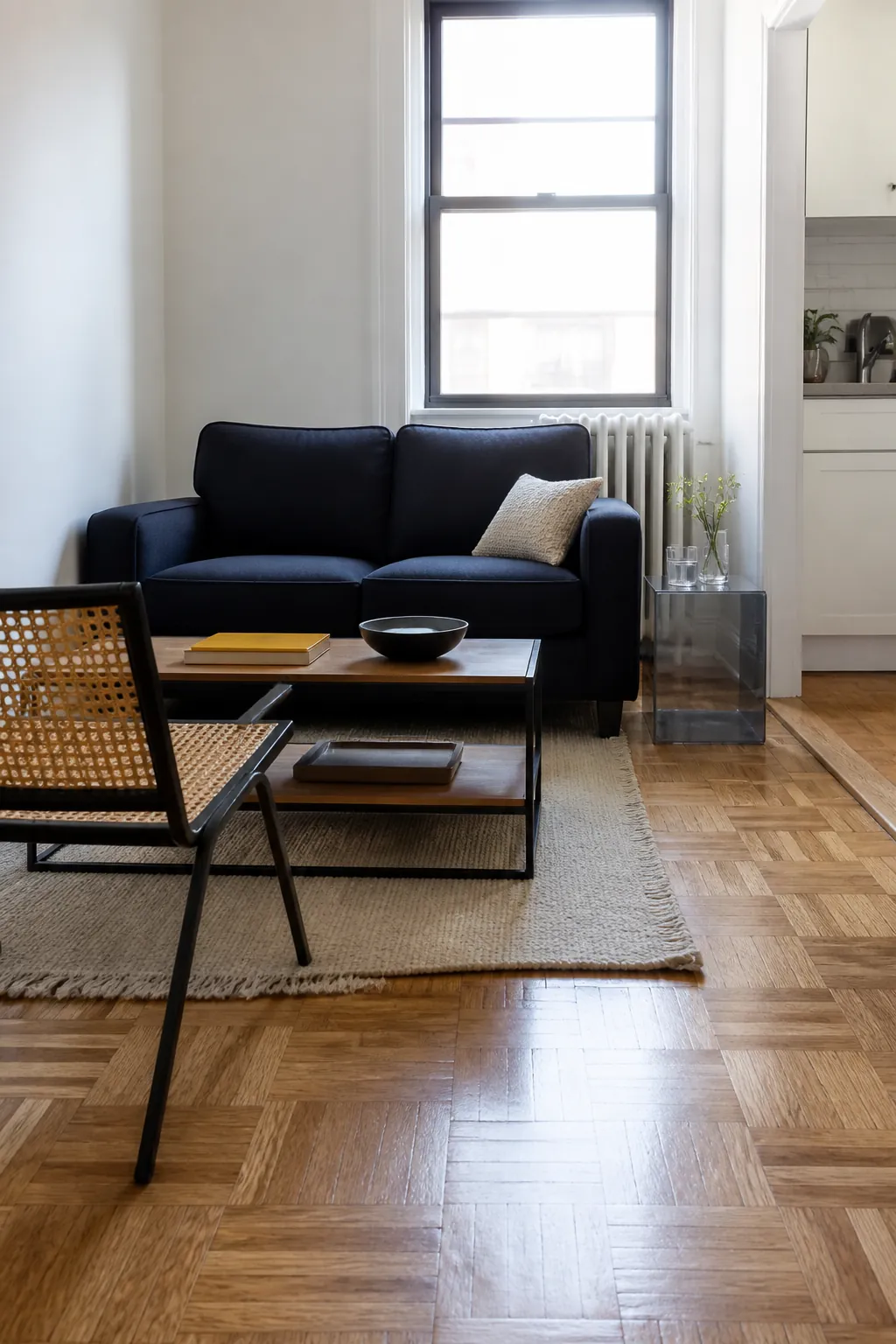
Transparent materials show fingerprints and can disappear into walkways, so placement and maintenance matter. A narrow wood-and-metal table often provides the same lightness with more warmth. Visual lightness is useful, but it should never compromise comfort or safety.
Bring in One Tall Plant
One upright plant can fill an empty corner, add organic movement, and draw the gaze upward without scattering small pots across every surface. Choose a species for the apartment’s real light and humidity, not for a styled photo.
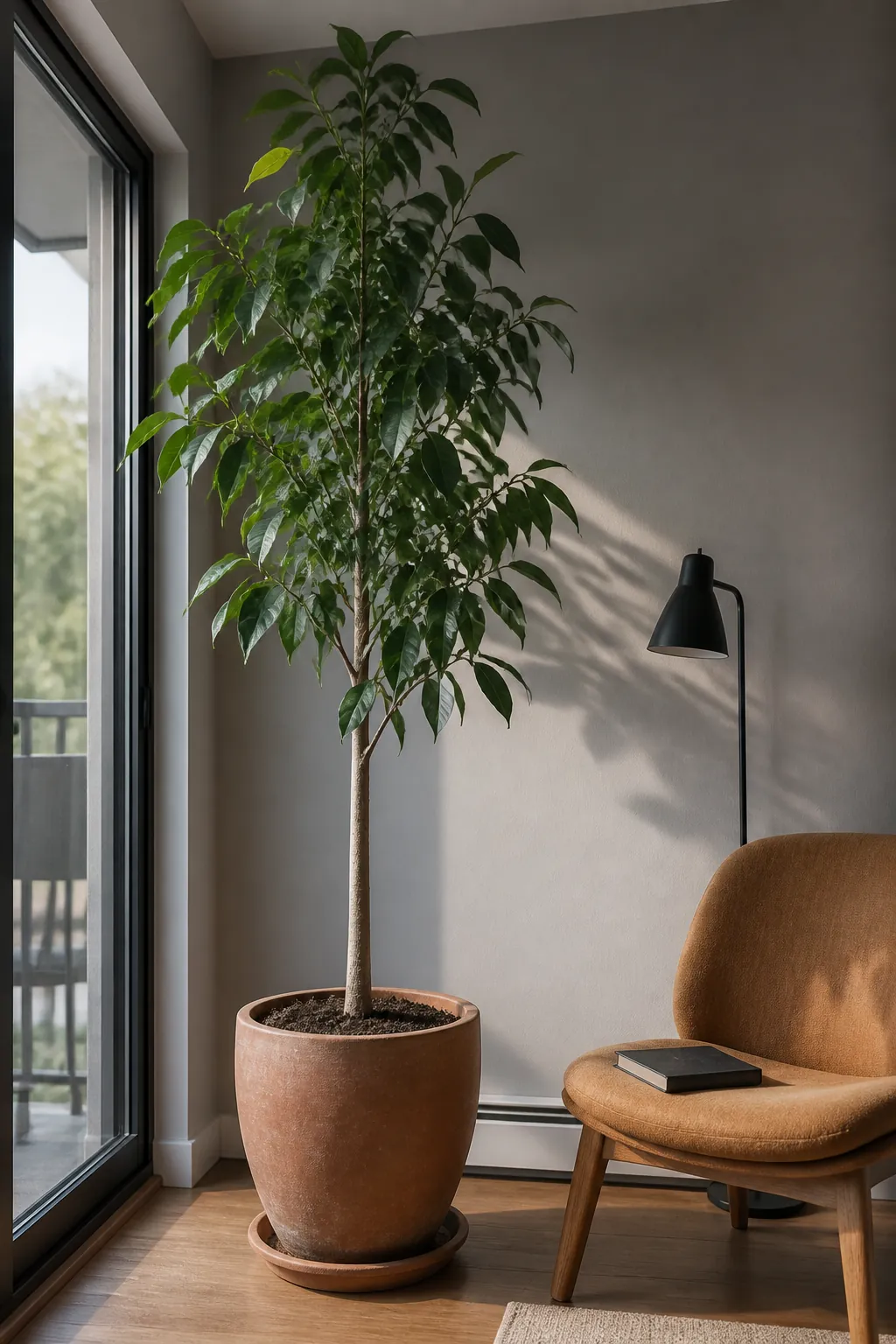
Place the pot on a waterproof saucer and keep leaves clear of heaters and busy paths. If natural light is insufficient or plant care is unwelcome, use a sculptural branch in a heavy vase. The goal is a vertical natural gesture, not a collection that creates more chores.
Turn the Windowsill Into a Useful Display
A deep windowsill can hold herbs, a few glass bottles, or a compact reading stack while keeping tables clear. Select items that benefit from the light and look good from both inside and outside, then leave enough empty space to operate the window safely.
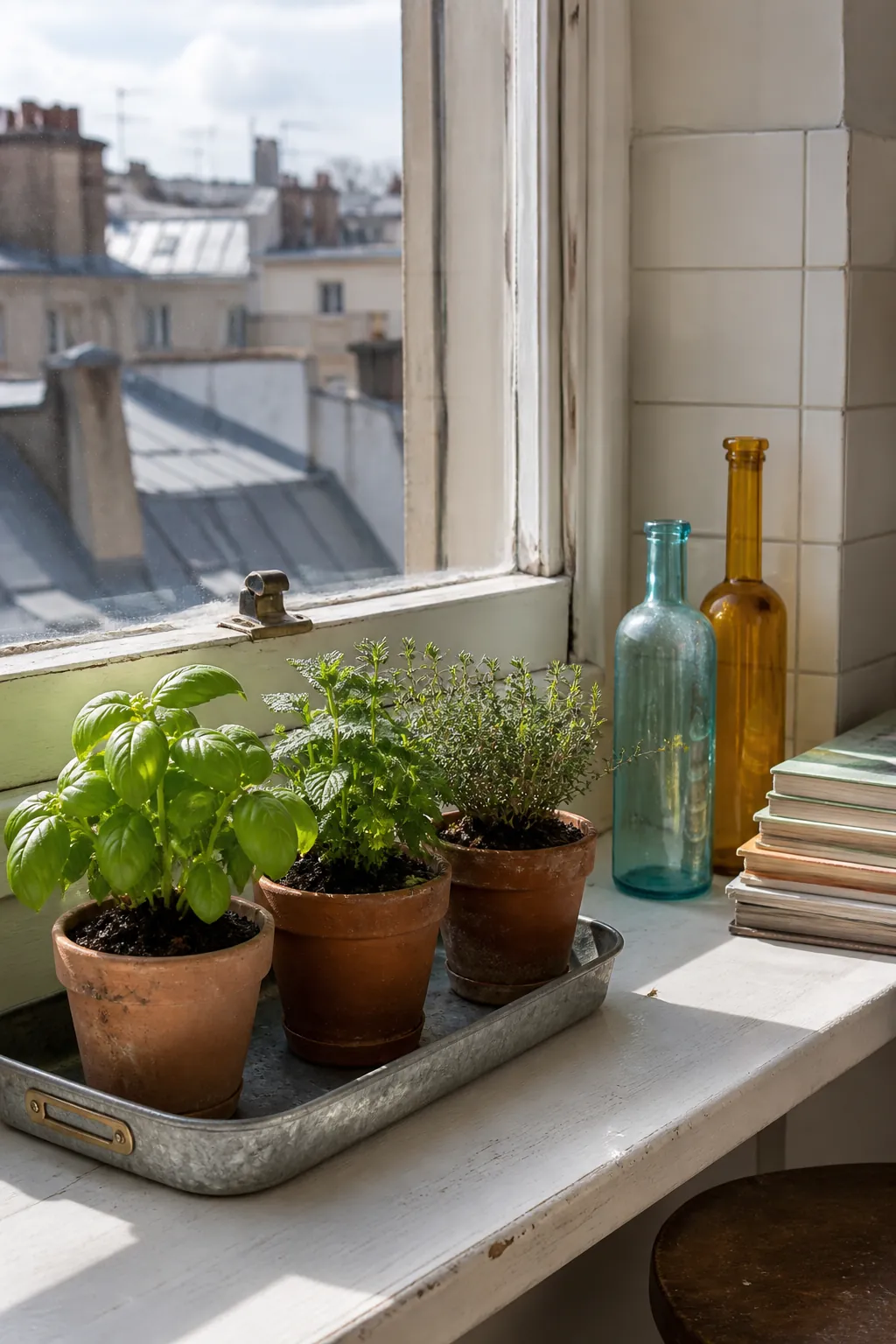
Avoid heat-sensitive objects, crowded pots, and anything that blocks ventilation or emergency access. Trays make watering easier and protect paint. Because strong sunlight can fade materials quickly, rotate or relocate valued objects as seasons change.
Upgrade the Bathroom With Matching Daily Essentials
Small bathrooms have little room for purely decorative objects. Instead, coordinate the items you already use: towels, soap dispenser, bath mat, storage cup, and shower curtain. A repeated color or material makes the room feel composed without stealing counter space.
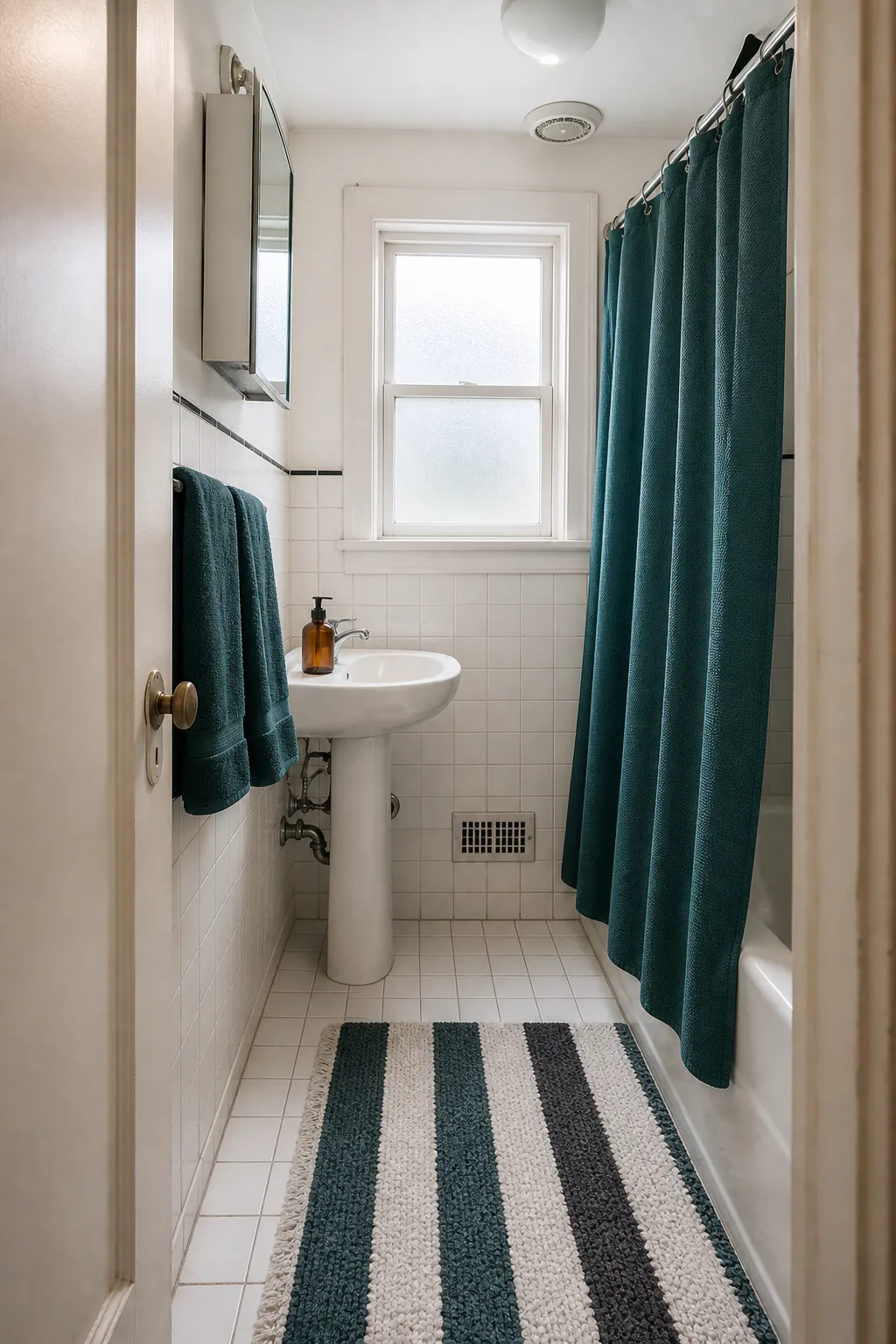
Decant only products you can identify safely, and never sacrifice ventilation for styling. Use washable materials and leave damp textiles room to dry. One rich accent—deep green, clay, or cobalt—can give a plain white bathroom more presence.
Make the Dining Table Earn Its Footprint
A small dining table may also be the desk, prep surface, game table, and gathering place. Choose a durable top, comfortable knee clearance, and a shape that supports circulation. Round tables ease tight corners; narrow rectangular tables can sit flush against a wall.
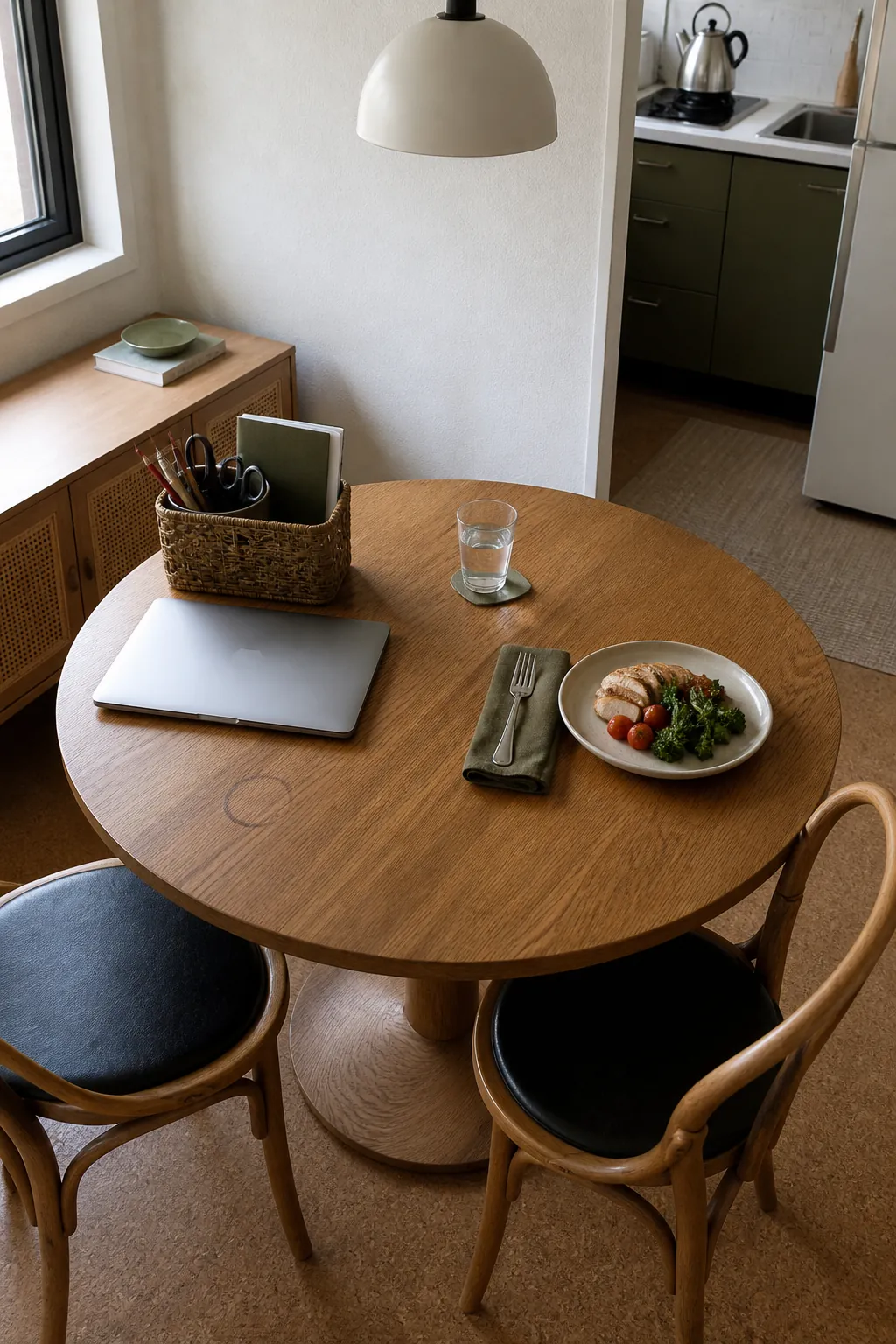
Store work tools in one portable basket so dinner does not require a major cleanup. A bench that tucks underneath can provide flexible seating, but chairs with supportive backs are better for long work sessions. Multifunction should improve routines, not force uncomfortable compromises.
Leave One Surface Mostly Empty
Every small apartment benefits from a visual pause. Keep one tabletop, counter section, or shelf mostly empty so there is always a place to set down groceries, fold laundry, or arrange flowers without first moving a collection of objects.
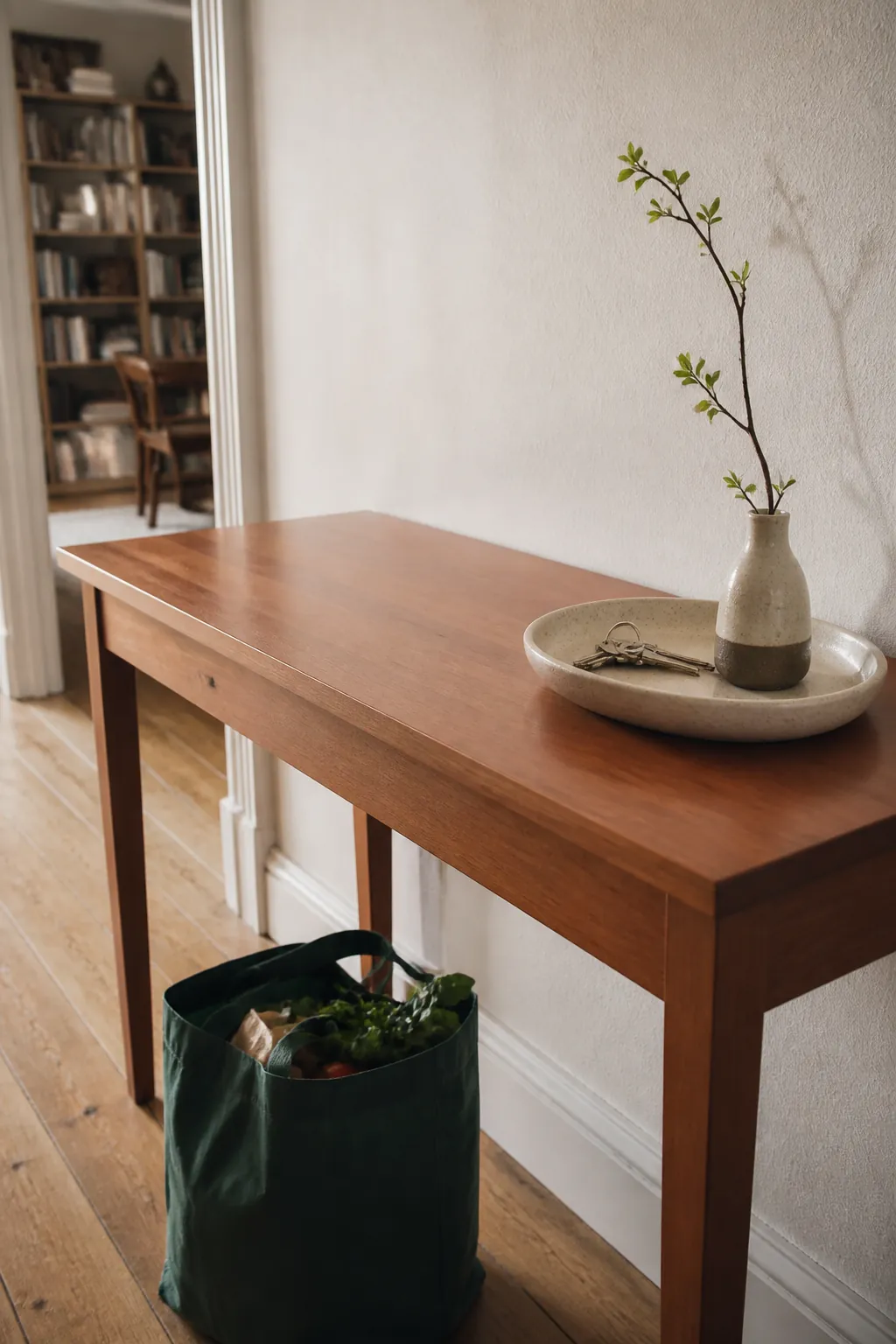
This is not wasted space; it is flexible capacity. Select one object or small tray as the surface’s permanent resident and relocate everything else. Open space makes the decorated areas look more intentional and gives daily life somewhere to happen.
Use a Basket to Reset the Room Each Evening
Keep one attractive handled basket for items that belong elsewhere. At the end of the day, collect chargers, notebooks, toys, and stray clothing, then return them on a quick circuit through the apartment. The basket prevents a full cleanup from feeling necessary every night.
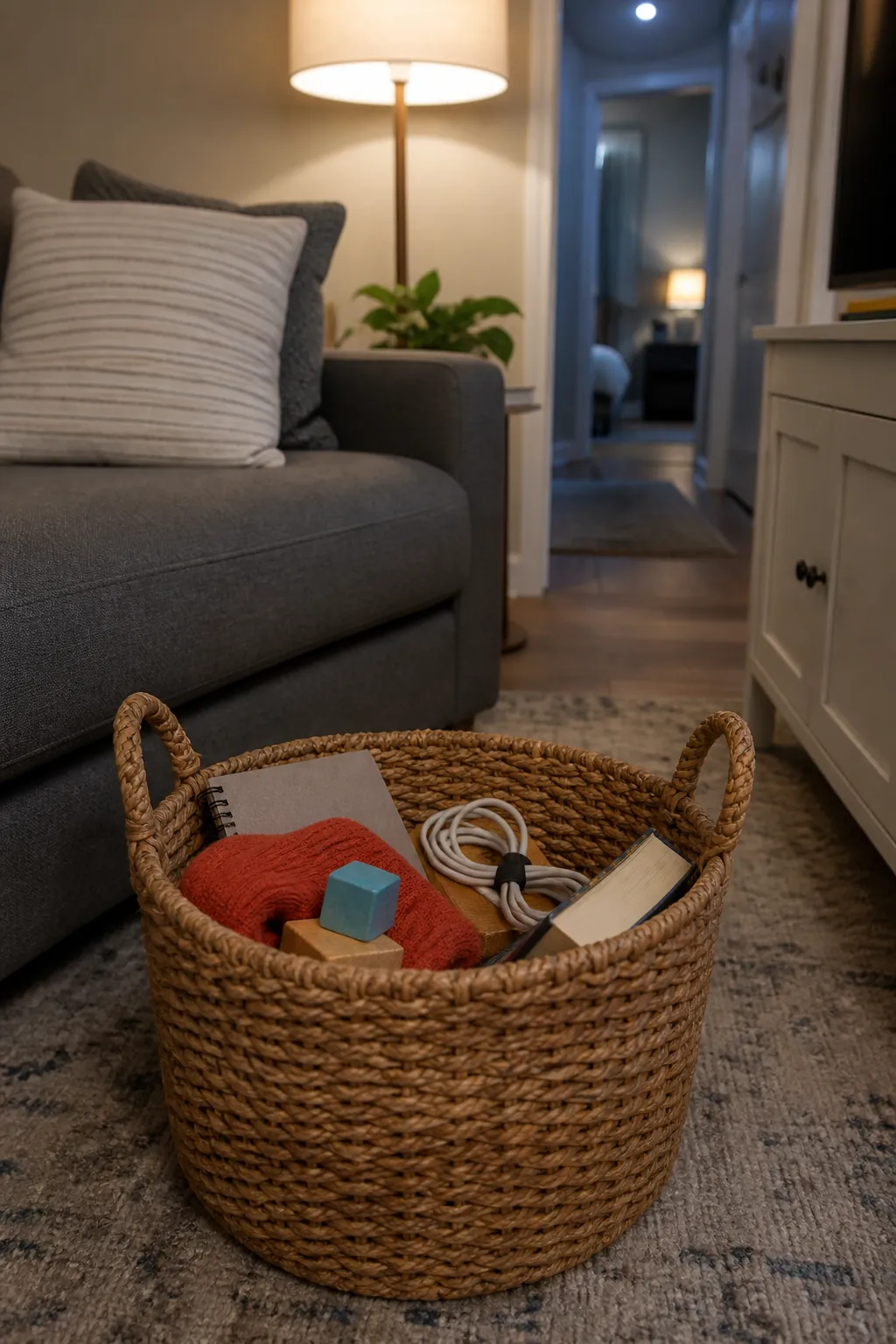
Do not let it become permanent unsorted storage. Choose a size small enough to empty in a few minutes and a material that can sit visibly in the living room. This modest routine protects all the other decorating work from everyday drift.
Decorate Slowly Around the Life You Actually Live
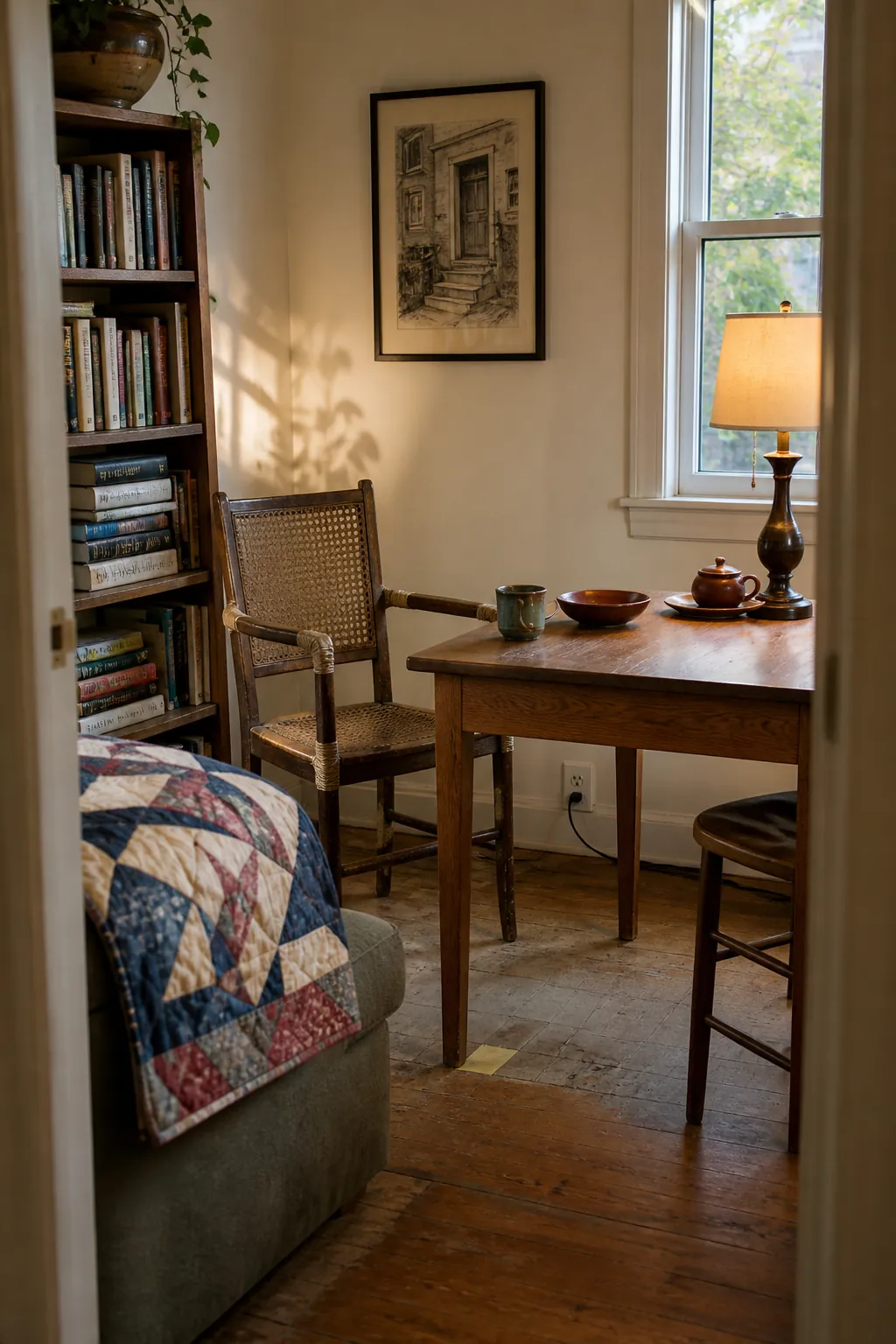
The strongest small apartment decor inspiration comes from observing your own routines. Notice where you read, where shoes collect, which corner stays dark, and which surface becomes the unofficial desk. Solve those specific moments before buying another generic accessory.
Buy in an order that protects the budget: rearrange first, improve lighting next, add essential storage, then layer rugs, curtains, art, and meaningful finds. A home assembled over time can look more coherent because each object has earned its place. The goal is not to make a tiny apartment look empty; it is to make every inch feel chosen, comfortable, and unmistakably yours.