
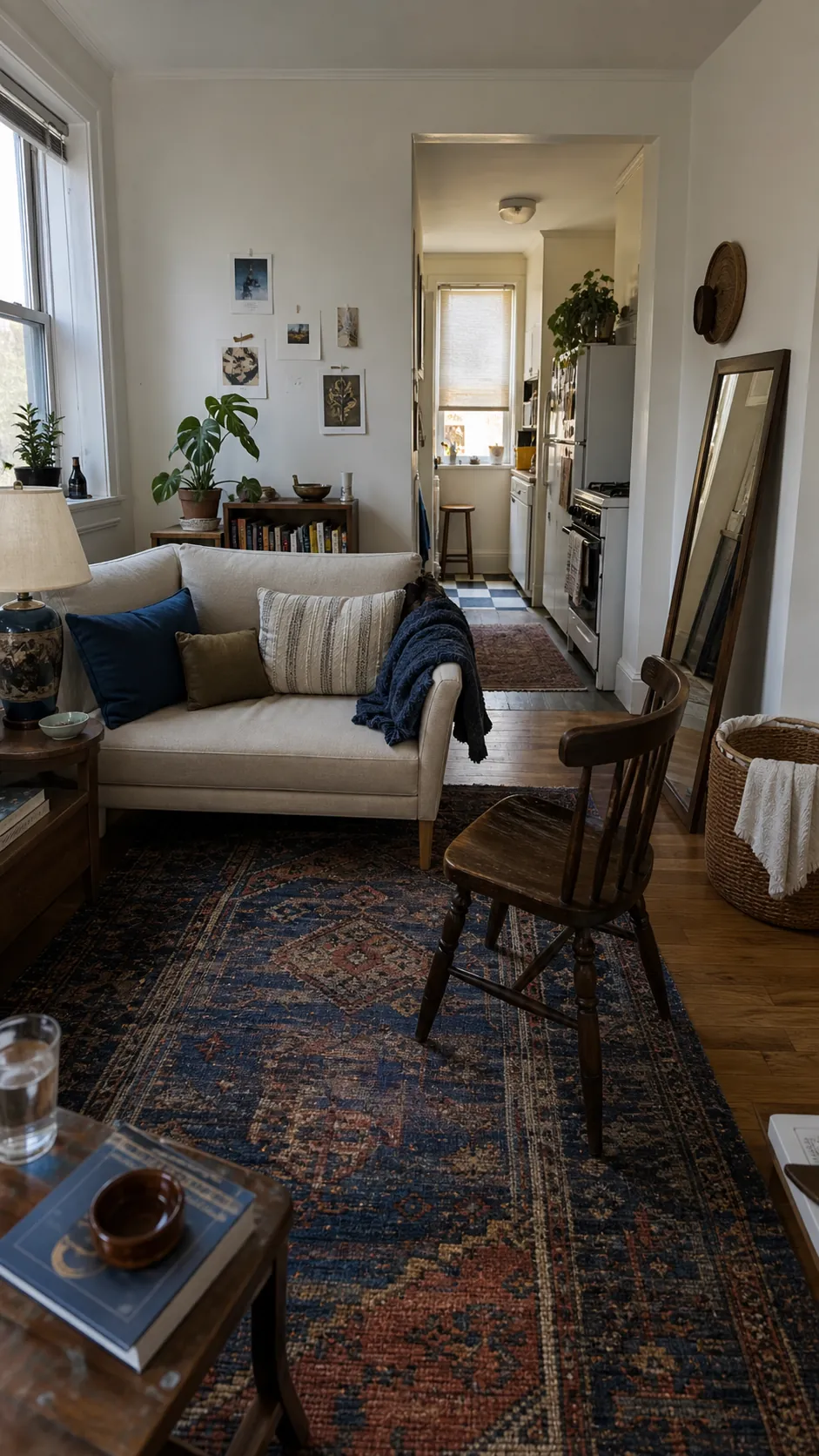
Decorating a small apartment on a budget is less about finding the cheapest version of everything and more about choosing changes that improve daily life. Renters repeatedly worry about damage, clutter, awkward layouts, and spending on pieces that will not survive the next move. These ideas start with free adjustments, then prioritize reversible upgrades, useful objects, and secondhand materials.
Rearrange Before You Buy
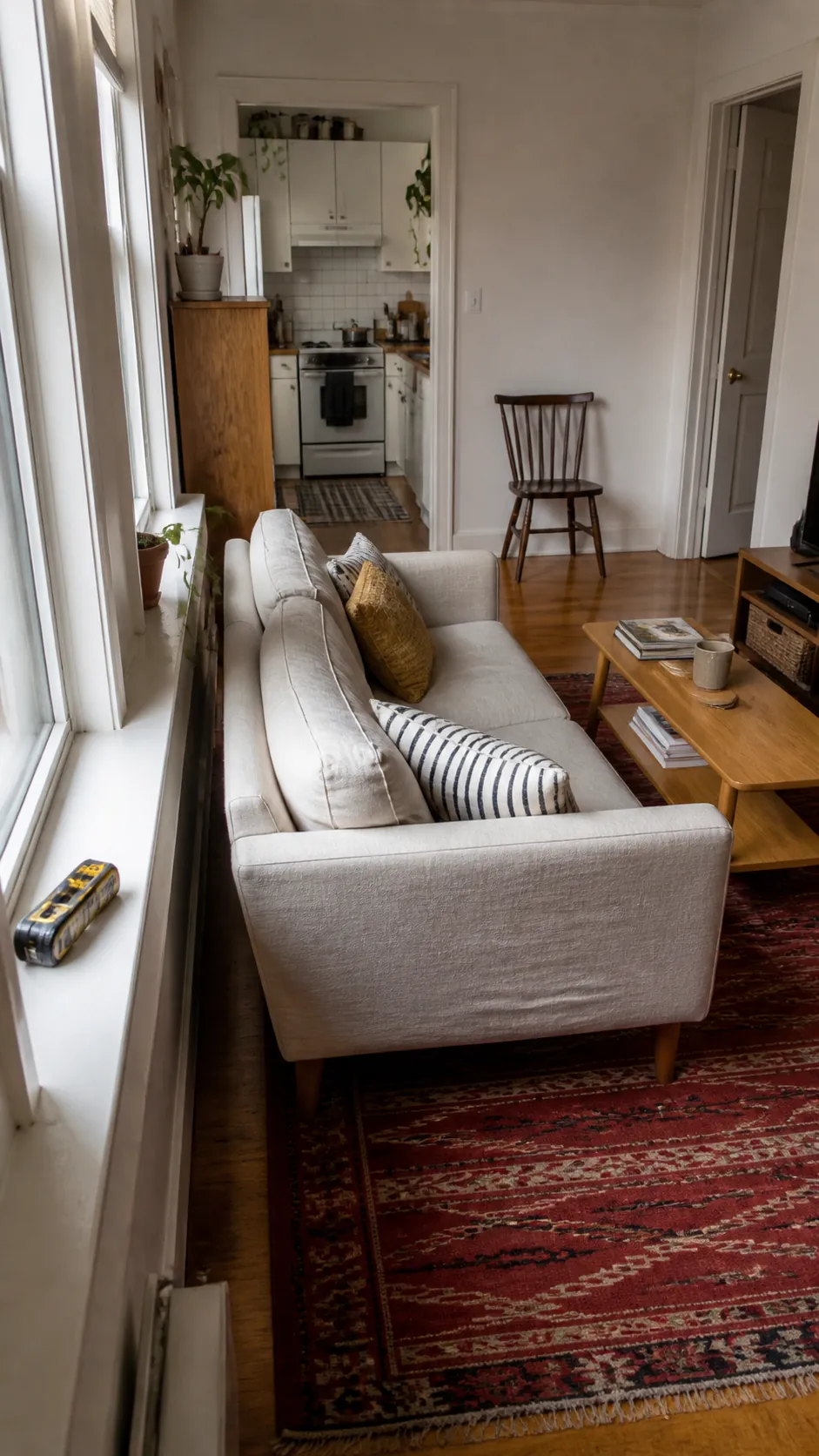
Start with a free reset. Pull movable furniture away from its usual positions, measure the useful wall lengths, and test two or three layouts with painter’s tape marking the footprints. In a very small apartment, a sofa shifted six inches or a table turned ninety degrees can open a walking route that makes the entire room feel calmer.
Keep the arrangement that supports your real week, not an imaginary photo shoot. Leave a clear path from the entry to the kitchen, place the best chair near daylight, and remove one piece that forces you to sidestep. The cheapest decorating move is giving every existing piece a better job.
Build a Thrift-Store Color Palette
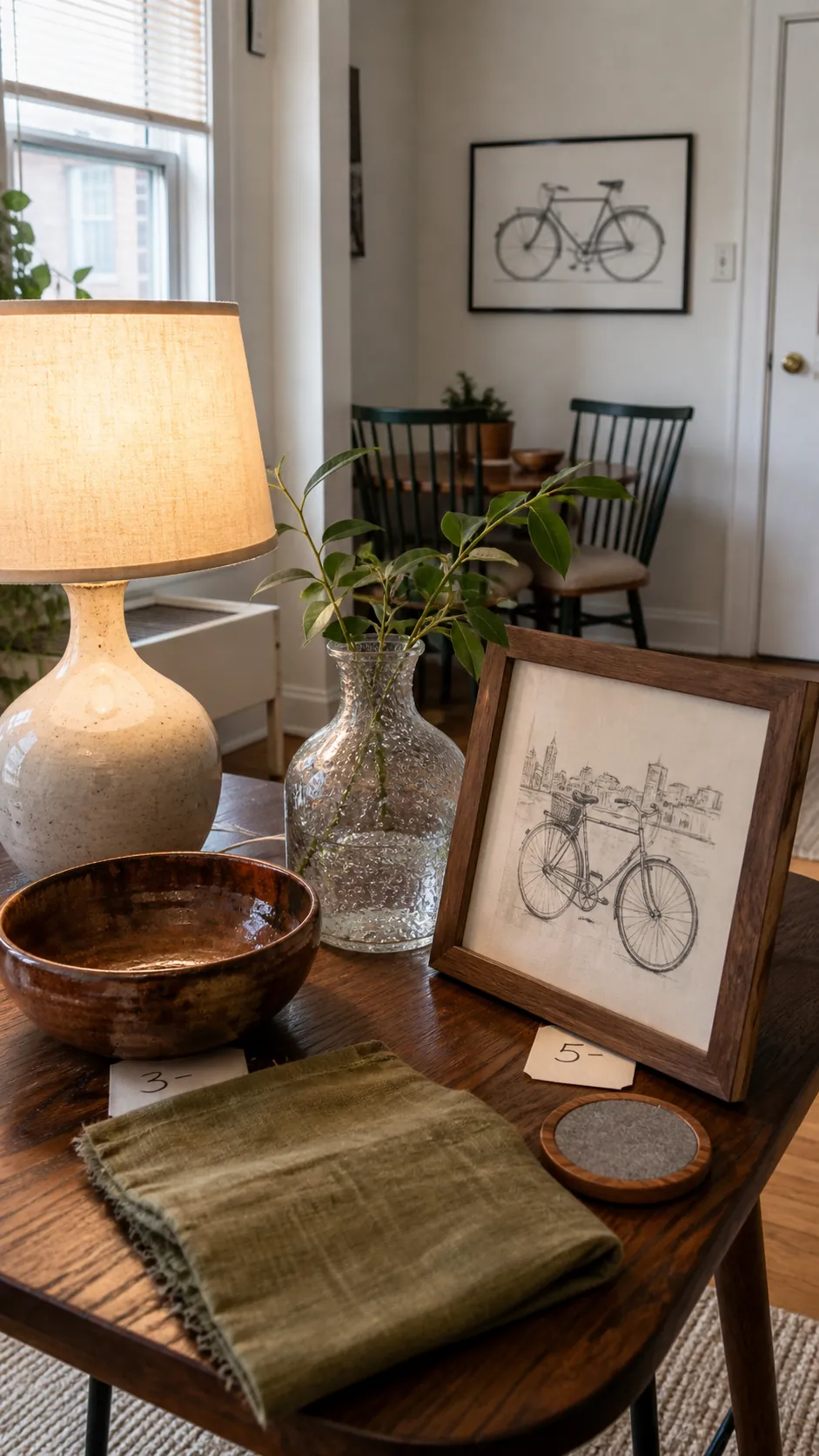
Thrift shopping works best with limits. Choose one quiet base color, one wood tone, and two accents before you browse. That filter turns a crowded charity shop into a useful source instead of an invitation to collect unrelated bargains. Photograph your room in daylight so you can compare colors while shopping.
Look for materials that age well: solid wood trays, washable cotton covers, ceramic lamps, glass vases, and frames with real depth. Skip items that need a second costly purchase to become usable. A coordinated $8 find looks more intentional than five random $3 finds.
Use One Large Secondhand Rug
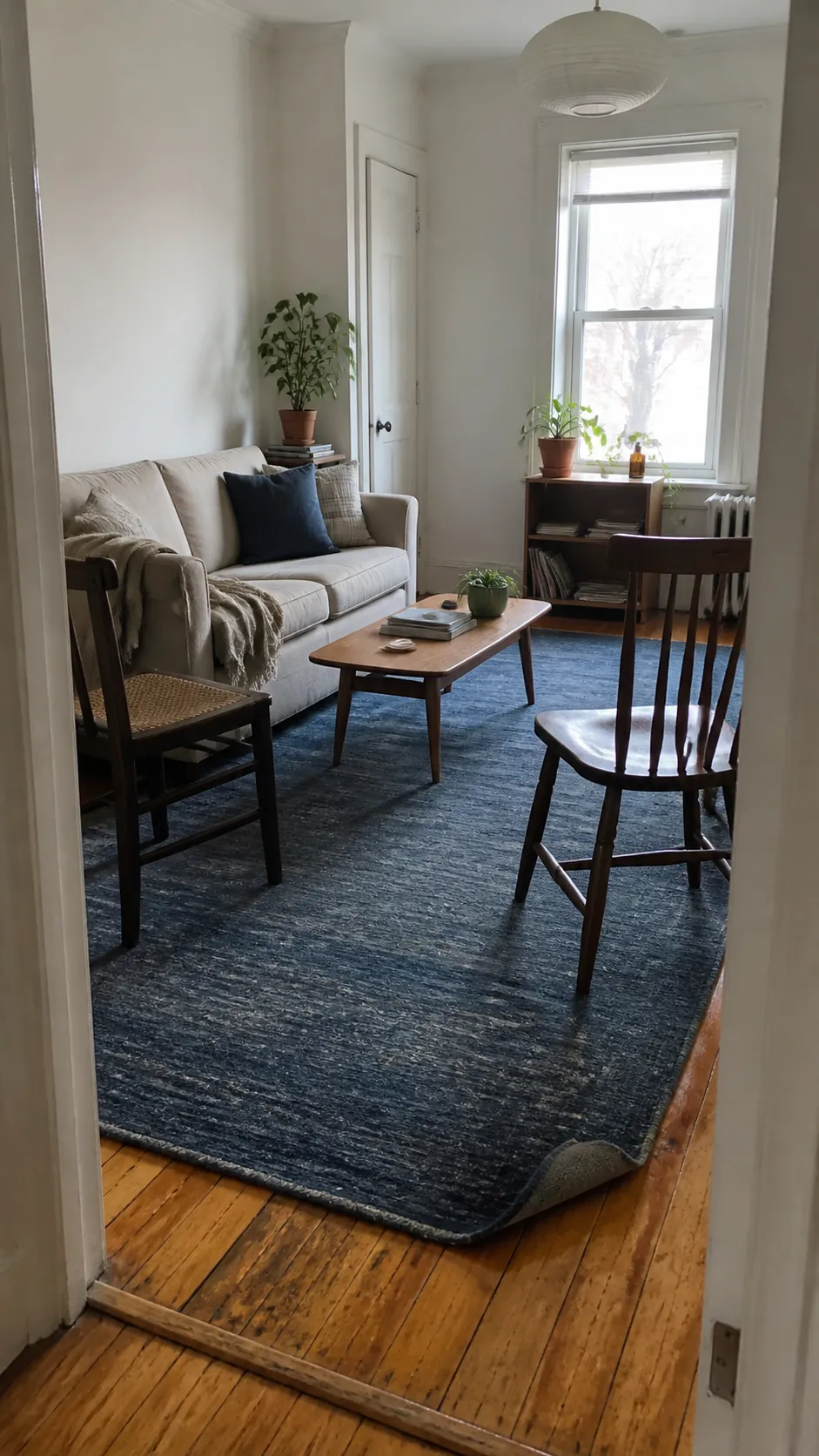
A small rug can make a compact room look chopped into even smaller pieces. Search local resale listings for the largest clean rug your seating area can take, then verify dimensions with tape on the floor. A low-pile vintage or washable flatweave is easier to move, clean, and live with than a thick bargain rug.
At minimum, let the front legs of the sofa and chairs sit on it. That single plane links mismatched furniture and softens echo without adding clutter. Inspect secondhand rugs in daylight, check odors and backing, and budget for cleaning. Scale creates more polish than a trendy pattern.
Frame Inexpensive Paper Finds
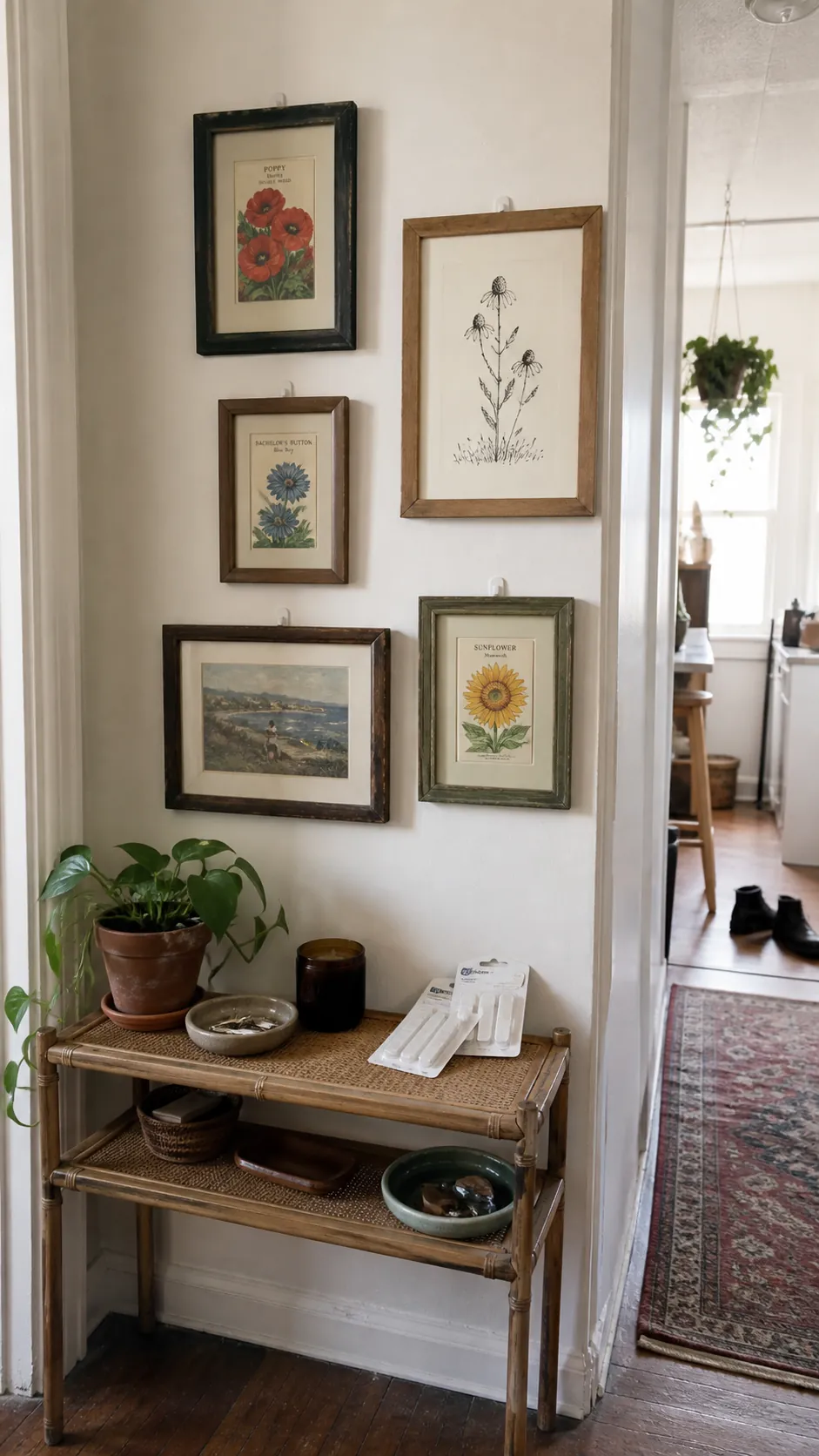
Original-looking walls do not require original-art prices. Save exhibition postcards, calendar pages, public-domain botanical prints, pretty wrapping paper, or a child’s drawing. Group the paper by a shared color or subject, then place it in thrifted frames that you unify with matching mats or one restrained paint color.
Lay the composition on the floor first and photograph it before mounting with renter-safe strips rated for each frame’s weight. Keep the outer edges aligned even when frame sizes vary. Consistent spacing makes humble paper feel collected rather than improvised.
Hang Curtains High and Wide
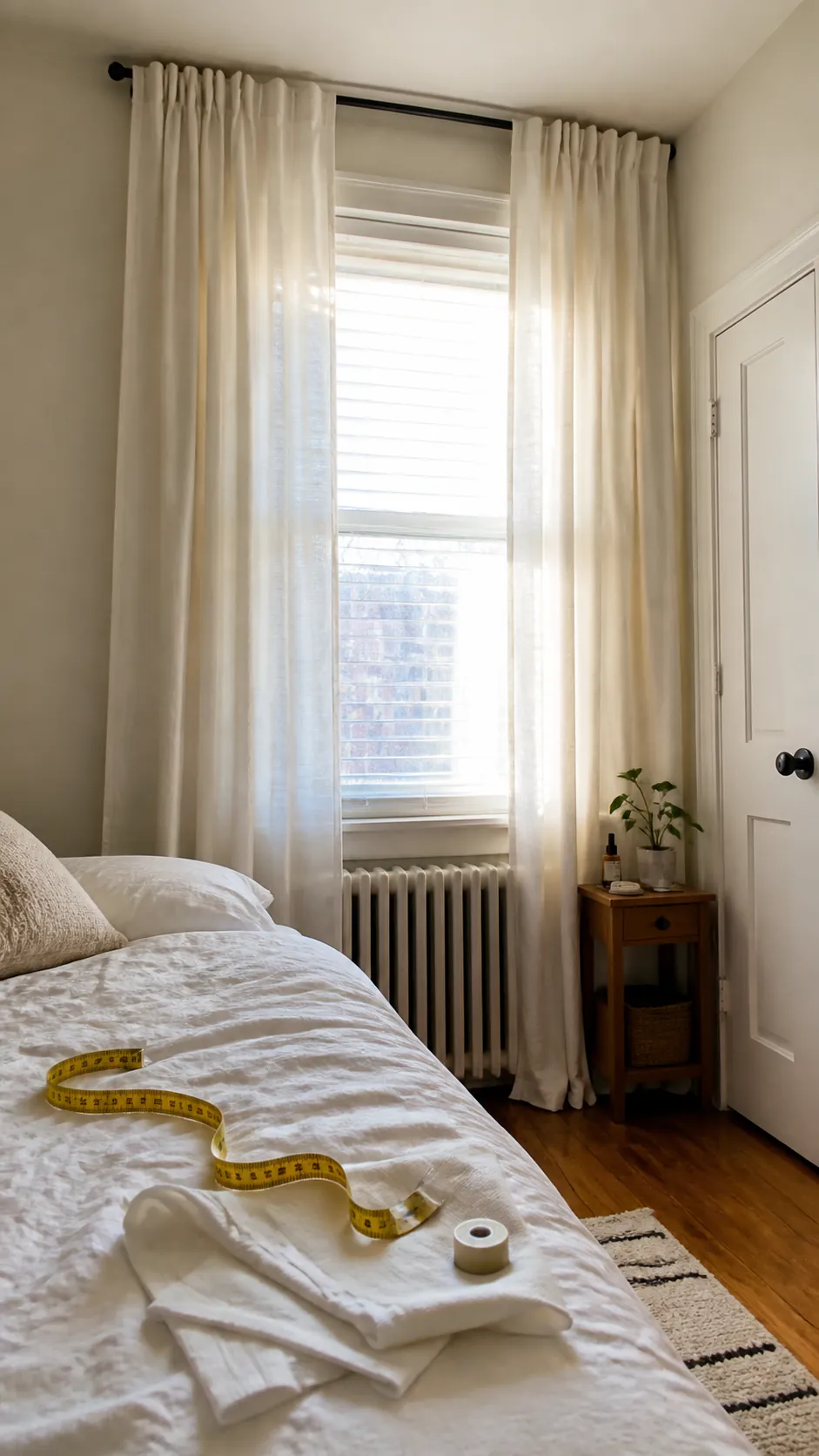
Basic rental blinds often emphasize a small window. Mount a tension rod or approved no-drill brackets close to the ceiling and extend the curtains beyond the glass when open. Full-length panels create a taller vertical line and uncover more daylight, even if the inexpensive fabric is simply hemmed with iron-on tape.
Choose washable cotton or linen-look panels with enough fullness to hang in soft folds. Before buying, measure ceiling height, sill depth, radiator clearance, and where the fabric will stack. The visual lift comes from placement and length, not from an expensive label.
Swap Hardware and Save the Originals
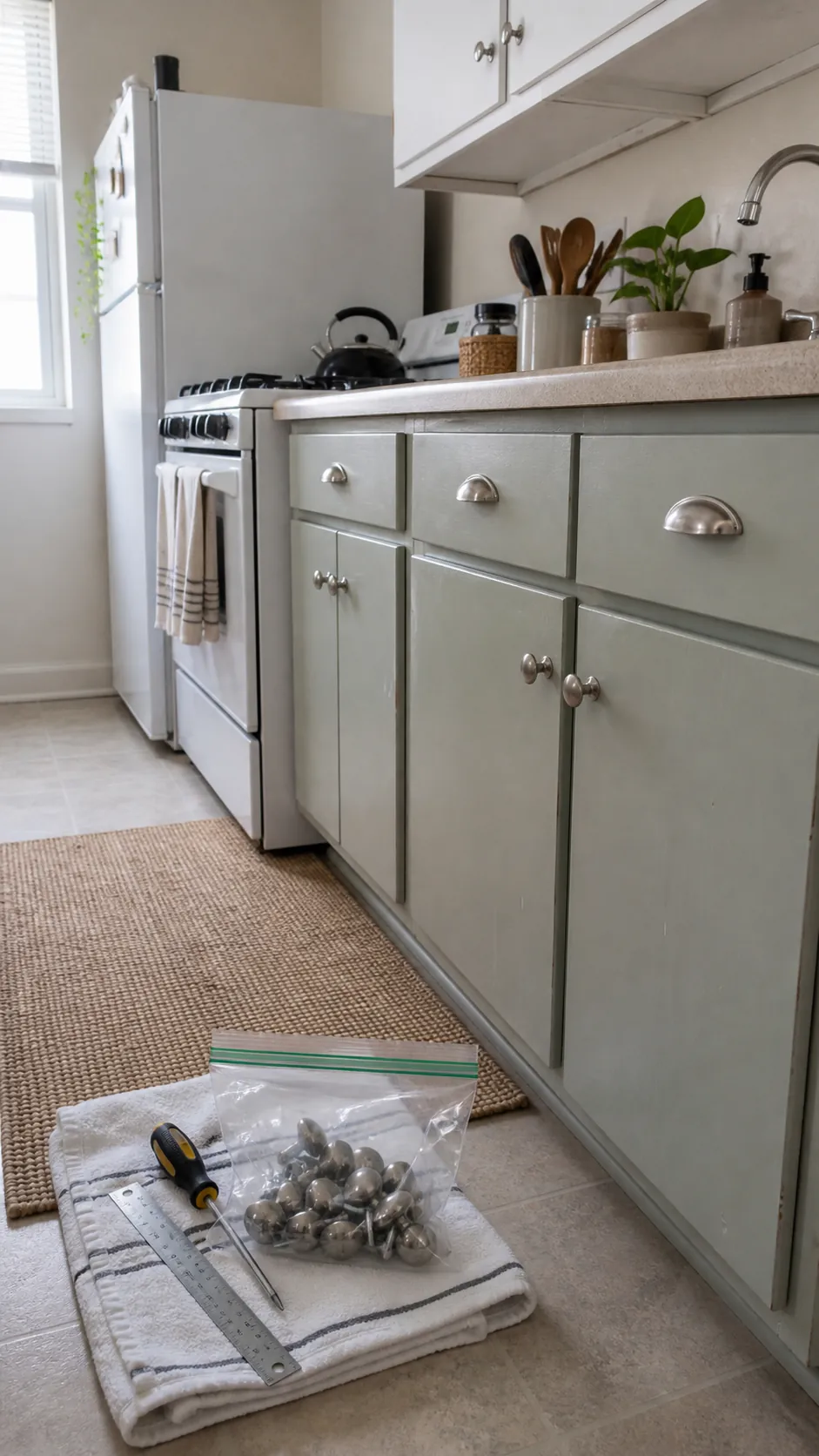
Cabinet knobs and drawer pulls are small enough to change a kitchen’s mood without replacing anything major. Count every size, measure the hole spacing, and buy one sample before ordering a set. Simple wood, ceramic, or brushed-metal hardware often appears in salvage bins and multipacks.
Put every original screw and handle in a labeled zipper bag, then store it where moving-day you will find it. Avoid drilling new holes unless your landlord agrees. A reversible hardware swap succeeds when installation is precise and the old parts remain recoverable.
Make a Plug-In Lighting Layer
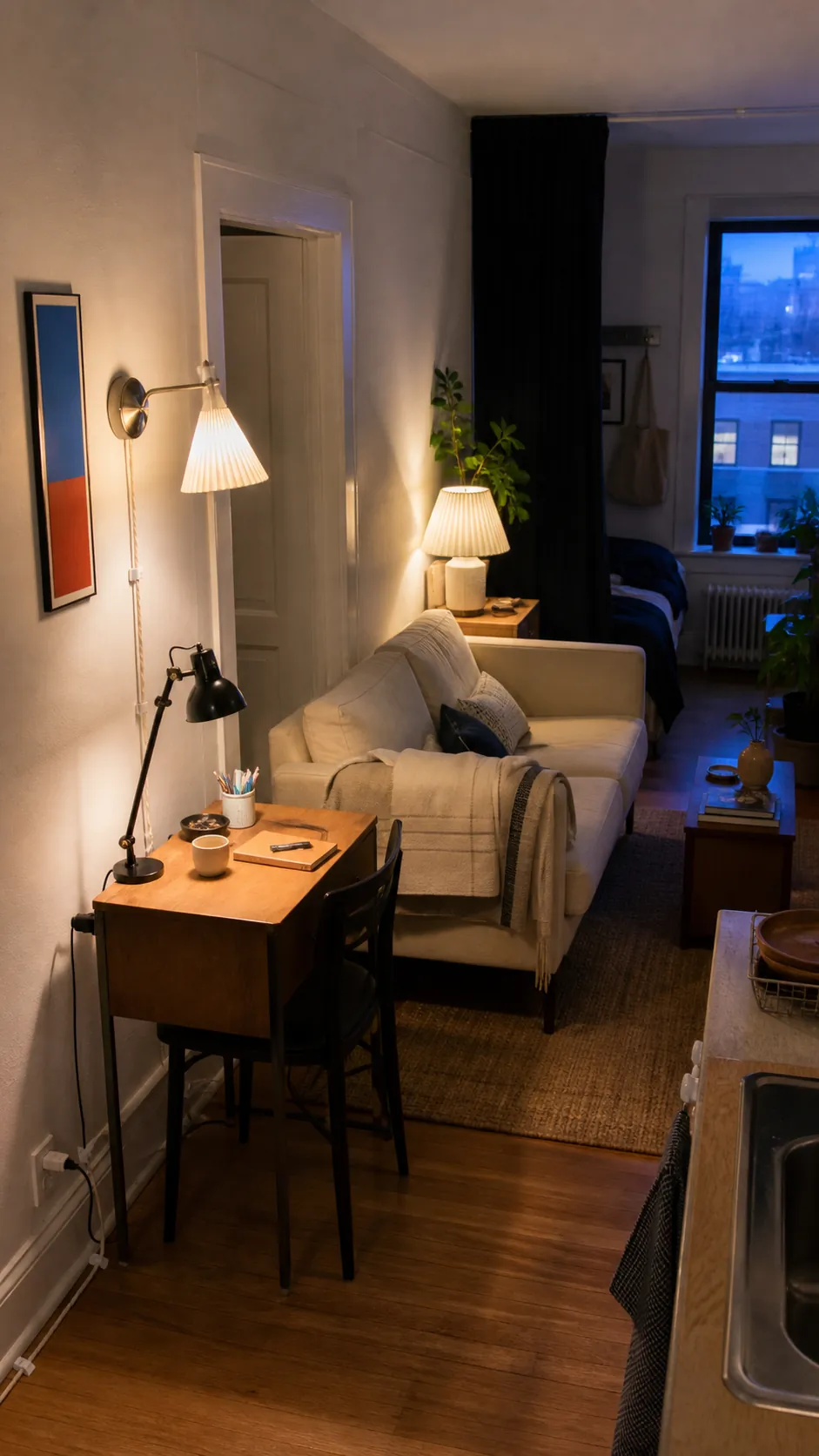
One overhead fixture can make even attractive decor feel flat. Build a three-point layer with a thrifted table lamp, a plug-in wall light, and a small task lamp. Use bulbs with the same warm-neutral color temperature so the room feels deliberate rather than patchy.
Place light where activities happen: beside the sofa for reading, above a desk for work, and near a dark corner to widen the perceived room. Hide excess cord with removable clips and keep fabric clear of hot bulbs. Good lighting changes everything you already own after sunset.
Turn Books Into Useful Risers
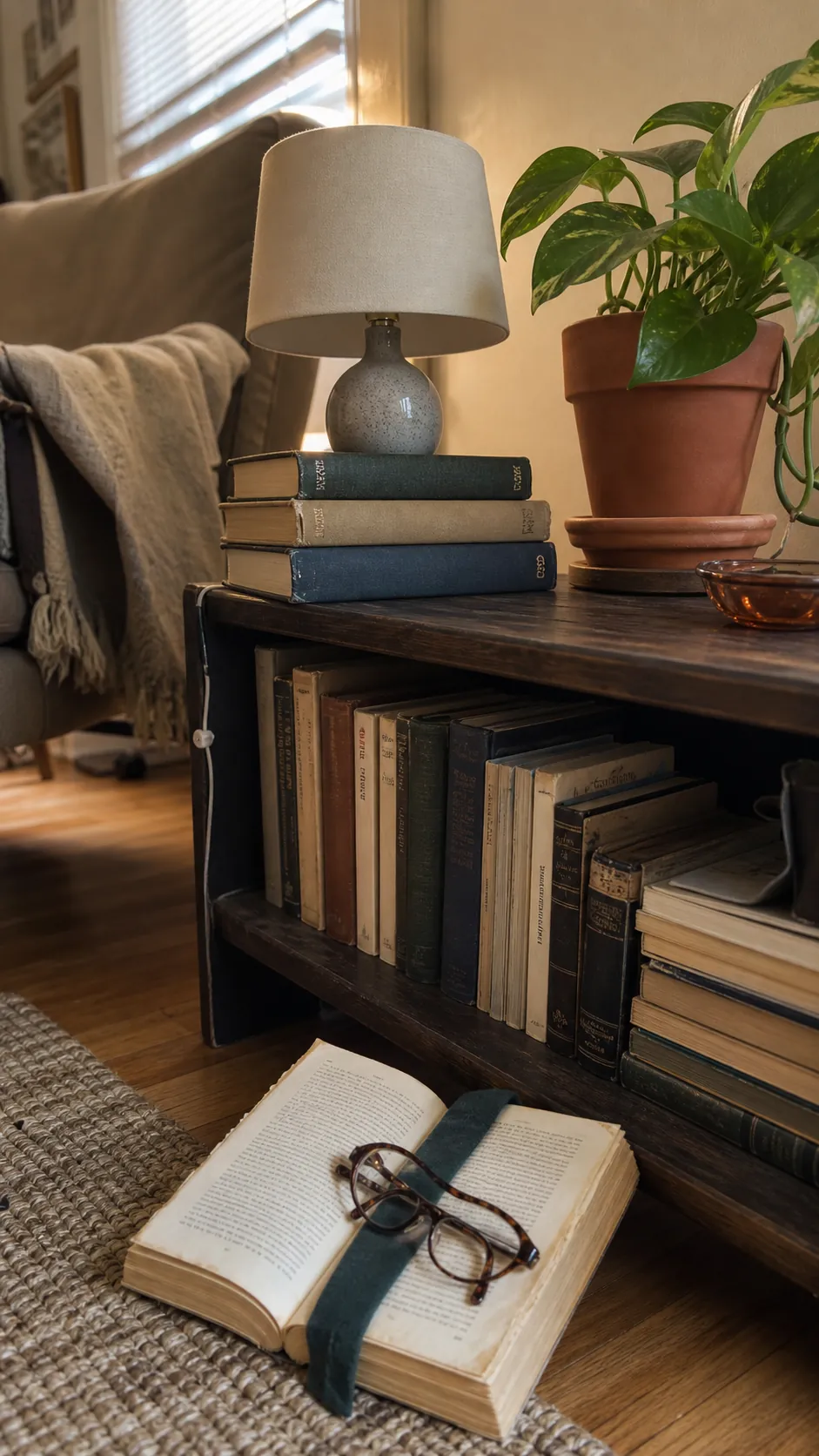
Books can add height, color, and function without becoming decorative clutter. Stack two sturdy hardbacks beneath a lamp, raise a trailing plant closer to light, or use a short row to support a framed print on a shelf. Select volumes you actually read rather than buying books by color.
Keep stacks low and stable, protect valuable covers from wet pots, and leave ventilation around electronics. Repeating the same two or three cover colors can quietly connect a room. Useful objects earn their space twice when they also improve proportion.
Create a Tiny Entry Drop Zone
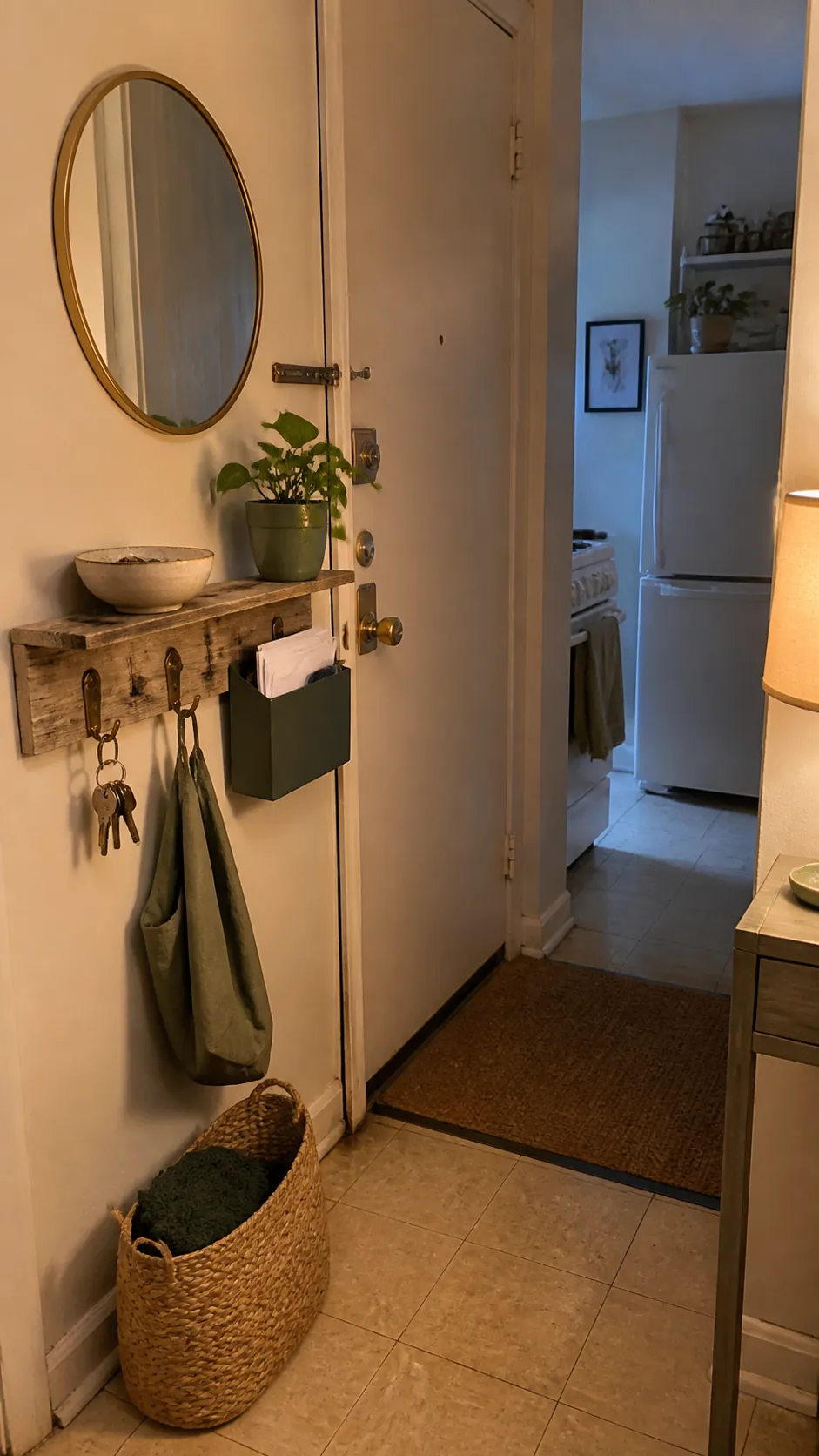
A narrow entry needs a landing place more than it needs decoration. Fit a shallow secondhand shelf, adhesive key hooks, or a sturdy basket within arm’s reach of the door. Limit the setup to the items you reach for daily: keys, mail, dog lead, umbrella, and one reusable bag.
Mark the door swing and walking width before installing anything. A small mirror can bounce light, but it should not replace the storage that prevents counter clutter. The best entry vignette is a repeatable habit disguised as decor.
Cover an Eyesore With Removable Film
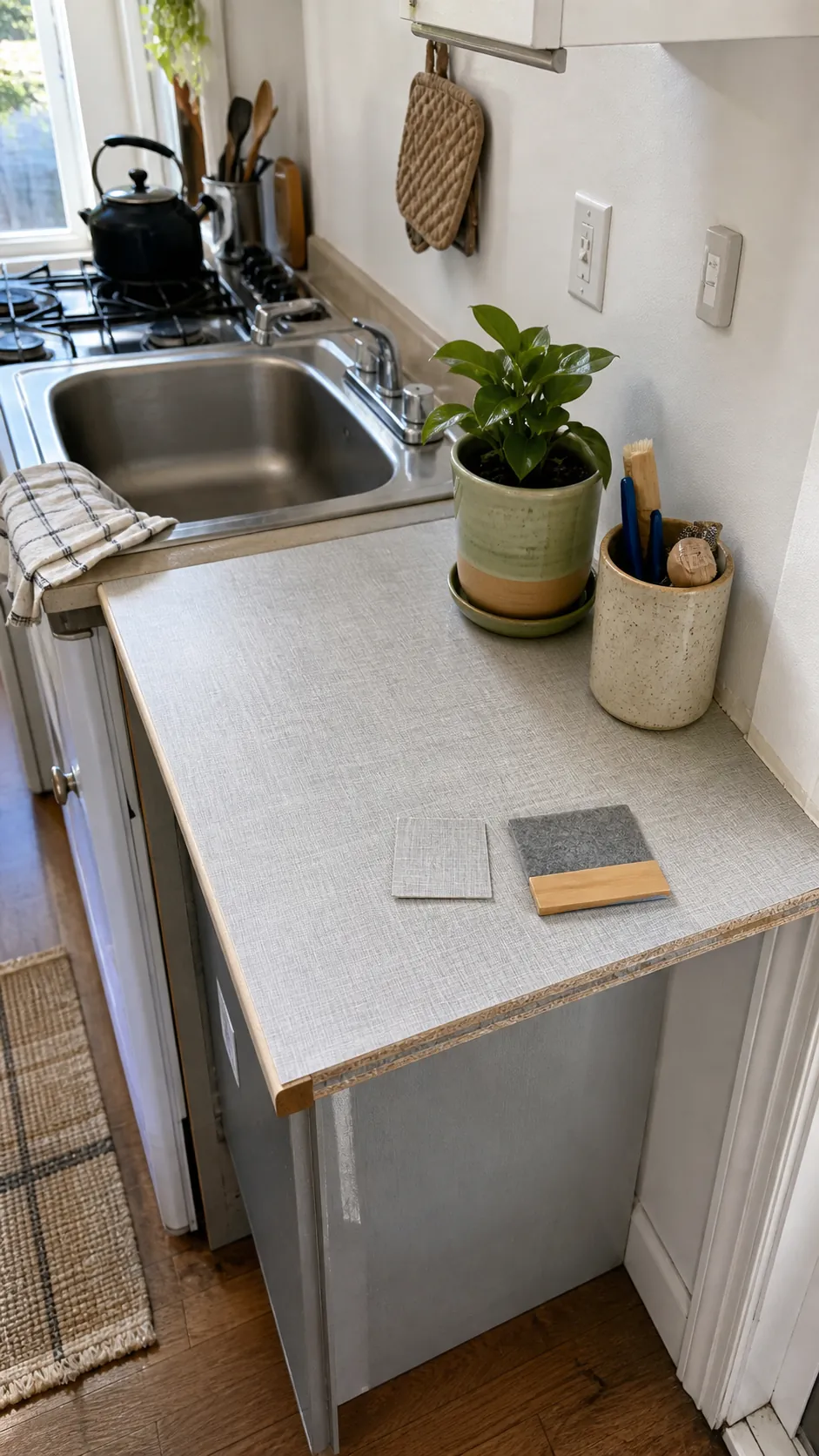
Peel-and-stick film can calm a damaged laminate shelf, dated backsplash panel, or scratched tabletop, but only when the surface and lease allow it. Test a hidden square for several days, photograph the original finish, and avoid applying adhesive over flaking paint or porous stone.
Choose a restrained pattern that aligns easily and buy a little extra from the same batch. Clean without residue, work slowly with a squeegee, and keep heat sources clear. Reversibility matters more than a dramatic before-and-after.
Style Open Storage With Repetition
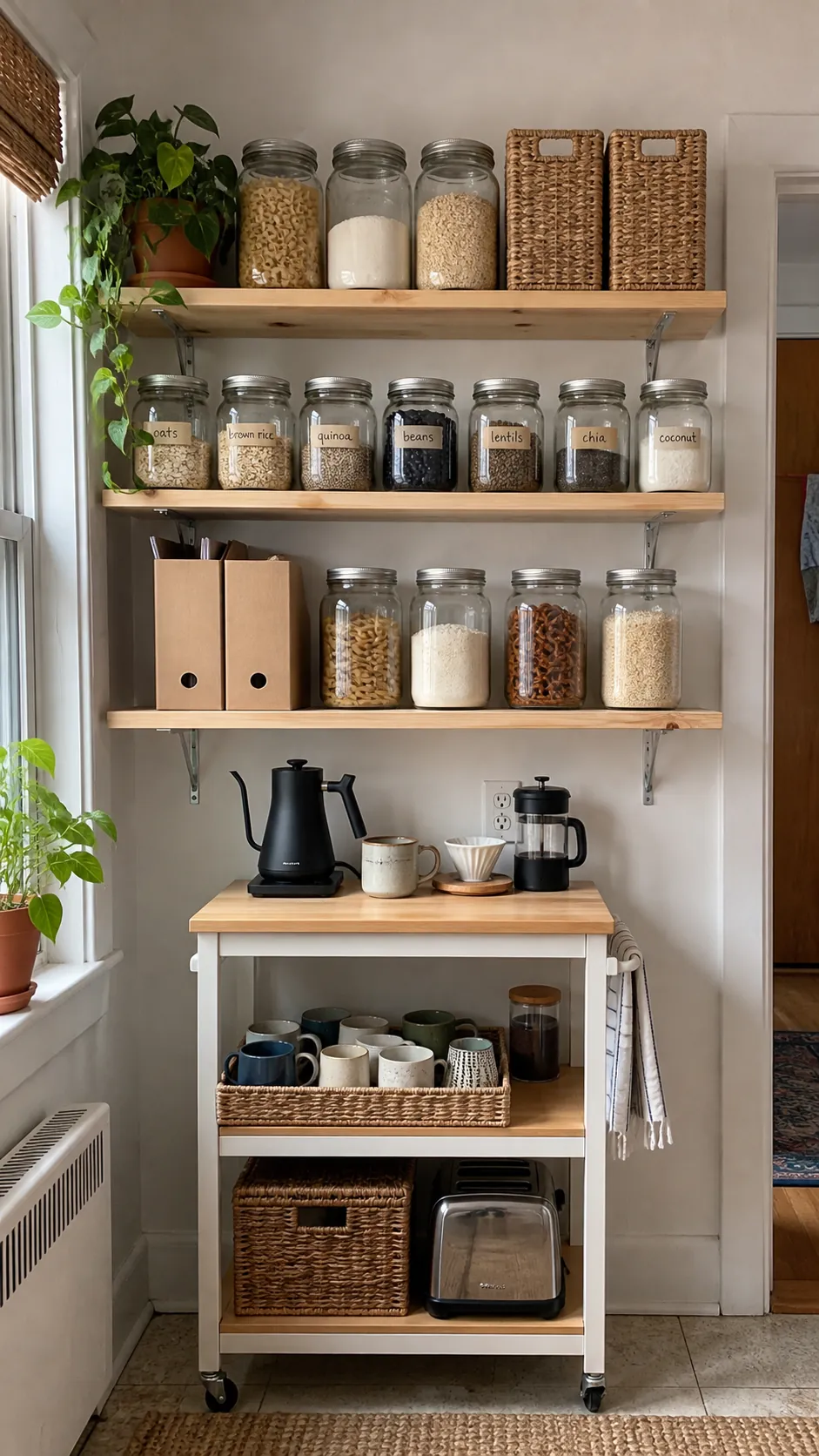
Open shelves feel expensive when repeated containers reduce visual noise. Before buying organizers, gather what you own into categories and test shoeboxes or paper bags for a week. Then replace only the temporary containers that genuinely improve access with matching baskets, jars, or magazine files.
Leave some breathing room and keep everyday items at hand height. In a kitchen, use containers safe for food; in a bathroom, choose washable materials that tolerate humidity. Repetition creates order, while empty space lets the order register.
Prop a Full-Length Mirror Safely
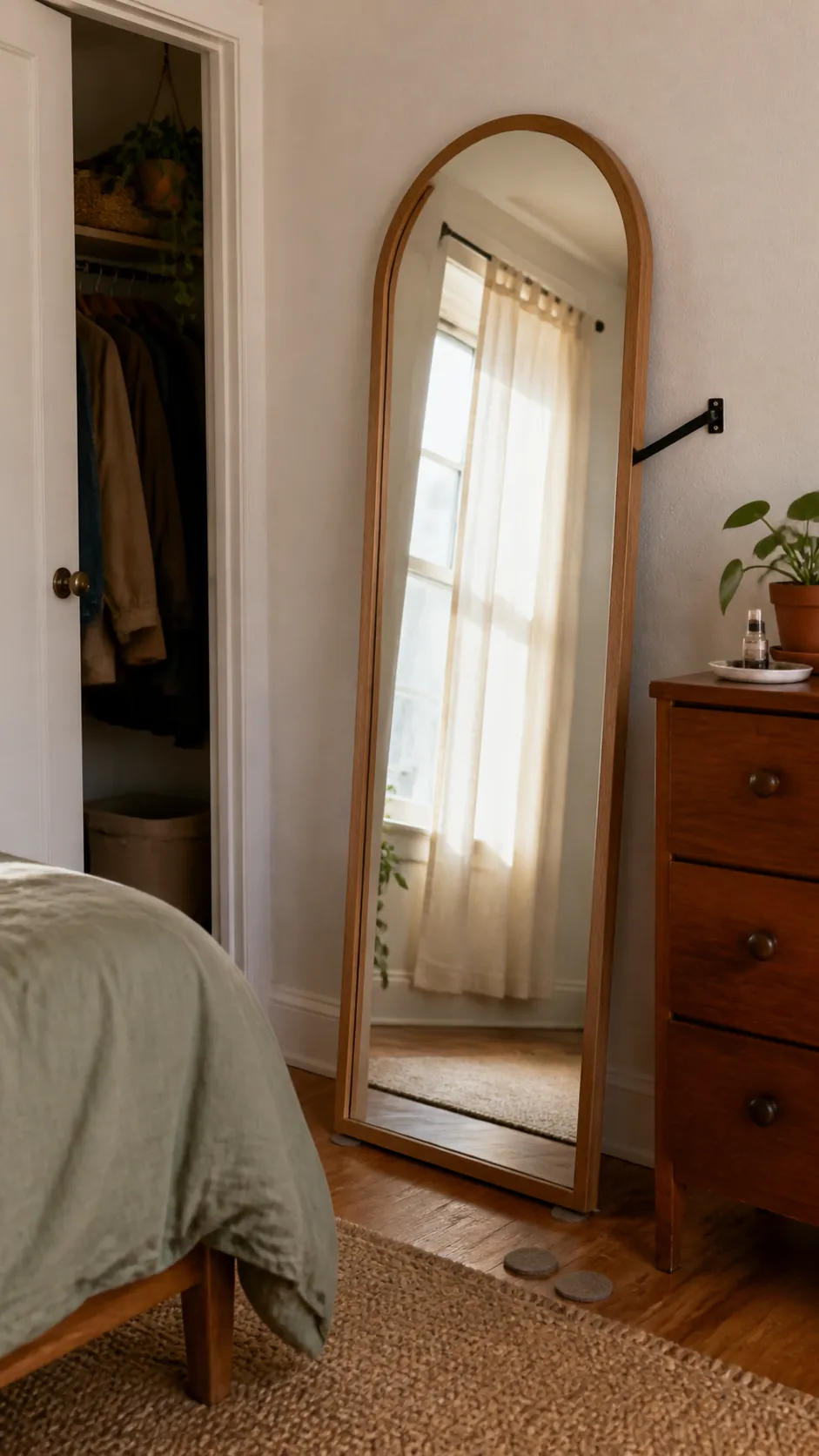
A resale mirror can return daylight and create depth, especially opposite or perpendicular to a window. Leaning it casually is not enough if children, pets, or foot traffic could knock it. Use a landlord-approved anti-tip strap or a secure over-door model, and check the frame and backing before bringing it home.
Angle the reflection toward a bright, tidy zone rather than a cluttered counter. Keep the glass out of a narrow collision path. A mirror should improve both light and safety; if it cannot be anchored, choose a smaller format.
Add Washable Fabric to Hard Furniture
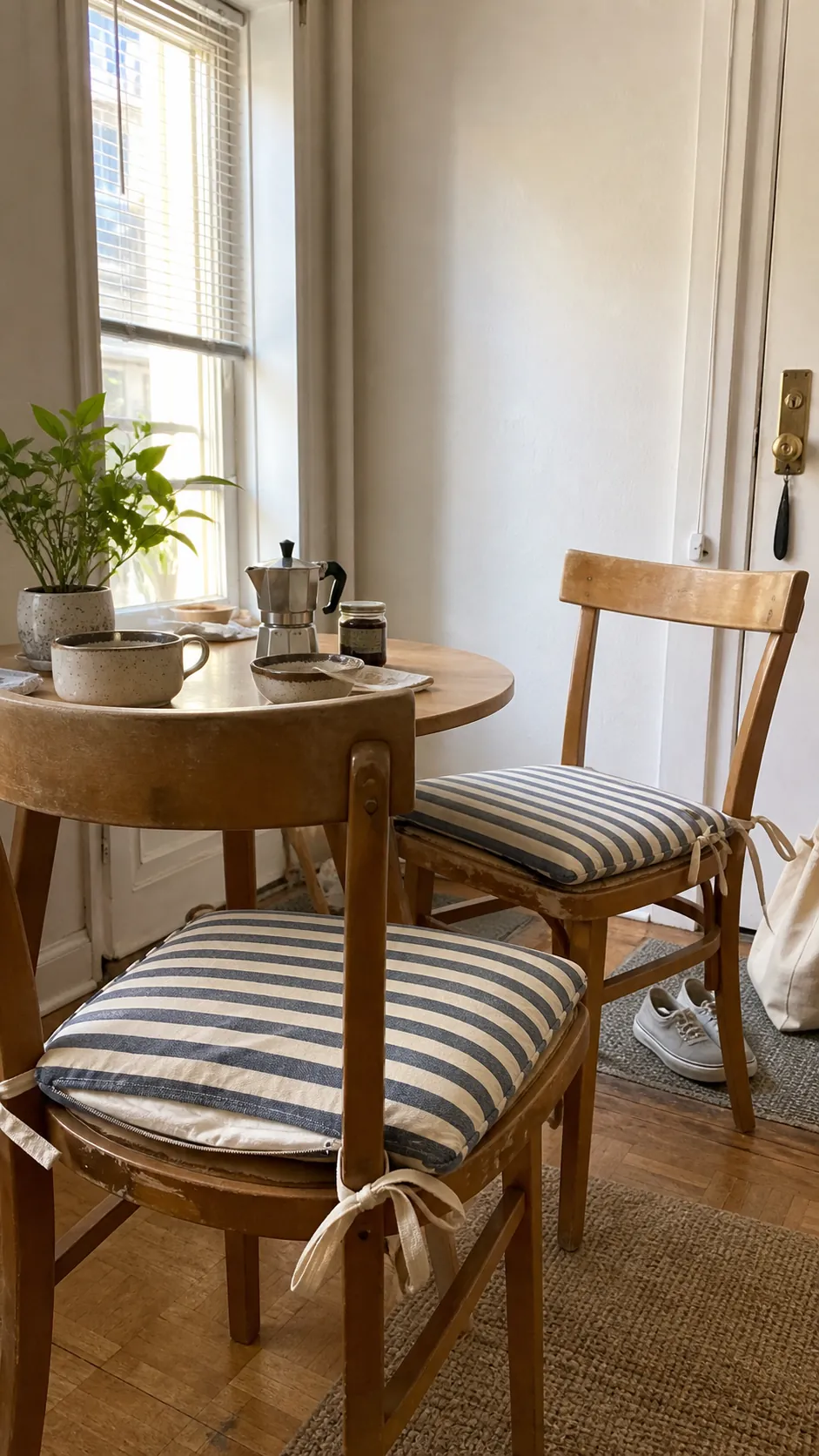
A rental furnished with rigid or unattractive pieces can soften quickly through fabric. Fit a washable cover to a dining chair, add a tailored cushion to a bench, or drape one textured throw over a sofa arm. Work from exact dimensions so the update reads as intentional.
Favor machine-washable covers with ties, zips, or non-slip backing instead of loose fabric that slides. One stripe, check, or small-scale print is enough in a tight room. Textile comfort is valuable only when it survives ordinary laundry and daily use.
Use Plants You Can Keep Alive
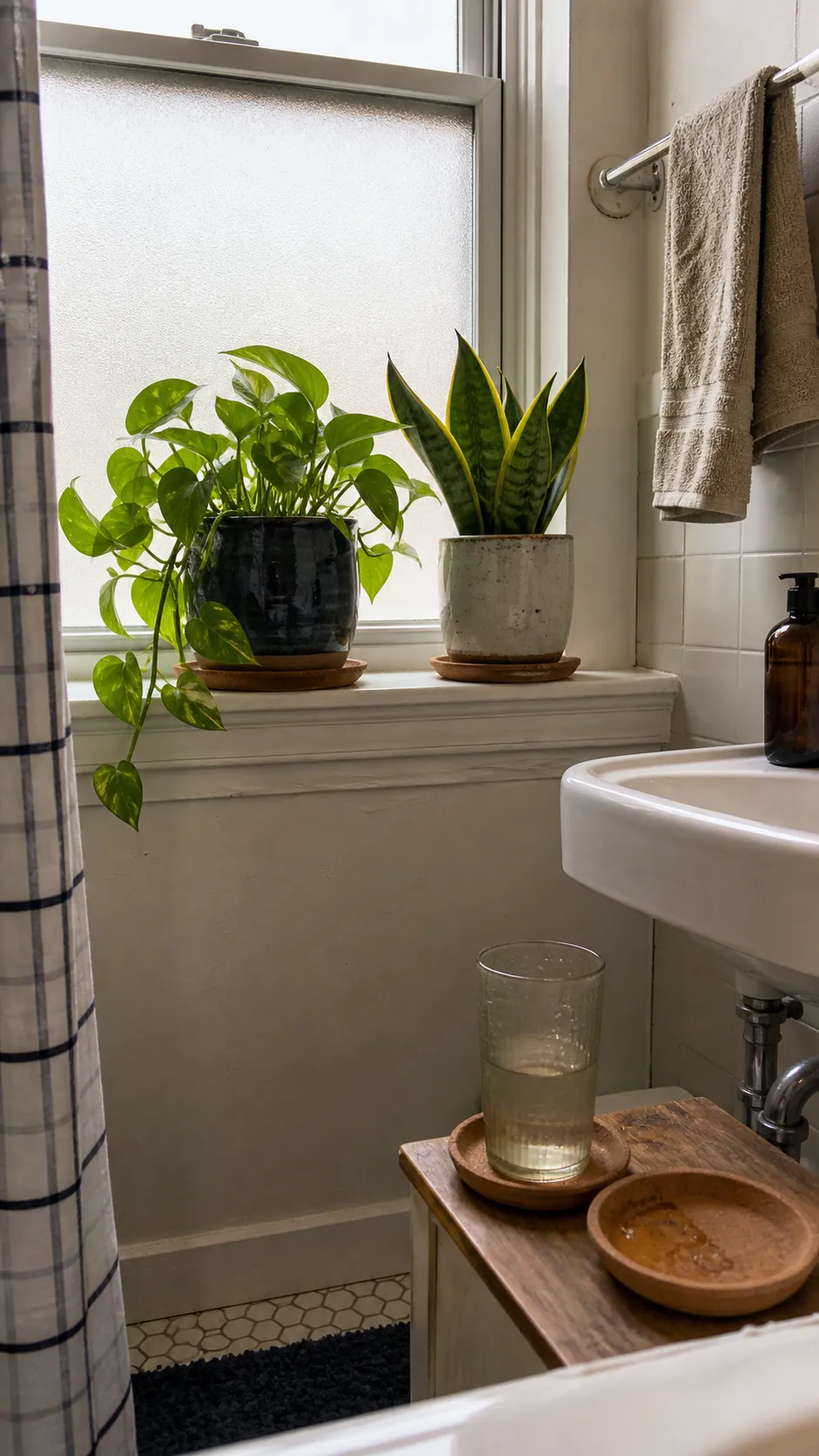
A struggling collection is neither cheap nor calming. Match one or two affordable plants to the light you actually have, then place them where watering is easy. Pothos, snake plants, or other forgiving choices may suit many apartments, but pet safety and local conditions matter more than trend lists.
Use nursery pots inside thrifted cachepots so drainage remains manageable, and put saucers beneath every plant. Propagate from a friend only when you can provide the same conditions. A healthy single plant contributes more than a crowded shelf of replacements.
Make One DIY Textile Panel
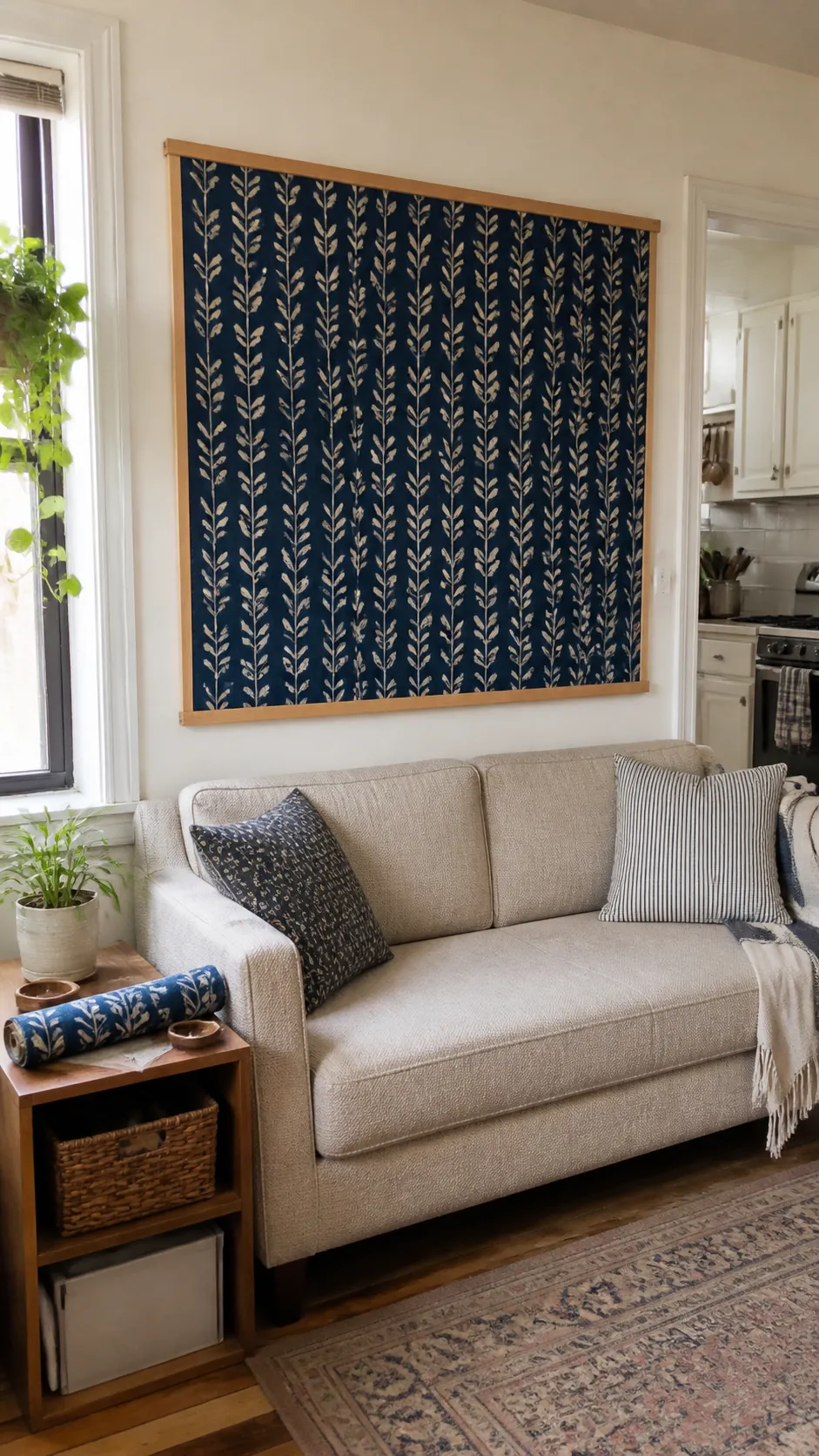
A remnant of striking fabric can fill a blank wall for less than a large framed print. Stretch it around a lightweight foam board or suspend it from slim wood battens, keeping the reverse completely removable. A block print, woven stripe, or restrained floral gives texture without a heavy frame.
Steam wrinkles first, center the repeat, and finish the edges neatly. Use hardware rated for the panel’s modest weight and test removal in an unseen spot. One generous handmade focal point is calmer than a scatter of tiny impulse purchases.
Divide a Studio With an Open Shelf
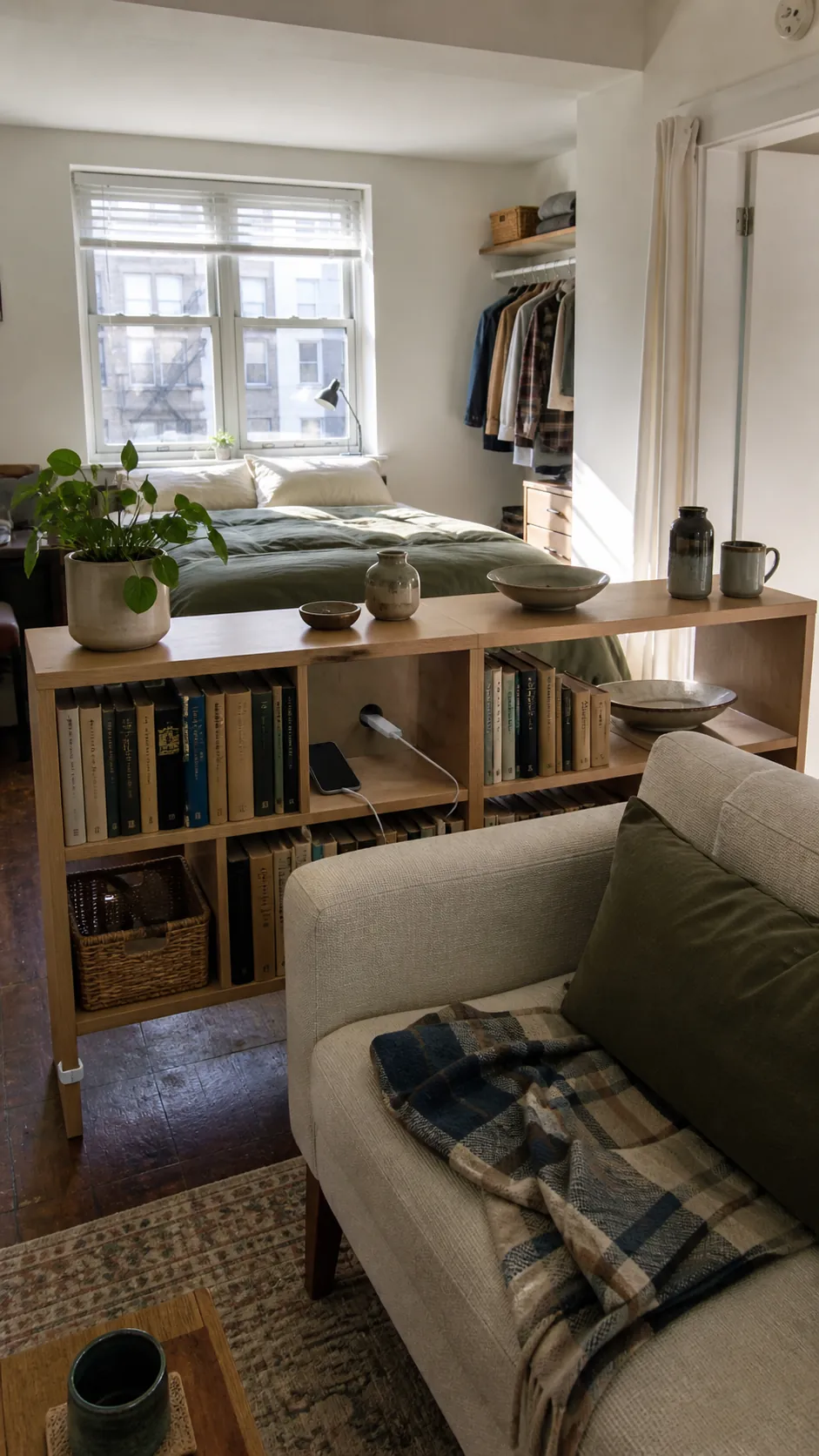
A studio often needs a visual boundary, not a solid wall. Position a secondhand open-backed shelf perpendicular to a wall so daylight and sightlines can pass through. Use the lower shelves for heavier closed storage and keep the upper shelves sparse.
Confirm the unit cannot tip, preserve the main exit path, and avoid crowding it with decor. Books, one plant, and a few matching boxes are enough. A divider works when both sides remain useful and the room still breathes.
Upgrade the Bed With Layered Basics
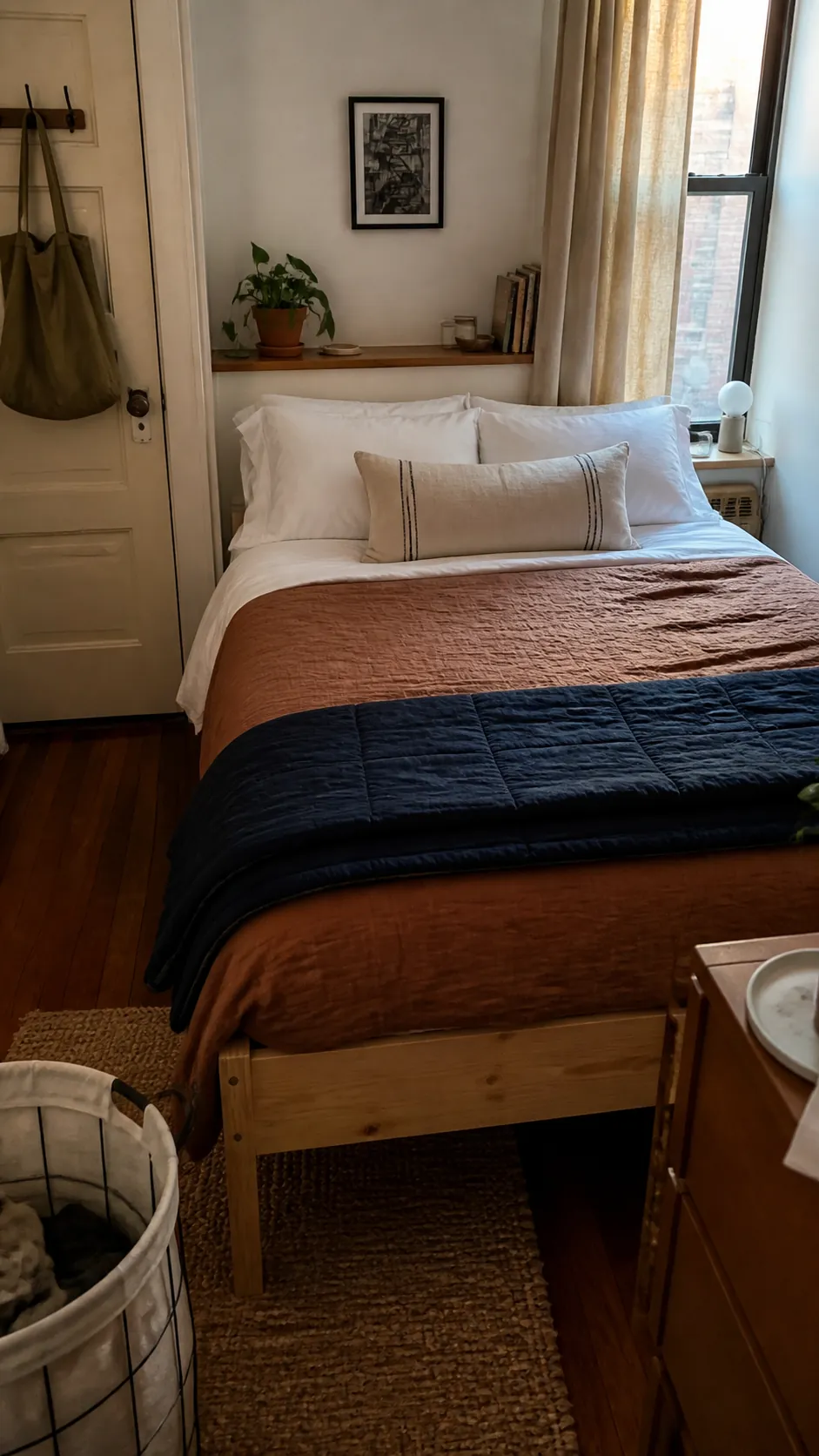
The bed dominates many small apartments, so improve it before buying scattered decor. Start with clean fitted sheets, a washable coverlet, and two pillow sizes you already own. Add one contrasting lumbar cover or folded blanket rather than an expensive pile of cushions.
Keep the palette connected to the rug or curtains, and choose layers appropriate to your climate. Smooth the broad surfaces but allow natural creasing so the room feels lived in. Three useful layers can deliver more impact than a dozen purely decorative accessories.
Shop Your Kitchen for Decor
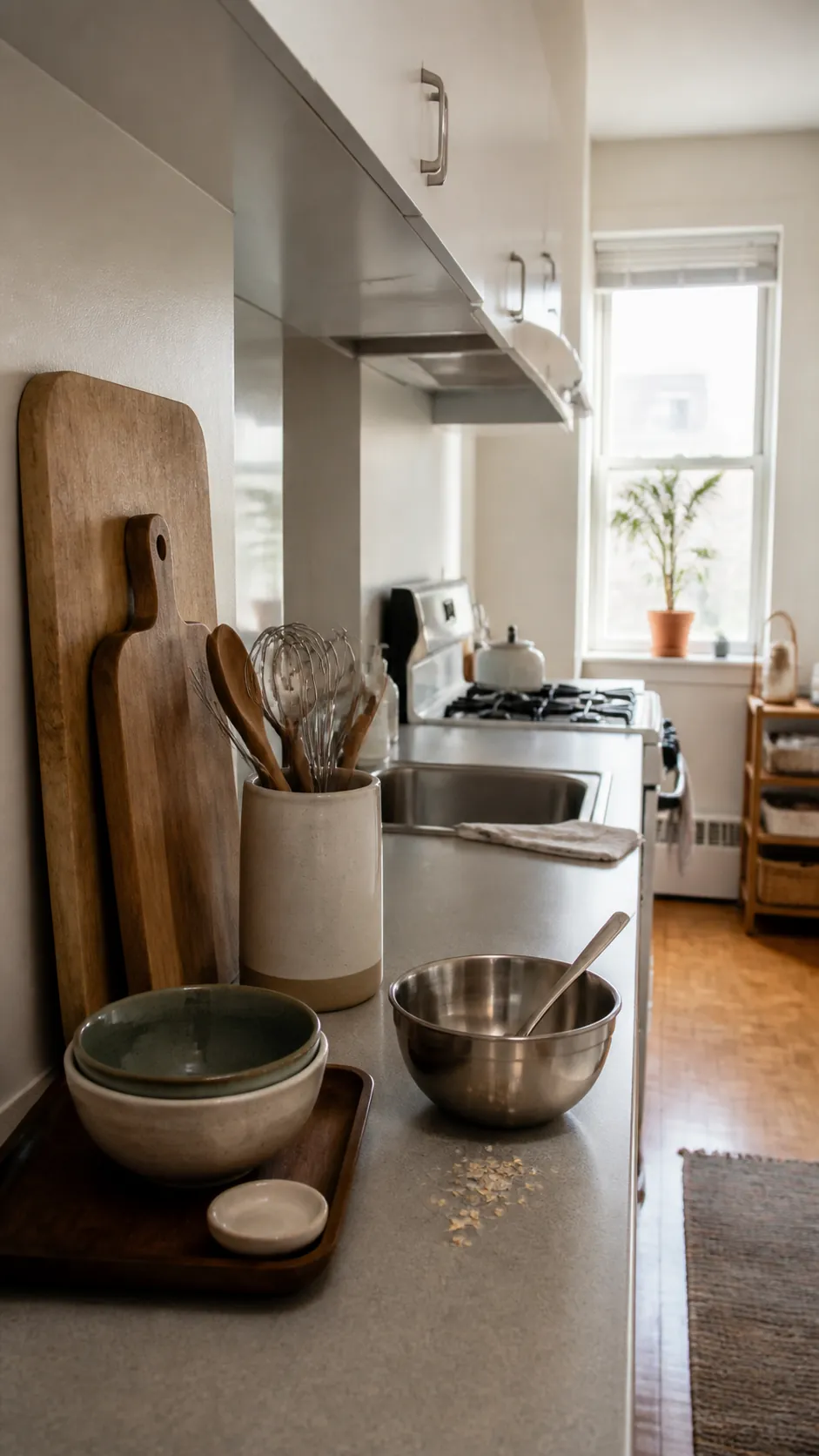
Useful kitchen objects can warm a room when they are edited and grouped. Put wooden spoons in a crock, stack two attractive bowls, or display a cutting board you use daily. Remove duplicates and damaged pieces before treating storage as a styling project.
Keep counters safe for food preparation and leave space around the stove and sink. A tray can define one small group and make cleaning faster. When function leads, ordinary objects feel honest instead of staged.
Spend Last on Personal Objects
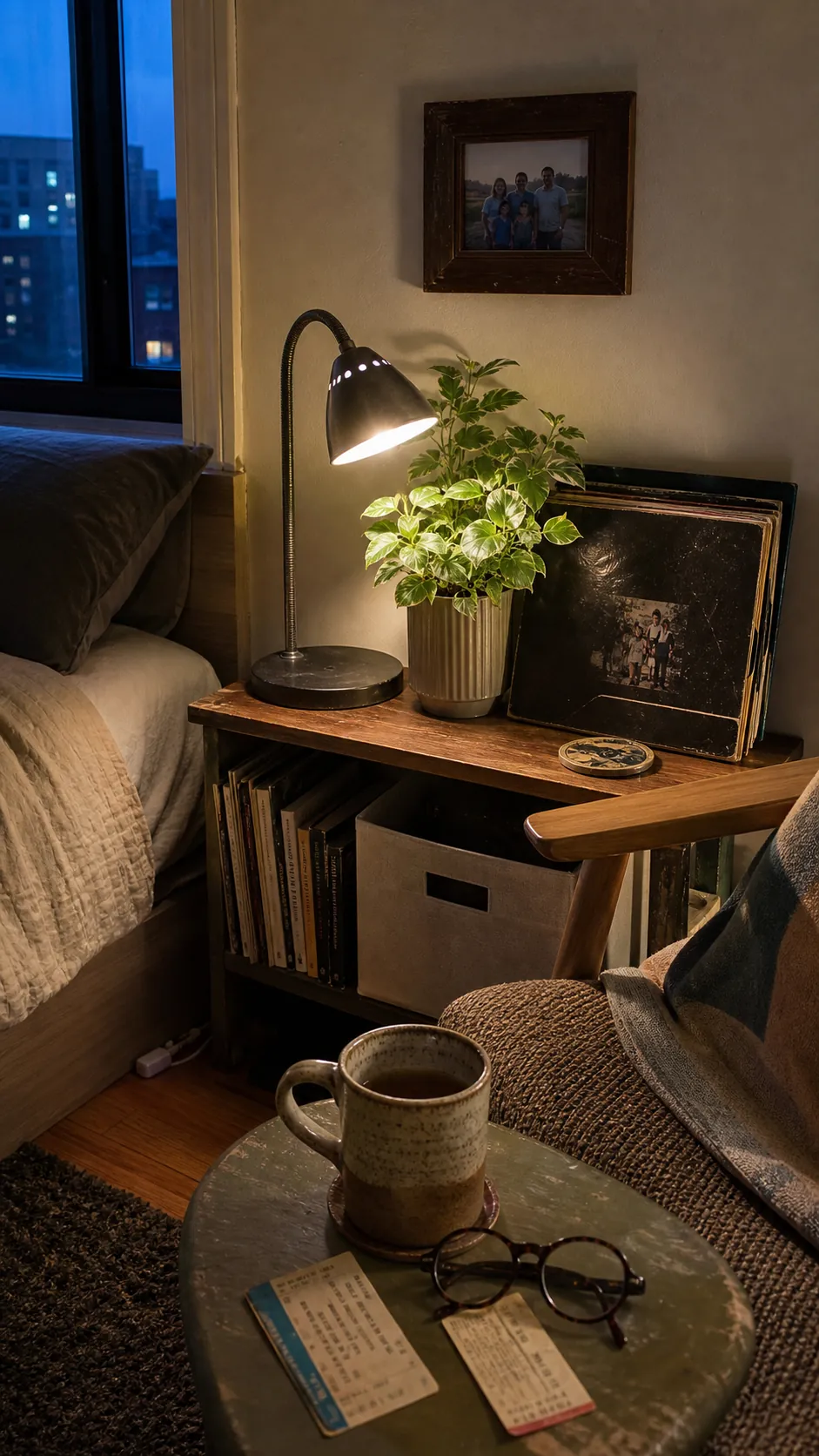
Finish slowly with things that carry a story: a family photo, a travel postcard, a handmade cup, a record you play, or a child’s small drawing. These pieces cannot be replaced by a generic decor haul, and they help an inexpensive apartment feel settled rather than merely coordinated.
Choose a few, give each breathing room, and rotate the rest from a small storage box. The final result should still leave clear surfaces and easy cleaning routes. A budget home becomes memorable through evidence of a life, not through the amount spent.