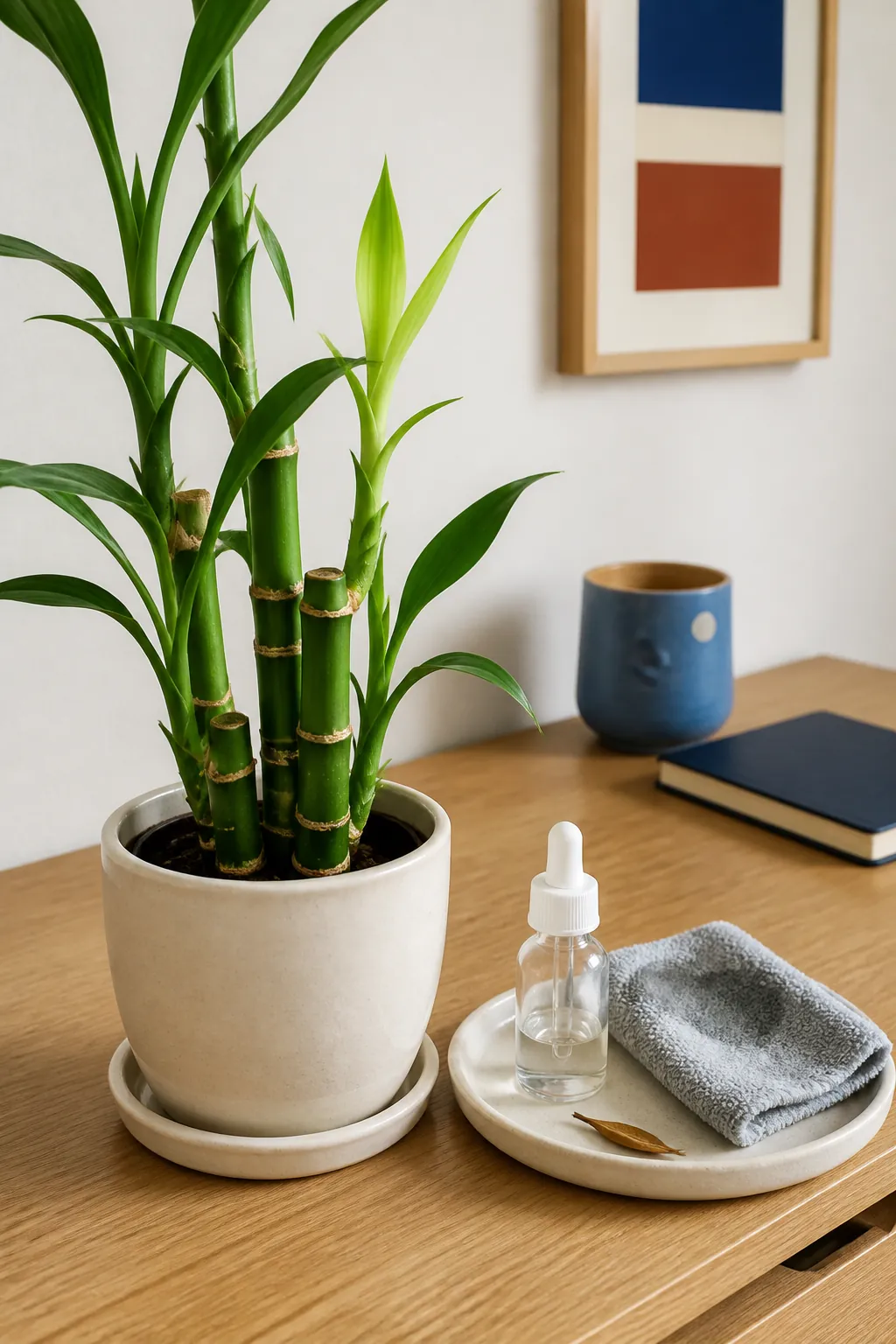
Most lucky bamboo problems begin with a mismatch between the roots and their container. A cane sold in pebbles may have almost no usable water, while a plant moved into dense soil may stay wet long after its roots need air. Growth becomes much easier when you choose one clear method and maintain it consistently.
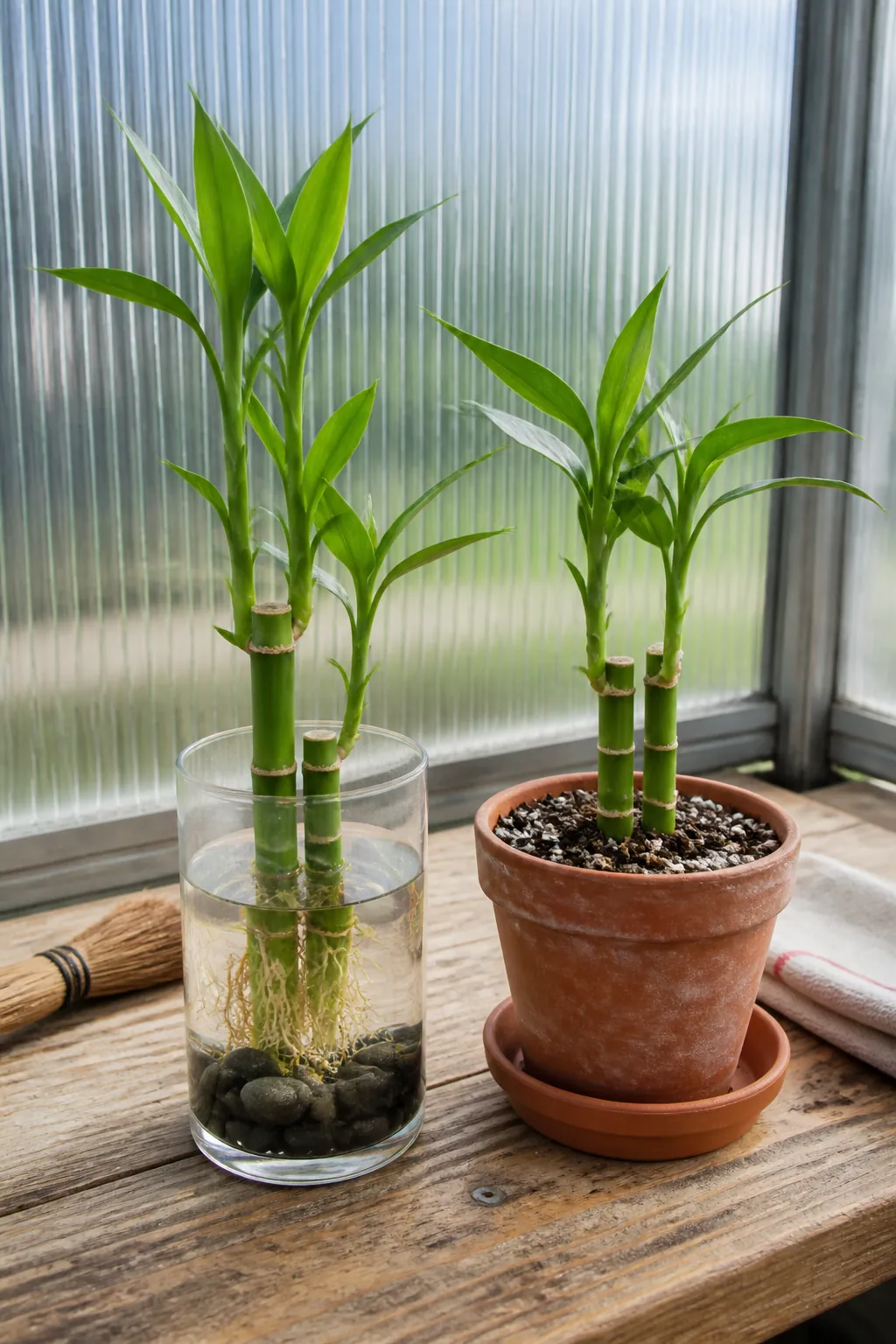
Despite its common name, this plant is Dracaena sanderiana, a tropical foliage plant rather than true bamboo. It can live in water or in a moist, airy potting mix, and each method has different signals to watch. The same essentials support both: bright indirect light, suitable water, moderate warmth, and restrained feeding.
Choose Water or Soil as the Growing Medium
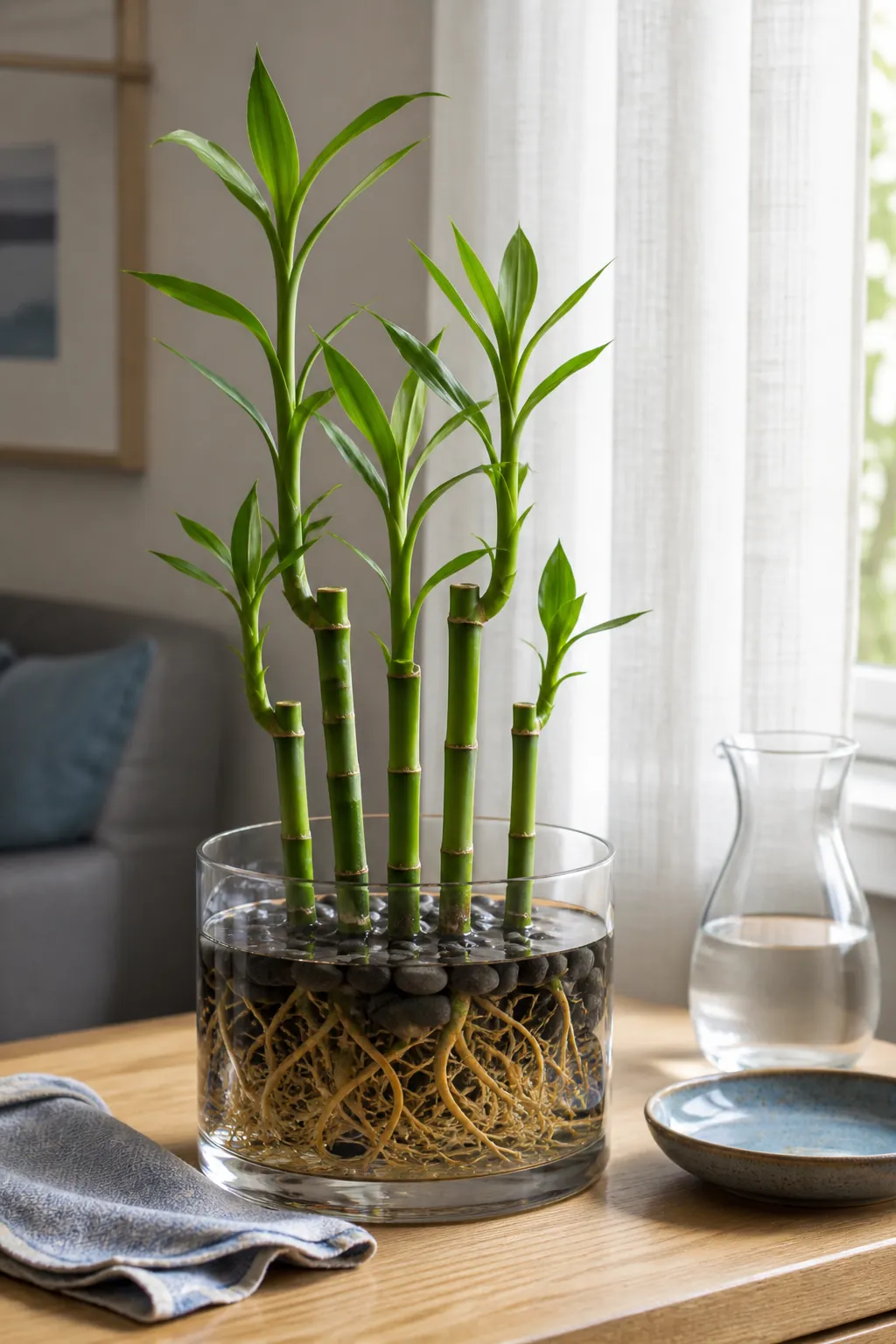
Growing lucky bamboo in water makes the roots visible and suits compact decorative arrangements. Keep only the roots and lowest rooting area submerged, because a high waterline around the canes encourages decay. Pebbles are optional supports, not a substitute for fresh water or space around the roots.
Soil offers nutrients and a more natural long term root environment, but the container must drain. Use a loose houseplant mix with added perlite or another coarse material, then keep it lightly moist rather than saturated. Avoid changing between water and soil repeatedly, since roots adapted to one environment need time to adjust to the other.
Inspect a New Plant Before Setting It Up
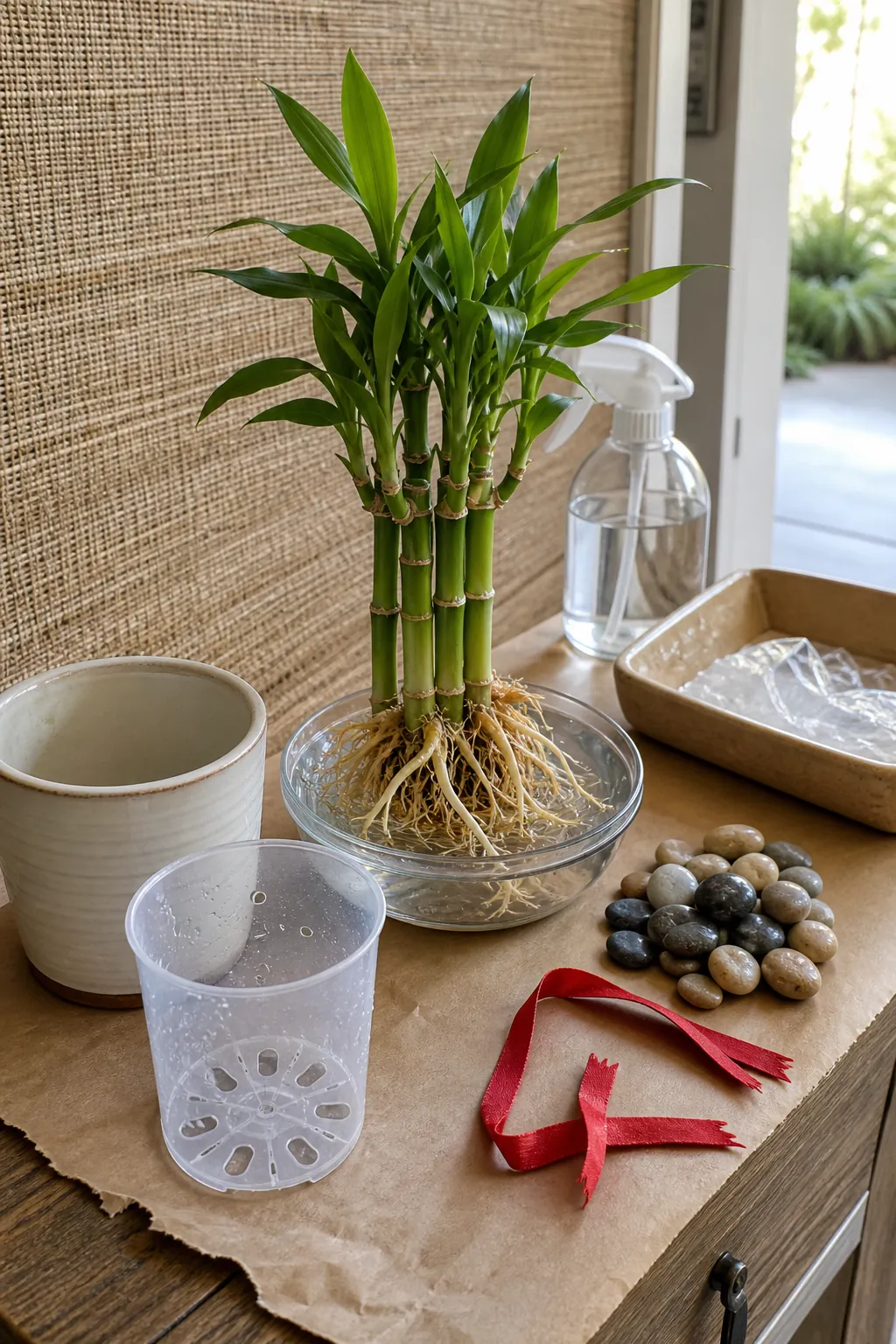
Look beneath decorative stones, ties, and outer pots before assuming the retail arrangement works. Glued gravel can block water, a container without drainage can trap moisture around soil, and tight wire may mark expanding canes. Healthy stems feel firm and green, while roots should be substantial rather than slimy or foul smelling.
Remove restrictive packaging carefully without tearing roots or separating a cluster unnecessarily. Rinse loose debris from water grown roots and wash the vessel before refilling it. If the plant is in soil, confirm that water can leave the pot freely and discard any standing water from the outer cachepot.
Give It Bright Indirect Light
Place the plant where the room is bright but direct sun does not strike the leaves for long periods. An east facing window with gentle morning light or a position behind a sheer curtain often works well. Strong afternoon rays can bleach or scorch foliage, while a dim interior corner may produce thin, slow, pale growth.
Watch the plant instead of relying on a room label such as low light. Leaves leaning sharply toward a window and large gaps between new leaves suggest that the available light is too weak. Move the plant in stages, rotate the container periodically, and keep it away from sudden hot sun after a long stay in shade.
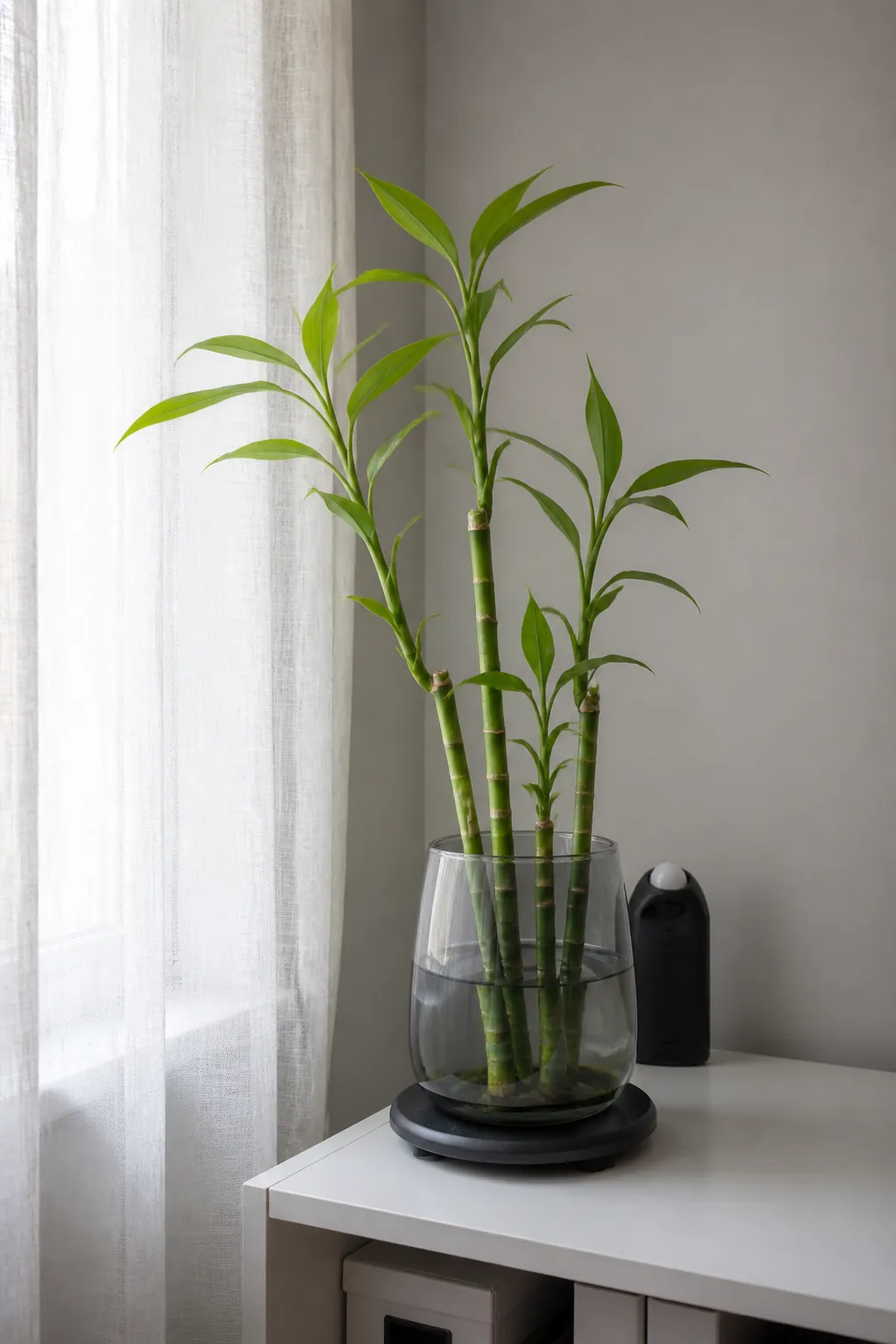
Maintain Lucky Bamboo in Water
Use distilled, rain, or suitable filtered water when local tap water leaves mineral deposits or causes brown leaf tips. Fill only high enough to cover the roots and a low rooting node. Check the level between changes because evaporation can expose fine roots even when the vase still appears partly full.
Replace the water about weekly and rinse the vessel whenever the sides feel slippery. Clean pebbles gently if algae or residue develops, and remove soft dead roots with sanitized scissors. Clear water is not proof of cleanliness, so a regular refresh is safer than waiting for odor or cloudiness.
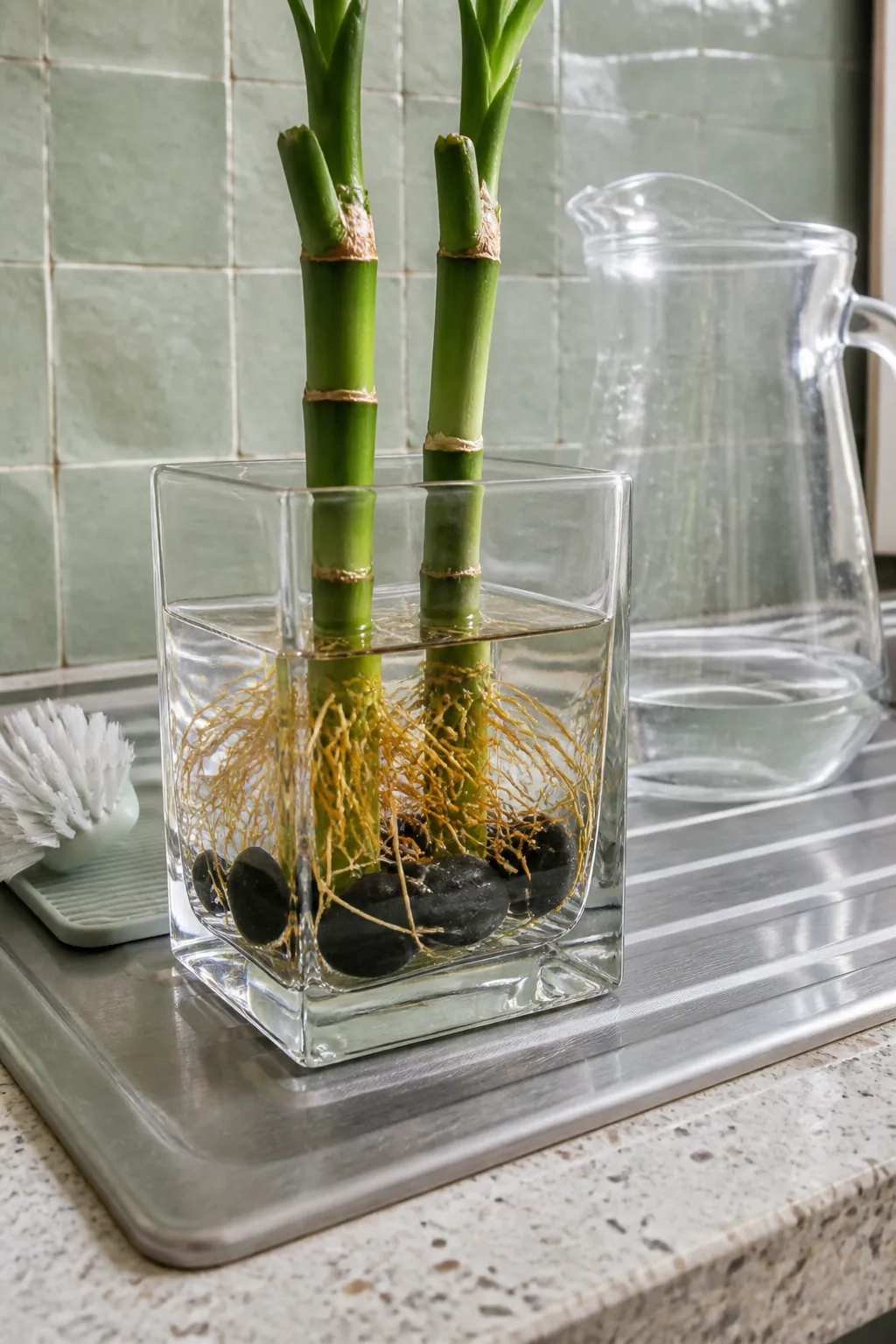
Maintain Lucky Bamboo in Soil
Choose a pot with a drainage hole and a mix that holds some moisture while allowing excess water to escape. Water thoroughly, let the pot drain, and test the upper layer before watering again. The goal is lightly moist soil around active roots, not a constantly soaked pot or a hard dry block.
A pot only slightly wider than the root mass is easier to manage than an oversized container. Empty the saucer after watering and keep decorative outer pots from hiding standing water. If a plant has spent years in water, move it gently into evenly moist soil and reduce moisture gradually as soil adapted roots form.
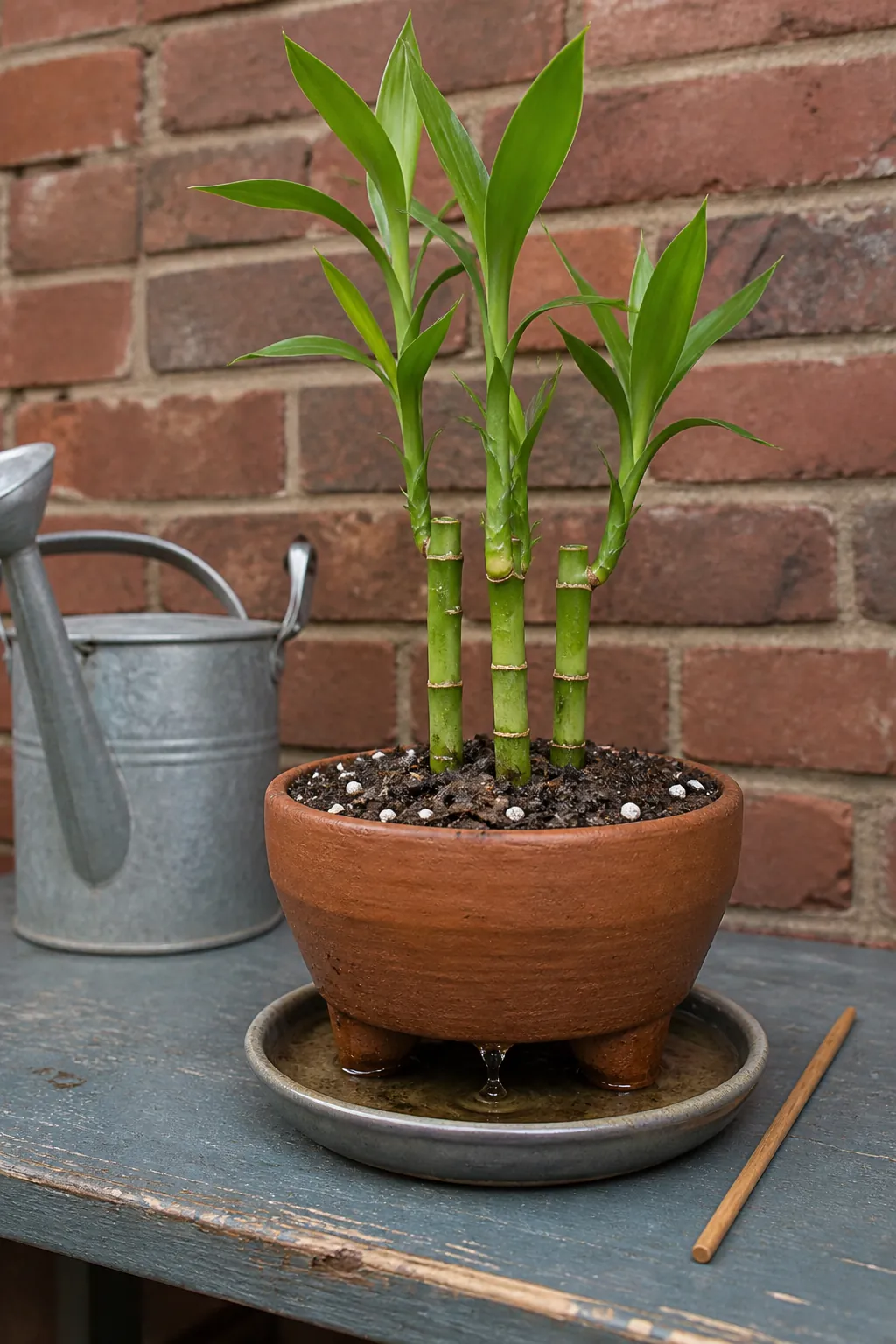
Feed Lightly and Read the Warning Signs
Lucky bamboo grows slowly and needs far less fertilizer than a fast outdoor plant. Use a very dilute product intended for houseplants or water culture, and apply it infrequently during active growth. Too much fertilizer can burn roots and yellow canes, so withholding a feeding is usually safer than correcting an excessive dose.
Brown tips often point to water quality, dry air, or accumulated salts, while bleached patches can follow direct sun. A yellowing cane that becomes soft near the base suggests root trouble and deserves immediate attention. Keep the plant in ordinary warm indoor conditions away from heaters and cold air vents, clean the leaves with a damp cloth, and change only one care factor at a time so the plant’s response remains clear.