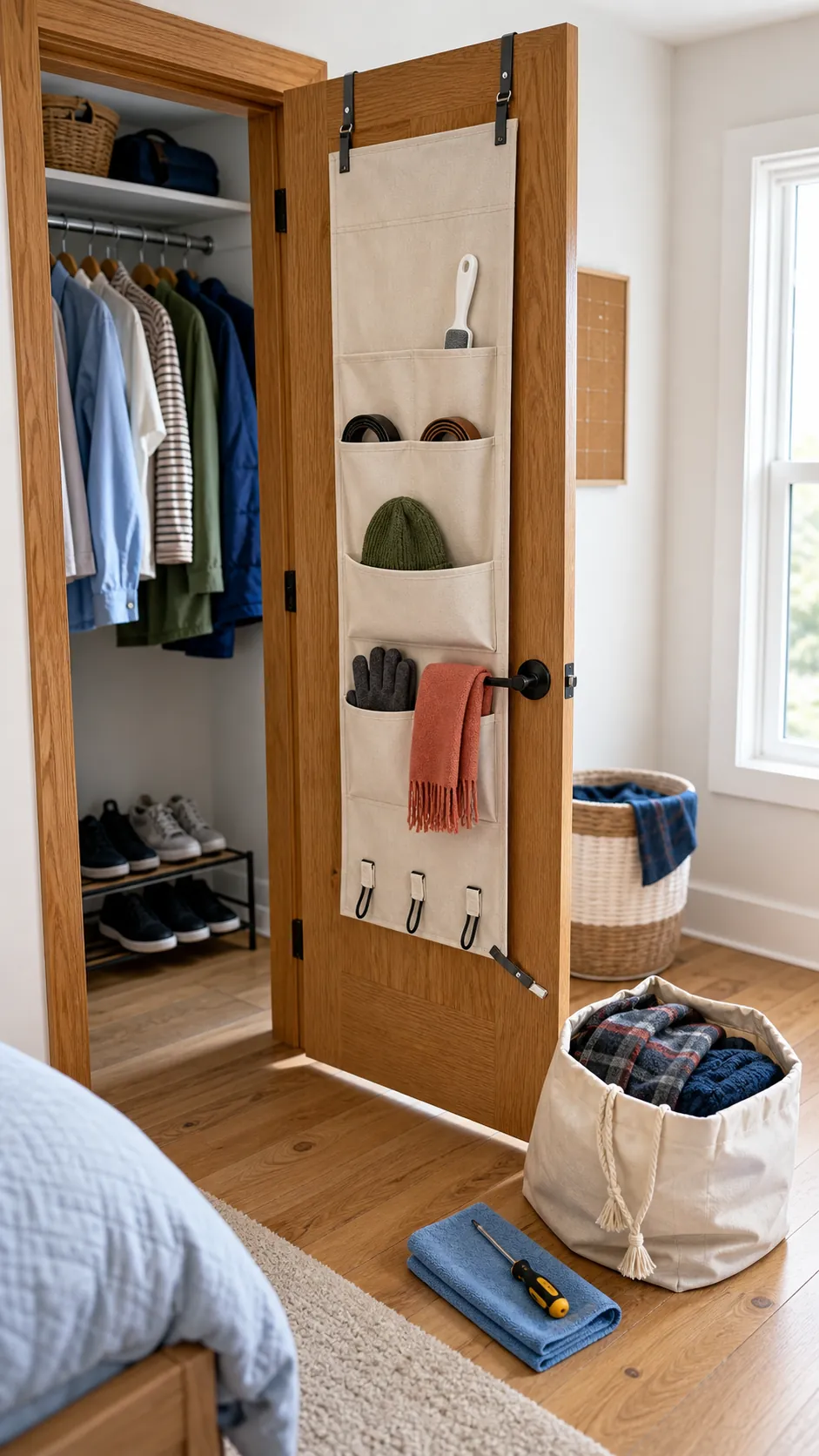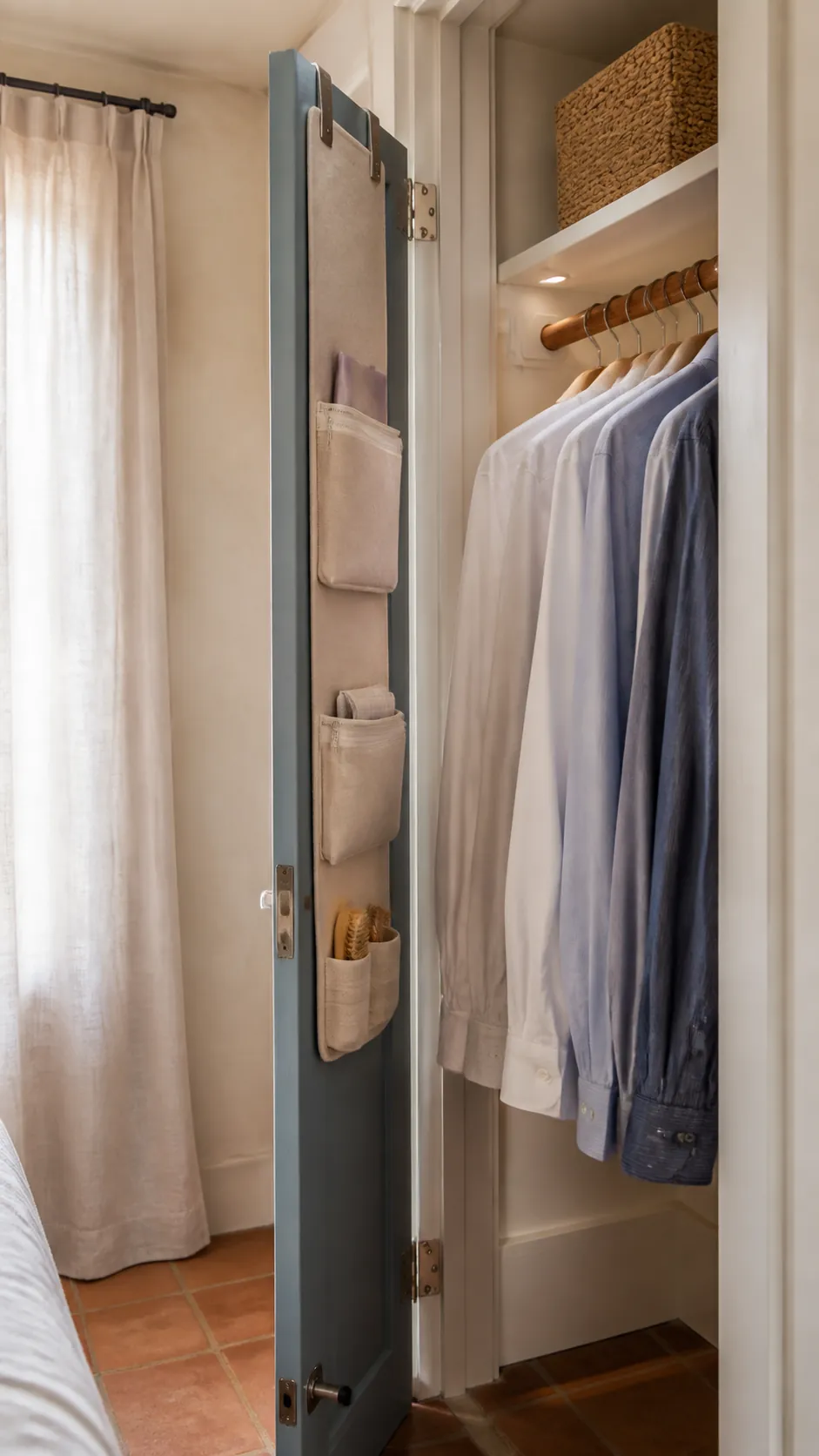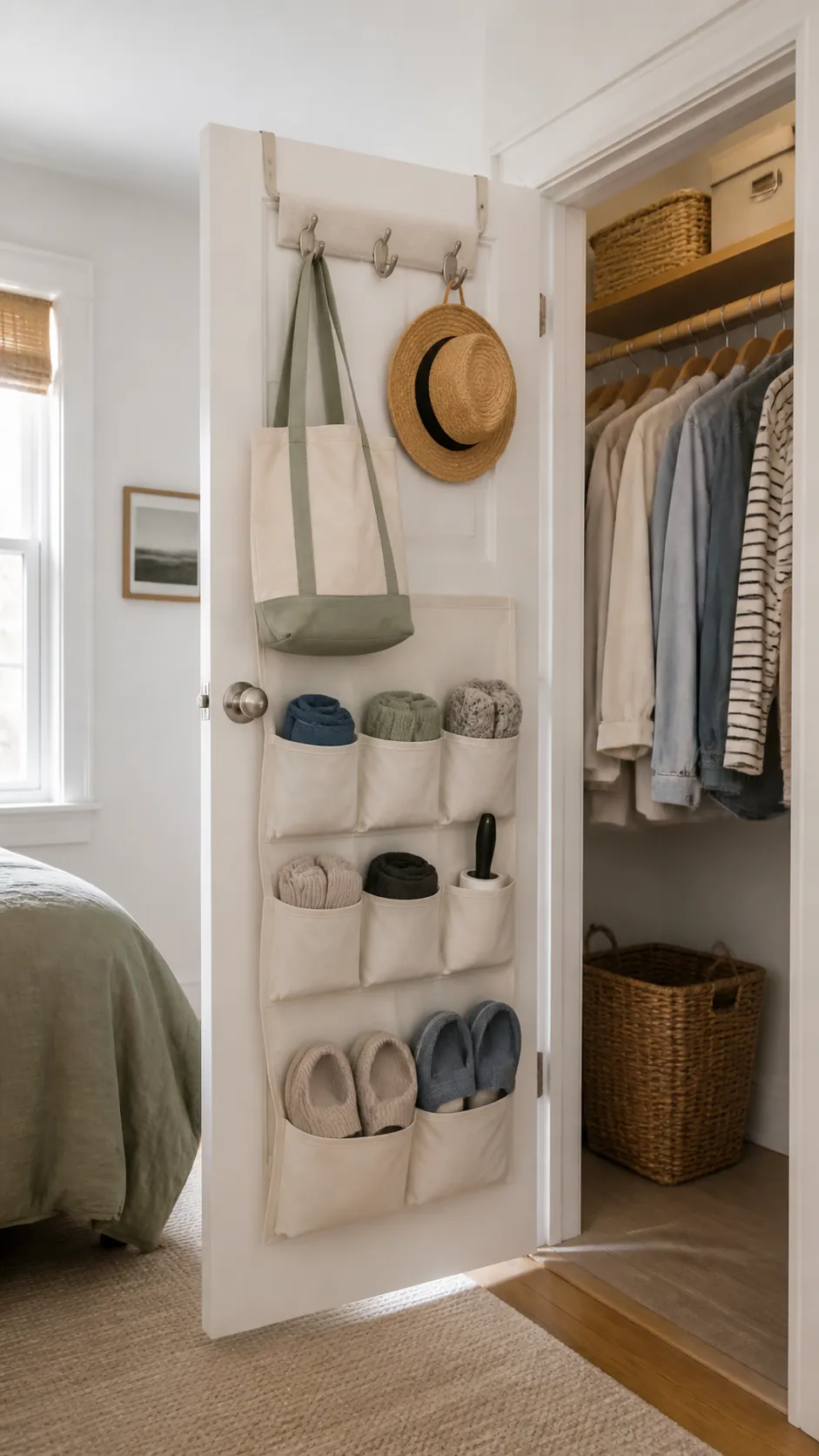
An empty door looks like easy storage, but a bulky organizer can make a small closet harder to use. The useful version stays shallow, clears the frame, and holds only the things you actually reach for. A few measurements and a clear job for each zone will save you from rattling hooks, crushed clothes, and a door that refuses to close.
Measure the usable door zone before buying anything
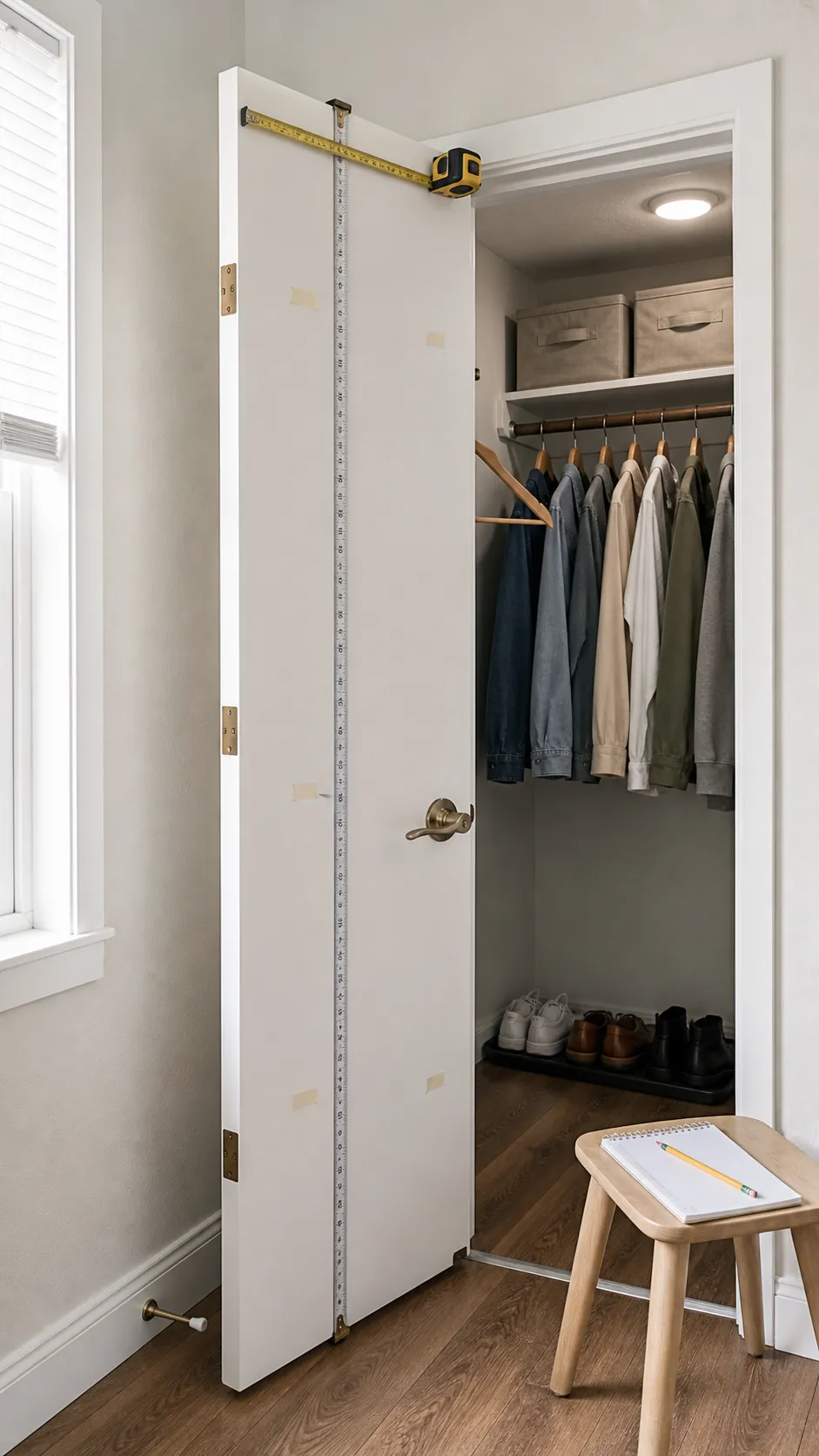
Close the door and measure its width, height, thickness, and the gap above it. Then open it fully and look for shelves, hanging clothes, trim, handles, and light switches that could collide with storage. A hinged solid door usually offers the most flexibility, while a hollow door needs light loads and fasteners approved for that construction.
Use removable tape to mark the planned organizer outline on the door. Test the swing while coats and hangers are in their normal positions, since an empty closet can hide a clearance problem. Bifold, sliding, mirrored, and pocket doors often need a different solution because hardware on the back can interfere with folding, overlap, tracks, or glass.
Give soft pocket organizers the smallest daily items
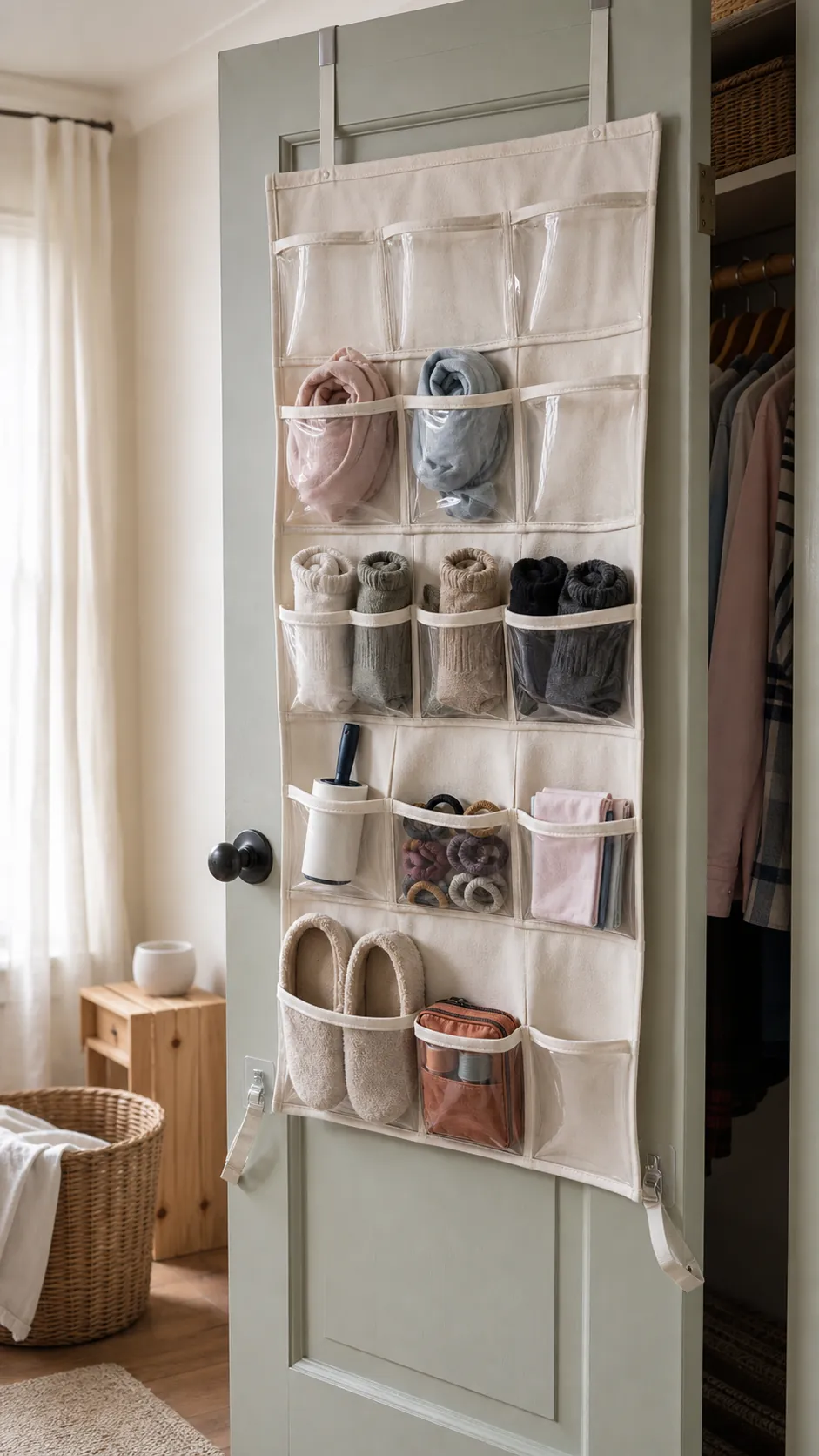
Clear or open fabric pockets are excellent for socks, belts, scarves, slippers, lint rollers, and other items that vanish on deep shelves. Assign one category to each row so the organizer does not become a vertical junk drawer. Put the most frequently used pieces between waist and shoulder height, with lighter or occasional items above and below.
Pockets work best when their contents remain visible and do not bulge beyond the door clearance. Roll soft accessories loosely instead of stuffing them into tight balls that stretch seams. Leave a few pockets empty at first, because a little spare capacity makes the system easier to maintain.
Use padded hooks for grab and go pieces
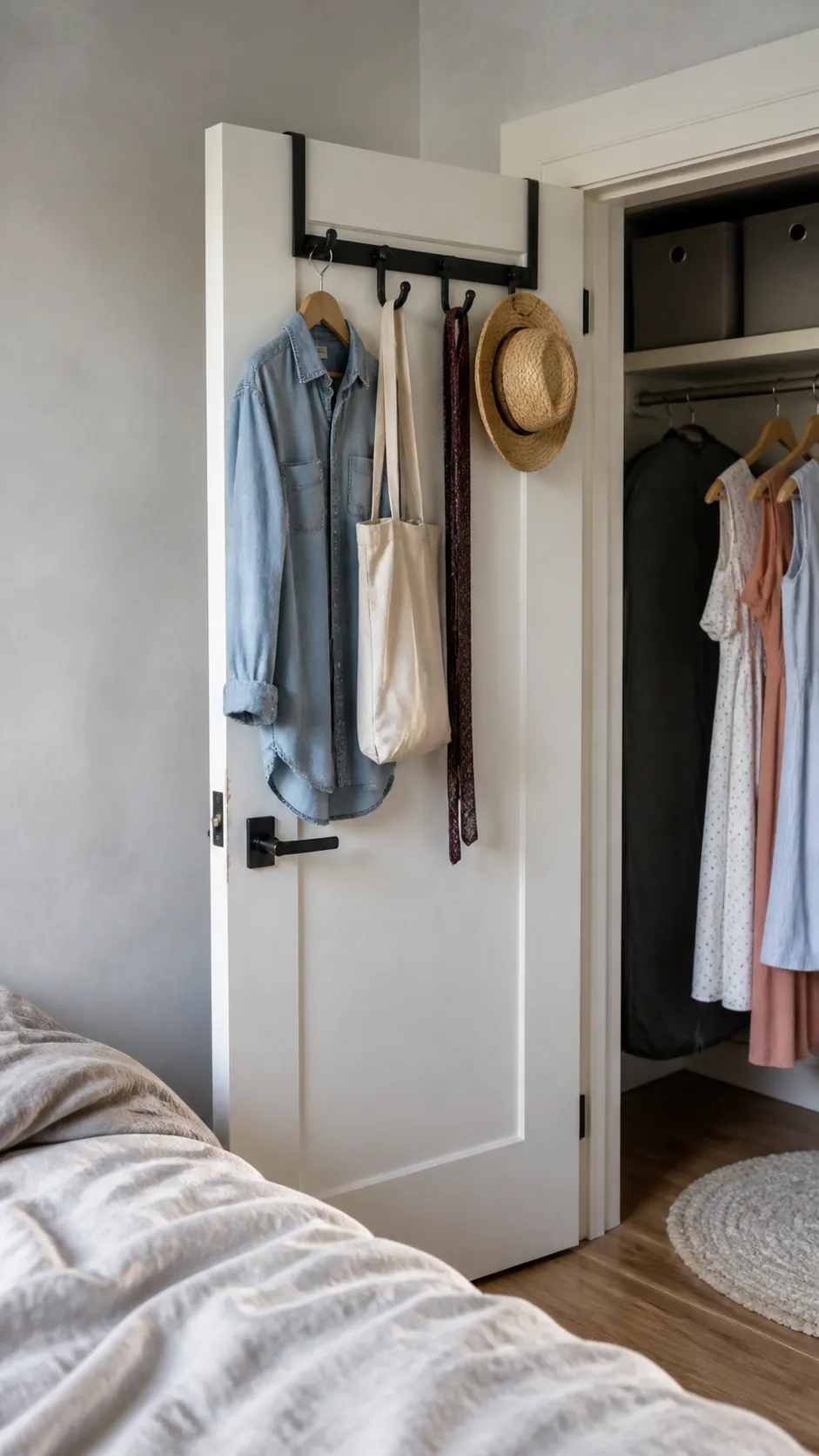
A short hook rail can hold tomorrow’s outfit, a robe, reusable tote bags, or a few lightweight hats without consuming shelf space. Keep the hooks away from the handle and the door edge so hanging items cannot catch in the jamb. If metal hooks sit over the top, add thin felt pads where they touch the door to reduce movement and protect the finish.
Hooks encourage quick returns, which is useful for people who dislike hangers. Their convenience also makes them easy to overload, so limit each hook to one clear purpose. Heavy handbags, wet coats, and dense garment bundles belong on a wall stud, sturdy closet rod, or shelf instead.
Choose shallow baskets for structured storage
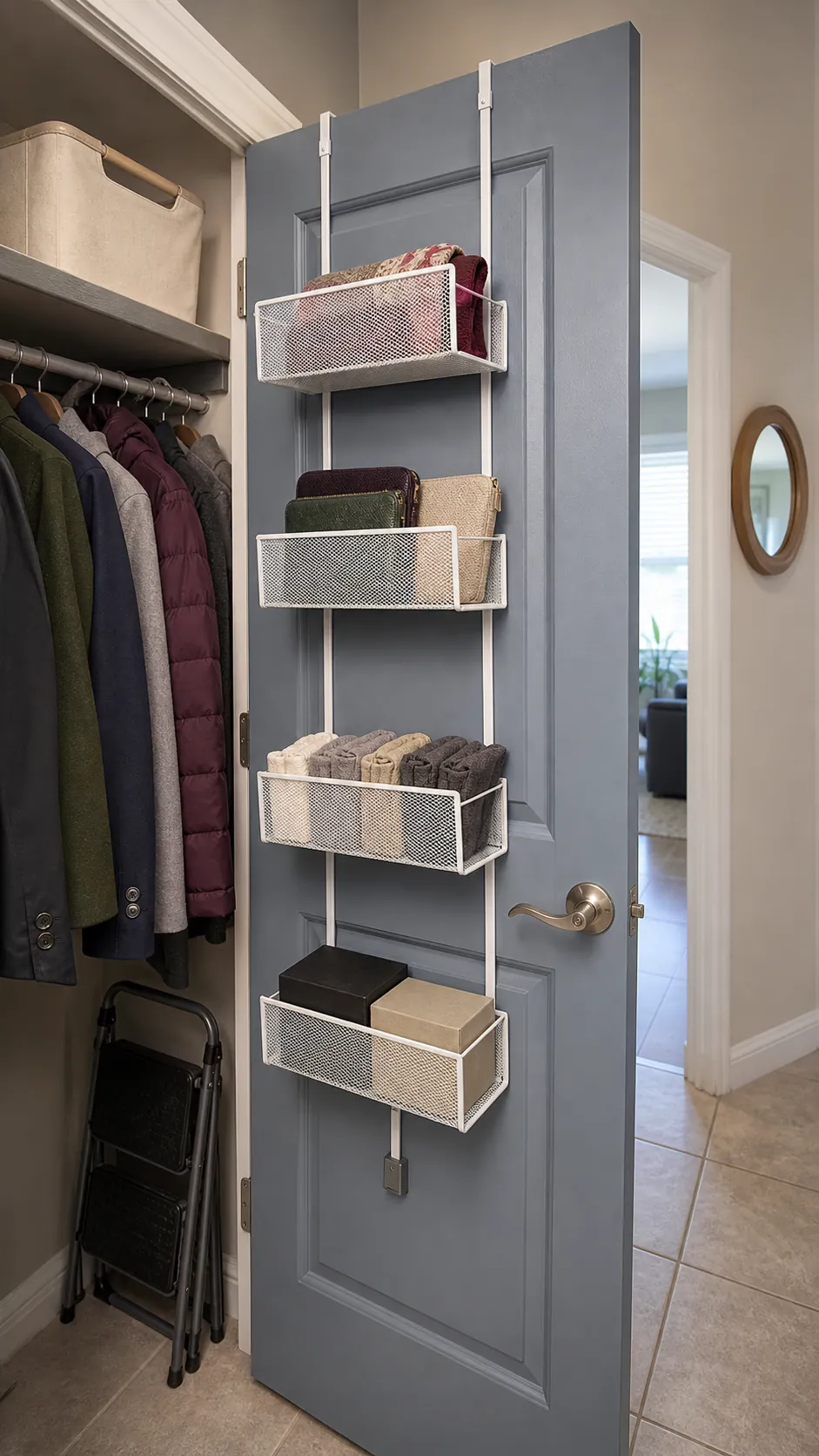
Wire or rigid baskets make folded scarves, small purses, cleaning cloths, and boxed accessories easier to see than a deep hanging bag. Measure basket depth with the door closed, not just the empty gap, and allow space for fingers to lift items out. Raised fronts or fine mesh help prevent small objects from falling when the door moves.
Place denser items in the lower baskets to keep the organizer stable. Spread weight across the frame and follow the product’s stated capacity rather than treating the door like a pantry wall. A bottom stabilizer or approved anchor can reduce swinging, but the attachment must suit the door material and rental rules.
Create one narrow accessory station
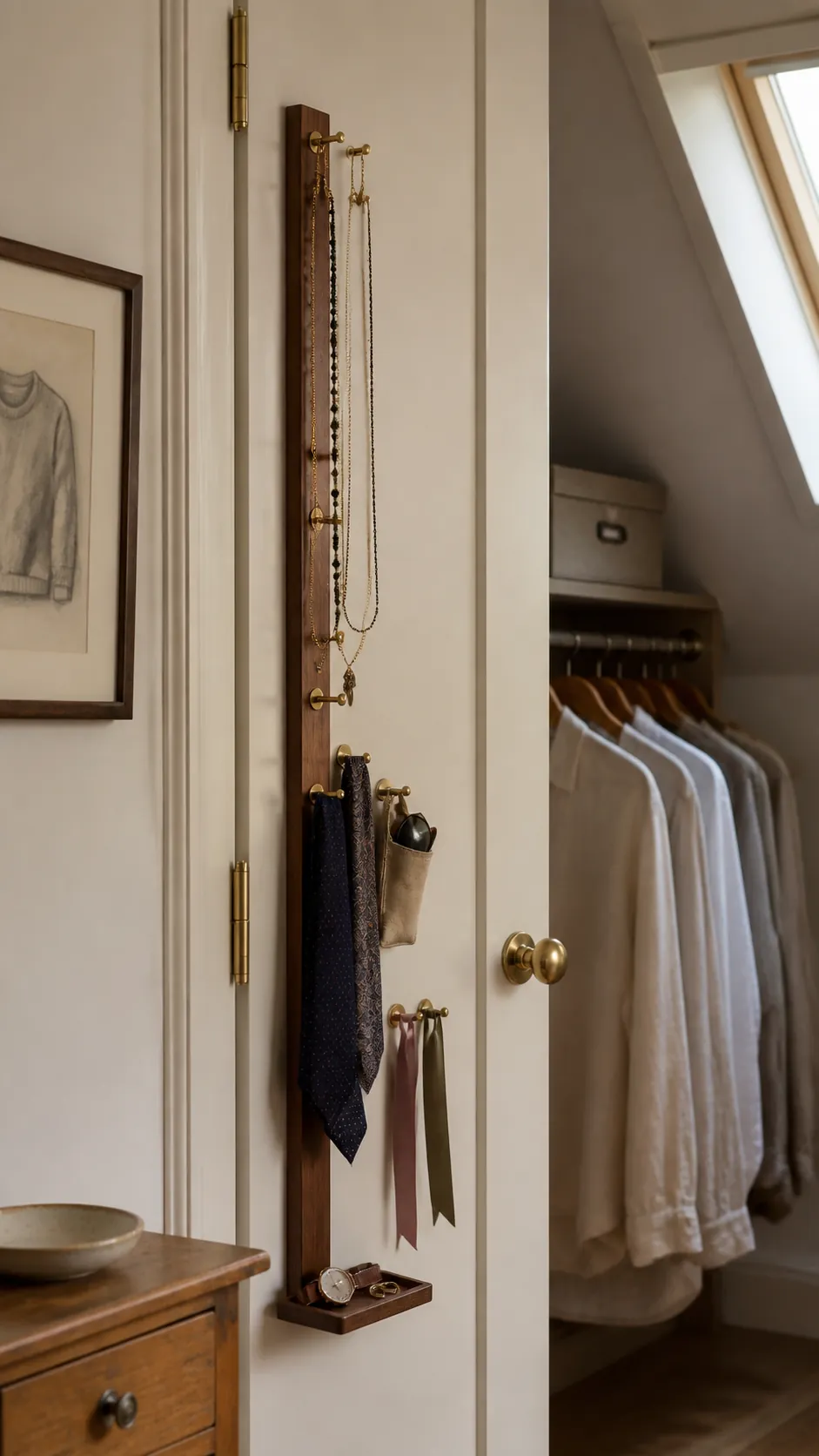
A slim rail with small hooks can turn an awkward strip beside a larger organizer into a useful station for necklaces, ties, sunglasses, and hair accessories. Separate delicate pieces so clasps and chains do not tangle. A shallow tray below can catch watches or keys without projecting far into the closet.
Keep this station visually simple by limiting it to items used during dressing. Group similar finishes and leave space around long necklaces so they remain easy to lift. If the door moves sharply, use closed hooks or soft loops for anything fragile.
Keep the door light enough to work every day
After loading the organizer, open and close the door several times and listen for rubbing, clicking, or hinge strain. Remove anything that shifts the door, touches stored clothes, or makes the handle awkward to reach. Check screws, straps, pads, and seams after the first week because movement often reveals weak points quickly.
Reset the storage when seasons change and move rarely used pieces elsewhere. Wipe pockets and baskets before returning items, then keep only what fits without compression. The best back of door storage feels almost invisible in daily use because the door still swings freely and every item has an obvious home.