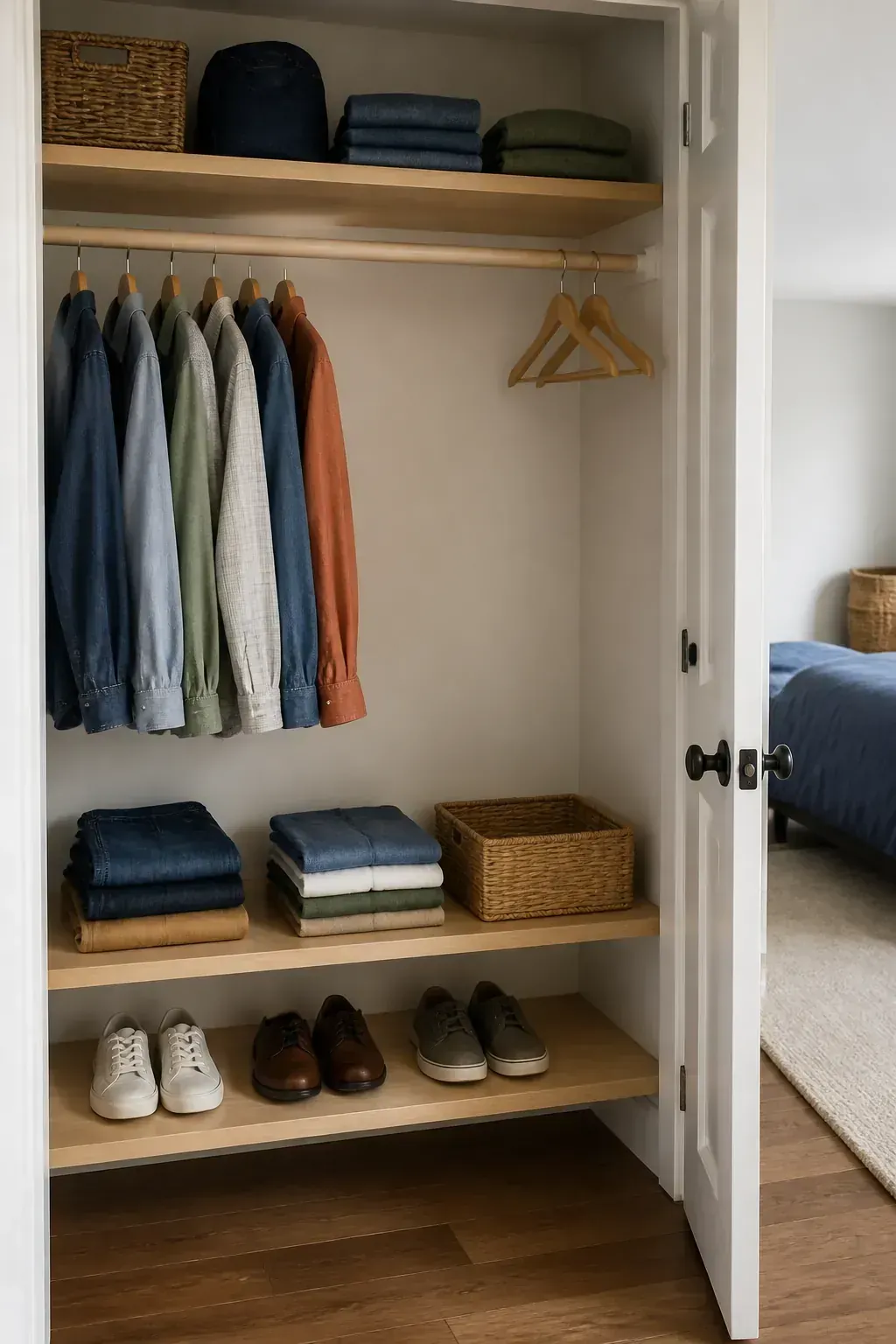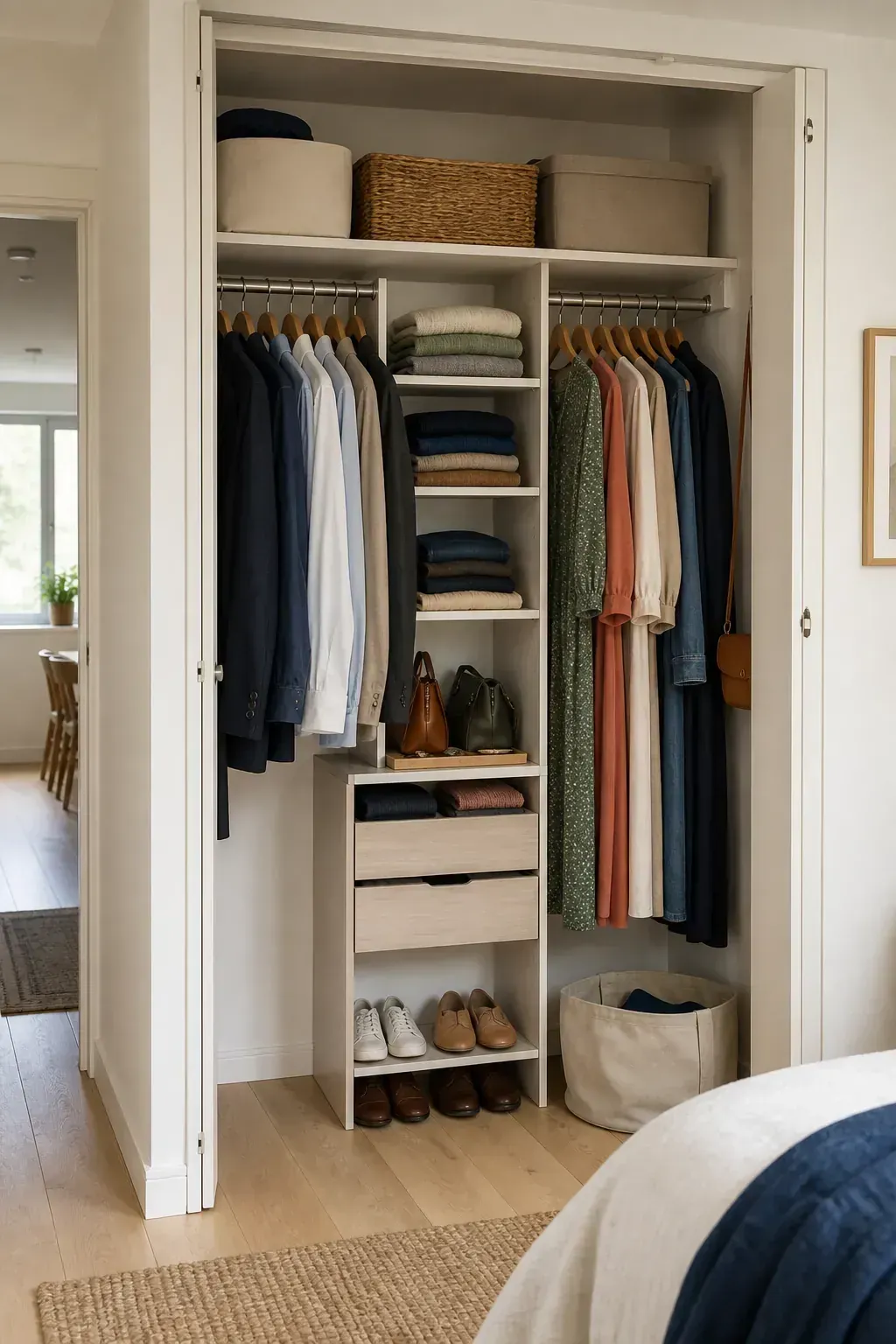
A small closet becomes frustrating when every choice requires moving three other things first. The real win is not fitting the most clothing inside, but making today’s useful options visible and easy to return. Clear zones reduce morning decisions because each part of the wardrobe has one predictable home.
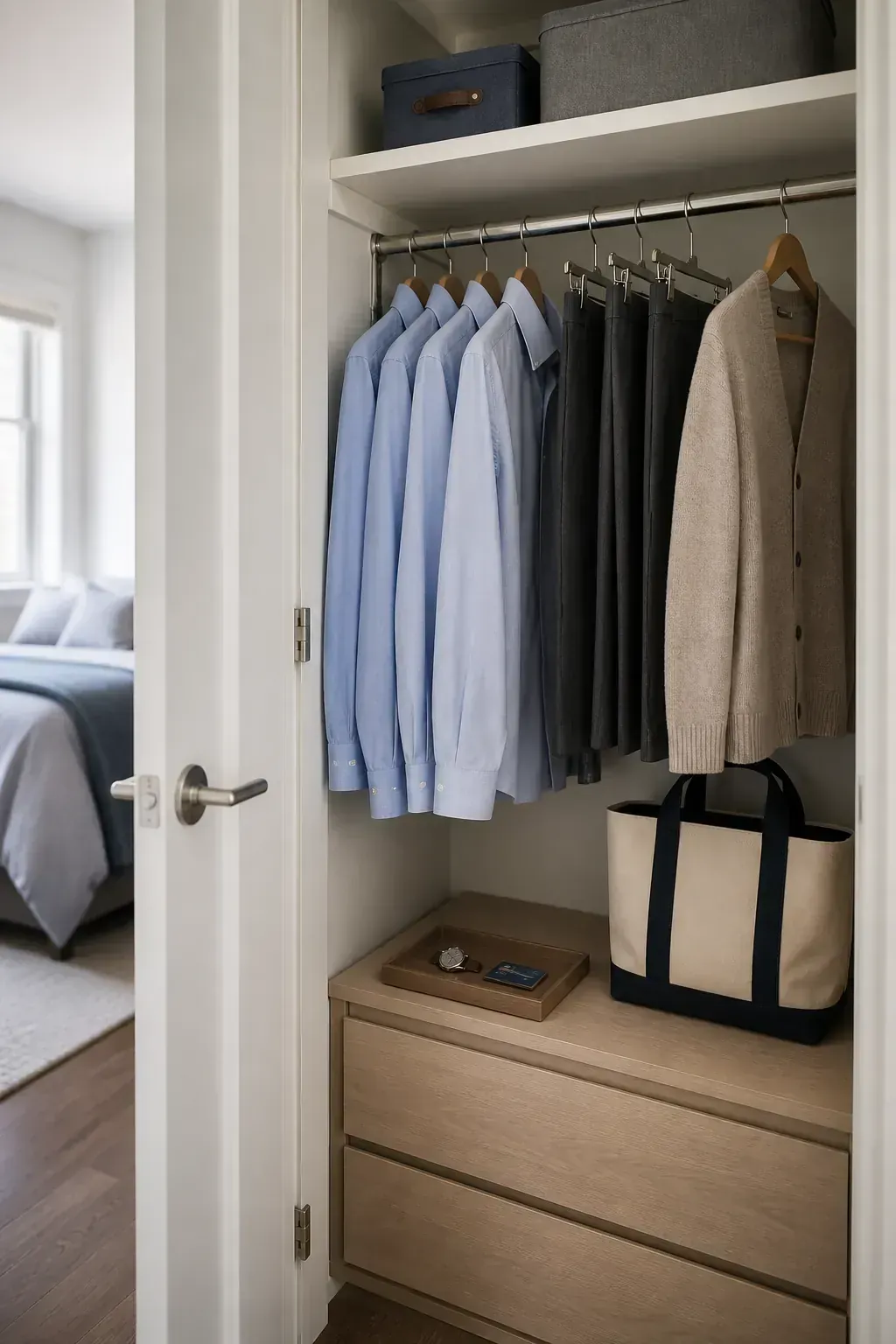
Build a work outfit zone
Keep office tops, trousers, layers, and one suitable bag within the same section of the rod. Arrange complete options close enough that you can compare them without crossing the closet. This works especially well when weekday clothing has different care needs or colors from weekend pieces.
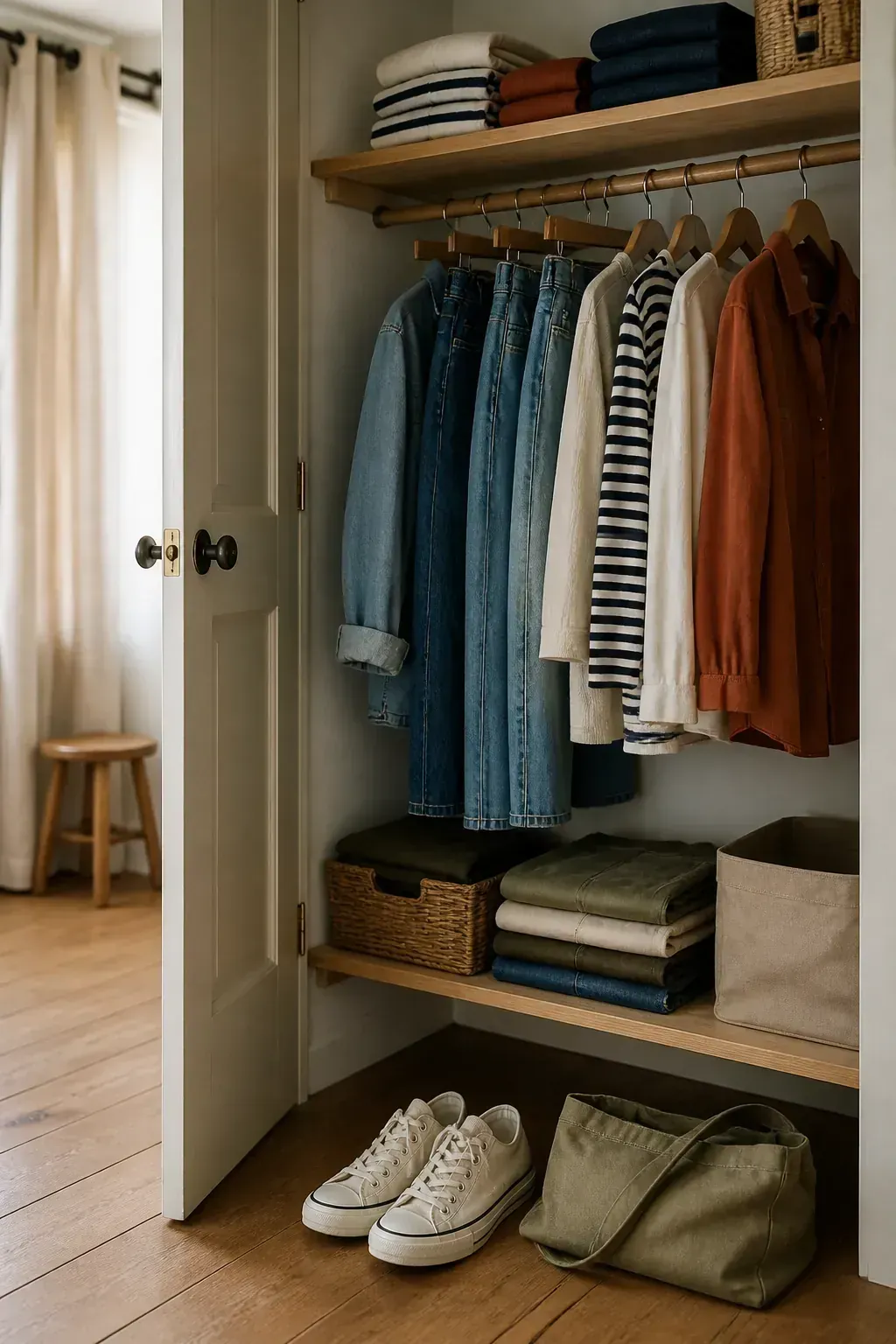
Reserve a casual weekend section
Group relaxed shirts, denim, and light layers in a separate casual section. You can see weekend combinations without flipping past formal pieces that are irrelevant to the day. Give this zone only the width its contents need so it does not quietly spread across the rod.
Create a ready for tomorrow hook
Use one sturdy hook for the next day’s outfit rather than letting chosen clothes collect on a chair. Add the outfit only after checking the weather and your schedule. Return unworn options immediately so the hook stays a decision zone instead of becoming overflow storage.
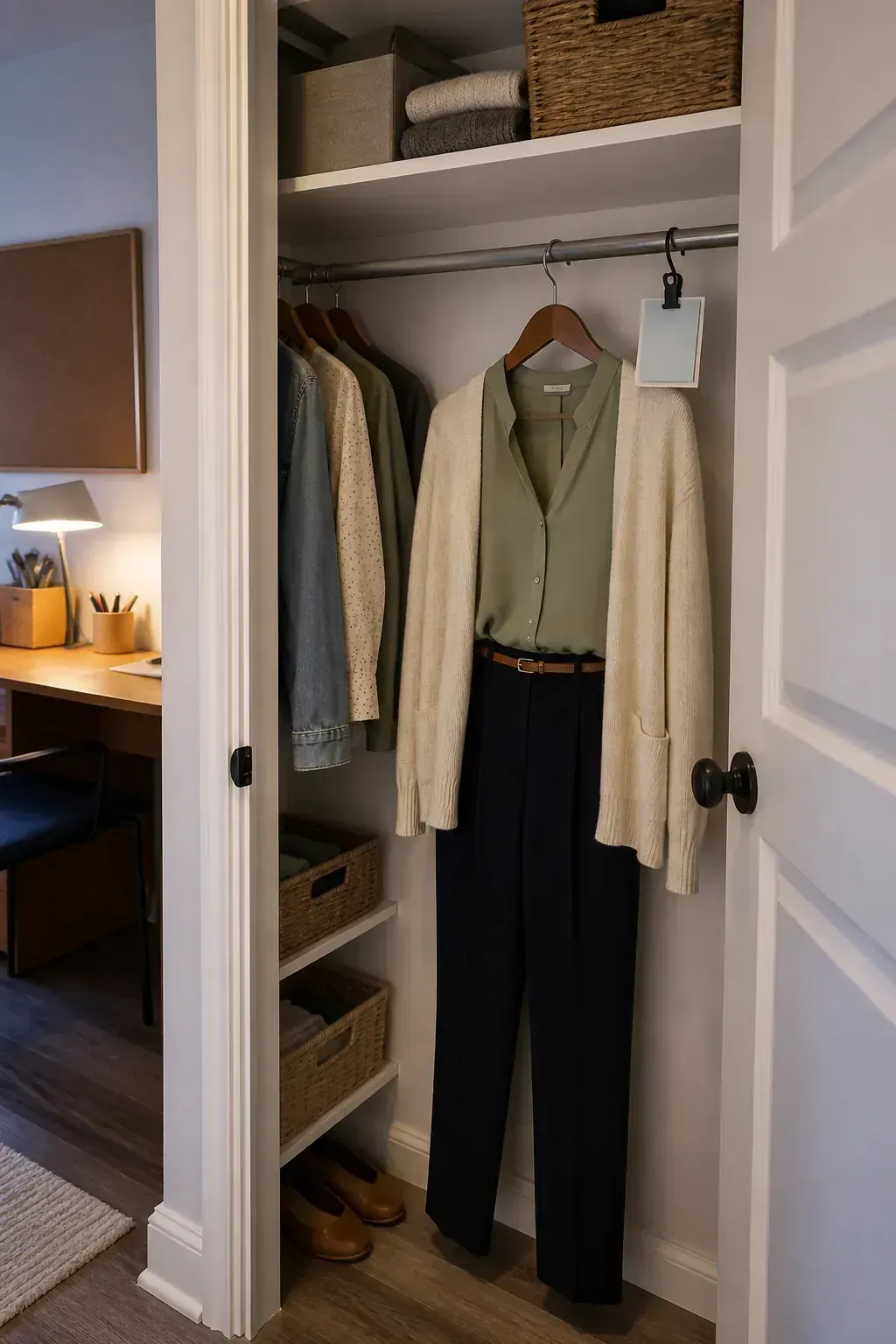
Keep daily shoes at floor level
Place the few pairs worn this week on a shallow rack directly below their matching clothing zones. The floor stays easier to clean when shoes have defined spaces rather than forming a loose pile. Special occasion and seasonal footwear can move higher or outside the closet.
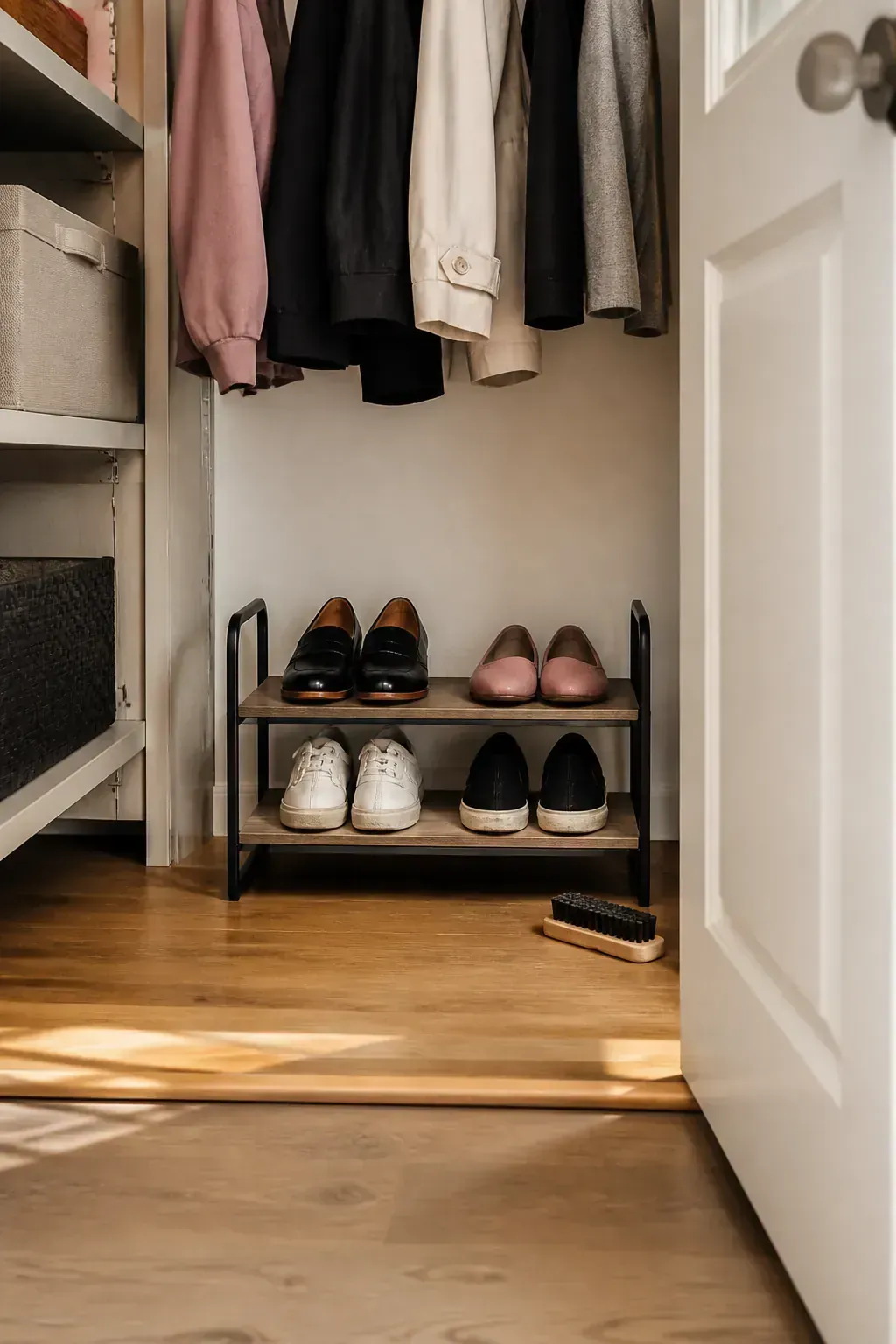
Use an open front bin for workout clothes
Soft workout shirts and leggings can share a low open front bin where they remain visible. Fold each piece so its edge faces forward instead of stacking everything from bottom to top. The opening makes both retrieval and return possible without lifting a lid.
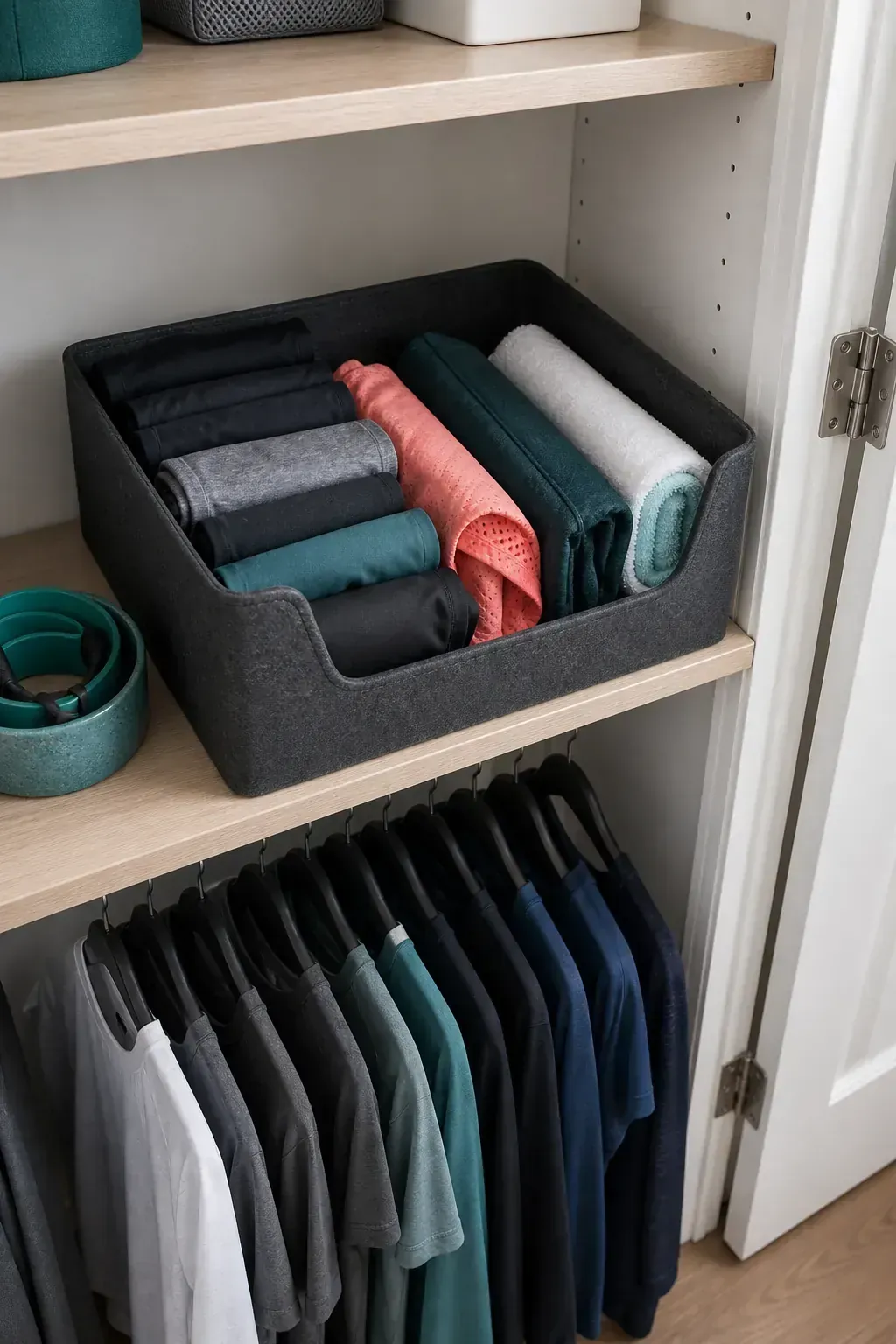
Give undergarments two small baskets
Separate socks from underwear in two modest baskets rather than one deep container. A shallow basket makes the full category visible and signals when laundry is due. Place both near the everyday clothing they complete, not on the least accessible top shelf.
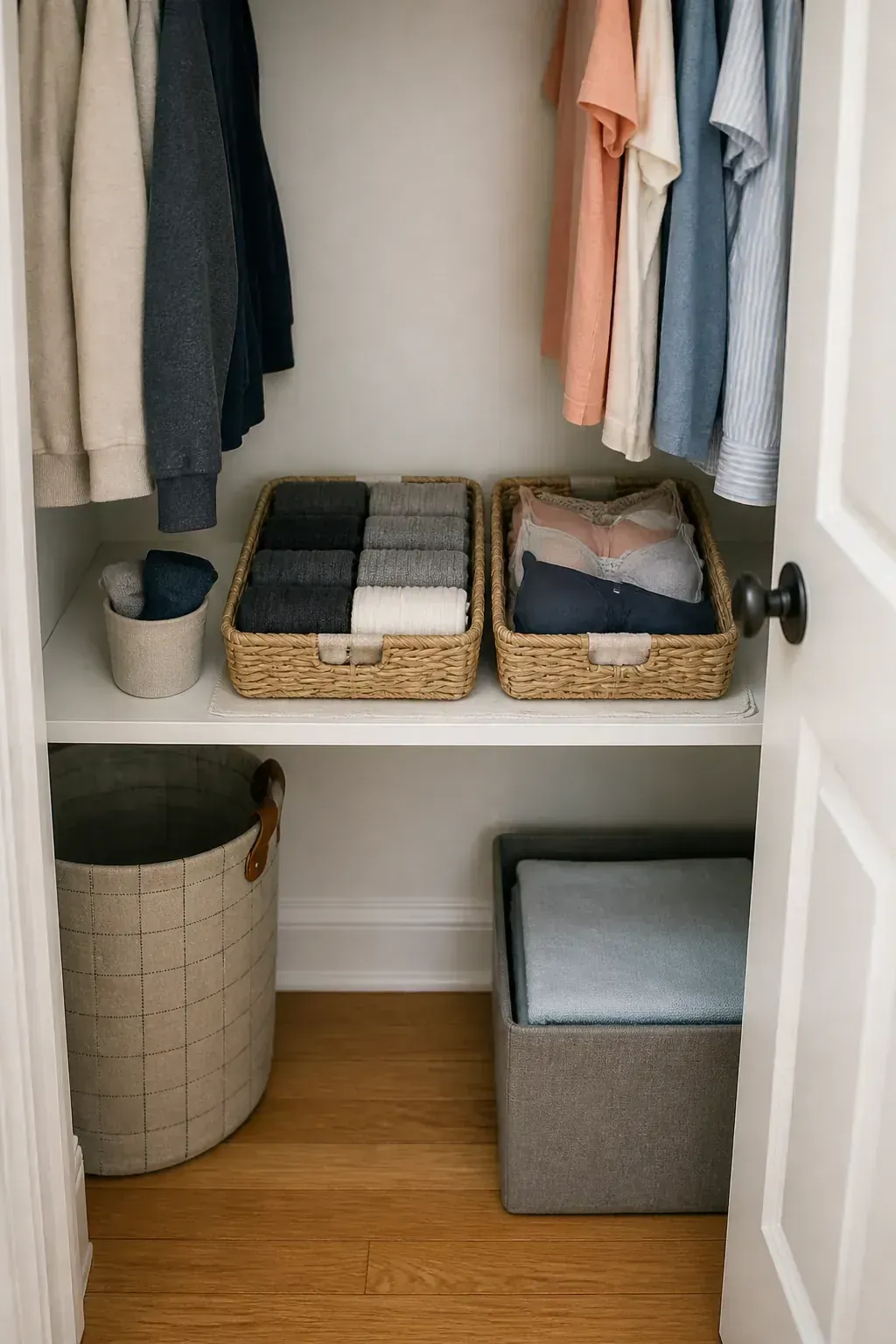
Divide tops by sleeve length
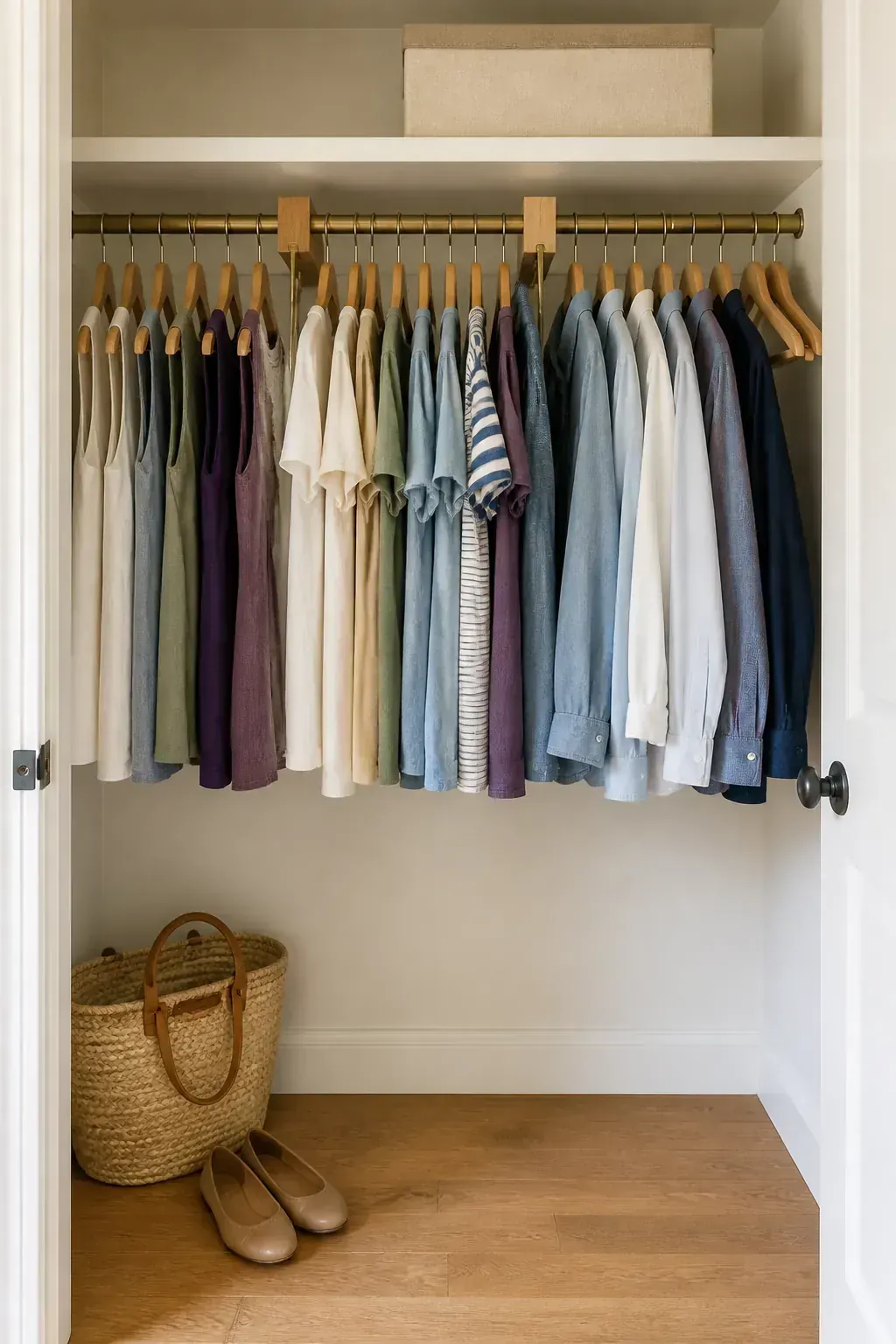
Arrange sleeveless, short sleeve, and long sleeve tops in adjacent groups. This lets weather eliminate whole sections at a glance and prevents lightweight pieces from disappearing between heavier shirts. Small rod dividers can preserve the boundaries without consuming meaningful space.
Hang bottoms beneath short tops
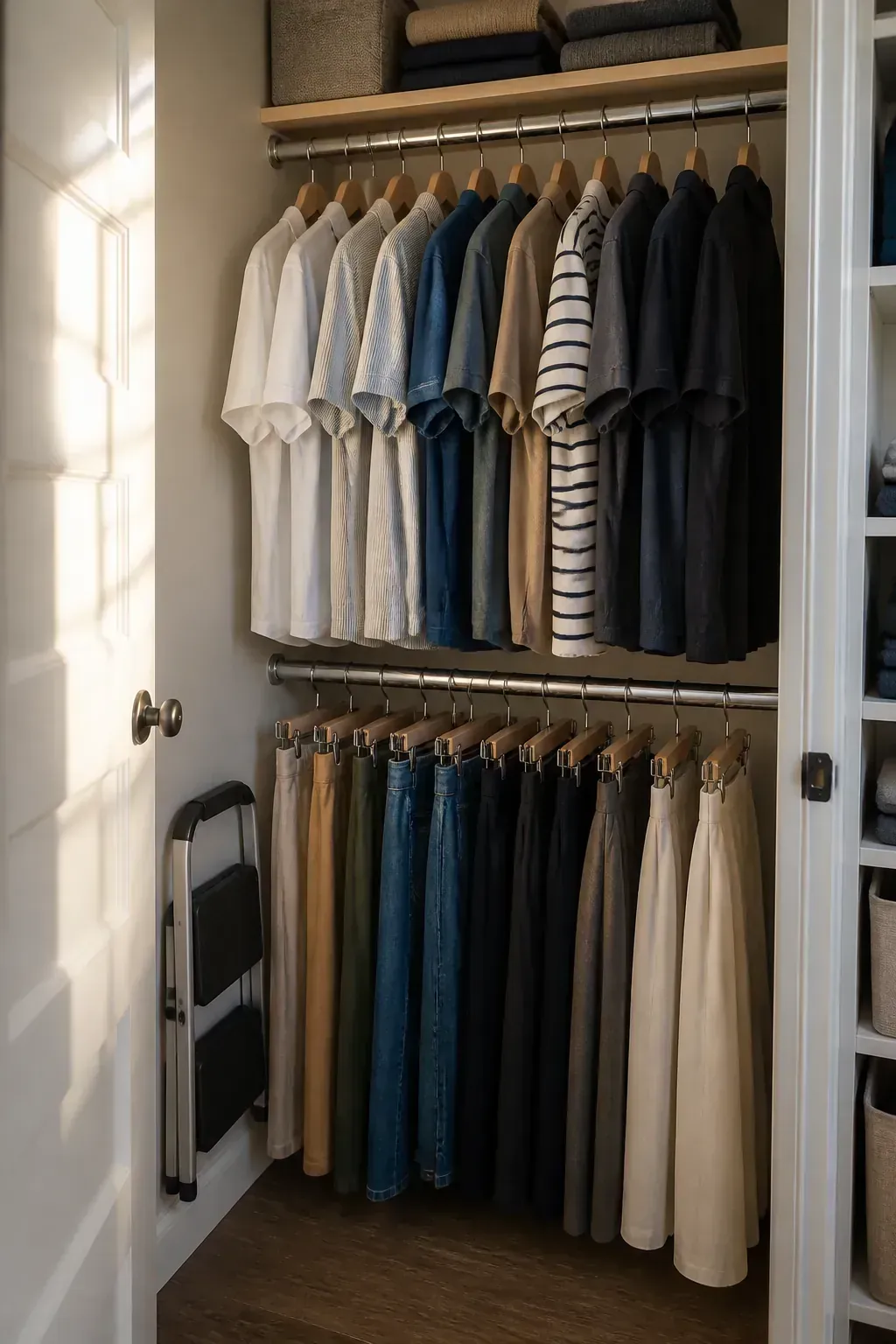
A second rod can use the empty vertical area below shirts for trousers and skirts. Check that hems clear the floor and that both levels remain comfortable to reach. Keep dresses and long coats in a separate full height strip so they are not crushed.
Protect one full height section
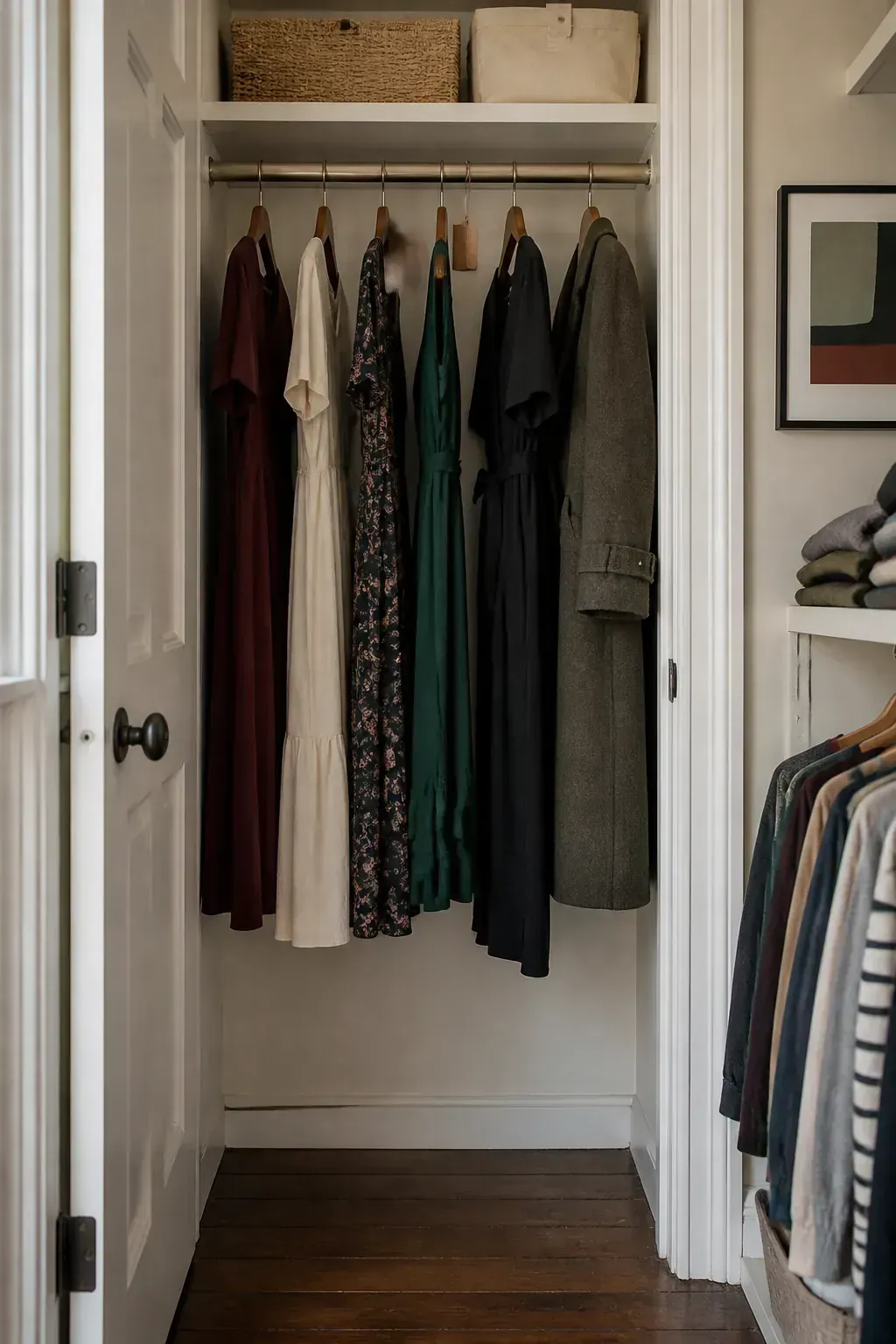
Leave one uninterrupted vertical section for dresses, coats, jumpsuits, or uniforms. Long garments stay smooth when their hems do not rest on bins or shoes. Set the width from the real number of pieces you own rather than sacrificing an entire side by default.
File folded knits on a middle shelf
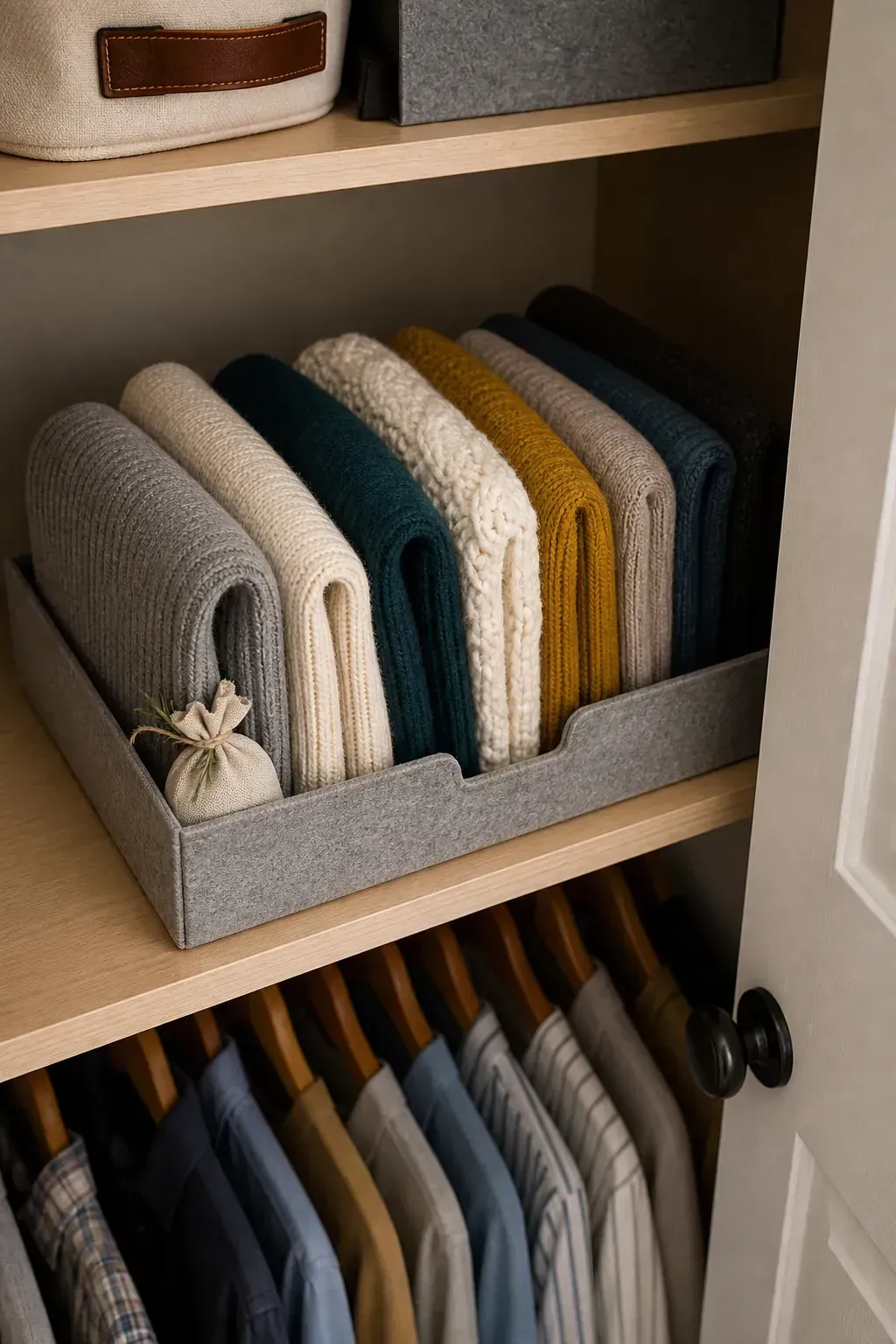
Fold sweaters and knit tops upright in a shelf basket so each color and texture remains visible. Avoid tall piles, since removing one piece often destabilizes everything above it. A middle shelf keeps delicate knits reachable while protecting them from hanger stretch.
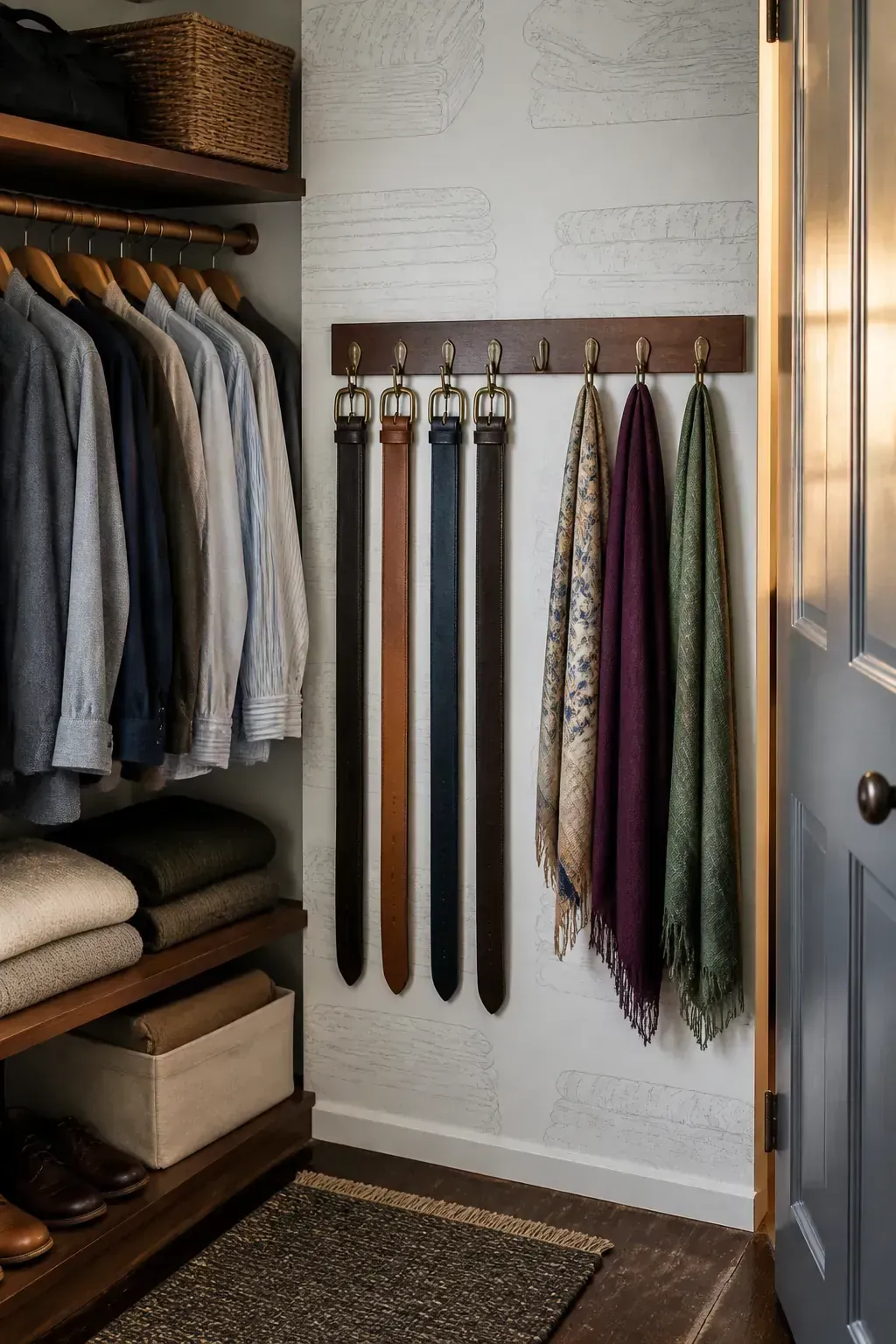
Pair belts and scarves with their outfits
Store frequently used belts and scarves on a compact rail beside the clothing they complete. Keeping accessories near their likely outfits makes them part of the decision rather than an afterthought. Limit each hook so pieces lift off without untangling a cluster.
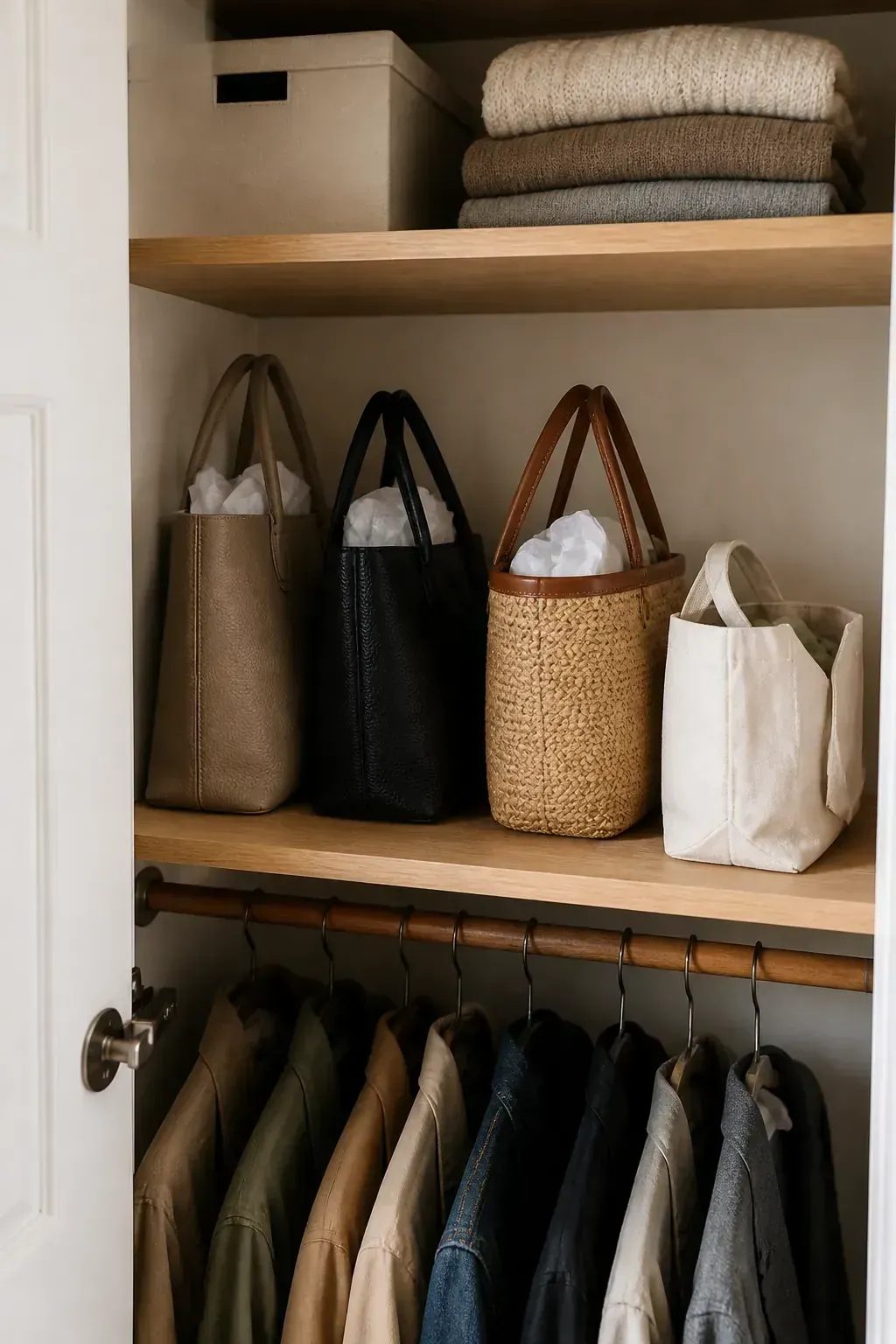
Set a small bag parking shelf
Choose one shelf for the bags currently in rotation and store them upright with light support inside. Keep handles visible and avoid nesting several bags together, which hides smaller options. The shelf boundary also prevents a bag collection from consuming clothing space.
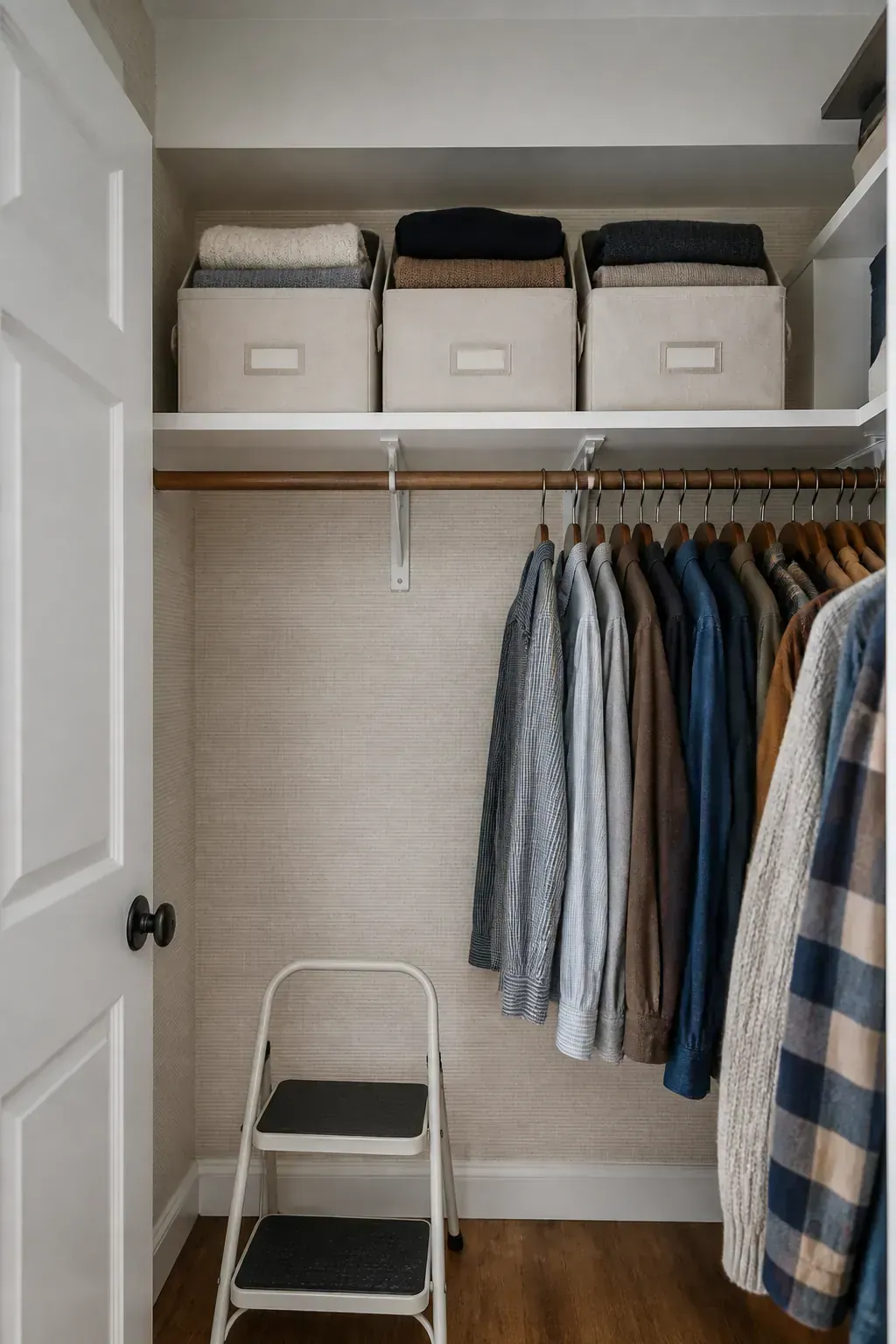
Move seasonal pieces to the top
Place clean off season clothing in breathable containers on the highest shelf. Use containers small enough to lift safely, and keep a simple inventory card inside rather than relying on memory. Rotate these pieces when the weather changes so the reachable zones contain only current choices.
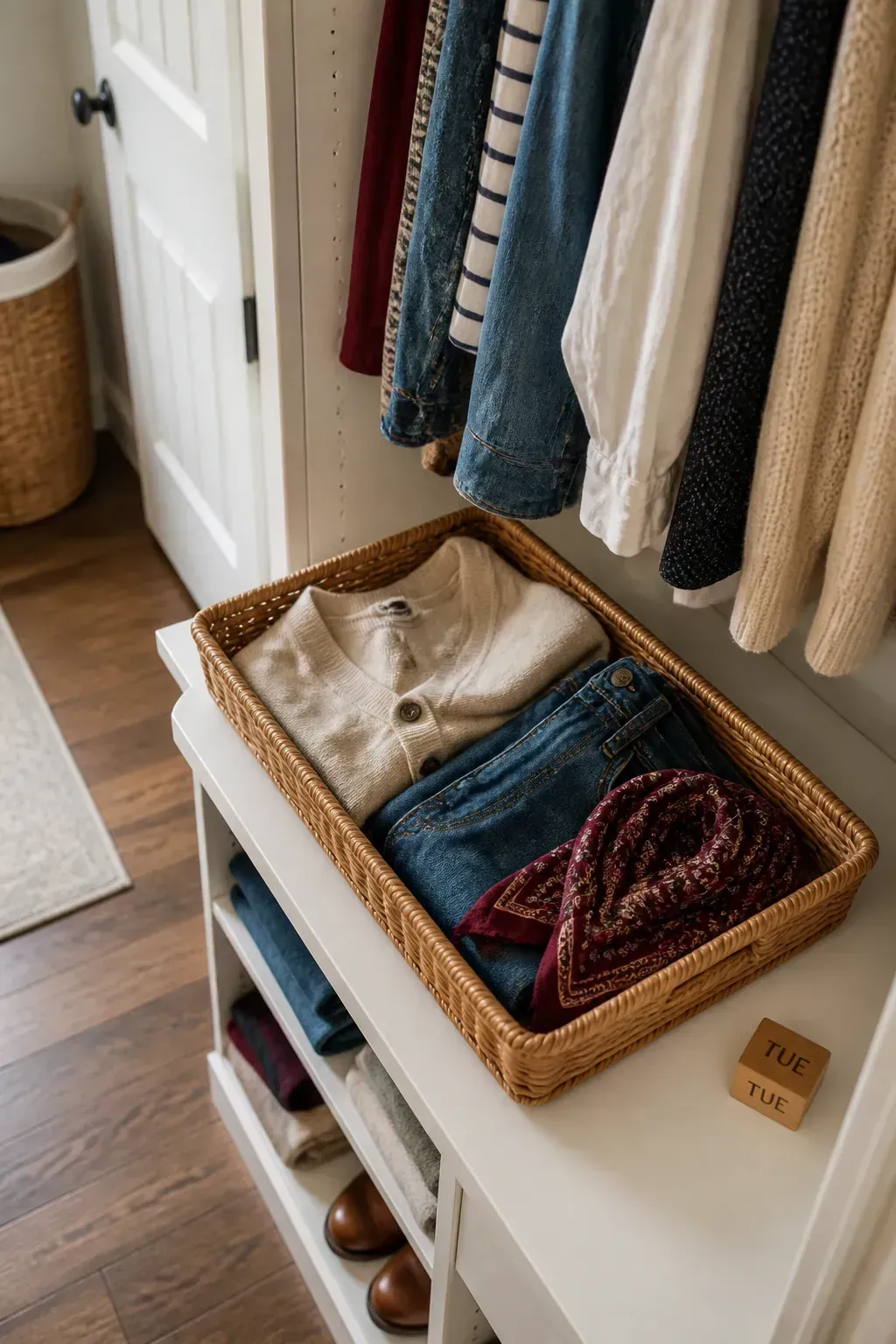
Add a return later basket
A small basket can hold clean clothes that were worn briefly but are not ready for laundry. This gives them a clear home without mixing them back into freshly washed sections. Empty the basket on a fixed day so it never becomes a second hamper.
Keep laundry beside the dressing flow
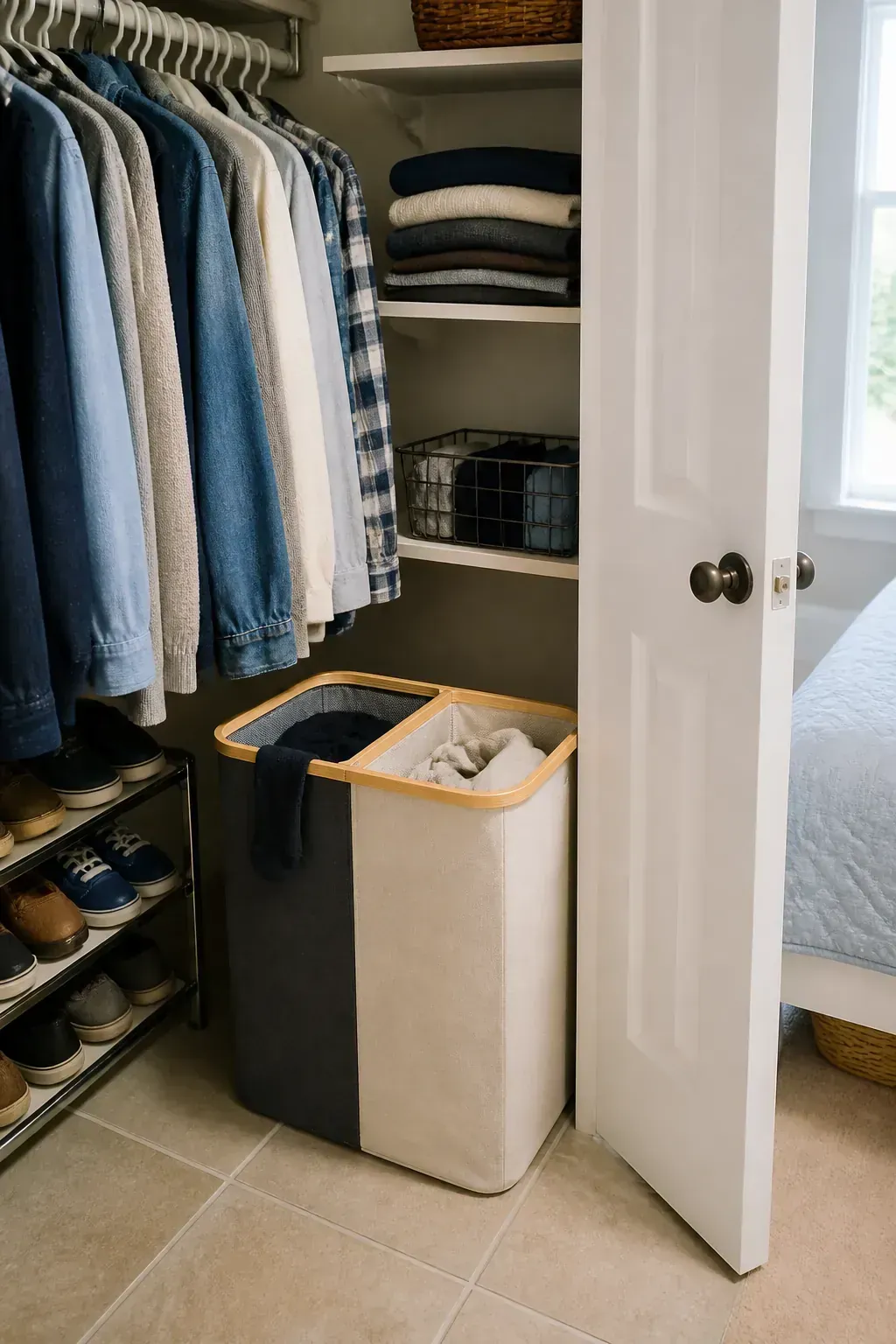
Place a narrow divided hamper where clothes naturally come off, provided it does not block the door or shoes. Sorting light and dark loads at the moment of undressing removes a later chore. A rigid or structured hamper is easier to use in tight corners than a collapsing bag.
Use the door for light accessories
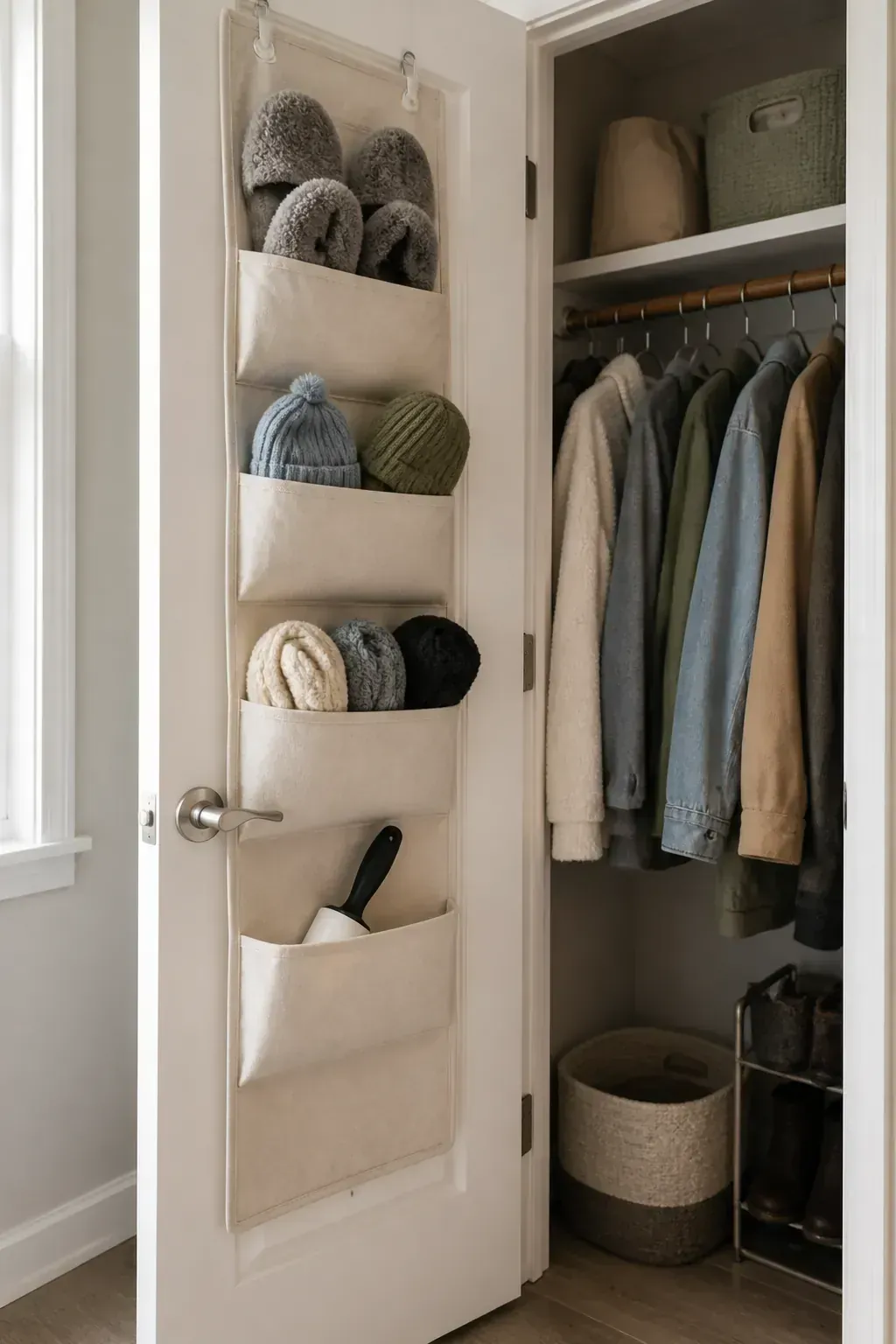
A shallow door organizer can hold soft slippers, hats, and small accessories when the door type and clearance allow it. Keep weight low and leave the handle area open. Test the swing after loading so the organizer does not scrape clothing or strain the hinges.
Leave a visible open space
Preserve a little empty rod, shelf, or basket capacity instead of filling every inch. Open space absorbs laundry day, a new purchase, or a rushed return without collapsing the system. If every zone is packed tightly, the closet is already asking for a smaller rotation or secondary storage.