A workable home office depends less on spare square footage than on depth, clearance, and a clear stopping point. Small corners fail when the screen sits too close, the chair blocks a route, or work supplies never disappear. Each solution below solves a different physical constraint, so measure the room before choosing the style that looks best.
Float a Desk Across an Empty Corner
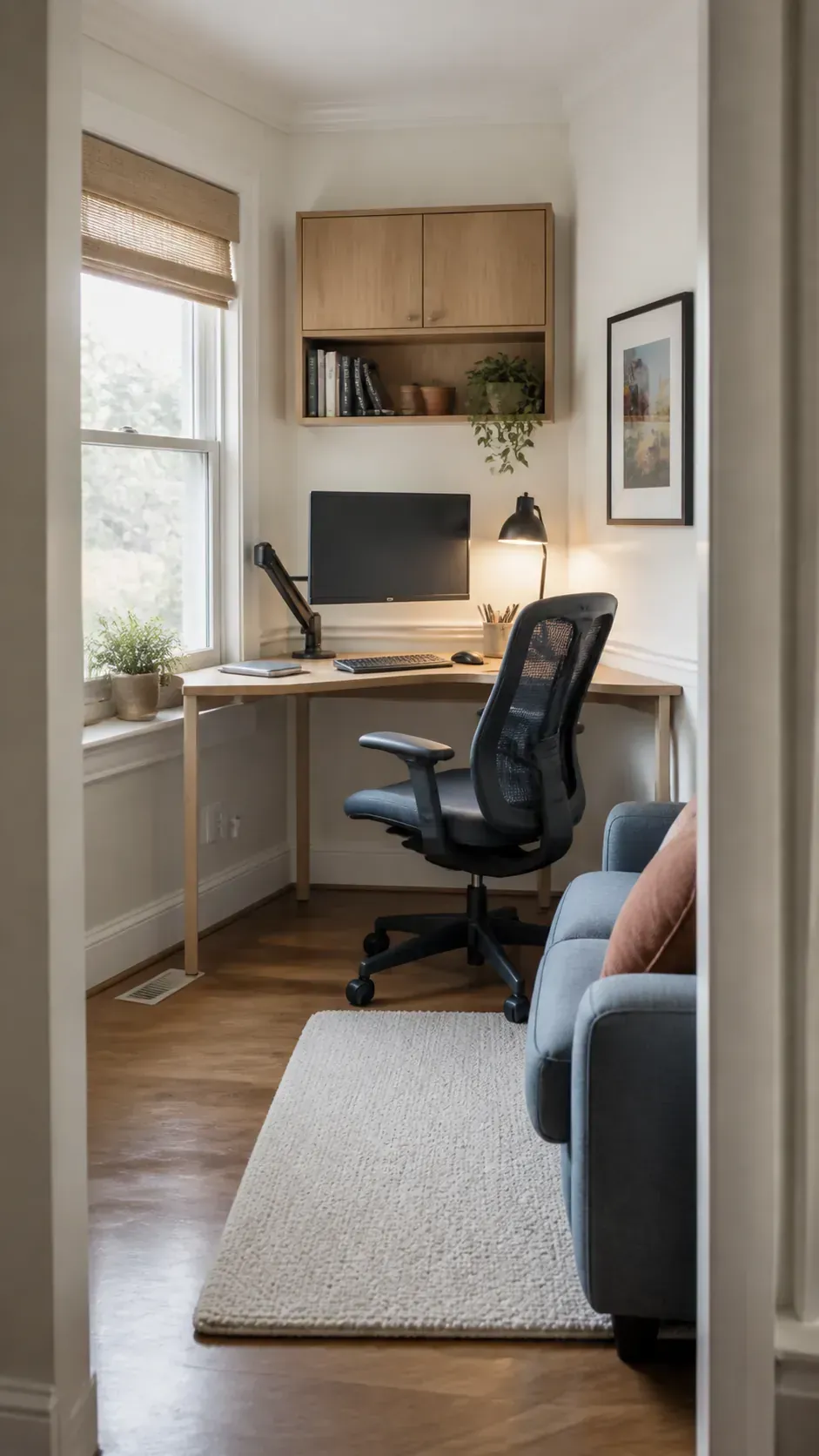
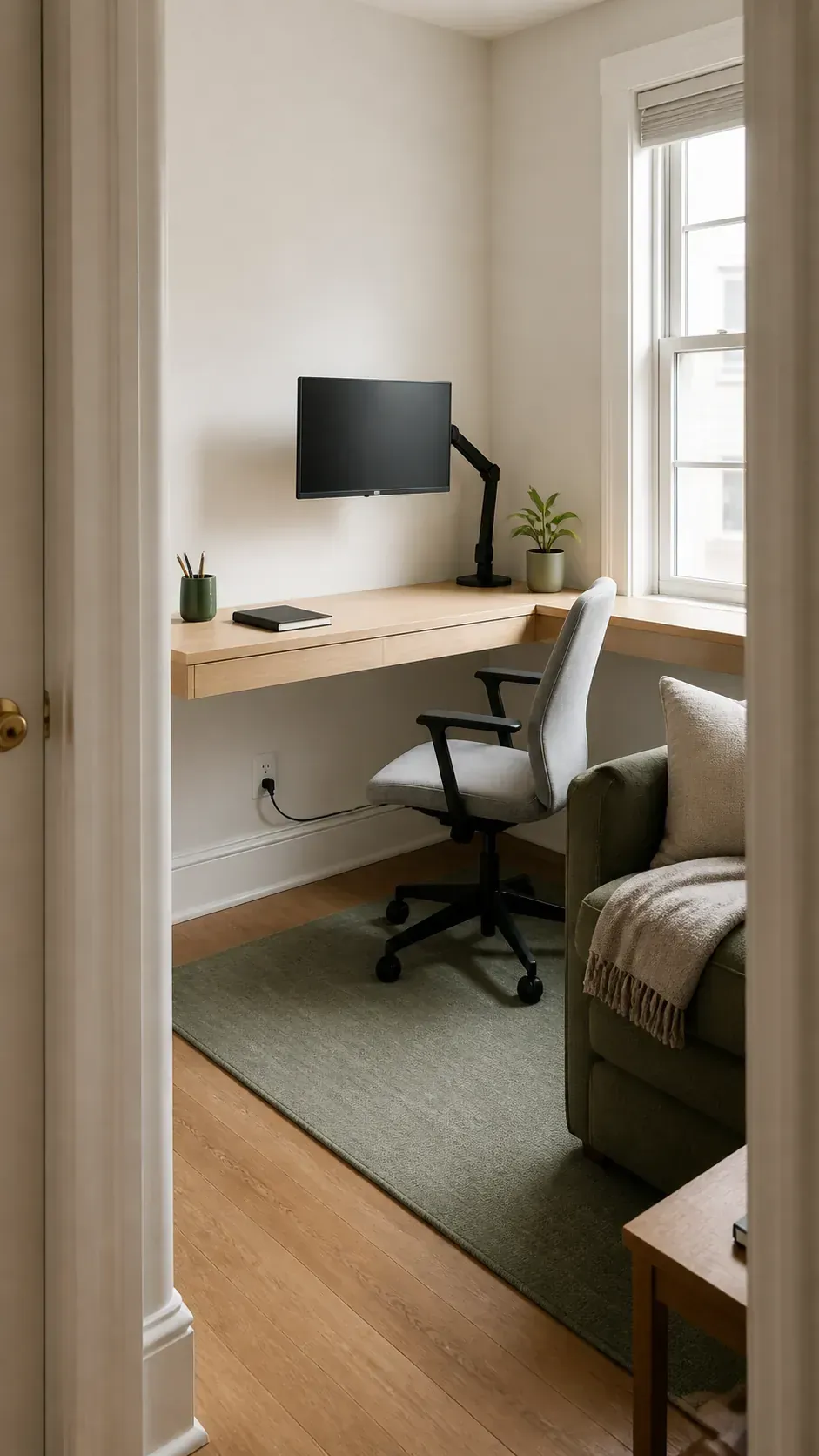
A floating surface uses two walls for support while leaving the floor visually open. Keep the depth near twenty inches if the corner only needs a laptop and notebook. A monitor arm can reclaim the back edge and place the screen at a healthier viewing height.
Choose a True Triangle Desk
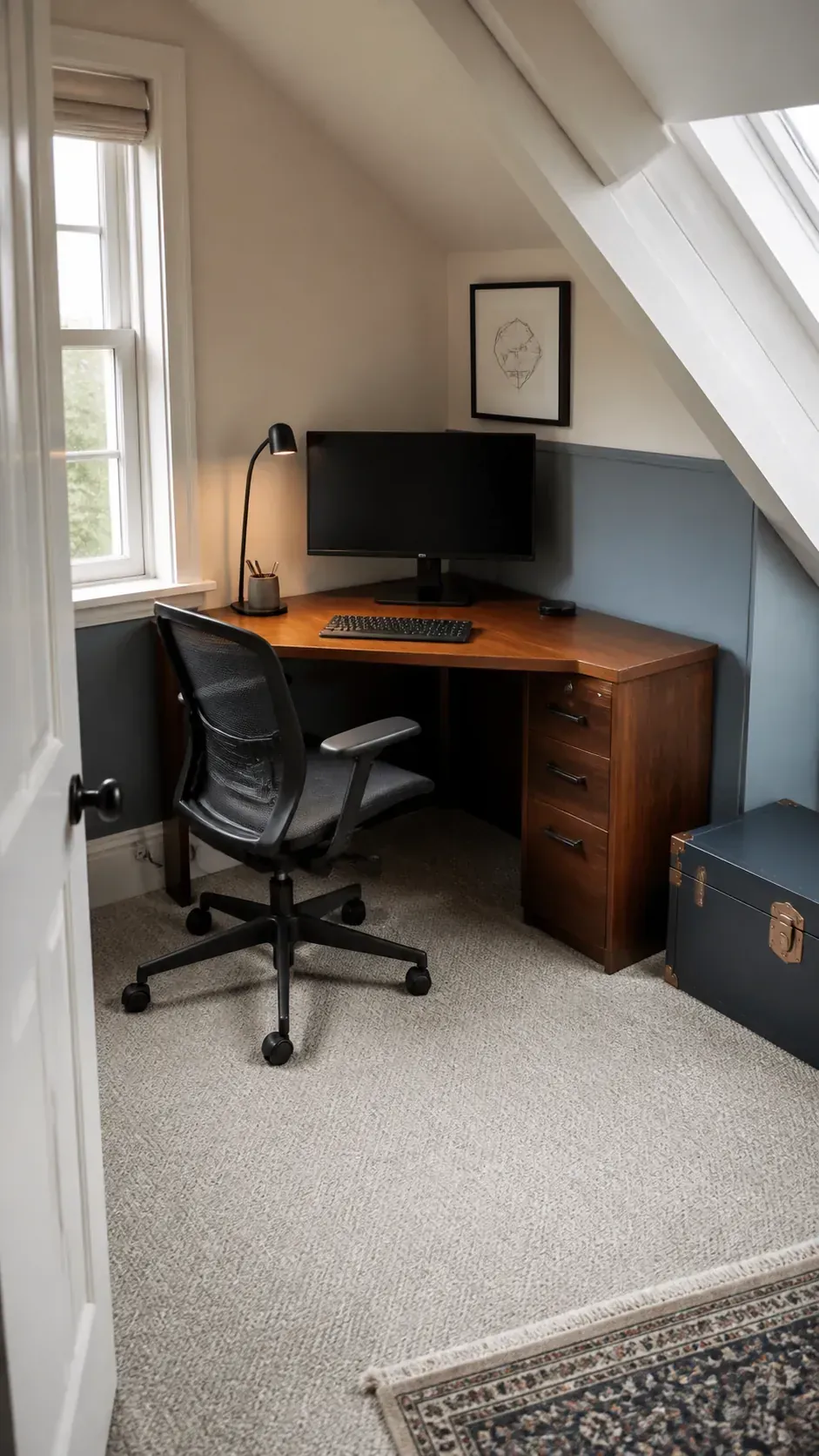
A triangular desk makes sense when both walls are short and the chair must face into the room. Check the usable front edge because some sharp designs leave too little space for forearms. A clipped back corner also creates a clean route for power and display cables.
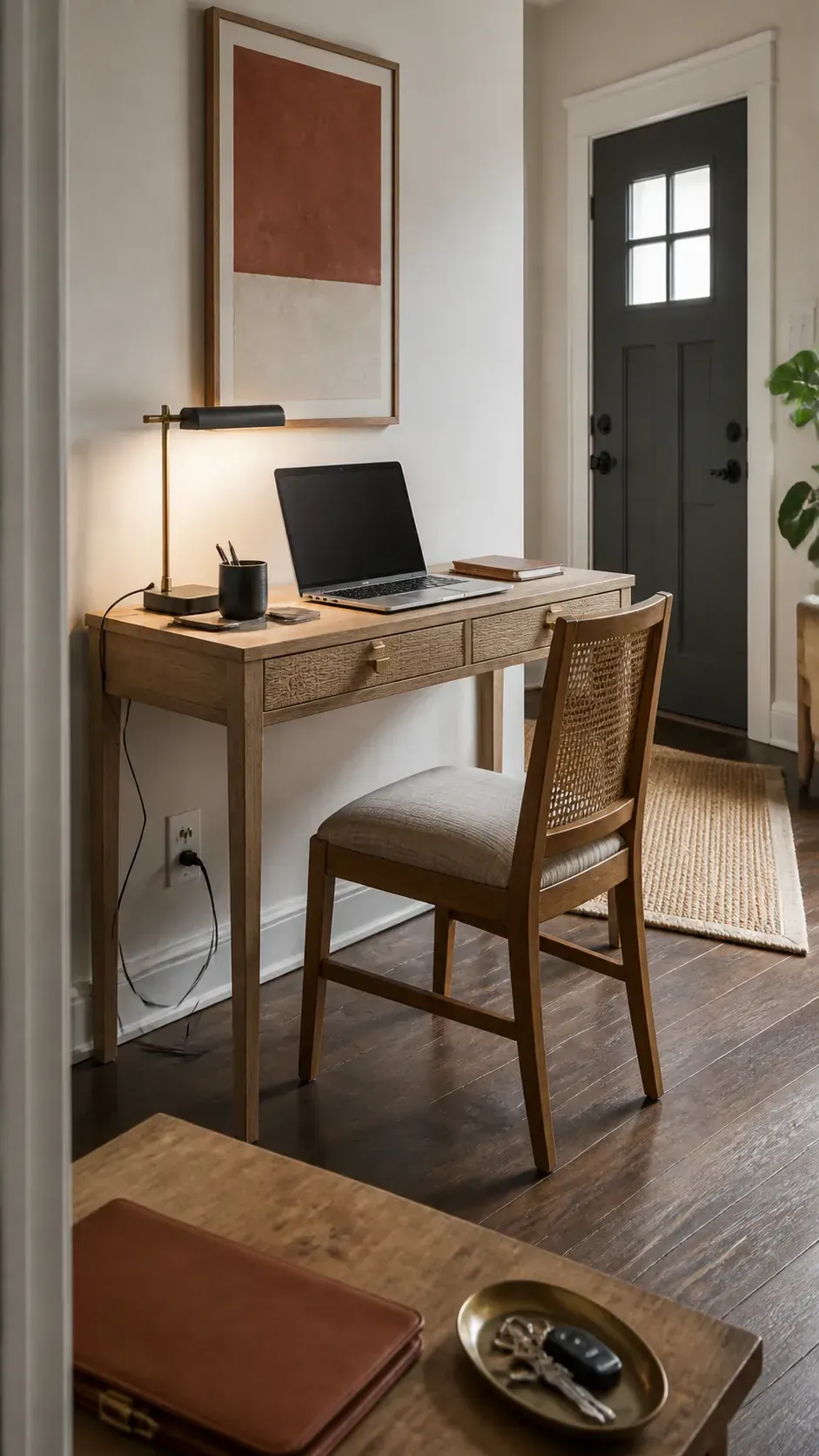
Turn a Console Into a Work Surface
A console can become a useful office when the job does not require a large monitor. Choose a model with enough knee clearance rather than forcing a chair against a decorative stretcher. Pack the laptop and charger into one nearby basket so the entry looks settled after work.
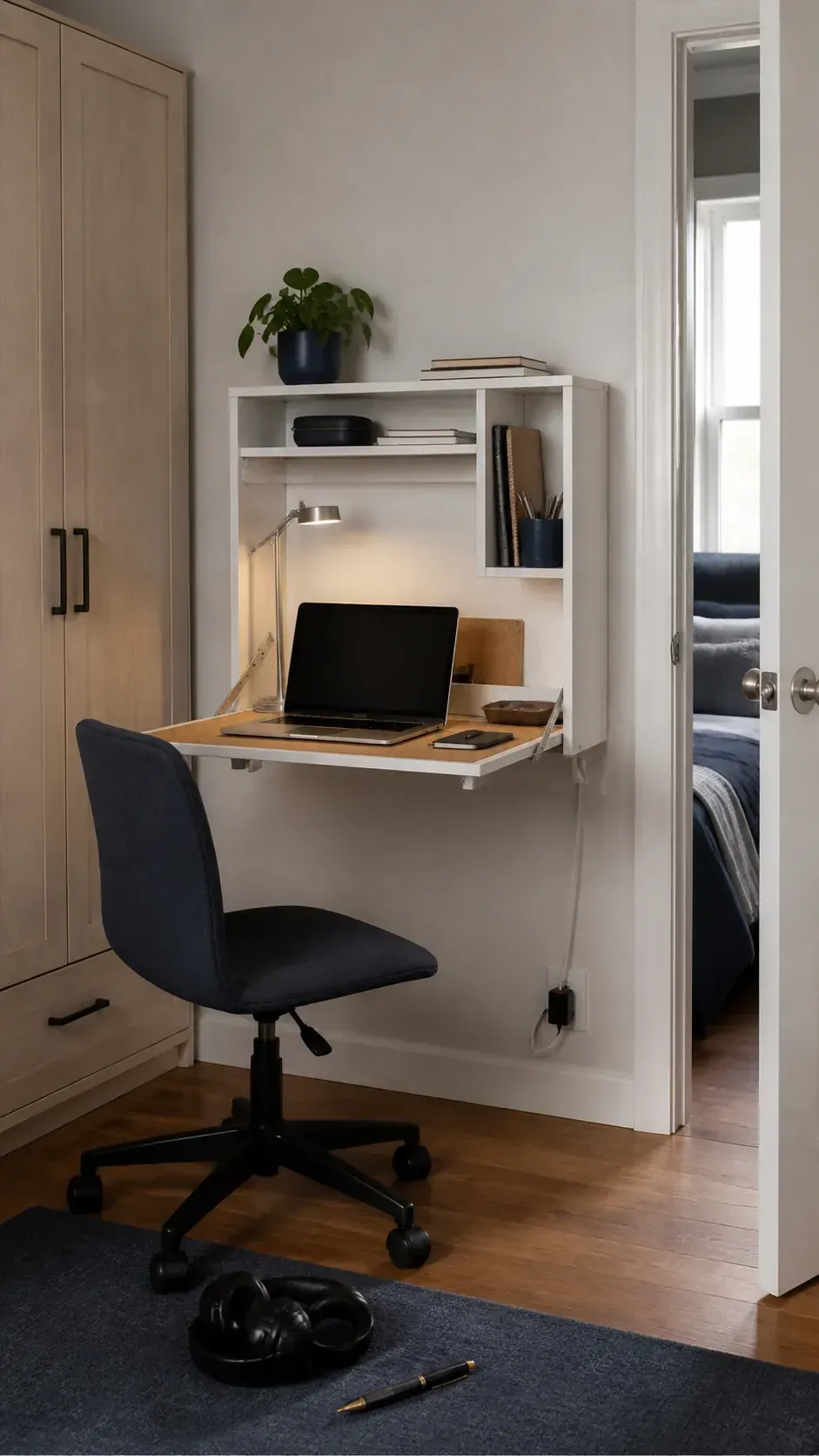
Install a Folding Wall Desk
A folding wall desk releases the walkway when the workday ends. Measure the open panel at elbow height and confirm that the door can still swing freely. Store only light essentials inside because shallow hardware performs best without overloaded compartments.
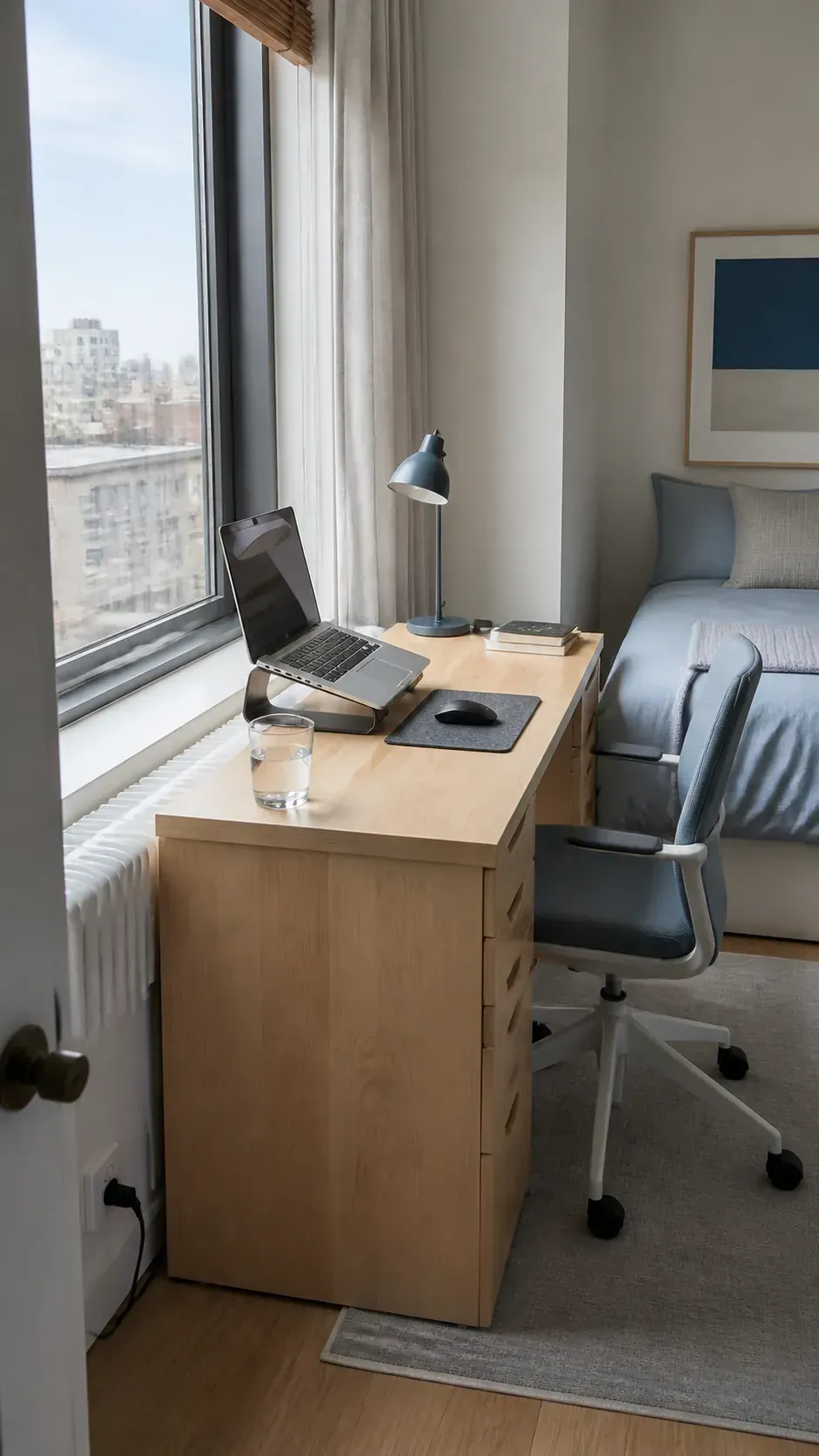
Face the Desk Toward a Window
A side facing window provides daylight while keeping reflections off the screen. Leave room for curtains to move and avoid trapping heat from a nearby radiator. A laptop riser and separate keyboard can improve posture on a surface that cannot grow deeper.
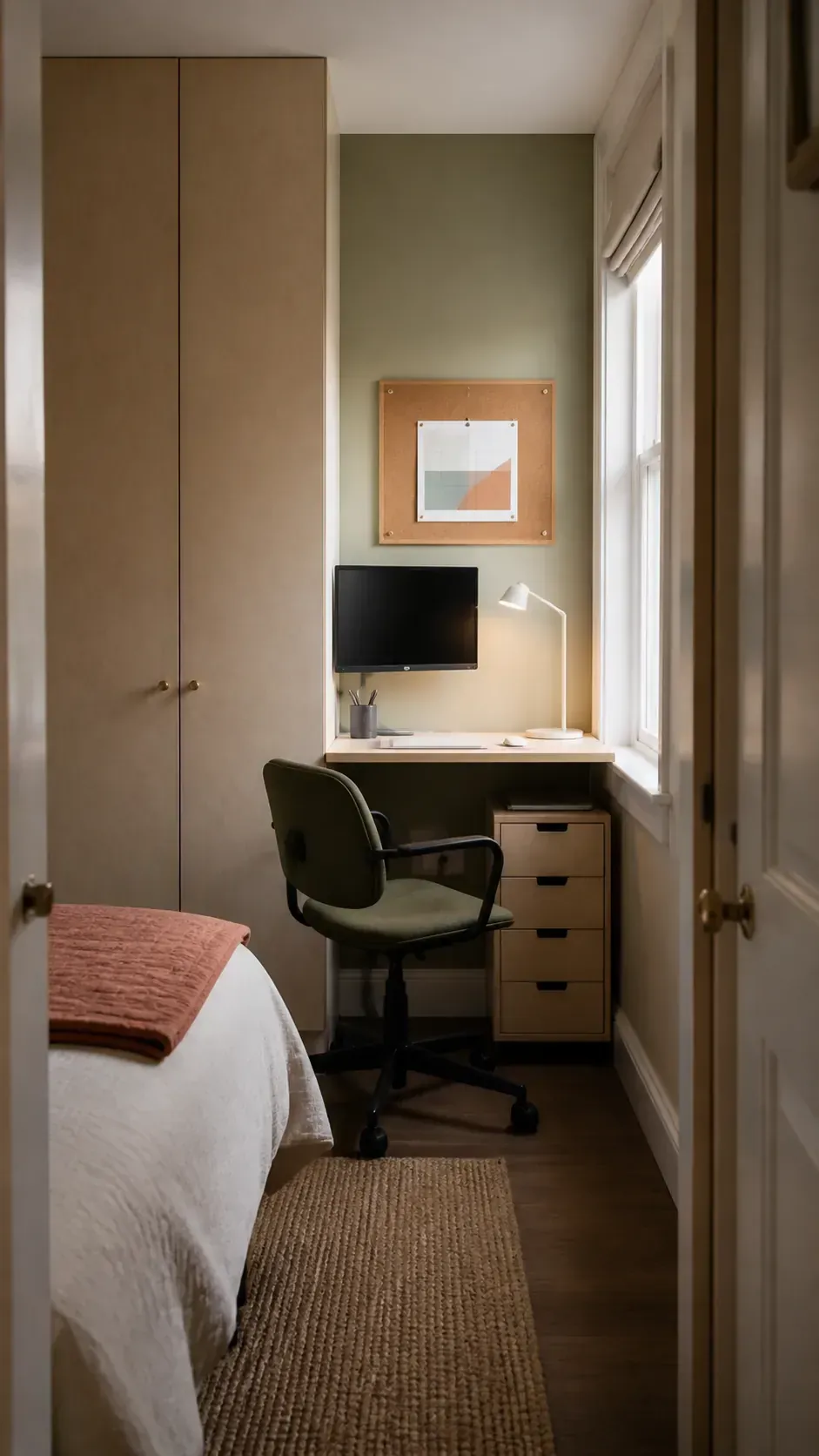
Claim the Space Beside a Wardrobe
The strip beside a wardrobe often has enough width for focused laptop work. Protect the door swing and allow every drawer to open before ordering a desk. A small pinboard keeps reminders off the work surface and can come down when guests arrive.
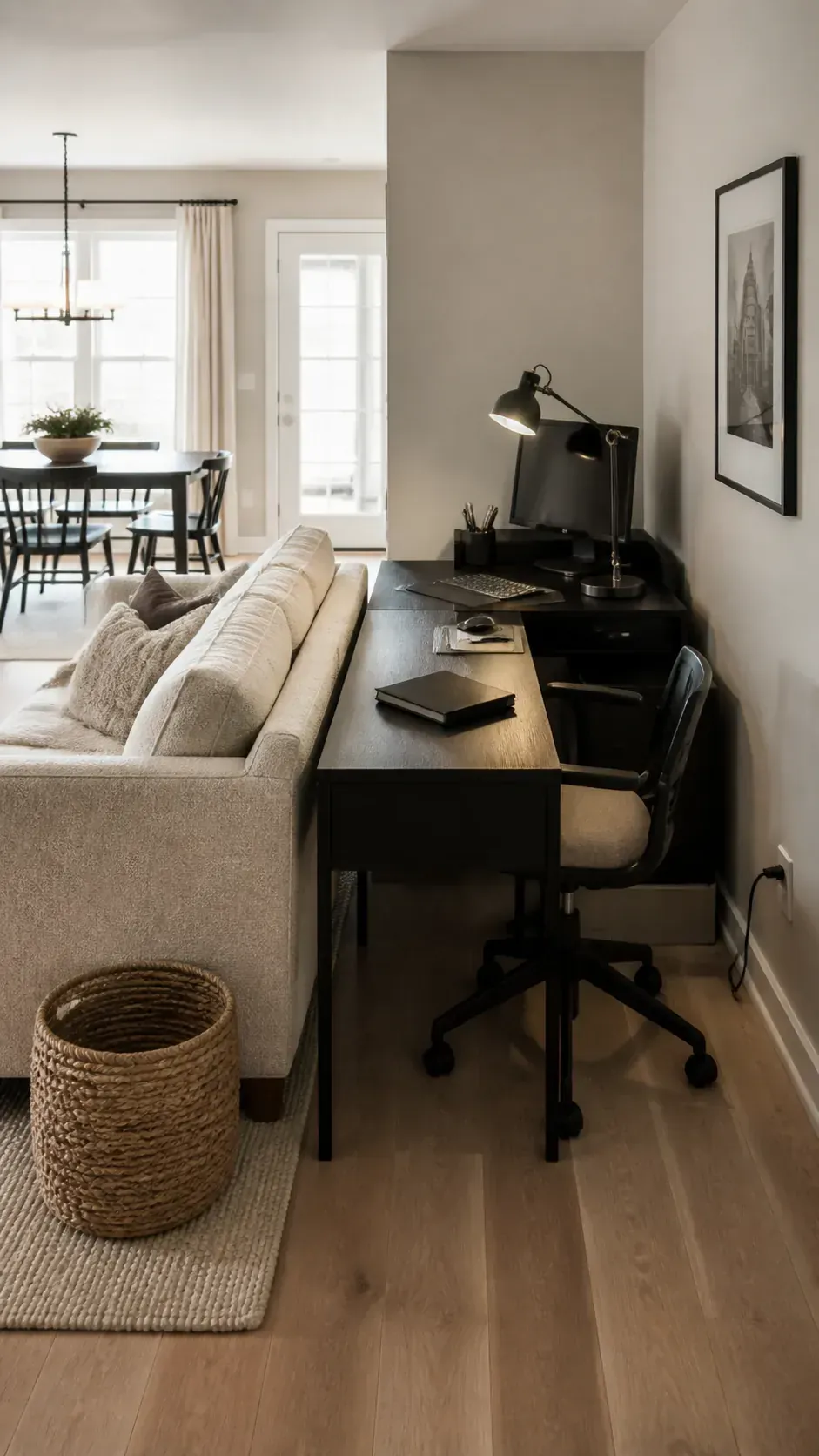
Use a Corner Behind the Sofa
The end of a sofa can screen a desk without adding a divider. Keep the desktop below the sofa back so equipment does not dominate the room. A floor basket gives chargers and papers one landing place when the laptop closes.
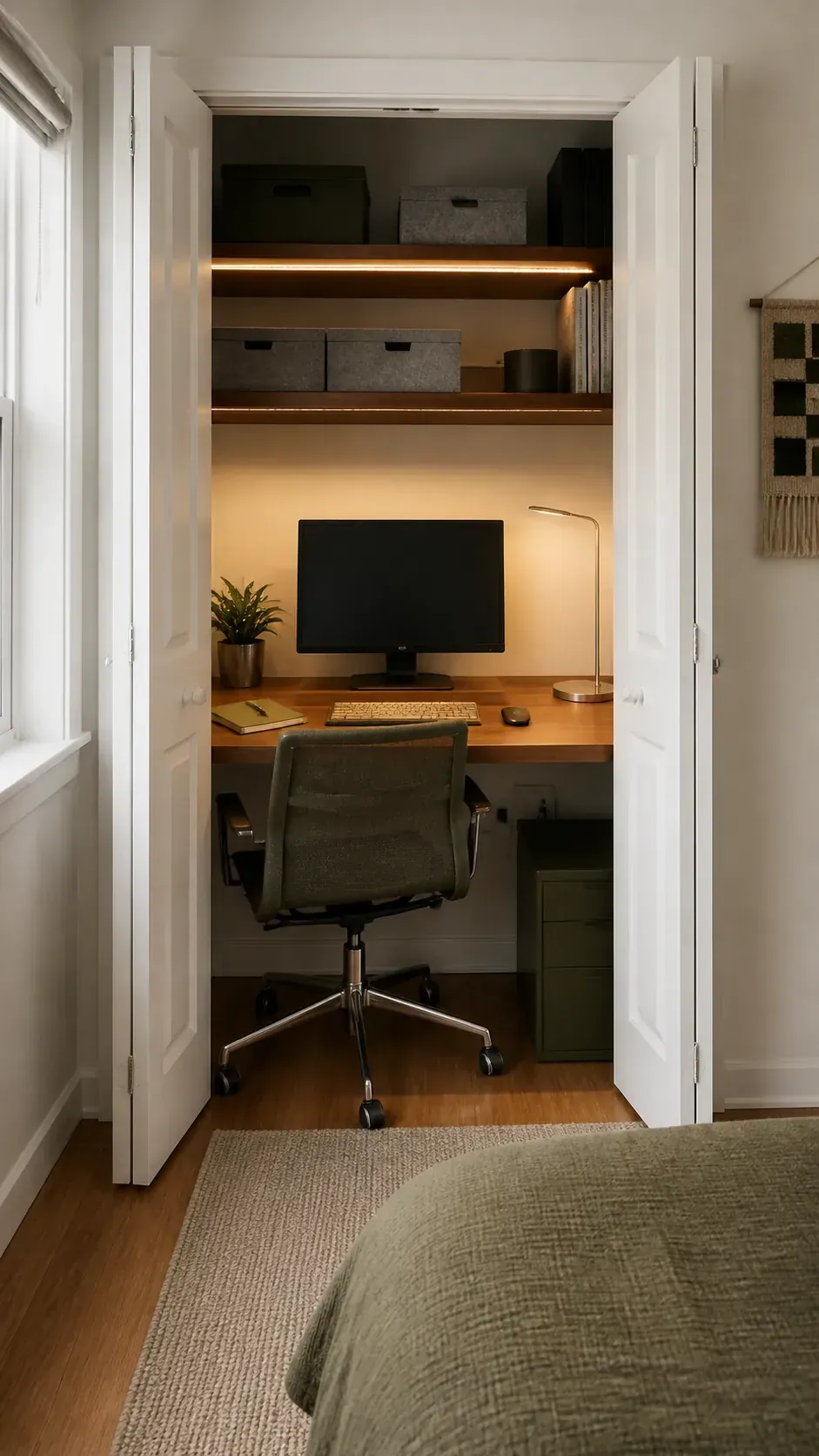
Convert a Reach In Closet
A closet office creates the strongest boundary because the doors can hide every work cue. Set the worktop deep enough for the screen while preserving leg room below. Ventilation, task lighting, and an accessible outlet matter more than decorative shelving.
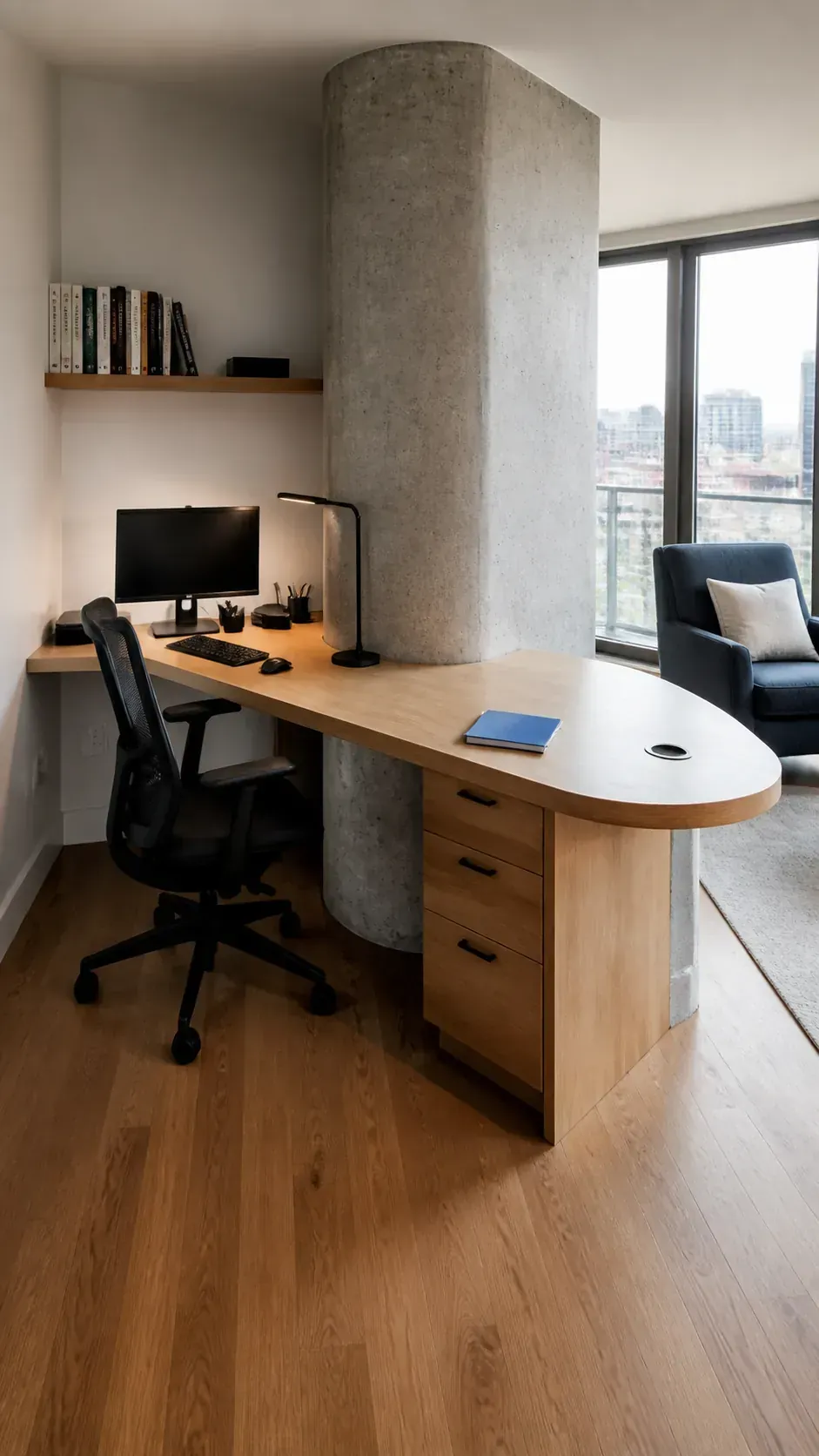
Build Around an Inside Column
A structural column can become the inside leg of a compact custom desk. Round the exposed desktop corner so the walking route stays comfortable. Matching both desk wings in depth keeps the monitor and writing zones visually balanced.
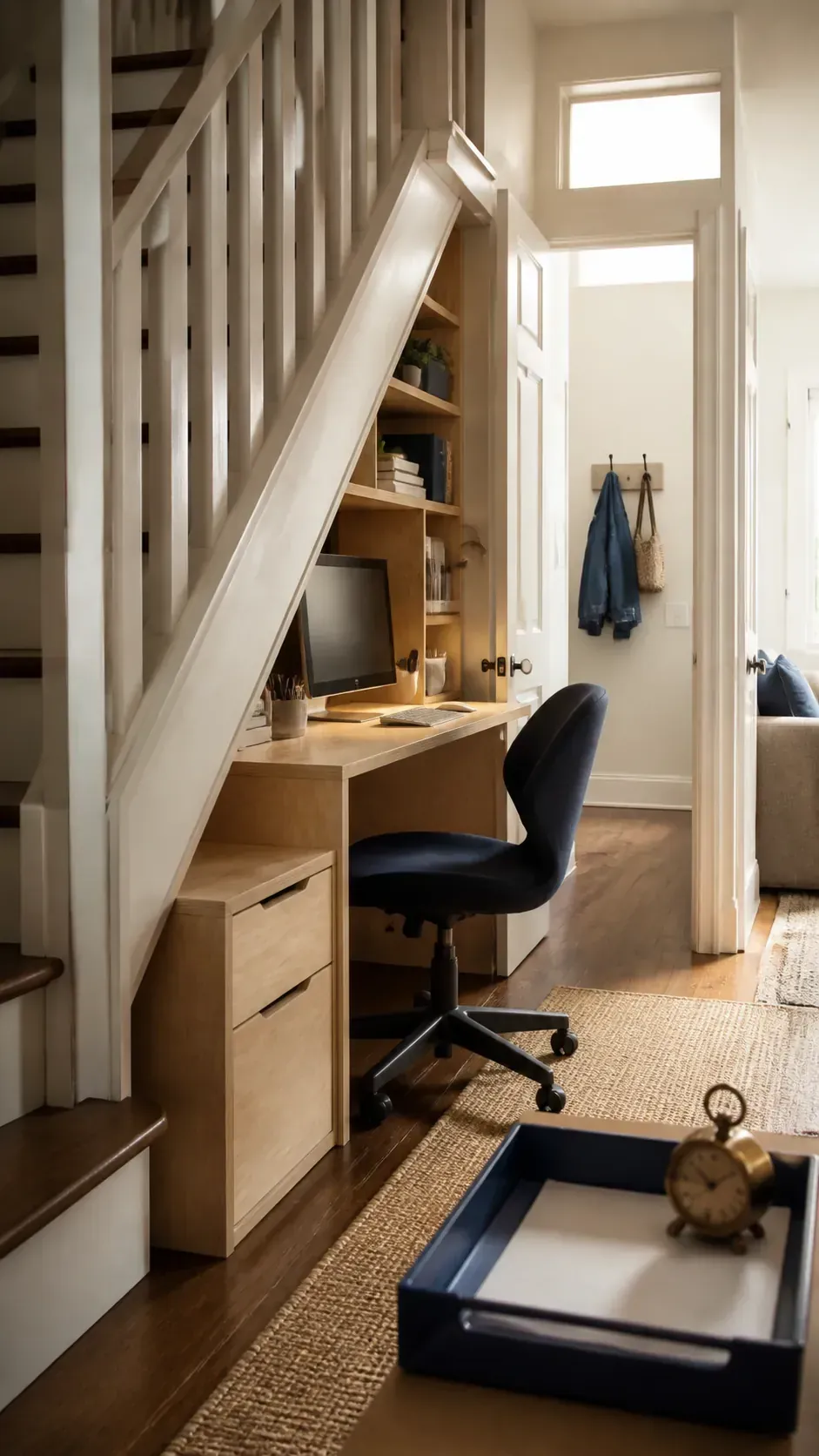
Tuck a Desk Under the Stairs
The deepest section beneath stairs can hold a monitor while the lowest zone stores supplies. Keep the chair in the tallest part so standing and sitting never meet the sloped underside. A wall light prevents the recess from becoming gloomy after sunset.
Fit a Desk Into a Bay Window
A bay window can hold a generous worktop without taking over the main floor area. Set the surface below the sash locks so every window remains operable. Use a shaped template before cutting because older bays are rarely perfectly square.
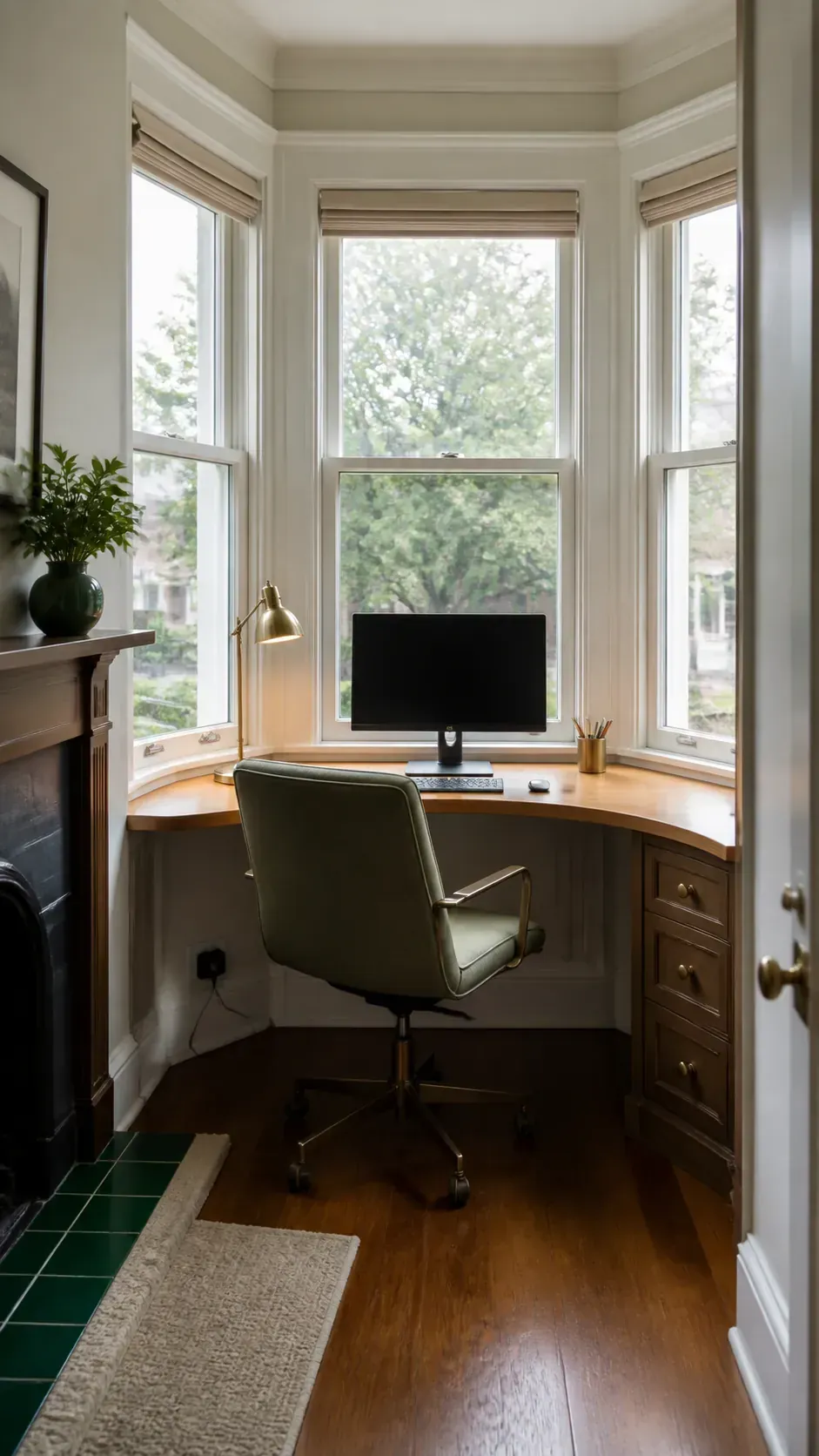
Make a Landing Work Harder
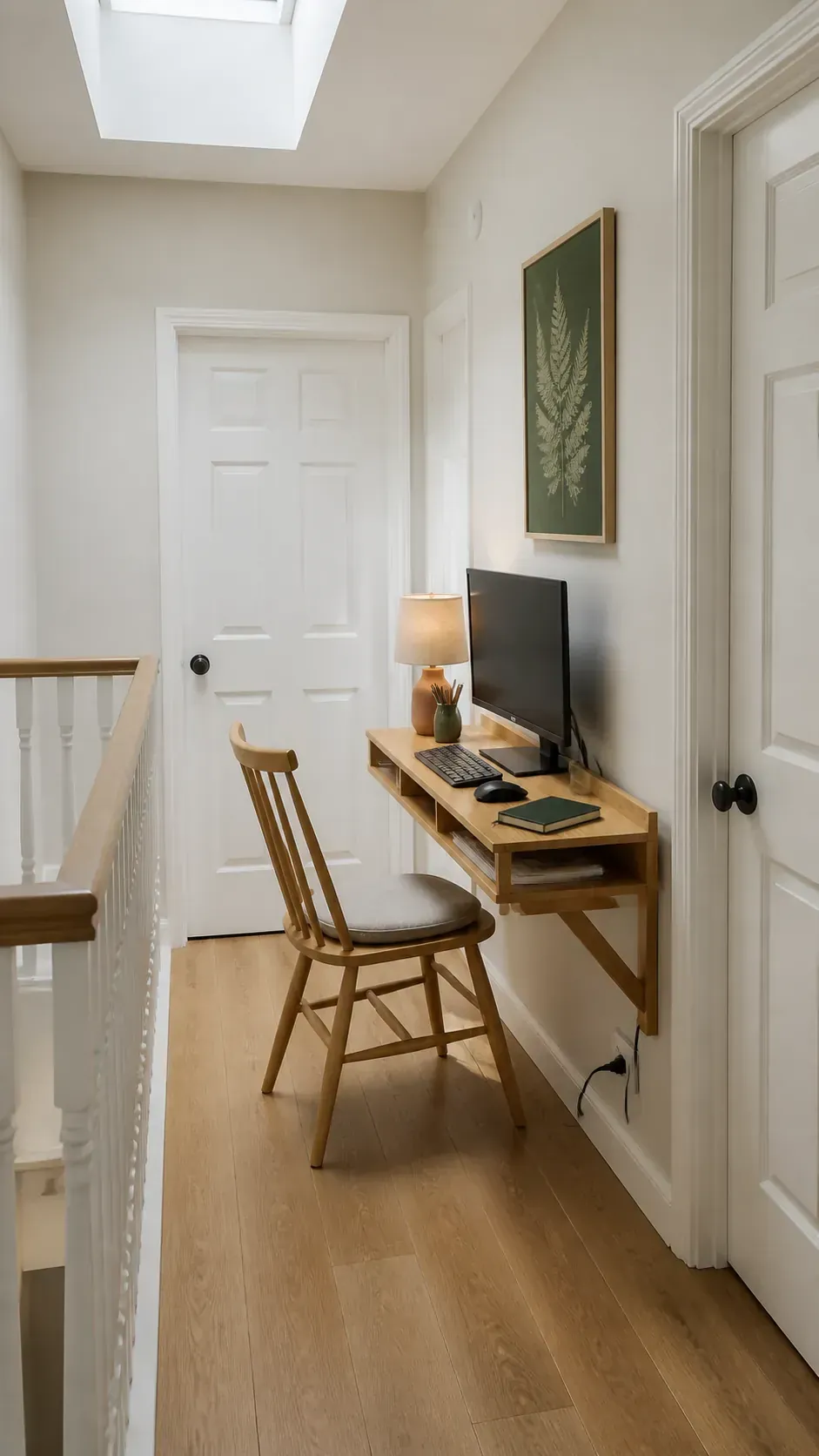
A wide landing can support quiet work if the route between rooms stays open. Choose a wall mounted surface with shallow depth and no projecting drawer handles. A compact chair should slide fully underneath whenever someone uses the stairs.
Create a Kitchen Command Corner
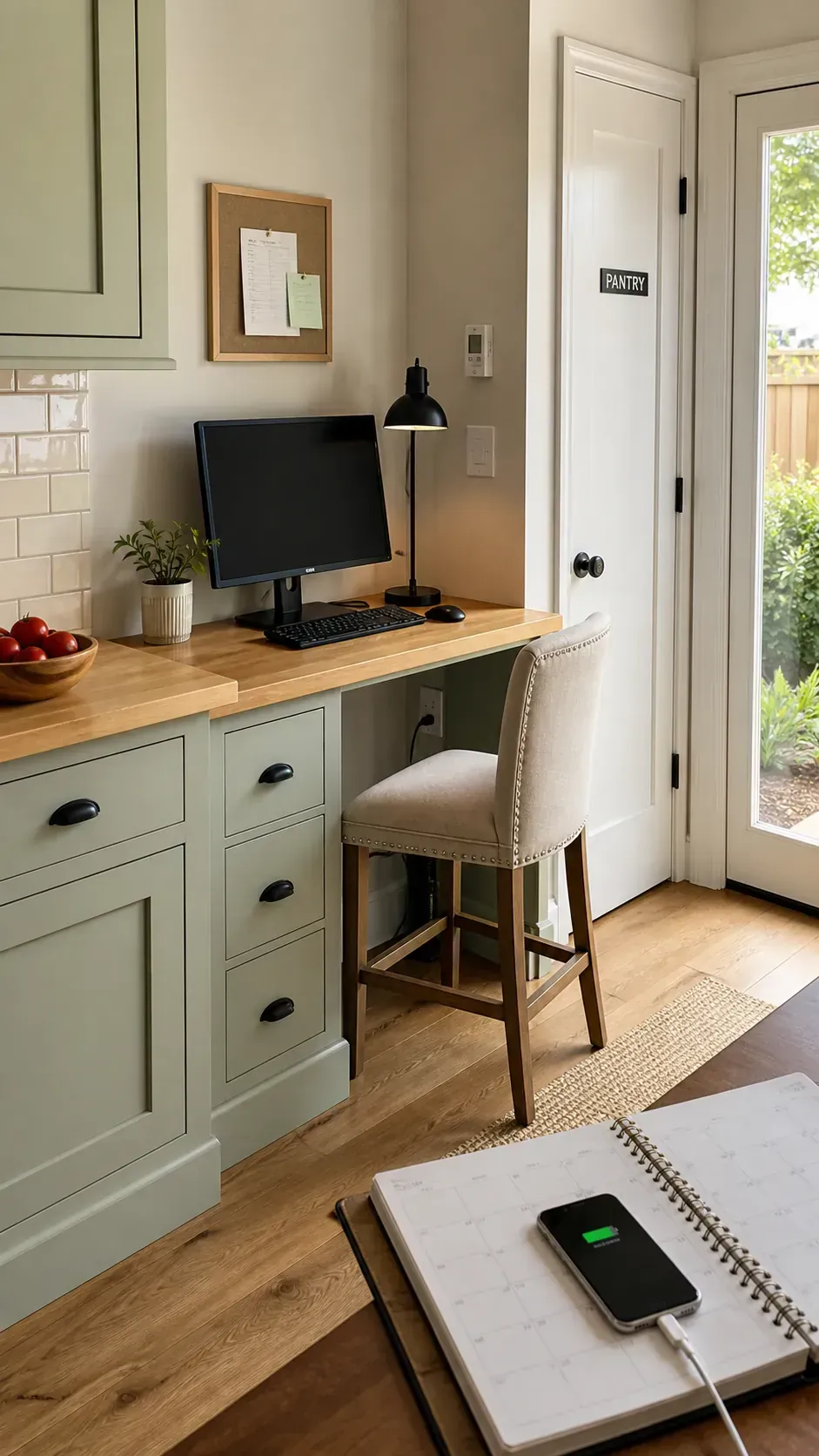
A kitchen command corner keeps household paperwork close to the routines it supports. Place it beyond the main preparation zone so steam and food spills do not reach electronics. A charging drawer and one document slot stop the counter from becoming permanent storage.
Pair a Desk With a Bookcase
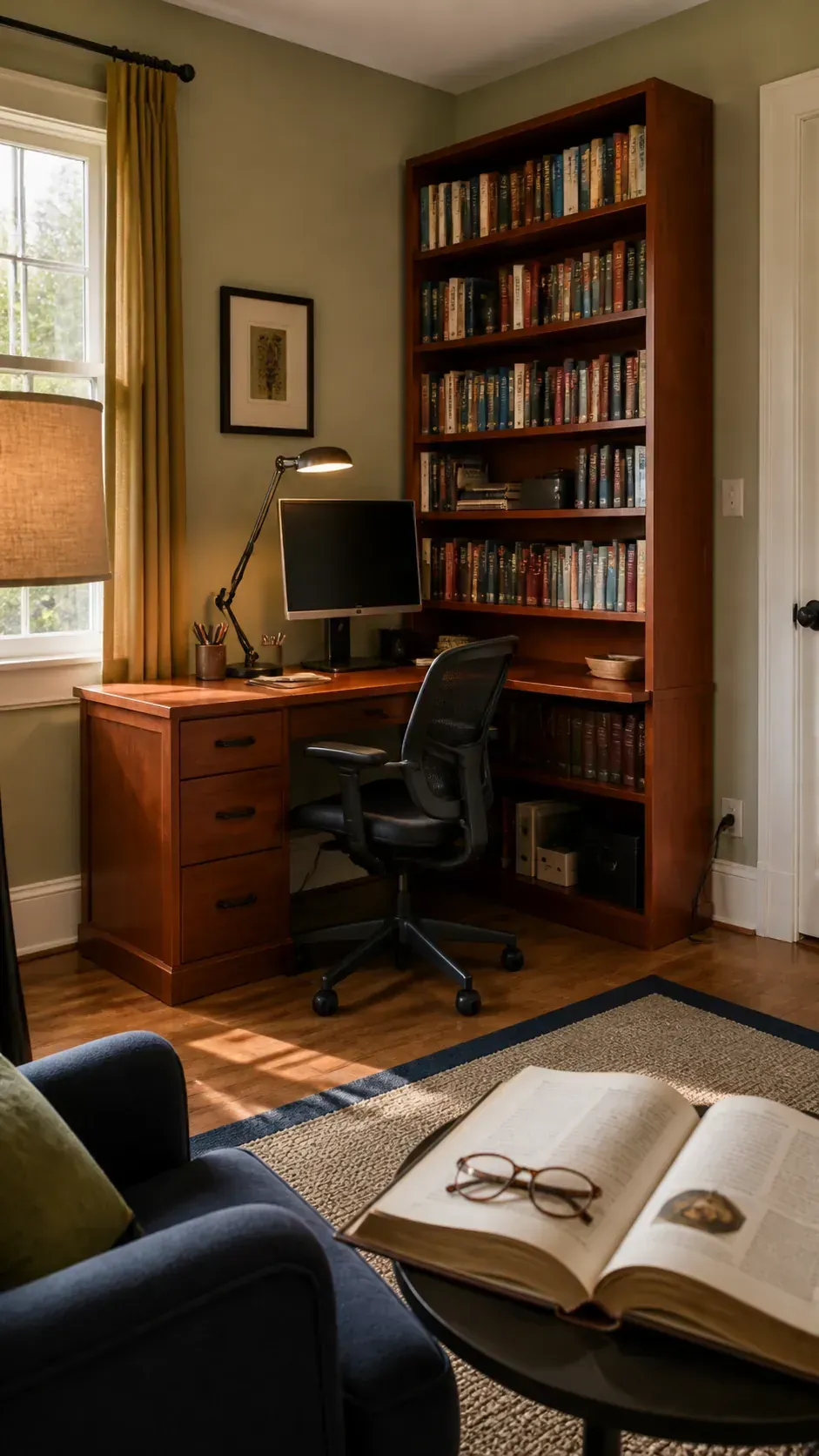
A bookcase can form one side of an office corner and keep references within reach. Leave a small gap between desk and shelves so books can slide out without striking the monitor. Closed boxes on the lowest shelf hide cables and less attractive supplies.
Use Clear Furniture Near a Window
Clear furniture reduces visual weight when a solid desk would interrupt the window line. Acrylic still needs careful sizing because its physical footprint does not disappear. Use a desk mat to prevent scratches and keep only a few objects on the transparent surface.
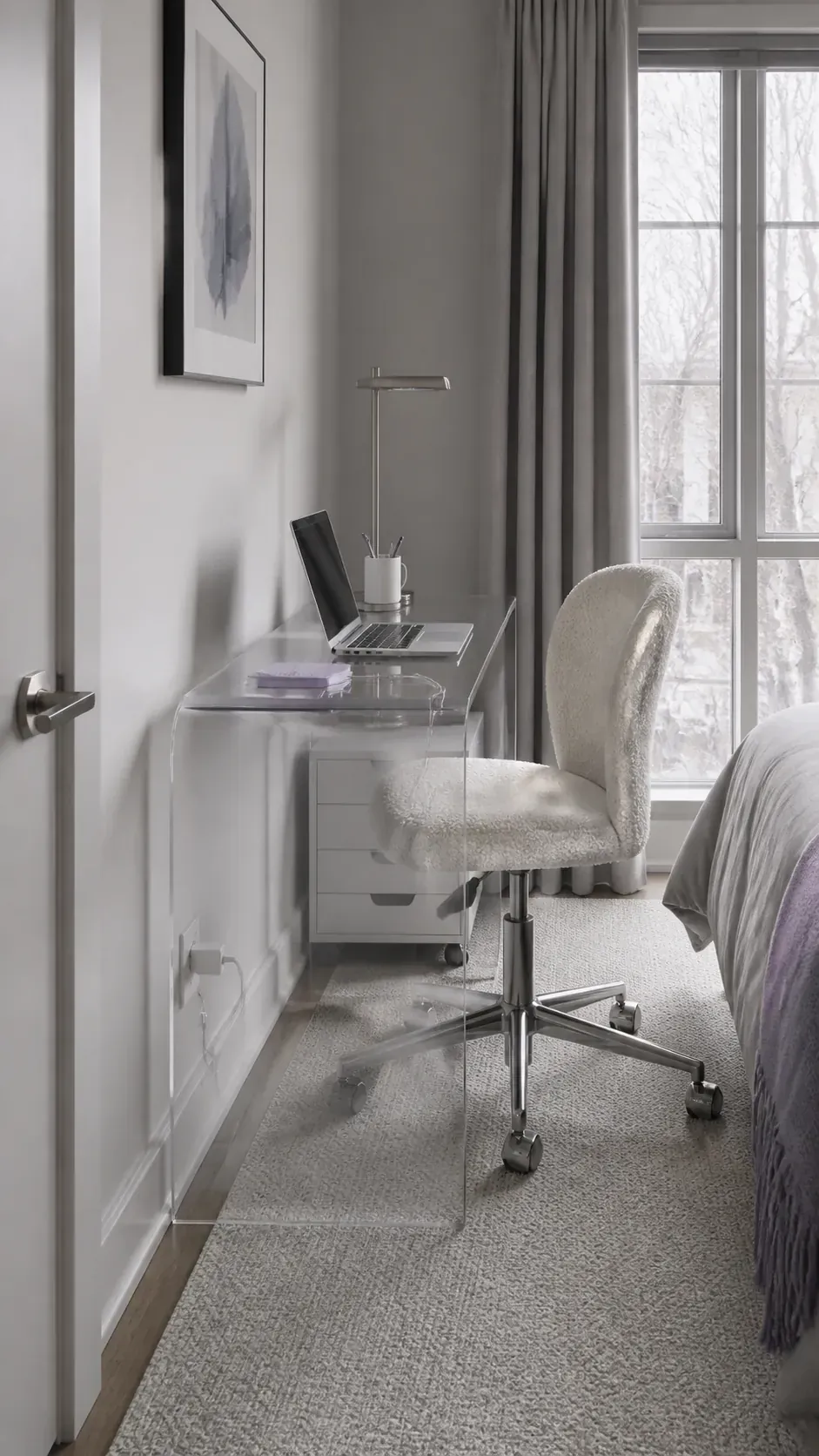
Mount the Monitor on a Side Wall
A side wall monitor arm can make a shallow desk usable for serious computer work. Confirm the arm can swing to a centered position without pushing the screen too close. Route cables along the arm and down the inside corner to preserve the reclaimed surface.
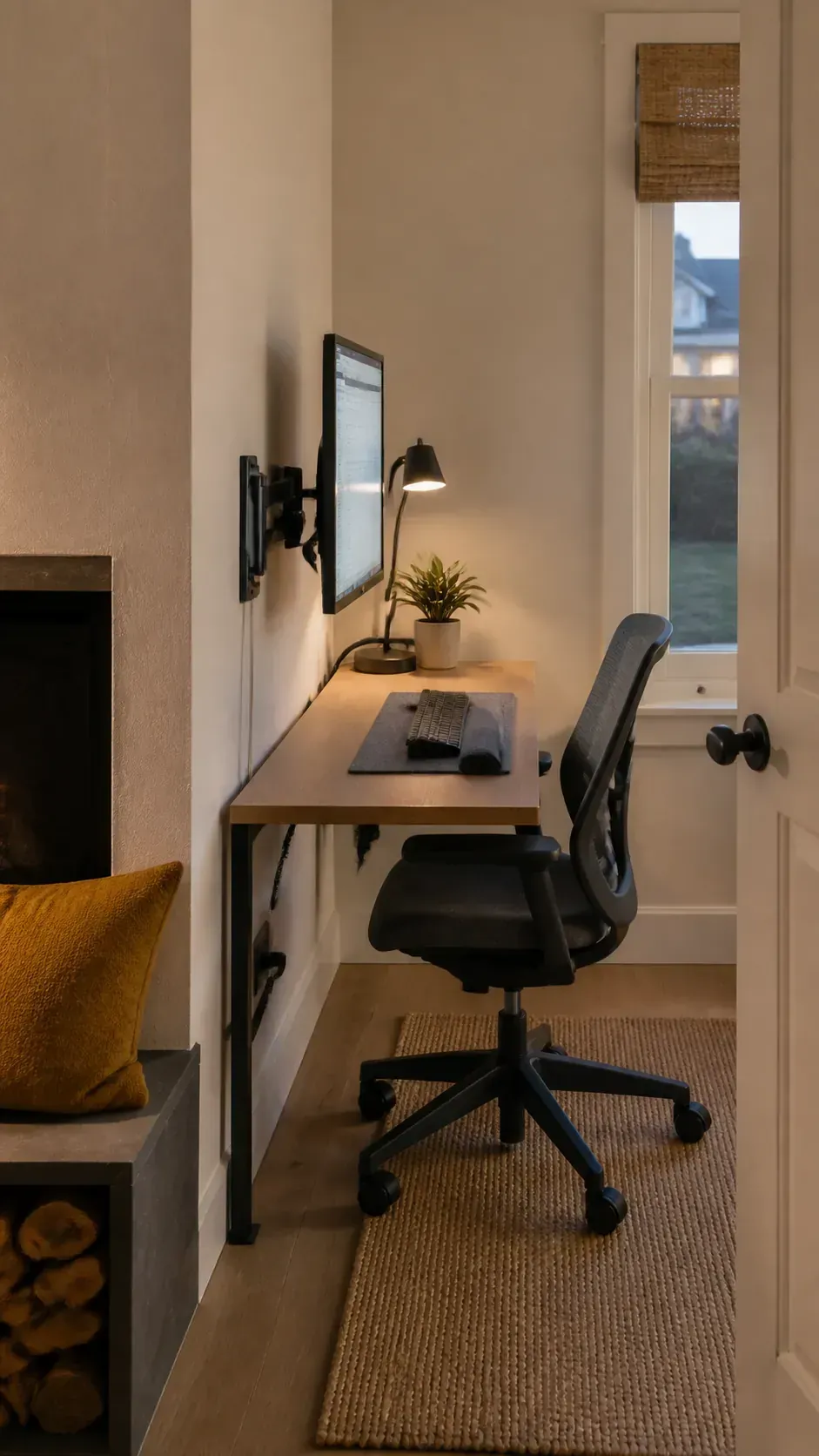
Add a Curtain for Visual Closure
A curtain gives an office nook a clear closing ritual without the cost of doors. Choose a track that lets the fabric stack outside the desk width when work begins. Full length linen also softens sound and hides equipment from the bed after hours.
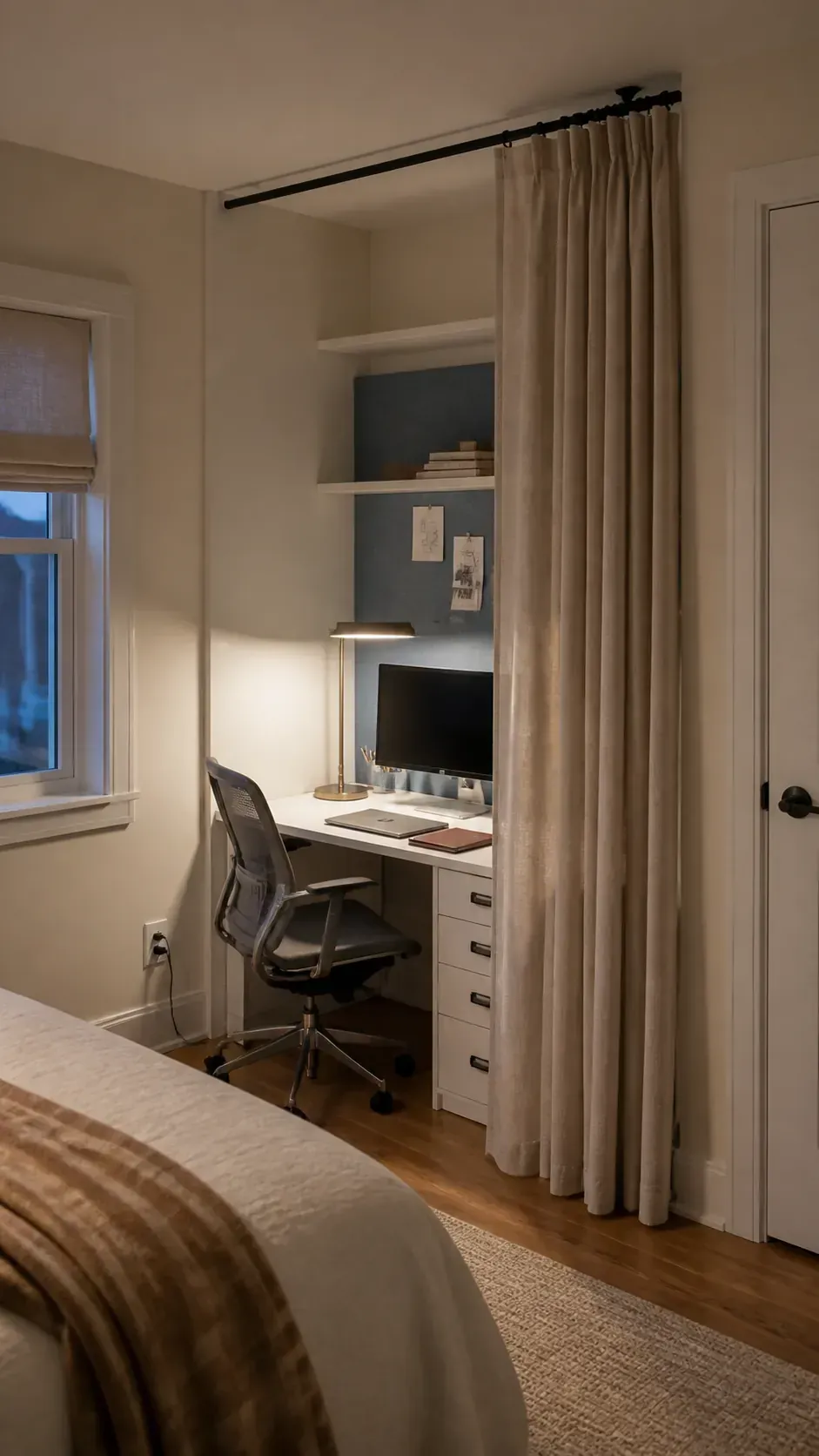
Raise Storage Above the Screen
High cabinets use wall volume while leaving the screen area visually calm. Keep the lowest edge above comfortable reach of a seated head and secure every unit to studs. One open shelf prevents the arrangement from feeling like a heavy block above the desk.
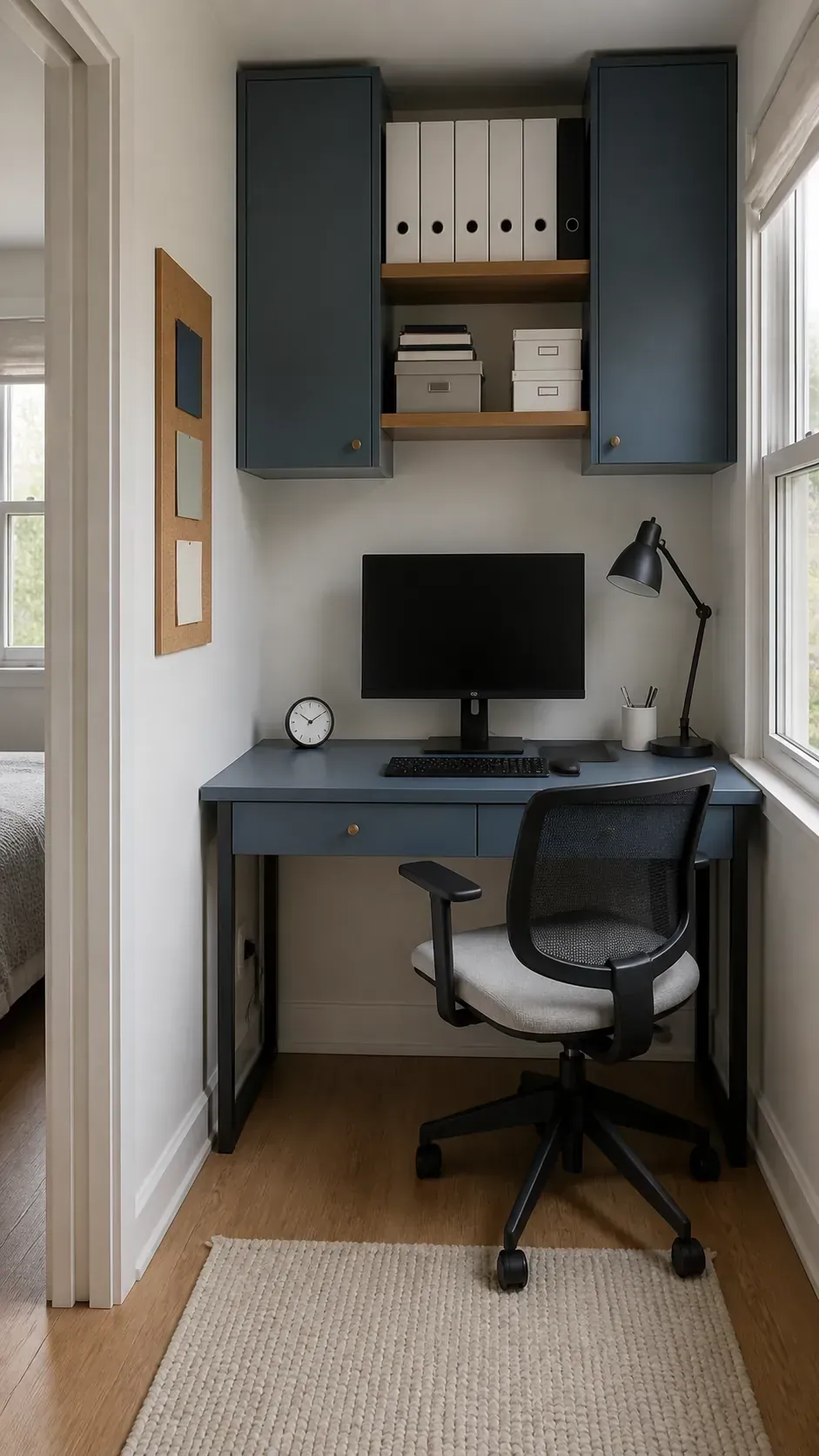
Set Up a Shared Corner Desk
Two slim desks can share a corner without forcing both users onto one crowded surface. Give each chair an independent pullout path and keep the inside junction for a lamp or printer. Separate cable trays prevent one person from disconnecting the other during cleanup.
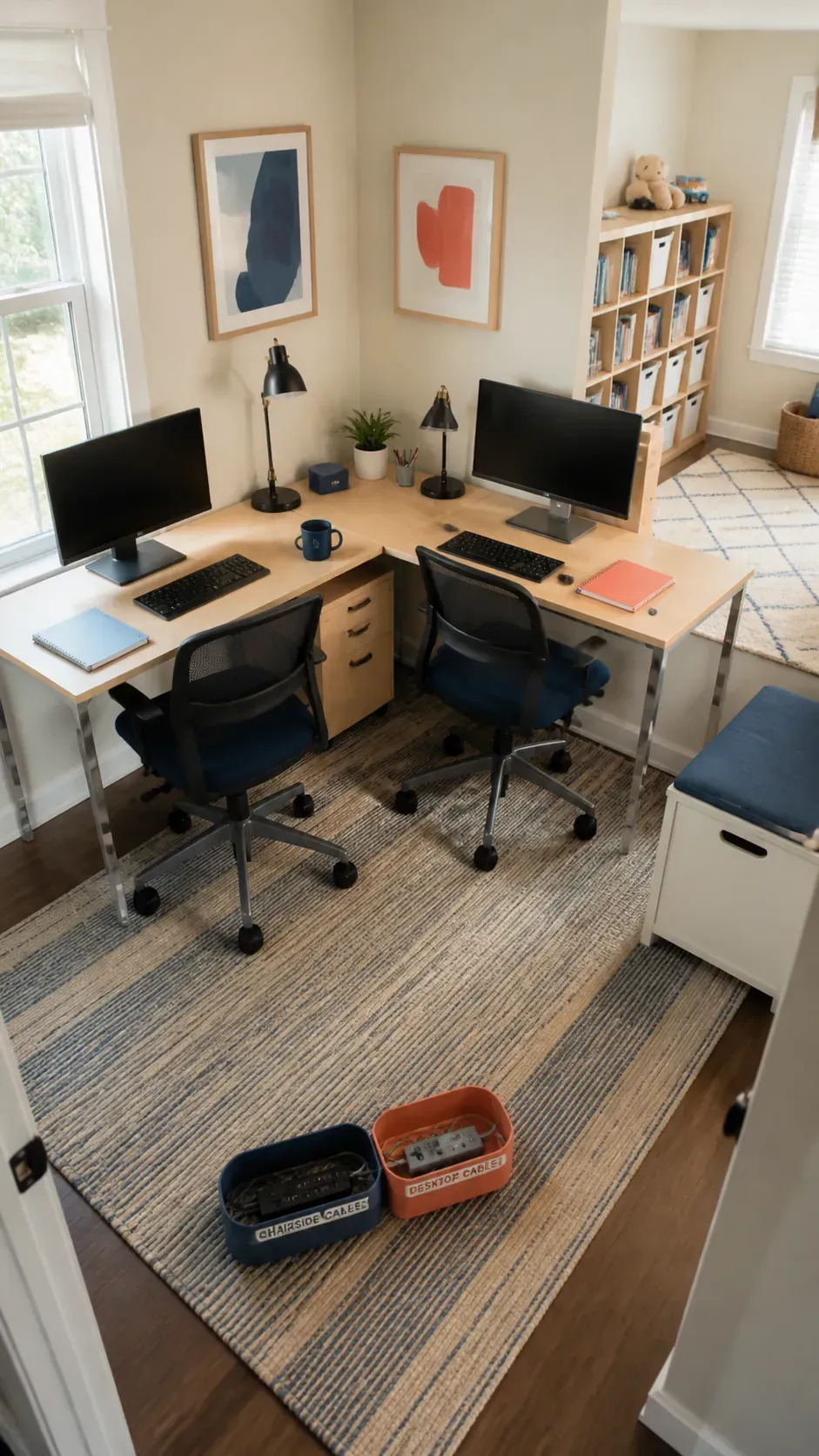
Use a Pedestal Table as a Desk
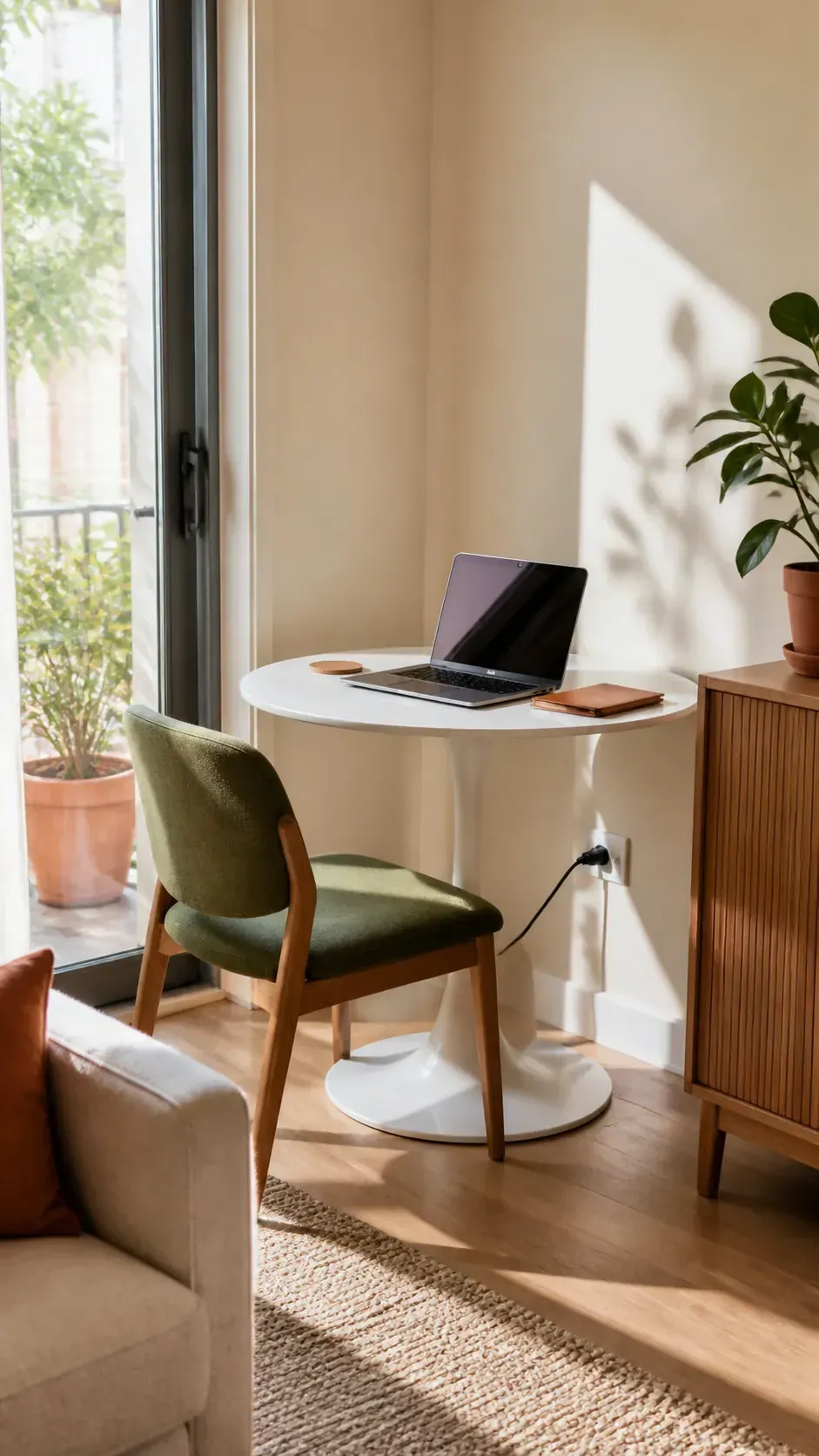
A small pedestal table can handle occasional work and return easily to social use. The central base leaves more freedom for knees than four closely spaced legs. Limit equipment to a laptop kit that packs away in one nearby drawer.
Angle the Desk Into the Room
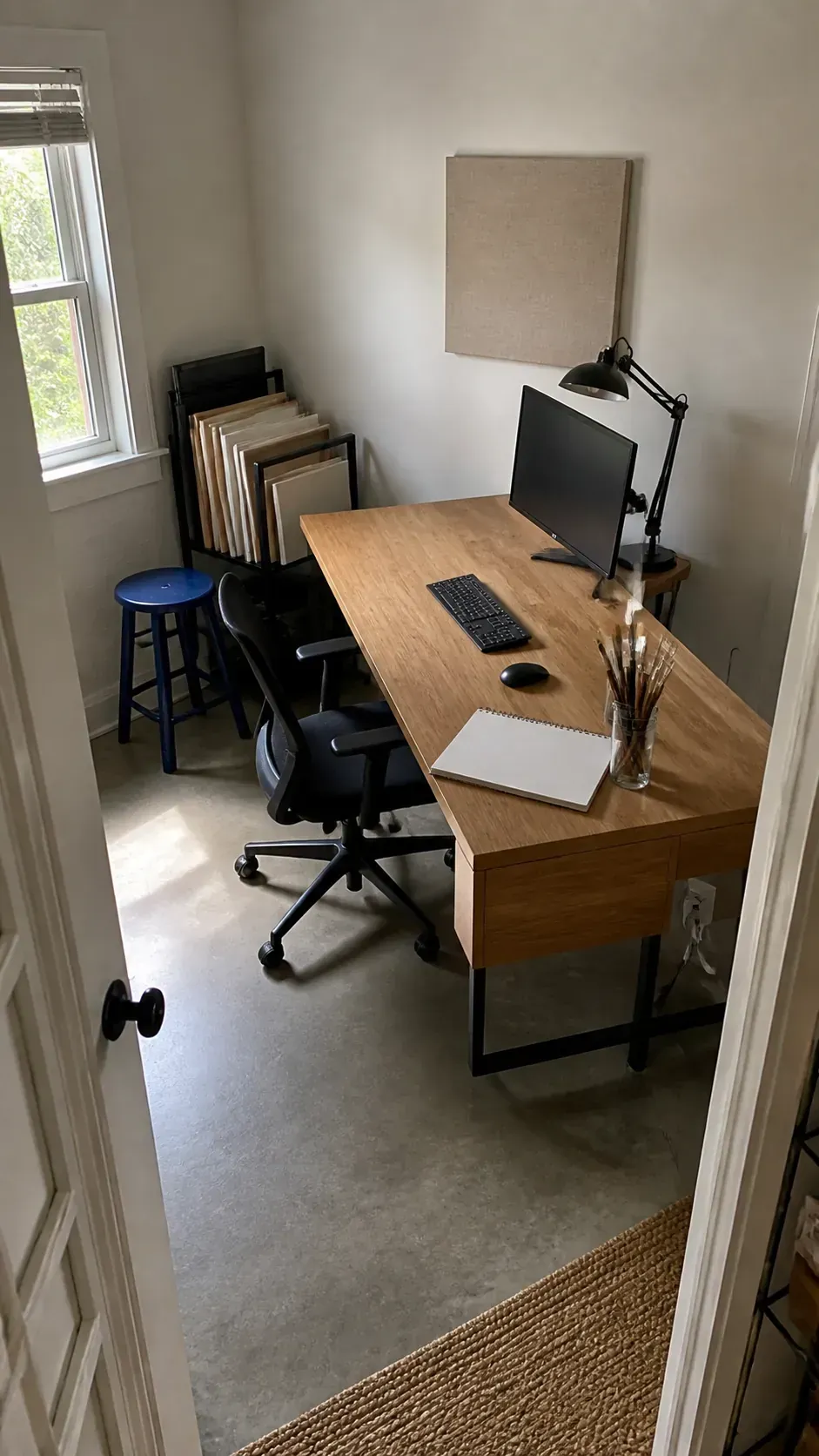
Turning a desk diagonally can create a more open view when facing the wall feels confining. Use floor tape first because the rear triangular gap can consume more room than expected. That gap becomes useful when it holds a floor lamp or organized cable hub.
Extend a Window Sill Into a Desk
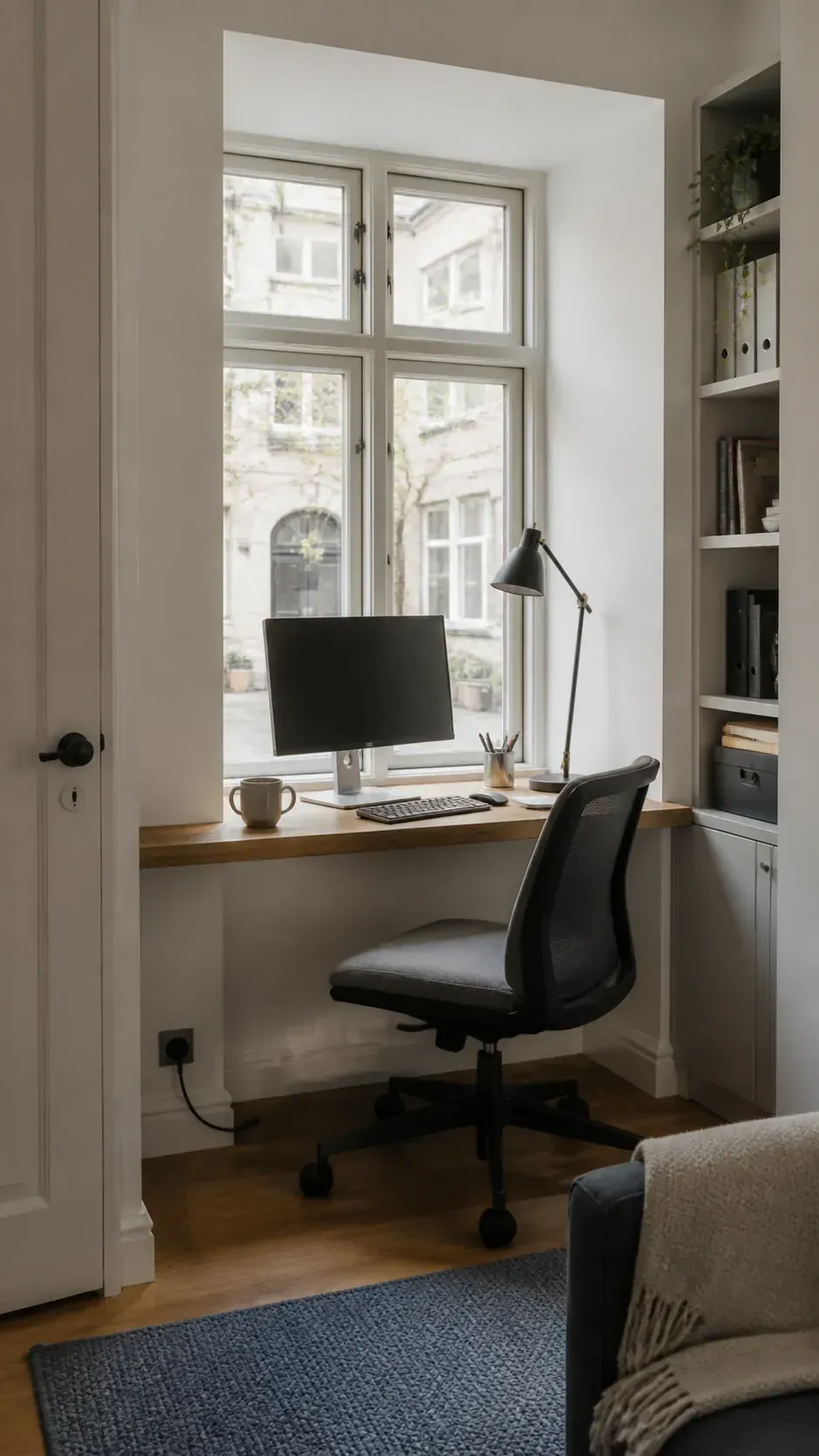
A deep window reveal can support a slim worktop with almost no extra room depth. Keep the finished surface below the latch and leave enough space for the sash to open. A removable oak extension adds forearm support while respecting the original masonry.
Hide Cables Inside a Corner Channel
A corner cable channel gathers power leads where two walls already create a natural route. Mount the power strip beneath the desk so only one cord reaches the outlet. Leave service loops behind the monitor arm to prevent tension when the screen moves.
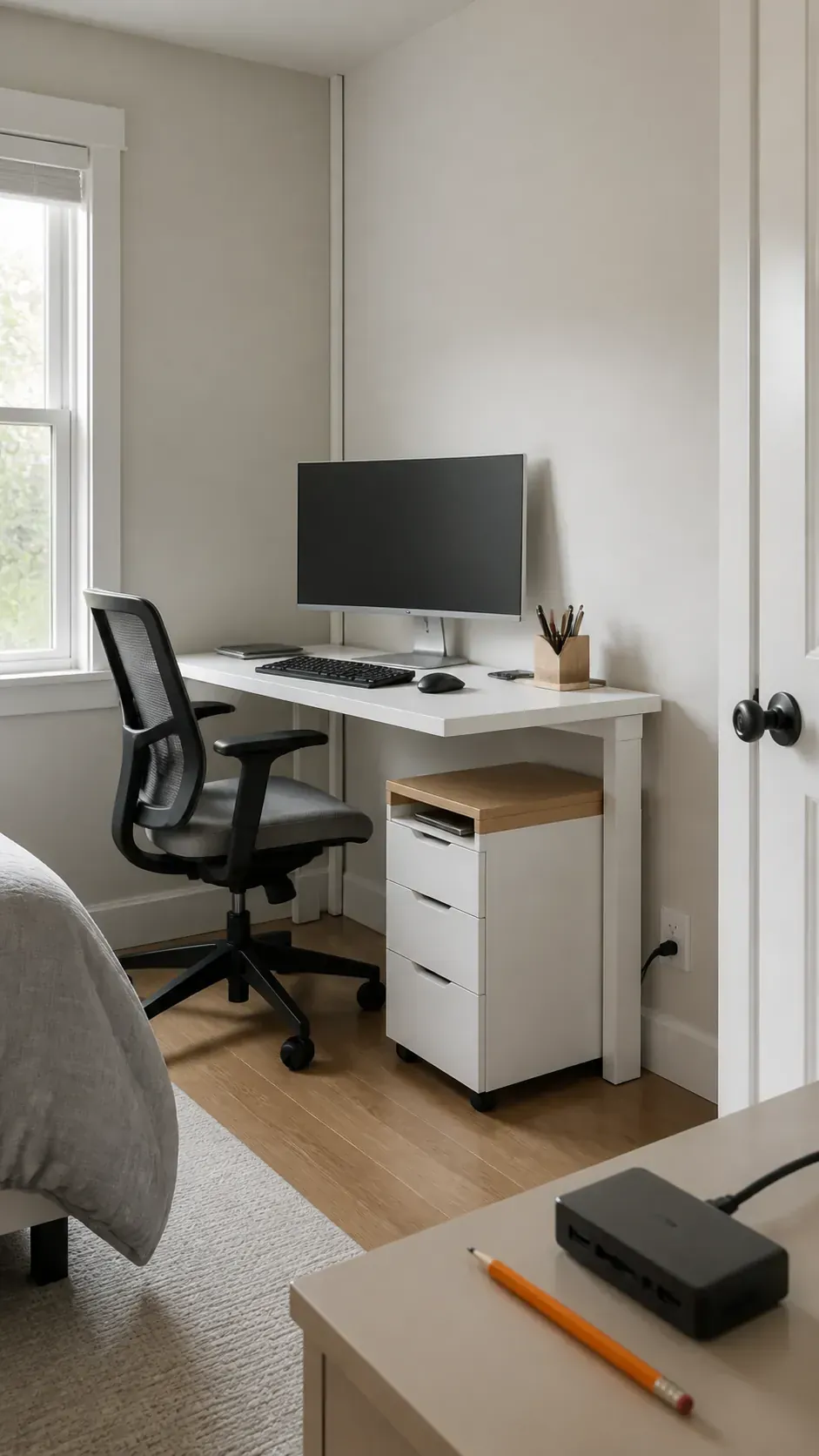
Add a Rolling Desk Cart
A rolling desk works when the corner must change roles for guests or meals. Choose locking casters sized for the floor so typing does not make the desk drift. One detachable shelf keeps the monitor stable during work and easier to store afterward.
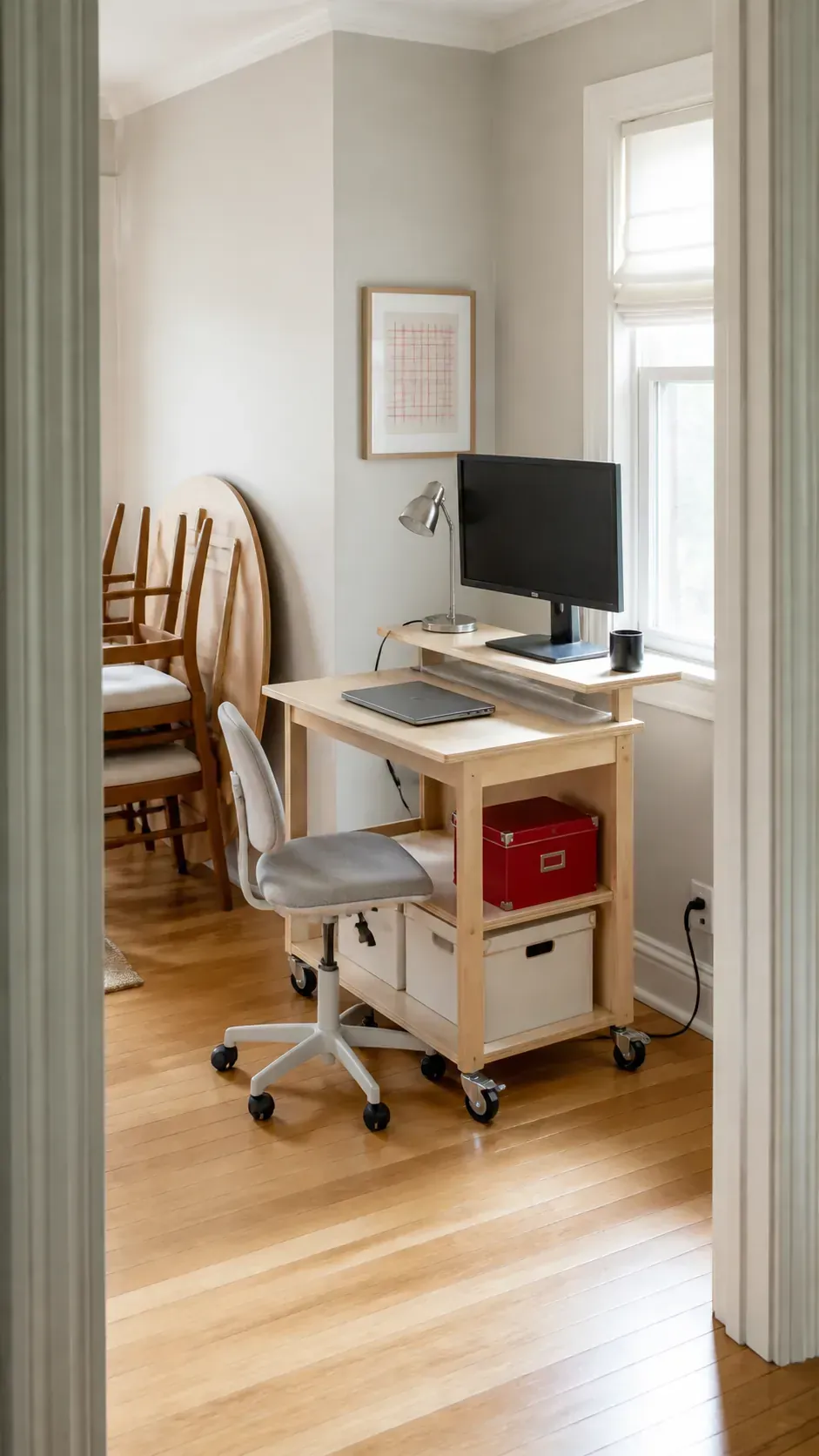
Create a Soft Office in a Nursery
A nursery office should prioritize rounded edges, anchored furniture, and hidden cords. Keep the desk away from the crib and use closed storage for every small office item. A warm task lamp supports brief evening work without flooding the whole room with light.
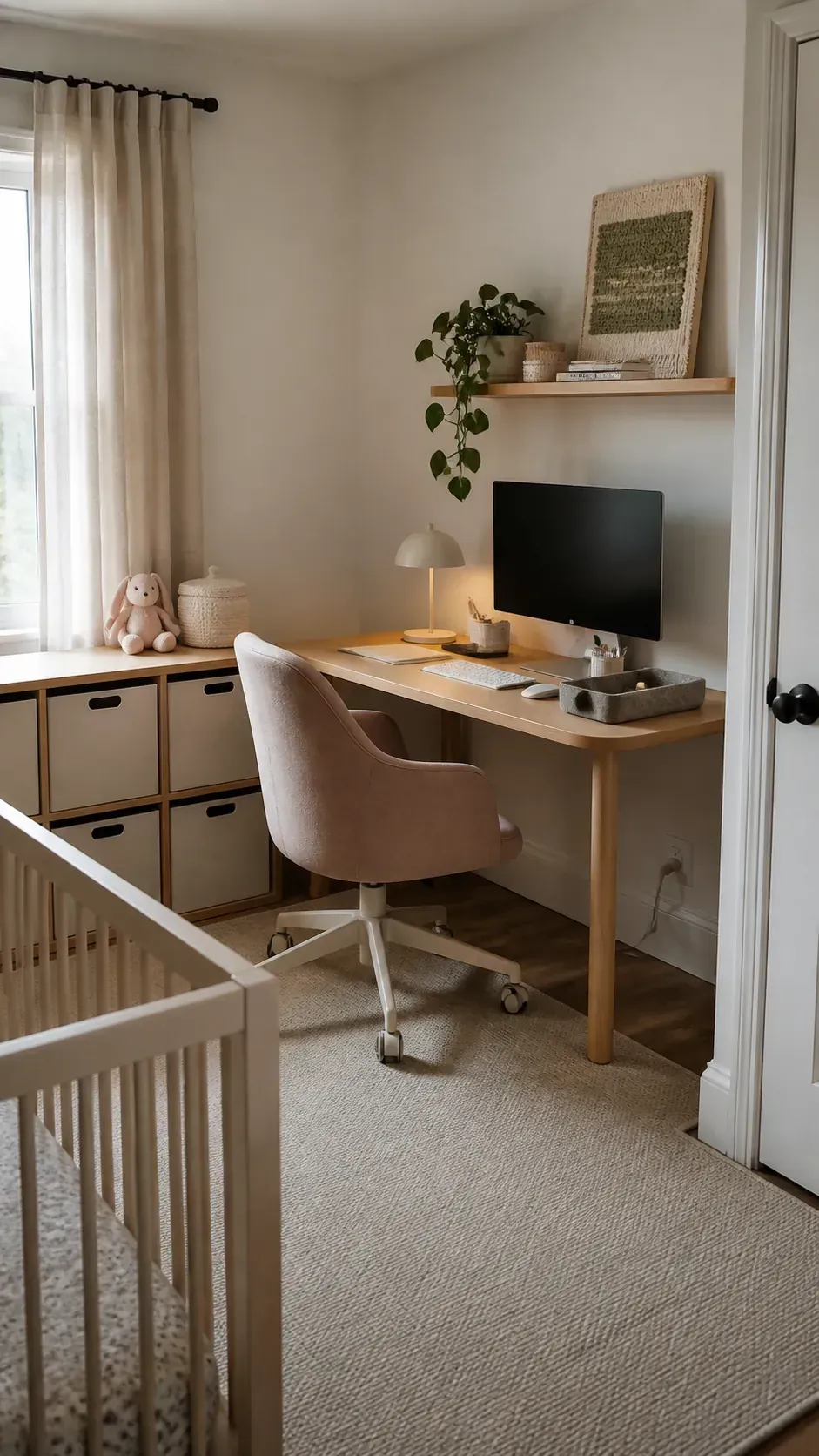
Use the End of a Hallway
The end of a hallway can hold a desk when doors and the main walking line remain clear. A wall to wall top makes the narrow recess feel intentional rather than furnished as an afterthought. Use a chair that tucks completely under the surface whenever the corridor is busy.
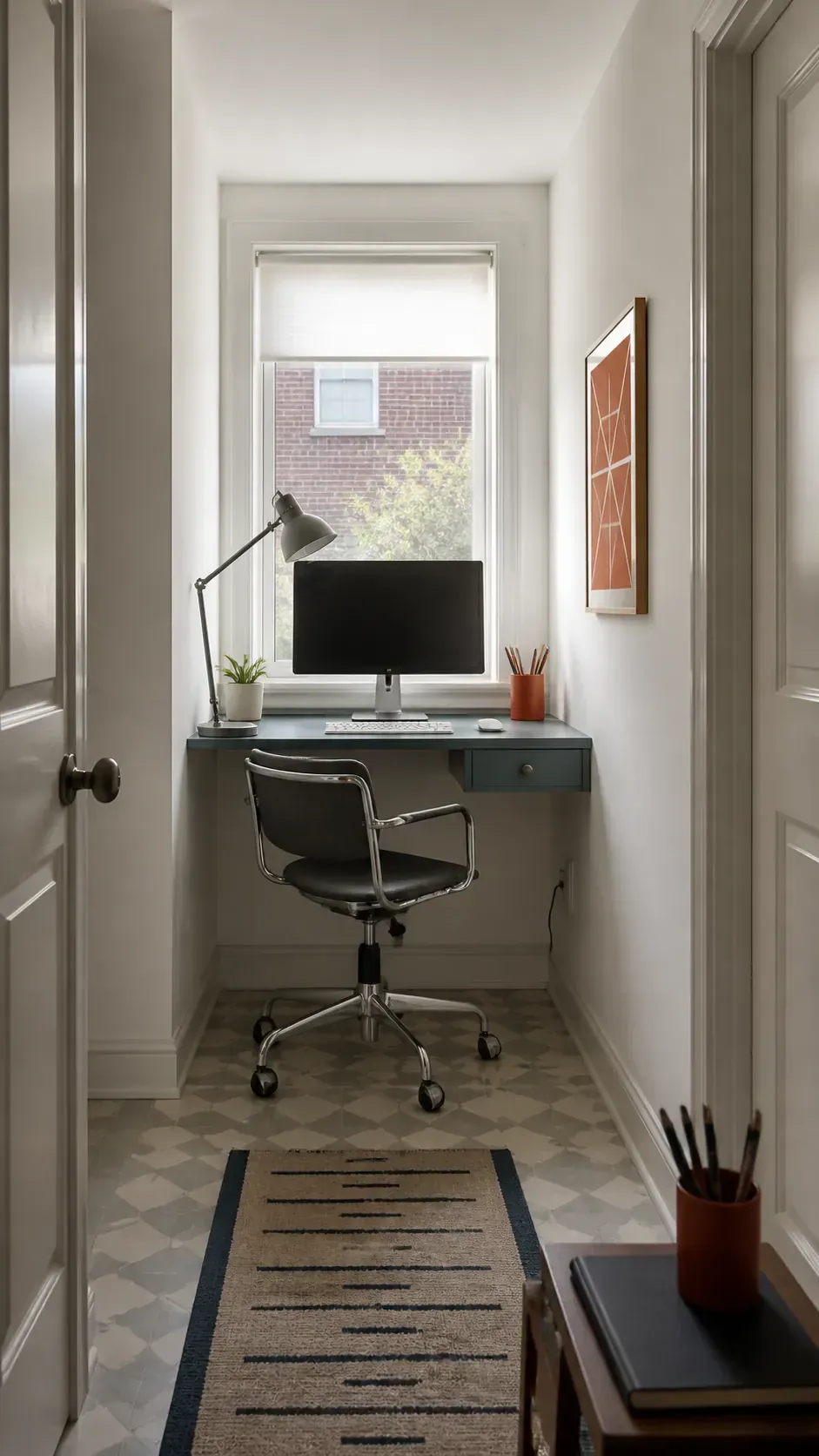
Place a Desk Beside a Fireplace
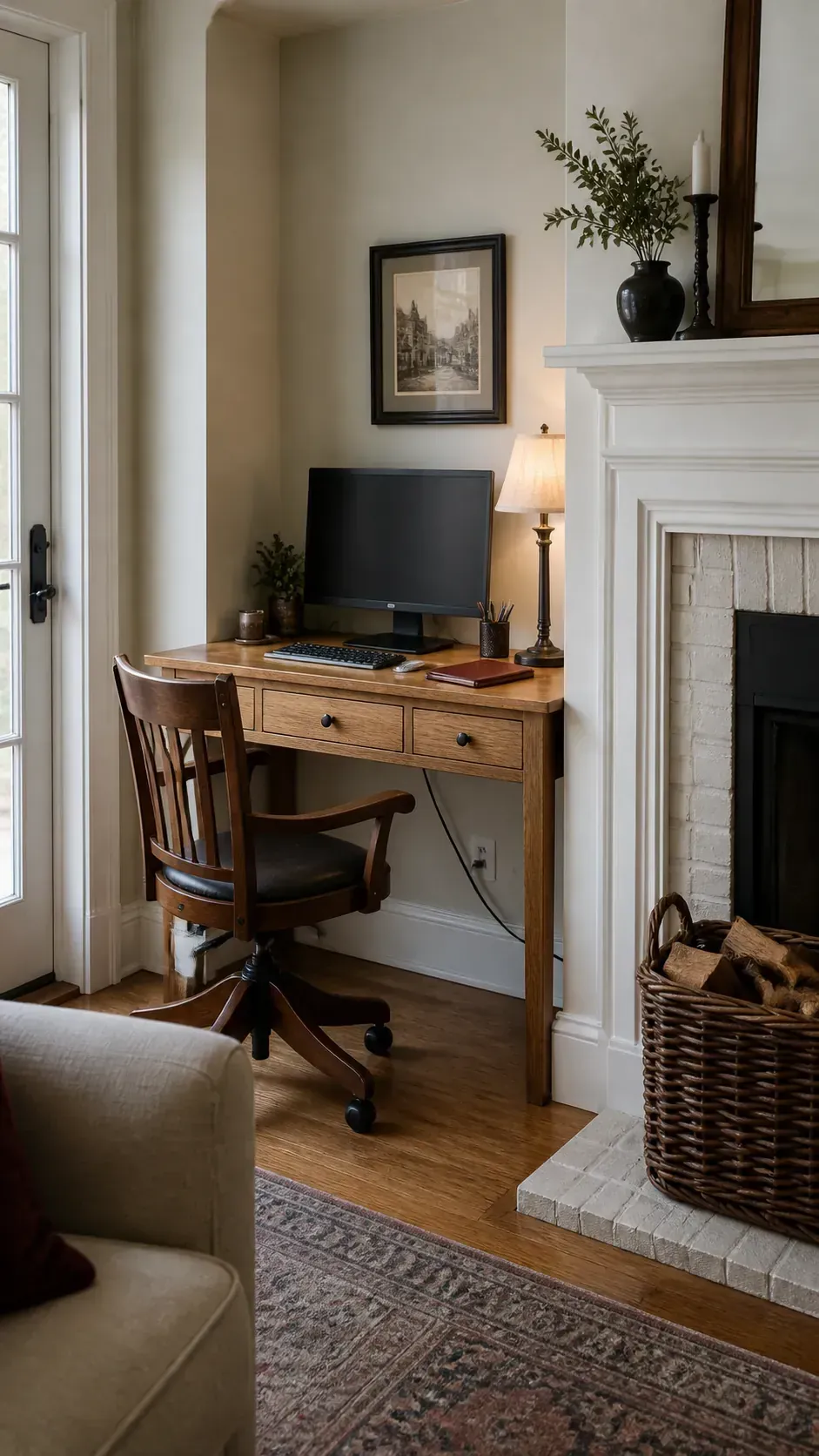
A fireplace recess can define a work zone without adding a screen or divider. Use the side only when heat, sparks, and service access are fully resolved. Matching the desk depth to the chimney breast keeps the front edge out of the room path.