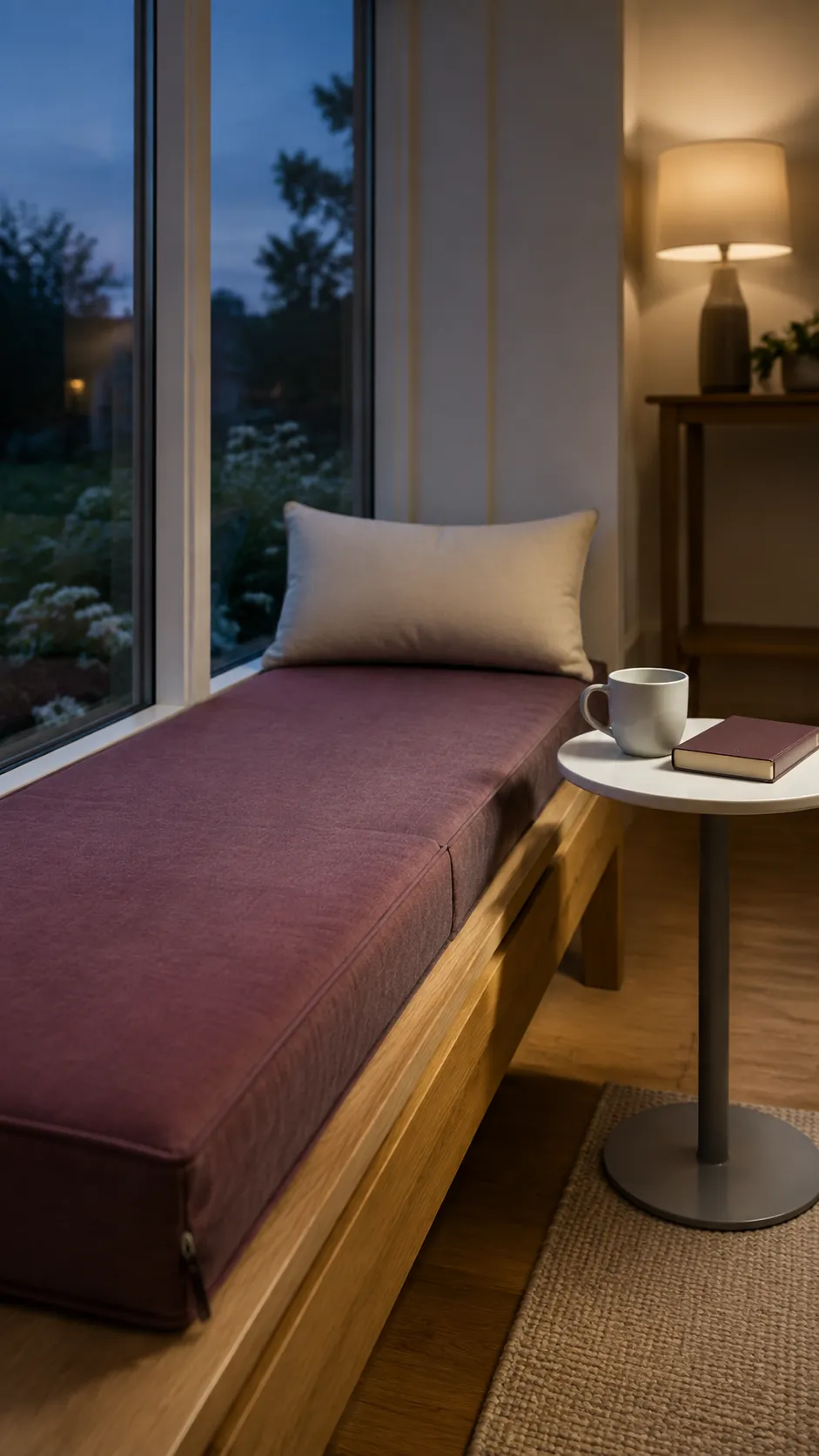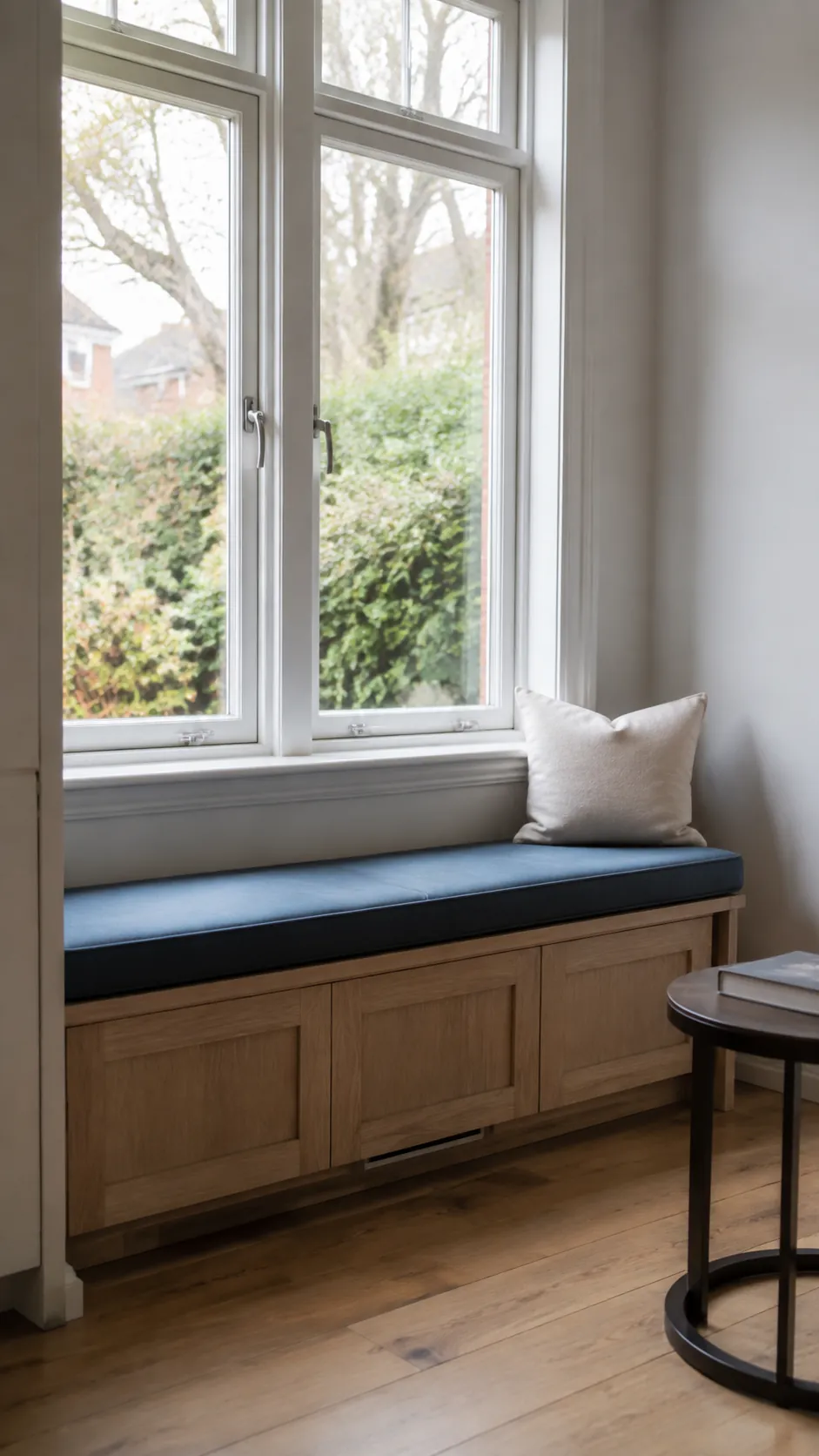
A cushion can soften a ledge, but it cannot turn decorative trim into a seat. Before you spend money on upholstery, work out what will carry your weight and whether there is enough room for your legs. The best result feels like a useful part of the room, with the window still easy to open, clean, and shade.
Give the seat its own support
A window sill seat needs a structure designed for sitting. The projecting interior trim beneath the glass is often a window stool, and its appearance tells you little about its load capacity. Adding a wider board or fastening decorative casing underneath does not establish that it can safely hold an adult.
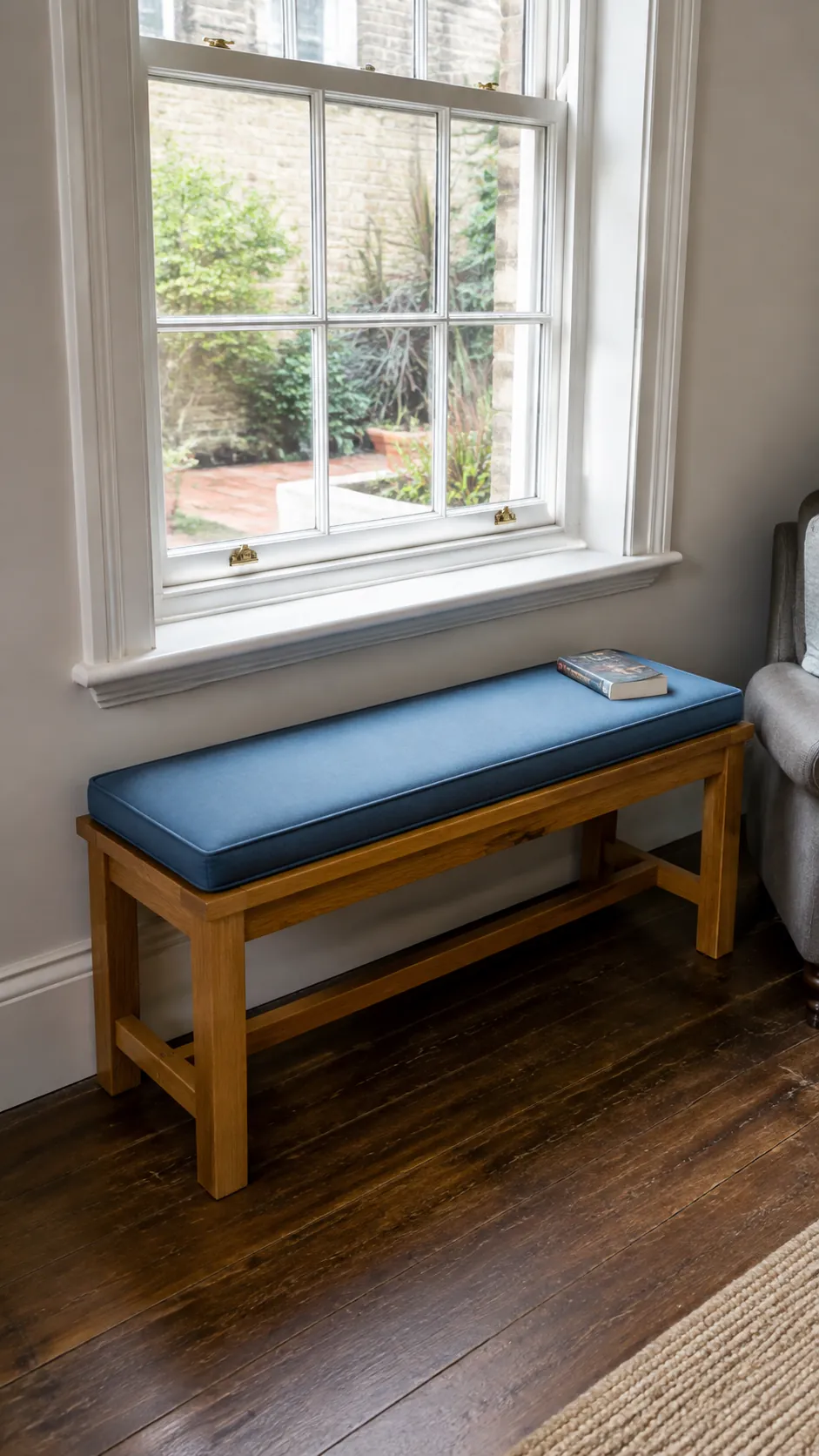
For an ordinary window, a separate bench supported by legs or a properly built cabinet base is usually the clearest starting point. Keep the existing stool above or behind the bench rather than making it carry the seat. If you want a floating installation, ask a qualified carpenter to specify the framing and connections for your actual wall construction and intended load.
Measure for the way you actually sit
Measure the available width at the back and front, the sill height, and the space the bench would take from the walkway. Then sit on a chair you find comfortable and compare its finished height and usable depth. Around 17 to 19 inches of finished seat height and 18 to 22 inches of usable depth can be useful starting points for adult upright seating, but your body and cushion compression matter more than a nominal dimension.
Include the compressed cushion in the height calculation, and subtract any back cushion from the depth you can actually sit on. A deep window recess may suit sideways lounging while a shallow ledge might only suit a brief perch. Mark the proposed footprint on the floor with removable tape and check the route past it before ordering a bench or commissioning joinery.
Use a movable bench when the room is small
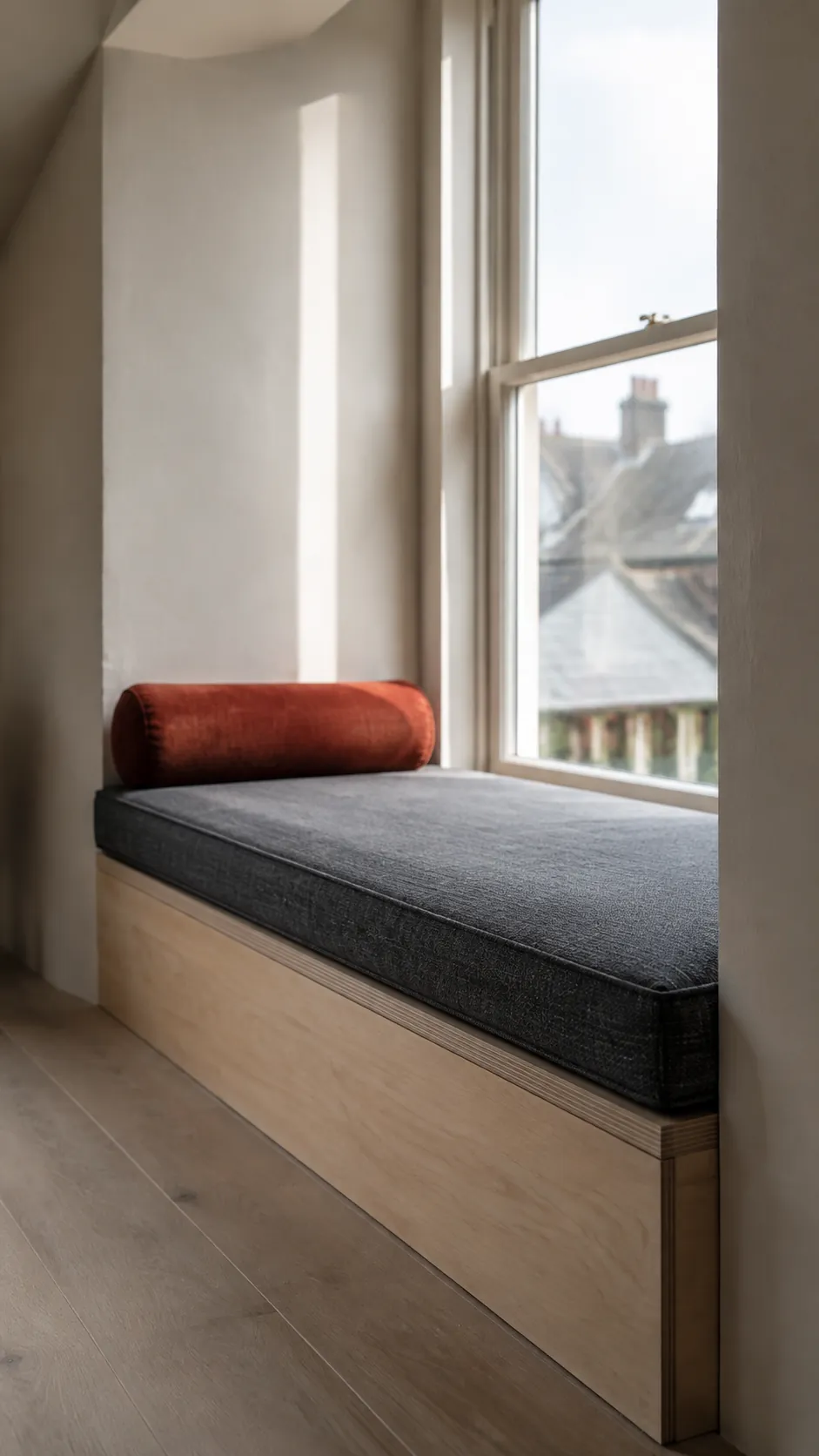
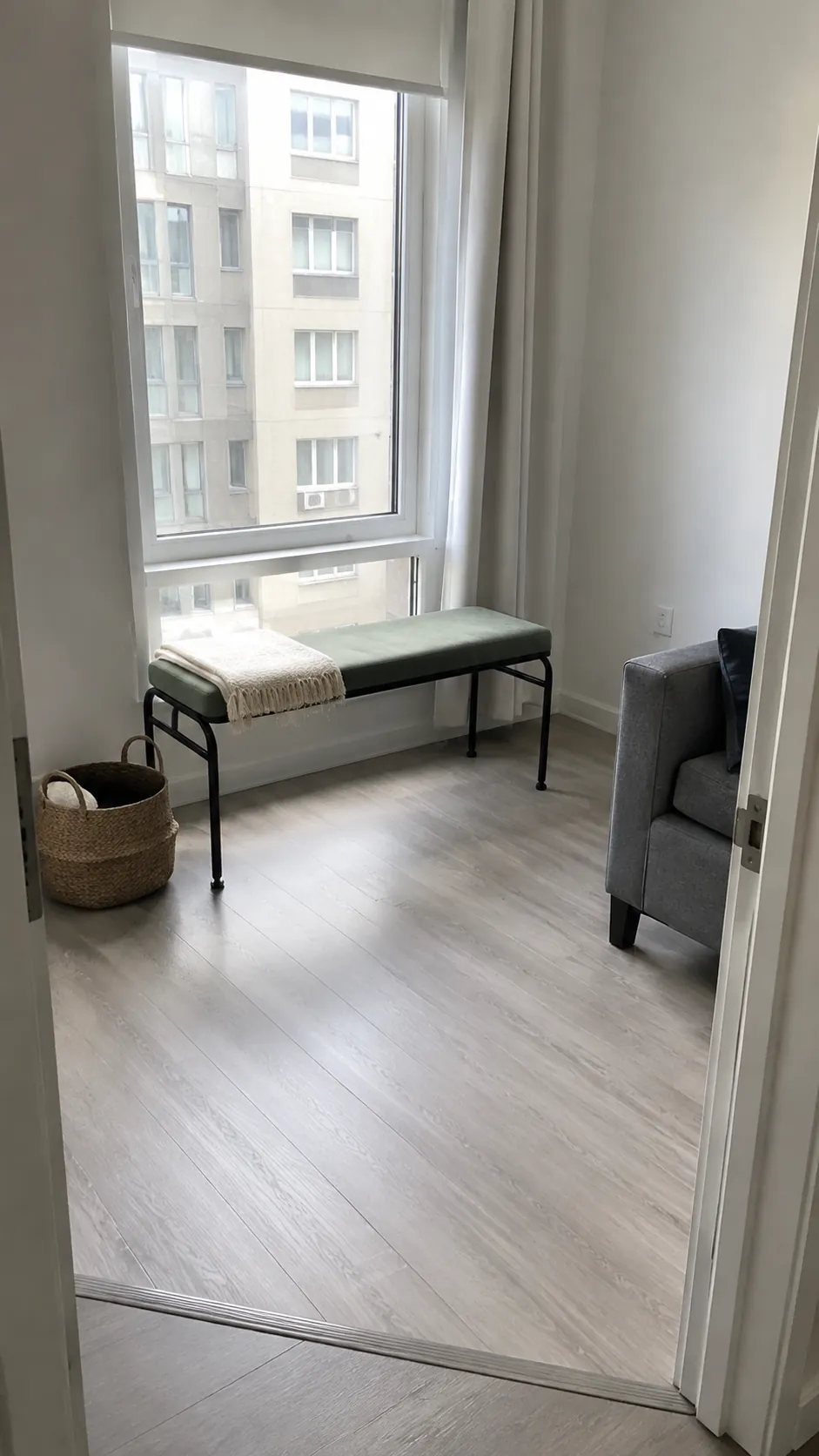
Small window seat ideas work best when they leave the surrounding room usable. A compact bench with open space beneath it can be easier to accommodate than a deep storage box, especially beside a sofa or near a doorway. Choose furniture intended for seating, check its stated capacity, and make sure all its feet sit securely on the floor.
For renters, this approach also avoids altering the window trim. Leave enough clearance to reach curtain hardware and clean behind the seat, then try the bench in place through an ordinary day. Window side seating should not mean squeezing sideways every time you carry a laundry basket through the room.
Choose storage you can open without rearranging everything
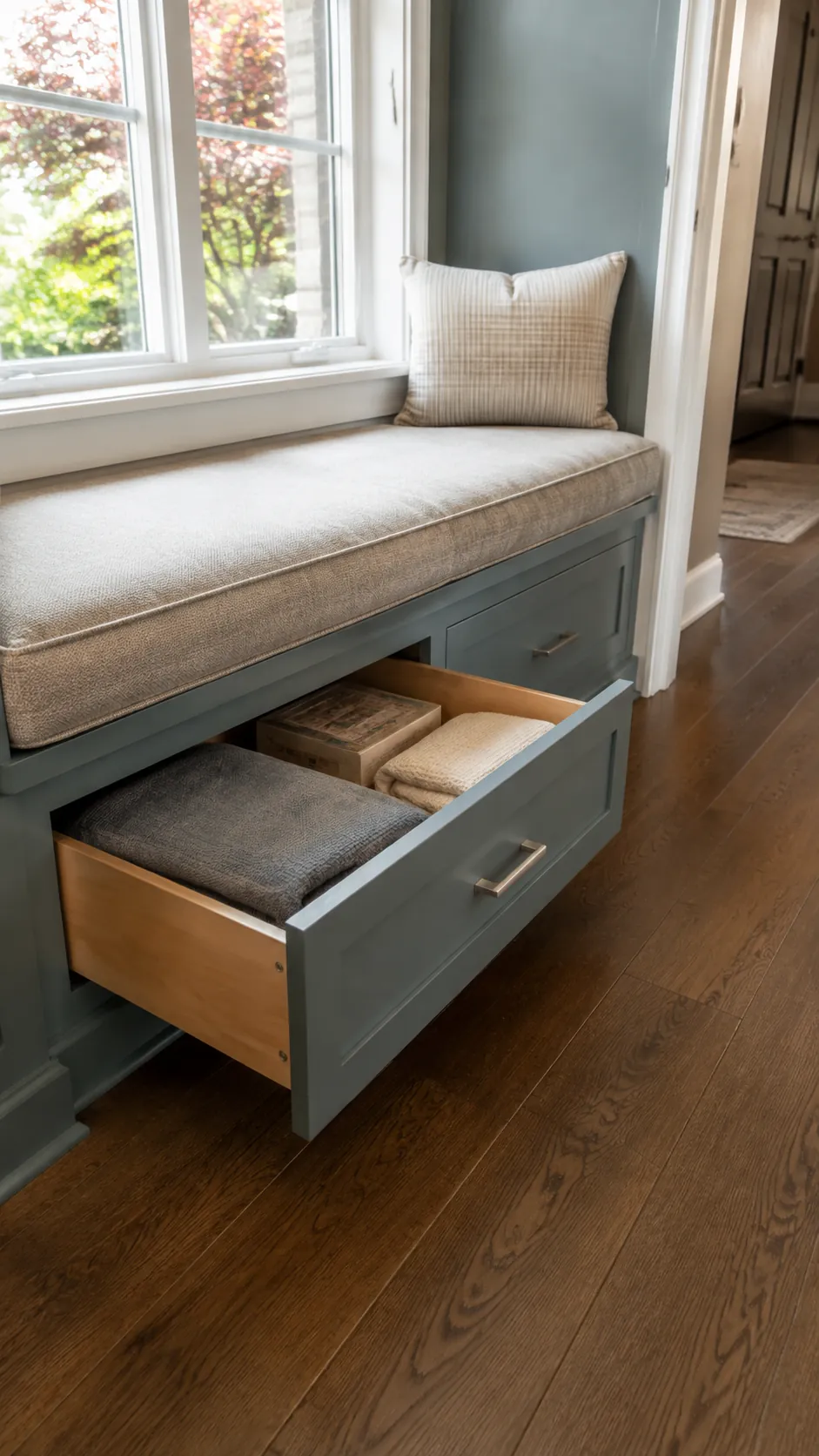
A storage bench can earn its floor space, but only if its contents stay accessible. Front drawers keep the cushion in place while you reach blankets or games, though they need clear floor area to open. Baskets in open cubbies suit frequently used items and let you see when the storage is getting crowded.
A lifting lid offers a larger cavity, but it can be awkward beneath a deep sill or a stack of pillows. Specify suitable lid supports and consider finger trapping risks if children use the room. For a corner window seat, decide which section opens first and check that adjacent doors, handles, and drawers cannot collide.
Keep the glass, heat, and shade working
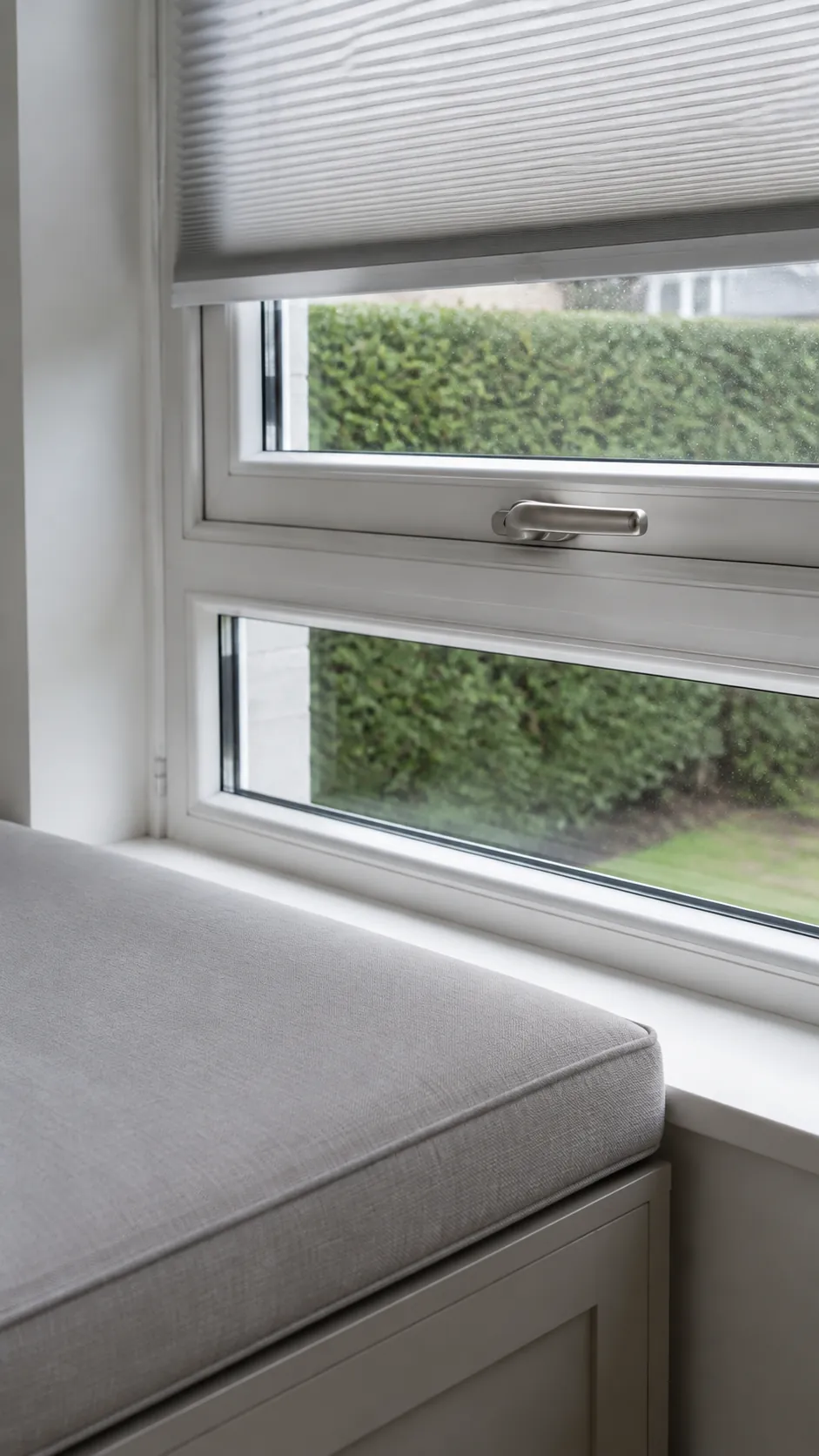
Test the whole window opening before fixing anything in place. Handles and inward opening sashes need clearance, and a seat must not compromise a required emergency escape route. Where children can reach the glass, consider how the bench changes climbing access and use appropriate window safety measures; an insect screen is not fall protection.
Do not enclose a radiator or obstruct an air outlet without an appropriate design and the required clearances. On cold mornings, lift the cushion and look for condensation at the glass and sill so dampness does not stay hidden against the fabric. A blind within the recess can keep fabric away from the seat, provided its mechanism remains reachable and any cords are made safe.
Finish with a cushion that suits daily use
Choose the seat cushion after the bench dimensions are settled. A removable, washable cover is practical for a sunny living room, while an upholstery fabric with suitable light resistance can help limit fading. Test a foam sample if possible, since a thick cushion that collapses quickly may feel harder than a thinner supportive one.
Use one small back cushion where it improves your posture and keep the rest of the sitting area clear. A nearby table for a drink often adds more comfort than another decorative pillow, as long as it does not block the route past the bench. Before calling the project finished, sit there with a book for twenty minutes: the pressure behind your knees, the reach to the blind, and the place to set your cup will tell you what still needs adjusting.