The cutest pot on the shelf can also be the hardest one to water. Before choosing a creature, look inside its body: the planting opening, root space, drainage arrangement, and balance matter more than the size of its ears or tail. A decorative holder with a removable growing pot can make care much easier.
These creative planter ideas range from quiet ceramic faces to sculpted animals with generous personalities. Treat them as design directions, then choose a plant and container that work together in your actual light. A pot without an outlet needs a suitable inner container and a routine for removing excess water; stones at the bottom do not replace drainage.
A quiet ceramic cat
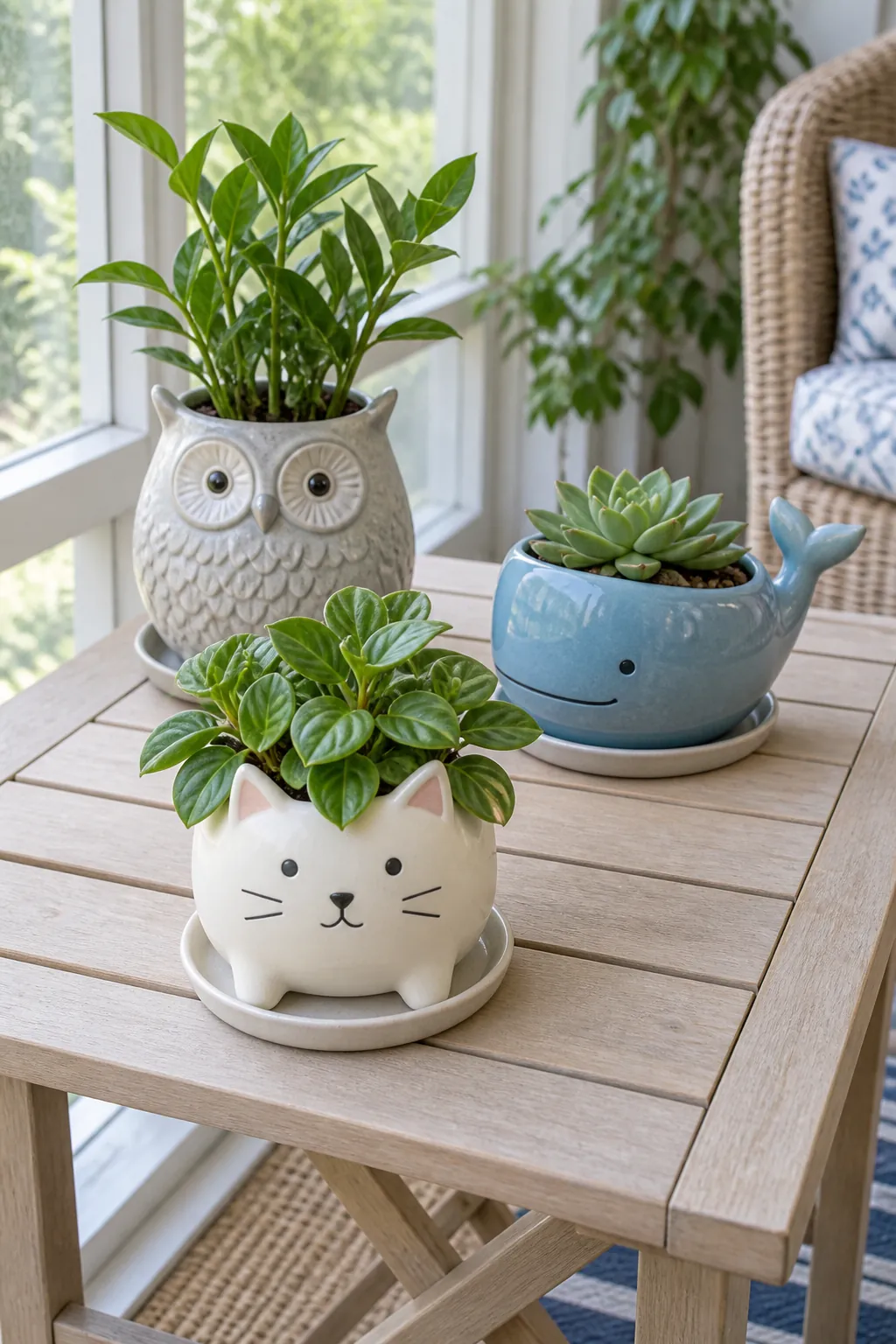
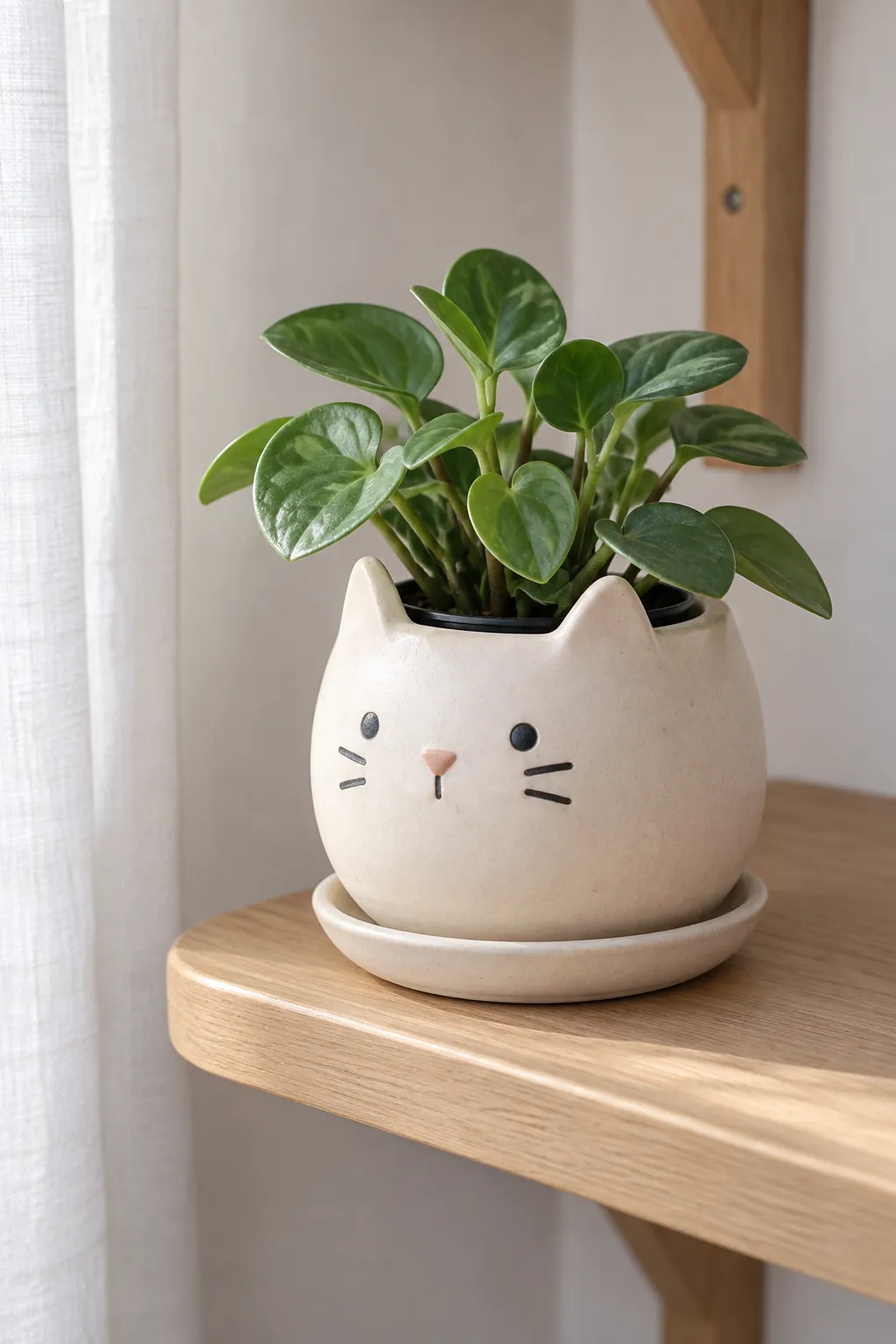
A cat planter with a round body and small pointed ears works well when you want a character without a busy scene. Choose a compact plant whose leaves sit above the ears so the silhouette stays readable. Check the actual planting opening rather than judging capacity from the cat's full width. A broad decorative body can conceal a surprisingly small inner cavity.
A sleepy fox with a curled tail
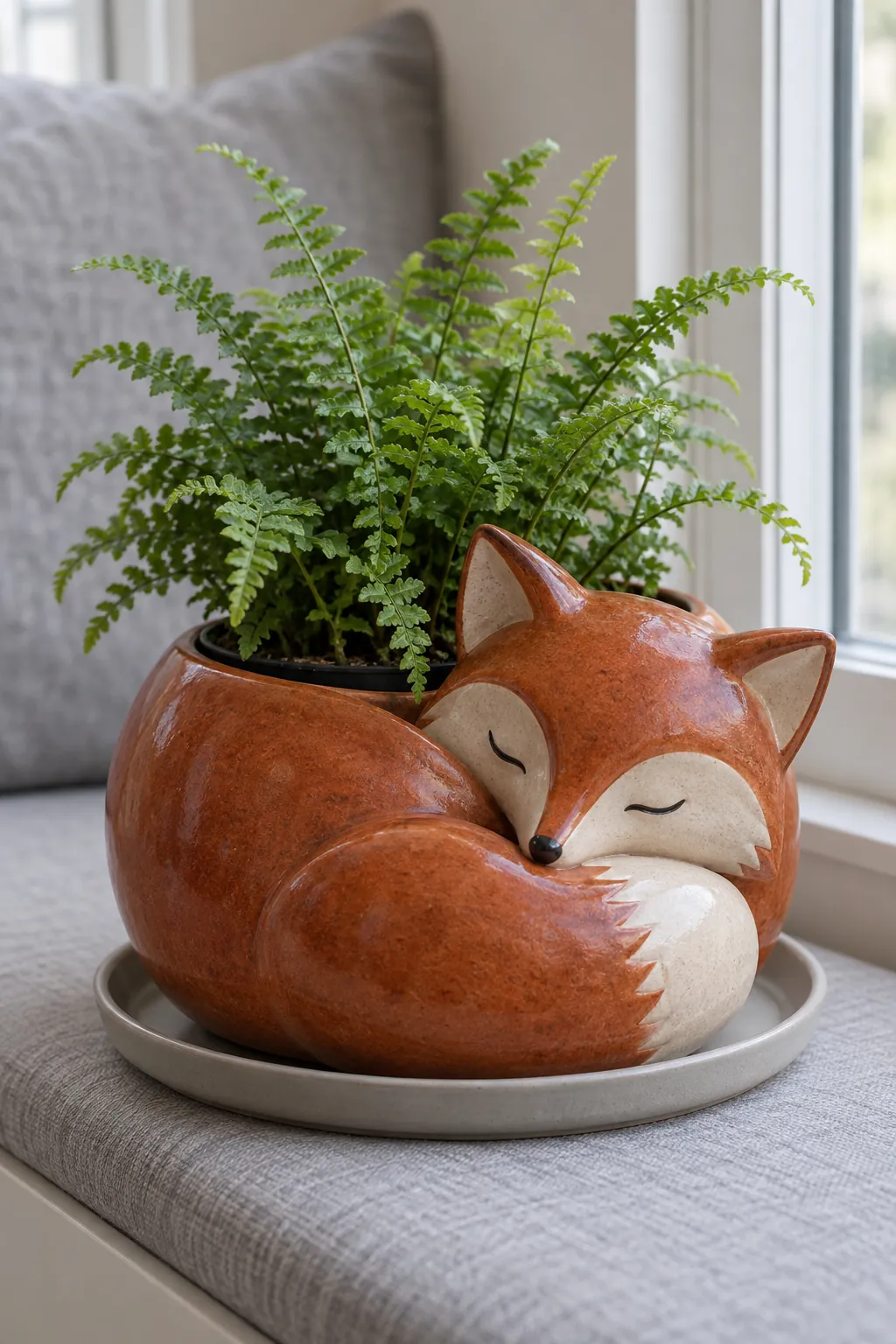
A curled fox shape makes a low shelf accent because the tail creates a rounded outline. Keep the foliage upright and modest so it does not cover the face. A removable nursery pot is useful when the curled body has no drainage opening. Lift that inner container out to water, let it drain, and empty the fox before putting it back. The orange glaze already provides warmth, so a plain nearby surface usually looks better than extra woodland props.
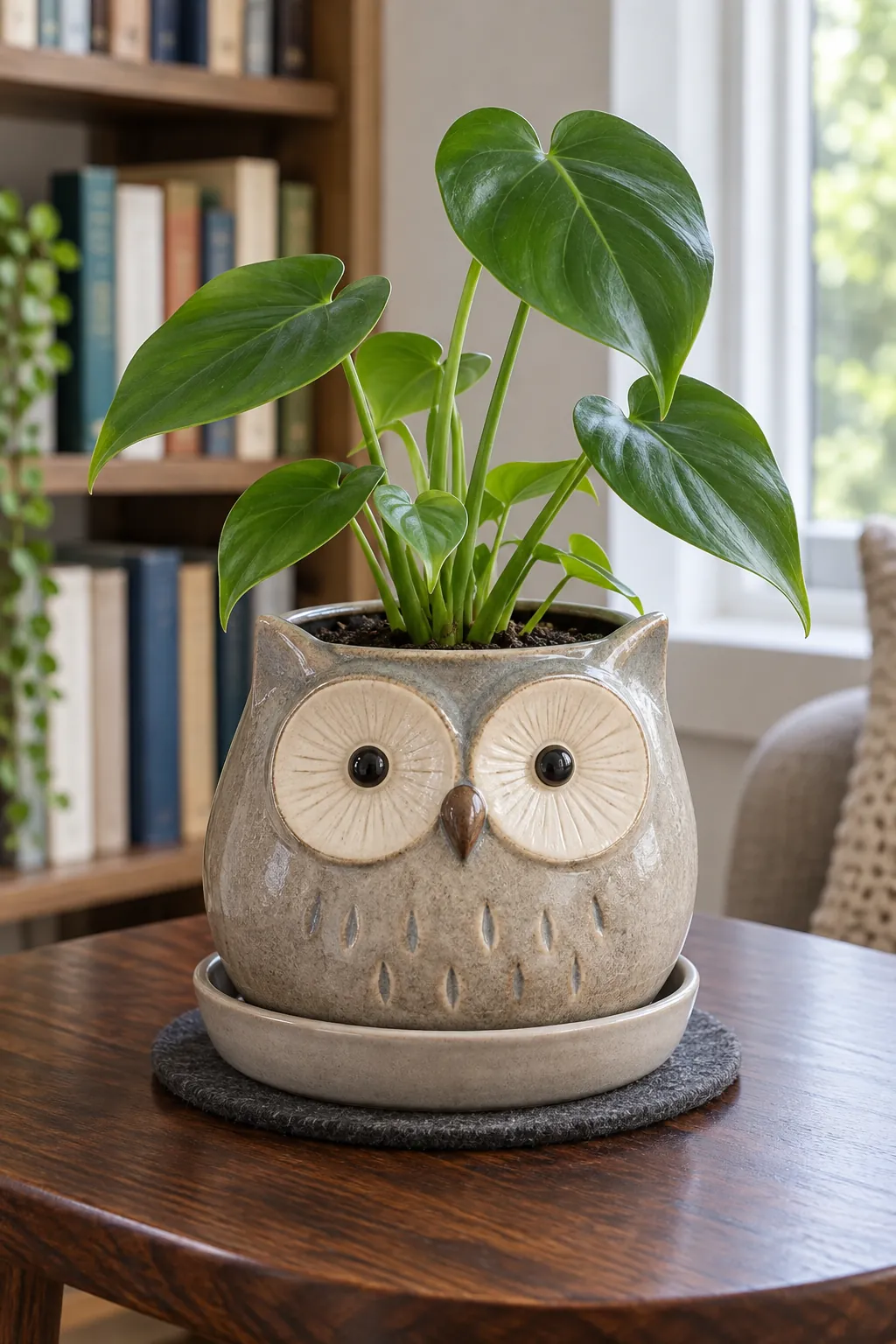
A small owl with a clear planting opening
An owl planter can hold plenty of personality in its eyes and feather marks. Look for a wide opening behind the face, especially if you expect to lift the plant out for care. Narrow necks make repotting more awkward as roots fill the container. A simple green plant lets the ceramic detail remain visible.
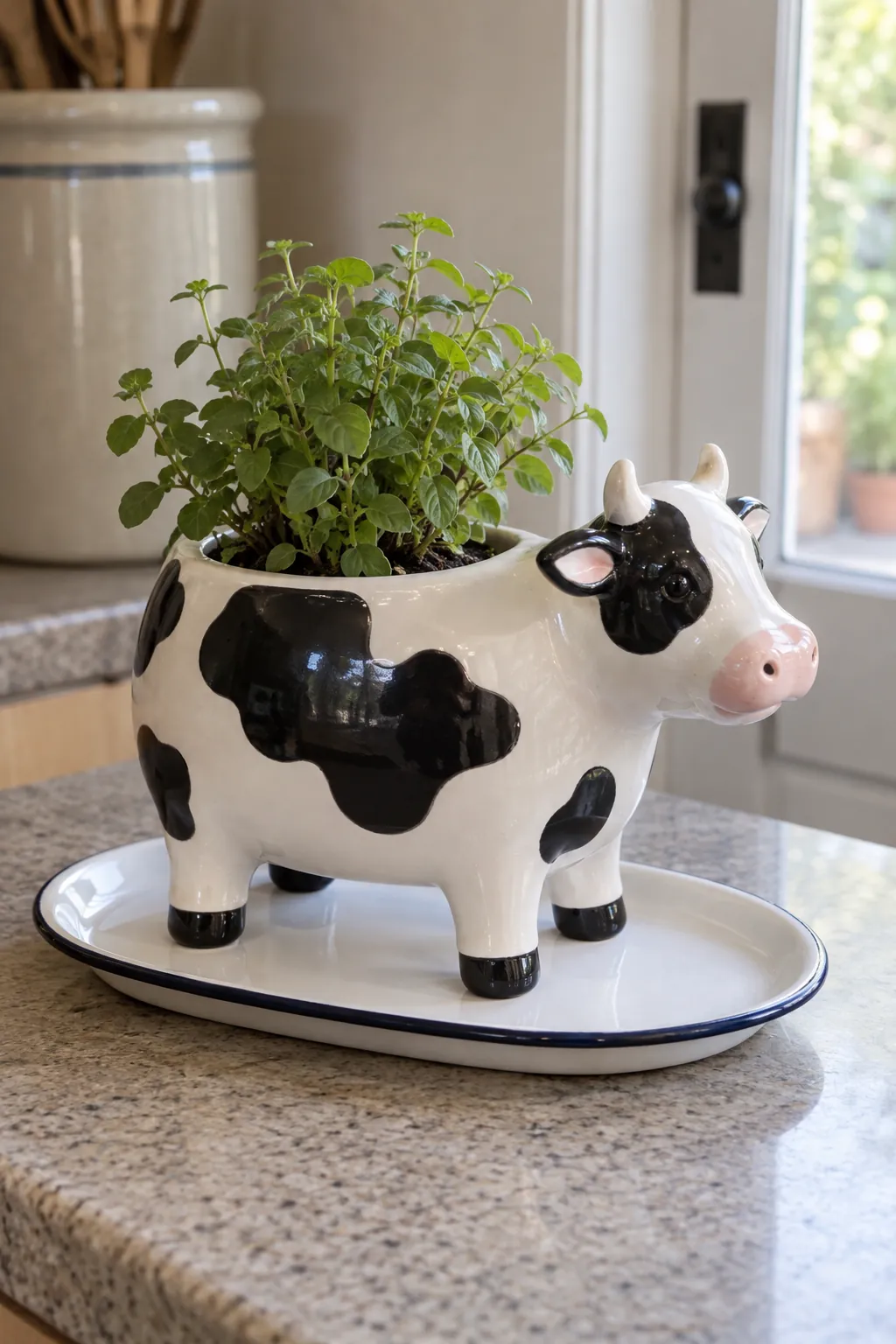
A black and white cow
Cow planters bring a bold pattern into a kitchen or breakfast nook. A low body with short sturdy legs is easier to place securely than a top heavy figure on thin legs. Keep the plant centered over the body rather than allowing a heavy stem to lean toward the head. Set the whole piece on a tray if its feet make a standard saucer awkward. Measure the complete footprint, including the muzzle, before choosing a narrow sill.
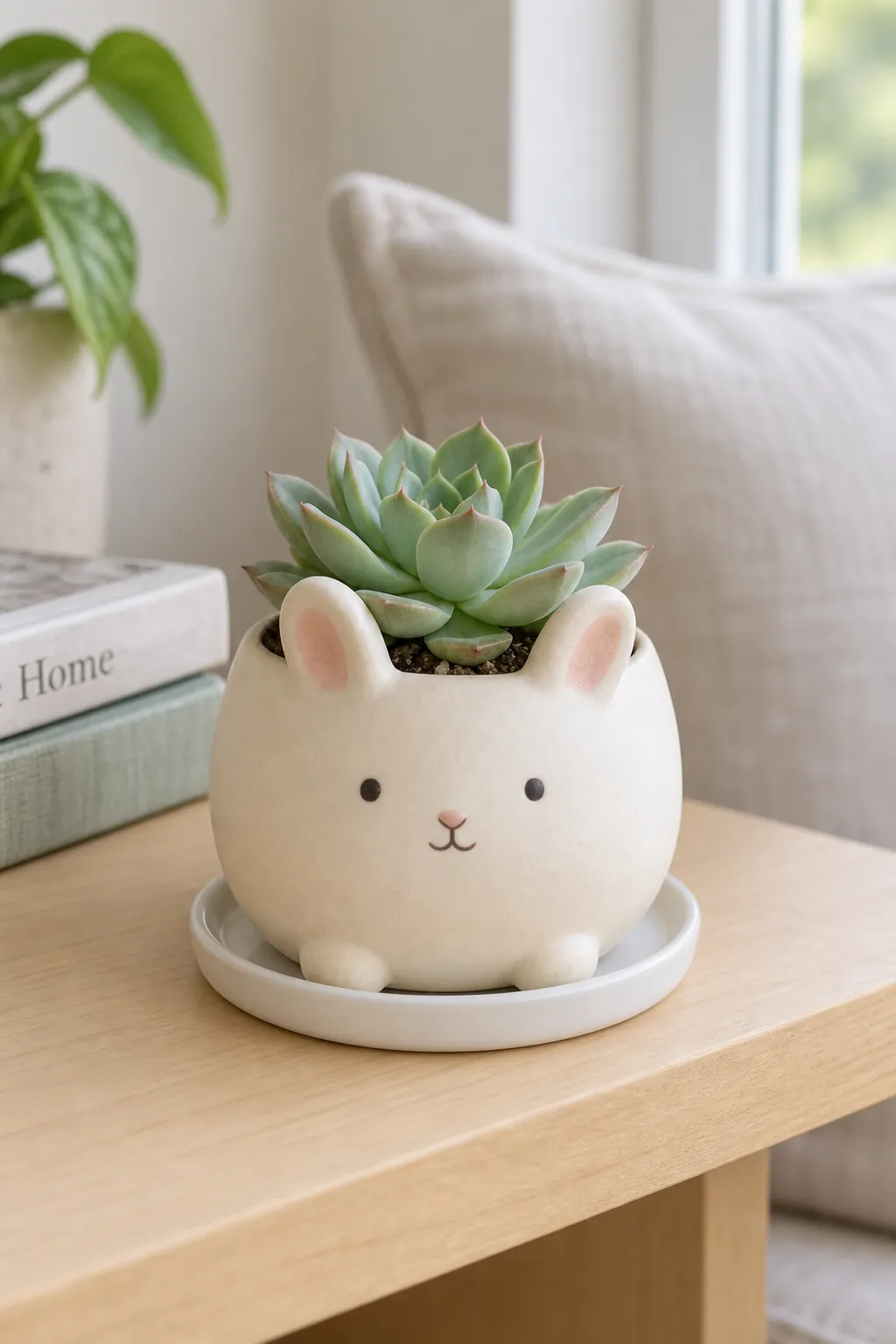
A rabbit with rounded ears
A rabbit pot feels softer when the ears are short and rounded instead of very tall. Those compact ears are also less likely to catch on a shelf above. Pair the shape with a small rosette or compact foliage plant that leaves the face visible. If the pot will sit near children or pets, choose a stable location where the ceramic cannot be pulled down.
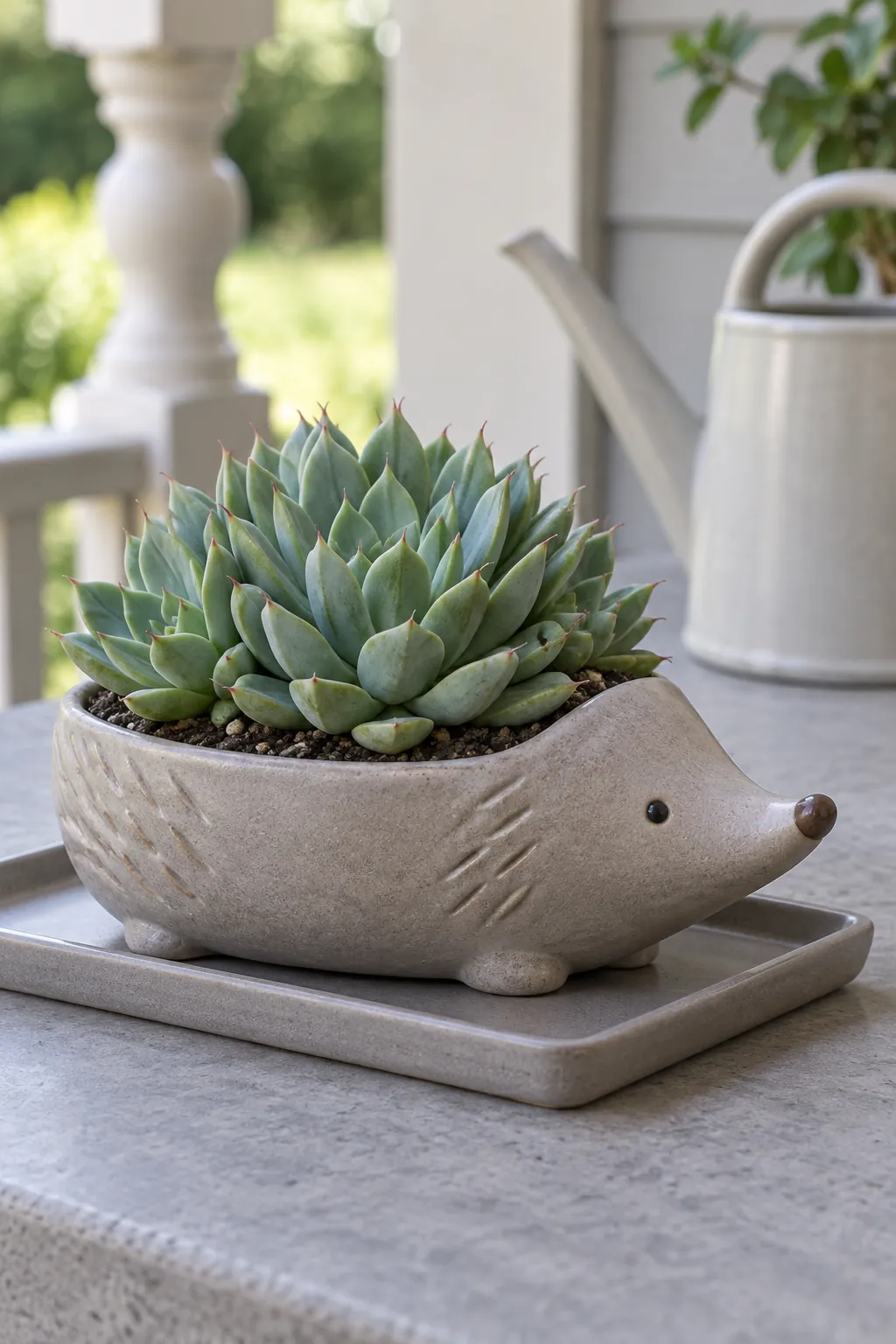
A low hedgehog bowl
A hedgehog bowl lets a cluster of succulent leaves stand in for spines. Its low shape can suit a shallow rooting plant, but the decorative outline does not guarantee suitable soil depth. Check the cavity before planting and leave enough room below the roots for the intended growing mix. The face should point toward the room while the plant still receives the light it needs. Avoid packing several unrelated plants together simply to make the back look full.
A compact elephant
An elephant planter is easiest to live with when its trunk stays close to the body. A long projecting trunk can catch sleeves or bump another pot on a crowded table. Choose a plant with an upright habit to balance the broad ears without obscuring them. A plain gray finish works with strong leaf textures and does not require matching animal decor.
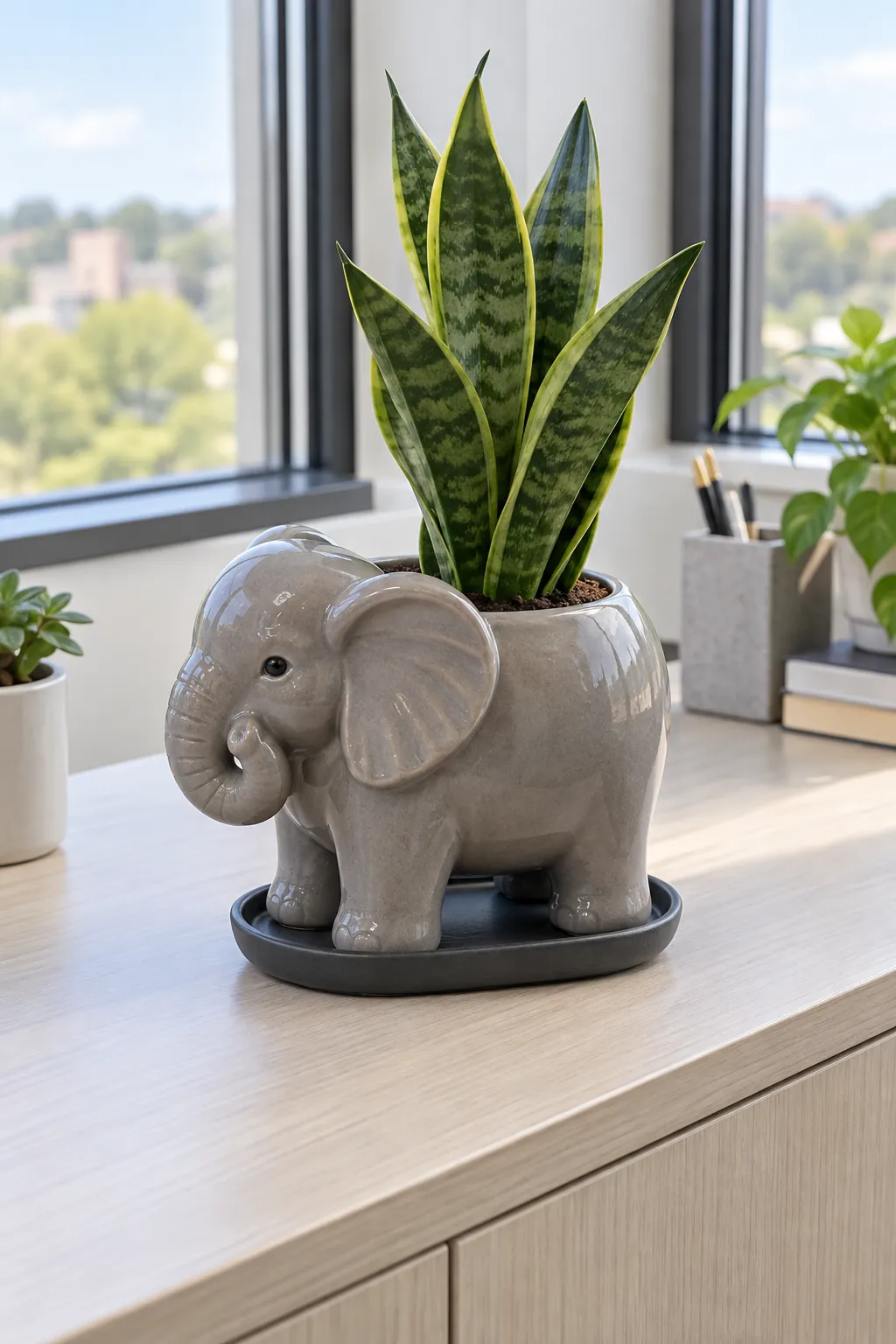
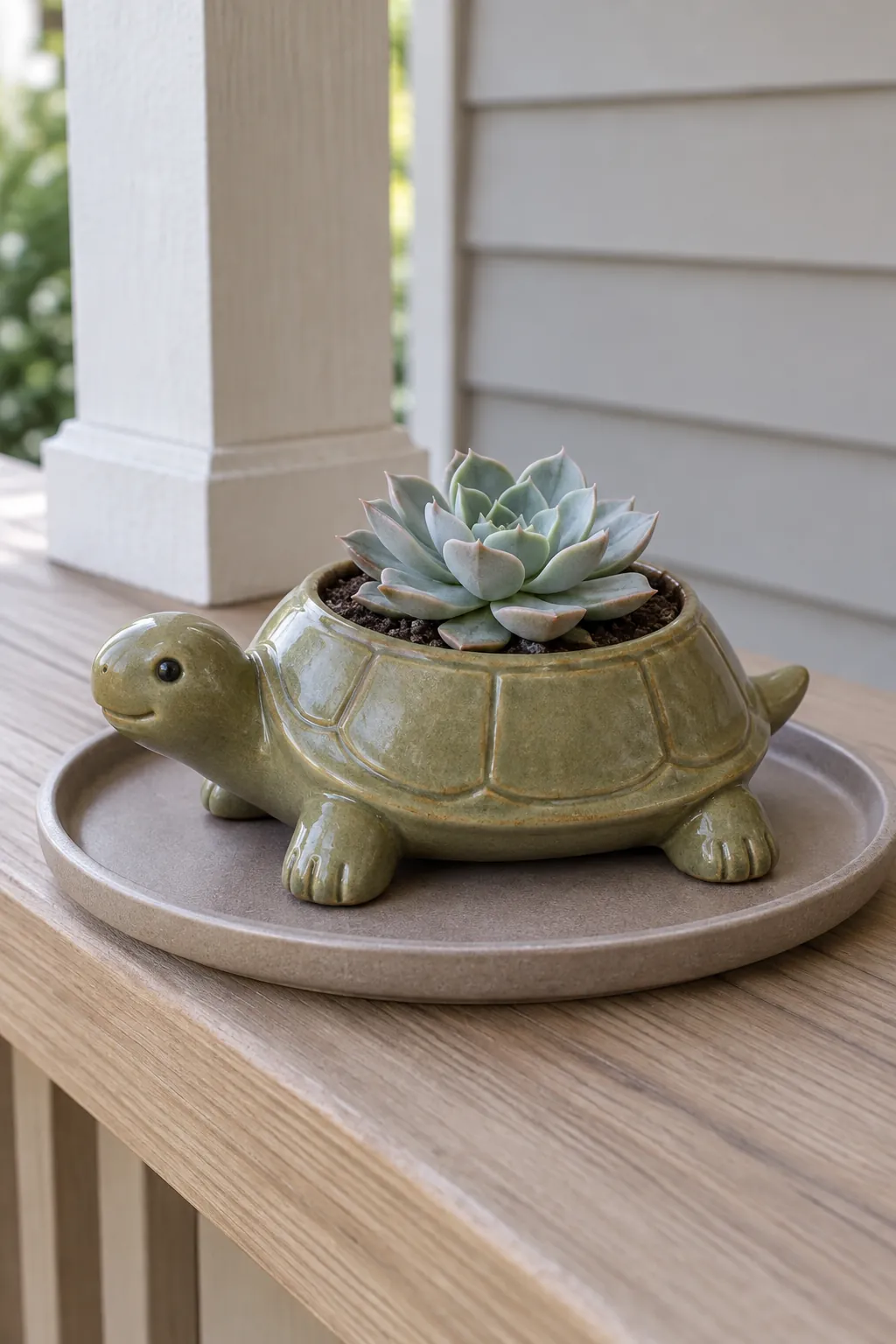
A turtle with a planted shell
A turtle shape naturally offers a broad planting area across its shell. Use the opening as the practical guide to plant size, since the head and legs add width without adding root space. A single low plant keeps the shell outline visible. Check that every foot rests level before filling it with growing mix. A flat supporting tray can protect the surface underneath without hiding the turtle's shape.
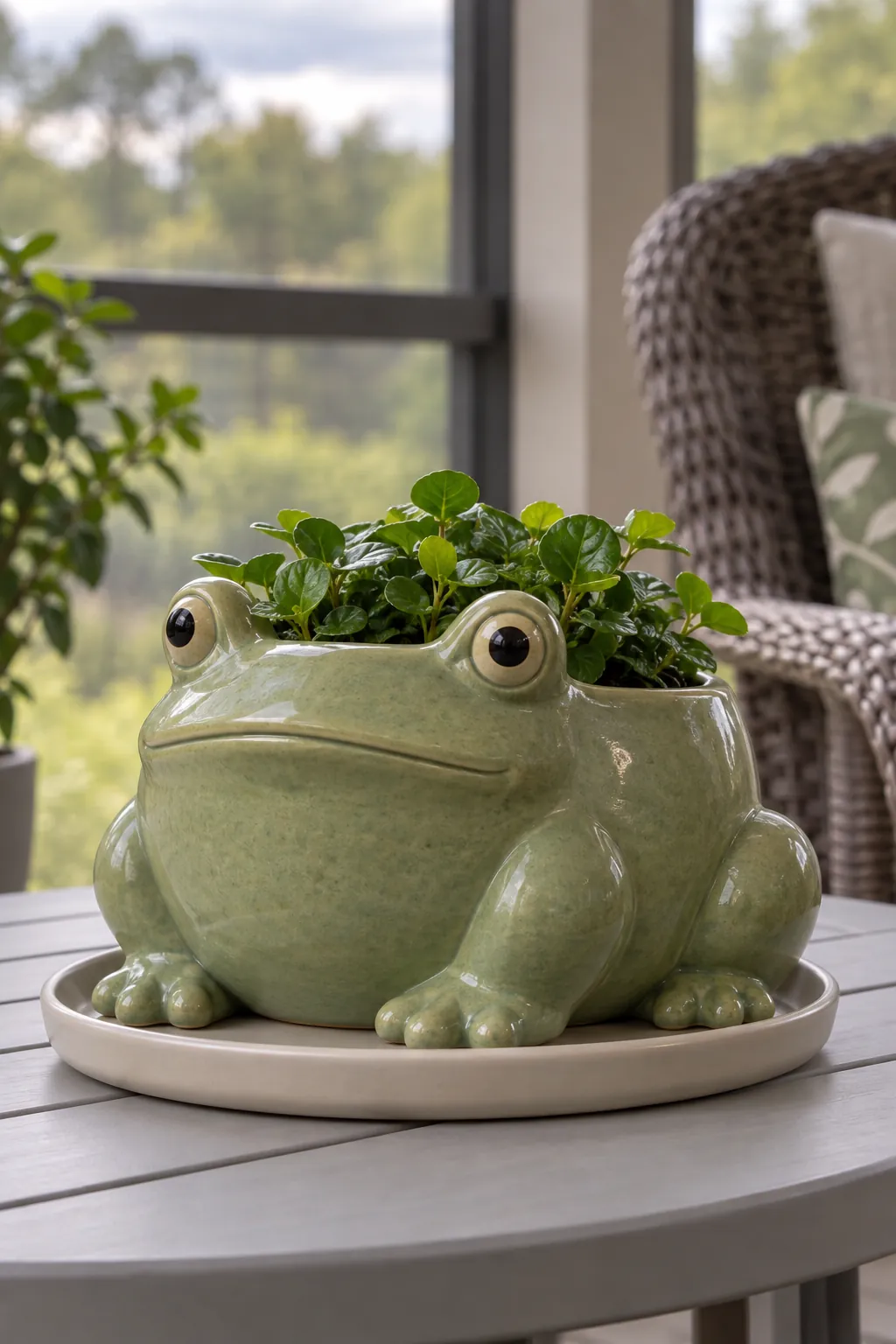
A cheerful frog
A squat frog makes a useful accent on a sheltered porch table. Its wide stance can feel sturdy, but check the base rather than assuming the shape guarantees balance. Keep the plant lower than the frog's eye line if the eyes rise around the opening. For outdoor use, confirm that the material and finish are rated for your conditions. Bring a non frost resistant ceramic piece indoors before freezing weather.
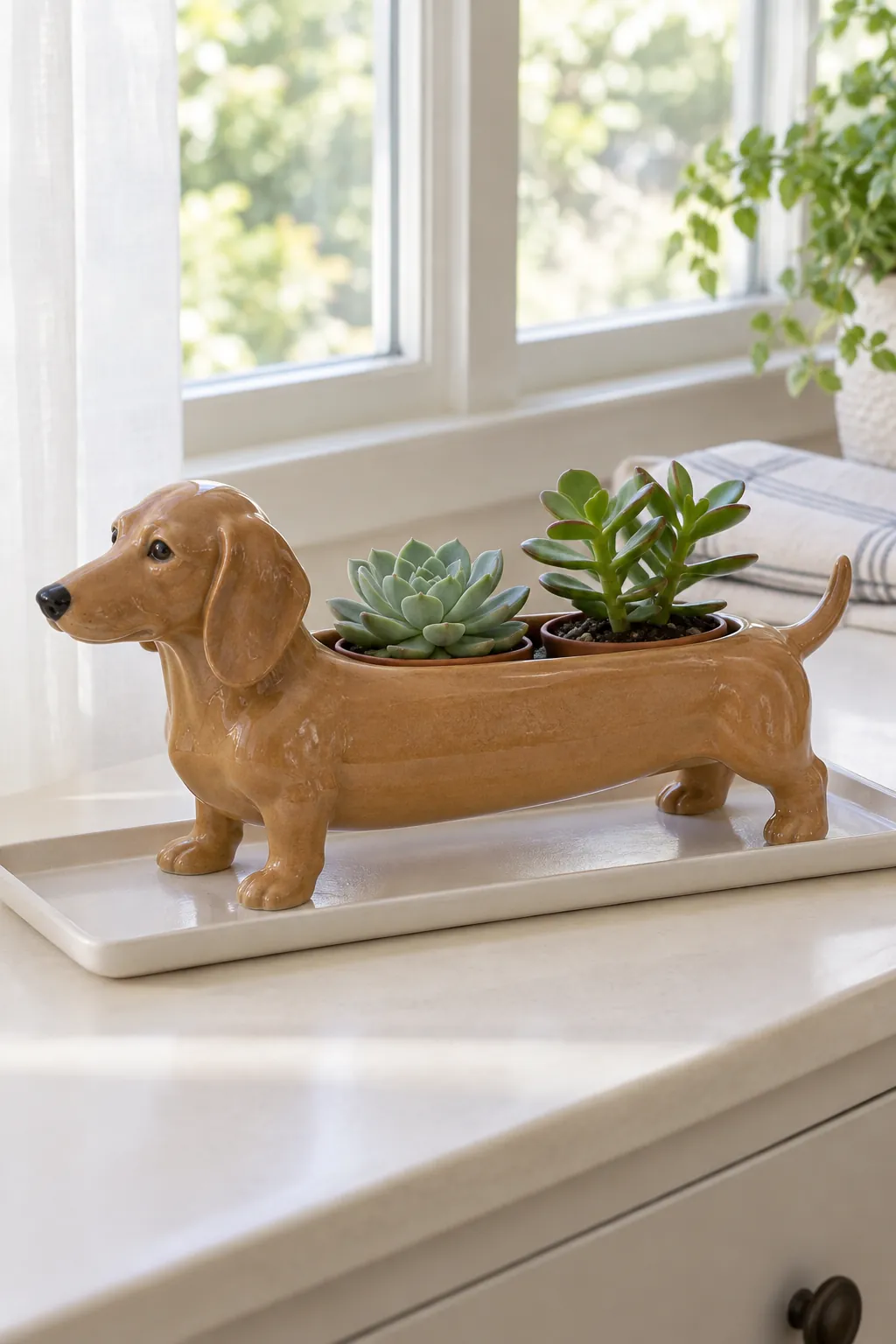
A dachshund trough
The long body of a dachshund creates an attractive trough shape. That length can tempt you to plant too densely, so leave space for growth and choose plants with compatible needs. Keep the dog's narrow ends free of roots if they are only decorative cavities. Two removable small inner pots may be more practical than filling an awkward continuous body. The ears and nose should remain clear of overhanging foliage.
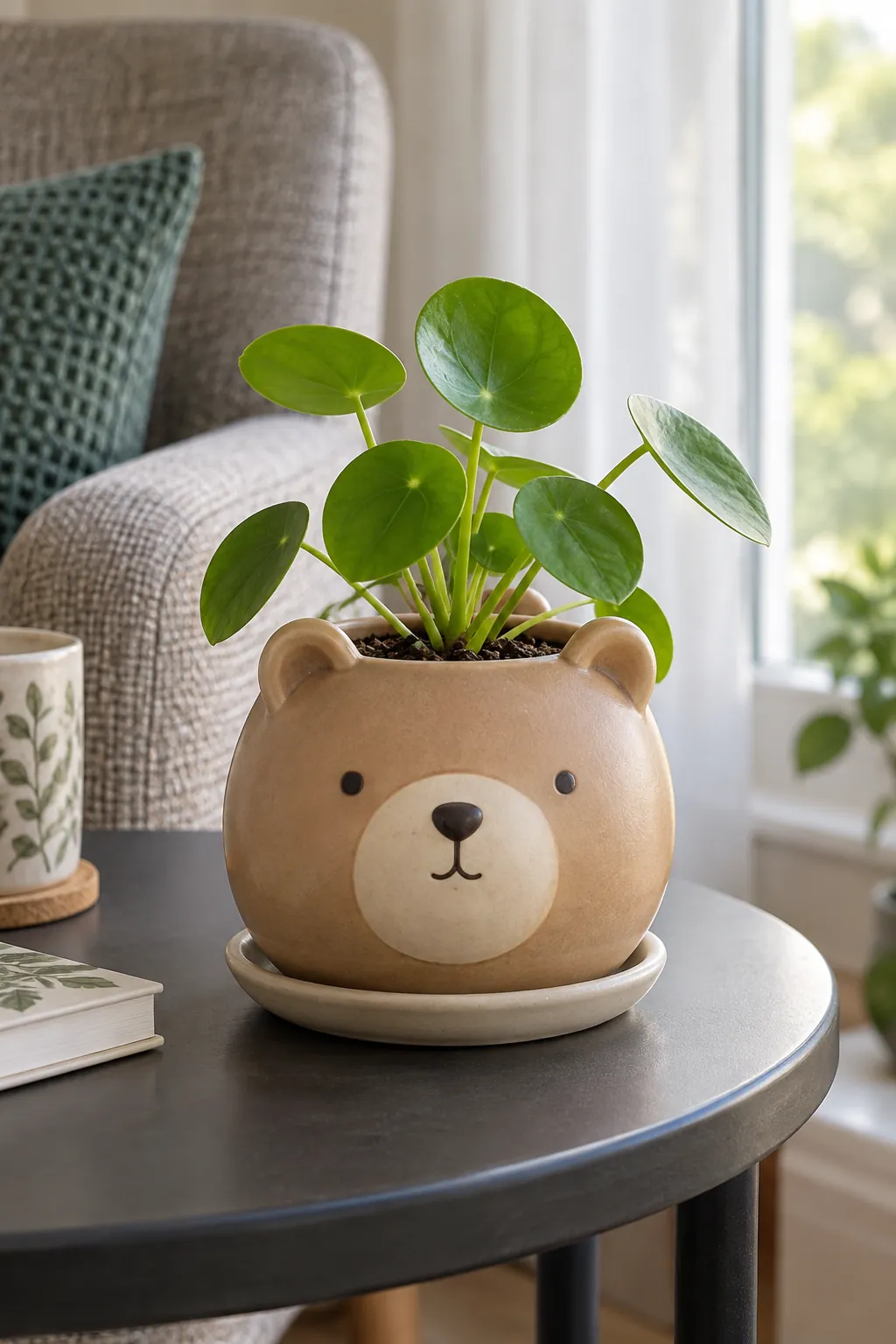
A rounded bear face
A bear face pot suits a reader who wants a cute planter with a simple outline. Small rounded ears and a restrained muzzle keep the design easy to pair with existing decor. A leafy plant with a compact crown works better than long trailing stems if you want the expression to stay visible. Place the pot where you can rotate it for even growth without losing access to the plant.
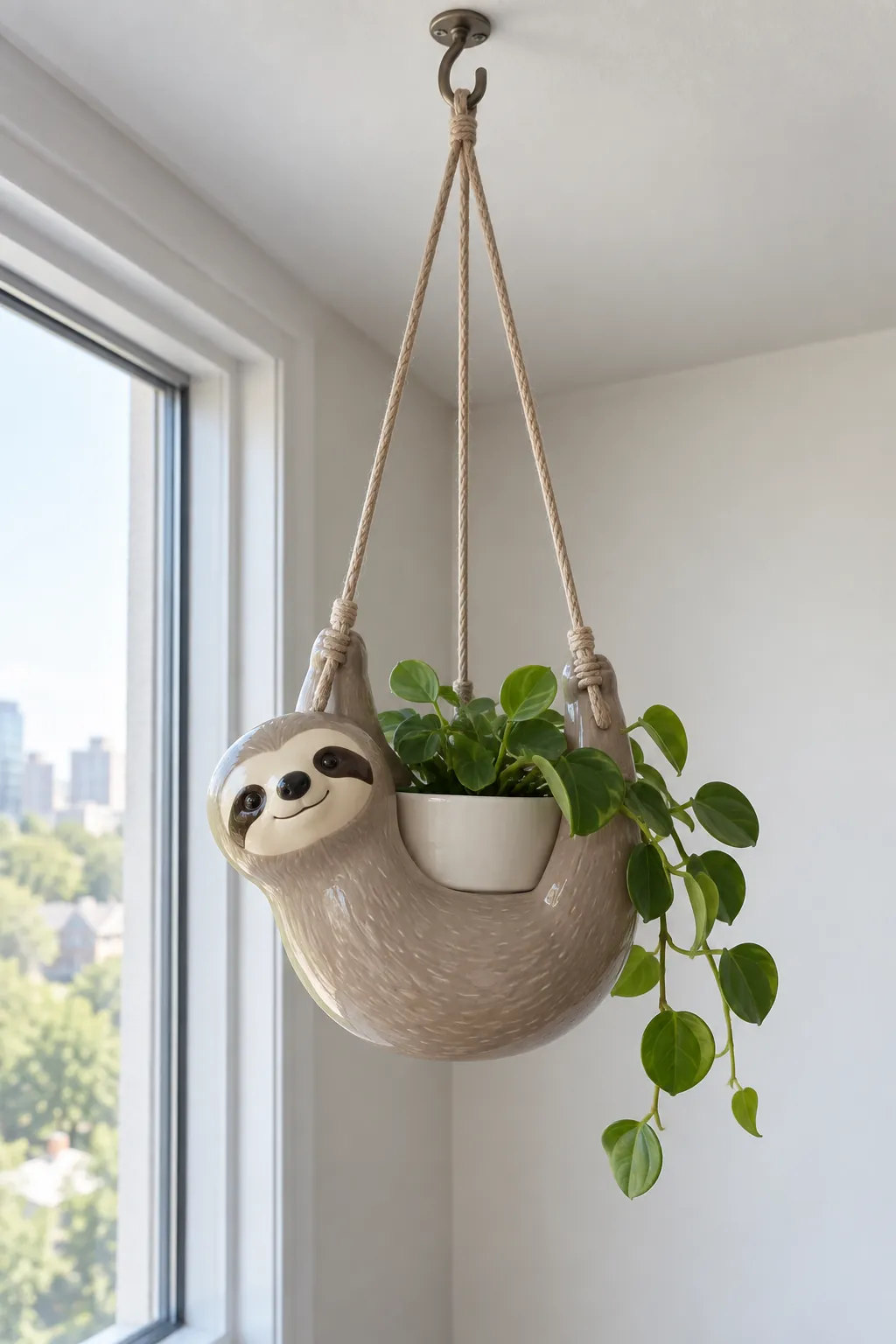
A hanging sloth holder
A sloth holder is appealing when the animal appears to cradle a small pot. Treat the hanging hardware as seriously as the ceramic design: the support must suit the filled, watered weight. Use a secure fixing appropriate to the surface and leave room to remove the inner pot.
A modest trailing plant can follow the hanging shape without wrapping around the cords. Keep the arrangement clear of doors and busy walking routes. Water away from furniture so drips do not become part of the display.
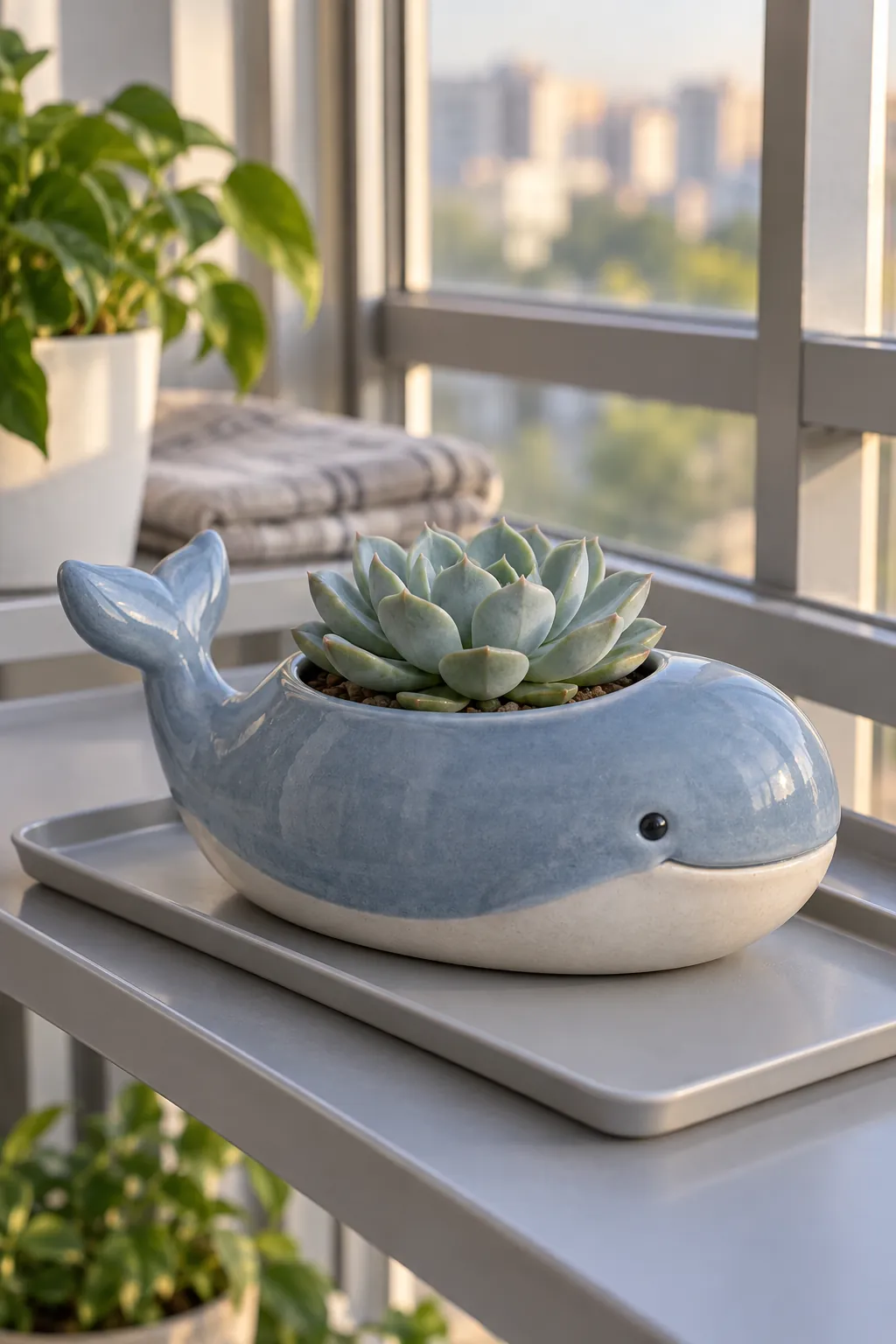
A whale with a wide back
A whale planter offers a broad low opening that can hold a compact plant without hiding the tail. Choose a restrained blue glaze if you want the shape to feel calm rather than toy like. The tail adds to the footprint, so allow space behind it on a shelf. If the vessel lacks drainage, use a fitted inner container instead of treating a layer of stones as a substitute for an outlet.
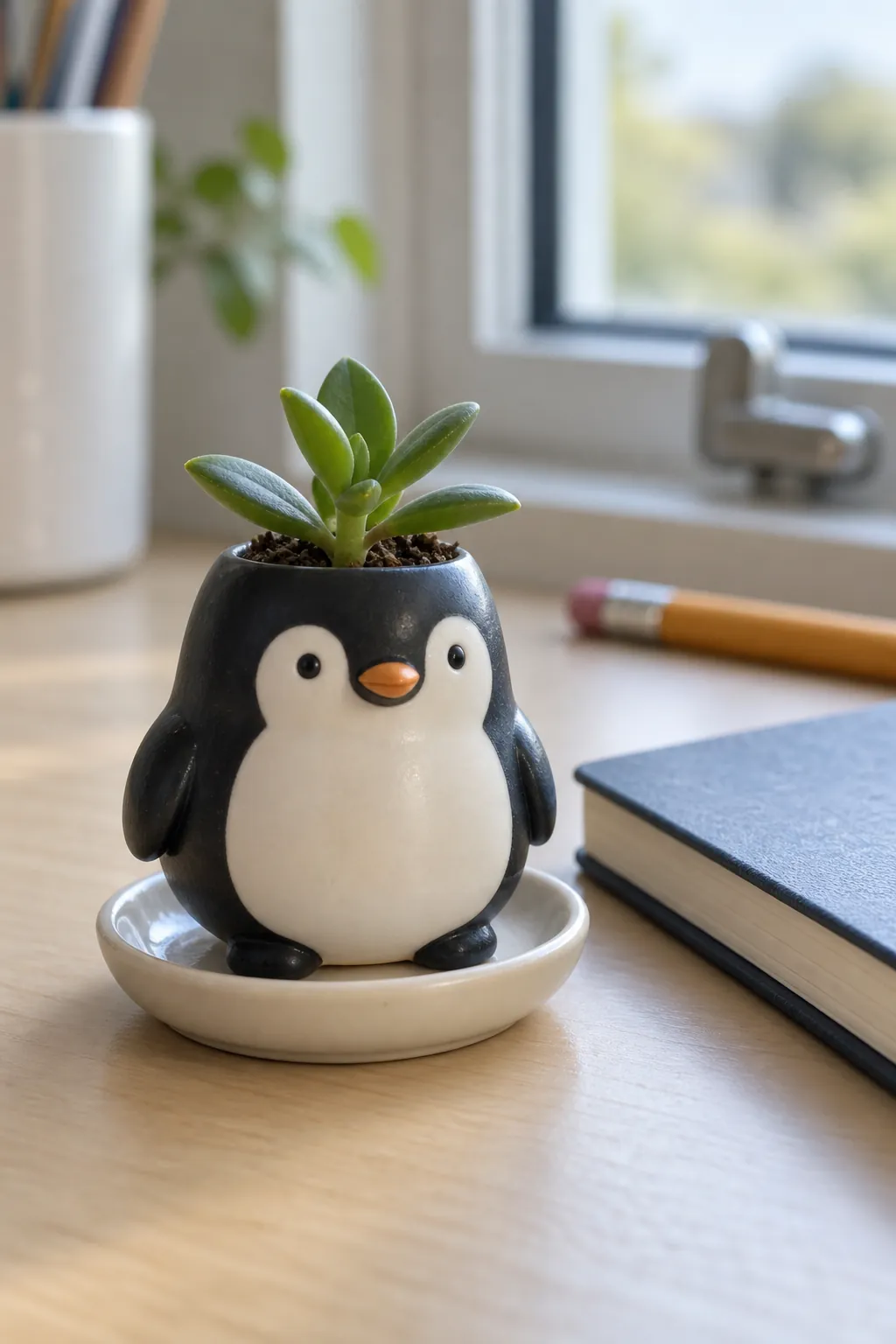
A tiny penguin
A small penguin can brighten a desk without needing a whole animal collection. Its dark body and pale belly work best with a plant that has a simple green outline. Miniature pots dry and fill with roots quickly, so check the plant rather than treating the container as a permanent home. Move it into a larger growing pot when needed and reuse the penguin for another suitable small plant.
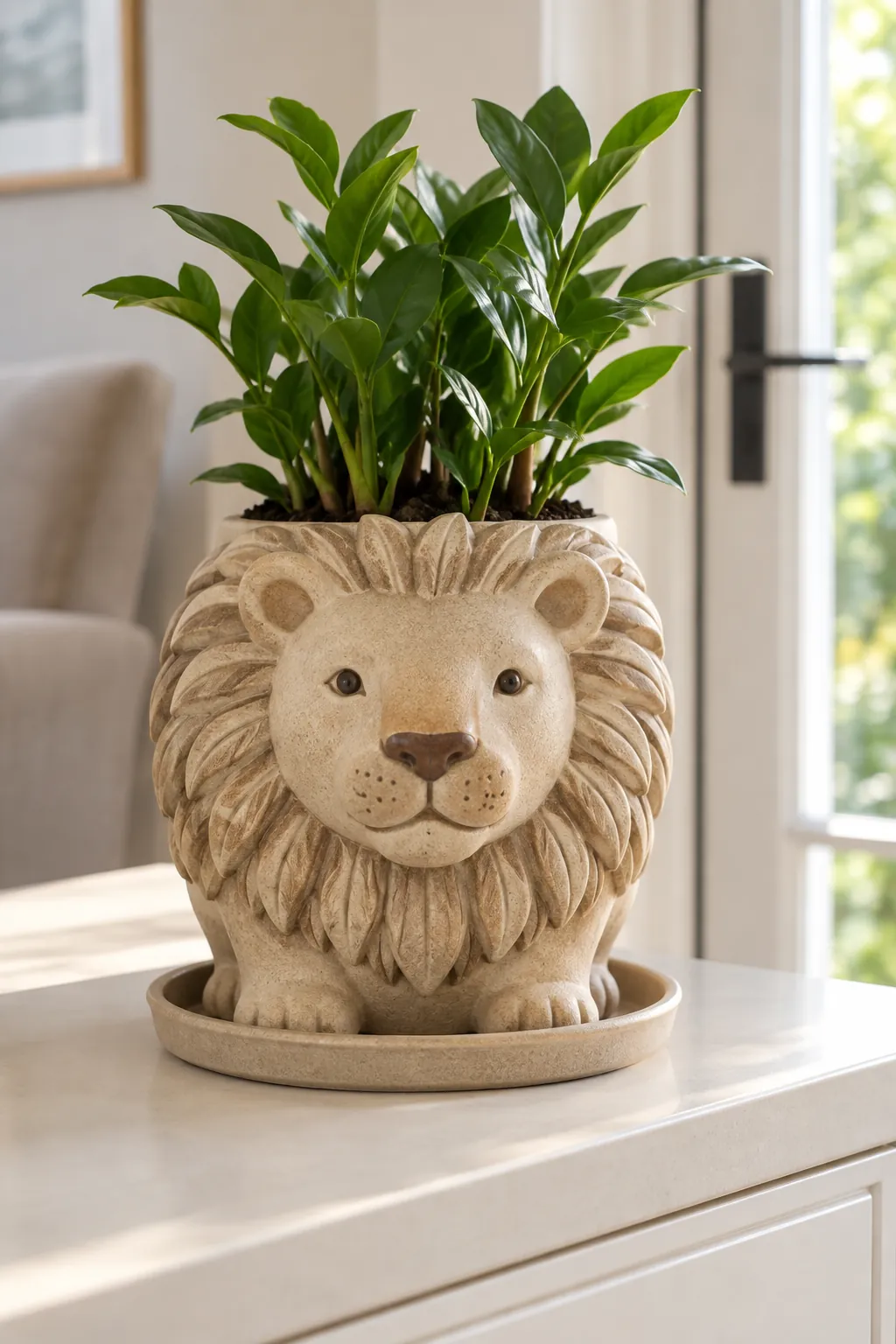
A lion with a textured mane
A lion planter can let the ceramic mane frame the plant opening. Choose a design with enough plain surface around the muzzle that the face remains readable. If the mane is deeply textured, a soft dry brush can remove dust from the grooves. Keep trailing stems away from those grooves so routine cleaning stays manageable. One strong lion piece is usually enough for a small shelf.
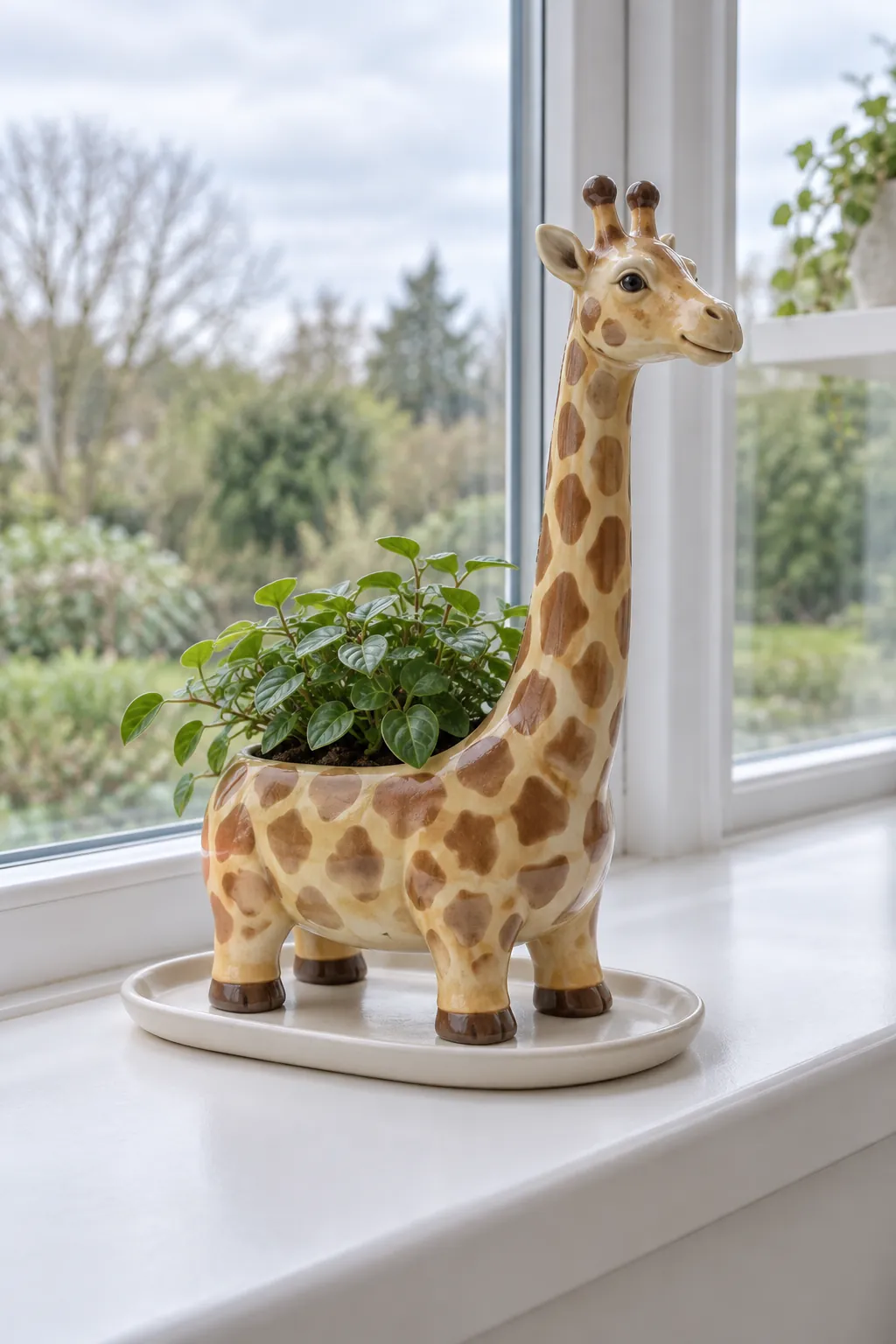
A giraffe with a broad body
A giraffe planter needs a stable body to balance its tall neck. Before adding a plant, check whether a gentle touch makes the empty piece rock. The actual pot opening often sits in the back, so choose a plant that does not compete with the head for height. Leave clear space above the neck when measuring a shelf. A compact plant makes the unusual silhouette easier to enjoy.
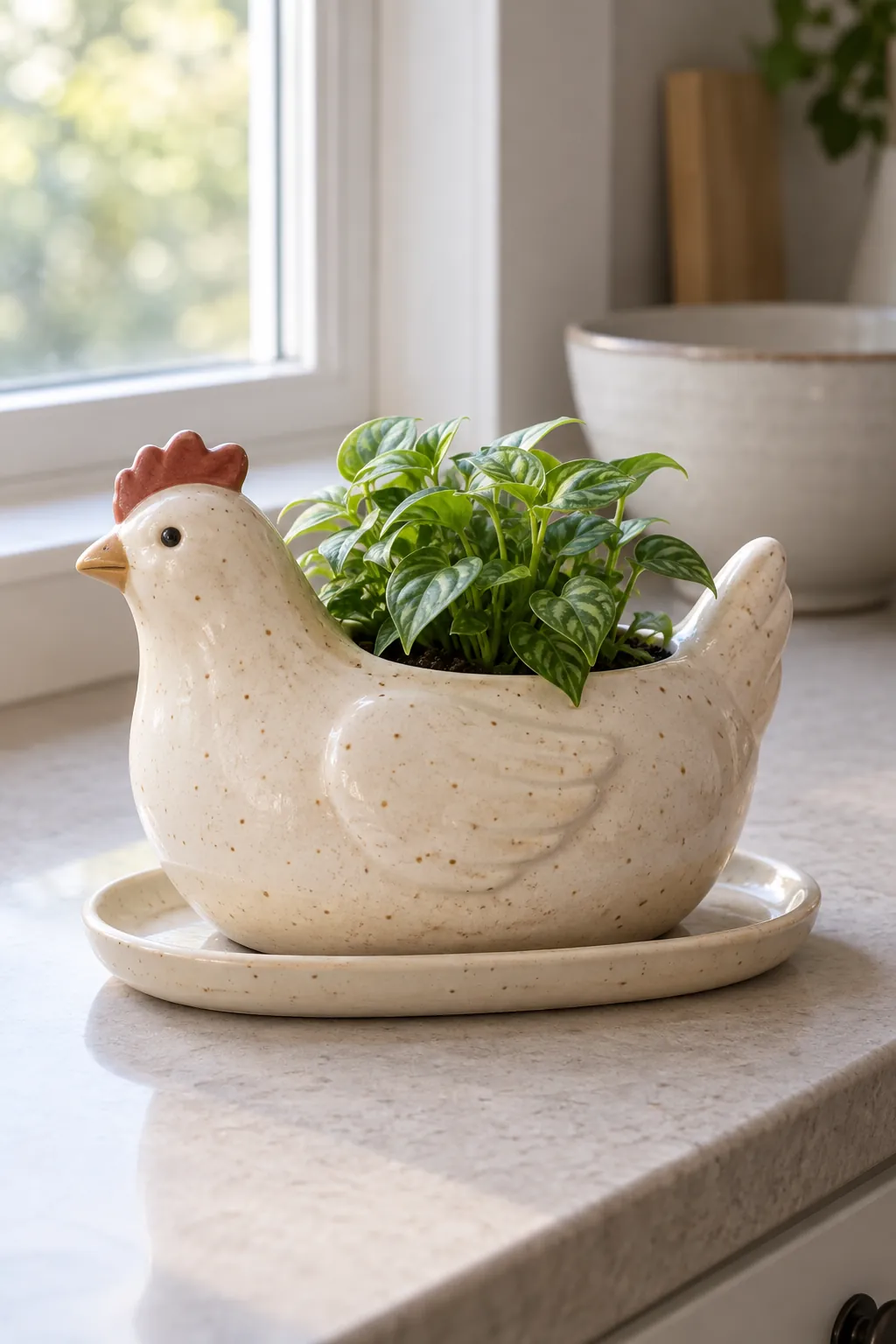
A speckled hen
A hen shape brings a quiet farmhouse note without requiring rustic furniture. A low back opening suits a modest plant, while a small comb and tail keep the silhouette recognizable. Position the beak away from the edge of the surface so it is less likely to get knocked. Use the hen as a single accent beside plain crockery rather than repeating the same motif across the room.
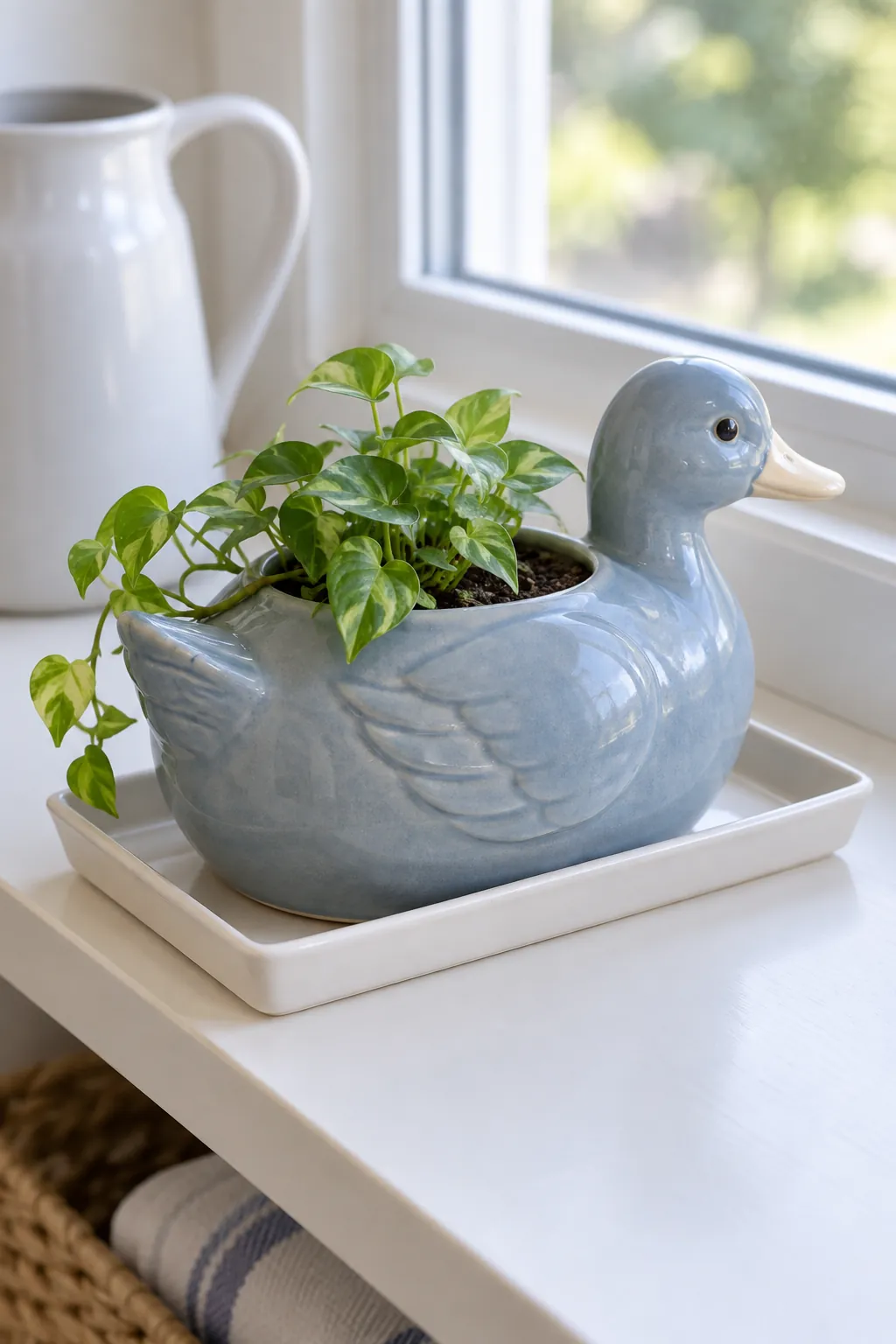
A duck on a shallow tray
A duck planter looks comfortable on a low tray that catches any drainage. The tray should extend beneath the whole body, not only the planting cavity. Keep a trailing plant directed away from the beak if you want the bird's profile to show. A soft cream or muted blue finish pairs easily with green leaves. Empty the tray after watering instead of letting the duck stand in a permanent puddle.
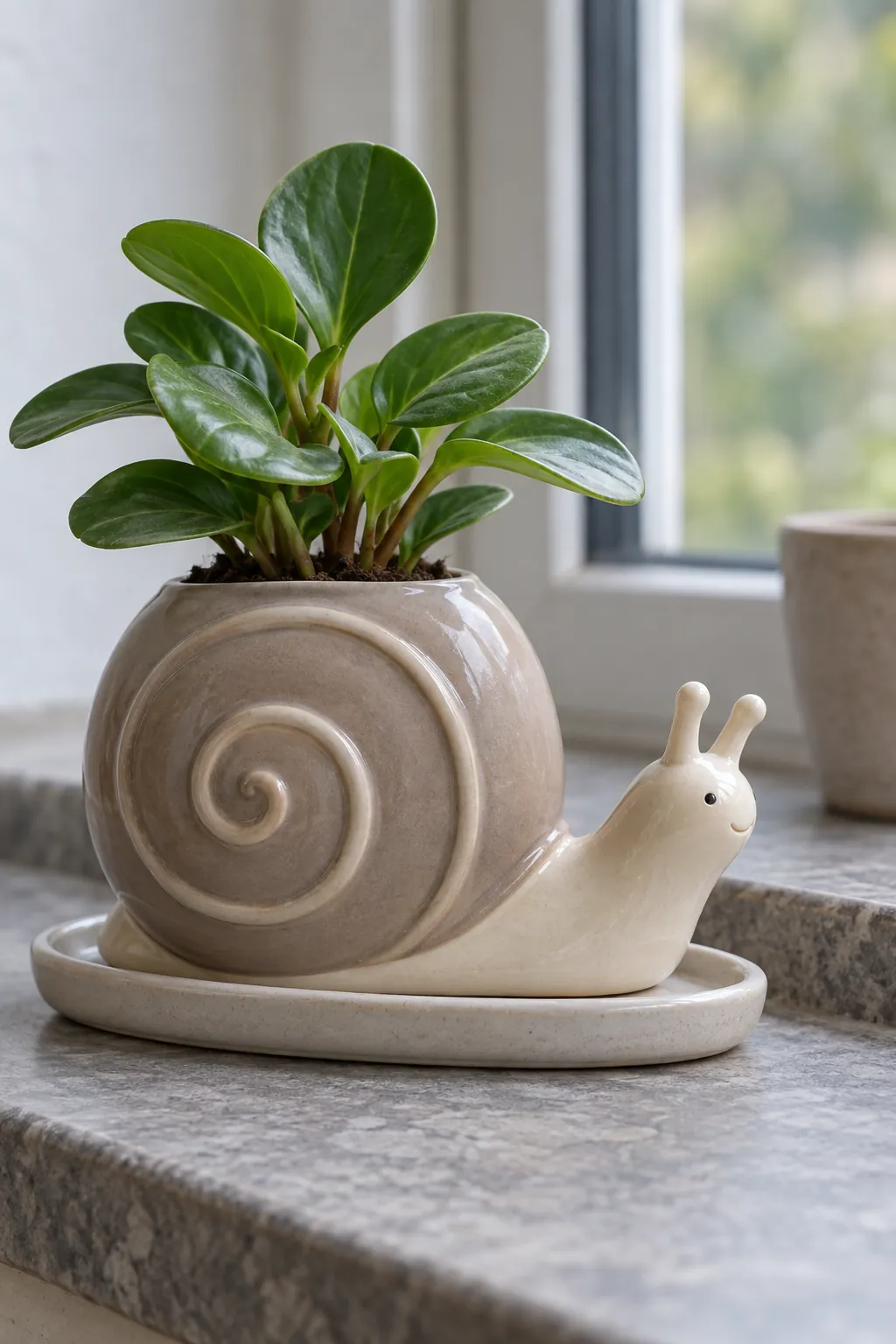
A snail with a shell opening
A snail makes an unusual planter because the shell provides a natural place for the plant. Check how deeply the opening reaches into that shell before choosing a root ball. A decorative spiral may take up more space than it appears from outside. Keep the antennae short or protected from passing hands. A compact upright plant leaves the spiral visible from the front.
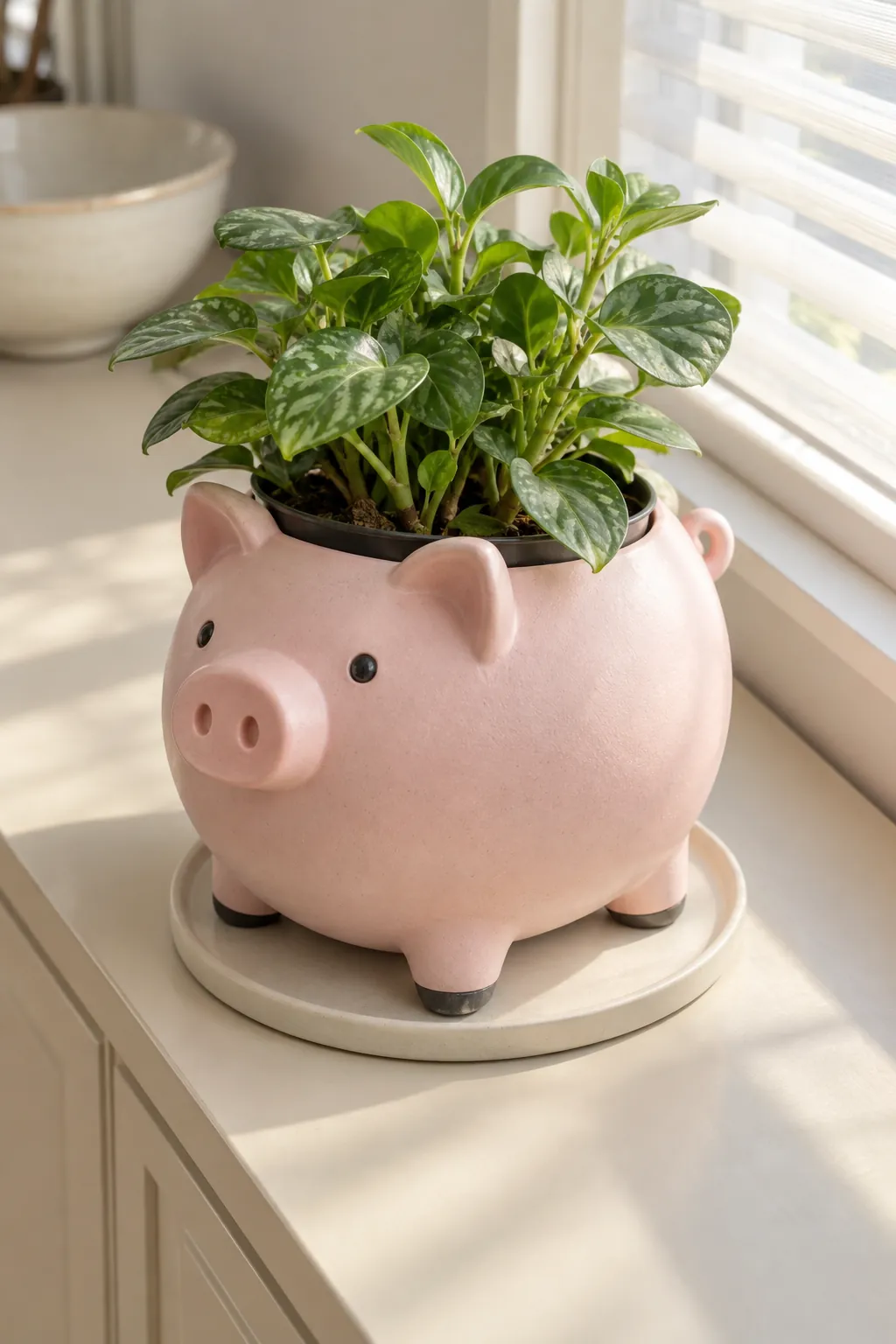
A little pig with a round belly
A round pig planter can hold a simple nursery pot neatly inside its body. Measure the inner diameter below the rim, where the pot may narrow. The snout and ears are enough decoration, so a plain pink or clay finish keeps the piece easy to style. Choose a low plant that does not make the small feet look visually overwhelmed.
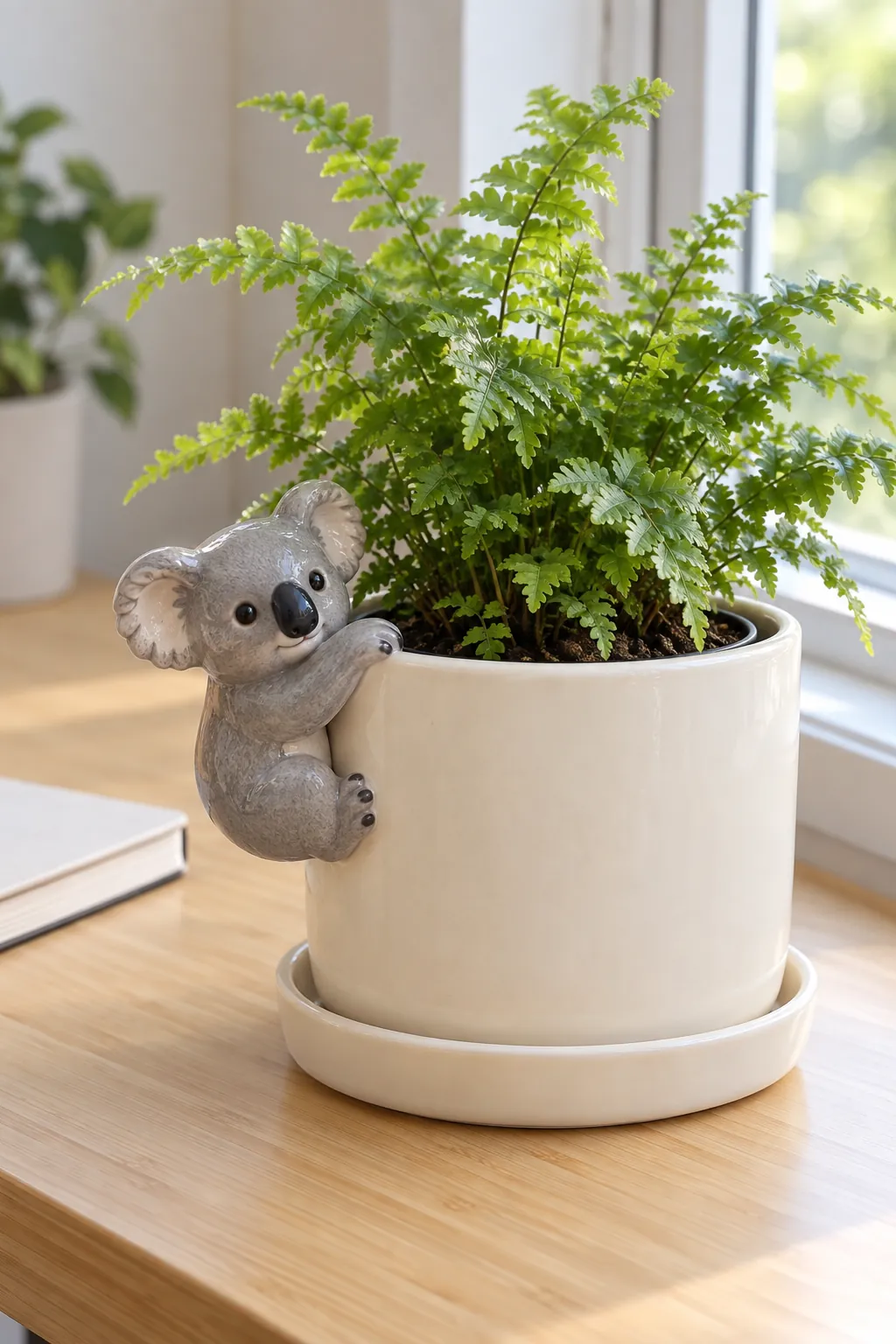
A koala hugging the rim
A koala design can place the animal on the side of an otherwise straightforward pot. That leaves a useful regular opening while the face and paws add character. Check that the attached figure does not make the container noticeably heavier on one side. Position the koala toward the room and keep the plant's main growth clear of its ears. This is a good compromise between a conventional planter and a fully sculpted animal.
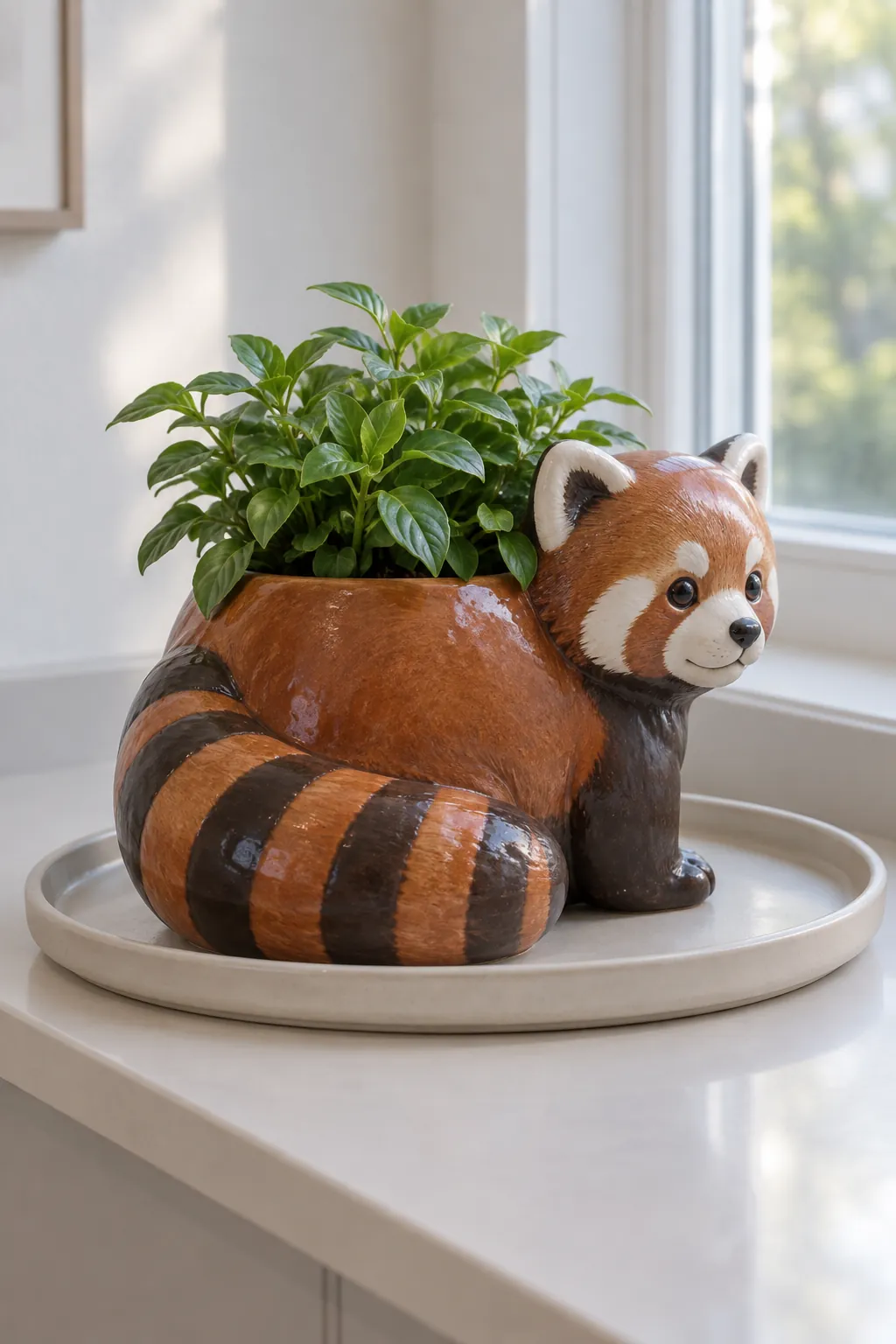
A red panda with a striped tail
A red panda planter offers a stronger color accent than a plain neutral animal. Let its striped tail remain visible by choosing compact foliage rather than a dense trailing plant. The tail can add considerable width, so measure across the entire piece before placing it among other pots. A quiet shelf surface prevents the stripes from competing with a second pattern.
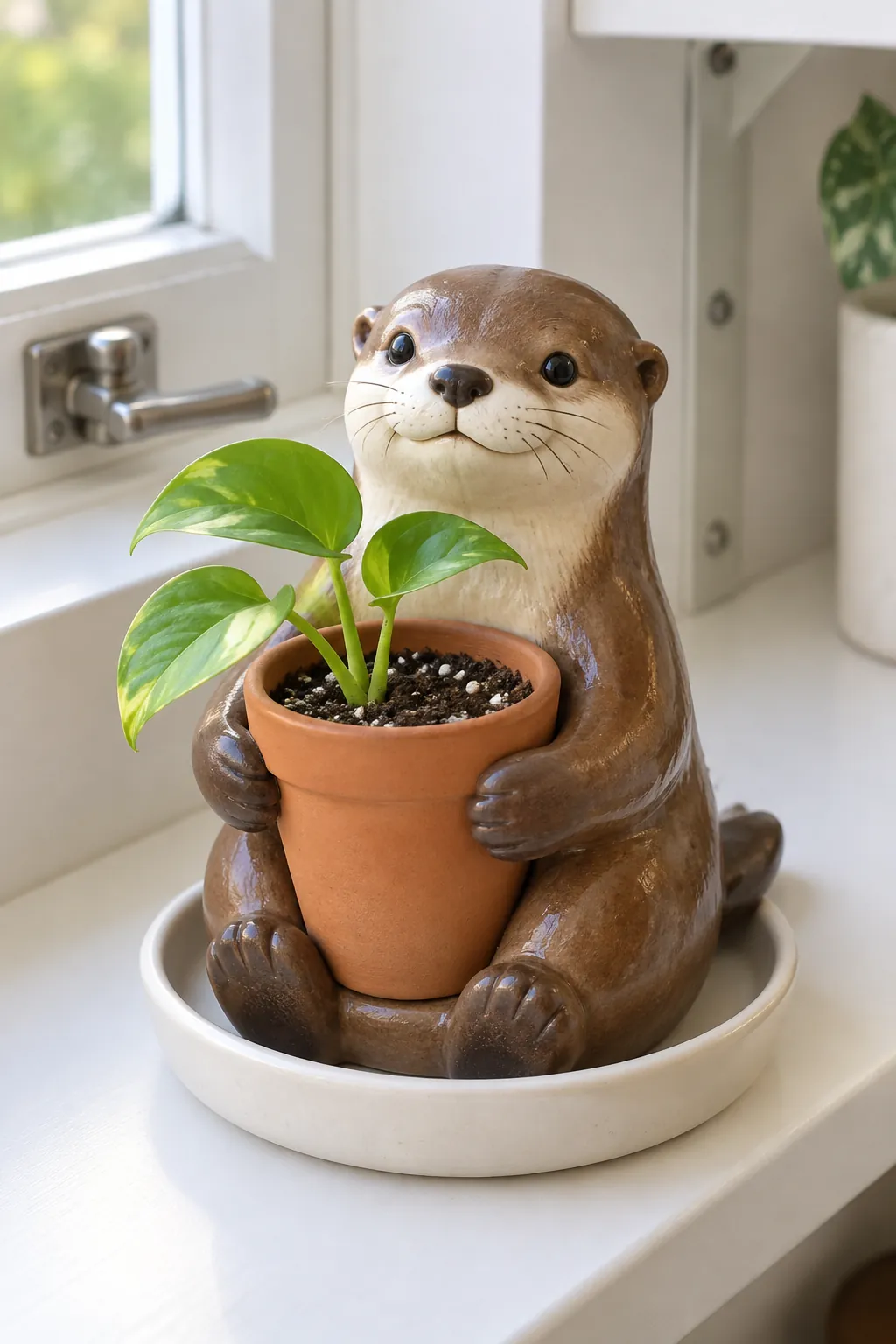
An otter holding a small pot
An otter holder can separate the decorative figure from the growing vessel. That is useful when you want to change plants without repotting inside an awkward sculpted body. Check that the held pot sits securely and can be lifted out without catching on the otter's paws. A tiny plant should still have a real container with an appropriate drainage arrangement. Keep the holder on a level surface where a projecting tail will not be bumped.
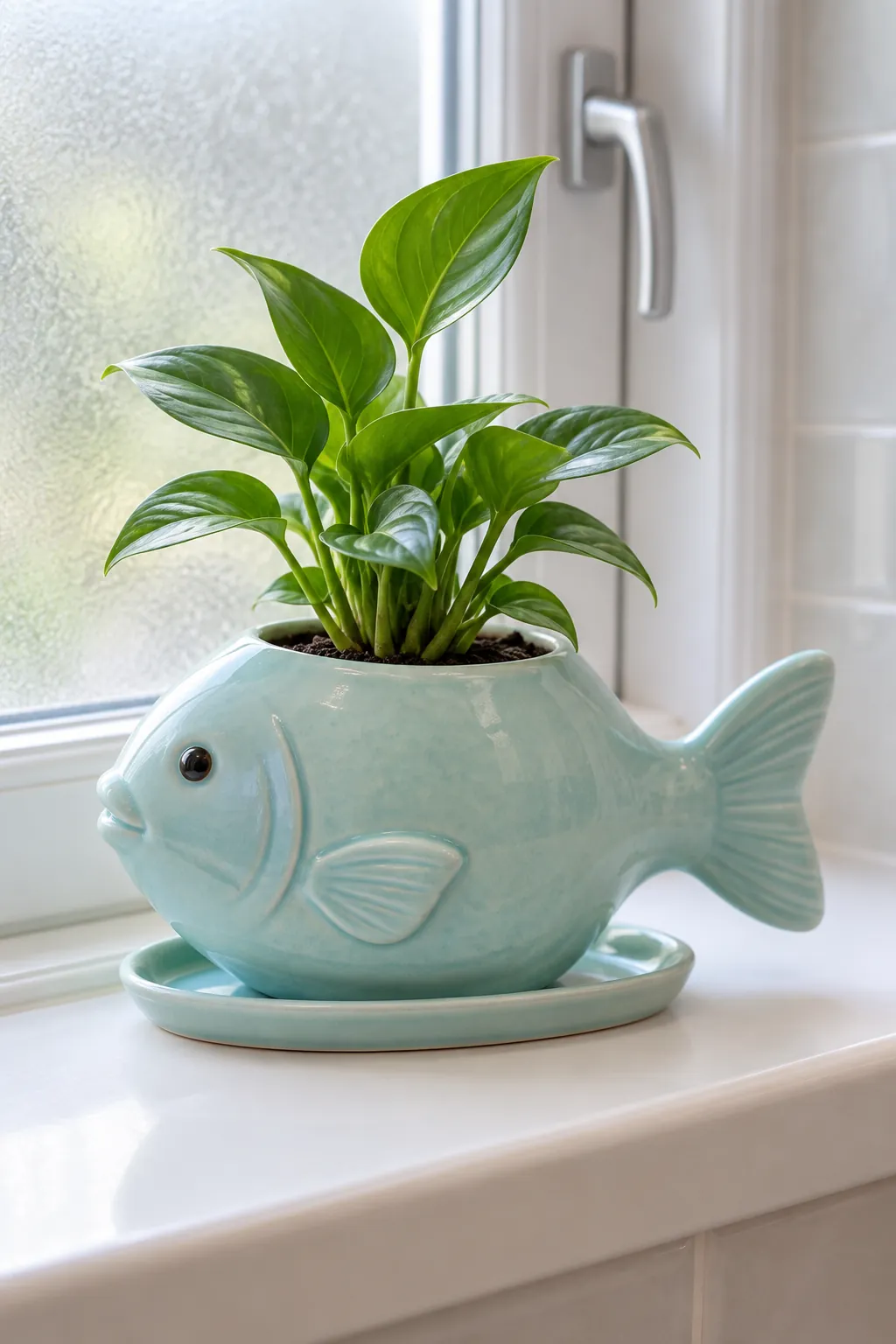
A simple fish bowl planter
A fish shaped planter works best when its body has enough depth to function as a pot. Broad fins and a tail make the object look larger without increasing the space available to roots. Choose one modest plant and leave the eye and gill detail visible. A pale aqua glaze gives the form character without needing a beach themed display.
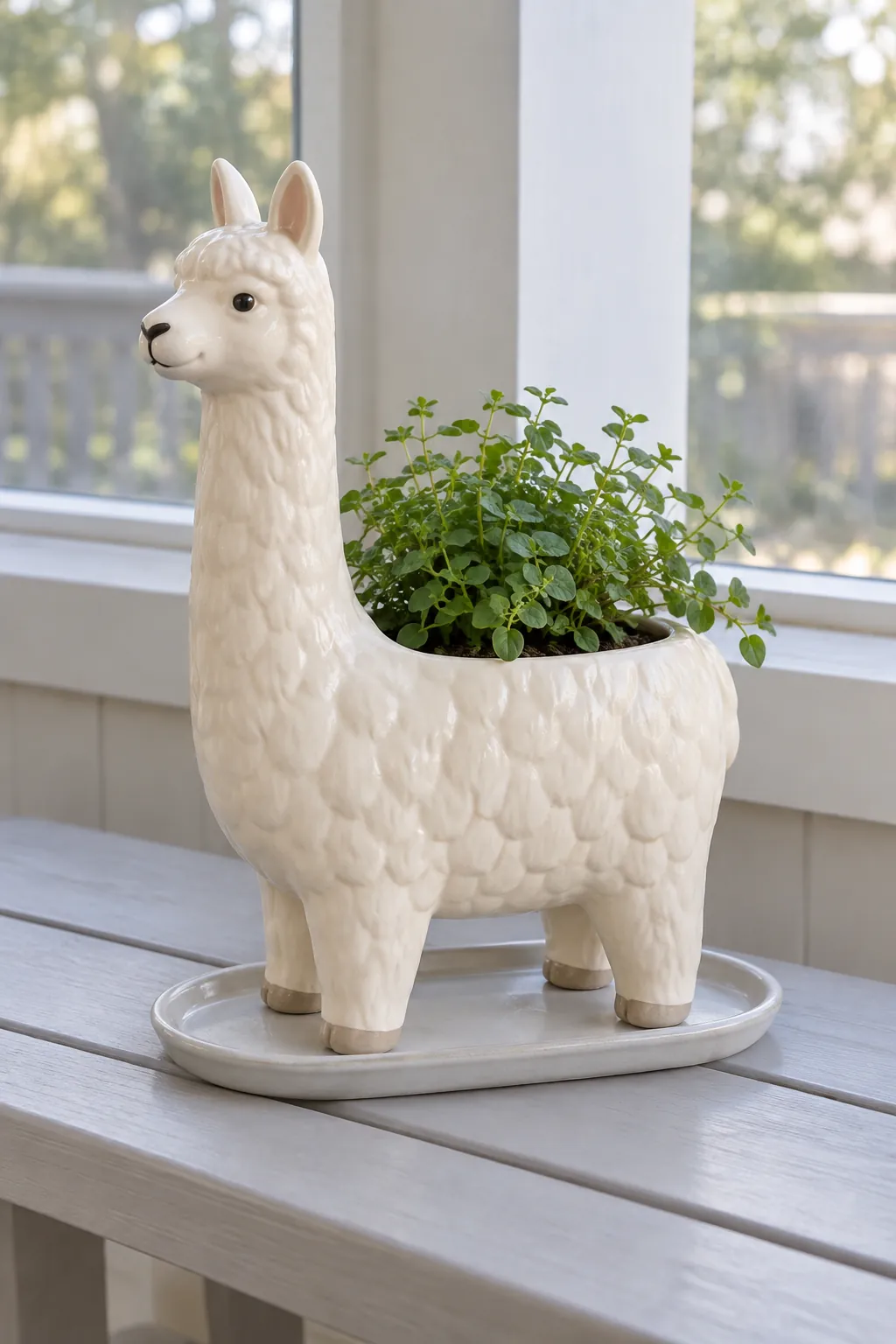
A pale alpaca
An alpaca planter often combines a long neck with a bowl shaped back. Look for short sturdy legs and a generous base of support. A compact tuft of foliage can echo the animal's woolly outline without hiding the head. Keep its tall neck away from the edge of a shelf above. If you like unique plant pots but want a soft palette, an ivory finish is an easy starting point.
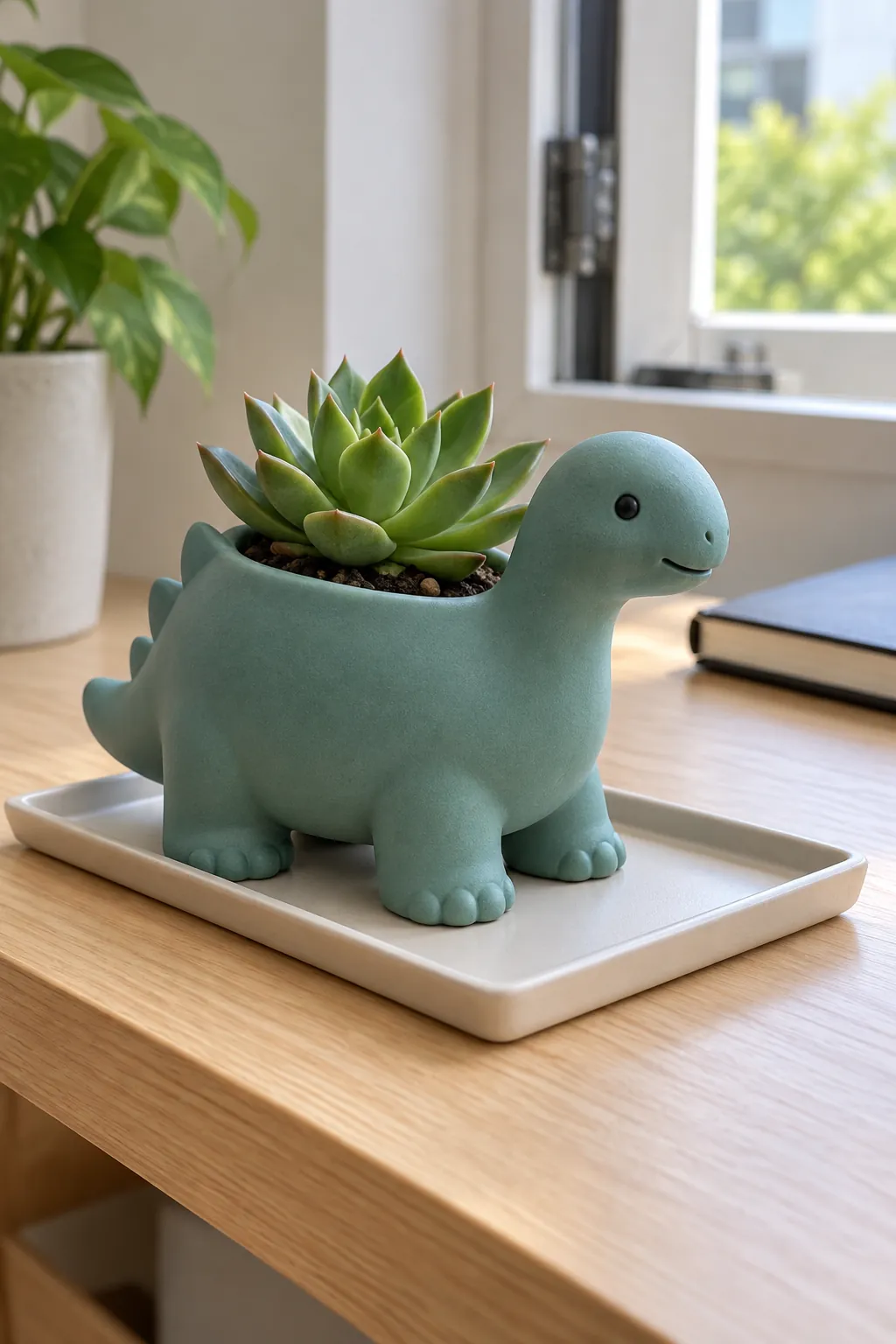
A rounded dinosaur
A rounded dinosaur planter makes a playful choice for a bright study corner. Prefer broad feet and a short tail if space is limited. The plant opening should be smooth enough that stems do not rub against sharp decorative spikes. A single compact plant keeps the dinosaur's back and head readable. Check the material's care instructions before assuming a resin figure can live outdoors year round.
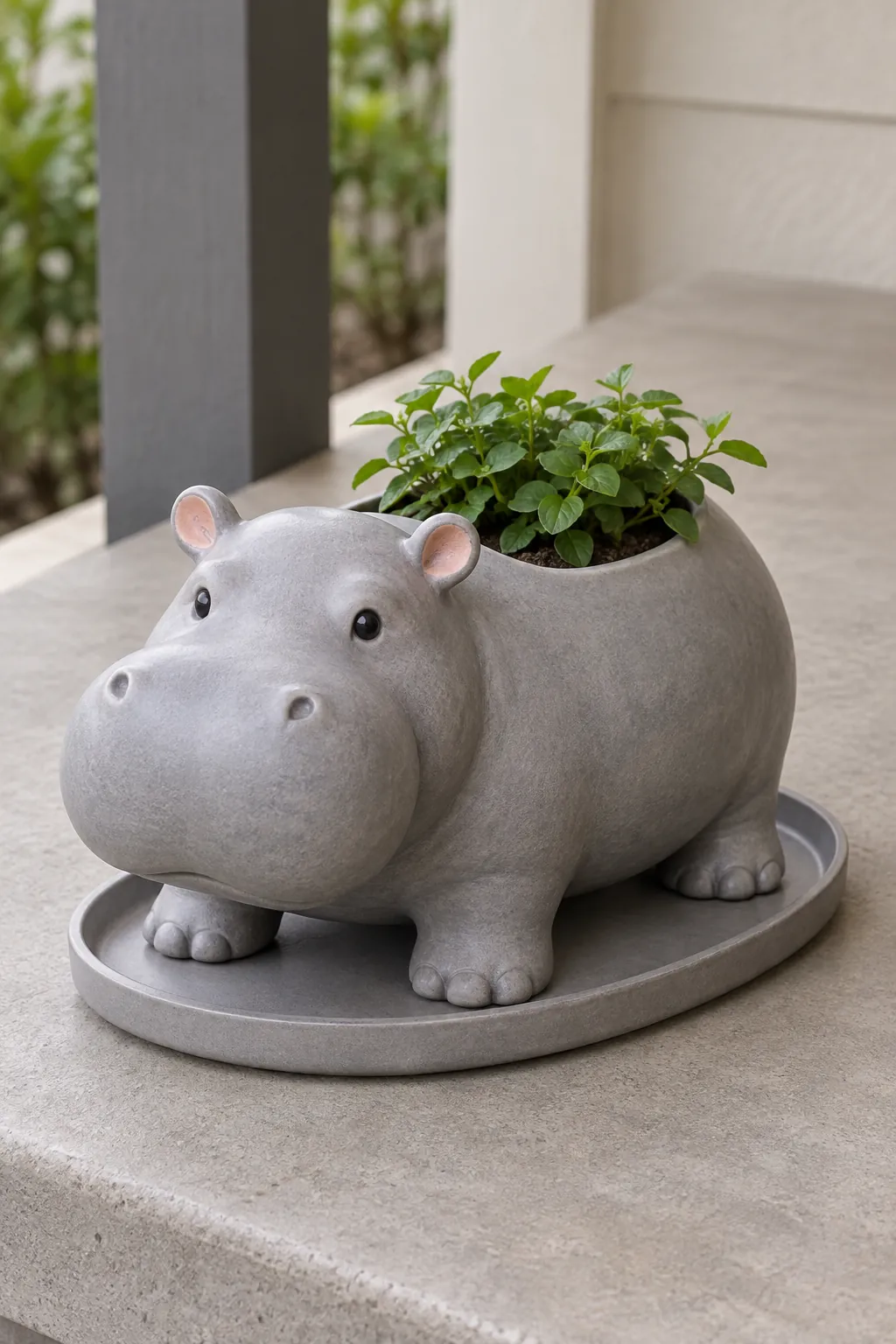
A squat hippo
A hippo's broad body can create a generous looking planter, but inspect the internal depth before filling it. Some designs reserve most of the shape for decoration and leave only a shallow opening. A low growing plant suits the wide silhouette and keeps the small ears visible. Choose a tray that supports the full base if the feet sit far apart.
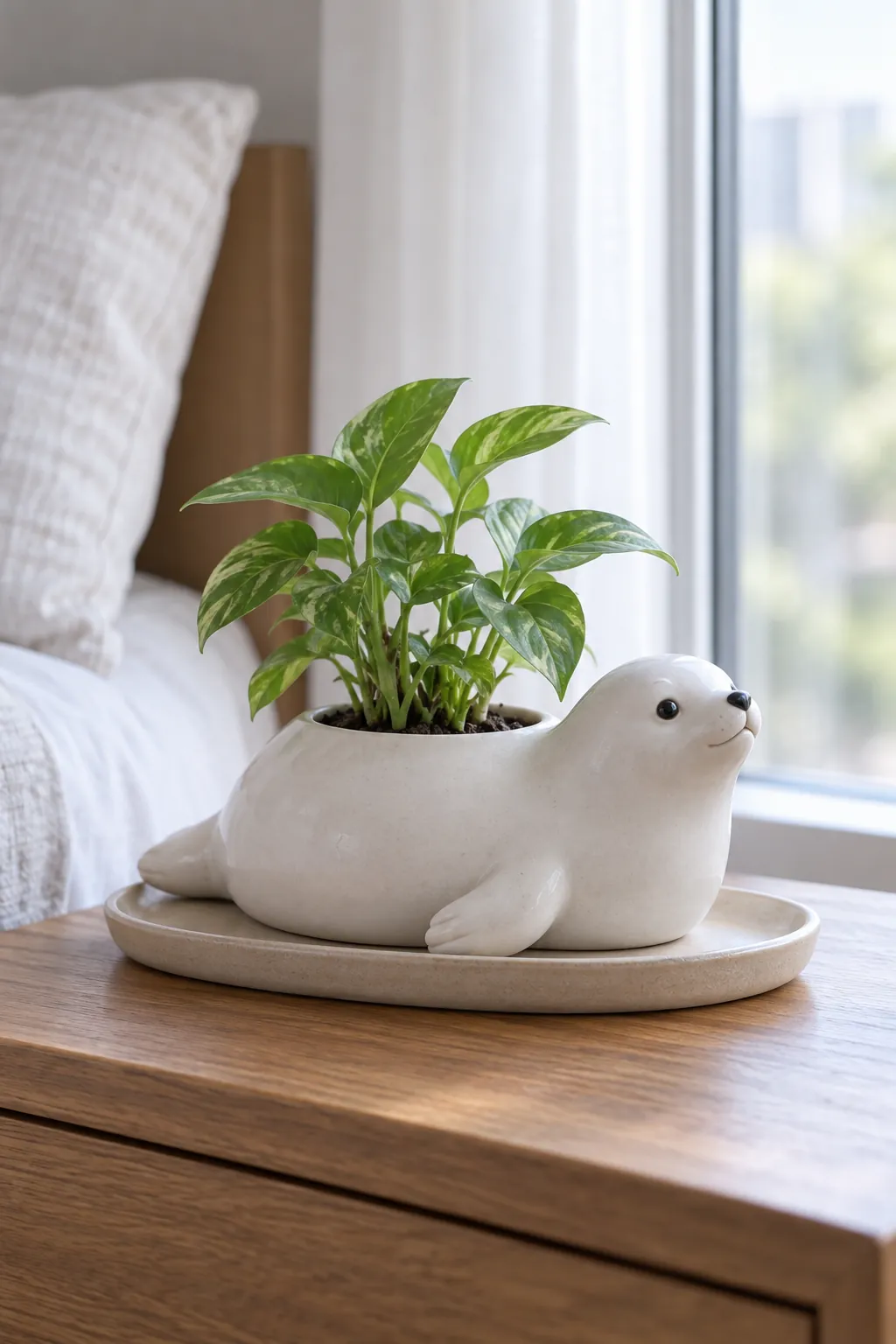
A seal with a smooth outline
A seal planter gives animal decor a quieter shape than pieces with horns or long ears. A smooth pale body and small dark eyes can work on a simple bedside table near suitable light. Keep the plant centered so the seal does not appear to tip toward its head. A plain protective saucer or tray helps the piece sit comfortably on wood.
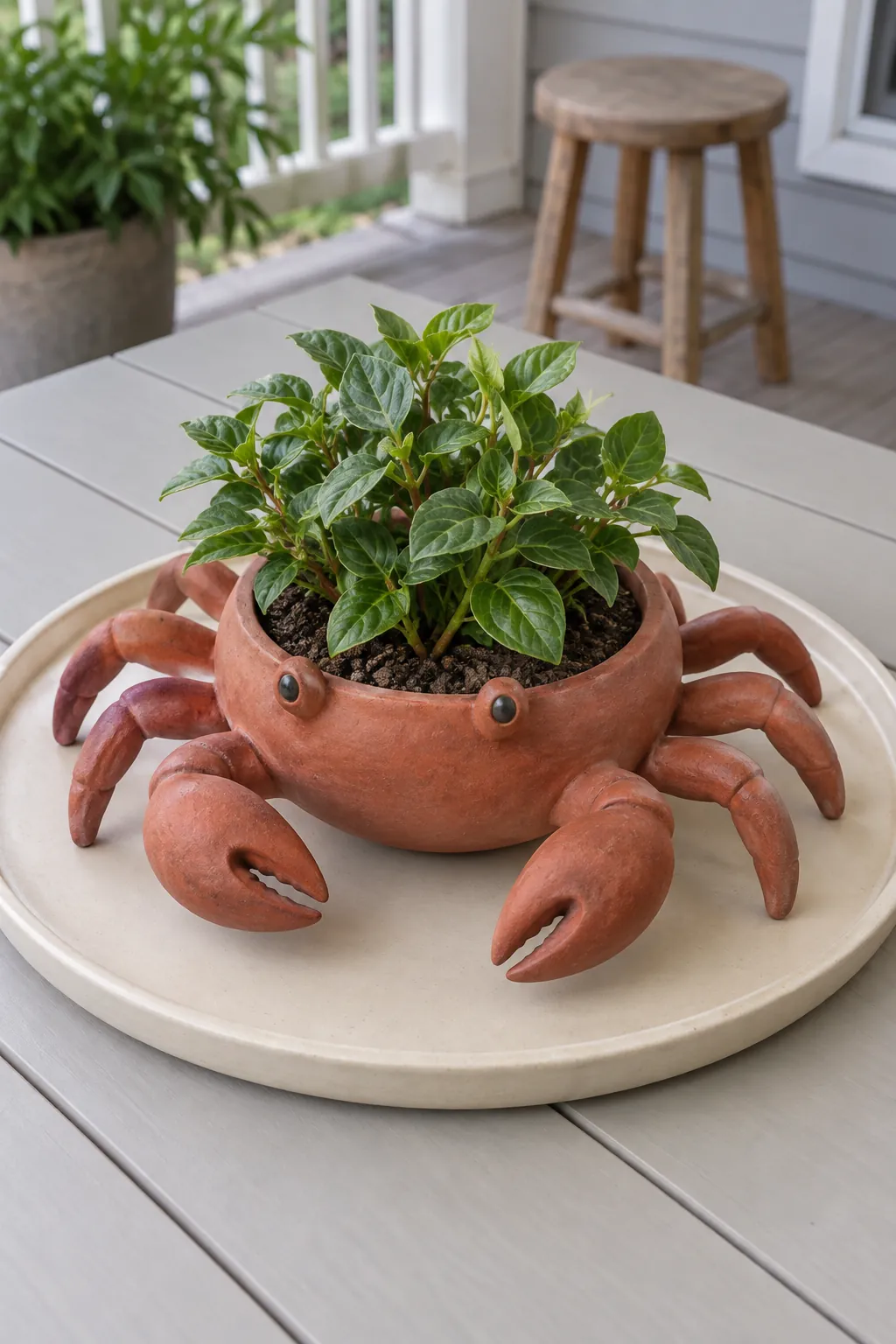
A crab with a central pot
A crab design makes the planting area easy to identify when the body forms a simple round bowl. The legs and claws need extra room, so this is better on a broad surface than a narrow sill. Keep the plant relatively compact to preserve the horizontal silhouette. Lift the piece by its body rather than its decorative claws. Check that all supporting feet contact the surface before adding a heavy wet root ball.
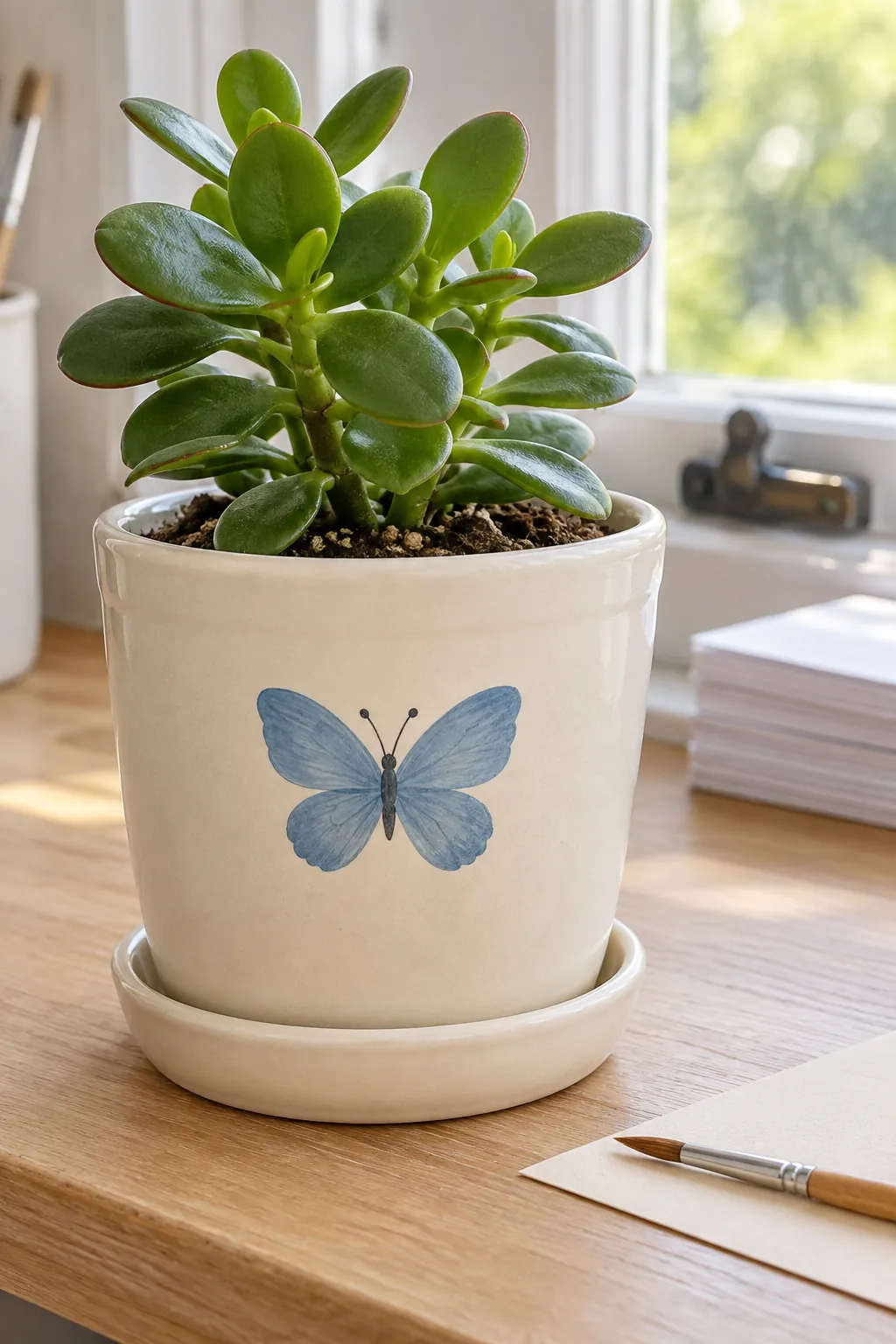
A butterfly on a plain pot
A butterfly accent is a gentle way to try animal planters without buying a sculpted creature. A small painted or raised butterfly on the front leaves the main container easy to handle. Use a plant with a contrasting leaf shape so the wings do not disappear into the greenery. For a DIY version, keep added decorations away from the rim where they might catch during watering or repotting.
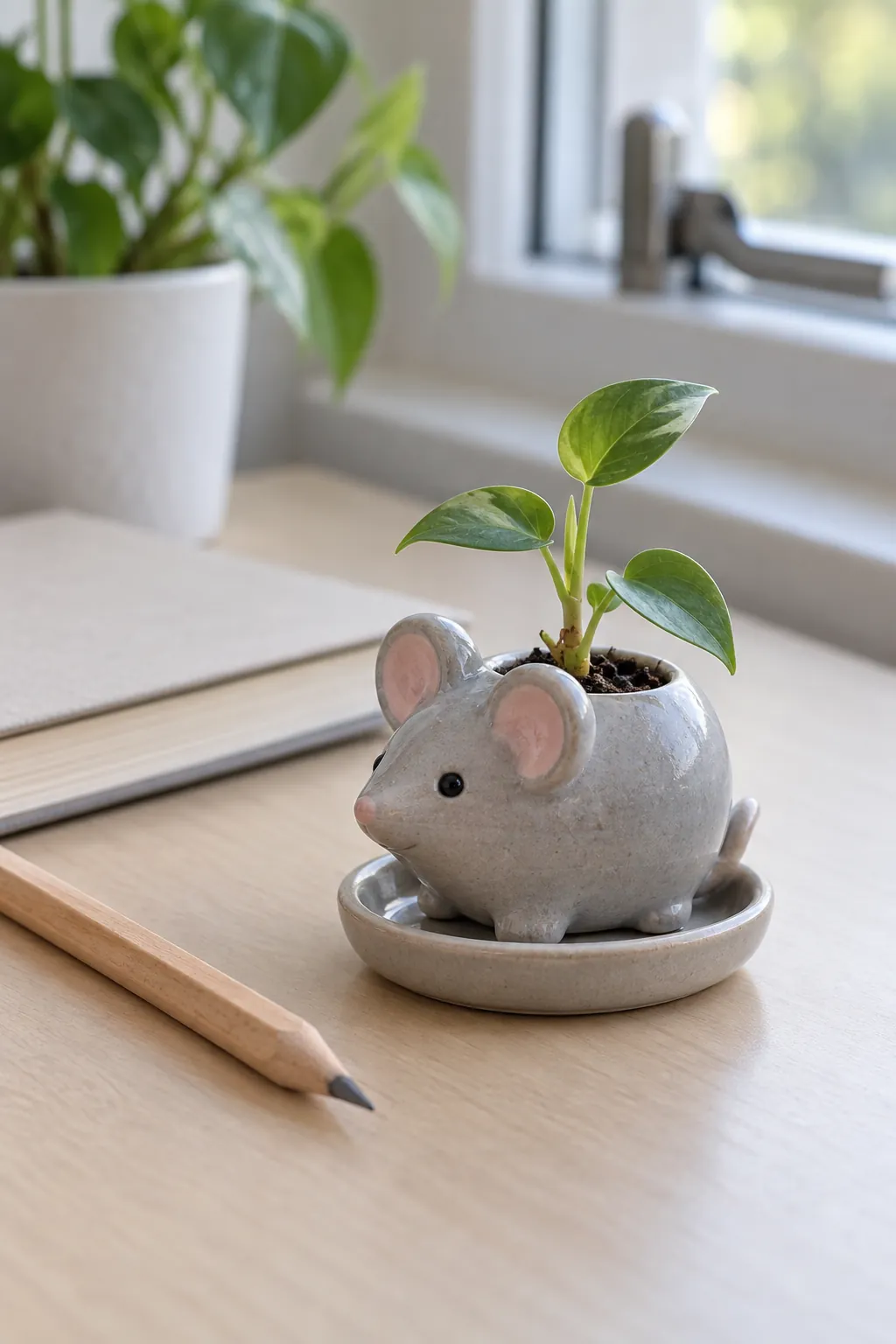
A small mouse with round ears
A mouse planter can be charming at a very modest size. Its ears and pointed nose make the animal recognizable without a complicated painted pattern. A small rooted cutting may suit the opening temporarily, provided its growing needs match the container. Keep checking root growth, because a tiny decorative pot is easy to outgrow. A short tail tucked near the body is more practical on a desk than a long fragile extension.
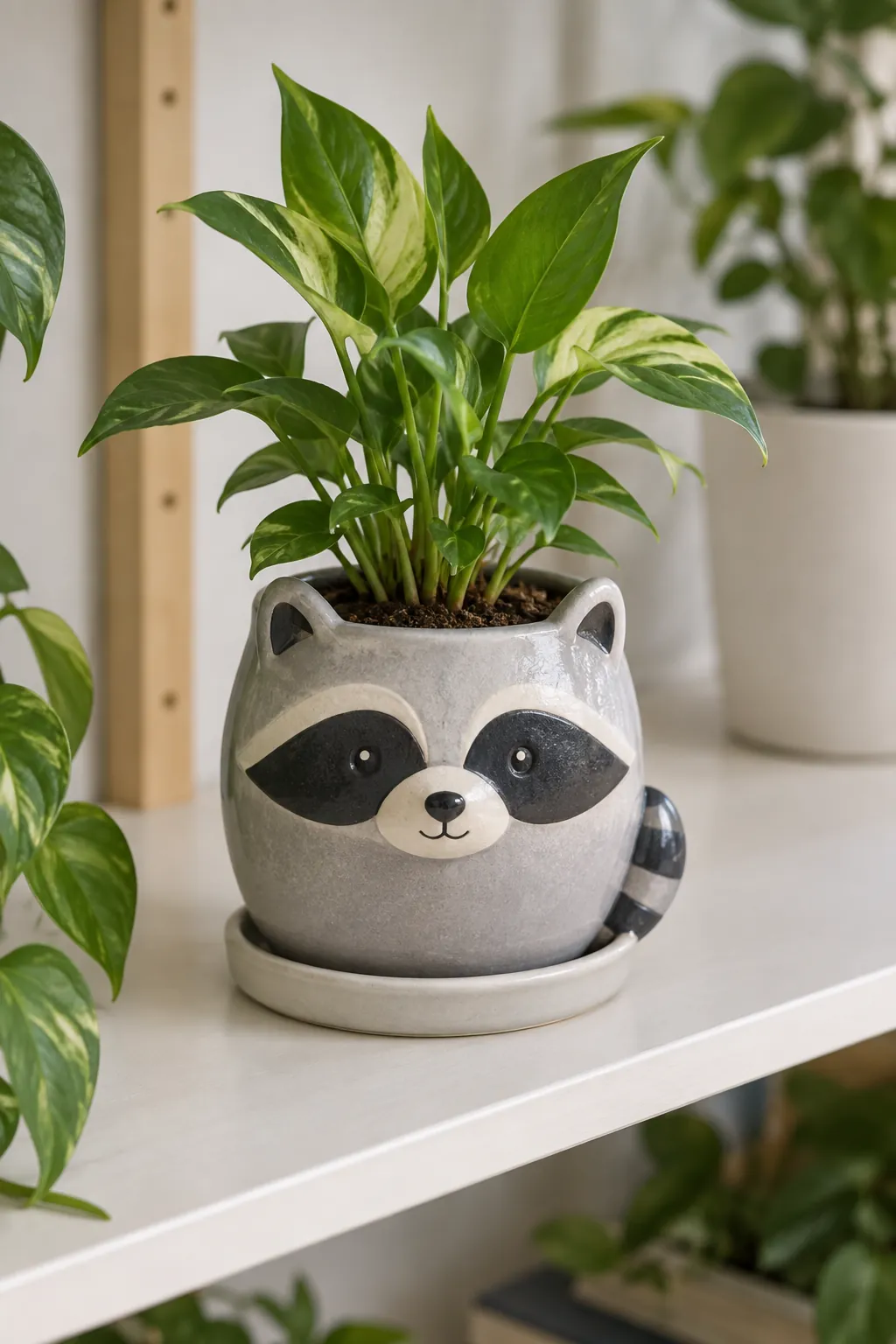
A raccoon with a dark eye mask
A raccoon planter gains most of its character from the mask around its eyes. A simple gray body gives that detail room to stand out. Keep the foliage above the mask rather than trailing down the face. If you place it beside other cute planters, vary their height and leave enough space to lift each one independently.
A pair of small bird holders
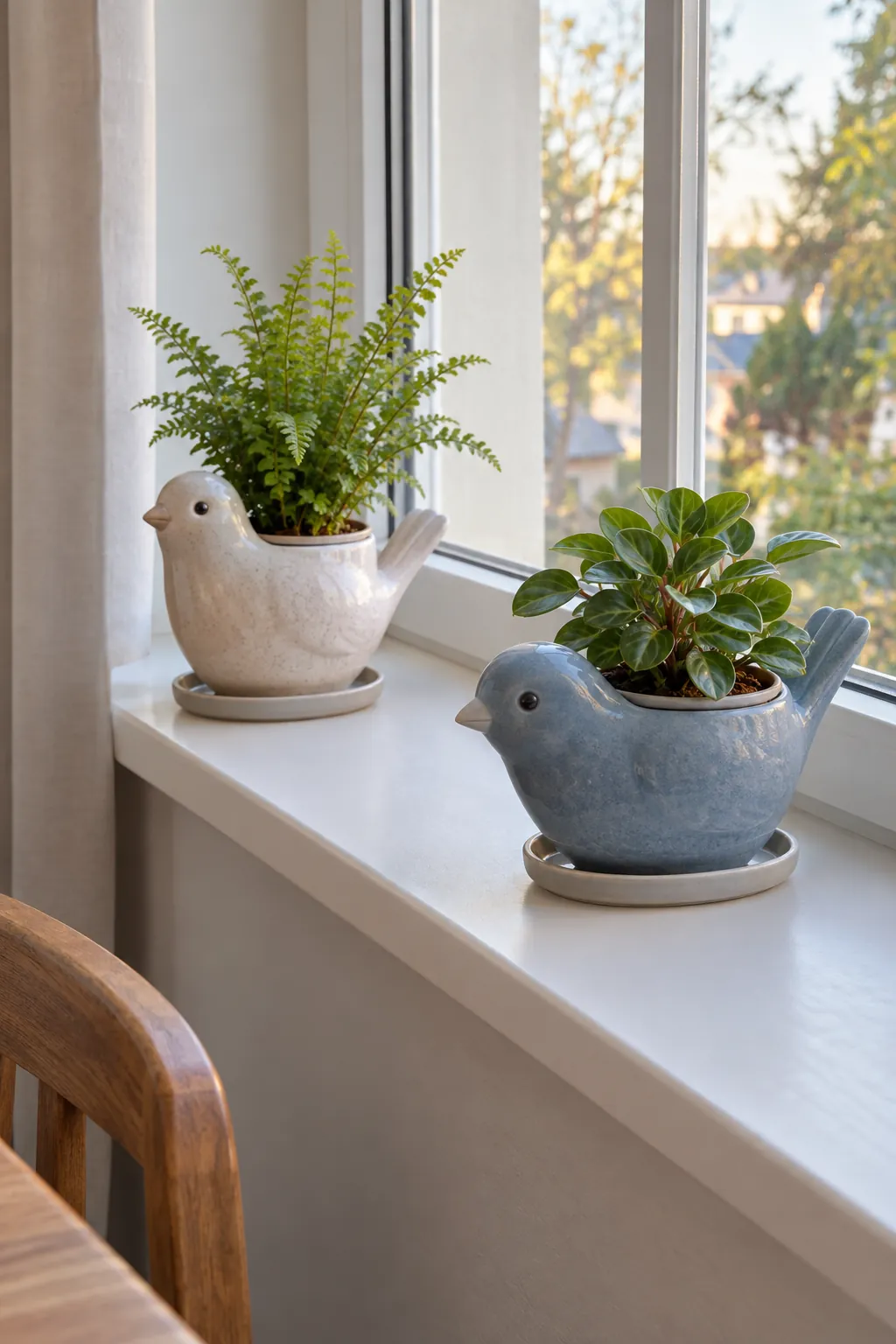
Two small bird holders can frame a bright plant corner without making every pot an animal. Use separate removable growing containers so each plant can be watered according to its needs. Choose birds with similar materials but different poses to avoid a rigid matching set.
Space them far enough apart that their leaves remain separate as they grow. Before settling on the final position, check the light, the stability of the base, and where excess water will go. The best character planter is one you can still care for easily after the novelty wears off.