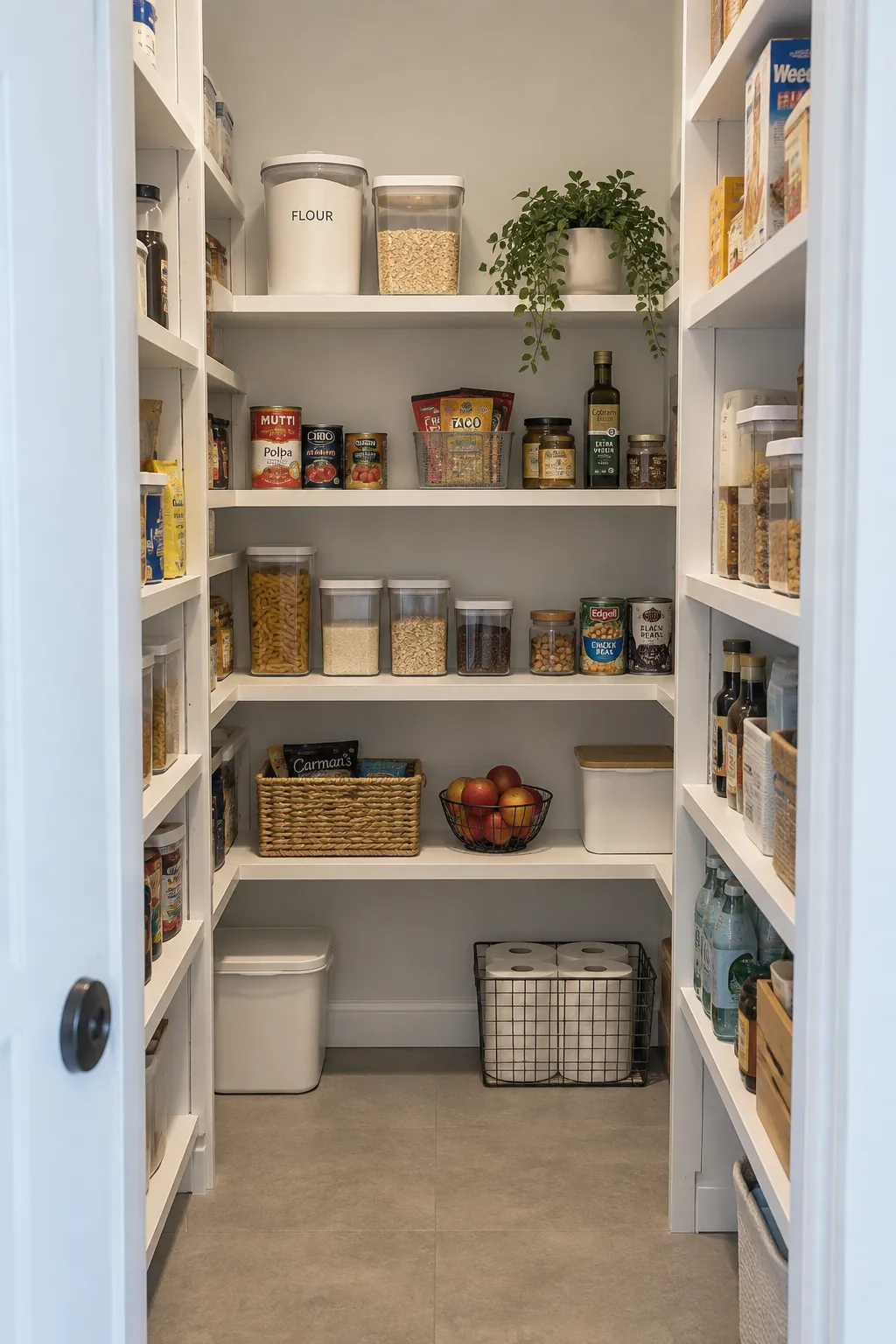
Buying another jar of something already hidden at the back is a storage problem, not a shopping problem. The most useful change is to make food visible and reachable before adding containers. Start with what is already on your shelves, then spend only where an organizer removes a specific obstacle.
Measure the reach, not just the shelf
A pantry can hold plenty of food and still be hard to use. Start by emptying one shelf at a time onto a clean table, grouping duplicates as you go. Check packaging condition and dates, wipe the shelf, and let it dry before putting food back. Keep refrigerated foods out of this sorting project.
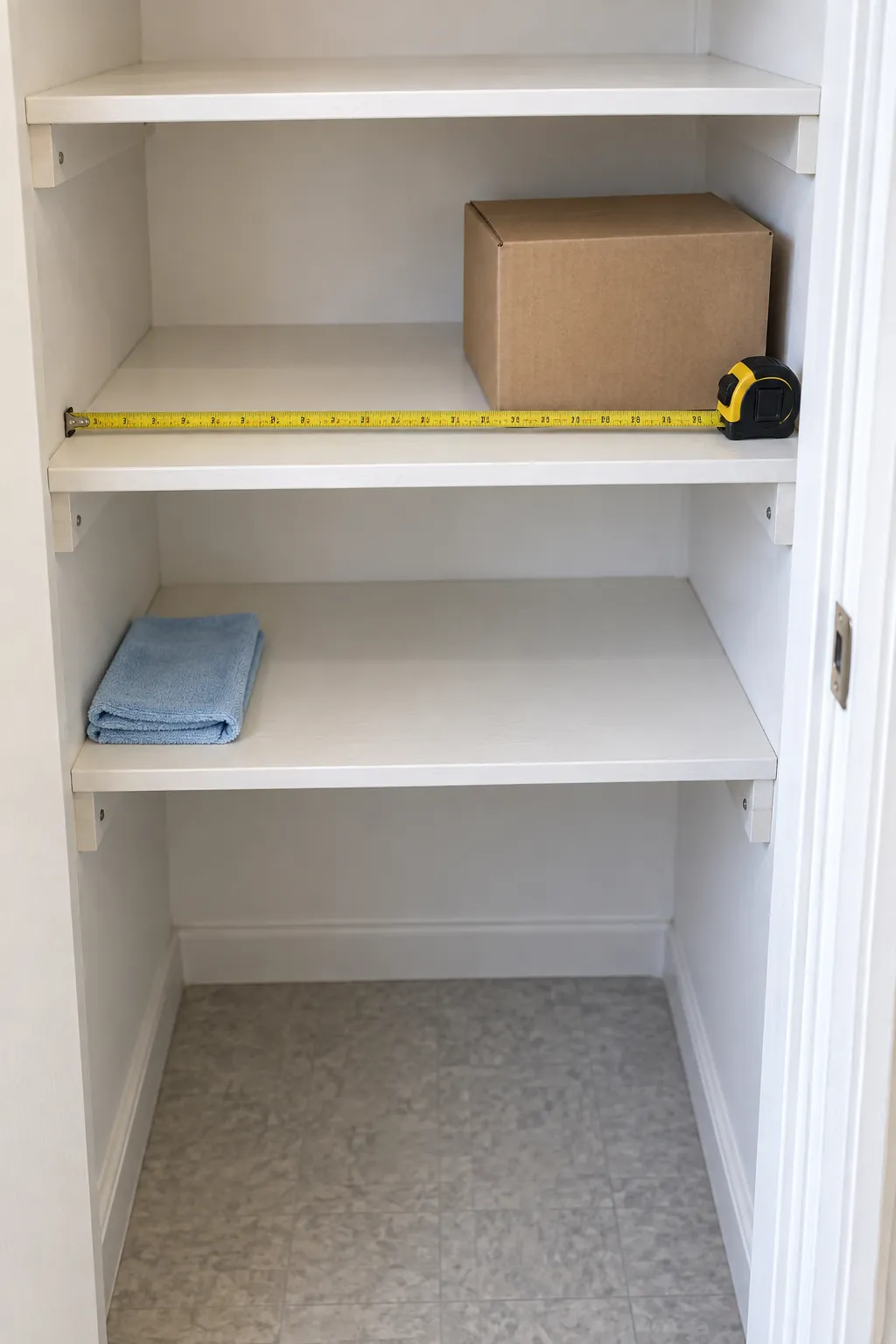
Measure shelf width, usable depth, vertical clearance and the narrowest part of the doorway. Include brackets and the door swing in those measurements. A basket that fits on the shelf may still be impossible to pull out past the door frame. Before ordering organizers, test a cardboard box of similar dimensions in the actual space.
Next, stand where you normally retrieve food. Anything you cannot see or reach comfortably needs a different home or a container you can bring forward. Preserve enough clear floor space to turn and carry a basket without shuffling boxes. Do not solve crowded shelves by filling the walking area.
Give everyday food the easiest shelf
Build zones around meals and routines: breakfast, dinner ingredients, baking, snacks and unopened reserves. Put the foods you use most often between comfortable waist and eye level. Keep heavy items lower, on shelving rated for their weight, and light occasional supplies higher.
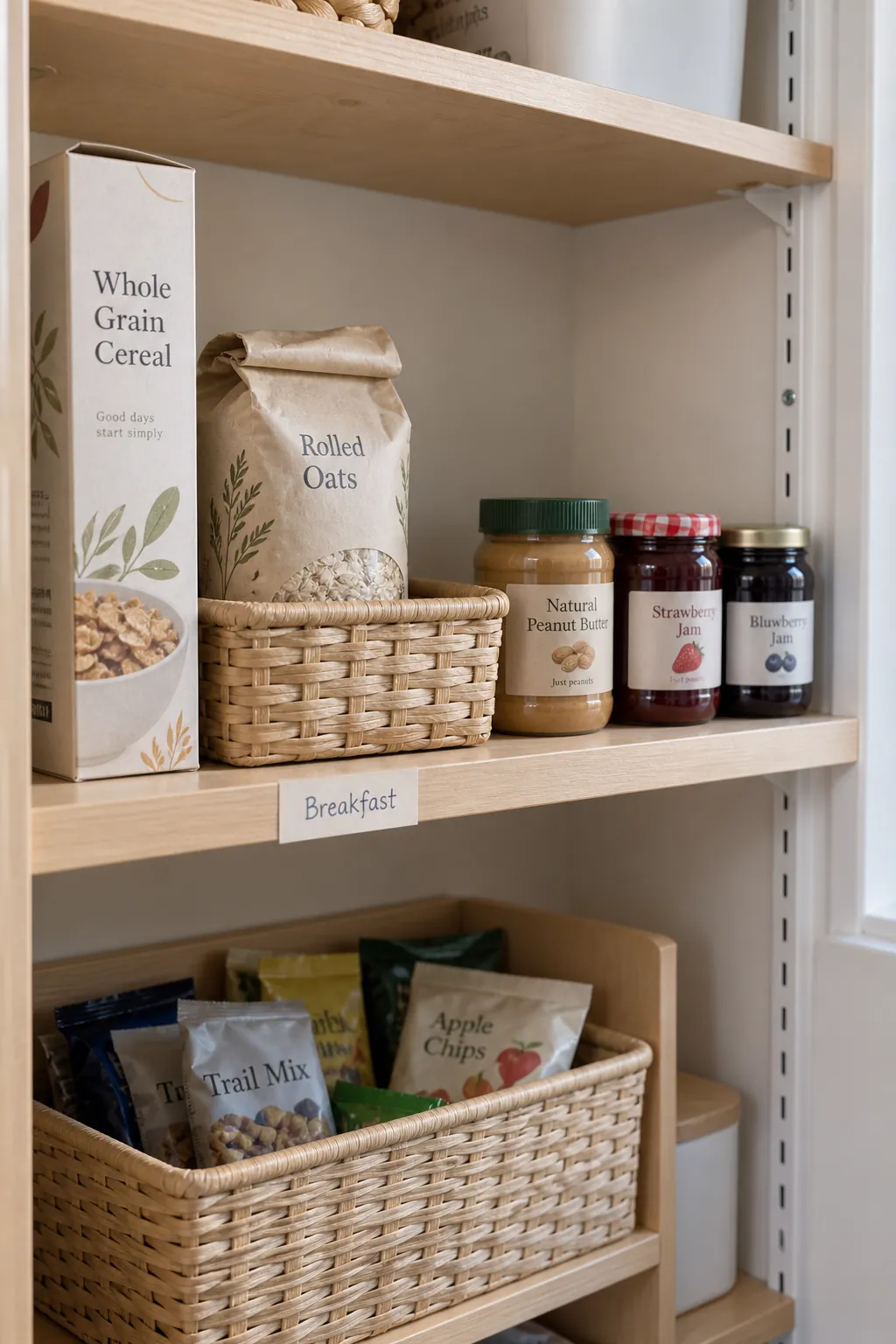
For example, oats, cereal and nut butter can share a breakfast shelf even though their packages look different. A dinner zone might hold pasta, canned tomatoes and beans. Pantry zone labels should name what belongs in each area, using words everyone in the household recognizes. A broad label such as Dinner is easier to maintain than a dozen tiny categories.
Give duplicates a separate, visible reserve spot. When the everyday jar runs low, check that spot before adding anything to the shopping list. If reserves start spilling into another zone, reduce how much you buy instead of adding another basket.
In a household with children, place suitable snacks within their reach and keep glass containers or unsuitable foods elsewhere. Separate foods needed for allergy management with clear identification, while recognizing that storage zones alone do not prevent cross contact.
Make deep shelves work like drawers
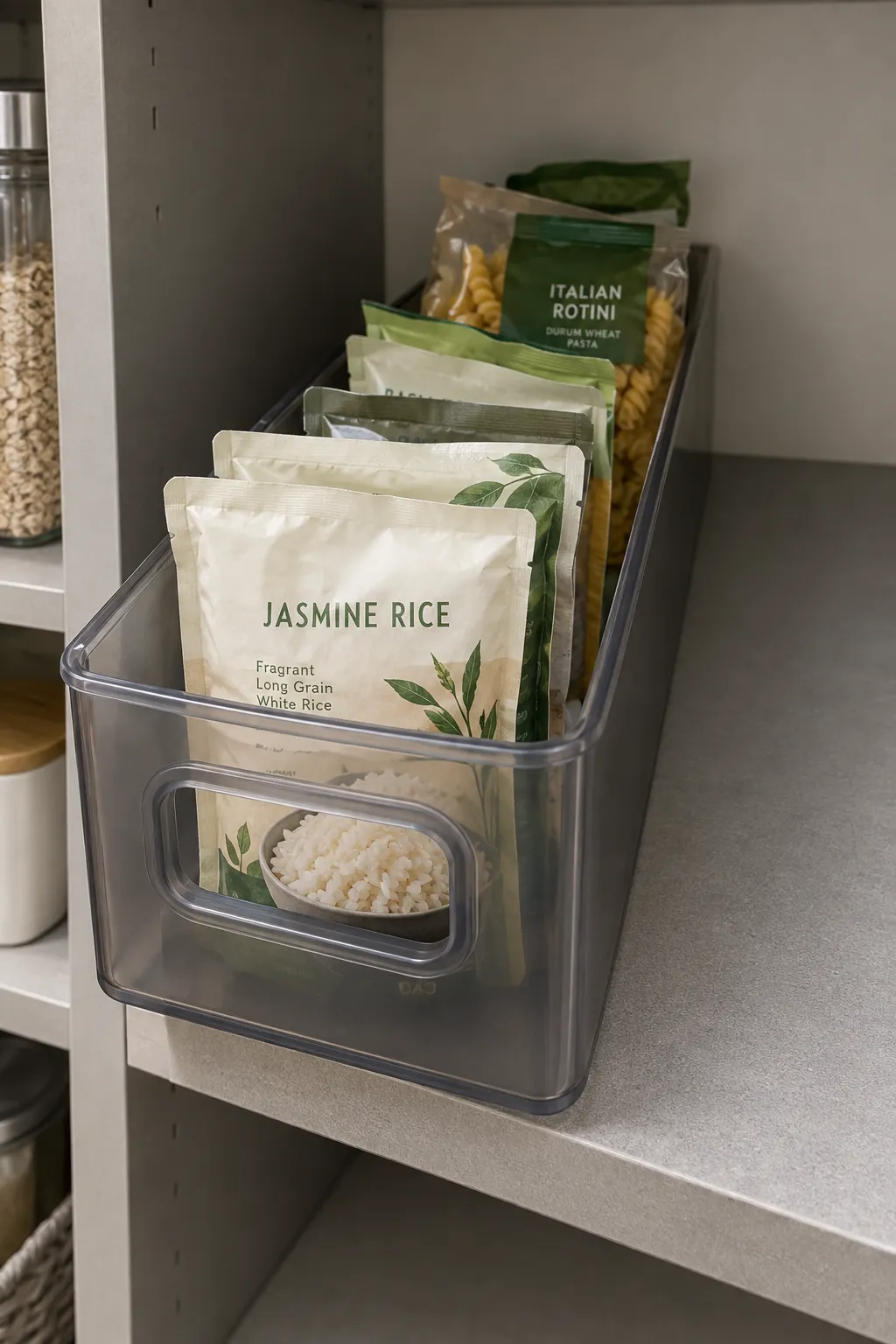
Pantry basket organization works best when each basket can leave the shelf without moving another one. Choose long, manageable bins for light packets and pouches, with handles facing the aisle. Avoid arranging a front row of bins that hides a second row of unrelated supplies.
Test the loaded weight before filling an entire shelf this way. A deep basket full of cans can become awkward to lift, especially above waist height. Keep heavier cans in short visible rows, or consider properly installed pullout hardware with an appropriate load rating. Never assume an adhesive accessory can carry a loaded pantry tray.
Use corners and doors without blocking access
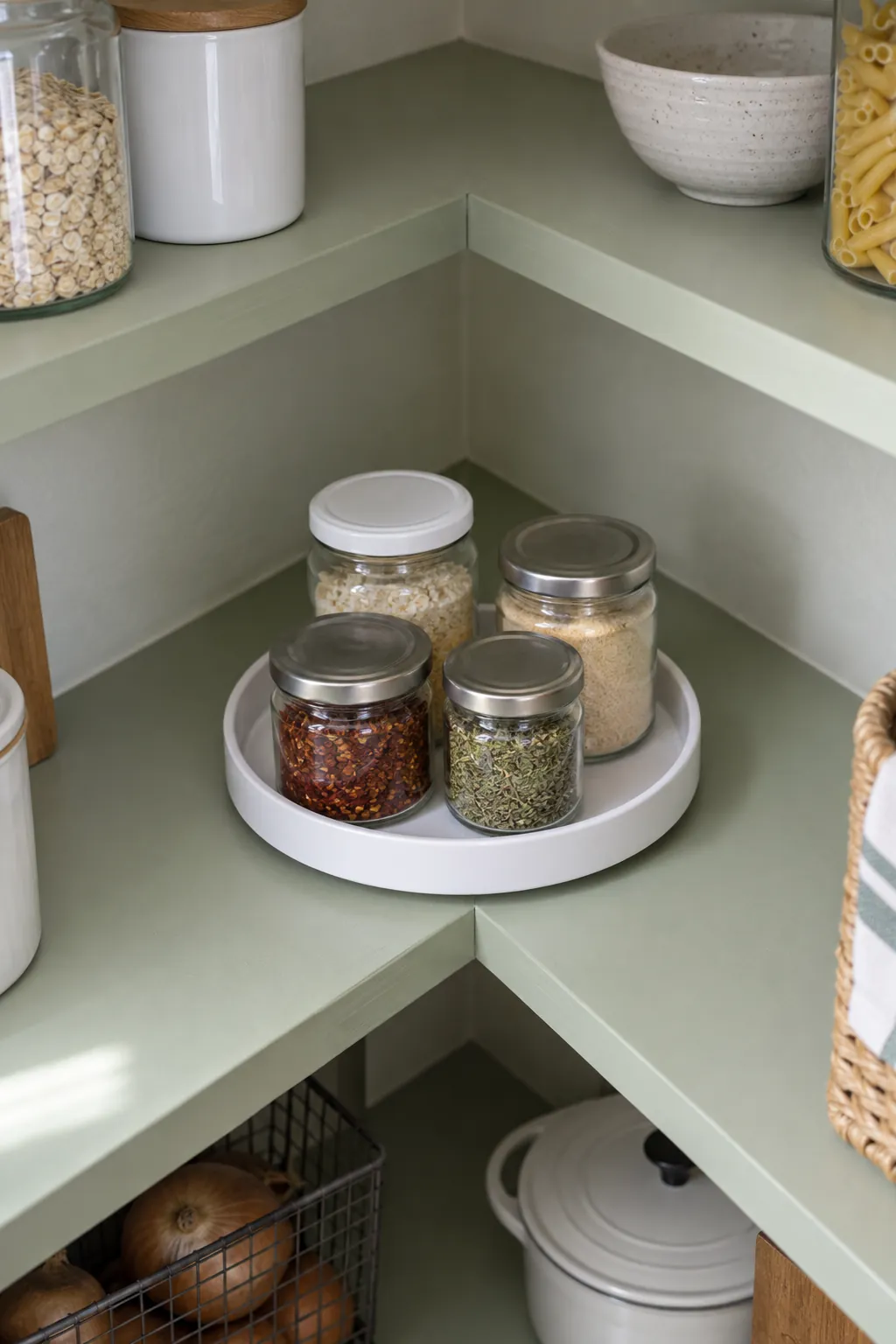
Corner pantry shelves often become a hiding place because two storage runs overlap. Reserve one reachable part of the corner for a small turntable holding short jars, and leave room for it to rotate freely. Measure the turntable with the items on it, since bottle shoulders can project beyond its edge.
A turntable is less useful for tall cereal boxes or bulky bags. A single handled bin may suit those contents better, provided it slides out without hitting the neighboring shelf contents. Try both motions with your existing supplies before buying anything.
Door rack pantry storage can hold lightweight packets, wraps or small containers when the door and mounting hardware support the load. Check clearance with the door fully closed and fully open. Follow the rack manufacturer’s installation and weight limits, and get permission before drilling in a rental. Leave the floor below clear rather than creating another narrow passage.
Decant only what earns its container
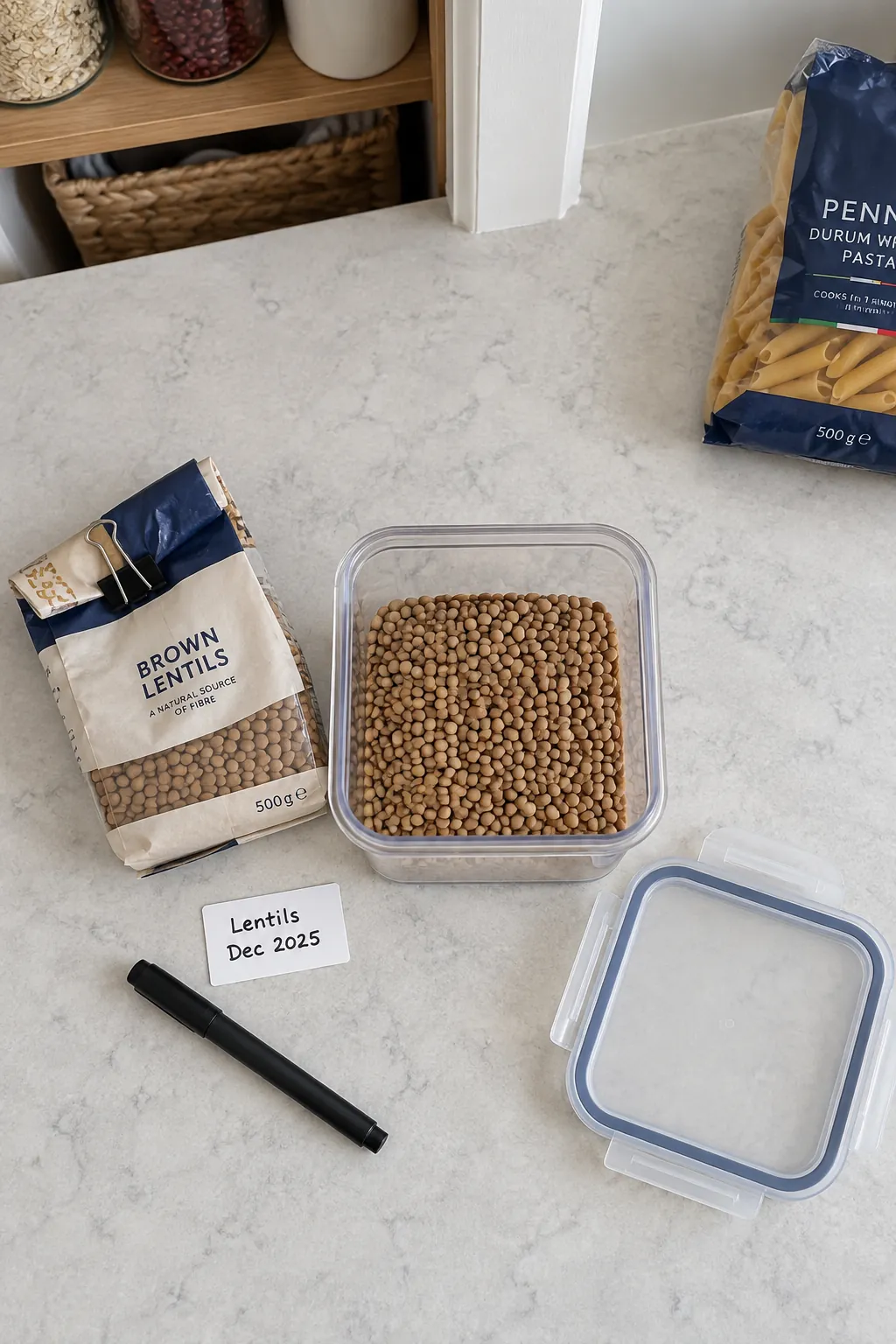
Clear food containers help when they make an awkward bag easier to pour, keep an opened dry ingredient protected, or show when a staple is nearly gone. They do not automatically save space. Square containers can use a rectangular shelf efficiently, but thick lids and unused capacity may consume more room than the original package.
Choose a food safe container that holds the package size you actually buy. Keep ingredient, allergen, cooking and date information from the original packaging accessible, along with batch details where useful. Label the contents and relevant dates before the information gets separated from the food.
Finish older contents before refilling whenever practical. Clean and completely dry the container between batches rather than continually topping it up. Keep infrequently used foods in their original packaging inside a simple basket if transferring them would add work without improving access.
For a tight budget, start with one troublesome staple instead of buying a matching set. Test that container through a shopping cycle. A shelf of mixed packaging that you can use comfortably is already functioning well.
Leave room for the next grocery trip
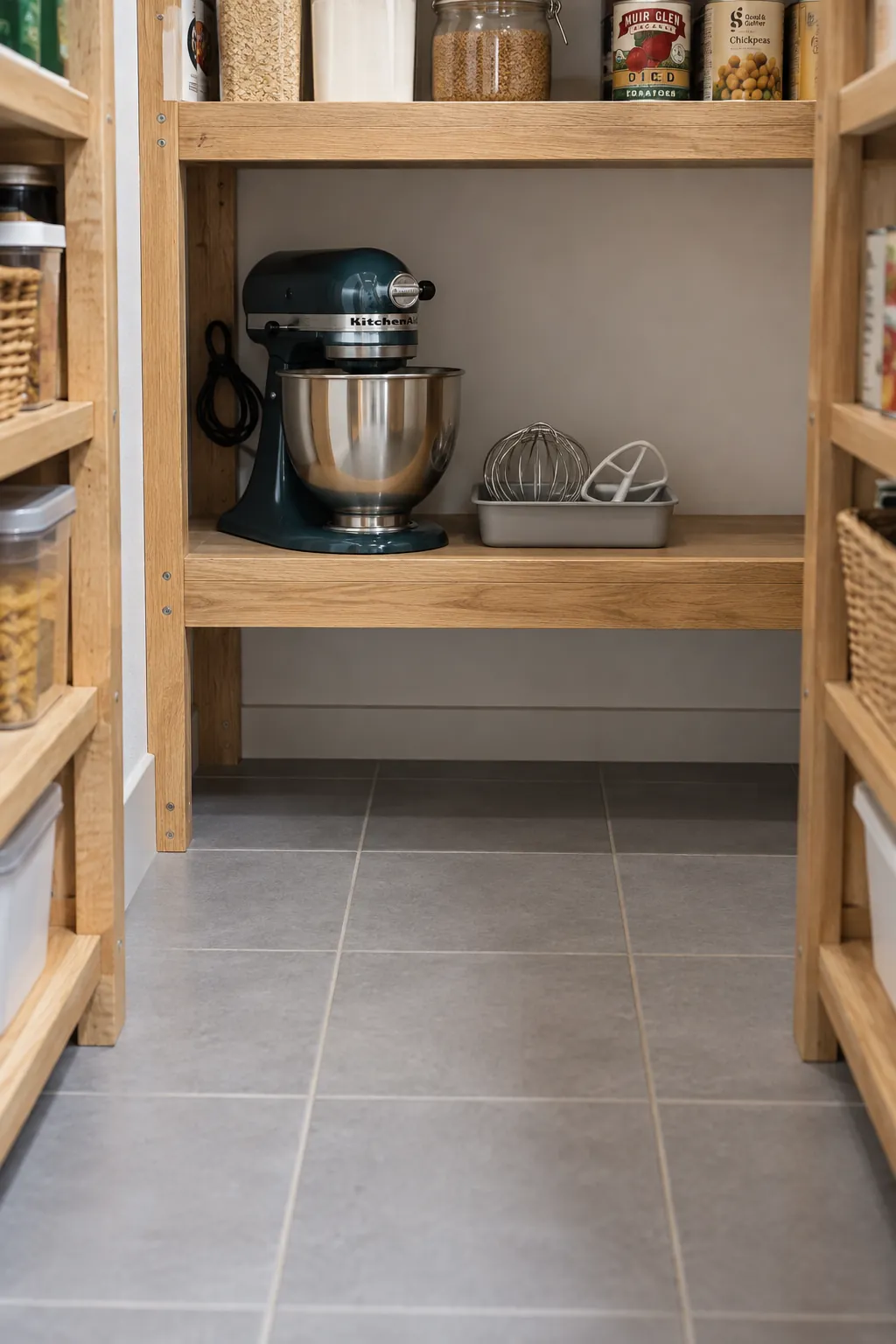
A small appliance pantry needs a deliberate limit. Store an occasional appliance on a sturdy shelf at a height where you can lift it safely with both hands. Keep its accessories together and its cord secured. Move it to an appropriate kitchen work surface for use, following its ventilation and electrical instructions; a storage shelf is not automatically a safe operating station.
Leave a small open area near the everyday food for groceries waiting to be put away. During your weekly shopping check, bring older suitable stock forward, remove empty packaging and return stray items to their zones. If a category repeatedly overflows, give it more space by shrinking a less used category, or buy less of it.
The final test happens while cooking: can you take out what you need and put it back without rearranging the shelf? Change the one spot that fails that test. The aim is a pantry you can keep using after the labels are no longer new.